
SearchWorks is celebrating 15 years as South Africa’s most trusted single one-stop shop for accurate and up-to-date data and providing businesses with the information they need to make meaningful business decisions.

SearchWorks is an online data aggregation platform that allows users to conduct live, accurate individual, company and property searches and in-depth KYC checks online. The platform offers 160 different search types, covering more than 20 data sources to give companies onboarding new clients instant access to verified identities, updated contact details and account verifications, all within the confines of the law.

With direct links to all hosting credit bureaus in South Africa in one place, users can confirm an individual’s identity, address, financial status and more. SearchWorks also has a functionality that allows users to combine the findings into a single report, giving a view of an individual or company from various sources.

Sameer Kumandan, Managing Director of SearchWorks, says the platform has grown as an indispensable tool for businesses that rely on accurate, reliable data for informed decision-making. “In a modern environment characterised by information overload, SearchWorks’ major achievement is providing organisations with data-backed intelligence that is both usable and credible.”

Over a proud 15-year history, SearchWorks has led several industry firsts and key milestones. It was the first web-based search platform for the South African conveyancing market. Next, it successfully introduced credit-related searches before being officially approved as a reseller Credit Bureau by the National Credit Regulator (NCR). After SearchWorks diversified its offering to cater for various other industries, it was identified as the largest data aggregator in South Africa and was later approved as the preferred source of data by leading financial institutions as it quickly reached well over 30,000 active users.

Kumandan says one of the biggest trends the company has seen come to the fore is the increased requirement and reliance on accurate, up-to-date, readily available data. “Just one example of this is the onboarding process timeline to open a bank account. Identity verification is now less laborious, faster, and more efficient than ever before, taking place in minutes. Organisations are looking to modernise their systems and build on their customer relationships by offering solutions that tap into a larger part of the customer journey. SearchWorks is proud to be part of that broader journey and adding value where it matters most.”

In 2022 SearchWorks announced a relaunch of its brand identity, paying homage to its roots as a search-based add-on offering of e4, and its impressive growth as its own entity with an extensive list of unique offerings and capabilities.

“SearchWorks has evolved from being a source of property data for conveyancing attorneys to verify Deeds Office information to being an integral part of business processes and the onboarding of clients and businesses. We can verify or supply information on almost every aspect of an individual or business,” he says.

Kumandan says a notable highlight for SearchWorks is its committed team. “At least 70% of the SearchWorks team has been with the company through the entire SearchWorks journey. The dedication to delivering a world-class application and ensuring customer satisfaction cannot be faulted. Our ability to cater and respond to client needs and requirements is a considerable point of pride for us and will remain so as we look forward to introducing new diverse search types.”

He adds that the company will add to its legacy of breaking new ground and continuing the evolution of the SearchWorks application and its ability to stay relevant. “We have over twenty suppliers and pride ourselves in choosing only the best, most reliable sources. We also take security seriously by ensuring that both the data we supply and our clients’ data are safe, secure and protected. We are constantly working on enhancements to the SearchWorks application to improve the system’s overall usability to keep SearchWorks relevant as our client’s needs change and evolve. We look forward to the next 15 years of assisting South African businesses to streamline and improve their processes through the power of information.”


The Director General, National Information Technology Development Agency (NITDA), Kashifu Inuwa CCIE, has been commended for his commitment towards gender equality and women empowerment within the Nigeria’s Tech ecosystem

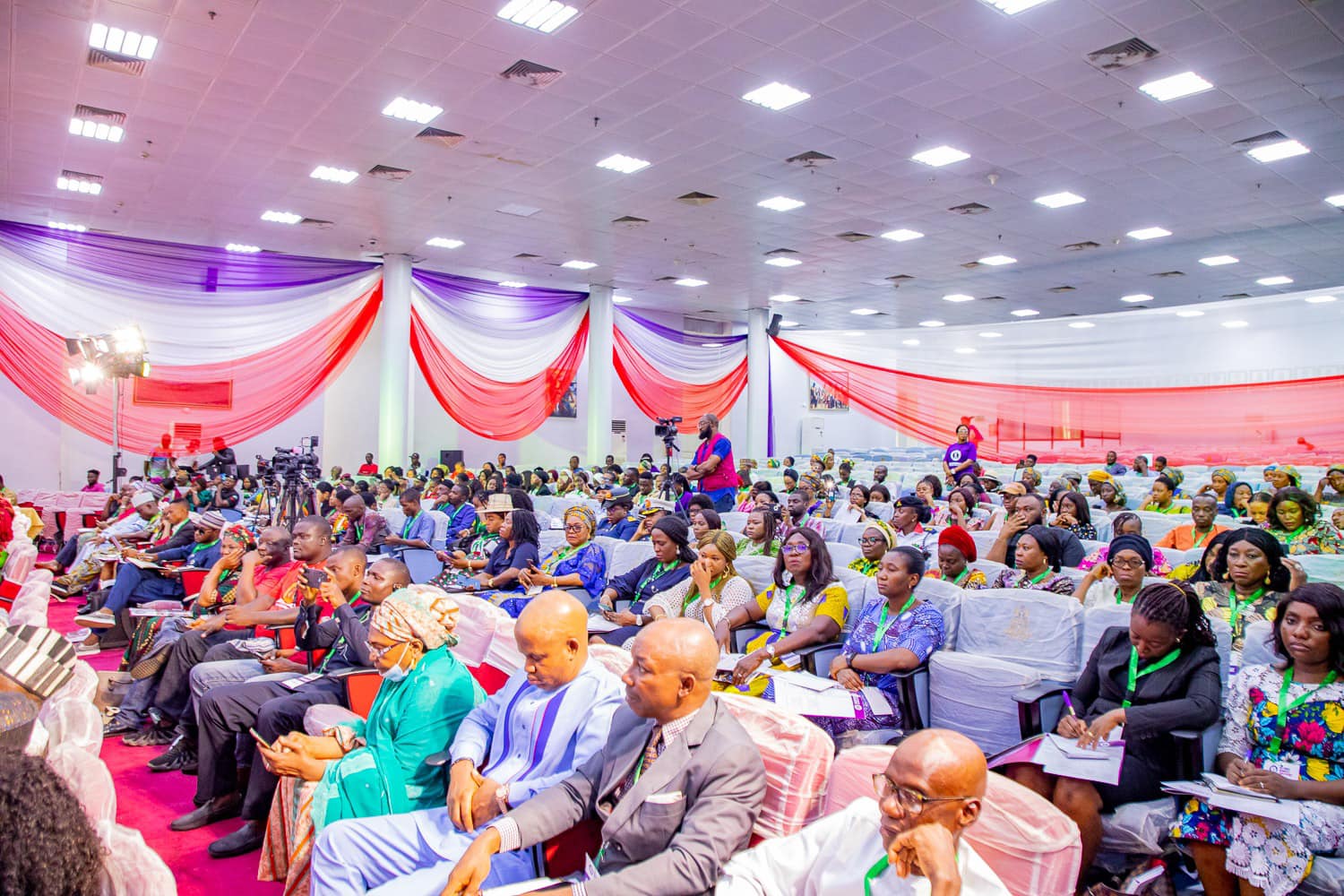
The recognition of the selected institutions and personalities formed part of activities climaxing the International Women’s Day Celebration tagged, 2023 National Women Conference with the theme, “Inclusive Technology and Digital Education for Gender Equality and Women Empowerment”.

The Minister of Women Affairs, Mrs Paulen Tallen, described DG-NITDA, Kashifu Inuwa’s unprecedented achievements in the area of advancing rights of Women through various interventions as commendable.

Inuwa represented by Agency’s Acting Director, Digital Literacy and Capacity Building, Dr Amina Sambo Magaji whose indelible mark was also commended, being the First Northern Woman to obtain First Class and Masters degrees in Computer Science and PhD in Artificial Intelligence.


May be an image of 1 person


By Sampson Ikemitang

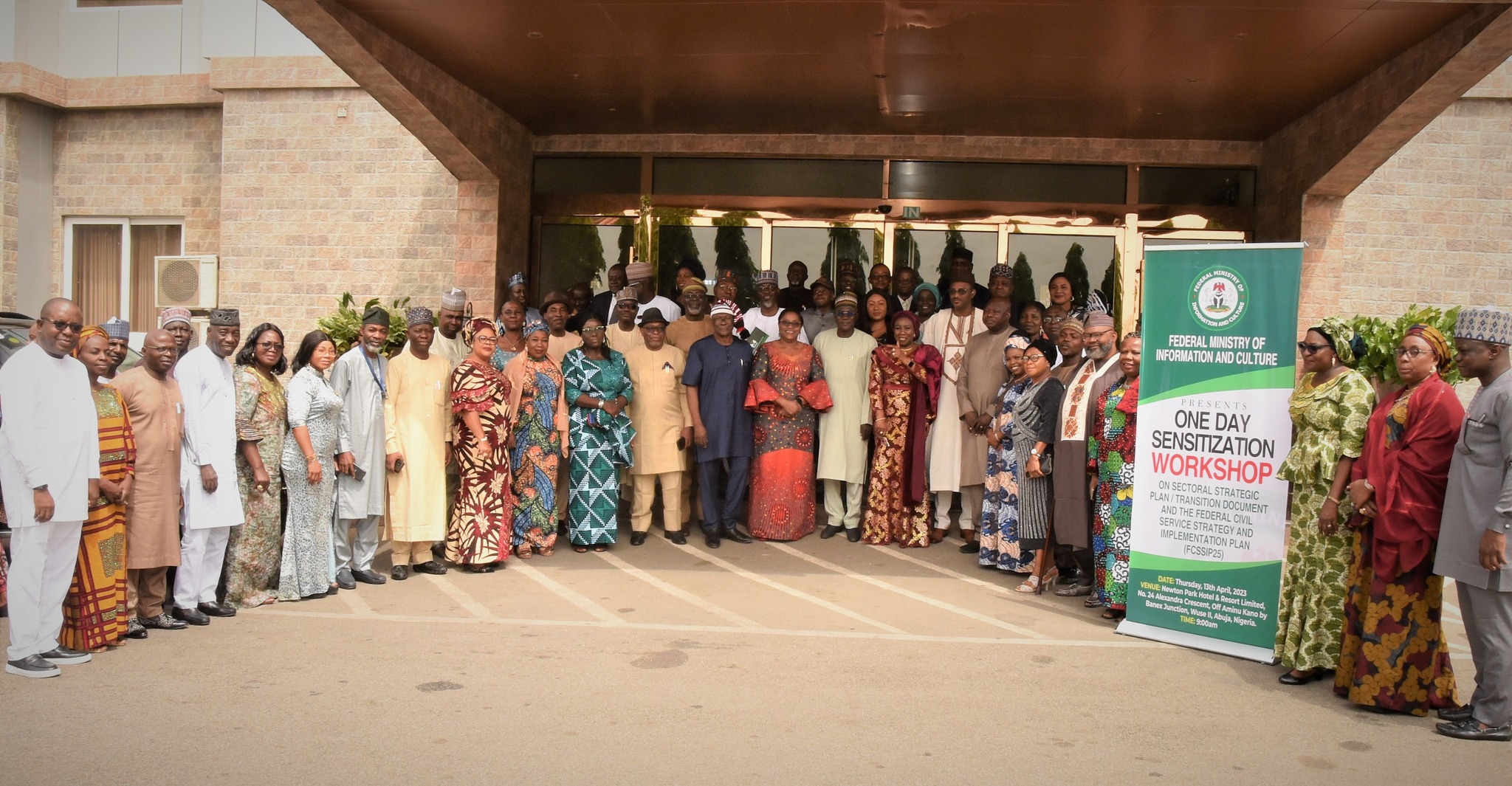
The Permanent Secretary Federal Ministry of Information & Culture, Mrs. Lydia S. Jafiya mni, has declared open A-One day sensitization workshop on the Sectoral Strategic Plan/Transition Document and FCSSIP25 organised for Chief Executive Officers (CEOs) of Parastatals and the Management staff of the Ministry in Abuja. The workshop which took place in Newton Park Hotel and Resort Limited, Wuse 2, Abuja, had in attendance Chief Executive Officers (CEOs) of Parastatals and Directors in the Ministry as participants.

While delivering her Key note address on behalf of the Honourable Minister, Alh. Lai Mohammed, Mrs Jafiya mni welcomed all participants at the workshop and urged them to avail themselves of the opportunity to learn the new reform going on in the Federal Civil Service tagged, ‘’Federal Civil Service Strategy and Implementation Plan 2021-2025 (FCSSIP25), as it will make them remain relevant in the service.

According to Mrs Jafiya,mni “MDAs are directed to develop and document the Standard Operating Procedures (SOPs) and Job schedules/descriptions for every staff”. She added that MDAs are further expected to digitise the past records and subsequently automate workflows by eliminating dependence on paper documents, increase productivity and reduce organisational risk through the establishment of the Enterprise Content Management (ECM).

It will be recalled that the Head of Civil Service of the Federation, Dr Folashade Yemi Esan, had in recent past, introduced Federal Civil Service Strategy and Implementation Plan 2021-2025 (FCSSIP25), as a new reform into the Federal Civil Service essentially to break away from old to a new paradigm of productive, result-driven, world-class Federal Civil Service with a view to attaining accelerated national development for the country.

It is worthy of note that FCSSIP25 has its main focus on six priority areas namely:- Capability Building and Talent Management; Performance Management System; IPPIS HR; Innovation; Digitalisation and Staff welfare. The service also, has its Core Values which include: Accountability, Meritocracy, Professionalism, Loyalty and Efficiency (AMPLE).

It should be emphasised that four Presentations were made by eminent Resource Persons at the event. These are: An Overview of Federal Service Strategy and Implementation Plan 2021-2025 (FCSSIP25) which was delivered by Dr John O. Magbadelo. Also, Performance Management System (PMS) was taken by Mrs. Bosede Olaniyi. Whilst Review of Transition/Handing Over Documents was handled by the Director Planning Research and Statistics (PRS), Mr. Usman Abdulkadir and Mr. Dimas Hamidu took the Development of Information, Culture and Tourism Strategic Plan 2023-2028.

Participants expressed appreciation to the Ministry for organising this all important workshop and lauded the swift initiative aimed at bringing them up to speed with new developments in the civil service.


98 Chibok school girls abducted by Boko Haram remain in captivity; More than 61 children are still being held in captivity two years after they were abducted by gunmen; Lack of accountability for crimes against children emboldens impunity.


Nine years after Boko Haram abducted 276 students from a girls’ school in Chibok, 98 girls are still being held by Boko Haram and a slew of abductions have taken place since, revealing the utter failure of the Nigerian authorities to learn from the heartbreak of Chibok and, ultimately, to protect children, Amnesty International said today.

Since the Chibok school girls were abducted by Boko Haram, a plethora of schools have been targeted, with girls being abducted, raped, killed or forced into “marriages”. The Nigerian authorities, however, have not carried out a single credible investigation into the security failures that left children vulnerable to the atrocities committed by Boko Haram and gunmen.

“Parents of the 98 Chibok school girls who are still being held by Boko Haram — as well as other children abducted by gunmen — are living in anguish, knowing that their children are in the hands of ruthless individuals who subject their loved ones to chilling brutalities,” said Isa Sanusi, Acting Director of Amnesty International Nigeria.

“It is beyond time that the Nigerian authorities took meaningful action to counter armed groups like Boko Haram and gunmen. Nigeria has an obligation to implement safeguards to protect all children, and the lack of accountability for these callous crimes is fueling impunity. The missing Chibok school girls should be returned home to their families, and all those responsible for committing grave violations must face justice.”

Between December 2020 and March 2021, there have been at least five reported cases of abductions in northern Nigeria, including from schools, at Kankara, Kagara, Jangebe, Damishi Kaduna, Tegina and Yawuri while the threat of further attacks has led to the closure of over 600 schools in the north of the country.

The missing Chibok school girls should be returned home to their families, and all those responsible for committing grave violations must face justice

Missing Chibok schoolgirls abandoned

At the end of March, Amnesty International interviewed five Chibok school girls who had escaped from Boko Haram and their parents. They said they had lost almost all hope that the other 98 girls would ever be rescued.

One of the returnees told Amnesty International: “The Nigerian government should not forget about the remaining 98 girls. They should be rescued. Every morning I wake up and recall the condition I left them in. I cry, I feel sorry for them. Nine years is too long to be in such a deplorable condition. The government must fulfill its promise of rescuing all the girls.”

Victims’ parents are concerned that the girls who refused to be “married” by Boko Haram are suffering brutal treatment every day.

One of the parents told Amnesty International: “Our pain is endless because 14 of the girls came back with 24 children. We have with us grandchildren whose fathers are unknown to us. Our burden has now multiplied as we do not have the money to bear the additional burden of feeding, educating, and [providing] healthcare for our returnee children and grandchildren. This is in addition to the societal rejection and stigma that we are all facing. We are just hopeless!”

Parents of Chibok girls who are still being held by Boko Haram, told Amnesty International that the Nigerian authorities no longer communicate with them and have ultimately abandoned them.

Since February 2021, northern regions of Nigeria have suffered repeated attacks on schools and religious institutions. Of the more than 780 children who have been abducted for ransom, more than 61 children are still being held in captivity two years after they were abducted by gunmen. Many schools in the region were shuttered — and remain closed — due to rising insecurity.

“Rescuing the remaining Chibok girls is of paramount importance; the task of finding them should not become yet another failed project of the government. It is absolutely crucial that the outgoing government of Nigeria does all in its power to bring these girls — as well as all other children being held by various armed groups — home to their families,” said Isa Sanusi.

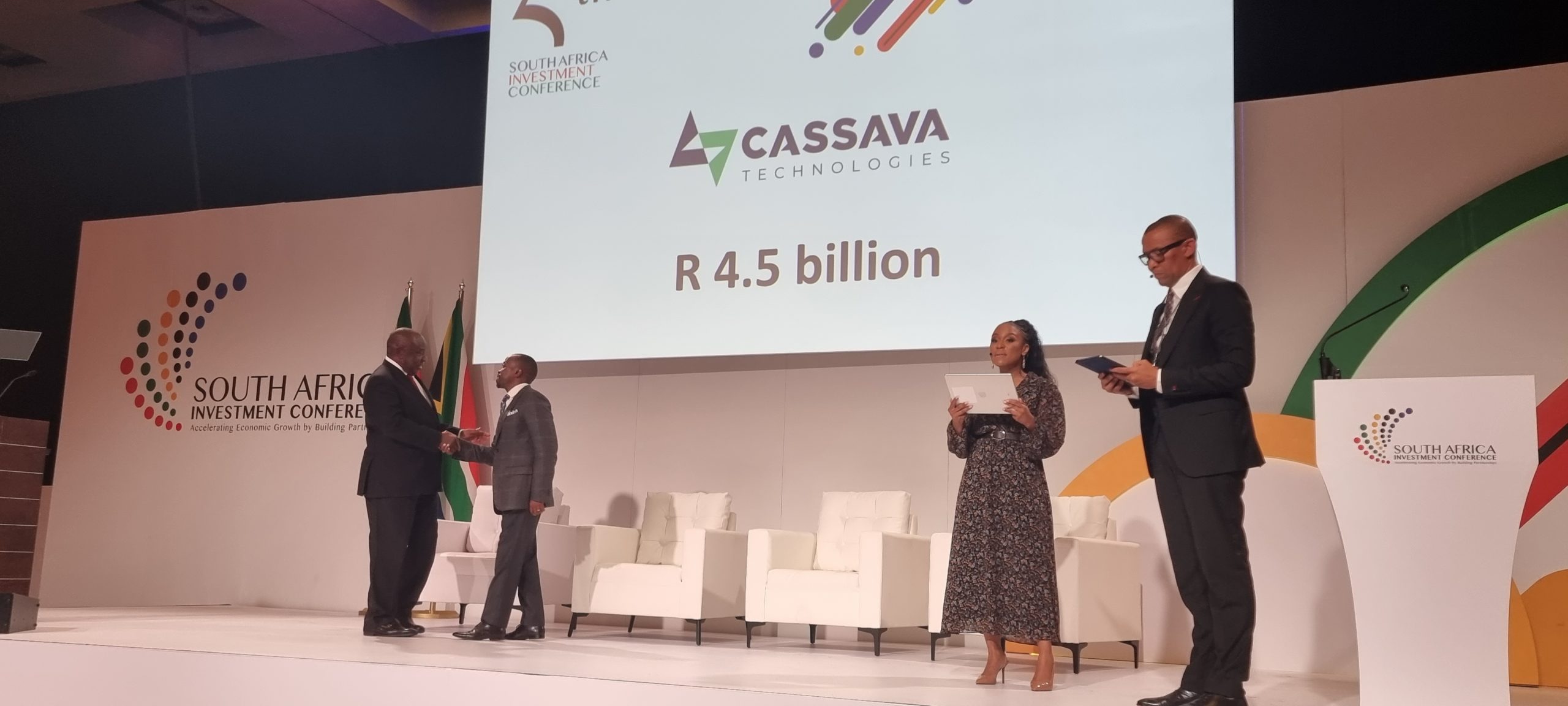
Cassava Technologies (www.CassavaTechnologies.com) has pledged a total of R4.5 billion in investment in South Africa through its business units – Liquid Intelligent Technologies, Africa Data Centres and Distributed Power Africa. The announcement was made during the fifth South Africa Investment Conference (SAIC) in support of SA President Cyril Ramaphosa’s initiative to drive investment into the country.


Through this investment, Cassava, which has operations in Africa, the Middle East, Europe, the USA and Latin America, will continue to bring internationally recognised services and products to South Africa through the group’s renewable energy, cloud & cyber security, data centres and broadband connectivity business units.

Cassava’s investments will contribute towards positioning South Africa as an attractive investment destination

South Africa accounts for the largest proportion of Africa’s industrial GDP with a sophisticated and growing ICT sector. The country’s unique combination of highly developed first-world economic infrastructure and a stable macro-economic environment affords businesses like ours a conducive investment environment in which we can partner with government to drive economic development and create jobs” stated Hardy Pemhiwa, President & Group CEO of Cassava Technologies.

Cassava’s investment pledge comprises key projects, including the expansion of the Liquid Intelligent Technologies fibre network, the extension of Africa Data Centres capacity and footprint, enhanced cloud and cyber security capacity, and the rollout of clean, renewable energy by Distributed Power Africa in South Africa.

South Africa’s USD$ 6.75 billion ICT sector represents one of Africa’s most investment-attractive and growth-bound industries today. The world bank estimates that South Africa’s internet penetration rate has doubled over the last decade, standing at 70%. While the Independent Communications Authority of South Africa reports that the national population coverage for 4G/LTE was at 97.7% in 2021, placing the nation years ahead of its peers in sub-Saharan Africa.

Cassava’s investments will contribute towards positioning South Africa as an attractive investment destination and enable greater inclusion of all South Africans consistent with Cassava’s vision of a digitally connected future that leaves no African behind.

Canon Inc. (https://www.Canon-CNA.com/) announced today that the company is developing the MS-500, the world’s first[1] ultra-high-sensitivity interchangeable-lens camera (ILC) equipped with a 1.0 inch Single Photon Avalanche Diode (SPAD) sensor[2]featuring the world’s highest pixel count of 3.2 megapixels[3]. The camera leverages the special characteristics of SPAD sensors to achieve superb low-light performance while also utilizing broadcast lenses that feature high performance at telephoto-range focal lengths. Thanks to such advantages, the MS-500 is expected to be ideal for such applications as high-precision monitoring.


There is a growing need for high-precision monitoring systems for use in such environments as national borders, seaports, airports, train stations, power plants and other key infrastructure facilities, in order to quickly identify targets even under adverse conditions including darkness in which human eyes cannot see, and from long distances.


The currently in-development MS-500 is equipped with a 1.0 inch SPAD sensor that reduces noise, thus making possible clear, full-color HD imaging even in extreme low-light environments. When paired with Canon’s extensive range of broadcast lenses, which excel at super-telephoto image capture, the camera is capable of accurately capturing subjects with precision in extreme low-light environments, even from great distances. For example, the camera may be used for nighttime monitoring of seaports, thanks to its ability to spot vessels that are several km away, thus enabling identification and high-precision monitoring of vessels in or around the seaport.


With CMOS sensors, which are commonly used in conventional modern digital cameras, each pixel measures the amount of light that reaches the pixel within a given time. However, the readout of the accumulated electronic charge contains electronic noise, which diminishes image quality, due to the process by which accumulated light is measured. This leads to degradation of the resulting image, particularly when used in low-light environments. SPAD sensors, meanwhile, employ a technology known as “photon counting”, in which light particles (photons) that enter each individual pixel are counted. When even a single photon enters a pixel, it is instantly amplified approximately 1 million times and output as an electrical signal. Every single one of these photons can be digitally counted, thus making possible zero-noise during signal readout—a key advantage of SPAD sensors[4]. Because of this technological advantage, the MS-500 is able to operate even under nighttime environments with no ambient starlight[5], and is also capable of accurately detecting subjects with minimal illumination and capture clear color images.


The MS-500 employs the bayonet lens mount (based on BTA S-1005B standards) which is widely used in the broadcast lens industry. This enables the camera to be used with Canon’s extensive range of broadcast lenses which feature superb optical performance. As a result, the camera is able to recognize and capture subjects that are several km away.

Canon will continue to pursue R&D and create products capable of surpassing the limits of the human eye


Going forward, Canon will continue to pursue R&D and create products capable of surpassing the limits of the human eye while contributing to the safety and security of society by leveraging its long history of comprehensive imaging technologies that include optics, sensors, image processing and image analysis.


Canon plans to commence sales of the MS-500 in 2023.


[1]Among color cameras. As of April 2, 2023. Based on Canon research.

[2]Among SPAD sensors for imaging use. As of April 2, 2023. Based on Canon research.

[3]Total pixel count: 3.2 million pixels. Effective pixel count: 2.1 million pixels.

[4]For more information on how SPAD sensors operate and how they differ from CMOS sensors, please visit the following website: https://apo-opa.info/3obRClU

[5]Ambient starlight is equivalent to approximately 0.02 lux. A nighttime environment with no ambient starlight is equivalent to approximately 0.007 lux.

At WhatsApp, we believe that your messages should be as private and secure as an in-person conversation. Protecting your personal messages with default end-to-end encryption is the foundation of that security, and we’ll never stop building new features to give you extra layers of privacy, and more control over your messages.

A lot of this work happens behind the scenes without you having to do a thing. Today, we’re excited to tell you about some of the additional security features we’ll be adding in the coming months.

Account Protect: If you need to switch your WhatsApp account to a new device – we want to double check that it’s really you. From now on, we may ask you on your old device to verify that you want to take this step as an extra security check. This feature can help alert you to an unauthorized attempt to move your account to another device.

Device Verification: Mobile device malware is one of the biggest threats to people’s privacy and security today because it can take advantage of your phone without your permission and use your WhatsApp to send unwanted messages. To help prevent this, we have added checks to help authenticate your account – with no action needed from you – and better protect you if your device is compromised. This lets you continue using WhatsApp uninterrupted. Go deeper on the tech here.*

Automatic Security Codes: Our most security conscious users have always been able to take advantage of our security code verification feature, which helps ensure you are chatting with the intended recipient. You can check this manually by going to the encryption tab under a contact’s info. To make this process easier and more accessible to everyone, we’re rolling out a security feature based on a process called “Key Transparency” that allows you to automatically verify that you have a secure connection. What it means for you is that when you click on the encryption tab, you’ll be able to verify right away that your personal conversation is secured. For those interested in going deeper into the tech, click here.*

These are three additional ways we’re helping secure your account. While there’s many things we can do to make security easy for everyone, there are two features that only you can turn on: two-step verification and use of end-to-end encrypted backups. If you’re already using both, please tell your friends about them so more people can benefit from these layers of security too.

We hope people enjoy the increased security these features offer, and we look forward to announcing more updates soon.

The Business Council for Africa (BCA) (https://BCAfrica.org/) is proud to announce the nominees for the inaugural African Business Book of the Year award. The prize is designed to recognise and celebrate business-related stories from the continent and encourage more high-quality writing on business, economics, and management in Africa.


The nominees for the African Business Book of the Year award are:

  • Leaving the Tarmac: Buying a Bank in Africa by Aigboje Aig-Imoukhuede
  • Africa: Open for Business by Dr Deanne De Vries
  • Imported: Locking in Africa’s Value(s) by Chuks Ibechukwu
  • Blood and Diamonds: Germany’s Imperial Ambitions in Africa by Steven Press
  • The Time-Travelling Economist: Why Education, Electricity and Fertility Are Key to Escaping Poverty by Charlie Robertson
  • Africa 2.0: Inside a Continent’s Communications Revolution by Russell Southwood
  • Heineken in Africa: A Multinational Unleashed van by Olivier Beemen
  • Africa’s Shadow Rise: China and the Mirage of African Economic Development (Politics and Development in Contemporary Africa) by Pádraig Carmody, Peter Kragelund and Ricardo Reboredo


The nominees were selected from a pool of submissions by the Organising Committee. This shortlist will be presented to a panel of judges consisting of leading business scholars, journalists, and industry experts. The judges (see list below) will evaluate each submission based on criteria such as originality, relevance, and impact on the field of African business and economics.

“We are thrilled to announce the nominees for the African Business Book of the Year,” said Arnold Ekpe, Chairperson of the BCA and author of the recently published book The Bush Banker. “These authors have made significant contributions to the field of African business and economics, and their works have the potential to inspire the next generation of business leaders in Africa and beyond.”

The winner of the African Business Book of the Year will be announced at the BCA Awards ceremony, which will take place on May 3rd at The Africa Centre, London. The ceremony will bring together leaders from business, academia, and government to celebrate the achievements of African business and culture.

The winner and the runners-up will be presented prizemoney of $17,500 (respectively $10,000, $5,000, and $2,500).

This year’s panel of judges will consist of experts on business, renowned academics and publishers, including: Arnold Ekpe, Chairperson, BCA, chair of the Judging Committee; Chris Ogbechie, Dean of Lagos Business School; Arunma Otteh, Chair of the Royal African Society; Moky Makura, CEO, AfricaNoFilter; Terhas Berhe, Managing Director and Founder of Brand Communications; Omar Ben Yedder, Publisher of African Business, African Banker and New African magazines and Anver Versi, Editor of New African and African Banker magazine.

For more information about the BCA African Business Book of the Year and the BCA Awards ceremony, please visit https://apo-opa.info/3U2Ucqg

Shifting to a low-carbon economy can unlock new jobs and opportunities but it must be done in a way that is as socially and economically fair as possible for everyone, according to on-the-ground case studies contained in a new report from UN Climate Change.


“To ensure no one is left behind, countries need just transition and economic diversification policies that are comprehensive, inclusive, and based on social dialogue and stakeholder engagement,” said James Grabert, Director of Mitigation at UN Climate Change. “These policies need to be integrated into national climate action plans, as well as in national adaptation plans, to avoid exacerbating inequality.”

The concept of a ‘just transition’ recognizes that a shift to a more sustainable economy can have significant impacts on workers and communities that are currently dependent on fossil fuels. A just transition means transforming the economy and economic system in a way that is as fair and inclusive as possible to everyone concerned, creating decent work opportunities and leaving no one behind.

The report, which was prepared by the Katowice Committee of Experts on the Impacts of the Implementation of Response, compiles some of the best practices from different countries that are already implementing just transition and economic diversification strategies.

In 2018, the Nigeria Labour Congress launched a joint project with Friends of the Earth Nigeria on just transition in two sectors – agriculture and petroleum

Examples range from social protection for factory workers in Bangladesh where fast fashion is shifting to more sustainable business models to just transition agreements in Spain where coal-fired power plants are being replaced by wind farms and photovoltaic plants.

The report finds that including training and skill-development initiatives in national climate action plans and electricity roadmaps can create equitable and long-lasting energy policies. The report highlights the Marshall Islands’ Island Eco initiative, which provides technical training to women to assemble, install, operate, and maintain solar-powered equipment, helping the country achieve its goal of 100 per cent renewable energy by 2050. The initiative is also contributing to the creation of decent work conditions in the country.

In Denmark, a former shipyard has been transformed into an industrial park, housing 100 different companies in the renewable energy sector. More than 3,000 workers lost their jobs when the shipyard closed in 2012. In the immediate aftermath of the decision to close the shipyard in 2009, a public-private partnership, Lindø Offshore Renewables Center, was established to transform the site into an industrial park for the wind and renewable energy industry. Today, more than 2,500 people are employed across the 100 companies operating on the Lindø site, and an additional 3,000 people are employed in local industry and hospitality supporting the site.

The report underscores that there is no ‘one size fits all’ approach when it comes to just transition. Just transition strategies must be tailored to each individual country.

In Nigeria, for example, just transition needs to be seen through the lens of adapting to the impacts of climate change. Roughly 70 per cent of Nigerians work in farming or fishing. But the country is facing steep declines in agricultural productivity due to extreme weather events and more frequent and severe drought. There is widespread recognition that new jobs and methods of production are needed.

In 2018, the Nigeria Labour Congress launched a joint project with Friends of the Earth Nigeria on just transition in two sectors – agriculture and petroleum. The project has two goals: build a shared understanding and political agenda between Nigerian trade unions, civil society and communities regarding what a just transition would look like for these two sectors in Nigeria; and develop models and best practices for other unions.

Read the full report here.

Easter celebration was taken to a new height when Tayo Folorunsho and his delectable wife Natalie  recently welcomed their princess on Easter Monday. The child is the second baby of the family. The event witnessed well-wishers and friends to their home.

An elated Tayo said “this is such a great time and memorable time for us. Child is a gift and we are using this opportunity to thank our well-wishers and family folks. We are very thankful to God for this bundle of joy and a new member of our family”

“Being a father has been a great journey and this child will be a good blessing. We also thank people that have shown love to us. ”

Natalie, the mother said “Been a mother is a bundle of and this is our second baby and this has shown that God is with us and we are very grateful for this. This is why these people are here and we are very appreciative of their presence, support and love. ”

Tayo Folorunsho is the founder of This is Goya Menor and Big Smart a TV program designed to mentor and encourage startups ij the African universities . He has been able to impact in many aspect of students lives across various universities accross the conitnent.

Emma Clems