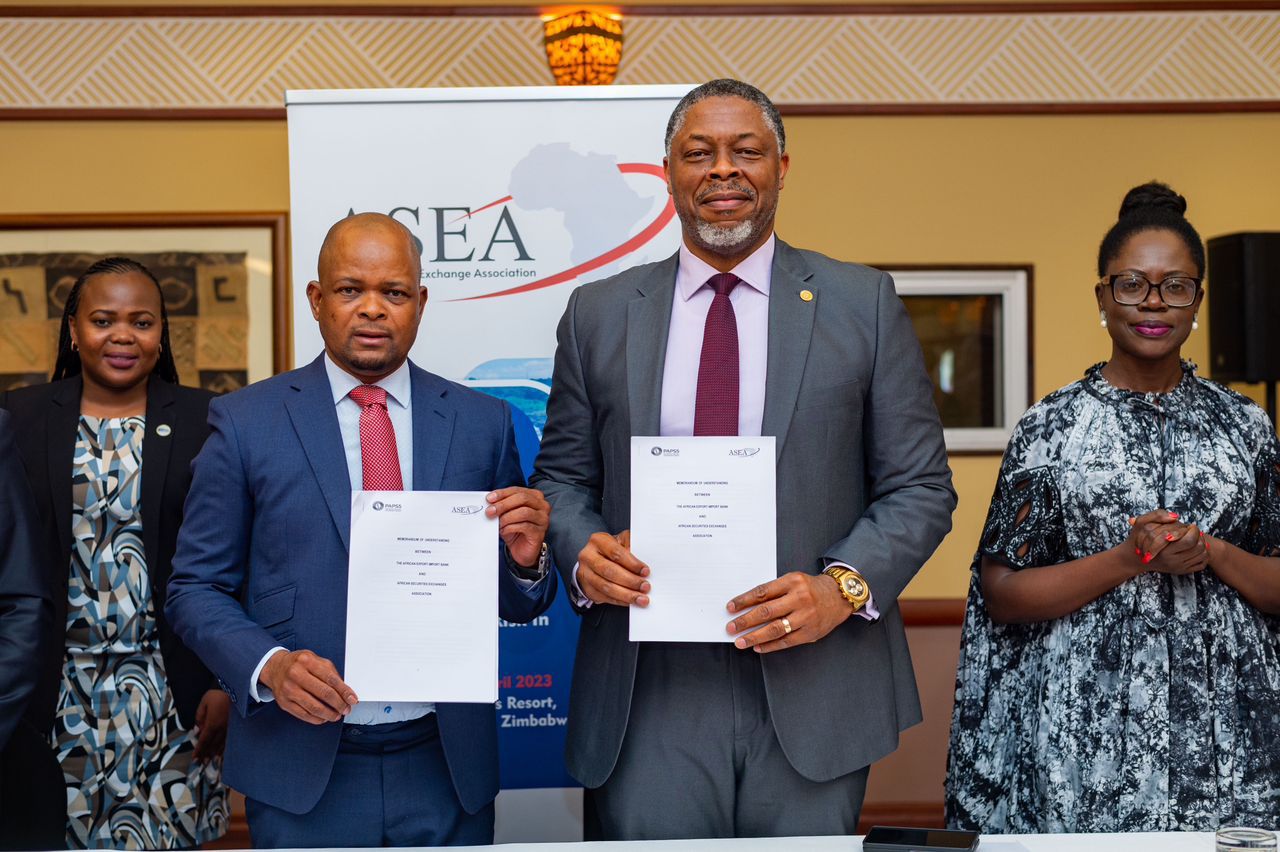
The Pan African Payment and Settlement System (PAPSS) and the African Securities Exchange Association (ASEA) have signed a Memorandum of Understanding (MoU) to enhance collaboration and cooperation in promoting cross-border payments of Capital Markets infrastructure in Africa. The MoU was signed on 14 April 2023 during the ASEA 2023 Building African Financial Markets Seminar held in Victoria Falls, Zimbabwe, which brought together Stock Exchanges and capital markets stakeholders from across Africa to discuss ways to deepen integration and connectivity of African capital markets.


For a long time, investors doing business in Africa have struggled with making and settling cross-border payments. Payments take a long time to complete, are expensive since the existing environment necessitates the use of correspondent banks outside of the continent, and are done in foreign currencies (USD or Euro). Because of this, African Export and Import Bank (Afreximbank) and the African Continental Free Trade Area (AfCFTA) Secretariat developed PAPSS, which enables instant cross-border payment in local currency.


Through the umbrella of ASEA, with 9 exchanges and a combined market capitalization of $1.5 trillion, PAPSS provides an opportunity as the payment system to further enhance the African Exchanges Linkage Project (AELP), a flagship project of ASEA to facilitate cross-border trading of securities in Africa. PAPSS has started a period of fast deployment of its system throughout all African nations, having already gone live in the countries comprising the West African Monetary Zone (WAMZ), namely Nigeria, Ghana, Liberia, Gambia, and Guinea. As a result, Zimbabwe, Zambia, and Djibouti have recently joined the network and will soon be operational. This partnership with ASEA will also facilitate the deployment of PAPSS across the ASEA member nations.


Through our collaboration, we aim to create a reliable and efficient payment system that will enable investors to easily trade across different stock exchanges on the continent

Commenting on the signing, the Chief Executive Officer of PAPSS, Mr. Mike Ogbalu III, said: “PAPSS supports a wide variety of use cases, including cross-border retail and trade transactions for individuals and corporations and cross-border investments with the African Stock Exchanges. Consequently, working with ASEA, which pioneered the AELP with cross-border securities trading as a central tenet, is a significant step towards the rollout of PAPSS throughout the continent.


“This partnership is a demonstration of our commitment to driving trade flows and economic growth in Africa. Through our collaboration, we aim to create a reliable and efficient payment system that will enable investors to easily trade across different stock exchanges on the continent. Our immediate task is to create a workforce between PAPSS and ASEA as soon as possible to identify ways to facilitate the transfer of funds across ASEA member African Stock Exchanges. To that end, I’d like to extend an invitation to the relevant capital markets stakeholders to join us in this ground-breaking venture for the African business and investment communities.”


The President of ASEA and Chief Executive Officer of Botswana Stock Exchange, Mr Thapelo Tsheole, said: “We are delighted to partner with PAPSS on this important initiative. Our capital markets integration initiative through the AELP will play a critical role in deepening Africa’s capital markets and promoting cross-border investment. PAPSS’s expertise in payment settlement will be instrumental in the cross-border transfer of funds among the participating exchanges.”


PAPSS is unwavering in its dedication to fostering the growth of a thriving payment ecosystem and encouraging the development of new solutions for the economic advancement of the African continent and its people.


The Director-General National Information Technology Development Agency (NITDA), Kashifu Inuwa CCIE, has expressed readiness to collaborate with Emerging Tech Africa, led by Atayero of Aramoko Kingdom in Ekiti State and Chairman of Emerging Tech Africa Communication Limited, HRH, Oba (Dr). Olusegun Aderemi Idowu (JP), on critical areas of the Digital Economy.

Inuwa stated this while receiving the Chairman, Emerging Tech Africa Communication Limited; Lead Team of JKL CAPITAL, Mr. J. Shi and Ms. Nidaa Sabbagh on courtesy visit where issues of mutual understanding and benefits in the areas of digital economy, job and wealth creation were discussed.

While emphasising importance of the agency’s National Digital Skills Strategy, which aims to achieve 95% digital literacy among Nigerians by 2030, as well as the adoption of emerging technologies like Artificial Intelligence to tap into the $13 trillion global market by 2030, the DG outlined NITDA’s achievements and discussed the prospects and challenges of Nigeria’s IT ecosystem.

“We have some flagship initiatives and projects which we believe can help us capture value; one of such is building and hatching talents because according to research, by 2030, there is going to be 85million talent deficit globally, making talent a huge industry itself”.

“So, we are working towards positioning Nigeria as the world’s talent factory, exporting our brains, providing talented workforce to render services for your establishments, Nigeria, the continent and the world”, the DG expounded.
Inuwa reiterated the need for continuous collaborations for higher productivity, according to him “no one can whistle a symphony; it takes a whole orchestra to play it. We believe in teamwork and we know there are things we can do as a government that you cannot do as a private sector and vice versa, but together, nothing is impossible. That’s why we are always willing to forge a common front of working together to co-create the ecosystem and prosperity for all”.

The DG also took his guests through other key focus areas of the Agency, including the implementation of NITDA Start-up Act, completion of the National Digital Innovation and Entrepreneurship Centre, National Data Strategy Implementation, Adoption of Blockchain Technology, Implementation of the National Digital Skills Strategy amongst others.

“As we look forward to our collaboration and the possible future, NITDA remains committed to sustaining the momentum, leveraging emerging technologies, developing policies and strategies that promote digital transformation, and creating an enabling environment for our startups and entrepreneurs to thrive”, the DG affirmed

The leader of the delegation, Atayero of Aramoko Kingdom, Ekiti State and Chairman, Emerging Tech Africa Communication Limited, HRH, Oba (Dr). Olusegun Aderemi Idowu (JP) who was in company of his team members; Lead Team of JKL CAPITAL, Mr. J. Shi and Ms. Nidaa Sabbagh said the courtesy visit was to seek possible partnerships and discuss issues of mutual understanding and benefits in areas of digital economy, job and wealth creation.

“We are an indigenous company doing excellently in the area of information technology, digital economy, job and wealth creation. Our partners, JKL CAPITAL in London are in Nigeria to partner with our company ETECHA COMMUNICATION LIMITED to do business, and we wish your Ministry could be part of government agencies that will warehouse some of the business interest to attract mutual interest and benefits for Nigeria”, Dr Idowu said.

While enumerating some of the areas of interest in Nigeria the company wishes to invest in include Blockchain Technology, Gaming business opportunities, TV broadcasting resources, and Payment Solution Service, Dr Idowu was hopeful that the collaboration will be beneficial to all parties involved.


Peter Oluka (@peterolukai), the Editor of TechEconomy has joined the Nigeria Internet Registration Association (NiRA) Executive Board of Directors (EBoD).

Peter, a multi-award winner practicing ICT Journalist was elected at the 15th Annual General Meeting (AGM) cum election held in Lagos on Friday at The Zone, Lagos where Mr. Adesola Akinsanya and Mr. Murtala Abdullahi emerged the new President and the Vice President respectively.

They took over from Mr. Mohammed Rudman and Mr. Toba Obaniyi in that order. Other members elected into NIRA Executive Board of Directors (EBoD) at the meeting are; Mr. Ebenezer Dare of Hostlag Limited, and Seun Kehinde of QServers Networks Limited.

Meanwhile, five members have been elected to the Board of Trustees of NiRA. They are; Mrs Ibukun Odusote; Publisher of ITRealms, Mr. Remmy Nweke; former Financial Secretary of NiRA, Mr. Biyi Oladipo; former NIRA president, Mrs. Mary Uduma and Executive Director Centre for Information Technology and Development (CITAD) Mr. Yunusa Zakari Ya’u.

Peter Oluka has been a .ng Domain Name Brand Ambassador since 2015). He actually started his mainstream journalism in 2010 working with the Nigerian NewsDirect Newspaper. His penchant for newsworthy events and stunts registered NewsDirect’s presence in the league of Property & Environment and Labour pious media outfits.

He also Co-founded GrassRoots.ng, a news platform rooted in Speaking for the Global Citizen.

Peter also Co-founded Njalo.ng; an online marketplace for ‘Easy sell & Easy Buy’ or new and used products.

Prior to that, he worked at the Nigeria CommunicationsWeek, as a Senior Reporter; a medium with fad in ICT reportage. Peter’s articles have attracted interests from both international and indigenous ICT/Technology giants.

Peter’s quest for journalism, PR and media practices is exceptional. For many years, he contributed to ‘Communications’ pullout in the Guardian Newspapers.

Peter Oluka is among the pioneer Fellows of the MTN Nigeria Media Innovation Programme (MTN MIP-1) curated by the School of Media and Communications (SMC) Pan Atlantic University (PAU).

He is an Associate Member of the Institute of Information Management (IIM-Africa) and was awarded the Records and Information Management Best ICT Reporter of the Year by the Institute of Information Management-Africa (IIM-Africa) in year 2014.

He received Special Recognition Award at the 2017 Nigeria Computer Society (NCS) National Information Technology Merit Awards (NITMA) for Excellence in IT reporting.

He also won Nigerian Women in Information Technology (NIWIIT) Best IT Editor of the Year 2018.

Peter is a certified Customer Relations Management Personnel by the Nesburg School of Business and Management (NESBG-Nigeria), Africa’s foremost Persuasion School of Business based in South Africa (2015).

He obtained PGD (Mass Communications) from NOUN in 2015; HND (Mass Communication) from the Institute of Management and Technology, IMT, Enugu in 2008.

‘Multimedia, Mobile and Social Media Journalism Programme Facilitated by renowned new media experts Dan Mason Media (2017)’ hosted by Journalism Clinic, Lagos, Nigeria, among other trainings and achievements.

Peter’s media practice cuts across Speech Writing, Public Relations, Advertising, other Communications interests.

Commenting on his election, Peter said: “I am deeply committed to the massive adoption of .ng buttressed by the fact that I have been a .NG (Dot NG) domain name Brand Ambassador since 2015!

“Yes, I have leveraged different platforms and fora to publicize the Nigerian Domain Name (DNS) Industry, amongst other accomplishments, training, awards and certifications.

“I strongly believe there is a need for the injection of fresh ideas to further expand our identity in cyberspace, and I am grateful for this opportunity to serve”.

NiRA was founded on 23 March 2005 to oversee Nigeria’s country code top-level domain, .ng. However, the registration of domain names are handled by NiRA certified registrars, under its Registry–Registrar–Registrant model in operating and managing the top-level domain.


As software spend in South Africa increases again after a dip in 2020, many enterprises are wondering how to negotiate better deals. Dealing directly with large software publishers is a challenging and complex task for many organisations. Marilyn Moodley, Country Leader for South Africa and West, East, and Central Africa (WECA) at SoftwareOne, gives advice on how to broker the best possible deal.


  1. Do your homework

Start preparing for negotiations well in advance, says Moodley. “Precisely how long you will need to prepare differs from organisation to organisation and the size of the contract. For major contracts, you should start preparing six to 12 months before negotiations will begin. This might seem like a long time, but it’s crucial to gather enough data and talk to people across your organisation about their software use and future needs.”


  1. Start with what you have

Understand exactly what licences you have purchased and which products and features are included in them. Not knowing the exact details of what you are entitled to use could lead you to buy more than you really need. And anything that is underutilised could be the basis for cost savings. “Then, look to the future. Speak to your C-suite to understand where they see the business going so that you can provide for the future. If you’re negotiating a 3-year contract for a central part of IT infrastructure, you need to know whether senior management is planning a series of mergers or if your sales and marketing team is planning a big shift to more data-driven campaigns. Your decisions now will support the future direction of the business. Be sure to get involvement from all departments,” says Moodley.


  1. Have a clear negotiation strategy

As with any negotiation, you should have clear objectives. What do you want to achieve from these negotiations? What does the best contract for your business look like right now? How are you going to achieve that result? How will the vendor respond to your approach and position?


Then, follow the basic rules: All communication should be through one person only, with no informal discussions where important information might be unwittingly given away or verbal agreements made. Keep things cordial, polite, and professional. And always have a plan B. “Timing is also important,” says Moodley. “Don’t wait until a contract is nearly at its end, when the urgency gives the vendor an advantage.”


  1. Negotiate the entire contract, not just the price

Today’s easy access to cloud services, shadow IT, fast-evolving business needs and increasing digitisation have all added to the complexity of software negotiation – not to mention the explosion in the number of software providers that a typical company has to deal with.


This complexity makes it hard to see exactly what you are getting, and it means that terms and conditions are often overlooked during negotiations. But because the devil is in the details, terms and conditions are often your best chance of tipping the balance of a contract in your favour, says Moodley. “For instance, if your company is likely to be active in mergers and acquisitions, it is possible to add a no-audit clause, valid for a certain period. Or some vendors could be willing to negotiate unlimited usage for an agreed price for a certain period of time. At the end of that term, real usage will be measured, and that will form the basis for setting the price for the remaining period of the contract.”


  1. Consider expert help

Third parties who specialise in software negotiations, such as SoftwareOne, have benchmarking information, insight into market trends, and an understanding of vendors’ drivers and motivations that could lead to a much better deal. “As a customer, you only get to see one contract every few years. Third parties negotiate on behalf of many customers and have key data and intelligence on contract terms, pricing, and available discounts. They know how much your competitors are paying, and what you should be aiming for. Though this is an added immediate expense, it can save you a bundle in the long term.”


Sub-Saharan Africa could stand to lose the most if the world were split into two isolated trading blocs centered around China or the United States and the European Union. In this severe scenario, sub-Saharan African economies could experience a permanent decline of up to 4 percent of real gross domestic product after 10 years according to our estimates—losses larger than what many countries experienced during the Global Financial Crisis.


Economic and trade alliances with new economic partners, predominantly China, have benefited the region but have also made countries reliant on imports of food and energy more susceptible to global shocks, including disruptions from the surge in trade restrictions following Russia’s invasion of Ukraine. If geopolitical tensions were to escalate, countries could be hit by higher import prices or even lose access to key export markets—about half of the region’s value of international trade could be impacted.

The losses could be compounded if capital flows between trade blocs were cut off due to geopolitical tensions. The region could lose an estimated $10 billion of foreign direct investment (FDI) and official development assistance inflows, which is about half a percent of GDP a year (based on an average 2017–19 estimate). The reduction in FDI in the long run could also hinder much-needed technology transfer.

For countries looking to restructure their debt, deepening geoeconomic fragmen­tation could also worsen coordination problems among creditors.

The region could lose an estimated $10 billion of foreign direct investment (FDI) and official development assistance inflows

The region would fare better if only the US/EU cut ties with Russia and sub-Saharan African countries continue to trade freely. In this scenario—termed “strategic decoupling”—trade flows would be diverted towards the rest of the world, creating opportunities for new partnerships, and possibly boosting intra-regional trade. Because some African countries benefit from access to new export markets and cheaper imports, the region as a whole would not incur a GDP loss. Oil exporters supplying energy to Europe could even gain.

Building resilience

To better manage shocks, countries need to build resilience. This can be done by strengthening the ongoing regional trade integration under the African Continental Free Trade Area, which will require reducing tariff and non-tariff trade barriers, strengthening efficiency in customs, leveraging digitalization, and closing the infrastructure gaps. Deepening domestic financial markets can also broaden sources of financing and lower the volatility associated with relying too much on foreign inflows.

To take advantage of the potential shifts in trade and FDI flows, countries in the region can try to identify and nurture sectors that may benefit from trade diversion, for example, in energy. Commodity exporters in the region could potentially displace much of Russia’s energy market share in Europe.

Countries can also rely on trade promotion agencies to help identify potential opportunities, build the necessary skills and capacity for exports, and eventually re-orient production to take advantage of new trade flows. Improving the business environment, such as by lowering entry, regulatory, and tax barriers could also help.

What the exact outcomes will be from fragmentation and polarization, and whether these trends will continue are uncertain. What is clear, however, is multilateral institutions will need to continue to facilitate dialogue among nations to promote economic integration and cooperation.


The Executive Vice Chairman of the Nigerian Communications Commission (NCC), Prof. Umar Garba Danbatta, on Thursday, led a delegation of top officials of the Commission on condolence visits to the families of two prominent Nigerians who recently passed away.


The visits were to the families of the late Alhaji Musa Gwadabe, former Minister of Labour, and the Registrar of Bayero University, Jamil Ahmed Salim, who both died recently in Kano.


During the visits, Danbatta commiserated with the families of the deceased and prayed for the repose of the souls of the departed. He described the late Alhaji Musa Gwadabe and the Registrar of Bayero University, Kano as patriotic Nigerians who contributed immensely to the development of the country in various capacities.


According to him, the loss of such great minds is not only a loss to their families but also to the entire nation. He, however, urged the families to take solace in the fact that their loved ones lived exemplary lives and left indelible marks in the sands of time.


He said, “We are deeply saddened by the news of the passing of Alhaji Musa Gwadabe and the Registrar of Bayero University, Kano. They were great Nigerians who made remarkable contributions to the development of our dear country. They will be greatly missed.”


He added, “We pray that the Almighty Allah grants them eternal rest and gives their families the fortitude to bear the irreparable loss.”


The families of the deceased expressed their gratitude to the NCC boss.


The EVC also paid a similar visit to the Vice Chancellor of the BUK, Prof Sagir Adamu Abbas who equally expressed gratitude for the visit.


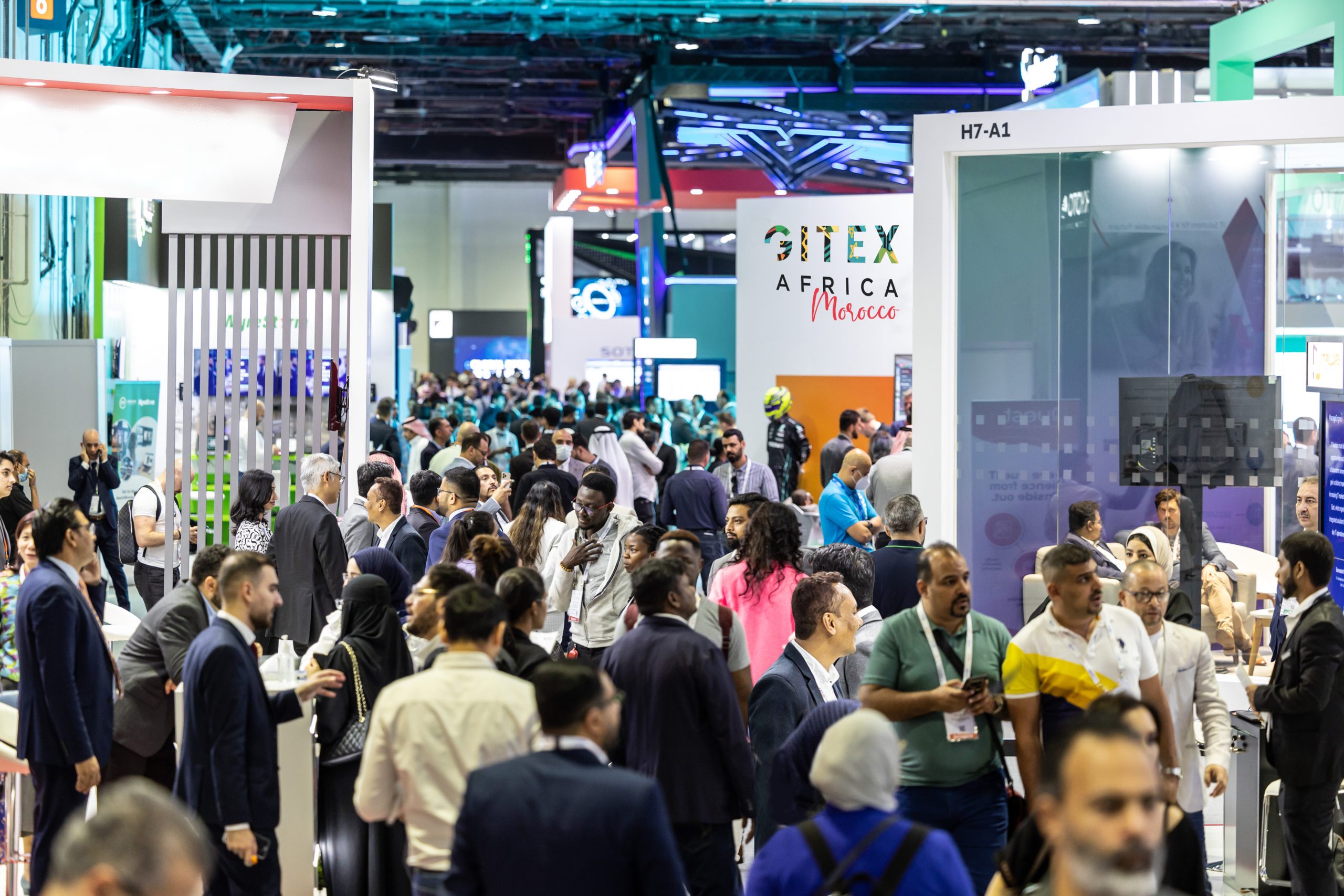
The cross-continent support of the global tech community has culminated in a sold-out GITEX Africa 2023 (https://www.GITEXAfrica.com/), with an expansion phase now underway as construction ramps up of a purpose-built super venue in Marrakech Morocco for Africa’s largest and most influential tech and start-up event.


The inaugural GITEX Africa will make its historic debut from 31 May-2 June 2023, welcoming more than 900 exhibitors, start-ups, and visiting delegations from 95 countries for three days of intensive outcome-focused public-private sector collaborations in the world’s next biggest digital economy.


GITEX Africa is held under the High Patronage of His Majesty King Mohammed VI of the Kingdom of Morocco, and hosted by the Digital Development Agency (ADD), the public entity leading the Moroccan government’s digital transformation agenda under the authority of the Moroccan Ministry of Digital Transition and Administration Reform.


H.E Dr Ghita Mezzour, Minister of the Moroccan Ministry of Digital Transition and Administration Reform, said: “The Kingdom of Morocco is honoured to host the 1st edition of GITEX Africa Morocco in 2023, an event which constitutes a real opportunity for our country to deepen the efforts made and the work carried out in recent years in the field of digital transition and technological innovation.


“It falls perfectly in line with the efforts of the Kingdom of Morocco to strengthen South-South cooperation in the digital field, and to contribute to the influence of the African continent on the international level. GITEX Africa Morocco will thus aim to promote multi-sector technological innovation and the digital transformation of the continent, pursuant to the Orientations of His Majesty King Mohammed VI, May God Assist Him.”


“The potential for tech on the continent of Africa is limitless and the time for action is now,” added Mohammed Drissi Melyani, General Director of the Digital Development Agency (ADD). “As the catalyst for Morocco’s digital transformation, ADD is involved to promote innovation in many sectors and to push all the involved partners of the ecosystem to ensure Smart digital transition.


“As the African continent is beginning to create an enabling environment for technology innovation to thrive, GITEX Africa Morocco is a real opportunity to gather the tech moguls and promote investments and we are deeply engaged to contribute to this first edition’s success.”


GITEX Africa 2023 is affiliated with GITEX GLOBAL, the world’s largest tech and start-up show hosted in Dubai.  “Africa has a great story to share with the world in their digital cities evolution powered by a talented youth generation and future focused governments,” said Trixie LohMirmand, CEO of GITEX Africa’s organiser KAOUN International, who announced the event’s expansion plans during a Moroccan tour recently meeting key tech stakeholders, exhibitors, government entities and media.


“That GITEX Africa is so well received in its inaugural edition is a strong validation of the world’s confidence and optimism in the growth of the African digital economy. Every company with an internationalisation strategy must partake in the digital revolution of the world’s most watched continent.”


Converging transformational technologies at Africa’s showpiece tech event


With the African Union’s bold mission to unify the continent into a secure Digital Single Market by 2030, GITEX Africa exhibitors are rousing optimism about the proliferation of trends shaping the continent’s tech ecosystem, from increased internet connectivity and a rampant start-up scene, to the rise of artificial intelligence and a flourishing fintech sector.


IBM, a global technology and consulting company, will utilise GITEX Africa 2023 to amplify their commitment to the continent.  Badrane Kaddour, Africa Partner Ecosystem Leader at IBM, said: “Our portfolio is built around hybrid cloud and AI, the two most transformational technologies of our time.  Our go-to-market approach brings together the necessary software, consulting, and infrastructure that our clients require, from across our expanding ecosystem of partners.


“Attending the inaugural GITEX Africa is an opportunity for us to highlight our commitment to the continent, expand our presence and market reach through our ecosystem of partners as well as showcase our latest technological innovations that are helping our customers increase productivity, reduce costs and fuel growth.”


With an African presence spanning more than two decades, global cybersecurity heavyweight Kaspersky is another exhibitor investing in Africa’s vast potential.  CEO Eugene Kaspersky commented: “For more than 20 years now we’ve been working to protect Africa’s businesses and ordinary users – securing the continent’s technologies and fast-growing economies.

Africa has a great story to share with the world in their digital cities evolution powered by a talented youth generation and future focused governments


“It’s important that we share expertise and exchange knowledge needed for protection against cyberthreats, which are constantly growing in both volume and sophistication. Today, we’re glad to be part of the first edition of GITEX Africa, the continent’s largest tech event – participation in which we deemed simply essential in helping to build a more secure digital world together.”


Moroccan exhibitors elevate Africa’s thriving tech revolution


Major players from Morocco’s tech landscape have also signed on for this much-awaited business venture, in-line with the North African country’s unifying economic mission, where 60 percent of its foreign investment is directed towards Africa.


Maroc Data Center (MDC); MTDS, a leading cybersecurity and technological solutions provider; Ribatis, a provider of e-Gov platforms for African public administrations; and CASANET, a pioneer in the ICT industry, are among the Moroccan exhibitors with a joint mission to elevate Africa’s thriving tech revolution.


Yassir Lamrani, CEO at CASANET, said: “As one of the Moroccan tech pioneers, we would not miss this inaugural event that marks the start of a new era for Africa’s bold digital ambitions. The African tech ecosystem is one of the fastest growing in the world, and since GITEX Africa is the most sought-after tech event in the continent, we’re hoping to meet Africa’s brightest IT minds, and to connect with the African youth who hold the future of tech in Africa.”


GITEX Africa DIGITAL SUMMIT leads power-packed conference programme


Leadership dialogues and outcome focused meetings will meanwhile dominate at GITEX Africa via a power-packed multi-sectoral conference programme including The GITEX Africa DIGITAL SUMMIT and the GITEX AFRICA CEO Forum.


The GITEX Africa DIGITAL SUMMIT will unify 250-plus government and private sector leaders, policy makers, investors and academics, to steer Africa’s transformation into a single digital market.  Critical themes covered at the world’s most influential forum for dialogues, exchanges and collaborative intentions, range from analysing the current state of play in the continent’s digital economy, to fast-tracking an integrated and inclusive digital public infrastructure.


Lacina Koné, the DG and CEO of Smart Africa – the pan-African organisation driving the continent’s digital transformation – is a headline speaker at the two-day summit.  Smart Africa is an alliance of 36 African countries tasked with Africa’s digital agenda, to accelerate sustainable socio-economic development on the continent and usher Africa into the knowledge economy through affordable access to broadband and the use of ICTs.


“I am pleased to see GITEX coming for the first time to Africa, the land of all digital opportunities,” said Kone, who will be part of a panel discussion titled: ‘Uniting Towards One African Market,’ adding that Smart Africa aims to achieve an inclusive multi-stakeholder approach that encourages innovation through data sharing and cross-border data flows while protecting individuals’ rights.  “We look forward to promising insightful exchanges at GITEX Africa where businesses will meet and decisions will be made.”


North Star scales African imagination converging 400-plus start-ups


GITEX Africa 2023 has also partnered with North Star, the world’s largest start-up event, to deliver North Star Africa, converging more than 400 start-ups – including 100 Moroccan start-ups – from across the globe to extend engagements, build connections, and scale imaginations in an African tech ecosystem where investment reached US$6.5 billion in 2022.


Saudi-headquartered food tech company NOMU Group is among those looking to foster prosperous partnerships in Africa.  “Africa’s start-up ecosystem has matured significantly with banks and governments creating mechanisms that support the start-up community,” said Shehab Mokhtar CEO & Co-Founder at Nomu Group, which operates the Jumlaty and Appetito e-grocery and food-tech start-ups in Saudi, Egypt, Tunisia, and Morocco.


“The African continent is emerging as a hotbed for foreign investment, due to the rise of mobile penetration, better internet infrastructure and a growing fintech start-up ecosystem.  At GITEX Africa, Nomu Group looks forward to connecting with tech innovators, start-ups, investors and global innovation hubs, while at the same time collaborating, and exploring new ventures in the world’s rising tech continent.”

GITEX Global, the world’s largest and most inclusive tech event will debut GITEX AFRICA (www.GITEXAfrica.com) in Marrakesh, Morocco from 31 May through 2 June 2023. Shure will be present at the continent’s largest tech event show and will demonstrate its latest audio solutions for the AV conferencing and professional audio industry. Shure’s presence at GITEX AFRICA 2023 reinforces the importance of high-quality audio technology for IT managers and AV decision-makers, while strengthening connections with key customers, partners, and industry friends.


Shure understands that organizations around the world need scalable, user-friendly audio solutions to facilitate seamless collaboration as they continue to help remote and hybrid workforces ensure long-term success. To address these needs, Shure continues to innovate and enhance its conferencing technology to empower teams with clear, high-quality audio so that, no matter where the workforce is, they communicate efficiently and remain more engaged and productive than ever.

A long-time participant of GITEX Global, Shure has been providing audio solutions for companies throughout Africa for decades. In 2019, the UM6P (https://apo-opa.info/3HeE7Za) in Morocco turned to Shure to outfit their modular classrooms with Microflex® Advanced Ceiling Array Microphones to provide pristine audio capture for remote learners and teachers, all before remote and hybrid environments were a daily occurrence. The high-quality audio solution enabled teachers to wander around the classroom and be as free as possible while still capturing students’ questions without picking up any ambient noise. The seamless integration of the ceiling array microphones led to an interactive learning experience for everyone involved.

“We offer smart meeting room solutions for different scale of classrooms and meeting space” said Yassine Mannai, Senior Sales Manager, Middle East and Africa at Shure. “We understand the need for high-quality audio products in any environment, including professional audio applications, and are excited to showcase a range of smart solutions at GITEX AFRICA.”

We offer smart meeting room solutions for different scale of classrooms and meeting space

For decades, expert engineers and sound techs have relied on Shure Wireless Systems for live broadcasts and in challenging RF environments. Most recently, teams relied on Axient® Digital Wireless Systems for Super Bowl LVII and the GRAMMY® Awards to deliver pristine audio for everyone tuning in to watch the live events.

Axient Digital was developed with input from top audio professionals, with every feature being stress-tested and every detail fine-tuned. Designed to maximize stability, quality, control, and scalability, Axient Digital is engineered for the moments that command the highest degree of attention.

Shure will showcase the following innovations, conferencing solutions, and partnerships at the trade show:


  • Microflex® Ecosystem (https://apo-opa.info/3Lvg0Ig) —Offers the complete portfolio of networked and superior audio solutions, from DSP to loudspeakers, that can be perfectly tailored to meet the needs of any AV infrastructure. For corporations, governments, universities, or larger organizations, Microflex Ecosystem provides a best-in-class experience, ensuring meetings and conferences work as effectively as possible within any space.
    • Microflex® AdvanceMXA920 Ceiling Array Microphone (https://apo-opa.info/3LvoZsU)—The latest addition to the Microflex ecosystem and new flagship product, MXA920 ensures easy deployment and unmatched voice capture. It seamlessly integrates with other conferencing platforms and passed the Frost & Sullivan Analyst Gauntlet.
  • Stem Ecosystem (https://apo-opa.info/3n06fZo)—The enhanced ecosystem, reconfigured with several recent firmware updates, is ideal for situations that require straightforward, deployable audio solutions for daily conferencing needs. Small businesses and smaller meeting rooms within the context of a larger AV project can enjoy a consistent and effective audio experience with Stem Ecosystem devices.
  • Axient Digital Wireless System (https://apo-opa.info/41XvvOv)—Incorporates the most innovative wireless technology to date while providing improved high-performance RF, exceptional audio quality, control, and hardware scalability. Catering to the evolving needs of the television, broadcast and film industries, Axient Digital provides two lines of transmitters, AD series and ADX series, along with additional accessories and software to give users more control and provide real-time monitoring of network control and products without interrupting the live event.
    • AD600 (https://apo-opa.info/3ozPR1W)—The latest addition to Axient Digital, offers real-time, wide-band spectrum scanning and monitoring from 174 MHz to 2.0 GHz, spectrum analysis, and frequency coordination in a single rack unit. Six antenna connections deliver multiple coverage options while Dante connectivity provides advanced audio monitoring of any network.
  • IntelliMix® Room integrated in Crestron XiO (https://apo-opa.info/3n5e8wA)—IntelliMix Room software now supports remote monitoring and management within the Crestron XiO Cloud® platform, enabling insight into IntelliMix Room and any connected MXA products on the same network, delivering a seamless AV conferencing experience.
  • Microsoft Teams Compatibility (https://apo-opa.info/3L9W4ct)—With a portfolio that now includes the complete audio signal chain from microphone to DSP to loudspeaker, Shure provides certified audio solutions for Microsoft Teams Rooms environments of all sizes.
  • Flexible solutions with Barco (https://apo-opa.info/3L8w1m3)—Connected with USB, the Shure Audio Ecosystem and Barco ClickShare Conference give users a range of scalable and flexible audio options that adapt to any environment.
  • From the desk to the meeting room with Zoom (https://apo-opa.info/41FRt8X)—Shure now delivers a complete audio ecosystem certified for Zoom. Seamlessly connect microphones, DSPs, and loudspeakers including MXA920 and MV7 to Zoom’s technology platform to upgrade the participant’s audio experience.


For more information about Shure’s systems offerings, please visit: www.GITEXAfrica.com or stop by the Shure booth Hall 2 2C-50 on the GITEX AFRICA 2023 show floor.


As the world becomes increasingly interconnected and reliant on technology, the need for robust cyber-norms and confidence-building measures has become a pressing issue, therefore global leaders from governments, international organisations, and cybersecurity experts gathered at International Conference on Cyber Diplomacy (ICCD), organised by Cyber Diplomacy Center, Bucharest, Romania, to discuss how international cyber-norms that are widely accepted and followed by all actors in the digital space could be developed and promoted.

Kashifu Inuwa, CCIE, Director General, National Information Technology Development Agency (NITDA), who participated virtually during a panel session opined that, first step towards promoting the development of international cyber-norms is to increase awareness among stakeholders through conferences, seminars, workshops, and other awareness campaigns to educate people about the importance of cybersecurity and the need for international cyber norms.

The panel session had in attendance of cybersecurity experts notably, KABDESH Adiletkhan Kanatuly, Head of the Personal Data Protection Department of the Information Security Committee, Ministry of Digital Development, Innovation and Aerospace Industry, Republic of Kazakhstan; Alexandru Georgescu, Moderator WG3 on Critical Energy Infrastructures; and Gabriela Matei, Training team lead, EuroAtlantic Center for Resilience.

Inuwa noted that, actors need to develop the capacity of their workforce in the cybersecurity industry to help promote the development of international cyber-norms. This can be achieved through training, education, and the provision of resources needed to tackle cyber threats.

Inuwa further said that, International Diplomacy is another key aspect of promoting the development of international cyber-norms. With the ever-evolving landscape of technology and cybersecurity, according to him, it is critical for countries to establish common grounds on cybersecurity issues and advocate for the development of international cyber-norms that are widely accepted and followed by all actors in the digital space.

“There is a need to develop strong legislation to regulate cybersecurity and enforce these laws to deter cybercriminals. This will go a long way in promoting the development of international cyber-norms,” he said.

Speaking on Confidence-building Measures (CBMs) to enhance trust and prevent misunderstandings or miscalculations in cyberspace, Inuwa said CBMs can be used to enhance trust and prevent misunderstandings or miscalculations in cyberspace by promoting transparency, communication, and cooperation among stakeholders.
He said in Nigeria, the government has established several initiatives to build trust and promote transparency in cyberspace. One of such initiatives is the National Computer Emergency Response Team (ngCERT), which was established in 2014 to provide a coordinated response to cyber incidents in Nigeria.

The CERT works closely with other government agencies, private sector organizations, and international partners to share information and expertise on cybersecurity issues. The CERT has been instrumental in responding to cyber threats and building trust among stakeholders in Nigeria.

“Another initiative is the Cybercrime Advisory Council (CAC), which was established in 2013 to provide advice and guidance on cybersecurity issues. The CAC brings together government, private sector, and civil society representatives to share information, collaborate on cybersecurity initiatives, and promote awareness of cyber threats. The CAC has helped build trust and cooperation among stakeholders and facilitated the development of cybersecurity policies and guidelines in Nigeria.
“Nigeria has also been actively engaging with international partners to promote cybersecurity and adopt international cyber norms. For instance, Nigeria is a member of the African Union Cybersecurity Expert Group and the Commonwealth Cybercrime Initiative, which promote cooperation and collaboration on cybersecurity issues.
“Furthermore, Nigeria’s National Cybersecurity Policy and Strategy document provides a framework for addressing cybersecurity challenges and promoting a secure and resilient cyberspace. The policy framework recognises the importance of international cooperation and collaboration and highlights the need for Nigeria to adopt and promote international cyber norms,” he added.

While commenting on challenges involved in implementing CBMs, Inuwa stated that there are several efforts aimed at addressing these challenges and promoting the effectiveness of CBMs.

He said the Nigeria has established several platforms for collaboration among stakeholders, such as the Cybercrime Advisory Council and the National Computer Emergency Response Team. These platforms provide opportunities for stakeholders to share information, expertise, and resources and to collaborate on cybersecurity initiatives.

He added that Nigeria is also investing in the development of cybersecurity expertise and resources, such as training programmes for cybersecurity professionals and the establishment of cybersecurity research and development centres.


Identity verification is an essential component of many online platforms and mobile apps, particularly those in industries such as finance, e-commerce, and healthcare.
In this guide, we’ll explore some best practices for implementing identity verification in Africa and discuss some of the regulatory challenges product managers face.


The Importance of Identity Verification in Africa

Africa has one of the youngest populations globally, with over 60% of the population under the age of 25. The continent has also experienced a significant surge in mobile phone adoption, with more than 400 million mobile phone users across the continent. As a result, many African businesses are moving online to cater to the growing demand for digital products and services. However, this increase in digital transactions has surged online fraud.

In 2020, the value of online fraud in Africa rose by 33%, with Nigeria, South Africa, and Kenya being the most affected countries. In South Africa, for example, cybercrime costs the country an estimated ZAR 2.2 billion annually. Identity verification is, therefore, critical for businesses operating in Africa to protect their customers and ensure compliance with regulations.

Understanding the Regulatory Landscape in Africa

African countries have different regulatory frameworks, and you should understand the specific regulations that apply to your industry and country.

In Nigeria, for instance, financial institutions are required to comply with the Central Bank of Nigeria’s (CBN) KYC (Know Your Customer) policy, which requires financial institutions to verify the identity of their customers. Similarly, in South Africa, the Financial Intelligence Centre Act (FICA) requires financial institutions to verify the identity of their customers and perform ongoing due diligence to prevent money laundering.

In Kenya, the Data Protection Act requires businesses to obtain consent from individuals before collecting and processing their data. The act also requires businesses to take appropriate measures to ensure the security and confidentiality of the data they collect.

Best Practices for Implementing Identity Verification in Africa

  1. Choose the appropriate verification method

There are various methods of identity verification, including biometric verification, document verification, two-factor authentication, and knowledge-based authentication. Each method has its advantages and disadvantages, and you should choose the appropriate method for your use case and user base.

For instance, in countries with high illiteracy rates, knowledge-based authentication may not be the best option. And countries with low-tech adoption, biometric authentication won’t fly. So consider your customers.

Yemisi Alabi, Product Manager at Interswitch recommends that “you have to sit and study what’s possible. For example, agency networks and POS are one of the finest innovations in Nigeria because access to cash is very limited. So you need to think of an identity system that would be owned and remembered by them and can be assimilated into a retrievable data system.”

Case study: Invest Bamboo

Invest Bamboo is a Brokerage Firm in Africa that gives people smart, affordable and accessible options for investing in the United States of America. As a fintech company, Bamboo requires customers to submit a National Identification Number (NIN) and Bank Verification Number (BVN), on signup. These two forms of identification are unique to each Nigerian.

By integrating Verified.africa’s API to their KYC process, Bamboo solved the problem of dual identities, processing over 5,000 signups monthly.

Create an account on Verified africa, get started, address verification fintech


        2. Use secure and reliable technology.

Identity verification data is sensitive and valuable, making it a prime target for hackers and cybercriminals. You should ensure the technology and tools you use for identity verification are secure and reliable like third-party providers that use secure and encrypted technology to transmit and store data.

Bade Adesemowo, co-founder of Social lender advises that “In Africa where many people do not have access to an internet connection, we still have to talk to them using SMS and USSD and we still need to confirm that it’s exactly the person we’re speaking to.

On a global level, we’re moving to SSO (single sign-on) – where rather than an individual keeping several sign-on, over and over, instead they’ll be able to sign in once on a device. And because that device trusts my app, it can log you in. We’re getting into a passwordless world and building this into the design of any solution is important.”

   3. Consider user experience.

Identity verification can be an inconvenience for users, and a poor user experience can result in users abandoning the process altogether. Product managers should consider the user experience when designing their identity verification process.

A user-friendly and straightforward process that minimizes the number of steps involved and provides clear instructions will encourage your customers to complete the verification process.

Case study: Aella Credit

Aella Credit, a Nigerian Fintech company providing instant credit and payment solutions, faced a common problem among businesses: slow and inefficient identity verification, causing constant lags, downtime, backlogs, and errors.

By utilising both the NIN and International Passport details on Verified.africa, Aella Credit verified their customers’ identities in a matter of seconds, as opposed to days, thereby delighting their customers with swift loan payments and minimising the risk of loan defaults.

Create an account on Verified.africa,


      4. Provide clear communication.

Transparency is critical when implementing identity verification. Users must understand why identity verification is necessary, how their data will be used, and what steps are being taken to protect their data. Aim to provide clear and concise communication to your users throughout the verification process.

Case study: Cowrywise

To help customers get accustomed to some of the required security changes, Cowrywise, a savings app in Africa, layered on a service that customers already use to the introduced feature. For example, when they needed to introduce BVN verification to their product, they added it to the existing Stash feature which required that users had a bank account on Cowrywise.

They also did a lot of educational content within and outside the app to help ease the transition so people could learn about the importance of the feature.

Yarmirama, Product manager of Cowryywise had this to say about their KYC process – “From a product perspective, giving context is important. When you can be as clear as possible on what’s required and the goal, everyone can move forward much faster.”

       5. Test and iterate.

Identity verification is not a one-size-fits-all solution, and you should continuously test and iterate your verification process to ensure it is effective and efficient. A/B testing can be used to test different verification methods, user interfaces, and communication strategies to identify the most effective approach.

Case Study: Jumia

Jumia is an e-commerce platform operating in over 14 African countries. The platform has implemented various identity verification measures to combat fraud and ensure compliance with regulatory requirements.

Jumia uses a document verification process to verify the identity of its sellers. Sellers are required to upload their ID cards, passports, or driver’s licenses, which are then verified by a third-party verification provider. Jumia also uses a two-factor authentication process for payments, requiring users to enter a verification code sent to their phone before completing a transaction.

To ensure compliance with regulatory requirements, Jumia maintains a database of all verified sellers and their documents. The platform also performs ongoing due diligence to monitor for fraudulent activity.

Conclusion

Navigating Africa’s complex regulatory landscape can be challenging for product managers.

By following the best practices outlined in this guide such as choosing the appropriate verification method, ensuring compliance with regulations, and using secure and reliable technology, you can implement effective identity verification measures that protect your customers and your organization.

To get started with the ideal verification partner for Africa’s best businesses, create an account on Verified.africa.