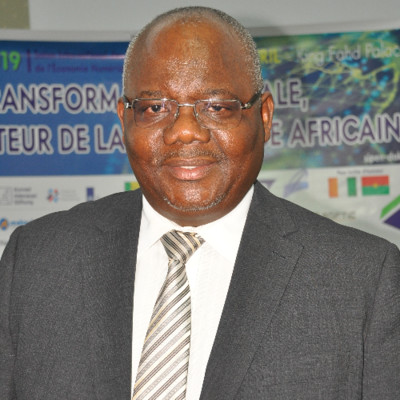
Celebrating his birthday today, Tobi Asehinde (MEng) looks back on a remarkable entrepreneurial journey that has taken him from the University of Portsmouth to the global stage. A self-starter who has never worked for a company, Tobi’s story is a testament to the transformative power of passion and dedication.

In the early days, from the confines of his bedroom, Tobi planted the seed that grew into the thriving Digital Marketing Skill Institute. The institute has now impacted over 150,000 individuals across 37 countries and 4 continents, with registered offices in the United States, the United Kingdom, and Nigeria.

Among his significant achievements, Tobi proudly announced his commitment to fostering inclusion and diversity through a partnership with the Challenge Fund for Youth Employment, generously funded by the Netherlands Government. This collaboration led to the launch of the Digital Marketing Women Employability and Entrepreneurship Program (DM-WEEP) in 2021, which has positively impacted over 4,000 young women in Nigeria and extended its reach across other African nations.

Innovation in the digital technology landscape has also been a hallmark of Tobi’s journey. His ventures, including Accredital, Wizlancer, and Hostlingo, have brought transformative solutions to the market, connecting digital talents, skilled freelancers, and small and medium businesses worldwide.

As Tobi celebrates another year of life, he is thrilled to announce the launch of The Digital Marketing Skills Scholarship for University Students Program. This ambitious initiative aims to award 100,000 scholarships by 2030 to university students across Africa. Beyond education, the program will offer mentorship to equip students to lead digital marketing businesses that not only compete on the global stage but also address Africa’s unemployment challenge. Together, Tobi and the scholarship recipients will work to foster a new generation that drives foreign exchange and powers Africa’s economic ascendancy.

Tobi Asehinde’s journey is a source of inspiration for entrepreneurs and change-makers worldwide. His dedication to social impact, innovation, and education showcases the positive influence one individual can have on the global stage. As he embarks on this new chapter with the scholarship program, the impact of his work promises to reach even greater heights.

Tobi Asehinde is a pioneering entrepreneur who has transformed his passion for digital marketing into a global business empire. Through the Digital Marketing Skill Institute, Tobi has impacted thousands of lives and created opportunities for women and youth in Africa. His ventures, including Accredital, Wizlancer, and Hostlingo, have introduced innovative solutions to the digital landscape. Tobi’s latest initiative, The Digital Marketing Skills Scholarship for University Students Program, aims to educate and empower the next generation of digital marketers across Africa.


Today, at the Nigerian Communications Commission (NCC) head office located at Plot 423 Aguiyi Ironsi Street, Maitama, Abuja, Engr. Ubale Maska, Executive Commissioner Technical Services, addressed a distinguished audience at the NCC 2023 Talent Hunt Research through Hackathon event.

This event aligns seamlessly with the core objectives of the NCC’s new Strategic Vision Plan (SVP) for the years 2023-2025, which aims to catalyze sustainable economic growth and overall development in Nigeria by fostering cutting-edge technologies through rigorous research.

Hackathons have proven to be instrumental in showcasing fresh perspectives on existing challenges, sustaining innovation, and mobilizing collective intelligence. The NCC has actively promoted hackathon competitions with thematic focuses, addressing significant challenges in various industries, such as kidnapping and banditry, E-waste management, and strategies to mitigate the COVID-19 pandemic.

This year’s event centers around three pivotal thematic areas, including:

  1. Blockchain-enabled Data Protection Solutions for Enhancing Regulatory Compliance.
  2. Assistive Technology Solutions for the Elderly and People with Disabilities.
  3. Technology Solutions for Renewable Energy in Rural Areas.

The Talent Hunt Research through Hackathon is not only about the grand prize of Ten Million Naira (N10,000,000.00) awarded to winners from these three thematic areas but extends to ongoing support for these promising innovations as they evolve into full-fledged prototypes.

Following the Hackathon, an Incubation and Mentorship Program will equip startups, innovators, and tech entrepreneurs with critical skills to refine their ideas. It also provides an opportunity to evaluate the impact of grants and prizes on beneficiaries and the industry.

The next phase involves the Adoption of Digital Innovative Services and Products emerging from the Hackathons. The NCC leads in sponsoring the deployment of winning solutions within select government agencies and institutions, with successful past deployments in combatting pandemics and epidemics.

Among these successful deployments are Klasconnect, an e-learning platform implemented in six government schools; an Automated Temperature Scanner with Contact Tracing Capability; and the SmartClinic, a versatile mobile and web solution used in teaching hospitals and state-owned hospitals.

Engr. Ubale Maska, Executive Commissioner Technical Services, affirmed the NCC’s commitment to fostering innovation and driving positive change through hackathons and related initiatives. He emphasized the transformative power of innovation and the collective pursuit of groundbreaking solutions to contribute to Nigeria’s progress and prosperity.

As the NCC embarks on this year’s Hackathon, the anticipation is high for the remarkable innovations that will emerge. Together, they aim to reshape the future for the better.


Aishah Ahmad, the distinguished Governor of the Central Bank of Nigeria, took a moment on her birthday to reflect on the significance of milestones and the path of female leadership. In her heartfelt message, she emphasized the importance of gratitude, introspection, and a commitment to making a positive impact.

“Birthdays are more than just milestones,” Governor Aishah Ahmad remarked. “They are opportunities for gratitude and introspection, taking stock of the past year’s challenges, opportunities, and achievements, renewing our commitment to making a positive impact. I have much to be thankful for; health, family, work, friends. Life continues to be full of joys, challenges, triumphs, twists, and turns – it’s a precious privilege to be alive at this moment, in our time, in this generation. Alhamdullilah!”

From a female leadership perspective, Governor Ahmad expressed her gratitude for her career journey. She acknowledged the unique challenges faced by women striving for a seat at the table, thriving as minorities, and making a lasting impact. Governor Ahmad emphasized the significant fortitude required to overcome obstacles, integrate within predominantly male leadership teams, and balance family and societal expectations.

Nevertheless, she believes that these challenges become a source of strength. Female leaders, according to Governor Ahmad, possess a unique ability to foster inclusivity, build strategic insight, and develop personal resilience. Their experiences in personal, professional, and community ecosystems shape them into strong, accomplished leaders who are also sisters, mothers, daughters, and friends.

Governor Aishah Ahmad encouraged women to continue embracing their true selves, challenging the status quo, and breaking glass ceilings. She called on women to inspire one another to reach new heights and looked forward to another year of purpose, impact, and growth.

As a leading figure in the financial industry, Governor Aishah Ahmad’s words carry weight and serve as an inspiration to all those who aspire to make a difference in the world. Her message underscores the importance of resilience and inclusivity in leadership, setting a powerful example for aspiring female leaders everywhere.


Coordinating Minister, Federal Ministry of Health and Social Welfare (FMOH&SW), Professor Ali Pate has reiterated Nigeria’s commitment towards control and elimination of Hepatitis in Nigeria.

The Minister, who was represented by the Permanent Secretary, Kachollom Daju mni stated this at the on-going 3-day African Hepatitis Summit in Abuja with the theme “Putting Africa on Track Towards Viral Hepatitis Elimination.”

According to him, this obligation is manifested through the continuous strengthening of primary healthcare system, public awareness campaigns, inclusion of Hepatitis in the minimum package of national health insurance, capacity building of healthcare providers, integration into the AIV programme, strengthening birth dose routine immunization and collaboration with stakeholders to decentralise diagnosis and treatment of Hepatitis.

“We will persist in working with World Health Organisation (WHO) and other stakeholders as well as mobilize and sustain domestic funding until Nigeria is hepatitis free as every step taken towards the elimination of hepatitis is a stride towards safeguarding our future generations” He adduced.

The Minister advocated for augmented financial commitment and support for Hepatitis control response saying that “it is imperative for African Countries to align with the WHO’S new global health sector strategy which has delineated new actions and targets to eliminate viral hepatitis by 2030.

Pate said that hepatitis has continued to pose a huge public health threat, unleashing devastating consequences among patients grappling with chronic infections worldwide. “Despite a 90% risk of children acquiring CAB from mother-to-child transmission, only 14 out of 47 African countries had introduced routine Hep B-BD vaccination and merely 17% of new born in Africa have received a timely Hep B-BD vaccination despite it being recognised as a cost effective tool to prevent new infections.”

He further stated that it is high time African nations intensified efforts to increase immunization coverage noting that the hepatitis elimination strategy is aimed at curtailing new infections and deaths to half a million each globally- a reduction of 90% and 65% respectively.

The Minister maintained that the need to sustain public awareness and build the capacity of healthcare providers is critical and plays significant role in addressing knowledge gaps on hepatitis. “We must ensure that those at risk of hepatitis are knowledgeable about the modes of transmission, how to prevent infection and receive the care they need based on the principles of fundamental human rights, equity and universal access to treatment using a primary healthcare approach.”

He added that with availability of affordable Directly Acting Antiviral (DAAS) drugs for curing HCV and Tenofovir for treating ABV, African countries are strategically poised to overcome barriers to treatment however the high cost of treatment which is often paid out -of- pocket continues to create a barrier to access.

In his remarks, Minister of Health and population of Egypt, H.E. Professor Dr. Khaled Abdel Ghaffar stated that the country’s determination and resilience in improving the Health sector facilitated the reduction and elimination of hepatitis.

Head of Mission and Representative, WHO, Dr. Walter Kazadi Mulombo represented by Casimir Masengo said that “ we must include viral hepatitis testing and treatment interventions as an essential package of health services delivered through individuals of all ages ( new-born, child, adolescent, reproductive and maternal healthcare)”

Speaking on behalf of the awardees, Executive Governor, Nasarawa State, Engineer A. A. Sule informed that the state was able to make positive impact in the Health sector because of their determination, commitment, providing leadership and efforts to eliminate not only hepatitis but any other disease.

He added that “having acknowledged the realities and challenges in the health sector in the state, the state developed a document (Nasarawa Development Strategy) which focused on various areas of the economic development including health. Baseline status survey enabled us to equip and upgrade our primary, secondary and tertiary healthcare facilities with the little resources available in the state which has scaled up the testing and treatment of viral hepatitis.”


Says the Renewed Hope Initiative, is centered on programmes meant to empower families across the country.

First Lady of the Federal Republic of Nigeria, Senator Oluremi Tinubu, CON says a single action can impact a family and community of people, especially the vulnerable ones.She said this while receiving the Minister of Youth Development, Dr Jamila Ibrahim on a courtesy visit to her office at the State House, Abuja.

The First Lady reiterated her initiative, RHI’s commitment towards alleviating the struggles of families especially during and post effects of crisis through empowerment programmes.

“We are looking at the vulnerable areas we can contribute and develop to, by supporting individuals, and families, which is why we went to Jos, and we thank God for the calm and development that God has brought back to the region”

The First Lady said more empowerment programs are in the works for widows of fallen heroes and those in vulnerable communities. For youth development, Senator Oluremi Tinubu says the RHI has empowered the youth through ICT training through collaboration with NITDA.

Applauding the steadfast advocacy by the First Lady for setting the pace and advancing the interest of women in the country, the Minister of Youth Development, Dr Jamila Ibrahim, while speaking on behalf of the Nigerian youth solicited the support of the First Ladies Office to collaborate on programs centered around youth development and empowerment.

Dr Jamila Ibrahim said collaborative projects will benefit the youth of the country which is in line with President Bola Tinubus Administration of enhanced youth empowerment.

She said, The Nigerian youth constitute more than half the population and a lot of them are “living below poverty lines”

Dr Jamila Ibrahim was previously the Senior Special Assistant to the Kwara State Governor on Sustainable Development Goals and she is presently the youngest Minister of Youth in the country.


The Minister of Information and National Orientation, Mohammed Idris, has pledged his full support and commitment to the growth and development of the broadcast industry, saying that the industry is a subset of the Nigerian economy, which is critical to the success of the Renewed Hope agenda and the economic vision of the Tinubu Administration.

The Minister made the remark while declaring open the 13th edition of AFRICAST, 2023 with the theme ” Broadcasting Content, Synergy, Finance, and Market”, on Tuesday, October 24, 2023, at the Marriot Hotel, Ikeja, Lagos.

The minister expressed his delight that the conference has become a pinnacle event in the African broadcasting sector, adding that AFRICAST has garnered a reputation for its remarkable thought leadership, knowledge sharing, networking opportunities, and commercial prospects.

He stated that AFRICAST was conceived by the National Broadcasting Commission (NBC) as a response to Africa’s flourishing broadcasting sector, which aims to connect broadcasters, content platforms, production houses, and equipment manufacturers through panel discussions.

The Minister commended the organizers for coming up with the first of its kind, “AFRICAST 2023 Content Hub,” which was created in collaboration with the Nigerian International Film and TV Summit (NIFS). The Content Hub serves as a platform for professionals in the film and television content industry to acquire, aggregate, license, and distribute content by professionals operating across various film and television content categories.

Minister Idris emphasized the significant role of content creators, producers, and broadcasters in shaping the entertainment industry globally. He acknowledged the power of high-quality content to inform, entertain, and inspire, as well as the responsibility it carries.

Highlighting the economic potential of the broadcast industry, the minister emphasized the importance of collaboration between the government and the private sector to create viable pipelines of profitability.

He reaffirmed the government’s commitment to ensuring Nigeria’s successful migration to Digital Switchover (DSO) in broadcasting, addressing previous challenges, and adopting global best practices.

The Director General of the National Broadcasting Commission, Mr. Charles Ebuebu, said earlier in his address that his vision is for the Nigerian broadcast industry to be driven by content and technology, saying the power of creativity, storytelling, and the authentic voices that reflect the diverse culture of our nation is recognized.

“The essence of broadcasting lies in the stories we tell, the information we convey, and the connections we make. It is the quality, diversity, and relevance of our content that will shape our narrative and enhance our global standing as proven by the success story of our Nollywood and Music industry.”

The event has consistently attracted respected individuals and organizations from the local and international broadcast industry, cementing Nigeria’s position on the global broadcasting map.


The rapidly rising interest rates and living costs have had a marked effect on the property market, where sales volumes and price growth have slowed in recent months. Clive Bredenkamp, IT Executive at leading local proptech and fintech company e4, says although the interest rates aren’t that much higher than in 2019, the market is more sluggish than usual, and several industries are struggling as the total monthly bond registrations have almost halved since the 2021 peak.


“During the pandemic, interest rates were the lowest we had seen in many years, which caused a mini-boom in property activity. What’s interesting is that even though the rates are now only on average 1.5% higher than in 2019, the reaction of the market has been more drastic because of the aggressive low we saw in 2020.”


This has a far-reaching effect on several industry players, he says. “When interest rates rise, banks become more cautious with loans because they know clients tend to get in more financial trouble during such an uptick. This, in turn, affects everyone in the property value chain. Sellers, estate agents and mortgage originators struggle in a stagnant market. Conveyancers, transfer attorneys and bond attorneys are also affected.”


He explains: “Banks, on average, have panels of about 600-800 bond attorneys. The higher the transaction volumes, the more they can spread those transactions across large and small law firms. Smaller firms who might get a few transactions per month, rely on that income to grow their firm and to pay employees. Without it, they shrink. Transfer attorneys, though they get transactions from estate agents and developers rather than banks, have a similar problem of lack of supply.”


In fact, it affects the entire economy. “Property is a massive industry. Developers and construction companies are all affected. Companies that do gas, electrical, fencing, and entomology compliance certificates are affected. And the government doesn’t receive as much income from transfer duties,” says Bredenkamp.


The good news is that the property market is cyclical. “We’ve been tracking interest rates and bond volumes for over 20 years at e4, and the stats show a clear correlation between interest rates and property transactions. As interest rates rise, there’s a downturn in property transactions and as they come down, there’s an uptick in property sales – with around a three-to-six-month lag in between.”


Until the rates get lower again, banks are looking at creative ways to invigorate the market, he says. “Even though banks are more cautious with granting loans now, they still have targets to meet and when consumers don’t buy properties, their mortgage portfolios suffer. So, they become motivated to grant more loans because there are fewer applications. They usually change their loan-to-value ratios during these times and start looking for bigger deposits, amongst other strategies.”


Bredenkamp and other experts expect an upturn in the market in the second half of 2024. “Unless something drastic happens, we expect to see interest rates start coming down again in the second half of 2024. And when they do, the market volumes should respond within 3 to 6 months towards the end of 2024. And with that, all the other affected industries will start to receive a much-needed recovery. For buyers it’s helpful to remember that interest rates have been worse in the past, and a slow down does tend to rationalize prices and calm the speculative growth in asking price we have seen since 2021.”


Bringing a Consultative Approach to Technology and Services, New Partnership Helps Clients Navigate the Rapidly Evolving AI and CX Landscape

DALLAS — Oct. 24, 2023 — Black Box® and ARCET Global, a leading business transformation consultancy firm, today announced a partnership through which the two companies will bring cutting-edge technology and services to their clients. Building on both partners’ comprehensive customer experience (CX) practices, which include a global network of CX professionals, Black Box and ARCET Global will deliver powerful AI-based solutions that drive exceptional customer experiences.

“For many years we have been searching for a way to assist our global clients with their technology needs whilst remaining impartial and consultative,” said Mark Hamill, CEO and co-founder of ARCET Global. “Black Box’s consultative approach and deep understanding of complex customer challenges dovetails seamlessly with our CX Strategy Consulting practice. Our combined expertise and Black Box’s technology portfolio will enable businesses to build stronger customer relationships and drive better business outcomes while rapidly transforming their customer experience strategy across all channels.”

The consultative approach offered by this new partnership between Black Box and ARCET Global will provide clients with a clear solution that strategically solves customer problems, marrying CX strategy with technology and AI solutions. Working collaboratively, the partners will empower clients to drive greater efficiency, increase ROI and improve the customer experience.

“ARCET Global is known globally for connecting its customers with leading-edge technology and solution providers. We’re proud to be partnering with ARCET to provide clients with transformational AI-driven CX solutions,” said Reid Puckett, vice president of CX Sales at Black Box.

Further information about Black Box and the company’s products and services is available at ww.blackbox.com. More information about ARCET Global is available at arcetglobal.com.

# # #

About ARCET Global
ARCET Global is a hybrid consultancy, helping organizations improve in areas that matter most to sustainable success. They make it easier for organizations to adopt global best practice through customizable services and access to the best expertise and technologies available. Motivated by transformational knowledge sharing and celebrating best practice. That’s why they’re the only organization to manage an international business community fueled by recognition programs which promote global best practice. This gives clients a unique opportunity to learn from others and gain a platform to have their ideas recognized. More information is available at arcetglobal.com.

About Black Box
Black Box® is a trusted IT solutions provider delivering cutting-edge technology solutions and world-class consulting services to businesses across the globe. The breadth of our global reach, continuous innovation, and depth of our expertise accelerate customer success by bringing people, ideas, and technology together to solve real-world business problems. Our IT infrastructure solutions, services, and products enable secure, flawless connectivity and meaningful collaboration for businesses in every major market across six continents.


Cyber insurance has many benefits, but also some limitations that CFOs and accounting departments aren’t always aware of. Here’s how you can protect yourself more comprehensively.


The estimated impact of cybercrime on the South African economy is R2.2 billion per annum. Impersonation crimes, especially, are of huge concern. These fraud instances, where fraudsters assume the identity of a victim, increased 356% from April 2022 to April 2023.


Not only that, but South Africa had the third most cybercrime victims worldwide in 2020. In just the last few years, Dis-Chem, TransUnion, and Dimension Data were just some of the large organisations that suffered attacks or breaches. Clearly, not only CIOs and IT departments need to be vigilant about cybercrime, but also CFOs and accounting departments too.


Many organisations already have cyber insurance in place and while this can provide a safety net, it is crucial to understand its limitations and safeguard against them, says Ryan Mer, CEO of eftsure Africa, a Know Your Payee (KYP) platform provider. “While a cyber policy can certainly help you recover some losses and minimise the damage incurred, no policy will protect against every instance of cybercrime – with regard to business email compromise (BEC), notably,  insurance generally does not cover compromise of the email of the third party you are dealing with (leading to manipulation of information received), therefore should the compromise happen outside of the insured’s environment (which is basically every supplier/customer/third party dealt with) leading to a loss, this is likely to not be covered.”


BEC has become rampant over the past 18 months and is now the most common reason for cyber insurance claims, says Ryan van de Coolwijk, Product Head: Cyber at iTOO Special Risks, a leading provider of Cyber Insurance. “There are a lot more incidents occurring in the SA market than is realised, many of which do not break into the media.” “Double extortions are also increasing, where hackers steal data and encrypt it, then demand money not only to release the stolen data but also to hand over decryption keys. Even in South Africa, this has caused ransoms to skyrocket to more than R100million – with tens of millions paid in some instances.”


Cybercrime insurance policies can be seen as providing cover across 3 broad spectrums, the incident response process, additional business damages and liability – up to certain values and depending on the terms of your policy. The incident response process can provide access to expert IT containment, recovery and forensic investigation services, legal guidance and regulatory representations, crisis communications to minimise reputational damage, communication, and remediation services to affected parties and cyber extortion cover which can extend to settling ransoms. The business damages can cover loss of business income, increased cost of working and theft of first-party funds. The liability component is the defence and settlement of ensuing litigation from compromised data or where a compromised environment has been used to launch downstream attacks e.g., against clients and business partners.


But they don’t cover every instance of cybercrime. For example, the Business Email Compromise (BEC) instance mentioned by Mer above as well as internal related payment fraud by employees would not be covered under a cyber policy but rather fall under a commercial crime policy, which can be very costly to have in place.


Aligned to the evolving threat landscape, insurers tend to have requirements for cover and payouts, it is, therefore, important to ensure you, at a minimum, maintain your disclosed security standards and internal controls during the policy period and keep abreast of any new requirements that may come into effect on policy renewal.


And, of course, no cyber policy can protect against reputational damage, loss of customer and partner confidence, knock-on operational impacts, and the impact on staff, says Mer. Clearly, even with a cyber policy in place, implementing preventive measures and maintaining strong security protocols should be a priority for businesses, Mer adds. “Cyber insurance policies are certainly necessary these days and, yes, they do protect against some of the potential losses. But by taking a proactive approach and working collaboratively with insurers and cybersecurity solution providers, organisations can better protect themselves from cyber risks and reduce the likelihood of falling victim to cyberattacks, while having adequate controls at the very least to back up an insurance claim, should an event still occur.”


The best defence is a comprehensive cybercrime strategy that aligns cybersecurity measures with internal controls, says Mer. “A cybercrime strategy brings together elements of your cybersecurity strategy and your financial controls. It recognises the importance of information security but also recognises the importance of robust financial controls, like segregation of duties. For example, it’s critical that staff always conduct verification controls when any payment needs to be processed. This should happen even in cases where the accounts team receives a payment request via email from one of the executives – because such emails could be the result of a BEC attack.”


Greater automation and digital controls, such as those provided by eftsure, are the best defence against human error during BEC and other attacks. “With such controls on top of your accounting processes, you can rest assured that you’re always paying a legitimate recipient. Even if a cyber-criminal is able to penetrate your executives’ email accounts and impersonate them, any suspicious outgoing payments will be flagged in real-time immediately prior to processing. This gives your accounting team time to pause and investigate the payment further before proceeding,” says Mer.


Prevention is key in the ever-evolving landscape of cybersecurity, he says. Another key thing to consider says Van de Coolwijk is that “most people are surprised at how significant the effect is on the operational abilities of a business and the time resource involved in investigating and dealing with things following a cyber-attack.” In Mer’s opinion, “it’s a good idea to have a buffer in place in the form of insurance, however prevention remains key.”

 

GTS-Infotel is proud to announce the launch of PRO-Line, an innovative solution designed to transform and centralize business communications for companies of all sizes. This cutting-edge platform offers a wide range of features, enhancing the way businesses interact with prospects, customers, and partners across various communication channels.

PRO-Line, a PRO (virtual fixed) ID number, is seamlessly activated on a company’s application platforms, unifying all communication channels, including Voice, SMS, USSD, WA, Web, and more, for employees and stakeholders.

Key Features of the PRO-Line Solution:

  1. Cloud-Based PBX Platform: PRO-Line provides companies with a dedicated PRO number hosted on a cloud PBX platform, complete with automatic and personalized voice greetings, ensuring a professional image for all customer interactions.
  2. Multi-Terminal Access: The platform offers user accounts accessible on multiple devices, including smartphones, PCs, and IP phones, allowing mobile employees to stay connected and productive.
  3. Scalable Solutions: Companies can tailor their PRO-Line experience to meet their evolving digital transformation needs. Options include Unified Collaboration, Call Center, Omnichannel Customer Service Center with CRM, SMS Business, Whatsapp Business, Business Applications, and Merchant Payment Account (PRO-Money).

Introducing PROLine-3CX by GTS-Infotel:

As part of our commitment to delivering comprehensive communication solutions, GTS-Infotel presents PROLine-3CX. This integrated solution combines Virtual PBX, Unified Collaboration, and Omnichannel Customer Service Center modules, streamlining collaboration between contact center agents and company staff. The result is improved productivity and a superior customer experience, characterized by faster, more relevant responses.Besoin de Communiquer avec une... - GTS-Infotel Cameroon | Facebook

The Benefits of PRO-Line:

  • Strengthening Digital Identity: A single PRO number is used across all company media, providing a secure and recognizable point of contact for customers while safeguarding the company’s brand against telephone fraud.
  • Centralized Management: An extranet account allows for comprehensive reporting and management of all Voice and SMS traffic, facilitating better control and adaptation to corporate objectives.
  • Mobile Integration: Employees can make and receive business calls on their smartphones via a mobile app, eliminating the need for a separate mobile number.
  • Enhanced Customer Experience: A single PRO number simplifies multi-channel interaction with customers at every stage of their journey.
  • Employee Privacy: Personal mobile numbers are protected, as there’s no need to use them for business calls, thanks to the unique PRO number for each employee.
  • Free Internal Calls: Mobile employees and companies using PRO numbers on the GTS network can make free internal calls.
  • Zero Investment Costs: Traditional telephony infrastructure, such as telecom links and PABX equipment, is no longer necessary, reducing costs to zero.
  • Seamless Integration: The PRO number is associated with the company’s wallet account (PRO-Money) managed by approved mobile payment service providers.

GTS-Infotel’s Pioneering Role:

Through its partnership with CAMTEL, GTS-Infotel has become the first ComTech Operator to hold a category 1 license, specializing in the provision of multi-channel PRO numbers for identification on cloud business communication platforms. This marks a fundamental step in the cloud migration process for the digital transformation of companies of all sizes.

For more information about PRO-Line and how it can transform your business communications, please visit [website link].

About GTS-Infotel:

GTS-Infotel is a leading provider of innovative communication solutions for businesses, committed to revolutionizing the way companies interact with their customers and partners. With a focus on digital transformation and cloud-based communication, GTS-Infotel offers cutting-edge technology and expertise to support businesses of all sizes.


Anthony Nwosu