
Takeaways

  • Instagram is announcing measures to further protect people from sextortion, including hiding follower and following lists from potential sextortion scammers, preventing screenshots of certain images in DMs, and rolling out our nudity protection feature globally

  • These updates, which are part of a campaign informed by NCMEC, Thorn & Childnet, also aims to help parents feel more equipped to support their teens in avoiding these scams

Sextortion is a horrific crime, where financially-driven scammers target young adults and teens around the world, threatening to expose their intimate imagery if they don’t get what they want. Today, we’re announcing new measures in our fight against these criminals – including new safety features to further help prevent sextortion on our apps, building on protections already in place.

New safety features to disrupt sextortion

Meta is announcing a range of new safety features designed to further protect people from sextortion and make it even harder for sextortion criminals to succeed.

Now, we’re making it harder for accounts showing signals of potentially scammy behavior to request to follow teens. Depending on the strength of these signals – which include how new an account is – we’ll either block the follow request completely, or send it to a teen’s spam folder.

Sextortion scammers often use the following and follower lists of their targets to try and blackmail them. Now, accounts we detect as showing signals of scammy behavior won’t be able to see people’s follower or following lists, removing their ability to exploit this feature. These potential sextorters also won’t be able to see lists of accounts that have liked someone’s posts, photos they’ve been tagged in, or other accounts that have been tagged in their photos.

Soon, we’ll no longer allow people to use their device to directly screenshot or screen record ephemeral images or videos sent in messages. This means that if someone sends a photo or video in Instagram DM or Messenger using our ‘view once’ or ‘allow replay’ feature, they don’t need to worry about it being screenshotted or recorded in-app without their consent. We also won’t allow people to open ‘view once’ or ‘allow replay’ images or videos on Instagram web, to avoid them circumventing screenshot prevention.

We’re constantly working to improve the techniques we use to identify scammers, remove their accounts and stop them from coming back. When our experts observe patterns across sextortion attempts, like certain commonalities between scammers’ profiles, we train our technology to recognize these patterns. This allows us to quickly find and take action against sextortion accounts, and to make significant progress in detecting both new and returning scammers. We’re also sharing aspects of these patterns with the Tech Coalition’s Lantern program, so that other companies can investigate their use on their own platforms.

Finally, after first announcing the test in April, we’re now rolling out our nudity protection feature globally in Instagram DMs. This feature, which will be enabled by default for teens under 18, will blur images that we detect contain nudity when sent or received in Instagram DMs and will warn people of the risks associated with sending sensitive images. We’ve also worked with Larry Magid at ConnectSafely to develop a video for parents, available in the Meta Family Center’s Stop Sextortion page, that explains how the feature works.

This campaign and new safety features are in addition to our recent announcement of Teen Accounts, which gives tens of millions of teens built-in protections that limit who can contact them, the content they see and how much time they’re spending online. Teens under 16 aren’t able to change Teen Account settings without a parent’s permission.

With Instagram Teen Accounts, teens under 18 will be defaulted into stricter message settings, which mean they can’t be messaged by anyone they don’t follow or aren’t connected to. In the EU, we will start placing teens into Teen Accounts later this year and in the rest of the world Teen Accounts will be available from January.

Taking action against sextortion criminals

Last week, we removed around 1,600 Facebook Groups and accounts that were affiliated with Yahoo Boys, and were attempting to organize, recruit and train new scammers. This comes after we announced in July that we’d removed around 7,200 Facebook assets that were engaging in similar behavior. Yahoo Boys are banned under Meta’s Dangerous Organizations and Individuals policy — one of our strictest policies — which means we remove Yahoo Boys’ accounts engaged in this criminal activity whenever we become aware of them. While we’ve been removing violating Yahoo Boys accounts for years, we’re putting new processes in place which will allow us to identify and remove these accounts more quickly.

We’ll continue to evolve our defenses to help protect our community from sextortion criminals. This includes helping teens and their families recognize these scams early, preventing potential scammers from reaching their targets, and working with our peers to fight these criminals across all the apps they use.
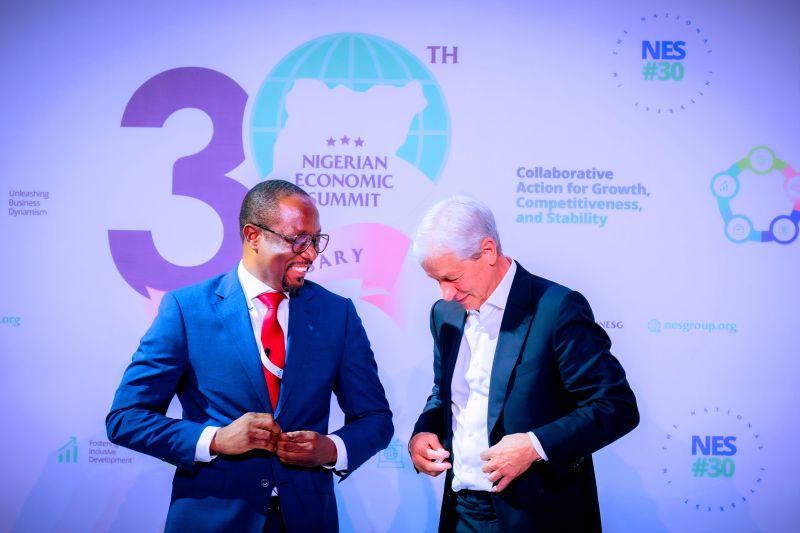


 

In a momentous occasion for Nigeria’s economic landscape, Dapo Olagunju, Managing Director at JPMorgan, expressed his deep appreciation for hosting Jamie Dimon, Chairman and CEO of JPMorgan Chase, during his recent visit to the country. This visit marked the inaugural stop in Dimon’s tri-nation tour across Sub-Saharan Africa, which will also include engagements in Kenya and South Africa.

Dimon’s visit to Nigeria coincided with the 30th edition of the Nigeria Economic Summit (NES), the premier platform for public-private dialogue in the country. In a compelling Fireside Chat, he engaged directly with prominent business and political leaders, discussing the pivotal role of financial institutions in fostering economic growth. Following this, Dimon enjoyed lunch with tech entrepreneurs, further emphasizing his commitment to understanding and supporting Nigeria’s burgeoning tech scene.

During his visit, Dimon took the time to meet separately with key figures in the Nigerian economy, including Yemi Cardoso, the Governor of the Central Bank of Nigeria, and Olawale Edun, the Honourable Minister of Finance and Coordinating Minister for the Economy. These discussions underscored JPMorgan’s dedication to fostering strategic partnerships that contribute to Nigeria’s long-term economic development.

In a warm gesture of hospitality, Ambassador Richard Mills Jr. of the United States hosted a dinner for Dimon, attended by select CEOs and founders from some of Nigeria’s leading businesses. The evening was not just a celebration of corporate camaraderie; it was a testament to the growing relationship between Nigeria and international business leaders. During these interactions, Dimon articulated his unwavering belief in the resilience of the Nigerian economy, the dynamism of its people, and the positive impact of ongoing economic reform efforts. He remarked, “You will be seeing more of us,” a statement that resonated deeply with the audience.

Olagunju highlighted that Dimon’s visit reaffirmed a fundamental truth: JPMorgan plays a crucial role in enabling economic growth across the region. He noted that the bank’s focus extends beyond seizing short-term opportunities; it is about being a dependable partner committed to building sustainable systems that drive real, long-term growth.

Reflecting on the experience, Olagunju shared personal insights gained from observing one of the world’s most influential leaders. He emphasized the importance of maintaining a balance between professional obligations and personal passions, stating, “Never be too busy for family and other passions that you care about. It is your personal responsibility.” He also underscored the value of consistent reading, empathy in building connections, and the importance of clear, respectful communication.

In conclusion, Olagunju extended his gratitude to his colleagues at JPMorgan—Kevin Latter, Laurent Lalou, Lauren Olivier, Albine Berthou, and others—whose collaborative efforts ensured that Dimon’s visit was a resounding success, paving the way for strengthened partnerships in Nigeria’s economic future. As JPMorgan continues its commitment to fostering growth in Sub-Saharan Africa, the significance of this visit cannot be overstated, signaling a promising trajectory for the region’s economic landscape.


In today’s rapidly digitizing world, where businesses and institutions are increasingly relying on digital platforms to enhance productivity, the risks of cyberattacks have become an ever-present threat. Nigeria, like many other nations, is experiencing a surge in cyber-related crimes, from hacking to phishing, which has led to billions in financial losses for organizations across the country. However, in the face of these challenges, one organization is stepping up to offer a solution: ThinkCyber Nigeria. As a leading cybersecurity training and capacity-building organization, ThinkCyber has been quietly revolutionizing the way cybersecurity professionals are trained in Nigeria.

For years, ThinkCyber Nigeria has been building a reputation as the go-to institution for equipping individuals and organizations with the knowledge and skills to combat the growing threat of cybercrime. Through partnerships with global organizations and advanced training tools, they have successfully positioned themselves as leaders in the field of cybersecurity. Recently, they extended their reach by forming a collaboration with Babcock University in Ogun State, underscoring their commitment to nurturing future cybersecurity experts.

Empowering Individuals Through Training

For many professionals, ThinkCyber’s training programs have been life-changing. Emmanuel Nwokike, a Senior Cybersecurity Analyst at First Bank Nigeria Ltd., is one such individual whose career took a turn for the better after enrolling in ThinkCyber’s program. “I came across ThinkCyber’s training in December 2022, and I’m glad I did. The training opened my eyes to the world of cybersecurity, and their ‘zero to hero’ approach was simply transformative. I was able to acquire the skills that Fortune 500 companies seek in their cybersecurity teams.”

Nwokike’s experience isn’t an isolated one. Students, professionals, and even international experts have found a new path through ThinkCyber’s unique approach to training. Sharon Ayajenu Okpoe, a 300-level Information Security student at Babcock University, spoke highly of her own experience: “The technology ThinkCyber uses is incredible. From the CYBERIUM ARENA to engaging scenario-based exams, it has been a rewarding experience. I’m gaining skills that I know will shape my future in cybersecurity.”

From Beginner to Cybersecurity Expert

The beauty of ThinkCyber’s program is its ability to cater to people from all walks of life, regardless of their prior experience in the field. Gbolahan Awe, a Tier 2 Cybersecurity Analyst and Researcher based in Tel Aviv, shared his journey: “I found out about ThinkCyber Nigeria from a Jobberman advertisement in December 2021. At that time, I had no experience in cybersecurity, but with the guidance of the faculty at ThinkCyber, I went from a complete novice to a cybersecurity expert in a short period. Every module was top-quality, and their pre-simulator and Cyberium Arena tools are truly world-class. I wouldn’t hesitate to recommend ThinkCyber to anyone serious about building a career in this field.”

For students like Davide Asemota, a 300-level Information Security undergraduate at Babcock University, the transformation has been equally impactful. “In October 2023, I enrolled in ThinkCyber’s internship program, and it has been an incredible journey. The use of AI technology like Specta and the hands-on simulation sessions have given me skills that are in high demand globally. I’ve gone from beginner to junior cybersecurity expert in a short time, and I can’t recommend ThinkCyber enough.”

Closing the Cybersecurity Skills Gap

With Nigeria and West Africa facing a significant skills gap in the cybersecurity sector, ThinkCyber Nigeria has responded with the Cyber Security Talent Pipeline Hub (Cysec TPH). This initiative is designed to equip aspiring cybersecurity professionals with the training they need to thrive in the industry.

According to Ikem Michael Uche, Chairman and Country/Operations Director of ThinkCyber Nigeria, the organization is on a mission to provide world-class cybersecurity training at an affordable rate. “We’ve trained professionals from all over the world using our proprietary CYBERIUM ARENA tool, developed in-house by top cybersecurity experts. Our aim is to give every trainee the opportunity to build a successful career in cybersecurity, whether they’re looking to work internationally or in Nigeria.”

A Gateway to Career Success

ThinkCyber Nigeria doesn’t just stop at training—they help their graduates secure real-world opportunities. Many trainees have gone on to join global cybersecurity firms, thanks to the organization’s strong network of hiring partners. “We match our cybersecurity graduates with hiring partners who are always on the lookout for skilled professionals,” Uche explained. “With the hands-on training and real-world experience they get from our programs, our graduates are in high demand.”

The internship opportunities at ThinkCyber Nigeria are another key part of their offering. Students are given access to global platforms where they can gain hands-on experience in Security Operations Centers (SOCs), making them highly sought-after by employers.

Shaping the Future of Cybersecurity in Nigeria

ThinkCyber’s commitment to nurturing talent is also evident in their SIWES program, which provides 300-level students with six months of industrial training. This program, coupled with their Professional Workplace Certificate, allows students to gain invaluable skills while still pursuing their academic careers.

Upon completion of the program, trainees are awarded internationally recognized certifications such as Think Cyber Certified Penetration Tester, SOC Analyst, and Forensics Professional. These certifications, combined with practical experience, ensure that graduates are ready to take on roles in the fast-evolving world of cybersecurity.

With their innovative training programs, global partnerships, and unwavering commitment to addressing the cybersecurity skills gap, ThinkCyber Nigeria is not only shaping careers but also playing a vital role in safeguarding Nigeria’s digital future. As more organizations embrace digitization, ThinkCyber’s efforts will be crucial in ensuring that the country has a robust talent pool to defend against the ever-growing threat of cyberattacks.


The National Agency for Science and Engineering Infrastructure (NASENI) has launched a week-long intensive training on ASPEN Plus, a process simulation software, at the agency’s Virtual Manufacturing Lab at its headquarters in Abuja.


The hybrid training which was held across NASENI’s Development Institutes, marks a significant step forward in NASENI’s commitment to advancing technical capacity in renewable energy and engineering design.


The opening ceremony featured remarks from Dr. Chika Ezeanyanso, Deputy Director of the Nano Science Department and representative of the Executive Vice Chairman (EVC) of NASENI. In her address, she emphasized NASENI’s dedication to providing its staff with cutting-edge knowledge to drive innovation in renewable energy.


Dr. Ezeanyanso, on behalf of the participants, expressed her gratitude to the EVC for his approval that championed this initiative and his steadfast commitment to ensuring that NASENI personnel remain at the forefront of technological advancement in biogas and other renewable energy sectors.


The Special Adviser to the EVC on Science and Engineering Commercialization Engr. Anas Yazid Balarabe encouraged participants by emphasizing the value of bridging research and commercialization. He stressed that the knowledge gained from the training would advance renewable energy solutions and promote innovation, helping NASENI transform research into marketable products that meet national energy needs and support sustainable development.


This training is a follow-up to the successful conclusion of NASENI’s Biogas and Biomethanol Plant Design Training, held in collaboration with SRH Berlin University. It was recommended as part of the agency’s broader strategy to enhance the technical expertise of its staff in the design and commercialization of renewable energy solutions.


The ASPEN Plus training, aimed at empowering 50 carefully selected NASENI Engineers and biochemists who participated in the last training, provides advanced tools for process design, optimization, and simulation, further equipping the team to contribute to Nigeria’s sustainable energy goals.


The participants are expected to leverage this training to design and develop more efficient biogas plants, as well as other sustainable energy solutions. She encouraged the trainees to make good use of the opportunity and apply it for the growth and development of the Agency and Nigeria at large.


The Nigerian film industry witnessed a star-studded event as top Nollywood celebrities turned out for the premiere of The Uprising: Wives on Strike 3, produced by Omoni Oboli. The highly anticipated film, which hit cinemas nationwide, made its debut at Silverbird Cinema with a stunning display of fashion and talent.

Renowned actress Rita Dominic, hailed by many as the queen of fashion in Nollywood, led the pack of A-list celebrities, including Chioma Chukwuka, as they graced the red carpet in breathtaking outfits. The evening saw a mix of veteran actors and rising stars, creating an exciting blend of established talent and fresh faces. Among the cast was the actress who portrayed “Iya Loja,” a character that has gained recognition for her role in the film.

The red carpet, a glamorous affair as expected, was abuzz with media attention as the actors and actresses arrived in style. However, one notable moment sparked conversation when the actress portraying “Iya Loja” appeared in the same outfit she had worn at the previous movie premiere. While some speculated on the wardrobe choice, it highlighted the importance of support for rising stars in the industry.

Observers noted that while established celebrities often have access to endless fashion options through endorsements, rising actors may face limitations. This scenario points to the need for greater fan support beyond social media – turning online applause into tangible backing through event attendance and ticket purchases. For many rising stars, financial backing from loyal fans can directly impact their career trajectory and help them meet the demands of an evolving industry.

The premiere was a resounding success, with The Uprising: Wives on Strike 3 poised to make a strong impact in cinemas. Attendees also noticed a reserved atmosphere, with no overt displays of affection on the red carpet. Many male attendees appeared cautious to avoid any misunderstandings with their partners, lending the event a more respectful and professional tone.

Overall, The Uprising: Wives on Strike 3 is expected to be another triumph for Nollywood, with Omoni Oboli once again showcasing her skills as a producer. The turnout of celebrities, including fashion icon Rita Dominic, highlighted the growing influence of Nollywood on both the global entertainment and fashion scenes.

Chukwuma Ndioguluo

#NollywoodPremiere #TheUprisingWivesOnStrike3 #RitaDominic #ChiomaChukwuka #OmoniOboli #NollywoodFashion #NigerianCinema #SupportLocalTalent


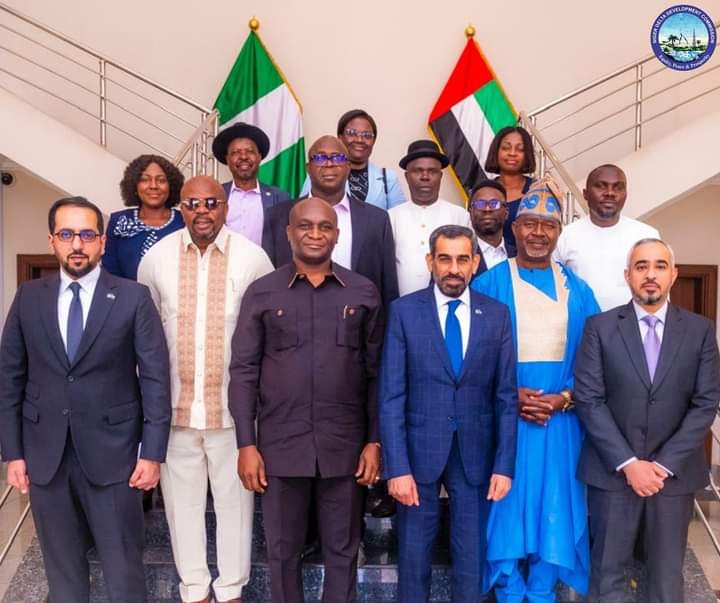
The Niger Delta Development Commission (NDDC) has entered into a landmark partnership with the United Arab Emirates (UAE) to establish a joint committee focused on creating a robust framework for accelerating development across the Niger Delta region. This collaboration aims to address key developmental challenges and provide long-term solutions by focusing on vital sectors.

The joint committee will work towards the execution of transformative projects and programs in various critical areas, including Information and Communication Technology (ICT), education, health, agriculture, and youth development. This strategic alliance is expected to lay the foundation for sustainable growth, with a special emphasis on improving the quality of life for residents of the Niger Delta.

Through ICT initiatives, the partnership seeks to bridge the digital divide by equipping the region with modern technology infrastructure, boosting internet connectivity, and fostering digital literacy. This will not only provide opportunities for the youth but also position the Niger Delta as a hub for technological innovation in Nigeria.

In the area of education, the NDDC-UAE collaboration aims to uplift the standard of education by developing infrastructure, offering scholarships, and promoting skill acquisition programs to ensure the youth are well-equipped for the future. This will include vocational training and partnerships with global institutions to enhance the quality of learning.

Health initiatives under the partnership will focus on improving healthcare delivery systems by building hospitals, providing medical equipment, and increasing access to quality healthcare services. The collaboration also envisions joint efforts to tackle pressing public health challenges, such as maternal health and child mortality, by integrating modern healthcare technologies and practices from the UAE.

Agriculture, a key economic driver in the Niger Delta, will receive a boost through modern farming techniques, investment in agribusiness, and initiatives aimed at improving food security and creating employment opportunities. The focus will be on empowering local farmers with technology and resources to enhance productivity and promote sustainable farming practices.

Youth development remains a top priority for the NDDC-UAE partnership, with plans to create programs designed to empower the region’s young population. These initiatives will offer mentorship, entrepreneurial support, and funding opportunities, fostering a new generation of leaders and innovators who can contribute to the economic growth of the region.

The NDDC-UAE partnership is seen as a pivotal step towards unlocking the economic potential of the Niger Delta, enhancing the region’s infrastructure, and creating a more prosperous future for its people. Both parties are committed to ensuring that this collaboration delivers tangible results, with the UAE offering its expertise in sustainable development and innovation, while the NDDC provides local knowledge and oversight to ensure the success of the joint initiatives.

This partnership marks a significant milestone in the effort to uplift the Niger Delta, setting the stage for long-term growth and development that will benefit the entire region.


Peter Obi, a key Nigerian presidential hopeful, has recently found himself at the center of controversy after visiting former Head of State General Yakubu Gowon to mark his 90th birthday. General Gowon, who led Nigeria during one of the most turbulent periods in the nation’s history—the Nigerian Civil War, commonly known as the Biafran War—remains a divisive figure. The war, which took place between 1967 and 1970, resulted in the deaths of an estimated 3.5 million people, mostly from the Igbo ethnic group, and continues to evoke deep emotions across Nigeria, particularly among the Igbo people.

During the visit, Peter Obi, a politician with significant support from the southeastern region of Nigeria, praised Gowon’s role in Nigerian history, focusing on his efforts to maintain the country’s unity amidst conflict. “I am privileged to join other Nigerians of goodwill to celebrate a highly respected leader and former Head of State, General Yakubu Gowon, on his 90th birthday anniversary,” Obi said.

He went on to commend Gowon for standing for peace during a time of great strife: “In a time of hate, you stood for love. At a time of strife, you stood for peace. At a time of division, you stood for unity. Your life of service to our great nation, Nigeria, stands as one of sacrifice, leadership, and unity. Your steadfast commitment to preserving the peace and sovereignty of Nigeria during a challenging period in our history will forever be remembered and revered.” Obi concluded his tribute by wishing Gowon continued good health and wisdom, stating, “As we celebrate this milestone, I pray that God continues to grant you good health, wisdom, and the grace of true fruitfulness.”

However, Obi’s statement did not sit well with many Nigerians, particularly those from the Igbo ethnic group, who still harbor deep resentment over the events of the Biafran War and the heavy loss of lives that occurred under Gowon’s leadership. Critics quickly took to social media and various platforms to express their discontent, accusing Obi of disregarding the painful history and the unresolved wounds of the Igbo people.

Backlash from Igbo Community

Dr. Maduka Chinemelum, an outspoken advocate for Biafra’s restoration, led the charge against Obi, accusing him of betraying his heritage. “You claim to be intelligent, educated, smart, and sound,” Chinemelum remarked angrily. “Yet you dismiss those of us fighting for the restoration of Biafra. You are a Nigerian in a country where your passport is not respected anywhere in the world, where you have no good roads, no healthcare system, no constant electricity, no pipe-borne water, no Nigerian Airways, and where your currency is useless, with £1 equal to 2300 naira. Of what use is your education? Shame on you! I prefer to be an illiterate Chinese to being an ‘educated’ Nigerian.”

Other prominent voices from the Igbo community expressed similar sentiments, viewing Obi’s praise of Gowon as an affront to the memory of the millions who perished during the war. George Oha, a vocal critic of Gowon’s leadership, labeled the former leader as the “architect of modern Nigerian Igbophobia.” He recounted the devastation inflicted on Biafra during the war, stating, “Gowon invaded Biafra with Operation Unicord, overseeing the massacre of many innocent civilians, including children. He balkanized the Igbos by creating new states and taking away our oil-rich regions. This is the man who stole billions for a steel project and pushed anti-Igbo rhetoric. He even doubled down on his decisions a few months back. After all, he was removed from office while giving a speech—terrible leader and a terrible person altogether.”

Supporters Defend Gowon’s Legacy

Despite the outcry, not all reactions to Obi’s visit were negative. Some Nigerians came to the defense of both Gowon and Peter Obi’s decision to honor him. Moses Azano, for instance, argued that it was unfair to expect no loss of life during a war. “It was a war. Were you expecting people not to die?” Azano questioned. “Gowon could have gone on a bloodlust after victory, but instead, he chose reconciliation. In my book, he is an honorable man.”

Others pointed out that while Gowon’s leadership during the war remains controversial, he made efforts toward reconciliation with the Igbo people, launching the “No victor, no vanquished” policy after the war ended. This policy aimed at national healing and rebuilding Nigeria’s fractured unity. However, critics argue that these reconciliatory efforts did little to address the systemic marginalization of the Igbo people in the decades following the war.

Complex Legacy of General Gowon

General Gowon’s legacy in Nigerian history is undoubtedly complicated. As Nigeria’s youngest-ever leader, taking power at the age of 31, he faced the daunting task of managing a country on the brink of collapse. His decision to prosecute the war against Biafra was motivated by a desire to preserve Nigeria’s territorial integrity, yet the methods employed during the war—including the infamous blockade that led to widespread famine in Biafra—have left scars that continue to fester.

Ramotu Olaniyo, another Nigerian, reflected on Gowon’s actions during the war and their consequences today. “His people of the Middle Belt are suffering the consequences of his rash decision as Head of State. Plateau is among the states where herdsmen are constantly attacking and sacking entire communities,” Olaniyo said, hinting that Gowon’s decisions as a leader have had long-lasting repercussions beyond the war.

As Peter Obi’s visit to Gowon highlights, Nigeria is still grappling with the unresolved tensions stemming from the civil war, over 50 years after it ended. For some, Gowon remains a symbol of peace and unity. For others, especially within the Igbo community, his legacy is one of pain, loss, and unresolved grievances. As Nigeria moves toward another critical presidential election, the debate over how to reconcile the nation’s past and heal its divisions remains as relevant as ever.


Anthony Emeka Nwosu


In the heart of Nigeria’s bustling technology sector, a silent challenge looms—thousands of job opportunities in the IT space are going unfilled, not due to a lack of demand, but because of a gap in the necessary skills. As the digital economy continues to expand, the need for specialized tech knowledge is more pressing than ever. To address this, E-mmerx and Codefest International Ltd. have embarked on an ambitious mission to equip Nigerians with the expertise needed to meet these growing demands.

This capacity-building initiative, aptly named the “Microdegree Programs – Microsoft Skills for Jobs,” promises to transform the career trajectories of many Nigerians. It aims to provide participants with cutting-edge training that opens doors to opportunities on a global scale—all for less than $500. This low-cost access to world-class education is revolutionary, particularly in a market where many are eager to join the tech industry but lack the means to get started.

At the signing of the Memorandum of Understanding (MOU) between E-mmerx and Codefest International, key leaders in the initiative, including Emmanuel Kayode, CEO of E-mmerx, and Moss Uromtah, Co-Founder and CEO of Codefest International, underscored the urgency of their mission. “We’re not just offering a program,” Uromtah said passionately. “We’re giving Nigerians a real chance to change their lives, to upskill themselves, and to fill the critical roles in the IT sector that are currently vacant.”

The tech industry in Nigeria is booming, but as the demand for cloud computing, data analysis, and software development soars, the gap between available jobs and skilled professionals widens. This program is designed to close that gap by providing intensive training in Microsoft Cloud technologies—skills that are in high demand both locally and globally. For many Nigerians, this represents an unprecedented opportunity to become part of the digital economy without needing to leave the country.

What makes this program even more remarkable is its affordability. The training, which would typically cost 3.5 million naira per participant, has been heavily subsidized by the European Union, covering over 85% of the fees. As a result, students only need to pay  15% to receive top-tier training and complete six micro-degrees that are globally recognized. This level of support is a testament to the value of investing in human capital, particularly in a country where tech could be a significant driver of economic transformation.

Beyond the cost, what truly sets this initiative apart is its promise of employment upon completion. Uromtah explained that graduates of the program are guaranteed job placements with a variety of companies using Microsoft Cloud technologies. “You won’t just finish with a certificate in hand,” he said. “You’ll have employers lining up, eager to bring you on board. This program isn’t just about upskilling—it’s about changing lives and filling the very real demand for skilled IT professionals in Nigeria and beyond.”

The implications of this initiative are far-reaching. For Nigeria’s labor market, it offers a pathway to reduce unemployment while addressing the critical shortage of skilled tech workers. For individuals, it’s an opportunity to break into a highly lucrative sector with real growth potential. As Uromtah emphasized, “We are bridging a skills gap that has long held back our IT sector. This is more than a program—it’s a movement toward a better future for the next generation of tech leaders in Nigeria.”

The Microdegree Programs are backed by KAMK University and will provide participants with both academic credits and industry certifications. These certifications are recognized by Microsoft and other leading global tech companies, ensuring that graduates can compete in a global job market. The program’s focus on practical, hands-on learning means that participants will leave with not only theoretical knowledge but the skills needed to hit the ground running in their new roles.

The first batch of students is set to begin training on November 1, and the window for applications is open until the end of the month. Codefest International and E-mmerx are working diligently to ensure that as many Nigerians as possible can take advantage of this life-changing opportunity. Uromtah and his team are determined to fill every available spot with eager learners ready to take their place in the tech world.

For more information and to apply for the program, aspiring tech professionals are encouraged to visit Uni-Edukamu and secure their place in what promises to be a transformative journey.

This initiative isn’t just about filling jobs—it’s about empowering Nigerians to take control of their futures, ensuring that they have the tools and knowledge to thrive in a fast-changing world. With the support of E-mmerx, Codefest International, and partners like the European Union, Nigeria’s tech future looks brighter than ever.

Anthony Emeka Nwosu


.


The ongoing bandit crisis in Zamfara State has reached a critical point, demanding immediate action from all stakeholders. Unfortunately, the political landscape has been marred by incessant bickering and blame games that hinder the survival of the state and its people.

Usman Abdullahi’s submission highlights the politicization of Hon. Bello Matawalle’s visit to the command HQ of Operation Hadarin Daji in Sokoto. Matawalle’s visit aimed to assess the operational readiness of the troops and motivate them in their campaign against banditry. However, the opposition party in the state has made baseless allegations and also attacking Matawalle’s patriotic efforts.

Governor Dauda Lawal and the PDP are urged to focus on governance and security rather than politicking and name-calling. The security situation in Zamfara requires a united front, with all stakeholders working together to combat banditry.

The Ministry of Defence, under Matawalle’s leadership, has made significant strides in combating banditry. Notable achievements include the elimination of notorious bandit kingpin Halilu Sububu and many of his lieutenants. Matawalle’s commitment has earned him commendations from different civil society organizations (CSOs) and well-meaning Nigerians.

Mayor Akpodoro, President of the National Coalition of Niger Delta Ex-Agitators, has come out in support of Matawalle. He believes Matawalle’s loyalty to the President Bola Ahmed Tinubu-led administration threatens self-acclaimed Northern political power brokers. Akpodoro calls on President Tinubu to hold onto Matawalle, describing him as the arrow head of the war against insurgency and banditry in the North.

*Time to Put Aside Partisan Politics*

The human cost of banditry in Zamfara is staggering, with hundreds killed and thousands displaced. The bandits operate with impunity, disrupting economic activities, education, and healthcare. It’s time for all vested parties in Zamfara to focus on the real enemies of the people and support the efforts of the Armed Forces of Nigeria in tackling insecurity.

Matawalle’s appointment as Minister of State for Defence is strategic, leveraging his local knowledge and experience to develop a strategy to end insecurity and rebuild communities. His guidance has demonstrated the Ministry’s commitment to tackling the bandit crisis.

*A Call to Action*

The people of Zamfara deserve nothing less than a united front against banditry. Governor Lawal is urged to expend security votes appropriately to achieve results. The masses are called upon to pray for the success of those genuinely involved in the war against banditry and insurgency.

To round off, the fight against banditry in Zamfara requires collective responsibility, transcending partisan politics. It’s time to put aside differences and work together to restore peace and security in the

state.


Abdullahi kazeem
Analyst


Renowned Nigerian author based in Finland, Hope Oby Nwosu, has voiced her concerns over the exploitation of immigrant women in EU-funded workshops. In a passionate Facebook post, Nwosu highlighted how these projects often collect stories and experiences from immigrants without adequately compensating or involving them in the policymaking process.

Nwosu, who recently attended a workshop where immigrant women were invited to share their experiences of living in Finland, expressed her disappointment with the event’s outcome. The workshop, according to her, was part of an EU project aimed at co-creating ideas with immigrant women. However, she stated that the true purpose was merely to gather data for research and scientific articles.

“The participants volunteered their time to share their story of living in Finland,” Nwosu said. “In return, they were offered a cup of coffee and sandwiches. I see this act as pure exploitation! This is the same thing that happens all the time—people collect information from immigrants and thereafter become experts in integration.”

Nwosu pointed out a recurring issue where immigrants, especially women, are often sidelined from the decision-making processes that directly affect them. She argued that collecting data from immigrant communities is not enough and called for their meaningful involvement in policy development.

“Why should the role of immigrants in matters concerning them be a passive one?” she asked. “It is essential for immigrants to have a say in issues affecting them. By involving immigrants in policy planning and implementation, integration services will be functional and beneficial to the target group.”

Her remarks have ignited discussions across social media platforms, with many echoing her concerns. Critics of the current approach to integration policies argue that immigrant voices need to be elevated beyond being mere data points. Supporters of Nwosu’s stance are calling for a more inclusive approach that empowers immigrants in the decision-making processes that shape their lives.

As conversations on the topic continue, Nwosu’s comments are shining a light on a growing issue within immigrant communities in Finland and across Europe: the need for fair representation and active participation in creating policies that truly serve their interests.

The incident has sparked debates over the ethical practices of researchers and organizations involved in EU projects concerning immigrants, urging a rethink of how immigrant stories are used and who benefits from them.