
The National Agency for Science and Engineering Infrastructure (NASENI) and Imose Technologies Ltd, an indigenous Nigerian company, are rolling out made-in-Nigeria laptops and tablets for use by Nigerians.

The 14-inch laptops and 10.5-inch tablets are manufactured in the NASENI brand name.  This move aligns with the agency’s mission to drive indigenous industrialization, local content and to promote job creation in fulfillment of President Bola Ahmed Tinubu’s Renewed Hope Agenda, which emphasizes local content development and cooperation amongst economic players in order to revamp the economy.

The NASENI Zedon X-Pro laptop comes with a Core i5 processor and a 14-inch screen which offers a blend of power, portability, and practicality, making it an attractive choice for a wide range of users including students, professionals, or anyone who needs a reliable laptop or tablet on-the-go.

Similarly, the 10.5-inch tablet strikes a balance between portability and functionality, making it an ideal choice for various use cases like document editing, drawing, video streaming or gaming.

The Executive Vice Chairman/ CEO of NASENI, Khalil Suleiman Halilu, said the partnership is “a strategic move which aligns with the Agency’s 3Cs principles of Collaboration, Creation and Commercialization to work with like minds. This is why we are working with Imose Technologies to bridge the technological gap by reducing importation bills.

“We are transforming the Agency by making it a central player in Nigeria’s technology revolution by adopting, adapting and domesticating cutting-edge technologies. At NASENI, we are building a national brand that going forward, every household in Nigeria will have one NASENI’s product or the other,” Halilu added.

Also, Chairman of Imose Technologies, Osayi Izedonmwen said, “For ten years, we have had a relentless focus on solving uniquely Nigerian problems by championing the local manufacturing of mobile and computer devices to improve lives and transform local institutions.”

Speaking further “We are proud that NASENI has chosen to partner us for the domestic production of laptops to bridge the digital divide and improve access to technology for education and work.”

The NASENI and Imose Technologies brands share similar values and beliefs of innovation and nationalism. It is envisaged that government ministries, departments, agencies, public institutions and private organizations and consumers can buy NASENI laptops by sending requests to sales@naseni.gov.ng.

 

Dr. Chinonso Egemba, affectionately known as Aproko Doctor, has been celebrated as Nigeria’s National Health Promotion Champion by Prof. Muhammad Ali Pate, Coordinating Minister of Health and Social Welfare. This prestigious recognition is a testament to Dr. Egemba’s tireless dedication to making health information accessible, relatable, and impactful for millions across Nigeria.

For nearly a decade, Dr. Egemba has transformed how Nigerians think about their health. He has built a trusted online presence where he demystifies health issues that often go unspoken—from mental health and reproductive health to everyday lifestyle tips. His influence has inspired countless Nigerians to take charge of their health, especially among younger audiences who are drawn to his honest, relatable approach.

Sharing the news with his followers on Twitter, Dr. Egemba expressed both pride and gratitude: “I was awarded the honor of National Health Promotion Champion by the Coordinating Minister of Health and Social Welfare, Prof. Muhammad Ali Pate. Nine years of hard work, and we’re just starting.” His words hint at a journey just beginning, as he continues pushing to make healthcare knowledge even more accessible and encourage preventive care.Image

Dr. Egemba’s approach to health advocacy resonates with everyday Nigerians. His style is warm and unpretentious, focused on meeting people where they are. Instead of complex medical jargon, he uses everyday language, humor, and a bit of the “no-nonsense” approach that has made him so beloved. With health misinformation a growing concern, his platform offers a dependable voice, encouraging Nigerians to prioritize their well-being and take small, achievable steps toward healthier lives.

By honoring Dr. Egemba, the Ministry of Health highlights the role of grassroots advocacy in promoting healthier lifestyles. As Prof. Pate emphasized, voices like Aproko Doctor’s are invaluable in helping reduce preventable diseases in Nigeria. This award marks not only a celebration of Dr. Egemba’s contributions but also a commitment by the government to support creative, community-driven approaches to health education.

For Aproko Doctor, this recognition is both a milestone and motivation to keep going, to continue his mission of creating a healthier, more informed Nigeria.


By honoring Dr. Egemba, the Ministry of Health highlights the role of grassroots advocacy in promoting healthier lifestyles. As Prof. Pate emphasized, voices like Aproko Doctor’s are invaluable in helping reduce preventable diseases in Nigeria. This award marks not only a celebration of Dr. Egemba’s contributions but also a commitment by the government to support creative, community-driven approaches to health education.

The Financial Inclusion and Business Optimization Program (FIBOP) workshop, held at Orchid Hotels in Lekki from October 18-20, concluded with a call for crucial reforms aimed at strengthening Nigeria’s digital and financial infrastructure. Under the theme “Digital Innovation: Deepening Infrastructure for an Efficient Financial Ecosystem,” the event gathered leaders from Nigeria’s banking, maritime, oil and gas sectors, alongside representatives from the Nigeria Customs Service (NCS), to discuss innovative solutions for expanding financial access and improving operational efficiency.

A key resolution from the workshop focused on establishing a homegrown financial infrastructure capable of integrating Nigeria’s estimated N36 trillion informal sector. Stakeholders emphasized that this move would support the government’s financial inclusion efforts, which are crucial for stimulating economic growth. Additionally, participants recommended that the government take steps to expand credit access for the informal sector by reducing credit costs, thereby boosting internally generated revenue.

Energy sustainability emerged as another focus area, with stakeholders proposing that Nigeria’s ports along the Atlantic Ocean invest in hydro and gas energy infrastructure. Such investments, they argued, would enable the ports to generate their own electricity, reducing reliance on the national grid and supporting Nigeria’s push for self-sufficiency in energy.

The NCS’s ongoing digitization initiatives were also recognized as central to streamlining trade processes, with stakeholders advocating for the integration of all customs-related operations onto a unified digital platform. This modernization effort, they argued, would improve revenue generation and efficiency. Similarly, the banking sector was urged to enhance digital infrastructure in collaboration with the Ministry of Communications and Digital Technology, banks, and relevant government agencies. Improved infrastructure would lower operational costs and enhance transaction efficiency across financial institutions.

In a bid to fortify trade security and efficiency, stakeholders called for the Nigeria Customs Service to sustain its Authorized Economic Operator (AEO) program, in line with the World Customs Organization (WCO) SAFE Framework. Additionally, systems like NICIS II were noted for their effectiveness in expediting import and export procedures by streamlining documentation, providing real-time duty assessments, and simplifying payment processes.

A public-private partnership approach was recommended to support the NCS modernization project, allowing for advanced technologies to be adopted without overburdening the national budget. The importance of cybersecurity was also highlighted, with participants urging careful management of associated risks and costs to protect the digital gains achieved.

Further recommendations included automating import duty collection to minimize manual errors and reduce processing delays, and conducting needs assessments to ensure that financial services align with public expectations. To address specific technological needs in Nigeria, an ICT-focused study group was proposed to lead research and guide solution development.

On network reliability, stakeholders urged the Nigerian Communications Commission (NCC) to work toward minimizing downtime, aligning Nigeria with international standards and ensuring that critical communications remain uninterrupted.

The FIBOP workshop closed with a unified commitment from attendees to drive these strategic initiatives forward. The communique underscored the necessity of collaboration between government agencies, private sector leaders, and technology providers in building a robust, digitally advanced, and financially inclusive future for Nigeria.


As facial recognition technology becomes more widespread, many people are embracing it as a secure and convenient means of authentication. With tech giants like Apple popularising Face ID, which not only encrypts facial data and only stores it on device in Secure Enclave, but also uses sophisticated 3D scanning that can’t be easily fooled or compromised, financial institutions however have also integrated facial recognition into their security protocols. However, Adrian Stanford, Group CTO at ESET Southern Africa, says the latest ESET Threat Report H1 2024 reveals that cybercriminals are adapting quickly to the use of less sophisticated biometric technology.


Using advanced techniques, attackers are now exploiting AI-driven face-swapping services to bypass security measures and gain unauthorised access to victims’ accounts via fake mobile applications. “While facial recognition is undoubtedly a popular and useful security tool, it’s crucial to understand its limitations. Simply relying on camera-based biometrics can provide a false sense of security. Cybercriminals are continuously innovating, and they have found ways to manipulate even the most some facial recognition technologies to suit their objectives.”


The power of biometric authentication

Biometric authentication methods, including facial and fingerprint recognition, are becoming increasingly popular among consumers and businesses alike. According to research in 2023, more than 50% of consumers used biometric authentication for online transactions, while fingerprint and facial recognition emerged as the top biometric methods, used by nearly 30% and 50% of consumers respectively​. Additionally, the adoption of biometric authentication is gaining significant traction among IT and cybersecurity professionals, with many organisations shifting towards these methods to replace traditional passwords in workplace environments​.


This growing reliance on biometrics reflects a global trend. The biometric market, valued at approximately $5 billion in 2022, is expected to reach $19.3 billion by 2032. “Biometric technology provides ease of use and a level of security that many people find reassuring. However, this demand has also attracted the attention of cybercriminals who are adept at exploiting new technologies,” Stanford notes.


The malware threat

As biometric systems become more sophisticated, so do the tactics used by cybercriminals. “The GoldPickaxe malware is one of the latest threats to exploit biometric data. Posing as legitimate apps, these fake applications trick users into providing videos of their faces and other personal information, which are then used to create deepfake videos. These realistic-looking videos are capable of bypassing some forms of biometric security,” Stanford explains.

GoldPickaxe malware has been observed targeting both Android and iOS users by impersonating legitimate applications. In one case, it posed as a Thai government app, collecting sensitive information such as identification documents, SMS messages, and facial recognition data.


Victims are tricked into installing a mobile device management (MDM) profile, which allows attackers to control the victim’s iOS device. On Android, it is typically distributed through websites masquerading as the Google Play Store. The ultimate aim is to gain access to users’ banking applications and other high-value targets.


How to avoid face-stealing scams

“While biometric security is a powerful tool, it is not infallible. Users should remain vigilant and take additional steps to protect their personal information,” says Stanford.


  • Download apps only from official sources

Always use official app stores, such as Google Play or the Apple App Store, to reduce the risk of downloading malicious applications.

  • Be cautious of ‘too good to be true’ offers

Always try to verify claims about eligibility for prizes, discounts, or, as in the case of GoldPickaxe, refunds and bonuses. If it seems too good to be true, it probably is.

  • Use Multi-Factor Authentication (MFA)

MFA adds an extra layer of security by requiring multiple forms of identification before granting access.

  • Verify the authenticity of financial apps

Scrutinise any app that requests biometric data, particularly financial applications. Look for reviews and official endorsements before proceeding.

  • Run regular security scans

Suspicious activity on your smartphone? Run a security scan with a reputable security app. If you discover a malicious app, delete it and restart your phone. Resetting your Android device to factory settings may be necessary.


“Creating fake videos using AI for scams sounds scary, but even these elaborate attacks can be avoided or stopped via appropriate cybersecurity solutions and sufficient awareness. While no single technology is the ultimate answer for everything, reliable cybersecurity consists of a multilayered defence combined with a prevention-first approach,” adds Stanford.


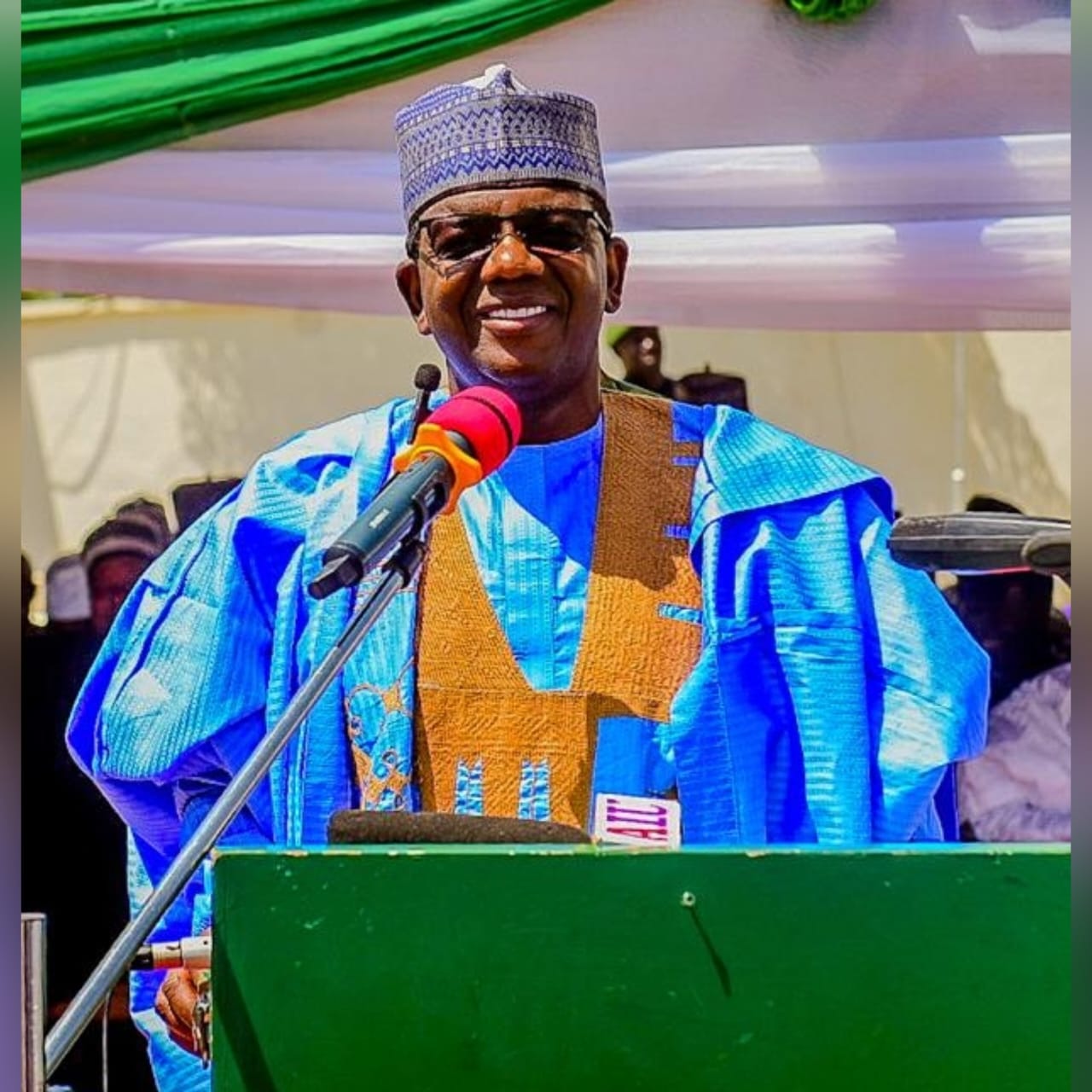
The Federal Government has cleared the Honourable Minister of State for Defence H.E. Dr. Bello Muhammed Matawalle MON over allegations of complicity on banditry in Zamfara State.

As false as these allegations were, the accusers could not come out with convincing evidence to buttress their allegations. It is baseless and unjustifiable!!!

Now that Minister Matawalle has been cleared of perceived wrongdoing, it is time for those who falsely accused him to retract their statements and apologize. The Federal Government’s investigation found the allegations as recklessness and complicity with banditry to be baseless and politically motivated.

Their intention is to discredit Matawalle so that Mr. President will not deem him fit enough to retain his seat as Minister of State of Defence. Cabinet reshuffle has come and gone, Matawalle was not removed thanks to his dedication and commitment to service through his contribution to the security of the nation. It is true that since his appointment, the security situation in North West and Nigeria in general has improved tremendously. His recent operational visit to Sokoto is a testament that the man is committed to eradicate insecurity.

The Special Adviser on Information and Strategy to President Bola Tinubu, Bayo Onanuga, in an interview on a national television station, Arise Tv said allegations against the Minister were thoroughly investigated by the Office of the National Security Adviser (NSA) and found to be baseless and politically- motivated.

According to him NSA’s investigation concluded that the allegations against Matawalle were “mere fabrications”. He said, “As far as I know, most of those things are just mere allegations.

The Presidential aide also provided insights into the rationale behind the reshuffle, explaining that public perception played a crucial role.
“People are just bringing out all kinds of fake things and allegations. That is why the man Matawalle is still in the cabinet. The President, I am sure, has heard many stories about him.

“For him to be there shows that, as I have said, some of those things have been probed. They are not true,” Onanuga said.

He added that the reshuffle was not solely about meeting the President’s expectations but also addressing the concerns of the public.
Matawalle who has recently visited the operational base of Operation Hadirin Daji twice led a successful coordination that culminated to the elimination of Halilu Sububu, a major bandit kingpin and his several lieutenants.

Besides, going by the achievements, proactive commitment to the fight against insurgency, and political doggedness, many opposition figures are uncomfortable with the confidence reposted on him by the President. The Minister is a strong supporter of President Tinubu in the North.

We are calling on the campaigners of these falsehoods and those behind this pull him down syndrome politics to retract the false claims, withdraw their allegations and apologize for spreading misinformation. Consequently, they should also reflect on their actions which are considered harmful and take responsibility of supporting the national security efforts by contributing to the country’s progress, rather than spreading falsehoods.


Peter Obi, Nigerian presidential hopeful, recently addressed a distinguished audience at Liverpool John Moores University, invited by The Liverpool Commonwealth Association. Speaking on “Harnessing the Commonwealth Advantage for Trade and Investment,” Obi highlighted the Commonwealth’s vast potential for growth and development, emphasizing its population of over 2.5 billion and GDP of $13 trillion, projected to reach $20 trillion by 2030. Attendees included Mr. Mark Blundell, Lord-Lieutenant of Merseyside, Liverpool’s Lord Mayor Richard Kemp, and Tim Nicholl, Vice-Pro Chancellor of LJMU Business School, among others.

Obi underscored the Commonwealth’s unique position to drive inclusive growth and sustainable development, advocating for reduced trade barriers, boosted investments, and strengthened cooperation among member states. He noted that these efforts could collectively uplift member nations, fostering economic prosperity for all.No alt text provided for this image

For Nigeria, Obi delivered a pressing message: the nation’s low productivity has limited its trade contributions within the Commonwealth and beyond, stifling potential. He emphasized the need for Nigeria to transition from a consumption-based economy to one centered on production. Obi outlined actionable strategies, including major investments in agriculture, robust support for small and medium-sized enterprises, and a steadfast commitment to the rule of law to attract both foreign and local investors.

“A new Nigeria is POssible,” Obi declared, calling for transformative leadership to propel Nigeria to its rightful place within the Commonwealth’s economic landscape. By embracing productivity and innovation, he argued, Nigeria can strengthen its economy and become a significant contributor to the Commonwealth’s future.


Gbolahan Kadir, a Customer Success Specialist handling enterprise clients, has lauded UBA Group’s recent initiative to elevate its commitment to career progression by re-evaluating career paths for contract staff. In a statement shared on social media, Kadir expressed excitement over UBA’s move to readdress previously converted contract staff, aligning them with core banking roles such as Executive Trainee (ET), Assistant Banking Officer (ABO), and Banking Officer (BO).

Kadir emphasized that this progressive policy—allowing contract staff up to the age of 30 to apply for the Executive Trainee program—distinguishes UBA from industry peers who may not offer similar career advancement opportunities for non-core staff. According to him, this initiative highlights UBA’s dedication to fostering an inclusive and supportive work environment where every employee can thrive.

“This step not only elevates employee morale but also strengthens career satisfaction and growth within the organization,” Kadir noted. He applauded UBA Group’s management for the decision, which he described as energizing and exemplary for the industry. He added, “By eliminating discrimination and promoting equal opportunities, UBA is setting a remarkable example in the banking sector.”

This initiative is expected to enhance the employee experience, aligning with UBA’s goals of building a workplace renowned for excellence and inclusivity.


The Revenue Mobilisation Allocation and Fiscal Commission (RMAFC) Chairman, Dr. Muhammad Shehu Bello, OFR, has praised President Bola Tinubu’s recent directive to limit the official convoy sizes of ministers and chief executives in an effort to cut down on governance costs. He encouraged state governments to adopt similar measures, underscoring the importance of reducing excesses in public spending to foster economic growth and stability.

In a statement issued over the weekend, Dr. Bello highlighted that this decision aligns with RMAFC’s long-standing advocacy for a leaner and more efficient public sector. According to him, lowering governance costs is crucial, as the current high expenditure has led to diminished resources for infrastructure, social services, and ultimately, weakened economic investment, rising unemployment, and increasing insecurity.

“No society can make meaningful progress without a competent and cost-effective management system that optimizes the nation’s resources for the common good,” stated Dr. Bello, emphasizing RMAFC’s continued recommendations over the years to cut back on unnecessary government expenses and focus on projects that tangibly benefit citizens.

Dr. Bello attributed Nigeria’s high governance costs to a complex web of factors, including an oversized bureaucracy, overlapping ministries and agencies, and entrenched corruption. He pointed to additional challenges such as infrastructure inefficiencies, security costs from insurgency and criminal activities, and the high salaries and allowances associated with public service, as well as mounting domestic and foreign debt obligations.

The Commission expressed concern over the unsustainable cost of governance in Nigeria, describing it as “alarming” and a significant barrier to essential functions like infrastructure development, healthcare, and education. Dr. Bello noted that all three arms of government are implicated in this issue, and that Nigeria’s governance costs rank among the highest in Sub-Saharan Africa, which hinders overall economic growth.

To address these challenges, the RMAFC recommended the swift implementation of the Orosanye report, which advocates for a streamlined public sector, along with a reduction in political appointees per RMAFC’s remuneration guidelines for public officeholders. The Commission also urged all levels of government to adopt more prudent spending practices, which it asserts would enhance Nigeria’s economic stability and improve citizens’ quality of life.


The National Commissioner and CEO of the Nigeria Data Protection Commission (NDPC), Dr. Vincent Olatunji, recently welcomed members of the Association of Licensed Data Protection Compliance Organisations of Nigeria (ALDAPCON) led by its Chairman, Mr. Ivan Anya. This high-level meeting highlighted mutual goals for advancing data protection standards across Nigeria.

During his remarks, Mr. Anya expressed gratitude for Dr. Olatunji’s support and praised his dedication to enhancing data privacy and security nationwide. Anya underscored the Association’s commitment to its members’ welfare, enabling them to effectively uphold data protection responsibilities in alignment with the Commission’s directives. He also announced the formation of an executive body to guide ALDAPCON’s affairs and outlined recent collaborative initiatives, including a completed training program for Data Protection Officers (DPOs) across twenty Nigerian universities, in partnership with the Committee of Vice Chancellors of Nigerian Universities (CVCNU).

The ALDAPCON chairman further requested that the Association be actively involved in NDPC’s future initiatives and expressed interest in participating in the 2025 Network of Africa Data Protection Authorities (NADPA) conference and Annual General Meeting.

In response, Dr. Olatunji lauded ALDAPCON’s accomplishments, noting that they reflect the success of the Public-Private Partnership model championed by the Commission. He highlighted how this collaborative approach has significantly improved compliance with the Nigeria Data Protection Act, fostering greater public trust in the nation’s digital economy. Dr. Olatunji also updated attendees on the certification process, announcing that DPCOs will assist in training future DPOs, with certification being issued by the Institute of Information Management.

Dr. Olatunji urged ALDAPCON to intensify efforts in advocacy, service delivery, and audit compliance filing, and assured the Association of NDPC’s ongoing support. He committed to involving ALDAPCON in the upcoming NADPA Conference, further cementing the collaborative relationship aimed at strengthening Nigeria’s data protection landscape.

Global communications platform Infobip (www.Infobip.com) is bringing together global mobile telecoms business Nokia, mobile industry association GSMA, leading Croatian telco Croatian Telekom (Hrvatski Telekom) and other companies at its leading developer-focused conference Shift this year.


Following several successful partnerships launching Camara-compliant Network APIs under the GSMA Open Gateway initiative, telcos and MNOs globally want to launch and monetize emerging and future services. Many firms still need better relationships with developers to do so quickly and efficiently. That’s why MNOs are attending Infobip Shift this year.

Matija Ražem, VP of Business Development at Infobip, said: “We are among the first to support the Camara project and the GSMA Open Gateway initiative, and closely working with telcos to deliver new added-value services. Our collaboration with Nokia, GSMA, and other MNOs at Shift Zadar shows how we work with our telco partners to expose customer experience-friendly APIs to developers”.

Our collaboration with Nokia, GSMA, and other MNOs at Shift Zadar shows how we work with our telco partners to expose customer experience-friendly APIs to developers

At Shift, Elmo, a tech-automotive company, will present its remote driving technology where attendees can drive a car in Finland through a console in Croatia. Elmo worked with Nokia to implement its Network as a Code API to control Elmo cars remotely by operating the remote consol through the wireless 5G Campus network of Croatian Telekom and will count on Infobip’s and Croatian Telekom’s support to bring this experience in this year’s Shift Zadar edition to the guests.

“The work of building the Network API ecosystem has advanced remarkably well this year. This important developer event that our partner, Infobip, is hosting further underlines the strong appetite in that ecosystem to come together to share the latest information and solutions as we progress with making it easier for developers around the world to utilize network capabilities and develop new use cases for their customers,” said Shkumbin Hamiti, Head of Network Monetization Platform, Cloud and Network Services at Nokia.

For GSMA – one of the main Shift Zadar sponsors this year – the Open Gateway initiative has a crucial role in the ecosystem of Telco APIs combined with CPaaS APIs. “The GSMA Open Gateway initiative is going from strength to strength and has culminated in the birth of a new API era. We want to nurture and grow this opportunity and provide access to developers, cloud providers, and telcos so they can launch game-changing new services. Our presence at Shift helps drive awareness of this opportunity and ensure its growth,” said Henry Calvert, Head of Networks at GSMA.

As one of the companies participating in Shift Zadar and providing the underlying communication technology for the Elmo remote driving experience, Boris Drilo, Chief Technical & Information Officer (CTIO) at Croatia Telekom, said: Network APIs are bringing the engagement of our customers and their favorite brands to the next level. Croatian Telecom offers this new business capability to Croatian businesses, bringing them eye-to-eye with their European peers. Telecom network capabilities exposure to developers has never been easier or simpler, revealing great possibilities. GSMA’s Open Gateway Initiative is making this approach scalable, creating the foundation for the rapid introduction of new use cases throughout telecom operators’ footprints. Croatian Telekom is opening the door to this new opportunity for all our partners to deliver their services in Croatia”.

As a great promoter and participant in the Open Gateway initiative, and one of the main guests at Shift Zadar 2024, Cedric Gonin, API Business Strategy and Channel Management Director at Orange, said: “Making Network APIs accessible to developers is fostering innovation in several industries. At Orange, we are committed to share our APIs with developers and partners to experiment and implement new solutions. Our participation in the Infobip Shift event highlights our dedication to empowering the developer community with innovative tools that enable the creation of tomorrow’s digital services through the CAMARA API within the Open Gateway initiative.”