
Datacentrix, a leading provider of high performing and secure ICT solutions, is proud to announce the outstanding achievements of two graduate teams. The two teams entered the recent IBM watsonx Generative AI Challenge and achieved first and third place in the watsonx AI Assistant Challenge track.

The aim of the interactive, hands-on competition was to allow participants to transcend theoretical generative AI concepts and create practical, AI-infused solutions for real-world customer use cases.

Competing against teams from 44 different countries across the Europe, Middle East and Africa (EMEA) region, Datacentrix’s X-men group, composed of graduates from Cape Town and Johannesburg, secured first place, while the Quadbots, hailing from Durban, earned third place, marking a significant milestone for Datacentrix as the only winning teams from the Southern Hemisphere across the entire competition.

The IBM watsonx Generative AI Challenge focused on three key trials: using prompt engineering to analyse customer experience with watsonx.ai; automating repetitive manual tasks with watsonx Orchestrate; and creating a generative AI-powered virtual assistant with watsonx Assistant and watsonx Discovery.

The X-men team developed a bot that enhances Datacentrix’s engagement processes with its clients. This bot efficiently accesses a data repository to provide accurate and up-to-date information, including use cases, brochures and cost estimates. In addition, the X-men created a ticket-handling bot capable of generating one-time passwords and resetting pins in real time. Quadbots built a brainstorming bot designed to capture and analyse ideas, providing valuable feedback to users.

Says Arno Hanekom, Digital Strategist at Datacentrix: The extraordinary success of our graduates in this challenge underlines Datacentrix’s commitment not only to nurturing talent, but also to ensuring that, as a business, we continue to push the boundaries when it comes to driving innovation in AIto deliver solutions motivated by client use cases with tangible measurable benefits to their enterprises.

“As a graduate mentor, I took a different approach to training this year’s group of graduate learners, spending the past six months equipping them with relevant technology skillsets to assist with data and AI-specific client requests, while also understanding the current market landscape and the direction AI technology is moving towards in terms of pertinent client demand in South Africa enterprises. Our ultimate goal is to have these graduates become an extension of Datacentrix’s AI capabilities, contributing to our intellectual property. We want to ensure strong skills retention within our business while also continuing to bolster local technical expertise and delivery capability levels.”

Since joining the Datacentrix graduate programme in April 2024, the eight graduates have undergone an intensive training regimen, including bi-weekly certifications, technical assessments and practical assignments. Their preparation culminated in mastering the full stack of IBM watsonx technologies, positioning them for success in the challenge.

“Congratulations to our incredible graduates for their dedication and hard work,” adds Shakeel Jhazbhay, General Manager: Digital Solutions at Datacentrix. “Their success in the IBM watsonx Challenge is a testament to the calibre of their skills and the robust graduate training programme at Datacentrix. We look forward to seeing their continued contributions to our AI capabilities and the broader business landscape.”

About Datacentrix:

Datacentrix provides leading ICT integration services and solutions to South African organisations, ensuring their success and sustainability into the digital age. The company’s approach is to partner with its customers, equipping them with valuable insight and helping to align their ICT undertakings with their business strategy.

Datacentrix offers a deeply specialised skills component and is endorsed by the world’s foremost technology partners. The company is recognised for its agility, in-depth industry knowledge, proven capability, and strong overall performance.

Datacentrix is a Level One (AAA) B-BBEE Contributor, with 135 percent procurement recognition. For more information, please visit www.datacentrix.co.za.


Tony O. Elumelu, C.F.R., Chairman of Heirs Holdings, inaugurated the much-anticipated #FII8 week at the New Africa Summit, co-chaired by him and CNN host Eleni Giokos. Their engaging fireside chat focused on a topic that resonates deeply with Elumelu: “The Landscape of African Entrepreneurship: How Can Vision Transform to Venture?”

In a thought-provoking discussion, Elumelu emphasized Africa’s rich resources, immense talent, and untapped potential as catalysts for economic growth. “With 60% of our population under 30, Africa’s young, vibrant, and resilient youth are our greatest asset,” he noted. However, he acknowledged that high unemployment and infrastructure challenges pose significant barriers. Reflecting on his personal career journey, he expressed optimism about the extraordinary talent cultivated through The Tony Elumelu Foundation, which has empowered thousands of young African entrepreneurs. “My success and their successes fuel my optimism,” he shared.

Elumelu poignantly addressed the critical issue of joblessness, calling it “the betrayal of a generation—a waste of our human capital.” He underscored the urgency of this matter, especially in light of Africa’s rapid demographic growth, asserting that traditional approaches to job creation have failed. “For too long, we have relied on government, but we know that governments cannot create all the jobs needed on the continent,” he asserted.

Championing the concept of Africapitalism, Elumelu argued that the private sector must play a leading role in Africa’s economic development. He highlighted the collaborative efforts of Heirs Holdings and The Tony Elumelu Foundation, which are dedicated to empowering young African entrepreneurs with $5,000 in non-refundable seed capital, world-class mentorship, and business training. To date, this initiative has supported over 20,000 young men and women, creating an impressive 400,000 direct and indirect jobs. “This is our way of changing Africa,” he affirmed.

Despite these achievements, Elumelu recognized that success does not come without its challenges. He stressed that access to capital alone does not solve all problems. “When I meet with African governments and policymakers, I emphasize, ‘If you want to develop, you must improve access to electricity, reform taxation systems, and create policies that ease challenges for entrepreneurs to succeed,’” he stated. He pointed out that too often, entrepreneurs face significant obstacles that stifle their potential.

Elumelu advocated for strategic public-private partnerships, highlighting their essential role in fostering an enabling environment for businesses to thrive. “While the private sector creates economic opportunities and funding, governments must create the policies that allow businesses to succeed,” he explained. He firmly believes that Africa must offer its own solutions rather than relying on external support. “Africa beckons, and Africa is open for business,” he declared.

In closing, Elumelu praised Richard Attias, CEO of the FII Institute, for convening global voices through this vital platform. “Through the FII, we engage in advocacy with governments, private sector leaders, and the global philanthropic community. It is a precious opportunity to showcase Africa’s potential and demonstrate our successes,” he concluded, leaving the audience inspired and hopeful for the continent’s future.

In a groundbreaking move for cybersecurity education, Babcock Business School has announced a strategic partnership with ThinkCyber Nigeria, a collaboration that promises to redefine the standards of training for aspiring cybersecurity professionals. Professor AKINTOYE Ishola Rufus, Head of Babcock University Business School, elaborated on the significance of this partnership during a media chat  emphasizing the urgent need for industry-aligned training in today’s rapidly evolving digital landscape.

The partnership centers on the implementation of ThinkCyber’s CYBERIUM ARENA, an innovative cyber simulation environment that provides students and corporate professionals with hands-on experience. Professor Rufus stated, “Our collaboration with ThinkCyber is transformative. It enables us to equip our students and industry professionals with practical skills necessary to combat current and emerging cyber threats effectively. This immersive learning experience is critical in preparing them for the complexities of the cybersecurity landscape.”

Opened in September 2022 in Ilishan, Ogun State, the Babcock Business School employs a unique 30/70 training model, where 70% of the curriculum is dedicated to practical, hands-on experience while 30% focuses on theoretical knowledge. This innovative approach is designed to address the skills gap in the job market, particularly in fields like accounting and technology. Professor Rufus explained, “We deeply believe in the power of experiential learning. Our graduates are not just armed with degrees; they emerge as industry-ready professionals who can contribute value from day one.”

The partnership with ThinkCyber not only enhances the educational experience at Babcock University but also opens doors for students through unique opportunities, including a one-year training stint in Poland. This international exposure allows students to engage with global cybersecurity challenges while remaining grounded in the realities of the Nigerian market. “Our mission is clear: to nurture top-tier cybersecurity talent that can navigate and respond to any situation with excellence,” Professor Rufus asserted.

Addressing the Talent Gap

As cyber threats grow increasingly sophisticated, the need for well-trained cybersecurity professionals in Nigeria and across Africa has never been more critical. Professor Rufus highlighted the pressing issue of the cybersecurity talent gap, noting, “The digitalization of businesses brings immense risks, especially as we witness high-profile security breaches affecting major financial institutions. The demand for cybersecurity skills is skyrocketing, and we estimate the market need to be in the billions.”

During the media parley , Professor Rufus stressed the importance of proactive measures in cybersecurity. He offered valuable advice for banks seeking to strengthen their cybersecurity resilience: “Continuous investment in training and retraining is vital. Cyber threats evolve rapidly, and a static approach will not suffice. By fostering a culture of ongoing learning and adaptation, banks can significantly enhance their defenses against cyber attacks.”

A Commitment to Excellence

Babcock University distinguishes itself from other institutions through its unwavering commitment to producing job-ready graduates. Professor Rufus remarked, “We don’t just train students; we prepare them to add immediate value in the workplace. Our programs hold multiple accreditation, ensuring that our graduates are recognized both locally and internationally.” The emphasis on feedback-driven training and purpose-led education sets Babcock apart as a leader in cybersecurity education.

Addressing the role of government in cybersecurity education, Professor Rufus urged for an evolution in the education model, calling for increased investment in training and capacity building. “The government must prioritize practical skill-building across all educational levels. Our curriculum needs to adapt to the demands of a digital-first world, shifting away from purely academic achievements,” he advised, advocating for a comprehensive approach to education that prepares students for the realities of a technology-driven economy.

Overcoming Challenges

Despite the exciting prospects, the partnership faces challenges, including misconceptions surrounding cybersecurity training. Professor Rufus noted, “Many people perceive cybersecurity training as just another tech course, but we are operating at a level that transcends basic training. Educating stakeholders about the depth and value of our programs is crucial.”

Financial barriers also pose a significant challenge, as high-quality training requires substantial investment. Professor Rufus emphasized the importance of communicating the long-term benefits of such training. “Investing in cybersecurity education is investing in future security and success. We need to help people understand that the return on this investment is not just financial; it’s about safeguarding their digital assets and data,” he stated.ThinkCyber Nigeria

A Vision for the Future

As Babcock Business School and ThinkCyber Nigeria embark on this transformative partnership, their commitment to shaping a skilled and resilient talent pool is evident. Professor Rufus concluded with a strong message: “We are dedicated to making an impactful contribution to cybersecurity education. Together with ThinkCyber Nigeria, we aim to secure Nigeria’s digital future and empower the next generation of cybersecurity experts.”

This collaboration marks a pivotal moment in the quest to enhance cybersecurity training in Nigeria, equipping future professionals with the skills and knowledge needed to tackle the challenges posed by an increasingly interconnected world. Through innovative training methods and strategic partnerships, Babcock University and ThinkCyber Nigeria are setting new standards for excellence in cybersecurity education, paving the way for a safer digital environment for all.


Anthony Emeka Nwosu


As Babcock Business School and ThinkCyber Nigeria embark on this transformative partnership, their commitment to shaping a skilled and resilient talent pool is evident. Professor Rufus concluded with a strong message: “We are dedicated to making an impactful contribution to cybersecurity education. Together with ThinkCyber Nigeria, we aim to secure Nigeria’s digital future and empower the next generation of cybersecurity experts.”


Bright Okere, Head of Marketing at AHA Games under Transsion Holdings, has been awarded a coveted spot among Nigeria’s “Top 35 Under 35 Marketing and Communication Professionals” by Brand Communicator. The recognition is a significant career milestone and a heartfelt tribute to his late father, who inspired him to excel.No alternative text description for this image

Reflecting on his father’s legacy, Okere shared, “My late dad had a dream but couldn’t stay long enough to fulfill it.” His father, a former newspaper editor fluent in five languages—English, Igbo, Hausa, Efik, and Latin—was a dedicated professional and a guiding influence. Bright recalls a cherished moment when his father helped him prepare for a national essay competition, a collaboration that earned him fourth place nationwide.

“As we drove back home, he shared his dream of becoming the best editor, winning awards, and making an impact in his industry. He looked at me and said, ‘Whatever your hands find to do, strive to be the best, and make me proud,’” Okere recalled.

Okere’s achievement today is a testament to those words, and he expressed deep gratitude to those who supported him on his journey. “I hope Dad is proud of me,” he added, honoring his father’s memory with this career-defining recognition.


“As we drove back home, he shared his dream of becoming the best editor, winning awards, and making an impact in his industry. He looked at me and said, ‘Whatever your hands find to do, strive to be the best, and make me proud,’” Okere recalled.


Nigerian fintech startup Lendsqr, recognized for its innovative loan management software serving banks, microfinance institutions (MFIs), and digital lenders, has announced the launch of a NGN1 billion (US$600,000) on-lending initiative. This move aims to support local lenders in expanding their credit offerings, providing them with the capital needed to scale. Since its founding in 2018, Lendsqr has streamlined lending operations and connected lenders with borrowers through its digital platform.Image preview

In discussing this new funding approach, CEO Adedeji Olowe noted, “For a long time, we believed that providing top-tier lending technology was enough to help lenders scale… But technology alone cannot scale a loan business without adequate capital.” This initiative specifically targets licensed lenders in Nigeria, offering them critical access to growth capital.

Lendsqr’s on-lending model directly addresses a pressing issue in digital lending: access to adequate loan capital. By bridging the gap between technology and funding, Lendsqr empowers lenders to meet customer demand, enhance credit offerings, and stay competitive in Nigeria’s evolving financial landscape.


“For a long time, we believed that providing top-tier lending technology was enough to help lenders scale… But technology alone cannot scale a loan business without adequate capital.” This initiative specifically targets licensed lenders in Nigeria, offering them critical access to growth capital.


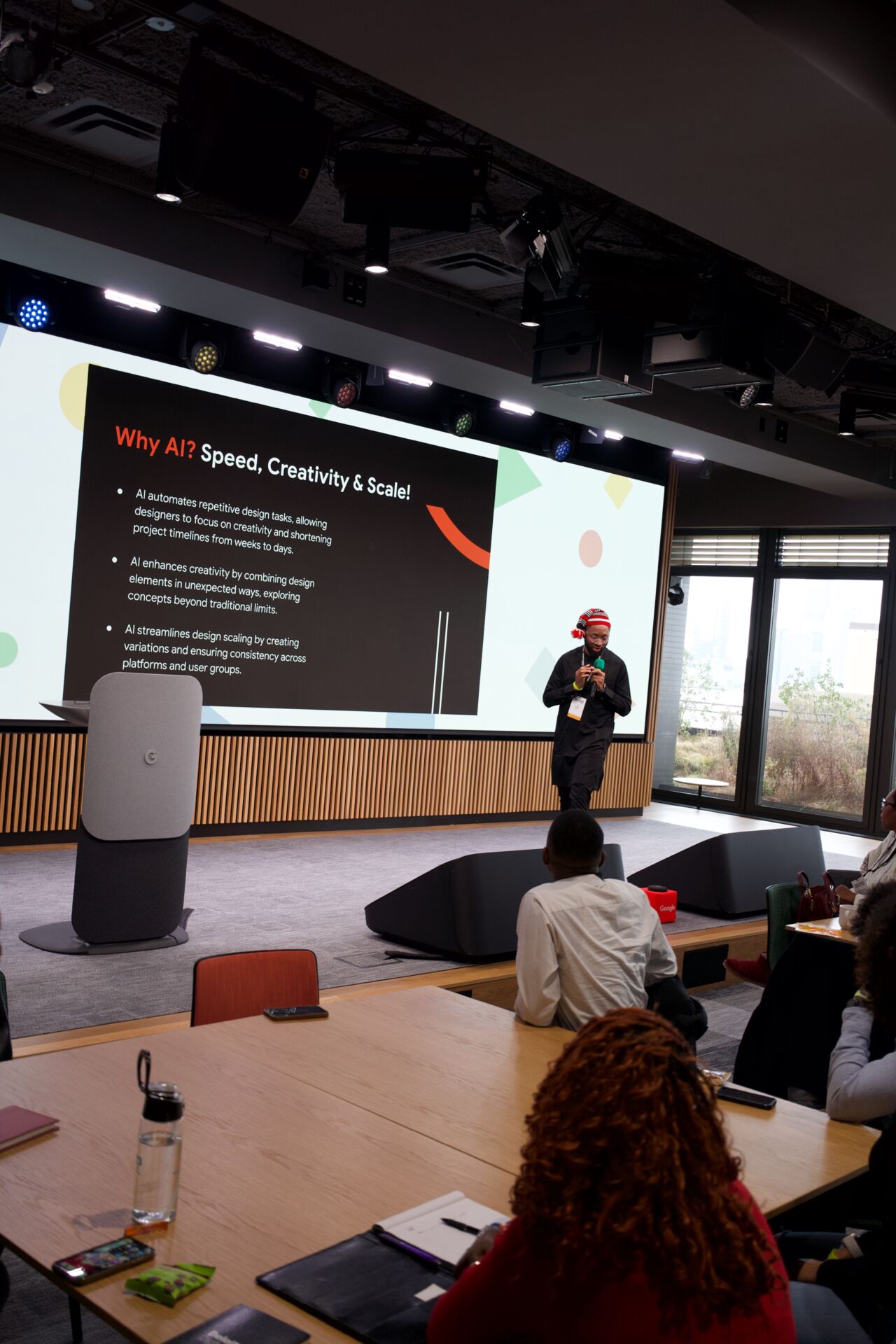
At the Google Tech Equity Collective Innovate event, tech design leader and entrepreneur Evans Akanno emphasized the importance of representation and innovation in the tech industry. “Wearing my Igbo attire on stage felt like bringing a piece of home into the heart of tech,” he stated, highlighting the cultural significance of his presence.No alternative text description for this image

Akanno’s presentation, titled “From Concept to Prototype – AI’s Role in the Future of Product Design,” transcended technical discourse, focusing on the vital need to create spaces for Black voices in technology. He remarked, “This event was about collectively accelerating Black access, ambition, and advancement in tech.”

Reflecting on the event’s mission, Akanno underscored the importance of community and support, stating, “In that moment, I was reminded of why we do this—to lift each other, to open doors, and to pave the way for the next generation. We’re here, and we’re building this future together.” His words resonated with attendees, reaffirming the commitment to fostering diversity and inclusion within the tech landscape.

AI’s Role in the Future of Product Design,” transcended technical discourse, focusing on the vital need to create spaces for Black voices in technology. He remarked, “This event was about collectively accelerating Black access, ambition, and advancement in tech.”


Many African communities are challenged by an enduring issue: the willingness to undermine local progress for the approval and favor of foreign powers. Too often, individuals who have the opportunity to uplift their fellow Africans instead choose to prioritize foreign interests. This mindset has seen Africa’s resources traded away cheaply, not for the broader benefit of the continent, but for personal gain—sending children to study abroad rather than investing in quality education at home.

When some Africans secure prestigious roles within global organizations like the UN, IMF, or World Bank, they often lose sight of their roots, prioritizing foreign objectives over local needs. These roles should be opportunities to make meaningful contributions to Africa, yet often fail to drive substantial change back home. Despite Africa hosting branches of major international institutions, many communities remain deprived of basic amenities, like clean water and adequate shelter. The lofty titles and positions achieved abroad do little to address the continent’s poverty indices or infrastructure deficits.

True independence and sustainable development will not come from external help or high-profile affiliations; it must be forged by Africans, for Africans. The time has come for a collective change in mindset, one that embraces the reality of developing Africa from within. Building a prosperous continent requires Africans to work together, fostering a spirit of community and resilience.

As we look to the future, we must unite, build, and believe that something extraordinary can emerge from Africa. With a shared commitment, Africans can support one another to foster the growth and prosperity of our continent.

John Kofi Annan, Pan-Africanist


The recent Central Securities Clearing System (CSCS) Cybersecurity Conference, themed “Cybersecurity: Synergizing AI and Infrastructure,” featured a vital presentation from Collins Onuegbu, Chairman of Signal Alliance Technology Holding (SATH). Delivering a session on “Proactive Defense Through Rigorous Crisis Management,” Onuegbu outlined essential strategies for anticipating and mitigating cybersecurity threats in an era of rapidly evolving digital risks. He emphasized the importance of proactive crisis management as a core element in safeguarding digital infrastructure against emerging threats.

Following this, an expert panel discussion on “Critical Infrastructure Protection and International Cooperation” took center stage. Moderated by cybersecurity expert Aisha Ali-Gombe, the panel included prominent figures like Dr. Lawan Ahmad Mohammed, Prof. Abdullahi Muhammad Yau, Bamidele Ogunmakin, and Onuegbu himself. Together, they addressed escalating cyber risks to critical infrastructure and stressed the necessity of cross-border and cross-sector collaboration to enhance security. The panel discussed the pressing reasons critical infrastructure remains a frequent target for cyberattacks and highlighted the shared responsibilities of infrastructure owners, operators, government agencies, and industry groups in fortifying resilience and security.

Signal Alliance Technology Holding, a proud sponsor of the CSCS Cybersecurity Conference, reaffirms its commitment to advancing cybersecurity resilience across Africa. Through its expertise, SATH safeguards critical systems and fosters secure, robust infrastructures in the region.

Founded in 1996 and rebranded as SATH in 2021, Signal Alliance Technology Holding stands as a leading technology group across Africa and the Middle East, with operations spanning technology consulting, cloud services, business applications, cybersecurity, and software development. Its venture arm supports diverse sectors, including retail, finance, advertising, renewable energy, agriculture, and wellness, as it continues to shape the continent’s technological landscape.

In a landmark initiative, the Akwa Ibom State government has broken ground on Ibom Towers, an 18-story multipurpose building in Victoria Island, Lagos. The ceremony was officiated by Lagos State Governor Babajide Sanwo-Olu, who lauded the project as a testament to both states’ commitment to economic collaboration and shared prosperity.

Governor Sanwo-Olu praised Akwa Ibom’s strategic investment, led by Governor Umo Eno, as a demonstration of confidence in Lagos’s position as a business hub. “Ibom Towers is more than just a physical structure; it is a symbol of inter-state partnership and a reflection of our shared vision for regional growth,” Sanwo-Olu stated during his address. He underscored that the landmark project will not only deepen Lagos-Akwa Ibom relations but will also serve as a significant revenue source for Akwa Ibom.

Situated at Plot 868A, Bishop Aboyade Cole Street in Lagos’s premier commercial district, Ibom Towers is projected to be completed within 24 months. The building aims to attract high-profile businesses, boosting Akwa Ibom’s revenue and elevating its presence in Nigeria’s foremost economic city.

Akwa Ibom State Governor Umo Eno expressed his vision for the project as part of a broader strategy to expand the state’s economic portfolio. “Our decision to venture into real estate in Lagos is rooted in our commitment to creating diverse income streams for Akwa Ibom,” he explained, citing the success of Lagos’s own growth strategy as inspiration.

Reflecting on the development, Obong Victor Attah, the first Governor of Akwa Ibom in the Fourth Republic, commended Governor Eno’s forward-thinking approach. He encouraged the governor to remain steadfast, despite potential criticism, emphasizing that the economic value of Lagos property far outweighs similar investments elsewhere. “The future belongs to those with the courage to see opportunities and act,” Attah remarked.

Pastor Imoabasi Jacob, Managing Director of the Akwa Ibom State Investment Corporation, highlighted the project’s significance for Akwa Ibom’s internal revenue growth, affirming that Ibom Towers is set to become a lasting asset for the state.

The Ibom Towers development marks a significant step forward in Akwa Ibom’s economic strategy, symbolizing both states’ shared commitment to a prosperous and interconnected future for Nigeria.

#AkwaIbomInLagos #EconomicPartnership


Members of the Peoples Democratic Party (PDP) in Talata Mafara Local Government Area, Zamfara State, took to the streets on Monday to protest what they described as poor governance under Governor Dauda Lawal.

Staging a strong protest against Governor Dauda Lawal, the protesters said that the tenure of the former governor of the State, Dr. Bello Muhammed Matawalle MON is far better than the present one in terms of economic opportunities, job creation, and security.

The demonstrators accused the governor of neglecting citizens’ welfare, worsening hunger, and imposing candidates in local elections against the will of the people.

During the protest, participants expressed longing for the tenure of former Governor Bello Matawalle, whom they described as more responsive to the people’s needs.

“We miss former Governor Matawalle,” Ibrahim remarked, as fellow demonstrators echoed their agreement. “At least he cared for the people. We’re calling on him to run in the next election, and we will vote for him.”

Led by PDP local leader Muhammad Ibrahim Talatar Marafa, the protesters assembled at the local government headquarters, voicing their displeasure with the administration.

They criticized the governor for allegedly prioritizing personal luxury over the well-being of residents.

“We are tired of Governor Dauda’s policies,” Ibrahim said. “The people are suffering; hunger is rampant and has worsened. Meanwhile, the governor lives a lavish lifestyle, ignoring the plight of the ordinary citizen.”

The protesters also accused the governor of interfering in the party’s internal processes by imposing candidates in the recent local elections, a move they argued undermined democratic values.

“This is not democracy,” Ibrahim stated. “The people’s choice was disregarded. It feels as though Dauda is only interested in furthering his personal agenda, not addressing the needs of Zamfara.”

In addition to electoral concerns, the protesters raised alarms over rising insecurity, saying that the region remains increasingly exposed to bandit attacks. They also lamented the soaring cost of food and the general economic hardship residents are facing.

“The hunger situation here has gotten worse, and there seems to be no solution in sight,” one protester said. “People here are hungry.”

All these happening in the State must have necessitated the Federal lawmaker from Zamfara state, Hon. Sulaiman Abubakar Gummi to leave PDP to Join APC.

Hon. Sulaiman Abubakar Gummi, a Federal House of Representatives member for Gummi/Bukkuyum Constituency, has dumped the People’s Democratic Party (PDP) and joined the All Progressives Congress (APC).

The activities of Governor Lawal will spell doom for PDP in the State as the Party will soon be hit with more defection.