In a bold and unprecedented move, Rivers State Governor Sim Fubara has ordered the shutdown of the Nigerian National Petroleum Corporation (NNPC) and all oil companies operating in the state. His declaration, “No allocation for Rivers State, no oil for Nigeria,” reflects a deep frustration over what he perceives as the unfair distribution of oil revenues.

This decisive action has sent ripples through the nation, resulting in Nigeria’s global oil production ranking plummeting from 4th to 24th almost immediately. Governor Fubara’s stance not only puts the spotlight on the importance of Rivers State to Nigeria’s oil supply but also raises questions about the broader implications for the economy and energy sector.

In a heartfelt challenge to influential leaders, including Minister Nyesom Wike and President Bola Tinubu, the governor expressed his willingness to stand firm for the people of Rivers State. “Let them take action against this stance and see Nigeria boil,” he warned, emphasizing the urgency and seriousness of the situation for the residents who rely on the oil industry for their livelihoods.

Governor Fubara’s actions resonate with many citizens who feel sidelined in the ongoing discussions about resource allocation. As the situation unfolds, the people of Rivers State, and indeed the entire nation, will be watching closely to see how this confrontation affects the oil industry and the broader economic landscape of Nigeria.


As facial recognition technology becomes more widespread, many people are embracing it as a secure and convenient means of authentication. With tech giants like Apple popularising Face ID, which not only encrypts facial data and only stores it on device in Secure Enclave, but also uses sophisticated 3D scanning that can’t be easily fooled or compromised, financial institutions however have also integrated facial recognition into their security protocols. However, Adrian Stanford, Group CTO at ESET Southern Africa, says the latest ESET Threat Report H1 2024 reveals that cybercriminals are adapting quickly to the use of less sophisticated biometric technology.


Using advanced techniques, attackers are now exploiting AI-driven face-swapping services to bypass security measures and gain unauthorised access to victims’ accounts via fake mobile applications. “While facial recognition is undoubtedly a popular and useful security tool, it’s crucial to understand its limitations. Simply relying on camera-based biometrics can provide a false sense of security. Cybercriminals are continuously innovating, and they have found ways to manipulate even the most some facial recognition technologies to suit their objectives.”


The power of biometric authentication

Biometric authentication methods, including facial and fingerprint recognition, are becoming increasingly popular among consumers and businesses alike. According to research in 2023, more than 50% of consumers used biometric authentication for online transactions, while fingerprint and facial recognition emerged as the top biometric methods, used by nearly 30% and 50% of consumers respectively​. Additionally, the adoption of biometric authentication is gaining significant traction among IT and cybersecurity professionals, with many organisations shifting towards these methods to replace traditional passwords in workplace environments​.


This growing reliance on biometrics reflects a global trend. The biometric market, valued at approximately $5 billion in 2022, is expected to reach $19.3 billion by 2032. “Biometric technology provides ease of use and a level of security that many people find reassuring. However, this demand has also attracted the attention of cybercriminals who are adept at exploiting new technologies,” Stanford notes.


The malware threat

As biometric systems become more sophisticated, so do the tactics used by cybercriminals. “The GoldPickaxe malware is one of the latest threats to exploit biometric data. Posing as legitimate apps, these fake applications trick users into providing videos of their faces and other personal information, which are then used to create deepfake videos. These realistic-looking videos are capable of bypassing some forms of biometric security,” Stanford explains.

GoldPickaxe malware has been observed targeting both Android and iOS users by impersonating legitimate applications. In one case, it posed as a Thai government app, collecting sensitive information such as identification documents, SMS messages, and facial recognition data.


Victims are tricked into installing a mobile device management (MDM) profile, which allows attackers to control the victim’s iOS device. On Android, it is typically distributed through websites masquerading as the Google Play Store. The ultimate aim is to gain access to users’ banking applications and other high-value targets.


How to avoid face-stealing scams

“While biometric security is a powerful tool, it is not infallible. Users should remain vigilant and take additional steps to protect their personal information,” says Stanford.


  • Download apps only from official sources

Always use official app stores, such as Google Play or the Apple App Store, to reduce the risk of downloading malicious applications.

  • Be cautious of ‘too good to be true’ offers

Always try to verify claims about eligibility for prizes, discounts, or, as in the case of GoldPickaxe, refunds and bonuses. If it seems too good to be true, it probably is.

  • Use Multi-Factor Authentication (MFA)

MFA adds an extra layer of security by requiring multiple forms of identification before granting access.

  • Verify the authenticity of financial apps

Scrutinise any app that requests biometric data, particularly financial applications. Look for reviews and official endorsements before proceeding.

  • Run regular security scans

Suspicious activity on your smartphone? Run a security scan with a reputable security app. If you discover a malicious app, delete it and restart your phone. Resetting your Android device to factory settings may be necessary.


“Creating fake videos using AI for scams sounds scary, but even these elaborate attacks can be avoided or stopped via appropriate cybersecurity solutions and sufficient awareness. While no single technology is the ultimate answer for everything, reliable cybersecurity consists of a multilayered defence combined with a prevention-first approach,” adds Stanford.


By Sameer Kumandan, MD of SearchWorks


Automation has been labelled as a way to tighten up the corners, without cutting them. An apt description, it’s all about using technologies to up productivity, boost efficiency, reduce errors and save businesses a lot of time without having to make any sacrifices when it comes to quality or performance.


Customer Due Diligence (CDD) plays a critical role in mitigating financial crime risks by helping businesses establish that their customers are not involved in illegal activities and that they are who they say they are. In addition, CDD is essential to ensure compliance with South Africa’s Financial Intelligence Centre Act (FICA). And it’s not a one-time activity. Ongoing monitoring is vital to keep close tabs on how a customer’s circumstances and activities change over time. This is important, because risks evolve over time and because of the rise of what INTERPOL describes as a financial fraud ‘epidemic’.


Ongoing CDD helps businesses stay compliant with regulatory requirements, protects their reputation and ensures that they avoid legal penalties because suspicious transactions can be detected and flagged as soon as they happen. But it is fairly time-consuming and complex and when you’re doing it manually, it’s easy to make mistakes.


We saw this earlier in the year when Ashburton Fund Managers were hit with a hefty fine for failing to screen clients adequately. Following the misconduct, South Africa’s Financial Sector Conduct Authority (FSCA) warned that failure to comply with FICA will not be tolerated and urged all accountable institutions to continue reviewing and strengthening their efforts to illicit activities.


The business case for automated CCD

We all know that institutions are prohibited from establishing business relationships with clients who use fictitious names, who cannot be properly identified or who appear on sanctioned lists. This reinforces the need for effective CDD. By automating the process, financial institutions, compliance officers, risk management professionals, legal firms and others in highly regulated sectors can efficiently and securely onboard clients while ensuring regulatory compliance. These tools provide real-time identity verification and can perform automated risk assessments, to help businesses stay compliant without having to deal with the unnecessary administrative burden.


In fact, automation of customer due diligence processes has been shown to result in significant savings and operational efficiencies. For example, businesses can reduce the time spent on manual identity verification by up to 80%, freeing teams to focus on more strategic tasks, such as customer satisfaction and business growth​. Moreover, automation can cut error rates by up to 50%, reducing compliance risks and enhancing the accuracy of due diligence. With penalties for non-compliance increasing, as seen in recent regulatory actions, automating these processes is not just a cost-saving measure but also a proactive step towards reducing legal risks and enhancing operational resilience.


As a data aggregator platform, SearchWorks looks to help businesses navigate regulatory obligations and improve efficiency by using technology to streamline CDD processes. By leveraging an advanced tool like VOCA – SearchWorks’ newly launched Verification, Onboarding and Compliance application – businesses can simplify the process of verifying and monitoring clients and safeguard themselves from regulatory penalties while upping overall efficiency.


With VOCA, you can effortlessly conduct thorough KYC/KYB checks, CIPC checks, ID verification, PEP/Sanction checks, FIC questionnaires, adverse news checks and account verifications; with full audit trails to ensure all necessary checks are documented and easily accessible. And with live reports and customisable risk ratings on each verification, you can make more informed decisions and more effectively mitigate risks. Additionally, the process within VOCA can be adapted to suit and meet client-specific needs, ensuring tailored solutions for different business requirements.


The regulatory landscape is always advancing – but so too are the risks. In response to this, automating CDD just makes business sense. Visit our website to learn more: www.voca.co.za


Ends.


About SearchWorks


SearchWorks is South Africa’s largest data aggregation platform, offering access to a wide range of data sources that provide detailed and accurate information on individuals, businesses, trusts, and properties. Designed for professionals in industries such as finance, law, and real estate, SearchWorks empowers users to perform thorough due diligence, mitigate risks, and make informed decisions. By streamlining the process of gathering critical information, SearchWorks supports businesses in maintaining compliance, enhancing security, and improving operational efficiency.


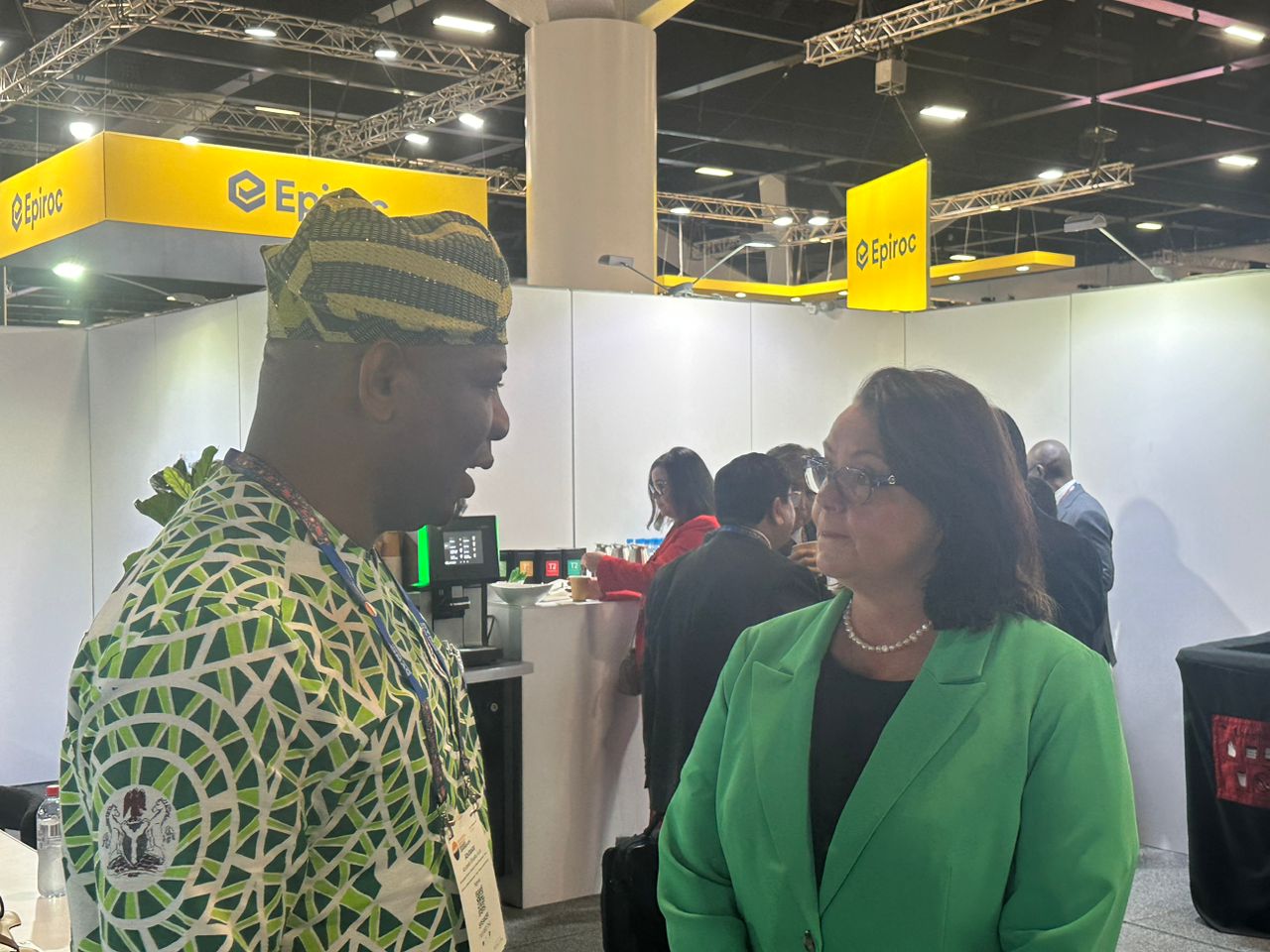
At the International Mining and Resources Conference (IMARC) in Sydney, Australia, Nigeria’s Minister of Steel Development, Prince Shuaibu Abubakar Audu, has made a compelling case for foreign investment in Nigeria’s steel and metals industry, presenting the country as Africa’s prime investment destination for the sector. The conference, which spans from October 29 to October 31, 2024, has provided a platform for Nigeria to showcase its resources and the government’s recent efforts to attract foreign investors.

Representing Nigeria’s Federal Ministry of Steel Development, Prince Audu was accompanied by a high-level delegation, including Permanent Secretary Dr. Chris Osa Isokpunwu and other key directors. In addition to addressing the conference attendees, the minister engaged in discussions with Australian government officials and industry leaders to explore potential funding and partnerships for Nigeria’s steel sector.

In his presentation, titled “The Nigerian Metallurgical Industry: An Unfolding Frontier of Global Investment Haven,” Prince Audu emphasized Nigeria’s strides under the “Renewed Hope Agenda” championed by President Bola Ahmed Tinubu. He highlighted the unprecedented establishment of the Ministry of Steel Development, created in August 2023, to focus solely on advancing the steel industry, which is expected to drive industrialization and significantly boost Nigeria’s GDP.

“This government, in just over a year since the ministry’s creation, has made significant strides to foster an environment that is not only conducive to foreign investment but also highly advantageous,” stated Prince Audu, pointing to Nigeria’s vast natural reserves of iron ore, dolomite, coal, limestone, manganese, and nickel. “Nigeria’s strategic position in Africa offers investors access to both domestic and broader regional markets.”

Prince Audu detailed a range of incentives available to foreign investors, such as tax holidays, rural location incentives, Export Expansion Grants (EEG) Schemes, gas utilization incentives, and zero-duty on imported mining and steel equipment. These measures, he noted, demonstrate the government’s commitment to fostering a welcoming business climate for investors.

“We are here to address challenges and discuss opportunities within the global market, but more importantly, to showcase Nigeria’s immense potential,” Prince Audu explained. “With one of Africa’s largest economies, abundant natural resources, and a youthful population ready for innovation, Nigeria is uniquely positioned as a gateway to major African and international markets.”

He underscored Nigeria’s robust resources, growing infrastructure, and commitment to sustainable development and technology, asserting that investing in Nigeria’s steel sector is not only viable but strategically profitable. “Together, we can explore and capitalize on the untapped opportunities within Nigeria,” he concluded, inviting global stakeholders to partner with Nigeria in advancing the steel industry.

IMARC, Australia’s largest mining event, is a major gathering for global leaders in mining and steel, offering a crucial platform for international partnerships and advancements in the industry. Through Nigeria’s participation, the government seeks to open new avenues for economic growth, anchored in a steel industry that can catalyze sustainable development and job creation across the country.


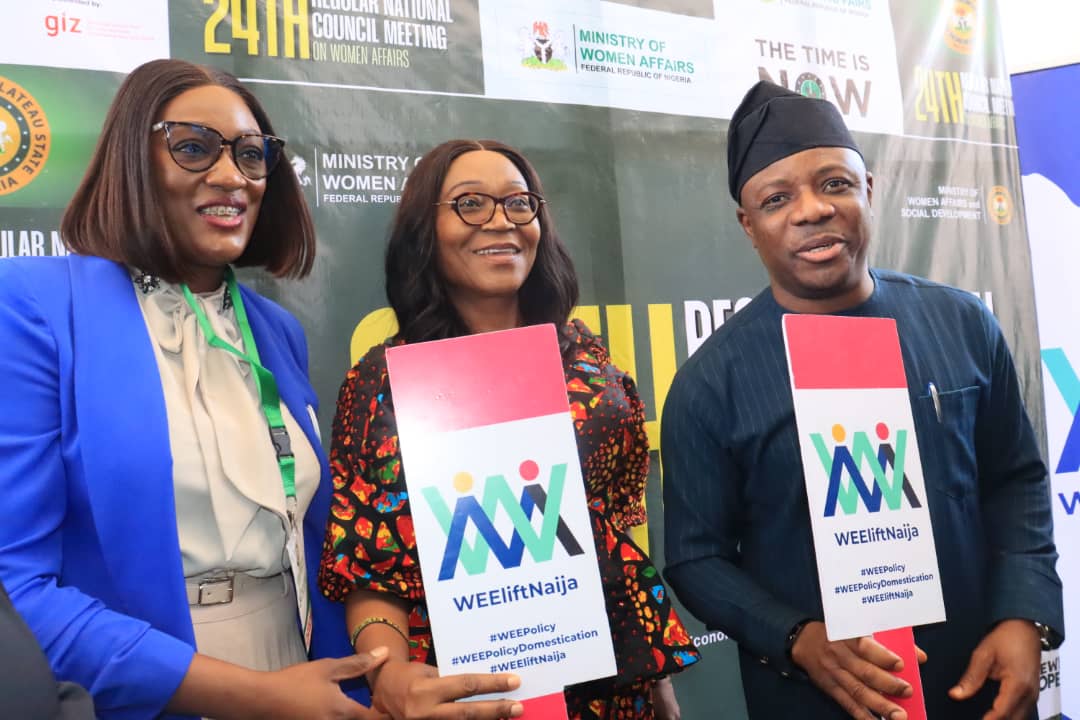
In a passionate address at the 24th Session of the National Council on Women Affairs in Jos, Plateau State, Ambassador Gabriel Aduda, Permanent Secretary of the Federal Ministry of Women Affairs, urged stakeholders to unify efforts to drive forward the National Women’s Economic Empowerment (WEE) Policy. The policy, which aims to empower women across Nigeria, was spotlighted as a crucial step toward creating equal economic opportunities and fostering national growth.

Speaking at a sideline meeting focused on the policy’s domestication, Ambassador Aduda emphasized that without coordinated action, efforts to advance women’s economic empowerment would remain unfulfilled. He described the WEE Policy as transformative, highlighting the need for all states in Nigeria to domesticate and implement it, enabling the benefits to reach women at the grassroots level.

“The WEE Policy is not just a document; it is a game changer meant to drive substantial progress in women’s participation across agriculture, industry, entrepreneurship, and leadership,” Aduda noted. “Implementing this policy builds an environment where women can thrive equally in all sectors.” He stressed that economic empowerment for women would help dismantle long-standing barriers to education, finance, and leadership—obstacles that have restricted women’s potential and slowed national progress.

Ambassador Aduda also called for creating frameworks and partnerships to ensure the policy’s effectiveness and reach. He encouraged Nigerian women to consider careers in politics to further amplify policies that support female advancement, asserting that the policy’s successful implementation would empower women to contribute significantly to the country’s socio-economic development.

Expressing gratitude, Aduda commended the Albright Stonebridge Group for its substantial support of the policy. He urged government agencies, the private sector, civil society, communities, and state delegates to join forces to ensure the policy’s successful domestication and implementation, especially in rural areas.

During the panel discussion, Mrs. Blessing Anunike, Director of Economic Services at the Ministry, pointed out that the WEE Policy fosters a multi-sectoral approach, paving the way for coordinated interventions aimed at meeting targets. She noted that the policy aims to provide an enabling environment for women’s active participation across sectors, including agriculture, entrepreneurship, and energy, in a bid to bolster economic empowerment.

The call for state-specific strategies was echoed by Mrs. Rinmicit Temlong-Aboki, Gender Lead at Albright Stonebridge Group, who encouraged state representatives to tailor policies that reflect local needs to achieve the WEE Policy’s objectives effectively.

Launched in May 2023, the National WEE Policy represents a beacon of hope for Nigerian women, aiming to bridge economic disparities and empower women to play an active role in Nigeria’s development.


The Ministry of Women Affairs has expressed deep concern over the detention of 52 children arrested during the End Bad Governance protests in Kano and Kaduna states on August 3, 2024. The ministry acknowledges public apprehensions regarding the treatment, safety, and rights of these children and is actively addressing these issues.

Ensuring the rights of every child is fundamental, as outlined in the Constitution of the Federal Republic of Nigeria, the Child Rights Act, and various international treaties to which Nigeria is a signatory. The ministry emphasizes that all children, regardless of their circumstances, are entitled to protection, dignity, and a fair judicial process.

Demonstrating her commitment to the welfare of these children, Honourable Minister of Women Affairs personally visited the detention facility late at night to engage with the minors. During her visit, she provided comfort, listened to their concerns, and assured them of her dedication to their well-being. The Minister has also been in discussions with authorities to ensure the children receive appropriate care and that their rights are upheld.

Efforts are underway to collaborate with relevant authorities, including the Ministry of Justice, the judiciary, and correctional institutions, to expedite the children’s cases and ensure they are heard in juvenile courts, as mandated by law. The ministry is actively monitoring their welfare and working alongside child rights advocates to prevent any undue harm, discrimination, or maltreatment.

Plans are also being developed to coordinate with child protection services to provide post-release psychological counseling, social support, and rehabilitation to aid the reintegration of these children into their communities. The ministry is exploring educational opportunities to support their growth and well-being beyond this challenging experience.

In response to public concerns, the President has instructed the Attorney General of the Federation to swiftly review the cases of these minors. The Ministry of Women Affairs remains confident that justice will be served, reflecting Nigeria’s commitment to the rule of law and child protection principles.

Furthermore, the ministry is implementing a Whole-of-Society Approach (WoSA) to tackle juvenile delinquency, focusing on collaboration with stakeholders to strengthen existing systems and reform the juvenile justice framework. Key initiatives will involve revising laws concerning juvenile delinquency and promoting multi-sectoral engagement to empower communities and authorities in preventing juvenile delinquency throughout Nigeria.

The Ministry of Women Affairs assures concerned citizens that it will continue to advocate for the rights of these children and work diligently to secure a just outcome. Protecting the rights of all children is a top priority, and every effort will be made to guarantee their safety, welfare, and access to justice.


The Nigerian government has announced January 28, 2025, as the official launch date for the $5 billion Africa Energy Bank (AEB) in Abuja. This pivotal institution, aimed at addressing financing gaps in Africa’s oil and gas industry, will support the development of critical energy projects across the continent.

The announcement came from Ambassador Nicholas Agbo Ella, Nigeria’s Permanent Secretary of the Ministry of Petroleum Resources and Executive Board Member representing Nigeria at the African Petroleum Producers Organization (APPO). Ambassador Ella disclosed the date on October 30, 2024, during APPO’s 19th Executive Board Meeting in Yaounde, Cameroon.

“Nigeria won the hosting rights for the Africa Energy Bank headquarters in July 2024, after a competitive bid involving Ghana, Algeria, South Africa, and Benin Republic,” he stated. Ambassador Ella reiterated Nigeria’s commitment to supporting APPO’s mission, emphasizing the country’s readiness to provide a fully equipped headquarters in Abuja.

The AEB is a joint initiative between APPO and Afrexim Bank, designed to provide the necessary capital for the continent’s energy sector, enabling it to meet growing economic demands. Ambassador Ella highlighted that renovation of the AEB headquarters is progressing as planned, with support from President Bola Ahmed Tinubu and Nigeria’s National Assembly. The Federal Executive Council approved the hosting arrangement in June, and essential establishment documents have been submitted to the President for final assent.

In addition to hosting preparations, Nigeria has been actively meeting its financial commitments to the AEB. Ambassador Ella reported that the country has already contributed $59.1 million toward the bank’s establishment, with an additional $10 million recently deposited in APPO’s account. Nigeria expects to complete its full equity contribution before the January launch, aligning with its advocacy for integrating AEB funding into APPO’s budgetary plans.

APPO Secretary General Dr. Omar Farouk Ibrahim expressed optimism about the bank’s launch, confirming that 50% of the required funding is in place and encouraging member nations to keep pace with Nigeria’s preparations. The bank will feature three classes of shareholders, with APPO and Afrexim Bank as priority shareholders.

Hisham Ahmed Selim, an APPO Executive Board member from Egypt, praised Nigeria’s proactive efforts, describing the preparations as “encouraging.” The bank’s launch will coincide with APPO’s 38th anniversary, marking a significant milestone in Africa’s energy sector development.


Professor AKINTOYE Ishola Rufus, Head of Babcock University Business School, shares with Anthony Nwosu the importance of industry-aligned cybersecurity training and Babcock’s commitment to cultivating skilled experts through its partnership with ThinkCyber Nigeria. This collaboration, he explains, aims to strengthen the cybersecurity talent pipeline, bringing experiential learning tools like ThinkCyber’s CYBERIUM ARENA to the forefront. By offering students and corporate professionals hands-on experience in a realistic cyber simulation environment, Babcock University equips them to address current cyber threats effectively. Professor Rufus also explores the heightened vulnerabilities within Nigeria’s financial sector, emphasizing the need for continuous learning and proactive strategies to safeguard assets and data.


Can you tell us more about the partnership between Babcock Business School and ThinkCyber Nigeria?

Certainly. I lead Babcock Business School, which opened in September 2022 in Ilishan, Ogun State, as an extension of Babcock University. Our goal from the outset was to create a space for immersive learning, and to that end, we have collaborated with prominent organizations like ICAN, CIBN, and ThinkCyber Nigeria. ThinkCyber’s role in training our students in cybersecurity has been transformative; the results are evident in the positive feedback we’re receiving from the industries where our students now work. We employ a 30/70 training model here—meaning 70% of our teaching is practical and hands-on, while 30% focuses on theory. This model applies across disciplines, from accounting to tech-related courses, as we believe deeply in the power of experiential learning to prepare students for today’s complex job market.

ThinkCyber’s involvement has had a lasting impact. Our graduates have secured roles with multinationals like PwC, and they’re thriving. In addition to their in-class training, students have the unique opportunity to complete a one-year training stint in Poland. This blend of international and local exposure sets them apart, enabling them to engage with global challenges while remaining deeply rooted in Nigerian realities.

Cyber threats today are more sophisticated than ever, and our partnership with ThinkCyber ensures that we are equipping students to navigate these complexities head-on. Not only are we training traditional students, but we also offer executive education programs that attract CEOs, managing directors, and senior business leaders. Our goal is clear: to foster world-class cybersecurity experts who can make an impact wherever they go.

What are your thoughts on the talent gap in cybersecurity in Nigeria and Africa?

The talent gap in cybersecurity is a global challenge, but it’s especially critical here in Nigeria and across Africa. Skills are in short supply, yet businesses are increasingly moving online, and as they do, the risks to their operations grow. Maintaining effective audit trails of digital transactions, for instance, has become increasingly difficult as hackers and cyber threats become more sophisticated. Recent high-profile security breaches, such as those involving major financial institutions like First Bank, underline how urgent it is to have well-trained professionals in this space.

We’re committed to addressing this gap. One of our recent graduates, for instance, was placed in a specialized cybersecurity department within a major organization, where he is already working on threat mitigation and helping to train other staff. The demand for these skills is enormous—we estimate the market need to be in the billions. At Babcock, our mission is to not only fill this demand but to nurture top-tier cybersecurity talent that can step into any situation and respond with excellence.

What advice would you give to banks to improve their cybersecurity resilience?

As someone who teaches Risk Management, I would strongly recommend that banks strengthen their cybersecurity frameworks and continuously invest in both training and retraining for their teams. Cyber threats evolve rapidly, so a static approach simply isn’t enough. Proactive investment in cybersecurity training is essential if they want to stay ahead of the curve. This urgency is why we are collaborating with ThinkCyber Nigeria—it’s about creating a training program that is deeply aligned with the real-world needs of our industries.


The difference in our approach is that we don’t just train and let students fend for themselves in the job market. We prepare our students to be job-ready from the moment they graduate, ensuring that they don’t just earn degrees but actually contribute value immediately. I’ve taught at various institutions, but Babcock’s approach stands out because of its commitment to feedback-driven training and purpose-led education. We don’t train students to leave them hanging; we train them to create an impact.


How is your training different from other cybersecurity programs in Nigeria?

Babcock University is one of Africa’s top universities, and our programs hold multiple accreditations, including endorsements from the National Universities Commission (NUC) and other prestigious bodies like the Academic Advising Association (AAA). This allows us to deliver a program that is international in scope and yet grounded in Nigerian realities.

The difference in our approach is that we don’t just train and let students fend for themselves in the job market. We prepare our students to be job-ready from the moment they graduate, ensuring that they don’t just earn degrees but actually contribute value immediately. I’ve taught at various institutions, but Babcock’s approach stands out because of its commitment to feedback-driven training and purpose-led education. We don’t train students to leave them hanging; we train them to create an impact.

What advice would you give to the government regarding cybersecurity and education?

The education model, particularly when it comes to cybersecurity, needs to evolve. The government must prioritize investment in training and capacity building within educational institutions across the country. We have resources in Nigeria, but sustainability remains a challenge. Our curriculum must adapt to the demands of a digital-first world, and we must shift away from purely academic achievements towards practical skill-building. That’s why, at Babcock, we’re partnering with professional bodies to ensure our students are equipped with real-world skills. The government should take a similar approach across all levels of education, as this is the only way to foster growth.

What are the main challenges you face in running a program like this?

We face a few challenges, beginning with people’s perceptions. Many Nigerians view cybersecurity training as just another tech course, but we’re operating at a level that goes far beyond that. For example, we’ve trained financial officers from several universities, including university bursars, to show them the professional depth of our programs. Yet, we still find ourselves educating people about the true value of our approach.

The other major challenge is financial. High-quality training is expensive, and people often compare our program to less costly options, not fully understanding the difference in quality and depth. There are plenty of quick, inexpensive programs out there, but cybersecurity training—especially at the level we’re offering—requires significant resources. It’s about helping people understand that investing in this training is investing in their future security and success.

Through it all, our commitment is to continue building a skilled and resilient talent pool ready to secure Nigeria’s digital future. We’re here to make an impact, and we’re incredibly grateful for partners like ThinkCyber Nigeria who share our vision.


We’re committed to addressing this gap. One of our recent graduates, for instance, was placed in a specialized cybersecurity department within a major organization, where he is already working on threat mitigation and helping to train other staff. The demand for these skills is enormous—we estimate the market need to be in the billions. At Babcock, our mission is to not only fill this demand but to nurture top-tier cybersecurity talent that can step into any situation and respond with excellence.




The Nigeria Data Protection Commission (NDPC), under the leadership of its National Commissioner and CEO, Dr. Vincent Olatunji, proudly represented Nigeria at the 46th Global Privacy Assembly (GPA), an annual gathering held in Jersey, Channel Islands, United Kingdom.

The GPA is a prestigious global forum, encompassing over 130 countries with enforceable data protection laws and independent authorities committed to safeguarding data privacy. Nigeria’s participation in the GPA follows the recent signing of the Nigeria Data Protection Act by President Bola Ahmed Tinubu, GCFR, which paved the way for the nation’s admission into this critical global network.

During this year’s Assembly, Nigeria was recognized among a select group of 35% of member countries with advanced implementation frameworks and roadmaps for data protection laws, underscoring the nation’s commitment to robust data governance. The annual GPA conference serves as a vital platform for fostering international cooperation to protect personal data while promoting data-driven development around the globe.

The Nigeria Data Protection Commission continues to prioritize the championing of privacy rights, ensuring that Nigerians are protected in an increasingly digital world. The NDPC’s active engagement in such global fora reinforces Nigeria’s dedication to upholding international data privacy standards and collaborating on shared goals for sustainable development.


When Roberta Edu launched Moppet Foods, a locally-produced baby food brand, she hoped parents across Nigeria would find value in a nutritious, homegrown option for their babies. But what she didn’t expect was the level of passion and loyalty she’d see from her customers—people who believe in her brand so deeply that they’ve become its unofficial guardians.

Recently, Edu shared a story about one of her most devoted customers, Marian, who lives in Akoka and buys Moppet baby food from the Justrite store in Bariga. Marian’s dedication goes far beyond simply picking up a carton of baby food; she’s become almost a part of the Moppet team. “The way she looks out for us—it’s something I can’t even describe,” Edu said.

Marian has taken it upon herself to monitor Moppet’s stock levels at the store, as if the brand were her own. Every time she’s at Justrite, she’ll check the shelves, counting how many cartons are left. When she realized that additional stock was kept in the warehouse, she began calling Justrite’s admin team, asking for updates and ensuring that the baby food was always available on the shelves. And if she sees supplies dipping below a carton, she even goes as far as contacting the store’s procurement department to order a restock.

“Here’s someone I’ve never met, but she acts like a partner in the business,” Edu shared. “It’s humbling to know that there are people out there who genuinely care about what we’re building together.”

Marian is just one of many. According to Edu, Moppet Foods has thousands of supporters who believe not just in the product but in the idea behind it: that Nigerian parents deserve high-quality, local baby food they can trust. In a market dominated by big international brands, Moppet Foods has thrived not only because of its quality but because of this army of believers who have championed it, one family at a time.

Edu’s recent message on social media captured her gratitude for her customers, many of whom have been with her since the very beginning. “I’ll never get tired of thanking you all,” she wrote. “This journey has been one of the hardest things I’ve ever done, but knowing I have people like you cheering me on makes it worth it.”

Stories like Marian’s illustrate the unique bond between Moppet Foods and its community. They aren’t just buyers; they’re part of a movement to create something lasting, a local alternative that parents can rely on. Edu’s post ended with a heartfelt message to her “Facebook family,” who, she says, have helped her build Moppet Foods into a world-class brand.

With every story like Marian’s, Moppet Foods becomes more than just a company. It becomes a reflection of the communities that believe in it—parents, families, and friends who understand the value of something homegrown and are determined to help it thrive. For Edu, that support is a reminder that Moppet Foods isn’t just her vision; it’s theirs too. And it’s why, in her own words, she “will never, ever take them for granted.”