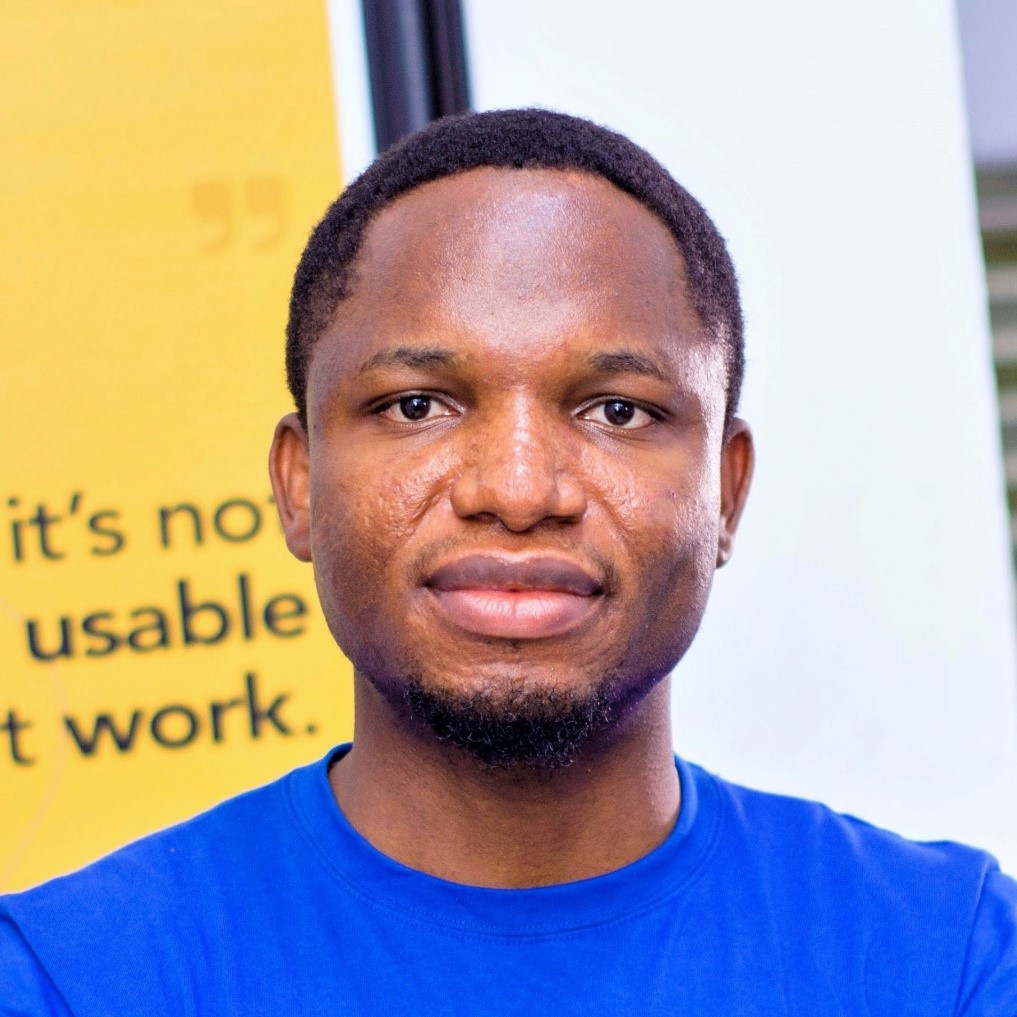

Eyal Titinger is a Partner at CyberDome, an Abuja based cybersecurity company. In this interview with ANTHONY NWOSU , Titinger noted that while collaboration is key, the safety of Nigeria’s cyberspace also depend largely on disclosure of cyber attacks and data breaches. He also disclosed that Cyber Security Research shows that Nigeria has one of the highest levels of cybercrime in Africa and in the world.

How will you describe Cyberdome as a company?

CyberDome is a Cyber Security and research firm located in Abuja with branches in Israel and the USA. We provide bespoke cyber services such as  analysis, critical infrastructure and defense mechanisms, every cyber solution is tailored to the organization’s specific threat landscape, as well as their industry and market to enable them to anticipate breaches before they occur. The platform that we set up for each client provides them with the ability to respond quickly, decisively and effectively to confirm cyber-attacks and data breaches. CyberDome maintains an up to date threat intelligence database from all over the world and real-time discovery of cyber-attacks. We are constantly adding new technology and AI innovations to our portfolio to keep ahead of the curve. CyberDome’s Academy-Courses are certified; We provide Capacity Building and all trainings are customized based on the organization’s needs.

What is the acceptance rate of Cyberdome products and services in Nigeria?

The CyberDome next-generation Managed Security Service Provider (MSSP) is currently the only facility in the country that is offering twofold; 24/7/356 security monitoring and advanced data breach prevention services and full-service solutions portfolio to meet all security risks. And also the complete installation of Cyber Security Operations Centres (SOC) at the client’s site or to enable  CyberDome to provide on-site services on the client’s behalf.

How is your impression of the Nigerian Cyberspace, is it safe?

There are many challenges in Nigeria for Cyber Security Research shows that Nigeria has one of the highest levels of cybercrime in Africa and in the world. There is a lot of work to do. Currently, we are forming an opinion about how important it is for organizations to disclose cyber attacks and data breaches as per the CyberCrime Act Section 21. It is never good to have secrets, they are hard to keep.

News - CyberDome

All over the world, collaboration is key to fighting cybercrime. What kind of collaboration do you expect from the government and the private sector?

Collaboration is key in cybersecurity. Our up to date threat intelligence database from all over the world is a testament to that. We are fortunate to be working with all stakeholders in order to make Nigeria safer. In terms of the broader picture of Nigeria as a nation, every person has a right to know that he has been breached, and there should be laws in place to support that. I also think that organizations that adopt a policy of disclosure – would build tremendous trust with their customers.

A recent cybersecurity report disclosed that 81 percent of cybersecurity incidences in Nigeria are unresolved. Do you agree with this report? What could be responsible for this?

I think that sadly it is. There are several components to Cyber Security. The first is to detect incidences the second is to resolve them. We prefer to be more proactive and not wait for the incidences to occur, but to ensure that we have covered all the bases. I know that when we go into organizations for the initial survey, it is possible to find many unresolved issues, things that cannot be seen by an untrained eye. Having a robust cyber policy and laws in place will certainly help bring this statistic down. We are not victims, we are protagonists.

Many people will argue that cyber security is more about creating awareness among the citizens. As a cybersecurity company operating in Nigeria, what level  of awareness you have created or creating?

At CyberDome, we do believe that creating awareness is only one factor in the larger cyber security picture. Our Cyber Academy offers awareness training, so that all employees at an organization can come on board with the cyber policy. But this has to be part of a broad cyber policy for every organization must have a system in place to detect, analyse and remediate cyber issues to keep raising the bar. This is our mission for every organization in Nigeria.
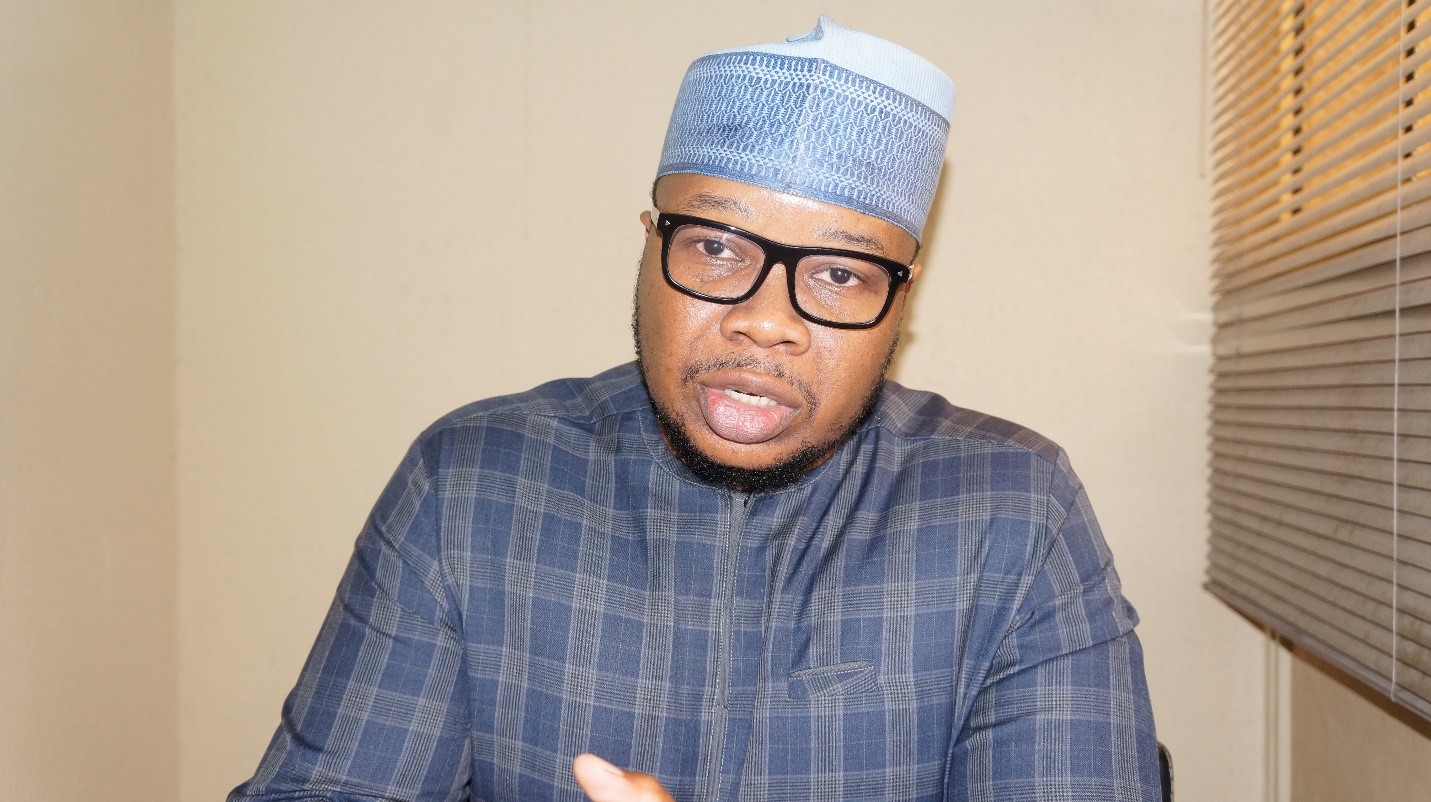
all over the world is a testament to that. We are fortunate to be working with all stakeholders in order to make Nigeria safer. In terms of the broader picture of Nigeria as a nation, every person has a right to know that he has been breached

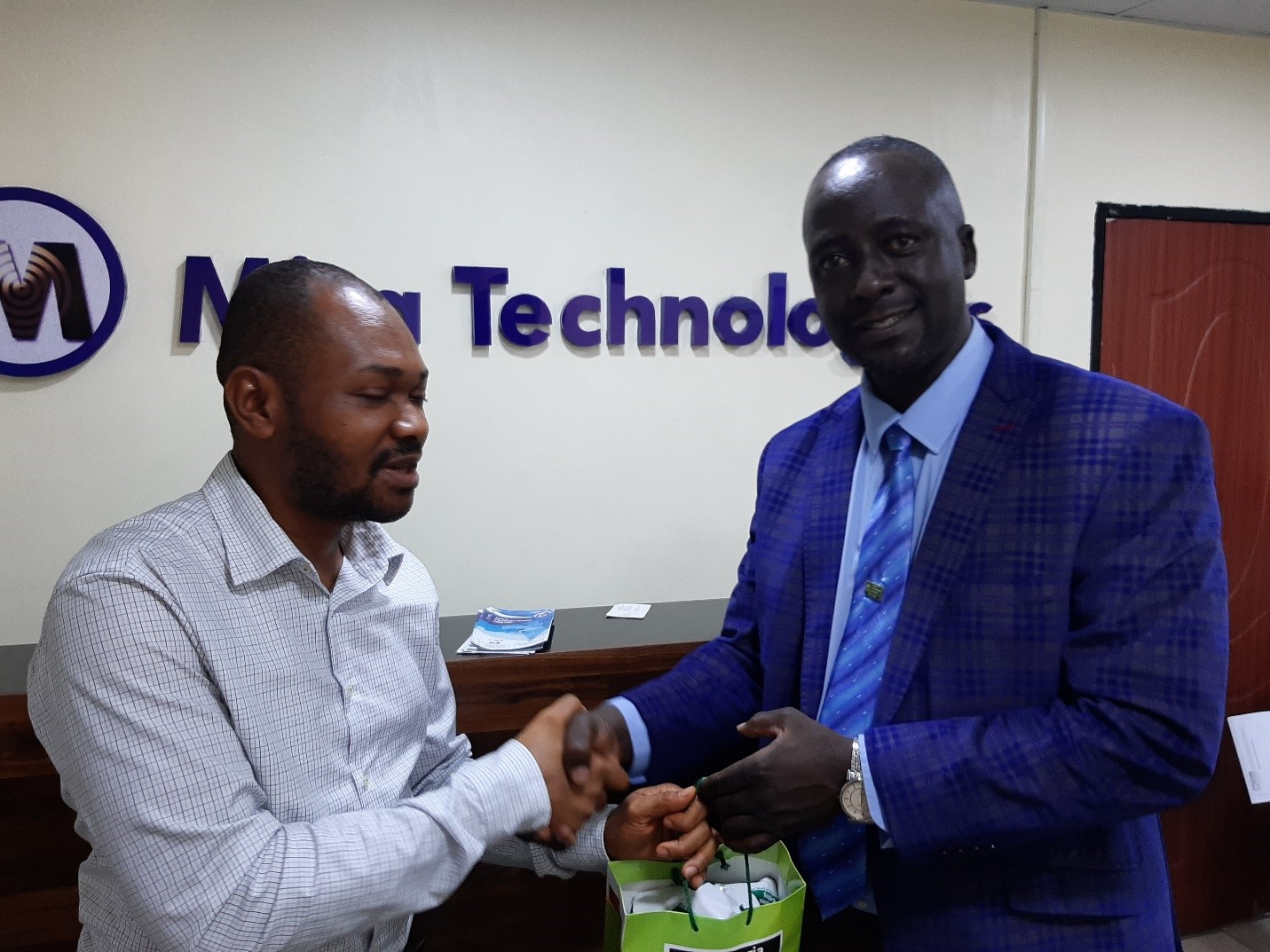
Mira Technologies Limited, an indigenous information technology (IT) firm in Lagos recently hosted the executive members of Nigerian Computer Society (NCS) at their Lagos office. The visitation is in line with the NCS’ drive of engaging the IT sector and industry players. This visit also coincided with Mira Technologies’ 8 years in IT business in Nigeria. The exco members of NCS commended the company in the strides that they have made in the areas of capacity building and indigenous software development.

Prof. Adesina Sodiya, the president of Nigeria Computer Society (NCS) highlighted the need for IT professionals and organisations in the country to be members of the organisation. He expressed pleasure that Mira Technologies Limited have done well over these years in the area of capacity building and project deployments. In his words “Our members are situated across the private and public sector. As of today, with over 15,000 members and close to 1,000 members in the country. The Nigerian Computer Society is on the drive to carry every IT professional along. The association has made interventions on behalf of many IT firms and is determined to ensure that local content policy is effective.”

Speaking to the media, the founder and Chief Technical Officer of Mira Technologies Limited, Ifeanyi Ifeabunike said “we are elated that the Nigerian Computer Society has recognised our strides in the IT ecosystem. It has shown that we are doing the right thing and we are happy to be associated with the highest body-association that is overseeing the IT ecosystem in the country.”

“Over the years, we have developed various solutions that are tailormade to Nigerian businesses. Having done business in the country, we started developing various indigenous software that organisations found very helpful. We looked at the challenges that businesses face in the country when they deploy over the shelf and foreign software, we tried as much as possible to bridge these gaps. We deployed these locally developed solutions to bridge these gaps and also, we have ensured that our support and after sales is top notch and in line with global best practices”, Ifeanyi added.

Mira Technologies Limited have developed and deployed robust solutions such as Mira HPro, this is an Enterprise Hospital Management System (EHMS). It is a web application that can run across multiple platforms. The System is designed to provide the best user experience and also provide the hospital with the capability to manage out-patients, in-patients, diagnostics, process inventory, accounts, consultation, dispense drugs and manage personnel. Next is Accsiss eBs. This is an accounting software, designed to run in multiple locations across different states, nations and continents, with complex network and diverse platforms. This version combines the functionalities of the small business version and more.

The firm looked at other sectors such as hospitality and tourism sector. The firm developed Accsiss hBs which is a hotel management software. Accsiss hBs is designed to make hotel management easier and seamless. It gives managers the power to manage booking and   reservation of rooms/accommodations, check-ins/outs, view accommodation status, manage accounts, inventory, sales, purchases and cashflow of the various departments of the hotel.  The firms developed other solutions such as Accsiss sBs which is a Student management software (SMS). Designed for creche, nursery, primary and secondary schools. It is a web application and can be deployed on a single computer, or on multiple computers across an intra-net (local area network).

“At Mira Technologies, we have experienced software architects and developers whose job is to design and develop Web applications. Our pool of developers is ready to develop whatever solutions you may need to get your business going. We ensure that clients get a robust support system from us”, Ifeanyi Ifeabunike concluded.

ANTHONY EMEKA NWOSU

In an exclusive interview with Abdul Magoro, the Commissioner for Information Technology Kebbi State, he expresses his desire to build capacity in the information technology (IT) and also drive eGovernance across MDAs in the state. Abdul expresses his intention to build an army of IT startups by 2023. Segun Oruame, Anthony Nwosu and Yinka Fagbenle captured this.

Can we have a brief insight to your education and career background?

I have a degree in Business Administration, in London, United Kingdom (UK) back in 1998, then I have my master’s degree in information technology management in the UK also. I have worked with City Bank London and a couple of other places in UK before I came back to Nigeria to contribute to my quota in the development of the country. I did my national youth service (NYSC) at a firm called Ocean and Oil which was taken over by Oando. Then I moved to a private sector, a logistic firm also, I worked at the board in this capacity. I was there for about five years before been appointed as the commissioner for ICT by Governor of Kebbi State, His Excellency Atiku Abudu.

With this impressive resume, we can say that you have what it takes to pilot the ICT in Kebbi, what would be your thrust as a commissioner?

The most important thing is to reorganize the public/government sector. As you know, technology is a driver and we have to deploy ICT in the sector to ensure efficiency and productivity. These are the intention of the Governor of the state. We want Kebbi State to be a state that is being run efficiently, using IT as a platform. My role as a commissioner is to coordinate all the ICT activities in the state. My ministry is to ensure that there is coordination and synergy in this area. We are looking are critical areas such as revenue generation, capacity building and e government. We are just a new ministry less than a month old, but we are making a steady progress by coming up with a draft, policy document or a blueprint that would guide us in this area. We are also here to engage the stakeholders within the IT ecosystem to see how we can all work together and add value in Kebbi State.

With these strategies in place, the challenge is acceptability and cultural change, in the area of e Governance, public sector finds it a bit hard making this transition. How do you go about this?

Yes, you are right. Change has always been frowned upon, but it would be a work in progress and an opportunity for me. This is something that has been initiated by His Excellency, the governor of Kebbi State, Senator Atiku Abudu. We have his support and for him to create a ministry that is focused on ICT in the state, it means that the governor understands the importance of information technology and how it impacts on productivity and development of the state. He understands this, otherwise he would have just an adviser on ICT but he decided to create a ministry solely for ICT. With my access to the executive council, this would also give me an upper hand in creating a policy and having it presented to the governor directly.

How would you ensure that ministries and MDAs comply to this digitization processes that you have in mind?

Well, I would get them to buy into the idea by having a stakeholders meeting. With this process in place, they would be involved and everyone would have an idea or  clear path on where we are going and what we are meant to achieve.

Capacity building is one thing that is a challenge in the IT space, especially the North, how do you bridge this in a state that is trying to come to term with IT skills?

We have to look at passion and literacy, we have a lot of youths in the state that have these qualities, what they basically need is support. Ours is to train and retrain them on  the best ways they can use IT to better their lives. We are looking at hub, we would build hubs, those that want to be techprenuers, we would encourage them and support them, we would also take others into public sectors. We are looking at ecosystem that would be managed by youths of Kebbi. The whole essence is to empower these youths.

You said empowerment, most ICT startups have challenge in this area, especially with access to credit. How do you as bridge this gap and change the narrative?

Access to credit and market is what we are known in Kebbi state, today, we are known as one of the foremost rice production states, we are looking at agrotech and how they can use IT to drive higher productivity in agriculture. We have made tremendous strides in support of farmers in improving value chain in agriculture. With this experience, we would replicate this in the IT space.

Are you looking at private sector partnership here?

We are open to private sector partnership and international agencies. The areas we would be focusing for now is revenue generation. This is one area that we would love to engage private sector so that their expertise would be made available to us. We are very open to private sector engagement.

Kebbi State is one of the very few states that have commissioner for ICT in Nigeria. Why set up an IT ministry?

Setting up an IT ministry is due to the obvious reason that IT is a driver of any economy and also, we intend to play in the IT ecosystem not as consumers but also developers. We need to be futuristic in Kebbi and develop capacities that would play a major role in the IT driven economy.  We also want to make adequate use of technology to drive productivity from agriculture to startup ecosystem. We also want to change the narrative on how government agencies do things.

Back to capacity building, are you going to work with select education institutions in the state?

We are looking at that also. My ministry in conjunction with ministry of basic education and higher education would sit down and look at the present curriculum which we know its not up to date, we would look at this and know areas of interventions. We would also assist in equipment deployment and resource person that would drive the IT revolution in these schools. 

What are the three core objectives that you would be looking at achieving before 2023?

The first would be automation of government processes in the state, the second is capacity building of over 150,000 youths before the 2023 and the last one is to target the girl child in the appreciation of IT. We intend to create startups before 2023 and deepen the ICT capacity building in the state.

In an ever changing and highly digitalized marketspace, the need to have digital assets protected becomes more imperative. Countries and organizations have lost billions of dollars in cyber breaches lately, Nigeria inclusive. Having this in mind, Tanta Innovative Limited, an indigenous information technology (IT) and software development firm based in Lagos has encouraged firms in the country to invest into cyber security solutions with emphasis on penetration testing for Nigerian firms in order to limit their exposure and security breaches.

Over $270.22 million was spent in 2018 to prevent cyberattacks by organizations and government in 2018. This has prompted Tanta Innovation Limited by introducing cost effective penetration testing for organizations. Speaking on the importance of penetration testing for organizations, Abraham Tanta, the Chief Executive Officer of Tanta Innovative Limited said, “We strongly believe at Tanta Innovative that penetration testing for organizations in Nigeria should be a thing that corporates do on a periodic basis. It offers the organization insights on the areas of vulnerabilities and how they can protect themselves better against cyber breaches. We have made this pen testing a simple process and cost effective. “

“The importance of penetration and vulnerability testing is critical to us. We follow the laid down processes of penetration testing such as Planning and data gathering, Scanning, gaining access, maintaining access and more importantly Covering tracks. We also look at various methods which we might deploy such as External testing, Internal testing, Blind testing and Targeted testing. We apply a high level of skill to properly identify all of the exploitable vulnerabilities.”. Tanta added.

As the country has embraced digital payment, the need for periodic testing for organizations with online presence especially those with digital payment portals and gateway becomes increasingly inevitable. having partnered with reputable international firms, Tanta Innovative plans to bring the best global practices to Nigeria.

The company reiterated the need for Nigerians (Corporates and privates) to start looking inward for their software needs. Known to have developed robust software solutions for firms, Tanta Innovative Limited has promised Nigerians a bouquet of IT solutions to meet their specific needs. Solutions such as eHealth software, School Management Software and also ERPs that are bespoke. With a robust after sales in place, the company said that patronizing locally developed software would encourage the IT ecosystem and save the much-needed foreign exchange for other developmental projects.

“We are creating solutions that can change how people work and make life easier. With a lot of collaboration in place, we have a mission to bring to the fore indigenous robust solutions that would make people forget about all these foreign products and focus on locally made ones because we are trying to solve their problems better than the other ones they buy over the counter”, Abraham Tanta concluded.

ANTHONY EMEKA NWOSU

Global economies, Nigeria inclusive this Post Covid 19 would be altered for good, workplaces and the way we relate will change and many businesses would tilt online and the need to have a robust connection this period has becomes more imperative for business scalability. Cuidad Infrastructure Limited, an indigenous internet service provider (ISP) based in Lagos is bringing an internet solution to Nigerian homes and businesses that would enable them to work better. 

Speaking to the media, Seun Olajide, the managing director of Cuidad Infrastructure Limited made this known to media. In his words he said “we are here to bring cheap, superfast and reliable connectivity to Nigerians. We understand that Covid 19 will alter the way we live and work, majority of these work would be either online or works would be done from home. Having said this, we are bringing world class internet solution. We have deployed services across the federation with connectivity in the most cities of the country.”

“To ensure that people can work from anywhere without the normal glitches and hitches associated with connectivity, we have partnered with reputable local and global telecommunication firms to bring this wonderful experience to these set of business. With reduced downtime and no buffering, SMEs, can fully utilize the digital economy that would power various areas of their businesses from the digital payment facilitation, e learning for schools and other online presence”, Seun Olajide added.

Government across the states of federation have encouraged Nigerians to maintain social distancing and as many businesses and organizations have encouraged working from home, this is in addition to embraced online shopping and delivery. Cuidad Infrastructure Limited will be bridging this gap with the deployment of superfast internet solutions for these categories of business at a very reasonable cost.

Cuidad Broadband is making businesses seamless and easier for SMEs. This would enable these set of businesses find customers through various digital communications platform, meet customers’ needs now that businesses are innovating this post Covid 19 era by deploying superfast internet at affordable rates. With a download speed of over 500Kps, and high coverage areas across the federation. Ciudad is an innovative internet solutions provider to public and private segments, delivering exceptional value to our customers, partners and shareholders.”, concluded Olajide.

ANTHONY EMEKA NWOSU

One Number Dial, an indigenous information technology (IT) solution created to ease the way organizations communicate and reach out to staff, public and prospective clients in a cost effectively method has announced a free eleven-month period for subscriptions. Developed solely to bridge gaps experienced by organisations in reaching out, One Number Dial Solution is bringing an efficient way that firms disseminate critical information in a secure platform designed for smartphones and feature phones users in the country.

The coronavirus pandemic has irrevocably changed the way businesses globally operate and the need for investment in IT tools becomes more imperative today. Also coming at a time that the Government has encouraged Nigerians to work from home and limit their social interactions. Many users have described One Number Dial solution as timely and important for many organisations to function and work properly in a post Covid 19 workplace. The solution has also been described as being critical for bulk messaging needs for small and medium enterprises (SMEs), Churches, Mosques and Individuals. The regular Bulk SMS suffers limited delivery because of DND this “One Number Dial” is bridging this gap.

Speaking about the solution and the importance of One Number Dial, Shola Kusimo, the Product Manager said “We listened to the market for a local solution, when customers complained of being left behind from online meetings in Organizations and Churches, SMS wasn’t bi-directional and a lot of people still have feature phone. The solution is as an incredible tool with years of research and it has raised the bar in the way firms can reach out to the public and staffs working remotely”

“As an innovative and local solution that meets their need to stay in touch with customers, members and prospects. Highly simple, the solution allows one to record a voice message on phone, save it on the website and broadcast it just like bulk short messaging service (SMS) websites. The recipient gets a call with your One Number and listens to the message. If they choose to call back, the call comes to your line or any other provisioned line. You can provision up to ten lines”, Mr.Kusimo added.

 “The particular solution also empowers users advertise one number and gets calls on ten other numbers at the same time making it very useful for individuals with a “side hustle.” One Number Dial calls are professionally answered like a Call Centre with different departments in an IVR e.g. for inquiry press 1, for sales press 2, to speak with a customer representative stay on the line, and all these features are simple to configure on their portal. The One Number Dial is a simple solution for all Nigerians that are looking for an easier communications bridge to their customers, members and their prospects”, Mr. Kusimo concluded.

A Cloud based solution, One Number Dial is in tune with the current realities of our time by providing a robust platform that any organization can use to instantly call and send customized messages to hundreds of people at the same time which is great for clients and customers, this is coming with support team to ensure that organizations have smooth experience while using the platform.  They announced in a media parley that there is a promotion which is currently running because of Covid-19. Customers can get up to eleven months free when they pay in the months of June/July.

ANTHONY EMEKA NWOSU

The Federal Government has launched the Agriculture for food and job plan AFJP), a major take-off for the agriculture component of the Nigeria Economic and Sustainability Plan (NESP) targeting smallholder farmers. The project would mitigate the negative impact of COVID-19 on the economy and livelihoods of farmers by creating more access to food for and the rapid emergence of competitive food production, processing and distribution in Nigeria.

The Minister of Agriculture and Rural Development, Alhaji Muhammad Sabo Nanono stated this during the official launch of the Agriculture for food and job plan(AFJP) in Funtua, Katsina State, today, Thursday 23rd July 2020. Alhaji Sabo Nanono informed that Mr President set up an Economic Sustainability Committee (ESC) chaired by the Vice President, Prof Yemi Osibanjo to fashion out a plan on COVID -19 intervention.

Alhaji Nanono said ‘’one of the strategies adopted by the Committee is the Agriculture for Food and Job Plan (AFJP), stating that the Programme will aid the transformation of the Nigerian agriculture from its largely low yielding and subsistent state to a high yielding technology-based farming system’’.Speaking further, he said that the strategies would generate appropriate welfare gains consistent with the Federal Government’s Economic Growth and Recovery Plan (EGRP) and Green Alternative strategies.

The Minister said that the plan, “is also in tandem with the three-pronged action plan of the Ministry to deal with the impact of the pandemic on Nigerian agriculture and farmers’’. Nanono explained that ‘’these measures include among others, the life-saving humanitarian assistance to vulnerable households to buffer the impact of COVID-19, such as the release of about 100,000 metric tons of assorted food commodities from the National Food Reserve to several groups and communities”.

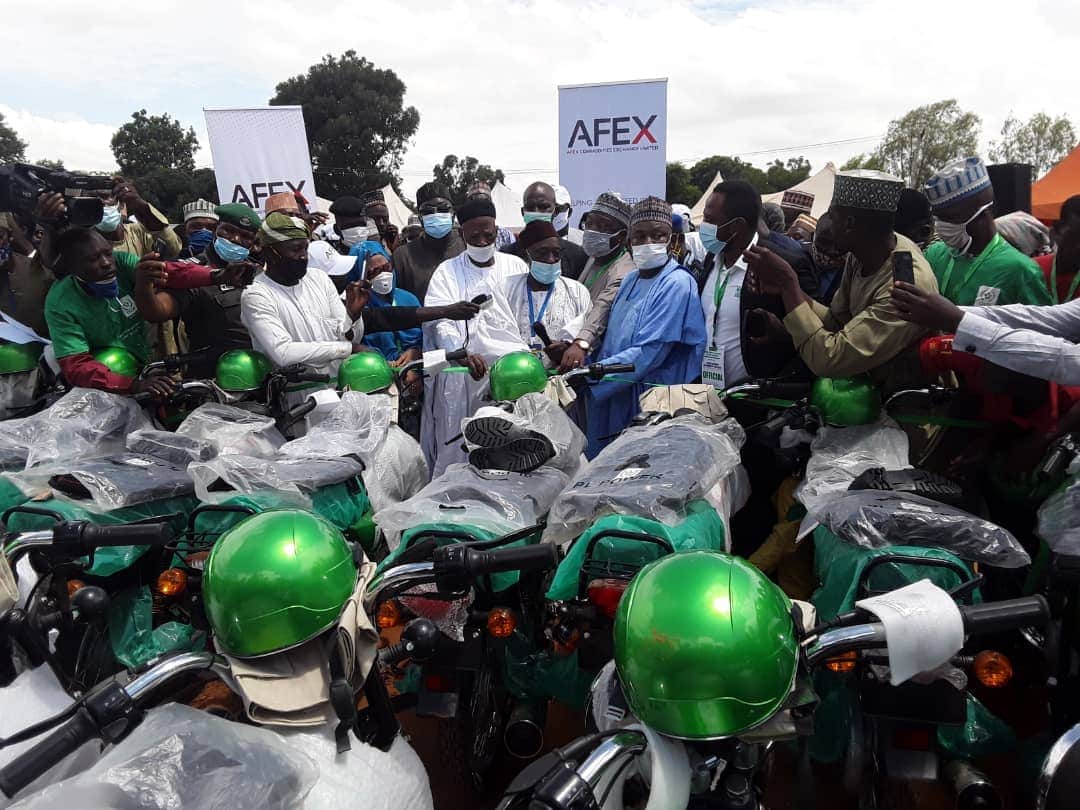
The Minister highlighted the deliverables of the AFJP as contained in the NESP in 12 months: ” creation of between 5- 10 million jobs in the agric sector, produce about 10,000,000 MT of food, cultivate between 20,000 – 100,000 hectares of land per State based on land availability to an aggregate of 2.4 million farmers tied to farmlands, input financing loan to farmers will be zero interest, land clearing and preparation support, among others “.Accordingly, the Minister, ” this symbolic launch represents over 1,100,000 smallholder farmer-beneficiaries in 36 states and the FCT on the Batch A list under 6 partners namely AFEX, BabanGona, Value Seeds, Universal, Thrive Agric and Oxfam. We will soon be announcing Batch B beneficiaries”, he averred.

He lauded the continuous support of OCP AFRICA Fertilizer Limited for its initiative “”in the provision of soil testing equipment and supply of 20 units of OCP branded Motorcycles, Android Tablets and safety of kits to support the Federal Ministry of Agriculture and Rural Development meant to support Extension Services”.In his Goodwill Message, the Chairman, Senate Committee on Agriculture, Senator Abdullahi Adamu, stressed that the Agric sector is the bedrock of the economy and appreciated the efforts of the Federal Government under the Leadership of President Muhammadu Buhari for his visionary policies in the Agric sector.

The Chairman, House Committee on Agric. Production Services, Hon. Muntari Danduste, during his Goodwill message, thanked Mr President for providing COVID – 19 Agricultural intervention palliative to the farmers in Katsina State which he said would cushion the effects of the Pandemic on 2020 farming season in the state and the nation at large.In his welcome address, the Permanent Secretary in the Ministry, Dr. Abdulkadir Mua’zu, represented by the Director, Department of Agriculture Extension, Engr. Frank Kudla said that ‘’ your presence here is an indication of our recognition intervention of the Federal Government of Nigeria and the efforts of the Ministry to reposition Nigerian agricultural system and increase farmers’ resilience to the COVID-19 pandemic and its associated negative impacts. Your continuous support will go a long way in ensuring that the objective of the Agriculture for Food and Job Plan is achieved’’. Dr Mua’zu noted that ‘’our coming together is because we are determined to join forces for action against COVID-19 pandemic, hunger and poverty. I, therefore, implore you all, especially our partners, to work hard to ensure that the core activities of these Project are carried out to a logical conclusion in the coming months’

Source

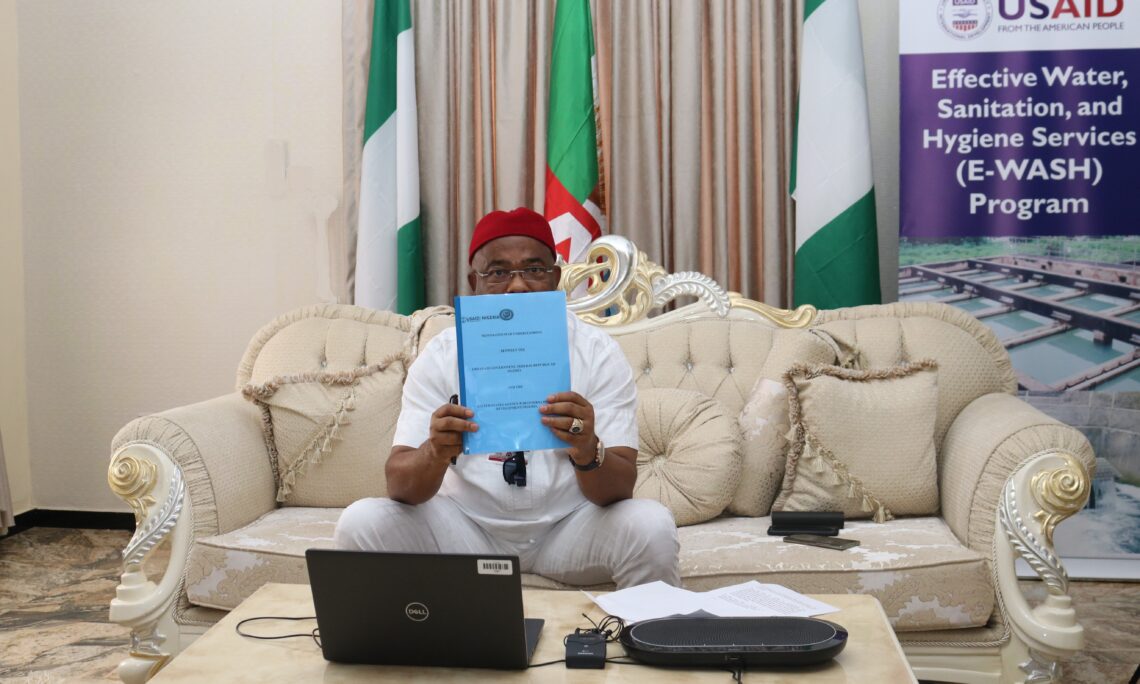
U.S. Agency for International Development (USAID) Mission Director Stephen M. Haykin joined with Governor Hope Uzodinma in a virtual signing ceremony to formalize a new partnership with Imo State to improve the management and delivery of water and sanitation (WASH) services to help people live healthier lives through reliable access to clean water.

Today’s Memorandum of Understanding outlines commitments between USAID and Imo State to jointly develop a professionally managed, commercially oriented, and accountable state Water Board. This will be accomplished by improving the Water Board’s financial viability, and strengthening policy, institutional, and regulatory frameworks for better WASH service delivery.

“By strengthening the Water Board’s capacity to make solid investment decisions, improve billing and collection systems, and improve responsiveness to customer needs,” Haykin said at the ceremony, “USAID, through E-WASH, will help increase access to clean water and reduce waterborne disease in Imo State, feeding into our mutual goal of creating a healthier, more economically robust Nigeria.”

After formal declaration of corporatization of the new Imo State Water and Sewerage Corporation, Governor Uzodinma, promised to announce the board of directors at a later date said

In his remarks, Governor Uzodinma acknowledged that up to 85 percent of his rural constituents lack access to a reliable source of running water and expressed hope that within a year the activity could reach up to 100,000 residents of the state.

“This project is consistent with the goals of my administration to ensure that the welfare of my people is advanced and protected,” the governor said. Therefore, I commit our cooperation to ensure this project is delivered.  We are [also] committed to running the Imo Water Board as a business to ensure its commercial viability.”

Through the $60.4 million Effective Water, Sanitation, and Hygiene Services (E-WASH) activity, USAID will support Imo and five other states to increase access to clean water and reduce disease by strengthening their Water Boards’ capacity to make solid investment decisions, improve billing and collection systems, and ensure greater responsiveness to customer concerns.

Over four years, E-WASH will spur the mobilization of an additional $50 million from public and private sources. It will also provide access to piped clean water to at least 50,000 households.  Delta, Abia and Taraba have all signed similar agreements.

E-WASH is one component of a wider USAID effort to foster closer coordination with federal and state government agencies to advance broad-based economic growth and resilience in Nigeria through improved WASH services.

By U.S. Mission Nigeria 

U.S. Agency for International Development (USAID) Mission Director Stephen M. Haykin joined Lagos State Governor Babajide Sanwo-Olu in a virtual ceremony to sign a Letter of Cooperation under which USAID will support Lagos to develop an electrification plan to improve power service delivery in the state.

Lagos will implement the new Integrated Resource Plan (IRP) with support from the U.S. government’s Power Africa Nigeria Power Sector Program (NPSP) administered by USAID.  The IRP will serve as a roadmap to guide development of a comprehensive, long-term electrification strategy for the state to improve planning and decision-making on power sector investments that will lead to more accessible and reliable electricity services in Lagos.

“This new roadmap will assist the government and energy stakeholders to predict power system requirements and enable the effective and efficient management of energy resources to drive Lagos’ prosperity for decades to come,” USAID Mission Director Stephen M. Haykin said at the ceremony.  “It will support critical planning to meet consumer needs for electricity services in a way that satisfies multiple objectives for resource use.”

To support the IRP, NPSP will conduct a review and analysis of the state’s power sector to develop new planning mechanisms best suited to address its long-term residential, industrial, and public sector electricity needs, especially hospitals and health posts.   It will also engage public and private sector stakeholders with trainings on electricity generation planning and load forecasting, as well as demand-side management.

“To improve access to electricity in sub-Saharan Africa, there is no better place to start than in Nigeria,” Governor Sanwo-Olu said.  “This plan is a priority initiative for our state, which underpins our electricity strategy to ensure access and reliability to Lagos residents is a reality.”

The U.S. government-led Power Africa partnership brings together the collective resources of more than 170 public and private sector partners to double access to electricity in sub-Saharan Africa.  Power Africa’s goal is to add 30,000 megawatts of new electricity generation capacity and connect 60 million new homes and businesses to power by 2030 on the continent.

By U.S. Mission Nigeria 

WE BELIEVE THAT THERE ARE TOP SOFTWARE DEVELOPERS IN RIVERS STATE – Sprinthub CEO

In this interview, the CEO of Sprinthub, Sokari Gillis-Harry, the CEO of Sprint Innovation Hub State speaks on how post Covid 19 will be a game changer in the ICT ecosystem, as a software development firm based in Rivers State, known for oil and gas activities, the software developer made people to understand that there are more to Rivers State than oil and gas industry. Anthony Nwosu captures this in an exclusive interview

Sprinthub is an IT establishment, can we know when you started?

We started in July 2018. The name Sprinthub comes from our agile approach. We break down an idea down to its most valuable and essential components. By helping you focus on what really matters, we create a solid foundation for sustainable business success. The end result: a product worth feeling passionate about. To us, engineering mobile app experiences is beyond a job. It’s our way of connecting ambitious entrepreneurs (and businesses) with customers in today’s mobilized world. Though, the journey hasn’t been an easy one, we consider ourselves as start-up but we have a positive outlook to the ecosystem.

Why Rivers State? Many IT and software development firms are based in Lagos, Yaba precisely, why Port Harcourt?

As a service-based company that builds digital products, the need for our customers to meet physically with us is not necessary, if we do exceptional work and deliver on time. We have clients in Europe that will never meet us even if we move to Lagos. In the early days we had difficulties finding talents because the best talents are moving to Lagos, but we quickly adjusted to a Remote DevOps culture which enabled us to find talents across the Globe. At the moment our Quality Assurance Testers are in Europe. So as an IT firm, we have to leverage on technology in the areas of capacity building and skills outsourcing. We mustn’t be in Lagos as you said to scale.

Over the years you have developed many software solutions, how is the capacity building and skillset there, in a city known for oil exploration?     

It’s amazing the kind of talents that are down here if you pay enough attention. After we started working with remote employees, we found that there are senior software engineers and designers in Port Harcourt and we couldn’t find IT firms that can match their salary. They gave up and applied for remote positions oversees. We were able to get some of them into advisory positions in the company. So, the city isn’t all about oil and energy services, the ICT ecosystem is also busy and burgeoning.

Bhood Music is one of your music and online entertaining app, what have you achieved with this. A lot of online streaming apps have been accused of short changing the artistes in terms of revenue. What is different about this?

The Bhood Music team approached us to build a platform that will be is strictly for religious acapela music. We currently don’t know how much they pay their artists but their userbase have been growing and they have plans to expand to other religious organizations. Ours is to develop a bespoke software and solutions for organizations and Bhood Music happens to be one of them.

How many downloads and streaming do you have averagely in a month?

The last time we looked at their dashboard, they had over 1000 downloads per day. We strongly believe that this number would increase, knowing that gospel and accapella type of music is restricted to certain class of audience, it is a niche market and for that application to witness about 1000 downloads per day is a step in the right direction.

Do we have your solutions (software and apps) in other West African Countries?          

Currently we don’t. We are working on one that will be available for public beta testing by the end of Q3 2020. We have our eyes in the overseas markets especially the ECOWAS region. We strongly believe that we would be deploying there in no distant future.

Cabby Nigeria is an app designed to give Uber a run for their money. How has this been considering the level of signups and download in Rivers State and Niger Delta region?

Even though I am not allowed to comment on the internal business affairs of our customers, I will say the business of competing against heavily funded companies like Uber is tough, though I see them becoming a major player in Nigeria in the coming years. We strongly believe in their capacity, the market in Nigeria is huge.

What are the challenges that you face doing business in Rivers State and Nigeria as a nation?         

Electricity, Stable internet and security are the major challenges we have. We have a lot to contend with in these afore mentioned areas. They have eaten deep in our operational expenditure. Internet connectivity is still on the high side in this part of the world especially high-speed internet. These are the teething problems we face, the issue of security is another thing, but we believe that the state and the federal government is doing something in these regards.

The country is emerging from Corona Virus epidemic, what are the unique solutions that you have that you think that would interest Nigerians?

On-demand delivery solutions will become mainstream as we come out of the pandemic. Before, adoption to services like this were difficult but the lockdown left people with no choice but to give these services a try. So as you can see,  the social distancing policy by the government will spur growth in this area and we as a software development firm is well positioned to take advantage of this by creating top notch on demand solutions that is in tandem with what is applicable in other parts of globe.

As a stakeholder in the industry, do you think that the government is doing anything or much to support indigenous IT firs like yours in terms of policy?

They are doing okay, but there is room for improvement. The recent open bank policy has enabled new fintech businesses with little or no external funding to build solutions that are disrupting the banking sector. There would be a whole lot of disruption from FinTechs to eLearning solutions, what the government must do is to create an enabling environment for these. Yes, NITDA has put machinery in motion and we believe that the minister Isa Pantami the ComTech Minister understands what to do in these regards.

Do you think that Nigerians are beginning to appreciate locally developed software?

Yes, we have customers that would have hired Indian firms if they did not find us. So we can say yes to your question, but we are not yet there, we are not going to build software so that Nigerians will buy from us or we deploy for them, we believe here that they will buy from us as a Nigerian firm and more importantly, because we built a world class solutions for them. 

The recent open bank policy has enabled new fintech businesses with little or no external funding to build solutions that are disrupting the banking sector. There would be a whole lot of disruption from FinTechs to eLearning solutions, what the government must do is to create an enabling environment for these.