1) Unoka, the father of Okonkwo, made yearly sacrifices to Ani (earth goddess) and Ifejioku (the god of yam) to guarantee rich farm harvest, yet his yearly harvest remained poor. For this reason, he went to consult the oracle called Agbala. He hoped that the oracle would tell him the spirits or persons that were responsible for his misfortune and possibly to let him know the appropriate rituals to be performed in order to appease, “bind”, “cast” or ward them off. Before he could finish presenting his case, the priestess called Chika angrily interrupted him:

2) “Hold your peace!” screamed the priestess, her voice terrible as it echoed through the dark void. “You have offended neither the gods nor your fathers. And when a man is at peace with his gods and his ancestors, his harvest will be good or bad according to the strength of his arm. You, Unoka, are known in all the clan for the weakness of your machete and your hoe. When your neighbours go out with their axe to cut down virgin forests, you sow your yams on exhausted farms that take no labour to clear. They cross seven rivers to make their farms, you stay at home and offer sacrifices to a reluctant soil. Go home and work like a man.” Chinua Achebe, Things Fall Apart (Oxford: Heinemann, 1996), Chapter 3: pp.12-13.

3) Unoka’s visit to Agbala helps us to understand better the difference, which I made in my last write-up titled “Igbo bu Igbo”, between an Igbo bu Igbo and an efulefu. Chika, the priestess was an Igbo bu Igbo. An efulefued priest or priestess would have told Unoka that the causes of his poor harvest were his “village people”, his family members, his late ancestors or/ and the evil spirits. An efulefued ‘man or woman of God’ would have required Unoka to “sow seed” in the shrine, buy handkerchiefs/stickers, pay tithes (even though he had a poor harvest); he would have asked him to carry out a land cleansing ritual to liberate himself from ancestral curses which will be done by the priest/priestess; and of course, he would have scheduled the next appointment with him.

4) Whether a priest or not, Igbo bu Igbo has conscience. An efulefu has no none. An Igbo bu Igbo thinks community. An efulefu thinks about self. An Igbo bu Igbo thinks of what and how to give back to society. An efulefu thinks only of what to take from society. An Igbo bu Igbo counsels. An efulefu misleads. An Igbo bu Igbo prays. An efulefu preys. Furthermore, while consulting a priest/priestess an Igbo bu Igbo goes with his brain (ako na uche). He is not gullible or easily deceived by religious or political charlatans. African Christians and pastors (men and women of God) should borrow a leaf from Igbo bu Igbo so as to redeem the soiled image of Christianity in Africa.

5) An Igbo bu Igbo believes in God’s omnipotence and providence but knows also that material success comes from the judicious use of his God-given brain and hands. Thus, an Igbo bu Igbo detests “get-rich-quick” syndrome. He knows that it will lead eventually to pain and misery. An Igbo bu Igbo believes simply that aka aja aja n’ebute onu mmanu mmanu (daily bread is dependent on daily work). He does not type “Amen”, “I claim it” to posts telling him that God will make him rich or grant him success by merely doing so. Such thinking or attitude is not only ‘unIgbo’ but totally ungodly because the same God that asks us to pray for our daily bread (Matt.6:11) also commands us: “By the sweat of your brow (face) you will eat your bread” (Genesis 3: 19. See also, Psalm 128:2; Proverbs 14:23; 2Thess.3:10-12; 2Timothy 2:6). Thus, in Our Lord’s Prayer the words “give us our daily bread” actually mean, “give us our daily work” for bread comes from work. Igbo bu Igbo uses his or her hands and brains judiciously. He does not beg anyone for food. The world should imbibe the spirit of Igbo bu Igbo to free our societies from deceit, dubiousness, laziness and fraud.
May God bless the work of our hands!

By Rev Fr Angelo Chidi Unegbu
(cangelo123@yahoo.com)

In line with the directives of the Honourable Minister of the Federal Ministry of Communications and Digital Economy, Dr Isa Ali Ibrahim Pantami, FNCS, FBCS, FIIM, measures have been put in place to significantly reduce the average cost of data. The average cost of 1GB of data has reduced from the January 2020 cost of N1,000 to N487.18 in November, 2020. This was based on a Report by the Nigerian Communications Commission (NCC) submitted to the Honourable Minister following the implementation of the directives.

The Honourable Minister had inaugurated a Committee that developed the Nigerian National Broadband Plan (2020-2025) on the 16th of December, 2019. The Plan was unveiled and launched by His Excellency, President Muhammadu Buhari, GCFR, on the 19th of March, 2020. One of the goals of the Plan is to reduce the average cost of 1GB of data to a maximum of N390 by 2025. With the January 2020 baseline of N1,000 per GB, the maximum projected steady decrease for the end of each year was as follows: 2020 (N925), 2021 (N850), 2022 (N775), 2023 (N700), 2024 (N545) and 2025 (N390).

In line with Dr Pantami’s commitment to under promise and over deliver, the measures have caused the current cost of data to reduce significantly beyond the December 2020 projection of N925. Based the Report by NCC, the average cost of data as at November 2020 was N487.18, which amounts to 47.33% lower than the projected value. The Report also indicates that the cost of data in November 2020 was less than 50% of the cost of data in January 2020.

The Federal Ministry of Communications and Digital Economy, through the NCC, will continue to ensure that consumers enjoy a price regime that supports fairness and is friendly to consumers. Policies are in place to ensure that operators adopt competitive pricing that eschews unjustifiable margins. The general public may also wish to note that complaints about rapid data depletion are also being investigated.

For more enquiries, the Honourable Minister has directed NCC to respond to all issues raised by our citizens and customers. All hands will remain on deck to achieve the goals of the Broadband Plan as the Ministry supervises its implementation in line with our National Digital Economy Policy for a Digital Nigeria.

Dr Femi Adeluyi

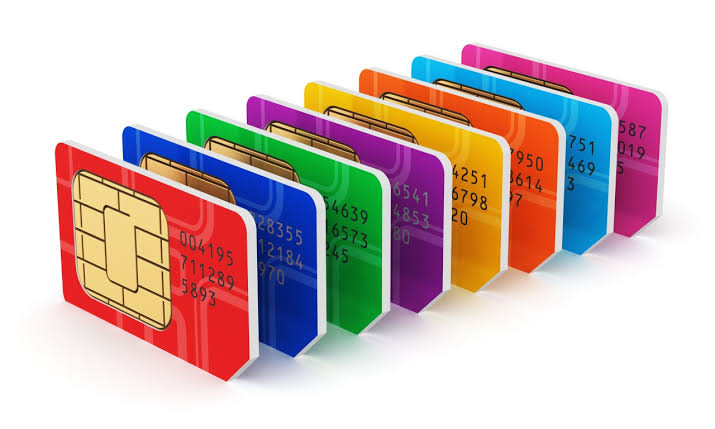
In line with the Federal Government desire to consolidate the achievement of the SIM Card registration exercise of September, 2019, the Honourable Minister of Communications and Digital Economy has directed the Nigerian Communications Commission (NCC) to embark on another audit of the Subscriber Registration Database again.

The objective of the audit exercise is to verify and ensure compliance by Mobile Network Operators (MNOs) with the set quality standards and requirements of SIM Card Registration as issued by the Federal Ministry of Communications and Digital Economy and the Commission.

Accordingly, MNOs are hereby directed to immediately suspend the sale, registration and activation of new SIM Cards until the audit exercise is concluded, and Government has conveyed the new direction.

However, where it is absolutely necessary, exemption may be granted in writing by the Commission following approval from the Federal Government.

MNOs are to please note that non-compliance with this directive will be met with strict sanctions, including the possibility of withdrawal of operating license.


As the Minister has earlier directed in January, 2020, all citizens are urged to immediately secure Digital Identification from the National Identity Management Commission and submit it to the Network Operators. 

The Executive Secretary of Lagos State Law Reform Commission, Mrs. Ade Adeyemo has restated that it is an offense to use residential premises as morgues, embalmment centres or burial sites in order to prevent the transmission of communicable diseases in the State.

Speaking on the activities, achievements and impact of the Lagos State Law Reform Commission since its establishments on a Lagos Television interview programme “Lagos Today”, Adeyemo stressed that the Commission is tasked with the onerous responsibility of updating and reviewing laws that address immediate and peculiar needs of Lagosians at every point in time.

According to her, “The Law Reform Commission is saddled with the responsibility of reviewing and reforming laws with a view to effecting necessary changes to make them more modern, fair, just, efficient, accessible and bring them in consonance with the prevailing social and moral values of society”.

“In this regard, the Commission, after review, found it expedient to ensure that the Lagos State Public Health Law was expanded to include present-day disease outbreaks like the Ebola, Lassa fever and other communicable diseases”, she added.

The Executive Secretary reiterated that there are procedures to be taken in order to eliminate all anomalies and repeal, review and reform obsolete, spent and unnecessary laws which at a time were necessary but as the State evolves, they become inapplicable because they do not fit the prevailing situations and circumstances.

She revealed that the very first compendium of laws in the State was the 1973 laws of Lagos State which was a merger of the laws that existed in the former Federal Territory of Lagos and those of the Former Western Nigeria, adding that the present Law Reform Commission evolved out of the short term State Law Review Committees/Commissions saddled with the responsibilities of previous law reforms.

Adeyemo, however, noted that regardless of its autonomy having been established by statute, the Commission still defers to the Attorney-General and Honourable Commissioner for Justice, who is the Commission’s voice at the State Executive Council.

The Executive Secretary revealed that some of the Laws and Bills that have been reviewed and forwarded to the House of Assembly for the benefit of the general public include the Animals Bill, Electric Power Sector Reform Law, Tenancy Bill, Real Estate Regulatory Bill, Lotteries and Gaming Authority Law and Law Enforcement Training Institute Bill, among others.

LASG

RebuildingLagos

ForAGreaterLagos


Airbus applications and devices to be deployed through Nedaa’s 4G network starting 2021 as per agreement
Dubai, UAE, 9 December 2020 – Professional Communication Corporation – Nedaa signed a new partnership agreement with Airbus at the ongoing GITEX Technology Week 2020 in Dubai for the deployment of mission-critical communication solutions. H.E. Mansoor Bu Osaiba, Chief Executive Officer of Nedaa and Walid Lahoud, Head of Sales Middle East and North Africa for Secure Land Communications at Airbus inked the agreement during a signing ceremony held at Nedaa’s pavilion, which also hosts Airbus.
As part of the partnership, Airbus’ Tactilon Agnet 500 and 800 and the Tactilon Dabat hybrid device will be deployed through Nedaa’s private mission-critical 4G network starting 2021 to achieve stronger and faster response in the area of public safety coordination. Government entities, security and public safety authorities, first responders, event organizers, operation management departments and personnel of organizations across all vital sectors can leverage the solutions’ advanced features for a better communication support system.
Tactilon Dabat, a 4G smartphone and a Tetra radio in one single device, is designed to enable users to smoothly transition between Tetra and LTE network services. The Tactilon Agnet 500 and 800 collaboration platforms, on the other hand, offers secure push-to-talk and messaging services with accurate location tracking, voice and messaging, video sharing and other multimedia functions, allowing communication between different technologies of mission critical networks and devices. in case of emergency situations that requires rapid assessment and response or monitoring of ongoing operations.

Tactilon Agnet can be fully incorporated into a Tetra network to achieve a hybrid work environment. At the heart and brains of a Tetra network is Airbus’ Taira Tetra Server, a key building block for evolving Tetra networks to hybrid and broadband LTE.


H.E. Mansoor Bu Osaiba said: “Our collaboration with Airbus reflects our shared goal to improve connectivity and communication between authorities who are in need for such secure, available and reliable mission-critical communication, where lives of people come as a first priority. Airbus extensive portfolio of wireless communication and integrated solutions is renowned for empowering mission-critical, public safety and security teams in Dubai and the UAE as they respond to any emergency or crisis. Further, by enabling Airbus to deploy its solutions through our 4G network, Nedaa is reinforcing its capability to provide all concerned entities with superior communication services.”
“Our mutually beneficial partnership exemplifies our genuine commitment to mission-critical situations to ensure security and safety of the country and people. To deliver and remain consistent in our promise, both Nedaa and Airbus will provide the best available technologies that are compatible with international standards and necessary to support critical mobile communication systems with innovative functions and features. We look forward to another fruitful collaboration with the Nedaa,” Walid Lahoud added.


-ends-
For further information, please contact:
Micheline Kassis
BEYOND Marketing & Communications
Mobile: +971 50 2747241
E-mail: micheline@beyondgcc.com

The 2020 KnowBe4 African Report collated insights from 881 respondents to discover how the continent views cybersecurity and its risks in a world shaped by a global pandemic

The COVID-19 pandemic has fundamentally changed how people live, work and approach security, and 24% of the respondents indicated that they were affected by cybercrime while working from home.
Sixty-seven percent of those surveyed use their smartphones on a regular basis for both payments and mobile banking.
The number of people concerned about cybercrime has risen to 48% (from 38% in 2019).
The 2020 KnowBe4 African Report collated insights from 881 respondents across South Africa, Kenya, Nigeria, Ghana, Egypt, Morocco, Mauritius and Botswana to discover how the continent views cybersecurity and its risks in a world shaped by a global pandemic. The report found that attitudes and behaviours had shifted as a result of the pandemic, but problem pockets of risk remain that need to be addressed in order to ensure both business and individual security.

“Nearly 50% of the respondents will continue to work from home; 24% indicated that they were affected by cybercrime while working from home, and only 30% believed that their governments prioritised cybersecurity in their policies,” says Anna Collard, SVP of content strategy and evangelist, KnowBe4 Africa. “This year, respondents were even more concerned about cybercrime compared with 2019, with the number rising by 10% to 47.61%. Across all eight countries, there’s a growing awareness of the risks that come with cybercrime.”

However, people are still taking unnecessary risks. Around 63.98% would give away their personal information if they believed that there was a need for it, or if they understood what it was being used for, which is a measured response in light of government and organisation requests for data to verify identity. However, the concern lies in the 7% who would give away personal information if they got something back in return, like a discount, and the 6% who do it all the time.

This is supported by the fact that only 46% could define ransomware, nearly 20% have forwarded a spam or hoax email, 30% have clicked on a phishing email, 33.41% have fallen for a con artist or a scam, and 52.7% have had a virus on their PC.

“In South Africa, a worrying 31.5% thought that a Trojan virus encrypts files and demands payments, highlighting the need for training and education; especially considering that 40% of respondents think they would comfortably recognise a security threat if they saw one,” says Collard. “Most people don’t realise what a risky email looks like or how their actions could result in their systems becoming infected.”

Email security is one of the biggest threats facing the average user, both at work and at home, and it is one of the most common communication methods – nearly 87% use email for work, closely followed by WhatsApp at 85%. For their private lives, WhatsApp is the most popular communication channel on the continent, with 96% of respondents chatting on it with their friends and families. Seventy-seven percent reported the pandemic changed the way they work, with more than 50% changing this for the foreseeable future.

“For organisations, it has become critical that they train employees on security best practices and the various methodologies used by cybercriminals,” concludes Collard. “People need more help in learning about cyber threats, especially since 50% are continuing to work from home. Employee training is one of the most important defence mechanisms – employees need to learn how to spot social engineering and phishing attacks, understand why weak passwords put them at risk, and how multi-factor authentication works.

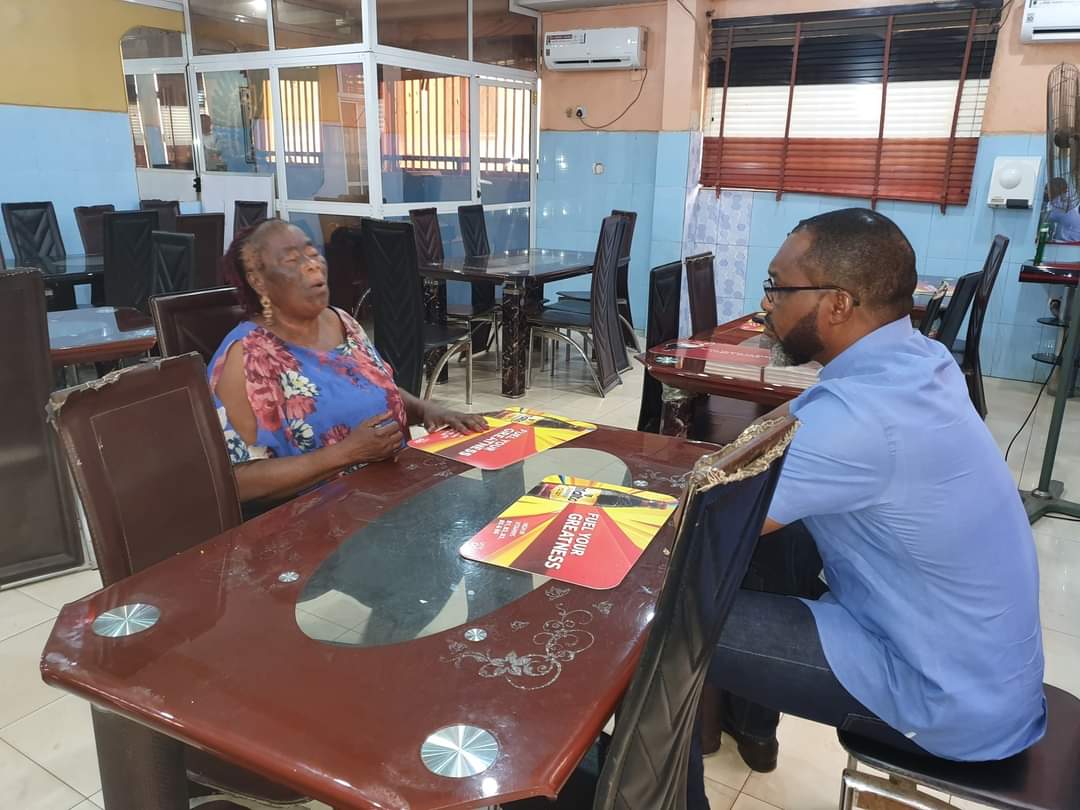
I was at Emily Restaurant with my friends. Over 150 persons turned up and shared in our conversation and Emily’s food.

Today we met. Emily thanked me profusely for the publicity and business of yesterday. Then she broke down while narrating her experiences as a successful business woman. She reminded me how long I have known her and the humble beginning of her food business from Coal Camp to Obioma Street in Achara Layout.

She told me of a concerted campaign of calumny against her, of accusations of her membership of Ogboni, AMORC, Eckankar and the diabolical means she uses to attract customers. She cried as she lamented the meanness with which her competitors had sought to destroy her. I listened patiently for close to an hour of lamentations including family issues.

It was really sad. I remembered Our Ladys bread in onitsha another woman entrepreneur destroyed by evil propaganda. I thought of all the women from medieval Europe killed for witchcraft and those accused of sleeping their way to the top. Emily is only one in the line of gender-based discrimination and age long superstitious beliefs. I calmed her down. Encouraged her and told her I will continue to support her and talk to her Children, including her son who studied in the Uk and sadly has no interest in her business.

I said a silent prayer for all successful people in superstitious societies and also for enlightenment in our land. Of course I did not leave without another bowl of ofe onugbu….

OSITA CHIDOKA

Rush takes the hassle out of finding the right courier partner for new businesses

​ ​ ​ ​ ​ ​ ​ ​ ​ ​ ​ ​ ​

For many entrepreneurs, selecting a reputable and efficient courier partner for their fledgling business is far more challenging than it first appears. Customers have high expectations for a convenient, seamless experience from the beginning of a transaction until its completion at the point of delivery. According to Mike Farquharson, Managing Director of online courier aggregator Rush, an Ocean on 76 Group company, any misstep in the process will simply lead customers to switch to a competitor – a loss few entrepreneurs can afford in the early days of getting a business off the ground. “This makes the selection of a courier partner for their new business an extremely important, but often overlooked decision for entrepreneurs.”

Delivery services are critical to the modern business, whether an entrepreneur relies on the timeous delivery of sensitive documents or fulfilling e-commerce orders. “Prioritising the customer experience is essential, which is why partnering with dynamic, like-minded companies that understand the necessity of getting things right the first time at the best price possible matters,” notes Farquharson.

According to research from marketing firm HubSpot, 93% of customers are more likely to make repeat purchases from companies that provide superb customer support, which includes careful attention to the all-important delivery ‘last-mile’. “On the Rush platform, users experience a bang-for-buck booking portal that provides a choice of prices and services across a multitude of courier companies in real time. The Rush courier network is made up of highly experienced, top tier courier companies giving entrepreneurs the peace of mind they need,” he says.

As delivery is the last point of interaction between a business and their client, it leaves a lasting impression, says Farquharson. “Late or damaged consignments are a massive risk to a seller’s brand. Entrepreneurs and small businesses need a fast, reliable service without complicated, hidden costs. Rush offers value for money on an easy to use platform without huge deposits or cumbersome paperwork.”

Farquharson adds that finding a fast, reliable, and trustworthy courier service shouldn’t be an onerous and time-consuming exercise. “Partnering with Rush means partnering with the right couriers. This ensures entrepreneurs retain customers, get a good handle on delivery expenses, and frees them up to focus on scaling their operations.”

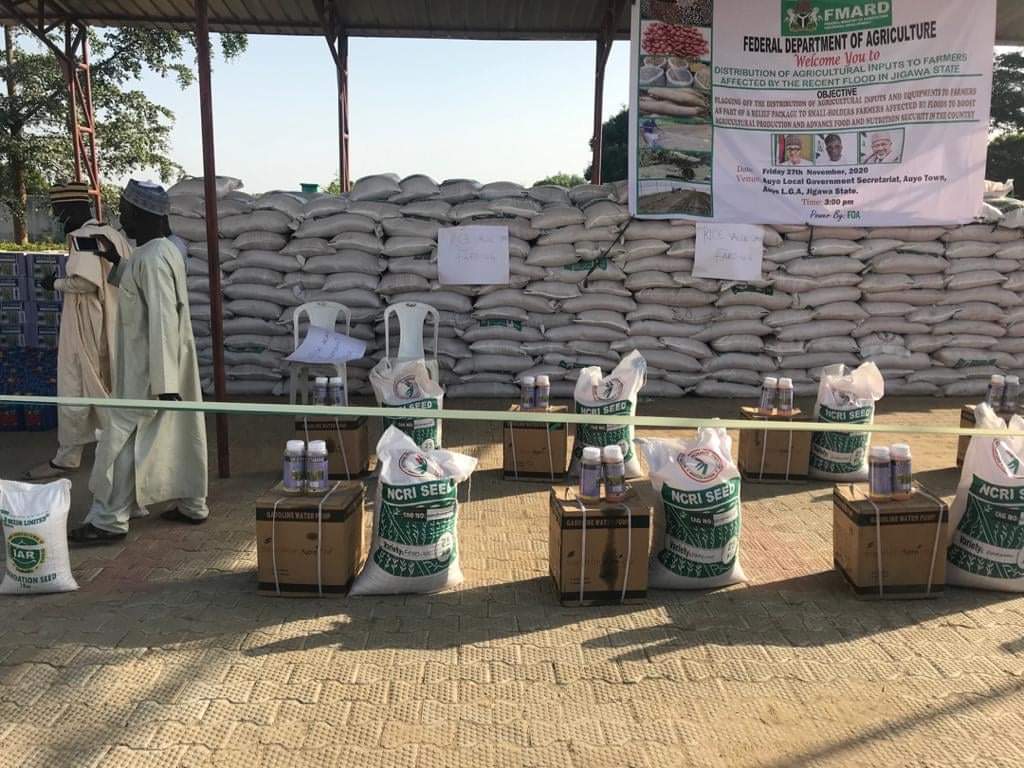
The Minister of Agriculture and Rural Development , Alhaji Muhammad Sabo Nanono , on Friday, November 27, 2020 flagged-off the Ministry’s distribution of farm inputs to smallholder farmers in Kebbi and Jigawa States worst hit by the recent flooding that ravaged farmlands in both states and other parts of the country. He said that the exercise is in fulfilment of the pledge he made to the farmers during his earlier visit in the wake of the flood disaster.

The Minister, in company of Governors; Abubakar Atiku Bagudu of Kebbi State and Mohammed Baduru Abubakar of Jigawa State, respectively, during his separate visits to both States, reminded them of his pledge to return to the states with relief packages to assist the affected farmers. He said, “ you may wish to recall that I visited you some few weeks back at the peak of the flooding in this area and made a promise that I would come back with some relief materials to assist the affected farmers. So, today, I am here to fulfil that promise”.

Speaking at the separate events held at the Kebbi Stadium and Auyo Secretariat in Auyo Local Government Area of Jigawa State, Nanono pointed out that the advent of the floods had greatly compounded the negative impact heralded by the Covid-19 Pandemic on the nation’s food security situation.

He further stated that the “desire to alleviate the loss and suffering caused by the floods informed the Ministry’s decision to support the smallholder farmers with various inputs especially improved seeds of some priority crops namely; rice, maize, wheat and cowpea through the farmers associations, women and youth groups in the flood affected areas”.

The Minister urged the beneficiaries “to use these inputs in this dry season to produce food for their households and the nation”. He expressed optimism that “these support will greatly improve our food and nutrition security as well as enhance our small holder farmers’ recovery from effect of these natural disasters”.

Nanono said the flag – off exercise “is the beginning in the series of distribution of the Ministry’s support to farmers who are victims of the flood disaster that occurred recently. There will be other input support distribution in other parts of the country where farmers have been greatly affected by the flood. Improved seeds and seedlings of maize, yam, sweet potato, rice and wheat among others will be distributed to farmers in the affected areas”.

According to the Minister, “this is the first tranche of what we have in our Federal Department of Agriculture store. More support from the Ministry will still come to you. This is another promise that would be fulfilled In sha Allah”.

Kebbi State Governor, Alhaji Abubakar Bagudu, represented by the Deputy Governor, Col Samaila Yombe (Rtd),acknowledged the massive support of the Federal Government to the State since the flood disaster. He expressed confidence that the farm input will help to boost the dry season farming in the state.

In his remarks, Governor of Jigawa State, represented by Hon Commissioner for Agriculture in the State, Alhaji Mohammed Alhassan, thanked President Muhammadu Buhari for his love and care for Nigerians and commended the Minister for fulfilling his promise to revisit the state to flag -off the input distribution.

He admonished the people not to see the inputs as food to be eaten but that it is seeds expected to be reproduced.

The Commissioner of Agriculture in Kebbi State , Alhaji Attahiru Machido, in his remarks stated that the recent flooding experienced by the state was monumental and had affected the economy, farmlands, infrastructure and livelihoods. He said the farm input is a welcome development and solicited for more support from the government.

FixPolitics is set to host a hackathon event to bring together a network of data enthusiasts, developers and product designers who would be dedicated to the development of a platform that delivers voters’ information hub, community sensitisation and political accountability.

According to the group, the event, ‘#FixPolitics Hackathon’, will be held on December 12, 2020 at the Co-creation Hub/Virtual Connection. Participants are to register via the link: bit.ly/fixpoliticshack.

“The aim of the event is to revolutionise the interest of Nigerians towards participating in the country’s electoral process,” a statement issued by its Publicist and Spokesperson, Mr. Ozioma Ubabukoh, read.

The statement pointed out that the hackathon was informed by the need to expand voters’ participation in the electoral process and leverage technology to sustain momentum for community engagement.

“Apathy has become a potent weapon to ‘foist’ unpopular candidates on Nigerians and citizens who do not have the requisite information to organise for different outcomes.

“We want to use this hackathon to find meaning to three things – voting process, office of the citizen awareness and candidate selection, which remain key to strengthening the country’s politics,” the statement read.

FixPolitics explained it had observed with interest that the voting process had been “bastardised” to the extent that the complexity of voter registration and other challenges had made it difficult for voters to easily possess voter’s cards, find polling units and vote during elections

It said, at the #FixPolitics Hackathon, issues on developing a resource hub (including leveraging existing platforms) for voters, which provides candidate information; past performance of incumbents; polling stations; allocations to their communities; and other data required to make informed electoral decision will be addressed.

The Co-founder of Future Africa, Iyinoluwa Aboyeji, said the hackathon would also be used to address issues surrounding the office of the citizen, which also has not progressed politically, as voters do not understand the power they have as citizens to effect meaningful change.

According to him, #FixPolitics has identified that four stakeholders who can provide information to candidates on the ‘Office of The Citizen’.

“These include: Advocates (general populace who would like to be involved and encourage people to vote within their sphere of influence); Community Organisers (#FP volunteers/recruits who can help inform people); Community Leaders (existing leaders in communities); and Partners (existing organised groups/organisations in a society which cut across socio-economic classes, e.g. NBA, NSE, WIMBIZ, NURTW, Students Unions etc.),” Aboyeji added.

The Co-founder and Chief Executive Officer of budgIT, Mr. Seun Onigbinde, shared Aboyeji’s views and stated, “This is an opportunity for young Nigerians to pitch their skills for civic purpose. We want to build on the recent momentum for accountable governance and active citizenry.”