
• Pledge to work with the leadership of Presidential Amnesty Programme
    The ex-militants’ leaders have challenged each other to end sea piracy and kidnapping in the region in abid to foster the development of the Niger Deltacommunities. They also pledged to work with the Amnesty Programme to see to the achievement of its objectives.

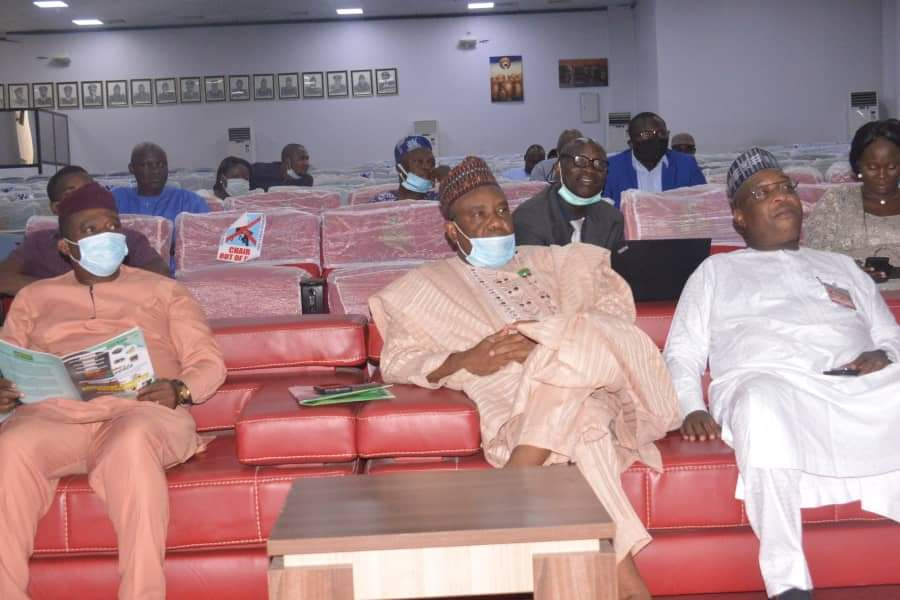
This was part of the resolutions from a peace building meeting with the leadership of the ex-agitators, now referred to as delegates drawn from the nine states of the Niger Delta, which culminated in an interactive session with the Interim Administrator, Presidential Amnesty Programme, Col. Milland Dixon Dikio (rtd) in Agadagba -Obon,Ondo State on December 18, 2020.

One of the prominent ex-agitator leaders in Ondo State, High Chief Bibopiri Ajube, also known as General Shoot-at-Sight who made this call in the meeting urged his colleagues to work with the Presidential Amnesty Programme to foster security and development in the Niger Delta. They all assured the PAP Administrator of their solidarity.

“We’re ready to work with you sir. My brothers here are telling you that there will be no road blocking henceforth. This leadership is with you, anytime you need us, call Boyloaf, call us. We will call each other and work with you.”

Chief Ajube, while appealing for a restructuring of the Amnesty office, admonished his colleagues to go back and end sea piracy and kidnapping in their various territories, stressing that no government will send contractors to develop the youth and community where there are high levels of insecurity. He also vowed to work with the security agencies to curb sea piracy and kidnapping.

“Why are our people still involved in sea piracy and kidnapping? We are missing something. If you are supporting this evil, which government will come and develop your land? Our agreement henceforth from this meeting; no more sea piracy, no more kidnapping.”

Spokesperson for the delegates, former IYC President, Dr Chris Ekiyor, while thanking theInterim Administrator for taking the initiative to meet the leaders, urged him to collaborate with other Niger Delta related agencies and institutions set up by the Federal Government so that the Programme will not be overburdened with issues that these agenciesshould oversee, such as infrastructure and gainful employment of youth in the region.

He also promised that the delegates will work hand in glove with the Interim Administrator and pledged their absolute support for him even as they anticipatereforms in the Amnesty Programme that will bring the needed momentum towards development.

Col. Dikio thanked the delegates for theircommitment to continue to work with the Programme and assured them that their genuinedemands would be looked into.

He also reiterated his vision to refocus the Presidential Amnesty Programme to its original mandate of development, security and peace of the Niger Delta region while working with the various governments in the region to make the Niger Delta the most secure place to live and do business in Nigeria.

According to Colonel Dikio, the Programme will work to transform the ex-agitators into entrepreneurs and employable citizens who will become net contributors to the economy of the region through effective collaborations.

It may be recalled that the Presidential Amnesty Programme was in 2009 designed for 30,000 ex-agitators and the Niger Delta impacted communities. The current management of the Programme seeks to ensure that its mandate is followed and effectively executed.

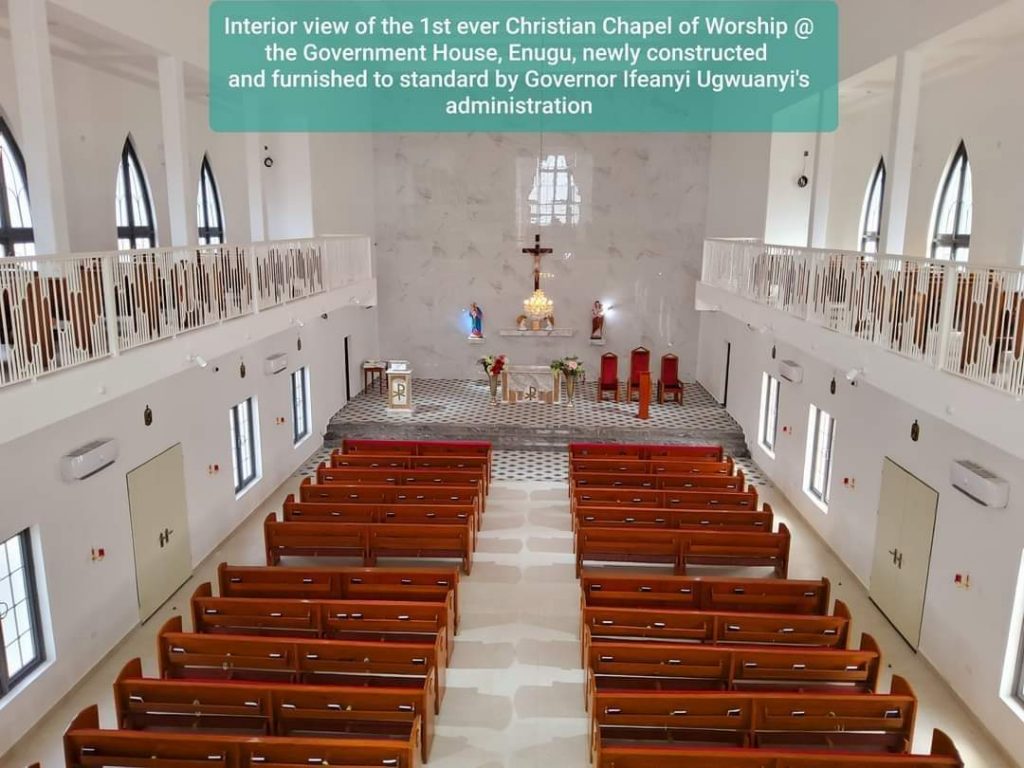
Catholic Bishops amazed at the newly constructed first ever Christian Chapel of Worship, at the Government House, Enugu, as they inspected the magnificent edifice with Governor Ifeanyi Ugwuanyi of Enugu State and others.

This afternoon, Governor Ifeanyi Ugwuanyi of Enugu State, the Catholic Bishop of Enugu Diocese, Most Rev. Calistus Chukwuma V. Onaga, the Bishop of the Catholic Diocese of Nsukka, Most Rev. Prof. Godfrey Igwebuike Onah and the Catholic Bishop of Awgu Diocese, Most Rev. John Ifeanyichukwu Okoye, accompanied by the Vice Chancellor of Godfrey Okoye University, Enugu, Very Rev. Fr. Prof. Christian Anieke, the Chaplain, Government House, Enugu, Rev. Fr. Chinedu Ozoude, among other priests, as well as the Special Adviser to the Governor on Project Development and Implementation (PDI), Engr. Dr. (Mrs.) Obiageli Abba, inspected the first ever Christian Chapel of Worship, at the Government House, Enugu, newly constructed and furnished to standard by Gov. Ugwuanyi’s administration.

It was indeed an amazing experience for the Bishops who profusely commended Gov. Ugwuanyi and expressed delight at the quality of the Chapel and facilities installed in it.

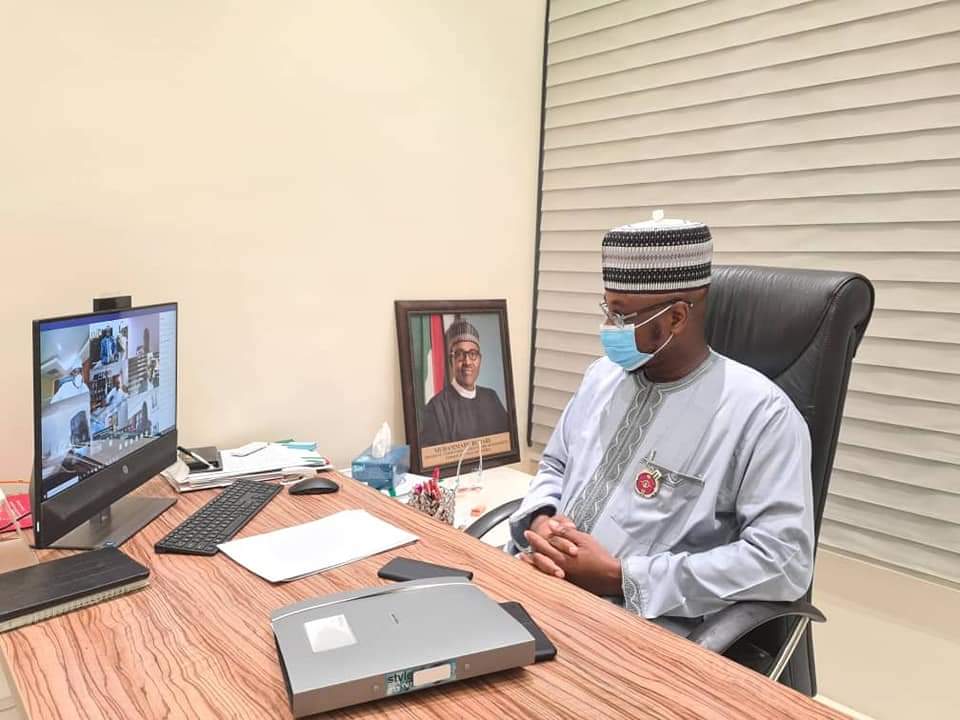
The Honourable Minister of Communications and Digital Economy, Dr Isa Ali Ibrahim Pantami presided over the high-level meeting of the National Task Force on National Identification Number (NIN) and SIM Registration which seeks to ensure all active SIM cards in Nigeria are linked to individuals National Identity Number (NIN).

The virtual meeting had in attendance, the Chairman, Governing Board of Nigerian Communications Commission (NCC), Chief Executive Officers (CEOs) of NCC, National Information Technology Development Agency (NITDA) and National Identity Management Commission (NIMC), as well as ECTS/ECSM-NCC, President of ALTON, CEOs of MTN, Airtel, Ntel, Glo, Smile, and 9Mobile.

The Awards were held by the Africa Digital Festival to honour Africa’s Digital Champions and ayoba features amongst many prestigious winners

CAPE TOWN, South Africa, December 22, 2020/ — On Saturday 28th of November 2020, ayoba (www.Ayoba.me) was awarded the Africa Digital Award for Best Mobile Application (https://AfricaDigitalAwards.com)​ in Accra, Ghana.​ The Awards were held by the Africa Digital Festival to honour Africa’s Digital Champions and ayoba features amongst many prestigious winners.​ Accepting at a virtual award ceremony, ayoba thanked the millions of users whose support has helped to realise the dream of bringing content and connectivity to Africa.

The Award is a result of many achievements during the course of the year.​ This can be seen in the sharp rise in user numbers in the fourth quarter, as users respond positively to the many significant updates to the app.​ The application is now available in 22 languages of which many are from Africa such as Xhosa, Zulu, Ibo, Arabic and more, all contributing to the unique hyper local focus for ayoba.​ Ayoba also offers the possibility for its users to send and receive money via our partner’s MTN Mobile Money (MoMo).​ This functionality is available in Cameroon, Ghana and Uganda.

Having started the year as an instant messaging app with a small offering of content channels, ayoba has ended the year with 124 content channels – including news and official COVId-19 updates, music and music news, full gaming offering, lifestyle updates and education across 7 languages. ​ Users and artists have reacted well to the addition of a music player via MusicTime® in ayoba which provides 200 new tracks every week.​ Gaming has also been well received​ and today the application has more than 120 free games.​

The newest version of the app also sees the inclusion of MicroApps.​ MicroApps are lightweight web apps, developed by third parties to address a specific community need, and are accessed from within the ayoba app.​ Like the ayoba app itself, MicroApps are zero-rated for MTN customers, which means they can be used even when the user has zero data balance.

‘We are so proud to launch MicroApps,’ says Nolan Wolff, Head of ayoba.​ ‘One of our key goals for ayoba is to build a platform that brings opportunity for African developers.​ MicroApps will allow local developers to create apps that reflect local culture and values, and solve local challenges.​ It’s an incredibly exciting community development platform.’

For developers in Africa, where app adoption is a common difficulty, MicroApps in ayoba present seamless access to our existing user base, and offer the benefit of a zero-rated infrastructure that would be too complex and costly for developers to implement themselves.​

Wolff continues:​ ‘Developers are also able to leverage ayoba APIs to create a more personalised and relevant experience.​ An interesting element is that developers can leverage ayoba’s messaging interface for interaction with users in a safe and convenient manner.’’

To support developers who are interested in building MicroApps on ayoba, ayoba has launched the ayoba Developers Portal at https://developer.ayoba.me/, where Developers can view the API documentation, have their queries answered, and submit their MicroApps for publication on the ayoba app.

The ayoba application remains unique with its SMS continuity functionality, allowing users to send messages to another even if the receiver does not have the application or does not have a smartphone.

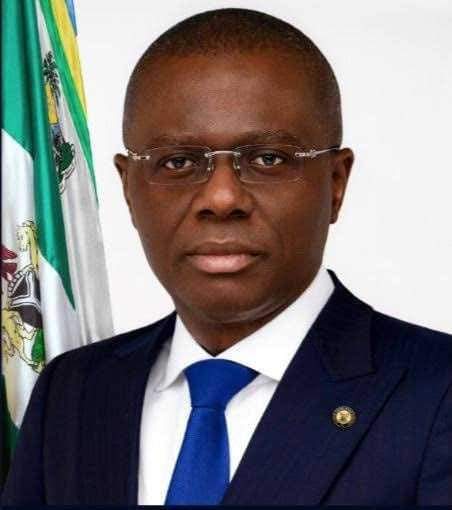
Lagos State Governor, Mr. Babajide Olusola Sanwo-Olu today flagged-off the Hajj Savings Scheme for the South West States of Nigeria.Speaking at the event, the Governor described the scheme as a welcome development which could not have come at a better time, particularly now that the global economic meltdown is affecting virtually everybody and countries of the world including Nigeria.Sanwo-Olu, who was represented at the event by the Deputy Governor, Dr. Kadri Obafemi Hamzat, added that the launch of the scheme reflects the spirit of oneness amongst all stakeholders and a demonstration of their commitment to key into the initiative and ensure the successful implementation.

In his words, “It gladdens my heart to note that this official launch reflects the spirit of oneness amongst all the stakeholders which has made it possible for all of us to gather here today to witness this historic event. It is also a demonstration of the resolve of key stakeholders to embrace this initiative and ensure its successful implementation”.

While commending the management and staff of the National Hajj Commission of Nigeria for finding Lagos State worthy of hosting the flag-off of the project for the South-West Zone, the Governor assured the Commission of the State government’s support for all its laudable initiatives aimed at improving the narratives of Hajj operations in the country, including the Hajj Savings Scheme.

Speaking further, the Governor called on Islamic Clerics in the State to enjoin their followers to adhere strictly to the COVID-19 protocols as the disease is still very much around and active.

“The disease is still very much around and active, we must therefore ensure that we know our status and adhere strictly to the laid down protocols of physical distancing, regular handwashing with soap and running water, use of hand sanitisers, wearing of face masks and avoiding large gatherings among others”, he appealed.

Earlier in his remarks, the Lagos State Commissioner for Home Affairs, Prince Anofiu Olanrewaju Elegushi described the scheme as significant because it is the first time since Hajj operations began in Nigeria that a full-fledged contributory Hajj Savings Scheme will be introduced in the country to ameliorate the financial burden in the fulfilment of Hajj rites as enshrined in the Holy Qur’an.

He stated further that the initiative will have positive impact on Hajj administration in Nigeria and create an enabling environment for intending pilgrims to contribute gradually towards the actualisation of their dream of becoming Pilgrims in no distance future.Elegushi, therefore, implored the people to tap into the great opportunity provided by the scheme by registering immediately with Ja’iz Bank PLC to start contributing.

On his part, the Chairman, National Hajj Commission of Nigeria, Alhaji Zikrullah Kunle Hassan, stated that the introduction of the Hajj Savings Scheme is one of the strategic moves designed to achieve the desire of making Hajj affordable for average Nigerian Muslims as enshrined in the establishment Act Section 7 Sub-Section 1, which empowers the Commission to establish, supervise and regulate a system of Hajj Saving Scheme to be operated by the Pilgrims Welfare Board of each State and FCT for interested pilgrims.

He added that the operationalisation of the scheme is historic in the Commission’s efforts towards self-financing to wean it from depending on the scarce government resources, which can be utilised for provision of infrastructure and other social services in the country.Hassan explained that the scheme has a developmental approach that seeks to liberalize payment, build value chains and overcome the infrastructure deficit and as well address the issue of poverty inequality in the country, adding that the initiative will avail intending pilgrims or depositors various options in which they can participate or enroll.

The Managing Director and Chief Executive Officer, Ja’iz Bank, Mr. Hassan Usman, disclosed that the launch of the scheme in Lagos is a further affirmation of the enormous belief the bank has in the Lagos Muslim Community to embrace the innovative idea and make the scheme a grand success.He added that the bank is committed to the scheme and is ready to support it with state-of-the-art technology, infrastructure and self-investment management practices.

The Scheme is a tripartite arrangement between the National Hajj Commission of Nigeria (NAHCON), States’ Muslim Pilgrims Welfare Boards and Ja’iz Bank, designed to encourage intending pilgrims to save towards actualising their dreams of performing the Holy pilgrimage in Saudi Arabia as enshrined in the Holy Quran within a specified period of time.#LASG#RebuildingLagos#ForAGreaterLagos

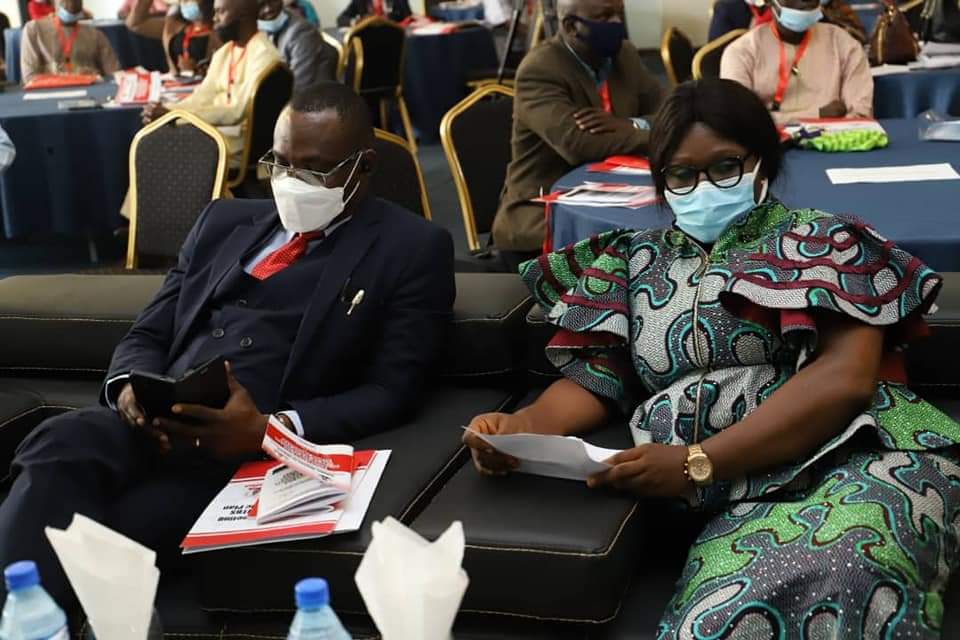
The Honourable Minister of Health, Dr. Osagie Ehanire has envisioned that when the Bill for the Law establishing the National Blood Service Commission (NBSC) is passed, then it would ensure that all who are resident in Nigeria will have access to safe blood and blood products when needed, and in an equitable manner. He has also advocated that delivering on this vision would rely on more robust quality management systems, robust regulatory frameworks, appropriate quality policies and processes, seamlessly institutionalized in coordinating blood establishments across the country, and a well-motivated, organized and committed staff.

Dr. Ehanire who was represented by his Senior Technical Assistant, Dr. Chris Isokpunwu, made these declarations on Tuesday, 15th December, 2020 while delivering a keynote address at the National Blood Transfusion Service (NBTS) Stakeholders Meeting and launching of Ten-Year Strategic Plan, 2021 – 2030 of the Service held at the NAF Conference Centre, Kado, Abuja.

The Honourable Minister also disclosed the responsibility of his Ministry at ensuring that Nigerians have access to safe, high quality blood and blood products as a matter of priority, given the prevalent unavailability of safe blood and blood products to address the country’s needs to manage the high burden of maternal and child deaths, sickle cell disease, cancer, trauma from road traffic accidents, conflict and insurgency, blood for routine surgical interventions and component production.

Dr. Ehanire also cautioned against improper handling, usage, coordination and regulation of blood. He disclosed that the Federal Ministry of Health’s report of 2018 revealed that up to 18% of newly acquired HIV infections in Nigeria are due to unsafe blood transfusions. He said transfusion transmissible infections include Hepatitis B, Hepatitis C and Syphilis.

The Honourable Minister of Health also disclosed his endorsement of the “One Million Safe Blood Units Initiative (OMBUI)”, an initiative of the NBTS to improve, make available enough safe blood units for transfusion and for the establishment of the “National Strategic Safe Blood Reserve” that can be swiftly and effectively mobilized during emergencies to ensure Nigeria’s population survival, health protection and wellness. He said that the reserves will be warehoused in the six NBTS zonal centres of Kaduna, Maiduguri, Ibadan, Benin, Owerri and Jos. He further discloses that other warehouses for ease of distribution will include Lagos, Port Harcourt, Kano and Abuja.

Dr. Ehanire further charged the NBTS on the “long overdue” blood component production and blood-related medicinal products in line with the Strategic Health Development Plan (NSHDP). The Honourable Minister anchored this charge to NBTS on “a strong institutional capacity” to ensure effective regulation of the quality and safety of these blood products.” The Minister also looked in the direction of “significant financial returns” generated for Government through the production and sale of a suitable range of therapeutic blood products, plasma and plasma-derivative medicinal products (PDMPs) for local, regional and international market” and the “job opportunities for a considerable proportion of the unemployed”, “additional income” that could “reduce pressures on the national budget.”

On the 10-Year Strategic Plan of the NBTS, Dr. Ehanire said it will ensure a good quality, safe and sustainable blood supply with 100% Voluntary Non-remunerated Blood Donation (VNRBD), a robust partnership and stakeholders coordination especially that the plan is with cost implications of N42.3 Billion/USD112 Million. He therefore called on partners to key into the areas that may interest them.

Earlier, the Honourable Minister of State for Health, Dr. Olorunnimbe Mamora who was represented at the event by his Technical Assistant, Dr. Nneka Orji as well as the Permanent Secretary, Health, Abdulaziz Mashi Abdulahi who was also represented by the Senior Technical Assistant to the Permanent Secretary, Dr. Abubakar Adanu-Ismael; all of who expressed solidarity with the NBTS as it conducts the Stakeholders Meeting and the launch of its 10-Years Strategic Plan.

As well, Partners such as the Nigeria Medical Association (NMA); Achieving the Nigeria Initiative; and the World Health Organization all expressed solidarity with the NBTS at the occasion.

Signed: Olujimi Oyetomi, Director, Media & P.R., FMOH.

The Minister of Agriculture and Rural Development, Alhaji Muhammad Sabo Nanono has reaffirmed the Federal Government’s commitment towards improving agricultural extension services, boost food production and increase the Gross Domestic Product (GDP) in the Agric sector.

He stated that the agricultural sector has been identified by government as key for economic recovery and social transformation particularly in the effort to attaining national food security, diversifying foreign earnings base of the country, improving rural livelihood as well as providing employment for the teeming young Nigerians.

The Minister, represented by the Director, Federal Department of Agricultural Extension, Engr. Frank Kudla, disclosed this during the Sensitization Workshop on Revitalization of Agricultural Extension in Nigeria held on Tuesday, 1st December, 2020, at the NAF Conference Hall, Kado, Abuja, which has the Theme: Catalyzing Effective Agricultural Extension Service Delivery at the Grassroots.

Nanono stated that the Ministry has taken the onerous responsibility and renewed its commitment to increase agriculture contribution to the GDP ‘’the revitalization of the National Extension System comes as a veritable means to further boost our efforts’’

The Minister tasked the stakeholders on some key areas for robust discussions at the workshop. These include” redefining the roles and responsibilities of the three tiers of government in the agricultural extension services and establishment of evaluation strategy with possible reprisal for actors that fail in their responsibilities in order to ensure accountability and commitment’’.

The Minister also stated the need for participants to; recommend a favorable policy environment for active private sector investment in the management, operation and funding of extension service delivery as the Government alone cannot shoulder the responsibility of supporting effective extension service delivery.

He urged the stakeholders to, ‘’ bring up innovations that will foster and encourage aggressive training of necessary manpower and ensuring professionalism in agricultural extension services ,this I believe will make the extension system knowledge based and a desirable service to be patronized by farmers’’.

He pointed out the need for incentives that will foster and encourage the mobilization and development of farmer groups around clusters to enhance agricultural extension services delivery to them through the Agric. Extension Service Providers (AESP)

The Minister appealed for “a review on ways and means to redress the gap in the dearth of female Extension Workers in order to enhance access towards knowledge and productive resources by women farmers”.

In his welcome address, the Permanent Secretary in the Ministry, Dr. Abdulkadir Mu’azu, represented by the Director, Farm Inputs Support Services (FISS), Engr. Tunde Bello stated that the workshop offers a great opportunity to further discuss and assess the efforts in place to resuscitate the national agricultural extension system and come up with all inclusive implementable strategies in line with international best practices for practitioners in both the public and private sector.

Dr Mu’azu commended experts and development partners especially the National Agricultural Foundation of Nigeria (NAFN), International Food Policy and Research Institute (IFPRI), among others for their collaboration towards the success of the workshop.

He also informed that ‘’ the Ministry through the Federal Department of Agricultural Extension is well advance in putting in place sustainable agricultural extension service backed by law”. He said, “Participants in this workshop will be enlisted as part of the army of supporters and advocates that will foster the finalization of the process for the enactment of this instrument which will guide operations and ensure effective agricultural extension service delivery in Nigeria’’

In his Goodwill Message, the Chairman, House of Representative, Committee on Agricultural Colleges and Institutes, Hon. Munir Dan Agundi, pledged that the National Assembly would continue to support the Ministry and make robust laws that would ensure increase in food production, create employment for the teeming youths of Nigeria as well as boost the economy.

Ezeaja Ikemefuna
Chief Information Officer
For: Director, Information (FMARD)

We have launched the 2021 Emblem in remembrance and honour of the fallen heroes of the Nigerian armed forces at the Sam Mbakwe Exco Chamber, Owerri. At the event, a minute silence was observed in honour of our fallen heroes.

We prayed to God to continue to bless and rest their souls.I commend the Nigerian Legion in the manner they have organized and conducted themselves all these years in the discharge of their duties.The Government has a responsibility of ensuring the welfare of the Children and families of our fallen heroes, to continue to support and assist them.

To this end, I assured the members of the Nigerian Legion that they will be part of the various empowerment programmes of the State Government, the Covid -19 palliatives and other livelihood support initiatives of the Federal Government to cushion the effects of dwindling economy in the country. In us, they have a partner.

We will not abandone them, as we shall continue to seek avenues to support the efforts of our gallant officers and also assist the families that were left behind by the fallen heroes. In a similar development, I am happy to be decorated as the Patron of the Nigerian Legion, Imo State Chapter by the Chairman and South East Zonal Chairman of Nigerian Legion, Comrade Alphonsus Anyanwu at the Lunch of the 2021 Armed Forces Emblem Appeal Fund.

We will continue to remember the sacrifices made and being made by the members of Nigerian armed forces, both our fallen, retired and serving heroes.


The Minister of Information and Culture, Alhaji Lai Mohammed, has called on the new Secretary General of the Pan-African Writers’ Association (PAWA), Dr. Wale Okediran, to strive to revive the golden age of African writers, who actively worked for the unity, development and decolonization of Africa.

The Minister, who made the call when he received Dr. Okediran on a courtesy visit to his office on Friday, said the main challenge that
confronted African writers in the pre-decolonization era was the struggle for political independence.

He, however, said today’s crop of African writers have to contend with economic challenges and the inculcation, in the youth, of pride in African culture.

“I will urge Dr. Okediran to do his best in his new position to revive that golden age of African writers, that age where African writers
collaborated with our politicians to attain independence. The challenge before our writers today is not about political ndependence but it is about how we take Africa out of the morass of despair and how we take Africa out of the economic challenges we are facing.

”It is about how we instill in our young ones pride in their culture, pride in their tradition and how we use technology to promote our rich culture and traditions,” Alhaji Mohammed said.

The Minister, who paid tribute to African literary giants such as Chinua Achebe, Ayi Kwei Armah and Ngugi Wa Thiang’o, said they did not only serve as role models but were also beacons of hope for the continent.

He therefore urged the Secretary General of PAWA to encourage African writers to continue to tell the African story in order to guard against distortion of facts by foreign writers.

“I want to appeal to Dr. Okediran to please use his exalted office to ensure that African writers continue to tell our stories in the best African tradition, because if they don’t do it, others will do it in a manner that will not be pleasant to us,” Alhaji Mohammed said.

He said African culture and traditions provide enough materials for any writer to explore and advised PAWA to work with the private sector to ensure that some of the books written by African authors are adapted into films in order to reach out to the young population.

In his remarks, Dr. Okediran said the African Union had since recognized the power of literature and it’s using it effectively to promote unity on the continent.

He said PAWA recently signed a Memorandum of Understanding with some international organizations to leverage literature for the promotion of African cultures.

Dr. Okediran appealed to the Federal Government to support the Accra-based PAWA through the payment of yearly subvention as approved by the African Union.

Segun Adeyemi
Special Assistant To The President (Media)
Office of the Minister of Information and Culture
Abuja

When Ọfọefuo, the first son of a popular family in my village was making an arrangement to migrate to Canada with his new wife, I knew that he was not taking th7e right decision. With a good job in Nigeria and a promise of rising to the top of his career, giving up all for a life abroad was difficult for me to comprehend. For him, it was like going to heaven.

All my entreties to dissuade my friend from settling down in Canada was like preaching to a cock which had already mounted a hen. Ọfọefuo had made up his mind; hence, any contrary advice was like Peter’s persuasion to Jesus not to go Jerusalem.

Ironically, Ọfọefuo’s parents were in support of their son’s migration to Canada. They saw it as status symbol. Ichie Ụkwachinaka and his wife hoped to be visiting Ọfọefuo their son in Canada once he settled down. They tagged me an “enemy of progress” when their son told them about my discouraging advice.

Ọfọefuo’s parents believed that I was envious of their son. They belabouredly accepted my greetings for many years until the goods they had ordered in their son’s relocation abroad started arriving.

Mr. Ọfọefuo was neither going to Canada to further his education nor for economic hibernation. He was not also migrating to improve his parents’ or siblings’ lots but to become a citizen. His parents were wealthy and never made any monetary demands on him.

Ọfọefuo wanted to correct the divine mistake of placing him in Africa. Right in our university days, he had started speaking English with American accent. “What a fuck!” or “damn it!” were his favourite expressions.

My friend was not planning to come back to Nigeria. That much he confided in me. He found an ally in his completely bleached wife who was “already warming herself by the fire before the harmattan broke out” meaning that “she too was in hurry to dump all that is African and become a white”. Within a year of arrival in Toronto Canada, Mr. Ọfọefuo changed his name to Mr. Forte for ease of pronunciation by his hosts. Twenty-five years down the line, my friend, Ọfọefuo together with his children, is still in Canada. All his children were born and raised in Canada and they have never visited Nigeria.

Like a bottled madness, Canada has brought out the latent individualist tendency in Ọfọefuo now known as Mr. Forte. He minds his business and never allows his extended family issues bother him. His parents could no longer visit him after the first visit as Mr. Forte’s wife would not approve another “fucking” visit. Ọfọefuo’s parents were lucky that they had other children who took care of them at old age and also buried them when they died few years ago. Mr. Forte did not attend their funeral. He claimed that the dates were not convenient. That was a first son of a notable family.

This is not the case for many Nigerian families abroad but there are so many families who shouldn’t have been allowed to travel abroad at the first instance. This malady is predominant amongst many African rich and middle class families. They do it as status symbol with no knowledge of the remote and proximate impact of their decisions. Our people now export their children to the western world for better education and what they deem better opportunities but end up depleting the very human resources that could transform their communities.

That process that makes a family lose its identity, especially the language and basic culture, is anihilistic. It makes a people strangers to their own people. It is no joking matter.

If Azikiwe, Awolowo, Akanu Ibiam and Herbert Macaulay stayed back abroad with their families after their education, perhaps Nigeria would not have become an independent country. I think the better approach is to go abroad, learn what makes the western world thick, return home to make our own world a better place. That has been the Nnewi man’s approach.

Any Nnewi family who is holed up abroad is viewed as “ndị na-ayị ara Obodo Oyibo” meaning “a family who is afflicted with a white man’s disease”. They are classified as “ndị nara ọfia” or “the lost people”.

If you are planning to migrate or settle abroad with your family, just know that your civilized or westernized children might not follow you back to the Nigeria, they are told in school is a jungle or a “shit hole”. You can only return with the children if you do proper planning and debriefing. You might be lucky if your children have missionary spirit. Abound all over the western world are many blacks of Nigerian descent who were told where their grandparents came from. Only few have been bold enough to trace their roots back in Nigeria.

If you are caught in this web and you have started feeling remorseful of your porting action, you could start with sending your kids to do secondary education here in Nigeria. A lot of missionary and private schools have identified this need and have expertise to handle and debrief such kids.

When they come back, they make lifelong friends besides the young in their immediate family who would be a very strong reason for them to come back to Nigeria. Many lost kids including those of my cousins have been redeemed through this method.

Always remember that Jim Ovia, the owner of Zenith Bank schooled in America and returned ; Aliko Dangote, the richest African schooled in Egypt and returned, Segun Agbaje, the MD of Guaranty Trust Bank, schooled in the UK and returned. These guys are far better than many of their contemporaries that opted for better life abroad.

The real opportunity cost of better life abroad is very expensive. It is a choice with a lot of personal benefits that would start losing value or taste many years after.

By Anayo M. Nwosu