Igbo people are 98% christians and the important of Christmas in igbo land can’t be over emphasized. In short Christmas and Valentine are one of the greatest festivities in igbo land apart from other cultural festivals like Okonko, Iri ji, Ikeji etc. Though, admit stands this year, the fanfare and boom associated with Christmas is not there as the igbo seems to take their stock and weigh the options of celebrations.
.
An elder stateman and a vocal igbo , Osita Chidoka observed this and he questioned “Why is sadness all over the land? I have been in the South East for sometime and I noticed the absence of the usual Christmas bustle. In Abuja, there is a despair that is palpable, a certain heaviness and resigned hopelessness. Covid-19 is sure an issue but not the root of this pervasive lack of hope.”

“Beyond bad economy and COVID-19 there is a sense of nothing to look forward to. We need something, I don’t know what…..we need to be remobilized around a hopeful future. It may not be concrete, it may not materialize but something to strive for, something to live for….”he added.

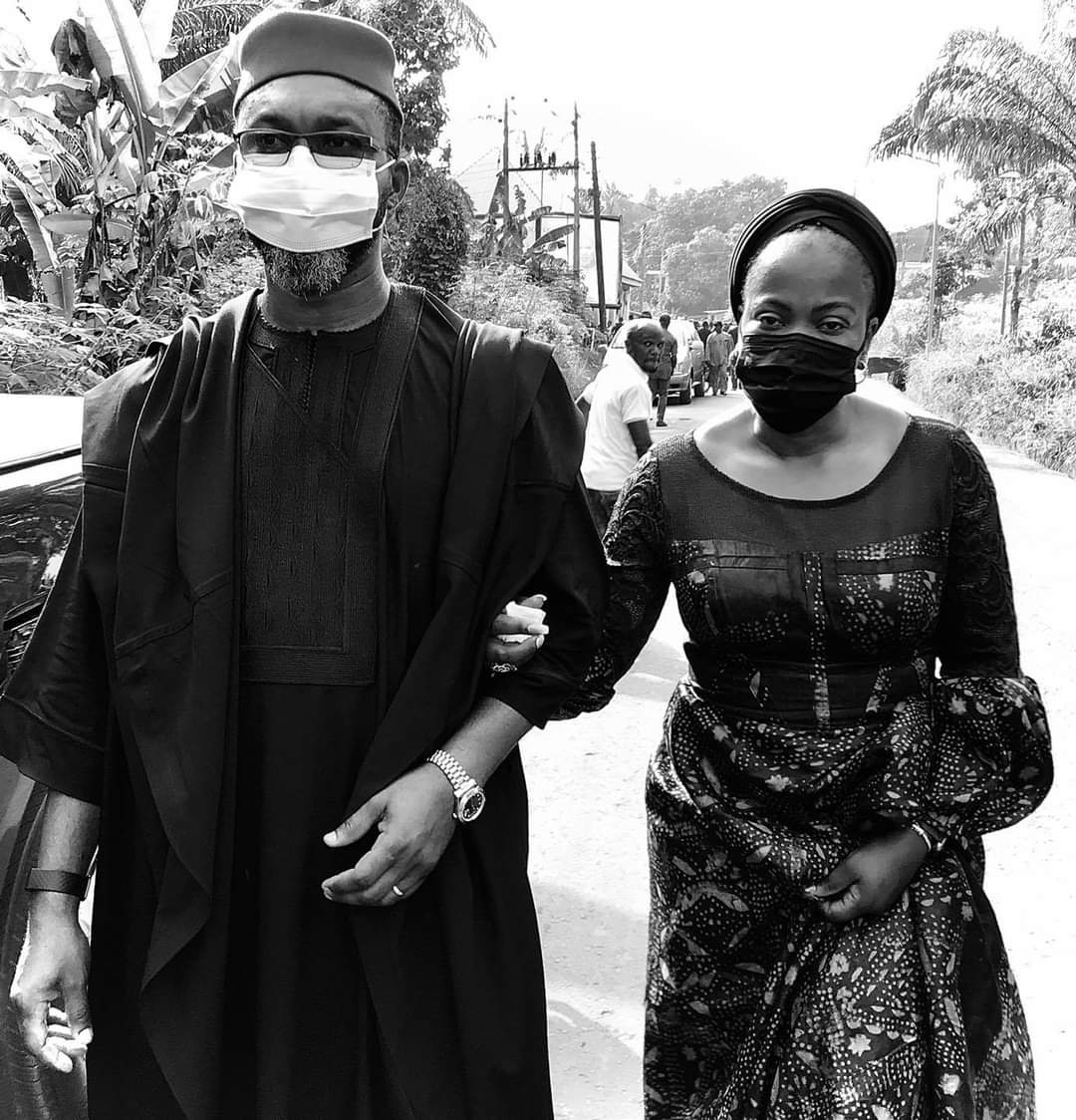
“As we walked away yesterday, from the burial of our dear friend, Nnenna Ukachukwu who died in a tragic car crash with a trailer I pledged to look for happiness. Nnenna was a sister to my wife, Aunty to my children and my sweet tooth conspirator…..”he lamented and espoused.

In positive mood and hoping for a better year he concluded by saying “In 2021, we must find happiness, nobody, no event, no power will take away our happiness. Amen.”

Anthony Emeka Nwosu

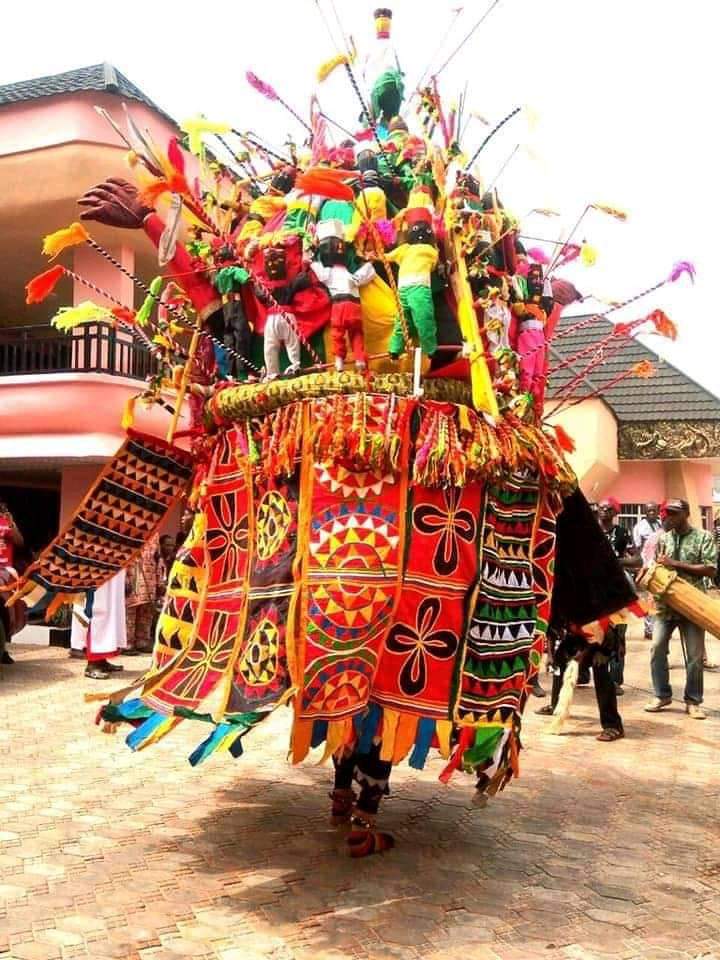
Over the years, Indigenous African culture and other parts of the world have been associated with masquerade which has transformed, muted and evolved in eurocentric culture as mascots. Though some culture of Africa still maintain the masquerade as prestine entertainment form,one of them are the Igbo ethnic group of Sub Saharan Africa.. The finest masquerade to even come from this part of Africa is known as Ijele.

With her regal moves and accolites gaining accolades, Ijele masquerade is an indigenous Igbo Masquerade which has it’s origin from Aguleri and Umueri and other communities in Anambra state,this masquerade is said to be the finest level of indigenous igbo culture which is an export.

This masquerade emanated from Aguleri Dance Group called ‘AkWUNECHENYI’ which belongs to Igboezunu Aguler, Umudiana village of Ikenga Umueri and Umuatuolu village of Umueri. This masquerade later spread to othe parts of Igbo land including igbo parts of Idah and Ibaji.

The masquerade is said to be the largest masquerade in Sub-Saharan Africa, in fact UNESCO recognized Ijele masquerade nd also listed it as one of the cultural elements that needs to be safeguarded. Most times it is reffered as the ‘KING OF ALL MASQUERADES’ by Igbo people, in the ancient days forty five other masquerades performed on top of Ijele, this signifies kingship. But today these masquerade are represented with forty five figures. It takes hundred men to put Ijele custune in order and it’s height is 12ft -15ft.

Some persons among the Igbo people have taken the title Ijele, in fact till today the indigenous igbos of Ibaji and and Idah still retained the IJELE TITLESHIP.

Ogochi O Enechi and Anthony Emeka Nwosu

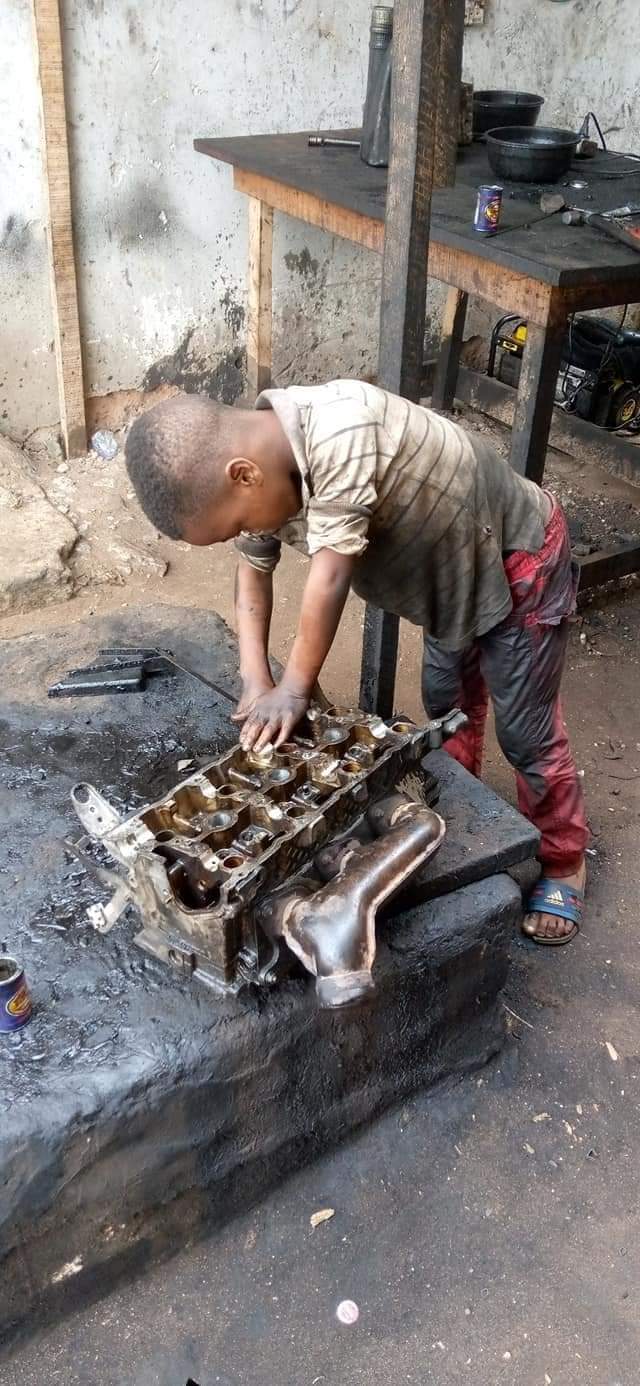
I visited Evbareke Auto Spare Parts Market today, to fix my car and made a new friend.. Meet Benjamin a 6 years old Auto Mechanic, he’s also going to school and a Primary 2 pupil.Starting a vocation early is key to becoming very good at the job.

Considering the fact that Nigeria does not guarantee you job opportunity even after your University Degree, it’s important to highlight this idea of vocational training for our children even while they are attending conventional schools.

Imagine how good Benjamin would be by the time he continues on this path till he becomes an adolescent, he would have become so competent that he could tear down a faulty engine and couple it back after fixing it just like the manufacturer made it.

I encourage parents and wards to introduce their children into vocations that would be of benefit to them in the future just in case they don’t find an employment after school, they would be self employed.

Destiny

Posted By Nnamdi Nadico

The National Task Force on National Identification Number (NIN) and Subscriber Identification Module (SIM) Registration met today, 21st December, 2020.

The meeting was chaired by the Honourable Minister of Communications and Digital Economy, Dr. Isa Ali Ibrahim (Pantami) with major stakeholders in the sector including Chairman-Nigerian Communications Commission (NCC); Executive Vice Chairman (EVC), NCC; Director-General (DG), National Information Technology Development Agency (NITDA); DG, National Identity Management Commission (NIMC); Executive Commissioner, Technical Services (ECTS), NCC; Executive Commissioner, Stakeholder Management (ECSM), NCC; Chairman, Association of Licensed Telecom Operators of Nigeria (ALTON); Chief Executive Officers of MTN, Airtel, Ntel, Glo, Smile, and 9Moble in attendance.

RESOLUTIONS

Based on the endorsement of the Federal Government of Nigeria, the following resolutions were made:

· Three (3) weeks extension for subscribers with NIN from 30th December, 2020 to 19th January, 2021.

· Six (6) weeks extension for subscribers without NIN from 30th December, 2020 to 9th February, 2021.

· NIMC has provided strategies to enable citizens to attend the registration in full compliance with Covid-19 protocols – particularly the use of facemasks which remains mandatory and maintenance of social distancing.

· The President appreciates Nigerians for their patience and commitment to update their Identities; The Federal Government also thanks all stakeholders for their compliance with the directives.

· Mr. President has also commended the efforts of the Task Force and urged all stakeholders to take advantage of the extension to link their SIM card with their NIN.

· Unstructured Supplementary Service Data (USSD) and verification charges remain suspended during these extensions.

You know as the year is about to end many spinsters and single ladies would deride marriage, would talk down on married people just to vent their anger out. In social media , you would see a lot of young people talking about marriage,possitively or negatively but the Nigerian feminists as toxic as majority of them would be would say is maarriage am achievement, yet in their closet they sulk,cry and lamment over their loneliness forgetting to look inwards and ask if they are Get doing it right

I saw in a comment somewhere, a girl below the age of 22yrs saying that “Marriage isn’t an achievement” but at that age, what does that girl even know? Her married parents are seeing her through the university and from her other comments, it’s very clear she is not born again. She is a member. Free and socialising like us. But unlike us, she and her likes value mere fornications with men who don’t even have to consider them for marriage since they don’t give a damn about marriage. Their men must be lucky. No commitment whatsoever. I envy them seriously.

Anyway marriage is an achievement to me as an Igbo. It is a noble idea. It is mandatory. It makes completion possible.

I think that girl is from Middle Belt or southern kaduna. Can you imagine the risk?

Such mindset should not even be found amongst a people on the verge of extinction. But I already know that many Christianised girls in naija , Igbo girls inclusive, like being rebellious for the wrong reasons because, of gross ignorance.

This mindset perhaps is a contributing factor to what marriage has become in every westernised society.

What do we see today? Men and women raised in Arab society or civilization are taking over… They are migrating into Nigeria in droves, Europe and America.

“Nature abhors vacuum”, they say. A youthful people with iberiberious mentality that discourages procreation will go extinct and other serious people will take over their land and properties, even with violence.

Such girls who mouth that rubbish will definitely become single mothers because humans who refuse to embrace good logic usually end up making avoidable plans, mistakes and decisions. If they are unlucky to find their desired suitor or if they outrightly decide to stay unmarried, they are likely to suffer double of their deserved life’s unavoidable problem except if they are from a rich background, filled with caring relatives.

Of course this is naija. Not Europe. Not America. You reap what you sow in this part of the world. Welfare, where it exits in naija, is for other people who are impoverished and not for single girls with unwanted pregnancy.

Marriage, from traditional school of thought, is primarily for procreation. Other benefits are mere “jara” 😉
Imagine when polygamy is involved as in the case Arabs or those who embraced their religion….

Most single mothers who #outrightly refused to get married usually have one or two Kids and if their children decide to be like their mother, they may have just 1 each as that is expected in their own time or era and their own children may decide not to have any child at all in their own time as we expect further social changes.

So that’s how they will disappear from the surface of the earth.

It starts with, “I won’t even marry until I am out of school and with something doing” to “Marriage is not an achievement” and finally to “my bloodline is not worth preserving, I deserve to go into extinction” and so they go into extinction.

Last week I saw an old fb friend.
She used to promote such iberiberious thoughts. But I was surprised to see that she’s already married and even added her husband’s full name to her FB name.
For example, let’s say I married her and that her name Used to be Obianuju Ezenwa before she got married to me, she is now obianuju Ezenwa Obinna-Nwobi Obinwannem.

Meaning, she now has double identifiers. She proudly belongs to her husband and I wonder what her fans would be saying now 😂
I am sure her husband must be much prouder and more responsible now because having a wife is a glorious achievement.

What an interesting sociocultural phenomenon 😂

Maazi Obinna Nwaobi

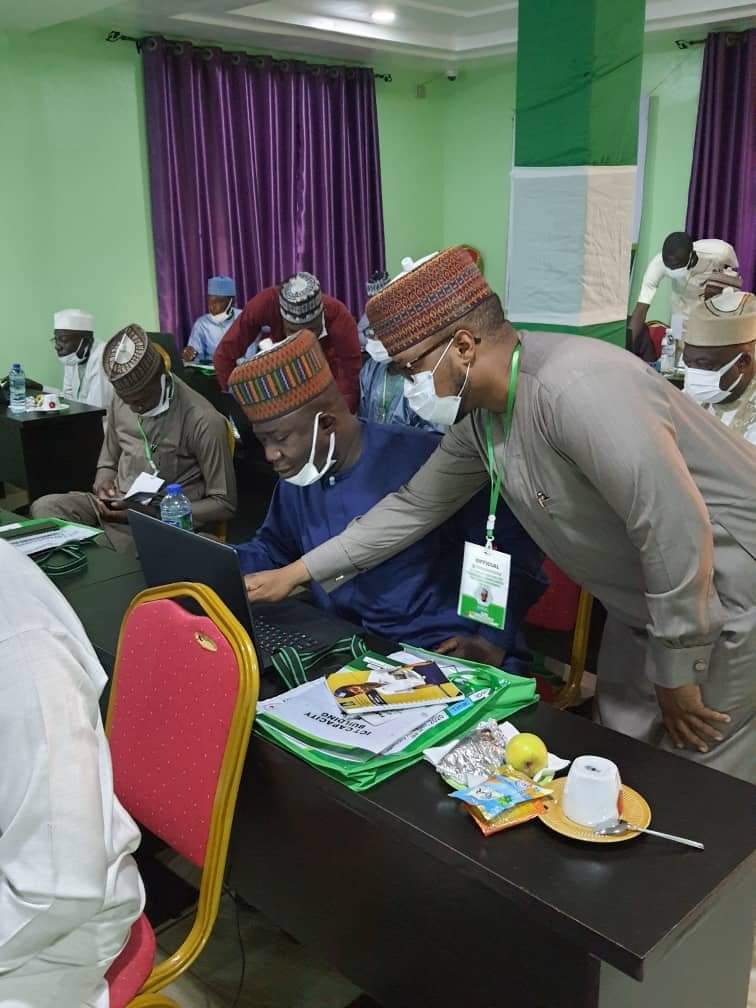
The Kebbi State Government, through the Ministry of Information and Communication Technology, has commenced the training of Commissioners and Senior Government Officials on Information and Communication Technology (ICT), towards ensuring efficiency in the civil service of the state.

Consequently, Governor Abubakar Atiku Bagudu has approved the imparting of digital skills to all categories of government operatives, from messengers to the top echelon.

Kebbi State Government was strategizing on the actualisation of an e -governance Schedule to be rolled out in 2021.

The Commissuoner for Information and Communication Technology (ICT), Hon. Abdullahi Magoro stated these while flagging off the training in Birnin Kebbi on Monday.

He said that, this is in line with the state government e- governance plan and other ICT tools that could bolster effective service delivary.

According to the Commissioner, already an ICT Capacity Building Workshop was in progress starting with Commissioners, Permanent Secretaries, Special Advisers,as well as Heads of Parastatals, Commissions and Agencies before moving on to other staff and key stakeholders of society.

He said that, Governor Atiku Bagudu has directed the Ministry, as a matter of necessity, to make digital skills available and accessible to everybody .

” It is his conviction that, kebbi state must align itself with the digital world, which is highly essential, for improved productivity in government businesses and enhanced economic prosperity,” .

” This is the first time such training is being carried out and this is because, Governor Abubakar Atiku Bagudu has identified some gaps as far as ICT skills are concerned.

‘ He has given his support to this training to ensure that everyone in government, from the top of the ladder down, is empowered with digital skills, to enable the state move forward,” he averred .

Magoro further explained that, the training was aimed at giving the citizens access to infornation about the various Ministries , Departnents and Agencies, especially on the services they are providing .

Speaking at the Workshop, the Commissioner for Lands and Housing, Abubakar Sadiq Yelwa, who was also a participant, commended Bagudu for such incisive initiative aimed at facilitating the routine conduct of government affairs.

He used the opportunity to caution users of Internet, especially youths, to be wary of fake news and avoid creating such news, but, ” to use digital technology for human progress and societal well-being.”

The Ministry of Information, Communication, Technology ( ICT), led by Magoro,organized the 4-Day Workshop.

It had in attendance Kebbi State Deputy Governor, retired Colonel Samaila Yombe Dabai, other top government functionaries, including the Special Adviser on Media to the Governor, Yahaya Sarki.

Signed
YAHAYA SARKI
Special Adviser (SA) on Media to Kebbi State Governor

FRIDAY, 18TH DECEMBER, 2020 AT COCOA CONFERENCE CENTRE, GOVERNOR’S OFFICE, AKURE

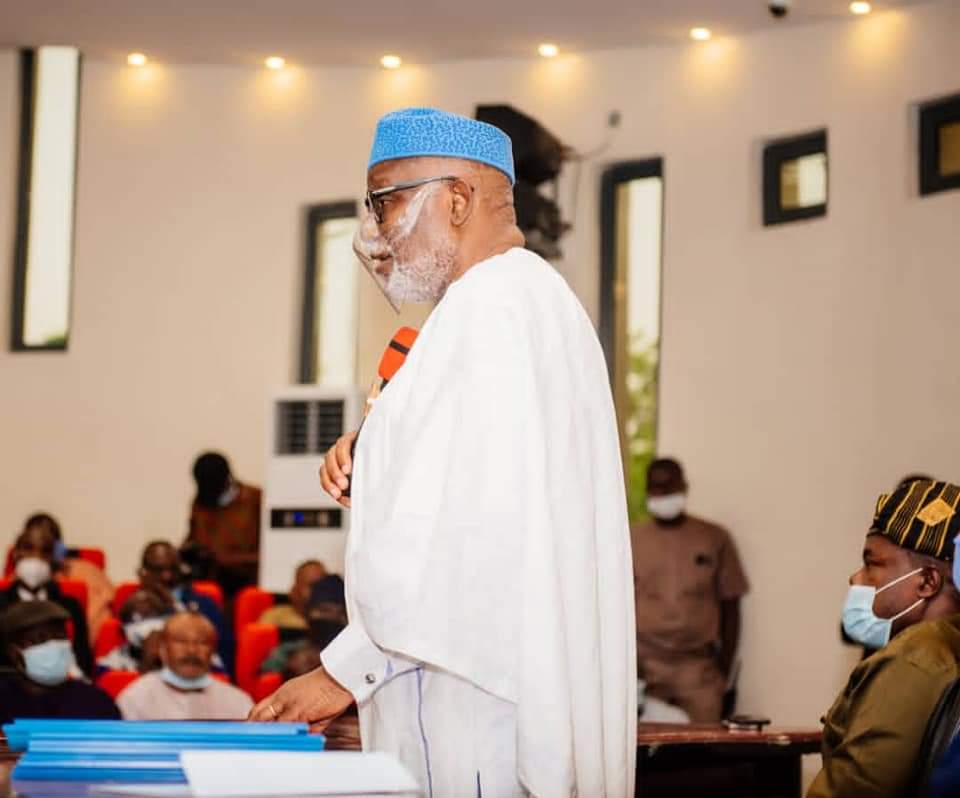
It is with great pleasure that I welcome you all to the ceremony for signing into Law the year 2021 Appropriation Bill. I should remark that the year 2021 Appropriation Law marks the last in our first term. Hence, it is with a grateful heart that I give glory to God Almighty who, in His infinite mercies, has kept us thus far and has crowned every of our efforts with success.

Ladies and gentlemen, let me use this auspicious occasion to express my appreciation to the good people of Ondo State who have stood by us in the long walk to this day. We appreciate your unwavering confidence, steadfastness, loyalty, trust and faith in us as shown in the Gubernatorial Election of 10th October, 2020 which you have used to renew our mandate for another four years.


In the course of the year, our economy was confronted with the global COVID-19 Pandemic and domestic upheaval of #EndSARS protest. Both have adversely affected our national economy. We are now confronted with low price of crude oil arising from the vagaries of the international oil market and reduced level of production both of which have invariably put our country into economic recession.

This has resulted in consistent dwindling in national revenue and its attendant reduction in allocations from the nation’s Federation Account to all tiers of government. The gains we made in the last three years in our independent revenue which have been the stabilising force in our public spending is also now being gradually wiped off. Despite all these, we have not lost hope. We have continued to update our strategies for strengthening our Internally Generated Revenue capacity without putting extra burden on the people.

The 2021 Budget, has a total Budget size of N174.873 billion. Out of this amount, N13.633 billion representing 7.8% is for Debt Service; N12.241 billion representing 7.0% is for Statutory Transfers to OSOPADEC and the 10% Share of Independent Revenue to Joint Account and Allocation Committee (JAAC) of Local Governments in the State. The sum of N79.084 billion i.e. 45.2% and N69.915 billion i.e. 40.0% are for Recurrent Expenditure and Capital Expenditure respectively.

A major principle to note about the Budget is the desire to creatively pull our economic ‘chestnut out of the fire’. Thus, the 2021 Budget will reactivate our economic life through technical and technological education. In this regard, Education has been allocated 19.07% of the Budget, while 21.19% has been set aside with a view to ensuring that all ongoing infrastructural projects across the State are completed. We will use the 2021 budget to sustain the hopes of our people. In no distant time, the Commissioner for Economic Planning and Budget will make the details of the Budget available to the public.

I will plead that we all acquaint ourselves with the Budget and position ourselves to run with the provisions as government would ensure its strict implementation. In doing this, we assure you of prudent management and accountability and this will be strengthened by the oversight function of the House.
Ladies and gentlemen, I wish to particularly appreciate Mr Speaker and all the members of Ondo State House of Assembly for scrutinising and passing the Budget proposal in record time, without compromising the integrity of the process. I also want to specially appreciate members of the House Committee on Finance and Appropriation, who, throughout the process of crafting the Budget, demonstrated uncommon sense of dedication and responsibility by painstakingly considering the details of the Budget, even at the expense of their personal conveniences, to ensure timely passage of the Appropriation Bill.
To all members of that Committee,
I say ‘Thank you’.
It is also important that I appreciate other stakeholders that were involved in
crafting this Budget, for the numerous ways you have contributed to the success story of today. My appreciation also goes to the Management and Staff of Ministry of Economic Planning and Budget ably led by the Commissioner for their dedication, patriotism and above all, innovativeness, in bringing about the changes we have witnessed in Budget crafting in the last three-and-half years.

As the year draws to a close, I wish you God’s profound peace, abiding presence and guidance in all your endeavours.
God bless you all.
Compliments of the season.

Winners have emerged at the grand finale of the Y2020 essay competition amongst students of Primary, Junior and Senior Secondary Schools in Lagos State.

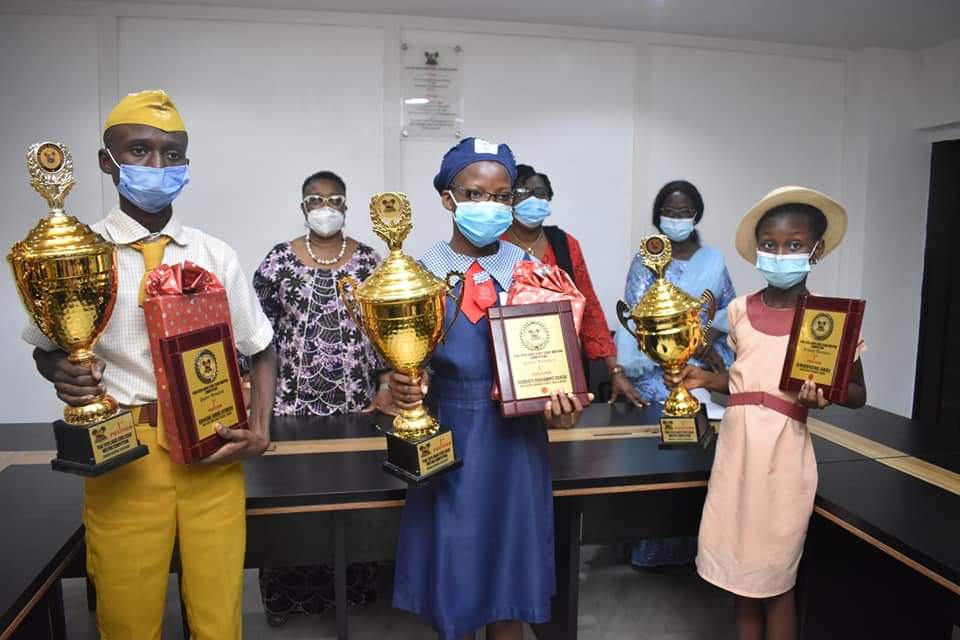
Adekola Samuel of Oke-Odo Snr. High School, Agege, Ademisoye Anuoluwapo of Egbe Junior Grammar School, Alimosho, and Omodesire Liadi of Saint Agnes Primary School, Kosofe, clinched the Star prizes in the Senior, Junior and Primary categories respectively in an award presentation ceremony held today at the Ministry of Education, Alausa, Ikeja.

Over 700 participants from all schools within the State participated at the Zonal/District Preliminaries, which thereafter presented 140 eligible competitors from the six Education Districts and SUBEB for the State finals that produced winners in the three categories.

Addressing the champions, the Honourable Commissioner for Education, Mrs. Folasade Adefisayo expressed excitement, as she commended the competitors for their brilliance and articulate delivery.

The Commissioner affirmed that the essay competition, one of the Co-Curricular programmes of the Ministry, is aimed at sharpening the research and writing skills of the students and by implication improving their vocabulary, adding that this will boost their confidence, oratory skills and in-depth knowledge of their environment.

Adefisayo observed that the writers of the essay scripts displayed “the gift of deep thought and articulate writing skills to convey ideas, communicate philosophy, recall occurrences and peep into the future, which are required in literary works”.

She encouraged the students to conduct researches on relevant topics and trending issues through online encyclopedia such as Google, Wikipedia, and other search engines, which will aid their learning process and give them a wider scope, making them digital savvy in line with the Education and Technology pillar of the T.H.E.M.E.S Agenda.

Commending the efforts of teachers, Adefisayo reiterated that the State Government will not relent in its commitment towards providing a habitable and conducive environment for teaching and learning.

Earlier in a welcome address, the Permanent Secretary, Ministry of Education, Mrs. Abosede Adelaja noted that the essay competition in schools has provided a platform for the students to strive for excellent performance in the art of writing.

Mrs. Adelaja stressed that the Ministry had to proffer new ways of engaging the students amidst the COVID-19 period, in a bid to further boost their learning which is very critical to the State Government.

She appreciated all stakeholders in the education sector and parents for their immense contributions throughout the year as there is more to be done in the coming year towards preparing a greater future for the children.

Ogueliwu Fortune of Lagos State Model Nursery/Primary School, GRA and Muhammed Aisha of Baruwa Nursery/Primary School, Mushin, emerged the 1st and 2nd runners up in the Primary School category while Olaniyan Noah of Vetland Junior Grammar School, Agege, and Nlebedim Chioma of New-Era Girls Junior Secondary School, Surulere, clinched the 1st and 2nd runners up position in the Junior Category.

In the Senior Category, Ikeh Chidera of Gbaja Girls Senior High School, Surulere and Suliamon-Oba Maryam of Adebola Baptist Senior School, Surulere, took the 1st and 2nd runners up positions respectively. Highpoints of the event were the presentation of Trophies, Plaques and gift items to the winners in the various categories.

LASG

RebuildingLagos

ForAGreaterLagos

There exists a phenomenon of female husbands in Igbo land. Sadly, a lack of understanding of the phenomenon has led some to erroneously use it to argue for the existence and acceptance of lesbian activities in ancient Africa.

Like I made known in another piece, Igbo child ownership is premised on the owner of the mother of the child. A child born by an unmarried woman belongs to her father. A child born out of wedlock by a married woman, belongs to her husband. A child born to a slave woman, belongs to her owner.

Just as a man can own a slave, a woman can also own a slave. The implication is that a child born to the slave of a woman belongs to her. The exact same thing you saw Sarah, Rachael and Leah do, in giving out their slaves to bear children in their name, is obtainable in Igbo land. A married woman having difficulties bearing children can hand her maid over to her husband to bear children in her name.

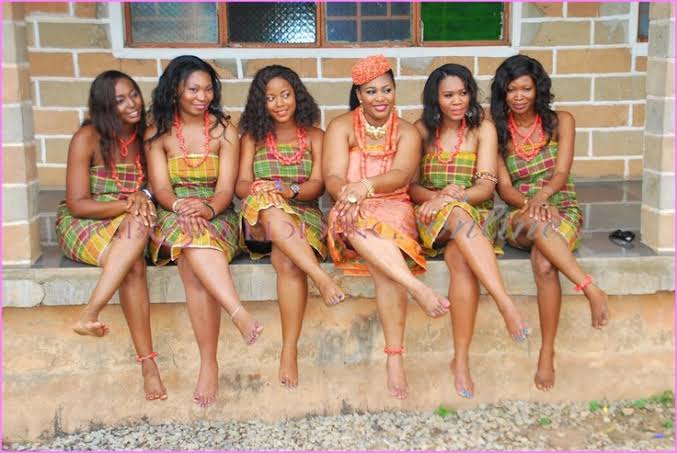
Based on this principle of having a child by owning the mother of the child, women were allowed to ‘own’ another woman with childbearing ability. However, getting this woman of childbearing ability was not a slave market purchase. The woman became part and parcel of her madam’s family by induction through marriage. She is married into the family like every other woman married into the family. She possesses all rights women married into that family possess and her own family of birth are treated as in-laws.

Such marriages are initiated by women who decided not to marry because their fathers had no male son to continue the family lineage. So, they get women who give birth in the name of their father. The other set of women who engage in this are older widows who were and are unable to have children, yet want to leave a name for their late husbands. The idea is not for the woman married to breed kids by prostituting herself. The idea is for her to attach herself to just one man. So, why playing the role of a concubine to the man, he fathers children for her that will never be counted as his. It should be noted that in these present days, many women married for this purpose prefer to be free ranging.

You can see that there is nothing about lesbianism in this arrangement. So, you can see how mischievous it is to use this to argue for ancient presence of lesbianism in Africa. Those who use this to argue for lesbianism argue that you cannot say what happens in the room when both the female husband and her wife are together. That is silly! It is like arguing for homosexuality amongst the men by saying you don’t know what happens when a master and his slave are in the same room.

Firstly, an abomination is no less an abomination because it was done with a slave. A master does not have the right to commit abomination with a slave. A female husband secures no right to abomination because it involves a woman she married. No! If they ever have a lesbian relationship it will not be because of the marriage; and it will highly be a secret affair like in a case of incest or bestiality. Secondly, in Igbo land of yore, sex was a night thing; and husbands and wives do not reside within same roof. So, a woman passing the night in the house of her female husband is unlikely.

This practice is fast dying for reasons that owe much to modernity. Today’s mindset does not see legacy in children, but legacy in an individual’s contribution to society. However, memories of this practice need not die but be archived for historical purposes. They are pointers to who we are… the people of the book!

Ike Eluigwe

Chief Audu Ogbeh, immediate past minister of agriculture and chairman, ACF, was recently quoted as saying that politics is the only industry in Northern Nigeria. His statement intrigues me for two reasons. One, I have often wondered why the north which has ruled the country longer than all the other regions put together is in dire straits. If it is only the industry, then it must be an industry that has failed disastrously.

Two, his statement reminds me of the famous statement made long ago by the late Alhaji Yusuf Maitama Sule. He said: “The northerners are endowed … with leadership qualities. The Yoruba man knows how to earn a living and has diplomatic qualities. The Igbo is gifted in commerce, trade… God so created us individually for a purpose. Others are created as kings, servants. We all need each other. If there are no followers, a king will not exist.”

I am not sure he spoke for the almighty but his statement, obviously provocative at the time it was made, was an attempt to promote the right of the north, for which read, Hausa/Fulani, to rule while the Yoruba and the Igbo respectively carry on with their divine assignments of earning a living and diplomacy and engaging in commerce and trade. If the man upstairs had not meant it to be so, he would not have given these tribes their special qualities. If each tribe sticks to its divine assignment, things would work well in Nigeria and for Nigerians because every tribe would mind its own business and in doing so, contribute to the peace and development of the country.

What Sule said was fiction and utter nonsense of course. But it has sat on the psyche of the north for so long that it has gradually acquired something close to divine imprimatur; or more correctly, an exclusive political industry nurtured by a warped psyche and sustained by a political engineering that has put the north at the head but left it hollow. Power, political power, matters to the north because it is the only thing that matters. I have heard it argued with some passion that since the north could not compete in money-making ventures with the Yoruba and in commerce and trade with the Igbo, it is only fair that for it to be a major player on the national stage, it must hold on to the reign of power.

The late Chief Richard Akinjide once kindly invited me to breakfast in his London home many years ago. In the course of our conversation, he said, and he said it with biting contempt, that every stupid northerner, no matter how ill-prepared for leadership he may be, wants to be head of state. “And this,” he underlined it, “for no better reason than that he is a northerner and would always count on the full support of fellow northerners. No northerner I know disagrees with this provocative notion that his right to rule was given from above.”

Our conversation then shifted to a critical point: what has the north done with power or leadership? It is an important question. Northerners hate to address it. But however much we tend to shy away from it, there is no hiding the fact that politics as a northern industry is a failed industry. It has failed where it matters most: lifting the people from illiteracy, poverty and mind-boggling squalor. It only offers seasonal employment to young men as political thugs in election seasons. When the elections are over, the job ends and the young men find themselves right back where they were until another election season rolls by.

Northern Nigeria is merely an also-run in all the indices of social and economic development. About 80 per cent of about 14 million children out of school are in the north. It took a southerner, President Goodluck Jonathan, to appreciate the damage the north is doing to its young people through the trado-religious almajirai system. Worried about the future of these children who beg to sustain their teachers, he built a number of schools specifically for them. The schools are not functioning because the northern leaders simply sabotaged them and the noble intentions of the former president came to nought. When the Covid-19 hit the country, the almajirai were shipped from one state to another because they were deemed to be the responsibilities of their home states. No state governor would be the keeper of the almajirai who were not indigenes of his state. It was a pathetic abdication of responsibility. Toying with the fate of young people is unpardonable political rascality. Is this the correct use of politics as an industry?

In the times before these when Nigeria was an agrarian economy, the north, with its vast arable land and well-honed tradition of agriculture was the food basket of the nation. Our country’s food needs were met largely by northern peasant farmers. Northern cattle, sheep and goats provided the meat needs of the nation. The groundnut pyramids in Kano might be a fading distant memory today but they celebrated northern agricultural ingenuity. Today, what does the north contribute to the national economy? Ask the politicians who run politics as an industry in the north. Southerners generally regard the north as a parasite and a drag on national development. You cannot blame them.

None of the 19 states in the north is able to meet its basic obligations such as the payment of the salaries of civil servants and the pension of retired civil servants. They are comprehensively poor and impoverished. The difference between the northern states and the southern states in terms of resources and human development is clear. The south is soaring in modern development and the north is sinking in under-development. All the northern states must wait for the monthly handouts from the federation account. Obviously, politics as an industry in the north is not booming. It is sterile. Never mind the fine babban riguna won by our political leaders, strutting the political stage in fine examples of conspicuous consumption. Things are not what they want us to believe.

Nigeria, as you know, is the poverty capital of the world. Northern Nigeria is a major contributor to our national level of poverty. The rate of poverty is as follows: 77.7% in the north-west; 76.3% in the north-east and 67.5% in north-central. The fault lies with the managers of the political industry. An industry should yield better dividends than these.

Two scholars, professors Aslam Khan and Lawan Cheri, undertook a study in which they homed in on poverty in the north. In the report titled An Examination of Poverty as the Foundation of Crisis in Northern Nigeria, they wrote:

“Northern Nigeria is a region that contradicts its natural endowments. Despite the existence of many economic resources such as tin, kaolin, a variety of agricultural products and a huge fertile land, the people remain in abject poverty leading to a plethora of crisis in forms of insurgency, electoral violence and crime. …Northern Nigeria becomes a hub of joblessness, crime, illiteracy, maternal mortality and terrorism.”

This is what politics as an industry has done to the north.
Weep, brother.

-BY DAN AGBESE