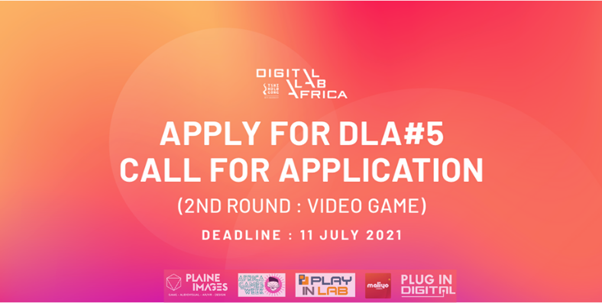
Video Game category is now open to all prototypes/concepts of video games for any type of device

The second phase of the Digital Lab Africa (DLA) call for applications is now open after a successful first phase for animation and immersive experience categories. The focus of this phase is on Video Games. The destabilising impact of the pandemic on the music and digital art sectors has been such that the inclusion of these two categories has been set to resume in 2022.

Applications for the Video Game category opened on 11 June and will close on 11 July 2021.

In 2020, DLA received more than 500 applications from over 32 countries. For its fifth edition, Digital Lab Africa has switched to a fully online format. The online incubation which will take place between September 2021 and March 2022 is enabled by our partners, Plaine Images, Play in Lab, Africa Games Week, Maliyo Games and Plug in Digital. The incubation will include expert mentorship, playtest and marketing workshops, masterclasses, participation in Demo Day pitches and Industry related events.                    

WHO CAN APPLY: The DLA#5 call for application is open to anyone from the field of digital content creation: artists, producers, designers, start-ups, SMEs, collectives, students or entrepreneurs, living in or native of a Sub-Saharan African country. The Video Game category is open to all prototypes/concepts of video games for any type of device (smartphone, computer, console etc.). Video game projects with creative storytelling/experience and using innovative technologies will be considered first. All types of games are accepted: casual games, adventure, platform, social gaming, strategy, e-sport etc.

TO APPLY, VISIT: http://digilabafrica.com/submit-a-project/

1. Complete and submit the online form directly from this link: https://forms.gle/TwQkvT45BpY4c9ez9

2. Send your application documents by email to: applications@digilabafrica.com

Application deadline for the 2nd phase: 11 July 2021

While not available this year at DLA, music and digital art will remain a key feature at the Fak’ugesi Digital innovation Festival. Stay on the lookout for 2021 Fak’ugesi programme announcement on the 22 June which will also be published on the Fak’ugesi website at: www.fakugesi.co.za

Ends.


About Digital Lab Africa

Created in 2016, Digital Lab Africa is an initiative of the French Institute and the French Embassy in South Africa, managed by the South African innovation hub Tshimologong Digital Innovation Precinct since 2018. Digital Lab Africa (DLA) is the first platform dedicated to creative content (immersive experience, video game, animation, music, digital art) linked with innovation in Africa. The very idea of DLA is to incubate emerging talent by offering them a springboard to fast track their projects development with the support and expertise of DLA creative industries ecosystem in France and in Sub-Saharan African countries.

https://digilabafrica.com/

Since the beginning of the programme, 36 projects from Democratic Republic of Congo, Eswatini, Ethiopia, Ghana, Ivory Coast, Kenya, Mali, Mozambique, Nigeria, South Africa, Zimbabwe and Zambia have been awarded and incubated by DLA.

More about DLA#1 winners

More about DLA#2 winners

More about DLA#3 winners

More about DLA#4 winners

ABOUT TSHIMOLOGONG DIGITAL INNOVATION PRECINCT AND THE DIGITAL CONTENT HUB (DCH):

Founded in September of 2016, as a Wits University investment in the tech and digital future of South Africa and the continent, Tshimologong Digital Innovation Precinct works with academia, corporates, international agencies and government across all spheres to unearth, upskill and promote digital talent. Tshimologong Precinct focusses its efforts in three areas: incubation of enterprises, digital skills training and creating a marketplace for start-ups.

Driven by common goals, including the desire to combine technology, innovation and creative content, Tshimologong and the French Embassy in South Africa have joined forces to create a Digital Content Hub (DCH) – and integrate and sustain the existing Digital Lab Africa Programme – the first support programming for the production of digital content across sub-Saharan Africa initiated in 2016 by the French Embassy in South Africa. The DCH is the first project from cultural industries in Africa to have obtained funding from the Agence française de développement (AFD) since the extension of their mandate to these sectors.

https://tshimologong.joburg/

A concerning number of South African companies are not prepared for the inevitability of a cyberattack despite the significant financial and reputational risks, according to Ryan Mer, Managing Director, eftsure Africa, a Know Your Payee™ (KYP) platform provider.

“Too few senior managers view cybersecurity as a business problem and not just a technology problem. The reality is cybersecurity is very much a business consideration. CEOs and CFOs will eventually face critical questions such as: How much money do we spend on cybersecurity? Do we change key processes? How do we create awareness and change company culture? Do we put security ahead of operational functionality? What is the role of internal processes and staff on data security and integrity?”, he says.

Mer adds that because cybersecurity is a business-wide risk it requires more than isolated activities to be addressed. “This is where the role of a Chief Information Security Officer (CISO) is important. The CISO therefore needs to have technical and security skills and competencies, but equally as important, should understand the finance function, operations of the business, and have the business as well as communication skills to effectively create this span.”

While large corporates are more likely to have the resources to fill the CISO role, businesses below the corporate level may not. In such instances, Mer says an outsourced or CISO-as-a-service offering could add immense value. “Ultimately, and especially in relation to the Protection of Personal Information (POPI) Act, there needs to be a coherent strategy and allocated responsibility in place with respect to cybersecurity, data management, compliance and fraud prevention.”

He adds that in the absence of commonplace and well-developed CISO roles, it is the CFO who should lead the way in addressing cybersecurity concerns, particularly in smaller organisations. “It is potentially disastrous for the finance team to be ignorant of cyber risk. Attackers can target many areas of an organisation, but the dangers are usually measured in financial terms: CFOs cannot ignore cybersecurity simply because it is a complex issue outside their area of expertise.”

In addition to having the skills and oversight necessary to take a broad and long-term view of the potential financial impact of an attack, Mer says the CFO is one of the most natural custodians of data, from collection to its ongoing management. “Attacks will very often target the finance department and its team members directly, and in many instances may even be perpetrated by or assisted by internal team members, in attempts to steal and defraud the business. CFOs need to ensure their own vulnerabilities are both understood, and urgently addressed.”

Following the Senate investigative hearing which gave the Fifth Generation (5G) technology a clean bill of health, the Nigerian Communications Commission (NCC) has taken a major proactive regulatory step by inaugurating a committee to develop the Information Memorandum (IM) for the auction of 3.5 gigahertz (GHz) spectrum band which will be used for early deployment of 5G services in the country.

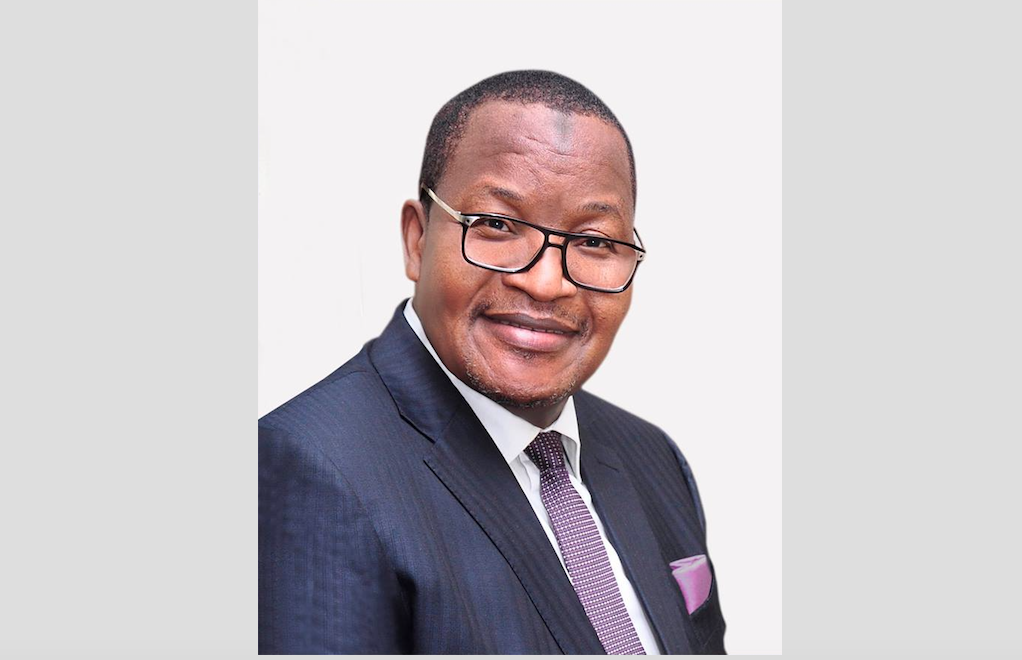
The Executive Vice Chairman (EVC) and Chief Executive Officer (CEO) of NCC, Prof. Umar Garba Danbatta, recently inaugurated the 18-member Committee in Abuja, with NCC’s Executive Commissioner, Technical Services, Ubale Maska as Auction Adviser while the Director, Spectrum Administration, NCC, Oluwatoyin Asaju, is the Committee Chairman.

Speaking during the inauguration, Danbatta said, apart from developing the IM for auctioning of C-band spectrum for 5G deployment in Nigeria, the Terms of Reference (ToR) of the committee will include the development of an award process to be used pursuant to which the grant of Spectrum licenses may be made.

The Information Memorandum (IM) defines the process that the Commission has decided to adopt for the auctioning of the 3.5GHz spectrum band. It will provide information on the Nigerian telecommunications market, details of the Spectrum to be made available, the pre-qualification process, the Auction process and indicative timetable. 

Other ToRs reeled out for the committee by Danbatta include the auctioning of the C-band spectrum for 5G deployment in Nigeria in line with the award process; as well as report regularly/fortnightly to the EVC through the Office of the Executive Commissioner, Technical Services of the Commission on the progress made by the Committee.

While expressing delight at the current stage of 5G deployment process in Nigeria, especially with respect to established mutual understanding among stakeholders that 5G service poses neither security nor health risk to users, Danbatta said the outcome of the work of the Committee is a major step towards realisation of 5G services in Nigeria.

According to him, the NCC, in line with its mandate, has committed enormous resources to ensure harmonised spectrum is secured and released in a timely manner for present and future deployment of services that will underpin the fourth industrial revolution, including International Mobile Telecommunication (IMT-2020) services.

This, according to him, is in recognition of relevant provisions of the Nigerian Communication Act (NCA-2003) and its strategic plan for effective communications resource management, facilitating broadband penetration and improving Quality of Service (QoS) amongst others.

Speaking further, the EVC said the Commission had ensured the participation of relevant staff in international fora, especially in the International Telecommunication Union Radio Telecommunication Sector (ITU-R) study groups, to enable the allocation of strategic Spectrum to IMT services, especially IMT 2020, which, he said, has been in the front burner in the last two ITU-R study cycles towards World Radio Communication Conference (WRC-15 & WRC-19).

“Arising from these efforts, which include engagements with relevant governmental and non-governmental organisations during preparatory meetings at National, Regional and Continental level, we have been able to secure harmonised frequencies for 5G deployment in Nigeria,” he said.

He, however, stated where NCC desired premium spectrum like the 3.5GHz with good propagation characteristics suitable for capacity and coverage with good device ecosystem but did not have sufficient allocation, “we put in extra efforts and secured additional 160MHz in the 3.5GHz band by making huge commitment of resources to secure additional Spectrum from Nigerian Communication Satellite Limited (NigComSat),” culminating in a recent Memorandum of Understanding (MoU) between NCC and NigComSat.

“Having put in these efforts and resources to secure, amongst others, contiguous Spectrum in a premium band like the 3.5GHz band that is being adopted as the best Spectrum for early deployment of 5G with about 70 per cent of 5G global deployment so far, it has become imperative to immediately re-purpose the 3.5GHz band in Nigeria for auction in accordance with best practices.

“In view of this, Danbatta said NCC Management deemed it necessary to constitute the committee with clear ToRs, adding that the committee members are expected to demonstrate strong commitment required to carry out these tasks and in a timely manner,” he said.

Meanwhile, Danbatta stated that even though some successful auctions have been conducted by the Commission in the past, “extra effort is required of us to ensure the success of this particular exercise since the 5G technology is just being adopted around the globe.”

The EVC tasked the committee to consider benchmarking its activities against other countries where 5G has been successfully deployed through successful auction of relevant spectrum band like 3.5GHz.

In his remarks, Asaju as the Chairman of the Committee, amplified the EVC’s voice on the MoU with NigComSat. Asaju stated that the Commission had, in line with the NCA- 2003, filled request for bulk allocation of 380 MHz bandwidth (3.52 – 3.9) GHz in the 3.5 GHz band from National Frequency Management Council (NFMC).

While assuring the EVC of the Committee’s readiness to deliver on its ToR, Asaju said the outcome of the actions will, no doubt, form the basis and put NCC on right pedestal for 5G deployment in Nigeria.

The Executive Commissioner, Technical Services of the Commission, Engr Ubale Maska, who doubles as the Auction Adviser, assured the EVC that the Committee will deliver on its mandate, noting, however, that work of the Committee is without prejudice to the approval of the National Frequency Management Council (NFMC), which, he said, must be in place before 5G deployment can take commence in the country.

Foodline, an indigenous eCommerce and food ordering app firm based in Surulere, Lagos State has encouraged restaurants and hotels in the state to take advantage of their growing presence and popularity in the online space to sign up in their newly launched mobile app. The mobile app has been described as a welcomed development in the ever-changing hospitality industry.

Speaking to the media, the founder and chief executive officer of Foodline, Mike Ekeghe in his chat with the media said that “The idea to create the mobile app  was birthed over a year ago while I was working on the Island and did not have time to go out for lunch and specifically was looking for a way to order food from specific caterers. Every day, people all over big cities like Lagos struggle with their daily food purchases. They experience difficulty getting prepared food and drinks. Food Line solves this problem. Our app is an e-commerce app in which users can sign in as either a customer or a seller, and the users that sign up as sellers can sell their items to prospective paying customers.”

Not to enjoy the growing popularity alone, the company said that as a startup firm that they are very open to investment and partnership opportunities from outside. Mike added that “Because I feel the platform can be a good investment for potential investors and also provide more channels for further expansion into other territories. We strongly believe in the huge potentials of the Nigerian market, we are looking at expansion, we have to be in other cities like Port Harcourt, Onitsha etc. and this is where we need investors. “

Available in various playstores such as Google and Apple for downloads, the mobile app has gotten positive reviews from Nigerians using it ranging from four stars to five stars with over a thousand downloads. In the words of the founder her quipped that they are planning to expand to other cities in the countries “ we plan expanding to Abuja, Ibadan, Enugu, Owerri and Port Harcourt but we are taking it one step at a time, that is why we need investors to be with us on this journey. Paucity of funds has hampered this expansion project but we will get there as the year goes by. “

Mike appealed that the government interventionist agencies should do better and improve on their activities as it regards to startups in the country. “I believe that Government can do better. They might not be focusing on startups like us especially in the IT ecosystem, by I strongly advise them to look at our angle, though they have been trying through capacity building, interventions and policy statement but they can do better”. He concluded.  

ANTHONY NWOSU

Sartup firm that they are very open to investment and partnership opportunities from outside. Mike added that “Because I feel the platform can be a good investment for potential investors and also provide more channels for further expansion into other territories. We strongly believe in the huge potentials of the Nigerian market, we are looking at expansion, we have to be in other cities like Port Harcourt, Onitsha etc. and this is where we need investors. “

Because I have been the subject of much hostility for standing up for LGBTQ rights in Nigeria, I found myself being very defensive at being labeled ‘trans phobic.’ My first thought was – how could anyone think that?

I didn’t like that version of myself. It felt like a white person saying ‘I’m not racist, I supported civil rights.’

Because the truth is that I do think one can be trans phobic while generally supporting LGBTQ rights.

And so I want to put my defensiveness aside and clarify my thoughts. To make sure that I am fully understood.

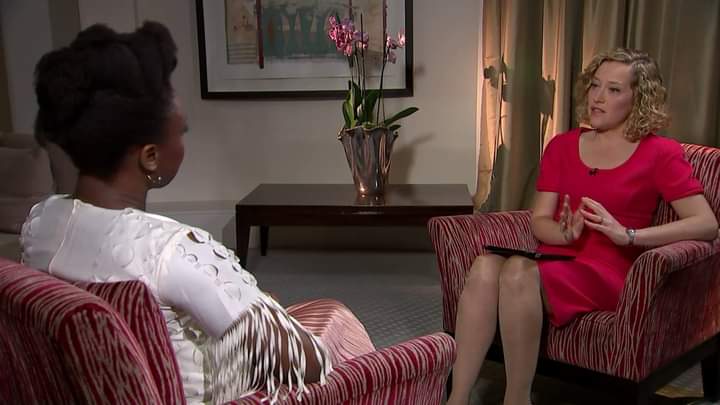
I said, in an interview, that trans women are trans women, that they are people who, having been born male, benefited from the privileges that the world affords men, and that we should not say that the experience of women born female is the same as the experience of trans women.

This upset many people, and I consider their concerns to be valid. I realize that I occupy this strange position of being a ‘voice’ for gender rights and so there is an automatic import to my words.

I think the impulse to say that trans women are women just like women born female are women comes from a need to make trans issues mainstream. Because by making them mainstream, we might reduce the many oppressions they experience.

But it feels disingenuous to me. The intent is a good one but the strategy feels untrue. Diversity does not have to mean division.

Because we can oppose violence against trans women while also acknowledging differences. Because we should be able to acknowledge differences while also being supportive. Because we do not have to insist, in the name of being supportive, that everything is the same. Because we run the risk of reducing gender to a single, essentialist thing.

Perhaps I should have said trans women are trans women and cis women are cis women and all are women. Except that ‘cis’ is not an organic part of my vocabulary. And would probably not be understood by a majority of people. Because saying ‘trans’ and ‘cis’ acknowledges that there is a distinction between women born female and women who transition, without elevating one or the other, which was my point.

I have and will continue to stand up for the rights of transgender people. Not merely because of the violence they experience but because they are equal human beings deserving to be what they are.

I see how my saying that we should not conflate the gender experiences of trans women with that of women born female could appear as if I was suggesting that one experience is more important than the other. Or that the experiences of trans women are less valid than those of women born female. I do not think so at all – I know that trans women can be vulnerable in ways that women born female are not. This, again, is a reason to not deny the differences.

Why does this even matter?

Because at issue is gender.

Gender is a problem not because of how we look or how we identify or how we feel but because of how the world treats us.

Girls are socialized in ways that are harmful to their sense of self – to reduce themselves, to cater to the egos of men, to think of their bodies as repositories of shame. As adult women, many struggle to overcome, to unlearn, much of that social conditioning.

A trans woman is a person born male and a person who, before transitioning, was treated as male by the world. Which means that they experienced the privileges that the world accords men. This does not dismiss the pain of gender confusion or the difficult complexities of how they felt living in bodies not their own.

Because the truth about societal privilege is that it isn’t about how you feel. (Anti-racist white people still benefit from race privilege in the United States). It is about how the world treats you, about the subtle and not so subtle things that you internalize and absorb.

This is not to say that trans women did not undergo difficulties as boys. But they did not undergo those particular difficulties specific to being born female, and this matters because those experiences shape how adult women born female interact with the world.

And because to be human is to be a complex amalgam of your experiences, it is disingenuous to say that their being born male has no effect on their experience of gender as trans women.

Of course there are individual differences. But there are always individual differences. We speak of ‘women’s issues’ knowing that while there are individual differences, the truth of human history is that women as a group have been treated as subordinate to men. And we speak of male privilege acknowledging that individual men differ but that men as a group are nevertheless accorded privileges by the world.

I think of feminism as Feminisms. Race and class shape our experience of gender. Sexuality shapes our experience of gender. And so when I say that I think trans women are trans women, it is not to diminish or exclude trans women but to say that we cannot insist – no matter how good our intentions – that they are the same as women born female.

Nor do I think that we need to insist that both are the same.

To acknowledge different experiences is to start to move towards more fluid – and therefore more honest and true to the real world – conceptions of gender.

~CNA

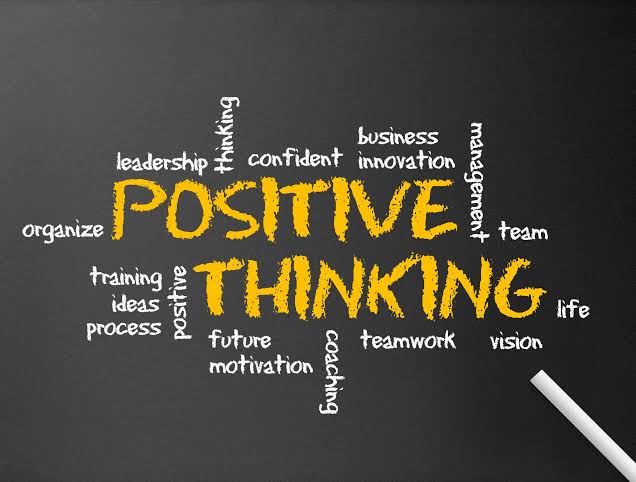
The need to be positive minded is one thing that every Christian must know. It is important to also note that there is power in spoken words. That means that in every situation we must have a positive outlook in life.

As we keep speaking what us right all the time we accumulate it. It is like having a savings account, when we keep talking positive word then it grows and keep manifesting in one’s life. In acts of apostles chapter 19 it demonstrates this.

The big question is what is positive minded. As a positive-minded person, you look for solutions instead of problems. You will see the bright side of life and stop focusing on things you can’t control.

According to Tony Robins he defined it “Positive thinking is an emotional and mental attitude that focuses on the good and expects results that will benefit you. It’s about anticipating happiness, health and success – essentially, training yourself to adopt an abundance mindset and cultivate gratitude for your own successes and those of others.”

So let’s bring it back to Christianity, we must know that we can do everything through Christ our Lord. There is power in spoken words and this must always have in mind.

Most times men are bothered over frivolities such as rents , fees etc, yes these things are crucial in life but when was the last time you told that your wife “I love you” when was the last time you appreciated her beauty and consistency! That is positive words .

As a child of God, there is no need to have a negative word come out if your mind. A lot of Christians go to Facebook and social media to talk anyhow but that is wrong . If a brother is making mistake , correct him nicely and not going to Facebook or something and start talking. That is totally wrong…

We must know that there is no shirt cut in life unless you are positive minded. If you are not positive minded, forget it ! You can’t scale ! You can’t progress ! You must always have a positive outlook. As a Christian don’t plan evil against anyone ! Ever ever scheme to hurt people that is negativity

Romans 4 vs 17 – 18 said I have made you a father if many nation in the presence of him who he relived…. This was the position of God while addressing Abraham , Abraham keyed into that ! He was positive towards that and that is what it is !

You must always see positive things about yourself and others. I have waited for God for 12 yrs with my wife before the kids came and I never for one day made a jest of my wife that she was barren. But today I have twins. That is a demonstration of positive outlook in life and to God !

Most times it’s very difficult for us today to maintain a positive outlook but we must try to look at life from positive angle.

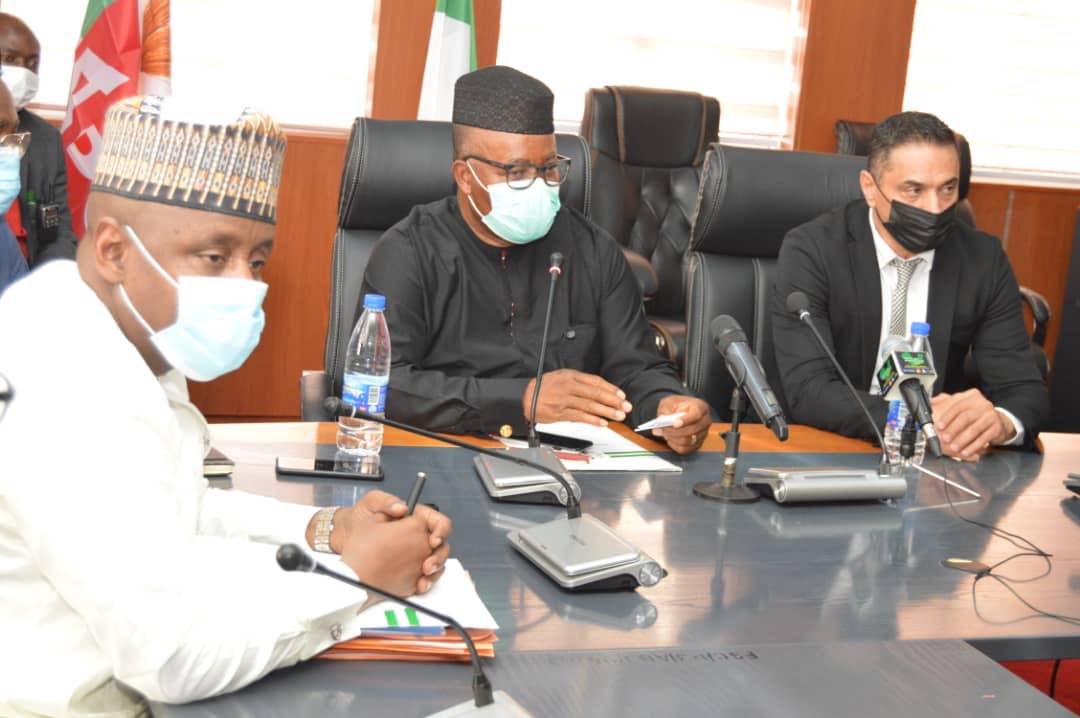
The Honourable Minister, Ministry of Niger Delta Affairs, Senator Godswill Akpabio, CON, stated that President Muhammadu Buhari has directed Reynolds Construction Company (RCC) to undertake immediate intervention on the damaged Aleto Bridge at KM 6+500 on the East-West road Section III(A) by Eleme, Onne Junction to alleviate the plight of motorists and reduce the sufferings of the people.

The Minister made this statement during an emergency meeting held with contractors handling the various sections of the East-West road on Thursday 17th June, 2021, in his office in Abuja.

Sen. Akpabio assured the people of the Niger Delta region that remedial solution would be provided within the next 48 hours to assist the people to move freely and other concerns raised will be addressed to fast track the completion of the road as scheduled.

According to the Minister, “the construction of the road which started in 2006 was abandoned for about six years due to human and natural challenges, but since my resumption in office in 2019 the present administration which is problem solving government has mobilized resources to ensure that the East-West road is completed and commissioned by 2022”.

Speaking further, Sen. Akpabio noted that various sections of the road which have been in limbo over the years have attained various levels of completion and would be due for commissioning by Mr. President soon, affirming, that issue of compensation would be addressed in no time.

He noted that the Ministry had also undertaken the construction of other roads which include Okpuala Igwurunta road Phase 1 in Imo State, Ndemili road in Delta State, Umueze road in Rivers State and Otuo Afuze road in Edo State that have been completed and ready for commissioning.

In his remarks, the Permanent Secretary, MNDA, Dr. Babayo Ardo reaffirmed that the Ministry have been working on the East-West road for the past 2 years and all efforts have been geared towards the completion and commissioning of the road before the end of the first quarter of 2022 as directed by the President.

The Managing Director, RCC Nigeria Limited, Engineer Nader Yusuf in his remarks, stated that there are insinuations that sand mining around the river bank affected the foundation of the Aleto Bridge.

He explained that the Engineers are expected to ascertain the real cause of the damage and carry out concrete repairs to aid free flow of traffic on the affected portions of the road. Engr. Yusuf however, assured the Minister that Engineers would move to site immediately to make the road motorable for road users.


Deworitshe Patricia

Relationships are what make us humans – arguably. After all, no man is an island. Relationships are the foundation for opportunities regardless of the setting. With that said, investing time and being intentional about relationships will go a long way in unlocking doors that may have otherwise been forever closed.

So, how do you build your business relationships?

Re-Establishing Contact
There could be several contacts that you have not stayed in touch with for a long time, especially due to the onset of the pandemic. Now, thanks to technology, it is much easier and faster to re-engage them. Reach out to old contacts and genuinely find out how they are fairing on. You could offer to assist where you can.

Shared Values
It is important that you are aligned with the people you intend to connect with. This will save you time and also set you up for mutual conversations. You will both benefit a lot from each other if your values are aligned.

Promises
In a casual setting, they say that promises are made to be broken. However, when it comes to building business relationships, each broken promise equals to some loss of trust. This eventually leads to falling part. Keep your promises.

Give More Than You Receive
As in any other type of relationships, a business relationship will likely thrive if you are willing to position yourself as part of the solution. Think outside the box and focus on how you can be of help to a given situation. This will likely position yourself as a valuable asset.

Network
If you are thirsty, you will have to reach out to the tap. The tap will not come to you. And so are business relationships. To build them, you will have to go where they are. LinkedIn is your first stop. Join groups such The Afrijob Community Group, where you will meet like-minded people.

AFRIJOBS

South Africa will again have a big presence at this year’s online edition of Annecy/MIFA International Animation Film Festival which will be taking place from 14 to 19 June 2021. NFVF, Animation SA, Tshimologong Animation Academy, Digital Lab Africa, Triggerfish Animations Studios, the French Institute of South Africa and many other delegates will represent the country under the Africa 2020 Season which was postponed to 2021 due to COVID 19.

This year’s festival offers diverse programming that includes South African films in the official programme, pitch sessions and a series of webinars that tackle successes and challenges in the Animation industry in Africa.

Four South African films will be screened as part of the official selection:

  • “Cause of Death” directed by Jyoti Mistry
  • “Do Not Drop the Goose” directed by Jurie Visagie
  • “I am Chuma” directed by Wendy Spinks, Clea Mallinson
  • “Twende” – “Smoothie Operator” directed by Mike Scott

A big congratulations to all the films in the official selection.

Triggerfish Animation Studios will receive the MIFA Animation Industry Award for their work, alongside a strong focus on the studio’s history and plans for the future.

In this year of celebrating African animation, we wanted to extol the work of an African studio, a genuine trail-blazer of animation in its home country. Its journey in just a few years resulted in the production and shooting of series and feature films which have already earned a constellation of prizes. The studio has helped train talent in South Africa and throughout the African continent, structuring an industry to give all its professionals support. We are overjoyed to bestow this prize on Triggerfish Animation Studios. Congratulations to Stuart Forrest and his entire team!” said Véronique Encrenaz, Head of MIFA.

Triggerfish’s team was also invited to co-host the Women in Animation Summit, with several conferences and masterclasses including many talented creatives from the Continent.

Cape Town International Animation Festival (CTIAF) – The Road to Annecy winners, well-known Loyiso Mkize and his “Team Kwezi” will be representing South Africa in the Africa Focus Pitch Session with for their animated adaptation of their superhero comic, Kwezi.

Lesley Donna Williams, Tshimologong’s CEO, will be part of a panel discussion to discuss, “Understanding African animation”.

Digital Lab Africa (DLA) will introduce their latest projects from 2020 as well as the 2021 winners in the animation category. DLA will also host a closed coaching session with the Annecy team.

The National Film and Video Foundation will be hosting a national pavilion for the South African animation industry and other activities such as:

  • A South African Territory focus where emerging talent in the animation industry will be showcasing their projects from the Tshimologong Animation Skills Academy Pitching Incubation.
  • French Institute of South Africa, Les Gobelins School in partnership with Diprente and Tshimologong Animation Academy will be announcing their new platform for emerging African talent “Bridges” which is a series made up of ten original short films of one-minute each.
  • The South African delegation will be led by Animation South Africa to represent some of the best projects from our country.

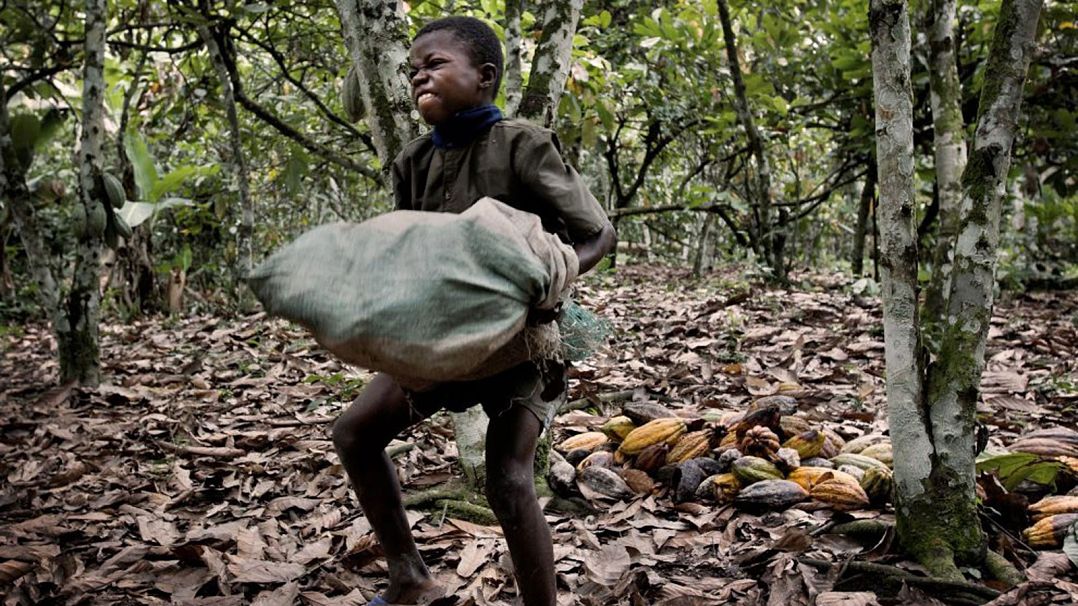
The Federal Government has created an enabling environment for the fight against Child Labour through the ratification and adoption of key International Labour Organization (ILO) Conventions.

Minister for Labour and Employment, Dr Chris Ngige, stated this in Abuja as he briefed the media, as part of activities lined up for the commemoration of the 2021 World Day Against Child Labour.

He noted that Government had also approved a number of policy documents on Child Labour, and ratified and domesticated International Conventions against child labour, as well as adopted other measures.

He disclosed that in the fight against child labour, Government was however battling with some challenges, such as “poverty, cultural/religious factors, poor education system, inadequate social protection strategy, and wrong perception/ignorance of the effect of child labour a d wrong or misinterpretation of the Almajiti system etc.”

The key International Conventions include Elimination of the Worst Forms of Child Labour Convention No. 182 (1999), Minimum Age Convention No. 138 (1970), Optional Protocol to the CRC on the Sale of Children, Child Prostitution and Child Pornography (2000), among others.

Ngige explained that the National Policy documents on Child Labour, approved by Government, are National Policy on Child Labour; National Action Plan for the Elimination of Child Labour in Nigeria, and A Comprehensive List of Hazardous Work.

According to him, the ratified and domesticated International Conventions against Child Labour include ILO Convention for the Elimination of the Worst Forms of Child Labour No. 182 (1999); ILO Convention on Minimum Age No. 138 (1970); UN Convention on the Rights of the Child (1989), among others.

The Minister said that other measures adopted by Government include the establishment of National Steering Committee on Child Labour (NSCCL), and the constitution and inauguration of State Steering Committees on Child Labour (SSCCL).

Ngige also noted the ongoing Social Investment Programs of the Federal Government – N-Power, Conditional Cash Transfer, Home Grown School Feeding Programme, and others – “aimed at creating jobs, reducing poverty, increasing school enrolment and eradicating Child Labour.”

The Minister stated that this year’s World Day Against Child Labour, with the theme “Act Now: End Child Labour”, “focuses on pledges made for the 2021 International Year for the Elimination of Child Labour and the need to take immediate action to accelerate progress on the elimination of Child Labour.”

According to him, this year’s event would be observed from 10 – 17 June, tagged “Week of Action”, with series of activities including “the launch of the new global estimates on Child Labour.”

He disclosed that the activities would be an opportunity for partners to showcase progress made in carrying out their “2021 Action Pledges.”

The activities lined up for the event also include dialogue between members of the Children Parliament, National Child Labour Focal Person (Mr Alliance) and other partners on the elimination of Child Labour, the achievement of the Action Pledge, progress reports and updates on action pledges.

According to Ngige, the event would address the collective responsibility of state and non-state actors – parents, children, partners, employers’ and workers’s organisations, policy makers, law enforcement agencies – in ending child labour.

Country Director of the ILO Office for Nigeria, Ghana, Liberia and Sierra Leone, Ms Vanessa Lerato Phala, commended Nigeria for taking committed and conscious steps in working with the global community to fight child labour.

She called for collaboration among social partners, with contributions from International agencies and international donor communities, in order to deal with poverty and inequality, which she described as drivers of child labour.

Phala pledged the commitment of ILO to work with Nigeria, and social partners; to provide technical support, as well as “work collaboratively in mobilizing resources to add to our effort, and to forge ahead in our quest to save our children from child labour.”

Charles Akpan