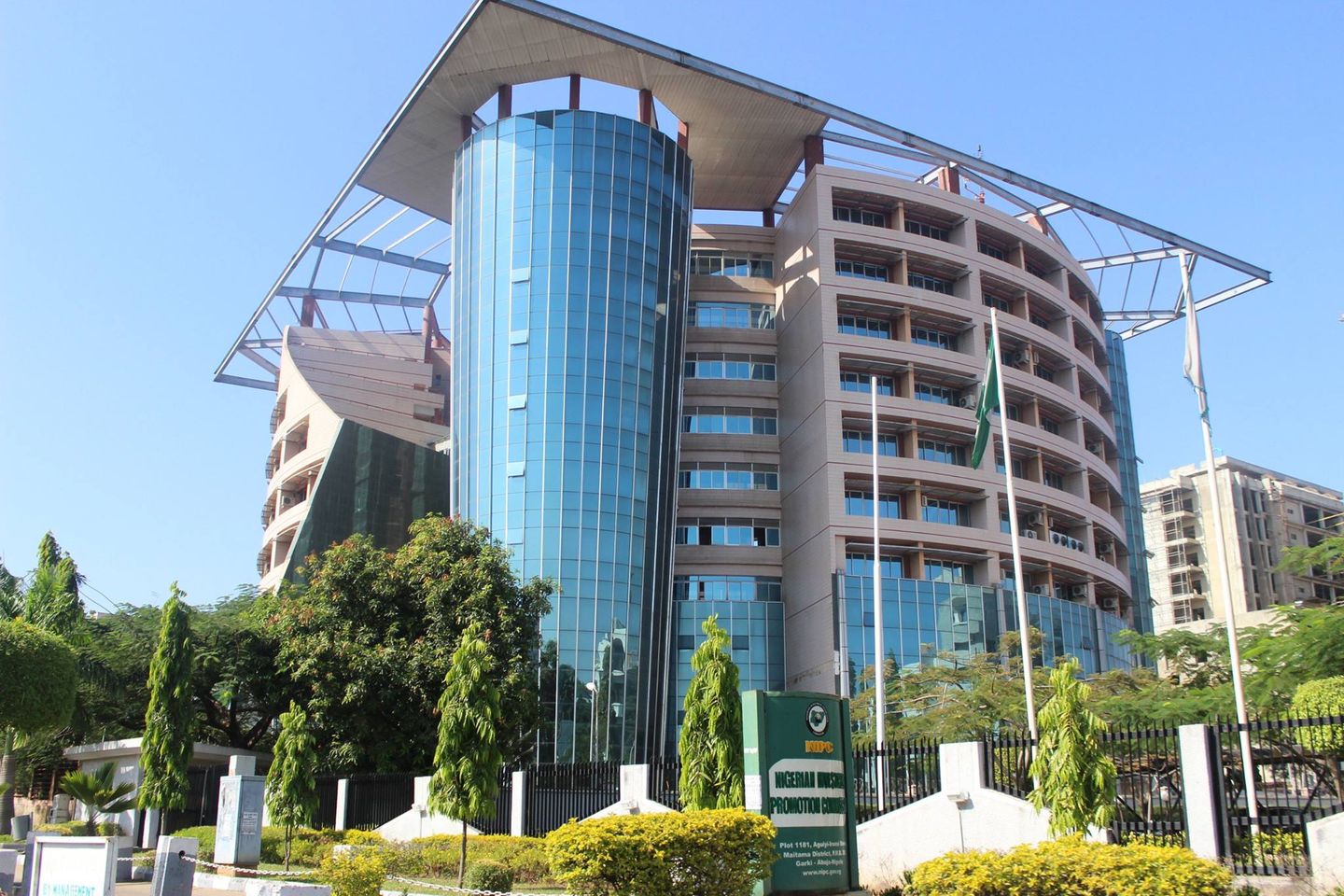
The National Information Technology Development Agency (NITDA), has said that continued investment in Digital Innovation will boost the education sector and the economy as a whole. The agency promised to continue it’s effort at supporting and collaborating with all higher institutions of learning across the country.

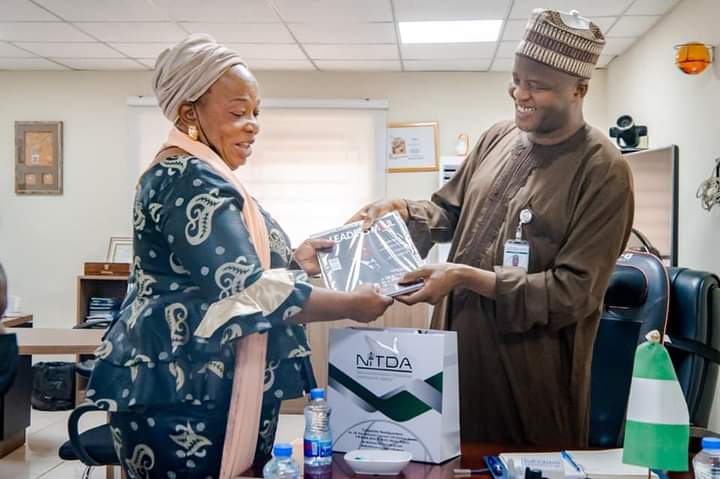
The NITDA Director-General, Kashifu Inuwa, CCIE, represented by the Director, IT Infrastructure Solutions, Dr. Abdullahi Gambo Usman, stated this when receiving the Deputy Vice Chancellor Administration, Federal University Dutsen Ma, Katsina state, Professor Mary Agbo, Thursday, in Abuja.

He said, “the Agency will continue to interact and listen to active and vibrant higher institution of learning with a view of discussing the challenges facing them especially in the Area of IT and Innovation.”

As the prime Agency for e-government implementation, internet governance, and overall IT development in Nigeria, NITDA is poised to actualize its mandate by providing flourishing atmosphere in Digital space.

He said it is Important to seek to explore the benefits of innovations and creativity in order to bring about functional education system for the country.

He further emphasized that there is need for mutual understanding between stakeholders and the Agency in developing Standards, Capacity building, Research and Development .

He added that IT sector played a pivotal role in getting the country’s economy out of recession, and recorded the highest growth rate in Q1 of 2020 as reported by the National Bureau of Statistics (NBS).

He maintained that, with the positive growth of IT in Nigeria, being the only double digits growth rate sector, which made it to lead in the year 2020 and Q1 of 2021, is what prompted the need to provide support and guidelines in all sectors of development and innovation to Nigerian.

Responding to the plea and request from the visiting university, as outlined by the DVC, especially in the area of security challenges in visualisation of the Optic Fiber Cable that links the 2 campuses which where donated to the university by professor Pantami through NCC.

The DG recommended some technologies that can be deployed to ensure security which include ‘autonomous drones’ that can cut back human involvement in these often-dangerous situation. It can also help cut cost while bolstering safety at the same time.

“By using Artificial Intelligence (AI) to interpret satellite images, NITDA experts have long been able to tap into satellite images to help in preventive and response efforts,” he said.

Stating further that with the availability and quality of these images, they increasingly offer an even more valuable resource for security.

He explained that, “NITDA always emphasizes on how important it is to know how to use modern technology, not just as an enabler but as a strategic design for your strategy in general which will inspire you to do more.”

NITDA Strategic Roadmap and Action plan (SRAP 2021-2024)is built on seven pillars with their respective goals and objectives, which are; Developmental regulations, Digital literacy and skills, Digital transformation, Digital innovation and Entrepreneurship, Cyber security, Emerging Technologies and Promotion of indigenous content, he said.

Inuwa noted that the Agency’s focus is improving how things are being done using technology and innovation by creating an enabling environment and innovation ecosystem that will allow all universities to key in.

The DVC Administration, Federal University Dutsen Ma, Professor Mary Agbo, in her remarks, noted that the university appreciated the kind gesture and laudable project from the Ministry of Communications and Digital Economy for the giant projects executed in the university. She also appreciated and solicited further support from NITDA in capacity building and training for staff of the CBT centre of the University.

Prof Agbo commended NITDA for the various IT intervention deployed across the country towards the growth and development of IT, which she said plays a critical role for the advancement of the country and also towards the Educational Sector.

…As Minister, others applaud transparent auction of spectrum


Barely a week  before the deadline set by the NCC for the payment of the spectrum fees by the winners of the 3.5GHz spectrum auction, the Federal Government has officially handed over the spectrum allocation for Fifth Generation (5G) deployment in the country to the Nigerian Communications Commission.


Minister of Communications and Digital Economy, Prof. Isa Ali Ibrahim Pantami, who also wears the hat of the Chairman, National Frequency Management Council (NFMC), presented the official document on the 3.5GHz spectrum allocation to the Commission at a public event which took place at the Transcorp Hilton, Abuja on Thursday, February 17, 2022.


The 5G spectrum allocation document was received by the Chairman, NCC Board of Commissioners, Prof. Adeolu Akande, and the Commission’s Executive Vice Chairman/CEO, Prof. Umar Garba Danbatta, on behalf of the Commission.
Speaking at the event, which also witnessed the public presentation of the National Policy on 5G Networks, a document earlier launched by President Muhammadu Buhari on January 25, 2022, the Minister commended the NCC leadership for ‘a transparent, fair and credible 3.5GHz spectrum auction’ conducted on December 13, 2021.
Pantami stated that the NFMC, which he chairs, has the responsibility for managing the allocation of commercial and non-commercial spectrum resources in the country while the NCC is facilitating the deployment of spectrum in the country. Hence, the Council decided to allocate the assigned spectrum for 5G network to the NCC to enable it assign same to the winners of the 3.5GHz spectrum auction.
Pantami also stated that the 5G network, when deployed, will bring a lot of benefits and opportunities that will engender accelerated growth and smart living in the country. He asserted that the technology will bring substantial network improvements, including higher connection speed, mobility and capacity, as well as low-latency capabilities.


Earlier in his remarks, Akande appreciated the Minister for his efforts in ensuring that every clog that could hinder successful deployment of 5G services are addressed, thus paving the way for mutual understanding and trust among all stakeholders to ensure that the derivable benefits of the new technology are harnessed timely for the nation’s socio-economic development.


He said the effective implementation of the National Policy on 5G, which the Commission is driving, will help in the actualization of the national targets in the Nigerian National Broadband Plan (NNBP) 2020-2025, the National Digital Economy Policy and Strategy 2020-2030, as well as other sectoral policies designed to enhance Nigeria’s digital culture.


The EVC of NCC, Danbatta, while expressing appreciation to the Minister and all stakeholders for the role played in the emerging 5G network policy implementation initiatives, said the collective efforts of the private sector and government support will make deployment of 5G network transform every aspect of the nation’s economy. He was optimistic that the expected transformation will be greater than what the nation witnessed with the 1G, 2G, 3G and 4G.


Recalling the diligence that attended the implementation of 5G policy by the NCC since the process started in 2019, Danbatta said Nigeria had taken proactive and meticulous steps to be among the leading players in the global digital economy.


“We have been meticulous all the way in our 5G deployment journey, from trial across selected states in the country, to review and stakeholder engagement, to approval by the Federal Executive Council (FEC), to the 3.5GHz spectrum auction, and up to the official launch of the national policy on 5G network by the President. Now we have the official allocation of the spectrum to the NCC for onward assignments to the winners. So, the coast is clear for the country to assign the specific reference in the spectrum to the winners, upon announcement of payments,” Danbatta said.


Meanwhile, eminent stakeholders and dignitaries at the event, have commended Danbatta for ensuring sterling record of transparency and accountability in the sale of the 3.5GHz Spectrum Band allocated for deployment of 5G network in Nigeria.


The stakeholders include the Permanent Secretary, Federal Ministry of Communications and Digital economy, Mr. Bitrus Nabasu; the former Executive Secretary of the Commonwealth Telecommunication Organisation (CTO), Mr. Shola Taylor; Director General, National Information Technology Development Agency (NITDA), Kashifu Abdullahi; Managing Director of Galaxy Backbone Plc, Prof. Muhammed Abubakar; and the Director General of National Identity Management Commission, Dr. Aliyu Aziz, among others.


Earlier in a presentation on the Benefits of 5G, Engr Shola Taylor, a former Secretary of the Commonwealth Telecommunications Organisation, declared that 5G will have far-reaching transformational impact on major sectors of the Nigerian economy, which will bring about rapid social-economic development of the country.

According to estimates from McKinsey, SMEs make up an enormous 98.5 percent of all businesses in South Africa. “As the engines powering our economic growth, the challenges as well as the triumphs within the sector reverberate across the entire economy,” says Zunaid Miya, Managing Director of local fintech company, Hello Pay.

The health of the SME sector is a reliable reflection of economic conditions in the country overall. “The pandemic has highlighted several long-standing challenges facing SMEs. With dangerously high levels of unemployment, creating jobs and generating growth has never been more important. Providing meaningful avenues for SMEs’ full financial inclusion is a necessary first step in the right direction,” Miya adds.

According to a recent IMF report, “The importance of financial inclusion is increasingly recognised by policy-makers around the world. Small and medium-sized enterprise financial inclusion, in particular, is at the core of the economic diversification and growth challenges many countries are facing.”

Miya says that Hello Pay’s own journey, which was born out of the need to help migrant workers in South Africa get paid, has evolved to creating a cashless digital ecosystem for SMEs to truly thrive. “SA’s migrant workforce make a sizeable contribution to the country’s economy. Estimates from an OECD report suggest this cohort of workers can increase the South African income per capita by up to 5 percent. Despite this, migrant workers are routinely discriminated against and face real challenges in accessing even the most basic services, such as opening a bank account, and certainly don’t get the support they need to start a business.”

He adds that emerging technologies are transforming payments methods, especially for the migrant workforce and small merchants. “Intelligent digital solutions, once only accessible to large enterprises, are now within reach for entrepreneurs and SMEs. It’s these solutions that allow SMEs to compete toe-to-toe with some of the best companies in South Africa.”

Miya says a commitment to real and meaningful financial inclusion for SMEs is something Hello Pay continues to champion by offering services that are low cost, easily accessible and simple to use. “Digital solutions, like accepting card payments via a mobile phone, have the potential to level the playing field as small businesses can control costs and manage cash flow more effectively. Many small businesses have been cash-based because they had to be; fortunately this is no longer the case.”

“When pursued with strategic intent, financial inclusion generates economic growth, which in turn helps communities and individuals everywhere thrive. Financial inclusion means that thousands of SMEs and 350 million unbanked adults in Sub-Saharan Africa, according to the World Bank, can finally participate in economic activity,” notes Miya.

As the election is coming nearer, the need to be focused in the principle of life comes to play. The need foe equity and fairness has been attributed to be the major ingredient that will spur the nation to a higher level. In line with this, Amb Ephraim Ononye, the convener of Ephraim Ononye Ministries Worldwide has enumerated what Nigeria must do in order to remain an indivisible entity and above all to be able to make progress.

Speaking during his weekly program, Amb Ephraim Ononye, said that any Northerner that is eyeing this presidency has injustice in his blood. In his word he said “ it is a matter of equity and fairness and we are brothers in Nigeria, the brother North has taken and the time is for the Southerners to produce the next president if we really mean equity and fairness”

OPINION: NDIGBO: TIME TO REENGAGE

“If the Southerners is given the opportunity to produce president, if it comes to the South, we have had the Yoruba man, Obasanjo as the president and we have had Ijaw man from Niger Delta in the person of Jonathan Goodluck, the only fair thing is to have an Igbo man as the president. We have them in the East, the Igbo have the material that will make this country grow forward. They should give this to the Igbo.”

People of like minds have said that there is a need to have Igbo president as a matter of equity and fairness. This Igbo presidency will douse all the tensions and be made to be part of the nation of Nigeria. Doing this is akin to giving justice a chance in this country, doing this will stop the issue of marginalisation and secession of Igbo from Nigeria.

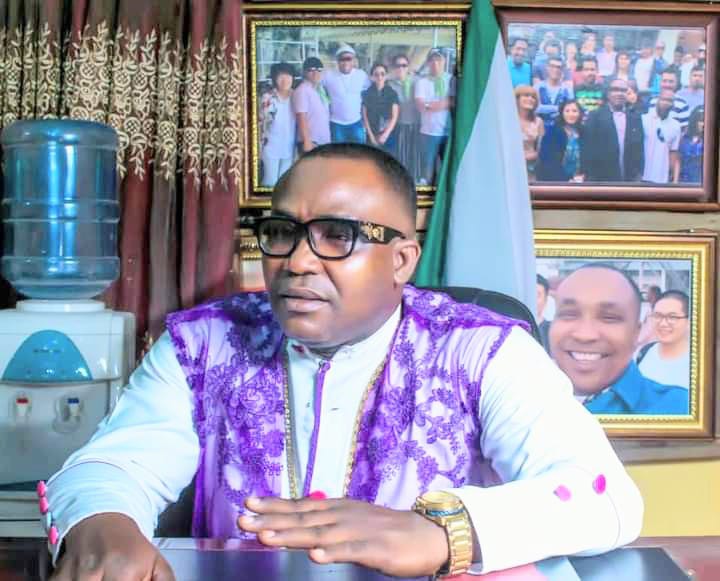
Amb Ephraim, an Astute gentleman, a humble servant of God, a rare philanthropist and humanitarian personality who will stop at nothing to engender better living for mankind. An ideal man, hardly stepping out of his bound. Amb Ephraim Ononye (AFP/JP), the senior pastor of Ephraim Ononye Ministries Worldwide, practices what he normally preaches

Emma Clems

The Nigerian Institute of Electrical and Electronic Engineers (NIEEE) has given the leadership of the Nigerian Communications Commission (NCC) a pat on the back for setting the pace of 5G deployment in Africa.

The Engineering body in a statement signed by its outgoing National Chairman, Engr. Kings Adeyemi, singled out Executive Vice Chairman, Prof Umar Garba Danbatta and the entire management staff of the Commission for accolades.  

“Major requirements for 5G journey include spectrum availability, investor-friendly regulatory policy and stakeholders’ awareness. Nigerian Communications Commission (NCC) engaged relevant stakeholders ahead of the Federal Executive Council’s (FEC) approval of the Development of a Policy for Deployment of 5G in Nigeria,” he stressed.

“We use this medium to commend the entire Management of NCC under the leadership of the Executive Vice Chairman/CEO Engr. Prof. Umar Garba Danbatta FNSE, FRAES, FAEng, FNIEEE. NCC demonstrated high level qualities of a world-class regulator indeed by setting the wheel of 5G in motion, from 5G Proof of Concept (PoC) trial in 2019 to the recently successful auction of 5G spectrum on 3.5GHz band”, the statement reads.

To put things into perspective, the respected body observed that it is worth noting that “this remarkable landmark achievement was attained by NCC at a time when COVID-19 pandemic continues to force the postponement of many highly anticipated 5G spectrum auctions throughout the world”.

Commending the in-house professionals within the Commission for the choice of 3.5 – 3.6 GHz and 3.7 – 3.8GHz. Engr Adeyemi noted that   Frequencies in the range 3.3 – 4.2 GHz (3GPP Band 78) are being used as the basis for the first implementations of 5G globally.

“This decision allays the fear of 5G services interfering with the aircraft operations as currently exercised in some countries. NCC’s choice on the 3.5 GHz band has sufficiently safeguarded civil aircraft altimeters which usually operate between 4.2 – 4.4 GHz range,” he explains.

Speaking further, the Chairman said: “from expert’s perspective, the choice of two (2) slots of 100 MHz (TDD) bandwidth each on 3.5 GHz band (precisely 3GPP Band 78) is a highly laudable choice to launch 5G network.

Such wide channel bandwidth, according to him, is required to deliver the multi-Gbps data speed required of a 5G network.

“It is technically proven that wider channels lower network density which ripples into lowering the cost of 5G services to consumers. Other advantages include less base stations sites and lower environmental impact. The 3.5 GHz band is the best choice to balance capacity and network coverage which in turn encourages operators to commit investment in 5G infrastructure,” he observed.

Digital technology is intricately woven into our lives.

It is almost impossible to do without in our tech-economy and data or byte-driven world.

Every day technology is advancing to such a level that more and more universe of information systems are compressed into small silver wares and metallic devices called phones.

ROM and RAM sizes of phones and computers are increasingly and foreverly being upgraded.

Whole libraries of assorted information are stored on phones and smart phone opens up access to unimaginable vistas of information resources.

Less than 80 years ago, if you wanted to do research, you traveled far to distant libraries and swam in an ocean of books in attempt to find what is relevant.

Today, the same is a matter of entering the approaiate keywords in the relevant search engines and databases. And then, viola. You come face-to-face with a mass of helpful and relevant resources.

The world has changed, and continues to change.

One recent estimate puts the number of mobile phones currently in the world at 15 plus billion.

Virtually all adults today, use phones even if not smart ones and even though not all have internet access.

But the world would get there. Right to freedom of information (access to it, dissemination of information, and expression of knowledge) is considered fundamental in international human rights law.

Accordingly, Mark Zuckerberg is already working on a project designed to bring free internet to neglected/underserved peoples in developing countries based upon the principles exposed in the preceding paragraph.

But the people would have to access the internet only through enabled devices pre-installed with his metaverse platform. And the question would then arise, how free would such an intervention be, if only it works through compulsory subscription to the metaverse? Apparently, it leaves the beneficiary with no choice. Opt in and have the internet or opt out and lose your access to it. Even whilst on the platform, big brother Mark would retain some right to censor your expressions.

The tech paradox is like so:

It is that we continue to design the most advanced AI systems with the hopes that it would bring us increased freedoms and liberties, but it turn deprives us of other less obvious but perhaps more important freedoms.

We once lived on farms – in natural, rural and agrarian communities. Then we advanced in technology and we started to live in cities – in industrialised urban areas. During the industrial revolution we also transited from living on wood an papyrus to paper. And now the next revolution is driving us to live on the internet. We are netizens.

Zuckerberg and all the guys in big tech would ensure that. Every passing day, there’s one more new app, designed that you may download onto your device to make life easier.

Perharps, someday there might just be an app which helps us to download food into our own stomach or helps a man to impregnate his own wife. Ridculous, I know. But you do get my point. Slowly but steadily, we’re getting to the very extremes of tech, where many an ethical issue would arise, especially about the fate of humanity.

Nay, rather. We’re matching there at rocket speed.

Research is currently ongoing as to how to imbue robots with superintelligence or at least the same intelligence as man. And should the day come when those robots go out of man’s control, that would spell disaster for humankind. Yet, this agenda is seriously being pursued.

Elon Musk currently funds research into how much of the cureently existing knowledge on anything may be downloadable into a microchip that can then be implanted into the human brain.

And so many other mind boggling stuff been researched or developed.

I have often wondered. Scientists say that man is hundreds of millions years old on the planet. Yet, is it not surprising that all of the major advancements in science and technology have happened in less than 150 years of his entire existence on the planet.

So, I ask: what on God’s heavens has the early man been doing all those years? Scientists would have us belief that he was running around half naked for hundreds of thousands of years chasing antelopes. Then, only a few years ago, his brain evolved at such a rate that has led him to the most witty inventions nearing the capacity of a god. Something certainly doesn’t add up about evolutionary theory, here. And I would rather not get into that now.

Sorry, that was a digression.

My point is, man has achieved the unthinkable in the last 100 years or so. And it would seem there is nothing stopping him.

During the Covid-19 lockdowns we were able to still communicate, do our jobs to some measure and reach the world through diverse adaptive technologies: Zoom, Google Meets, Skype, etc.

That is a good thing.

Man has conquered the air even more than birds, and has started to explore outer space. And even that too, is only a matter of time.

Countries all across the world have developed advanced military capabilities that modern warfare do not require plenty human capital. Drone systems, transcontinental bombastic ballistic missiles, nuclear and chemical weapons, standby robotic armies etc. There is no thought that man has not experimented with.

Today, sonographic scans exists that are just the size of a small botton-like chip. You swallow it, and it takes 3D high-resolution images of your entire gut as it travels down. You pass it out in stool, and the chip is retrieved and analysed. Thus aiding accurate diagnoses of gastrointestinal conditions.

In virtually every sector one thinks of, man has excelled the limits.

And similar contemplations led the Isreali historian and philosopher and professor, Yuaval Noah Harrari to write a book in 2015 titled “Homo Deus”.

In that book, Harrari basically traces the origins of civilisation from the early man to the mordern man who has superseded any creature before it in intellection and scientific advancement.

Harari recounts the course of history while describing key landmarks in the human experience and ethical issues in relation to his historical survey. He notes that Homo Deus (from Latin “Homo” meaning man or human and “Deus” meaning God) deals more with the supraabilities acquired by humans.

And that this acquisition of godlike capacities (by means of technology) has transformed man from homo sapiens (the wise or intelligent man) to the godlike man.

Meaning the big tech era ushers in man who has been elevated to the position of a God. Thus, there is no god but man. Man will be his own god.

This should tell you where the whole agenda on AI and big data, and metascience will ultimately lead.

The quest for superlative intelligence.

My aim in this treatise and in similar ones that may follow isn’t to make you technology-averse. Technology in it self has no intrinsic goodness or badness. But use and purpose does. And men do as well as their agendas.

A knife is a pretty good technology. But it may be used to perform a surgery or cut tubers, should it be a good knife or it may be used to murder someone.

Technology tends to be a two-edged sword. And all technological advances raises ethical problems.

My aim in the coming days or weeks will be to help you appreciate how important it is to think Christianly about technology and how it is changing our lives. As well what might be a healthy interaction of a Christian faithful with technology in a changing world.

Mark Godwin

Tranos, an indigenous engineering, and manufacturing company with a focus on providing innovative solutions that add value to lives established about 14 years ago and located in the industrial hub of Ogba, Ikeja has recently announced the addition of new product lines in the year 2021. With the opening of their cable manufacturing facility in the country, touted as one of the largest in the country and being one of the foremost firms in the country locally producing Gaskets to serve the needs of various sectors within and outside the country.

Speaking to the media, the Managing Director of Tranos Nigeria Limited, Jude Abalaka said “As an organization, we are essentially an engineering and technology-driven company. Our focus is primarily on using our products and services to influence and make lives better.
We have solutions for various sectors that span through the Oil and Gas, Telecommunications, Information Technology, Real Estate, Power & Energy sectors, etc.”

“Through, our numerous design and fabrication processes we have set a world-class standard in safety, quality, and efficiency. As a highly innovative company, our services include the manufacturing of high-quality products in power generation, energy distribution, control, and automation as well as manufacturing of enclosures.”

On the strides, the organization has made in 2021 and how they have been able to adapt and align with the pandemic-induced economic realities, the Managing Director added that “on the strides that we have made this year; we launched our production facility. As of today, we have the largest cable manufacturing facility in Nigeria and possibly in West Africa. What this means is that products that people struggle to import into the country, we have the capacity to manufacture. In addition to the cable management systems, we also manufacture gaskets for various industries, and this is a landmark achievement because we are the only company doing this in Nigeria. Even though the pandemic has slowed things down, we have been able to maintain our consistency and conclude on projects that we have started pre-pandemic. We strongly believe in improvement; we always have something that we are doing to improve either through partnerships or introducing new products and services.”

On the expansion and diversification to other countries, Tranos made it known to the media that they are yet to consider having a physical presence in other African countries but admitted that they have clients in other countries, and they have been exporting to these countries and will consider setting up a physical plant when the times comes, the organization reiterated that they are very open to any form of partnership.

“We do not have plants in other West African countries for now, but we have active customers who are constantly ordering products from there. Whether we might set up a physical facility there or not is a decision we are yet to make but our goal is to ensure that we have customers spread around Africa”.

Tranos has a hybrid power solution that has been developed especially for the telecom base stations. ”We have been in that industry for many years. We have a generator system that works with solar power and diesel. We integrated this technology where if there is enough sunlight, there is no need to have the generator run on diesel but if there isn’t, then the generator switches automatically to diesel”.

”We also came up with a solution that runs on gas, not on diesel. The advantage of this generator is that it doesn’t run on natural gas because there is no need to start building gas pipelines to all base stations. We do not use compressed natural gas (CNG) we developed a generator that runs on cooking gas (LPG)”.

Speaking on the various innovative power solutions that Tranos offer to the Telecoms industry since its inception, The Managing Director of Tranos said ”we have been actively proffering innovative solutions for various industries in the past 14 years, we have over the years partnered with world-class firms to bring globally acknowledged products into the country”

With the production of superior enclosures in Nigeria, Tranos has serviced clients like Schnieder, Biswal, Cummins, Shell BP, Chevron, Total and so many others. Tranos has undertaken many projects such as the design and fabrication of 48 inches pipe repair clamp for Hydrodive and Shell BP

Tranos Limited has designed Warehouse racks for MTN Nigeria, fire water remediation design projects for Chevron, and other projects across the country. These projects are a testament to Tranos’ capability to deliver world-class solutions in the various sectors across the country and beyond.


Adri​ Führi, Group CFO at Fintech specialist e4,​ says 4IR and the rate of technological change presents a unique challenge for CFOs who have the complex task of ensuring alignment between finance and the entire organisation on the road to digital transformation.

There has been much talk about the role 4IR will play in digital transformation. In these necessary conversations it is vital that leadership teams do not lose sight of their organisation’s overall transformation objectives. Ultimately, 4IR technologies are tools that should be considered as one part of the transformation journey and not all technological advances are necessarily useful for all businesses.

Amidst the pace of technological change, it’s up to CFOs and other members of management to navigate how organisations should deploy funding for digital transformation to achieve the best possible return on investment.

For mid-sized corporates especially, the challenge of balancing business requirements and aligning long-term organisational goals is compounded by the need to use resources as prudently as possible. Making sure that finance fits in with the rest of the digital transformation journey, has access to funding, the right skill set to assist with the change, all while ensuring the finance team is able to join on the journey is very important – and easier said than done.

The aim shouldn’t be to transform simply for the sake of it, but to transform with specific, goal-orientated objectives in mind such as faster, more accurate and value adding reporting. In a medium size corporate, there just isn’t room to implement the wrong tools because of the potential resource impact. Change management will be important to ensure the effective adoption of technological changes. This is a great opportunity to partner with HR to ensure adoption within the team.

Of course, many of the newest technologies that look set to make an even bigger impact on business and ways of working are still at an early stage but will evolve rapidly. Rather than seeing this scenario as a threat to job security, it should be viewed as an opportunity for leadership, strategic thinking, risk management thinking, critical thinking, problem solving, both in finance and the rest of the organisation, to really thrive.​

Adaptability and agility are key competencies as technology becomes entrenched in every aspect of business and organisations look for ways to differentiate themselves from their competitors. STEM education is the cornerstone of what will be required to navigate through 4IR.​ Investing in tech education is something that I am particularly passionate about. ​ Many CFOs are in the position to decide or influence the decision on where to spend socio-economic development funding. With 4IR gaining momentum, funding for education in these key areas should form part of all organisations’ socio-economic development investment agenda, and better still, a practical and long-term strategy to truly enabling digital transformation and 4IR.

.

Kirsty Thompson

kirsty@ginjaninja.co.za

083​ 772 3555


~ the absence of Class Contentment ~

The first time I was added to a WhatsApp group to raise money for a bereaved friend was sometime in 2020, I was told that he spent a fortune treating the wife in a foreign hospital for several months before she died. His business was also affected due to his frequent trips abroad. We, therefore, came together to raise money for a befitting burial for the wife and to help the dear friend to recoup some of his financial spending.

It was a good reason to raise funds. And the outcome was massive. I was so glad to be part of that.

A few weeks later, I was added to another WhatsApp group to raise money for another bereaved person, whom I do not know, but most of the names in the first WhatsApp group appeared on the new one. They invariably copied the names/numbers from the other group without checking the relationship between the prospective donor and the bereaved. I opted out of that group when I found out the guy is so rich that he doesn’t need such financial assistance.

Between 2020 to date, I have been added to numerous WhatsApp groups with the sole purpose of raising funds for bereaved friends and people I sincerely do not know and may not have met. I became selective and started ignoring a lot of such groups especially when the bereaved has no reason to depend on public funds to perform the last act of love to the dead.

Interestingly, in the first week of November 2021, I was added to 2 WhatsApp groups, one was to raise seed capital to help a friend who has been out of business for 2 years while the other was to raise money for a friend who was bereaved. The first was financially down and have been depending on friends to feed his family while the latter is a thriving businessman who is also a “big guy” on the street.

A few days after, the businessman who by all standards do not need any form of financial assistance to bury his parent, raised over N12m effortlessly while the financially disadvantaged friend could not get up to N3m. It took a lot of calls, pleadings and preachings for us to eventually raise N6.7m for the friend to start a new business after 8 weeks of setting up the WhatsApp Group.

I called a friend of mine who is a constant participant in a lot of WhatsApp groups to find out why it was difficult to raise money for a financially disadvantaged man than a successful businessman. He told me that when you contribute to wealthy friends, you are sure of getting their financial support if you are bereaved, but the man who is getting help to start a new business may not have anything to offer you. More so, contributing money for a bereaved friend ensure you are among the selected few that will enjoy the choicest wines. They are usually treated better than the chief mourners.

Now if I understand my friend correctly, the major reason for contributing money for a successful person is reciprocity and not out of love or necessity. In other words, they are practising “Isusu” or “daily contribution” in which they take turns to take home what they contributed. Ironically, it is the death of their loved ones that they use as this symbol of class discontentment.

Due to the quest for enrichment, clique, popularity, and other vain attributes, many people in society do the right things in the wrong ways and this has led to a negative norm in the society today.

The concept of class contentment may be a bit subjective, but when you take a deep look at the prevailing WhatsApp groups set up for the sole purpose of raising money for people who do not need such assistance, you begin to doubt if people understand that they are showing distress sign of poverty of the mind.

I’ve known rich people who live in constant fear that their wealth will be lost, or that they must continue to feverishly work to attain more wealth, even though they have more than enough to keep themselves and their families in luxury indefinitely. Likewise, I have known people who are extremely content with little more than a roof over their heads and enough resources to keep them from starving. The difference between the two is contentment.

I consider contentment to mean satisfaction with one’s life situation. It is a lot easier to be a struggling businessman and be happy than to be rich and be happy. The rich expect more gifts from the poor than they share with the poor. Ask around, the highest donors in most WhatsApp groups are not richer than the beneficiary.

So, with regards to this subject matter, it would seem reasonable to think that there is a greater level of contentment among those who manage to get a roof over their head than those who have gotten to a point where they no longer need to struggle from one day to the next, just to survive. Perhaps contentment is something to build oneself, not something achieved or obtained.

I have studied the concept of raising money for a rich man to bury his parents and came to the personal conclusion that it is because when we have things, we don’t notice what we have, we only notice what we don’t have.

I have no problem with fundraising if It is a voluntary act of giving and helping others without expecting anything in return. And it must be tailored in favour of those who need financial assistance.

Any fundraising which is similar to what is happening around us today in various WhatsApp Groups is simply a turn-by-turn “daily contribution”, which I have already excused myself from long before now.

By the way, I must have saved about N1m since I opted out of the scheme. And in the spirit of St. Valentine Day tomorrow, I’m identifying Charles Ogbu (Leave No One Behind), Agbalanze Bube (De Rubies of Care & Compassion) and Praise-Legend Onwuachu (who promised a widow laptop) as the beneficiaries of this savings. They have done more to put smiles on the faces of the poor than me and my rich friends.

Happy Valentine’s Day to you all.

©️Don Ebubeogu

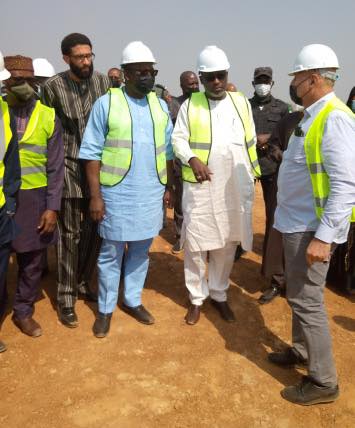
The Honorable Minister of Water Resources Engr Suleiman H Adamu who was accompanied on project site inspection by the Executive Governor of Ekiti State Dr Kayode Fayemi has revealed that the Federal Government is making concerted effort to ensure the completion of Ogbese Multi-purpose Dam project located in Ogbese, Ekiti State, for the overall benefits of Ekiti people and their environs.

The Honorable Minister made this known at the Dam project site in Ogbese, Ekiti State, on Friday 11th February,2022, when he visited the site to ascertain the progress of on-going work.

Speaking on the significance of the Multi-purpose Dam, Engr Adamu pointed out that the Dam has the capacity for water supply, irrigation and hydropower, adding that tourism and agricultural potentials of the Dam will also be beneficial to the people.

Engr Adamu also noted that the Dam was inherited from previous administration. The Honourable Minister informed that the contract was awarded in 2009, adding that the project would have been completed but activities on the Dam site were stalled by the outbreak of the Covid-19 pandemic.

Engr Adamu therefore charged the contractor to ensure that the equipments needed are transported to the Dam site promptly, adding that local fabrication should also be encouraged in order to support job creation.

The Executive Governor of Ekiti State, Dr Kayode Fayemi in his remarks during the site inspection revealed that the Federal Government is trying to ensure that all inherited projects are completed.

He expressed optimism that the project will be completed soon, given the passion and commitment demonstrated by the Federal Ministry of Water Resources led by Engr Suleiman H.Adamu to ensure the realization of the project.

Earlier, the Director of Dams, Federal Ministry of Water Resources, Engr Ali I. Dallah informed that the dam has recorded a progress level of 67 percent from the completed spill way and grouting work, ongoing construction of dam embankment, intake,reservoir clearing and discharge channel excavation.

He further stated that the electro-mechanical equipment had been shipped into the country and is presently awaiting clearance at Tin Can Island port, Lagos.

Present at the site inspection were the MD of Benin Owena River Basin Development Authority BORBDA, Eng Saliu O. Ahmed and his team, site engineers, and contractors.