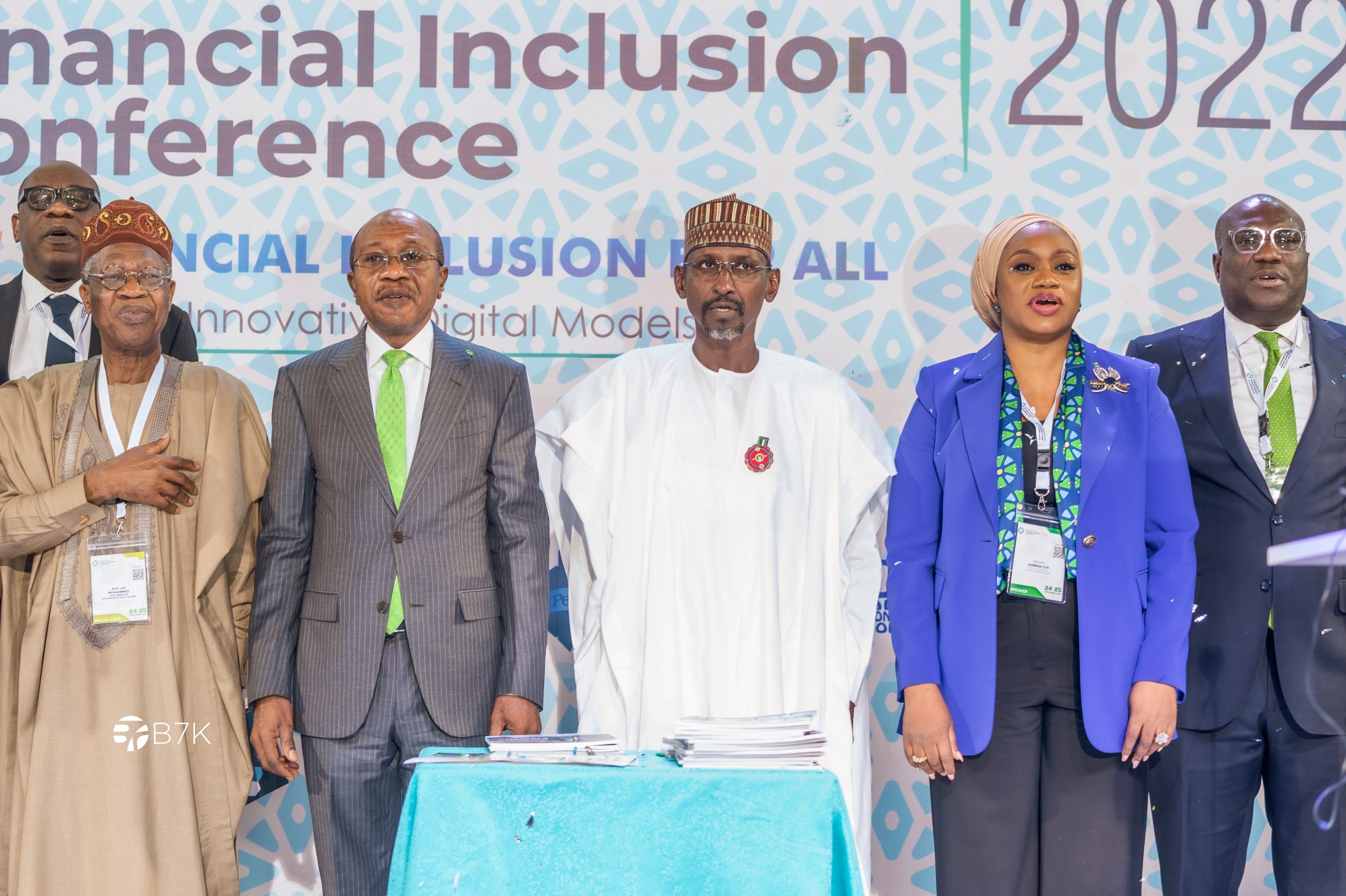
Nigeria, on 24th and 25th November 2022 hosted the largest convening of the global Financial Inclusion ecosystem since the launch of its National Financial Inclusion Strategy in 2012. The 2022 International Financial Inclusion Conference organized by the Central Bank of Nigeria (CBN) and its partners within the financial inclusion governance committees themed: “Financial Inclusion for all: Scaling Innovative Digital Models” had in attendance over 5000 participants from at least 78 countries around the world.

Among the major dignitaries in attendance were His Excellency, President Muhammadu Buhari (GCFR), who was represented by the Honorable Minister of the Federal Capital Territory, Mallam Mohammad Musa Bello (CON); United Nations Secretary-General Special Advocate (UNSGSA) on Inclusive Finance, Queen Maxima of the Netherlands; Secretary to the Government of the Federation, Mr. Boss Mustapha; the Honorable Minister for Communication and Digital Economy, Professor Isa Pantami; the Honorable Minister of Women Affairs, Dame Pauline Tallen; the Honorable Minister for Information and Culture, Mr. Lai Mohammed; the Governor of the CBN, Mr Godwin Emefiele, and Dr Kayode Fayemi, former Chairman of the Nigerian Governors Forum and former Governor of Ekiti State.


Also in attendance were financial sector regulators such as the Chairman of the Securities and Exchange Commission, Mr. Femi Lijadu; Managing Director of the NDIC, Mr Hassan Bello; the Commissioner of NAICOM, Mr Sunday Thomas; Board Members of the Central Bank of Nigeria, and the Chief Executive Officer of Brittania-U Nigeria Limited, Mr. Uju Ifejika, amongst others.


During the conference, attendees witnessed the launch of 7 key policies and products that would enable the achievement of 95% Financial Inclusion in Nigeria by 2024 such as the revised National Financial Inclusion Strategy (3.0), the Strategy for Leveraging Agent Networks for Women’s Financial Inclusion, the National Fintech Strategy, the Payment System Vision (PSV) 2025, the Nigeria Financial Services Maps, the CBN Regulatory Sandbox and a Fintech Bridge between the Central Bank of Nigeria and the Central Bank of Egypt.

Giving a keynote address during the conference, the Governor Central Bank of Nigeria – Mr. Godwin Emefiele who chairs the National Financial Inclusion Steering Committee pointed to CBN’s long-standing effort to achieve the financial inclusion targets through creating enabling environments and providing supports. He said, “From 2012 to date, over 59 policies and initiatives have been implemented by stakeholders to achieve the objectives of financial inclusion. These policies and initiatives cut across the banking sector, the insurance sector, the capital market sector and the institutions responsible for infrastructural development for financial inclusion in Nigeria. We have prioritized financial inclusion through our invention for over four million smallholder farmers and SMEs creating over two million jobs. By the end of 2024, we aim to be at 95% rate of financial inclusion in Nigeria”.

The Deputy Governor, Financial System Stability, CBN, Mrs. Aishah N. Ahmad, CFA in her welcome remarks highlighted that the conference was holding at a critical time in Nigeria’s Financial Inclusion journey. “Nigeria is indeed at an important tipping point for financial inclusion. At no time has there been a prevalence of an enabling regulatory environment, proliferation of digital technology, innovation and collaborative platforms between the public and private sector – all strategic levers required to scale financial inclusion in Nigeria”. In her engaging plenary session, she also stressed the role of policymaking in advancing Financial Inclusion in Nigeria.

In a special keynote address by the United Nations Secretary-General Special Advocate (UNSGSA) on Inclusive Finance – Her Majesty Queen Maxima of the Netherlands highlighted the role to be played by the new National Financial Inclusion Strategy in providing a genuine chance for improving livelihoods, such as strategies leveraging the National Insurance Number, Bank Verification Number amongst other policies

The conference featured nine plenary sessions including Scaling Digital Models for the Last Mile, Catalyzing Global Partnerships for Financial Inclusion, Country Experiences, Expert Dialogue on Women’s Financial Inclusion, Fostering Partnerships for Inclusive growth amongst others. Four breakout sessions focused on Digital Infrastructure, Data Privacy & Consumer Protection, Deepening Digital Financial Services and Strategies for reaching Youth & Rural Areas. Speakers cut across global policy makers and business leaders including Dr Alfred Hannig, Executive Director AFI, Ambassador Chad Blackman, Special Adviser to the DG ILO, Mrs Elsie Addo- Awadzi, Deputy Governor, Bank of Ghana, Mr Folashodun Shonubi, Deputy Governor Operations, CBN, Mr Herbert Wigwe, Managing Director, Access Corporation and Professor Olayinka David-West of Lagos Business School, etc

The IFIC 2022 conference agenda included the first Financial Inclusion Awards Dinner themed ‘Celebrating Champions of Inclusion’. Nine (9) deserving institutions and one individual were recognized for their contributions to advancing financial inclusion in Nigeria through a rigorous nomination and selection process superintended by Price WaterHouse Coopers (PWC). The winners included Enhancing Financial Innovation and Access (EFINA) who won the Financial Inclusion Innovation Award and Access Bank and Jaiz Bank who won the national women’s financial inclusion award and the inclusive bank of the year award respectively. TeamApt, Remita, Interswitch, E transact, Lapo MFB and Ms Modupe Ladipo also took away awards.


The conference also showcased 20 fintech and start up companies at its Innovation Labs exhibition focusing on various solutions targeted at facilitating payments, digitizing informal financial services platforms and bridging the financial inclusion gap.
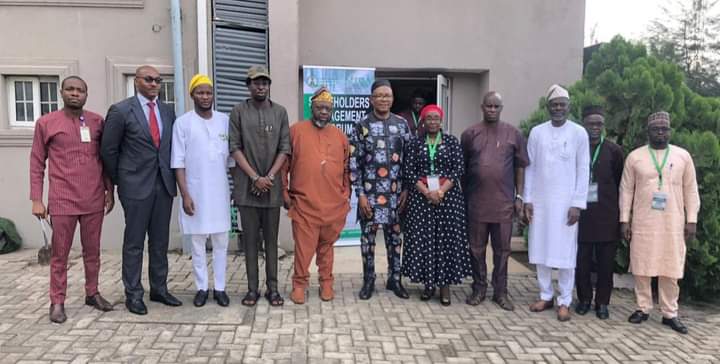

 

The National Information Technology Development Agency (NITDA) has continued to demonstrate its commitment in bridging the digital divide in the country by organising a 1-Day stakeholder engagement programme in Oyo State to identify challenges in the state’s ICT ecosystem, co-create solutions through shared knowledge and expertise as well as extend NITDA’s services to grassroot stakeholders.

NITDA DG, Kashifu Inuwa CCIE while giving his opening remarks at the event themed, “Creating Opportunities, Breaking Boundaries: Towards Digitalisation and Entrepreneurial Evolution” which was held at the Carlton Gate Exclusive Hotel, Ibadan stated that delivering value to the Agency’s Stakeholders is a prioritised objective of the Agency.

Inuwa who was represented by the Agency’s Director, Zonal Offices Directorate, Mr. Babajide Ajayi hinted that the quest in delivering excellent customer services has continually driven the Agency in developing strategies and initiatives that will boost digital inclusion in the country.

Highlighting some of the people-oriented programmes that have been implemented in consultation with stakeholders, Inuwa disclosed that the National Adopted Village for Smart Agriculture (NAVSA), the National Adopted School for Smart Education (NASSE), Digital Literacy Capacity Training for Persons Living with Disabilities, ICT Innovation Hubs and a host of other activities have had direct impact on the citizens of the country.

“As the needs of the Digital Economy Ecosystem grow, the Agency has striven to respond appropriately. This has been demonstrated in the strategic actions the NITDA has taken in the implementation of critical areas of the National Digital Economy Policy and Strategy”, he stated.

He maintained that through the constant reset and invigoration of the Agency’s vision and mission, it has evolved from a highly centralised organisation to a functionally decentralised one with the foundational aspiration of always being close to its stakeholders.

While giving assurances that the stakeholder engagement programme which has been done in some states would be extended to other states nationwide, Inuwa expressed his optimism that the programme would birth fresh understandings on how to deliver more impactful values to Nigerians.

He further stated that, “the objectives of the programme are to offer stakeholders the opportunity to express their views on matters related to the Agency’s implementation of its mandate, establish sustainable collaborations and consistent channels for feedback and share with stakeholders our vision, regulatory instruments for national development and our journey so far”.

Giving his keynote address, the Special Adviser to the Executive Governor of Oyo State on ICT and e-Governance, Mr. Adebayo Akande appreciated NITDA for putting together the stakeholder’s engagement programme.
He described the initiative as invaluable and expressed his conviction that the programme would enable stakeholders share ideas together rather than work in silos.

Acknowledging the several policies, regulations and frameworks rolled out by NITDA in the last few years, Mr. Akande stated that the Oyo State Strategic Roadmap follows the same pattern of NITDA’s Strategic Roadmap and Action Plan (SRAP).

“When we came in newly, we had to create our ICT policy then move on to Digital Literacy. We also had to constantly train and retrain a lot of civil servants and a lot of digital transformation has taken place with regards to providing the right ICT infrastructure which led to digital innovation with regards to government processes in the state”, he mentioned.
Stressing the importance of collaborations especially between the federal and state government, he gave assurances of the state’s support to the Agency always.

The Director General of the Development Agenda for Western Nigeria (DAWN) Commission, Seye Oluseye in his goodwill message appreciated NITDA for bringing the initiative down to the grassroot.
Describing as the next oil in the country, Mr. Oluseye called for collaborations between the Agency and the Commission.


Federal Government has reiterated its commitment to streamline the existing sorghum varieties in the country to enhance Self-sufficiency, income generation, Food and Nutrition Security amongst others.

The Minister, Federal Ministry of Agriculture and Rural Development, Dr. Mohammad Mahmood Abubakar revealed this while receiving report of the Sorghum Technical Committee, in his office, in Abuja, recently.

He stated that the objective of streamlining the existing sorghum varieties was to find other ways of improving productivity, value addition and quality of sorghum produce, noting that the exercise was crucial as it would enhance farmer’s income, attract more youth to sorghum cultivation, meet national demand as well as contribute to the growth of the Gross Domestic Product.

In his words” This cannot be achieved without the collaborative efforts of all Stakeholders of which farmers, Seed producers, Input providers and international Institutes are part”.

He recalled that the technical committee arose from a sorghum stakeholders meeting on production, commercialization and product development of sorghum in Nigeria held in Gombe State in 2020, adding that to achieve the objective, the Ministry had set up the committee to streamline the existing varieties.

The Minister pointed out that, “Recently Sorghum crop assumed great industrial relevance such that many multi-national companies such as Breweries now use Sorghum grits as adjuncts (up to 40%) to barley base (Mash) for making alcoholic and non- alcoholic beverages and breakfast cereals.”.

Speaking further, he noted that flour mills also use sorghum composited with wheat for flour which serves as main ingredient in the manufacturing of confectioneries and other food products which sorghum serves as one of the ingredients.

Abubakar, however, identified the prevalence of many varieties and cultivars as the major problems leading to low Sorghum productivity resulting in the supply shortfall.

Earlier, the Permanent Secretary, Federal Ministry of Agriculture and Rural Development, Dr. Ernest Umakhihe represented by Director Rural Development, Engr. Udo Daniel commended the Committee members for the report presented, hoping that the streamlining of the existing sorghum varieties would meet food and industrial demand that would achieve the desired goal.

In his remarks, the Chairman of the Committee, Prof. Daniel Aba stated that Sorghum had been a sustainable crop in Nigeria and the rest of Africa and as such had gained commercial importance in most of the African countries because of its different uses, noting that the crop is gradually replacing other crops in Nigeria and other African countries.


As Prof. Danbatta visits the project site in Kano

Ahead of the auspicious commissioning of the Digital Industrial Park (DIP) project in Kano State, the Executive Vice Chairman of the Nigerian Communications Commission (NCC), Prof. Umar Garba Danbatta, has, once again, paid an inspection visit to the site of the ongoing construction of the project in Kano State where he got an unequivocal commitment from the contractors that the project will be completed by January 2023.

The Friday’s inspection call by the NCC’s boss was part of the routine visits to ensure close monitoring and effective supervision of important projects that will have great impacts on the country’s socio-economic development.

During the visit, the EVC, who was accompanied by the NCC’s Head of Projects, Philip Eretan, and the EVC’s Chief of Staff, Malam Hafiz Shehu, among others, with the Special Adviser to the Kano State Governor, Prof. Yusif Alhassan, in attendance, emphasized the need for the contractors to expedite efforts in completing the project on schedule.

Addressing the contractors, Danbatta said that both the Federal and the State governments are following the progress being made at the construction site with keen interest owing to the value addition the project would make not only to the economy of the North-West geo-political zone but also to the country as a whole.

“This is a project that Nigerians are eagerly waiting to be completed. The Federal Government and the State government are following it with keen interest, and at NCC, our responsibility is to ensure that there’s no further delay in delivery as we have been doing everything possible to ensure that we have the project commissioned in the next few months.

“While I promise you that we will give you all the support you need, I also demand that progress report to be sent to me fortnightly over the two months period in order to ensure effective monitoring by us at NCC,” he said.

Speaking further, the EVC commended the State Governor for proving land at a prime location in Kano for the project, which he said is an indication of the value the government attaches to the project.

The DIPs currently being built across the six geo-political zones of the country by the NCC are expected to provide Innovation Labs and Digital Fabrication Laboratories (Fablabs) for use by digital innovators and entrepreneurs to turn their ideas into products and prototypes. The parks are also designed to provide broadband services and to have access to constant power supply.

This is not the first time the NCC boss would pay a visit to the construction site of the project located at Audu Bako Secretariat in the ancient city, which doubles as the commercial nerve centre of northern Nigeria.

The EVC’s latest visit was sequel to a similar visit to the construction site in July 2022 and other visits he had made much earlier, essentially to assess the level of work that has been done so far to ensure that the project is delivered within the set deadline.

During the July 2022 visit to the construction site, Danbatta pointed out that the project was conceived to support the Federal Government’s digital drive by facilitating the availability and accessibility of digital services across the country, and promoting their adoption and usage across all sectors, as well as providing youth employment in the country.

“The idea of putting these two things (i.e., skill acquisition and innovation) at the forefront of this very important initiative is to produce youths that can be self-reliant, generate employment for themselves and other Nigerians,” he said.

Danbatta had also stressed that no part of the country would be left out in benefitting from the initiative. “The project is another move to boost youth digital skills acquisition, promote innovations, provide jobs for the teeming Nigerian youth and ultimately support the overall digital economy agenda of the Federal Government,” he said.


Seasoned media personality and entertainment journalist, Sam Anokam recently to his love of live Linda in a wedding that was well attended by the media community in Lagos, The Nation Newspaper, Alumni of IMSU and well-wishers from Imo state and Anambra state.

Speaking to the media, an elated Sam said, “I am grateful to God for making this day come through. It is a thing of pleasure to see myself and lovely wife surrounded by those that value and appreciate us. We are grateful for this, we are thankful for those that honored our invitation.”

In line with his position, the wife, Linda added that,”We cannot thank God enough for this day. It has been a journey and we strongly believe in God first. We are outing God firm in our union and also, he will be the author and finisher of this union. I also thank those that took time to come. I feel special today.”Bride and Groom

Speaking about the groom, Ngozi Okonkwo (Nee Nzeribe) a course-mate from Imo State University, Owerri same department with Sam added that”Over years, I have known Sam as a good man that do not quarrel with anyone, focused and very dedicated, I am sure that the wife has found a jewel in him. He is a man that knows what it takes not to offend people and he will just do this. I and some of my course mates who are here wish him a splendid union.”

“We are very impressed with the organization and also we are wishing them success in their marriage. We believe that they should apply the advises that have been given to them by many people especially the catholic priest for this marriage to work. We are very happy that this event was a success, said Pet, a course mate from IMSU.

Sam Anokam is a seasoned media personality, having worked with so many media houses and represented many of the movie industry and Actors Guild, graduated from the Imo State University. Anokam is the current secretary of IMSU Alumni Lagos, works with The Nation Newspaper and publishes NEWSTIME AFRICA, an online media platform that showcases the positives side of Nigeria especially the entertainment business.

Clara Nchekwube


Tony Nwosu and Linda Odor


Tony and Mike
from Left to Right is Ngozi,Sammy,Linda and Zoba


Lately, the Church has been under severe and harsh criticism due to the individual falling of pastors and members of the clergy. A lot of non-Christians have used these situtaion to deride the body of Christ and paint all the clergies with bad brush. The death of Sammy Okposo, a celebrated gospel evangelist and singer has been attributed to his fallings as a human being. In this light,a man of God, Pastor Courage Igene has come out to shut the critics and naysayers up saying that they are not in the position to judge.

Speaking to cross section of journalists, Pastor Courage Igene, a Nigerian pastor based in Huston, Texas said”The Body of Christ needs to do better on showing love to our wounded warriors. Many times, when something negative happens to a minister, other ministers would isolate that person and castigate that person, making them feel rejected. What this what Jesus taught us”

He added that “We quickly join the unbelievers to attack our own. It ought not to be so. Where is the Love of God in us? Let us do better. Let’s stop the hate and bitterness. Let’s love one another in righteousness and have a ministry of reconciliation and restoration instead of condemnation.

He opined that Christians should endeavor to defend the gospel in these perilous times that the devil is doing everything to turn people away from god. With the current realities in today’s world where church attendance have dwindled and reduced since the Covid 19, he said that there is need to ensure that Christians do not lose focus on the word of God and try as much not to follow the people of the world from bringing down the church.


Anthony Nwosu


Federal Government has reiterated its commitment to streamline the existing sorghum varieties in the country to enhance Self-sufficiency, income generation, Food and Nutrition Security amongst others.

The Minister, Federal Ministry of Agriculture and Rural Development, Dr. Mohammad Mahmood Abubakar revealed this while receiving report of the Sorghum Technical Committee, in his office, in Abuja, recently.

He stated that the objective of streamlining the existing sorghum varieties was to find other ways of improving productivity, value addition and quality of sorghum produce, noting that the exercise was crucial as it would enhance farmer’s income, attract more youth to sorghum cultivation, meet national demand as well as contribute to the growth of the Gross Domestic Product.

In his words” This cannot be achieved without the collaborative efforts of all Stakeholders of which farmers, Seed producers, Input providers and international Institutes are part”.

He recalled that the technical committee arose from a sorghum stakeholders meeting on production, commercialization and product development of sorghum in Nigeria held in Gombe State in 2020, adding that to achieve the objective, the Ministry had set up the committee to streamline the existing varieties.

The Minister pointed out that, “Recently Sorghum crop assumed great industrial relevance such that many multi-national companies such as Breweries now use Sorghum grits as adjuncts (up to 40%) to barley base (Mash) for making alcoholic and non- alcoholic beverages and breakfast cereals.”.

Speaking further, he noted that flour mills also use sorghum composited with wheat for flour which serves as main ingredient in the manufacturing of confectioneries and other food products which sorghum serves as one of the ingredients.
Abubakar, however, identified the prevalence of many varieties and cultivars as the major problems leading to low Sorghum productivity resulting in the supply shortfall.

Earlier, the Permanent Secretary, Federal Ministry of Agriculture and Rural Development, Dr. Ernest Umakhihe represented by Director Rural Development, Engr. Udo Daniel commended the Committee members for the report presented, hoping that the streamlining of the existing sorghum varieties would meet food and industrial demand that would achieve the desired goal.

In his remarks, the Chairman of the Committee, Prof. Daniel Aba stated that Sorghum had been a sustainable crop in Nigeria and the rest of Africa and as such had gained commercial importance in most of the African countries because of its different uses, noting that the crop is gradually replacing other crops in Nigeria and other African countries.


Humanity always gets a boost when we show a level of human kindness. These little acts make the world always a better place. This act was demonstrated and displayed by Barr Oby Agwuncha aka BossLadyLaw also the Executive producer The Big Break Moment Africa who took it upon herself to contribute her own quota to the upliftment of one Okoli Chinonye Martha, a young lady that was on TikTok, a social media network saying that one of her greatest desires is to enter a plane.

An elated Okoli Chinonye said during the time of interview that” I am an indigene of Obinofia Ndiagu Ezeagu, Enugu state. I’m the first child of six, I’m 20years of age. I’m currently looking for a way to further my education. You posted a video recently on TikTok that went viral. Talking about your observations about people saying that entering plane is not an achievement”

She added that “I am just a regular content creator and I wasn’t having much to mind when I did that video. I am speechless, I still can’t believe it. I am overwhelmed and excited. May God bless The Bosslady Law.”

The amiable and kind hearted barrister Oby offered Matilda Chinonye Okoli and her best friend Nkwuda Chidera Cynthia that travel done with her to Lagos both of them scholarship till they are done with university. She said that “I offered them a better accommodation, Worthy of note that they are apprentice working in a fashion home. I will be setting up their fashion business next month.

A lot of people have commended the barrister for this initiative for taking the girls off the street and bringing value such as skillsets and entrepreneurship to their live.


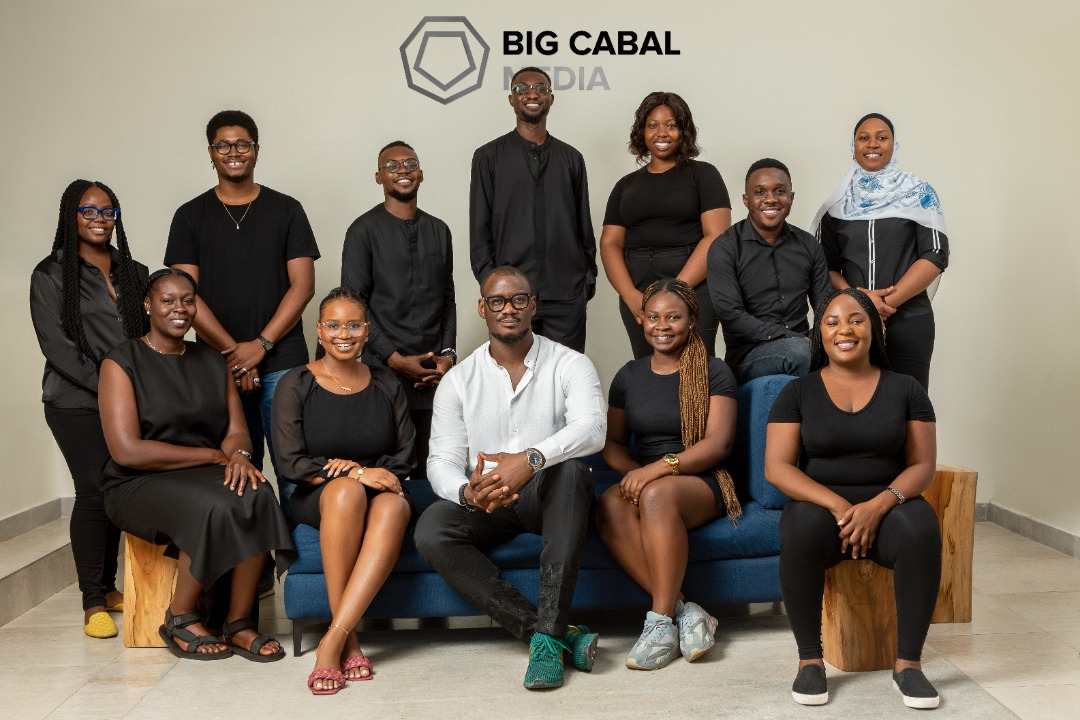
A new report from Africa’s foremost digital economy consultancy, TechCabal (https://TechCabal.com) Insights has revealed that acquisitions have become more frequent in Africa’s tech ecosystem, showing signs of a maturing market. According to the report, 2021 saw 32 acquisition deals on the continent. At the end of Q3 2022, there were about 43 acquisition deals, signaling a consolidation trend.


After two years of continuous growth in VC investment, funding announcements have hit a plateau. Startups have resorted to cutting costs to extend their runway, and acquisition deals have become necessary for survival, particularly with startups operating in the same market. The number of acquisitions between startups operating in the same market increased from 31% in Q2 to 52% in Q3 2022.


The State of Tech in Africa Report compiled by TechCabal Insights, also found that the average seed ticket size remained stable at $2.5M in Q2 and $2.7M in Q3

The State of Tech in Africa Report compiled by TechCabal Insights, also found that the average seed ticket size remained stable at $2.5M in Q2 and $2.7M in Q3.


A new narrative has emerged in Africa in recent years, embodied by the exponential growth of funding for technology startups. Investment in African startups grew 18x between 2015 and 2021 and 2x faster than global rates between 2020 and 2021. However, beyond the funding stories, there are the quieter tales of exits. By the end of H1 2022, African-focused private capital investors had already made 22 full exits, representing about a 29% increase compared to the 15 exits made in 2021 H1.


Commenting on the findings of the report, Olanrewaju Odunowo, Head of TechCabal Insights, said “When it comes to Africa’s evolving tech ecosystem, appropriate context and nuances must be taken into account. Data without context is imbalanced and misleading and can lead to the wrong outcomes. Beyond crunching the numbers, we have gathered robust insights drawn from primary interviews with leading industry experts. Our aim with this report is to present easy-to-digest insights and data points that anyone – from founders to investors – will find valuable. ”

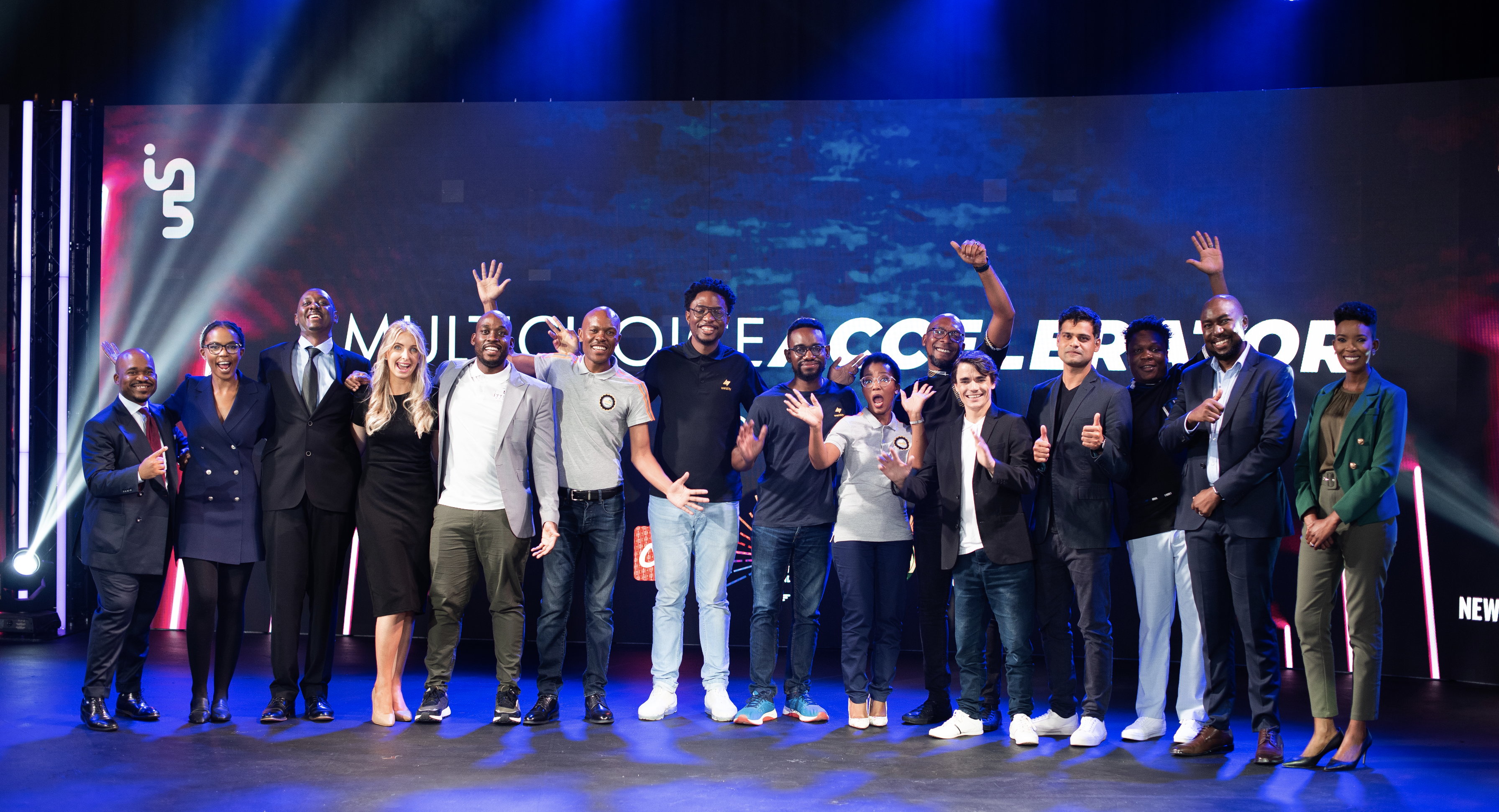
Following the success of the MultiChoice (www.MultiChoice.com) Africa Accelerator (https://bit.ly/3OtthRz) Programme, which secured $16 million (USD) of funding for six emerging businesses last year, the programme has been expanded to eight more countries across Africa.


Many more small businesses in Africa’s technology sector now have the chance to benefit from the 2023 programme, which provides the skills and opportunities needed to attract transformative business funding.

“We’re really excited to be expanding the MultiChoice Africa Accelerator Programme to more African countries,” said Calvo Mawela, MultiChoice Group CEO, announcing the launch. “It’s part of our long-term commitment to growing and multiplying Africa’s technology potential, which is critical to our future growth.”

The MultiChoice Africa Accelerator Programme, which kicked off during Global Entrepreneurship Week,  is aimed at established start-ups and small enterprises in specific technology sectors – healthtech, agritech, fintech, edutech, the circular economy and the creative industries.

“There is such incredible business talent across Africa,” said Mawela. “MultiChoice Africa Accelerator is an opportunity for investors and small enterprise to collaborate to multiply the impact of this talent and scale it across Africa.”

We’re really excited to be expanding the MultiChoice Africa Accelerator Programme to more African countries

Having started in South Africa in 2021, the MultiChoice Africa Accelerator is expanding to Ivory Coast, Senegal, Nigeria, Ghana, Kenya, Zambia, Angola and Ethiopia. The initiative equips emerging entrepreneurs to secure funding and scale up their businesses, and also provides opportunities to pitch to international investors.

African Development Bank President Dr Akinwumi Adesina has previously noted (https://bit.ly/3U0gRSu) that, “the private sector is Africa’s growth accelerator”, and several (https://MSEA.go.ke) African (https://SMEDAN.gov.ng) nations (http://www.DSBD.gov.za) have backed small-business development as part of their economic strategy. The MultiChoice Africa Accelerator dovetails with these development objectives.

The MultiChoice Africa Accelerator Programme is an initiative of the MultiChoice Innovation Fund, in collaboration with Dubai-based business incubator Companies Creating Change (C3) (https://www.WeGrowwithc3.com), which gives entrepreneurs access to the tools, skills and financial support to grow their business. MultiChoice has also partnered with EOH, a tech services company who will bring their expertise to the table especially in terms of tech advisory, development sprint and technical support.

The first phase of the MultiChoice Africa Accelerator Programme sees public and private-sector partners in each country nominating businesses or entrepreneurs for the programme. From there, 29 of the start-ups embark on an intensive virtual training course. The initiative is aimed at established businesses that are already operating and looking to scale up by attracting further investment.

“Start-up founders get to learn everything from how to properly research your business sector and your market, to how to create a niche for your business,” says Boitumelo Monageng, of Swypa, one of last year’s finalists. “During the workshops we were encouraged to dig deeper and I realised that we have the potential to compete on a much larger scale.”

The virtual training course takes place over several weeks, teaching start-up owners media skills, how best to market their businesses to investors, how to create attractive business plans, and to know what investors are looking for.

Later, the entrepreneurs will come together at a finals event, where 11 start-ups will be selected for the final pitch phase. They will attend a dedicated C3 boot camp to learn how to shape their story for international investors, and to get “pitch ready” before their big presentations.

“We believe SMEs in the technology, sustainability and creative sectors will be fundamental to the next phase of Africa’s growth,” says Mawela. “The MultiChoice Africa Accelerator is geared to finding the most promising start-ups, and empowering them to play this critical role.”