
KnowBe4 releases overall 2022 and Q4 2022 global phishing test reports and finds business-related emails continue to be utilized as a phishing strategy and reveal top holiday email phishing subjects

Access Multimedia Content

TAMPA, United States of America, February 1, 2023/ — KnowBe4​ (www.KnowBe4.com), the provider of the world’s largest security awareness training and simulated phishing platform, announced the results of its 2022 and Q4 2022 top-clicked phishing report. The results include the top email subjects clicked in phishing tests, top attack vector types, holiday phishing email subjects and more insightful information that reveal the most popular phishing email tactics.​ ​

Phishing emails continue to be one of the most common and effective methods to maliciously impact a variety of organizations around the world – everyone is a potential victim. Cybercriminals constantly refine their strategies to outsmart end users and organizations by changing phishing email subjects to be more believable and attention grabbing. This shift in phishing tactics over time is evident in the increasing trend of cybercriminals using business-related email subjects.

Business phishing emails are lucrative and successful because of their potential to affect a user’s workday and routine. These include emails from HR, IT, managers and web services such as Google and Amazon. KnowBe4’s 2022 phishing test results reveal that for the year, nearly 50% of email subjects were HR related, while the other half were related to career development, IT and work project notifications. These types of emails bait recipients into opening them and are likely successful because they create a sense of urgency in users to act quickly, sometimes without thinking and taking the time to question the email’s legitimacy.​

Additionally, this year’s phishing tests revealed the top vector for the year to be phishing links in the body of an email, which has stayed consistent for the last three consecutive quarters. The combination of these phishing tactics is clearly a working strategy for cybercriminals but detrimental to users and organizations as they can lead to cyber attacks such as business email compromise and ransomware.

Along with an increased utilization of more business-related emails and links within emails, the Q4 2022 phishing test also shares the top holiday phishing email subjects. The holiday season is one of the busiest times of year for online activities and cybercriminals count on end users having their guards down when it comes to staying alert and spotting phishing emails. Like general phishing email subjects, holiday phishing email subjects consist of emails from HR and IT, however, they are also tailored to the holiday season and the festivities that typically happen during that time of the year by mentioning holiday parties, gifts, food and more.​

“Cybercriminals are smart and pay attention to what works and what does not when it comes to effective phishing emails,” said Stu Sjouwerman, CEO, KnowBe4. “This is why we see email subjects evolve and upgrade over time to keep up with end users and what they may be susceptible to. Phishing emails are a year-round threat and remain a challenge during the holiday season as well – holiday phishing emails are the one gift that no one wants to receive in their inbox. KnowBe4’s phishing test reports emphasize the importance of new-school security awareness training that educate users on the latest and most common cyber attacks and threats. A strong security culture and an educated workforce is an organization’s best defense to remain vigilant and stay safe online from cybercriminals and their attempted threats.”

To download a copy of the 2022 and the Q4 2022 KnowBe4 Phishing Infographics, visit here (https://bit.ly/3YfF7SU) and here (https://bit.ly/3XX2wZQ).


 

The 12-year-old Nigerian child prodigy Kanyeyachukwu Tagbo – Okeke recently held his first exhibition at Vancouver Canada at the prestigious Vancouver Convention Centre. Kanye has over time exhibited in many countries of the world and recently, Canada.
 Art Vancouver is one of the biggest art shows in Canada and Kanyeyachukwu made history by being the youngest at the exhibition and one of the few from Africa to showcase his works.
Kanye has over the years put Nigerian in the art world, especially in abstract painting. Kanye art works has been a part of his project in contributing and bringing spotlight to autism and plight of children with autistic challenge.
According to the organisers of Art Vancouver “We were so thrilled to showcase Kanyeyachuku Tagbo-Okeke’s works at Art Vancouver 2022. The young creative artist defies the odds daily as a kid living with Autism, and as a contemporary Abstract Artist Extraordinaire, Kanye defines Autism; it doesn’t define him”.
Founded in 2015 by non-profit Vancouver Visual Art Foundation (VVAF) Art Vancouver was established by an accomplished artist and curator, Lisa Wolfin with a group of dedicated volunteers. They have the vision of being the premier destination and event that bring global awareness to visual arts. Art Vancouver is an international art fair held annually in a world-class location at the Vancouver Convention Centre West, where Kanye Exhibited at Hall A.
On discovering the creativity of Kanye at a young age, the parents Mr and Mrs Tagbo  Okeke  said ” we noticed  Kanye scribble a lot when he was attending  Cradle to Crayon in 2011 but it started manifesting well when he was in pre K at  the American International School Abuja and then attended Oakland International School around 2016 before he was moved to  Aduvie Primary school in 2019. It was in these institutions that various interventions were given to him to help him to focus. He  graduated from Aduvie primary school in July 2022 and started Aduvie secondary school just this September. These schools have made a great impact in his life. This with  Zeebah Foundation and OLG Autism Foundation. They help in his therapy and very instrumental to his creativity.
With his solo booth dedicated to his works, there was a spotlight on one of his paintings known as expression of harmony which highlighted his works and contribution to autism. Kanye has over the years shown how kids with autism can make impact in life and contribute to artwork. With this milestone, Kanye work was used as a cover-page for the Art Vancouver catalogue. This has made Kanye’s work to be a feat being the youngest to have been featured.
Apart from Canada, Kanye over the years has been able to showcase and exhibit his works in various part of the word such as Vienna, Austria, New York, United States, Morocco, and now Canada, with so many awards and recognition from various organisations such as United Nations (UN) and others. Kanye has successfully brought awareness to the challenges of autism in Nigeria.  Many of the proceeds that come from these art works are being donated to Kanyeyachukwu Autism Foundation, a foundation that solely cater for autistic children from care to education and social support.


UNIVERSITY OF OTTAWA UNDERGRADUATE SCHOLARSHIPS FOR STUDENTS FROM AFRICA STUDYING ENGLISH


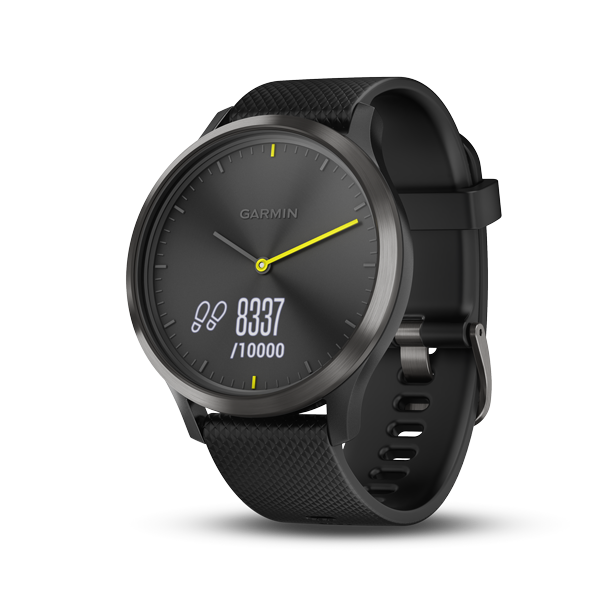
— Garmin (NYSE: GRMN) today announced vívomove® Trend, a hybrid smartwatch with a classic analog design plus essential smart features such as smartphone notifications and Garmin Pay™ contactless payments. A stylish way to stay connected and keep track of health and fitness data, vívomove Trend includes features like all-day stress tracking, sleep score, preloaded activities and more. Plus, stay on the move longer with a battery life of up to 5 days in smartwatch mode and, when it is time to charge, users can now enjoy the convenience of wireless charging with most Qi-certified charging pads (sold separately).1


“Striking a sophisticated balance between both fashion and function, vívomove Trend was created to complement the everyday lifestyle,” said Susan Lyman, Garmin vice president of global consumer marketing. “The small, elegant design coupled with popular health, fitness and smart features makes it easy to wear vívomove Trend anywhere – from work to the studio and everywhere in between.”


An everyday accessory


Designed to look like a traditional analog watch, vívomove Trend includes real ticking watch hands and a full-dial hidden display that only appears when needed. When using the touchscreen, the watch hands will dynamically move away, making it easy to view health stats, smart notifications and more.


Available in several fashionable colorways – including Slate/Black, Peach Gold/Ivory, Cream Gold/French Gray and Silver/Mist Gray – vívomove Trend is accentuated by a stainless-steel bezel, domed glass and a comfortable silicone band.


Essential smart features


Stay connected – even on the go – with vívomove Trend. Directly on the wrist, receive text messages and view social media updates, emails and more when the watch is paired with an Apple® or Android™ smartphone. Users with an Android smartphone can even respond with quick-reply texts directly from the watch. While out and about, breeze through checkout lines and quickly pay right from the wrist with Garmin Pay contactless payment solution through participating banks. Safety and tracking features provide peace of mind by allowing the user to send a message with their live location (if available) to chosen contacts, or the device can send a message automatically during certain outdoor activities.2 What’s more, users can see their health and fitness information, connect and compete with friends, sign up for challenges and more in the free, Garmin Connect™ smartphone app – no subscription necessary.


Live well


Loaded with premium health monitoring features, vívomove Trend users can easily get insights on their well-being all day, every day.3


  • Body Battery™ energy monitoring: View current energy levels throughout the day to find the best times for activity and rest.
  • Wrist-based heart rate3: Track heart rate 24/7 and receive abnormal heart rate alerts (high/low)4 when the body is at rest.
  • Sleep monitoring and Sleep Score: Gain a better understanding of how the body is recovering with Garmin’s latest and most advanced sleep monitoring feature. Every morning, receive a personalized score for last night’s sleep and view the different sleep stages as well as stress, Pulse Ox5 and respiration data.
  • Pulse Ox: Monitor blood oxygen saturation levels at any time during the day – or at night while asleep – to learn how well the body is absorbing oxygen.
  • Stress tracking: Gain insights into how calm, balanced or stressful the day has been and receive relax reminders when stress is detected. The built-in breathwork activity can also be used to encourage mindful breathing by tracking respiration, average heart rate and change in stress levels.
  • Women’s health tracking: Use the Garmin Connect smartphone app to track a menstrual cycle or pregnancy. Log symptoms, get exercise and nutrition education and more. Plus, use the Women’s Health Tracking app on the watch to see and log details right from the wrist.


Get active


Get out and move with popular fitness features on vívomove Trend. Find a new passion or switch up a workout with built-in activity profiles for yoga, strength, cardio, running and more. The smartwatch will even connect to a compatible smartphone’s GPS to accurately track distance, pace and speed during outdoor walks, runs and bike rides. No matter what the day holds, users can monitor their activity around the clock with step counting, floors climbed, calories burned, intensity minutes and more. Plus, vívomove Trend includes Garmin’s fitness age feature, which will consider the users’ chronological age, weekly vigorous activity, resting heart rate and BMI or body fat percentage4 to estimate if their body is younger or older than their actual age and provide tips to lower their fitness age.


Available now, vívomove Trend has a suggested retail price starting at R 6 599.00. See vívomove Trend on display during CES 2023 at the Garmin booth, #3641.


Engineered on the inside for life on the outside, Garmin products have revolutionized the wellness industry. Committed to developing wearables and health measurement tools that help people of all activity levels lead healthier lives, Garmin believes every day is an opportunity to innovate and a chance to beat yesterday. For more information, visit Garmin’s virtual newsroom, email our press team, connect with @garminwellness on social media, or follow our adventures at garmin.com/blog.


1 May not be compatible with upright charging stands or wireless chargers built into vehicles.

2 When paired with a compatible smartphone; see Garmin.com/ble. For safety and tracking features requirements and limitations, see Garmin.com/safety.

3 Activity tracking accuracy.

4 This feature only alerts you when your heart rate exceeds or drops below a user-selected number of beats per minute after a period of inactivity. It does not notify you of any potential heart condition and does not treat or diagnose any medical condition or disease. Always defer to your health care provider for any heart-related issues.

5 This is not a medical device and is not intended for use in the diagnosis or monitoring of any medical condition; see Garmin.com/ataccuracy. Pulse Ox not available in all countries.

6 Index™ or Index S2 smart scale (sold separately) required to use body fat percentage for fitness age feature.


Policy makers and stakeholders in the digital economy ecosystem in the West African sub-region will converge in Abuja from January 31 to 1st February for the Digital Economy Regional Conference to discuss the future of digital economy and intensify regional public private partnerships for the region.

The event is being hosted by the Ministry of Communications and Digital Economy on behalf of the Federal Government of Nigeria, in collaboration with the World Bank.
The Minister of Communications and Digital Economy, Professor Isa Ali Ibrahim Pantami, who will deliver the keynote address at the event will be joined by his Federal Capital Territory (FCT) counterpart, Mallam Mohammed Bello, to welcome Ministers and top government officials from the subregion.

The Conference, with the theme “Positioning West Africa’s Digital Economy for the Future”, will provide a platform for countries in the region to discuss issues that will strengthen the digital economies in West Africa and by extension the continent of Africa.

The Ministry of Communications and Digital Economy said the conference will also create an avenue for peer review to accelerate digital transformation and increase collaboration to secure partnerships within the region to strengthen the innovation and entrepreneurial ecosystem while intensifying regional public-private partnerships for digital economy funding, research, and development.

It is expected that the gathering will also provide an opportunity to showcase the progress made in the development of digital economy in the West African sub-region, identify winning strategies, discuss challenges, and prepare for the future in addition to creating awareness of the region’s needs in the areas of policies and framework for the digital economy and attracting private sponsors for digital transformation in the region.


St


The Permanent Secretary, Ministry of Interior, Dr. Shuaib Belgore, today in Abuja inspects on-going projects at the National Fire Academy Sheda; after which he directed the Controller General, Federal Fire Service to commence necessary arrangement for completion of remaining work and timely commissioning of the entire projects.

The Perm Sec sees the projects as further contribution to safety of lives and protection of properties of Nigerians and foreigners alike .

Dr Belgore, got a briefing on inspected projects which indicated that the Adminstrative Building has attained 50 percent completion while the Fire House Complex has reached100 percent completion, the execution level of the Breaking Apparatus Gallery Building is also put at 90 percent.

Other projects he inspected include the Multi Purpose Hall Building, the Staff Clinic, Male and Female Hostels, and the Common Room all of which have been completed and awaiting commissioning.

Giving a general overview of all inspected projects, the Permanent Secretary described the various works at the National Federal Academy, Sheda as impressive and thereafter directed the Controller General of the Federal Service to commence immediate arrangement for their commissioning; for Nigerians to start reaping the benefits of Government investment in these projects.

Belgore also stated that under the 8 years Administration of President Muhammadu Buhari, the Federal Fire Service had experienced considerable leap in terms of funding and provision of infrastructural facilities compared to the state of affairs before the advent of this administration.

Noting that the Federal Fire Service is presently, grossly under staffed, he disclosed that his Ministry has written to the presidency for approval to recruit more hands to for optimal improvements in safety and rescue operations against impending disaster.
Belgore expressed satisfaction with general quality and level of job done concerning the inspected projects and called for fasttracking of remaining works to pave way for early commissioning.

In his response, the controller General of the Federal Fire Service ,Engr Jaji Olola Abdulganiyu, explained that aside the National Fire Academy in Sheda, Abuja it has an Annex in Lagos.

He also added that the Service has six Training Schools spread across the six geo-political zones of the country in Kankiya – Katsina State, Maiduguri in Borno state, Minna in Niger State, Ummahia in Abia State, Calabar in Cross River state and Abeokuta in Ogun State,.

Engr Jaji promised to do the needful towards total completion of the remaing jobs and timely commissioning of the projects as directed by the Permanent Secretary.
Dignitaries at the event include DCG T Agunloye, A & S, ACG Zagga Bulla, ACG P/E, ACG Tabari of Federal Operations and others .


Tango Matoti, Head of Tétris Workplace Optimisation at Tétris Design and Build explains how employers can reinvent the promise of their working spaces, and the technology it relies upon, to truly support and nurture all aspects of their workforce.


The hybrid age is raising fundamental questions about the value and purpose of the workplace, which will be impossible to solve without technology. Organisations that successfully utilise technology and nurture innovation to support their goals and employees will be well-positioned to take on new challenges with a greater competitive advantage.


The challenge? Knowing which are the right technologies for your organisational structure and workplace strategy.


The role of the office in a post-pandemic world

According to the latest research from JLL on Technology and Innovation in the Hybrid Age, navigating, implementing, and managing this new world will depend on intelligent and enabling technology – and rethinking the human experience of design.  As hybrid work is here to stay, organisations are considering how it can be organised to the needs and preferences of employees. Today, spaces, technologies, support services, acoustics and working patterns are being reconsidered through design to play an effective part in creating the right working environment.


Access to technology

The office is still considered an attractive destination because of its ability to provide access to the right set of technologies. 56% of employees find the technology in the office better than anywhere else but virtual collaboration also happens at home, from coffee shops, as well as in the office itself in almost the same proportions, with each needing support.  In practical terms, this means finding ways to facilitate effective meetings that include both in-person and virtual participants. Because the workforce is usually split between home, the office, or other locations on any given day, smaller rooms that are better equipped to facilitate this have quickly become important considerations, along with efficient and easy-to-use space-booking systems.


Reinventing work for a changing world

As organisations take a closer look at how to remain competitive by attracting and retaining top talent, it has become necessary to re-examine our collective understanding of the system of in-person work including what type of furniture is required, the role of natural light in creating wellbeing and how technology enables collaboration meaningfully for individuals to be at their best. For this to happen successfully, we need to better understand how individuals respond to different contexts and work types to help design work situations that empower people to perform. Better technology used in tandem with today’s design principles can help drive diversity and inclusion for many companies, allowing staff with disabilities to be included too.


Rethinking the human experience of design

In the face of the hybrid work challenge, there’s immense opportunity to reinvent the human experience of work and technology. Outdoor spaces, creative spaces, co-working spaces and learning spaces can be modified for focus and creativity. Enhanced brainstorming and project management tools are also exceptionally impactful and can be weaved into the fabric of collaboration to nurture a vibrant company culture. People generally think first of screen-based collaboration tools when considering how technology can enhance productivity in the office and at home. But new ways of working present an exciting chance to think bigger than screens. Many new technologies are emerging that focus on improving people’s engagement with others alongside their comfort in the workspace which contributes to collaboration, wellbeing and performance.


In an environment of near-constant distraction, the ability to focus and the potential for design to support real focus is highly coveted.  Concentrated individual work can be designed to be undertaken at workstations but also in informal open-work points or dedicated focus rooms. Although many hybrid offices now tend to focus on collaboration, enabling focused and private work is also a very important part of boosting performance in the office.


Technology that enhances the working environment

Moving forward, leading organisations are likely to focus on previously overlooked features such as the quality of acoustics and lighting, as well as soundproofing and wireless charging. Finding ways to repurpose pre-existing technology and deciding where to invest in higher-spec technology will be crucial in a company’s journey towards enhancing physical workspaces and making meetings more productive. At an infrastructure level monitoring and controlling air quality provides security for people so that it is safe for them to collaborate in a physical space. Effective booking systems enable people to book meeting spaces confidently.  Linking booking systems to local transport and traffic reports can give teams the power to reschedule or change meeting spaces to avoid wasting time unnecessarily.  These are simply a few examples of how we can tap into technology to meet the changing needs of an increasingly mobile workforce.


How can employers marry the tech and human needs of their workforce?

The starting point is taking time to survey and understand employees’ needs and expectations. Workspaces can be finetuned to ensure employees have access to the technological tools they need while enhancing our very human needs for comfort, concentration, safety, and wellbeing through design you can feel.


While job interviews are the place for a company to find out about a prospective employee, they’re also a chance for the interviewee to find out if they want to work for, and with, the people interviewing them.

To spot someone who might end up being a difficult boss, The Wall Street Journal writes, there are some things to look out for and steps to take.

🤝 Meet in person: Choosing an in-person interview can give you many extra clues about how a potential employer interacts with people. If your interview is over lunch or coffee, you can also see how the interviewer treats service staff.

🔉 Ask direct questions: If you want to know more about a specific aspect of the role or working culture, ask about it. For example, if it turned out you were just the latest to leave in a long line of people who couldn’t work with your last manager, ask the interviewer how many people have previously been in the role.

🔍 Look out for what they don’t answer: If a potential employer won’t allow you to speak with other direct reports to get a sense of the work environment, that’s a red flag. Equally, if you ask basic questions about the role and the potential manager is not able to provide adequate answers, that’s a problem. If you don’t know what is expected of the role, you can’t know how to succeed.

💭 Would you leave a job because of a difficult boss? If you have in the past, how did it affect how you approach interviews and new roles? Tell us in the comments.


#invention #tech #techtok #technology #technologynews #codefestinternational #codefest #career #academy #academic #academia #fyp #viralvideo #viral #job #online #fastgrowing #information #officejob #boss #learning #beyourownbosstoday #university
16h


The world of financial services is changing – for the better. A multitude of virtual banking and payment options, cardless and accountless services, and now, Banking as a Service (BaaS) are making financial inclusion the norm instead of a privilege, says Anton Coertzen, CCO of leading fintech enablement partner Ukheshe


BaaS is the latest technology making waves in the financial services world and Gartner predicts it will hit mainstream adoption within two years. BaaS is one of four technologies that Gartner says have the potential for high levels of transformation in the banking sector – the others being chatbots, public cloud for banking and social messaging payments apps.


A Deloitte report also says BaaS is becoming ubiquitous. “It’s reconfiguring the banking value chain, opening the door to disintermediation, and enabling new sources of growth,” it notes.


How does BaaS work?

BaaS came about because the ability to offer banking services such as cards and loans as a non-bank enterprise improves the customer experience and boosts revenue. However, offering banking services requires a banking licence that is difficult to obtain – it also requires significant capital and compliance with strict regulations.


BaaS allows licenced banks to integrate their services directly into the products of non-bank businesses. This means any business can offer its customers digital banking services such as mobile bank accounts, debit cards, loans, and payment services, without needing to acquire a banking licence. The non-financial business can also distribute these financial products under its own brand.


All of this happens through third-party distributors. These distributors build tech that allows digital banks, fintechs, and other third parties to connect directly with a bank’s systems via APIs.


In a nutshell, it enables embedded finance: banks integrate fintech or other FSP products into the banking journey (BaaS), while non-financial companies embed banking products into their own services (embedded finance).


The benefits of BaaS

BaaS is reconfiguring the banking value chain by enabling third-party distributors to offer banking products and services. It’s opening the door to disintermediation and enabling new sources of growth for all parties – whether the bank, the fintech enabler, or the third party.


Ukheshe offers banks and other financial institutions a cloud-based API-first BaaS platform that can be white-labelled – essentially allowing the bank’s customers to offer embedded finance offerings to their own customers, under their own brand. Examples include wallet as a service, card as a service, KYC as a service, and more.


Here are just some of the benefits of Eclipse within BaaS:


For banks:

  • Increased sources of revenue: Banks BaaS with Eclipse offers increased sources of revenues for their customers. Not only are banks able to enhance their value proposition to their existing consumer and merchant base, but they could also pivot to be the bank of choice for other Fintechs and Telcos in the market.
  • Cost savings: Banks can leverage third-party technology and infrastructure. Eclipse provides a dedicated environment with a frontend that is specific to banking institutions’ specific needs.
  • Increased customer insights: more customers mean increased insight into customer preferences and experiences. Eclipse provides exactly that – BaaS that has the customer at the heart of every solution, with less hassle, all through a single platform.


For non-banks and fintechs:

  • Less red tape: BaaS allows fintechs and businesses to bypass banking licence regulation by integrating directly with a bank’s system through banking APIs.
  • Increased customer trust: businesses can leverage consumers’ trust in banks to increase their customer base.
  • Higher competition: BaaS enables competition in financial services by enabling non-banks to offer core banking services. This means that more players can enter the market, innovation gets a push, customers get access to new products, and it leads to greater financial transparency.


The future

BaaS will become to fintech what Amazon Web Services is to data centres – a game changer; an absolute essential.


Through its multi-functional platform, Eclipse, Ukheshe has long been ahead of the fintech curve by offering both BaaS and embedded finance – even though it falls under the Software as a Service (SaaS) category.


Our strategy has always been to partner with banks, telcos and fintechs to shape their digital payment offering to their customers. It is core to our services to help shape their BaaS solution. We, in effect, enable the enablers and increase financial solutions to banking customers


Business email compromise (BEC), where criminals steal money by simply ‘asking for it’, is on the rise. According to an Interpol report, BEC is one of the top five digital threats in Africa – and South Africa is the most likely target, shouldering 34% of the continent’s attacks.


Ryan Mer, CEO of eftsure Africa, a Know Your Payee™ (KYP) platform provider, says these attacks can take many forms, but are typically orchestrated through emails that appear to come from legitimate sources. “In many cases, criminals intercept email accounts or pose as known clients or suppliers of an organisation and request the transfer of funds. While legislation like the Financial Intelligence Centre Act (FICA) and Protection of Personal Information Act (POPIA) requires the responsible gathering, scrutiny, and storage of information, BEC remains a threat to any organisation and its clients.”


Though antivirus programmes help to some degree, BEC requires user vigilance more than anything.


Here are three things you can do to avoid becoming a victim:


Education and training

BEC scammers most frequently target executives and other employees with access to company finances, though any employee can fall victim. Often, they will gain access to a company’s network via spear-phishingmalware and fake email accounts and websites. They may also spend long periods researching vendors, billing systems and even employees, especially top executives, and those in accounts payable.


“The most common trick is to select a legitimate invoice from a trusted associate or supplier and modify it, for example, by changing the bank account and contact details,” says Mer. “They will then send this ‘invoice’ to the target from an email address that looks similar to that of the associate, requesting payment. More sophisticated attackers will even find out when an executive is out of the office to send an email that looks like it’s from him or her to a targeted employee, requesting that money be urgently transferred.”


All employees should be equipped with skills and tools to spot threats and respond effectively. This should include systems to validate any changes in vendor payment details. If this is done by phone, ensure previously known phone numbers are used, not those in the email request. Encourage employees to actively verify money transfer requests, for example by walking into senior executives’ offices.


Protect with technology

Mimecast’s 2022 state of email security report found that 87% of South African organisations were made aware of a spoofing attack using a lookalike domain or website clone, with 17% seeing more than ten such attacks in the past year. For this and many other reasons, 98% of South African companies either use or plan to use a protection service this year, while 86% use or intend to use DMARC (domain-based message authentication, reporting and conformance) to protect their email domains from impersonation.


But email protection can only do so much. Independent third-party verification systems such as eftsure’s “Know Your Payee” solution can be much more effective by automating payment checking and supplier verification, saving time on manual processes and reducing human error. “Our fraud tech platform protects your organisation by verifying key supplier details, including the banking details you use to process electronic payments. Through payment screening, you can ensure that the account number is correct before releasing funds. This process makes sure that the funds are being sent to the legitimate recipient,” says Mer.


Email hygiene

Mer gives these email best practice tips to further reduce your risk:

  • Establish email rules that flag emails with extensions that are similar to company emails and emails where the “reply” email address is different from the “from” address shown. Colour coding and labelling can also help by automatically sorting internal from external accounts.
  • Implement privacy and security steps when you first create an email account for new staff members. This should include strong passwords at a minimum, preferably with multi-factor authentication as an extra layer of security.
  • Encrypt email messages to protect sensitive information by enabling secure/multipurpose internet mail extensions (S/MIME) on Outlook or Gmail. This not only protects the content of emails but uses digital signatures to verify the identity of the sender.
  • Use secure email gateway providers to block email-based threats like spam, viruses, malware, or denial of service attacks before they reach your mail server.
  • Regularly review activity and sign-ins on email accounts to identify any suspicious activity.