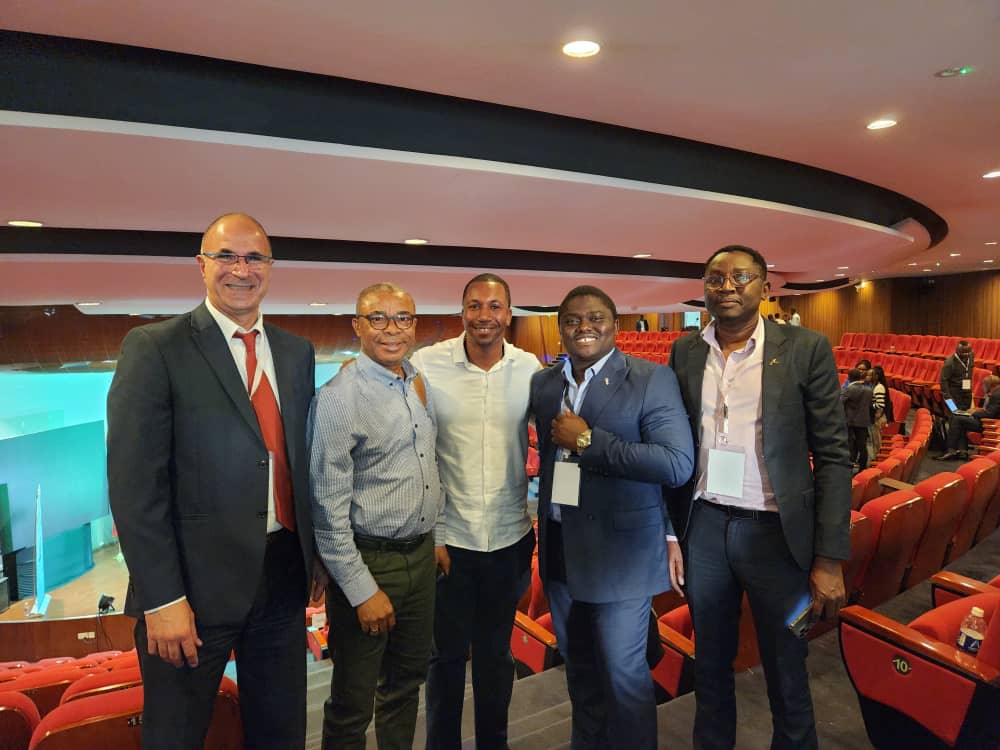

Big 5 Construct Nigeria returns to Lagos connecting 140+ exhibitors with 8,000 construction professionals in its third edition


·      Nigeria’s construction market is projected to reach $127.7 billion in value, with an annual average growth rate of 3.2% by 2026

·      Exhibitors from 25 countries including 4 country pavilions, namely China, Türkiye, Egypt, and Austria to showcase cutting-edge products & services covering the full construction cycle

·


Nigeria boasts Africa’s largest economy, surpassing $450 billion in GDP. Its thriving construction sector drives GDP growth, fueled by improved economic conditions, higher oil revenues, and significant government investment in infrastructure projects. Big 5 Construct Nigeria, which returns to Lagos and takes place from 5-7 September 2023 at the Landmark Centre, further bolsters the sector’s expansion.


According to ABiQ, Knowledge Partner of the event, the country’s construction sector has reached an impressive $127.7 billion, with an annual average growth rate of 3% between 2023 and 2026. With Big 5 Construct Nigeria, industry professionals get a chance to network and discover an abundance of business opportunities at the three-day exhibition. Registration is open to attend the event for free.


“In its 3rd edition, as Nigeria’s largest construction event, Big 5 Construct Nigeria witnesses a remarkable increase in the presence of construction technology and digital construction companies, reflecting the industry’s growing emphasis on innovative solutions. Embracing technology not only signifies progress in the industry but also opens exciting possibilities for growth and efficiency of Nigeria’s construction sector,” said Ben Greenish, Senior Vice President – Construction, dmg events. “Some of the prominent names include Romanov Steel Detailing from the UAE and Stretford Hill from Nigeria.”


Big 5 Construct Nigeria will convene a comprehensive gathering of manufacturers, suppliers, and service providers, all in one place showcasing innovation and cutting-edge products & services in building interiors, finishes, materials, and tools to HVAC R, solar solutions, urban design landscaping, MEP services, digital construction, smart buildings, and much more.


Over 140 companies will be exhibiting at the event from countries including, Germany, Belgium, Italy, United Arab Emirates, Ghana, India, Poland, Singapore, Lebanon, Saudi Arabia, and Netherlands. This year’s edition will host five country pavilions, namely China, Türkiye, Egypt, India, and Austria.


Local Nigerian exhibitors will include Armorsil, Likea Projects and first-time exhibitor, AVN Global Ventures (JAQUAR WORLD). BICC cables and Jadeel Steel are among Egyptian brands that will exhibit, while Neuce Ghana Paints Industry Limited will represent Ghana. Saudi Arabia’s National Panels Company for Industry and the UAE’s Roofings Middle East, Polymer Vision Technology and Age Steel will also be among exhibitors.


Further international brands to expect at the three-day event include Lu’an Intco Industries and Ningbo Holden Cable from China; Ficep from Italy; Buzon Pedestal International from Belgium; Forner from Poland; and Asona International from the Netherlands.


Big 5 Construct Nigeria will also host first-time exhibitors including German brands Masa and BAUER Maschinen; Boustani & Partners from Lebanon; Türkiye’s Wavin Tr Plastik San and Entegre Harc Sanayi Ve Tic; ALmix Asia Asphalt Equipment from Singapore; and India’s Bull Machines and Surie Polex Industries.


At Nigeria’s largest construction event attendees can engage in 22 CPD (Continuous Professional Development) accredited Industry Talks. By attending these sessions, professionals will get a chance to collect CPD points, which is an industry-wide requirement to build on practical knowledge applied to the construction profession. As well as project managers attending the Project Management Talks will receive exclusive PDU (Professional Development Units). Attendees will also get CPD points from Project Management Institute and Nigerian Institute of Quantity Surveyors when attending their sessions.


These Industry Talks will feature 35 speakers and the insightful sessions will run under four key themes including technology, project management, architecture & design, as well as a significant new theme, facilities management. “The launch of Facilities Management Talks provides a platform for the industry to discuss measures to maintain existing infrastructure, including buildings, utilities, roads and public spaces (all facilities), as well as reducing downtime and enhancing overall efficiency,” Greenish noted.


Confirmed speakers include Patrick Ogunleye, Architect, Federal Ministry of Works and Housing; Dr. Ibikunle Dashur, President & CEO, CONSTRUCT MACHE GROUP; Arc. Omoyemi T. Olayiwola, Director, Policy and Advocacy, Green Building Council Nigeria; Taiwo AIYEPE, Principal Architect, Lagos State Ministry of Works, and Infrastructure; and Aderemi Dada, Founder & CEO, Spacefinish Africa.


Returning to Big 5 Construct Nigeria with a stronger presence, CDK Integrated Industries, a leading manufacturer of premium quality sanitary ware, ceramic and porcelain tiles, has joined as the Gold Sponsor. “Supporting the growth and quality of Nigeria’s construction sector is important to us. We’re looking forward to the event, which will provide a chance to foster collaborative business relationships, exchange ideas and stay informed about the latest trends and developments in Nigeria’s construction landscape,” said Abimbola Onagbade, Brand and Marketing Communications Manager, CDK Integrated Industries.


Associations and organizations, including The Chartered Institute of Building (CIOB), Nigerian Institute of Quantity Surveyors (NIQS), BIM Africa, Project Management Institute (PMI) and OSH Association are also supporting the event, in addition to ABiQ. Sana Group is the Lanyard Sponsor for Big 5 Construct Nigeria.


“We look forward to welcoming attendees to unlock the doors to growth and prosperity, and to engage with the key buyers and decision-makers shaping the future of mega projects in Nigeria’s construction sector,” Greenish concluded.




Are traditional executive structures equipped to keep pace with technology? There’s a case for businesses that want to get ahead to consider working with an Office of the CTO to bring a multidisciplinary approach to IT projects, says Wayne Yan, CTO at Dariel Software.

Consider the traditional executive structure: a CTO’s primary task is to exploit technology for the end customer’s benefit, distinct from a CIO who optimises tech for internal efficiencies. But is this sufficient in our rapidly evolving digital age?

As a software services company, Dariel navigates several industries, each with a diverse technological landscape. The skills, knowledge and expertise are simply too vast for a single individual. No one person can navigate the nuances of banking, healthcare, mining, insurance, and more. Nor can one person keep pace with the swift technological advancements across these sectors.

That’s where the Office of the CTO comes in. A multidisciplinary team dedicated to creating and commercialising disruptive technologies; it effectively breaks the mould of the typical C-suite structure wherein each executive is a specialist by nature. This team not only generates ideas for novel products and innovations but also brings these concepts to market, aiming to deliver profit and revenue. Customer-centricity is at their core – they aren’t just crafting technology for technology’s sake; they’re creating solutions that benefit the end user.


As we reconsider our management structures, it may be time to revisit, or at least reimagine the role of the traditional IT project manager. After the IT industry embraced Agile, project managers became increasingly rare and then entirely absent from many organisations. The industry sought agility, flexibility, and speed, which seemingly clashed with traditional project management.


The industry now seems to miss the steady hand of experienced project management. We are seeing a deficit in forecasting and tracking capabilities, and a lag in removing obstacles to progress. Was the exclusion of project managers the cause of this? Or perhaps the shift to Agile itself, or even a loss of IT skills to overseas markets? Whatever the reason, it appears the industry dispensed with project managers at a high cost.


The perceived lack of value due to poor-performing project managers led many organisations to disregard the role altogether. Still, the pendulum might be swinging back. We must remember that industries evolve cyclically, and just as the need for project managers was once questioned, their value could be re-evaluated.


Organising, managing, structuring, and orchestrating IT projects are invaluable skills. Many businesses are enticed by the notion of self-managed teams, but without appropriate guidance, these teams often falter, or worse. A project manager, juggling multiple tasks, maintains a consistent vision and ensures that the project stays on course.


The journey to reestablishing project management within the industry won’t be painless. However, navigating this challenge is essential to preserving the progress made and the future success of our industry.


As businesses grapple with how best to accelerate their digital journeys, it’s clear that a narrow, singular approach won’t suffice. The Office of the CTO offers a compelling, multidisciplinary approach that leverages the strengths of each team member and focuses on adding real value where it matters most.

The traditional sales model – sell them on the benefits, close the sale, deliver the product – is outdated in the digital world. Modern salespeople require different skills and far greater knowledge to sell the cloud, says Andrew Cruise, Managing Director of Routed, a local VMware Cloud Verified provider and VMware Principal Partner.

There can be little doubt that cloud computing is one of the key enablers of digital transformation. With its ability to enable businesses to modernise their IT infrastructure and adopt the latest technologies like artificial intelligence (AI), as well as to innovate more rapidly, it is no surprise that some in the industry have described it as the largest change in data centre infrastructure since the 1980s. 


This is borne out by statistics that show the local cloud computing market experienced growth of 38% last yearwhile the same report indicates that by 2027, the cloud computing market in SA should be worth some R79.7 billion.


While the impact of this growth is being widely felt, one group it has had a profound impact on is technology salespeople – changing both what, and how, they sell.

Offer a better experience

For cloud sales people, the first thing to recognise is that unlike in the past, you aren’t trying to sell a new product or new way of managing data, so much as you are focusing on the customer’s existing products and how your solutions can offer a better experience.


Selling the cloud to a customer is akin to selling them a car – your sales pitch would not be about explaining that a car is faster than using a bus. Rather, the pitch would focus on why they need a new model and why your brand is best.


It is also critical to have strong listening skills, and to listen carefully to your leads. Be willing to ask them key questions and listen intently to their responses, in order to clearly understand what they know and afford you the chance to speak their language. Remember, you don’t want your client to get lost in the jargon, but neither do you want to appear condescending when explaining it. 

Do your research

It should be obvious that a good sales pitch begins with quality research. This means not only understanding the cloud itself well, but also the specific client’s business. With such foreknowledge, you should be able to develop a plan to close the sale based on their current knowledge, language and needs.


Armed with effective research, salespeople can direct the client to focus on the tangible benefits and solutions that these services bring. You should be prepared to communicate the critical benefits succinctly, such as how the integration of cloud technology can deliver stronger security, improved cost savings, and better real-time collaboration opportunities.


If you hone in on the most practical advantages, you can more easily demonstrate how cloud services can revolutionisthe way they do business. And achieving this will translate into stronger relationships with the client, that ultimately lead to further successful deals.


Tackle security concerns

Perhaps the single biggest concern for those not yet in the cloud is the perceived security challenge it represents. In fact, it has been reported that more than 60% of IT decision makers still consider on-premise security to be more effective than its cloud equivalent.

This creates unique problem for cloud solution salespeople – namely that before you can make further progress with a sale, you will have to allay these concerns. The best approach here is to frame a move to the cloud as a strategic shift in risk, as opposed to additional risk. You want to sell the idea that by choosing you as a provider, the client is essentially offloading their risk onto your operation.


At the same time, you must make your point that cloud solutions consistently improve operational efficiency. This means that the client can leverage economies of scale in ways that were not possible beforePlace the focus on the technology being evolutionary, rather than revolutionary. Ensure they understand the long-term benefits of the cloud – including the value of offloading risk – and position your business as one of the leaders in this ongoing evolution within the cloud space. 


Provide proof

Start small, to keep cost low for the client, and choose applications that, when improved by the cloud, will deliver value in the short term. Starting small also positions you to identify and address any implementation-related challenges, and be able to solve them on a more manageable scale.


With a smaller proof-of-concept approach, you help the client to become more at ease with the technology, while also demonstrating tangible benefits to them. As they begin to recognise the value of the investment, it becomes much easier to expand the scope of the engagement.


When choosing the pilot project, it should be something that addresses an obvious business need, and can thus establish an immediate benefit. If the scope is kept small, it will deliver value more rapidlyAt the same time, remember that it must still be a big enough project that the client’s IT team is able to begin developing their foundational cloud skills.

Continuous learning

The cloud salesperson needs to understand the customer’s business even better than the customer, in order to identify opportunities to change the way the customer does business. Of course, cloud is constantly evolving, which means that to always be in a position to identify such opportunities, the need to remain ahead of the cloud curve.


The key to achieving this is for the salesperson to move beyond the traditional approach of building the relationship and knowing the product. While these remain important to the sale, the ability to solve the complex problems the client faces, and thus becoma trusted member of the customer’s own IT team, is really what is key

And the best way to achieve continuous success is to stay ahead of industry trends – something that can only be done by inculcating a culture of continuous learning, and a dedicated focus on reading up on the latest trends and focuses in this arena. Keeping your knowledge on cloud up to date remains one of the best ways to position yourself as a knowledgeable and trusted advisor in the client’s eyes.


Providus Bank, renowned for its commitment to delivering exceptional banking experiences, proudly announces the grand unveiling of its latest architectural masterpiece – a cutting-edge banking facility designed and built by the esteemed Sujimoto Group.

With a vision to redefine simplicity in banking, Providus Bank embarked on a journey that transcended expectations, resulting in the creation of what is now heralded as the most opulent bank branch in Nigeria.No alternative text description for this image

A Glimpse Inside Nigeria’s Pinnacle of Luxury Banking

This extraordinary banking edifice boasts a symphony of opulent features and avant-garde amenities, setting new standards for the banking industry. A careful selection of premium elements, including Porcelanosa limited edition Noken Sanitary ware, Schneider technology, Zaha Hadid chandeliers, luxury spotlights, solar-powered car park lighting, an in-house water treatment plant, tensile stress poles, ACP façade, and high-quality tampered and reflective glass facades, grace the interior and exterior spaces of this architectural marvel.

A ‘Future Forward Wakanda’ Themed ATM Building

Among the exceptional features is a ‘Future Forward Wakanda’ themed ATM building, showcasing Providus Bank’s commitment to innovation and a forward-thinking approach to banking.No alternative text description for this image

Hands-On Involvement from Concept to Completion

The meticulous planning and execution of this project were personally overseen by topnotch designers, demonstrating a hands-on approach from the groundbreaking ceremony to the project’s triumphant completion. This unwavering dedication ensures that every aspect of the facility embodies Providus Bank’s commitment to excellence and customer satisfaction.

Providus Bank invites the public to experience the epitome of luxury banking by visiting this new landmark. The facility stands as a testament to Providus Bank’s unwavering dedication to providing not just banking services but an immersive and unparalleled experience for its esteemed clientele.No alternative text description for this image

In an era marked by a surge in online security breaches resulting in significant losses from data breaches and cyberattacks, the demand for a reliable and steadfast cybersecurity partner has become increasingly critical. Ethnos a CyberSecurity firm located in Lagos , renowned as “The Smart Choice for Reliable Cybersecurity Services,” is taking substantial steps to provide robust cybersecurity solutions to businesses across all sectors in Nigeria.

Fortify Your Defenses, Outsmart Cyber Threats, and Stay One Step Ahead.

As Africa’s premier cybersecurity and compliance management company, Ethnos Security is dedicated to delivering top-tier Information Security, Risk Management, Cybersecurity, and Compliance Management services to its esteemed clients.

Cybersecurity Solutions That Elevate

At Ethnos Security, a range of premium security solutions is offered to enhance digital defenses, exceed expectations, and ensure the highest standards of reliability. These services are designed to protect valuable assets with elite and robust security measures, backed by over 15 years of extensive experience across diverse industries.

Recently, Ethnos’ CEO, Peter Ejiofor, and Director of Service Delivery, Goodness Okpani, shared their expertise at Cyber Week Africa, hosted at the University of Nairobi, Kenya. Peter shed light on the critical intersection of healthcare and cybersecurity, emphasizing the need for data protection in the healthcare sector, while Goodness spoke as a panelist on the power of collaboration in fortification against cyberattacks.

Ethnos remains committed to staying at the forefront of cybersecurity trends and actively shaping the global dialogue. The company is also proud to be part of a global community that shares their vision for a more resilient and secure digital world.

Aquila by Ethnos is proud to be one of the sponsors of the inaugural TEDxpau event, themed “Rethink.” Aquila offers advanced scanning, protection, and monitoring features for mobile applications, analyzing application source codes to identify weaknesses, coding errors, and potential exploits.

May be an image of 1 person, dais and text
Peter Ejiofor, the CEO and Founder of ETHNOS

The experienced Ethnos Security team possesses the capabilities to assist, develop, create, and implement a unique security strategy tailored to align with your business objectives. Their comprehensive approach includes scoping, assessment, gap analysis, implementation, evaluation, continual maintenance, and reporting.

Compliance Certification (BAU)

Ethnos Security’s Business-As-Usual (BAU) services not only ensure compliance but also deliver tangible and intangible benefits that enhance your operations, reputation, and profitability. Specializing in ISO, PCI-DSS, and NDPR compliance certifications.

Vulnerability Assessment & Penetration Testing

The company conducts thorough manual and automated controlled penetration testing to identify potential vulnerabilities in your systems, networks, and applications, offering proactive security, compliance assurance, risk mitigation, and enhanced customer trust.

Our Solutions

  • Application & Database Security: Ethnos Security fortifies applications and databases for seamless, trustworthy interactions.
  • Identity & Access Management: Empowering organizations to effectively manage access.
  • Data Loss Prevention: Sealing vulnerabilities and safeguarding invaluable data assets.
  • Privileged Access Management: Providing elevated access under vigilant oversight, securing critical operations.
  • Advanced Authentication: Beyond passwords, offering fortified, future-ready, and fail-safe access.
  • SIEM: Real-time insights for proactive defense in the vast digital terrain.

Why Choose Ethnos Security

Ethnos Security’s strong reputation speaks for itself, with experienced professionals possessing deep and diverse experience in security architecture, design, operations, and monitoring. They stand out in the industry as a reliable and trusted partner committed to delivering the highest quality of services.

  • Elevate Your Digital Defenses: Ethnos Security provides premium security solutions to bolster your cybersecurity posture.
  • High-Quality Services: Dedicated to surpassing expectations and ensuring that quality meets reliability.
  • Guaranteed Security: Safeguard your assets with elite and thorough security measures.
  • Years of Experience: With over 15 years of experience, their footprints extend across various industries.

How We Work

At Ethnos Security, transparent and strong relationships with clients are paramount. Here’s a brief overview of how they collaborate:

  • Consulting & Advisory: Start by booking a session with them to receive expert advice on products and services that align with your business needs and organizational structure.
  • Proposal: Introducing clients to their range of products and services, providing in-depth knowledge through a Proof of Concept (POC) or Demo to help make informed decisions.
  • Quote Generation: After reviewing offerings, they generate a quote tailored to client requirements.
  • Payment: Once the decision is made, they facilitate payment, ensuring clients receive cybersecurity excellence.

Testimonials

Here’s what some of Ethnos Security’s valued clients have to say about their experiences:

  • “I was very satisfied with the response of the Ethnos team. Look forward to working with you once again.” – Emmanuel Siakpere, Client
  • “I received excellent support from the team. Keep solving problems and forging ahead.” – Oluwatobi Dada, Client
  • “Ethnos I.T. has been a very generously helpful organization when it comes to I.T. issues. I hope the good trend continues. I look forward to seeing that trend continue.” – Olakunle Lashilola, Client
  • “Excellent service. Keep up the good work. I was very impressed. Keep it up.” – Kenneth Chidueme, Client

In the realm of capacity building, Ethnos IT Services has made significant contributions, raising industry experts to fill the void created by emigration.

Ethnos Security is a leading cybersecurity and compliance management company in Africa, specializing in Information Security, Risk Management, Cybersecurity, and Compliance Management solutions. With over 15 years of experience, Ethnos Security is committed to fortifying digital defenses, outsmarting cyber threats, and staying one step ahead.

The founder of Ethnos, Peter Ejiofor, stated, “We’ve been working tirelessly to enhance your experience with Aquila, and we can’t wait for you to explore our latest features, which include lesser scan times, enhanced scan reports with report grading, an improved user interface, and advanced protection features like binary code obfuscation and anti-debugging. Whether you’re an existing or intending user, these updates are designed to make your mobile application security experience better!”


In an era driven by data and high-speed internet connectivity, Netfinity, Nigeria’s premier internet service provider, is revolutionizing the way businesses and households in Nigeria connect with the introduction of superfast internet services.

Netfinity’s cutting-edge internet solution boasts lightning-fast speeds of up to 1Gbps, enabling businesses and individuals to harness the power of the digital age. With a redundant core network that guarantees availability rates of up to 99.9%, Netfinity stands as the leader in providing reliable and secure internet access.

Unveiling a wide array of connectivity options, Netfinity offers both Fiber and Airmax radio last mile connections, seamlessly integrated into our robust fiber network. With no data caps and the fastest internet speeds in Nigeria, Netfinity ensures that your focus remains on your business, without worrying about connectivity disruptions.

Regardless of your industry, Netfinity has designed a comprehensive set of plans to provide your business with the competitive edge it requires:

  • DIA (Dedicated Internet Access)
  • NetAccess
  • MPLS (Multiprotocol Label Switching)
  • BIA (Broadband Internet Access)
  • Satellite

Our premium internet service, underpinned by our redundant core network and exceptional availability, guarantees you a consistent, high-speed connection that allows you to future-proof your business. Furthermore, our bundling options provide cost-effective savings when combining internet plans with other business products and services.

At Netfinity, we pride ourselves on being more than just a service provider; we consider you part of our team. Our dedicated team of IT professionals, from network engineers and account managers to systems integrators and application developers, are with you every step of the way. We understand the needs of businesses, and our 24/7 support team, renowned for their expertise and commitment to excellence, ensures your peace of mind.

Key Highlights of Netfinity’s Superfast Internet Service:

  • Lightning-fast connectivity with upload speeds up to 7 times faster than competitors.
  • 100% direct connection for a lag-free experience 24/7.
  • Futureproof your business with a strong foundation for emerging services, capabilities, and technologies.
  • Bundle and save on internet plans when combined with other business products and services.

With Netfinity, your business stays ahead of the competition, and we invite you to join us in this remarkable journey.

Netfinity’s commitment to superfast internet extends to residential customers as well. Our unlimited data plans enable you to stream your favorite shows without worrying about overage charges. As a Netfinity residential customer in our estates or multiple occupancy sites, you gain access to our world-class network with multiple redundancies, ensuring a reliable and uninterrupted internet experience.

Netfinity: Netfinity is a leading internet service provider in Nigeria, delivering superfast internet connectivity to businesses and homes. With a focus on reliability, security, and customer satisfaction, Netfinity offers a range of services designed to meet the diverse needs of its clients, ensuring they stay connected in the digital age.


 The future direction of cloud computing can be wrought with twists and turns, with the next big cloud destination introduced being the ‘meta’ or ‘super’ cloud concept. But what does the meta cloud actually mean for businesses; how and why should they embrace this new iteration of cloud technology?


“Local organisations aren’t strangers to the value that cloud computing offers,” says Brian Smith, Business Unit Manager at Datacentrix, a leading hybrid ICT systems integrator and managed services provider. “It does come with its own pitfalls though. For one, rising costs associated with cloud computing are seeing many companies opt out of blanket solutions,” he adds.


And while the exchange rate contributes to growing expenditure, management of an IT environment that is becoming increasingly complex is another key limitation. “For many businesses, one cloud is simply not enough. In fact, Deloitte Insights notes that as many as 85 percent of businesses are using two or more cloud platforms – and 25 percent are using at least five.”


What we know today


Private clouds emerged over a decade ago, while the hybrid cloud model evolved into a mix of on-premises infrastructure and cloud-based services and applications, Smith explains. Public clouds, including AWS, Microsoft Azure and Google Cloud for example, have made a compelling argument in favour of adaptability, scalability and reduced infrastructure investment.


“Opting into different cloud services, irrespective of where these services reside, has resulted in a multi-cloud scenario for many organisations. The point is though that cloud decisions didn’t always start out with a solid business and data strategy in mind, he adds.


As a result, doubts can arise over how best to harness cost savings where they occur, ensure tighter security controls, manage a heterogeneous IT environment and adopt the skills needed to address all of this.


Moving into a new cloud formation


The trend towards meta cloud adoption is taking root for these reasons, overcoming complex and expensive cloud architecture using cross-cloud services, but Smith believes that we haven’t yet begun to scratch the surface of how this might look down the line. In fact, it raises several questions:


·      How can we take advantage of meta clouds today to design for the future and so maximise value from a multi-cloud environment?


·      How can we best cater to our business and application requirements while optimising integration across multiple clouds?


·      How can we take advantage of hyperscalers, which typically cater to their own needs, to leverage services on our own terms?


·      Adding our own applications into the mix, how can we manage all of that from the perspective of a single-view architecture?


Smith maintains that we need to change our thinking to a best-use scenario. “The meta cloud service layer gives us an opportunity to derive greater value from cloud investments, ensuring closer application integration and enabling a single view of workloads wherever they are hosted to minimise complexity, cost and risk.


“While this may hail the future of cloud computing, any cloud initiative needs to be designed around your data and applications,” he says, noting however that what we know about technology today is not going to look the same tomorrow.


“This is ever true in the cloud computing paradigm. The meta cloud brings us a step closer to untangling the multi-cloud muddle. That the need exists for it at all should make us consider cloud solutions from the perspective of business value, and not lose sight of the challenges down the line,” he continues.


“Trends in cloud computing will continue to come and go, and the meta cloud is one viable approach to reduce the complexity of a multi-cloud reality. Moving beyond the buzzword and promises of benefits – and not jumping into cloud computing because everyone else is – is perhaps exactly where we need to arrive to use this model more appropriately.


“Thus, the key questions to ask before embarking on a cloud computing strategy should be: what value are you getting out of it? Where will this value come from? And, what makes the most business sense? It should never be a blind leap of faith,” Smith concludes.


In a thought-provoking presentation during the 11th Anniversary Lecture Series of RealNews Magazine, Dr. Aminu Maida, the Executive Vice Chairman and Chief Executive Officer of the Nigerian Communications Commission (NCC), shed light on the pivotal role of Information and Communication Technology (ICT) in curbing financial crimes. The event, held at the Ikeja Sheraton Hotel on November 7, 2023, showcased the regulator’s perspective on this critical issue.

Financial crimes, which encompass various unlawful activities involving the manipulation, misuse, or abuse of financial systems for personal gain, were at the center of the discussion. Dr. Maida emphasized that these crimes have far-reaching economic and social consequences and can even lead to violent criminal acts that result in loss of life, posing a significant threat to the integrity, security, and stability of nations, enterprises, and individuals.

As the world witnesses an increasing adoption of digital technologies and the transnational nature of financial crimes, the scope of such illicit activities has expanded, necessitating a more robust approach.May be an image of 4 people, dais and text

The Role of ICT in Curbing Financial Crimes

Dr. Maida underscored the critical role of robust ICT systems in preventing, investigating, and mitigating financial crimes, as well as managing the risks associated with virtual assets in financial markets. These systems enable compliance with established regulations, offering real-time monitoring, tracing, and analysis of digital transactions. They also support secure data storage and encryption to safeguard sensitive financial information.

Technological advancements have significantly enhanced crime prevention and law enforcement. Advanced data analytics, artificial intelligence, and machine learning algorithms analyze large datasets to identify trends indicative of criminal activities. Predictive police programs are now in place to anticipate and prevent crimes, while digital forensics techniques aid in criminal investigations.

Moreover, novel software and hardware are employed to monitor transactions and communications for suspicious activities. Anti-money laundering (AML) software, for instance, uses algorithms to detect irregularities in financial transactions, while law enforcement agencies utilize communication monitoring software to track digital communications, such as emails and social media interactions, to identify potential threats and illegal activities.

In the context of Nigeria’s booming telecom sector, the vast data generated daily can be harnessed using advanced data analytics and artificial intelligence to identify suspicious digital patterns indicative of crime. Partnerships with financial institutions enable the identification of these patterns and proactive crime prevention through real-time transaction monitoring.

Specific Applications of ICT in Curbing Financial Crimes

Innovative solutions, including blockchain, instant payments, artificial intelligence, machine learning, data analytics, regulatory technology solutions, and automated procedures, are key in addressing financial crimes. Dr. Maida highlighted the following specific applications:

  1. Computer Security Incident Response Team (CSIRT): Comprising experts, including the NCC, this team handles security incidents that may affect organizations’ operations.
  2. Digital Forensics: This forensic science branch focuses on identifying, acquiring, processing, analyzing, and reporting electronically stored data related to criminal activities.
  3. Verification of Biometrics: Incorporating biometric authentication into financial transactions enhances fraud prevention. The NCC ensures that telecom carriers adhere to strict biometric registration rules to improve data security and financial transaction accuracy.
  4. Palantir Technologies Solution: Law enforcement agencies and financial institutions use Palantir’s data analytics platform to examine large data volumes for patterns indicative of financial crimes, allowing for more comprehensive investigations.
  5. Chainalysis Solution Case Study: Chainalysis specializes in blockchain analysis and offers tools for tracking cryptocurrency transactions, aiding in tracing illicit blockchain activity.

In addressing data security and privacy concerns associated with ICT solutions for crime prevention, strong encryption and access controls are vital to protect sensitive information. Compliance with data privacy standards, such as the GDPR in the European Union and the Nigerian Data Protection Act, helps maintain trust in the use of ICT for crime prevention.

Potential Concerns Linked with the Use of ICT in Combating Financial Crime

Dr. Maida also highlighted potential concerns associated with the use of ICT in combatting financial crimes:

  1. Threats to Cybersecurity: As ICT systems become more complex, so do cybercriminal activities. Criminal actors exploit flaws in these systems, necessitating ongoing efforts to enhance cybersecurity.
  2. False Positives and Algorithmic Bias: Overreliance on automated systems may lead to false positives and algorithmic biases, potentially affecting innocent individuals and transactions.
  3. Human Capacity Issue: Compliance officers must continually update their knowledge of emerging technologies and develop the required competencies.
  4. Regulatory Compliance: Navigating data protection and financial regulation compliance can be challenging, requiring adherence to legal regulations.
  5. Technological Obsolescence: ICT solutions must be continuously updated and adapted to address evolving financial crimes.
  6. Funding Issue: Keeping pace with evolving technologies can be challenging in the face of budget constraints. Adequate funding is crucial to ensure the deployment of up-to-date solutions.

Other Areas of Consideration

While ICT has transformed the fight against financial crime, collaborative efforts are still required to address certain challenges:

  1. Inclusion and the Digital Divide: Access to ICT services is not uniform across the population. The NCC is actively working to close the digital divide by providing affordable and accessible ICT services to underprivileged communities, ensuring safe financial transactions for all.
  2. Harmonization of Regulations: Collaboration among regulatory authorities is essential to develop a united approach to addressing financial crime. The NCC actively collaborates with other regulatory bodies to share best practices.May be an image of 4 people, dais and text that says "ANNIVERSARY LECTURE INVESTITURE INTO THE REALNEWS HALL FAME Under Distinguished Chairman Mr. Mohamme -Koko Managing (NPA) THREATS to the AFF Funds Flow CONOMY uesd November rato 0.00 m Prompt 2023 Lagos. L Realnews"
  3. Continuous Improvement and Adaptation: Criminals adapt quickly to new technologies and strategies. Ongoing innovation in ICT solutions, investment in research and development, and training of personnel are essential to stay ahead of evolving criminal methods.
  4. Collaboration and International Cooperation: Financial crimes often transcend borders. International collaboration is critical for tracking down and apprehending criminals. Strategies for cooperation include sharing intelligence and expertise, leveraging resources, and participating in international conferences and gatherings.

Conclusion

In conclusion, ICT plays a crucial role in combating financial crimes by enabling real-time surveillance, ensuring regulatory compliance, and facilitating secure data processing. It offers advanced analytics, AI, and machine learning to enhance crime detection, while physical security measures, such as CCTV cameras and security systems, complement these efforts.

As technology advances, new avenues for illegal activities emerge, such as cybercrime and deepfakes. It is essential to strike a balance between using ICT for crime prevention and protecting data privacy. Collaboration and international cooperation are indispensable to effectively tackle financial crime, which frequently transcends borders. Continued investment in ICT solutions, along with a multidisciplinary and multi-stakeholder approach, are vital in keeping up with evolving criminal methods. Public education and awareness of internet safety also play a crucial role in reducing the risks associated with technology-driven criminal activities.


In line with President Bola Ahmed Tinubu’s commitment to address food security in Nigeria, the Federal Government, through the Federal Ministry of Water Resources and Sanitation, has launched the 2023 Dry Season Irrigated Farming initiative through the Benin Owena River Basin Development Authority.

The Honourable Minister of Water Resources and Sanitation, Engr. Prof. Joseph Terlumun Utsev, FNSE, FNICE, FNIWE, made this announcement during his visit to the River Basin Development Authority in Benin City on Wednesday November 8, 2023.

The Honourable Minister revealed that, as part of the ongoing assessment tour of Agencies and projects under the Federal Ministry of Water Resources and Sanitation, the Ministry is taking action to fulfill the President’s directive to cultivate 500,000 hectares of irrigable lands for increased food production in the Nation.

Prof. Utsev called upon all the River Basin Development Authorities (RBDAs) in the Country to commence the 2023 Dry Season Farming through irrigation and also urged States and Communities to make lands available for agricultural purposes in support of this crucial initiative.

He unveiled the 2021/2022 Hydrological Year Books and Highlighted the importance of their roles in planning, designing, and constructing water resources projects and infrastructure. He further informed that the books will be beneficial to policy makers, researchers and other Water Resources Stakeholders for infrastructural development and environmental sustainability.

The Water and Sanitation Minister also hinted that the newly inaugurated farm road during the familiarization tour, will enhance connectivity between the government and the people by enabling the seamless transportation of both people and goods.

In his remarks, the Managing Director of the Benin Owena River Basin Development Authority, Engr. Ahmed. O. Saliu, reported that the River Basin has remained active and responsive to the Communities in her catchment States through the provision of numerous Projects including Dams, Irrigation Schemes, Water Schemes, irrigated farms(Songhai Model), youth training and empowerment programmes as well as roads and rural infrastructure development respectively.

He further disclosed that the Benin Owena River Basin Development Authority is at the forefront of setting up a network of Hydro- meteorological stations in all strategic locations within the catchment States of the River Basin. He stressed that the Hydrological and meteorological yearbooks will serve consultants and all professionals who rely on hydro-met data.

Mrs. Mary Nwabuno Ononuju, the Executive Director of Agricultural Services of the River Basin, emphasized the Authority’s commitment to support President Bola Ahmed Tinubu’s food security Agenda by embarking on dry season irrigated farming that will ensure more production and crop diversification.

She posited that the initiative signifies an essential step towards ensuring food security in Nigeria and demonstrates the dedication of the Federal Ministry of Water Resources and Sanitation to achieve this essential goal.

The highlight of the flag-off ceremony included the planting of seedlings by the Honourable Minister, the Managing Director of the River Basin Development Authority, the Director River Basin Operations and Inspectorate, Mr AJ Ochigbo and the Enogie of Oghobaghase, HRH Ileruwa Akenzua.

Funmi Imuetinyan


The Director-General of the National Information Technology Development Agency (NITDA), Kashifu Inuwa Abdullahi has presented laptops to top ten learners of the cohort 2 NITDA-COURSERA Training Programme who were the first to successfully complete their professional certification.

The DG made the presentation during the November edition of the NITDA-COURSERA familiarisation webinar.
Represented by the Acting Director, Digital Literacy and Capacity Building Department, Dr Amina Sambo- Magaji, the Director-General congratulated the beneficiaries and commended them for surpassing expectations, creatively utilising the knowledge gained during the training and performing excellently.

Inuwa who noted that the promise of giving laptops as prizes to winners was to encourage healthy competition among the trainees for them to think outside the box and perform optimally in their respective areas of interest, especially as the outcome of the first batch of trainees wasn’t quite satisfactory, expressed satisfaction at the innovative ideas birthed by the learners.

“After our first batch, we realised that the competition rate was not very encouraging, so, we looked at different options, brainstormed on possible best option to increase the competition rate and one of them was the concept of giving the laptops which eventually paid off as there were timely and tangible results gotten from learners.”

“Also, we know that having a laptop will support you in actually using it as a tool for job, so, it was more of a double impact”, the DG stated.
The NITDA Boss reiterated the fact that the youthful population of the country remains one of the key competitive advantages over other nations and as such should be explored and exploited to achieve the Federal Government’s quest of making Nigeria the global talent hub.
“For us to be able to harness the potential of that competitive advantage we have in our youthful population, that is why we are undertaking a number of capacity building initiatives to make sure that Nigerians have access to the global on-demand skills”, Inuwa maintained.

May be an image of 6 people, people studying and text
According to Inuwa “most of the beneficiaries completed their professional certification in Cybersecurity, Data Analytics, and Digital Marketing”.

While presenting the laptops to the ten outstanding learners who completed their NITDA-Coursera courses, the DG encouraged them not to relent in their efforts to bridge the digital gap and come up with indigenous solutions that have global impact, adding that their expected contributions to the tech ecosystem will trigger the needed growth in the industry, the Nation’s digital economy as well as their general well-being.

Some of the beneficiaries who shared their success stories, thanked NITDA-Coursera for affording them the opportunity to learn on the platform.

They assured the organisers that they will most definitely use the transformative experience to impact on their chosen fields as well as contribute their quota by passing on the knowledge to others.

Earlier, the Assistant Director, Digital Literacy and Capacity Building Department, NITDA, Dr. Ahmad Yusuf Tambuwal while giving an overview of the NITDA-COURSERA Scholarship Programme said Coursera is one of the world’s top online learning platforms hosting thousands of courses from some of the world’s best universities and tech companies.

According to Dr Tambuwal, “In its effort to achieve its One Million Developer and Skills target, NITDA established a 3-year learning partnership with Coursera with effect from 19 October 2022”, stressing that the partnership is designed to be implemented in six (6) Cohorts: (Cohort 1 – Cohort 6).

“Learners in each Cohort will receive full access Coursera licenses for self-learning and professional development over a six (6) months duration and every 6 months, at least 4000 learners are graduated from the programme while a new set of learners are onboarded and invited to join the platform”.

“NITDA organises monthly webinars to give learners direct access to Coursera and NITDA support teams, interaction and networking, Q&A, guest lectures etc.”, Tambuwal noted.

NITDA, he explained further, implements a license management policy to ensure full utilisation of available licenses.
“If a license is not being utilised, several reminder emails are sent to the learner, and if still not being used, it is eventually revoked & re-allocated”.

“So far, the first set of 4000 learners In Cohort 1 have already graduated, and Cohort 2 learners will be graduating at the end of December 2023”, Dr Tambuwal added.

The hybrid event which witnessed over 500 participants joining the webinar also featured a brief on how the NITDA-COURSERA platform works by the Coursera representative and host, Khaled Kokhon.

The NITDA-Cousera partnership is aimed at achieving some key objectives which include: empowering twenty-four thousand (24,000) Nigerians with digital & developer skills in 3 years, empowering Nigerian citizens with job-ready skills and create a large pool of IT talents for the local and global markets, fostering innovation and supporting start-ups with IT knowledge & skills needed to build real-life solutions.