

If 2023 was marked by cybercriminals’ remarkable adaptability and relentless pursuit of new avenues to achieve their goals – be it through exploiting vulnerabilities, gaining unauthorised access, compromising sensitive information, or defrauding individuals – the year ahead is likely to be defined by similar challenges. “Business cybersecurity needs will depend on how advanced and persistent threat (APT) groups adjust their strategies in 2024. Fortunately, threat intelligence can help organisations to prioritise where to focus limited resources for maximum effect,” says Carey van Vlaanderen, CEO of ESET Southern Africa.


By collecting, analysing, and contextualising information about cyber threats, including the most advanced ones, threat intelligence offers a critical method to identify, assess and mitigate cyber risk. “In the latter half of 2023, ESET’s global Threat Reports detailed several significant cybersecurity incidents, emphasising the industry’s need for vigilance and innovation. As Artificial Intelligence entered the mainstream, we saw a rise in AI-enabled cyberattacks. The use of AI is effective in automating certain forms of hacking while simultaneously lowering the bar for less technically able cybercriminals,” notes van Vlaanderen.


Along with criminals leveraging AI tools to create malicious code and legitimate-sounding email messages, ESET pinpointed campaigns specifically targeting ChatGPT users and attempts to access malicious domains mimicking the name, such as ‘ChapGPT’. “The advancement of AI in IT and its integration into business operations in South Africa is a significant industry development. ESET has long incorporated AI in its Machine Learning technology, recognising the great potential as well as the risks associated with this rapid technological advancement.”


Van Vlaanderen adds that the previous 12 months also saw an increase in the sophistication of more common online scams, including cryptocurrency romance schemes, OTP bot scams, and business email compromise (BEC) attacks. “Unfortunately, there’s little sign of attackers switching to other tactics, especially when malware-laden phishing links, emails, and ransomware are so effective. This is why prevention in the form of multilayered protection technology is so critical for businesses and individuals alike.”


ESET’s introduction of Patch Management and VPN services for SME clients in 2023 was a key milestone in creating a more secure environment for South African businesses, says van Vlaanderen. “Despite a challenging local economic environment, we’ve enhanced our set of comprehensive security solutions to ensure the South African market benefits from our award-winning digital security.”


Looking ahead, van Vlaanderen says Managed Detection and Response (MDR) services are set to be a major trend for businesses to watch. MDR, the specialised service offered by external providers, is designed to help organisations proactively search for and respond to cybersecurity threats as soon as they are identified. “MDR tackles several key challenges faced by modern businesses at once, most especially the shortfall of in-house security expertise. Establishing and training dedicated security teams for continuous threat monitoring is possible for larger organisations with ample resources, but much harder for SMEs. Added to the challenge is that SMEs are attractive and therefore frequent targets of cyberattacks, but simply cannot maintain a dedicated team of skilled security professionals to monitor and manage the sheer volume of evolving threats.”


Given the prevalence of advanced and persistent threats, van Vlaanderen predicts sustained growth in the MSP channel area, particularly where the cybersecurity needs in southern and eastern African countries can be addressed more thoroughly. “Similar to other regions, including South Africa, east Africa is confronted with various cyber threats such as phishing, malware, ransomware, and data breaches. These threats are aimed at both individuals and businesses, with cybercriminals pursuing financial profit, data theft, or disruption to key services, all in an environment where exchange rate challenges and persistent skills shortages only add to the hurdles to be overcome.”


As the new year picks up pace, van Vlaanderen says businesses will have to navigate a complex and evolving terrain of cyber threats. “Today’s cybercriminals are well-resourced, dynamic, and often rely on the element of surprise in their attacks. One of the best ways organisations can level the playing field and gain the upper hand is by understanding the threat landscape to make more informed decisions. In addition to greater awareness, having robust security solutions in place is the best way to prevent attacks from happening, and help businesses build the necessary resilience they need for the future.”
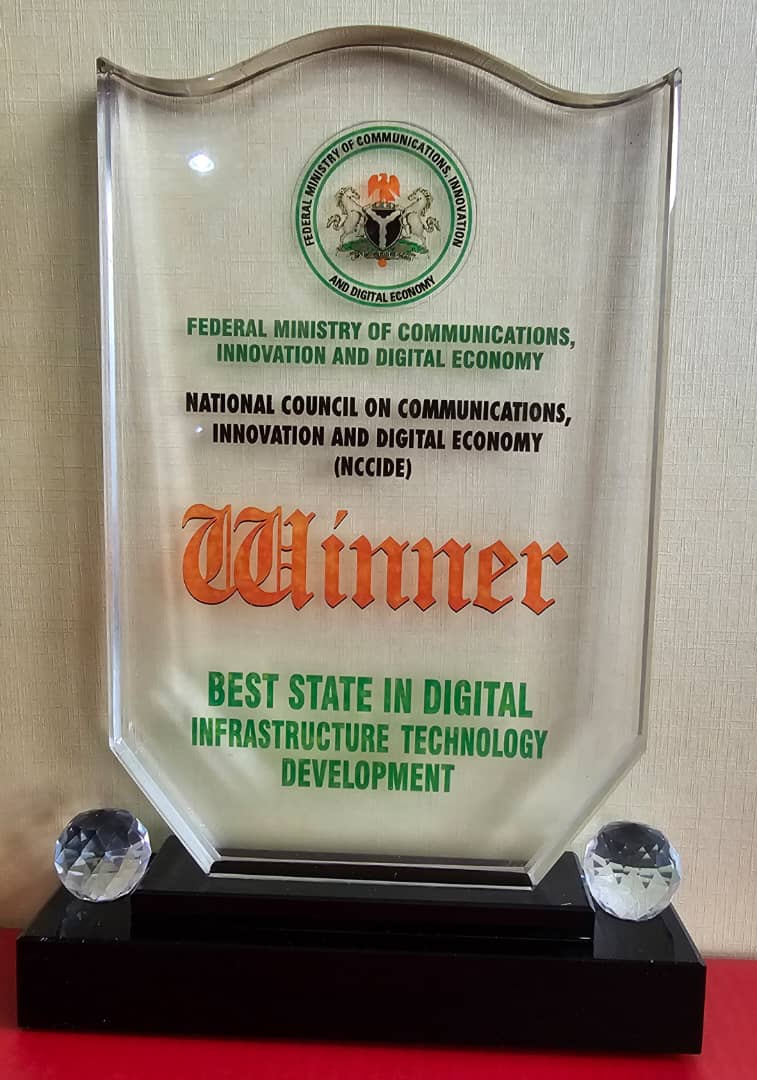

 

Anambra State has emerged as a force to be reckoned with, securing an incredible four prestigious awards during the ICT peer review session at the 11th National Council on Communication, Innovation and Digital Economy (NCCIDE) meeting held in Kano.

The meeting was chaired by the Honorable Minister of Communications, Innovation and Digital Economy, Dr. Bosun Tijani and hosted by the Kano State Governor, Engr Abba Kabir Yusuf.

The vision of the administration of Mr Governor, Prof Charles Chukwuma Soludo, CFR, is to build a liveable and prosperous Smart Mega City and Mr. Governor is massively leveraging technology and digital innovation towards achieving this vision.

The awards, a testament to Anambra’s commitment to excellence, innovation, and progress in the digital realm, are as follows:

*The Overall Winner Best State in Digital Technology Development:* Here, Anambra State stood tall as the undisputed overall winner, scoring the highest number of points in all categories, showcasing its comprehensive dedication to advancing the state in the digital landscape. This award was presented to the MD/CEO, Anambra State ICT Agency, Chukwuemeka Fred Agbata (CFA) by the Kano State Governor, His Excellency, Engr Abba Kabir Yusuf.

*First Position Best State in Digital Infrastructure Technology Development:* Under this category, Anambra State was recognized as the leading state in ICT infrastructure development, following the full implementation of the Zero Right Of Way (RoW) policy, implementation of an Internet Exchange Point; all emphasizing the state’s commitment to building a robust foundation for the prosperity of its people, using Technology. This award was presented by the Minister of CIDE, Dr. Bosun Tijani.

*First Runner-up in e-Government Implementation:* Anambra’s innovative e-government initiatives earned it the second position, highlighting the state’s effective use of technology in governance. The award was presented by the Director General of the National Information Technology Development Agency (NITDA), Mallam Kashifu Inuwa Abdullahi.

*First Runner-up in Digital Technology Human Capital Development:* This award reinforces the state’s commitment to building a digitally-skilled and knowledgeable workforce and society in general. The final award was presented by the Kano State, Commissioner for Science, Technology and Innovation, Alhaji Mohammed Othman.

It is noteworthy that Anambra’s impressive outing at the annual event that brings together the federal government and state underscores its strategic vision and exemplary but detailed execution in the realms of infrastructure, e-government, and human capital development under the visionary leadership of Governor Chukwuma Charles Soludo, CFR.

The awards during the official opening ceremony, followed the earlier recognition received during the ICT Peer Review session, where Anambra’s presentation made by Dr. Florence Idigo, a Director in the State ICT Agency, garnered enthusiastic applause and commendation from industry experts.

Receiving the awards on behalf of Mr. Governor, the MD/CEO of the Anambra State ICT Agency, Chukwuemeka Fred Agbata, CFA, expressed profound appreciation to Mr. Governor for creating the enabling environment and a vision which guides the Agency in line with the ‘Everything Technology, Technology Everywhere’ mantra.

CFA also dedicated the awards not only to the team at ICT Agency but to the co-operation and collaboration of the entire solution team for their hard work and dedication to Mr. Governor’s vision.

“This achievement no doubt reflects our unwavering commitment to technological advancement and the transformative journey we are championing in Anambra State,” he concluded.


The fear of cyber incidents has topped the Allianz Risk Barometer 2024 list as the most important business risk for the third consecutive year. Voted into the number one position by several countries across Africa, including Kenya, Mauritius, Nigeria and Uganda, it’s clear that cybersecurity prioritization remains critical for many businesses.

These concerns apply to companies of all sizes, across all industries and in every country, states Mark Campbell, principal sales engineer at NETSCOUT, adding that in today’s digitally connected world, where organisations rely heavily on networks for their day-to-day operations, cyber-threats and attacks are a constant concern, particularly considering their ever-evolving sophistication.

The crucial role of network-based security

According to Campbell, network-based security is the lynchpin that binds a business’s devices, servers, applications and users together. “The importance of network security cannot be overstated,” he explains. “For companies across the globe, with African organisations being no exception, the network serves as the one constant medium that holds the ‘truth’.

“And despite cybercriminals’ attempts to disable various security controls, like antivirus measures or endpoint security, for instance, the network remains the unavoidable pathway for bad actors. They must traverse the network to perform their reconnaissance, execute their exploits of ill intent, and exfiltrate data.

“Looking at it from this perspective, you could say that the network sees all. Any deviation from the norm can be observed on the network, and zero-day activity can be recorded and interrogated by using network packet data. There is simply no way to hide or expunge your network traffic footprint, making it a critical component in cybersecurity today.”

Crafting a tailored network security policy

Campbell applauds the growing adoption of zero-trust concepts in African businesses, but emphasises the need for a customised approach, advocating for a step-by-step process to be followed.

“Organisations should start with defining their critical assets, next assessing associated risks, and subsequently investigating the potential impact of data loss on the company.

“Then, a bespoke network security policy, striking a balance between disruption and risk mitigation, is crucial. The research conducted beforehand will dictate what is applicable for your particular organisation, and continuous monitoring, facilitated by packet-based network security systems, becomes imperative to measure compliance and identify gaps.”

Layered security: a holistic approach

Drawing a parallel between layered security and your health, Campbell compares the importance of taking care of yourself in a holistic way, for instance exercising, eating well and taking vitamins, with that of addressing multiple facets of cybersecurity simultaneously, in order to gain positive results.

He warns against neglecting any single area, emphasising the need for comprehensive coverage, from network intrusion, device security, software management, endpoint and perimeter protection, to identity management and privileges.

“It’s critical that organisations look at all areas of cybersecurity, at all times. Failure to do so might expose a weakness that could then be found and exploited by an attacker. This can be frustrating for businesses – and there is no ‘silver bullet’ to avoid all breaches.

“Securing enterprise networks can be a formidable challenge, making layered security not only a strategic choice but an absolute necessity when it comes to safeguarding the network against potential weaknesses that might be exploited,” he concludes.


The Anambra State Government represented by a resourceful delegation from the State ICT Agency, led by the MD/CEO Chukwuemeka Fred Agbata, is actively participating in the 11th General Meeting of the National Council on Communications, Innovation, and Digital Economy (NCCIDE).

The week-long event, which commenced on Monday, 22nd January, to end on Friday, 26th January, 2024, is being held at the Coronation Hall, Government House, Kano State, with the theme “Leveraging on Digital Technology and Innovation to Drive Nigeria’s Economic Growth and Development.”

The NCCIDE serves as the highest advisory body to the government on policies, programs, and strategies for national development in the realm of Information and Communication Technology (ICT) and the digital economy. The primary objective of the meeting is to review actions taken by council members during the 10th council meeting and strategize towards achieving the Federal Ministry of Communication, Innovation, and Digital Economy’s strategic agenda for 2023-2027.

An outstanding highlight of the meeting so far is the Peer Review session, whose objective is to foster healthy competition, showcase state activities, facilitate mutual learning, and enhance collaboration among states in the advancement of digital innovations, skills, and digital economy policies.

Anambra State actively engaged in the ICT Peer Review session on Wednesday, 24th January 2024, during which the state’s presentation garnered enthusiastic applause. The panel of judges, comprising industry experts, commended Anambra State for its outstanding presentation and highlighted the commendable decision to waive Right of Way charges. This progressive move was acknowledged for its significant contribution to fostering the growth of digital infrastructure, drawing attention and applause from the panel.

Mr Governor, Prof Chukwuma Charles Soludo, was recognized for his forward-thinking approach in supporting initiatives that propel the state’s advancement in Information and Communication Technology. This derives from the continuous efforts and achievements of the Anambra State ICT Agency, further emphasizing the transformative journey championed by Governor Prof. Chukwuma Charles Soludo, CFR.

The Anambra State delegation emphasized that the agency looks forward to more opportunities to contribute to the growth and development of Anambra State and the nation.

The official disclosure of the ICT Peer Review session results is scheduled for today after a meeting between the Honorable Minister of Communications and council members. The Anambra State ICT Agency remains optimistic that the outcome will reflect the state’s dedication and hard work in advancing ICT initiatives.


Offerings Tailored for 5G Challenges and Economic Growth


By Jon Abbott, Telecom Strategic Clients Director, EMEA at Vertiv


The telecommunications industry across Africa occupies a complex yet active space, with factors such as significant investment in sub-sea connectivity cables, increasing demand for data centres, and the rollout of terrestrial fibre broadband infrastructure gaining increasing prominence. Challenges for the continent include high costs of connectivity in some countries, together with the average speed of the available internet; as well as limited access within rural areas, and general infrastructure issues. As a global provider of critical digital infrastructure and continuity solutions, Vertiv is poised to play its role in facilitating telecommunication challenges across the continent.


The importance of telecommunications in Africa 


Telecommunications, or telecoms, is the exchange of information over significant distances by electronic means, refering to all types of voice, data and video transmission. It allows individuals and businesses to use advanced communication methods for business and economic expansion, both at the macro- and micro-economic level.


Using telecommunications services, individuals, organisations and sovereign territories are empowered with the necessary infrastructure and tools to transmit data digitally. From education and e-commerce to mobile money, digital innovation holds the key to transformation and empowerment in general. In this regard, data centres play a crucial role in the ongoing development of the telecommunications arena; they are the backbone of the digital world, powering the operations of businesses across industries.


As the world becomes more digital, the demand for data centres is rising. The growing number of subsea cables being connected to the continent is an integral component for the growth of digitalisation, enabling internet traffic to flow and bringing new data collection points via the Internet of Things (IoT).


Sea cable landfalls are required to power data centres. Across the region, a number of stakeholders are connected in different ways to the infrastructure challenges that come with these sea cable landfalls. These various stakeholders should work together in order to function as a cohesive ecosystem.


Only through open regulation dialogue, planning, commissioning, construction and so forth, can the successful growth of data be maximised, bringing the required infrastructure to the continent, both further inland as well as at coastal locations.


Regional challenges and trends in Africa 


As outlined previously, challenges include internet speeds, connectivity costs, limited access in some areas, and general infrastructure issues. However, many African governments today are investing significantly in digital infrastructure to create an environment that supports the growth of digital services.


Market intelligence and advisory company Mordor Intelligence[1] outlines in its ‘Africa Entertainment and Telecommunication Market’ report: ‘Local companies, foreign investors, and global players have all made a significant investment in the continent. Domestic infrastructure sharing, cross border and in-country mergers, and governments responding to the opportunity to regulate and to auction spectrum and licenses are some of the major factors playing a role in the growth of the telecommunication and entertainment market in the region.’


Data centre growth across Africa is being driven by a number of factors, including the increasing demand for cloud-based services, the growth of the digital economy, and the increasing adoption of IoT technologies.


With regards to global fixed broadband speeds in megabits per second (Mbps), UK-based firm Cable recently released its 2023 Global Broadband Speed League of 220 countries, with South Africa ranking at number 104, showing an average speed of 36.46 Mbps.


Three other Sub Saharan African countries went against the trend of an average download speed of 12.1 Mbps for the region, namely Réunion (rated 79th at 45.51 Mbps), Rwanda (99th with 39.89Mbps), and Burkina Faso (35.64Mbps, 108th).


The general telecoms trends seen across the continent include ongoing digitalisation, together with the need to reduce carbon footprint (decarbonisation) and the decentralisation of networks.


The cost of implementing 5G networks and de-commissioning 3G and 4G networks comes under the spotlight, as does the need to be efficient with energy and water requirements. Vertiv is able to contribute to this growth at all levels of data centre requirements, from hyperscalers to micro data centre solutions, through our entire suite of offerings. As a manufacturer of critical infrastructure, Vertiv supports the power, cooling, containment and management of the physical fabric of either the network or the data centre.


Vertiv strives to enable reliable and efficient operations for our customers, and also improve efficiency in our own processes and operations. We have made inroads with the expansion of new and upgraded products with energy- and water-efficiency attributes, with others in the pipeline.


In addition to the advantages that telecommunications growth is able to provide in general, the growth of the data centre market in Africa presents an excellent opportunity to create jobs and spur economic growth in the region. As data centres continue to expand, we expect them to create new opportunities for employment, both directly and indirectly, in various verticals such as education, government, healthcare, retail and finance.


Today, over 2 billion people across more than 180 countries use WhatsApp to connect with friends and family, making it probably the world’s most widely used private messagingservice.


And now, people are using WhatsApp for more than just messaging friends and family. Introduced last year, WhatsApp Channels is a new feature that gives people an easy way to get updates and information straight from the individuals and organisations that matter to them.


Whether you’re into keeping up with football clubs, content creators, or celebrities, you can now do it on WhatsApp Channels. If you’re new to WhatsApp Channels, here are four things you should know:


1. Easily find your favourites

You can find Channels to follow that are automatically filtered based on your country. You can also filter Channels by those that are new, most active, and popular.


2. Separate from your personal chats

WhatsApp Channels can be found in a new tab called Updates – separate from your personal chats with friends and family. Anyone can choose to follow a Channel by browsing and following the Channels they’re interested in.


3.   Simple and user friendly:

Find and follow your favourite creators, celebrities and organisations and stay up to date with updates, shared as text, photos, videos, stickers, voice messages and even polls. As a follower, you can react to Channel updates using emojis to give feedback and see a count of how others reacted too. How you react will not be shown to other followers.


4.. Private by design

WhatsApp Channels come with strong privacy protections that people expect from WhatsApp. As a WhatsApp Channel admin, your phone number and profile photo are kept private from followers. Similarly, when you follow a Channel, your phone number is not visible to the admin or other followers. 


In a proactive move to address the long-standing interconnection debt dispute between MTN Nigerian Communications Plc. (MTN) and Globacom Limited (Glo), the Nigerian Communications Commission issued a Pre-Disconnection Notice on January 8, 2024. The notice informed subscribers of the approval granted to MTN to commence the phased disconnection of Glo, scheduled to take effect from January 18, 2024.

Recognizing the potential impact on consumers, the Commission engaged both parties in ongoing discussions to facilitate a resolution that prioritizes consumer interests and ensures the seamless operation of the national telecoms network.

Today, the Nigerian Communications Commission is pleased to announce that MTN and Glo have reached an agreement to resolve all outstanding issues. In exercise of its regulatory powers, the Commission has decided to put the phased disconnection on hold for a period of 21 days from January 17, 2024.

While expecting the swift resolution of all outstanding issues within this timeframe, the Commission emphasizes the importance of settling interconnect debts as a necessary component for compliance with regulatory obligations. Mobile Network Operators (MNOs) and other licensees in the telecom industry are reminded of the obligatory nature of adhering to the terms and conditions of their licenses, particularly those outlined in their interconnection agreements.

The Nigerian Communications Commission remains committed to fostering a conducive environment for effective and uninterrupted telecommunications services, ensuring the best interests of consumers and the overall efficiency of the national telecoms network


If SMEs are going to drive sustainable economic growth in 2024, digital transformation isn’t a nice-to-have, it’s crucial for success, says Jessica Harvey, Business Unit Manager, Digital On Demand, a division of Tarsus on Demand.


An empowered small and medium enterprise (SME) sector is a critical growth engine for the economic development of the country. As such, the rise of the digital era is one that is propelling excitement and anticipation in this market sector, in that digitilisation makes it easy for these smaller businesses to broaden their scope and expand their operations.


The adoption of digital payment solutions is also evidently on the rise in South Africa, significantly enhancing business operations. According to the 2023 SME Confidence Index, approximately 64% of local SMEs say that they believe e-commerce will have a positive impact on their business. This reflects a growing trend towards digital solutions in the business landscape. The survey highlights the top areas where SMEs in Africa require support, with some 88% suggesting they need help digitalising their businesses.


This is a key reason Tarsus launched its Digital on Demand (DOD) unit, which aims to assist with the education and acceleration of the digitalisation process for SMB businesses throughout Africa. DOD has created a platform, the Digital Business Hub, which features cloud-based solutions designed to solve challenges experienced by typical businesses using technology and cloud-based solutions.


A digital transformation vision

One of the foremost challenges SMEs face lies in identifying a starting point for their digital transformation journey. Digital On Demand understands this problem, providing a roadmap specifically tailored to both the unique needs, and the future aspirations, of each business.


It is critical that SMEs begin this journey posthaste, as digital transformation itself is no longer a competitive edge, so much as it is merely a ticket to the game. Today, many companies will only work with you if your processes align with their business, meaning a lack of digitalisation actually creates the risk of losing clients instead.


Those SMEs that have not begun digitalising, or that plan to in the new year, to focus on building a brand new business, to ensure they are digitally native. This includes creating automated processes, so the business can start gathering data – the lifeblood of the digital world – from the word go.


There are many reasons to digitalise your business, not the least of which are the near-future implications of the latest technologies. For example, in 2024 the impact of artificial intelligence (AI) and machine learning will be a key focus for many businesses in the SME arena.


Looking to the future

By implementing AI and machine learning, SMEs can reduce the load on limited personnel resources, enabling the business to scale without having to increase headcounts or overheads. SMEs should not view AI as a threat to business, but rather as an opportunity to scale their business at a reduced cost.


There are two other big opportunities for growth in 2024 – the first is by fostering a strong focus on micro learning, which is more about learning skill sets and knowledge bases, than obtaining formal certifications. Secondly, it is vital to embrace sustainability, as this will increasingly inform customers’ decisions, with the modern consumer wanting to do business with others that are equally focused on sustainability.


At Tarsus on Demand, we envision being at the forefront of the African digital narrative for SMEs, facilitating seamless transformation and promoting growth and innovation within this vital sector. This is because we recognise that the impact of SME digitalisation is far-reaching, promoting sustainable economic growth, inclusivity, and resilience against economic headwinds.


Digital On Demand is poised to set the stage for a more vibrant, innovative, and balanced economy, one in which SMEs can play their critical role in helping South Africa towards a prosperous future for all.


Olufemi Joshua, a rising star in the gospel music scene, has recently dropped his latest single, “Excellent King,” marking a significant milestone in his musical journey. The song is now available for streaming on all major platforms.

Based on the profound scripture from Philippians 2:9, “Excellent King” is a vibrant and inspiring composition that reveres the Kingship of Jesus as the most Excellent King, deserving of unwavering praise and adoration. Olufemi Joshua passionately describes the track as more than just music; it’s a spiritual offering inspired by a divine calling to uplift and worship the King of Kings.

“I believe ‘Excellent King’ is a spiritual journey, an offering meant to exhort and uplift the body of Christ. My aim is to transcend boundaries through worship that speaks to the hearts of believers globally,” shares Olufemi Joshua.

Featuring uplifting lyrics and captivating beats, “Excellent King” invites audiences to immerse themselves in a worship experience that resonates with the soul. Olufemi Joshua’s commitment to creating music that touches hearts is evident in this latest release, promising to inspire and uplift listeners.

Listeners can now access “Excellent King” on their preferred streaming platforms, participating in the celebration of Jesus as the most Excellent King. For those seeking a harmonious blend of faith and artistry, “Excellent King” stands out as a must-listen.

To engage in this spiritual journey and share the uplifting experience of “Excellent King,” visit https://songwhip.com/olufemijosh/excellent.


During a groundbreaking meeting held over the weekend, at the US Consulate General in Lagos, the Anambra State Government’s Executive Council delegation, led by His Excellency, Governor Chukwuma Charles Soludo, CFR, engaged in strategic discussions with the US Consul-General, William Stevens, and influential leaders from 26 renowned US high-tech companies.

This distinguished Executive Council delegation included key figures such as Chukwuemeka Fred Agbata, CFA, MD/CEO of the Anambra State ICT Agency; Uchechukwu Christian, State Commissioner for Industry; and the Special Adviser to the Governor on Innovation and Business Incubation, Ms. Chinwe Okoli.

The aim of the meeting was to explore avenues for collaboration, forge corporate alliances, and foster technological partnerships to accelerate Anambra State’s growth. The meeting also provided an opportunity to enhance strategic partnerships for economic development and the exchange of technologies, fostering shared prosperity between Anambra State, its tech companies, and their counterparts in the United States.

The Anambra delegation seized the opportunity to present the state’s tech developmental strides under Governor Soludo’s visionary leadership, as well as the strategic plan of the government to build an Anambra where the tech ecosystem thrives.

While highlighting the key initiatives driving tech revolutions within the state, Chukwuemeka Fred Agbata, MD/CEO of the Anambra State ICT Agency, underscored Mr. Governor’s commitment to establishing Anambra as a thriving hub for digital transformation and innovation.

The US high-tech companies participating in the discussions expressed eagerness to support Anambra State in diverse capacities, one of which include: Robust support for the State’s Digital Health and Education Transformation initiatives pledged by Amazon Web Services and technical support and offer of substantial discounts for future devices purchased in the state by Dell and HP. Meta also pledged to deepen their collaboration in Anambra through partners such as IGHub and Fate Foundation, while Google expressed enthusiasm to pilot several initiatives and explore opportunities to enhance the digital presence of SMEs in Anambra, thereby contributing to increased digital footprints.

Noteworthy, however, is the understanding that these commitments are preliminary and subject to further discussions and finetuning, by both the Anambra State Government and these tech industry giants, towards translating these commitments into impactful projects that will bring about lasting positive change for the people of Anambra.

This strategic alliance signals a significant milestone in Anambra State’s journey towards becoming a technology-driven hub and aligns seamlessly with Mr. Governor’s commitment to his vision to transform Anambra State into the digital and creative capital of Nigeria. The partnerships forged with these leading industry giants, no doubt, are poised to catalyze innovation, economic growth, and societal development within the state.

Governor Soludo, in his remarks, expressed gratitude for the willingness of the US companies to support Anambra’s technological advancement, emphasizing the state’s commitment under his watch, to creating a conducive environment for collaboration and a thriving ecosystem for innovation.