
30% global increase in Q2 2024, with Africa experiencing highest average weekly per organisation according to Check Point Global Research

Johannesburg, South Africa – July 18, 2024 Check Point® Software Technologies Ltd. (NASDAQ: CHKP), a leading AI-powered, cloud-delivered cyber security platform provider, released new data on Q2 2024 cyber-attack trends, segmented by global volume, industry, and geography. The rise in cyber-attacks is driven by increasing digital transformation and sophisticated cybercriminal techniques, including AI and machine learning.


Regionally, Africa experienced the highest average weekly cyber-attacks per organisation in Q2 2024, with an average of 2,960 attacks, marking a 37% increase compared to the same period in 2023. Latin America saw the most significant rise, with attacks increasing by 53% year-over-year to an average of 2,667 per week. The Asia-Pacific (APAC) region followed with a 23% increase, highlighting the global spread of cyber threats.


Key Africa Statistics


Highest Average Weekly Cyber Attacks: Africa experienced the highest average weekly cyber-attacks per organisation in Q2 2024, with an average of 2,960 attacks, marking a 37% increase compared to the same period in 2023.


Drop in Ransomware Attacks: Africa accounted for 1% of all reported ransomware attacks in Q2 2024, showing a 55% decrease from the previous year.


Top Attacked Countries: South Africa, Kenya, and Nigeria are among the top African countries facing significant cyber threats, with South Africa experiencing an average of 1,450 weekly attacks per organisation, marking a 4% YoY increase.


Prevalent Malware Types: Qbot and FakeUpdates (SocGholish) are among the most prevalent malware types affecting African organizations, with significant impacts in South Africa.


Key Global Statistics


  • Global Increase: In Q2 2024, Check Point Research recorded a 30% year-over-year (YoY) increase in cyber-attacks globally, with organisations facing an average of 1,636 attacks per week.
  • Most Attacked Industries: Education/Research (3,341 attacks per week), Government/Military (2,084 attacks per week), and Healthcare (1,999 attacks per week) were the top three most attacked industries.
  • Regional Impact: Latin America (+53%), Africa (+37%), and Europe (+35%) experienced the largest YoY increases in cyber attacks. Africa had the highest volume of attacks, averaging 2,960 weekly attacks per organisation.


Ransomware Attacks

Ransomware attacks involving public extortion increased by 13% YoY, totalling approximately 1,200 incidents globally in Q2 2024. North America was the hardest hit, accounting for 58% of all reported ransomware attacks. Africa, although only comprising 1% of these attacks, still shows a significant need for improved cybersecurity defences.


Industry Impact

The Manufacturing sector was the most affected, representing 29% of publicly extorted ransomware attacks’ victims globally, with a 56% YoY increase. Healthcare followed, accounting for 11% of the attacks, with a 27% increase. The Communications and Utilities sectors experienced dramatic rises in ransomware incidents, with increases of 177% and 186% respectively.

Prevention and Mitigation Strategies


To safeguard against these rising threats, organisations must adopt comprehensive cybersecurity strategies:

  • Enhance Security Posture: Regularly update and patch systems, and implement multi-layered security measures including firewalls and endpoint protection.
  • Employee Training and Awareness: Conduct regular training sessions to educate employees about the latest cyber threats and phishing tactics.
  • Advanced Threat Prevention: Use technologies such as sandboxing and anti-ransomware tools to detect and block sophisticated attacks.
  • Zero Trust Architecture: Implement strict identity verification for every person and device attempting to access network resources.
  • Regular Backups and Incident Response Planning: Ensure regular backups of critical data and develop comprehensive incident response plans.
  • Network Segmentation: Isolate critical systems to limit the spread of attacks and protect sensitive information.
  • Vulnerability Management: Conduct regular vulnerability assessments and penetration testing, prioritising remediation efforts based on potential impact.

The dramatic rise in cyber-attacks globally, particularly ransomware incidents, signals an urgent need for robust cybersecurity frameworks. Organisations must prioritise cybersecurity, adopting customized strategies to effectively combat the evolving threat landscape. By implementing advanced security measures, fostering a culture of awareness, and preparing for potential incidents, businesses can better defend against the relentless tide of cyber threats.


Follow Check Point via:

LinkedIn: https://www.linkedin.com/company/check-point-software-technologies

X: https://www.twitter.com/checkpointsw

Facebook: https://www.facebook.com/checkpointsoftware

Blog: https://blog.checkpoint.com

YouTube: https://www.youtube.com/user/CPGlobal


A new report of the International Telecommunications Uion (ITU), has ranked Nigeria very high at 71 per cent, in comparative legal, policy and governance frameworks towards G5 – advanced state of readiness for digital transformation known as G5 with Germany, Finland and Singapore leading the global chart.


In the report conducted by the ITU, and the United Kingdom’s Foreign, Commonwealth & Development Office (FCDO), and unveiled by Nigeria’s Minister of Communications, Innovation and Digital Economy, Dr. Bosun Tijani in Abuja on Monday, Nigeria was ranked among Africa’s top seven BEMECS 5G Readiness Index, which represents the country’s readiness to deploy and adopt mass-market 5G networks.


Titled, Collaborative Regulation: Accelerating Nigeria’s Digital Transformation, and presented at the Digital Economy Complex, Mbora, Abuja by ITU’s Kagwira Nkonge, the report, among other things, presented a case study for ‘collaborative regulation review to assess and support Nigeria’s transition towards collaborative digital governance, evidence-based policy making and agile regulation in the digital economy”.


The report, which was presented to a cross section of key industry stakeholders including service providers, government agencies, representatives of multilateral institutions, West Africa Telecommunications Regulators Assembly (WATRA), Africa Telecommunications Union (ATU), among others, was also designed to complement existing cross-country benchmarks in which features of countries policy and regulatory environment are assessed.


The features of countries policy and regulatory environment are assessed  according to the pillars of the Generations of Regulation frameworks which tracks telecom regulatory maturity towards digital transformation readiness, designated at G5 Advanced State of Readiness”, and for which Nigeria currently stands at G4.


Advanced State of Readiness is benchmarked against four critical levels of accomplishments which include national collaborative governance, policy design principles, digital development toolbox, digital economic policy agenda, with Nigeria scoring 91 per cent in regulatory capacity; 82 per cent in Market Rules; 81 per cent in Collaborative Governance; 76 per cent in Legal Instruments for ICT/Telecom markets; 69 per cent in National Digital Agenda Policy, among other benchmarks.


Dr. Tijani, in his remarks at the event, commended the ITU and partner agencies and consultants that actualised the report; and expressed Federal Government’s commitment “to utilise this report as a navigational aid towards attainment of our regulatory objectives and policies outlines towards achieving a robust digital economy”.


“That is what we will continue to do as a government, ensuring that we can put ourselves in a place to have cutting-edge modern regulations in place to ensure that business is done properly in our sector and to ensure that, where possible, increase the local content of the sector as well,” he said.


Dr. Tijani noted that NCC has adapted over the years in response to how its role and mandate have changed.  He explained, “Fifteen, twenty years ago, NCC was just regulating the telecommunications sector, today, NCC regulates the foundation for which any economy would be prosperous.”


The Executive Vice Chairman of the Nigerian Communications Commission, Dr. Aminu Maida, who hosted the presentation, welcomed the indicators that promote effective regulation, attraction of greater investment, and development of innovative models for broader digital inclusion.


He emphasised that collaborative regulation would support Nigeria’s transition towards effective digital governance, evidence-based policy making and agile regulation in the nation’s digital economy.


The ITU Report can be accessed through the link:


https://www.itu.int/hub/publication/d-pref-them-33-2023/


In a strategic move to bolster its renewable energy capabilities, the National Agency for Science and Engineering Infrastructure (NASENI) has commenced a 5-day training to enhance the skills and knowledge of 20 staff drawn from the Headquarters and Institutes for the design and operation of Biogas and Biomethanol plants holding at the headquarters, Abuja.


The intensive onsite training which will end on Friday, July 26, 2024, is being conducted in collaboration with SRH Berlin, Germany, a reputable organization known for the design and development of commercial-scale biogas and biomethanol plants.


In addition to the onsite training, NASENI and SRH Berlin are offering two online training courses on the design of medium-scale biogas and biomethanol plants. Trainees will be trained on several aspects of the design process, including process control, CAD/CAM, material science for biogas production, methanol synthesis, hydrogen production, and safety principles.


The Executive Vice Chairman of NASENI, Mr, Khalil Suleiman Halilu, ably represented by the Deputy Director, Nano Science Department, Science Infrastructure, Dr. Chika Ezeanyanaso said, “this training is a very important step in equipping our staff with the necessary knowledge and expertise to design and manage biogas and biomethanol plants effectively.”


“The participants were carefully selected to represent different NASENI institutes, ensuring a comprehensive transfer of knowledge across the organization,” she said, further revealing that the model design for the biogas plant had already been developed and the training would focus on the practical application and hands-on learning.


She urged the 20 participants to approach the training with utmost seriousness and importance, emphasizing the transformative impact it would have on NASENI’s renewable energy initiatives.


The training is being facilitated by a team of seven experts from SRH Berlin, Germany, namely: Ronald Schnell, Gnana Swaroop, Osvaldo Romero, Edward Antwi, Nomu I, Uduak Bassey, and Michael Hartman. The training will also empower the staff with cutting-edge skills and knowledge.


Engr. Anas Yadiz, SA to the EVC on Science and Engineering Commercialisation, who is the coordinator of the training, said NASENI was poised to drive the adoption of biogas and biomethanol technologies, contributing to Nigeria’s broader renewable energy goals and paving the way for a more sustainable future. He said this collaborative effort showcases the Agency’s commitment to fostering innovation, enhancing the skills of its workforce, and leading the charge towards a greener, more energy-efficient Nigeria.

By Dayo Omoogun

There is palpable anger against the Emefiele regime that held sway at the Central Bank of Nigeria from June 2014 to June 2023, even one year after its sack, which is understandable considering the treacherous looting of the national patrimony, the flagrant abuse of office and the avoidable suffering he and his co-travelers unleashed on Nigerians through the deliberately flawed implementation of some of its policies, some of which were also patently ill-timed.

Without doubt, one episode of the series of bungling the bank’s policies which is likely to remain fresh on the minds of Nigerians is the botched currency redesign which begun on December 15, 2022 and was originally scheduled to end on January 31st, 2023 but kept dragging on and remained inconclusive until it was finally suspended. The shoddy handling of the exercise which plunged the entire nation into confusion, business dislocation, needless deaths arising from lack of access to urgently needed funds for treatment of some seriously sick persons among other fallouts cannot be forgotten in a hurry.

It is therefore not surprising that emotions run riot in many circles whenever the name of the Central Bank of Nigeria is mentioned in recent times. It is also not entirely surprising that lawmakers have actually activated a process targeted at amending the CBN Act,2007 as it is well within their rights and well justified.

The word of caution however is that the amendment must not be emotion-driven but must proceed from the premise of reason and good judgement which upholds and protects the independence of the institution that is traditionally vested with such critical functions as printing of national currency, economic stabilization, banking sector supervision, banker to government and economic advisory. This autonomy should essentially be protected and be seen to be protected.  Any detraction from this principle will open it up to be played as a pawn by narrow-minded powerbrokers as well as vested interests and can only be a recipe for economic confusion and doom!

Corrective measures must be founded upon the need to restore the bank’s integrity, objectivity, sensitivity and professionalism without hampering its effectiveness and efficiency   . The Act as it currently stands suffices largely for our needs.

One of the proposals which hits directly at the autonomy of the bank and should not be considered at all is the demand for the bank to submit its budget to the legislature for approval. To put the bank at the mercy or whims and caprices of the legislature in this manner is tantamount to castrating it. Running, cap in hand, to seek for approval for its budget apart from being an unnecessary distraction which might stall its market responsiveness, is totally antithetical to the autonomy of the bank.

The push for a single 6-year tenure for the Governor of the Central Bank of Nigeria will most likely avail nothing. After all, the false steps of Emefiele began quite early when he forayed into development banking, beyond the traditional confines of monetary policy and financial system stability. For example, the Anchor Borrowers’ Scheme was established in November 2015 barely 17 months after his assumption of office. His forex policy that was fraught with all kinds of irregularities and malpractices also began in his first tenure. The point here is that a perfidious or reckless personality can execute his scam within his first year of assumption. The important thing is for the appointing authority to be able to promptly spot the signs when derailment sets in and to institute the process of abatement in a timely fashion. With the former regime, Emefiele was a kind of hero and would most likely have retired with his loot and with applause to boot if this Tinubu administration had not emerged and insisted on his probe.  We should not foreclose the possibility of emergence of a prodigy as Governor of the central bank in the nearest future who will be well deserving of tenure renewal. CBN Headquarters Abuja – Etteh Aro & Partners

Come to think of it, doesn’t it sound ludicrous to assume or believe that Emefiele acting alone and without support, overtly or covertly, from the powers that be, could have trampled so brazenly on the extant processes without reprimand or executed such humongous heist as is currently being revealed?

Another amendment being sought by the Senate’s Committee on Banking, Insurance and other Financial Institutions which smacks of a hijack attempt of the Central Bank’s primary mandate is the recommendation of a 7-member Coordination Committee for Monetary and Fiscal Policies to be chaired by the Minister of Finance. Though denied by the senate Committee, there are strong fears that this amendment could provide a leeway for the Minister to usurp the role of the apex bank with the attendant high probability that in such a setting fiscal and political interests could consistently trump pure monetary, price stability considerations.

Operation of the committee is also likely to effectively shift the role of setting interest rates on temporary advances to the government from the central bank to politicians and other behind-the-scene influence-peddlers whose interests are usually known to be primarily self-motivated especially in our clime.

The proposal to separate the position of the Chairman of the bank’s board from that of the governor may end unilateral malfeasance while giving way for collusion between them. In many of the government agencies that parade both Board Chairmen and Chief Executives, has sleaze been averted?

As has been made evidently clear in the foregoing analysis, many of the areas being targeted by the National Assembly for amendment in the CBN Act, are akin to cutting off the head in order to treat a headache but we do know that a headless body is a dead body.

 In conclusion, what is required is a strengthening of the internal control systems, greater vigilance on the part of the Presidency, institution of tougher sanctions against erring Governors and a sustained focus by the bank on its core mandate. We should not send the wrong signal to the international community that we do not align with global best practices thereby creating unnecessary problems for ourselves.

Dayo Omoogun is a journalist, publisher, public affairs analyst based in Abuja.

The push for a single 6-year tenure for the Governor of the Central Bank of Nigeria will most likely avail nothing. After all, the false steps of Emefiele began quite early when he forayed into development banking, beyond the traditional confines of monetary policy and financial system stability. For example, the Anchor Borrowers’ Scheme was established in November 2015 barely 17 months after his assumption of office. His forex policy that was fraught with all kinds of irregularities and malpractices also began in his first tenure. The point here is that a perfidious or reckless personality can execute his scam within his first year of assumption. The important thing is for the appointing authority to be able to promptly spot the signs when derailment sets in and to institute the process of abatement in a timely fashion. With the former regime, Emefiele was a kind of hero and would most likely have retired with his loot and with applause to boot if this Tinubu administration had not emerged and insisted on his probe.  We should not foreclose the possibility of emergence of a prodigy as Governor of the central bank in the nearest future who will be well deserving of tenure renewal.

PalmPay (www.PalmPay.com), a leading Africa-focused fintech platform, has been included in the 2024 edition of CNBC and Statista’s prestigious list of the “Top 250 Fintech Companies in the World.” This recognition underscores PalmPay’s rapid growth and significant contributions to advancing financial inclusion.


The CNBC/Statista list honours fintech pioneers significantly transforming the financial services industry through technology. More than 2000 companies were evaluated globally based on general and sector-specific KPIs to determine the final selection. In 2024, some of the most influential fintechs in the world were included in the list, including Alipay, Nubank, Monzo, and Revolut. Six other African firms made the list: Flutterwave (Nigeria/US) – Payments; Kuda (Nigeria/UK) – Neobanking; MTN (South Africa) – Payments; Piggyvest (Nigeria) – Financial planning; and Yoco (South Africa) – Payments.

PalmPay has developed an integrated platform that caters to consumers and businesses in the African market. The startup, which has been operating since 2019, pioneered a unique model in Nigeria that provides financial services such as money transfers, bill payment, credit services and savings via a one-stop-shop fintech ‘superapp’ and mobile money agents.

This dual approach of easy-to-use digital banking, combined with offline touchpoints for those without smartphones, has contributed to driving financial inclusion in a market where more than 40% of adults remain unbanked.

This recognition validates our unique approach to financial services and our commitment to driving financial inclusion

In 2023, PalmPay announced a major milestone of reaching 30 million registered users on its smartphone apps and 1.1 million businesses in its network of mobile money agents and retail merchants. A third of PalmPay customers report that the platform was their first-ever financial account.

PalmPay has quickly grown to become a market leader in Nigeria thanks to its user-friendly interface, reliable transactions, and focus on driving market share through fee-free transfers and promotions. PalmPay processes 15 million transactions on its consumer app daily and maintains a 99.5% transaction success rate.

To achieve this scale in a market where 10% transaction failure rates were common, the company built out its payment infrastructure, channel integrations and transaction routing systems. In addition to its consumer wallet, PalmPay offers services to businesses that leverage the PalmPay platform via its suite of POS machines, APIs and checkout solutions.

“It’s an honour for PalmPay to be recognised by CNBC and Statista as one of the World’s Top Fintech Companies,” said Sofia Zab, Global CMO, “This recognition validates our unique approach to financial services and our commitment to driving financial inclusion. We are actively expanding PalmPay’s reach and offerings, ensuring more people have access to essential financial services and promoting economic development in emerging markets”

PalmPay operates in several key markets across Africa, including Nigeria, Ghana and Tanzania, with plans to expand further in the region and other emerging markets. The company has global HQs in China and London.


President Bola Tinubu has extended his congratulations to Justice Stella Anukam on her re-election as a Judge of the African Court on Human and Peoples’ Rights for another six-year term. Justice Anukam was re-elected during the African Union Mid-Year Coordination Meeting Executive Council held in Accra, Ghana, on Friday.

Justice Anukam, a distinguished Nigerian legal expert, obtained her law degree from Obafemi Awolowo University (formerly University of Ife) in Osun State, Nigeria, in 1984 and was called to the Nigerian Bar in August 1985. She is also a chartered secretary, chartered arbitrator, and seasoned administrator. Her career includes serving as the former Director of Special Programmes at the Nigerian Institute of Advanced Legal Studies in Abuja and as the former Director of the International and Comparative Law Department at the Federal Ministry of Justice.

President Tinubu commended Justice Anukam for her significant contributions to the development of human rights jurisprudence across the continent and encouraged her to continue providing her invaluable expertise to the African Court. He affirmed his administration’s commitment to supporting the candidature of competent and qualified Nigerians for international positions, underscoring Nigeria’s strategic importance in the global community.

The African Court on Human and Peoples’ Rights, a continental court established by African states to ensure the protection of human and peoples’ rights in Africa, complements the functions of the African Commission on Human and Peoples’ Rights. The court comprises eleven judges nominated by AU member states and elected by the AU Assembly of Heads of State and Government. Nigeria ratified the Protocol establishing the Court in 2004, becoming a state party.


Prince Lateef Fagbemi, SAN, the Attorney General of the Federation and Minister of Justice, has firmly denied rumors circulating on social media that President Bola Ahmed Tinubu has endorsed Afam Osigwe SAN as his preferred candidate in the ongoing Nigerian Bar Association (NBA) election. Fagbemi, addressing the misinformation, stated that he was erroneously cited as a source of confirmation for these claims.

“I wish to state categorically that at no time did Mr. President give any such instruction,” Fagbemi said. “I completely dissociate myself from such statements because nothing of such happened. I am also in a position to confirm, and I do so, that the president neither had a discussion with the author nor did he give any such divisive instruction. I also had no such discussion with anyone.”

Fagbemi further emphasized that the news is a falsehood propagated by individuals seeking to exploit President Tinubu’s popularity among lawyers. “The news is a lie from the pit of hell being peddled about by mischief makers seeking cheap popularity to ride on the acceptance of Mr. President among lawyers,” he added.

Fagbemi underscored President Tinubu’s commitment to democratic principles, noting that the president believes in adhering to the rules and has not endorsed any candidate in the NBA election. He assured that President Tinubu would respect the outcome of a free and fair election and is prepared to work with whoever emerges as the winner.

“I seize this opportunity to call on those who are bent on causing disaffection among NBA members and between our respected president and the respected NBA to desist from such an unprofitable venture,” Fagbemi stated. “The president wishes the NBA a hitch-free election and is looking forward to working with whoever emerges.”

This statement aims to clarify the president’s stance and dispel any false information surrounding his involvement in the NBA election.


Apostle Edith Grace, the esteemed national convener of the National Prayer Conference, has called on Nigerians to exercise restraint and patience during the current administration of President Alhaji Bola Ahmed Tinubu. Her remarks come in the wake of announcements regarding an impending national protest.

In a recent media engagement, Apostle Grace emphasized the importance of faith and prayer during these trying times. “We should be prayerful that the Nigerian government will be established on a keystone. We strongly believe in God and must show restraint; this is a time of temptation and tempest, but all is well,” she asserted.

Addressing the concerns fueling the protest, Grace urged Nigerians to reconsider their actions. “There is no need to organize this protest over nothing. This is like making a matter perilous and even more perilous. There is a need to give the government time to cement the economy,” she said.

Apostle Grace concluded her address with a reminder of divine faith. “We can’t underestimate God! His mercies abound, and we must recognize that God is the same yesterday, today, and forever. It is essential to look up to God.”

Beyond her role as a spiritual leader, Apostle Edith Grace is celebrated for her multifaceted contributions to national growth and community development. As a devoted mother, she has instilled values of compassion and service in her children, ensuring a legacy of kindness and philanthropy.

Grace is also a talented singer whose soulful music has uplifted many, blending messages of hope and faith. Her songs often echo the themes of resilience and divine trust, resonating deeply with her audience.

A prolific writer, she has authored several books that delve into spiritual growth, prayer, and the Christian journey. Her writings have become essential readings for many seeking guidance and inspiration in their faith.

Her evangelistic efforts have seen her travel across the nation, spreading the gospel and engaging in charitable works. Apostle Grace’s philanthropy is widely recognized, as she has been instrumental in various community development projects, including providing for the underprivileged and supporting educational initiatives.

Apostle Edith Grace’s steadfast commitment to prayer and community service embodies the spirit of national unity and progress. Her call for patience and faith during these challenging times reflects her deep-seated belief in a brighter future for Nigeria, grounded in trust in God and collective effort.


Renowned skit maker Brain Jotter recently gifted legendary musician Mike Ejeagha a substantial sum of money, running into millions, after reviving Ejeagha’s 40-year-old music in a skit. This act has ignited a debate among netizens regarding copyright and intellectual property laws, with many questioning whether royalties should be paid to Pa Mike.

Offering his perspective, legendary Nollywood actor and movie producer Patrick Doyle shared his expert opinion on the issue:

“The duration of the sound clip used in Brain Jotter’s skit is less than the required length to qualify for royalty sharing under current intellectual property protocols. Essentially, this is an audio-visual work conceived by Brain Jotter.”

Doyle continued, “Whatever Brain Jotter gifted the old man in appreciation for his audio clip is simply that, a gift. The good news is the audio-visual work has revived interest in the old man’s works. He can now begin to earn from the renewed interest in his repertoire.”

By
Anthony Emeka Nwosu
CONN8 MEDIA SOLUTIONS NG
Oregun, Ikeja, Lagos

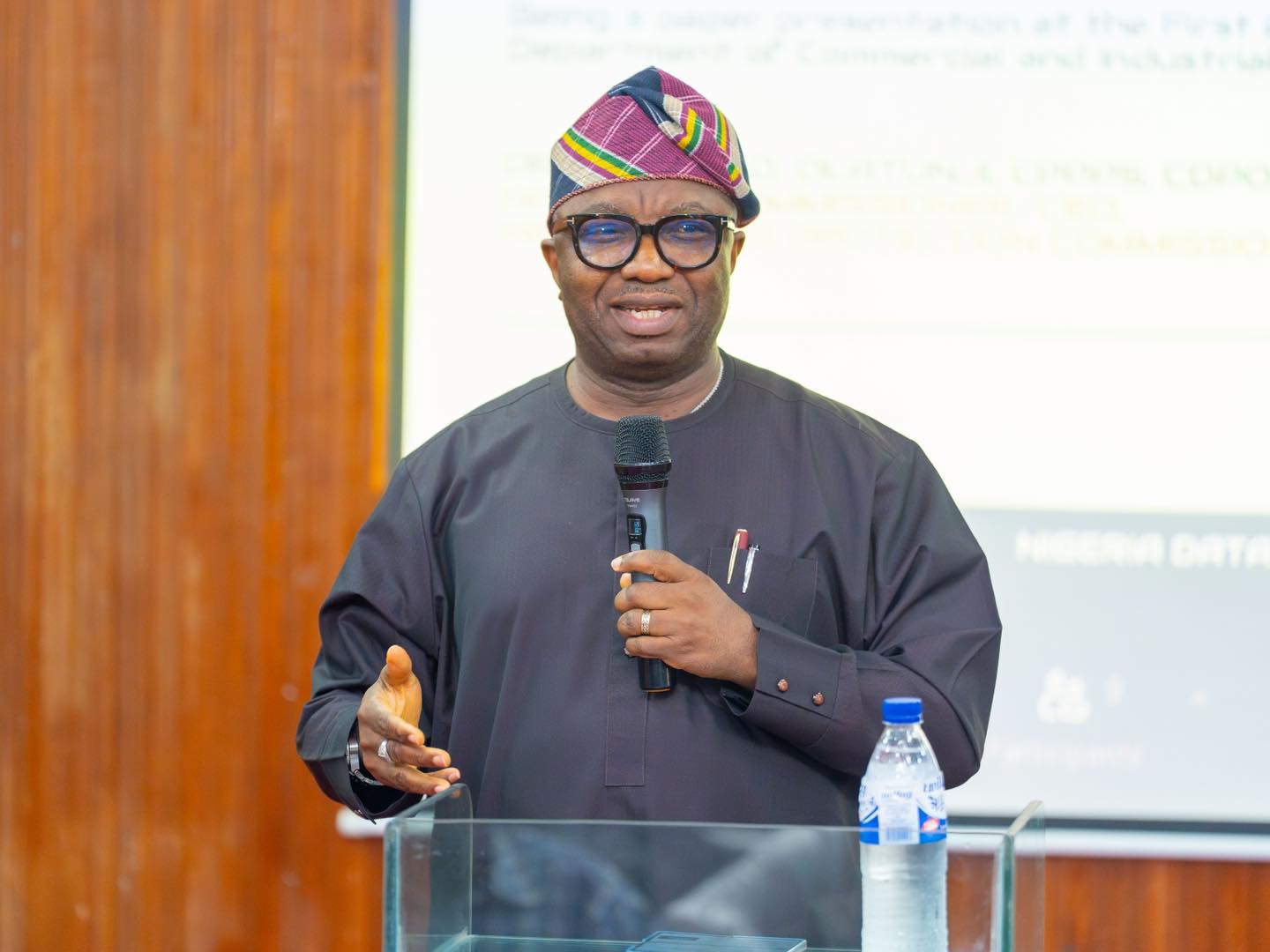
Dr. Vincent Olatunji, National Commissioner and CEO of the Nigeria Data Protection Commission, was the keynote speaker at the recent CIL Dialogues: Panel Discussion on the Nigeria Data Protection Act (NDPA 2023). The event, titled “One Year of the Data Protection Act and Five Years of Regulating Data Processing in Nigeria: Prospects and Challenges,” was organized by the University of Lagos (UNILAG).

During his visit, Dr. Olatunji met with the Vice Chancellor of UNILAG, Prof. Folasade Ogunsola, who was represented by the Deputy Vice Chancellor (DVC), Prof. Ayodele Atsenuwa. Prof. Atsenuwa expressed gratitude to Dr. Olatunji and highlighted UNILAG’s commitment to recognizing data protection as a vital and emerging field. She noted that the university aims to collaborate closely with the Commission to develop courses and build a cadre of experts and professionals in data protection. Additionally, she assured that UNILAG would take all necessary steps to comply with the Nigeria Data Protection Act, ensuring the adequate safeguarding of students’ personal data.

Dr. Olatunji emphasized the importance of acquiring data protection skills to tap into the growing opportunities within the ecosystem. He pointed out the current shortage of certified experts in the field and discussed the ongoing efforts to domesticate data protection certification in Nigeria. He urged the university to work with the Commission in exchanging ideas, developing policies, and exploring further areas of partnership.May be an image of 14 people, dais and text

In his presentation, Dr. Olatunji outlined the foundation and progress of data protection in Nigeria, underscoring the significance of data protection laws and the model adopted to ensure compliance. He highlighted the job prospects within the ecosystem, particularly for the students present at the event.

The panel discussion saw attendance from students, lecturers, heads of departments, and deans of UNILAG. Topics covered during the interactive session included the establishment of a data protection club at UNILAG, balancing freedom of information and data privacy, privacy issues in AI and startups, and data subject rights, among others.

This event marks a significant step in fostering a deeper understanding and commitment to data protection within the academic community, paving the way for future collaborations and advancements in the field.


ANTHONY EMEKA NWOSU