

Minister of Innovation, Science, and Technology and Energy Commission of Nigeria Mark Groundbreaking Ceremony of Assembly Plant Construction at Ihunekwagu Autonomous Community, Akpugo


Today marks a significant milestone in Nigeria’s pursuit of energy security and sustainable development as the Energy Commission of Nigeria (ECN) breaks ground on a new solar PV module assembly plant at Ihunekwagu Autonomous Community, Akpugo, Nkanu West Local Government. The ceremony was led by the Director-General/Chief Executive Officer of ECN, Dr. Mustapha Abdullahi, alongside the Honourable Minister of Innovation, Science, and Technology, Chief Uche Nnaji Nwakibie.

In his opening remarks, Dr. Abdullahi emphasized the critical need to boost access to electricity across Nigeria. Despite the nation’s vast resources, grid electricity remains inefficient and inaccessible to many, hindering socioeconomic development and impacting the quality of life for millions. Dr. Abdullahi stated, “In addressing these challenges, photovoltaic (PV) electricity emerges as a crucial solution. Solar energy offers a sustainable, reliable, and decentralized power source that can reach the remotest corners of our country, bringing light and hope to all.”

The new solar PV module assembly plant represents a giant leap forward in translating ECN’s research outputs into indigenous solutions capable of transforming Nigeria’s energy landscape. Dr. Abdullahi highlighted the importance of the project, noting, “This assembling plant is not just a technological advancement; it is a testament to our dedication to fostering home-grown innovation and self-reliance. It also perfectly aligns with the Renewed Hope Agenda under the leadership of His Excellency, President Ahmed Bola Tinubu.”

The Energy Commission has been committed to research and development in renewable energy, particularly PV technology, for several years. This commitment has led to the development of demonstrable products that address various energy-related problems, from bio-energy systems reducing dependence on fossil fuels to solar drying systems aiding rural farmers.

Dr. Abdullahi believes that the new plant will significantly boost the Commission’s capacity to domesticate solar PV technology in Nigeria. He commended the efforts of research institutions and individuals who have made strides in PV module production with limited resources. The new facility will transition from small-scale attempts to a full-fledged production facility, meeting the country’s growing energy needs, creating jobs, and providing opportunities for youth and skilled professionals in the renewable energy sector.

Dr. Abdullahi expressed his gratitude to the Honourable Minister, Chief Uche Nnaji Nwakibie, for his unwavering support and political backing. “Your belief in this project and your commitment to its success have been invaluable and extremely crucial,” Dr. Abdullahi remarked. He also acknowledged the dedicated team at the Energy Commission of Nigeria for their hard work and vision.

The event was graced by other distinguished guests, including members of the House of Representatives from Enugu State, and Directors-General of NASRDA, NNMDA, PRODA, NICFOST, NACETEM, NITR, and NBTI.

This groundbreaking ceremony marks a pivotal step in Nigeria’s journey towards achieving sustainable energy development and energy security for all.

 

Governor Charles Chukwuma Soludo recently conducted an assessment tour of the State-owned Polytechnic in Mgbakwu, expressing his vision for the institution’s future development.

“The Polytechnic’s enchanting green and tranquil surroundings left a lasting impression on me, yet I believe there are untapped potentials waiting to be unleashed,” Governor Soludo remarked.No alternative text description for this image

He emphasized the primary objective of elevating the Polytechnic to meet global standards, a journey that will require unwavering dedication and hard work from all stakeholders. “Our goal is to create a conducive environment where future champions will graduate and go on to conquer the world,” Soludo stated.

To initiate this transformative journey, the Governor has established evaluative mechanisms to assess the institution’s immediate needs and facilitate lasting progress. These measures aim to set the Polytechnic on a competitive path while carving out a unique identity and building a strong reputation.

“May Anambra continue to win!” Governor Soludo concluded, reaffirming his commitment to the state’s educational advancement and future success.


TONY EMEKA NWOSU


Nurudeen Adeyemi, an Independent Sales Contractor (Nigeria) at Digital Microsystems Pte Ltd, has voiced strong opinions regarding recent calls for protests and the general state of affairs in Nigeria under President Bola Tinubu’s administration.

Adeyemi stated, “No President who has his people at heart, seeing how violent protests are burning down one of the African countries, Kenya, would remain silent and calm when his people called for protests, except for a stony-hearted President. President Tinubu is not an opponent of protest of any kind, but the President is an opponent of violence and anything that will negatively impact the well-being of Nigerians.”

Nurudeen AdeyemiHe emphasized that genuine patriotism does not necessarily mean supporting the President but rather loving Nigeria and feeling a deep loyalty toward the country. Adeyemi acknowledged the current hunger crisis in Nigeria and assured that the government is taking all necessary steps to address the situation. He noted a significant improvement in Nigeria’s revenue-to-debt service ratio, which has declined from 97% in 2023 to 68% in 2024, indicating a reduction in the government’s debt burden. He also mentioned that the federal government aims to reduce the inflation rate to between 20% and 25% before the end of the year.


“The government is creating incentives in the agricultural sector as well as the oil and gas industry to drive economic growth and productivity. Without giving the government the chance to do what they want to do, we can’t make progress,” Adeyemi said. He criticized those who claim to be patriotic but do not give the government a chance to implement its policies.

Addressing recent protests, Adeyemi mentioned Sowore Omoyele’s demands regarding high transportation costs. He highlighted the government’s rapid implementation of the CNG adoption program to provide affordable alternatives to existing fuel products. Since the removal of the fuel subsidy by President Tinubu, monthly allocations to states have increased, with some states almost doubling their allocations and a few paying the N35,000 provisional wage award.

Adeyemi criticized the lack of accountability among lawmakers, who received thousands of bags of rice for distribution to their constituents but failed to do so. He argued that the public should hold lawmakers accountable instead of blaming the President.

“Protest or no protest, until we start to ask the right people the right questions, the country will not improve. However, I remain optimistic about a better Nigeria with President Tinubu’s administration, in sha Allah,” Adeyemi concluded.


ANTHONY EMEKA NWOSU


He emphasized that genuine patriotism does not necessarily mean supporting the President but rather loving Nigeria and feeling a deep loyalty toward the country. Adeyemi acknowledged the current hunger crisis in Nigeria and assured that the government is taking all necessary steps to address the situation. He noted a significant improvement in Nigeria’s revenue-to-debt service ratio, which has declined from 97% in 2023 to 68% in 2024, indicating a reduction in the government’s debt burden. He also mentioned that the federal government aims to reduce the inflation rate to between 20% and 25% before the end of the year.

 

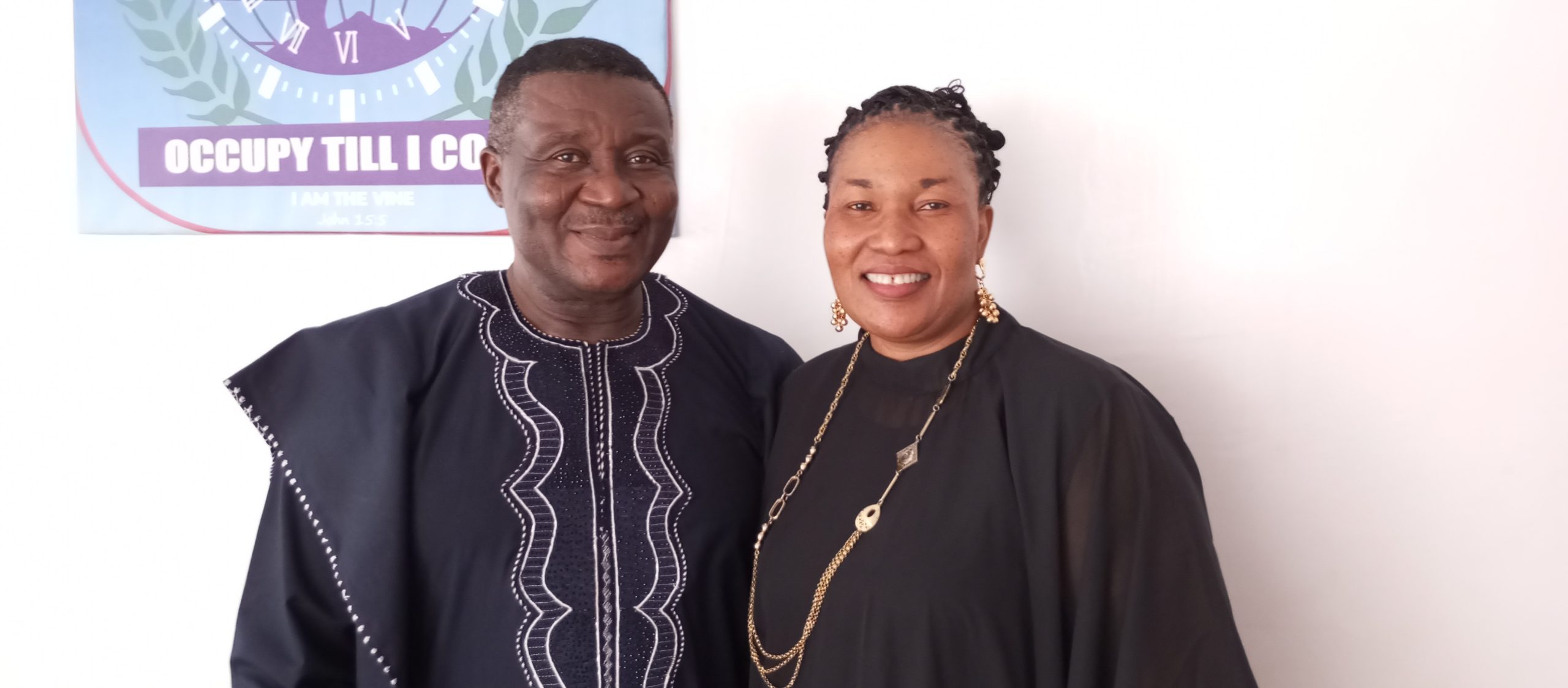
Faith Cathedral International Ministries proudly celebrates the extraordinary contributions of Pastor Fred Obetoh and his devoted wife, Winnie Obetoh. As Pastor and General Overseer, Pastor Fred has led the church from its humble beginnings in Ikeja to an internationally recognized ministry, with branches throughout Europe, especially in Germany.

Pastor Fred’s Leadership at Faith Cathedral International Ministries has been marked by a profound commitment to compassion and service. The church is well-known for its financial assistance programs, providing vital support to indigent members and ensuring that education is accessible by covering school fees for underprivileged children. These initiatives have significantly impacted the community, fostering hope and opportunity.

Beyond material assistance, Pastor Fred is celebrated for his spiritual guidance and the miraculous healings attributed to his ministry. Many have experienced profound recovery and renewal through his prayers, witnessing the power of faith and divine intervention. His dedication to spreading the gospel has inspired countless individuals, strengthening their faith and sense of community.

Winnie Obetoh: A Pillar of Strength and Unity

Winnie Obetoh, standing steadfastly by Pastor Fred’s side, has played a crucial role in uplifting the women of Faith Cathedral International Ministries. Through her leadership, the women’s fellowship has flourished, creating a supportive and nurturing environment. Winnie’s efforts have brought women together, fostering group love and unity, and contributing to the church’s overall sense of family and happiness.

A Detribalized and Impactful Legacy

The Obetoh family exemplifies the values of unity and selflessness, transcending tribal and ethnic boundaries. Their inclusive approach has positively impacted individuals from diverse backgrounds, demonstrating that love and compassion are universal. In an era often characterized by materialism and self-interest, Pastor Fred and Winnie Obetoh stand as beacons of how God can use devoted couples to reach out and transform lives.

Located in Egbeda, Faith Cathedral International Ministries continues to serve as a sanctuary for spiritual growth and community support. With a vision rooted in faith, hope, and charity, the church has expanded its reach, bringing its message of love and redemption to new horizons.


Anthony Emeka Nwosu


Winnie Obetoh, standing steadfastly by Pastor Fred’s side, has played a crucial role in uplifting the women of Faith Cathedral International Ministries. Through her leadership, the women’s fellowship has flourished, creating a supportive and nurturing environment. Winnie’s efforts have brought women together, fostering group love and unity, and contributing to the church’s overall sense of family and happiness.


In a significant virtual knowledge-sharing session, Dr. Vincent Olatunji, the National Commissioner/CEO of the Nigeria Data Protection Commission (NDPC), engaged with a team from Mastercard led by Derek Ho, the Assistant General Counsel for Privacy and Data Protection.

During the session, the Mastercard team extended their congratulations to the NDPC and Nigeria for securing the hosting rights for the 2024 edition of the Network of Africa Data Protection Authorities’ (NADPA) Conference and Annual General Meeting. They expressed their enthusiasm and gratitude for the opportunity to collaborate with the Commission, particularly in organizing capacity-building workshops and promoting privacy-enhancing technologies to ensure a successful NADPA conference.

Dr. Olatunji commended the Mastercard team for their proactive approach and willingness to partner with the Commission. He emphasized the importance of multinational cooperation in enhancing the success of the NADPA conference and appreciated Mastercard’s commitment to this cause.

The discussion also explored other potential areas of collaboration, including the domestication of the National Certification process, data transfer protocols, and cross-border data guidelines.


The Nigeria Data Protection Commission (NDPC) is dedicated to safeguarding the privacy rights of individuals and ensuring compliance with data protection regulations in Nigeria.

Mastercard is a global technology company in the payments industry, committed to providing secure and innovative solutions for businesses and individuals worldwide.

Renowned Nigerian singer Adekunle Gold has publicly expressed his deep gratitude and admiration for his wife, Simi, highlighting her pivotal role in his career and their relationship. Reflecting on their journey, Adekunle shared heartfelt anecdotes from their early days together.

“Eight years ago, my wife Simi mixed and mastered all the songs in my first album, ‘Gold.’ At that time, she was just one of my girlfriends, and for this alone, I can never cheat on her,” said Adekunle Gold.

Adekunle Gold continued, praising Simi as the most amazing woman he knows, aside from his mother. He recounted a time when he was a struggling graphic designer, often facing financial difficulties. Simi, then his girlfriend, supported him in numerous ways, including paying his rent, covering his bills, and even providing him with a pocket allowance.

“I was just a poor graphic designer who rarely got deals, but she made sure I didn’t lack anything. I had always loved music but didn’t have the finances to fund my career, so I was stuck as a graphic designer,” he explained.

Their lives changed dramatically one day when Simi visited Adekunle and heard him energetically singing and dancing. Intrigued by his talent, she encouraged him to pursue music seriously and offered her skills as a producer.

“You should’ve told me,” Simi laughed. “I’m not just a singer, but I’m also a producer, and I would be glad to be your producer.” This moment marked a turning point for Adekunle, who was overwhelmed with joy.

Together, they wrote the songs for his debut album, “Gold,” which Simi recorded, mixed, and mastered in her studio. She also paid for promotions, leading to Adekunle’s breakthrough in the music industry. Since then, Simi has continued to support him, collaborating on songwriting and production.

“God bless this virtuous woman. She’s every man’s dream, and I’m proud to be her husband,” Adekunle concluded.

Adekunle Gold’s message to men is to marry a partner who supports and adds value to their lives, rather than focusing solely on physical attributes. He emphasized the importance of loyalty and genuine support in a relationship.


As the world tunes in to the 2024 Olympic Games, a standout player has caught the attention of soccer enthusiasts worldwide: 22-year-old Joel Chima Fujita. The young midfielder is not only representing Japan U23 with skill and determination but also embodies a unique blend of cultural heritage.

Born to an Igbo father from Nigeria and a Japanese mother, Joel Chima Fujita’s journey to the Olympics is a testament to his diverse background and dedication to the sport. His dual heritage has enriched his playing style, combining the flair and resilience characteristic of Nigerian football with the discipline and precision of Japanese training.

Fujita’s upbringing in Japan, coupled with his exposure to Nigerian culture, has shaped him into a versatile and dynamic player. His ability to navigate between defensive duties and attacking support has made him a pivotal part of Japan’s U23 squad. As the team progresses through the tournament, Fujita’s performance will be crucial in their quest for Olympic glory.

Joel Chima Fujita’s story is more than just about football. It highlights the power of multiculturalism and the bridging of two rich heritages. As he steps onto the field, he carries the hopes of both his Japanese and Nigerian roots, making him a symbol of unity and excellence.

The Tokyo 2024 Olympics has provided a global stage for emerging talents, and Joel Chima Fujita is undoubtedly one to watch. His journey is a compelling narrative of identity, talent, and the unifying spirit of sports. As the games unfold, fans from Japan, Nigeria, and beyond will be cheering him on, celebrating not just his skills but the unique story he represents.


Ethnos, a leading indigenous IT firm based in Victoria Island, Lagos, has announced a strategic partnership with Cyberrey, a global leader renowned for its expertise in business agility and cyber protection. This collaboration aims to bolster cybersecurity measures for corporate and public organizations worldwide.

Peter Ejiofor, CEO of Ethnos, expressed enthusiasm about the new alliance, stating, “We’re excited to announce our amazing partnership with Cyberrey! We look forward to achieving great things together and reaching new heights.”

Ejiofor highlighted the benefits of the partnership, noting that “Cyberrey empowers its partners and protects organizations through value-added distribution. Our business model enables partners to excel in the cybersecurity landscape by offering comprehensive solutions that optimize business success and efficiency.”

Cyberrey, known for its robust cybersecurity solutions, commented, “We understand that navigating the complex world of cybersecurity can be daunting. At Cyberrey, we are here to help. Contact us today to discuss your specific needs and learn how we can build a robust and resilient security posture for your organization.”

The partnership will offer a range of services designed to address various aspects of cybersecurity. These include:

  • Security Awareness Training: Equipping employees with the knowledge and skills needed to combat cyber threats effectively, making them the first line of defense against attacks.
  • Cybersecurity Strategy, Governance, & Audit: Developing robust security frameworks and ensuring compliance with industry standards.
  • IoT Security Audit: Securing connected devices and mitigating the unique risks associated with the Internet of Things.
  • Infrastructure Security Consulting: Optimizing IT infrastructure for enhanced security and resilience.

Recognized for its ability to handle complex migrations under tight deadlines, Cyberrey has helped numerous organizations avoid significant post-contract fees and fines by ensuring timely and effective cybersecurity solutions.

This new partnership is set to advance the cybersecurity landscape, providing invaluable support to organizations striving to protect themselves in an ever-evolving digital environment.


In a decisive move, the Federal Competition & Consumer Protection Commission (FCCPC) has imposed a $220 million fine on Meta for violating Nigeria’s Data Protection Act. This penalty arises from Meta’s compulsory data privacy conditions for Nigerians registering new WhatsApp accounts, which contrasts sharply with the opt-in/opt-out options available to users in Europe and other countries.

“When you want to register a new WhatsApp, Meta has already made the conditions compulsory for Nigerians to agree to its data privacy specifications, unlike the Yes or No option provided in Europe and other countries, which was why we fined them $220 million,” stated Dr. Adamu Abdullahi, Executive Commissioner of the FCCPC.

The FCCPC discovered that Meta had been sharing the data of Nigerian users across different platforms without their explicit consent, violating the country’s Data Protection Act. “Subsequently, they shared the data of Nigerians across different platforms, which violated the Data Protection Act of Nigeria,” Dr. Abdullahi added.

Dr. Abdullahi highlighted the significance of this action, saying, “We are also proud to say that we are one of the first institutions in Africa to stand against these multinationals and ensure they do the right thing.” This stance underscores Nigeria’s commitment to protecting its citizens’ data privacy and holding global tech giants accountable.

Nigeria, Africa’s most populous country, has around 164 million internet subscriptions out of a total population of 200 million. Approximately three-quarters of Nigerians are under the age of 24, many of whom are avid users of social media platforms such as WhatsApp, Facebook, and Instagram. In December, Communication Minister Bosun Tijani noted that the country had “over 51 million WhatsApp users.”

Meta Bans 63,000 Accounts Linked to Nigeria’s Sextortion Scams

In related news, Meta announced on Wednesday the removal of 63,000 accounts connected to Nigerian cybercriminals known as Yahoo Boys. These accounts were involved in financial sextortion scams targeting users in the United States.

“While our investigation showed that the majority of these scammers’ attempts were unsuccessful and mostly targeted adults, we did see some attempts to target minors,” said Antigone Davis, Meta’s global head of safety. These cases were referred to the National Center for Missing & Exploited Children (NCMEC).

The crackdown follows an FBI warning earlier this year about the growing threat posed by financially motivated extortionists to children. These criminals typically coerce teenage males into sharing sexually explicit images and then threaten to release the images unless the victim pays an extortion fee, often through gift cards, mobile payment services, wire transfers, or cryptocurrency.

Meta revealed that among the 63,000 accounts involved in sextortion scams, it identified a smaller coordinated network of around 2,500 accounts linked to a group of approximately 20 individuals based in Nigeria. These individuals primarily targeted adult men in the United States, using fake accounts to conceal their identities. The investigation also uncovered thousands of related assets, including accounts, pages, and groups that provided tips and guides for conducting scams, as well as scripts and photographs for creating fake accounts.

Meta’s actions highlight the ongoing efforts to combat cybercrime and protect users from online exploitation, emphasizing the importance of international cooperation and stringent regulatory measures.


In today’s increasingly cashless society, payment cards have become essential tools for transactions, offering convenience and security to consumers and businesses alike. But have you ever wondered about the intricate process behind the production of these cards? Let’s take a closer look at how payment cards are made, from raw materials to the finished product in your wallet.

1. Design and Planning

The journey of a payment card begins with meticulous design and planning. This phase involves creating the card’s visual appearance, incorporating branding elements, security features, and functional requirements. Designers use specialized software to ensure the card meets industry standards and aligns with the issuer’s brand identity.

2. Material Selection

Payment cards are typically made from durable materials like PVC (polyvinyl chloride) or composite plastics. These materials are chosen for their durability, flexibility, and resistance to wear and tear. The selected material must also be compatible with the various security and functional features embedded in the card.

3.Printing and Personalization

Once the design is finalized and the materials are selected, the next step is printing. Advanced printing techniques are used to transfer the design onto the card material. This includes printing the cardholder’s name, card number, expiration date, and the issuing bank’s logo.

Personalization is a critical step where each card is uniquely identified. This involves encoding magnetic stripes, embedding EMV chips, and laser engraving security features such as holograms, microtext, and signature panels.

4. Embedding Security Features

Security is paramount in payment card production. Modern cards incorporate multiple security features to prevent fraud and counterfeiting. These features include:

  • – EMV Chips: Embedded microchips that securely store cardholder data and perform cryptographic functions during transactions.
    Holograms: Three-dimensional images that are difficult to replicate.
    – Magnetic Stripes:Encoded with cardholder information for traditional swipe transactions.
    – Contactless Technology:Allows for NFC (Near Field Communication) payments by embedding an antenna within the card.

5. Quality Control and Testing

Quality control is a crucial phase in the production process. Each card undergoes rigorous testing to ensure it meets industry standards for durability, functionality, and security. This includes stress tests for physical endurance, as well as tests for electronic components to ensure proper encoding and functionality.

6. Distribution and Activation

After passing quality control, the cards are packaged and prepared for distribution. They are then shipped to issuing banks or directly to cardholders. Upon receipt, the cardholder typically needs to activate the card, either through a phone call or an online process, to start using it for transactions.

7.Ongoing Management

The lifecycle of a payment card doesn’t end with its issuance. Banks and card issuers continuously monitor for security threats and potential fraud. They may update or replace cards to ensure they incorporate the latest security features and technologies.

Conclusion

The production of payment cards is a complex, multi-step process that ensures the cards we use every day are secure, durable, and reliable. From design and material selection to personalization and security embedding, each step is meticulously planned and executed to meet stringent industry standards. Understanding this process not only enhances our appreciation of these essential tools but also highlights the importance of continued innovation in the realm of payment technologies.

For businesses and consumers alike, staying informed about the intricacies of payment card production helps in making educated choices about the financial tools we rely on. As technology evolves, so too will the processes and features involved in creating the next generation of payment cards.