
PLAY BIG, WIN BIG WITH LG 4K OLED TV

Experience the wow difference between LG OLED, QNED TV & other brands as LG Instore Gaming takes centre stage


A decade after introducing the world to the first-ever large-screen OLED TV, LG continues to lead the premium TV market. The company’s cutting-edge OLED TVs have been recognized at the CES Innovation Award for 11 years in a row, and have kept evolving over time to deliver ever-greater value to consumers. LG OLED is renowned for its exceptional picture quality, producing vibrant, accurate colors with deep blacks and an infinite contrast ratio for images that are remarkably lifelike.

LG Electronics (LG) is announcing the beginning of its exciting new LG OLED Instore gaming tournament, where players in Lagos, Nigeria, will have the chance to compete in a FIFA tournament in a bid to win the grand prize. The games run from July to August 2024, and the player who wins on each of the Saturdays will qualify for the final. The final match takes qualifiers to the Challenge Arena in Lekki Brandshop on August 18, 2024.

The LG OLED gaming challenge takes places in three designated Fouani Showrooms namely; Omole, Allen and Lekki Brandshop on Saturdays only. For more information and to participate simply register at;  https://www.lg.com/africa/oled-gaming-challenge

LG Electronics (LG) unique OLED technology delivers deep blacks, clean whites and vibrant shades of colors says Mr. Choongbae Seok, General Manager, Home Entertainment, TV Division, LG Electronics. “With cutting-edge self-illuminating pixels, you can experience a more accurate, pure and brighter picture than ever before”.

LG OLED TVs have extremely low input lag with an incredible 1ms response time. This ensures that every move you input on the controller is displayed instantly on screen, giving you a vital edge over opponents and a better chance of winning.

Frame rates can often change throughout a game. If a TV can’t match these changes, you get image tearing. That’s why LG OLED TVs support VRR* and ALLM*, and are certified as HDMI 2.1 — reducing motion blur and ghosting to barely discernible levels, with fast motion transitions and seamless gameplay up to 4K 120fps, and at the highest resolution.

LG continue to work with industry-leader NVIDIA to make LG OLED TV the only G-SYNC compatible TV. LG OLED TVs use the precision and control of individual self-lit pixels to take full advantage of the G-SYNC compatibility, allowing fast response times and smoother gaming, even at high resolution.

Eye Comfort (Safer Viewing)

OLED technology provides a safer and more comfortable viewing experience thanks to its flicker-free technology and certified low blue light levels. This means less fatigue to your eyes during those boxset marathons, nail-biting championship games and intense gaming sessions.File:LG Electronics logo.png - Wikimedia Commons
 

Flicker-free (More comfortable viewing)

You may have noticed the flashing on a monitor before — that’s flicker. If your eyes are exposed to this for too long, it’s inevitable that you’ll feel tired. The flicker effect can be both visible and invisible, and even the invisible flicker can put stress on your eyes. Flicker occurs on LED TVs when they have an operating system that makes backlights blink in order to control brightness, this is compounded by the slow response times of the LED panels. LG OLED TVs don’t have that flicker because they don’t have backlights and the response time of the OLED panel is fast.


Low Blue Light

Blue light comes from many sources and exposure to large amounts of blue light can suppress melatonin and lead to problems such as sleep disturbance. Children and adolescents with underdeveloped irises are particularly vulnerable to retinal damage. So, when you watch TV, it’s important which TV you watch. Tests have found that LG OLED displays emit less blue light than LED displays.


Watching LG OLED relieves eye strain and lets you enjoy TV more comfortably. They’ve been certified by TŰV Rheinland as eye comfort displays that are flicker-free and low-blue light. And verified by UL as no photobiological LED hazard displays that are flicker-free and low-blue light.


This competition is part of LG’s continuous initiative to engage with gamers in Nigeria and demonstrate the innovation behind its premium gaming products

For more information about LG OLED TVs, kindly visit; https://www.lg.com/africa/oled-tvs


LG continue to work with industry-leader NVIDIA to make LG OLED TV the only G-SYNC compatible TV. LG OLED TVs use the precision and control of individual self-lit pixels to take full advantage of the G-SYNC compatibility, allowing fast response times and smoother gaming, even at high resolution.




Lieutenant David Chukwudera Okafor, a prominent Nigerian Naval Officer hailing from Ogbunike, Anambra State, has been honored with a significant role as a judge in the prestigious 2023-2024 International Ship Design Competition. This esteemed competition, orchestrated by the Worldwide Ferry Safety Association, is dedicated to enhancing global ferry safety and reducing fatal accidents on waterways.

In his role, Lt. Okafor will be instrumental in designing a state-of-the-art RoPax ferry tailored for the Niger River. This innovative vessel is set to accommodate between 150 and 200 passengers, along with cargo and 15 to 20 vehicles, significantly improving transportation safety and efficiency in the region. The design aims to address the unique challenges of navigating the Niger River, with a focus on both safety and operational effectiveness.

Lt. Okafor brings over a decade of specialized experience in ship design and marine project management to the competition. His educational background is equally impressive, with degrees from SUNY Maritime College and the University of Hull, complemented by ongoing PhD studies at the University of Strathclyde. His extensive qualifications and practical experience make him a key figure in advancing maritime safety.

Widely celebrated in Igboland and Nigeria at large  for his contributions to naval engineering and his commitment to his profession, Lt. Okafor is also known for his dedication to balancing a demanding career with a fulfilling family life. His passion for environmental sustainability further underscores his commitment to not only advancing marine technology but also protecting the natural world.

Lt. Okafor’s appointment as a judge reflects his outstanding expertise and the high regard in which he is held within the maritime community. His role in this competition is expected to make a significant impact on the future of ferry design and safety worldwide.


Xiaomi has announced the launch of its latest innovations, the Redmi Note 13 Pro and the Redmi Pad Pro, promising to enhance user experiences with cutting-edge technology.

The Redmi Note 13 Pro features an impressive 200MP OIS main camera with 4X optical-grade lossless zoom. This advanced camera system allows users to effortlessly switch between three focal lengths, making it ideal for capturing breathtaking landscapes, intimate portraits, and detailed close-ups without any loss in quality. The device is available at a recommended retail price of N384,800.

In addition to the Redmi Note 13 Pro, Xiaomi also introduced the Redmi Pad Pro, designed to deliver an elevated multimedia experience. The tablet boasts a striking 12.1″ 120Hz 2.5K display that brings content to life with exceptional clarity. Powered by the Snapdragon 7s Gen 2 and Xiaomi HyperOS, the Redmi Pad Pro ensures smooth and speedy performance. The device is equipped with a robust 10,000mAh battery and 33W fast charging, offering all-day use and quick recharging. Enhanced by quad speakers, the tablet provides deep, immersive sound.


New LG video campaign to shine a light on everyday interactions in the home and help customers share their care amongst family


LG Electronics (LG) has announced its new campaign of short videos under the “Life’s Good” brand slogan, titled Get More Care, following the success of previous themes “Get More Love” and “Get More Magic”, aimed at highlighting how LG products enable small gestures of love and care among family members so that they can enjoy true “Life’s Good” moments amidst unforgettable experiences.

Throughout the video series, LG will showcase those sometimes unnoticed loving moments experienced in the home while shining a subtle light on how its products enhance everyday lives through the brand’s innovative technology intricately interwoven into its customers’ everyday lives, by chasing their vicarious football dreams or simply following their favorite teams in 4K clarity.


A key highlight of the campaign is the immersive family viewing experience provided by LG’s groundbreaking OLED screens – such as the LG Signature 97-inch OLED M3 4K Smart TV, offering a portal to new universes. With unparalleled picture quality and vivid colors, and sound refinements of α9 AI Processor 4K Gen6, LG OLED screens transform an otherwise ordinary viewing into an unforgettable experience of resplendent immersion, bringing families closer together.


Additionally, the campaign will showcase the convenience of LG’s WebOS, a smart platform that offers seamless access to a wide range of entertainment options and smart home features. Whether it’s finding the perfect movie or the latest TV shows for family night, explore a vast array of content with built-in streaming services such as Netflix, Prime Video, Disney+, YouTube, and Apple TV+. LG’s intuitive WebOS interface also means receiving personalized sports updates and tailored content recommendations is as easy as accessing further built-in apps like Music and Sports, making family time entertainment effortless and enjoyable.

The cutting-edge InstaView knock-knock feature is another standout in the campaign, perfect for revealing those sometimes hidden signs of love. This technology, available on LG’s latest refrigerators and ovens, allows users to see inside with a simple knock, making meal preparation more interactive and fun. Families can easily decide what to cook from the fridge or check on the progress of a juicy roast in the oven, all without opening a door.


“We are excited to introduce ‘Get More Care’ as our new brand campaign,” said Mr. Hyoung Sub Ji, Managing Director, LG Electronics West African Operations. “Through these heartwarming short films, we aim to show how our products make everyday moments more special and meaningful. At LG, we believe that technology should enhance the way we care for each other, and this campaign perfectly encapsulates LG’s ‘Life’s Good’ vision.”


LG’s commitment to human-centered innovation and user-centric design is at the forefront of this campaign, demonstrating how the company’s products contribute to a more connected and caring lifestyle. By showcasing the practical benefits and emotional value of LG’s technology, “Get More Care” aims to resonate with families across the region.


The four-episode Get More Care video campaign, which launches in this month of July, showcase fun and touching stories in the home, and ties in effortlessly with LG’s brand direction and visual identity, while maintaining and reiterating the brand’s core values of ‘Uncompromised Customer Experience’, ‘Human-centered Innovation’, and ‘Warmth to Power a Smile’.


To learn more about LG’s campaign, please visit: Get More Care

The cutting-edge InstaView knock-knock feature is another standout in the campaign, perfect for revealing those sometimes hidden signs of love. This technology, available on LG’s latest refrigerators and ovens, allows users to see inside with a simple knock, making meal preparation more interactive and fun. Families can easily decide what to cook from the fridge or check on the progress of a juicy roast in the oven, all without opening a door.


he Governor of Lagos State addressed residents today, reaffirming his commitment to the state’s prosperity amid growing concerns about potential protests against what some describe as “bad government.”

In his address, the Governor acknowledged the challenges facing Lagosians but questioned the efficacy of protests in solving these issues. He emphasized that protests aimed at changing the government through non-constitutional means are troubling and unlikely to yield immediate benefits such as lower food prices or economic growth.

“While the intentions behind the protests may be noble, they could potentially undo the modest gains we’ve made,” he said. “Significant efforts are underway to alleviate our people’s pain and pave the way to lasting prosperity.”

Highlighting recent government actions, the Governor noted that President Tinubu has signed a new minimum wage into law and that student loans are being disbursed to ease financial burdens. Additionally, local governments now have financial autonomy to enhance governance efficiency.

The Governor also mentioned innovative measures to tackle the foreign exchange crisis, including selling crude oil to local refineries in Naira to save $7.9 billion annually and strengthen the currency. The Presidential Initiative on CNG is attracting private investments as well.

“We need patience for the benefits of these economic reforms to blossom,” he stated. “Protests can’t achieve in days what economic reforms can in weeks and months.”

In Lagos, the state government has launched EKOCARES to cushion the effects of economic reforms, offering discount markets, reduced transport costs, and free medical care. The Governor also highlighted increased bursaries and scholarships for Lagos students, free education for new elementary students, and higher wages for workers.

Reflecting on the tragic events of the EndSARS protest in 2020, the Governor warned against a repeat of the destruction and loss that ensued when the protest was hijacked by violent elements.

“We will NOT allow history to repeat itself,” he declared. “During the protests, we saw the destruction of valuable properties and institutions, which set us back economically and socially.”

To ensure safe and peaceful expression, the Governor announced that the Police have designated Gani Fawehinmi Park and Peace Park for protests, where security will be provided to protect citizens and prevent chaos.

“Our goal is a peaceful and prosperous Lagos,” he concluded. “Let’s unite, embrace dialogue, and build a peaceful, prosperous Lagos. Our strength lies in our unity, and our future depends on maintaining peace and stability.”


In a world where the demand for tech innovation is matched only by the acceleration of cybersecurity threats, businesses face the challenge of balancing new product development and robust security measures. Kevin Halkerd, Risk and Compliance Manager, and Andrea Carr, Head of Research and Development at Proptech specialist e4, say this balance isn’t just a goal but the cornerstone of their strategic approach.

Innovation and security isn’t an either/or

How can businesses balance the need for innovation without compromising on security? Part of the answer is stepping outside the dichotomy altogether. “It is so important to have both. You can’t have one without the other. A business that doesn’t innovate will quickly fall behind its competitors, and one without security simply won’t survive,” says Carr. Fortunately, this perspective is fast becoming the consensus in the industry, says Halkerd. “At CISO conferences, the prevailing message is clear: Security must be baked into the innovation plan itself. This approach ensures that security considerations are part of the developmental process from the start, and not as an afterthought,” he says.

Striking the right balance early

Early engagement of security teams in the innovation process should form part of the strategy from day one. “To encourage and facilitate the testing of new technologies within our organisation, we invite proposals for new tech and evaluate them alongside other similar technologies. Our goal is to create a safe space for experimentation, exploring specific use cases. Before finalising any technology, we involve e4’s security team to thoroughly investigate and identify any hidden risks. This ensures that any technology we integrate is secure and appropriate for our systems. If security is brought in only at the end of an R&D process, it’s already too late,” Carr explains.

“There are so many benefits to this approach,” agrees Halkerd. “By taking this kind of proactive approach in the past we’ve been able to shift a selected technology from an open-source technology to a closed source technology within a day. And this is not viewed as unusual or problematic; we’ve had to pivot technologies within 24 hours before, changing an entire production environment to a completely different architecture or service provider due to risk factors. This flexibility in avoiding long-term technology lock-ins makes organisations much stronger and can form part of ordinary security measured as well as the overall approach to innovation.”

Security leading innovation

In fact, it’s possible for security considerations to become the driving force behind innovation says Halkerd. “Security is often at the bleeding edge of innovation discussions. Successful AI strategies, for instance, frequently emerge from security companies that leverage advanced technologies to enhance their capabilities.” This forward-thinking approach not only protects the company but also sets the stage for new technological advancements. “e4 started running with AI within our environment in 2019. From a security perspective, being well ahead of the curve is something that’s stood us in good stead. We’re able to look into our network, identify what’s happening, identify certain anomalies, trends, and modify our approach based on that,” he adds.

First to market vs. first to get it right

Balancing the need to be first to market with the imperative to get it right is a nuanced challenge. “Introducing something new is difficult. Customers are understandably cautious about trusting technology to do what humans have done in the past. However, once we have one client signed up and running an enhancement we’ve developed successfully, with data to prove its effectiveness, others soon follow suit,” notes Carr. “The challenge then shifts to having the resources to implement it across all clients concurrently. The key is to get something 80% implemented and working efficiently, and then quickly finalise the remaining 20% to stay ahead of competitors who might be able to achieve 100%,” she says.

“It’s about finding a middle ground,” adds Halkerd. “VCs are often the first lead market, and their perspective is entirely different from established long-term businesses. When leveraging your existing customer base, especially blue-chip clients, you want to bring them something refined and polished. More mature businesses don’t necessarily need to be the first to innovate but do want to see technologies being integrated into their offering.”

Managing emerging technology

Adopting emerging technologies like AI requires careful consideration of data security. Once again, involving security teams early in the process serves as an essential guardrail, ensuring that risks are identified and resolved before implementation. “At the simplest level, before adopting any new technology, ensure you understand how securely it manages data. If you don’t know the answer, don’t proceed,” says Carr.

As with many emerging technologies, it’s not as much about the technology itself as it is about the data behind it. “AI is going to be a significant game changer for

business. Now, how do you balance security and the need for innovation in that respect,” asks Halkerd. “The key is data operations. Data needs to be in a clean, usable format. If organisations can focus on that, deliver against that, and then it’s possible to abstract the data safely and sensitively while keeping in mind regulations in South Africa like the Protection of Personal Information Act (POPIA).”

By involving security teams early in the process, maintaining transparency, and fostering a culture of continuous improvement, robust security can enhance, rather than hinder, innovation – whether it’s AI or the next big innovation on the horizon.

The acquisition is a key milestone in ThetaRay’s (www.ThetaRay.com) mission to use AI in the fight against financial crime. As the leading comprehensive, cloud-based financial crime detection platform, ThetaRay enables financial institutions to identify trusted transactions and trusted customers across all banking activities. This recently won ThetaRay an award for Best Use of Data for Human Trafficking and Modern Slavery Detection together with Santander UK.


ThetaRay, the leading provider of AI-powered financial crime detection technology, today announced the acquisition of next-generation European screening company, Screena. The acquisition demonstrates ThetaRay’s continuous investment in proprietary technology and reaffirms its mission of enabling banks, fintechs, and regulators to detect financial crime with state-of-the-art AI solutions.

Screena helps financial institutions stop wrongdoers without afflicting legitimate parties. It screens individuals, companies, or other entities against numerous lists of sanctioned parties. This ensures compliance with international law and regulations while empowering global trade, protecting reputations, and delivering financial security.

Integrating with ThetaRay has been a game-changer for us at Screena, revealing the true potential of combining Transaction Monitoring, Screening, and Customer Risk Assessment

ThetaRay, deployed in over 40 countries across six continents, is on a journey from being a leader in AI-powered Transaction Monitoring solutions to a cloud-based, end-to-end financial crime detection platform used by over 100 financial institutions including Santander, Payoneer, and Travelex. This strategic acquisition formalizes Screena’s cutting-edge, cloud-based AI-driven screening solution as part of ThetaRay’s product suite, providing financial institutions with an unparalleled, holistic view of transactional and customer screening risks.

With ThetaRay, clients detect multiple types of financial crimes such as money laundering, terrorist financing, and drug trafficking. Most recently, in a global effort to combat modern slavery, Santander UK teamed up with ThetaRay to deploy advanced technology aimed at detecting human trafficking within financial transactions. This collaborative effort received accolades for “Best Use of Data for Human Trafficking and Modern Slavery Detection” at the Digital Transformation Awards in June 2024.

ThetaRay’s product suite ensures financial institutions can swiftly and effectively comply with complex regulatory requirements. Furthermore, ThetaRay enables seamless customer onboarding and transaction flows and allows companies to scale rapidly and capitalize on business opportunities while fostering growth across varied business lines.

“The acquisition of Screena is a significant milestone for ThetaRay as we continue our mission to power the global fight against financial crime by enhancing our offerings with the most advanced AI capabilities. It furthers our commitment to delivering an end-to-end platform that enables banks, fintechs, and regulators to effectively identify financial crime – vital capabilities to grow and operate a financial institution today,” remarked Peter Reynolds, CEO of ThetaRay. “The recent launch of our Customer Risk Assessment (CRA) product this year and the mass adoption of our leading Transaction Monitoring offering demonstrates both a clear need in the market and our proven ability to build pioneering solutions. We are delighted to have closed our first acquisition, bringing key capabilities and further establishing our already rapidly growing presence in Europe.”

“The need for international, cross-border payments, and business corridors between Europe and Africa, South America and the US, and many locations around the world requires the use of AI and advanced technology to make sure that the transactions are trusted, and that the people behind them are trusted,” said Erel Margalit, Chairman of ThetaRay, and Founder and Chairman of JVP. “ThetaRay’s AI also establishes a highway for the good actors that require an international payment network to do their business. The acquisition of Screena advances the ability to identify bad actors, whether it’s money laundering, drug trafficking, or terrorist financing in a much more pointed way. This move is a testament to ThetaRay’s mission of thwarting financial crime and continuously enhancing capabilities to win this critical fight on our journey to becoming a category leader.”

Cédric Iggiotti, CEO of Screena, stated, “Integrating with ThetaRay has been a game-changer for us at Screena, revealing the true potential of combining Transaction Monitoring, Screening, and Customer Risk Assessment. For too long, screening was siloed from other critical financial crime detection tools. Our partnership with ThetaRay not only meets stringent regulatory demands but also significantly enhances our crime detection capabilities, as evidenced by our recent successes with major financial institutions. Looking ahead, we are excited to push the boundaries of what’s possible in building a more trustworthy financial ecosystem.”

PalmPay (www.PalmPay.com), a leading Africa-focused fintech platform, has been included in the 2024 edition of CNBC and Statista’s prestigious list of the “Top 250 Fintech Companies in the World.” This recognition underscores PalmPay’s rapid growth and significant contributions to advancing financial inclusion.


The CNBC/Statista list honours fintech pioneers significantly transforming the financial services industry through technology. More than 2000 companies were evaluated globally based on general and sector-specific KPIs to determine the final selection. In 2024, some of the most influential fintechs in the world were included in the list, including Alipay, Nubank, Monzo, and Revolut. Six other African firms made the list: Flutterwave (Nigeria/US) – Payments; Kuda (Nigeria/UK) – Neobanking; MTN (South Africa) – Payments; Piggyvest (Nigeria) – Financial planning; and Yoco (South Africa) – Payments.

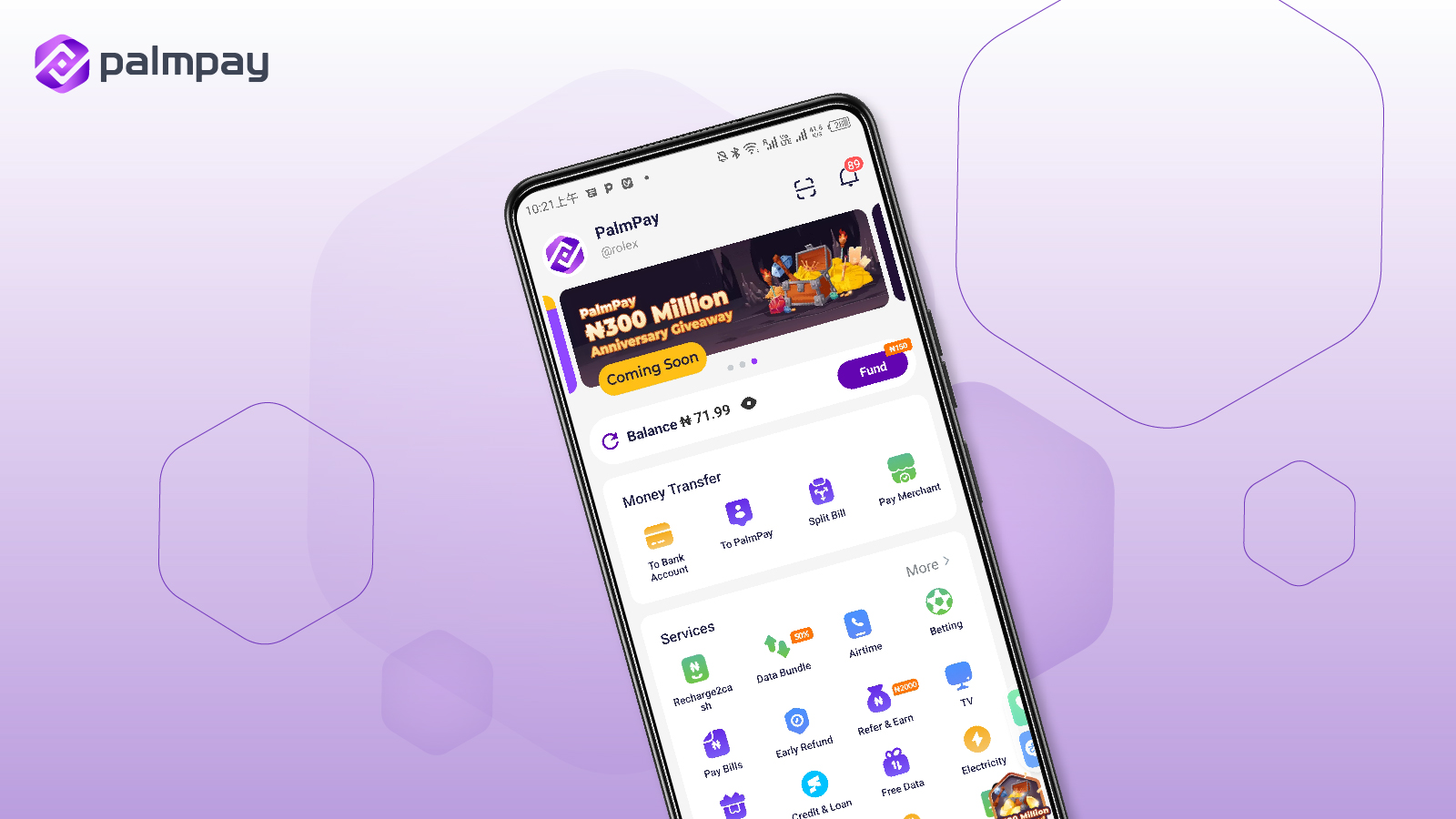
PalmPay has developed an integrated platform that caters to consumers and businesses in the African market. The startup, which has been operating since 2019, pioneered a unique model in Nigeria that provides financial services such as money transfers, bill payment, credit services and savings via a one-stop-shop fintech ‘superapp’ and mobile money agents.

This dual approach of easy-to-use digital banking, combined with offline touchpoints for those without smartphones, has contributed to driving financial inclusion in a market where more than 40% of adults remain unbanked.

This recognition validates our unique approach to financial services and our commitment to driving financial inclusion

In 2023, PalmPay announced a major milestone of reaching 30 million registered users on its smartphone apps and 1.1 million businesses in its network of mobile money agents and retail merchants. A third of PalmPay customers report that the platform was their first-ever financial account.

PalmPay has quickly grown to become a market leader in Nigeria thanks to its user-friendly interface, reliable transactions, and focus on driving market share through fee-free transfers and promotions. PalmPay processes 15 million transactions on its consumer app daily and maintains a 99.5% transaction success rate.

To achieve this scale in a market where 10% transaction failure rates were common, the company built out its payment infrastructure, channel integrations and transaction routing systems. In addition to its consumer wallet, PalmPay offers services to businesses that leverage the PalmPay platform via its suite of POS machines, APIs and checkout solutions.

“It’s an honour for PalmPay to be recognised by CNBC and Statista as one of the World’s Top Fintech Companies,” said Sofia Zab, Global CMO, “This recognition validates our unique approach to financial services and our commitment to driving financial inclusion. We are actively expanding PalmPay’s reach and offerings, ensuring more people have access to essential financial services and promoting economic development in emerging markets”

PalmPay operates in several key markets across Africa, including Nigeria, Ghana and Tanzania, with plans to expand further in the region and other emerging markets. The company has global HQs in China and London.

By Frikkie Jonker, director of broadcast cybersecurity and anti-piracy at Irdeto, a partner of Multichoice Africa (www.MultiChoice.com).


Content piracy is acknowledged as having enormously negative social impacts. It is a type of global organised crime that undermines the creative sector. However, what is not often discussed is what drives content piracy. What leads people to steal content?

Unfortunately, the African continent is something of a global dumping ground for inferior products. This is practised in the area of legitimate trade, but also in the criminal underworld. Outdated regulations, inefficient law enforcement, bribery and corruption all play a role in this.

Despite this, African authorities are doing a heroic job fighting cybercrime and content piracy. There have been huge successes in the prosecution of content piracy operations.

Criminal risk assessments

To understand why Africa becomes a target for piracy, it is useful to look at things from the perspective of a global criminal syndicate. They will often follow the path of least resistance – and for better or worse, Africa is attractive territory.

When it comes to content piracy, Africa has low barriers to entry, and an almost limitless demand for cheap content.

In terms of penetration success – circumventing cybersecurity measures – they may achieve a success rate of 70%, which compares favourably with other territories. This – coupled with Africa’s billion-strong population – is a key supply driver of content piracy.

From the demand side, a potential user of content piracy will do a similar assessment. There would be the risk of possible prosecution. Of being named and shamed. A risk of downloading viruses and malware onto their devices… However, despite all of this, they may choose to take that risk.

There may be a sense that content piracy is a relatively minor crime, compared to crimes such as murder, rape and grand corruption. In reality, though, content piracy is not a minor crime.

Changing attitudes

Unfortunately, where there are few consequences, the barriers to using stolen content are so much lower.

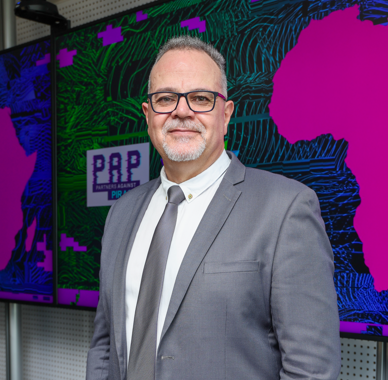
Changing people’s attitude to the crime of content piracy has to be an industry-wide campaign. The creative industry must unite, and address the issue collectively – as they have done through pan-African initiatives like Partners Against Piracy (https://apo-opa.co/4dniljz).

Government attitudes, too, are critically important. Where a government sees content piracy as an insignificant issue, they are allowing the sabotage of their own country’s creative and entertainment sector.

When it comes to content piracy, Africa has low barriers to entry, and an almost limitless demand for cheap content

But there are further impacts. When leading content businesses consider entering the African market, they need the reassurance that their content rights will be protected. Where a country is unable to provide such guarantees, the investments do not materialise.

Hi-tech enforcement

Fortunately, thanks to recent advances in AI, automation, watermarking and digital tracing capabilities, it is now possible to track down and prosecute consumers of pirated content rapidly, accurately and at scale.

In the UK, for example, police recently arrested as many as 2 000 people who were illegally viewing streams of English Premier League football matches. Similar cases are being pursued in Africa.

Piracy is often a multi-level operation, with global and regional headquarters, as well as regional resellers. It is now also possible for content owners and police to identify criminals at every level of these operations, as well as those who consume pirated content.

Economic impacts

Many people believe they simply cannot afford to pay for content. Entertainment often takes a back seat behind the need to put food on the table.

To some extent, premium content is a luxury, so one can understand this perception. However, pricing innovation by content platforms has led to entertainment packages at almost every price point. Financial difficulty is no longer an excuse for content piracy.

Prosecuting content piracy is not simply a harsh clampdown that spoils everyone’s fun. The war on content piracy has very real benefits – for everyone.

It protects the livelihoods of creators, producers and rightsholders, ensuring that there can be more content in the future.

A content sector such as pay-TV has extremely tight margins. Up to 80% of revenue generated goes into producing and securing content. Given these margins, any content theft threatens the viability of the entire industry.

Major productions across Africa – in Nigeria, Ghana, Kenya, Tanzania, Mozambique, and many other countries – sustain thousands of jobs – in production, performance, set and costume design, all the way through to catering, transport and accommodation. The war on piracy is a war to protect these jobs.

In the case of sports events, it is largely the legitimate allocation of broadcast rights that ensures modern professional sport can exist in the first place.

Another benefit of stopping piracy is that it preserves the support ecosystem that maintains trust in content platforms and their ongoing viability. In the legal economy, people invest in people – in their entertainment, their livelihoods and their peace of mind. Enriching their lives. By subscribing to legal content, legal users support this ecosystem.

The reasons for content piracy are complex. But the benefits of a creative economy free of piracy are plain to see. Content entertains, it nurtures, it captures society’s imagination. It helps build local culture. Hence the battle against piracy: to preserve and grow this remarkable industry.


  Black Box®, a Platinum Certified Solution Provider for Zoom Rooms and Zoom Phone, today announced its recent certification to sell and implement Zoom Customer Experience (CX). This high-level partnership further enhances Black Box’s ability to bring Zoom’s comprehensive communications platform to the market globally, something only a handful of companies can do. These services keep enterprises secure, agile, and customer focused.

“The landscape of work is always evolving, and Zoom — with its flexible, feature-rich, software-based solutions — is an ideal addition to the modern workplace solutions that Black Box provides and integrates into contemporary workspaces,” said Jim McKenna, Vice President of Strategic Partnerships at Black Box. “Vendors must be certified to sell Zoom CX, just like Zoom Phone and Zoom Rooms, and Black Box is now certified for all. This, coupled with Black Box’s renowned integration and support services, means we can offer a seamless experience with Zoom, enhancing overall communication for everyone involved.”

Zoom’s CX solutions provide personalized customer experiences while enhancing agent productivity and operational efficiency. From intuitive self-service, AI-powered interaction channels to seamless integration with various channels and CRM systems, these solutions enable quick issue resolution, 24/7 support and easy escalation to human agents when needed, helping businesses streamline customer service workflows, reduce costs and increase top-line revenue. Zoom’s CX solutions not only offer real-time performance tracking, comprehensive reporting and customizable experiences but also empower virtual and human agents with necessary information and tools, including video capabilities for enhanced customer interactions.

“Our ability to now offer end-to-end Zoom solutions, from Rooms and Phone to CX, allows us to tailor communication ecosystems that truly transform how businesses connect, both internally and with their customers,” said Brian Szep, Director CX Product Management at Black Box. “By expanding our expertise across Zoom’s entire platform, we’re uniquely positioned to help organizations create seamless, integrated environments that bridge the gap between internal collaboration and customer engagement.”

“It’s been great teaming up with Black Box. As a service-oriented business, Black Box goes beyond simply meeting the critical needs of modern workplaces and workflows by providing enterprises with advanced connectivity solutions,” said Mike Conlon, Head of Americas Channels at Zoom. “By becoming a Zoom Platinum Level partner, Black Box can more easily assist workers across the world in incorporating these robust tools thanks to their expanded knowledge and resources.”