Reflecting on the Unrecognized Progress: A Thought-Provoking Perspective

In a world where it’s all too easy to point fingers and cast blame, the notion that “The Church is not the problem” strikes a chord. It’s a reminder that while criticism may come easily, the real challenge lies in replicating the success and progress seen in various sectors, particularly when that success reaches global proportions.

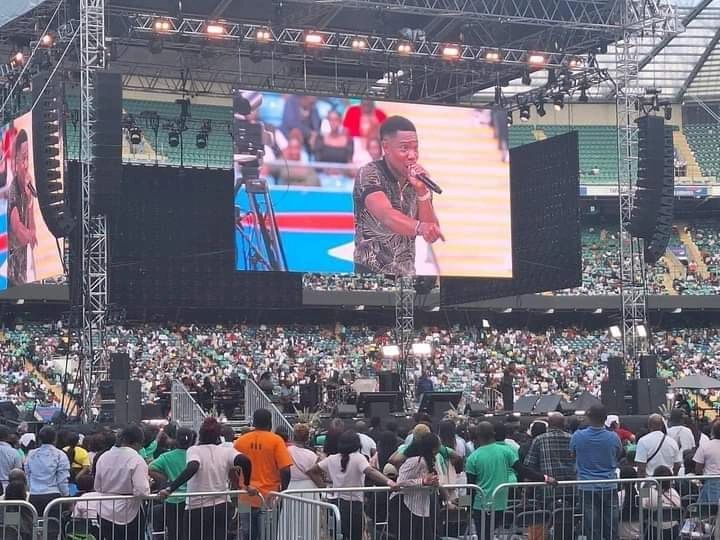
Consider the cost of renting a stadium in Texas, which hovers around $30,000 for just one day. It’s a staggering amount, yet famous Nigerian artists routinely fill these venues worldwide, reaping substantial rewards from their craft. These events are not anomalies; they are testaments to the remarkable reach and influence of the Nigerian entertainment industry on a global scale.

The Man, Apostle Joshua Selman.... - Pentecostal Bulletin | FacebookJust last month, Apostle Joshua Selman, a renowned Nigerian preacher, filled a stadium in Dallas-Fort Worth for two consecutive days. What’s more impressive is that the event was free of charge—attendees only needed tickets for management and compliance with government policies. Similarly, on August 31, Pastor Jerry Eze is set to fill another large stadium in Houston. Tickets for this event have already sold out, leaving many eager attendees without a chance to witness a Nigerian speaker in one of America’s bustling cities.

This phenomenon is not limited to religious gatherings. The global appeal of Nigerian culture is evident in the widespread popularity of Afrobeats, which now plays on repeat in shopping malls across the world. American Christians, too, are increasingly streaming messages from Nigerian preachers like Selman, further showcasing the far-reaching impact of Nigeria’s evangelism.

The success of the Nigerian music and evangelism industries in attracting global audiences is nothing short of remarkable. It’s easy to criticize their progress, yet replicating such success on a large scale is an entirely different challenge. The truth is, the world does not gather to watch mediocrity; these industries have captured global attention because they excel at what they do.

Blaming the church or any other sector for societal shortcomings, such as Nigeria’s performance in the Olympics or the state of its education system, is a superficial approach to complex issues. The church is not responsible for the empty chemistry labs in schools or the dysfunction in courier services. These problems require solutions that go beyond finger-pointing.Pastor Jerry Eze ranked richest YouTuber in Nigeria with N7bn earnings -  Daily Post Nigeria

The real challenge lies in aspiring to excellence in every field. Imagine a Nigerian professor filling a stadium in London, Brazil, or Sydney to deliver a lecture, or “made in Nigeria” brands attracting global patronage. These are not impossible dreams—they are achievable goals that require dedication, innovation, and a commitment to excellence.

America serves as a prime example of how multiple sectors can thrive simultaneously. While preachers like Oral Roberts and Kenneth Hagin were leading crusades, innovators in Silicon Valley were developing computer systems, NASA was advancing space exploration, and athletes were winning Olympic gold medals. Meanwhile, Wall Street was establishing global partnerships, and universities like MIT and Stanford were pushing the boundaries of science.

Every sector was busy building its craft, contributing to a society where progress was not confined to one area but spread across all fields. The church, in this context, was not the problem—it was part of a broader ecosystem where each sector flourished.

The message is clear: rather than criticizing, we should strive to excel in our own fields. Go out and create the change you want to see. It is possible for every sector to flourish, and Nigeria has the potential to be a beacon of excellence across the globe.

Credit~ Ifeanyi Eze


America serves as a prime example of how multiple sectors can thrive simultaneously. While preachers like Oral Roberts and Kenneth Hagin were leading crusades, innovators in Silicon Valley were developing computer systems, NASA was advancing space exploration, and athletes were winning Olympic gold medals. Meanwhile, Wall Street was establishing global partnerships, and universities like MIT and Stanford were pushing the boundaries of science.

 

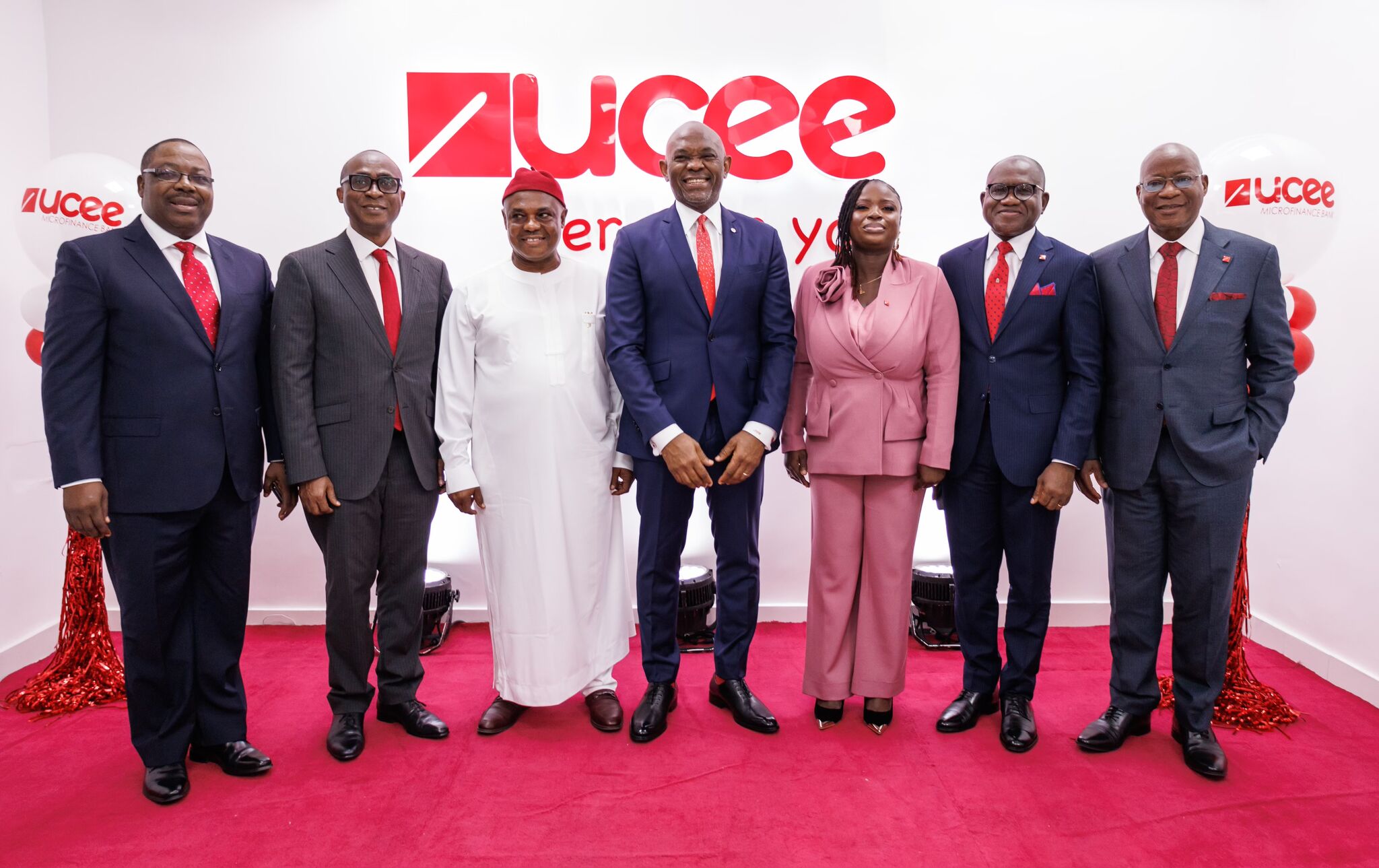
In a significant stride towards enhancing financial inclusion in Nigeria, Peter Ashade, the Group CEO of United Capital PLC and Branch Chairman, has proudly announced the launch of the company’s new banking subsidiary, UCEE Microfinance Bank. This landmark event marks the culmination of years of strategic planning and dedication to addressing the financial needs of Nigerians.

Reflecting on the journey that led to this moment, Ashade stated, “A few years ago, we recognized the daily challenges faced by hardworking Nigerians who sought access to credit to advance their businesses and achieve personal milestones. With this understanding, we made a deliberate decision to venture into the financial inclusion space.”

Today, that vision has come to fruition with the introduction of UCEE Microfinance Bank, a forward-thinking institution that seamlessly blends the cutting-edge technology, user-friendly experience, and flexibility of a digital bank with the reliable and time-honored infrastructure of a traditional microfinance bank. This hybrid model is set to revolutionize the way banking is experienced by millions of Nigerians, offering them a unique combination of convenience and security.

In his address, Ashade expressed deep gratitude to Tony O. Elumelu, C.F.R, the special guest of honour at the launch, acknowledging his immeasurable contributions to the expansion and success of the United Capital PLC group. “Tony Elumelu’s support has been instrumental in our growth journey, and his influence continues to inspire our commitment to empowering Nigerians through financial services,” Ashade noted.

As UCEE Microfinance Bank opens its doors to the public, Ashade urged Nigerians to embrace the opportunities it offers, stating, “As you go about your daily activities, always remember that UCEE is here for you. We are committed to being a reliable partner in your financial journey.”

This launch signals a new chapter for United Capital PLC as it expands its footprint in the Nigerian financial landscape, reinforcing its commitment to fostering economic growth and inclusivity.


ANTHONY EMEKA NWOSU


In a thought-provoking commentary, Professor Ndubuisi Ekekwe, a distinguished entrepreneur, investor, and academic, has weighed in on the recent decision by the Nigerian government to raise the fees for international passports. The move, which comes in response to the continued depreciation of the Naira, has sparked widespread discussion and concern among Nigerians both at home and abroad.

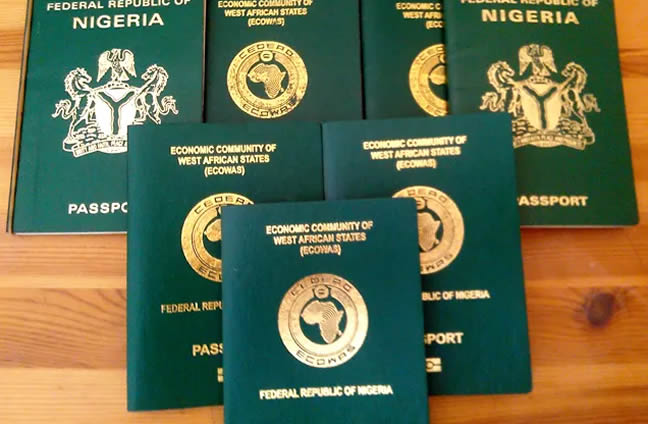
Taking to his LinkedIn profile, Professor Ekekwe provided a detailed analysis of the new policy, which is set to take effect on September 1, 2024. He began by outlining the specifics of the government’s announcement: “In a significant policy shift, the Federal Government of Nigeria has officially announced an upward revision of passport fees for citizens residing within the country.” According to the revised pricing structure, the cost of obtaining a 32-page passport booklet with a 5-year validity will increase from N35,000 to N50,000. Similarly, the fee for a 64-page passport booklet with a 10-year validity will rise from N70,000 to N100,000.

Professor Ekekwe, known for his keen insights into economic and technological trends, contextualized the government’s decision by explaining that the Nigerian passport is, in essence, an imported product. The core materials required for its production are sourced from outside the country, making the passport susceptible to fluctuations in the value of the Naira. As a result, while the cost of obtaining a passport in US dollars will remain unchanged for Nigerians living abroad, those residing within the country will face a substantial increase in fees due to the devaluation of the Naira.

Expanding on the broader economic implications, Professor Ekekwe used a poignant African proverb to drive home his point: “When a bird flies from the ground and perches on the ant-hill, it is still very much on the ground.” Through this metaphor, he emphasized that the devaluation of the Naira has far-reaching consequences, not just for individual citizens but also for the government itself. Even the Nigerian government, he suggested, will find itself needing more Naira to conduct its business and manage the nation’s affairs.

In a lighthearted yet insightful remark, Professor Ekekwe humorously alluded to the potential public backlash, saying, “Hope people will not sue the country in the same way we have been suing DStv and other brands.” This comment reflects the frustration that many Nigerians feel as they grapple with rising costs and the diminishing purchasing power of their currency. The comparison to legal actions taken against other service providers underscores the growing discontent among the populace as they face the realities of a weakening economy.

As Nigeria continues to navigate the challenges posed by the devaluation of its currency, the increase in passport fees serves as a stark reminder of the broader economic difficulties facing the nation. Professor Ekekwe’s analysis provides a sobering reflection on the situation, highlighting the interconnectedness of global supply chains, currency valuation, and national policy decisions. His commentary underscores the need for careful consideration of the long-term impacts of such policy shifts, as the government and citizens alike adapt to a new economic landscape.

The passport fee hike is not just a financial adjustment; it is a reflection of the broader economic pressures that Nigeria is facing in the wake of the Naira’s devaluation. Professor Ekekwe’s insights offer a valuable perspective on the situation, reminding us that while the costs may be rising, the underlying challenges are deeply rooted in the complexities of global economics and national governance. As the nation moves forward, these insights will be crucial in understanding and addressing the economic realities that lie ahead.


Tony Emeka Nwosu


“When a bird flies from the ground and perches on the ant-hill, it is still very much on the ground.” Through this metaphor, he emphasized that the devaluation of the Naira has far-reaching consequences, not just for individual citizens but also for the government itself. Even the Nigerian government, he suggested, will find itself needing more Naira to conduct its business and manage the nation’s affairs.


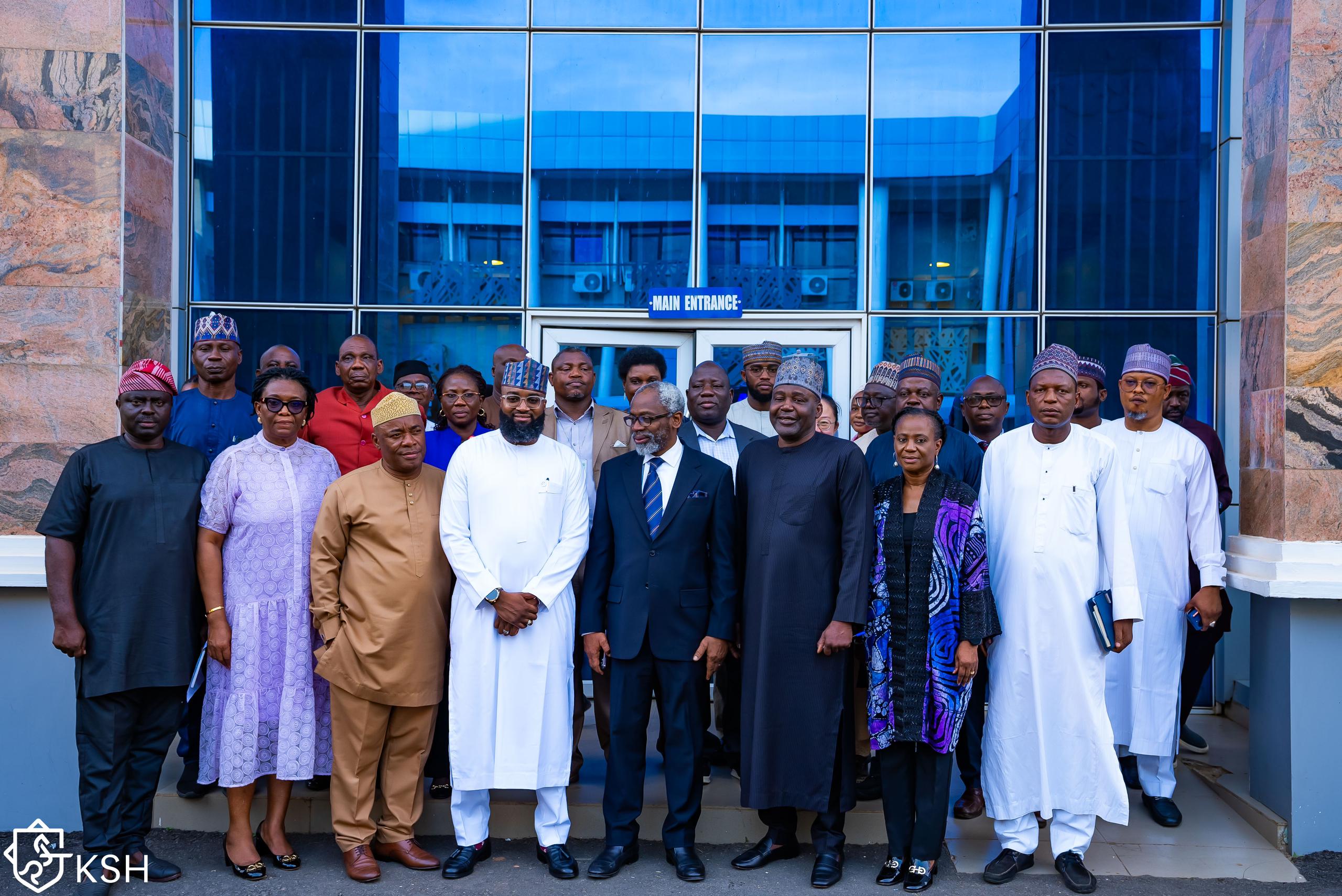
The Chief of Staff to President Bola Ahmed Tinubu, Rt. Hon. Femi Gbajabiamila, CFR, has commended the National Agency for Science and Engineering Infrastructure (NASENI) for its technological advancements, product innovations and interventions in various sectors of the economy.

The Chief Staff stated this during a familiarisation visit to the Agency on Thursday August 22, 2024 alongside the Deputy Chief of Staff, Senator Ibrahim Hadeija; and the Permanent Secretary, State House, Engr. Olufunso Adebiyi.

Gbajabiamila took time to test drive NASENI’s electric vehicle pick-up van and visited NASENI Hatch Box, Innovation Hub, Solar Irrigation Pump, and was shown new products such as Home Solar, Prepaid Meter, Laptop, Smartphone, Battery among others.

The visit was part of the engagements with agencies of government under the supervision of the Presidency to understand their mandates, activities and challenges and how they are aligning with the present administration’s Renewed Hope Agenda.

Speaking after an inspection tour of NASENI Complex in Idu Industrial Area, and also witnessing first-hand the new projects and products embarked on by the Executive Vice Chairman/CEO of NASENI, Mr Khalil Suleiman Halilu since assuming office in September 2023,  Gbajabiamila thanked the EVC and Management for their warm reception.

He said, “I am glad I embarked on this trip. I am glad we are all here to see for ourselves where NASENI is and what it is doing. The whole idea behind this trip was actually to come and hear first-hand, and to see onsite what you are doing, how you are doing it, what the challenges are and so on and so forth.

“That way we could get a grip of what needs to be done, whether there are lacunas here and there. I am glad you have demonstrated what you are doing and how you are doing it. I am even happier that there are no challenges from what you said.  Quite honestly I am very impressed with what we have seen and heard,” he said.

The Chief of Staff to the President stated that, that the impacts of Mr. Halilu have translated into lots of products in a matter of 11 months speak lots of volumes about his commitments, dedication and passion for what he is doing. “So, I commend you and the rest of the team,” he added.

Furthermore, he noted that we are in a technology-driven age and  NASENI is one of the agencies of government that are key to President Tinubu’s Renewed Hope Agenda to put Nigeria among the comity of nations in terms of advancements in science and technology. 

“I believe we have what it takes as a country, not just material resources but more importantly human resources”, adding that  “people who are sharp, smart, young men and women in this country exist who can deliver in terms of advancement of our technology. I thank you very much for what you are doing”

Earlier, the EVC of NASENI took time to explain to the Chief of Staff the various innovations, interventions and partnerships which the Agency has embarked on in the last few months to advance technology transfer and align the NASENI’s mandate with President’s Renewed Hope Agenda.

“Your Excellency, under your guidance and the leadership of His Excellency, President Tinubu, we have embarked on a transformative journey. This journey is characterized by an accelerated push towards technological independence and industrial growth. It is through your endless support and that of your team that we have been able to make significant strides in achieving these goals,. Halilu added.


In a significant development for financial inclusion in Nigeria, Tony O. Elumelu, C.F.R, Chairman of Heirs Holdings, has extended his congratulations to Esther Adeola-Balogun (MNIM, MCIB), the CEO of UCEE Microfinance Bank, and the entire United Capital team, led by Peter Ashade, on the successful launch of UCEE Microfinance Bank.

In his congratulatory message, Elumelu praised the vision and hard work behind the creation of UCEE Microfinance Bank, which he emphasized is driven by the belief that everyone deserves access to wealth. “Congratulations and well done to Esther Adeola-Balogun and the entire United Capital team on the launch of UCEE Microfinance Bank,” Elumelu stated, underscoring the importance of the bank’s mission to promote financial inclusion for all Nigerians.

UCEE Microfinance Bank is the latest addition to the portfolio of United Capital Plc, a leading financial and investment services group in Nigeria. The bank is now the seventh brand under the United Capital umbrella, joining other established entities such as Asset Management, Investment Banking, Securities Trading, Trustees, Wealth Management, and Consumer Finance.

Elumelu’s endorsement highlights the strategic importance of UCEE Microfinance Bank in United Capital’s broader mission to expand access to financial services across the country. With a commitment to bringing financial inclusion to underserved populations, UCEE Microfinance Bank is poised to play a critical role in driving economic empowerment and wealth creation at the grassroots level.

The launch of UCEE Microfinance Bank represents a significant milestone for United Capital Plc, further cementing its position as a leader in the financial services industry. By offering a range of microfinance products tailored to meet the needs of individuals and small businesses, the bank aims to bridge the gap in financial access and contribute to the overall economic development of Nigeria.No alternative text description for this image

As UCEE Microfinance Bank begins its operations, it is expected to leverage the extensive experience and expertise of United Capital Plc to deliver innovative financial solutions that cater to the diverse needs of its customers. The bank’s focus on financial inclusion aligns with the broader goals of United Capital Plc to create wealth and drive economic growth across the nation.

Tony Elumelu’s commendation reflects the significance of this new venture in the Nigerian financial landscape and reaffirms the commitment of United Capital Plc to fostering financial inclusion and economic empowerment. The successful launch of UCEE Microfinance Bank is not only a testament to the leadership of Esther Adeola-Balogun and Peter Ashade but also a promising step towards a more inclusive financial future for all Nigerians.


Tony Emeka Nwosu


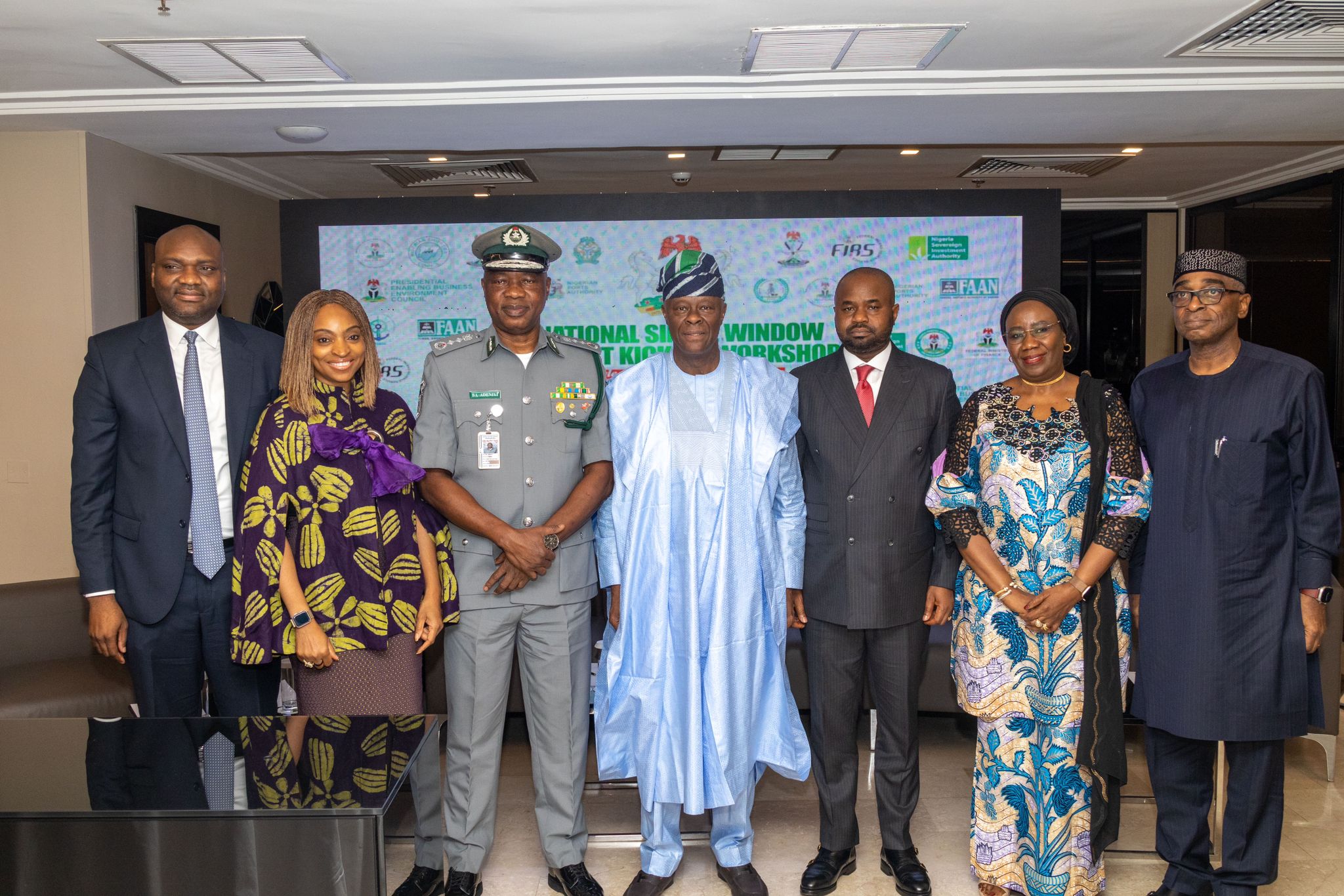
In a groundbreaking move to propel Nigeria’s trade and economic development, the Honourable Minister of Finance and Coordinating Minister of the Economy, Mr. Wale Edun, officially launched the National Single Window (NSW) Project Kickoff Workshop today in Abuja. This transformative initiative is set to revolutionize trade processes in Nigeria by reducing bottlenecks, enhancing transparency, and positioning the nation for unprecedented economic growth.

During his opening address, Minister Edun highlighted the far-reaching potential of the NSW in improving trade facilitation across the country. He emphasized that the initiative forms a crucial part of the federal government’s strategy to streamline trade and customs operations, with the ultimate goal of fostering economic growth and creating a more efficient and transparent trade environment.

Minister Edun also outlined the robust framework established to ensure the successful implementation and financial management of the NSW. The Federal Inland Revenue Service (FIRS), under the leadership of its Executive Chairman, Dr. Zacch Adedeji, and the Nigerian Sovereign Investment Authority (NSIA) have been appointed as the primary implementing agencies for the project. The project’s secretariat will be housed within the FIRS, serving as the central hub for coordination and oversight.

The launch event was attended by key stakeholders from various government agencies, including the Nigerian Ports Authority (NPA), the Nigerian Customs Service (NCS), the Nigerian Civil Aviation Authority (NCAA), and the National Agency for Food and Drug Administration and Control (NAFDAC). Their active participation is essential to the success of the NSW, which is a vital element of President Bola Ahmed Tinubu’s comprehensive economic reform agenda.

The three-day workshop, which will conclude on Thursday, is expected to produce a detailed action plan outlining the next steps for the project and the timelines for its full implementation. The collaborative efforts of these stakeholders signal the federal government’s strong commitment to advancing this critical initiative.

With the launch of the National Single Window, Nigeria stands on the brink of a significant leap in trade facilitation and economic growth. As the project progresses, the country can anticipate more streamlined trade processes, enhanced transparency, and a more business-friendly environment, all of which are poised to pave the way for a brighter economic future.


Anambra State witnessed a grand celebration this past weekend as Governor Charles Chukwuma Soludo, CFR, proudly hosted the wedding of his daughter and son-in-law. The event, which took place on Saturday, was described by the governor as a “proud moment” that marked the culmination of a journey filled with significant milestones.

In a statement reflecting on the joyous occasion, Governor Soludo shared his pride in seeing his daughter and her husband achieve the wedding of their dreams. “Arinze and Ifeatu called, and we answered!” the governor exclaimed, highlighting the importance of the day not just for the couple but for the entire Soludo family.No alternative text description for this image

The wedding, which was held in the presence of God, family, friends, and an array of distinguished colleagues, was a testament to the strong bonds and support within the community. Governor Soludo expressed his heartfelt gratitude to the numerous high-profile guests who attended, acknowledging their contribution to making the day a memorable one.

Among the notable figures who graced the event was His Excellency, President Bola Ahmed Tinubu, GCFR, who was represented by the Secretary to the Government of the Federation, Senator George Akume. The presence of the nation’s leadership was further underscored by the attendance of the First Lady, Senator Oluremi Tinubu, represented by the wife of the SGF, and Vice President Senator Kashim Shettima, GCON, who honored the event with his physical presence.

The gathering also included a host of other influential personalities, reflecting the significance of the occasion. The Deputy Speaker of the House of Representatives, Benjamin Kalu, was in attendance, alongside an impressive array of past and present governors, honorable justices, captains of industry, and security chiefs. The religious community was well represented by His Eminence, Peter Cardinal Okpalaeke, and various other esteemed members of the clergy.

Governor Soludo was visibly moved by the turnout, expressing his deep appreciation to all the distinguished guests. “It is impossible to attempt a roll call of the very eminent and distinguished personalities who graced the occasion,” he remarked, noting that the event was a reflection of the goodwill and respect that the Soludo family commands across different sectors of society. “I am deeply grateful and will remain in your debt for this honor,” the governor added, acknowledging the effort made by all to celebrate with his family.No alternative text description for this image

As the festivities drew to a close, Governor Soludo extended his warmest wishes to the newlyweds, expressing his hopes for their future. “Once again, congratulations to Ifeatu and Arinze; may the years ahead be blissful for you,” he said, capturing the spirit of joy and optimism that defined the day.

The wedding of Ifeatu and Arinze not only brought together the Soludo family and their close friends but also served as a moment of unity, where the presence of national leaders, state officials, and religious figures underscored the importance of family and tradition in Nigerian society. The event will undoubtedly be remembered as one of the highlights of the year in Anambra State.


ANTHONY EMEKA NWOSU


During the last Bank Consolidation, I decided to invest in my children’s future by purchasing shares—N100,000 worth for each of my four kids. The bank of choice was the African Continental Bank (ACB). It seemed like a prudent decision at the time. But as the story unfolded, ACB couldn’t stay afloat and was absorbed by Citizens Bank. My children’s shares were supposedly transferred there. Not long after, Citizens Bank itself was taken over by Spring Bank. But Spring Bank’s fate was even worse—it was eventually liquidated, leaving those shares, bought with the hope of securing my children’s future, completely worthless.

My wife faced a similar ordeal. She invested in 1,000 shares of All States Trust Bank, only to be informed later that her shares were never recorded. Somewhere along the line, someone siphoned off the investments of honest people like us.No photo description available.

Undeterred, I decided to try again and purchased 5,000 shares in First Bank for my children. However, what followed was a series of bureaucratic hurdles—letters, resubmissions, signature verifications, and more. Each time, First Bank spun me another fantastical story, reminiscent of Alice in Wonderland.

I had entrusted these share certificates to a stockbroking firm run by an Imo monarch based in Lagos. When I checked in on my investments in 2020, I discovered that the firm had relocated. The monarch, with a dismissive wave, informed me that all the shares had lost their value over time. When I asked why I wasn’t advised to sell and recover something before the decline, he muttered some excuse about online trading changes and the challenges of contacting me during the COVID-19 pandemic. It was clear—I had been sucked dry, short-changed by both the banks and the brokers, all under the guise of legality backed by the Central Bank of Nigeria (CBN).

If you’re considering buying shares today, I urge you to tread carefully. My sister invested up to N1 million in Japaul, an oil and gas firm headquartered in Ikeja. Those share certificates are now nothing more than museum pieces. Fidelity shares once valued at N9.50 were later reworked to N0.50. The losses are staggering, and the lessons are bitter.

Our elders say, “A blacksmith who cannot forge a gong should look intently at the hawk’s tail.” In other words, caution and foresight are vital. As we navigate the current economic climate, remember that the stories of those who have gone before us are warnings, not just anecdotes. In this  economic weather, the ending is unlikely to be a happy one.

— Innocent Nwankwo


If you’re considering buying shares today, I urge you to tread carefully. My sister invested up to N1 million in Japaul, an oil and gas firm headquartered in Ikeja. Those share certificates are now nothing more than museum pieces. Fidelity shares once valued at N9.50 were later reworked to N0.50. The losses are staggering, and the lessons are bitter.

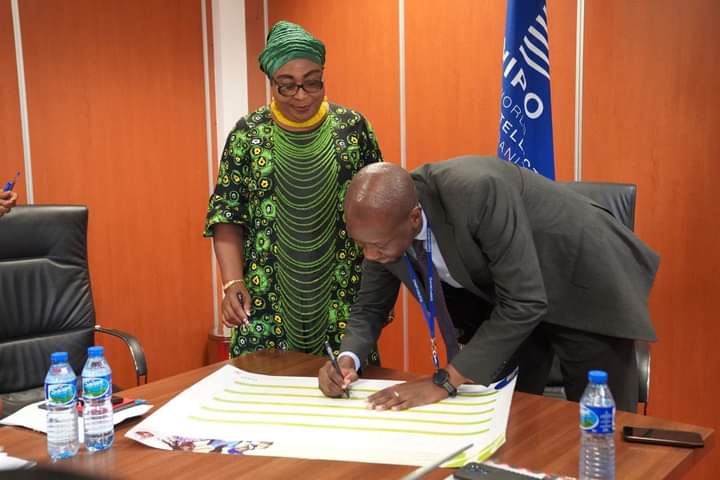
Dr. Barr. Obiageli Edith Amadiobi, the Director General of the National Office for Technology Acquisition and Promotion (NOTAP), has called for a strengthened partnership with the World Intellectual Property Organization (WIPO) to advance Intellectual Property (IP) development in Nigeria. This appeal was made during a courtesy visit by the NOTAP management team to the Country Director of WIPO, Dr. Oluwatobiloba Moody, at the United Nations headquarters in Abuja.

During the visit, Dr. Amadiobi highlighted the need for enhanced capacity building and increased awareness of intellectual property among researchers, inventors, and innovators in Nigeria. She emphasized that after visiting several Intellectual Property Technology Transfer Offices (IPTTOs) established by NOTAP in various Nigerian universities, it became evident that more needs to be done to encourage demand-driven research and the protection of intellectual property in the country.

Dr. Amadiobi also underscored the importance of reassessing and retraining the IPTTO coordinators to improve their capacity in managing these centers for optimal results. She noted that although NOTAP and WIPO have enjoyed a cordial working relationship since the signing of a Memorandum of Understanding (MOU) in 2006, the pace of execution has been slow, necessitating a reinvigoration of the collaboration.

In her remarks, Dr. Amadiobi appealed to WIPO to consider offering specialized training for NOTAP officials and IPTTO coordinators at the WIPO Academy. This, she noted, would significantly enhance their capacity in intellectual property management, particularly in the rapidly evolving technological landscape.

Responding to the DG’s remarks, WIPO Nigeria’s Country Director, Dr. Oluwatobiloba Moody, acknowledged the critical role of NOTAP in promoting innovation and expressed WIPO’s commitment to deepening its partnership with NOTAP. He mentioned that WIPO’s Technology Innovation and Support Centers (TISC) in Nigeria could greatly benefit from the structure and broader reach of the NOTAP IPTTOs, thereby complementing WIPO’s existing efforts.

Dr. Moody further outlined WIPO’s ongoing IP development initiatives, including the IP Labs for start-ups, the IP Skill Acquisition Learning and Youth Entrepreneurship (IP SALAYE) program launched in collaboration with the National Youth Service Corps (NYSC), and the IP for Green Innovators initiative in partnership with the Nigeria Climate Innovation Center, Lagos. He expressed WIPO’s willingness to co-design projects and training programs with NOTAP to ensure that intellectual property is firmly rooted in Nigeria.

In her contributions, Mrs. Carol Annie-Osuagwu, Director of the Technology Acquisition and Research Coordination department at NOTAP, emphasized the need for specialized training in IP and Patent Drafting and Specification for NOTAP officials. She noted that while NOTAP has successfully established 65 IPTTOs across the country, there is a growing demand from universities and research institutes for more IPTTOs, which the office cannot currently accommodate due to limited funding.

Mrs. Annie-Osuagwu added that the increased awareness of IP through NOTAP’s programs has led to a rise in patents from universities and research institutes, further underscoring the need for continued collaboration with WIPO.

The visit by the new Director General of NOTAP to the WIPO Nigeria office has indeed revitalized the collaboration between the two organizations, setting the stage for a renewed commitment to fostering a culture of innovation and inventiveness in Nigeria.


Every border community in the world experiences migration, intermarriage, and cultural exchange with its neighbors. This phenomenon is not unique to the Igbos of Delta State.

Take, for example, Strasbourg. Many assume it is in Germany because of its German-sounding name, but it is actually in France, close to the German border. In Ondo State, Nigeria, a similar mix exists with the Ijaws. Omoyele Sowore of Sahara Reporters, for instance, is Ijaw but from Ondo State, as Ondo shares boundaries with Ijaw communities. Along the Shagamu-Benin Expressway, the last town in Ondo State is Ofosu, while the first town in Edo State is Ohosu, showcasing the similarity in names due to their proximity.

This same blend is observed between Anambra and Kogi States. In 2018, Governor Obiano of Anambra State appointed an Igala man, Bonaventure Enemali, as a commissioner. Enemali hails from Nzam in Anambra, a region near the Kogi boundary where indigenous Igbos also reside.

Similarly, in the Kwara/Kogi area, the Okun-Yoruba people exhibit this cultural and linguistic mix. Enugu and Ebonyi States share boundaries with Benue, while Ebonyi also borders Cross River. The influences are evident in their languages, names, and traditions.

In Abia State, towns like Abiriba, Ohafia, Arochukwu, and Bende, which are close to Akwa Ibom and Cross River, exhibit similarities in names, traditions, and attire. The traditional ruler of Abiriba is called Enachioken, and it is common to see Abia natives with names like Etim, Mang, Ekpo, and Ojo.

Given these widespread examples, I don’t see why the Igbos of Delta and Rivers States are often singled out for scrutiny when similar scenarios among the Yorubas in Kogi/Kwara or the Ijaws in Ondo are not questioned.

It is undeniable that the Igbos in Delta and Edo States, situated at the frontiers of Igboland, have experienced migration and influences from neighboring Edo and Igala communities. However, it becomes problematic when these migrations are overemphasized at the expense of acknowledging the indigenous people who were present before these migrations occurred.

The Benin and Igala kingdoms were known for their powerful kings and territorial expansion through conquest—something the Igbos historically did not pursue. The River Niger further separated the Igbos of the Southeast from those in Delta and Edo States.

If the Igbos did not conquer the towns in Delta and Edo States, and if they were geographically distant, separated by the largest river in West Africa, it is difficult to explain the dominance of Igbo language, names, traditions, and practices in present-day Delta and Edo States.

The most plausible explanation is that Eze Chime was an Igbo man who migrated from the Igbo heartland to Benin, possibly due to his reputation as a great medicine man, before eventually settling in present-day Delta State.


While the exact events of 500 years ago are unclear, certain logical conclusions can be drawn:

1. Language typically does not change fundamentally except through conquest or other forceful means.

2. The adoption of the Igbo four market days—Eke, Orie, Afọ, and Nkwọ—across Delta and Edo Igbo towns could not have occurred without significant indigenous influence.

3. The Igbo obi/obu/diokpa (dị ọkpara) system of leadership could not have been implemented without the pre-existing presence of Igbo people.

4. Eze Chime, said to be a Benin prince, would not have abandoned his language merely by moving some distance from Benin. If he were truly of Benin origin, what happened to traditional Benin names like Ewuare, Eweka, Akenzua, and Esigie?

5. Eze Chime bearing an Igbo name and taking on an Igbo ọzọ title would be illogical if he were of Benin origin.

6. The most plausible explanation is that Eze Chime was an Igbo man who migrated from the Igbo heartland to Benin, possibly due to his reputation as a great medicine man, before eventually settling in present-day Delta State.

7. The same reasoning applies to Akalaka, the progenitor of the Ikwerre people of Rivers State. A Benin prince named Akalaka (meaning “destiny” in Igbo) would not have lost his language, traditions, or practices without significant interaction with an Igbo-majority population.

8. If these men were truly of Benin origin, the only logical reason for their loss of language, traditions, and practices would be that they settled in areas already populated by Igbos. Minorities do not typically dominate majorities without conquest.

9. The Arogbo Ijaws and the Western Apoi tribe of the Ijaw people in Ondo State have not lost their language, names, or traditions despite living in a non-Ijaw region. Similarly, the Dutch who settled in South Africa, the English in the USA, Canada, Australia, and Ireland, and the Yorubas in Brazil have retained their languages and traditions despite migrations. It is therefore unlikely that Benin princes would lose their identity without significant external influence.

In summary, while the Igbos of Delta, Edo, Benue, Rivers, Nsukka, Abakaliki, Arochukwu, and Abiriba may have absorbed migrants from neighboring non-Igbo communities, their fundamentally Igbo language, traditions, names, and religion suggest that these areas were originally Igbo.

This, however, does not imply that individuals cannot choose their preferred identities. For instance, actress Stella Damasus from Delta State mentioned that her family’s surname was originally Ojukwu, but due to oppression during the civil war, they changed it to Damasus.

Thank you.

© Azuka Onwuka


It is undeniable that the Igbos in Delta and Edo States, situated at the frontiers of Igboland, have experienced migration and influences from neighboring Edo and Igala communities. However, it becomes problematic when these migrations are overemphasized at the expense of acknowledging the indigenous people who were present before these migrations occurred.