Nigeria is poised for a new digital journey, courtesy of the Finance and Business Online Publishers (FiBOP) brainstorming session

The FiBOP 2024 Capacity Building Workshop, themed “Digital Innovation: Deepening Infrastructure for Efficient Financial Ecosystem,” promises to be a groundbreaking event that brings together experts, policymakers, and stakeholders to brainstorm on the critical issue of deepening infrastructure for digital innovation.

The 3-day event, slated to hold from October 18th to 20th, 2024, at the Orchids Hotel, Lekki, Lagos State, will feature a lineup of esteemed speakers and panelists who will delve into the latest trends and innovations in digital technology and their application in the financial ecosystem.

One of the key issues for discussion at the workshop is the recent innovative moves by the Capital Market community aimed at encouraging greater market participation by attracting and boosting the interest of the next generation of investors, known as the ‘Gen- Zs’, to the Capital Market through the application of innovative technologies.

The event aims to promote greater financial inclusion, shed light on how digital innovation aids efficiency in the financial ecosystem, and build the capacity of FiBOP members in the ever-evolving financial and business environment. The workshop also provides a platform for policymakers and economy experts to discuss the significance of infrastructure to digital innovation in their organizations’ management and operations and the economy in general.

FiBOP, a registered body of online publishers, is dedicated to promoting informed and balanced reporting of economic events and activities. Its members comprise seasoned and highly experienced journalists and media practitioners with credible credentials from diverse digital media platforms in Nigeria and Africa.

Through this workshop, FiBOP seeks to contribute meaningfully to the development of Nigeria’s digital economy and financial ecosystem, ensuring that the country is well-positioned to take advantage of the opportunities presented by digital innovation.

The event promises to be a rich and engaging experience, with opportunities for networking, learning, and collaboration. It is a must-attend for stakeholders interested in the future of Nigeria’s digital economy and financial ecosystem.


As part of its ongoing mission to advance data privacy and protection in Nigeria, the Nigeria Data Protection Commission (NDPC) has entered into a strategic partnership with the Federal Ministry of Youth Development to train 5,000 Nigerian youths in data privacy and protection. This landmark collaboration aligns with President Bola Ahmed Tinubu’s 8 Presidential Priorities and the Renewed Hope Agenda, focusing on empowering young Nigerians with the skills needed for the emerging data protection ecosystem.

Speaking at the signing of the Memorandum of Understanding (MOU), Dr. Vincent Olatunji, National Commissioner/CEO of NDPC, emphasized the critical importance of data protection in building investor confidence and strengthening Nigeria’s digital economy. “Data is one of the most valuable assets in the modern economy, and as Nigeria repositions itself to attract foreign direct investment, it is essential that we demonstrate accountability in how we manage data. With over 500,000 data controllers in Nigeria, each requiring at least one certified data protection officer, this partnership presents a tremendous opportunity for young Nigerians to fill these roles,” Dr. Olatunji stated.

He further highlighted that the NDPC is committed to ensuring that the certification process for these youths is both accessible and globally recognized. “To ease the burden on our foreign exchange and ensure high standards, we have licensed an in-country certification body that will issue globally recognized certificates to the trainees, equipping them to compete on a global scale,” he added.

The Hon. Minister of State for Youth Development, Engr. Ayodele Olawande, expressed optimism about the initiative’s potential to drive youth empowerment, job creation, and wealth generation. “Eighty percent of human capital development under this administration is focused on youths, and this initiative is designed to provide 5,000 young Nigerians with the technical skills to access jobs in the fast-growing data protection sector,” the Minister said.

The Permanent Secretary of the Federal Ministry of Youth Development, Mr. Olubunmi Olusanya, lauded the NDPC for spearheading this initiative and affirmed the Ministry’s readiness to support the successful execution of the partnership.

With the rising importance of data protection worldwide, this initiative not only provides Nigerian youths with critical skills but also strengthens Nigeria’s position as a leader in data privacy and security in Africa. Through this partnership, the NDPC is helping create a robust workforce ready to meet the demands of a data-driven global economy.


Anambra State continues to demonstrate its sporting excellence, securing another remarkable victory in the Girls’ 4x100m relay at the National Youth Games. With a flawless performance, the team sprinted to their second consecutive GOLD medal, finishing the race in an impressive 48.21 seconds, firmly establishing their dominance in the competition.

The victory did not come easily, as Anambra faced stiff competition from Team Edo and Team Ogun. Edo’s athletes put up a formidable fight, crossing the finish line just behind Anambra with a time of 48.82 seconds to claim the SILVER medal. Team Ogun followed closely, earning the BRONZE medal with a commendable time of 48.90 seconds. However, it was Anambra’s cohesive teamwork, speed, and determination that propelled them to victory once again.

What adds to the significance of this triumph is the presence of two athletes from last year’s gold-winning quartet, who returned to defend their title. Their experience and leadership were instrumental in guiding the new team to success, showing that Anambra’s track and field program is not just focused on short-term victories but on building a legacy of excellence. These returning champions proved their mettle, contributing to a seamless transition and ensuring that the team remained a step ahead of their rivals.

Anambra State’s athletics program has clearly set a high standard, consistently producing talented athletes who shine on the national stage. Their success is no accident; it reflects a well-oiled machine that continues to nurture young talent, combining rigorous training, discipline, and strategic development.

The fact that Anambra has managed to retain the GOLD in such a fiercely competitive event speaks volumes about the state’s commitment to sports development. From grassroots programs to elite coaching, it is evident that something special is happening in Anambra, and their formula for success is one that other states may seek to emulate.

As the dust settles on yet another exhilarating race, Anambra’s Girls’ 4x100m relay team stands tall, not only as champions but as symbols of sustained excellence and perseverance in Nigerian athletics.

Frames 3 & 4: Last year’s gold-winning team in the Girls’ 4x100m relay, who played a vital role in inspiring and contributing to this year’s victory.


Chinyere Okorocha, the Immediate Past Chairperson of the NBA Women Forum, described the recent formal opening of the Healthcare Federation of Nigeria (HFN) office and the launch of the D3 Hub as a beautiful and exhilarating occasion. As Treasurer of HFN, Okorocha experienced immense pride during the event.

The ceremony was graced by Prof. Akin Abayomi, Honourable Commissioner of Health for Lagos State, who performed the ribbon-cutting and delivered a compelling keynote address on the transformative power of collaboration and innovation in healthcare.No alternative text description for this image

Okorocha extended heartfelt thanks to Dr. Pamela Ajayi, HFN President, for her motivating opening remarks. She also praised the distinguished speakers who led thought-provoking discussions on the D3 Hub, which focuses on Diaspora, Digital, and Diversity in healthcare.

In her remarks, Okorocha emphasized the diverse representation within the forum, noting the varied stakeholders involved across the healthcare value chain. This diversity, she highlighted, enhances the strength and effectiveness of the organization.

The D3 Hub’s launch marks a new era in advancing healthcare innovation, bridging connections between Nigerian and diaspora healthcare professionals, and empowering HFN members with access to essential workspaces and resources.

Okorocha concluded by thanking all who attended and contributed to the event’s success, affirming that their collective efforts are instrumental in shaping the future of healthcare in Nigeria.


Anthony Emeka Nwosu


Okorocha emphasized the diverse representation within the forum, noting the varied stakeholders involved across the healthcare value chain. This diversity, she highlighted, enhances the strength and effectiveness of the organization.


President Bola Ahmed Tinubu visited Borno State on Monday, where he announced the creation of a disaster relief fund to assist Nigerian citizens affected by recent floods and other natural disasters. The President made the announcement at the Borno Government House during a visit to sympathize with the state’s government and residents over the flooding from the Alau Dam.

The newly established relief fund aims to address the escalating challenges posed by unpredictable climate conditions and provide financial support for disaster recovery efforts. President Tinubu emphasized the urgency of the fund, noting the increasing vulnerability of many regions in Nigeria to climate-induced disasters.May be an image of 7 people

Accompanied by Senate President Godswill Akpabio, who pledged that the National Assembly would work closely with the executive to establish the fund, President Tinubu urged private sector contributions to bolster the initiative.

During his visit, the President toured several affected areas, including the Shehu of Borno’s palace, an Internally Displaced Persons (IDP) camp at Government Secondary School in Maiduguri, and various disaster-stricken neighborhoods. Reflecting on the impact of the floods and the broader effects of climate change, President Tinubu declared the necessity of a dedicated disaster relief fund and invited private sector partners to join in rebuilding efforts.

“If we take a small percentage from FAAC and allocate it to the disaster relief fund, we will activate and strengthen our collective sense of responsibility,” President Tinubu stated.

He expressed gratitude to several governors, including Governor Abdulrahman Abdulrazaq of Kwara State, Governor Bala Mohammed of Bauchi State, Governor Ahmad Aliyu of Sokoto State, and Governor Ahmed Usman Ododo of Kogi State, for their solidarity and support beyond party lines.May be an image of 3 people

The President also extended his condolences and support to the people of Yobe State and other flood-affected regions. He acknowledged the efforts of Governor Babagana Zulum of Borno State and the Theatre Command of the Nigerian military for their prompt evacuation operations, which helped save many lives.

“Professor Zulum has been an active governor, and we will stand by you, Borno State, sharing the burden of recovery,” President Tinubu affirmed. He prayed for the souls of those who perished and expressed hope that the Almighty Allah would grant them eternal rest and forgiveness.

In his address, President Tinubu commended the ministries, agencies, and security forces involved in the relief efforts, particularly highlighting the contributions of the military and international organizations working in the state.

Governor Babagana Zulum thanked President Tinubu for the visit and recognized the timely intervention of federal agencies, notably the National Emergency Management Agency (NEMA) and the military’s Theatre Command. At the palace, Shehu Abubakar Ibn Umar Garba El-Kanemi expressed appreciation for the President’s visit and called for an investigation into the cause of the Alau Dam collapse to prevent future occurrences.


TONY EMEKA NWOSU


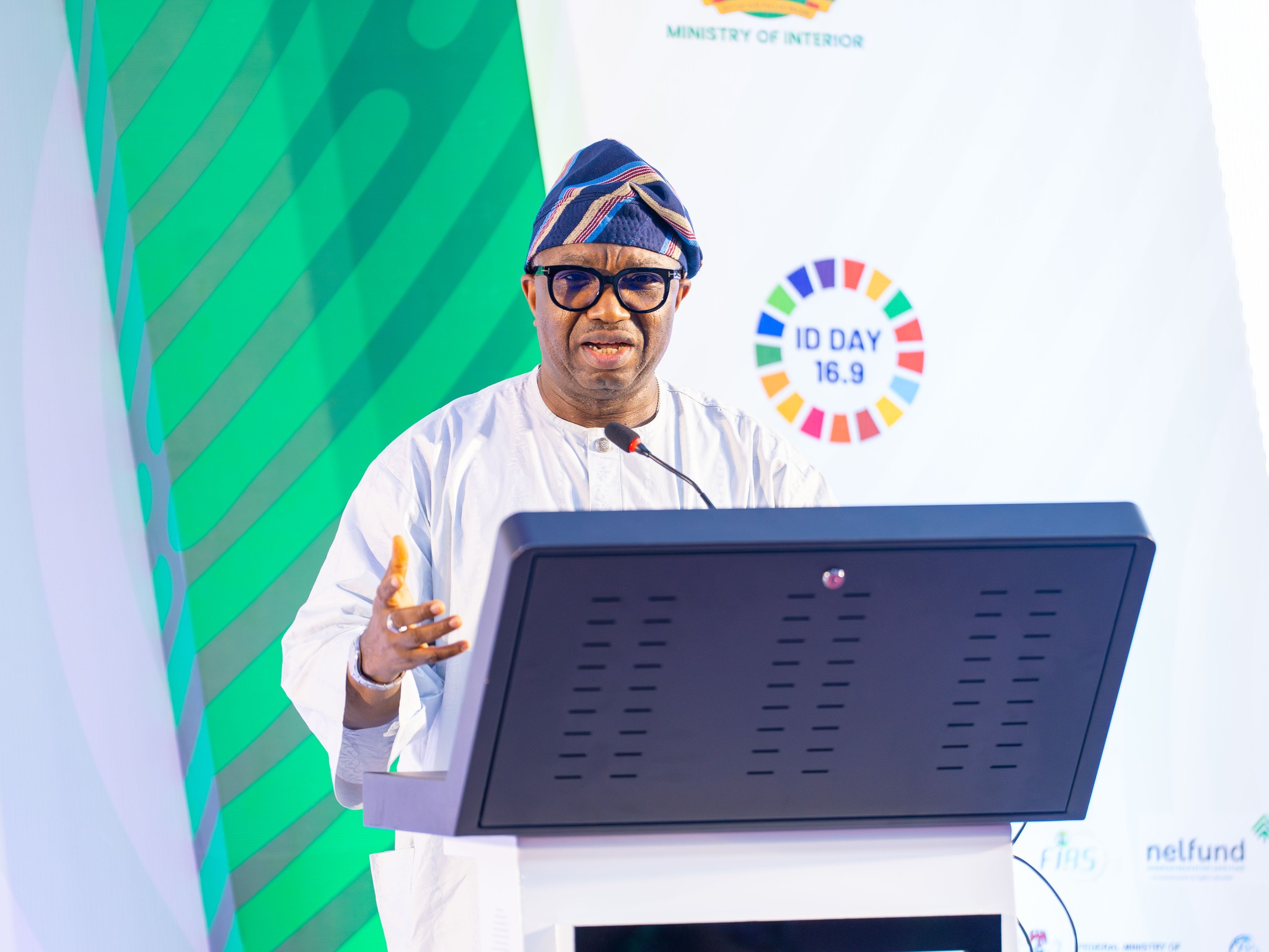
Dr. Vincent Olatunji, National Commissioner and CEO of the Nigeria Data Protection Commission (NDPC), delivered a keynote address at the National Day of Identity 2024, held under the theme “Digital Public Infrastructure: Enabling Access to Services.” In his address, Dr. Olatunji lauded the National Identity Management Commission (NIMC) for its role in celebrating Identity Day, a key initiative aligned with Agenda 16.9 of the UN’s Global Sustainable Development Goals.May be an image of 1 person, newsroom, dais and text

Dr. Olatunji emphasized the importance of the ongoing partnership between NDPC and NIMC in safeguarding the rights and interests of Nigerians. He noted the crucial role of Nigeria’s digital identity system in building trust and confidence within the country’s digital economy. Highlighting recent advancements, he pointed to improvements in identity management, including the collection, processing, and protection of personal and investor data.

Dr. Olatunji credited these strides to the enactment of the Nigeria Data Protection Act by President Bola Ahmed Tinubu, describing it as a significant milestone for Nigeria’s digital economy and data protection framework. He also revealed that the NDPC will host the NADPA Conference and Annual General Meeting (AGM) in 2025, which will bring together global data protection experts to Nigeria.May be an image of 7 people and text

Additionally, Dr. Olatunji participated in a panel session titled “Trust Frameworks for Data Exchange: Authentication/Verification,” where he discussed key issues related to data trust and security.

The event was attended by a host of dignitaries, including Senator (Dr) George Akume, Secretary to the Government of the Federation; Dr. Olubunmi Tunji-Ojo, Honourable Minister of Interior; Hon. Olujimi Odimayo, House Committee Chairman on National Population; and Carl Cruz, Managing Director/CEO of Airtel Nigeria, among others.


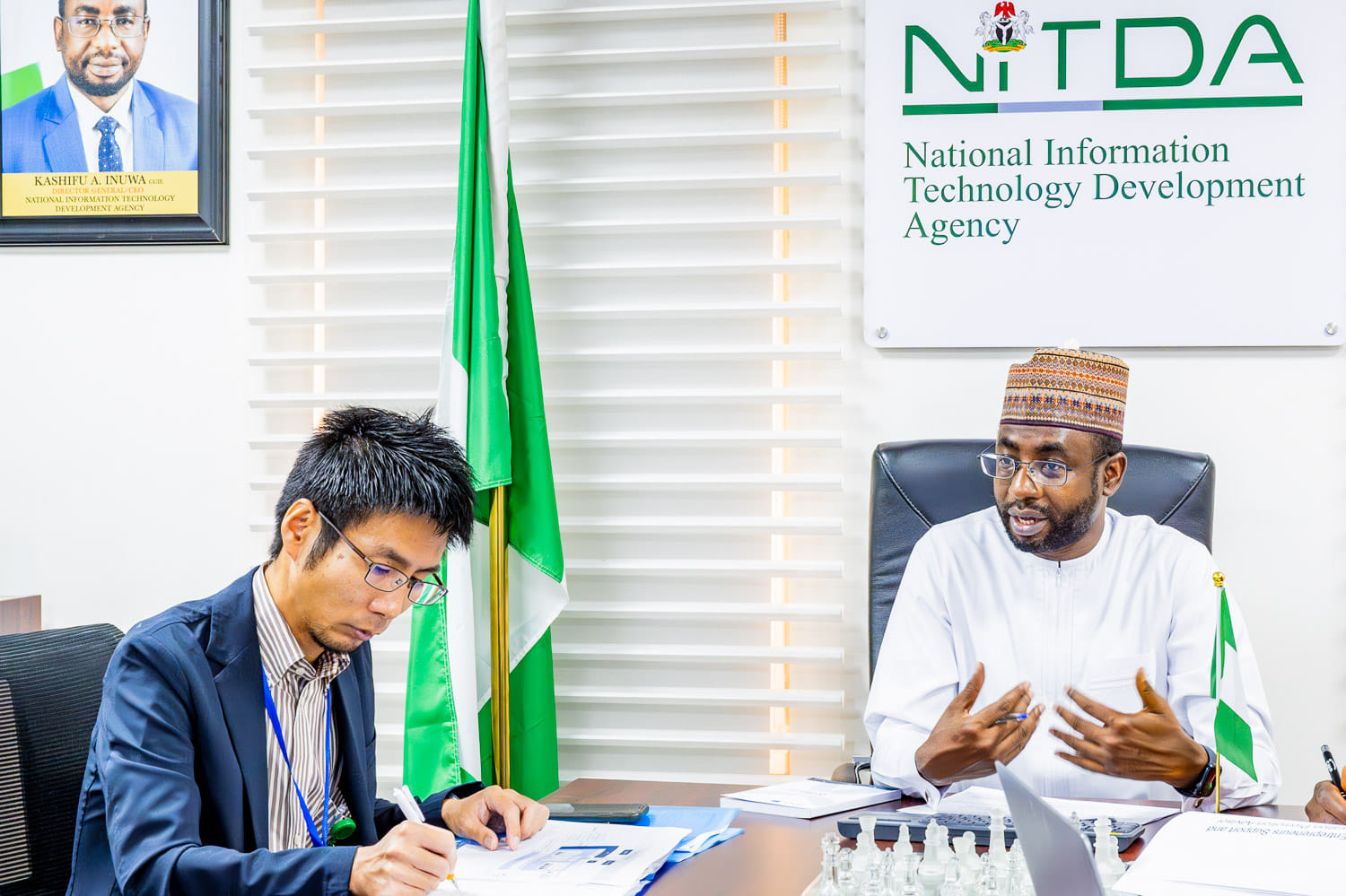
The ongoing partnership between the National Information Technology Development Agency (NITDA) and the Japan International Cooperation Agency (JICA) continues to gain momentum, as Kashifu Inuwa, Director General of NITDA, met with the JICA team to receive updates on the Preparatory Survey and Grant Assistance project. The project is aimed at fostering a supportive environment for social startups in Nigeria.

This grant initiative is designed to enhance the local startup ecosystem by providing financial backing through a dedicated fund that supports startups working on economic and social development projects. These efforts align with the Bola Ahmed Tinubu administration’s priority of accelerating diversification through industrialization, digitization, creative arts, manufacturing, and innovation.

The project also aims to establish a robust onshore fund management system to drive innovation and address key social challenges in Nigeria. The collaboration between NITDA and JICA seeks to empower local entrepreneurs, stimulate economic growth, and address critical social issues through technology and innovation


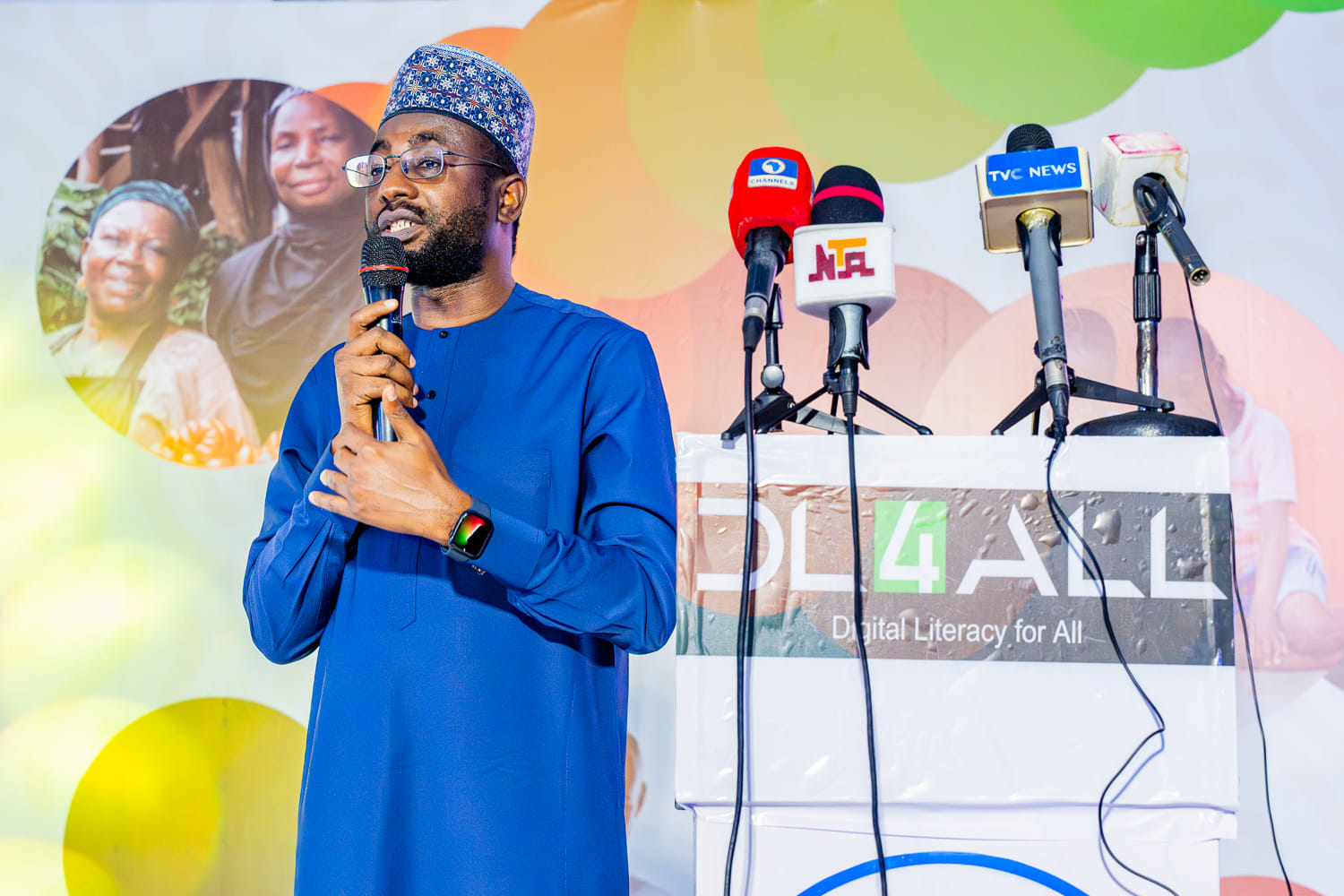
The Director General of the National Information Technology Development Agency (NITDA), Kashifu Inuwa Abdullahi, has officially flagged off the Digital Literacy for All (DL4ALL) initiative in Minna, Niger State. Speaking at the launch event, Abdullahi emphasized that the programme is a critical part of NITDA’s efforts to achieve 70% digital literacy across Nigeria by 2027. He noted that the initiative aims to equip every Nigerian with basic digital skills essential to thriving in today’s increasingly technology-driven world.May be an image of 2 people, lighting, wedding and dais

A significant component of the DL4ALL initiative is the strategic partnership between NITDA and the National Youth Service Corps (NYSC). Brigadier General YD Ahmed, Director General of NYSC, affirmed the agency’s commitment to leveraging the energy and nationwide reach of corps members. Corps members will be instrumental in delivering digital literacy training and sensitizing communities across the country. Their involvement ensures that even the most remote areas benefit from this transformative programme.May be an image of 13 people, dais and text

The initiative’s launch was marked by the unveiling of the DL4ALL Emblem by His Excellency, the Governor of Niger State, Mohammed Umar Bago. Other dignitaries in attendance included Ayodele Olawande, State Minister of Youth Development; Engr Faruk Yusuf Yabo, Permanent Secretary, Ministry of Communications, Innovation and Digital Economy; Kashifu Inuwa Abdullahi, Director General of NITDA; and Brigadier General YD Ahmed, Director General of NYSC.May be an image of 10 people, dais and text

The DL4ALL programme underscores the Nigerian government’s commitment to fostering digital transformation and ensuring that all Nigerians are equipped with the skills necessary to thrive in the global digital economy.


By Bryan Hamman, Regional Director for Africa at NETSCOUT


Insurance clients today are more likely to consider a provider if it consistently offers seamless quotes, efficient claims processing, ongoing customer support and targeted communications. To meet these demands, insurance companies must safely make use of data and new technologies, or risk being left behind by their competitors.


Personalisation and optimisation are critical elements in maximising customer experience, both in retaining existing clients as well as attracting new ones. In this context, how are insurance companies using new technologies to better meet and service their customers’ expectations?


Part of the answer lies in cloud adoption and the use of artificial intelligence (AI), and it’s here that the use of ‘InsurTech’ – technology innovations to bring in savings and efficiency to the insurance industry model – is playing a critical role. InsurTech includes the use of AI, big data analytics and machine learning (ML), to improve and automate the insurance sector.


Data, AI and the cloud: partners in personalisation


The insurance arena is enabled by advanced data analytics and customer-centric underwriting in personalising the customer experience. The strategic use of data can provide a deeper understanding of individual customer behaviours, preferences and risks, and thereby improve the insurance experience. Insurers are therefore tapping into a variety of sources, including social media interactions, IoT device data and mobile information, to offer personalised services.


However, insurance companies must put the correct foundations in place regarding their IT functionality and build systems to extract the required data that supports hyper-personalisation.

For example, with regards to marketing and distribution, large language models, which are cloud-enabled, can personalise insurance messaging for specific customer personas, enhancing engagement and conversion rates. In addition, smart chatbots provide 24/7 support, while their feedback helps insurers to identify, calculate and price risks more accurately.


Moving essential business applications to the cloud can help the insurance sector to gain access to the maximising benefits of AI, which is increasingly being used to improve customer experience and internal processes.


According to a recent survey by global management consulting firm McKinsey & Company, which analysed data from more than 50 major African businesses, the participants reported having, on average, around 45 percent of their workloads in the public cloud. While based on a relatively small sample size, this is encouragingly on par with, or ahead of, the rates of adoption in North America and China.


According to the McKinsey report, early indications also showed that African organisations are moving quickly into the cloud, with no signs of slowing down. This promising cloud adoption trend will benefit insurance organisations across the continent.


AI and the fight against insurance fraud


According to insurance infrastructure provider Curacel, which operates in a number of countries across Africa, the insurance industry across the continent is currently losing more than $700m to fraud annually. Against this background, Curacel notes that AI and ML technologies are developments that many insurers are using to help solve this problem.


As an example, Curacel reports that in the health insurance space, an ML application named Anomaly Detection is used, which works by analysing genuine claims and then creating a model of a typical claim. This model is then applied to large data sets to detect further anomalies and pinpoint potentially fraudulent claims that may arise.


In South Africa specifically, the Association for Savings and Investment South Africa (ASISA) noted that, while local insurers lost R77 million to fraud in 2022, it also prevented losses worth R1.1 billion – due, in part, to preventative measures like big data, ML, AI and enhanced authentication.


With insurance fraud representing a long-standing blot on the industry, it is heartening to note that AI is helping to improve operational efficiencies and effectiveness in this ongoing war against insurance organisations and their honest clients. Happily, on the other side of the scenario, AI-powered claims-processing tools are also streamlining the claims process for genuine claims.


The importance of network visibility in digital insurance


Network visibility is a major component for insurance companies seeking to offer a transparent and secure customer experience. By monitoring traffic and data at the packet level in real time, insurers can detect and quickly respond to network performance issues, as well as anticipating and mitigating potential security risks. For example, good network visibility can prevent service interruptions by detecting behavioural anomalies that could indicate potential network failures, latency, slowdowns, bottlenecks, or even malicious activities.


Additionally, the data obtained through network traffic analysis is indispensable for ensuring smooth operations and improving real-time decision-making. This is particularly important in scenarios where network performance can directly affect critical processes, such as claims processing or real-time risk assessment.


Ultimately, success in the insurance sector increasingly relies on the harmonious and strategic integration of digital solutions that enhance internal management while enriching the customer experience. AI has an important role to play in unlocking the true potential of the insurance sector in Africa.


By empowering personalised underwriting and risk assessment, and combating fraudulent activities, AI is well-positioned to keep the industry moving forward.

 

With the recent shifts in Nigeria’s foreign exchange landscape, Anayo Nwosu, a seasoned banker, has shared valuable insights on the evolving forex market, advising businesses and individuals on strategic financial positioning.

“The commencement of local petroleum product supply by the Dangote Refinery will significantly reduce the pressure on the demand for dollars in Nigeria. For a long time, Nigeria has spent heavily on importing petroleum products, which fueled the demand for foreign currency. Now, with local production, that demand will drop,” Nwosu noted.

Nwosu also highlighted the broader impact of Dangote’s operations on Nigeria’s foreign exchange inflows. “Dangote will not only meet local demand but also generate foreign exchange through exports to sub-Saharan Africa. This is a game-changer. The refinery’s reach covers West, Central, and Southern Africa, and it will control the sale of aviation fuel across the continent. It’s no surprise that 16 European refineries are considering shutting down due to this competitive threat.”

Despite these benefits, Nwosu cautioned about potential challenges. “If the Federal Government prioritizes selling crude oil to meet Dangote’s needs, Nigeria’s FX earnings from crude oil will decline, which may reduce the FX available to the Central Bank of Nigeria for official sales to banks. This could impact importers and businesses that rely on FX for Letters of Credit and other transactions.”

However, Nwosu pointed out a crucial trend that savvy business owners should note. “The naira has already appreciated between N150 and N200 in just a week. This indicates that the exchange rate for the dollar to naira has started falling. Smart businesses should take advantage of this and hold their funds in naira, not dollars, as the market adjusts.”

His overall advice is strategic but simple: “Importers and distributors of foreign products must read the economic weather well. The forex landscape is changing rapidly, and those who act now will be better positioned for future gains.”

Anthony Emeka Nwosu