
By Anthony Emeka Nwosu

Living in Owerri is like stepping into a place of sanity. If you’ve lived in Lagos for years, you’ll quickly realize that cities like Enugu, Uyo, and Calabar offer a calm and organized atmosphere that sharply contrasts the chaos that Lagosians have come to accept as normal. Lagos is, without a doubt, a madhouse—where anger, haste, competition, and envy are the order of the day. It’s no wonder why so many people in Lagos suffer from high blood pressure and cardiac arrests!

I’ve been fortunate to visit several Nigerian cities, including Aba and Umuahia, but Owerri holds a special place in my heart as the city where I was born and raised. This place shaped me, and one of its most striking features is its consistent electricity supply. It’s astonishing that my house here in Owerri has had uninterrupted power for two straight days—something that seems almost impossible in many parts of Lagos.

I’m currently in Owerri on a business trip, and it got me thinking about how important it is to share my experiences and shed light on cities like this. Despite the fears surrounding sit-at-home orders, life in Owerri goes on as usual. Businesses are open, and people are conducting their day-to-day activities.

This highlights something significant about Owerri—it’s a clean, orderly city where people respect their environment. Unlike Lagos, where it’s not uncommon to see displays of disregard for public spaces, Owerri maintains a level of decency that’s refreshing. Living in Lagos warps your sense of what’s normal. You start to think that Nigeria begins and ends with Lagos, with its chaotic lifestyle. Beggars, for instance, are everywhere in Lagos—young people asking for money in the streets, security personnel at banks or airports begging for tips, and various agencies like FRSC (Federal Road Safety Corps) and KAI (Kick Against Indiscipline) stopping vehicles for checks or fines. The dirt and disorder become part of everyday life: people throw dirty water on the streets, human excrement is left on sidewalks, and men openly urinate in public.

But then you visit a city like Owerri, and you’re reminded that this madness is not the standard. Here, there’s no shouting, no cursing, no street fights. People are calm, well-dressed, and respectful. You don’t hear conductors hanging out of buses, yelling at the top of their lungs. Owerri’s streets are clean, and the level of civility is remarkable.

Even the transport system here is different. While Lagos is infamous for its noisy, aggressive conductors, in Owerri, you hardly see conductors at all. There’s no rush, no constant yelling. Okadas (motorcycles) and kekes (tricycles) are rare, and you certainly won’t find street touts harassing bus drivers for money.

Another thing I’ve noticed is the level of security and how people enjoy life here. The driving is sane and orderly—no one is swerving or honking aggressively, and the cars on the road are in good condition. It’s a complete departure from the chaos of Lagos, where even taking a simple drive can feel like entering a war zone.

The calmness of Owerri might be due to the high level of education in the state or the way people value their culture. Whatever the reason, one thing is clear: Lagos is not Nigeria. There are other cities, like Owerri and Enugu, where people live peacefully and sanely. The rat race and madness that many Lagosians endure daily should not be considered normal.

If you’ve never ventured outside Lagos, do yourself a favor and visit one of these cities. You’ll quickly realize that life doesn’t have to be a frantic rush to nowhere. Some cities are still sane.
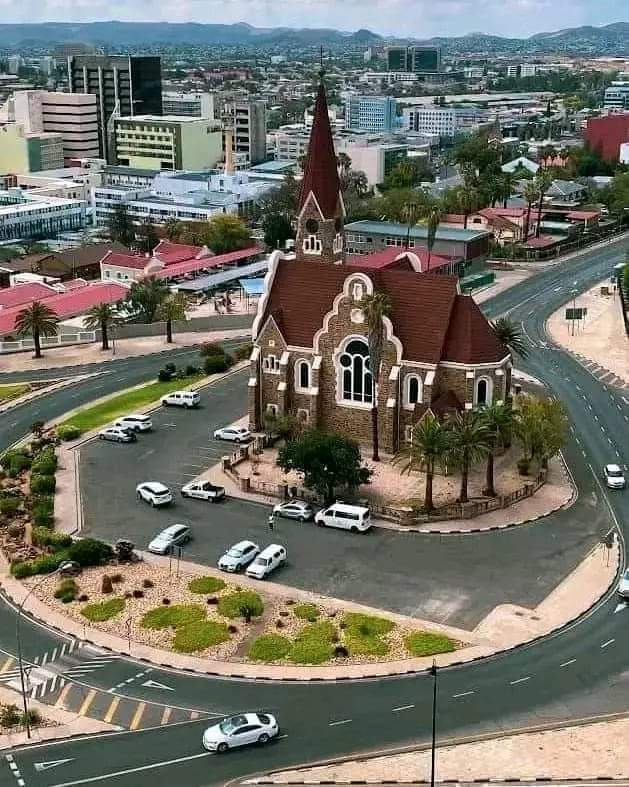



Namibia is emerging as a surprising hotspot for millionaires, and it’s not hard to see why. Recent reports indicate that Namibia already boasts 2,100 US Dollar millionaires, with predictions suggesting this number will surge by over 32% in the next decade. What makes this southern African nation so attractive to the wealthy?

For one, Namibia offers a high quality of life. It’s often hailed as one of the best places to live in Africa, and for good reason. Its infrastructure is world-class, with the best roads on the continent. Windhoek, the capital, is celebrated as Africa’s second cleanest city, offering a safe and serene urban environment.

Moreover, Namibia’s governance and freedom of expression set it apart. It ranks higher than some global heavyweights like the USA, UK, France, Australia, and Spain in terms of press freedom—an important factor for individuals looking for stability and transparency. Economically, it has seen strong performance, with a perfect AAA Fitch rating back in April 2017, reflecting solid fiscal management.

In addition, Namibia is home to Africa’s second-best judiciary system, ensuring the rule of law and investor confidence. The combination of safety, freedom, and economic opportunity is undoubtedly why millionaires are flocking to this hidden gem of Africa.

As the global elite search for the next safe haven, Namibia is quietly building its reputation as a country where wealth can thrive in a clean, well-governed, and vibrant environment. The rise in millionaire migration is just the beginning of Namibia’s story as an economic success in Africa.

Anthony Emeka Nwosu


From childhood, many of us have absorbed lessons that need to be unlearned as we grow. In my personal journey, I’ve had to unlearn quite a few things. Growth, after all, is about learning, unlearning, embracing change, and welcoming diversity.

One of the most critical things that many men—and women—in Nigeria need to unlearn is the narrow view of what it means to be a man, especially in relationships. Recently, it became clear to me that a large number of Nigerian men struggle to support or even understand how to be a partner to successful women. Many were raised to believe that being a man is synonymous with being the primary financial provider, and when that dynamic shifts, they feel emasculated.

It’s a common sentiment among some men: “How can I live in a woman’s house?” or “How can a woman feed me?” No matter how financially secure a woman is, some men cannot fathom accepting her success without feeling diminished. This mindset persists even to the point where women are forced to hide their financial contributions in the relationship—handing over their ATM cards in public to avoid “emasculating” their husbands or lying about who paid the bills just to maintain a façade.

Here’s what I want to say to men: it’s foolish to define your masculinity by the amount of money you contribute. You are so much more than a walking ATM. Your value in a relationship—your role as a husband or partner—goes beyond financial transactions.

The immense value my husband has brought into my life isn’t tied to money. If I were to reach Oprah Winfrey’s level of wealth tomorrow, I would still need him as much as I do today. In fact, I need him every single day. We can’t even stay mad at each other for more than 20 minutes because the connection runs far deeper than finances. No, I am not broke—far from it—but the emotional and psychological support he provides makes him irreplaceable.

So, instead of feeling threatened by a woman’s financial success, Nigerian men need to start focusing on creating emotional and intellectual value in their relationships. Be the partner that a woman needs in ways that money can’t buy. Let her feel your presence, your support, and your strength in ways that make you indispensable, no matter how successful she becomes. Because, ultimately, your worth as a man is much greater than the money in your bank account.

Anthony Emeka Nwosu


In Aba, Abia State, Pastor Obinna Nweke, fondly known as Pastor Poons, is not just a spiritual leader but a symbol of how one can combine faith and entrepreneurship to make a lasting impact. A man of many talents, Pastor Poons has dedicated his life to both the service of God and the upliftment of his community through his flourishing fashion business.

Pastor Poons, originally an engineer by profession, graduated from the Federal University of Technology, Owerri (FUTO), but found his true calling in ministry. Over the years, he has successfully navigated two demanding worlds — fashion design and pastoral work — proving that one can faithfully serve God while pursuing a successful business career. His fashion brand is one that operates under Christian values, aligning his business practices with the principles of integrity, excellence, and service.

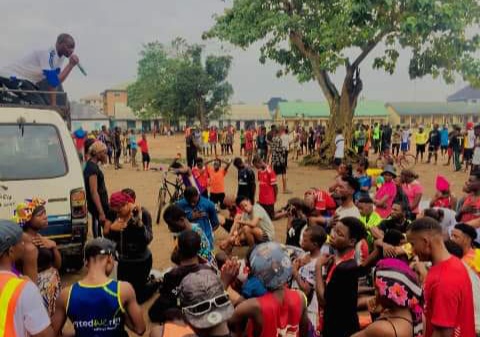
Recently, Pastor Poons demonstrated his deep commitment to his faith and community in a remarkable outreach event. He gathered young men and women from his community in Aba and led them through a powerful session where they were inspired by the Gospel. Reflecting on the day, he shared, “It was a glorious moment as these young men and women surrendered their hearts to Jesus after hearing the Gospel message. To God alone be all the glory.”

This outreach is just one of many initiatives Pastor Poons has undertaken to bring positive change to his environment. Over the years, his ministry has grown significantly, attracting support from partners and volunteers dedicated to the cause of soul-winning. In his heartfelt appreciation, Pastor Poons said, “May God continuously and unreservedly bless all our partners who support, help, contribute, and work tirelessly towards soul-winning; indeed, your reward is huge and massive!”

Pastor Poons’ success does not stop at the pulpit. His fashion business, guided by Christian principles, is thriving, serving as a testament to his ability to balance ministry with entrepreneurship. His designs are inspired not just by creativity, but by his faith, which he sees as central to everything he does. He has managed to build a brand that resonates with both the fashion-conscious and the faith-driven, blending aesthetics with spirituality.

What sets Pastor Poons apart is his ability to lead with humility and selflessness. He is quick to acknowledge the contributions of his crew members and volunteers, who often sacrifice their time and energy to support his ministry. “To all our crew members who go through unquantifiable stress and sacrifice everything just to ensure we get this divine assignment accomplished, may my God bless you abundantly in Jesus’ name. Amen!” he remarked with deep gratitude.

For Pastor Obinna Kalu, life is a divine assignment, and he sees every aspect of his work — from preaching the Gospel to designing fashion pieces — as part of his mission to reflect God’s light in the world. His journey from an engineering graduate to a pastor and successful entrepreneur is an inspiring narrative of how faith can guide one’s steps, no matter the career path.

In a city known for its entrepreneurial spirit, Pastor Poons stands out not only for his business acumen but also for his unwavering dedication to the moral and spiritual development of his community. His story is a powerful reminder that with faith, vision, and hard work, one can bridge the gap between business and ministry, impacting lives in profound and lasting ways.


Anthony Emeka Nwosu


Peter Obi, a politician known for his widespread appeal across Nigeria’s ethnic groups, once again demonstrated his ability to unify and calm tense situations during a recent encounter in Kogi State. This incident was shared by Ikenna Mbanefo, who narrated their experience while travelling from Anambra to Kogi.

As Mbanefo and his group reached Unobe, a town in Olamaboro Local Government Area of Kogi State, they found themselves in a long line of stationary vehicles. Upon investigation, they discovered that the police had shot the tyre of a trailer driver, prompting a protest by other trailer drivers, who blocked the road in response.

True to his hands-on leadership style, Peter Obi stepped out of his car and walked towards the heart of the protest. As he approached, the tense crowd of commuters from different ethnic backgrounds—Igbo, Yoruba, and Hausa—quickly shifted in mood. Chanting “Our President!”, they welcomed Obi with smiles and cheers.

When Obi reached the Hausa driver at the centre of the protest, who had been distraught over his damaged tyre, the mood changed dramatically. The driver, initially upset, suddenly broke into a smile and began taking selfies with Obi. The crowd followed suit, with an outpouring of selfies and admiration for the politician.

Without any prompting from Obi, the driver reportedly exclaimed, “Who am I for Obi to beg me?” in Hausa, according to nearby translators. He immediately cleared the road, bringing the protest to a peaceful end and allowing the vehicles to continue their journey.

This incident underscores Obi’s remarkable influence and ability to resonate with people from all walks of life. The attached image shows the driver, dressed in a brown caftan, happily taking a selfie with Obi, surrounded by commuters, some taking photos and others expressing their admiration.

Is this a testament to Obi’s personal influence or something deeper about his connection with the Nigerian people? This event certainly highlights the unique bond he shares with the nation.


Chukwuemeka Ituma, a young entrepreneur from Nsurakpa, Ezzamgbo, in the Ohaukwu Local Government Area of Ebonyi State, has emerged as a shining example of what Nigerian youths can achieve through hard work, focus, and determination. As the founder and CEO of Enviable Transport Ltd., with operations in both the United Kingdom and Nigeria, Chukwuemeka is making remarkable strides in industries that range from transportation to entertainment and real estate.

A graduate of the prestigious Michael Okpara University of Agriculture, Umudike, Chukwuemeka’s entrepreneurial journey has been marked by a commitment to excellence. His company, Enviable Transport Ltd., has earned a reputation for providing top-tier services across the sectors it operates in, contributing to economic growth both in Nigeria and abroad.

Notably, Chukwuemeka has secured a strategic partnership with Obi Cubana, one of Nigeria’s most successful and respected business figures. This collaboration highlights his vision for growth and his ability to forge relationships that strengthen his business ventures. Such alliances also send a powerful message to young people about the importance of mentorship and strategic partnerships in business.

At a time when some youth may be misrepresented by negative narratives, Chukwuemeka Ituma stands tall as a beacon of hope and possibility. He represents the countless Nigerian youths who are defying the odds and rewriting the story of African entrepreneurship on the global stage. His accomplishments reflect not just personal success but also the potential of a new generation determined to build sustainable businesses and make meaningful contributions to society.

Chukwuemeka’s success story is a reminder to the public that Nigeria, and particularly Ebonyi State, is home to many cultured, forward-thinking individuals who are making significant impacts in their respective fields. While negative portrayals may occasionally surface, the reality is that many youths are channeling their energies into productive endeavors, driving change and innovation.

By embracing leadership, responsibility, and integrity, Chukwuemeka Ituma has proven that young Nigerians are not only capable of succeeding but are also poised to become influential leaders in various sectors of the economy. His story serves as a rallying point for youths to remain focused on their goals, and a testament to the fact that perseverance and good values can indeed lead to greatness.

As we look to the future, Chukwuemeka’s journey offers a blueprint for aspiring entrepreneurs: the road to success may be challenging, but with dedication, vision, and the right partnerships, anything is possible. His achievements continue to inspire and remind us all that the best of Nigeria’s future lies in the hands of its determined and enterprising youth.

Anthony Emeka Nwosu


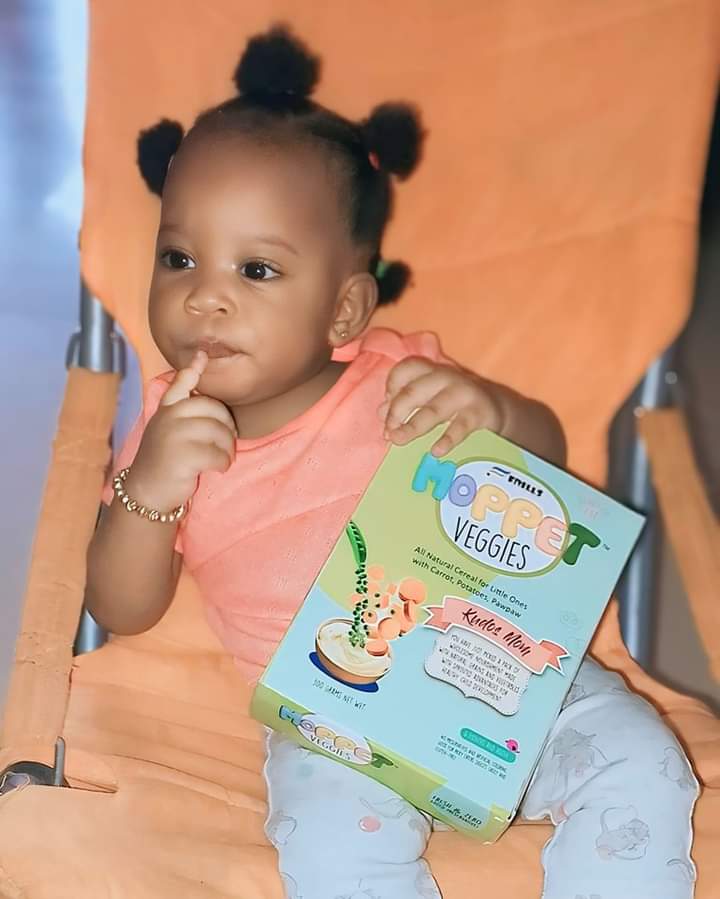
Roberta Edu, the founder and CEO of Moppet, a Lagos-based baby formula manufacturing firm, recently shed light on the company’s mission and operations, emphasizing the unique aspects of their organic production process. Speaking about her journey, Edu expressed her commitment to delivering top-quality products, which she believes will gain international recognition in time.

Edu highlighted the distinctive nature of Moppet’s baby formula, stating, “We are the only factory where you won’t find any chemicals or acids—just pure organic produce, tenderly cooked for your children.” She added that the company’s products contain no additives, which has even raised questions from regulatory bodies like the National Agency for Food and Drug Administration and Control (NAFDAC) and the Standards Organisation of Nigeria (SON). Both agencies, Edu noted, were surprised that Moppet uses no substances to increase volume.

An NGO that approached Moppet for Vitamin A-fortified corn was equally astonished by the company’s meticulous sourcing and production methods. According to Edu, the organization remarked, “You’re the only Nigerian company we’ve worked with that traces the farm where your produce comes from.”

Despite its relatively small size, Moppet has implemented an advanced system of sustainability, quality control, and research, which Edu describes as “uncommon” even among larger brands. She recounted instances where she declined lucrative consulting projects to focus solely on Moppet, highlighting her passion for building a brand that prioritizes the future well-being of children.

Edu concluded with a strong message for consumers: “When you see this brand on the shelf, bless a child with quality. It’s for tomorrow, not today.”

Moppet Foods continues to push boundaries in the Nigerian market, with hopes of making a lasting impact on the global stage.


Anthony Emeka Nwosu


Former Minister of Aviation and prominent PDP figure, Osita Chidoka, has voiced his concerns regarding Nigeria’s ongoing fuel and energy crisis. In a detailed post on his Facebook page, Chidoka highlighted the harsh realities faced by Nigerians due to soaring fuel prices.

“Yesterday, I spent ₦100,000 on fuel, nearly filling the tank of a Lexus 460 Jeep,” he revealed. At a price of ₦1,140 per litre, he noted, this amount exceeds Nigeria’s ₦70,000 minimum wage by ₦30,000. Chidoka emphasized the stark contrast between earnings and the cost of fuel, pointing out that a minimum wage worker, who earns ₦437.5 per hour, would need to work 2.6 hours to afford just one litre of petrol.

He further compared the situation to other countries. In Egypt, where fuel costs ₦443 per litre and the minimum wage is ₦202,400 per month (₦1,265 per hour), it takes only 21 minutes of work to afford a litre of fuel. In South Africa, fuel is more expensive at ₦2,480 per litre, but the minimum wage is significantly higher at ₦395,824 per month (₦2,320 per hour), requiring just over an hour of work for a litre of petrol.

Chidoka concluded by urging a re-evaluation of Nigeria’s economic policies, stating, “Fuel prices in Nigeria may not be high by global standards, but incomes are too low to sustain meaningful consumption. It’s time to rethink our economic growth and production strategies.”

His comments have sparked further debate about the impact of fuel prices on the average Nigerian and the need for urgent economic reforms to address the widening gap between wages and living costs.

Anthony Emeka Nwosu

spec, combined with cultural, language and time zone alignment with key markets like Europe, gives South African developers an underappreciated edge over their international counterparts. Despite the competitive price points offered by regions like India, South Africa’s technical depth and collaborative approach still make for a compelling choice for businesses looking to build software that truly meets their needs.


Choosing a local software development team offers significant advantages as they can easily integrate with in-house staff, leading to improved communication, collaboration, and innovation. Although it may seem obvious, the ability to have face-to-face meetings and real-time discussions, even if they are infrequent, facilitates the exchange of ideas, resulting in more precise and effective software solutions. This direct interaction not only speeds up problem-solving but also ensures that the development process is in line with the business’s strategic goals and operational realities.


Additionally, investing in local talent directly contributes to the growth and prosperity of the South African economy. By choosing local developers, businesses support community development and benefit from transparent pricing in local currency, avoiding the complexities of international transactions. This economic investment fosters a more robust and resilient local tech ecosystem, which in turn creates more opportunities for future generations of tech professionals.


Local teams also provide the assurance that sensitive data remains within national jurisdiction, ensuring compliance with local regulations. A solid familiarity with regional regulatory requirements helps businesses mitigate risks and maintain robust security standards. This is particularly crucial in industries like finance and healthcare, where regulatory compliance and data security are non-negotiable. Working with local developers fosters cultural alignment and creates a cohesive, motivated team environment. These professionals share a deeper understanding of their client’s business ethos and values with better outcomes for long-term success.


Ultimately, the choice of a software development partner can significantly impact business outcomes. A deep-rooted understanding of the South African market offers businesses a strategic edge. By choosing local developers, companies not only gain access to superior technical expertise but also contribute to the broader economic and social fabric of the country.


MC Day, one of the most vibrant and sought-after entertainers, has captivated fans with his recent international tour, which included a memorable stop in Ghana. Known for his charismatic stage presence and versatility, MC Day has carved a niche for himself as a global voice in the entertainment industry, consistently delivering top-notch performances at major events, concerts, and private functions. His infectious energy and humor have made him a household name across the country.

During his tour, MC Day took time to reflect on his experiences, emphasizing the value of travel as a learning opportunity. “There’s a saying that travel is the best teacher, and I can confidently say that it’s true,” he shared. “I’ve been able to see and learn more about the world through road travel. My experience in Ghana was especially eye-opening – from the landscapes to the rich culture, it was an adventure I won’t forget.”

As someone who frequently tours within and outside Africa, MC Day revealed that his preferred method of travel on this tour was by bus. Specifically, he praised the services of Cross Country buses, a trusted transportation company for long-distance travel. “I’ve been using Cross Country buses for my travels, and it has added a whole new dimension to the experience,” he said. “The service is reliable, comfortable, and really allows you to take in everything around you. I highly recommend it to anyone looking for an unforgettable journey.”

MC Day’s endorsement of road travel highlights his belief in the importance of savoring the journey itself, not just the destination. His glowing reviews of Ghana, where he had the opportunity to engage with local culture and explore the country’s diverse landscapes, further underline his passion for discovering new places through road trips.

A trailblazer in the entertainment industry, MC Day’s career has spanned over a decade, with him hosting and performing at some of the biggest entertainment and corporate events globally. His versatility as an emcee, comedian, and all-around entertainer has earned him a loyal fanbase, both locally and internationally. Whether he’s headlining a show or hosting a high-profile event, MC Day’s ability to connect with his audience sets him apart as one of the leading entertainers in the African scene.

With his latest tour receiving rave reviews, MC Day encourages his fans and fellow travelers to consider road trips as a means of exploring new territories. “Traveling by bus may take longer, but it’s worth it for the chance to see the world from a different perspective. For those who want to explore new places and truly immerse themselves in the journey, I wholeheartedly recommend Cross Country buses,” he emphasized.

As his tour continues to unfold, MC Day remains an advocate for regional travel, urging more fans to explore neighboring countries and appreciate the beauty and culture of West Africa. His experiences in Ghana and other countries on his tour serve as a reminder that traveling is not only about reaching a destination but also about the memories, connections, and lessons learned along the way.