Leading beauty, cosmetics and lifestyle brand in sub-Saharan Africa, Recare Limited has been honoured with the award of the Philanthropic Beauty and Cosmetics Company of the Year by the prestigious CSR Reporters, a national magazine that focuses on corporate social responsibility and sustainability reporting.
At an impressive event at Sheraton Hotels and Towers, Ikeja Lagos recently, Recare Limited, owners of Natures Gentle Touch, Nonstop and Hairsavvy brands that provides beauty care solutions with operations in Nigeria and South Africa was recognised for “demonstrating integrity and transparency while engaging in several corporate social responsibility interventions”.
According to Eche Munonye, publisher and Editor-in-Chief of CSR Reporters, the annual award which is in various categories is aimed at celebrating organisations and individuals who are “in the forefront of laudable culture of giving back to the society they live and do business”, noting that “it is our hope that by doing this others will be inspired to join in the charitable works of building a better society”.
Commenting on the award, Mr. Kalu Uma, Finance Manager, Recare Limited who represented the company at the award ceremony said: “This award is a vindication of the great work the team at Recare Limited led by Mr. Chika Ikenga has been doing over the years. It is a call for us to keep doing what we are doing right not only in producing contemporary beauty and personal style brands that inspire confidence in the African woman, but also in giving back to the society through several corporate responsibility initiatives”.
According to Mr. Uma, Recare through its cosmetics brands have made great impact in the provision of hair and scalp care solutions to African women which is seen in the growing confidence and expression of unique sense of style among the black women in Africa and in the Diaspora. He asked consumers who are discerning and want to stand out in a crowd to choose and remain loyal to Natures Gentle Touch as it will continue to deliver quality hair and scalp solutions and other personal style brands at affordable prices.
Uma recalled that it was in an effort to inspire and empower the contemporary black African woman that Nature’s Gentle Touch years ago signed Oluchi Onwuagba, international supermodel and first Multi-Choice Face of Africa and Agbani Darego, former Miss World as brand ambassadors. He said the relationship between Natures Gentle Touch and the two Nigerian beauty queens helped in no small measure in building self believe and confidence in the average black girl on the street that indeed she can make it to the top.
The Executive Vice Chairman of the Nigerian Communications Commission (NCC), Prof. Umar Danbatta, is billed to be honoured with the prestigious Zik Prize in the Professional Leadership category in Lagos, next week.
The award will be presented to Danbatta by Public Policy Research and Analysis Centre (PPRAC), during an elaborate ceremony slated for Sunday, December 6, 2020 at the Civic Centre, Victoria Island, Lagos State by 6 p.m.
This year’s event, which also coincides with the 25th anniversary of the Zik Prize series, will be chaired by Nobel Laureate, Prof. Wole Soyinka, while the Obi of Onitsha, Igwe Alfred Nnaemeka Achebe is to function as the royal father of the day.
The PPRAC had, during a virtual conference on Thursday, September 24, 2020, named Danbatta and the Group Managing Director/Chief Executive Officer of United Bank for Africa (UBA), Mr. Kennedy Uzoka, as the joint winners in the category.
Danbatta, Uzoka and other prominent personalities who emerged in different categories of the Zik Awards, were carefully selected through a rigorous and meticulous process for their notable contributions to national development, said Prof. Jubril Aminu, Chairman of the PPRAC in a statement on the grand award ceremony.
Described by the organisers as a square peg in a square hole, Danbatta, through dint of hardwork as NCC boss, was acknowledged to have led the charge to drive Nigeria’s industrial revolution and knowledge-based economy leveraging telecommunications.
According to them, telecommunications’ contribution to the Gross Domestic Product (GDP) of Nigeria has grown by 70 per cent from 2015 to 2020, whilst broadband penetration has increased significantly to over 45 per cent.
“Danbatta’s leadership has enhanced transparency and innovation in the sector, such that recently, NCC was acknowledged by the International Telecommunication Union (ITU), as one of Africa’s foremost regulators” they observed.
According to the organisers, the NCC boss has transformed the Commission into a regulator of global acclaim, as they noted the establishment and implementation of the NCC’s auspicious strategic 8-Point Agenda, under Danbatta, which has given the direction to activities of the Commission.
Organisers of the award also acknowledge that Danbatta has, through several breathtaking and far-reaching innovations, such as Subscriber Identification Module (SIM) registration and 112 Emergency Number, helped in the effort against insecurity in the country.
They also noted that the sector’s improved contribution to Gross Domestic Product (GDP), as well as improvements in Quality of Service (QoS) delivery, broadband infrastructural development, broadband penetration, effective spectrum utilisation, consumer empowerment, technology innovation, have been phenomenal under Danbatta’s leadership.
Earlier in a letter of nomination in July 2020, signed jointly by the Aminu and Utomi, the NCC boss was described as “an outstanding public servant, whose initiatives and reforms had contributed to Information and Communications Technology (ICT), playing a leading role in the socio-economic development of Nigeria.”
Zik Prize center was set up in 1994 in honour of the first President of Nigeria, late Dr. Nnamdi Azikiwe, with a view to encouraging and nurturing quality leadership in Africa and in the diaspora.
The impending event literally puts Danbatta in the prestigious category of eminent intra-continental figures so honoured by the foundation, like late former President of Ghana, Jerry Rawligs (1995); Late President Nelson Mandela, President Yonweri Muzeveni of Uganda and former Chairman of NCC’s Governing Board, Alhaji Ahmed Joda.
Among this year’s winners, however, are the Senate President, Dr. Ahmed Lawal and the Secretary to the Government of the Federation, Mr. Boss Mustafa, who won in political leadership and public service categories, respectively.
Others are Governor of Borno State, Babagana Umara Zulum, his counterparts from Delta State, Senator Ifeanyi Okowa and Oyo State Governor, Engr. Oluseyi Makinde, who have bagged the award for good governance.
Uche Mefor the former deputy of the independent people of Biafra who recently fell out with Nnamdi Kanu the self acclaimed supreme leader of IPOB has been talking lately of the way the group and it’s leader has been going on lately especially in the act of blackmailing him .
Speaking via Facebook, Mefor said”Strict consideration for and in reverence to our gallant fallen heroes and heroines have always been the reason why I apply restriction and hence my comportment.”
He added “I am an indigenous person of Biafra likewise others and no Biafran should have exclusive, privileged right to abuse it.”
On the leadership of IPOB, Uche said “The truth is that the IPOB leadership and the entire members of the DOS have been busy sponsoring this ongoing fake Facebook accounts and commissioning those carrying out malicious propaganda, lies and deception against unsuspecting vulnerable Biafrans and perceived enemies. When they blackmail on social media , nobody complains but when one reacts through the social media which is the same medium they use, then there is mad rush to prevail on one and remember that it is social media.”
“Be rest assured that I am not vulnerable and have kept quiet enough. Blame yourselves for your missteps!You have all lost focus. I shall defend myself and other vulnerable individuals against these deceptive, malicious culture of impunity and recklessness. You are definitely in for a long haul.”
REVAMP YOUR SECURITY ARCHITECTURE AHEAD OF THE YULETIDE – IGP ORDERS AIGs, CPs.
• As Minister of Police Affairs assures improved funding and logistics
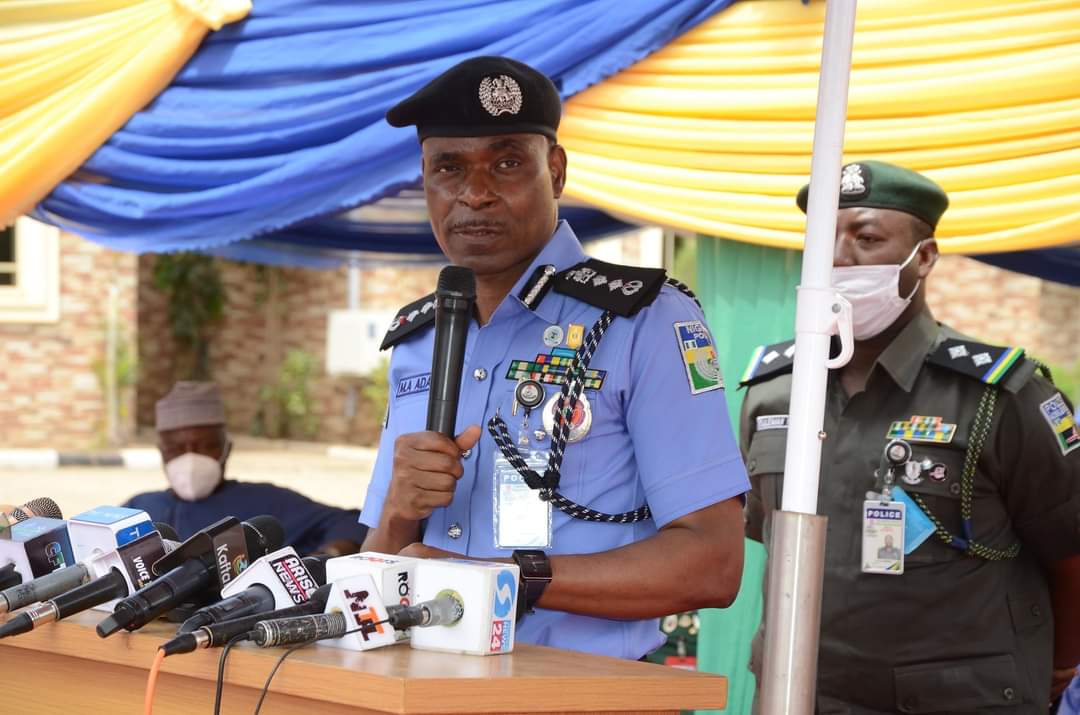
The Inspector-General of Police, IGP M.A Adamu, NPM, mni, has ordered Commissioners of Police (CPs) across the thirty-six (36) States of the Federation and the Federal Capital Territory (FCT), and their supervisory Assistant Inspectors-General of Police (AIGs) in the seventeen (17) Zonal Commands, to revamp the security architecture in their Area of Responsibilities (AOR) ahead of the yuletide. The IGP gave the order today, 27th November, 2020, during a meeting with Strategic Police Officers (CPs and above) at the Force Headquarters, Abuja. He directs the officers to ensure optimal deployment to cover all vulnerable areas toward a peaceful Christmas and New Year celebration.
The IGP notes that the meeting was convened to review the general security situation in the country particularly in the aftermath of the ENDSARS protest and deliberate on challenges impinging on effective policing and internal security management concerns in the country. He commended the officers for the leadership they provided at the field level during the ENDSARS crisis and for their roles in guaranteeing a stable security order across the country.
The Honourable Minister of Police Affairs, Muhammad Maigari Dingyadi, who addressed the meeting, assured the Strategic Officers of the Federal Government’s commitment to advancing the interest of the Police and providing adequate logistics to meet the operational needs of the Force. He noted that the Ministry, in collaboration with the Ministry of Finance, Budget and National Planning et. al, is evolving special funding interventions to aid optimal performances by the Police.
The IGP assures the citizens of the renewed commitment of the Force towards ensuring their safety and security especially as the Christmas season approaches. He calls for their continuous understanding, support and encouragement to the Police.
DCP FRANK MBA FORCE PUBLIC RELATIONS OFFICER FORCE HEADQUARTERS ABUJA
The Nigerian Communications Commission (NCC) has pledged to increase collaboration with higher institutions of learning across the country in order to transform Nigeria into a full knowledge-based economy.
The Chairman, Board of Commissioners of NCC, Prof. Adeolu Akande, stated this during a courtesy visit by NCC Board members to Bayero University, Kano (BUK) at the weekend as part of activities lined up for the 2020 NCC Board retreat held in Kano State.
According to Akande, who praised the university for producing Prof. Umar Garba Danbatta, the Executive Vice Chairman of the Commission, the NCC superintends a sector that is knowledge-driven and therefore, would not be able to achieve its mandate without strengthening collaboration with citadels of knowledge like BUK and other higher institutions of learning to produce the knowledge base needed to support the growth of the telecoms sector.
“The NCC is superintending a sector that is knowledge-driven. In the absence of the citadels of learning, one could only imagine what would have become of the communications industry. So, if we come to Kano, we need to come to the prime centre of learning in Kano and other universities across the state,” he said.
Thanking the university further for “contributing” Danbatta to the industry, Akande said the sector, which NCC regulates, has also benefited immensely from the knowledge being imparted by the university.
He said the BUK has produced a good ambassador, excellent professional and a man with administrative acumen and superb human relations in Prof. Danbatta.
“Hence, the Board of NCC decided to visit Bayero University with the EVC, who is a ‘home boy’ and to show our appreciation for the services of the EVC, an outstanding product of the university, has been rendering to the nation at the NCC.
We are here also to show that we work together and our coming to Bayero University would be an expression of appreciation of Danbatta’s good work at the NCC,” he said.
In his remarks, Danbatta said all the achievements “we have recorded as NCC can be attributed to the team spirit and cooperation between the Management and Board of NCC even as we are poised to achieve more,” adding that “Our profound prayer is that we leave the NCC better than we met it.”
Thanking the university’s management for hosting the NCC’s despite a short notice, Danbatta used the opportunity to also congratulate Prof. Sagir Abbas for his appointment as the 11th Vice Chancellor (VC) of the university.
While expressing delight to receive the NCC Board, Prof. Abbas noted that the school management cancelled all engagements to receive the board in order to show the university’s high regards for Danbatta, whose name, he said, cannot be omitted in the history of Bayero University.
“Prof. Danbatta has served the university diligently, as lecturer, as head of department, as Dean, as director and he was also a former VC in Kano University of Science and Technology, but wherever he goes, you find him relating to his base.
“So, we hold him in very high esteem and we are always happy to see him and his team discharging the national assignment his is saddled with and Bayero University is proud to be associated with him. We have no doubt that the Board and Management of NCC will enjoy him more as he begins his second term in office,” he said.
According to the Vice Chancellor, the university has received many donations of computers, iPads and other interventions such as professorial endowments from NCC, all of which, he said, have had positive impacts on the university’s academic programmes.
Sagir, however, appealed for more digital assistance by the Commission in supporting the university more in the area of its ongoing restructuring to fully accommodate virtual learning into its system in view of the current reality globally where ICT is mediating the lecturer-student interaction.
“Ugbo Eze Chima” is the symbolic depiction of the journey of the Eze Chima clan from Bini ( Eze Chima is believed to be an Igbo native Doctor who lived in Bini until he fell out with one of the Oba of Bini) settling along the Delta State towns like Onicha Ugbo, Onicha Olona and Onitsha bordering Obosi. The arrival of the Eze Chima clan brought the idea of Kingship and Ndi Ichie to Obosi. Obosi people took the idea and the Eze Chima clan crowned Eze Shimme, an indigenous Obosi man, as the first Eze Obosi.
Obosi great sons like Late Ike Obosi Chief Eneli, Ede Obosi, Chief Mike Ajegbo, AIG Okeke, Dr. Odebeatu and my Great Grandmother are from the Eze Chima clan.
The symbolic display of the canoe draped in raffia is done at important occasions and a reminder of the journey of the Eze Chima clan. The story of Obosi has links to the Bini Kingdom and some Igala influence showing the complexity of Pre- Colonial Niger area. Hopefully, someday I will have the time to tell the stories as I heard from Elders
In a bid to hasten the implementation of the National e-Government Masterplan and inculcate the use of Information Technology in carrying out government activities, the National Information Technology Development Agency (NITDA) on Wednesday commenced a two day virtual strategic capacity building workshop for Ministries, Departments and Agencies of the Federal Public Institutions (FPI).
The training is in three phases for Directors of ICT and Heads of Procurement, Network administrators and Domain Managers, while the third batch is for the NITDA team driving the digital transformation agenda. The Director General of NITDA, Mallam Kashifu Inuwa Abdullahi, who was represented by the Director e-Government Development and Regulation Dr. Vincent Olatunji while delivering the opening remarks stated that the purpose of the training is to ensure that the application of technology in running government activities become part of public service especially during this post COVID-19 era.
Mallam Abdullahi hinted that in line with the National Digital Economy Policy and Strategy ( NDEPS) NITDA, has a strategic roadmap which it has been implementing. He said one of the major pillars driving the policy is to develop quality human capital to drive government initiatives and government plans at the various MDAs. He noted that in line with the National e-Government masterplan of the country, a strategy to have institutional framework was designed to implement the NDEPS. It will be recalled that a DT-TWGS was setup earlier and 442 members from 89 MDAs were trained.
The Director General also hinted that it is in a bid to spread the training to other critical stakeholders in the MDAs that necessitated the need for this strategic capacity building workshop. In order to exchange ideas and share knowledge on various strategic initiatives to put in place for the Nation to move forward under this new normal, the post COVID-19 era.
Speaking further, the Director General said the training focuses basically on three major topics: e-government and National Digital Economy Policy and Strategy, legal framework for e-government and thirdly managing government process reengineering.
One of the resource persons, Engr. Nasir Shinkafi of Backbone Connectivity Networks Nigeria LTD highlighted the major attributes of e-government as transparency, efficiency and quality service and this he said, will yield strategic outcomes such as a high performing government with high performance culture, responsible financial management and competent, committed non-corruptible officers.
Speaking on legal framework , Barr. Emmanuel Edet of NITDA, explained that for e-Government, the subject matters requiring legal framework are organizational structure, recognition of electronic documents, authentication and e-signature, security and trust. Others are electronic information management, interoperability framework, privacy and personal data security and funding for e-government research.
The guest presenter Dr. Lawal Zakari emphasized the need to replace outdated and outmoded work process with effective and re-engineered government processes as a way forward.
The need to build capacity in the information technology (IT) ecosystem has been identified as one of the key areas that the nation need to focus for it to enjoy the future workplace narrative known as the fourth industrial revolution.
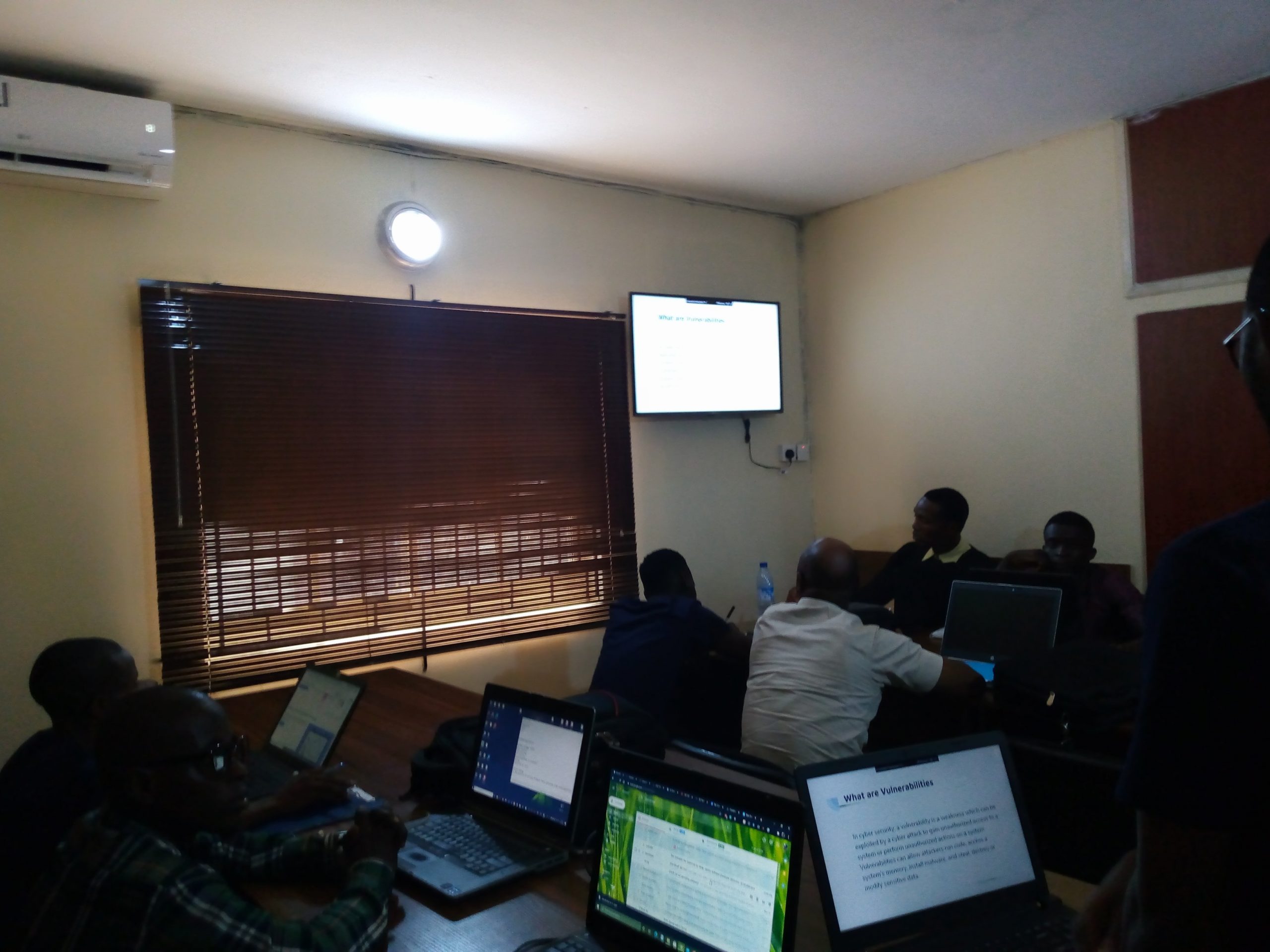
Having this in mind, an indigenous ICT firm based in Lagos has introduced “one of a kind ” capacity building in the area of software development, mobile application development, cyber security and other areas of ICT that would be of benefit to young Nigerians who are interested at little or no price
Speaking to the media , the founder Ifeanyi said “Our regular training is still ongoing on Web fundamentals, Mobile Application Development & Cyber-security/secure coding.”
He added ” “The past is behind, learn from it. The future is ahead, prepare for it. The present is here, live it.” Software Development & Technology at large is both the future and the present! Wait no more, the world still needs people like you.”
Mira Technologies is a computer software company based in Lagos, Nigeria. The company is registered and incorporated with Corporate Affairs Commission of Nigeria. Developing a business solution for a small scale organisation, or an enterprise application across multiple platforms for a large scale organisation requires both dedication and skill. Analysing, (re)designing, implementing and supporting systems is the core of the organization
Anthony Emeka Nwosu
To be part of this project ,visit https://t.co/KHDB75S4Db to learn more/apply. #softwaredevelopment #100DaysOfCode #RadlerTour #tuesdayvibe |Haaland? #programming https://t.co/iGvc9a6eVe
Agramondis is a boutique consulting firm specializing in agriculture, development and agribusiness. Although a young company, our consultants have many years of international experience in these areas and have worked with some of the largest brands and names in food, agri-finance and development. Head-quartered in Nigeria, we are also present in Kenya and Europe and focus on frontier agricultural markets in Sub-Saharan Africa, Asia and Eastern Europe. Agramondis provides services in three principal areas
Data and research
Technical expertise in agronomy, rural development, food industry and agri-finance
Strategy and sustainability. Most of our clients come from the development, food and farming, and finance sectors. (We’re happy to do some name-dropping here, should it interest your audience).Agramondis is a values-led company. We act by, and hold ourselves publicly accountable to, a set of simple values: • Intelligence: We’re disruptive thinkers, problem solvers and believers in human ingenuity and experiential learning. • Integrity: We are honest, transparent, authentic and independent in our advice. • Care: We care for the success of our clients, the happiness of our people, the thriving of our communities and the health of our planet.
As a player in agriculture ecosystem, can you say that Nigeria is in the right track to food sustainability?
Nigeria’s agricultural sector is incredibly dynamic. While most farmers are still subsistence producers for whom farming is a necessity, rather than a business, there is a growing share of entrepreneurial farmers, agribusinesses and innovators – small, medium and large – who start influencing the sector and how it is perceived. We believe that the coming 5 year will decide which path Nigeria’s agricultural and food sector will take: One that is following the ‘Green Revolution’ with high productivity but high chemical inputs and high ecological costs; one that remains mostly static, with many subsistence-level smallholders and pockets of large-scale farming; or a third way, which combines innovation and technology with more ecological and regenerative ways of farming. Nigeria, has the exciting opportunity to choose which path it favours and how sustainable a food system it would like as a consequence.
Do you collaborate with government, if yes, at what level?
Agramondis welcomes the opportunity to work with businesses, NGOs, IGOs and governments alike. We are very open to collaboration of any sort with government and non-governmental organisations.
Can you define your service as interventionist in approach?
That’s a political term and one that for many has a negative connotation. Agramondis is mission driven – we want to take on the big agricultural challenges of our time: food security, poverty, health, climate change, and environmental sustainability. We want to give our clients solutions that are the best for them as well as for people and the planet. That’s why we love working with clients whose missions inspires us and where we feel that what we do moves the needle. So, interventionist? No. Mission-led: definitely.
Youths hate farms and farming especially in Nigeria, how can this be changed?
Many people’s experience of farming is one of drudgery, insecurity and disempowerment. As mentioned, many farmers do not farm out of choice but out of necessity. But there are an increasing number of people who consciously chose farming as a business, seeing both the need and the opportunity. A large share of these people are young, well-educated and motivated by the prospect to better both their country and themselves. Some of their companies have become beacons of agripreneurial success, like Babban Gona, Farmcrowdy and HelloTractor; but there are hundreds, maybe thousands that are less visible, yet do an equally remarkable job. By seeing and celebrating these new farmers, their efforts and successes, we can create a powerful new narrative of farming, which does not stand back behind any other professional career. Agramondis is currently undertaking the first Nigerian Agribusiness Leaders Survey, an attempt to take stock of the sector and to learn what makes businesses, tick, succeed and how they think the country is doing in agricultural policy.
Mechanization is key but expensive, do you think we can make it out of the wood without mechanization?
The keyword is professionalisation. Mechanisation is a component but will follow whichever farming system one choses. That may be large tractors. But there are also highly productive and highly profitable integrated small-scale farms that use no or minimal engine power. Instead they rely on more human-scale technology. Examples exist from South East Asia to Canada and from Uganda to – yes – Nigeria. So mechanisation can take many forms. In all of these cases, by the way, mechanisation is cheaper than human labour.
In a study on agricultural mechanisation that Agramondis is currently conducting, we find that one of the challenges in Nigeria is the lack of financing structures for larger agricultural assets like tractors. In Europe, Thailand or Brazil, farmers pay down 10% of a tractor and get a dealer credit for the rest that they pay off over the following years. In Nigeria, tractor buyers have to put 100% of the price on the table. Commercial banks are reluctant to offer movable asset finance. Cooperative structures are and alternative. Or peer-to-peer financing platforms like ThriveAgric and Crowdyvest, whose success is not least built on the lack of formal finance for the agricultural sector. Another issue is that once a tractor is bought, it’s often difficult to get spares and repairs: The typical lifespan of a tractor in Nigeria is 6 to 7 years. In other parts of the world it’s 10 to 20 years. So training mechanics to be able to keep tractors running is another piece in the mechanisation puzzle.
And why not have tractors produced, sold and serviced in Nigeria?
Maybe in license. Thailand has half of Nigeria’s land mass and a third of its population but five tractor manufacturers, whereas Nigeria has none.
Do you think that land ownership system has an impact in agriculture in the country?
Land ownership is definitely complex in Nigeria. Whether it will hamper the development of a professional farming sector depend on the local circumstances.
Commodity pricing has affected farmers adversely, how can this be changed?
Nigeria should seek to move towards greater food self-sufficiency. That’s neither new nor will many people contest it. If Nigeria would produce more if its food domestically, it would create jobs and income in farming and processing, and make food prices less vulnerable to swings in the Naira exchange rate.
The question is, how to increase food production in Nigeria?
In our Nigerian Agribusiness Leaders Survey, we see a maybe surprising answer: What agribusinesses want most from the government are roads and a coordinated stable policy framework. In other words, they ask the government to do what the government to do its job, so they can do theirs.
What should we anticipate from you in 2021?
We had a tough time in 2020, where many of our clients put projects on halt for six months or so because of the covid-19 pandemic. We use the time to build our profile and strengthened our foundation and are proud to have emerged from the standstill in the last quarter of the year with some very large and exciting projects. We intend to keep growing in 2021 together with the Nigerian agribusiness sector. In January, we’ll publish the mentioned Nigerian Agribusiness Leaders Survey (and until then people can still participate). We’ll also launch a couple of exciting new products in the course of the year, to enable both agribusiness start-ups and larger investors get tailored but affordable advice.
Agramondis is mission driven – we want to take on the big agricultural challenges of our time: food security, poverty, health, climate change, and environmental sustainability.
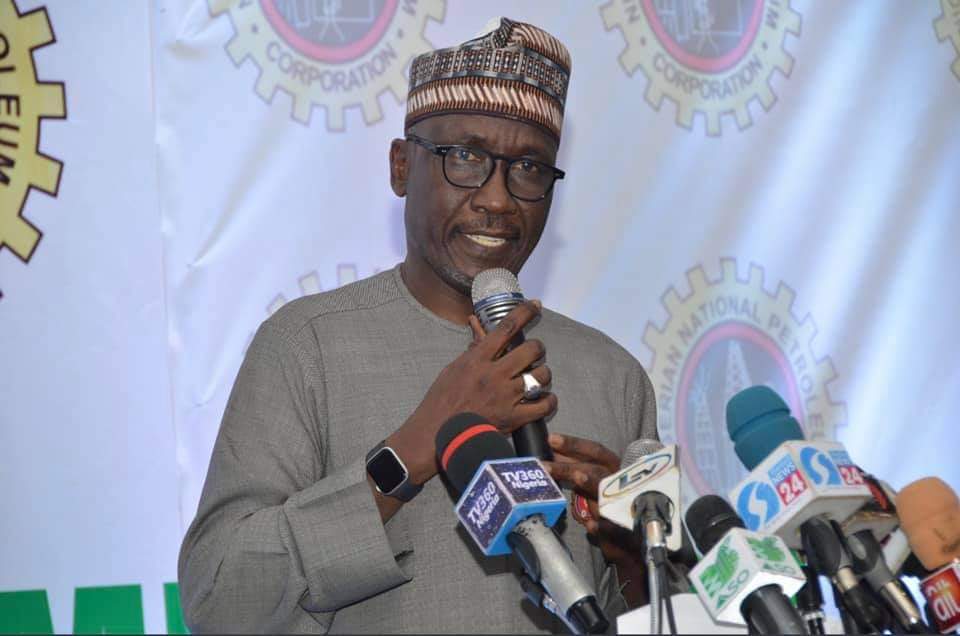
The nations petroleum industry has been known as the main stay of her economy where crude oil exports accounts to over eighty percent of Nigeria’s foriegn earning followed by capital repatriation and diaspora remittances. Though over the years, NNPC the nations petroleum regulator has been riddled with corruption, a move that the present administrators of NNPC is constantly changing especially with the making public of accounts .
Speaking to the media, Kyari, the top executive of the Nigeria National Petroleum Commission (NNPC) said “GMD Mallam Mele Kyari: “NNPC has never published its audited financial statement in 43 years .We came and started doing that and released the 2018 financial statement. We were not afraid of doing that and there were a lot of criticisms that we lost money in refinery operations and pipeline business”
“We went ahead and published the 2019 audited report and were able to learn and cut cost and became more efficient. There is no company in the country which has cut its losses within one financial year by N800bn. We have improved efficiency by cutting 97% in our losses”
“These are truly difficult times for our Industry. But I am proud to say that we were able to maintain our obligations to the Federation Account for seven months without any fail despite the huge impact of the COVID-19 pandemic on the Oil and Gas industry.”
Kyari has made the naation to understand that the commsion is passing through phases in a difficult terrain now that crude prices are low, with few buyers and also on the path of subsidy removal. The commission has demonstrated purposefulness and commitment in adding it’s quota to nations development.