The AfCFTA will not in one dramatic swoop alter existing commercial and economic realities on a vast scale, but its implementation could lead the recovery efforts from the COVID-19 crisis – Solomon Quaynor, VP African Development Bank

Industry experts meeting this week for a virtual discussion focused on resetting, retooling and restarting regional integration in Africa in the wake of the COVID-19 pandemic, underscored the importance of putting small scale traders at the heart of any initiatives.

The joint webinar, organized on Tuesday by the African Development Bank (www.AfDB.org) and Korea Customs Service(KCS), looked at service sectors, e-commerce, digital platforms and value chain development as critical factors for accelerating trade and investment in Africa against the backdrop of the global pandemic. The webinar was delivered in three sessions, moderated by Stephen Karangizi, Director, African Legal Support Facility; Dr. Stephen Karingi, Director at Regional Integration and Trade Division of UNECA and Acha Leke, Senior Partner at McKinsey

History has demonstrated the success of countries and businesses that seize new opportunities during times of crisis, said Sukhwan Roh, Commissioner of the Korea Customs Service. “The COVID-19 pandemic has completely changed health and livelihoods of individuals across the world in less than a year,” he said. “Korea wishes to share all the achievements in system enhancement utilizing new technologies with African countries.”

The workshop’s audience heard how regional integration is increasingly central to the continent’s future economic prospects and to attracting foreign direct investment. The African Continental Free Trade Agreement, (AfCFTA), already ratified by 30 countries, is expected to come into effect on 1 January, 2021. Uniting all 55 member states of the African Union, the pact will create a market of more than 1.2 billion people, including a growing middle class, and a combined gross domestic product (GDP) of over $3.4 trillion

COVID-19 has deepened pre-existing trade frictions within the continent yet offers important growth opportunities and great stories of innovation and highlights the importance of protecting Africa’s place in local value chains, said Anabel Gonzalez, Senior Fellow, Peterson Institute for International Economics, with the need to “put small scale traders at the heart of the effort.” She urged governments to strengthen national agencies to provide support to small traders.

“AfCFTA creates a new trade and integration reality…integrating unequal partners across the continent,” said Trudi Hartzenberg Executive Director of the Trade Law Center (TRALAC). Trade facilitation enjoys specific focus within the AfCFTA, with digital, e-payments, and e-commerce particularly important, she added, citing a 2020 WTO report that emphasized education and healthcare as fundamental to industrialization.

From the outset, the African Development Bank has lent strong support to the AfCFTA, financing the set-up of its secretariat as well as supporting member countries with technical assistance to comply with a range of AfCFTA regulations, said Bank Vice President, Infrastructure, Private Sector & Industrialization, Solomon Quaynor in his introductory remarks read by Abdu Mukhtar, Bank Director, Industrial and Trade Development Department.

Still, Quaynor warned, post-crisis recovery efforts are likely to be slow. “The AfCFTA will not in one dramatic swoop alter existing commercial and economic realities on a vast scale. However, through strategic measures and the right investments, policy frameworks and political backing, intra-African trade will be enhanced.“

African countries innovate to enhance local value chains

Presentations provided examples from Ghana and Zambia of strategies the private sector can adopt to leverage the AfCFTA within the context of the pandemic.

Ghana previously imported most of its Personal Protective Equipment or PPE, but, since the pandemic, the government galvanized 14 local garment firms to manufacture PPE. These firms now produce 1,000 items daily, according to Ghana’s deputy trade minister, Robert Ahomka Lindsay. The development has created 10,000 jobs.

“Traditional value chains have been challenged… it made us realise that we cannot rely on those value chains,” Lindsay said.

Some of the worst-affected sectors in Africa such as tourism, aviation and education, had shown resilience, for example, in the food industry, which harnessed e-commerce for marketing during the pandemic, noted Kenneth Baghamunda, Dir. General, Customs and Trade, East African Community Secretariat. Zambia’s success with cashless payment solutions at its border and other innovations since COVID-19 was another example of favourable results.

“We need to see which value chains need to be developed and we need to interconnect our policies with the right institutional framework,” he said.
Distributed by APO Group on behalf of African Development Bank Group (AfDB).

Media Contact:
Amba Mpoke-Bigg
African Development Bank
Communication and External Relations Department
Email: a.mpoke-bigg@afdb.org
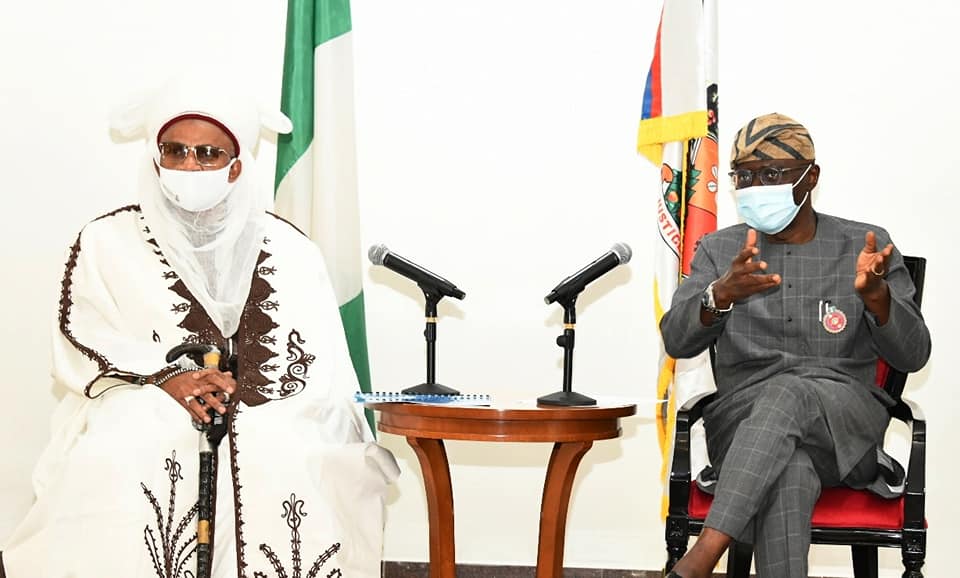
…Sanwo-Olu receives delegates from national council of traditional rulers

Traditional rulers across the country have lent their voice to the call on the youth who staged the recent nationwide protests against police brutality to embrace dialogue in resolving their grievances.

The monarchs, under the aegis of Nigerian Council of Traditional Rulers, said although the protests were organised for good reasons, the violent outcome of the demonstration, they submitted, pushed the nation to the edge and threatened the peace.
The Council of traditional rulers stated its position on Wednesday when its delegation paid a solidarity visit to Lagos State Governor, Mr. Babajide Sanwo-Olu, over the destruction in the State.

Etsu of Nupe, Alhaji Yahaya Abubakar, who led the delegation to the State House, Marina, said the visit to Lagos – the epicentre of the EndSARS protest – followed the decision reached on the November 3 meeting of the Council jointly chaired by Sultan of Sokoto and Ooni of Ife, noting that the Council was disturbed by violent attack on traditional institutions and the level of destruction visited on the Government- and private-owned assets.

The monarch said the nation had learnt both good and harsh lessons from the violence that followed the protests, urging the protesters and political leaders to dialogue.
He said: “We have come here to express our concern about the violent event that erupted from the EndSARS protests in Lagos and to also put our feelings forward to offer suggestions on the way forward. We acknowledge that there are a lot of shortcomings and misgivings in the system, but misinformation and negative bias that accompanied the agitations fueled the violence we witnessed.

“The reason for the protest was very genuine and reasonable. Unfortunately, the demonstration was overtaken by groups who didn’t believe in peace and unity of this country. So many lessons were learnt both in positive and negative ways. As leaders who believe in peace, we owe people of this country a duty to ensure the lessons are taken by the political class. It is on this ground that we come physically to show our solidarity to the Governor over the losses.”

Abubakar said that despite the violence, the Government had not reneged on its promise to grant the five-point demands of the protesters. This commitment, Etsu of Nupe pointed out, should be seen as an olive branch to the youths to embrace dialogue rather than returning to public protests to press home their demands.

He said: “We urge all Nigerians, especially our youths, to give peace a chance. Whatever grievance anyone or a group may have against the Government, dialogue is the key to resolve them. Our youths have protested peacefully, and those in authorities have started responding to their demands. We all must be committed to peace in this period.”
The Council sympathised with Oba of Lagos, Rilwan Akiolu, over the attack of his palace, while also commiserating with the police and people who lost their loved ones in the violence across the country.

Governor Sanwo-Olu thanked the traditional rulers for the gesture, assuring them of his administration’s commitment to engage jobless youths in productive ventures.


Others traditional rulers in the delegation include Olugbo of Ugbo Kingdom, Oba Obateru Akinruntan, Obi of Obi-Orodo Eze Imo, Eze Agunwa Ohiri, Oluwo of Iwo, Oba Abdulrasheed Akanbi, paramount ruler of Nsit Ubium Okin Ibibio, Nteyin Solomon Etuk, Oba of Ikate Elegushi, Oba Saheed Elegushi, and Director General of the National Council of Traditional Traditional Rulers, Alhaji Kassim Yawa.

Africa has already made an indelible mark in the oil industry. It is home to four of the world’s top 20 crude oil producers — Nigeria, Angola, Algeria, and Libya — and these same four countries also have some of the largest oil reserves in the world.

So far, it hasn’t made quite as much of a splash in the gas industry. The only African countries on the list of the world’s top 20 gas producers are Algeria and Nigeria, and one of the states that has the largest gas reserves is Mozambique, which is still several years away from bringing its major fields on line.

But the gap between African oil and gas doesn’t have to be permanent. The continent’s gas industry is on the verge of real transformation, as the African Energy Chamber (AEC) notes in our 2021 Africa Energy Outlook, released earlier this month. I’d like to describe what forms that shift might take — and explain how the changes would benefit Africans.

New Sources of Production

Some of the change I expect is going to happen in the upstream sector — that is, in the realm of exploration and production.

First, the continent’s current leading producers are likely to produce more. North African states such as Egypt and Algeria will account for part of this increase, as they are looking to ramp up development at existing natural gas fields. But another part of it will stem from programs designed to reduce the flaring of associated gas found in oil fields. Both Nigeria and Angola, for example, have plans to expand the use of associated gas. The former aims to deliver its production to the domestic market, while the latter is looking to split its production between the local market and the export-oriented Angola LNG project.

The upshot of these trends is that the list of Africa’s top gas producers will probably remain static until the middle of the decade. As the AEC’s outlook explains: “The (continent’s) top five crude oil producers — Nigeria and Angola from the west, and Algeria, Egypt, and Libya from North Africa — complete the top five natural gas producers for 2020 and 2021. These five countries contribute about 90% of the overall natural gas output from the continent for both (2020 and 2021), and the expected forecast suggests the share of these countries will remain the same going into the mid-2020s.”

At that point, though, new producers will start to play a more prominent role. Mozambique is due to launch its first greenfield project at Area 1 in 2024, and its offshore zone may become a major source of natural gas by 2025-2026. The Mauritania-Senegal offshore zone may follow a similar timeline, as the Greater Tortue/Ahmeyim blocks may begin yielding natural gas in 2023, followed later by the Yakaar-Teranga and BirAllah projects. What’s more, all four of the projects mentioned in this paragraph will support gas liquefaction plants capable of producing and exporting LNG.

By the end of the decade, then, there will be more than five countries accounting for the bulk of Africa’s total gas production. Nigeria, Angola, Algeria, Egypt, and Libya will be joined by at least three others —Mozambique, Mauritania, and Senegal.

Domestic Consumption vs. Exports

Meanwhile, consumption patterns are going to shift along with production patterns. Once again, this shift is likely to begin once the large new fields in the Mozambique and Mauritania/Senegal provinces come online.

The change may not be obvious on a macro level, because it won’t be evident in the split between exports and domestic consumption. That is, Africa will continue to use about 70% of the gas it extracts and will export continue to the remaining 30%. As the AEC’s outlook explains, though, the geography of African gas exports will not remain static.

“The pattern has been relatively stable since 2012 with about 70% serving local markets, 20% exported to Europe and 10% exported to Asia,” the report states. “The mid-2020s LNG startups are also expected to distort this picture by increasing the market share for East Asia LNG exports. This development is, however, not (a consequence) of local markets’ (rising demand), but rather the shrinking ability of North African countries to maintain their export capacity to Europe on the back of strong domestic demand growth. By 2030, the expectation is effectively for East Asia and Europe to be inverted, while domestic market share remains constant.”

In short, Africa is on track to produce more gas by the end of the decade but will keep the same share of the total for its own use. At the same time, Asia will replace Europe as the most important market for African gas exports.

Gas Means Jobs

These trends are interesting, but you may want to ask: What do they mean for ordinary Africans, for people who are less concerned with production data and trade balances than with questions about how to support their families?

They mean a great deal.

As I’ve mentioned, the 2021 Africa Energy Outlook report projects that African gas production is going to rise, especially after new fields come on line and ramp up development in the middle of the decade. It also anticipates that African gas consumption will rise, even if domestic consumption continues to absorb a full 70% of total production.

As production goes up, upstream operators will create jobs. They will need people to help them build, operate, maintain, and repair production, transportation, and processing facilities. They will also need people to administer their local operations. Additionally, they will need to meet legal requirements or contractual commitments for local content, so they will need to hire African contractors. Those African contractors, in turn, will need employees of all kinds, and so will hire African workers.

And as consumption goes up, even more jobs will be created. Distributors will need new pipelines to deliver the gas to end-users, so they will need people who can help them build, operate, maintain, repair, and administer those pipelines, along with associated infrastructure facilities such as storage depots. And even in the absence of pipelines, they will need to acquire tankers and containers so that they can bring gas to customers by road, rail, or river. Accordingly, they will need people to procure, operate, maintain, repair, and administer these operations.

Meanwhile, there’s more. The hiring of more African workers is sure to have knock-on effects. If, for example, employees of upstream operators need a way to get to a remote worksite, local transportation companies may be able to serve them. If so, those transportation companies may have to hire more people to drive their vehicles. Likewise, if African construction firms need to procure extra building materials to uphold their contracts with upstream operators, local suppliers may be able to meet their needs. And if so, those local suppliers may have to hire more people to handle their inventory.

In other words, as Africa’s gas industry grows, it has the potential to create thousands and thousands of jobs! Of course, some of them, such as construction jobs, will be temporary. Some of them will be more permanent, though, especially if the governments of gas-producing states work with upstream operators to develop local hiring and training standards that expand the capacity of the local workforce.

All the Way Down the Value Chain

But the knock-on effect doesn’t have to stop there.

In my most recent book, Billions at Play: The Future of African Energy and Doing Deals, I urged African oil and gas producers to look as far down the value chain as they could. I advised them to pursue projects that treated hydrocarbons not just as exportable raw materials but as inputs for value-added operations such as fertilizer or petrochemical manufacturing. I also suggested that they look for ways to focus on gas-to-power projects with the intent of improving domestic electricity supplies — and not just because new power grids would benefit African businesses.

It is true, of course, that some African businesses will be able to create more jobs if they do not have to worry about blackouts. Likewise, it is true that gas-to-power projects will create jobs of their own in areas such as construction, operations, maintenance, and administration. But it is also true that African households need and deserve access to reliable energy supplies, regardless of employment levels — and that gas-to-power plans can help them!

I’m hardly the only person to reach this conclusion. When I wrote Billions at Play, several African countries had already rolled out ambitious gas-to-power schemes. Nigeria, for example, was in the process of implementing a program that promoted associated gas as fuel for new power plants. Since then, others have followed suit. For instance, as the AEC’s energy outlook notes, Senegal has unveiled plans for using its future gas production to generate electricity for the domestic market. Mozambique already has a couple of gas-to-power projects in the works, too.

But it shouldn’t stop there. I’d like to see more gas producers do this as they ramp up gas production in the second half of the decade. If they do, they will have accomplished something beyond merely increasing output levels. They will have taken concrete action to strengthen their economies and benefit their own citizens. And in so doing, they will have made their mark on the world!

NJ Ayuk is Executive Chairman of the African Energy Chamber, CEO of Centurion Law Group, and the author of several books about the oil and gas industry in Africa, including Billions at Play: The Future of African Energy and Doing Deals.
Distributed by APO Group on behalf of African Energy Chamber.

By NJ Ayuk, Executive Chairman, African Energy Chamber (EnergyChamber.org)

SOURCE
African Energy Chamber

FIFA’s Secretary General Fatma Samoura took part in the closing session of the World Football Summit (https://bit.ly/33sLFDG) Live today in a wide ranging discussion that covered disruption, wokeness and the impact of the FIFA Covid-19 Relief Plan on global football.

In an interview led by South African broadcaster Carol Tshabalala, Fatma Samoura spoke about the effect the Covid-19 virus has had on football and the measures FIFA has taken to preserve and protect the game worldwide during this difficult time through the FIFA Covid-19 Relief Plan.

“The FIFA Covid-19 Relief Plan was created to help our MAs and the six Confederations tackle the challenges that the pandemic is throwing at them via the distribution of USD 1.5 billion in relief funds. The plan is truly ground-breaking and was designed to show football solidarity in action through a USD 1 million grant for each MA, so that they can protect and restart football. Additionally, they will all receive an extra USD 500,000, specifically allocated for women’s football and can apply for interest free loans of up to USD 5 million.”

Speaking about the topic of disruption the FIFA Secretary General emphasized her belief in it as an engine that can drive change and highlighted the many positive changes that FIFA has undergone since the crisis it experienced in 2015 including: the creation of an Audit and Compliance Committee, to advise, assist and oversee the FIFA Council in monitoring all of FIFA’s financial and compliance matters, as well as monitoring compliance with the FIFA Governance Regulations and the flow of development-related funds; the establishment of FIFA’s first-ever Compliance Sub-Division to protect the integrity of football; robust eligibility checks of candidates for all FIFA bodies and a bullet proof bidding process for the Men’s and Women’s FIFA World Cups.

On the topic of wokeness Fatma Samoura referred to FIFA President Gianni Infantino’s game-changing decision to appoint a woman as FIFA’s Secretary General and underlined that gender diversity is in action at FIFA, its committees and its 211 MAs. She stressed FIFA’s commitment to furthering women’s football with investments of 1 billion USD for the 2019-2022 cycle and the work undertaken by its Women’s Football Division, that has held over 500 online sessions with MAs worldwide, to support them in protecting the women’s game during the pandemic.

She also highlighted FIFA’s wokeness spirit through its recognition of the global problem of racism: “I believe that FIFA’s response to the tragic death of George Floyd earlier this year really showed that we have become a modern organization, with its finger on the pulse of issues that matter and is truly woke. Of course wokeness is an ongoing process but I am proud to say that at FIFA there is more diversity, understanding and willingness to use football as a tool for positivity than ever before.”

In concluding their discussion, the FIFA Secretary General referred to how the global pandemic has provided an opportunity to reshape the world of football saying: “Although this year has put the world into a state of semi-hibernation, I believe that it has simultaneously provided us all with an opportunity to awaken ourselves to what is important and to see how we can reshape the world of football, to make it more resilient to the kind of pandemic we are currently experiencing and bring positivity to people’s lives.


Distributed by APO


Mastercard has over 70 million customers in Nigeria, making it the de facto leader on the debit card market in the country

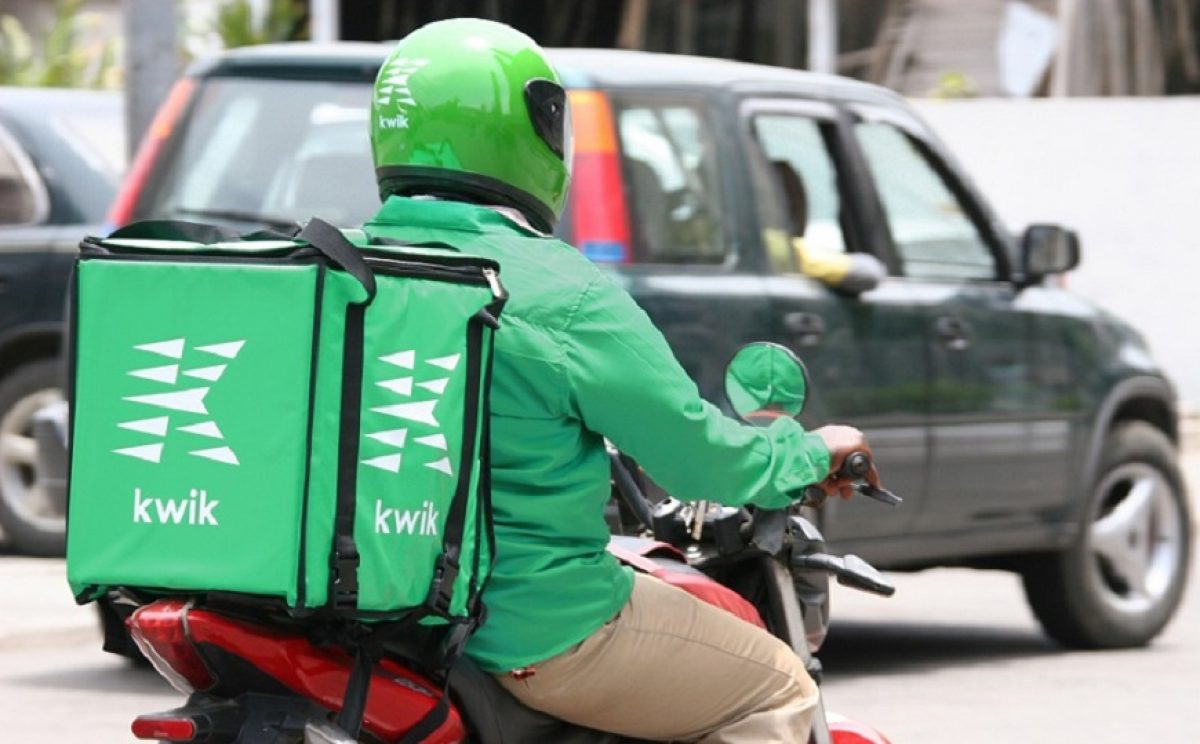
Kwik Delivery (http://Kwik.Delivery/) and Mastercard announce a partnership starting this very day to provide discounts on all Kwik Delivery services to Mastercard cardholders in Nigeria.

Mastercard has over 70 million customers in Nigeria, making it the de facto leader on the debit card market in the country.

All Mastercard cardholders can benefit from a 10% discount on Kwik Delivery services, subject to terms and conditions, provided that they pay such services with their Mastercard. Discounts are applied as credits on the customer’s in-app wallet.

Kwik Delivery is a leading last-mile delivery tech company launched in Lagos in 2019. It enables Nigerian businesses to deliver their goods faster, on-time and with the visibility provided by technology.

Leading pan-African banking group, Ecobank (https://www.Ecobank.com/), has won awards from EMEA Finance, The Banker and Global Finance.


• Ecobank’s awards in the EMEA Finance African Banking Awards 2020 includes the pan-African award for Financial Inclusion, and ‘Best Bank’ in Burkina Faso, Cabo Verde, Chad, Gabon, The Gambia, Guinea, Liberia and Mali.


• The Banker’s Bank of the Year Awards 2020 saw Ecobank win Bank of the Year for Africa (Regional Award) and Bank of the Year for its affiliates in Gabon, The Gambia, Guinea, Guinea-Bissau and Togo.


• The award of ‘Outstanding Crisis Leadership – Finance & Business’ was awarded to Ecobank by Global Finance.


Ade Ayeyemi, Ecobank Group CEO, said: “The Ecobank Group has long been recognised as a pioneer and we are proud to be playing a major role in digital banking, financial inclusion, driving economic and social development through our multi-channel approach. These latest Awards are the result of hard work from Ecobankers across the group as well as fruitful and sustainable relationship with our various stakeholders and partners. They affirm the effectiveness of our strategy and our impact on businesses and livelihoods across sub-Saharan Africa.”

“Our one bank model, which sees us develop our products, services and solutions centrally, and distribute them locally, is empowering people, businesses, corporates and the public sector across Africa with convenient, affordable and secure 24/7 banking solutions. We are now positioning our payments business as an enabler of trade and payments across Africa.”

Among the group’s banking products, services, solutions and community initiatives that swayed the respective judges’ decisions were the Ecobank Mobile App; Xpress Accounts- Know Your Customer (KYC)-lite account opening which drives financial inclusion; Ecobank Pay, the digital contactless QR payment solution; the rapid expansion of the Xpress Point agency network; digital-only Xpress Loans. These are in addition to e-token generation cash out; newly launched internet banking platforms, Ecobank Online, Omni Lite and Omni+ for retail, business and corporate customers respectively; the scalability of Ecobank’s digital ecosystem and platforms; and our Group-wide initiatives providing support to people, communities, businesses, health authorities and governments with support and relief during the Covid-19 pandemic.

These new Awards add to the Ecobank Group’s recent Award wins which include:
• African Banker (EMEA Finance)
• Most Innovative Bank in Africa (Global Finance)
• African Bank of the Year (African Banker)
• Africa’s Best Bank for Corporate Responsibility (Euromoney)
• Innovation in Financial Services Award (African Banker)

The Lagos Zonal Office of the Economic and Financial Crimes Commission, EFCC, has secured the conviction and sentencing of four oil thieves and a vessel, MV Tim Begele, before Justice A.M. Liman of the Federal High Court sitting in Ikoyi, Lagos.
The convicts, Ukwuoma Ahamefula, Omeogor Nelson, Efemuaya Evans and Jude Eghreriniovo, were arrested sometime in December 2019 on board a vessel, MV Tim Begele, by the Nigerian Navy and subsequently handed over to the EFCC for further investigation and prosecution.

They were, however, arraigned alongside the vessel on March 4,2020 on a three-count charge bordering on illegal dealing in 369 metric tons of Automotive Gas Oil (AGO) without appropriate license, to which they initially pleaded not guilty.

One of the counts reads: “ That you, MV Tim Begele, Ukwuoma Ahamefula, Omeogor Nelson, Efemuaya Evans, Jude Eghreriniovo and others now at large on the 3rd of December, 2019, within the jurisdiction of this honourable court, conspired among yourselves to commit an offence to wit: dealing in 3,911 metric tons of petroleum products without appropriate licence; and you, thereby, committed an offence contrary to Section 3(6) of the Miscellaneous Offences Act, Cap M17, Laws of the Federation of Nigeria 2004 and punishable under Section 1(17) of the same Act.”

However, on November 25, 2020, the defendants changed their plea from ‘’not guilty’ to ‘guilty’.

Consequently, the defendants were convicted accordingly by the court.
Justice Liman, in a short ruling, ordered that the terms of imprisonment of the convicts would run retrospectively from the date of the arrest to November 25, 2020.
The Judge also ordered the vessel and the product aboard to be forfeited to the Federal Government of Nigeria.

South Africans are increasingly looking to greener pastures within our country’s borders in search of a better quality of life away from the stresses of big cities. Semigration, or moving from one part of the country to another, is firmly in the spotlight as Covid-19 makes working remotely de rigueur.

While semigration is nothing new, many of the barriers preventing people from taking the leap have virtually diminished overnight. Small businesses and large corporates alike have had to rethink their operating models along with expectations of their workforce, and many have seen improved productivity due to the greater flexibility bestowed on their staff. Now the dream of earning a Joburg corporate salary while admiring a view of the Knysna Heads is finally within reach.

Semigration is an especially attractive prospect for those looking for a better lifestyle in relatively safer environs with access to prestigious schools, but without the lengthy and costly complications involved in emigrating overseas. Whether one is looking for less rush, a great education at a fraction of the price of large city schools, or a picturesque view in the morning instead of a hectic commute – these come at less of compromise now that it’s entirely possible to work in one part South Africa while living in another.

Not only does semigration offer a whole host of benefits for semigrants, it’s also a boon for small coastal towns and small mom-and-pop businesses too. The basic concept of supply and demand looks set to have a positive impact on property prices in small towns where estate agents are likely to experience bidding wars for the most highly sought-after properties, making the semigration trend a potentially savvy investment opportunity as well.

Prior to taking the plunge, it is important to list the pros and cons involved in the big decision to relocate. Ultimately, you are the only one who can make the choice based on your and your family’s unique needs and circumstances. If you’re able to work remotely permanently, calculating whether that ocean view is truly feasible is the best place to start.

By: Andrea Tucker, Director at MortgageMe

With the spate of insecurities in the country especially the gruesome killings of the rice farmers few days ago by the terrorists in the Northern region of the country, President Buhaari has condemned the killings in its entirety.

Speaking via his social media , Buhari opined that “Nothing is more important than ensuring the security of lives and property of Nigerians. Everything is secondary when security is at stake. I will ensure that more resources are made available to the military and other security agencies to prosecute the war against terrorism.”

“As we mourn all the lives lost in Zabarmari, the Armed Forces have been given the marching order to take the fight to the insurgents, not on a one-off, but on a continuous basis, until we root out the terrorists”, Buhari added.

speaking about cooperation with the neighboring countries, Buhari said “We will intensify our cooperation with neighbouring countries on bilateral and multilateral levels, to ensure that there is no hiding place for the terrorists.”

“As I noted earlier, the massacre by Boko Haram in Zabarmari is nothing short of senseless, barbaric, gruesome and cowardly. It reinforces our resolve to root out all forms of insurgency and insecurity not just in Borno but everywhere across Nigeria”, Buhari concluded.

Lately, Suspected members of the Islamic militant group Boko Haram killed at least 40 rice farmers and fishermen while they were harvesting crops in Nigeria’s northern Borno State, officials said.

Anthony Emeka Nwosu

…………subject him to psychological and medical evaluation

Following the viral video of the ‘Drunk Policeman’ at CBN Junction, the FCT Police Command has identified, arrested and taken into custody the Police Inspector shown in the video.

  1. Furthermore, the Commissioner of Police CP. Bala Ciroma has ordered that the Police officer be subjected to psychological and medical evaluation, preparatory to the commencement of disciplinary actions against him.
  2. In view of the above, the Commissioner of Police wishes to unequivocally state that the behaviour portrayed by the Policeman in the video does not depict the standard discipline of the Nigeria Police Force.
  3. While urging residents to remain calm, the Command wishes to reiterate its unflinching commitment to the protection of lives and property in the Federal Capital Territory

ASP Yusuf Mariam,
Police Public Relations Officer,
For: The Commissioner of Police
FCT Police Command,
Abuja