The Executive Vice Chairman of the Nigerian Communications Commission (NCC), Prof. Umar Garba Danbatta, at the weekend, dedicated his Zik Prize to the board, management and staff of the Commission for their “collective and untiring commitment and efforts” in advancing the course of effective telecoms regulation in the country.
While receiving the award in the professional leadership category at an elaborate and well-attended annual Zik Prize 2020 organised by Public Policy Research and Analysis Centre (PPRAC) in Lagos on Sunday, December 6, 2020, Danbatta thanked the organizers for the honour, stating that the award was “a recognition for the entire Commission.”
“It is gratifying that our modest efforts at the Commission, especially since the coming on board of our leadership in 2015, are being recognized by the organisers of this prestigious award. I convey my profound gratitude to the organisers for counting me worthy of this award and we accept this gesture as a challenge for to do more in digitally advancing our economy,” Danbatta responded after receiving the award.
The award was attended by NCC board members, senior management and other staff of the Commission; aside other awardees in different categories as well as dignitaries from across the country.
According to the citation, Danbatta was described as “a brilliant engineer, astute administrator, philanthropist and an outstanding nation builder who has brought his wealth of experience and remarkable regulatory finesse to bear as the country’s chief telecoms regulator.”
Within a few years at the helm of affairs, Danbatta has embarked on many regulatory initiatives that have helped in transforming the NCC into a regulator of global acclaim through diligent implementation of the strategic 8-Point Agenda, which gave much-needed direction to the activities of the Commission.
Also, “through several innovative initiatives, such as Subscriber Identification Module (SIM) registration and 112 Emergency Number, Danbatta has helped in the efforts towards stemming insecurity in the country. His efforts have sufficiently led to improvements in Quality of Service (QoS) delivery, broadband infrastructure deployment, broadband penetration, effective spectrum utilisation, consumer empowerment and technology innovation.”
Danbatta was also cited to have led the charge to drive Nigeria’s industrial revolution and knowledge economy, leveraging telecommunications. Today, telecommunications contribution to the Gross Domestic Product (GDP) has grown by 70 per cent from 2015 to 2020, while broadband penetration has leaped from 8 per cent to over 45 per cent in the same period.
Danbatta’s leadership was also cited to have enhanced transparency and innovation in the sector and increased the NCC’s recognition as Africa’s foremost telecoms regulator.
He has also made huge improvements in staff welfare, infrastructure development, consumer empowerments and satisfaction, job creation, standards, ICT revolution, research, rebranding of the telecoms sector, cordial relationship with stakeholders, active broadband penetration, efficient monitoring and value-driven usage for the provision of different types of services,” the citation added.
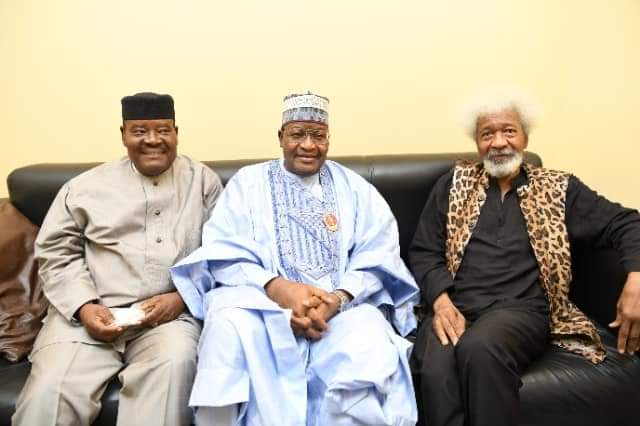
Chairman of the occasion, Prof. Wole Soyinka, described the Zik Prize as “one of the most credible and enduring awards that recognises excellence, humanity and service in nation building.”
Other awardees at this year’s annual event include the Secretary to the Government of the Federation (SGF), Boss Mustapha, who won in Public Service category; President of the Senate, Dr. Ahmad Lawan, who won in the political leadership category; Governor of Borno State, Babagana Zulum, his counterparts from Delta State, Senator Ifeanyi Okowa and Oyo State Governor, Engr. Oluseyi Makinde, who won in good governance category.
Others are the Founder/Group Managing Director, Emzor Pharmaceutical Industries Limited, Dr. Stella Okoli, who won in business leadership as well as Group Managing Director/Chief Executive Officer of UBA Plc, Mr. Kennedy Uzoka, who is a joint winner in the professional category with Danbatta.
This year’s award marked the Silver Jubilee anniversary of the prestigious Zik Prize award, which was instituted by some eminent Nigerians, including Professor Anya O. Anya, Late General Domkat Bali (Rtd) in 1995 to memorialize and extol the legacies of the first President of Nigeria, Dr. Nnamdi Azikiwe.
The Nigerian Communication Commission (NCC) Executive Vice Chairman (EVC) Umar Danbatta and other notable Nigerian have been honored at the prestigious Zik Prize Award at the prestigious Civic Centre, Victoria Island.
In recognising his role in the telecomuncation ecosystem and how he Haas been able to deep broadband penetration, created enabling environment and engaged the critical stakeholders especially during the Covid 19 lockdown period, a period that saw Nigerians enjoying unmitigated and uninterrupted internet connectivity.
Industry watchers and stakeholders have lauded the awards as the best way to appreciate a technocrat like the EVC.
Though, Danbatta and the Group Managing Director/Chief Executive Officer of United Bank for Africa (UBA), Mr. Kennedy Uzoka, as the joint winners in the category.The EVC received the prestigious Zik Prize in Professional Leadership Category.
This year’s event, which also coincides with the 25th anniversary of the Zik Prize series, was chaired by Nobel Laureate, Prof. Wole Soyinka, while the Obi of Onitsha, Igwe Alfred Nnaemeka Achebe is to function as the royal father of the day.
Danbatta, Uzoka and other prominent personalities who emerged in different categories of the Zik Awards, were carefully selected through a rigorous and meticulous process for their notable contributions to national development.
The Zik Awards has over the years has recognised notable Nigerians that have made tremendous strides in the public and private sector. The award recognises excellence and their contribution to the society.
In a year defined by uncertainty, Adri Führi, Group CFO at e4, reflects on the accelerated rate of change and the increased focus on the value of the CFO role brought on by the Covid-19 pandemic while offering insight into what may lie ahead after the worst of the Covid-19 crisis is over.
The pandemic has demonstrated the value of CFO and its vital importance during times of crisis. Not only does the CFO have the full financial picture of the organisation at hand, but is relied upon to optimise its financial wellbeing and put safeguards in place to protect stakeholders from the negative effects of extreme uncertainty. For obvious reasons, risk management and oversight have become more important than ever in crafting the right strategies and generating business value.
Navigating through unprecedented circumstances is, of course, a challenge like no other, but there are measures a CFO can implement to ensure the best possible outcomes, irrespective of the nature of the crisis at hand. Firstly, it is vital to leverage off relationships. Clear and frequent communication across the executive leadership team and with employees, ensures everyone is aware of key decisions at the right time. Of equal importance is financial analysis of everything relevant on an ongoing basis. The initial shocks of Covid-19 made the business landscape very fluid, with many variables and therefore it was important to understand what was happening and why it was happening. Beyond ongoing communication and careful financial analysis, reading and listening to experts is invaluable to enhance an informed point of view prior to applying certain operational improvements.
This year has also seen an interesting shift in how forecasting is viewed and implemented. Existing forecast models based on ‘normal’ working conditions have had to be quickly re-evaluated. At e4, we looked at various scenarios until the end of 2021. Our action plans were implemented immediately, but there was a realisation that we needed to continue monitoring conditions and adjust our approach where required.
More stakeholders now understand and have a greater appreciation of the value the CFO brings to the table as a result of current events. Recent research by the International Institute of Management Accountants and the Association of Chartered Certified Accountants, found that 72% of respondents believe the role of the CFO will either “increase or increase significantly” in importance going forward.
In 2021, CFOs are likely to continue managing the various headwinds created by the Covid-19 upheaval. Being adaptable to change with a strong and committed team may well make all the difference to how rapidly organisations recover from the difficulties of the current moment. Clearly, almost every facet of business has changed with the pandemic. What is also clear is that CFOs can also use unexpected events to make the right decisions that drive business performance.
As the federal government intensifies efforts to reduce corrupt practices in governance, the Code of Conduct Bureau, (CCB) with the support of Central Bank of Nigeria have organised the National seminar on Anti-Corruption with the theme: “Code of Conduct Bureau: Fighting Corruption For Socio-Economic Development in Nigeria in Abuja
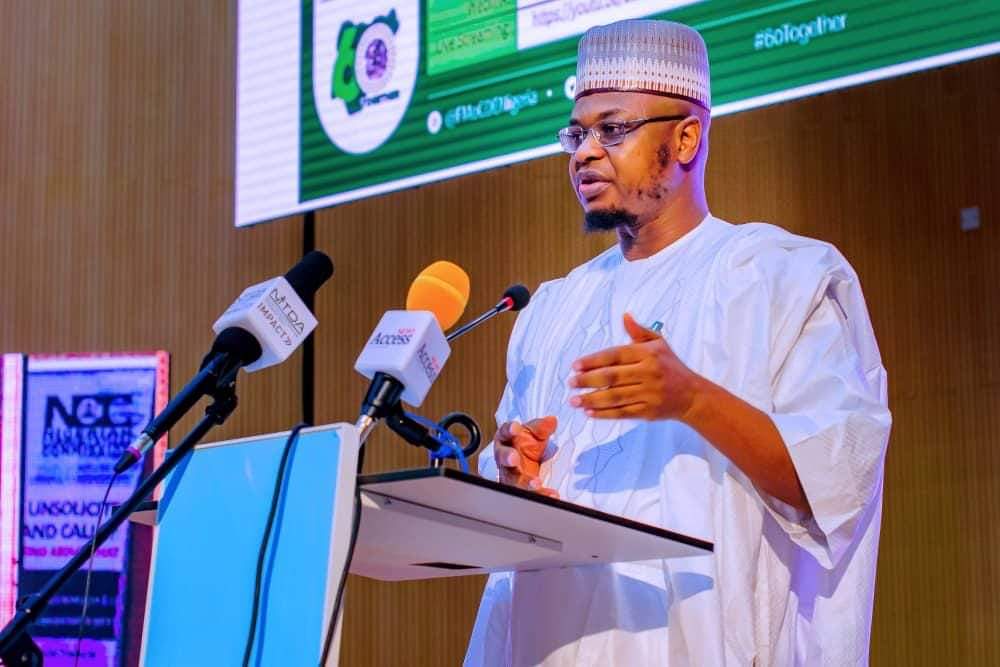
The Honorable Minister of Communications and Digital Economy, Dr Isa Ali Ibrahim Pantami, represented by the Director General of National Information Technology Development Agency (NITDA), during the seminar has called for digitisation of government processes to reduce the scourge in the country.
He said, “When you Digitize government operations and processes, nobody will have monopoly of power to compromise, nobody will do things at his discretion because when the process is being automated, there is no need to meet physically to get services, everything will be opened and transparent. This will democratize government service delivery thereby ensuring accountability, simply because records are been kept and can be checked at anytime needed”.
The Minister revealed that the Federal Ministry of Communications and Digital Economy have being doing a lot towards curbing sharp practices which are stunting the growth and development of the country. “There is need put down strategies and policies that will mitigate such act. This will pave ways for speedy development of the country, he remarked.
Dr Pantami assured the organisers that the Ministry is in full support of the activities of Code of Conduct Bureau that aimed at tackling and eliminating corruption practices across the country with the motive of creating an enabling environment for transparency and accountability of the activities of government.
The Minister of Justice and Attorney General of the Federation, Barrister Abubakar Malami (SAN) in his remarks applauded the organizers of the seminar for putting up the event at a time such is needed to deepening the anti-corruption war of the government. While disclosing that war against corruption is one of the cardinal point of the administration, Barrister Malami restated the critical and vital roles of CCB in building a corrupt free nation.
Malami said that there is need to make government operations and processes open and transparent. This, he said would ensure accountability.
The Chairman, Code of Conduct Bureau, Prof. Isah Mohammed stated that seminar was the first of it’s kind in the history of the organisation adding that its objective is to reduce corrupt tendencies at the recovering stage of COVID 19.
He said, “This Bureau was established in response to the allegations of corruption against government operations in the 1960s, 1970s, and 1980s which resulted in coup and counter coups with trillions of money stolen from both domestic and foreign bodies as a result of corrupt practices by public office holders and till date we are still striving to eliminate the scourge.
Mohammed asserted that there is need to join hands and work together to crackdown on corrupt activities which is affecting the operations and processes in country. He therefore advocated for entrenching strategic policies that will reduce corrupt practices for attainment of goals and aspirations of the country.
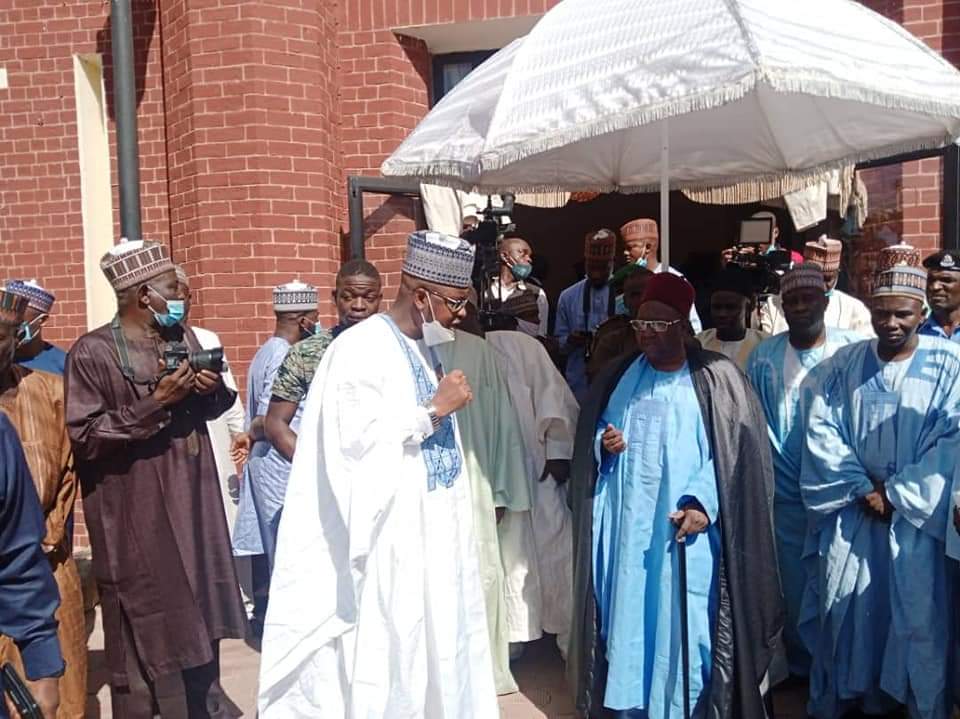
The Honourable Minister of Communications and Digital Economy, Dr Isa Ali Ibrahim Pantami was in Borno State today as part of Federal Government delegation led by the President of Senate, Dr Ahmad Lawan on a condolence visit to the state over the recent killing of farmers at the weekend.
The delegation was in the state on behalf of His Excellency, President Muhammadu Buhari and the Federal Government, to commiserate and identify with the family of the victims, the Government and the people of Borno State over the incident.
The delegation paid a visit to Zambamari where the incidence occurred.
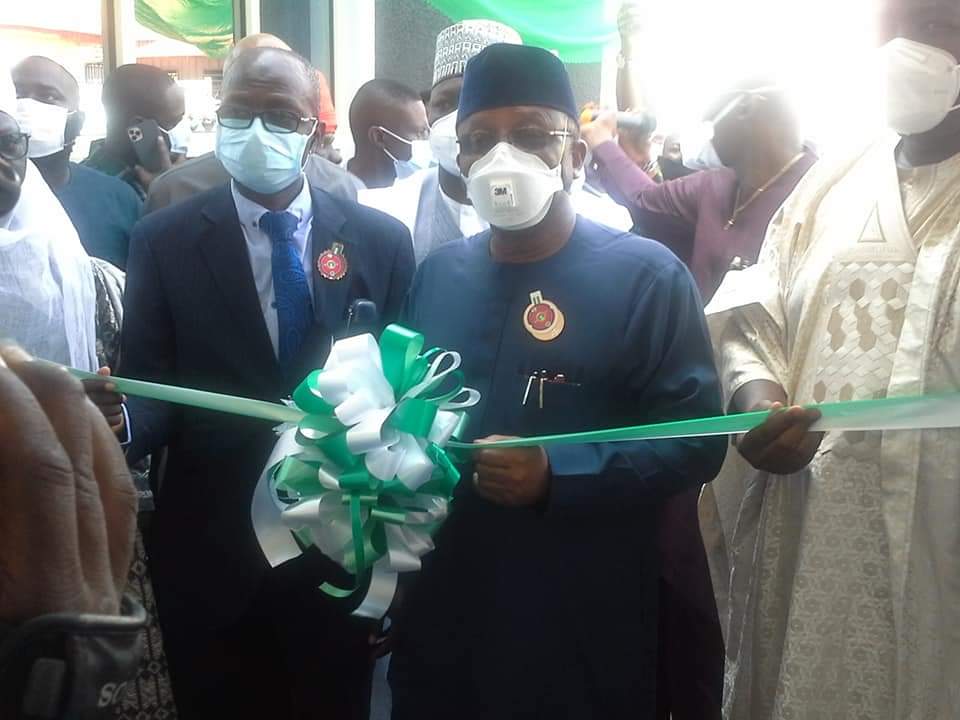
The Honourable Minister of Health, Dr. Osagie Ehanire while commissioning the Infectious Disease and Treatment Centre of the Federal Medical Centre, Keffi brought into existence by the NCDC, has charged the Board and Management of the Hospital not to allow the Centre to fall into disuse: “This Centre must not be allowed to fall into disuse”, the Honourable Minister charged.
Dr. Ehanire also charged the Federal Medical Centre, Keffi and other Teaching Hospitals in the country to note three key areas to focus on: That they must prioritize infectious disease control as being critical; they must strengthen their role of health security, by which he explained that building a standard centre where infectious disease treatment can be provided means bringing care closer to the people; and they must learn from COVID-19 so as to respond well to future outbreaks and pandemics. He surmised that “The speed at which research and innovation has happened with COVID-19 has been unprecedented. It has reminded us that we have the capacity to control other infectious diseases that continue to affect us, if we work together in solidarity.”
The Honourable Minister further encouraged the Nasarawa State Government where FMC Keffi is situated along with FMC Keffi itself to “ensure that documentation is a critical part of their response. We must take stock of where we were before the pandemic, where we are now and where we want to be.” By this the Minister was asking the State Government to improve on where they are in the health sector response revealing that the Federal Government of Nigeria led by His Excellency, President Muhammadu Buhari is fully committed to prioritizing and investing in our national health security.
Earlier, the Director General of NCDC, Dr. Chike Ihekweazu traced the history of the IDC at FMC, Keffi: “We started this important project at the peak of the COVID- 19 pandemic, as part of our strategy at NCDC to ensure that all states in Nigeria have a standard treatment centre for infectious disease management.”
He continued: “Given the strategic role Keffi plays in serving residents of both the FCT and Nasarawa, it was even more important to establish a treatment centre with very high standards to meet the health security needs of our country. The establishment of this treatment centre has been a strong collaborative effort led by the Honourable Minister of Health, the Permanent Secretary, representatives from the Federal Ministry of Health, FMC Keffi and NCDC.”
For the Medical Director of FMC, Keffi, Dr. Baba Adamu expressed gratitude to His Excellency, Governor Abdullahi Sule, in not only supporting this project, but also in establishing the Nasawara State Infectious Disease and Research Centre; “Our goal is that these two centers can work closely together and serve as a model to other states in Nigeria.”
Signed: Olujimi Oyetomi, Director, Media & P.R., FMOH.
Tell us about Babban Gona and the mission behind your establishments?
Babban Gona (“Great Farm” in Hausa) is an award-winning, high-impact, financially sustainable, and highly scalable agri-tech social enterprise part-owned by the farmers we serve. By developing and deploying advanced technology coupled with operational excellence we transform agriculture into a job creation engine with a goal to create 1 million jobs for African youth by 2025. Through our Babban Gona technology platform, we provide training, financial credit, agricultural inputs, harvesting and marketing services to tens of thousands of our member smallholder farmers dramatically increasing their productivity and profitability. Due to the highly scalable nature of our technology platform, despite the challenges of COVID, Babban Gona more than doubled in size in 2020 serving 37,000 farmers to farm 80,000 acres of maize, an area equivalent to 5 Manhattans, providing enough food to feed every man, woman and child in Nigeria for nearly 1 week.
With an ambitious vision of having about 1 million smallholder farmers in Nigeria, do you think that is feasible?
Eight years ago, Babban Gona began a journey to create 1 million jobs by 2025. During this time, we have passed through many milestones. Our cumulative smallholder members accounts have grown to over 110,000, enabling these smallholders to increase their yields and net incomes consistently to 2 times and 2.5 times the national average respectively. Babban Gona uses its expertise in technology to create real value for its smallholder members. Throughout the season, we rely on technology to automate our processes and optimize the growing activities on our members’ farms. We developed applications which leveraged on Artificial Intelligence (AI) and machine learning to improve our field monitoring operations. These apps enabled the analysis of optimal plant populations and rates of germination on fields and while testing for plant nutrient deficiencies simultaneously. Despite the immense challenges posed by the COVID pandemic, due to the tremendous efforts of our truly inspiring team, we have doubled in size in 2020, from being Nigeria’s single largest maize producing entity, to now one of the largest maize producers on the African continent. Today we are farming over 80,000 acres of maize. Through collaboration with our great partners, we would dramatically scale the impact of our work by unlocking the power of youth entrepreneurship and technology to innovate on our current Babban Gona Direct model and scale our Trust Group Entrepreneur model from our current pilot. This intervention will enable 7.5 million, majority rural youth and rural females, access dignified and fulfilling employment by 2030. Through our innovative Trust Group Entrepreneur model, we are simply replicating the successful strategy adopted in our Babban Gona Direct model.
What are the strategies that you have deployed to achieve these milestones?
Our Babban Gona Direct model strategy relied on our ability to train, develop and finance grass-root level leaders to run mini farmer groups called “Trust Groups” comprised of 3 to 5 smallholder members. Our Trust Group Entrepreneur strategy, relies on us replicating our successful strategy one level up, by training, developing and financing grass-root level youth entrepreneurs to run a business managing a network of 15 Trust Groups, comprised of approximately 45 smallholder members. To achieve these results, and rapidly scale the impact of our work to reach not just 1 million people by 2025 but also 7.5 million people by 2030, we will need to simultaneously improve our value proposition to increase demand from smallholders and overcome key supply constraints hampering our ability to rapidly scale to meet this burgeoning demand from smallholders. With the support and collaboration of our great partners, we will continue to innovate and co-create solutions to drive rapid scale and impact hence enabling us to achieve our goal.
Food security is one place that the nation is battling, with lots of imports of staples such as flour etc. what have you done to deepen the value chain?
Within Nigeria’s agriculture sector, two value chains will likely be the largest opportunities. There is burgeoning demand for higher-value food products as incomes rise, and specifically for rice and poultry (which uses maize as feed). The demand for Babban Gona’s products, which are exclusively focused on the maize and rice value chains and are specifically designed to meet the needs of rice millers and poultry operators, are expected to similarly swell soon. To highlight this, we see early data outlining the willingness for customers to use our products exclusively and pay a premium for them. Babban Gona offers a compelling value proposition to its members, assisting them in raising their net incomes through increasing their crop production. 96% of our members are attaining yields above the national average, with the average member attaining yields more than twice the national average at 3.8MT/Ha. This higher level of production is one of the primary causes of increased Babban Gona member income. During our 2019 season, our farmer members produced over 28,000 MT of maize making us Nigeria’s single largest maize producing entity. We also estimate our production capacity to increase by more than 50% in the coming years. Babban Gona has established itself as a leading supplier of high-quality grains in the industry, enabling us to not only improve food security in the country.
Babban Gona offers a compelling value proposition to its members, assisting them in raising their net incomes through increasing their crop production. 96% of our members are attaining yields above the national average, with the average member attaining yields more than twice the national average at 3.8MT/Ha. This higher level of production is one of the primary causes of increased Babban Gona member income.
Diversification has been on the lips of the government for some time now, do you think that agro allied space can be a major foreign exchange revenue earner for the country?
The Nigerian agricultural sector expects very high growth rates in the coming years. Nigeria’s agricultural sector meets many of the same criteria held by Brazil as it began to transition into an agricultural powerhouse: significant amounts of available land and water, an expanding pool of low-cost labor, and an ever-increasing domestic market demand for its products. Between 1996 and 2018, the value of the crops annually produced in Brazil rose 191%, from $40 billion to $118 billion. Today, Brazil is the largest agricultural and food exporter (USD 79.3 billion in 2017) in South America leading Brazil to become one of the world’s agricultural leaders. Early investors to this decade-long transformation of the Brazilian agricultural sector generated very high returns, and even now, twenty years on, the Financial Times and The Economist suggest average annual returns–between 12-15%. This success has left many investors looking for the next great agricultural investment opportunity and we believe the Nigerian agriculture sector is an excellent candidate. We believe that by scaling up investment with an improved policy environment which ensures civil stability and prevents government crowding out of the agricultural sector, Nigeria has a great potential to expand its agriculture and the sector could be a major foreign exchange revenue earner for the country. Babban Gona will capitalize on this situation, offering a proven, low-risk, competitive investment in a burgeoning field.
Nigeria small holder farmers are saddled with a lot of structural problems such as value chain, access to credit, access to tools and modern method of farming. What are the interventions that you have made in these areas?
The majority of Nigerian agriculture production, estimated at 80%, is performed by smallholder farmers. Yet despite being the backbone of the agricultural sector, majority of smallholder farmers remain impoverished, earning less than $2/day due to exceptionally low economies of scale. Babban Gona provides the four key services required for smallholder farmers to be successful such as; Financial Services – Utilizing an innovative approach to de-risk members of the farmer groups, Babban Gona raises cost effective capital to finance its members. Agricultural Input Services – Babban Gona provides the appropriate balance of agricultural inputs, at the right time, applied in the right way, at highly competitive prices. This ensures its members attain optimal levels of productivity and product quality, while minimizing negative environmental impact. Training and Development – Babban Gona provides the required training and professional development opportunities to establish strong democratic farmer groups. And finally, marketing Services – Members get access to Babban Gona market services that assure good warehousing practices, access to markets, and increased profits. Babban Gona creates economies of scale for smallholder farmers by franchising a network of mini grassroots level farmer cooperatives called Trust Groups. The economies of scale provided by membership in Babban Gona enable smallholder farmers to dramatically increase their profitability.
Livestock, is another area, what are your strides in the space?
Asides from our maize and rice program, a key success factor in scaling the number of smallholders we can serve through the TGE model is to expand the different product offerings to appeal to the largest population of smallholders. Examples of new product offerings would be expanding from our maize and rice credit program to new categories such as livestock, and alternative business models such as rural retail, craft production etc. We began piloting in 2018 our Women Economic Development Initiative (WEDI) focused on empowering women in rural areas.
Over 50,000 farmers have profited from your credit facilities. How many are able to pay back and do we have bad debts, if yes, what are the causes?
Babban Gona continues to demonstrate a proven track record in 2019 our 8th season, of enabling financial sustainability at a relatively low scale, coupled with high impact and scalability. Since inception, Babban Gona has delivered credit to over 110,000 smallholders with a repayment rate of 99%. Our experience over the last couple of years has shown that non-repayment increases as a farmer’s proximity to our operational hubs increases. This led to our decision to increase the number of our operational hubs from 4 to 9 starting from the 2019 season, to ensure better monitoring and accessibility to our framers.
Are you in partnership with oversea agencies to ensure that we deepen our food security?
Babban Gona has partnered with public and private sector organizations, DFIs, and donors both local and foreign to develop and scale the Model and has unlocked tens of millions of dollars in debt capital, enabling tens of thousands of smallholders to increase their net incomes to 2.5x the national average, while maintaining a 99% repayment rate.
What are the things that you have done lately to ensure that young ones engage in agriculture?
Babban Gona recently launched a campaign to incentivize young farmer’s decisions to invest more in their farming activities so as to enable the transition from a subsistence mindset to a commercial mindset. Through this program, we piloted and adopted a 4-step problem led approach to generate deep buy in and commitment of rural farmers who are mainly youths to becoming our members. Our strong brand and enhanced public relations campaign have translated into us receiving applications from thousands of individuals who are majorly youths seeking employment with Babban Gona on a monthly basis. We have successfully recruited over 1000 contract support staff in Babban Gona of which most of them end up becoming Babban Gona members. We have also kickstarted our Farm University Training program where we look to train almost 30,000 apprentice Trust Group Entrepreneurs (60% – 70% of which we estimate will be youth) on the skills they will need to set up their own Trust Group Entrepreneur enterprise.
Land use laws and cultural practices are few impediments to agriculture, how have these things affected food production in the country?
Given Nigeria’s growing population and finite borders, with the available amount of arable land reducing over time due to erosion, salinization, urbanization and desertification, and even land inheritance laws practiced by various cultures, the amount of arable land per rural inhabitant will continue to drop from 2.1Ha per rural inhabitant in 1960 to an estimated 0.5 Ha per rural inhabitant by 2030. The subdivision and fragmentation of existing farmland has resulted in small sizes of farm holdings which has discouraged agricultural commercialization. In rural areas lands are severally fragmented during the acquisition and sharing of either family or community lands, and this went a long way in discouraging adoption of laudable innovation like mechanized farming as a result of reduced farm size of land. Also farmers are not at liberty to sell a portion of land acquired through communal ownership and thus majority of them cannot acquire extensive land for considerable agricultural productivity.In particular, in northern Nigeria, where the Babban Gona Agricultural Franchise has focused since inception, farmers face extreme poverty. The region has the highest poverty rate in Nigeria: 77.7% of the population lives on less than $2 per day. Smallholder farmers typically own small plots, averaging between 0.5-0.7 hectares of land dispersed over non-contiguous fields. As a result of this fragmentation, smallholder farmers suffer from low economies of scale. These low economies of scale inhibit farmers from attaining high yield thus affecting food production.
Apart from the farmers, are you looking at other organizations in agricultural product value chain such as those in food processing business?
We are focused on production for now but always open to exploring new sectors. We have secured partnerships with various food processors in the country, as we look forward to co-create solutions to drive rapid scale and impact, enabling us to meet and exceed our goal.
Babban Gona creates economies of scale for smallholder farmers by franchising a network of mini grassroots level farmer cooperatives called Trust Groups. The economies of scale provided by membership in Babban Gona enable smallholder farmers to dramatically increase their profitability.
Following the onboarding of the Nwannegadi microfinance bank to digital banking, the Imo state Government led by Senator Hope Uzodimma has paid all Civil servants banking with the Nwannegadi Microfinance bank.
The Government had advised Microfinance banks to approach the central bank of Nigeria to become digitally compliant to recieve online transfers to their customers.
Governor Uzodimma promised that compliance by the Microfinance banks will ensure an immediate payment of all Civil servants that are customers of such banks.
In less than 48 hours compliance by the Nwannegadi Microfinance bank, all Civil servants banking with them have been fully paid.
This action has put to bay concerns by Microfinance banks that the enterprise payroll system will plunge their banks into bad debts as they can now recover their loans seamlessly from their customers.
Also all former customers of the bank who had migrated to commercial banks has been returning to the Nwannegadi platform in the case they are owing the bank.
This move by Governor Hope Uzodimma is in line with keeping to his promise that any Microfinance bank that migrates to a digital platform will be paid immediately.
This move will also strengthen Microfinance banks in the State and as institutions of banking will help them recover their loans and further stimulate the local economy.
The Governor made it clear that he will not be blackmailed, pressured or cajoled into doing the wrong thing. He insisted that digital signature and digital payment footprint has come to stay in Imo State.
Gov. Uzodimma maintained that their salaries where never missing or diverted but as a Government he is firm in his resolve that this is the future of Governance and the elimination of fraud in the Civil service payroll system.
The Governor therefore advised other Microfinance banks in the state to follow suite, as that will not only ensure that they keep their customers but as well don’t run into bad debts and they will become stronger financial institutions.
It is instructive to note that the Government is mindful of the loss that could be incured by Microfinance banks if all their customers migrate to commercial banks and the effect of this on the local economy. To this end, the government will begin to share Advisory to banks that have Civil servants indebted on the payment status of those Civil servants monthly to ensure that they go after their debtors easily.
Had the banks and all concerned taken the Government serious since April when it asked them to submit their necessary digital footprints and data, the enterpise system would have been done and dusted.
That not withstanding the Government of shared prosperity led by Senator Hope Uzodimma is committed to puttkng in plcae a better civil service structure in the state. One that has respect for the rule of law and good governance.
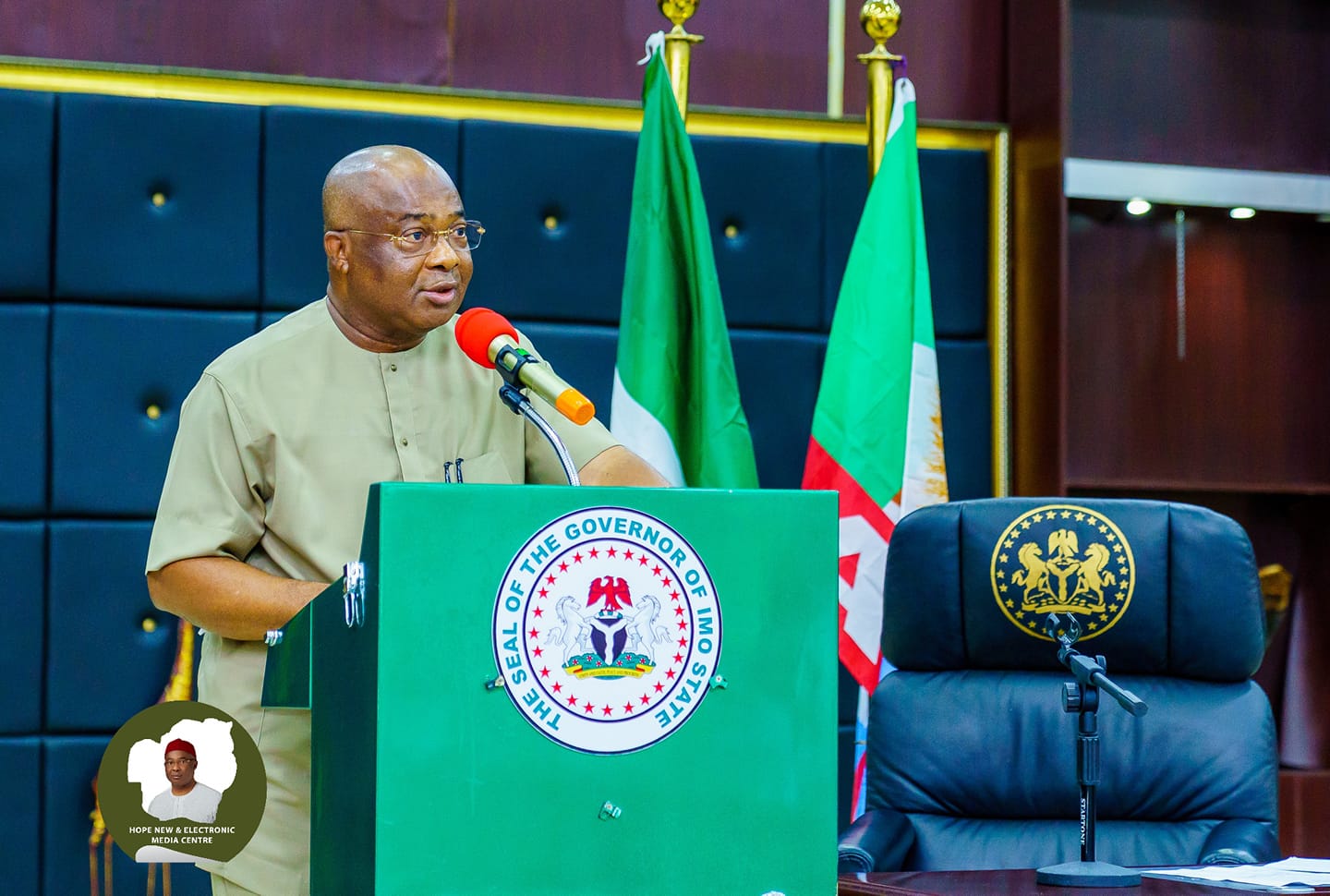
Governor of Imo State, Senator Hope Uzodimma has flagged-off work on the Owerri urban renewal that will involve the reconstruction of major roundabouts believed to be responsible for intractable traffic jam in the metropolis.
Seven roundabouts within the Owerri municipal have been earmarked for rehabilitation in line with contemporary traffic rules that will lead to ease of gridlock on the roads. They include: Warehouse roundabout, Akwakuma roundabout, MCC junction roundabout, Fire Service roundabout, Emmanuel College roundabout, Control Post roundabout and Naze/Aba road junction roundabout.
Addressing the crowd that came to witness the flag-off of the work at different locations in the state capital, Governor Uzodimma said that the effect of traffic in Owerri has made it difficult for people to move from one part of Owerri to another and that “this has made the ease of doing business very difficult.”
He said: “The difficulty in ease of doing business has made cost of living to go very high and in turn affected the cost of goods and services in the market and shops in the metropolis, compelling people living in the urban area to live an artificial expensive life compared to their counterparts in other State capitals.”
The Governor went further to say that “the poor state of the roundabouts was grossly responsible for the traffic jam which has brought stress and contributed to illegal task-forces that capitalized on the opportunities to extort Imolites living in Owerri.”
He emphasized that “all over the world it has been discovered that the state capitals are given priority since they serve as a sign post of how the entire state looks like from the point of view of a first time visitor.”
Governor Uzodimma said that as a responsible government, he will make Owerri look good and beautiful again befitting a State capital.
The Governor added that to achieve that dream, his Shared Prosperity government has engaged the services of Planet Project Limited, a reputable Company that specializes in handling construction of quality roundabouts in all parts of Nigeria and beyond.
He announced that the Company will deliver on the projects within six months.
The Governor appealed to Imo people, especially those living around the roundabouts, and the entire people of Owerri Metropolis, to cooperate and assist the contractors in their little ways to ensure speedy realization of the projects on record time.
On his part, the Chief Executive Officer/Managing Director of Planet Project Limited, Engr. Biodun Otunola thanked the Governor and his team for finding them worthy of the job and pledged their commitment at ensuring prompt delivery of quality project within six months as agreed.
PAP CAUTIONS STUDENTS ON SCHOLARSHIP TERMS, INSISTS ON FULL COMPLIANCE
The Presidential Amnesty Program (PAP) on Wednesday cautioned students under its scholarship scheme to abide by the agreement and terms of conditions by which they were awarded the scholarships.
A statement from the office of the Interim Administrator of the programme, Col. Milland Dixon Dikio (retd), stated that most of the current scholarship beneficiaries were never part of the initial agitation and must therefore see their inclusion in the scheme as a privilege deserving of their best conduct.
He added that many of the disruptive students were the ones who had failed to take advantage of the verification exercises undertaken by the programme. According to the Interim Administrator, “No money will be paid to any student who not verified”.
The statement, which was signed by his Senior Special Assistant on Media, explained that the students were those who were surreptitiously brought into the scheme without due process. However, because of compassion, they were given partial scholarships to cover only their tuition to enable them complete their studies.
This deal, considered a sweet one, was a goodwill gesture by the programme to which they all consented and signed.
The Interim Administrator frowned at the recent disruption of learning activities and general disturbance of peace by some students at Gregory University in Uturu, Abia State and Igbinedion University. He has subsequently directed that disciplinary action be taken against the perpetrators who had violated the terms of their signed undertaking.
Meanwhile, the verification of students under the scholarship programme of the PAP is still ongoing and will be rounded off soon.
It will be recalled that the Presidential Amnesty Programme was designed for 30,000 ex-agitators and the impacted communities. The current management of the programme wants to ensure that this priority and focus is followed and effectively executed.