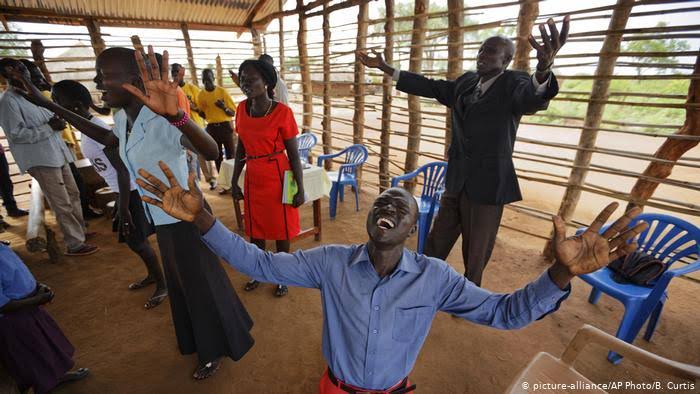
1) The ugly impression in Africa, especially in Nigeria (Igboland), that Christianity is against everything traditional is not only false but misleading. This false impression was propagated during the missionary era, particularly by missionaries in Africa. This erroneous teaching that found its way into our local catechism books was officially discarded by the Catholic Church some 55 years ago. However, before the intervention of the Church, one priest called Fr Paul Francis Libermann (1802– 1852), the co-founder of the Holy Ghost Fathers Congregation was convinced that the complete negative label on African Traditional Religion was unwarranted. Thus, while sending his missionaries to Africa, he implored them:

2) “Do not in any way ask these peoples to change their usages, their rites and their
manners; at least as long as they are not in all evidence contrary to religion and
honesty. What would be more absurd as to transfer to China (in its entirety) either France, Spain, Italy or whatever part of Europe. It is not this that you have to bring to them but the faith. This faith does not reject nor derogate the customs but on the contrary
conserves and protects them … . Never compare the practices of this people
with Europe. On the contrary, with lots of diligence accustom yourselves to their
manners. Admire and praise all that merits it. Nothing provokes more hatred and
aversion than to bulldoze the practices of a people, above all when these are
immemorial usages received from the ancestors and more still, when one
bulldozes the customs of a people to replace them with those of one’s proper
country.” (Sacred Congregation of Propaganda Fide, Memoriam Rerum, III/II, 702).

3) When it occurred to Libermann that his instructions were not kept in African mission. He rebuked his missionaries:
“Haven’t you been too severe, and too hard? Have you not lacked the appropriate manner of dealing with them? Adapt to the habits and customs of all, and never expect other people to adapt to your tastes and traditions. Those who are charged with the salvation of people should know how to adapt their mentality to others without being broken or breaking others.”(Chevilly-Larue, Archives Générales de la Congrégation du Saint-Esprit (C.S.Sp.), Notes et Documents, VII, p.161). Libermann did not live long to supervise this. He died few years later in 1852 at the age of 49. With his death, the mayhem against the African culture went on almost without check. In 1885, his missionaries landed in Onitsha. The rest is now history.

4) However, towards the end of his sojourn in Nigeria one of the missionaries, Bishop Joseph Shanahan CSSp, realised what Libermann was talking about. The mistakes were already made. Shanahan had this confession to make:
“It was once thought a great thing if a missionary overturned an idol, or scattered the votive offerings laid out to propitiate the spirits of the wind or of the water, or the rest. Instead, this was a fatal error.” He continued: “These things represented religion to the native consciousness. They were the black man’s appeal to forces outside of himself, and ultimately to the great spirit who was Lord of all. So, to thrust uncouthly into the midst of this merely misguided religious instinct was equivalent to teaching the African to despise religion. And then, thereafter, to expect him abiding respect for the true religion we submitted for his false observances was too much. We had already taught him irreverence.… And the Christian spirit is essentially a spirit of reverence.” (Cf. Editor, “Bishop Shanahan Talks About …” Mission Outlook (Annals), June 1971, p. 25).

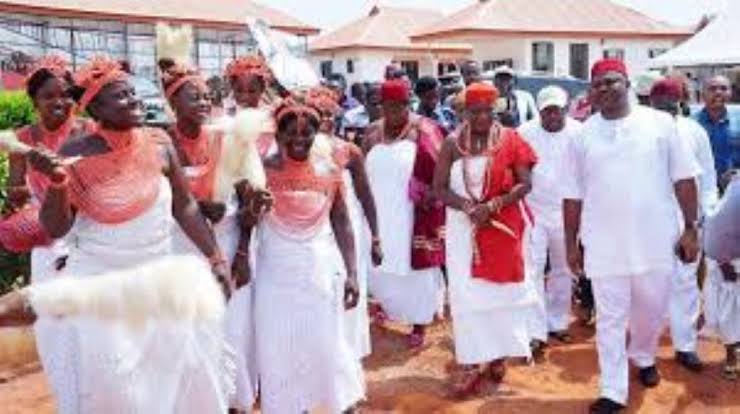
5) Despite this confession, the onslaught against African culture went on unabated. It was only in 1965 that the Second Vatican Council (1962 – 1965) came up with a position on the matter. After a long investigation, the Second Vatican Council in Nostra Aetate (promulgated by Pope Paul VI, 1965) insists that the Catholic Church “rejects nothing that is true and holy” in other religions. It continues, “She (the Church) regards with sincere reverence those ways of conduct and of life, those precepts and teachings which, though differing in many aspects from the ones she holds and sets forth, nonetheless often reflect a ray of that Truth which enlightens all men. Indeed, she proclaims, and ever must proclaim Christ ‘the way, the truth, and the life’ (John 14:6), in whom men may find the fullness of religious life, in whom God has reconciled all things to Himself” (Vatican II, Nostra Aetate, no.2). This is not just the position of the Church but that of common sense. Who in his right senses will fight against noble traditional values that have served a people since time immemorial? Most Christian celebrations we have today, including Christmas, pre-existed Christianity. Rather than abolishing them, they were beautifully incorporated into the Christian faith. The rich African puberty rites, initiation rites, marriage rites, and so on could have solidified the Christian faith in Africa if they had been properly integrated into the Christian faith.

6) My major concern is not the mistakes already made by the foreign missionaries who acted out of ignorance, but that 65 years after the intervention of the Second Vatican Council, indigenous African clergy, who were and are expected to know and understand their own traditions and culure better, have continued to make the same mistakes. Even till date, one sees priests/pastors who still go about demolishing shrines and religious objects. One still finds native preachers using the same mouth they use in eating yam and cocoa yam to abuse the religion of their ancestors and harmless societal norms that have preserved their society for over thirty thousand years. If we must break away from the religion of our ancestors why can we not treat and respect it for what it is: our old/ first/primordial Testament. With the dawn of Christianity, did the Jewish Christians destroy the Jewish religion? Was it not neatly bounded with the New Treatment? The (Catholic) Church asks us to retain all that is “true and holy” in our culture. Is that difficult to understand? Is that not simple common sense?

7) Must we even wait for a council in Europe, with few or no African in attendance, to remind us of the importance of promoting and preserving our culture? Can we not distinguish between good and evil on our own? If we finish destroying our foundations where shall we place our feet? Are we not living witnesses to the penalty we are all paying for the destruction of our culture? As you are reading this piece now, one efulefu is somewhere cutting down trees, destroying shrines and sacred objects in the name of liberation or evangelism. Rather than calling such people to order and questioning their mental state, one still finds people clapping for them. Let us assume that you have completely disentangled yourself from your culture and history, and that you have developed aversion to everything concerning African Religion and culture; do you not know that when you destroy the worship places of others, you also destroy reverence to sacred things? Yes, that it is not sacred to you does not mean that it is not sacred to the adherents.

8) When we destroy shrines because they are against our faith what makes us different from members of Boko Haram that are burning down Christian Churches? Where did Jesus destroy any religious object or ask his followers to do so? Or do you think there were no local shrines during his days? Of course, I cannot prevent anyone from removing or destroying ancestral places of worship but I assure you that you will be ashamed when you go to Europe (or somewhere not far from you) and have to pay to see those objects from your village beautifully displayed in museums. I no longer visit African museums in Europe because each time I do, I weep. Those shrines, objects, observations you call fetish were meant to protect your identity, self-esteem and your history. Before we cut down any tree, let us think about the things it gives shelter to, the air it purifies and the erosion it prevents. Before we destroy a bridge, let us build a better one. As co-creators with God let us learn to create, recreate and work together so as to make the world a better place for all. If we imbibe the spirit of teamwork (of Igbo bu Igbo) we would discover how to build without destroying. Let us learn from God the creator who did not destroy the shapeless and dark world (void) but added light, life and beauty to it. Until we stop destroying ourselves and values, we will continue to be a laughing stock before the entire world.

By Rev Fr Angelo Chidi Unegbu (cangelo123@yahoo.com)
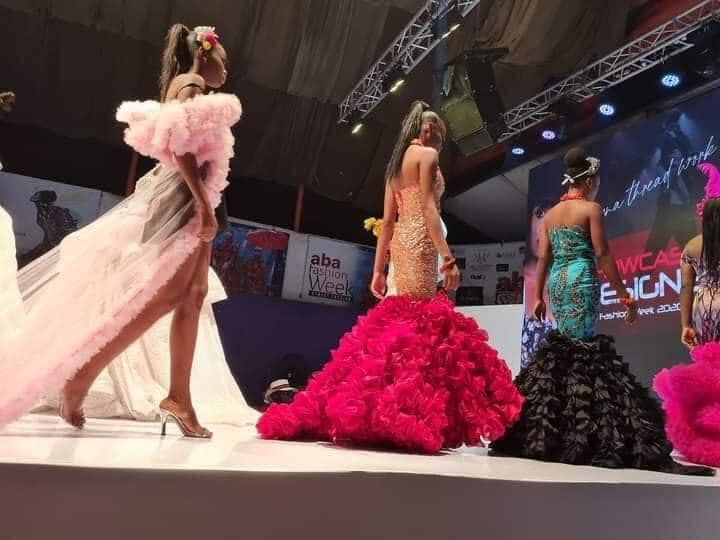

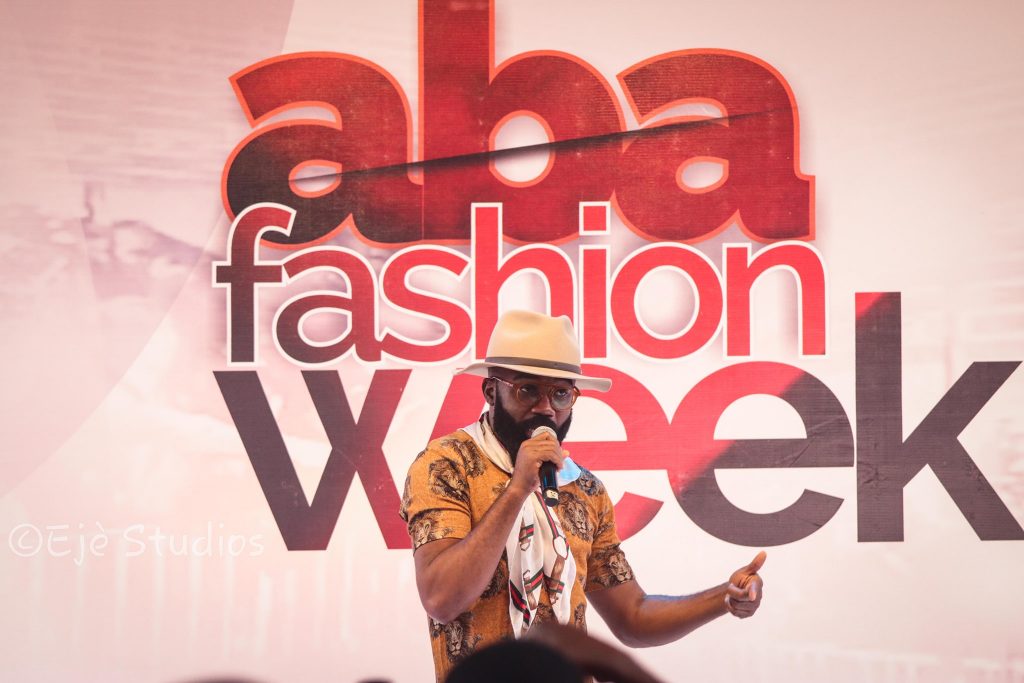
Against all odds, the city of Aba, the commercial hub of Abia state still thrives. Bedeviled by the twin anti-development factors – poor infrastructure and electricity. The city can be likened to the proverbial cat with nine lives, always reinventing, rediscovering and re-energizing. Aba is known for many things in Nigeria, ranging from technical fabrication, leather works and fashion. It has been rumored that due to apathy Nigerians have for local good which they tag desirously “Aba made” the city of Aba has demonstrated adeptness and sagacity in fashion industry over the years. Exporting shoes, clothes and bags to other African countries and even continental Europe. This fashion energy was brought to bare when the Governor of the state Okezie Ikpeazu organized the Aba Fashion Week.

Lauded as a welcomed development in the Nigerian fashion ecosystem, the Aba fashion week brought out the finest indigenous creativity in the fashion industry.  Bringing notables like Noble Igwe and others. The Aba Fashion week has given the people of Aba the much-needed positive publicity which is clear departure from the rascality that was demonstrated during the ENDSARS protest where police stations where burnt. The fashion week has also shown that the youths of Aba are focused, creative and do not sit down and wait for handouts from the government.

Take it or leave it, the Fashion Week was a huge success. Said to be one of the biggest fashion exhibition in the Southern Nigeria, bringing fashion designers, footwear makers, content creators and other industry stakeholders. Aba Fashion Week is a 5-day International Fashion Platform put together to highlight the place of Aba as a veritable Global Fashion Destination. Billed to hold annually, the event is put together to showcase the creative ingenuity of the fashion entrepreneurs in the city of Aba and Abia State as a whole. The event is also an opportunity for the fashion and lifestyle ecosystem in Aba to learn latest national and global trends in fashionpreneurship from industry trend-setters.

According to the statement of the organizers in their website, they profiled  Aba as “Aba, the host city of the Aba Fashion Week is historically a fashion melting pot in Nigeria and Africa. Aba goes beyond the physical city but represents the general ecosystem of fashion entrepreneurship in the region. Most big names in fashion, trading, sports and entertainment today started life in Aba. A Sub-Saharan African Regional Trade Hub, goods from Aba service African Countries with some going all the way to Europe, Asia and the Americas. Home to 5 Million residents, the city services a catchment population of over 25 Million people who come into or transit through the city on their daily endeavors. It is a cosmopolitan city playing host to people from diverse ethnic groups and orientations.”

They added” It is home to the Ariaria International Market, the largest MSME Cluster in West Africa boasting over 350,000 shops and businesses in addition to smaller adjoining markets and hubs. Aba is also the fabrication capital of Nigeria and West Africa with the fabricators in Aba possessing the uncanny ability to create complex engineering models off of a mere photograph or physical sample. With the current political leadership in the State highly supportive of the creative sector in Aba, their fortunes have since improved and the opportunities of what more Aba can become are now endless. The Aba Fashion Week is another opportunity to open gateways of business and opportunities for the creatives in the city to expand their horizon.”

Speaking on the event, Okezie Ikpeazu, the executive Governor of Abia state said “The Aba Fashion Week by Aba Creative Collective with the full support of our government started on Wednesday, 9 December and will be ending today, 11 December. The Fashion Week is just one of our numerous ways of empowering our innovative entrepreneurs in the fashion industry, improve their visibility and patronage, thereby empowering them the more.”

”As a Government, we shall continue to support innovative initiatives as this meant to promote our entrepreneurs and the good work they do. I wear Made-in-Aba products myself with so much pride because they compete favourably with products from other fashion capitals of the world”, he concluded.

Anthony Emeka Nwosu

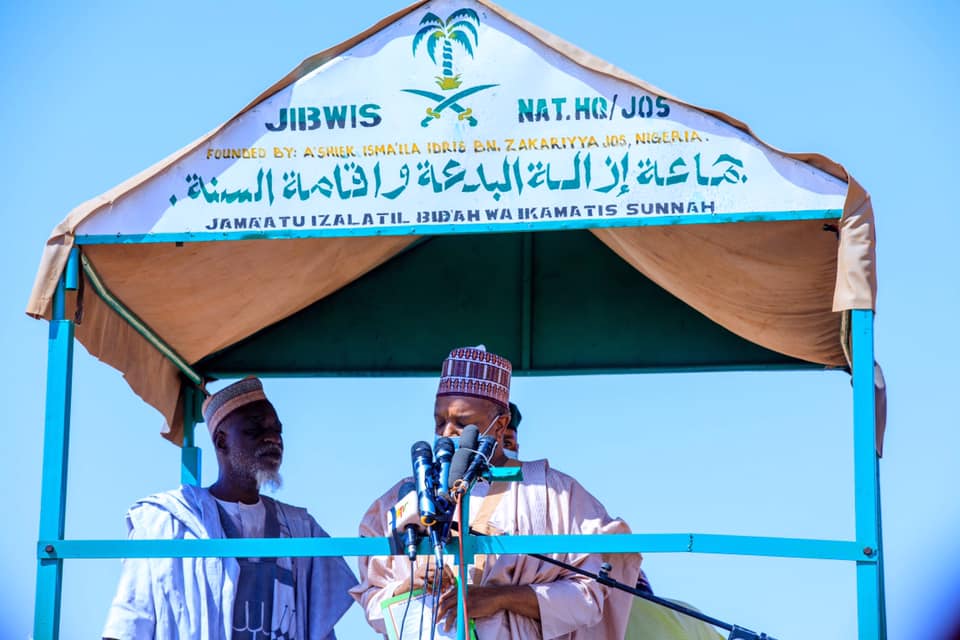
Governor Atiku Bagudu announced the gesture at the Appeal Fund Launching for the College, held at Jega, Saturday .

Bagudu said that, the importance of education cannot in anyway be over stressed , as it formed the backbone of any development.

The Kebbi State Governor expressed delight that, the epoch-making event marked the take off of the College .

According to Bagudu, education sector required the support of all and sundry, saying, ” Its funding is a collective responsibility.”

Bagudu commended Jamaatu Izalatul Bi’a Waiqamtis Sunnah ( JIBWIS) for the invaluable gesture and urged other Organizations to emulate it.

He lamented that the North was lagging behind in the establishment of private tertiary institutions.

Bagudu also announced an anonymous personal donation to the college.

Also speaking, the former Governor of the state , Senator Muhammd Adamu Aliero said that, the establishment of the college in the area would shore up the educational development of the state and Nigeria, in general .

Aliero further solicited more support to the college, to help in its urgent take off .

The program, which attracted important dignitaries from all spheres of life ,including the civil service, political, religious and the business class, started with an opening prayer by Professor Muhammad Wali and recitation of the Holy Quran by Mallam Nuraini Kamba, seeking Allah’s Blessings for the success of the event.

In his welcome remarks, the Chairman, Main Organizing Committee and Speaker, Kebbi State House of Assembly, Rt Hon. Ismaila AbdulMumin Kamba ,after wellcoming all, expressed the hope that, the endowment fund would successfully lead to the establishment of the JIBWIS College of Education in Jega, Kebbi State, for the betterment of Kebbi and Nigeria as a whole.

He appreciated the presence of Governor Abubakar Atiku Bagudu, Senator Muhammdu Adamu Aliero, top Government officials, private individuals and the leadership of JIBWIS, for coming up with the laudable initiative.

Sheikh AbdulRahman Isa Jega, Chairman, Council of Ulama, JIBWIS Kebbi State and Professor Sani Umar Musa, all stressed the importance of the establishment of the institution and value of education in societal progress.

The Islamic Scholar reminded people of the Prophetic saying that , ” God is with those who support others to acquire knowledge.

Musa conveyed the appreciation and message of Sheikh Yahaya Jingir, the National Leader of JIBWIS.

While appreciating the personalities for their presence, he described their physical presence at the event as a demonstration of their support for the laudable project .

He added that, JIBWIS as an Islamic movement, has already set up schools ranging from Nursery to tertiary institutions in Yobe,Gombe, Bauchi,Zamfara,Nasarawa, Plateau and Kebbi, with two schools, to promote learning.

He announced that, all the other schools under the organisation have met all the requirements set by the relavant Government authorities and the need for all to support the establishment of the one in Jega.

This, he noted, was to meet the mandatory requiment in terms of registration,land and other necessary facilities needed for the construction of the school.

Prominent among those who donated to the success of the endowment fund were Senator Muhammdu Adamu Aliero, who donated 49 million naira with his associates and a pledged to carry out constituency project in the school ,amounting to 250 million naira.

The Chief Launcher, Alhaji Kabiru Muhammad Kamba, donated the sum of 50 million naira .

The Speaker Kebbi State House of Assembly, the Deputy Speaker and other members of the Assembly as well as other personalities made handsome contribution to the appeal fund.

Signed

YAHAYA SARKI

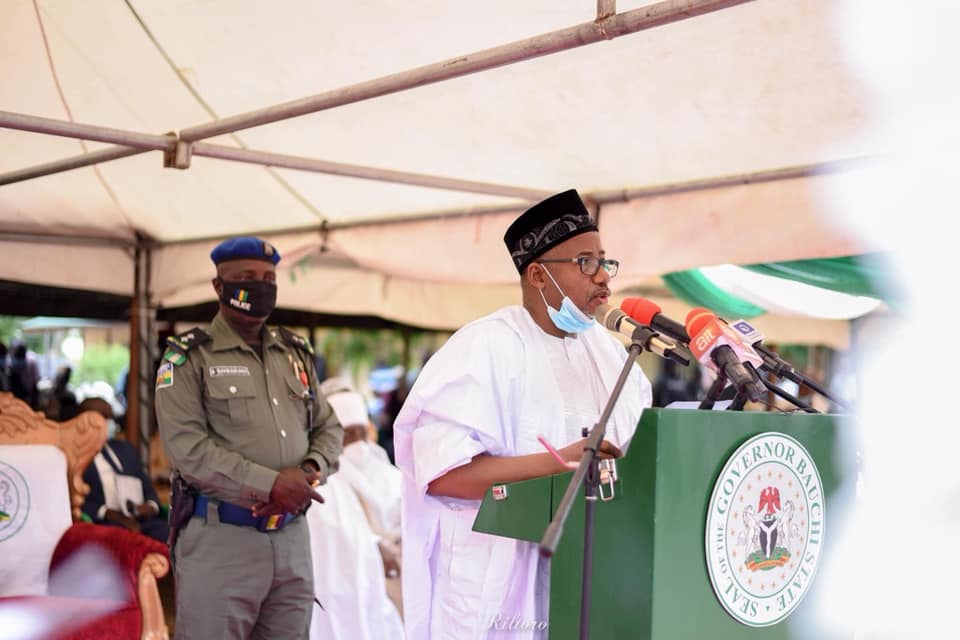
The need for states in the country to cushion the hardship of their citizens are one of the perogagtives of any forwad looking leaders. Having sais that, Bauchi State governor has taken the bulls by the horn by ensuring that the citizenry are cushioned economically from the effect of Covid 19 by dolling out palliatives, he also made it clear that the ban on Achaba (Motorbikes) stays but only temporary.

Speaking via socail media, the governor said ” I launched the Kaura Economic Empowerment Programme 2020 for citizens of Bauchi State. To kick off the project, I commenced the distribution of Keke Napep to beneficiaries on an interest-free loan—this is to enhance the vital area of wealth creation for our citizens. “

He added”Also, similar programmes are in the pipeline for the next phase as we plan to purchase commercial motor vehicles to boost small and medium enterprises in the state.
I will also use this opportunity to assure our people that the ban on Achaba operations in the state is only temporary. Achaba operations are expected to resume once #COVID19 is eliminated and other vices associated with Achaba operations are entirely under control. #GreaterBauchi”

Bauchi State takes its name from the historic town of Bauchi, which also serves as the capital city and is located in the North East of Nigeria. The state was formed in 1976 when the former North-Eastern State was broken up. It originally included the area now in Gombe State, which became a distinct state in 1996.

Anthony Nwosu


In a move that highlights a growing trend of collaboration among Angel Networks in Africa, three networks – Lagos Angel Network, SSE Angel Network and SGC7375 – today announced their investment in Trueflutter (trueflutter.com), a matchmaking app designed specifically for Africans across the world. Trueflutter is built for African singles who are searching for long term relationships and life partners. It is designed to be compatible with African culture and value systems, using an advanced matching algorithm, powerful filters and high-end security features to help users find love.

Speaking about LAN’s involvement, Bunmi Lawson of LAN said, “Our goal is to discover, coach and fund entrepreneurs that are using technology to solve real life problems while capturing untapped value in the market. For many eligible singles in Africa, finding a compatible partner can often prove to be a prolonged and daunting experience; we are confident that Dare’s team has created the right product to address this.”

Dare Olatoye, Trueflutter’s Co-Founder and CEO said, “At Trueflutter, we strongly believe that people should never settle in relationships and have set out to help Africans across the world find life partners. We know our people, understand their preferences and have put that knowledge into building the world’s most culturally compatible matchmaking app. The backing of these Networks is an important milestone in our mission to make Trueflutter platform available to Africans globally. The investment will help us accelerate our ambitious growth plans and take it to Africans across the globe.”

Also speaking, Tokoni Amiesimaka a member of SSE Angel Network said – “We are pleased to support Dare and his team’s customer-centric approach and focus on building a secure, culturally-intelligent, and globally accessible dating platform for Africans. With the widespread adoption of digital social platforms, we believe our investment will empower the Trueflutter team to help African singles, especially millennials, to initiate and build lasting relationships online.”

David Harper, member of SGC7375 Angels on his part said, “My group is very happy to be part of investors taking Dare and his Team to the next phase of their successful product. We feel it is important to support young African entrepreneurs in their products that ultimately fulfill a need and reward the hard work that goes into creating them”

In a statement, Tomi Davies, President, African Business Angel Network and Advisory Board Member at Trueflutter said “In the Post-Covid era, it is more important now than ever before to back startups that have anti-fragile products and business models. With limited public gatherings and social distancing, Trueflutter is in a unique position to help users continue to make meaningful connections. I am very excited by the traction the platform has experienced recently as well as the team’s long-term vision.”


Contacts:
Trueflutter – Dare Olatoye – Email: dare@trueflutter.com
Lagos Angel Network – Mayowa Ojuri – Email: secretariat@lagosangelnetwork.net
SSE Angel Network – Uche Aniche – hello@sseangels.org

In line with its ongoing initiative to ensure a sustainable telecommunications industry that is responsive to global technological changes as well as national consumer preferences, the Nigerian Communications Commission (NCC) has instituted and endowed Professorial Chairs to the tune of N40 million in two more Nigerian universities.

The two universities include the premier University of Ibadan, Oyo State and Abubakar Tafawa Balewa University, Bauchi State, were endowed with N20 million each over the next two years to embark on massive research to promote innovation to drive socio-economic development in the country.

Speaking during the award and signing of Memorandum of Understanding (MoU) with the two varsities in Abuja on Wednesday, December 9, 2020, the Executive Vice Chairman of NCC, Prof. Umar Garba Danbatta who was represented by the NCC’s Director of Legal and Regulatory Services, Josephine Amuwa, said the move was in continuation of NCC’s initiative aimed at strengthening the telecommunications industry to continuously contribute to national development. 

“The Commission’s engagement with the academia, therefore, is to ensure that there is application of knowledge generated in the tertiary institutions in the telecommunications industry.  The endowment of Professorial Chairs in Universities is one of the initiatives to support the Academia in focus research areas in ICT and contribute to the advancements in emerging technologies,” he said.

The EVC further explained that the initiative is in line with the National Digital Economy Policy and Strategy (NDEPS), 2020 – 2030, which was unveiled by the Federal Government in 2019 with the mission of building a nation where digital innovation and entrepreneurship are used to create value and prosperity for all.

Specifically, Danbatta said NCC’s collaborations with the academia would impact Pillar 3, 4 and 6 of NDEPS bordering on Solid Infrastructure, Service Infrastructure and Digital Services Development and Promotion, respectively.

The EVC also stated that the scheme aligns with two additional pillars of the Commission’s Strategic Management Plan (SMP), 2020-2024 on Promotion of Development of Digital Economy and Strategic Partnering.

Danbatta, therefore, charged the beneficiary universities to ensure that regulatory and technological solutions with potential for improving the industry are developed through dedication of the required human and material resources to the programme.

Earlier in his welcome address, Director, Research and Development, NCC, Dr. Henry Nkemadu, said the new professorial chair endowment further demonstrates NCC’s conviction that the academia is a key driver to innovation in all spheres of human endeavour, with specific reference to ideas, inventions and prototype development for improving the level of productivity and efficiency in the industry.

The instituting and endowing of professorial chairs in the two premier universities brings to four, the number of tertiary institutions of learning that have benefitted from the NCC’s innovation-driving initiative, having endowed professorial chairs in Bayero University, Kano (BUK) and Federal University of Technology, Owerri (FUTO) in May, 2019.

Lagos State Governor, Mr. Babajide Sanwo-Olu will go into self-isolation immediately, after one of his close aides tested positive for COVID-19 yesterday (10th of December).

Mr. Governor and other members of his team will be tested by the Lagos State biobank today but will remain in isolation until the results of the tests are available.

We are seeing slightly increasing number of COVID-19 positive cases in clusters in Lagos and all Lagosians should adhere to the prescribed advisories of safe distancing, good hand and respiratory hygiene and avoidance of unnecessary gatherings.

This is not the first time Mr. Governor is having the COVID-19 test. He has had at least three since May when he announced that 10 of his aides had tested positive for the virus.

Professor Akin Abayomi

Honourable Commissioner for Health

Justice N.I. Buba of the Federal High Court, Enugu, Enugu State, on Thursday, December 10, 2020, committed Dr Isidore Ojukwu Nwankwo to prison for fraud.

Nwankwo, former Rector, Enugu Polytechnic, Ndeabor, Ani-Nri, Local Government Area, was prosecuted by the Enugu Zonal Office of the Economic and Financial Crimes Commission, EFCC, on six-counts charges, bordering on conspiracy and obtaining money under false pretence to the tune of N1,153,700.00 (One Million, One Hundred and Fifty-three Thousand, Seven Hundred Naira), being the amount he obtained by fraud from some students of the school in contravention of Section 1(1)(a) of Advance Fee Fraud and Other Fraud Related Offences Act, 2006 and Punishable under Section 1(3) of the Same Act.

Nwankwo’s journey to prison began when one Eze and 19 other students of the school petitioned the Enugu Zonal Office of the EFCC, alleging that they were deceived into believing that the school was partly owned by the Enugu State government and accredited by the appropriate authorities, following which they paid the sums of N5, 000 for admission form, N10, 000 for acceptance fee and N35, 000 for first semester school fees, before discovering that it was an illegal institution.

Investigation by the EFCC, revealed that the state government has no business with the school; and that the school is neither recognized by the state government, nor registered with the National Board for Technical Education (NBTE) and Corporate Affairs Commission (CAC).

While noting that prosecution counsel, Michael Ani Ikechukwu, proved his case against the defendant beyond reasonable doubts, Justice N.I. Buba convicted and sentenced him to one year imprisonment and further ordered him to restitute the students, the sum of N1,153,700.00.

Anioma didn’t migrate from Benin. If you tell me there are some pockets of anioma that migrated from Benin I may agree but if you tell me that the entire Anioma migrated from Benin that I will disagree with you. Moreover those that migrated from Benin are very little and if we reason logically, these few Bini migrants of Anioma claiming to have found a town and yet lose its language is simply a hoax. That can only happen when there is already a large settlement of a particular group in Anioma which is Igbo. No Igbo man (Anioma) speaks Bini language unless it’s learnt and no traditional ruler in Anioma goes by the title Oba but Obi or Eze. Even Agbor people with its proximity are not wholly migrants from Benin as Pa Iduwe wrote on the history of Ika people.
Ichi Mmor which is prevalent does not exist in Benin. Nobody has said Ezechime did not migrate from Benin, but his origin was definitely not Benin. There are copies of the narratives of Obi Chukwumalieze of Onicha Ugbo in that regard. How can Eze Chime with Igbo names, traditions and customs migrate from Bini? This is a fallacy of the highest order. He sojourned into Bini and made his way back after encountering trouble, simple. I can understand that some Aniomas, a very small number, are of different cognates while a very huge percentage of Aniomas have Igbo progenitors. This explains why the choice of the Igbo word Anioma (good land) or Igbo language is made. In all of the Anioma towns and villages, Igbo language is predominantly spoken with different accents. The name is a very pure Igbo name or better still a typical Igbo word with the same meaning all across Igbo nation. My conclusion: If they agree to be Anioma, why can’t they agree to be Igbo? Aniomas are Igbos, by ancestry or by evolution.

One fallacy we often here is that we were always under the Oba of Benin until the British punitive expedition of 1897. From all available documents, the power of Benin had long collapsed in Anioma land. In fact, from available documents, it was difficult for Benin and their Oba to impose tributes on Anioma towns. This was documented in N.W Thomas, 1913. The American anthropologist in his Igbo speaking people of Asaba hinterland, noted from observation that Anioma people were not paying homage to the Oba and that the people usually sent from Benin to come such tributes had stopped since the 1840s. In fact, he noted that this probably stopped following the defeat of the Benin army by the Ishan confederacy that had imposed their choice as the Oba of Benin. The collapsing power of Benin was firstly reflected in the Adesuwa wars between 1750-55, when the Ubulus, supported by virtually all Anioma towns put up a strong defense including Obior. Another evidence of weak Benin influence in Anioma land comes from the Ekumeku wars. Unlike Ishan land where the fall of Benin in 1897, led to a complete surrender to British forces with feeble opposition here and there, the Anioma people arose up and fought. We fought because we were not under Benin nor were we paying homage to the Oba who had been deposed. We fought because we felt we could defeat the white man which the Benins our rivals could not.

Every Benin identity in Anioma towns came as a result of colonialism which lasted over 400 yrs from conquests by Oba Eware the Great.
b) Ezechime left Igboland and wandered down to d Benin enclave, loved d community there, so, settled & married there, but when his family grew, he searched for a place, which is d present Anioma area.
c) If he was bini, at least, 50% of d bini lingua will remain.


But Obomkpa people have a contrary opinion to that.. Anagba was a son of Ezechima as well, or was it not Anagba who founded Obomkpa? In Obomkpa for instance, Ezechima is traced to Ogidi east of the Niger.


Indeed listed the five children of Ezechime, Ukpali, Oligbo, Onicha, Anagba and Ifite are Igbo names. They can never be derived from a corrupt form of Edo in any form.
Ifite remains one of the foremost clan in Igboland. The dominant village in Nnobi is Ifite. Oraifite (people of Ifite) is a town in Anambra the grandson of Nri. Ifite is not just Igbo clan but is among the foremost clan in Igboland. There are other towns on communities of ifite in Igboland. Ifitedunu near Awka in Anambra State is a Town of its own. Now, Ifiteuboma is a Local Government that connects many towns in Imo State. Osuifiteakwa and Ifitenanse are saperete towns in Imo State also. These are not withstanding that sub villages in virtually all the villages have Ifite.
What do you have to say about the name Chime? If you care it is a common name in Igboland. Better still, the name of the Governor of Enugu State. For a person to have an Igbo name as Chime, and give Igbo name to his direct son as Ifite can never be an accident unless Igbo origin theory by Onitsha Ugbo tradition and Obomkpa is better than that of the remaining towns of Umuezechime.
In Oraeli clan that is in Uruagu village in Nnewi is a clan known as Ukpa or Oraeli Onisha. Onisha clans also exist in Enugu state near Mbu town. I won’t go further because you will have to explain why this man (Eze Chime) and all his children bore Igbo names. Better still you will have to show us how these names could be accepted as Edo names. Oligbo or Origbo was the third child, but second son of Eze Chima. Eze Chima’s first child was a female, and was named “Ada Eze”; his second child, was his first son, “Okpala Eze”. However, his first son had a genetic defect of “albinism” and was named “Onye Ocha”. That name, “Onye Ocha” was varied as “Onicha”. His second son was “dark and comely” lack the father, and was affectionately named “Onye Igbo”. That name was then varied as “Onigbo, Oligbo, or Origbo”.

Onitsha people of Anambra who claimed to have been of Bini origin initially following the dictates of Bini Mythology have reversed their history because they reasoned that Chima cannot be a Bini man. Recently, Jews invented hi- tech means of detecting their brothers. This is a test done in peoples DNA. Every tribe is expected to have the same Haplogroup. Interestingly, most of Delta Igbos was sold as slaves during colonial period. There has never been a claim that some were of Delta origin because during those days slave trader wanted only Igbos. Our Haplogroup is EIB1A. Unbelievably, Late Dr Acholonu on a blessed memory carried over this research in an attempt to discover the Igbo-Americans and discovered that Edo people have close link to Igbos. I once enquired from His Royal Majesty Ezechukwuemeka Eri 34 of Enugu Aguleri about the Bini people. His response was that a man from Ugwuogodo Ibezuno Aguleri. However, the name he mentioned was never found in the Histories of Edo people or Anioma Igbos. Late Mr Odiakachukwu on a blessed memory even went on to see my contribution to Anioma history as strange.

In Ogwashi Uku for instance is Ogbeonicha. Generally, it is believed that it came from Onitsha in Anambra State. This is possible of course based on the names. However, the story of the settlement of Ogbeonicha suggests that it came before Adaigbo, the first Obi of Ogwashi Uku. This would mean that the Onitsha which Ogbeonicha in Ogwashi Uku came from cannot be the Onitsha in Anambra State because Ogwashi is a much older community. There are many ways of reaching this conclusion. In Issele Uku is Ogboli. Ogboli people directly came from Nri and there were there before Oligbo settled in that land. Yet Ogboli and Ogwashi were founded by relatives. This is just an example that exposes the flaws of oral tradition. Evidently, there is an argument that Ogboli in Iselle Uku may not be from the descendant of Ogboli Nri. A scholar from Issele implied that it refers to Ogbe oriri but insisted that Issele Uku like original Agbo people is older than Benin.

Some of the towns however did not even go to Binin at all. Asaba are people that migrated from Nteje while Ibuzo, Oko and one other town were from Isu clan of Owerri Area. Ogwashiuku is a people from Nri town.

Even Kwale people are also Igbo by their origin. Their actual name is Ukwuani. Most of them came from Igbo towns but others still joined them from Edo state.

You can see the stricking relationship between the Delta Igbo and Ezike people in the following ways. They share the same names like Osai. They both have Onitsha. Unlike others that say ‘ITA AZU’ when they want to take fish, Ezike and Anioma people say ‘IRI AZU’.

Down into non Igbo speaking near Warri is Igbede town which is Mgbidi people from Imo state.

Ika, Ukwuani, Enuani, and Ndoshumili are all subsets of Anioma and indeed Anioma is a subset of the larger Igbo nation. And going further the Igbo nation is a subset of the larger black race.


Meanwhile, I don’t even want to claim that every clan in Anioma had Igbo origin. For example, Ogwashiuku has Ikelike qtrs. That is the major section of Ogwashi Uku with Bini origin (along with Ogbe Ishago). The other sections of Ogwashi Uku are mainly of Igbo origin (7 sub clans in all). Now you make the comparison yourself in the sizes of these two sections (by origin). Umudei, Azungwu, Agidiase, Agidiahe , Ogbeonicha etc all are of Igbo origin. Daike was the name of this Esan hunter,so,Umudaike are his descendants. Ukwumege in Illah Town is also a descendant of an Esan hunter, who was so powerful, that he single-handedly helped the inhabitants wade off attacks from the Idah trouble-makers, who constantly wrecked havoc in d area. He was begged to remain in the area and gifted with a land (present day Ukumege) and a woman as wife. Daike is a corrupt form of Edaiken, a Benin title. Otulukpa clans are also noted to be of Edo origin. Anioma people from their oral traditions are a blend of people of different origins. We did not only migrate from Benin…in fact a good percentage of us came from the east. Ogwashi Uku is a good example. It founder came from Nri in Anambra State. Issele Uku belongs to the Umuezechima clan who possibly as the name implies is of Igbo origin but settled for a considerable period of time in Benin before settling in Delta and Anambra States. Ubulu Uku was founded by a magician called Ezemu. Ezemu came from Afor which is somewhere within Anioma land. Asaba came from Nteje in Anambra State. Ukwu-Oba directly came from Benin while Agbor does not have a tradition of migration from anywhere and many historians believe its the oldest Anioma clan.
Some Anioma have Igala, Yoruba, Ijaw , Ishan , Urhobo and Isoko origins though the two dominant cultures were the eastern Igbo and Benin. In Igbo heart land, we have many towns and even towns especially in Ebonyi State that are not of Igbo origin. A friend from Awka told me that their clans were of Igala origin and informed me that kindred in Umuzuocha near Amenyi Awka were receiving their Igala relations up to 1994. Of course nobody tells these people that they are not Igbos. Bini people, following the defeat of Anioma towns, expelled many people of Igbo origin from both Old Bendel towns especially under the empire of Eware the Great. The people that returned from Old Bendel are now living in the hearthland of Igbos. Some of them are: Ohofia, Abam, Ihechiowa, Ututu Ezike (Enugu Ezike), Ozubulu and some Ikwere towns. Nobody tells them that they are not Igbo because they believe that they are Igbo without questions. The only people that have mixed feelings about their ethnic identity are the Ikwerres. However, it is evidently a creation of Nigerian politics. These people always saw themselves as Igbos before Biafra war. It was in 1979 that they were officially made to deny their Igbo identity.

Many Anioma towns themselves adopt Benin origin for many reasons.
(1) For prestige purposes…..Benin was a powerful kingdom and as such any sort of connection is projected. Therefore for many of our towns whose ancestors were sojourners to Benin (even though there were not originally of Benin origin), there will be more emphasis on that connection with Benin which would eventually lead to claiming Benin origin.
(2) To appear more independent. This point is perhaps the most important reason many Anioma towns claim they came from Benin. In reality, some of them are offshoots of existing ANIOMA communities. In this category of towns, rather than mentioning the Anioma clans they migrated from they will say they came from Benin just to claim they have broken from the parent town. Akumazi is an example. It was founded by a son of the Obi of Mbiri now they say they came from Benin, Umunede was founded by Ede a son of the Obi of Agbor but because Umunede believes that Agbor would claim her, she now says she came from Benin, Ekwuoma founded by the Ubuluku warrior Aghufa also claims Benin origin etc
(3) To identify with a more powerful neighbour this has some connections with Benin. This is very true for some communities in Ndokwa East. Take Akarai clan for example, it claims as well that it came from Benin simply because Aboh the powerful kingdom was founded by a Benin warrior. The true origin of Akarai people has been traced to Nri-Awka and they were four groups that arrived, one settled in Ndoni , one at Aboh, another in Ossomala and lastly another in Onyah.The Akarai group were the oldest and were in charge of all the deities in the Niger. This was before the arrival of Aboh people. This does not mean that there are not Anioma towns with Benin examples include such places like Ogume, Mbiri, Ejeme, Nsukwa etc a some other places. But these Bini arrivals came to a land already settled earlier by Igbo adventurers.

The resemblance of d Benin culture you see in those areas you mentioned are relics of colonialism by the Binis for hundreds of yrs, and not a product of migration or being descendants of d Binis.
As for the Igwe festival in Ukwuoba, that is partly the reason. Even towns that did not come from Benin especially in the Ika area do mark Igwe. But there are stark differences between the Igwe celebrated in some Anioma towns and the Igue festival of Benin. Fine, people use the Ewere (which we call Akwukwo-Egbo} leaves in the Igwe festivals; however it is different in many respects. In Umunede, it is similar to Benin and it’s usually marked in October or Sept. In Agbor, it is just a cleansing feast, the main festival in Agbor is Osiezi, in Owa the Igwe is completely different from the way it’s celebrated in Benin and it’s marked in December. It’s usually celebrated in March or April and it’s a ritual to cleanse the land before farming commences. UBILOR changes I think to ULOR which is the name used in other Anioma areas. For most Aniomas except for Umunede, IGWE or UBILOR or ULOR festival is basically for cleansing purposes and not commemorative purpose which is the case in Benin.

In my conclusion, every Anioma man is taking to be an Igbo by non Igbo speaking Deltans depending on the political interests and force Anioma people to reject their Igbo identity when igboness constitutes a threat to their tribal interests

Aralu Chidiebere

AkolagTech (/HacholagTech/), an indigenous premier enterprise managed IT solution provider specializing in providing managed and un-managed IT services, cloud solutions, and hosting solutions to small and medium-sized businesses has reiterated their emphasis for optimum services in the country as Nigerian firms embrace cloud hosting and virtualization.


Speaking on the importance of cloud hosting, latency and support services for the IT firms in the country. AkolagTech, Managing Director / Chief Executive Office, Akim Olu in his chat with the media reiterated that the company is poised to give Nigerian organization the best service experience in line with what is obtainable in developed climes. He said “We have our core services such as Managed Hosting Solution, Business Continuity Solution, Cloud Solution, Systems, Network and Security Solutions, Procurement Services – Hardware and Software also Digital brand solution. Over the years, our expert team have been servicing various industries and delivering world-class solutions in Nigeria. We provide the best hosting experience for our clients, either locally or not. We support a client that prefers to host locally. We also offer the best advice in choosing the best technology that delivers the best user experience.”

“Virtualization and cloud computing are the process of facilitating data center infrastructure into scalable infrastructure. Our staff hand holds the operation of transitioning your IT infrastructure into a virtualized and cloud environment. By simplifying our client infrastructure, we make it easy to scale. We help our client set up a private cloud on-premises with the best virtualization and cloud solutions. We also make the transition into the cloud seamlessly”, he added.

Though the IT expert said that many firms are having a nightmare in adopting the latest trends in technology. He opined that “Lack of adoption of the latest technology, and also regulation. We found out that some of the significant big enterprise businesses are struggling to adopt the newest technology. We understand that change is difficult, and learning new technology can be overwhelming. Also, the lack of technology investment is another challenge among small, medium, and big enterprise businesses. “

As the small and medium firms emerge from the Corina virus pandemic and looking for best ways to go digital. AkolagTech promised to guide these set of businesses in the path of full digitization especially going cloud. Business continuity and data protection are vital concerns for small and medium-sized businesses. The majority of firms depend on data integrity as a critical component of their operations. “We help businesses evaluate their current situation, the most critical data, and provide the best solutions to manage and protect their valuable data. We offer data storage, back-up and recovery, and database management services. We also provide a solution to make sure our client complies with data protection. Policy”, Akin concluded.

Tony Nwosu