Chief Umunnakwe, the clan head in Okpuno Otolo, initially treated the information as a rumour when he received the first report, but he could no longer ignore subsequent factual reports from eyewitnesses that Mazi Ayezuba his subject, was seen at various locations at Upper Iweka, Onitsha begging for alms.

The Chief’s initial doubt was reinforced by his knowledge that Ayezuba’s junior brother took care of the school fees of Ayezuba’s children, supported the wife’s petty trading and had ensured that foodstuff was not lacking in his brother’s home.

“How could it be said that we have a beggar in our midst?” Chief Umunnakwe asked rhetorically.

“Not in my own time! Chineke ekwekwana ngwere gbaa aji (meaning “may God never allow lizards grow hairs”). I will never be a laughing stock at the meeting of clan heads”, the Chief exclaimed.

Begging, as a habit, is a taboo in Nnewi.

Up till today, townsmen who must have learnt the bad habit of begging from other tribes, travel to far away towns to practice their trade and would disappear into thin air whenever they sight someone from Nnewi who would immediately pick harass them and thereafter proceed to report the shameless beggar to his kinsmen.

What on earth would make an Nnewi man become a beggar? Not even the Nigeria-Biafra civil war could.

So many cultural safety nets in the town from time immemorial have made professional begging unattractive of ndi Nnewi.

For instance, no man and his family can kill and eat alone, a cow or any animal higher than a goat in size. He must share with his kinsmen.

An Nnewi man could be said to be stingy for economic and investment reasons but not when a relation is sick, bereaved or suffers a misfortune.

The wealthy in Nnewi ensure that no family members lacked food and meat during festive periods spread over quarters.

Ogbuefi (i.e the man that donates a cow to his kinsmen) is no longer a cherished title in Nnewi as many young men, not only would kill cows for relatives during festive seasons, but also donate rice, beans and salt to their kinsmen.

How would you be regarded as a wealthy man in the community if you have not awarded scholarships, supported young boys in their trade, built roads, sunk boreholes or have not put widows and less privileged in your payroll?

An Nnewi rich man is only but a treasurer to his people. He would be taunted, cajoled and pilloried if his kinsmen feel that he is not spreading his wealth to the needy.

Also, the apprenticeship system or trade mentorship in Nnewi continuously migrates the hardworking children of the poor to become mega rich men.

Even beggars from other tribes don’t find Nnewi town a good business environment. They would come as beggars and would soon leave or engage in menial jobs even with their disability.

That was why Chief Umunnakwe felt very justified when he dispatched four able-bodied young men to Onitsha to do the needful.

The team led by Agumbu, a seven-foot tall head of the village vigilante, knew what to do in a swift operation like this.

It was very easy to locate Mazi Ayezuba as an advance party had trailed him along his begging routes at Ama Hausa or a place populated by beggars from the northern part of Nigeria.

Upon sighting Agumbu, Mazi Ayezuba attempted to run but his disabled legs betrayed him as he only stepped not more than ten yards before the vigilante head and his boys parceled him into a waiting Mitsubishi L300 bus hired for the purpose.

The new beggar was astonished that anybody could recognize him after all he did to disguise his identity.

He knew that his kinsmen would come after him if recognized.

In the ensuing melee following the pursuit and eventual capture of their colleague, other Igbo beggars within eyeshot, except those from the north, ran away as Ayezuba was being pursued.

It appeared as if it was a daily occurrence for relations of various Igbo towns to come to Onitsha to catch and take home their own kinsmen who dared come to the township to beg.

It is demeaning to be called a relation of a beggar in Igbo land.

The beating in the bus was not enough.

Mazi Ayezuba was made to tell the whole assembly of the umunna or kinsmen why he took to begging thereby disgracing the entire kindred.

His pleas to be forgiven was not tenable as he was given 12 strokes of the cane and a fine of a he-goat.

That Mazi Ayezuba was disabled in the legs was not enough an excuse to warrant taking to begging.

He had himself to blame for his bad legs.

He brought it upon himself.

Mazi Ayezuba, against all wise counsels, continued philandering with the wife of Agwotulumbe, a powerful native doctor who also doubled as a village rainmaker.

Not every young woman could marry a native doctor without committing adultery.

Wives of rain making doctors are worse.

Due to the nature of their job that requires long abstinence from sex, the wives of native doctors are not wood and would naturally look elsewhere for sexual satisfaction but at a greater risk to the unthinking male sex partner.

Dr. Agwotulumbe was convinced that he was not responsible for his wife’s pregnancy as he had abstained from sex for 3 months to enable him to spiritually prepare for the annual all Igbo native doctors’ competition on who could successfully untie an invisible rope strapped on the neck of a ram at Arondizogu.

The wife confessed that Mazi Ayezuba was responsible for her pregnancy only after Dr. Agwotulumbe threatened to inflict her with “ebube agu”- a serious skin disease. She also confessed to the frequency, where and when the act was done.

The fact that Mazi Ayezuba did the act without a modicum of fear in the house of the great Agwotulumbe while the dibia was away, was humiliating and annoying making the native doctor feeling murderous.

The interloper needed to be taught a lesson of his life.

It was a judgement long awaited, when one day, Mazi Ayezuba woke up in the morning to find his two legs swollen like the tube of the tyre of a big lorry.

The swelling continued until the fourth day when some sores on the legs erupted and started oozing out very foul smelling liquid.

The legs had become gangrenous or what the locals call “enyiule”.

The relatives must do something.

In Nnewi, an illness of a fetish source like Ayezuba’s is never referred to an orthodox medical doctor. The patient would simply die.

All the native doctors engaged to cure Ayezuba upon divination or “igba afa” said that the person who inflicted the sickness on him “was holding an ofor” or justified; and that the patient could respond to treatment only after the “disease inflicter” was appeased.

Native Dr. Agwotulumbe demanded a cow, a ram and a white cock as a compensation before he would undue the affliction on Ayezuba. The new born baby would remain his.

The sores on the legs healed but the legs were never the same again as Ayezuba could not walk normally.

The legs were three times their original sizes hence dwarfing his once monstrously big brokus.

He moved around as an ice hockey player would.

But his tailor made him bogus trousers to hide his disability from prying eyes.

After receiving the lashes of cane as a punishment for venturing into begging, therefore disgracing his kinsmen , Ayezuba was made to swear that he would never engage in such trade again.

This was followed by a discussion on how to rehabilitate him and keep him busy.

One of the relations offered him employment as a day watchman in his house, a job that attracted a monthly pay but particularly ensured that Ayezuba’s whereabouts was known to all.

Federal government of Nigeria would soon realize that no Nnewi citizen would come up to receive the beggarly N5,000 earmarked as a monthly allowance to the “poorest of the poor or the most vulnerable in the society”. There is a rumour that the stipend is meant for beggars.

A real Nnewi man would rather die than to become a professional beggar.

But his kinsmen will never allow him to die.

We have own people’s issues as a town but our motto of “onye aghana nwanne ya” meaning “nobody should forsake a relation in need” has remained in our DNA.
——————————————————-
anayonwosu@icloud.com
Ikenga Ezenwegbu Nwosu
——————————————————-
…launches HeForShe initiative in Oyo

…as women affairs minister visits

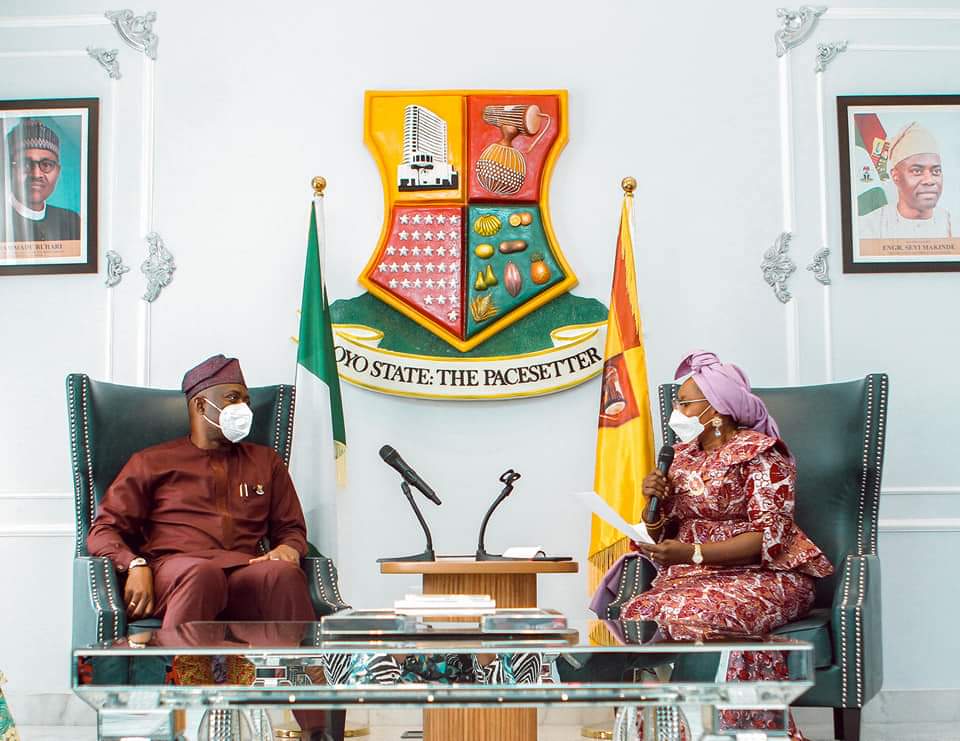
Governor Seyi Makinde of Oyo State on Friday, declared that his administration will continue to engage more women and Persons Living With Disabilities (PLWDs) in his government.

The governor stated this while receiving the Minister of Women Affairs and Social Development, Dame Pauline Tallen, who was on an advocacy visit to his office, at the Courtesy Room of the Governor’s Office, Secretariat, Agodi, Ibadan.

A statement by the Chief Press Secretary to the governor, Mr. Taiwo Adisa, quoted the governor as saying that his government has been fair to women and the disadvantaged groups in the society.

The statement added that the governor equally launched the HeForShe initiative in the state, saying his administration has been doing its best in empowering women and catering to the vulnerable and disadvantaged groups.

He said: “In Oyo State, if you go to the Secretary to the State Government’s Office, and you see the pictures of past SSGs, this will be the first administration to appoint a female as SSG.

“At the local government level, there are many women in the caretaker committees, because we insisted that there must be, at least, one female and one physically challenged among the members of the caretaker committees. We are actually doing our best.”

The governor stated that his administration has reduced the number of out-of-school children by cancelling school fees and levies, noting that school enrolment has improved by 10 per cent since the inception of the government.

He added: “Here, we have a Commissioner for Women Affairs and Social Inclusion, because we are not just talking about women affairs; people that are disadvantaged, the groups that have visibly been forgotten or are being left behind, we bring them in.

“Some of the data from the United Nations about Oyo State before we came in showed that we had issues with out-of-school-children. And when I was campaigning, one thing that we found out was that the money they were paying in schools was a hindrance to some of them attending school. So, we removed that and the government has been giving subventions to schools in place of the levy on parents.

“I believe that with the data that we have right now, enrollment has gone up by over 10 per cent since we came in.

“So, we have done quite a lot in terms of social inclusion, by engaging disadvantaged groups and even on the “HeforShe” on the health side. I am sure if you have the chance to meet with the Commissioner for Health, he will tell you about the T’omo T’ìyá Programme, which we just launched a few weeks back.”

While launching the ‘HeForShe’ project, Governor Makinde expressed the readiness of the state to partner the Federal Ministry of Women Affairs and Social Development on the development of women in the state.

“This case you just mentioned, we will look into it and we want to partner you. You are on an advocacy visit and I am an advocate. So, we will all join-in, because we know and I personally have seen tremendous capacity from the women members of this cabinet. They are here not only because they are women but because they are qualified and they have the necessary prerequisite skills and temperament.

“Part of the advocacy is to get more women to participate. I can tell you that we were looking for women for positions but usually it takes us some time; political positions as well.”

The governor urged women to boldly participate in politics so as to contribute their quota in uplifting the country, saying: “We have to encourage them and we have to sanitise our political space itself such that violence and all the negative things that are acting as drawbacks in women participation will give way.”

Earlier, the Minister of Women Affairs and Social Development, Tallen, said the visit was aimed at discussing issues that affect women, girls and boys in the state and the Nigeria society in general.

She said: “Your Excellency, I am very delighted to be in the state and to pay you this special advocacy visit aimed at discussing issues, which in my opinion, are critical to the development of women, girls and boys in the state and the Nigeria society in general.

“It is my hope that this visit will further stimulate partnership between my Ministry and the state in the provision of better services and enabling environment for the advancement, empowerment, protection and participation of the teeming population of women and girls, including the survival of children and other vulnerable groups in the state.”

She commended the governor for supporting women and promoting women’s rights, empowerment and advancement in the state, adding that Makinde deserves commendation for appointing a female SSG, a female Head of Service and two female commissioners.

She added that five permanent secretaries, Director-General of Due Process and others were among the women in top positions in the state, saying, however, that “we are still asking for more because women deserve more than these.”

She further said: “From the response of the governor, I am fully satisfied that a lot more appointments will come soon, starting from the local government levels to the state. And I wish Oyo State all the best. There will be more progress and development if more women are engaged in governance as well as the support for our children to receive the necessary support they deserve.”

Signed

Taiwo Adisa

Chief Press Secretary to Governor

…Says Lagos Cannot Afford To Relax Battle Against Coronavirus

…Governor Directs Civil Servants From Grade Level 14 Below To Work From Home

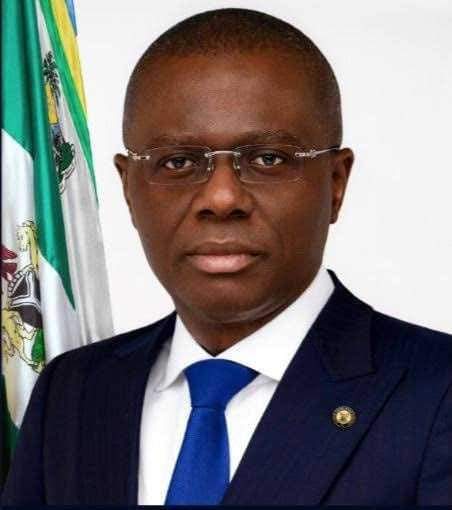
Following the second wave of COVID-19 in Nigeria and increase in number of coronavirus cases in Lagos State, Governor Babajide Sanwo-Olu has banned carnivals, concerts and street parties in the State until further notice.

The Governor also returned the order restricting the operations of churches and mosques in the State, adding that no gathering must exceed 50 per cent of the maximum capacity of the venue.

He also directed all public servants from Grade Level 14 and below, except emergency workers and first responders, to work from home for the next 14 days starting from next week Monday in the first instance.

Governor Sanwo-Olu in a personal letter to Lagosians issued on Friday after a virtual Executive Council meeting on issues around the resurgence of COVID-19 and how to tackle it said Lagos State cannot afford to relax the battle against COVID-19 and therefore appealed that it should be tackled as serious matter.

Speaking about the present state of his health, Governor Sanwo-Olu, who tested positive to COVID-19 last week, said “Regarding my health, I am glad to inform you that I am getting better by the day, and all will surely be well. I thank Lagosians for their prayers and overwhelming kind thoughts. I am, indeed, very grateful.”

Governor Sanwo-Olu, who advised Lagosians to use the festive season to spend quality time in small but controlled gatherings with family and friends in the spirit of the season, warned that the State Government will not hesitate to bring the full weight of the law to bear on any person or organisation caught breaching public health regulations and protocols with regards to the Coronavirus disease.

He said: “The Lagos State Government is now sounding a clear note of caution to all residents on the importance of maintaining the guidelines that we have put in place to protect us from the ravages of COVID-19. We cannot afford a reversal of the gains we have made against this pandemic.

“The following measures must be noted and complied with: All public servants from GL 14 and below, except emergency workers and first responders, are to work from home as from Monday, December 21st for the next 14 days – in the first instance. All schools must shut down with immediate effect, and until further notice.

“Concerts, carnivals and street parties are banned in Lagos State until further notice. Night clubs have not been allowed to open yet. All night clubs in Lagos must immediately shut down, until further notice. The midnight to 4am curfew imposed by the Federal Government remains in place.

“The protocol of ‘No Mask No Entry’ must be enforced by all public places: Offices, Businesses, Markets, Shops, and so on. Hand sanitizers or hand washing units are to be positioned at the entry point and various spots.

Governor Sanwo-Olu stressed further that: “All places of worship (Churches, Mosques, etc.) must ensure that no gathering exceeds two hours and also that no gathering exceeds 50 per cent of the maximum capacity of the venue.

“Health, Safety and Environment Officers must be present at all public gatherings (religious or social) and must be trained in basic first aid procedures.

“The Safety Commission has been directed to visit event centres and gauge compliance with the established guidelines, to stop the virus from spreading. If there is evidence of lack of compliance at any Event Centre, it will be shut down immediately.

“Security agents have been mandated to ensure full enforcement, without exception. No one will be deemed to be above the law. Any and all breaches of these regulations and public health protocols will lead to immediate closure as well as attract heavy fines, and any other sanctions and penalties deemed fit, in line with the Lagos State Infectious Diseases Control Regulation 2020.”

Governor Sanwo-Olu while advising Lagosians to step up the battle against COVID-19, especially during the festival seasons, said: “Christmas is a commemoration of this supreme act of sacrifice by God. The least we can do in this Season is to emulate that spirit of sacrifice, by abiding with difficult but necessary protective guidelines, for the greater good of all of us.

“This is certainly not the time to lower our guard against the Coronavirus; it is instead time to step up our battle against this stubborn virus that has gripped the world for several months now.”

“Dear Lagosians, you will all agree with me that we cannot afford another lockdown of the economy. Amidst an economic recession we must find a way to delicately balance the imperatives of life and livelihood. With this in mind, the only solution available to us is to take responsibility for all our actions, and to understand that we must stay safe not only for ourselves but for the sake of the entire society.

“The Lagos State Government is now sounding a clear note of caution to all residents on the importance of maintaining the guidelines that we have put in place to protect us from the ravages of COVID-19. We cannot afford a reversal of the gains we have made against this pandemic.

“Fellow Lagosians, Let us take responsibility for the welfare and safety of all while we enjoy the festive season with friends and families. It is important that as a community we strictly abide by the regulations in the context of a global pandemic, without prejudicing our efforts to keep the economy running and maintain our means of livelihood to a sufficient extent.”

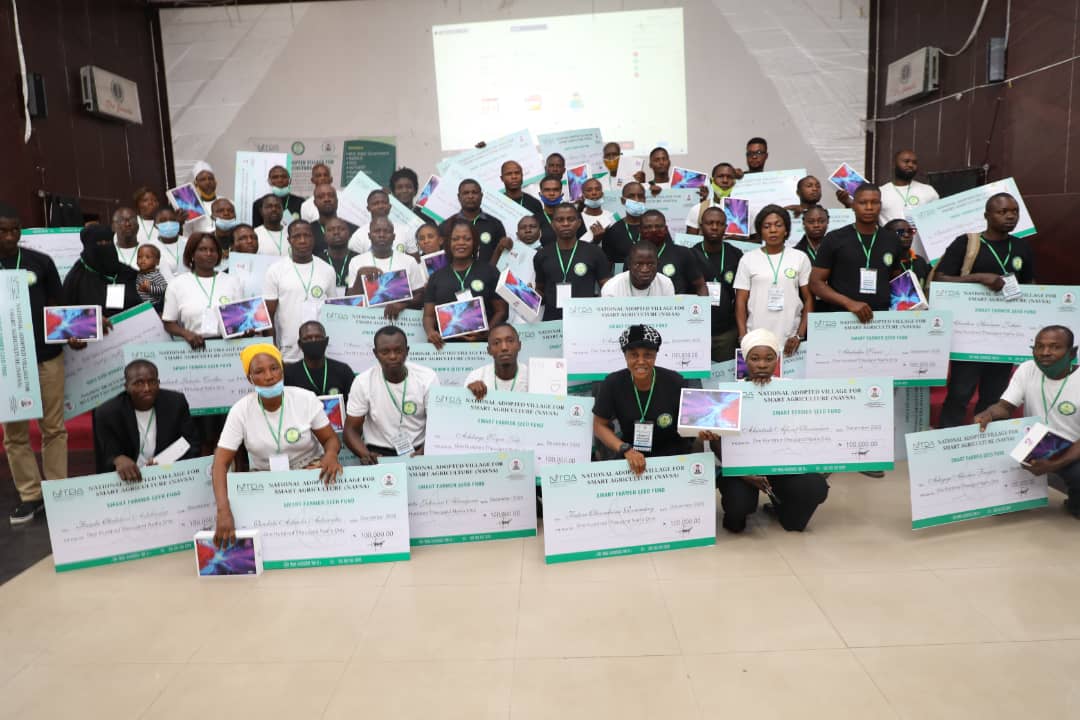
To build a robust environment to drive a digital platform for transformation of the Agricultural sector for a Digital Nigeria, the National Information Technology Development Agency, (NITDA), under the supervision of the Federal Ministry of Communications and Digital Economy and in collaboration with Ekiti State Government have concluded the National Adopted Village for Smart Agriculture (NAVSA) empowerment programme for 140 farmers in Ekiti State.

NAVSA is designed to support the Federal Government in its drive to create more jobs for the youthful population and attract them into agriculture, improve food productivity, increase wealth and income of farmers and agric value chain players, improve food security, promote access to international food markets and host of other agricultural products.

The Honorable Minister of Communications and Digital Economy, Dr Isa Ali Ibrahim Pantami today at the closing ceremony to end the adoption of the farmer in Ekiti State has said that, “The requirements to succeed in the 4th industrial revolution necessitate digitalization to be at the core of any nation’s developmental policy and strategy. The digital economy is the single most important driver of innovation, competitiveness and growth and there is no doubt that digitization of the economy is one of the most critical issues of our time. Traditional industries are being reshaped by business models that have never existed before”.

He said digitization has a proven impact on economy and society by reducing unemployment, improving quality of life, and boosting access to knowledge. He added that It is transforming the world in almost every aspect of life during the last few decades. The access to the internet, increase of people using mobile phones, social media and other digital services changed the way people interact, communicate, learn and work in almost every country.

“This made his Excellency, President Muhammadu Buhari, GCFR to unveil and launch the National Digital Economy Policy and Strategy (NDEPS) for a Digital Nigeria on the 28th of November, 2019 with a vision to transform Nigeria into a leading digital economy providing quality life and digital economies for all. This administration is building and leading the journey of digitiizing every sector of the economy,” he revealed.

Pantami asserted that the potential benefits of digitizing the agrofood sector are convincing but it would require major transformations of farming systems, rural economies, communities and natural resource management. “This is a challenge which requires a systematic, technology-driven and holistic approach to achieving the full potential and benefits.”

“This Smart Agriculture is part of promoting Digital Innovation and Digital Entrepreneurship. Agriculture has been very significant to our economy as a nation and it continues to remain very relevant in our country.”, he asserted.

“However, we discovered that the output we generate from Agriculture compared to our efforts and resources being spent has no justification for that in order to enhance the output from Agriculture to save cost and at the same time to integrate it, we came up with Smart Agric”, he revealed.

He stated that with the policy directive and in line with Digital Literacy and Skills, Solid Infrastructure, Service Infrastructure, Digital Services Development and Promotion as well as Indigenous Content Promotion and Adoption pillars of NDEPS, he had directed NITDA through NAVSA platform to enable the opportunities in the agricultural sector for sustainable job creation and economic diversification, he said.

“Building a digital platform to connect agriculture ecosystem to deliver services to farmers in a more productive and efficient manner is in the interest of our nurturing digital economy for a digital Nigeria. The Federal Government through the Federal Ministry of Communications and Digital Economy and in collaboration with relevant stakeholders will support this initiative to ensure it is implemented in all the States in Nigeria. Implementation will immensely contribute to massive job creation, improvement in the income of farmers and country’s GDP, the minister disclosed.

Dr Pantami however called on private sector, development partners and state governments to support this initiative; partner with Federal Government in the areas of finance, farm inputs, research and development, capacity building, smart solutions & services, green energy among others. “The success of this initiative in the agriculture sector will practically demonstrate the potentials inherent in digital technologies and innovations as the great enabler of the digital economy.”

The Director General of NITDA, Mallam Kashifu Inuwa Abdullahi CCIE, in his remarks said, “We believe leveraging digital technologies and innovations will attract youthful population into agriculture, create new digital business models across the agriculture value chain, enable millions of jobs, increase productivity and contribution of the agriculture to GDP thereby making Nigeria a leading nation in food security and exporter of standard agricultural produce to the rest of the world”.

He recalled that the programme was first piloted in Jigawa state earlier this year adding that the project was initiated to systematically adopt farmers across the 774 local government areas (LGAs) in the country in order to equip them with necessary digital skills that will make Nigeria one of the leading nations for smart agriculture.

“This initiative is geared towards supporting Federal Government’s digital economy agenda in order to bring into reality the economic diversification of His Excellency, President Muhammadu Buhari, GCFR and ensure attainment of Sustainable Development Goal (SDG) two (2) of ending hunger and achieving food security by 2030”, he said.

“AgricTech is revolutionizing agriculture from promoting indoor vertical farming in the urban areas which use up to 70% less water than traditional farms to farm automation that automates crop or livestock production cycle using Internet of Things (IoT) technologies, autonomous tractors, drones and robotics innovation etc. to livestock farming technology that makes tracking and managing livestock data-driven and much easier to modern greenhouses that are techy and data-driven,” he asserted.

Mallam Abdullahi revealed that harnessing these potentials through AgricTech to create jobs could therefore be a game-changer for the agriculture sector. “With NAVSA, what we have done is to rethink agriculture differently, by introducing digital technologies and innovations in a strategic manner that woos and connects ecosystem players to make the journey of agriculture business seamless, productive, efficient and rewarding.”

“The target of the programme is to adopt farmers in all 36 States and 774 LGAs in the country, support and equip them with skills and resources that will make Nigeria one of the leading nations in food sufficiency, security and exportation,” he added.

Mallam Abdullahi further revealed that the empowerment programme will provide Smart Device (Tablet); Seed fund of 100,000 naira for enterprise inputs; Digital Agripreneurship training & skill acquisition; Connectivity which includes one-year Internet access & closed user group (CUG) Calls for adopted farmers; NAVSA Platform (Mobile App); Financial Inclusion through Digital Wallets (Open & close wallets for each adopted farmer, input suppliers and off-takers); e-Extension services; Agric as a Business & Agro Business Models’ Opportunities; & Continuous reinvestment model.

“We would start piloting the deployment and integration of smart technologies such as IoT, GIS technologies and geospatial analysis, Artificial Intelligence, Big data analytics, blockchain among other emerging technologies to promote smart agriculture solutions that address different challenges on NAVSA platform base on sustainable business models. Also, we would be introducing modern greenhouses, farm automation, precision agriculture among others. These solutions will be targeted at high performing farmers,” he declared.

The Executive Governor of Ekiti State, Dr Kayode Fayemi represented by Dr Olabode Adeoyi, Hon. Commissioner for Agriculture and Food Security, said “Agriculture is the next oil for the country, bringing about the creation of jobs, assuring citizens of food security in the country”.

“Digital Technology will enable you to do things at ease without stress, bringing about increase in productivity, creating jobs, better performance and increase revenue”, he added.

Adeoyi further said that the expectation from this programme is to address issues of land management, use of digital technologies to drive Agriculture, and changing the mindset of our youths, bringing out the various potentials embedded within them.

Ekiti State being the 1st pilot state from the southern region of the country, due to the importance of Agriculture, the state has been doing alot towards involement of our teeming youths into agriculture, with the aim to create jobs, and cash cow to the state, he asserted.

While applauding the efforts of Federal Ministry of Communications and Digital Economy and NITDA for the relentless efforts towards deepening the activities of Information Technology in the country, He urged participants to take the training programme seriously, simply because NAVSA has come to stay in the state with the motive to improve the agricultural sector of the state.

 …as NCC remits N362.34bn to government coffers in 5 years

The Executive Vice Chairman/CEO, Nigerian Communications Commission (NCC), Prof. Umar Danbatta has described as key the role of telecommunications to the diversification of the nation’s economy.

Prof. Danbatta made this assertion in his presentation to Course 29 Participants at the National Defence College, Nigeria, recently.

Speaking on a theme, “The Telecommunications Industry and National Development in Nigeria: The Roles of the NCC in Promoting Digital Economy”, he said, telecoms sector is the life-wire that will drive the National Digital Economy Policy and Strategy (NDEPS) of the Federal Government.”

He noted that the sector plays a dual role of contributing to the Gross Domestic Product (GDP) and being an enabler to other sectors of the economy.

“Telecommunications is key to the diversification of the Nigerian economy, as the telecom sector played a dual role of contributing to the Gross Domestic Product (GDP) and being an enabler to other sectors of the economy,” he said.

The EVC informed that the commission remitted over N362.34 billion as revenue in five (5) years to the Federal Government’s consolidated revenue account.

He listed fixed broadband Infrastructure gap, Right of Way (RoW), Foreign Exchange, Vandalism of telecoms infrastructure, Electric Power Supply, Multiple Taxations and regulations as some of the challenges bedeviling the industry.

On fixed broadband infrastructure gap, he said, the commission will bolster the exiting fibre optic infrastructure across the country by 38,296 km through the Infrastructure Companies (InfraCo) project Initiative.

On Row, the NCC boss said, the engagement with the Nigeria Governors Forum on adoption of N145/m as RoW fees has yielded results in Kaduna, Katsina, Imo, Ekiti and Plateau State.
He urged other states governments to key into the success of the digital economy drive by reducing RoW fees and other charges targeting telecom service providers.

Danbatta’s paper delved into a range of issues, including the correlation between broadband and GDP, telecom contribution to national development, telecom investment trend in Nigeria, telecom contribution to digital economy, conceptualisation of digital economy, among others.

In his remarks, the Commandant of the National Defence College, Rear Admiral Mackson Kadiri, appreciated the EVC, describing his paper as in-depth, incisive and timely, giving the pivotal role the telecom sector plays in ensuring National Security and National Development.

Encouraged by successful oil and hydrocarbon deposit in the Chad basin nations, Nigeria went on ego spree about two years ago especially in Northern Region in search for the elusive oil! Over $3 billion has already been sunk without making a commercial find.

According to Clara Nwachukwu of Guardian Newspapers she puts it this way “While those in favour of the search disregard the economic waste, but are encouraged by the success of oil finds in neighbouring countries like Niger, Chad and others, geologists who are mindful of the soil composition of hydrocarbon reserves, think it’s an effort in futility.”

Over $3billion USD! That is so much thrown to the dustbin! In a region that has the highest poverty rate in history of mankind, has the lowest human capacity index and had one of the highest maternal and infant mortality in the world! Over $3 billion wasted ! A nation that have plenty and proven reserves of hydrocarbon in the Southern region!

What does this tell us, we are oil thirst ada nation. We have Dutch Sickness as a nation,we strongly believe in oil and weakly or probably believe in our capacity to deliver information and communication Technology,outsourcing capacity to other Sub Aaharan Africa and making Nigeria a hub just like Dubai! Coming to Dubai,we have a lot to learn from them, they have successfully weaned themselves from oil dependency to a tech and investment hub. Qatar, Saudi are taking cue, yet we are running after oil in a world that is seriously frowning on carbon emissions and scientist are busy in lab thinking of the best renewable energy. Cars manufacturers in future might not give a damn about gasoline becuase cars are going hybrid and full electric ! The big question is where does it level us in future, let’s say in the next 30 years.

Do we go the way of coal! We were once a coal producing hub! Making Liverpool envious but today go to Enugu the coal producing capital, the city is now more of administrative city and haven’t scaled to industrial city. Niger Delta is on that path of predictions with folks at Ogoni visibly angry that they can’t even drink clean water or even drink water that is polluted and keep their cups in peace due to insecurities caused by oil thirst! That is what it is today .

We have refused to see other critical sectors like outsourcing, ICT, agro allied ecosystem even tourism!

According to Luca Ventura of Global Finance , she puts it this way “While most of the top 10 highest-valued companies are American, a few exceptions prove the point: Chinese technology firms Tencent and Alibaba which, along with Taiwan Semiconductor, vaulted into the top 10 only in recent years. Their rise marked a shift not just in the geographical composition of the list, but a sectoral one as well: Until a decade ago, the most capitalized enterprises on the stock market were traditional long-standing “blue-chip” behemoths like Exxon, General Electric and AT&T. Today it is almost all tech companies.”

We would keep borrowing if we don’t innovate and I remember my grandpa saying “he who goes aborrowing goes asorrowing” and he is right in his adopted and tweaked English. Aren’t we in sorrowful mood in this naation. How many graduates can the oil majors employ ? Why can’t we create an enabling environent for other sectors like ICT, agriculture and even tourism. These sectors have the ability to employ tons of youths and these youths would be productive and our economy would be prosperous. These are the multiplier effects. We can’t be basing our budget on what the oil guys are going to sell from the West , if they decide to sell $15 USD per barrel we all cry and go gloomy but if the prices go $80 USD PB we sing kumbaya and go on spending spree…the big question is for how long do we continue basing our development on some oil speculation? It doesn’t add up to me as a person…I don’t know if it does to you?

Narratives and current realities are still what we are trying to grap, grasp and grabi in this naation. It is something that we should be worried of! The realities are changing and our inability to align with current and future realities would make us either stakeholders in industrial revolution 4.0 (a period when Big data, cloud computing, analytics, nanotechnology, artificial intelligence and automation ) would be a key player!

We are there almost just that we as a nation have refused to smell the coffee… We are still trying to fine a vaccine for our disease known as Dutch disease. For those who don’t get this and don’t understand this type of malady. It’s an exotic disease that is often associated with nations dependent on minerals and have refused to scale up or evolve. A serious disease that has no treatment except from the will.

According to Wikipedia it describes Dutch Disease as “In economics, the Dutch disease is the apparent causal relationship between the increase in the economic development of a specific sector (for example natural resources) and a decline in other sectors (like the manufacturing sector or agriculture).”

While investopedia put it this way” Dutch disease is a shorthand way of describing the paradox which occurs when good news, such as the discovery of large oil reserves, harms a country’s broader economy. … Symptoms include a rising currency value leading to a drop in exports and a loss of jobs to other countries.”

As you can see for us to get cured, we must get thinking and get focused. “De-oil” our mentality and look at the other narratives which I have mentioned. As the world is emerging from Covid 19,there would be more emphasis on Technologies and capacity building. We must strengthen our capacity in the areas of education and building. The education institutions must as a matter of fact reduce striking and focus on building the society. Education has always been an interventionist approach and ASUU with their other tertiary institutions must start thinking, wear their thinking cap and change the obsolete mentality of striking and that of their syllabus. With lots of crazy and stupid courses they offer today, our youths can’t compete in near future. We must start looking at the bigger picture like having course in Cloud Computing, nanotechnology, artificial intelligence, software development, modern agricultural Technology etc not courses like library science, philosophy and other courses.

The naation must as a matter of fact focus on STEM (Sciences , Technologies, Engineering, mathematics) we have danced enough! We have encouraged dancers over time, endorsed them with millions and watched flimsy life TV shows where billions are dashed to people that don’t matter and we made them matter.

Corporate institutions must start endowment funds, funding tertiary institutions, encouraging research and development (R & D) recognising distinguished engineers and scientists not acknowledging extinguished graduates that knows nothing rather than dance and wear skimpy things.

Failure to follow these hard road, we would still base our thinking in oil because that is the easy way out. Get experts to drill, explore the oil and then they pay us whatever and we distribute to the states ! That has been our economic model and trust me it is not sustainable.

Anthony Emeka Nwosu

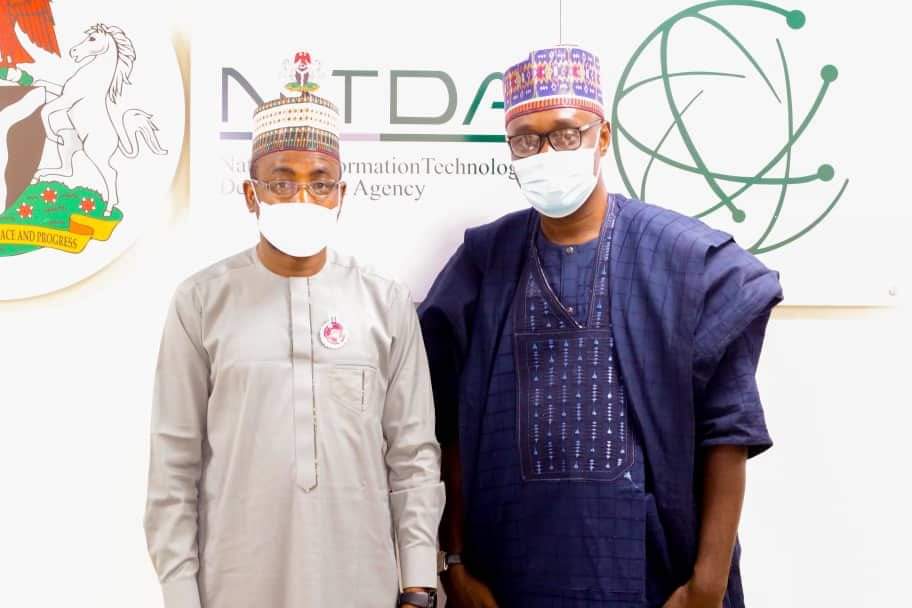
Director General of the National Information Technology Development Agency (NITDA) Mallam Kashifu Inuwa Abdullahi received the newly elected Registrar/Secretary of the Computer Professionals Registration Council of Nigeria (CPN) Mr Muhammad Bello Aliyu.

The Executives of the Council were at the Agency’s National Centre for Artificial Intelligence and Robotics in Abuja to formally present its new Registrar/Secretary to NITDA in order for him to familiarise with the activities and partnership already existing between the Agency and the Council.

The DG NITDA while addressing members of the council urged them to craft a means for testing individual capabilities and then issue certification after such test in order to differentiate the real professionals from the quacks.

“Find a way of testing people and certify them as professionals because we need people that can think, experiment and then test their products”, he advised.

The DG further stated that it is important to update the school curriculum so that what students are taught in school will align with what is applicable in the real world.

He also said that the Council needs to provide the human capital that can develop the sector as NITDA is to ensure the industry is ready for the human capital to be provided.

Mallam Abdullahi advised that the Council also need to collaborate with NITDA to develop strategies that will be beneficial to the sector in general. As he said “developing strategies in silos will make it difficult for the collaborating party to align”.

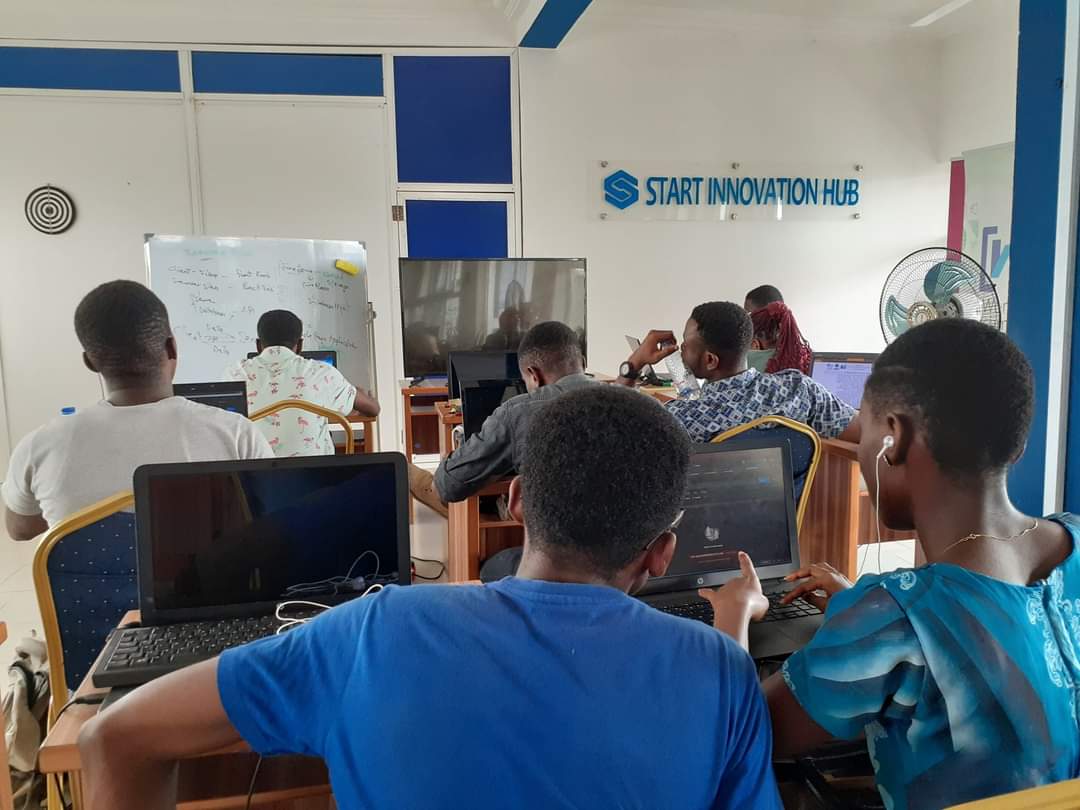
Start innovation Hub isn’t just an ordinary incubation centre for techies and startups in Uyo! The facility is more than that,they can be credited to be one of the few folks that are constantly changing the narrative on how we see the Niger Delta Region. Churning out innovative solutions like jiggle and working hand in hand with tech giant – Google.

What is the secret of their success, making them the most sought after tech ecosystem in the region. Hanson Johnson, the founder of Start innovation Hub explained “The secret behind the continuous success records of people here in Start innovation Hub was exposed today to the audience during today’s project create meetup. We’ve been surmounting mountains and recording great advancements in our community.”

Johnson also added that “Our simple secret is #MENTORSHIP. A few days back we talked about mentorship where we told you things a mentor does for his or her mentee(s). “

Start Innovation Hub is what entrepreneurs need to leverage on Nigeria’s strength and capitalize on opportunities in the global economy.

“Today, when these Trainers came on stage, their mouths were filled with testimonies of the mentorship system here in Start Innovation Hub which has helped them accelerate their career and have gotten to where they are today. Some of the opportunities they enjoy here as mentees are easy access to information and personnel of high value, and a team of extremely experienced and visionary leaders who are deeply rooted in the world of tech as far as the tech industry is concerned”, Johnson concluded.

Anthony Emeka Nwosu

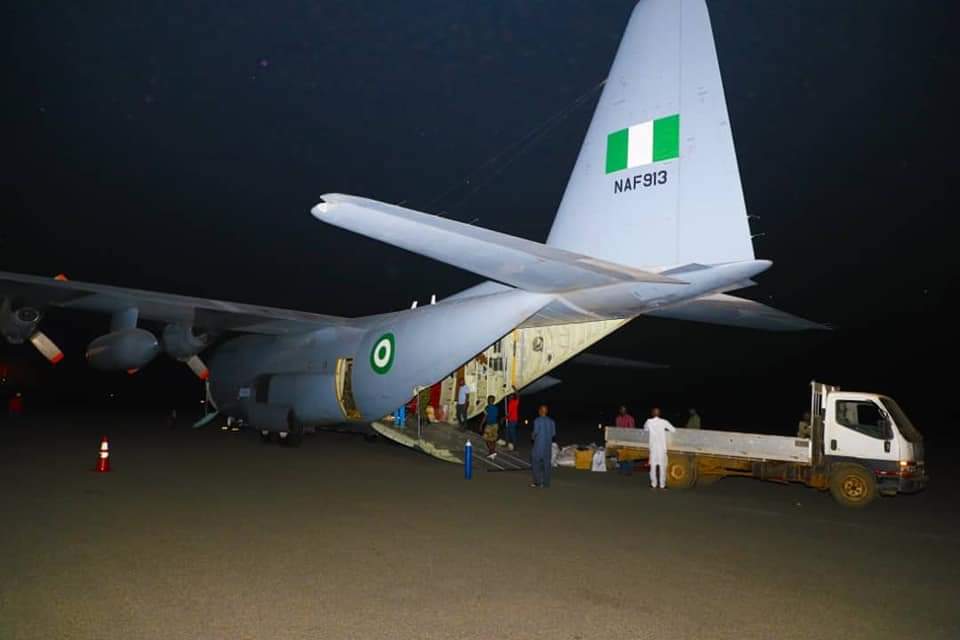
In response to the recent spike in COVID-19 infections across the Country, the Chief of the Air Staff (CAS), Air Marshal Sadique Abubakar, has directed the Nigerian Air Force (NAF) Liquid Oxygen (LOX) Plant at the 103 Strike Group (103 STG), Yola to scale up the production of LOX for distribution to COVID-19 Management Centres. In compliance with this directive, the Service, yesterday, 16 December 2020, distributed 117 cylinders of LOX to two COVID-19 Management Centres in Abuja. The beneficiary Centres are the University of Abuja Teaching Hospital, Gwawalada and the Department of State Services (DSS) Medical Centre, Asokoro.

Commissioned on 10 July 2017, the 103 STG LOX Plant Yola has the capacity to produce 1,000 litres of LOX every 8 hours, which is in excess of the NAF’s requirements for its air operations and for use in its Medical Centres across the Nation. Hence, the LOX Plant has, since the outbreak of the COVID-19 Pandemic, been producing clinical oxygen for distribution to COVID-19 Management Centres and designated Hospitals, as part of measures to support the management of serious COVID-19 cases. The CAS has assured that the NAF will sustain the free provision of LOX, in addition to airlift missions, in continued support of the Government’s efforts towards combating the COVID-19 Pandemic.

IBIKUNLE DARAMOLA
Air Vice Marshal
Director of Public Relations and Information
Nigerian Air Force

… As ICPC inaugurates NCC’s anti-graft unit 

 The Nigerian Communications Commission (NCC) has pledged to continually maintain high ethical standards in all its regulatory activities consistent with the Federal Government’s efforts to entrench the culture of accountability and transparency in the Ministries, Departments and Agencies (MDAs) of the Federal Government.

The Executive Vice Chairman and Chief Executive Officer of NCC, Prof. Umar Danbatta, gave the commitment at the inauguration of NCC’s Anti-Corruption and Transparency Unit (ACTU) by the Independent Corrupt Practices and Other Related Offences Commission (ICPC) on Thursday, December 10, 2020 in Abuja.

ACTU is the initiative of the ICPC, approved by the Federal Government as an in-house mechanism for corruption prevention within MDAs, in line with global best practices of building strong institutions and institutionalising good governance in the fight against corruption.

Represented by the Director, Legal and Regulatory Services, Josephine Amuwa, Danbatta said that the ICPC itself has recently attested to the Commission’s high ethical standards and professionalism as evident in the 2020 ICPC Ethics and Compliance Scorecard (IECS) report, which placed NCC  ahead of other agencies in ratings.

The EVC said the ICPC’s verdict also lends credence to the 2017 report of the Bureau of Public Service Reforms (BPSR)-piloted Self-Assessment Tool (SAT) deployed in MDAs, where the NCC came off with a Platinum Level (Exceptional) award, a level 5 organization, the highest rating possible under the BPSR Assessment.

While noting that the NCC will continue to identify corruption-prone processes, practices and procedures within the system with a view to institutionalize compliant and corruption-free processes. Danbatta said the Commission’s efforts are focused on prevention through defined standard operating procedures and adherence to public service rules, circulars, guidelines, among others.

“The ACTU is a very important initiative of the government to combat corruption in MDAs and the Commission recognizes this fact as well as the role of ACTU in this regard,” he said, while urging the Commission’s ACTU members to continue to take their role seriously. 

He also said that Management will accord the ACTU team all necessary support to deliver on its mandate of combating corruption through prevention, education and enforcement.

While inaugurating the NCC ACTU, the Chairman of ICPC, Prof. Bolaji Owasanoye, said the ACTU is expected to effectively carry out its assigned functions including conducting systems study and review of processes and procedures of the NCC with a view to making appropriate recommendations to block corruption loopholes. 

According to him, the Unit is also required to conduct continuous sensitization of staff on and against the ills of corruption, implement code of ethics, conduct corruption risk assessment and preliminary investigations into complaints received amongst others.

Owasanoye further stated that ICPC recognises the contribution of NCC in regulating and creating an enabling environment that gives telecom consumers universal access to affordable and equitable service as well as your support to the nation’s economic growth.

“I also commend the efforts of the management of NCC in ensuring high compliance with ethical and integrity standards as seen from the result scored by NCC in the 2020 deployment of the Ethics and Compliance Scorecard (81.15%),” he added. 

In his remarks, the Director, Human Capital and Administration and ACTU Chairman at NCC, Usman Malah, assured of the commitment of NCC ACTU members to be sincere, of good character, exhibit positive attributes and be dedicated in the discharge of their duties. 

“We shall be fully prepared for the responsibilities of the Unit. We would be impartial, transparent and guided by relevant laws in discharging the mandate of the Unit. As a microcosm of the ICPC in the NCC, the Unit will continue to complement the laudable efforts of the ICPC in the fight against corruption in government and the country at large,” Malah said.