
— 

By NJ Ayuk, Executive Chairman, African Energy Chamber (www.EnergyChamber.org)

In late 2019, as the African oil and gas industry was looking to the future with optimism, Offshore Engineer wrote that the continent was had reason to expect a “more productive 2020.” Instead, the unforeseen happened, and the COVID-19 pandemic had a devastating impact on the oil and gas industry in Africa and around the world.

But even at the end of last year, during a fairly strong period for oil and gas, the publication mentioned that “delays and hiccups” were impacting licensing rounds — that is, the processes by which investors can seek oil and gas exploration licenses from the government – and argued that improvements would have to be made going forward.

This is correct. Licensing process improvements were already needed in late 2019, and now that the oil and gas industry is in the survival mode, it’s more urgent than ever to streamline licensing.

While the details vary by country, the licensing round process has, in general, become too prone to delays and uncertainty. All too often, exploration and production (E&P) companies have to wait one or two years before the exploration projects they propose are sanctioned. These practices, which help protect the interests of oil-producing nations, made sense when crude sold for $100 a barrel. But they don’t make sense now.

After all, conditions are still uncertain. True, crude pricing forecasts for 2021 are cautiously optimistic at the moment, and Goldman Sachs has said Brent oil prices could reach $65 per barrel by this summer, up from the $50-range we’re seeing now. But the outlook for Africa’s petroleum market remains shaky at best.

And it’s not just Africa: The global oil and gas industry continues to feel the negative impacts of the COVID-19 pandemic, which dramatically lowered demand for petroleum products. As a result, oil and gas companies have made dramatic cuts to their capital spending programs, resulting in the postponement and cancellation of numerous exploration and production (E&P) projects around the world.

Under these circumstances, it’s up to African oil and gas producers to do everything possible to encourage as much E&P activity as possible, particularly by international oil companies (IOCs). In the long term, of course, African producer states do need to lessen their reliance on oil and gas revenue. But for now, a number of them rely on it for much of their budgets. And as long as they do, they ought to ask for more. They should lobby for knowledge transfers, training, gas monetization programs, and other significant opportunities so that their strategically managed oil and gas operations can create pathways for economic growth and diversification.

I’ve made a case for the importance of strategic fiscal policies, from revised production sharing contract (PSC) requirements to reduced tax and royalty requirements. Some of my friends in government have strongly criticized me for this and called me a sellout and a whiteboy. I disagree with them and I still love them, but resource nationalism is not the way to go and it is actually dangerous. I truly believe that these changes are necessary to give IOCs an incentive to explore in Africa during the current downturn. But we can’t stop there. We need to consider other pain points that discourage foreign operations in Africa and find ways to eliminate those challenges as well.

The licensing round process is one of those challenges. So why not remove this hurdle? Not all countries use licensing rounds; some use direct negotiation to approve exploration and production rights. I believe it’s time for more African oil and gas-producing states to choose this route. Negotiating with trusted explorers would help them avoid unnecessary delays and bureaucratic red tape. Making these changes would still allow them to emphasize their own priorities – and it might also make IOCs more likely to keep exploring within their borders.

Licensing Rounds Sound Good In Theory

Generally, during licensing rounds, companies submit bids or grants to issuing governments in hopes of being awarded an exploration license – that is, the right to search for commercially feasible petroleum deposits. In the case of bids, the highest ones get a license. Grant approvals, by contrast, are based on prospective explorers’ experience and capabilities. Licenses are awarded for set periods of time, and if commercially viable amounts of oil or gas are discovered, the explorers can negotiate contracts with the government for the right to extract what they find.

The licensing round process does have benefits. For participating countries, it helps make sure interested companies have the necessary financial resources and technical capacity to explore successfully. It ensures that projects are completed in a timely manner. It also helps E&P companies, since the process lays out their rights.

But again, even with their strengths, licensing rounds can create unacceptable hardships for oil companies: Countries tend to take a long time to make their licensing decisions. And when capex budgets have been slashed, waiting one (or even two) years to learn if an exploration project has the green light just won’t cut it. In today’s economic environment, it just isn’t realistic to insist on putting much-needed resources aside on the chance that they’ll be needed in a year or two.

Negotiating with trusted explorers would help them avoid unnecessary delays and bureaucratic red tape

And if we’re going to be honest with ourselves, we have to admit that we’re seeing more and more examples of licensing rounds gone wrong, from extended delays in getting the bidding process started to instances of little to no company participation.

Licensing Rounds Yielding Disappointing Results

Consider Algeria, where oil and gas production rates were already declining in 2019, before the pandemic, largely because of repeated project delays caused by, among other challenges, slow government approval. During four licensing rounds, Algeria saw minimal interest from investors.

Nigeria, too, is known for the less than speedy pace at which it sanctions exploration projects. Even before COVID-19, its slow movement on this front contributed to a decline in oil production over a 10-year period.

And in 2019, as I mentioned, there were licensing round mishaps in multiple countries. “Some rounds, for example, Ghana’s First Licensing Round, have seen limited successes, while others have suffered delays or suspension,” GlobalData Upstream Oil & Gas Analyst Toya Latham told Offshore Magazine. “Gabon’s 12th Licensing Round and Somalia’s First Offshore Licensing Round have been extended in 2020 (in part due to delays in enacting pivotal legislation), whilst Madagascar’s long overdue licensing round has been suspended.”

And we saw licensing rounds go wrong before that. In early 2018, for example, only one company responded to Cameroon’s licensing round, in which eight blocks had been available. Think about it, just one and the bureaucrats still think all is right. These issues haven’t been limited to Africa, by the way. In 2017, only one bidder responded to an opportunity to explore five offshore blocks in Lebanon. Brazil had a couple of licensing rounds fizzle in late 2019: the Transfer of Rights Surplus Round, which only brought in two bids, and the Sixth Production-Sharing Bid Round, which only attracted one bid.

We Must Consider Investors’ Perspectives

Fast forward to the oil and gas industry of 2021. In today’s reality, delayed licensing round starts and long waits for decisions are more likely than ever to dim companies’ interest. These challenges aren’t trivial, since operating in Africa already represents significant risks and expenses for IOCs. Companies must, for example, factor in the possibilities of security concerns and lapses in infrastructure along with the risks that come with every exploration project, including the failure to find commercially viable petroleum stores. Then there are the additional expenses of operating overseas, complying with local content policies, supply costs, and a myriad of taxes and fees, among others.

I’ll be the first to trumpet the opportunities for IOCs in Africa, from our vast stores of oil and gas to large swaths of unexplored territory. But we have to be realistic about how businesses work. Companies need to be able to make a reasonable profit in order to justify their outlays. And when the oil and gas industry is in the midst of a downturn, as it is now, excessive risks and expenses are the last things IOCs can consider. So we have to work with IOCs and do what we can to help them profit in order to convince them to choose African sites over other options.

Direct Negotiations Could Be a Win-Win

That’s why I think a transition from licensing rounds to direct negotiations makes sense for African countries. For one thing, negotiation periods would not be tied to rigid opening and closing schedules as licensing rounds are, minimizing the risk of unreasonably long waits for a decision. Even better, direct negotiations would allow E&P companies to work with countries to discuss, and possibly adjust, the major terms of their production contracts.

With that kind of flexibility, companies with concerns about a country — whether they have questions about tax laws or local content requirements — might be willing to pursue exploration opportunities that they would have turned down, had they been required to participate in the bidding process.

We Can Make This Work

True, even with a different licensing scheme, African countries will have other unique risk factors to address – factors that could make IOCs hesitant to invest in Africa. High on that list are concerns about corruption. That’s why the African Energy Chamber pushes so strongly for meaningful transparency measures.

And again, we can’t overemphasize the importance of creating fiscal regimes more favorable to IOCs. Those measures should include, along with fairer tax and royalty requirements, the creation of natural gas-specific production-sharing contracts, rather than relying on crude oil PSCs as a one-size-fits-all template. A lot of countries have a difficult time working with companies to get to FID on natural gas discoveries. Not only will gas PSCs help make it easier for companies to conduct profitable gas projects, they also could help prevent problems and lengthy negotiations when explorers find gas, rather than crude.

IOCs are, and can continue to be, invaluable allies to African nations. Their E&P activities contribute revenue that many oil and gas-producing countries rely on now, but we also can work with them to foster economic growth and diversification for tomorrow. African countries need IOCs to create job and business opportunities today, but we also can work with them to achieve capacity building and technological know-how that will pave the way for a better future. It only makes sense to do everything possible to give explorers the certainty, predictability, and incentives they need to be competitive in Africa.


CMC Networks, one of the largest Pan African networks and Middle Eastern carriers, has announced that it now offers direct access to the Microsoft Azure Peering Service, further increasing access to its broad range of cloud services. Clients will now benefit from a low latency and SLA-backed, direct connection to Microsoft across the network spanning 110 Points of Presence (PoPs) in 78 countries. CMC Networks is the third African partner for Azure Peering service.

Microsoft Azure Peering Service is a partnership programme with key service providers to provide best-in-class public Internet connectivity to their enterprise users. Partner ISPs, who are part of the programme will have direct, highly available, geo-redundant connections and optimised routing to Microsoft. It aims to improve Software as a Service (SaaS) services for enterprises looking for an internet-first network strategy for services such as Microsoft 365 and other SaaS services on Azure.

Nico Walters, Global Innovation and Information Manager, CMC Networks, says that Microsoft Azure Peering Services provides a low-latency, high performance option and is an ideal internet solution for those organisations seeking additional connectivity options beyond Azure ExpressRoute: “As digital transformation fast becomes a priority, digital onboarding is often the gateway bottleneck for clients, which is why we are pleased to offer yet another connectivity option. Using a peering service greatly assists in streamlining cloud transitions and in delivering reliable and performance-centric public connectivity to the Microsoft cloud.”

As a networking service, the solution enhances customer connectivity to Microsoft cloud services, SaaS services, or any Microsoft services accessible via the public internet.

Walters says that CMC is the most densely connected African-focused providers servicing 51 of the 54 countries on the continent and the addition of Microsoft Azure Peering Services ensures that clients have access to Microsoft SaaS services that is prioritised, optimised and highly redundant.

If 2020 taught us anything it’s that life can be unpredictable and while no one can say for certain how much things will change in the coming year, we can give you some sensible, tried and tested good advice if you’re thinking about purchasing a property for the first time in 2021.

1) Take a careful (and honest) look at your finances

You probably don’t need us to tell you that buying a house is a major financial decision. Before committing to 20 to 30 years of instalments, it’s vital to take a totally honest look at your current circumstances, including your short-term debt, savings and investments, as well as your financial goals for the foreseeable future.

Tip: Give yourself a realistic goal of saving for the biggest deposit possible while you start the house hunting process, or paying off as much of your short-term debt before you make an offer on a property.

2) Consider your career options and overall job security

Before you sign the dotted line, it’s also a good idea to take a realistic view of your current income, your earning potential, together with your future career options. This helps establish a long-term view of your ability to meet your financial commitments.

3) Give some thought to your home office

This is certainly a new but very important factor for many more prospective buyers than last year. If your home has become your frequent place of work and visits to the office are few and far between, you’ll need to have a quiet space to work, and this means that you may be looking for something a little different in 2021.

Tip: Find out if there is reliable fibre in the neighbourhoods you’re looking in, if you’re working from home, you’ll need a decent internet connection.

4) Expand your horizons

If long commutes to the office are a thing of the past, you can expand the ‘zone’ in which you originally considered living. You might find that suburbs outside of this zone offer better value for money, larger properties, and even better security.

Tip: Have you heard about how many South Africans are semigrating away from the big cities because their work / family situation allows them to be remote? Consider this if it’s a possibility and broaden your search area for a new house.

5) Get clued up on interest rates

Interest rates are the lowest they’ve been for years but that doesn’t mean they’ll stay put forever. Ensure you do your affordability calculations anticipating a rate increase as early as the second half of 2021.

6) Pay more than your minimum amount

Remember that for the first few months of paying off any bond, you’re really paying the interest and not the capital, so if it’s possible to increase your monthly bond payment now above the minimum required amount, you’ll pay your bond off faster in the long run.

Tip: If interest rates drop further, keep your monthly installment the same and pay your debt off faster. And pay off your most expensive debt off first (this is often your credit card or a personal loan).

7) Check your credit score

Before you start searching for your dream home, take a look at your credit score. Not only will this give you a clear picture of credit history it also helps you understand what prospective lenders may see. Your credit score and behaviour are very important factors the banks consider when evaluating credit applications. Checking your credit report regularly means you’ll be able to detect inaccurate or incomplete information and resolve any issues quickly.

8) Remember the extra costs

Remember to factor in transfer duties, conveyancing fees, bond cancellation and registration fees into your budget. These extra costs add up fast!

Tip: You may need a few extra months to save for these on top of your deposit, just be prepared for these costs as many of them are non-negotiable and delaying paying these would delay the transfer of a property to you as the new owner.

9) Separate what you want from what you need

Make a list of all the things you’re looking for in a home. Are there certain comforts you can live without? What are the non-negotiables? Include your pets and future family plans when thinking through your options. This is the most important list you’re going to make in your house hunting journey.

10) Don’t forget the bigger picture

Consider macro-economic factors such as house prices in your preferred area, interest rates, and the ‘nature of a buyers ’ market’ and let these be influencing factors if you’re certain that a home won’t be a financial burden. Paying off your own bond as opposed to someone else’s is always good motivation if you have thought this huge and long term financial decision through properly.

Zeta-Web Nigeria Limited, an indigenous Information Technology (IT) firm in Lagos has reiterated their commitment to bring robust broadband and internet solutions that would ease productivity for Nigerians in the post Covid 19 work place. The company introduced Z-Force, a super-fast internet service designed for Nigerians working from home and other notable services for other market segments lately.

Speaking to the media on importance of the Z-Force to the current work place, Chris Obasi, the Managing Director of Zeta–Web Nigeria Limited said “Our Z-Force service is unique in its design as it came out at a point where users wanted internet services with both speed and data that they can use while working remotely, void of the frequent intermittencies and high-cost associated with such requests. As you would agree with me, the global pandemic brought with it, different challenges and an uncharted path that a lot of businesses where ill-prepared for; but we saw it as an opportunity to change the way we think and operate, and this meant that we had to look at a product that acts as a best-fit to the need of our clients as well as meet the current demand and market trend.”

“Our unique selling point is One product that meets the unique need of every user, Fast installation, High Quality of Service, Fair Pricing and Excellent Customer Turnaround Response Time to mention a few. Z-Force is a hybrid product that serves both the SME market (Home office) and selective mass market – home users, online schooling, entertainment, etc.”, Chris added.

With a collection of world-class services & solutions, the company has repositioned itself as a one-stop centre for IT needs. In line with the global best practices, Zeta-Web Nigeria Limited has demonstrated a high level of commitment to customer support over the years which has brought accolades and recognition to them.

In the words of Chris Obasi, he said “Our unique selling point is that we listen to our customers before designing the desired product that meets their specific needs; as we know that the world is evolving and it is no more one product fits all.”

Zeta-Web Nigeria Limited is also bringing to the fore, enhanced solutions around Virtualization and IT Security Solutions for enterprises as well as IT/Cyber Security trainings for IT administrators and regular users that utilise enterprise systems. Aside all these, they are positioning their Cloud infrastructure (both private and public) as well as digital transformation as the best-fit for the Nigerian market.

Chris Obasi, Managing Director, Zeta Web Nigeria Limited

The company has been lauded as being innovative in their solutions offerings that has brought respite to the premium segment of the market.

Zeta-Web Nigeria Limited have designed enterprise solutions for businesses and large corporate organizations like banks, government establishments and large business conglomerates and their aim is to fill the gap of quality ICT Service Integration and Services by designing, implementing, operating and managing high-end enterprise networks, data center technologies and applications for their customers’ specific needs.

Their current product suites are being aligned to meet the new-normal and ensure their solutions help improve users’ IT environment, support their digital transformation journey, enhance their overall experience & processes and facilitate business growth; bringing customer satisfaction to a new height and giving clients respite. They are poised to provide solutions that will meet every customer’s unique requirement.

The company commended the regulator, Nigerian Communication Commission (NCC) on their strides in the ecosystem and put forward that tax waivers and tax incentives be considered, such as eliminate multiple taxation and include tax reduction on OEMs equipment manufacturing and importation to encourage investors.   On spectrum management, Obasi appealed to the regulator to make spectrum available at a fair price.  He opined that “We need the government to create a sustainable and predictable spectrum allocation regime that makes useful frequency spectrum available at a fair price. They should also properly differentiate the market so that Telcos and ISPs do not overlap, by enacting laws that separate what markets can be serviced by each category of provider.”

Zeta-Web Limited is a company set up specifically to bridge the gap between quality solutions and services as well guaranteeing business success. Having started as an ISP about 7 years ago, today the company has diversified to other areas of Information and Communication Technology (ICT) such as Data Centre Services, Data Centre Virtualisation, Network Virtualisation, SDWAN, IT & Cybersecurity trainings, Broadband deployment, Business Solutions, Contact Centres and many more.

“Our unique selling point is that we listen to our customers before designing the desired product that meets their specific needs; as we know that the world is evolving and it is no more one product fits all.”

As an Internet Service Provider (ISP), do you think that internet services are      overpriced in Nigeria?

The Internet Services space in Nigeria in my opinion is fairly priced, considering the environmental and economic challenges we have to endure – lack of stable electricity, frequent vandalization of fiber-lay path, unstable exchange rate, multiple taxations from Local level to Federal level and so much more.

These challenges are experienced by most businesses in-country and Service Providers are offering to their subscribers to the best of their ability a bouquet of value-add packages that are pocket-friendly. You also need to understand that in this industry, the cost of capacity to Service Providers will always determine the selling price to the end-users if we wish to stay profitable. Internet services can only be fairly-priced to the extent capacity providers push-out and price their bulk capacity to ISPs. Nonetheless, we listened to the market and with the advent of the global pandemic and the remote-working that a lot of businesses have had to adopt since last year, we are fast-tracking on solutions and services that will give businesses peace of mind – one of such is working on a simplified bundled service that allows users (corporate or individual) to enjoy the best of internet, voice-data and video without exhausting their data or paying premium i.e. More Data for Less – thereby ensuring maximum productivity and profitability to businesses in Nigeria.

You have been in business for over 7 years now, started as ISP now diversified into other spheres of IT, how has the journey been?

The journey has been quite interesting, when I look back at our how we gradually diversified by developing our competencies in IT Solutions, and evolved our business model to foster a great relationship through partnership with industry giants; it gives me a high sense of satisfaction at our accomplishments. We cannot understate the challenges that come with these.  Our team worked hand-in-glove with these customers to get quality feedback regarding the different services in their environment that were either not working, poorly implemented or needs to be optimized. These and more gave us a good direction that allowed us to embed our unique touch to IT services and solutions offerings. As a business, we have also been able to contribute our quota to the ongoing digital transformation journey in Nigeria, by ensuring that any business can get what they need from a single provider, which ensures full optimization across their IT infrastructure and is cost-effective. The testament of this success is with our customer base that spans across different industries and sectors in Nigeria that trust us. In as much as we acknowledge that the challenges are enormous and constantly evolving, we are determined to stake our claim in this space.

You recently introduced Z-FORCE service, how has it been and how well has it been accepted in Nigeria?

Our Zforce service is unique in its design as it came out at a point where users wanted internet services with both speed and data that they can use while working remotely, void of the frequent intermittencies and high-cost associated with such requests. As you would agree with me, the global pandemic brought with it, different challenges and an uncharted path that a lot of businesses where ill-prepared for; but we saw it as an opportunity to change the way we think and operate, and this meant that we had to look at a product that acts as a best-fit to the need of our clients as well as meet the current demand and market trend. In the area of aftersales support which is always a problem in our environment, we continue to run a 24-hour support service and this has also enhanced the acceptability of Zforce in the market. Currently this service is only available in Lagos, but we are increasing our service coverage to cover at least other major cities and the underserved communities across Nigeria.

What are the unique selling points of Z-FORCE as a product?

Our unique selling point is One product that meets the unique need of every user, Fast installation, High Quality of Service, Fair Pricing and Excellent Customer Turnaround Response Time to mention a few. Z-Force is a hybrid product that serves both the SME market (Home office) and selective mass market – home users, online schooling, ‘entertainment’, etc.

Chris Obasi, The Managing Director, Zeta-Web Nigeria Limited

Tell us about your FibreSat solution and the areas of coverage?

FiberSat is an innovative product that derives its name from a combination of services- Fiber and VSAT, one acts as the primary link while the second is a backup in the instance of service failure. It enables us to provide redundancy/backup with an uptime of 99.98%, compared to the industry uptime of 98%. It means we empower businesses to switch as need be during service disruption without their operations being impacted. FiberSat is available in major cities nationwide.

With Your broadband solution for home use, now that people are working from home, how pricey is it and the speed? 

It is cost effective, as we had to invest and work with our partner ecosystem to provide the hardware at no cost or on free lease to our customers. We provide a solution that will meet every customer’s unique requirement.

How can the government create policies that would enable indigenous ISP firms like yours scale?

We need the government to create a sustainable and predictable spectrum allocation regime that makes useful frequency spectrum available at a fair price. They should also properly differentiate the market so that Telcos and ISPs do not overlap, by enacting laws that separate what markets can be serviced by each category of provider. Internet access should be treated as a right of all citizens and as such ISPs should be given tax incentives accordingly – eliminate multiple taxation and include tax reduction on OEMs equipment manufacturing and importation to encourage investors. Protection of our infrastructure and also support us more by ensuring the industry has access to foreign exchange at the official rate. Finally, provision of long-term loans with very minimal interest rates to new and existing ISPs to support their overall operation.

Tell us more about ZETA Business solutions and what segment of market it is designed for?

Zeta-Web Business Solutions (ZBS) is a 21st century IT-savvy solutions competency provider, with a team of highly-dedicated and knowledge-based professionals that offer premium service to a varied clientele base that spans across, Financial, Oil and Gas, Government & their Parastatals, Education, Telecommunication and Manufacturing.  We cater to the needs of SMEs and large organisations and able to deploy our services by working with select OEMs’ product offerings tailored to meet the ever-changing demands of our customers-partners environment that will help every business to be agile in order to meet their desired goals. Our aim is to fill the gap of quality ICT Service Integration and Services by designing, implementing, operating and managing high-end enterprise networks, data center technologies and applications for our customers’ specific needs.

“Our unique selling point is that we listen to our customers before designing the desired product that meets their specific needs; as we know that the world is evolving and it is no more one product fits all”

As an ICT Solutions Provider, you have various solutions like Data Centre services, structured cabling and switching services etc. how has the market accepted these solutions and what are your unique selling points?

Our unique selling point is that we listen to our customers before designing the desired product that meets their specific needs; as we know that the world is evolving and it is no more one product fits all. Secondly, the market’s methodology about Data Centres and WAN has gone in the Software-defined direction and our portfolio has been robust enough to accommodate this shift in demand. Our range of Structured Cabling and Switching solutions deliver quality throughputs and serve as a solid foundation for data centre services of all kinds. Our flexibility, in-depth professional knowledge and customer-centric approach stands us out in the market.

This is a new year, what are the solutions that Nigerians should expect from you?

COVID 19 and the local impacting socio-political upheavals that affected the business landscape have also opened-up unique opportunities such as the importance of Remote Working. We are enhancing our solutions around Virtualization and IT Security Solutions for enterprises. We also provide IT/Cyber Security trainings for IT administrators as well as regular users that utilise enterprise systems. Aside all these, we will also be positioning our Cloud infrastructure (both private and public) as well as digital transformation to the market. The post-pandemic reality is that the new normal has come to stay, and our current product suites are being aligned to meet the new-normal and ensure our solutions help improve our customers’ IT environment, support their digital transformation journey, enhance their overall experience & processes and facilitate business growth. As we continue to understand the enterprise business landscape, we will keep designing solutions that fit into the market needs.

Tell us about your Collaboration Services and your Contact Centre Solutions. Are you open to mid-market players?

In the past, Collaboration was assumed to be within an office or one organization. Now, Collaboration has broken boundaries of the typical office network and has reached across all of the Internet and Cloud Infrastructure. Cloud-based collaboration solutions in the form of software as a service (SaaS) is readily available for a wide range of customer type including mid-sized firms. The advantage is that these solutions are scalable and so you can start small and scale up as you grow.

Our Call Centre Solutions are robust and have crossed the boundaries of the basic voice-based call centre and IVRs, to multichannel contact centres that have multiple touchpoints including Social Media and Chat Bots. The need to constantly engage and have successful dialogues with customers and employees as well as putting information on products and services out there without increasing operating cost is one aspect, we are mindful of.

As an IT stakeholder, what is your take on Nigerians hosting and having their data hosted locally, do you think that there are advantages to this?

Nigeria has come a long way from when there were no standard tiered data centres in-country and 100% of Internet content was outside our shores. Now we have a lot of content developers, Intellectual property owners and organisations with content and Internet-based products meant for consumption by the Nigerian market. A good example is the different payment gateways we have now, make room for all of these contents to remain in-country to ensure good application response time and overall better performance of products and services. Also, the content remaining in-country improves the economy, as fees that would otherwise be paid to ferry the traffic outside our shores and host it outside our shores is now paid to local providers; thereby boosting our economy. The main challenge for now is in generating alternative source of energy which is not cost-effective and is currently being used to manage downtime and availability, which is an essential and critical aspect of data hosting.

“Our Z-Force service is unique in its design as it came out at a point where users wanted internet services with both speed and data that they can use while working remotely, void of the frequent intermittencies and high-cost associated with such requests.”

The Lagos State Government has affirmed its earlier pronouncement that all public and private schools in Lagos State below tertiary level should resume on Monday, 18th January, 2021 for the second term 2020/2021 academic session.

This affirmation was made today by the Honourable Commissioner for Education, Mrs Folasade Adefisayo while noting that this is in line with the Federal Government’s resolution after reaching a consensus with relevant stakeholders.

Welcoming all to a happy and successful new academic term, Adefisayo urges students and members of staff to stay safe and adhere strictly to COVID-19 guidelines, adding that schools must provide soap, wash hand basin, alcoholic hand sanitizers, thermometers and other essential items in public and private schools across the State. She stressed that washing of hands, wearing of face masks and maintenance of social distancing must be adhered to in order to avoid further spread of the virus.

She however reiterated her earlier advice that all schools must ensure strict compliance with subsisting COVID-19 requirements for school’s resumption. She further disclosed that administrators of both public and private schools are expected to ensure full compliance with the guidelines for school’s re-opening in their respective schools as the State’s Office of Education Quality Assurance Team will be on ground to monitor situations in all schools across the State.

Kayode Abayomi
Head, Public Affairs
Ministry of Education

The Prudent Governor of Imo State, Senator Hope Uzodimma as usual went on an Inspection of roads undergoing reconstruction especially MCC, Chukwuma Nwoha ballon underground drainage, the Imo State Water and Otamiri Regional Water Scheme.

The essence of this unscheduled visits is to make sure that the dividend of democracy he promised Imo people are delivered with class, quality and on time.

Governor Uzodimma inspected the Solar System on the facilities of Imo state water scheme as the MD/CEO ISWSC, Engr Emeka Ugoanyanwu FNSE FNIWE KSJI took him and his entourage round the facilities.

He was impressed with the standard of reconstruction at MCC road and Chukwuma Nwoha underground drainage technology which is fast leading the water channels to Otamiri.

He however frowned at the illegal Structures that are affecting the master plan of the Headworks which makes the Government spend a huge amount for the treatment of Water as the occupants of the illegal buildings pollute the Water with waste products on daily basis.

His Excellency moved by the sufferings of Ndi Imo, thought aloud as he narrated how Imo children carry water cans in search of water and his promise to supply clean water to Imo People swung into action as he directed the OCDA MD, Engr Ikpamezie to remove all illegal structures impeding the flow of clean water to Imo people.

The3RGovernment

HopeNewAndElectronicMediaCenter

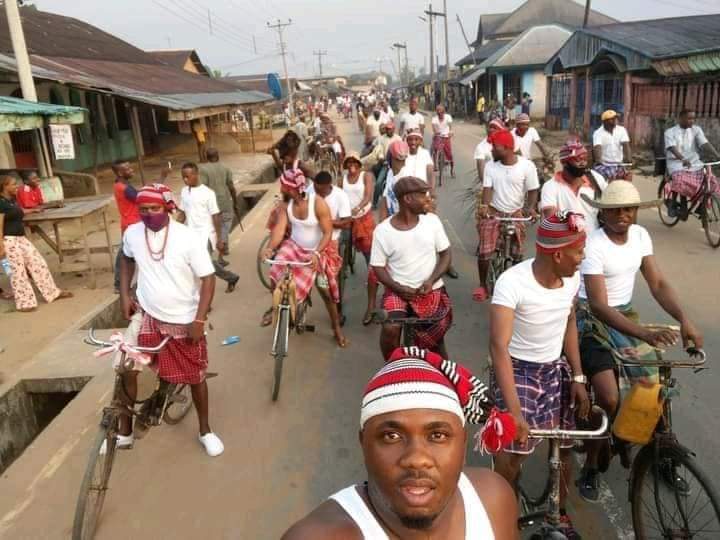
It is almost impossible to attend a Yoruba traditional marriage or any traditional Yoruba ceremony and see the celebrants wearing non-Yoruba clothes. The same thing happens among the Hausas or Fulanis or Kanuris or Tivs or Urbobos or Edos or Efiks or Ijaws.

But it is not unusual to see Igbo celebrants proudly wearing Yoruba clothes or Benin clothes or Hausa clothes at a traditional Igbo event.

In universities in the East, Igbos who live in Lagos or the North proudly chat with one another in Yoruba or Hausa to show other Igbos that they are well travelled and “foreign,” while those who speak Igbo are “local.”

When other Nigerians speak their language in the midst of others or display their culture, they are hailed as culturally conscious, but when Igbos speak their language or display their culture, they are afraid of being criticised for being “clannish.”

The Civi War dealt a terrible blow on the Igbo psyche. For fear of being seen as “Igbotic,” Igbos try too much to prove to other Nigerians that they are not “clannish” or “tribalistic.”

Igbos always want to apologize for their Igboness through their words and deeds. Igbos always try to “belong.” Igbos always want other Nigerians to endorse them as “detribalised.”

Thankfully, a new generation that is culturally conscious is coming up and resisting that.

©Azuka Onwuka

The Inspector-General of Police, IGP M.A. Adamu, NPM, mni has ordered the posting/redeployment of the following Commissioners of Police to State Commands/Formations as follows:

         i.      Kebbi State                                    –        CP Adeleke Adeyinka Bode, mni

        ii.      SPU, FHQ, Abuja                             –        CP Philip Maku

      iii.      Sokoto State                                   –        CP Ali Janga Aji

       iv.      Armament, FHQ, Abuja                   –        CP Ohikere S. Idris, fsi

        v.      CMDT Police College Ikeja               -        CP Daniel Sokari-Pedro, mni

       vi.      Port Authority Police (PAP), Western, Lagos       -        CP John O. Amadi, mni

     vii.      Oyo State                                                 -        CP Ngozi Onadeko, fdc

   viii.      Enugu       State                               -        Mohammed Ndatsu Aliyu

      ix.      Border Patrol, FHQ, Abuja               -        CP Haladu Musa Rosamson, fdc

        x.      Cross River State                            -        CP Sikiru Akande

      xi.      Ebonyi State                                    -        CP Aliyu Garba

     xii.      Airport Command                             -        CP Abubakar Umar Bature

   xiii.      Department of Operations, FHQ     -        CP Yusuf Ahmed

    xiv.      Adamawa State                               -        CP Aliyu Adamu Alhaji

     xv.      Training and Department                 -        CP Babaita Ishola

    xvi.      Imo State                                                -        CP Nasiru Mohammed

  xvii.      CMDT Police Detective College Enugu -     CP Alexander Nengi Wannang

xviii.      Delta State                                    -        CP Ari Mohammed Ali

   xix.      Counter Terrorism Unit, FHQ, Abuja        -        CP Olofu Tony Adejoh

     xx.      Peacekeeping, FHQ, Abuja               -        CP Sadiq Idris Abubakar

   xxi.      Force Public Relations Officer        -        CP Frank Mba                      

The postings/redeployments are with immediate effect.

CSP AREMU SIKIRU ADENIRAN
DEPUTY FORCE PUBLIC RELATIONS OFFICER
FORCE HEADQUARTERS
ABUJA

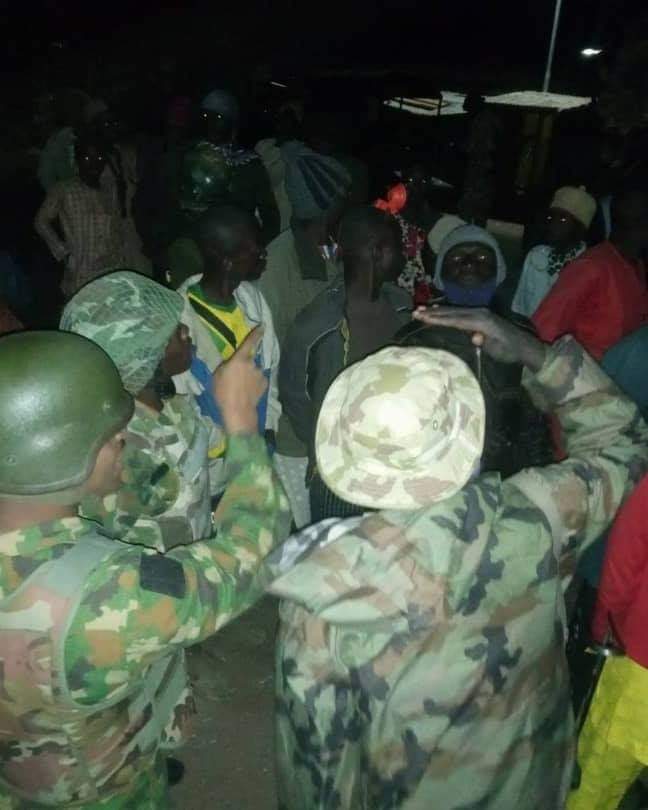
On 19 Dec 20 at about 2230hrs, troops deployed at Dandume village received credible intelligence that suspected bandits moving with suspected rustled cattles intercepted and abducted some Islamiyya school children mostly girls returning to Mahuta village from Maulud programme at Unguwar al-kasim village in Dandume LGA, Katsina State.

Troops in conjunction with the Police and local vigilantes from Mahuta village immediately mobilised to the scene and encountered the bandits at Unguwar Audu village and engaged them in a fierce battle, the bandits escaped with gunshot wounds and abandoned the kidnapped children and rustled cattle.

Troops rescued 39 girls and recovered 8 rustled cattle with no casualty on troops and the kidnapped victims. All kidnapped children are back to their homes in good health, while troops have continued to dominate the general area with aggressive patrol.