As the leader of NDIGBO in APC Lagos I am using the good offices to make a passionate appeal to all Igbo in Lagos to stay away from any form of protest being organized by one man called P Square( Peter or Paul Okoye from Ifitedunu Anambra State) or one Sowore in any space in Lagos State. I am a witness to the massive destruction Lives and Property we saw in Lagos during the #ENDSARS PROTESTS- a genuine protests that was hijacked by hoodlums and undesirable elements to inflict unimaginable pains and tears in the land of limitless opportunities.

The professional protesters are gathering again and this time I do not expect that anybody that has Igbo blood running in him will be the part another brigandage in Lagos. What was destroyed in Lagos during the so called #ENDSARS PROTESTS will cost more than a trillion naira to rebuild and work is yet to start. I know as a leader what I went through during those days of the locusts. May God help us to get understanding on this matter. Igbo do not destroy, they build.

Now if you join the hoodlums to destroy anything again then you are one of them and you are on your own. Please in the name God stay away from any protest in Lagos on 13th February 2021. Igbo should not and should never be part of it. Please go about your normal businesses that day and ignore any call to join the protest.

The Nigerian Communications Commission (NCC) has joined the rest of the world to celebrate the Africa Safer Internet Day (ASID), which is the continent’s version of the World Safer Internet Day (WSID), held on February 9 every year.

In marking the Africa Safer Internet Day 2021, with the theme “Positioning and Partnering for Child Online Protection”, NCC’s representatives visited secondary schools in Abuja and Lagos to sensitise and educate students, on how they can use the internet productively, avoid being victims of all forms of cybercrime, and deal with cases of cyberbullying.

The schools include Model Secondary School, and Government Science Secondary School, both in Maitama, Abuja; and Kuramo Junior College and Victoria Island Junior Secondary School, both in Victoria Island, Lagos.

Addressing some of the students of Government Science Secondary School, Abuja, under strict observance of COVID-19 protocols, Tokunbo Oyeleye, Deputy Director, New Media and Information Security at NCC, stated that this year’s theme was in sync with one of the focus areas of NCC with respect to child online protection, noting that the a Commission constantly sensitises young Nigerians on cybersecurity and its applications.

“We are here, as NCC representatives, to educate you, the younger generation of Internet users on what you need to know to keep safe while online as part of our efforts to ensure child online protection in our country in the use of Information and Communication Technology,” Oyeleye said.

She further explained that the concern over child online protection should not be limited to arresting the perpetrators, but should be more of providing education and counselling that may assist in minimising the harm on younger Internet users.

Meanwhile, at the Lagos event, Nkechi Obiekwe, Controller, NCC Lagos Zonal Office, said the protection and safety of children while they access the internet is a shared responsibility. She added that internet penetration permeates every aspect of life and adoption of the internet presents opportunities for learning.

Earlier, in a presentation, Chioma Ibe, a Principal Manager in NCC, spoke on cyberbullying and signs to watch out for. She also highlighted ways to resist online bullying and the importance of reporting cases of cyberbullying to relevant authorities.

“Online bullying can have a devastating impact on young people, whose online life is a key part of their identity and how they interact socially. Cyberbullying takes many forms, such as sending abusive messages, hurtful images or videos, nasty online gossip, excluding or humiliating others or creating fake accounts in someone’s name to trick or humiliate them,” Ibe said.

Also contributing to the discussion, Chukwuemeka Monyei, the Executive Director, Like-a-Palm-Tree Foundation, educated the students on how to mute conversation with, unfollow, block, and report anybody who engages in an act of cyberbullying toward them as a way of protecting themselves.

Oyeleye urged the students to share the knowledge they have gained during the programme with their friends and relatives towards ensuring a safer internet for all.

Pamphlets with salient printed information on child online protection, with emphasis on cyberbullying, were distributed to the students across the four schools.

The students, who participated in the intensive one-day sensitisation, expressed delight for being part of such a highly educational programme and thanked the Commission for its leading role in online child protection.

END.

The Director General of National Information Technology Development Agency (NITDA), Mallam Kashifu Inuwa Abdullahi CCIE, said that regulating indigenous content development and adoption is one of the strategic pillars that is transforming Nigeria’s economy, as well as putting the country on the right to tract in achieving Digital Economy.

Abdullahi said this at an online webinar on Local Content Policy in the ICT Sector with the theme: “Local Content Policy in the ICT Sector as key to Achieving Objectives of the Digital Economy in Nigeria” organised by Centre for Information Technology and Development (CITAD) in collaboration with NITDA and Speedstar.

He stated that in August, 2020, NITDA updated the Guidelines for Nigerian Content Development in ICT to align with the two issued executive orders 003 and 005, which led to enforcing compliance with all local content policy in IT projects through the Agency’s IT project clearance mandate.

“Through our modest efforts we have transformed the landscape and stimulated demand for made in Nigeria ICT products and services. Our policies have increased the consumption of local hardware in an unprecedented manner from annual sale of 113,814 in 2015 to 414, 510 in 2018 and 364,376 in 2019. We also facilitated patronage of indigenous software, amounting to over 3 billion naira through our regulatory local content guidelines and IT clearance,” he said.

He added that Local Content Policy in the ICT sector under the purview of the Agency has played a crucial role in increasing the consumption of local content, placing policies on the use of local content items in the various Ministries, Departments and Agencies (MDAs) across the country.

“The Administration of President Muhammadu Buhari GCFR, has given a special priority to diversification through strengthening of our indigenous content and local production with the motive to boost the boost the Nation’s Gross Domestic Product (GDP). In 2015 the country’s economy was down due to the fall in oil price crash, a team of experts was setup to develop policy for the government to diversify our economy, which gave birth to Economic Recovery and Growth Plan (ERGP) 2017 – 2020.”

“The Economic Recovery and Growth Plan (ERGP) is a Medium Term Plan for 2017 – 2020, for the purpose of restoring economic growth, building a globally competitive economy and accelerating inclusive growth by investing in our people the nation’s most priceless assets. The policy also identified Information and Communication Technology (ICT) as the key enabler, he added.

The NITDA boss said that the Federal Government of Nigeria issued two executive orders 003 in May, 2017 to support procurements of local content products and services by Ministries Departments and Agencies (MDAs), while Executive Order 005 was issued in February, 2018 to promote Nigerian content in planning, execution of projects and contracts in science engineering and technology respectively.


“Digital Economy is the fastest growing economy in Nigeria and the World in general. To sustain and consolidate the growth we need to ignite innovation and entrepreneurship in the digital space. Most of our initiatives today are innovation ecosystem centric that will help us to come up with ideas that will create values in Digital space,” he emphasized.

He further stated that guidelines for Nigerian Content Development in ICT require Multinational Companies (MNCs) operating in Nigeria to submit a annual report on local content development activities. According to him, assessment of the 2018-2019 Local Content Development Reports submitted by 9 MNCs indicates that a total of 663 Nigerians are employed by the MNCs and also, about 2,033 direct and indirect jobs were created through the MNCs activities.

The DG added that it also supported 88 Nigerian Startups, trained 28,773 Nigerians on emerging technologies, 58,892 Girls/Women trained in ICT, about 1,354,988 Nigerians were trained in Digital Skills, 71,289 ICT Scholarship Programs for Nigerians, 519,313 Nigerians were trained in ICT Professional Development.

“To sustain and consolidate on these achievements, the government rolled out Nigeria Economic Sustainability Plan and in line with the sustainability plan our Ministry under the leadership of the Honourable Minister of Communications and Digital Economy, Dr Isa Ali Ibrahim Pantami, sought the President’s approval to re-designate and expand the mandate of our Ministry to cover digital economy. This request was graciously approved and the Minister formulated the National Digital Economy Policy for Digital Nigeria. The minister has issued more than a dozen policies to support the implementation of the Digital economy.

“Digital economy is mainly driven by rapid business innovation, using digital technology to deliver new customer value proposition, new business model, new organizational structure, new customer experience, operational excellence and enhanced products and services. This cannot be achieved in isolation; we need innovation ecosystem.

“It is obvious that innovation is not evenly distributed globally but there is something common among all innovative countries. They all have a strong innovation ecosystem.

“To build a vibrant innovation ecosystem in Nigeria, we have keyed into MIT program call REAP – Regional Entrepreneurship Acceleration Program. REAP is a global capstone initiative that provides opportunity for communities to engage with MIT in an evidence-based and practical approach to strengthen innovation ecosystem. This centre will serve as a platform for the MIT-REAP initiative,” he said

Abdullahi pointed out that COVID-19 has impacted lives in an unprecedented way, many aspects of lives – work, education, economy, entertainment, have moved online. According to data compiled by Visual Capitalist, in a single internet minute in 2020, consumer spend more than 1m USD, over 42 million messages shared via WhatsApp, more than 1.4 million people make video or voice call, over 150,000 messages shared on Facebook, more than 319 new accounts created on Twitter, LinkedIn users apply for over 69,000 jobs, more than 6,500 packages shipped by Amazon, and over 200,000 people participate in Zoom meetings.

Creating a memorable customer experience is fast becoming a top priority for businesses – and for good reason, says Reynhardt Uys, Chief Experience Officer, Immersion Group. He notes that customers no longer base their loyalty on price or product alone. Instead, they stay and spend, with companies based on the overall experience they receive. “Quite simply, organisations who fail to adopt a customer-centric approach risk lagging behind competitors who have already become customer-obsessed.”

While research shows 86% of buyers are willing to pay more for a great customer experience, Uys says there are several common mistakes that can derail efforts at personalisation and the customer journey. “Developing an unmatched customer experience involves applying the most appropriate methodologies and expertise in the right areas of focus. From customer research data teams to marketing and operations, user experience design and development teams, just to name a few.”

Of critical importance is first cultivating a good understanding of the business goals and objectives. “There is risk in investing in a solution before truly understanding the problem,” explains Geoffrey Hardy, Head of Digital at Immersion Group “Many gimmicks and solutions promise ROI, lead generation in abundance, return customers, brand loyalty and so much more. However, real customer data, which will inform relevant useable customer insights, will be your most powerful tool – with proper research and analytics, informed reporting, and a great CRM will help create a successful solution that is aligned to your business and customer needs.”

According to Uys, a common error many organisations make is not investing the time and effort required to truly understand the customer. “How do you become the best milkshake in the country without knowing what flavour and recipe your customers want and prefer? And how do you serve your customers through a platform you don’t yet know they’ll be comfortable using or a method of payment they feel safe completing?”

Aside from relying solely on tech solutions to fill organisational gaps and solve customer pain points, Hardy says that businesses tend to place too much emphasis on customer acquisition strategies and journeys and very little focus on the servicing side. “Despite sweeping change in almost every industry, companies still rely on repeat business and loyal customers for success. This means that a large portion of focus needs to be on how to continuously bring customers to your brand, and keep them there for as long as possible. The aim should be to invite them into your space, have them forget time altogether, and not want to be anywhere else.”

Uys and Hardy agree that the only way to ensure customers are left with a positive experience they want to repeat again and again is to build a considered and complete end-to-end experience solution, instead of single journeys in isolation. “The world is changing, so are customers. Needs are evolving, customers are more demanding, challenges are increasing and what might have differentiated organisations in the past, may not be what differentiates them in the future,” says Uys.

UNITLIFE, the United Nations initiative dedicated to fighting chronic malnutrition through innovation, and the Ecobank Group’s Foundation (EcobankFoundation.org) – the pan-African banking group with operations in 33 countries across the continent-announce the launch of the “Make the Connection” campaign, which aims to raise awareness and funds to prevent chronic malnutrition in Africa.

144 million children under the age of 5 suffer from chronic malnutrition worldwide. The prevalence is highest in Africa, where as many as 24 African countries have rates above 30%. In other words, 1 in 3 African children do not eat a diet that meets their nutrient needs during the first 1,000 days of their lives. As a result, they face life-long consequences affecting their physical growth, cognitive development and immune systems.

UNITLIFE is excited to partner with the Ecobank Foundation to raise awareness and funds to fight this disease

The disruptions caused by the Covid-19 pandemic to countries’ health systems and the global economy have exacerbated the malnutrition crisis in Africa. Nutrient-rich foods such as vegetables, fruit and animal-sourced foods have become less accessible and less affordable for millions of families.

“Everywhere in Africa, the Covid-19 pandemic has had a disastrous effect on people’s income and ability to access nutritious foods. The Standing Together for Nutrition Consortium projects that an estimated 1.2 million additional children in Sub-Saharan Africa will be stunted in 2022 compared to 2019 due to interruptions in nutrition services and increased household poverty. It is imperative that we shine more light on chronic malnutrition in these challenging times. UNITLIFE is excited to partner with the Ecobank Foundation to raise awareness and funds to fight this disease”, says Assia Sidibe, Head of UNITLIFE Secretariat.

Ecobank is supporting the communication efforts of the campaign and bringing the necessary expertise to set-up the fundraising mechanisms. Carl Manlan, Chief Operating Officer, Ecobank Foundation explains: “At the Foundation, our aim is to create a positive impact on the lives of people across Africa. Supporting UNITLIFE helps us achieving our mission. We are glad we can contribute to allowing a healthier and more prosperous future for children in Africa.”

The “Make the connection” campaign stands in line with the ongoing global effort to mobilise additional resources for development and contributes to the achievement of the United Nation’s Sustainable Development Goals for 2030, especially SDG2 “End hunger, achieve food security and improved nutrition and promote sustainable agriculture.”

Distributed by APO Group on behalf of Ecobank Foundation.

By: Andrea Tucker, Director at MortgageMe

We get it. The thought of paying off a house every month for the next 20 to 30 years isn’t exactly thrilling. But if managed carefully, you can use your bond to your advantage and build a nest egg of savings for life’s little and not-so-little emergencies.

The why

It makes good financial sense to expect and prepare for financial emergencies and to get into the habit of saving every month. No amount is too small. If you’re able to able to save or invest some of your salary every month, as well as increase the payment on your home loan, you’re covering yourself for emergencies as well as saving for something specific through your investments.

The How

A good place to start is by increasing your home loan repayments above the minimum requirement. Or, in times of decreasing interest rates (as was in the case in much of 2020) you can keep your monthly instalment the same as what it was prior to the rate drop. This disciplined behaviour provides you as a homeowner with a level of financial flexibility to deal with unexpected financial difficulties, or finally get round to making those dream home improvements.

Your home loan is the cheapest way to borrow money as you’ll never get lower interest rates on any other type of credit. Banks will allow you to withdraw any extra money that you’ve paid in above and beyond your minimum payments, which is why this is such a clever form of saving. 

The nitty gritty

Let’s run some numbers to explain how all works: If you were to open a savings account that gave you immediate access to your funds, and you had R100 000 sitting in this account. Bank A would be paying 3.10%* interest on these funds. If you had a home loan at Bank A with an interest rate of 6.5%[1] (prime less 0.5%), you would in effect be paying off your debt at a higher rate (twice the rate in fact!) than you’d be earning through your investment. If, however, you chose to take the R100 000 investment pay it directly into your home loan (in addition to your monthly payments), you would instantly reduce the term of your loan significantly and pay less interest over entire loan period. And if you needed those funds in a pinch, you would be able to access them easily.

Remain smart and disciplined about paying off your debt and you can make your home loan work for you!

Ends.


[1] Interest rates applicable as at 24 July 2020. Bank A Prime Lending rate: 7%

The Director General, National Information Technology Development Agency NITDA Kashifu Inuwa Abdulahhi, CCIE said that economic diversification is not basically just to alleviate poverty but also to create prosperity by designing a high value market chain for our local production.

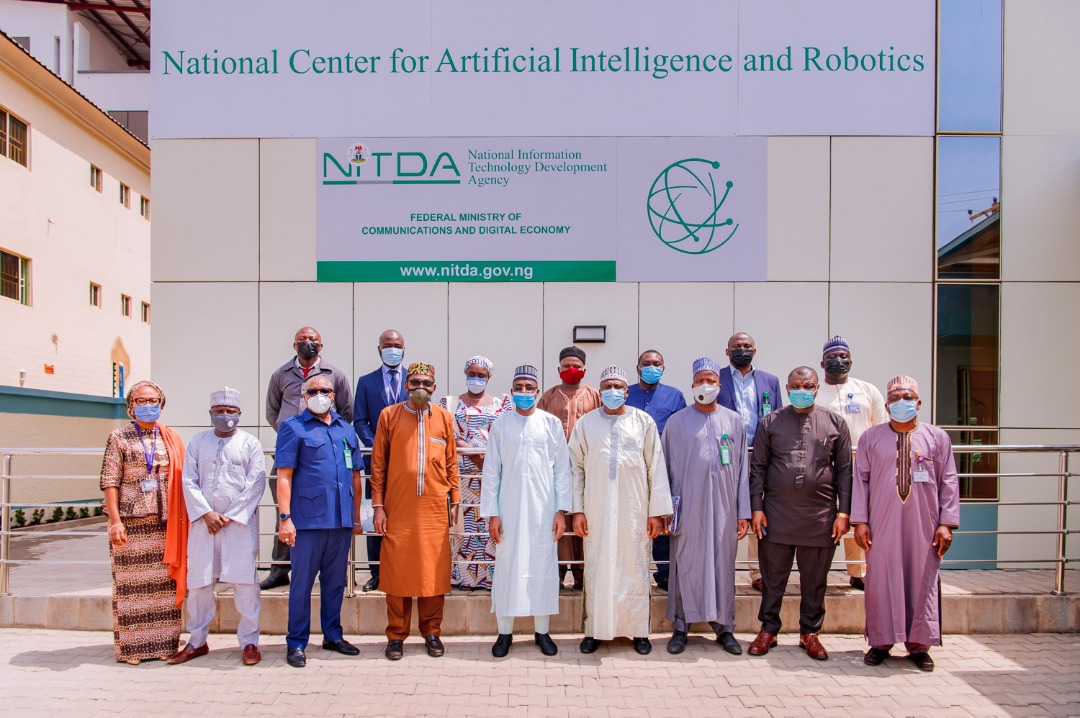
Abdullahi said this today at the National Centre for Artificial Intelligence and Robotics (NCAIR) Office, Wuye when he hosted delegates from the Federal University of Technology, Minna led by the Vice Chancellor, Professor Abdullahi Bala, fsssn.

The DG explained that technological ecosystem comprises of the Small and Medium Scale Enterprises (SME’s) which grow lineally and the Innovative Driven Enterprises (IDE’s) which grow exponentially and have a broader market, adding that innovation is the best mechanism in creating prosperity.

He further said that most of the developed and wealthy nations do not depend on their natural resources but on creative innovations.

Abdullahi expressed his delight at the University’s intention in seeking more collaboration, a synergy which he described as strategic in sustaining a digital economy, prepare the students for the Fourth Industrial Revolution, boost Industrialization as a whole to move the country forward.

He said that the creation of an ICT hub for universities in all the geo-political zones which included the Federal University of Technology, Minna was in line with the NCAIR’s mandate of collaborating with universities in empowering youths.

“Graduates are unemployable these days because all they know is theory and will always need additional training upon employment but exposing them to these technology advancements will broaden their knowledge and give them the opportunity to conceptualize their ideas,” he said.

The NITDA boss stated that minimal capital is needed to be a part of the Fourth Industrial Revolution, and that is the purpose of Artificial Intelligence and Robotics Centre, to devise ways in which fundamental technology can be used to solve problems and create prosperity.

Earlier in his speech, Professor Abdullahi Bala said that the purpose of the visit was to thank the Agency for its intervention of IT Hub to the university which has been built and commissioned for use and also to leverage on the cordial relationship between the Agency and the University in exploring more collaborative opportunities for productive interactions in Research, Innovation and Development in Emerging technologies.

He assured the DG that the University has scaled its capacity to further collaborate and complement the efforts of NITDA by creating an International Centre for Emerging Technology, an initiative which he believes, in collaboration with the NCAIR will focus on areas of Artificial Intelligence, Robotics, Capacity Building, Research and Development.

Professor Bala said that the University has all it takes to train NITDA scholars in post graduate studies and admonished them to come occasionally as visiting lecturers to interact with their students.

Agency banking has always been one way of bringing banking to the people and also the inclusion is awesome. With a lot of stalls lately doing the basic banking stuff, this has reduced the long lines that have been associated with Nigerian banks, unfortunately, the people in the ecosystem of Agency banking handling PoS machines can’t sing Kumbaya anymore due to insecurities.

Just few days ago, a lady was brutally murdered in Aba, Abia state for oke thing! She is a POS (Point of Sale) machine operator, her cash for transactions taken and her life taken. This has dampened the morale of the agents and many of them are trying to quit the busineess in Aba , Abia state!

“Omila” as they call it in Benin, the PoS operators in that ancient city are literally sleeping with one eyes open, some have described their busineess nightmarish and customer apathy high. People don’t know when to go to PoS and get money but risked robbed while the operators are so scared that they can’t differentiate the customers and the robbers ! The business is getting a low turnout due to the attrction to robbers – cash at hand! Speaking on this, Osato a resident of New Benin said ” if we don’t arrest the situation, the benefits of PoS and Agency banking would be lost and it would bee back to long ques in the bank. The security situation is alarming and there is need to protect those doing the business . “

A point of sale, (POS) lady has died from bullet wounds after been shot in the heart

The news are no longer funny, the news are worrisome and what these PoS operators face daily in the hands of robbers is enough to make some of them close shop. Just One week after armed robbers shot dead a Point of Sale (POS) operator along Market Road, Aba, Abia State, another operator identified as Ezinne Grace Iroh, has been killed at Ukaegbu Road, in Ogbor Hill area of the city, this was after the robbery at POS shop at NO: 98 market road Aba.

In Edo State,A courageous female Point of Sale (POS) operator, identified as Ann, has reportedly disarmed two robbery suspects in the Uhogua community in Ovia North-East Local Government Area of Edo State.

Not all were lucky, in town Panyam District of Mangu Local Government Area of Plateau near Jos City, more than four customers at a PoS kiosk have been shot following a robbery attack in Panyam District of Mangu Local Government Area of Plateau on Sunday night.

In Lagos, a fake Police officer, 37 years old, David Omoruyi of No. 4, Job Street, Afromedia, Otto-Awori Local Council Development Area, was arrested at about 12.12 am, on January 19, 2021, by the Police operatives attached to Area E Command, Festac; while the suspect terrorising POS operators, 24 years old, Korede Anifowose, was arrested at about 12.45 pm over the weekend, by the operatives attached to Ipaja Division.

Somewhere in Abesan Estate, Lagos, an Agent had closed shop due to the activities of scam artist. The scam artist came and did a fake credit alert and the poor young girl who is handling the PoS gave her the huge amount thinking that it was real , not knowing that it was fake as it is… This particular salutation set thee girl back and up-till the time of this report she hasn’t been able to reopen that business , the lost was about hundreds of thousands coupled with phobia, the business closed.

All over the country, especially in the southern part that has embraced digital banking , the crime rate has evolved , as the digital banking deepens, so has the level of the crime evolved and changed.

Industry stakeholders and watchers have called on the government to up their security infrastructure and protect the Agent and PoS operators while at the same time trying to make the people in the North to fully understand and adopt Agency Banking and digital banking as a way of doing business. Failure to nip this at the bud would mean that the banking halls would be crowdy and Fintech firms that have been developing innovative solution would be dampened.

Anthony Emeka Nwosu

All over the country, especially in the southern part that has embraced digital banking , the crime rate has evolved , as the digital banking deepens, so has the level of the crime evolved and changed.

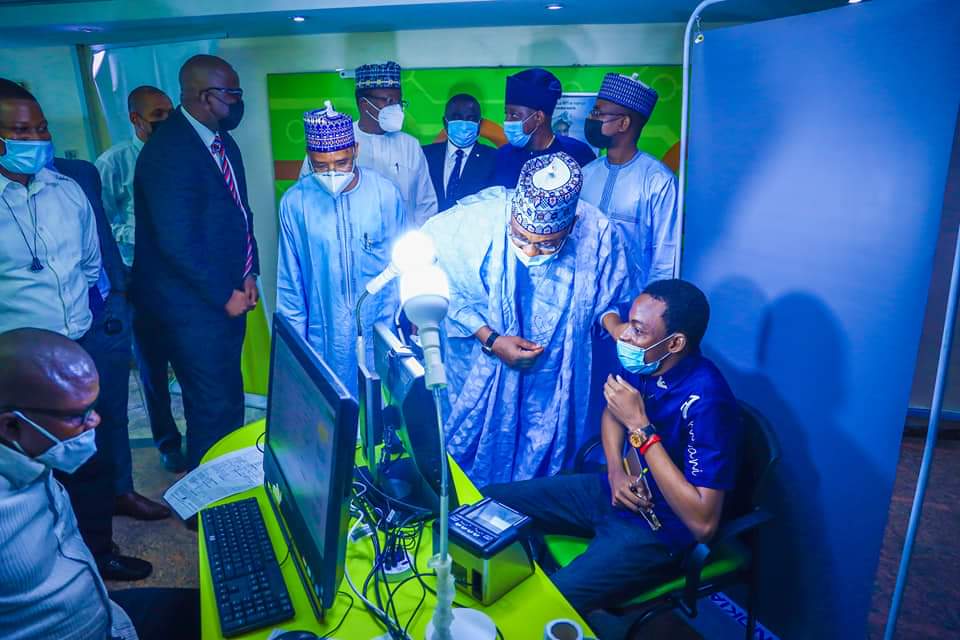
In the capacity as the representative of His Excellency, President Muhammadu Buhari, the Honourable Minister of Communications and Digital Economy, Dr Isa Ali Ibrahim Pantami led the FG’s delegation to a supervisory visit at Globacom’s NIN enrollment center.

The official visit was the fourth point of call for the day and was necessitated following the license granted to telcos and other private entities to perform the NIN enrolment exercise.

The Honourable Minister, Dr Pantami also interacted with prospective enrollees in a bid to get first-hand information about the process at the glo center situated in Aminu Kano Crescent, Wuse 2, Abuja.

DigitalNigeria

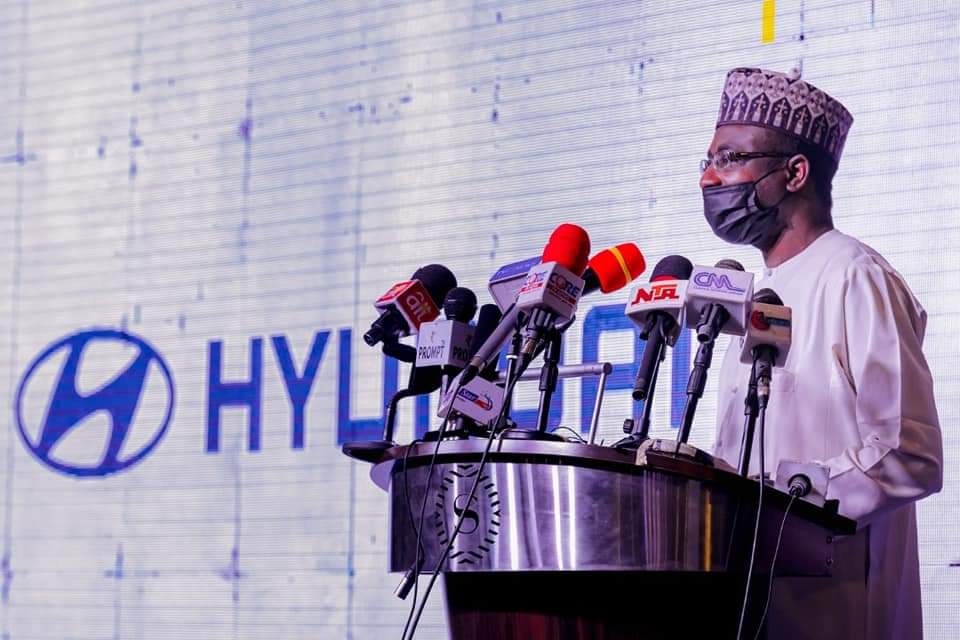
The Director General, National Information Technology Development Agency, (NITDA) Mallam Kasifu Inuwa Abdullahi, CCIE, reiterated that ecosystem is a sure way in creating value, wealth and prosperity, especially now that Nigeria is on its course to become one of the leading digital economies in the world.

Abdullahi made this remarks today, in Abuja, during the unveiling ceremony of the first Nigerian assembled Hyundai KONA Electric Vehicle, launched by National Automotive Design and Development Council (NADDC).


He averred that creating ecosystem is the only way to easily get value that will enable growth, wealth and prosperity.

Abdullahi affirmed that with the introduction of electric vehicles in the country, the nation is definitely advancing towards a vibrant economy. He attributed the economic success of South Korea, which was not as developed as Nigeria 20 years ago, but today they have advanced in innovative technology.
The NITDA boss further agreed with the Minister for Works and Housing, Mr. Babatunde Raji Fashola (SAN), who spoke earlier at the event, that innovation is a rebirth of the reassembling of cars in Nigeria, adding that Nigeria should advance in the participation of building parts and not only in the assemblage of the automobile.

He stated that NITDA is working with start-ups, and young Nigerian entrepreneurs to develop ground breaking ideas on automobile, using Internet of Things (IOT), renewable energy and others.

“This is an opportunity to work together to challenge our start-ups” he added, as he declared his passionate excitement about the launching of the electric automobile.
He explained further that the NITDA is driven towards innovation and technology advancement, affirming that the Agency is committed to implementing the National Digital Economic Policy and Strategy for a digital Nigeria.

“Our mandate is to create a framework for the planning, research, development, standardization, application, coordination, monitoring, evaluation, and regulation of Information Technology practices in Nigeria”, he said.

He reiterated that the recent ground breaking of National Digital Innovation and Entrepreneurship Centre (NDIEC) established by NITDA is in line with the National Digital Economy Policy and Strategy (NDEPS) of the Federal Government and its commitment to lift 100 million Nigerians out of poverty in the next 10 years as promised by Mr President.

“The NDIE Centre is intended to provide facilities that would encourage inquisitive perspectives and create opportunities for entrepreneurs to transform their skills to productivity. In addition, the Centre will provide the opportunity for start-ups to accelerate their innovations through design thinking sessions and co-innovation workshops,” he added.

Abdullahi also ascertain that the Ministry of Communications and Digital Economy, under the auspicious leadership of Dr. Isa Ali Ibrahim Pantami, is taking enormous strides in promoting the President Muhammadu Buhari’s digital agenda by ensuring that Information Technology becomes a relevant tool in the nation’s development.

He applauded the Director General, National Automotive Design and Development Council (NADDC), Jelani Aliyu, and their partners, Stallion Group, for their innovation and contribution to the technological advancement of Nigeria.

He however, assured the NADDC and the Stallion Group that Nigerians have been very eager to use the Hyundai’s KONA, the first all-electric vehicle, since its first launch in Lagos on the 13th of November 2020.


Mallam Abdullahi, in company of other dignitaries, took a ride in the newly unveiled vehicle to the applause and admiration of everyone present.