The Minister of Youth and sports Development Mr. Sunday Dare has received members of the Nigerian Olympics Association in audience with a promise to give them an inclusive role in mentoring younger athletes.
Speaking in Abuja on Tuesday, the Minister said “The gold is in the child, I have made this statement repeatedly because the grassroots sports is where the talent can be discovered and nurtured to stardom. I believe in grassroots which is why principal cup is one of my projects to revalidate grassroots sports. We have started a nursery for development of our sports. As Olympians, your legacies can only last when you are able to groom new Olympics medalists. You must mentor younger athletes. If we organize an Olympics camp once in a year where young people will train it would attract a large number of young people.”
The Minister further said “We intend to set up special fund for athletes which would provide funds for training, facilities and credit line. We shall create opportunities for our sports people to thrive.”
In his response, President of the Nigerian Olympians Association Olymide Oyedeji said” Our aims and objectives include relating with governmental and the sports Ministry to take Nigerian sports to higher ground and assist sports men and women to reach their potentials.”
We’ve all seen lists for things you need to be doing on social media – engage, listen, communicate, etc., right? Well I don’t know about you, but we are usually fed up by the vague information in such posts. How can you take action to begin “engaging?” What do you do before you engage?
At Social Fulcrum, we have a process for coming up with the social media campaigns that drive our clients wild. Instead of telling you to communicate or to listen, we want to give you some actionable tips you can use to jumpstart your social media strategy – TODAY.
Do Your Research Look for communities, influencers, and discussions that relate to your brand, products, competitors, and industry. Look into how you could potentially target key audiences through different media. Don’t just limit yourself to Facebook pages/groups and Twitter users. Look into bloggers in your industry (or outside your industry) that have an audience you want to reach. Look at relevant Meetup groups locally and nationally. Find discussions in online forums. If you are a small company, find discussions about your industry. If you are a larger brand, we recommend using a social media measurement tool to assess the online landscape of your brand mentions to help formulate your strategy. These are all potential areas to generate content, seed content, find ambassadors, and get online placements. But you can only reap these benefits if you know where and if these communities exist!
Build Relationships First When I was creating the strategy for a national food association’s social media marketing campaign, we knew we would want to promote their Facebook page, Twitter account, and video contest through influential bloggers in the cooking, foodie, and mom verticals. Instead of simply reaching out to those bloggers and asking them to promote our properties, we made sure to first build our relationship with these influencers. Our first communication to these bloggers was to offer promoting THEIR content to OUR audiences. We wanted to show that we were keeping in mind their goals (increasing readership), and not simply self-interested. We nurtured these relationships for months before letting them know that we had a contest that we were promoting. At that point, they had received so much benefit from the relationship that every single blogger was happy to promote our contest. And the association still has those relationships to this day!
Leverage Twitter Targeting Options Too often businesses will create a Twitter account and then not know what to do with it. Once your profile is set up, you can use the following strategies to find your opportunities on Twitter: Search for accounts that have followers who are in your target audience. For example, if you are a local pizza chain, all you need to do is find another local business with a decent amount of followers, and follow all the followers of that account (gradually, not all at once). You can safely assume that a vast majority of the people following a local business in your area are located in that local area. Not a local business? Try trade publications, competitors, or thought leaders. Search for people tweeting about a need that your product/service alleviates. For example, in our campaign for the national food association we mentioned above, we found that people on Twitter were commonly complaining about a lack of ideas for what to eat. Armed with an online database of 700+ recipes, we reached out to these people and found out what type of food they liked, and sent them an appropriate recipe. This gained awareness for our client’s website, Twitter account, and recipe database, and also built goodwill with our audience (which we later leveraged to promote a video contest). Use the advanced search on Twitter to search bio information. This is especially useful for B2B companies looking to increase their social impact. People will typically list their job title in their bio (e.g. CMO, COO, CEO, Executive Director, Partner), allowing you to target the specific decision makers with whom you are trying to communicate.
Explore & Leverage Facebook Advertising There are few businesses that can’t benefit from the precise, unique targeting available through Facebook’s advertising platform. Even B2B companies can find value in Facebook ads if you can get creative with the parameters. For example, Social Fulcrum used Facebook ads to grow our own Facebook page by targeting users who are over 40 years old and who “like” the Harvard Business Review, because this audience includes senior-level decision makers at mid to large size corporations. Facebook Advertising can be an effective method for driving traffic to a website, as well as for increasing the size of your Facebook fan base, for just a few dollars per day. The key is finding the right targeting parameters, which might include users who “like” a competitor, users who “like” something your target audience probably likes, or even users who have a birthday within the next week.
Create a Content Calendar There’s nothing worse than a Facebook page or Twitter account that’s filled entirely with self-promoting updates. It’s not always easy to come up with awesome, engaging content every day, but tweeting another link to your website is not the answer. That’s why it helps to create a weekly or monthly content calendar in advance to help you think strategically about what to post and when, being sure to schedule promotional updates at a maximum of one time per week. Your social media channels are not a constantly updating advertisement for your business. If you aren’t sharing interesting content, asking questions, and making your fans and followers feel valued, they’ll soon wonder why they’re connected to your account in the first place.
These specific tips can help any business better utilize social media to achieve organizational objectives. Though only the beginning steps to a stellar social media campaign, these tips allow for architecting a social media strategy that leverages brand assets and social media tools to get your brand in front of the right people and ultimately, grow your business.
By Andrew Krebs-Smith, President of Social Fulcrum
Andrew Krebs-Smith, Founder of Social Fulcrum, has managed social media campaigns for accounts including Pfizer, Ocean City MD, The National Aquarium, and Strayer University. Andrew regularly speaks at the university level regarding social media marketing, and has held the position of Social Media Co-Chair at the American Advertising Federation, Baltimore Chapter. Connect with Andrew on Twitter and LinkedIn.
Dr. Obiageli Ezekwesili and other members of the #FixPolitics’ WorkStudy Group have urged the first set of cohorts in the unconventional School of Politics, Policy and Governance to be ready to imbibe the spirit of servant-leaders and statesmanship.
The students, on Monday, March 1, 2021, started the journey for a seven-month course that would revolutionise their thinking and propel their minds for nation building.
The course is part of the group’s agenda to fix politics in Nigeria and Africa, according to a statement on Wednesday by the group’s Publicist and Spokesperson, Mr. Ozioma Ubabukoh.
Welcoming the pioneer participants, the Chief Executive Officer of SPPG, Mrs. Alero Ayida-Otobo, congratulated the students and described the event as the arising of nation builders.
“Today is the first day of a journey for many of you, a journey that is going to take you to unusual places. Some are going to be painful and others exciting. But I want you to keep the end in mind,” she said.
Ayida-Otobo noted that through the programme, students would be given the necessary tools to understand the political landscape, economy, resource management, among others.
“Africa needs the individuals that would pay the price to fix politics,” the SPPG CEO added.
Ezekwesili, who founded #FixPolitics, emphasised the significance of SPPG, calling the attention of the students to the understanding of leadership as service for the common good.
“To that extent, we must say to you that you are on a journey for self-discovery. You are in a journey where you are to be the one to evaluate your readiness as well as negotiate your values because the greatest tragedy of the African leadership failure is willingness to negotiate values.
“If after being with us, there is nothing that proves you are different from the leadership that brought us from the lowest rock of development, then we will not have done anything meaningful. My joy is that even before you started, we felt the air of what you exude: the readiness to go for it,” she said.
For Prof. Remi Sonaiya, the pioneer students must take a deeper reflection to query the reason they applied to join the movement for the birth of a new governance system in Africa.
Sonaiya, a KOWA party’s presidential candidate in the 2015 general election, added, “So, my question to you is why have you come? Why did you apply to SPPG? What are you doing here?
“I hope you have come with a mind open enough to allow a fundamental disruption to overweight your thinking. I trust that you are here because you believe politics is service and that the pursuit of a common goal is the noble goal for politics.”
Speaking on the SPPG theoretical and practical courses, Frank Nweke (Jnr.) urged the students to pay greater attention to the subjects of values and ethics, during their stay in the school.
“At no time in our history has our nation’s contemporary need for national and sub-national leadership been as dire and as urgent as it is today. SPPG has, therefore, been conceptualised as a sustainable approach and module to identify, recruit, train, deploy and monitor citizens into and within public leadership positions,” the former minister said.
In welcoming the students, the SPPG Head of Faculty, Dr. Amina Salihu, said, “Distinguished pioneer cohorts, welcome to a journey of a life-time, where you will become the seed of a critical successor generation. The power of possibility begins with you!
“You are with us in our mission to create a successor generation that will run for elective offices and will help to collectively shape a new 21st century political culture as a class of public leaders with the right character, competence and capacity to prioritise the public good over private benefits. Be bold, be optimistic and be involved. That is the way to change the world!”
One of the pioneer students, Elizabeth Onuoha, said, “I believe that what we are to learn will allow us to birth the Nigeria of our dreams.”
The benefits of digital investment in the oil and gas sector are multifold: increased productivity, cost savings and improved performance all tend to follow investments in big data, the ‘Internet of Things’, artificial intelligence and other digital technologies. Yet according to Deloitte’s digital maturity index published last May, upstream oil and gas trails significantly behind other industries when it comes to the pace and degree of digital adoption.
Resistance to digitalization in the upstream energy space can be ascribed to several factors, some of which apply to hydrocarbon producers regardless of the maturity of their assets or the sophistication of their sector. For example, the oil and gas industry imposes strict health and safety regulations to protect employees against high-risk environments, such as offshore oil platforms and, as a result, companies cannot be laissez-faire about implementing automated or robotic technologies without ensuring that the new technologies sufficiently address safety precautions. The sector is also dependent upon an extended global supply chain, in which labor forces vary in skill, capacity, size and cost. Compounding these factors is frequent market volatility, making digital transformations difficult to roll out in tune with ever-fluctuating oil prices.
As companies across sectors have had to adopt digital tools for remote work, COVID-19 has accelerated the need for digital rollouts
However, one of the primary obstacles to digital adoption is exclusive to mature producers, in that digital technologies must be integrated with legacy systems, as well as with the oil and gas personnel who operate them. Such markets are often characterized by narrow exposure and high resistance to change. As a result, digitalization represents a unique opportunity for emerging producers like Mozambique, which discovered major offshore gas reserves in 2010 and took the $20-billion final investment decision on its Area 1 Mozambique LNG development as recently as 2019. The relative infancy of the sector – as the country prepares for first gas by 2023 – enables Mozambique to build technology into the DNA of its sector as it evolves in real-time, rather than upgrade technologies and systems retroactively.
Oil and gas operations rely on highly technical, physical processes, in which digital transformations must apply themselves to complex, capital-intensive assets, such as offshore platforms, LNG terminals or pipelines. For its part, Mozambique has been at the forefront of spearheading large-scale gas developments that are the first of their kind both in the country and on the continent, including the Coral South floating LNG terminal, the first newly-built deep-water floating liquefaction plant globally. Mozambique has also leveraged German technological innovation with Siemens Energy’s supply of four centrifugal compressors and six SGT-800 industrial gas turbines to provide on-site power generation at the Mozambique LNG facility. In short, Mozambique has proven a worthy recipient of foreign expertise and remains in need of additional technology and knowledge transfer to apply to its range of world-class gas infrastructure projects.
As companies across sectors have had to adopt digital tools for remote work, COVID-19 has accelerated the need for digital rollouts, positioning technology as a means of coping with transformational changes facing nearly every industry. Within the oil and gas sector, specifically, digitalization and optimization of oilfield assets have emerged as principal cost-cutting mechanisms, as energy companies continue to face threats to efficiency, sustainability and profitability. Well integrity, enhanced oil recovery, manufacturing execution systems, cloud computing – such digital applications are capable of uniting real-time data with advanced analytics to improve decision-making and boost efficiency and sustainability, especially as the need to allocate capital to assets with the highest returns and operational efficiencies becomes more pressing.
Now more than ever, Mozambique is in the midst of competing with other frontier oil and gas markets – both in and outside of Africa – to attract foreign direct investment into its budding energy sector. Digitalization represents a strategic competitive advantage, whether through advancing seismic surveys that enable companies to make better drilling decisions, or reducing data interpretation time and associated cost of exploration. For Mozambique, digitalization represents a billion-dollar opportunity that cannot afford to be overlooked.
Africa Oil & Power is working with the Mozambican government to promote investment in energy and diverse sectors, including agriculture, industry, tourism, construction and logistics in 2021. Visit www.MzGasAndPower.com for more details.
On March 8-9, AOP will host a Presidential Award ceremony (invite only) and Workshops Day in Maputo, preceding the Mozambique Gas & Power 2021 conference and exhibition to be held later in 2021. The event is online. If your organization would like to host a workshop, please email sales@africaoilandpower.com. To register to attend for free, please visit: bit.ly/3b3wtkM
The Royal Academy of Engineering (www.RAEng.org.uk), an engineering charity focused on harnessing the power of engineering to build a sustainable society and an inclusive economy, is showcasing its impact on enhancing collaboration, education, and diversity in engineering in sub-Saharan Africa, delivered through its Africa grants programmes ahead of the second UNESCO World Engineering Day for Sustainable Development on 4 March 2021.
The achievements of the Africa grants programmes include:
Over 2000 professionals trained by Professional Engineering Institutions across sub-Saharan Africa.
Over 530 student industry placements since 2013. Number of students obtaining industry internships increased from 40% to 90% over the course of one project in Zambia
Diversity & Inclusion initiatives have driven equal gender participation in programmes. A project from the Institute of Engineers Rwanda helped to increase the number of female internship applicants from 5% in 2018 to 25% in 2019.
50 individual course curricula reviewed and improved as a result of industry-academia partnerships.
Almost 50 UK organisations and 400 in-country bodies involved as project partners so far.
In celebration of World Engineering Day, the Academy is also releasing a series of videos (http://bit.ly/3kGb7Nr) highlighting how engineers play a critical role in meeting the UN Sustainable Development Goals.
The Academy is helping to develop innovative solutions to a range of impending and accelerating challenges. Working with local higher education and engineering organisations, it is helping to grow engineering capacity and support sustainable development across 23 countries in sub-Saharan Africa through two key programmes: Higher Education Partnerships in Sub-Saharan Africa (HEP SSA) and GCRF Africa Catalyst.
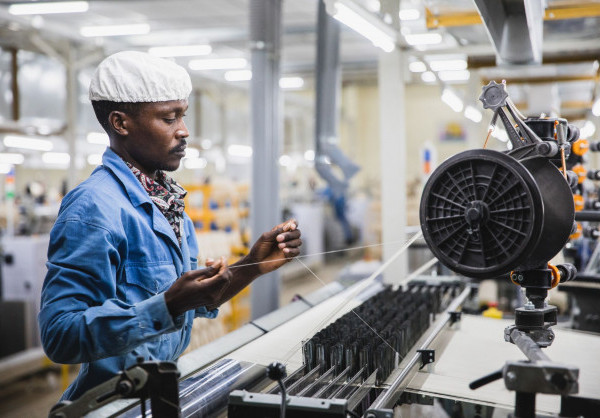
The first, HEP SSA, provides industry secondments for lecturers, equipping them to teach in line with the latest industry standards, while placements help their students to develop practical skills, and give them a better understanding of project cycles and networking opportunities. The programme addresses the gap between theoretical engineering knowledge taught to students across sub-Saharan Africa and the practical application of such theory in industry.
By developing strong alliances between local partners in sub-Saharan Africa and the UK, we can enable learning, collaboration and sharing of best practice
Through strong alliances with partner academic institutions, the Academy is helping to reshape teaching requirements and facilitate more opportunities. At the University of Zambia, this led to updating and aligning course content in line with industry requirements, while increasing the number of students obtaining industry internships from 40% to 90%.
The GCRF Africa Catalyst programme leverages the Academy’s extensive network and expertise to strengthen national engineering organisations. More than £3.5 million has been awarded in 37 projects across 14 countries to help these bodies promote better training, diversity and sustainability.
Launched in 2016, with support from the UK government’s Global Challenges Research Fund (GCRF), the Africa Catalyst initiative allows engineers to focus on issues of specific importance to their relevant jurisdictions, while facilitating good governance practices.
The Academy aims to support the development of a diverse and future fit workforce across the continent. It is estimated that fewer than 10% of engineering posts in Africa are currently occupied by women. GCRF Africa Catalyst has worked with Women in Engineering (WomEng) to promote gender diversity across a wide spectrum of professional experience. WomEng’s work with Eswatini’s Registration Council for Architects, Engineers, Surveyors and Allied Professionals has resulted in seven registered female members where they initially had none. A HEP SSA project with the Institute of Engineers Rwanda helped to increase the number of female internship applicants from 5% to 2018 to 25% in 2019.
Commenting on the progress achieved, Yewande Akinola MBE, a member of the Royal Academy of Engineering GCRF Africa Catalyst Committee, said: “While we see immediate improvements in skills and innovation through these programmes, the real win is establishing a framework for lasting change. This will equip communities in Africa to anticipate and plan for the challenges posed by climate change, urbanisation and economic development. The continent is transforming rapidly, and those engineering its future need the skills to think on their feet.
“By developing strong alliances between local partners in sub-Saharan Africa and the UK, we can enable learning, collaboration and sharing of best practice, which in turn will build skills to boost innovation. But there is much more to be done, which needs the continued support of investors and partners.”
The troops of Operation LAFIYA DOLE have decisively routed elements of Boko Haram Terrorists and their Islamic State of West Africa Province(ISWAP) counterpart who attempted to infiltrate and attack Dikwa town in Dikwa Local Government Area of Borno State.
The terrorist groups who stormed the town in an unconfirmed number of gun trucks and motorcycles were visited with heavy bombardment and overwhelming firepower by troops of 81 Task Force Battalion with reinforcement from other formations of the Nigerian Army and aided by air support of Air Task Force Operation LAFIYA DOLE.
The terrorists attempted to invade the town to loot food items and other logistics having got wind of the recent food distribution to residents of the town by the state governor, Professor Babagana Zulum.
They came in their droves through the Marte axis but could not gain access to the town due to the combat readiness of troops who were positioned there.
The terrorists subsequently lost initiative as they were cut off completely following the recent successful recapture of Marte town by the gallant troops.
In desperation and to scare off residents from returning to their homes, they planted series of landmines on the roads which were also detected and successfully detonated by troops.
Consequently, the Army Headquarters wishes to debunk the unsubstantiated reports on social media suggesting that the terrorists attacked UN Base in BORNO, trapping 25 Aid Workers as published by some outlets.
Those false and sensational reports are clearly aimed at stirring up tension in the region and diminishing the glaring efforts and sacrifices of the Nigerian military in the fight against insurgency.
The COAS, Major General Ibrahim Attahiru, has commended the efforts of the gallant troops’ and the prompt response of the Air Task Force in providing air interdictions throughout the operation.
You are pleased requested to disseminate this report through your medium.
…Mr President commends achievement recorded so far
The Ministerial Task Force on the NIN-SIM registration held its 4th Review Meeting on Friday, February 26, 2021. The meeting was Chaired by the Honourable Minister of Communications and Digital Economy, Dr Isa Ali Ibrahim Pantami, FNCS, FBCS, FIIM.
Key stakeholders joined the Honourable Minister at the meeting. They included the EVC/CEO of the Nigerian Communications Commission (NCC), DG/CEO of the National Identity Management Commission (NIMC), DG/CEO of the National Information Technology Development Agency (NITDA), Comptroller-General of the Nigeria Immigration Service (NIS) and the Chairman of the Association of Licensed Telecommunications Operators of Nigeria (ALTON). Others included the NCC Executive Commissioners for Technical Services and Stakeholder Management, MD/CEOs of MTN, Airtel, EMTS (9Mobile), NTEL, Spectranet and SMILE, as well as the COO of Glo.
A number of resolutions were taken at the meeting, including the following:
i. Approval was given to MNOs for the establishment of dedicated SIM Swap Centres across the Local Government Areas (LGAs) in Nigeria;
ii. Approval was given for the extension of the tenure of NIN Enrolment Agent Licenses for MNOs from 1 to 5 years in consideration of their satisfactory performance, subject to continuous monitoring. This is a deliberate effort of the Federal Government to simplify the enrolment process for Nigerians and legal residents;
iii. The Technical Committee was mandated to complete the development of a new SIM issuance strategy that cannot be compromised. This will ensure that there is no repeat of the past process that was compromised through pre-registration by some agents; and
iv. A Multi-Sectoral Adhoc Committee was tasked to immediately complete the review of the processes for new SIM activations for legal residents staying in Nigeria for less than 24 months. The membership of the Committee was drawn from NCC, NIMC, Nigeria Immigration Service and the Association of Licensed Telecoms Operators of Nigeria (ALTON).
Furthermore, MNOs that already have Service Centres in important and critical locations in LGAs, are expected to upgrade these Centres to a level where they can qualify as SIM Swap Centres in order to reduce the challenges associated with the SIM Swap/Replacement process for the citizens. The purpose is to bring SIM Swap Centres closer to Nigerians regardless of their location.
The Minister also tasked the Nigerian Communications Commission (NCC), working with the National Identity Management Commission (NIMC) and MNOs, to come up with a framework for the establishment of SIM Swap/Replacement Centres in each of the 774 LGAs in the country, beginning with critical and feasible locations.
The EVC of NCC, Prof Danbatta, briefed the meeting on the outcome of the Senate Investigative Hearing on 5G Deployment in Nigeria, which took place on February 25, 2021. He extolled the Honourable Minister for making an eloquent presentation to dispel fears about the public health and security implications of 5G, as well as making a case for this new technology in the country. All stakeholders agreed on the need for the country to deploy 5G technology.
President Muhammadu Buhari, GCFR was briefed on the activities of the Ministerial Task Force. He strongly commended the achievement recorded so far and urged the Minister and other stakeholders to maintain the tempo.
The Honourable Minister also appreciated Nigerians for their patience and compliance with the Federal Government’s directive on the NIN-SIM registration exercise, which has many benefits to the country and its citizens. He assured of government’s commitment to continually take decisions aimed at easing the pains of the citizens with regard to issues related to NIN and SIM registration.
Seamfix Limited, a leading people & software development company in Lagos, Nigeria has been at the forefront of digital transformation in Africa. The company emphasizes on the importance of Digital Transformation, Identity management solutions and Biometric Identity verification solutions for organizations as they prepare for a digital-everything landscape.
Chibuzor Onwurah, Co-founder & Executive Director of Seamfix Limited illuminates the big goals of the organisation as follows: “We are on a mission to improve the way organizations work by digitizing the existing processes between them and their customers to deliver a high quality of life and happiness for all’. “If you want to grow in the 21st century, your business ought to have a clear-cut road map to digitally transforming its business processes and operations right about now,” Chibuzor added.
The Education Space has witnessed Seamfix solutions especially at the university level. The company has deployed solutions in various universities in the country to digitize the entire institution’s academic records where we have created a digital warehouse that is highly secured and accessible, such that one does not need to physically scramble and search for Alumnis & students records. Just by a click of a button, one can access these students’ information and the digital warehouse provides a safe storage for these academic documents till perpetuity. This way, tertiary institutions can boost their internally generated revenue regardless of geographical location and they can also generate business intelligence and data analytics reports from their available data.
Seamfix has made monumental strides in the financial and telecommunication ecosystem. “During the pandemic”, Chibuzor continued, “we had various banks that utilized our solutions for customer onboarding which tripled their customer acquisition target. Although these banks were not operating physically, they were able to leverage their mobile app and staff strength to acquire customers and sell services to them. This is what digital transformation can do for organizations in the modern world today.”
In the Telecommunications sector, Seamfix have Telcos utilizing their services for digital customer onboarding like SIM registration, and identity validation projects. These telcos have seen exponential rise in their customer acquisition and retention, because people could easily onboard from the comfort of their homes. This also has a positive effect on customer experience and loyalty.
Today, we have some organizations from multiple sectors like the government and public sectors, piloting our revenue management solution — Billable — to help them automate and humanize their processes around billing, revenue collections and service provision to their customers, particularly at this time where self-service and remote services are key to a fulfilling customer experience. This way, they can maximize their revenue generation, and achieve efficiency and transparency in revenue management services.
Seamfix also serves as a huge enabler in the data capture and analytics spaces with solutions that power data collection of every kind. With these solutions, organizations can gather insights into what is going on in the business which helps in making informed business decisions from the data collected. With our solutions, they also ensure that the organizations they serve have more access to customers and can improve on their service quality for better customer experience. This aids business continuity and increase in revenue.
Finally, we offer verification solutions that help organizations perform online, automated KYC checks (identity and address verification) on their customers as part of their processes for onboarding and to comply with regulatory requirements. This is particularly useful in the financial industry for example, where KYC is mandatory, or for employers who have a need to verify the information of their staff and blue-collar workers. Many other organizations in other industries with similar needs also find it useful and, in the Post-COVID world of today, we have been deploying solutions to solve organization’s specific verification needs.
Seamfix is a dedicated team of problem solvers and passion-driven technophiles committed to building mission-critical solutions-there is a lot to look forward to, as they have assured that this is the beginning, as they join the evolving era of digital transformation.
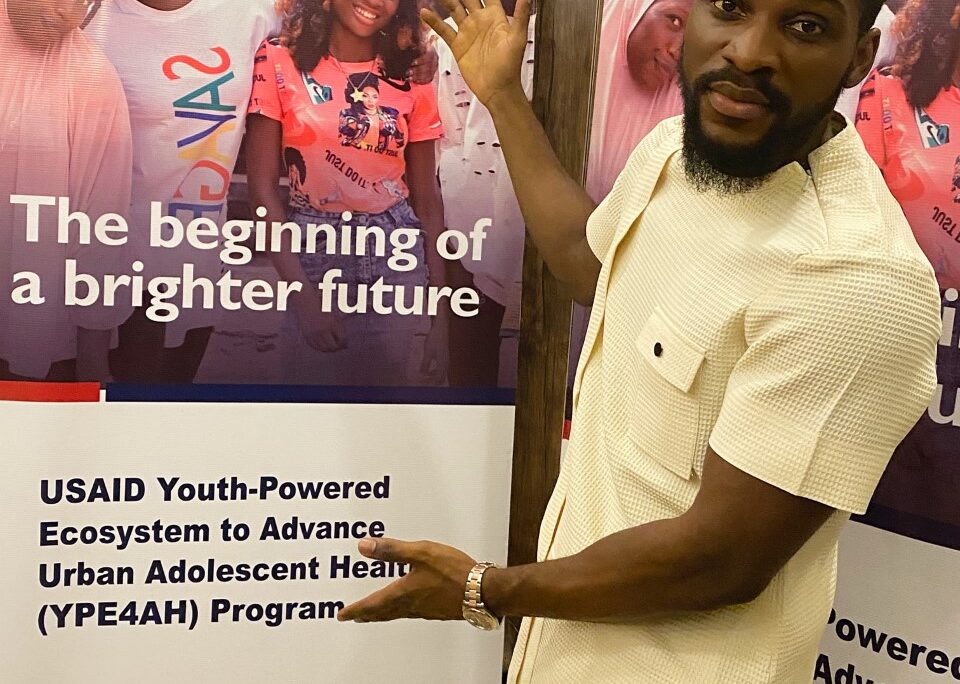
The U.S. Agency for International Development (USAID) launched the new activity designed to empower as many as two million young Nigerians with life skills and resources to realize their futures.
The five-year, $15 million Youth-powered Ecosystem to Advance Urban Adolescent Health Project (Adolescent Health) will help teens access reproductive health services within a holistic context of youth empowerment. It will be coupled with a deeper understanding of the challenges that adolescents face and implemented in Nigeria’s two largest cities, Lagos and Kano.
“By investing in youth, USAID is helping prepare the next generation to lead Nigeria to a more healthy and prosperous society,” said Health Office Director Paul McDermott, who joined Minister of Health Dr. Osagie Ehanaire at the virtual launch ceremony. He continued, “young people can make a strong contribution to a more productive and prosperous Nigeria if they are healthy and informed.”
Nigeria’s burgeoning urban youth population includes an increasingly marginalized segment of individuals– who might be out-of-school, unmarried, or poor. They are also vulnerable to sexually transmitted diseases and unplanned pregnancies and face barriers to accessing reliable health information. Thus far, traditional programs have struggled to meet these needs.
Adolescent Health will build a network of Youth Hubs to provide age-appropriate access to a host of services, and teach life skills, leadership, and work readiness. Through partnerships with the private sector, the activity will connect adolescents to internships and employment opportunities.
The Hubs will provide safe spaces for adolescents to receive information and support to uptake reproductive health and improved behaviors through regular interventions, club meetings, youth-led events, groups, camps, and other community outreach and events.
They will also improve access to counseling and referrals, youth-friendly health providers, gender-based violence services, substance abuse, and mental health programs. In addition, an associated Youth Advisory Council, composed of 60 percent girls, will provide insights and inputs to the Hubs, thereby developing their leadership and decision-making skills.
“We must devise ways and mechanisms to continually improve the general health, skill acquisition and overall development of the Nigerian youth,” said Tobi Bakre, 25-year-old reality star and Youth Ambassador for the new activity. “I implore every Nigerian to get involved.”
The activity will be implemented by Development Alternatives Incorporated, in partnership with Grassroot Soccer, Women Friendly Initiative, Yellow Brick Road and the Youth Empowerment and Development Initiative.
U.S. Army Gen. Stephen Townsend, commander, U.S. Africa Command, wrapped up a three-day West African visit Feb. 22-25 with a stop in Nigeria yesterday to meet with the nation’s leaders and further the long-standing partnership and security cooperation between the two nations.
During the visit, Townsend met with the Nigerian President’s Chief of Staff, Ibrahim Gambari, and National Security Adviser, Babagan Monguno, to discuss regional security issues and to express the command’s gratitude for the assistance provided during a hostage rescue operation last year.
“When we asked for their help, the Nigerian government answered the call. Our hostage recovery mission in October would have been impossible without their support,” said Townsend. “They quickly provided assistance that helped the U.S. military to save an American life. That is a strong example of our partnership with Nigeria.”
Townsend also met with senior military officials, including Minister of Defence Bashir Salihi Magash and the Chief of Defence Staff, General Leo Irabor, to talk about on-going cooperation in the region and greater maritime security and threat mitigation. Nigeria is a key partner in countering violent extremist organizations throughout the Lake Chad Basin.
“The bilateral relationship between Nigeria and the U.S. is built on several pillars including security cooperation,” Townsend said. “U.S. Africa Command will do our part to advance the security cooperation pillar, so that Nigerians can enjoy the more secure future they all deserve.”
As close partners, the U.S. and Nigeria have worked at ensuring the collaborative relationship continues to grow to include a commitment to interoperability. Nigeria purchased 12 A-29 Super Tucano light attack aircraft, which will be delivered later this year.
“Nigeria’s purchase of A-29 Super Tucano aircraft is another example of their commitment to interoperability and security in the region,” said Townsend. “Our economic relationship with Nigeria is already strong, and we look forward to the continued strengthening of security relationships. Nigeria’s leaders understand the importance of a collaborative approach to ensuring stability in West Africa and partnering on areas of mutual interest.”
The commander also met with the U.S. Ambassador to Nigeria, Mary Beth Leonard. “General Townsend’s visit to Nigeria demonstrates the strategic importance the United States places on our bilateral relationship with Nigeria,”
Leonard said. “Our security cooperation partnership with Nigeria’s military will strengthen the country’s capabilities to secure land and sea borders, enhance overall security, and combat terrorism in the North East.”
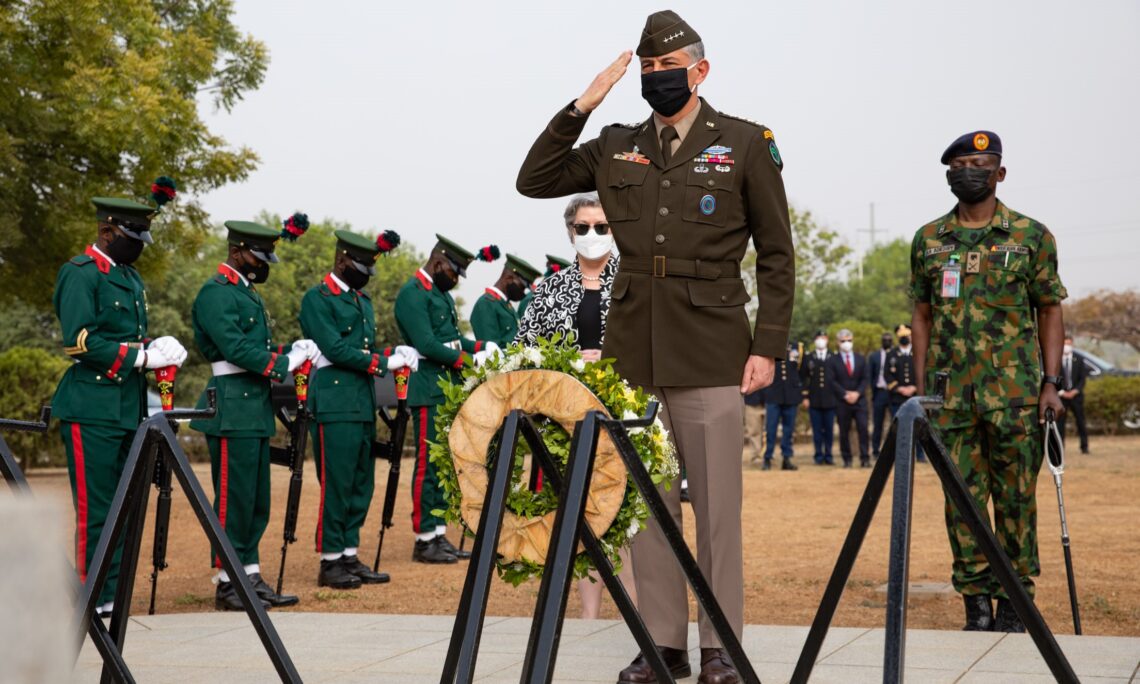
As part of the visit, Townsend participated in a wreath-laying ceremony at the Nigeria Military National Cemetery to honor those who have given their lives in the service of their nation. During the visit, the delegation expressed their condolences for the seven service members killed in the crash of a Nigerian Air Force aircraft in Abuja earlier this week.