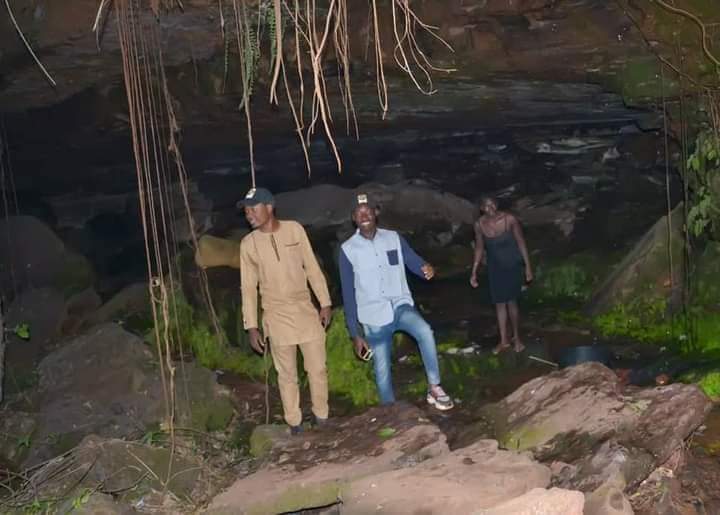
The land of Nsukka is replete with numerous tourist sites; however, one would be struck with the lightening of wonder on beholding and hearing the stories of Aku-Cave in Nkalagu-Obukpa.

Nkalagu-Obukpa is located in Igbo-eze South Local Government Area of Enugu State, Nigeria. The story of the founding of the community is quite interesting. Nkalagu-Obukpa, ab initio, was never Obukpa. Story has it that around 1860s, Itchi, a community in Igbo-eze South Local Government Area was invaded by the people of Ibagwa-Ani. The latter was stronger than the former and in a bid to avoid being overrun, Itchi had to seek for military assistance from Obukpa, a community that shared boundary with Ibagwa-Ani in the East of the latter. It was agreed between Itchi and Obukpa that Obukpa should permanently occupy the buffer land separating Itchi from Ibagwa-Ani and from there push Ibagwa-Ani backward. It was also agreed that whatsoever land that Obukpa could secure from Ibagwa-Ani should belong to them outright.

Over seventy warriors volunteered and headed towards Itchi. The route was from Iheakpu-Awka through Umuida in Enugu-Ezike to Itchi. Obukpa never fought war with Iheakpu-Awka and thus didn’t have issues with passage. It was an Obukpa woman married into Umuida that helped them pass through the soil and then landed at the buffer land given to them by Itchi.

Then began the beating of the mystical drum of Orieja Agada Ngara, the war deity of Obukpa and that of Nneumukwome, the principal goddess of the town. With this spiritual back up, they marched into war and secured the territory known today as Nkalegu-Obukpa. It is in this Nkalegu-Obukpa that Ugwu-Aku (AKU Hill) is located. It is within this Ugwu AKU that AKU CAVE is located harbouring springs of water fall. You might wish to know the interesting things about this AKU CAVE.

Immediately you climbed the hill westward, just look leftward, you’ll feel a cold region surrounded by thick trees and ancient African flora and fauna. Then you listened quietly only to discover the discussions and murmurings of waterfalls. You decided to follow the footpath already created by the inhabitants only to discover the slopeness of the place – you were descending down into a seemingly endless valley – so steep. Your heartbeat increased as the murmurings of waterfalls increased. The little children and the old women who’re there looked at you quietly.

Trees surrounded everywhere – tall and thick ones. They never made noise. They just kept quiet and also watched and listened to the murmurings of waterfalls. You could now see the pitter patter fall of the water under a massive rock that curved round like a well ripped banana seed, like the half-curve of the moon. The tour guide guides you and takes you down and down until you found yourself under the huge cave with rocks wonderfully laid in such a wonderful way that your instinct at that moment is to admire whosoever that created this wonderful cave.

WONDERS IN AKU-CAVE
Aside the mysterious waterfall, take a look below the cave, you’ll see an opening that stretches forth as a tunnel, albeit, a horizontal tunnel sort of. That opening surrounded by rocks under the cave open and closes on its own accord. According to the custom of the land, the hunters of the village hunt for AKU deity under the cave once in every two years. It should be noted that AKU is worshiped as a deity. Obukpa people are pantheists sort of. They believe that spirits inhabit some natural phenomena such as hill, trees, rivers etc. These supernatural forces are regarded as the essence of the beingness of those natural phenomena. Thus, the AKU cave is regarded as being controlled by AKU, the supernatural force that governs the place. Therefore, AKU has his rules.

That particular tunnel under the cave leads to another world where a different type of humans with different tongues (language) are found. The hunters who undertake such task of hunting for AKU would crawl through the tunnel for days. They eventually return back with many hunts. Each, as a matter of rule, must leave two of the game behind for AKU deity. Isn’t it a wonderful experience for you to take up this adventure to see another specie of human beings by visiting the cave and considering the tunnel?

But then, it should be stressed, those whose hearts are not pure never comes out until two years after the game; and even when they come out after two years, AKU would make sure they do not continue to enjoy this life with the living. Their spirit would leave this earth and return to AKU.

There are rules about these place. A woman in her menstrual period does not visit there or else, snake from nowhere would come and show you the way out.

MORE WONDERS OF THE CAVE
It was said that during the war, the cave protected the Obukpa people. In other words, it served as a refuge or a military barracks. Whenever one ran into it during those days of ancient wars, the enemy could never see you no matter what; and whenever the enemies dared ventured into the territory in search of the Obukpa people, one of the large rocks hanging over there would break forth and smash that person into pieces.

Under the cave, just on the rocky floor lay a massive rock. It is called ‘O Mee’r Anyinya’.
When translated it means, ‘The Destroyer of Horses’. Such names was given to the rock based on the anecdote associated with it. Stories have it that once a time the Igala people invaded there and took their horses to the stream for drinking and thereby defacing and defiling the strean that fed the Nkalegu-Obukpa people. As the horses bent over there lapping the waters, one of the rocks hanging over there got angry and fell on the horses and their owners. That was their end. The rest ran away like demons not looking back. That stone is the large stone that lay flat on the floor staring quietly at you as you stand there. However, the rocks have never fall on any of the inhabitants throughout its existence. If you come with good intention, you have nothing to fear.

THE WATERFALLS
The huge rocks usher down waters that quench the thirst of the people. Each of the rocks serve as springs sending down waters, you can call it springs of living water as many miraculous healings have been attributed to the waterfall. There’s the one called ‘O tiburi Iye’olu’ (the Breaker of Necklace). This spring falls with full force that if you wear any necklace, the force could break the chain off your neck. Stories has it that it has a healing power during the rainy season when it falls down angrily on sicknesses and diseases.
People were required to say their wishes and then allow the water fall on them. That’s the end of the problem as ‘O tiburi Iye’olu’ beats off and washes away your problems.

Don’t you think you need to visit this place even for once and enjoy the wonderful gift of nature? AKU CAVE of Nkalegu-Obukpa is a tourist site in Nsukka you’ll not miss.

Written by Ekene Ugwuanyi
07066090476
Sponsored by MADE IN NSUKKA TEAM.
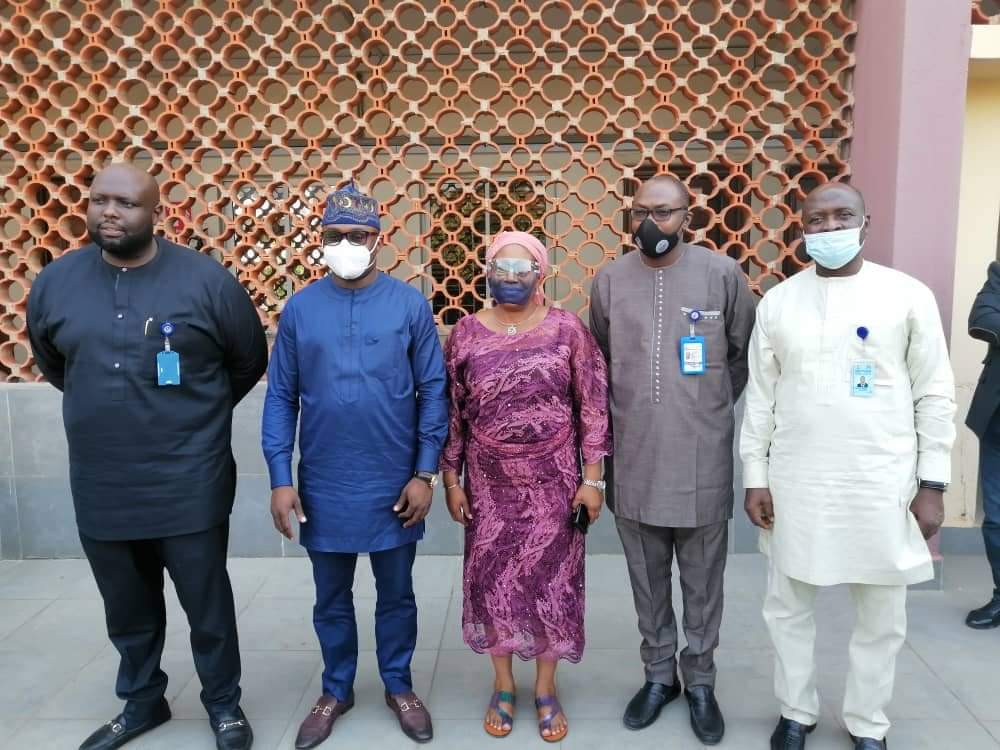
The Lagos State Commissioner for Finance, Dr. Rabiu Olowo has reiterated that the State Government will continue to embark on knowledge exchange with interested State governments to harmonise finance administration across the Nation.

Olowo made the assertion while receiving a team from Cross Rivers State, led by its Honourable Commissioner for Finance, Mr. Asuquo Ekpeyong, saying that the choice of Lagos as a case study attests to the modest successes recorded by the State Government.

Acknowledging the various reforms introduced by successive administrations in the area of Land Use Charge over the years, including the administration of Mr. Babajide Olusola Sanwo-Olu, the Finance Commissioner noted that Lagos had been very consistent in its land use charge and positively addressed complaints with amicable solutions provided for aggrieved residents.

Also speaking at the event, the Permanent Secretary, Ministry of Finance, Mrs. Yemi Ayoola, stated that the State’s operational system in revenue generation is distinct because all MDAs, depending on their Ministerial responsibilities, ensure that revenues are paid in accordance with specified codes into a central purse, known as the Consolidated Revenue Fund (CRF).

Mrs. Ayoola mentioned that enumeration and distribution of bills to property owners in Lagos State are handled seamlessly by Land Use Charge consultants, who ensure that residents receive bills without any burden on the government.

“Lagos State has shifted from an Excel sheet system to a robust E-Property Tax System, known as e-PTS, in order to reduce all human interface with computation of the bills and also promote transparency and accountability”, the Permanent Secretary explained.

During his contribution after the virtual training of the visiting team, the Special Adviser, Planning Commission, Cross Rivers State, Mr. Ted Inyang, appreciated the Lagos State Government for a good presentation of the procedures to his team from Cross Rivers State Ministry of Finance.

In the same vein, the leader of delegates from Kwara State, Mr. Olatunji Balogun, Director, Admin & Operations, also expressed happiness that Lagos officials painstakingly took his team through the process of evaluation and strategy deployed in enhancing revenue generation in the State, through the exchange of ideas, maintaining that he looked forward to the compilation of reports for presentation and review.

MinistryofFinance

staysafe

TakeResponsibilitylagos

foracovid19freelagos

LASG

ForAGreaterLagos

Security. This is a word that can make a grown CFO tremble and an entire SOC crumble. It is the word that captures a complex landscape littered with complexity, cybercriminals and technology. It defines how well an organisation adheres to a growing body of legislation – GDPR, POPIA and other data protection regulations – and how its reputation fares when a breach is revealed and information exposed. Security should be on every boardroom agenda, in ongoing employee training, and in investment into the right tools and solutions. But, perhaps most importantly, security should be an inherent part of the company’s culture because it is this factor that ultimately determines its security risk and posture.

“There is a clear link between security culture and secure behaviour and that, in itself, correlates to a clear reduction in risk for the organisation,” says Anna Collard, SVP Content Strategy and Evangelist, KnowBe4 Africa. “By improving your security culture, you are immediately improving employee behaviour and potentially plugging one of the biggest security gaps in every business – people. People are often the weakest link. The ones who click on the link, who open the phishing email, who share their company passwords and who accidentally create vulnerabilities within the organisation.”

A recent study (https://bit.ly/3rEZPvC) undertaken by KnowBe4 examined the behaviour and security culture of more than 97, 000 employees across 1, 115 organisations worldwide. The study dug down into the components and building blocks of security culture and unpacked how this has become a critical component for any robust security structure in a detailed whitepaper (https://bit.ly/3l7zVhP).

“IT leaders have always known exactly how important people are to the perfect security triumvirate – people, process and technology,” says Collard. “But, over the years, process and technology have been pushed to the forefront of investment and conversation, leaving the human element wide open and the business at risk. The reason for this shift is multi-fold – it’s hard to engage with a diverse workforce and the security message is not always that exciting.”

Yet, the research found a very clear proof that a robust security culture reduces the risk of credential sharing and improves the entire organisation’s security posture. In fact, it found that there was a 52x difference between the behaviours of people sharing credentials in a poor security class and the best which highlighted how a focus on security culture can significantly change the way employees adopt secure practices and behaviours. Which again underscores the value of setting up a security culture programme that explores the seven dimensions of security culture and how these can be improved within the organisation.

These seven dimensions include: attitude, behaviour, cognition, compliance, communication, norms and responsibility. And they provide the organisation with a solid framework within which to build an equally solid security culture that has longevity and relevance.

“The more that the business focuses on security culture, the more likely it is that employees will follow secure practices and adopt more secure behaviours,” concludes Collard. “This ground breaking research has provided a very clear and measurable link between security culture and secure behaviour and emphasises the value of investing into people, training and security communication best practice to ensure that this link is always maintained.”

“Innovation is the only way to win.”– Steve Jobs

Today, Apple Inc stands out as one of the world’s most preeminent brands. Guiding its success is the principle of innovation, one pioneered by its late co-founder, Steve Jobs. It has been successfully imbibed in the company’s culture, paving the way for companies like yours who aspire for global recognition. Read on for useful tips you too can implement in your startup business. You never know, your name could go down in the history books, just like Steve Jobs and other great leaders like him.

1. Seating counts: Believe it or not, this seemingly insignificant factor has the ability to make or break innovation in your company. Jake Fagan of Caddis Interactive recommends a “family dinner” style, with colleagues sitting opposite each other and as close in proximity as possible. This way, ideas are shared even better and tough problems solved as a community.

2. Lead by example: Practising what you preach is a great way to motivate your team. This begins with actively pursuing opportunities that expose you to innovative ideas. Attend conferences, read wider, immerse yourself in ideas of the past, present and future. This will rub off on your team as you share and eventually drive the culture.

3. Encourage listening: Through innovation, human problems are solved. Experts recommend setting “Google time” for your team daily to research and identify what’s lacking in the world. This gives them room to deliberately read, interact and monitor media online, getting those creative juices flowing.

4. Cut the red tape: Nothing kills creativity faster than fear and bureaucracy. But sadly, these are recurring factors seen in a large number of formal Nigerian establishments. Bring down those walls that discourage openness in your organisation and witness innovation shine through at its best. Of course, carelessness shouldn’t be permitted either, so finding a balance is crucial.

5.  Organise in-house idea competitions: Not only do fun activities like these motivate ideas, they help promote teamwork as well when members are grouped into units. It gives team members something to look forward to as they work on innovative ideas.

6. Reward Openly: If a team member comes up with a brilliant innovation, ensure he or she is recognised and celebrated amongst peers. The bright individual can also be encouraged to share said idea with others including processes used to ideate and execute.

7. Be realistic with your expectations: It’s well-known that failure is a stepping stone to success. With this in mind, be ready to encourage continued attempts when employees’ suggestions aren’t up to par. So it doesn’t matter if your team has encountered several cases of trial and error, you just might find a true gem in their batch of ideas.

We hope these tips go a long way in helping you #TakeTomorrow with your team. Remember to share your success story with us right here on our blog or on any of our social media pages.

SOURCE

With a growing population of 173.6 million (2013), there is an obvious need to push for the preservation of more green spaces in Nigeria, especially in our industrialised areas. The world’s most livable cities – New York and London to name a few – have made this a primary component of their urban planning agenda, to the benefit of present and future generations. Here is a breakdown of why our cities should jump on board and not get left behind:

  1. To boost the public’s emotional well-being: Several scientific studies back up the theory of human connection to nature, including E.O. Wilson’s 1984 publication, Biophilia. In a nutshell, it points to individuals natural inclination to green spaces and pet ownership as well as the happiness that results. Our cities need to benefit from this, lowering the impact of stressors like traffic jams and noise pollution experienced on a daily basis.
  2. To support public health and fitness advocacy: There is a prevalent adult obesity issue in Nigeria – a rate of 8.1%–22.2% according to a 2013 report. With this comes a wide range of illnesses including hypertension, diabetes and even cancer, all of which are challenging to cope with. While initiatives like the annual Access Bank Lagos City Marathon have helped to reverse this trend significantly, a lot more can be done with the availability of secure and free workout spaces for jogging, cycling and other activities.
  3. To cool environments naturally: Not only do trees provide natural shade, they reverse what is popularly known as the urban heating effect. This scientific phenomenon occurs when buildings absorb heat from the sun and reflect it into the atmosphere to the detriment of individuals living or working in surrounding spaces. Heat exhaustion, heat stroke and muscle spasms are a few examples of illnesses experienced as a result; hence, there is a need for the natural air conditioning parks to be provided.
  4. To maintain natural ecosystems: It is important to remember that we aren’t alone on this planet. A wide range of biodiversity exists in our natural ecosystem and the preservation of certain wetlands and forests goes a long way in ensuring their continued survival. Let future generations be able to interact with certain wildlife in their environment. Together, relevant stakeholders can slow down the process of extinction and protect Nature’s beautiful gifts through this much-needed initiative of green space preservation.

What are your thoughts on the increased provision of green spaces in Nigeria? Is it a cause worth pushing for despite the probable costs? Do share your thoughts b in the comments section below.

SOURCE

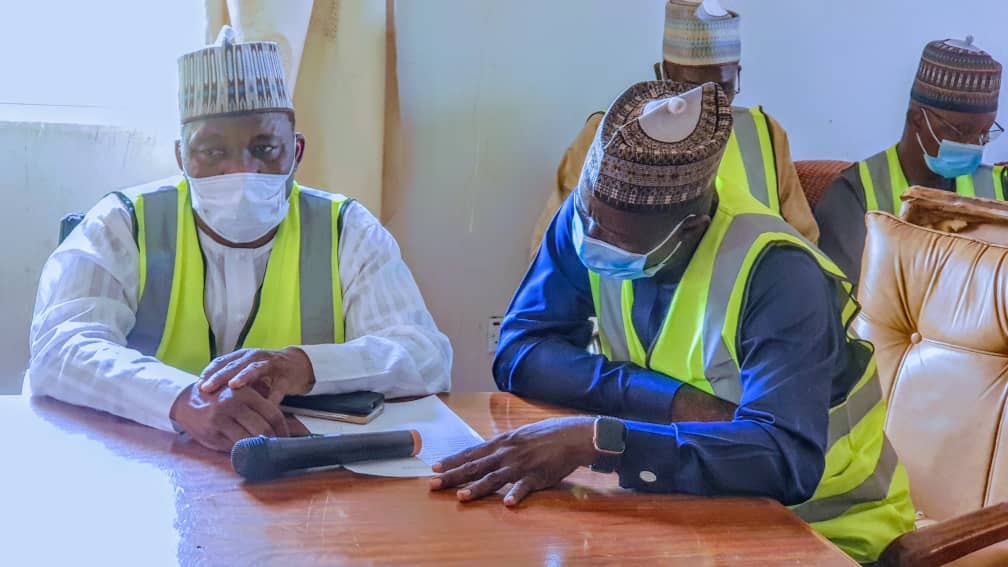
Kebbi State Government through the Primary Healthcare Development Agency has commenced the first phase training of Health workers involved in Covid 19 Vaccination.
A two day training of health personnel at the state level for the excercise commenced this Wednesday to be followed by induction of local government health workers on the program.

Declaring open the training program, the Commissioner for Health and Chairman Kebbi State Taskforce on Covid 19, Alhaji Jafar Muhammad said that the excercise was a prerequisite for the provision of Covid 19 vaccine by the Federal Government.
The Kebbi State Government, he said has attached utmost importance to the training so that Health workers would be acquainted with the necessary vaccination rudiments and procedures .

The Commissioner revealed that about 2.9 million eligible people have been targeted to receive the vaccine in the state of which 2,289 Health Personnel would be involved in the vaccine administration.

An estimated 788 health teams would be deployed to go round villages in the 225 wards of the 21 local government areas of the state towards ensuring full Vaccination coverage .
Muhammad, assured that the Covid 19 vaccine destined for Kebbi State was safe having been subjected to rigorous analysis by the National Food and Drug Administration and Control , NAFDAC to ensuring its safety and efficacy .

Addressing participants, the Executive Secretary, Kebbi State Primary Healthcare Development Agency, Dr. Abubakar Kaoje cautioned participants to make full comprehension of the Covid 19 vaccine application on recipients.

Dr. Kaoje gave an assurance that the state government has made provision for cold storage facilities to all parts of the state for the preservation of the vaccine as required by the Federal Government.

In a vote of thanks, the program Manager, Kebbi State Routine Immunization, Alhaji Abubakar Atiku Kende, announced that the Covid 19 vaccines would first be administered on frontline health workers as well as security personnel, workers of filling stations , banks staff and subsequently on the rest of the populace.

He commended wife of the governor, Dr. Zainab Shinkafi Bagudu for giving her full support to the Covid 19 campaign and sensitization.

A team of Health officials from the National Healthcare Development Agency led by Comrade Jalaludeen is supervising the training excercise which is taking place at the Conference Hall, Ministry of Health, Gwadangaji, Secretariat, Birnin Kebbi in conformity with the required standard by Federal Government.

Signed,
YAHAYA SARKI

For over 20years, the French Government had tried at various points to synergize with the people of South East for a harness of the industrious culture of Igbo race. However, unfavourable government, policies and non conducive atmosphere has characterized the challenges and obstacles faced, which had hitherto hindered the world giant from establishing presence.

However, attracted by the visible landmark and unprecedented reforms and policies of the Shared Prosperity administration of His Excellency the Distinguished Senator Hope Uzodimma, the French Government led by His Excellency Mr Jérôme Pasquier, the French Ambassador to Nigeria, have decided to partner with the Imo State Government for business and industrialization.

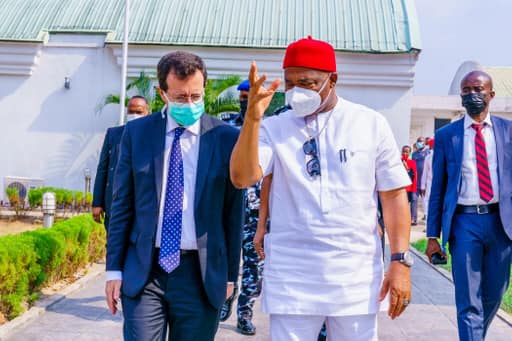
His Excellency, Mr. Jérôme Pasquier, made this known at the Imo State Government Executive Council Chambers, Owerri, Imo State during his working visit with his team. The French Ambassador to Nigeria, disclosed that knowing the reputation of Igbo people in business, he foresee the visibility and viability of doing business in Nigeria especially in Imo State amongst other opportunities.

The Imo State Governor, His Excellency the Distinguished Senator Hope Uzodimma commended their move to invest and partner with Imo State Government for a bilateral beneficial venture.

Governor Uzodimma highlighted many opportunities In Imo State to invest in which includes the Gas deposits as he disclosed that Imo State has the highest Gas Deposits in the entire country and the State Government is willing to do credible business for the benefit of Imo people, the country Nigeria and the French Government

In addition, Governor Uzodimma pointed out the need to have French language as an alternative language in the state as he seeks to incorporate French language in the Imo State School Curriculum.

The Imo State Governor also called for technical support on the area of mechanized farming as the University of Agriculture is established and ready to inculcate digitalized agricultural education to Imo young men and women.

He further invited the French Government to send in their pharmaceutical companies to come do business in the state as the Government led by Senator Hope Uzodimma has prepared the environment for an industrial cluster for pharmaceuticals and many more businesses and developmental opportunities for the French Government to invest in with a win win situation for all, most importantly for Imo people.

HopeNewAndElectronicMediaCenter

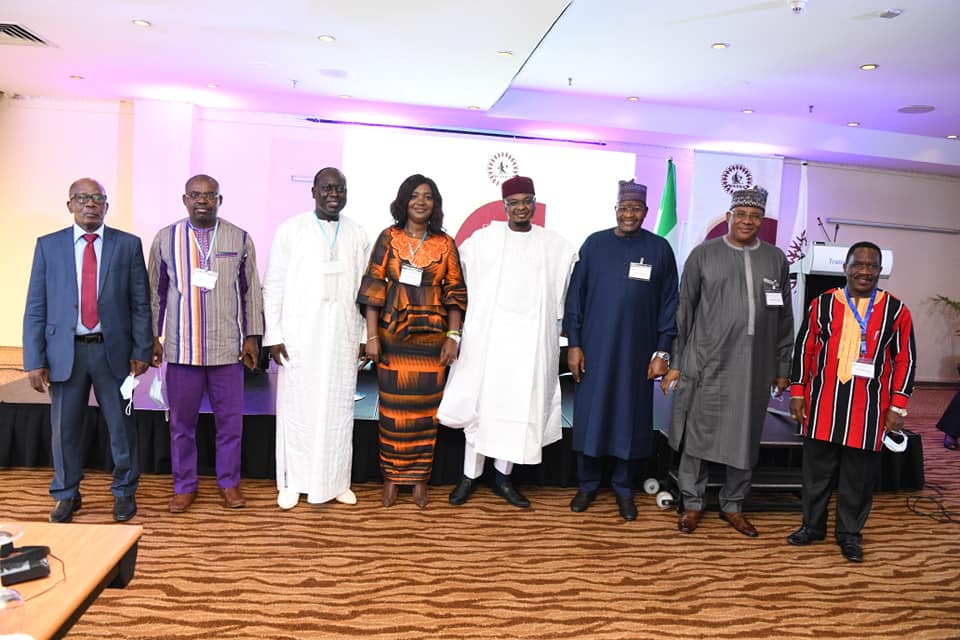
Nigerian government has called for increased regional collaboration for the development of Information and Communication Technology (ICT) ecosystem in West Africa as a potential digital hub on the global ICT map.

Minister of Communications and Digital Economy, Dr. Isa Ali Ibrahim Pantami and the Executive Vice Chairman of the Nigerian Communications Commission (NCC), Prof. Umar Garba Danbatta made the call at the two-day 18th Annual General Meeting of the West Africa Telecommunications Regulators Assembly (WATRA), which commenced in Abuja on Wednesday, March 10, 2021.

Addressing WATRA representatives, Pantami said the time has come for African countries to come up with innovative ideas to fast-track the development of the ICT ecosystem in the sub-region.

He said Nigeria, as the largest ICT market in West Africa and the most populous African country, has taken policy and regulatory initiatives in making ICT/telecoms a major contributor to its economic growth.

Citing a report by the National Bureau of Statistics (NBS), the Minister said ICT/telecoms has become a major contributor to the country’s Gross Domestic Product (GDP), far higher than what oil and gas, agriculture, construction, and other major sectors contribute to the economy.

Pantami acknowledged the role of NCC in spearheading the implementation of critical ICT policies, such as the Nigerian National Broadband Plan (NNBP), 2020-2025 and the National Digital Economy Policy and Strategy (NDEPS) for a Digital Nigeria (2020-2030).

While commending the leading role of NCC, as Nigeria’s representative in WATRA, the Minister emphasised the readiness of Nigeria to continue to share ideas with other member states of WATRA and support the Assembly for the overall goal of collectively developing the ICT ecosystem in the sub-region.

Corroborating the Minister, Danbatta stressed the need for all member states to “come together and see our differences as strengths because at the end of the day, we all want to have a safe and thriving society devoid of poverty and strife.”

He said while the Nigerian government, as a member of WATRA, envisions societies with necessary infrastructure and services that will ensure prosperity for all our people, ICT is key to this vision, adding that “WATRA is the best platform to pool together our huge natural and human resources to achieve exponential ICT growth which will, in turn, drive our economies”.

Chairman, WATRA Exco, Charles Tontoma Milogo of Burkina Faso, commended the leadership role of NCC, especially in equipping the Assembly headquarters in Abuja. He added that this has ensured the smooth running of the daily operations of WATRA as the key regional ICT body.

Also, Commissioner for Telecommunications and Information Technologies, Economic Community of West African States (ECOWAS), Dr. Zouli Bonkoungou, said through the kind of collaboration exemplified by WATRA, ECOWAS members would be able to encourage the establishment of modern legal and regulatory structures for telecommunications service delivery for driving socio-economic development in all states in the sub-region.

Meanwhile, ICT Ministers from Liberia, Cooper Kruah; Sierra Leone, Mamadi Gobeh-Kamara, The Gambia, Ebrima Sillah, among other participants at the annual conference, have commended Nigeria for its impressive ICT development. They expressed readiness to emulate Nigeria in the area of innovative policy implementation and regulations to make ICT/telecoms a major economic contributor in their respective countries.

The armed men that robbed and killed POS agents, Victor Chimaobi Igbokwe and Ezinne Grace Iroh in Aba has been arrested.

The names of the robbers are Ralph Godwin (Leader) from Kogi state, Chibuike Samuel from Mbaise, Imo state, Godwill Kalu from Ohafia and Uzoma Samuel from Obingwa in Abia state.

According to AFnews, they were arrested after slotting one of the victim’s sim card in a phone in a bid to run mobile transaction on her bank account.

They were tracked and apprehended respectively.

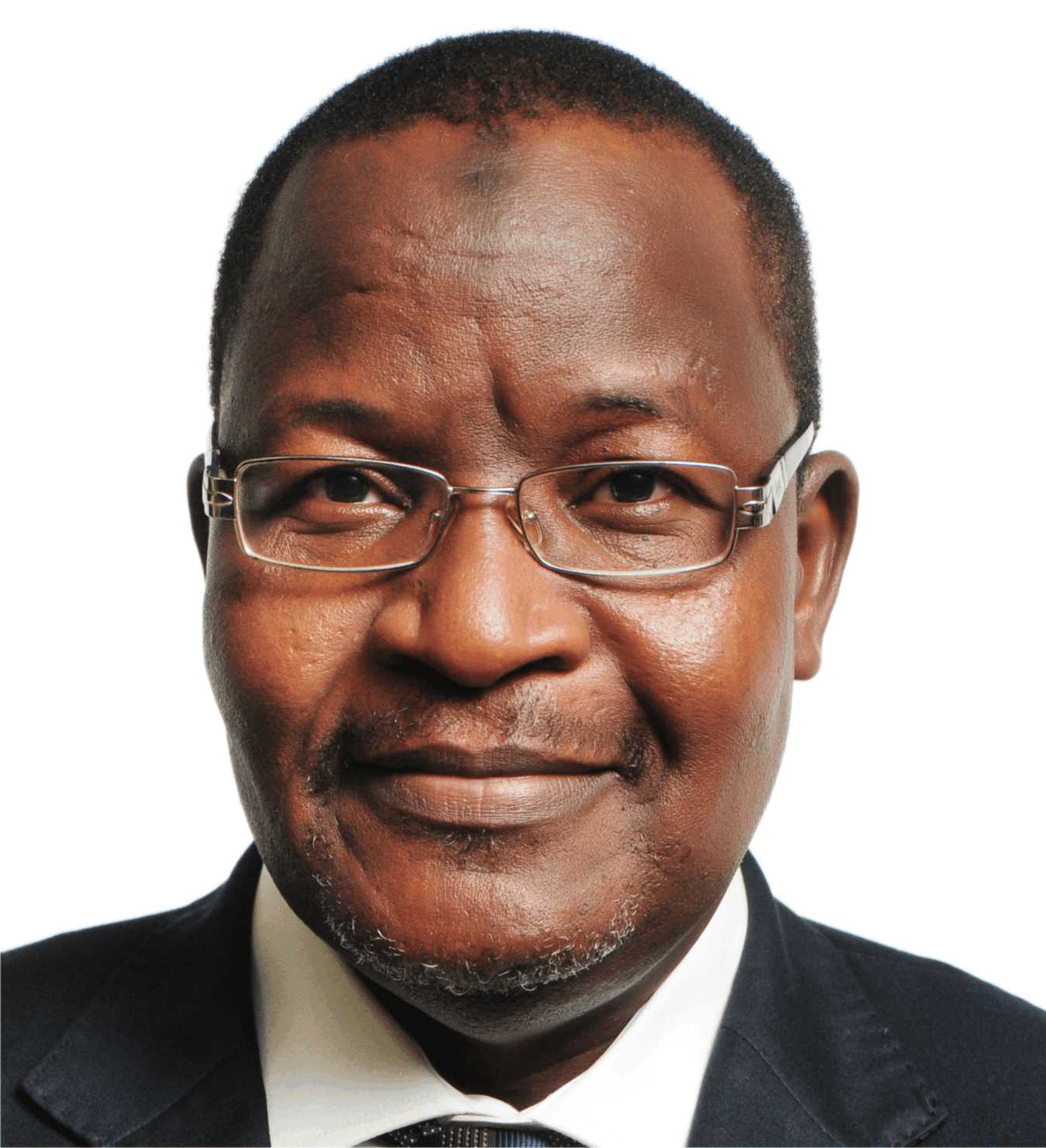
The Executive Vice Chairman/Chief Executive Officer, Nigerian Communications Commission (NCC), Prof. Umar Garba Danbatta, is the distinguished personality to deliver the 2021 edition of The Bullion Lecture.

Danbatta will speak on the theme: ‘Telecoms, Digital Banking and Nigeria’s Economic Development.’ at the annual Lecture scheduled to hold by 10 a.m. on Thursday, March 11, 2021 at The Civic Centre, Ozumba Mbadiwe Avenue, Victoria Island, Lagos.

Danbatta, a fellow of the Nigerian Society of Engineers (FNSE), Nigerian Academy of Engineering (FAEng.), Renewable and Alternative Energy Society (FRAES) and Nigerian Institute of Electrical and Electronic Engineers (FNIEEE), is an erudite engineer, philanthropist, and a nation builder per excellence.

An astute administrator and a renowned scholar, Danbatta holds BEng and MSc degrees from the Technical University of Wroclaw in Poland, and PhD from the University of Manchester Institute of Science and Technology, The United Kingdom.

Until his appointment as the country’s chief telecoms regulator in 2015, Danbatta was a lecturer in the Department of Electrical Engineering, Faculty of Technology, Bayero University, Kano, for 32 years, where he taught courses in telecommunications engineering and electronics, and held academic positions of Dean of the Faculty and Head of Department at different times.

Prof. Danbatta has also supervised more than 60 PhD, MEng and BEng projects in diverse areas of telecommunications and has also served as external  examiner  to  seven universities  and  polytechnics  and  is  an  assessor,  technical  reviewer and editorial member to eight research journals.

He has to his credit more than 50 articles in journals, conference proceedings and technical reports in addition to being the author of a six-chapter, 167-page book titled: Elements of Static Engineering Electromagnetics.

The Bullion Lecture is a platform conceptualised by the Centre for Financial Journalism (CFJ Nigeria) for lively and professional discourse on national and international issues.

Founder/Chief Executive Officer of CFJ Nigeria, Ray Echebiri, said the lecture will be chaired by the President, Africa FinTech Network and former President/Chairman of Council, The Chartered Institute of Bankers of Nigeria, Dr. Segun Aina.

Distinguished panelists, who will dissect the lecture, are Managing Director/Chief Executive Officer of Financial Institutions Training Centre (FITC), Mrs. Chizor Malize and the Executive Director, SystemSpecs Limited, Mr. Aderemi Atanda.

Expected guests at the lecture include government officials, captains of industry, banking industry executives, Information and Communication Technology ICT) professionals, members of the diplomatic corps, representatives of multilateral institutions, senior media executives, and other journalists, and members of the public. Participation at the lecture will be virtual and in-person.