


The current 5th Generation of mobile device networking is unfolding faster than ever, promising download, upload, and latency speeds 10 to 100 times faster than the current 4G network. The Coronavirus pandemic didn’t impact the 5G networks’ rapid deployment throughout the United States and several countries in Europe. Meanwhile, many countries in other regions are announcing “trial” rollouts of 5G or investment plans for such networks.
The speed of 5G networks is exciting for users – especially gamers, who need much faster speeds to use their mobile device in games and competitions effectively.
However, 5G also has many commercial, industrial, and sectoral applications that will be advantageous to society more broadly. Manufacturing, healthcare, utilities, and the Internet of Things (IoT) – all these fields will benefit from 5G technology.
In particular, healthcare will see advances in telemedicine, remote patient recovery and care, and, some suggest, remote precision surgery in the near future, all from super-fast 5G technology.
We’ve collected all of the available information about 5G deployment throughout the world. The deployments include both those existing already and those that are just on the verge of deployment.
We’ve done this for two reasons. One is to give news outlets a ready source of reference information to help their readers and followers advance to 5G technology by having a database of what to expect from it. The other is to give investors detailed information to compare regional and country opportunities in the 5G carriers hustling to set up deployments in locations around the world.
True Speed VS. Top Speed
Current 5G networks promise speeds of up to 1GB per second (1Gbps), and trials show such speeds could almost be reached in the field. But most 5G users won’t get 1Gbps, or even come close. This is because of the difference between Top Speed and True Speed.
Top Speed is the best possible speed a user can achieve within a network, in optimal connection, with no range or traffic load issues, using an optimal device.
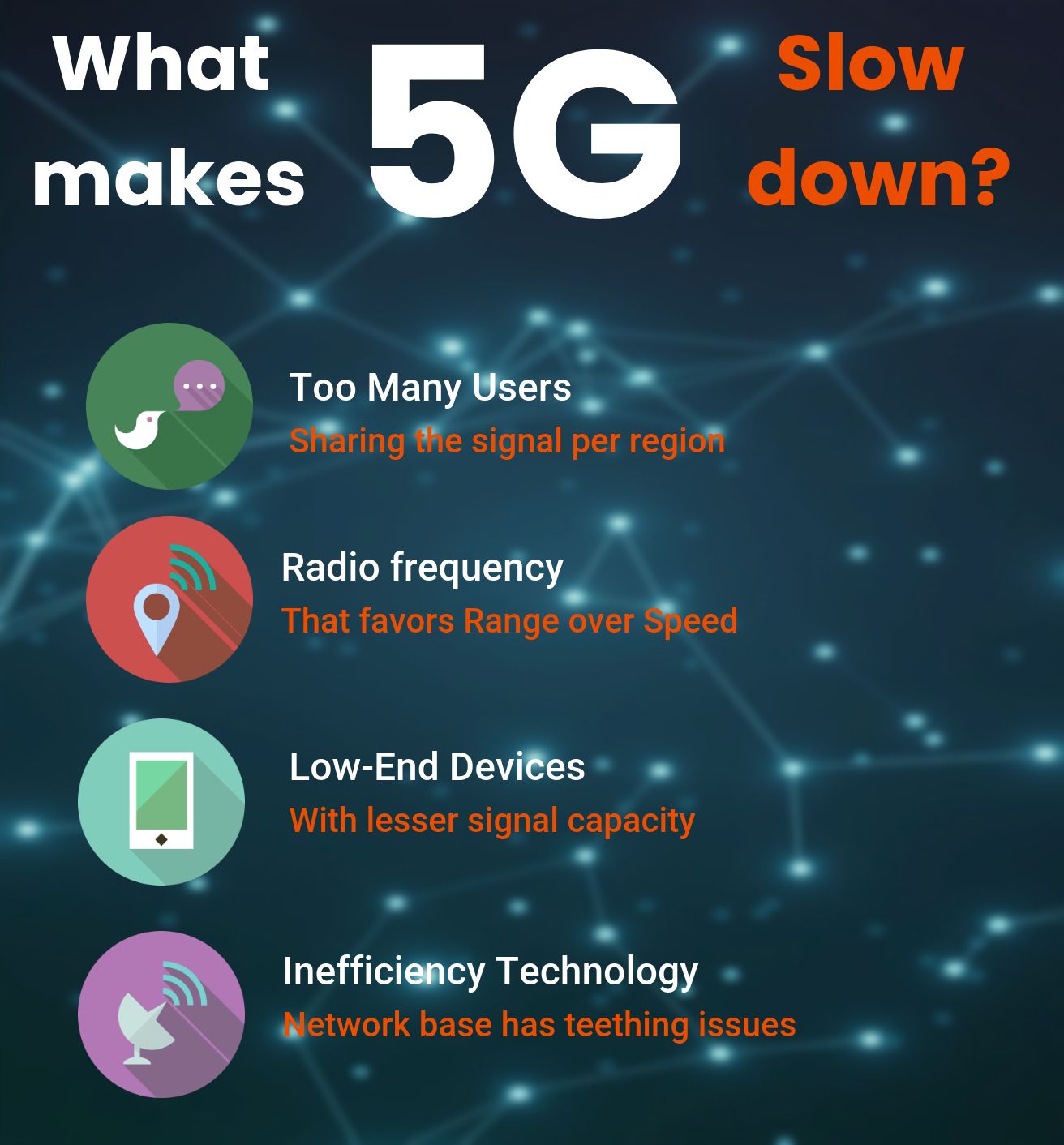
True Speed is what users actually get. These speeds are far better than the local 4G network average, but not 10 times faster, as promised. Actual 5G speeds are affected by several factors, including the following:
- The number of users sharing a 5G connection. The more users, the slower the actual speeds.
- The type of mobile device you use. High-end 5G phones have a greater signal capacity or offer specific apps whose design will affect the signal speed.
- The type of radio frequency spectrum that a carrier offers. Some radio frequency technologies enable carriers to bring 5G capabilities to more locations, while others enable them to offer higher download speeds to fewer locations. (Both technologies are evolving to offer similar speed and connection capabilities).
- 5G technology. The terminal equipment that receives the signal (i.e., base stations and hotspots) suffers teething issues in many cases.
While carriers can simulate real-world limitations with ease, they all strive to show the best performance to attract users. As a result, their declared speeds can’t be trusted as completely unbiased.
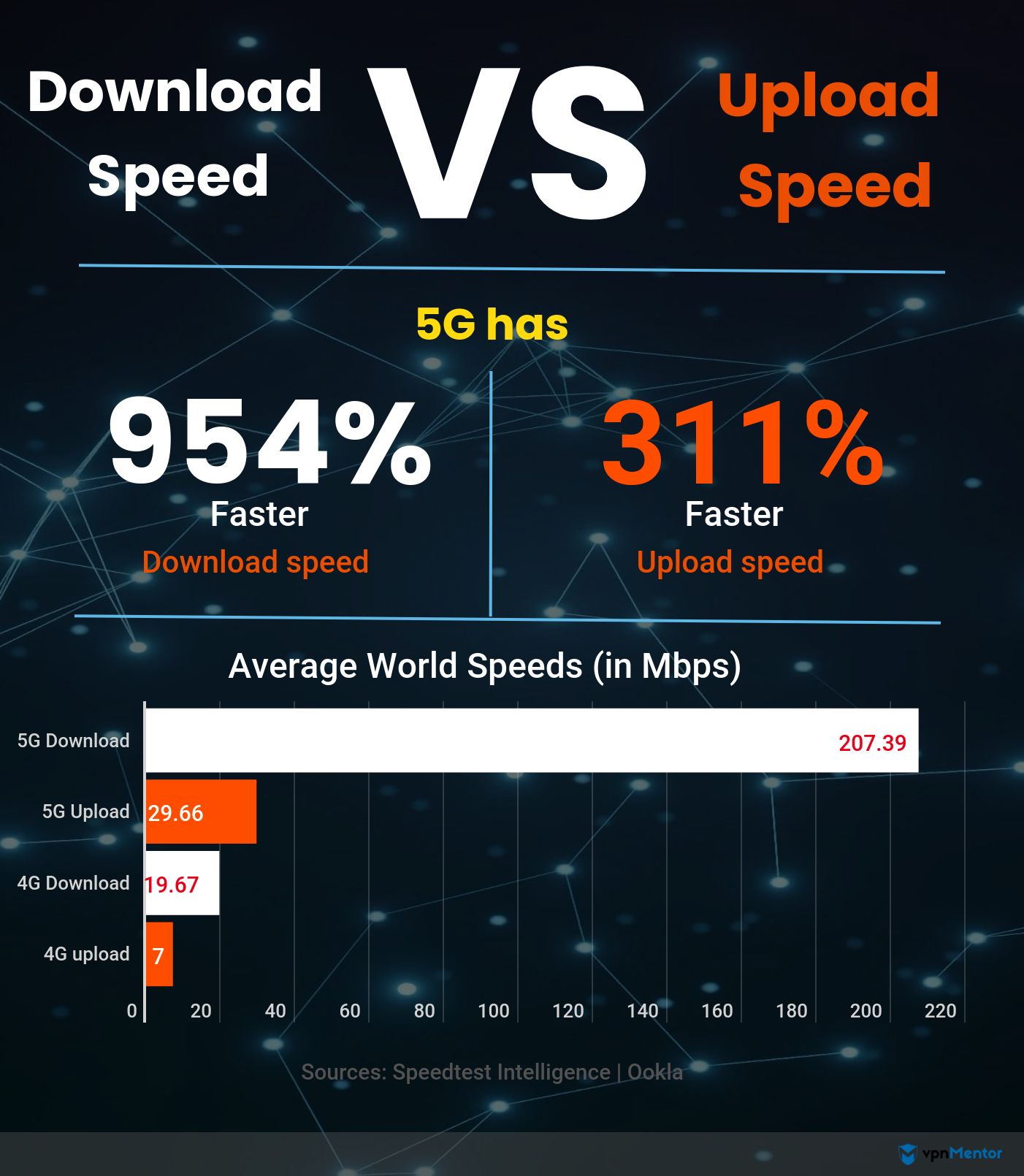
Independent testing platforms have a better chance of reflecting True Speeds, but their findings are based on surveys and opinions from people who installed their apps. Most of these platforms won’t display their full testing details, but SpeedTest does: it undertook 4.3M tests in Q3 2020.
These tests were focused on Download Speeds. Upload Speed is also important – mostly for corporate implications, gaming, and future implications such as AI, automotive industries, etc. However, it’s not tested as often.
This report is focused on download speeds, as this is the primary data point available for testing.
1. The Best 5G Networks in March 2021
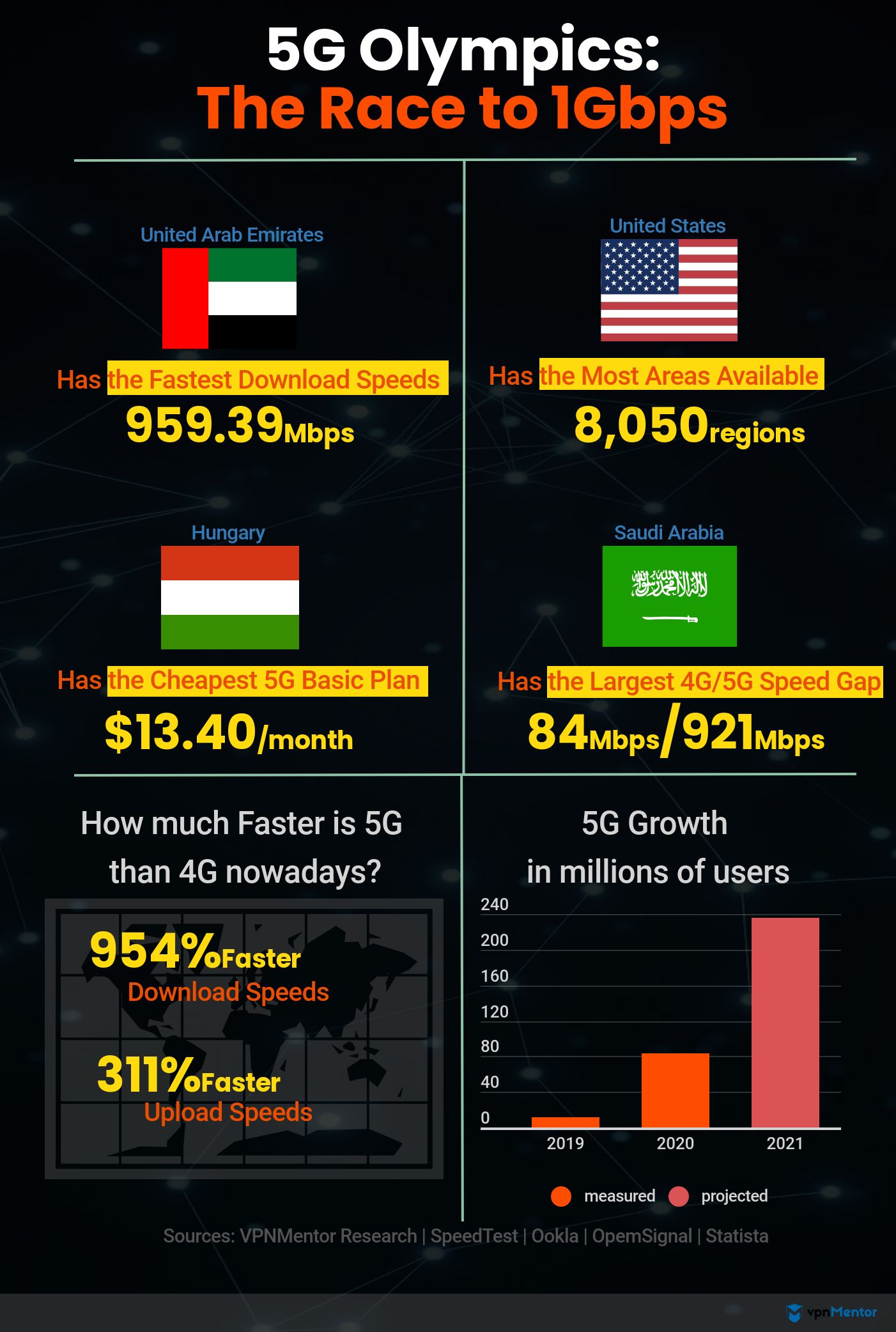
According to SpeedTest field research, the world’s current Gold Medalist in speed is the United Arab Emirates, with a network speed of 959.39Mbps. Silver goes to Saudi Arabia (921.11Mbps) and Bronze to Norway (865.57Mbps). Even though it has less methodology data available, OpenSignal field research is also included here for your consideration.Why is this important? Faster speeds indicate mature technology and better infrastructure. While not every user in the country can enjoy the top speed, its availability indicates the network’s potential in future deployments.
| Country/Territory | 4G Average Download Speed (Mbps) | Local Carrier 5G Speed (Mbps) | OpenSignal 5G Speed (Mbps) | SpeedTest 5G Speed (Mbps) |
| United Arab Emirates | 129.61 | – | – | 959.39 |
| Saudi Arabia | 84.64 | 846.4 | 377.2 | 921.11 |
| Norway | 87.37 | – | – | 865.57 |
| Japan | 38.88 | 870 | – | 719.42 |
| South Africa | 38.73 | – | – | 718.19 |
| Qatar | 108.44 | – | – | 691.05 |
| South Korea | 145.03 | 446.27 | 336.1 | 680.58 |
| Australia | 88.35 | 798.63 | 215.8 | – |
| Bahrain | 50.50 | – | – | 640 |
| Hungary | 43.60 | – | – | 638.93 |
| Kuwait | 58.95 | 390 | 185 | – |
| Germany | 49.67 | 500 | 107 | – |
| Netherlands | 88.13 | 385 | 92.6 | – |
| United States | 53.44 | 185 | – | – |
While important, speeds won’t be relevant for most users without regional coverage. For example, Saudi Arabia has only 69 regional nodes, of which 18 are within Mecca and the capital Riyadh. Most of the country isn’t covered and has to settle for 4G networks. The U.S. has the best coverage, with over 8,050 regions.Why is this important? Supported regions show the outreach of the country’s 5G infrastructure and 5G growth potential. These are the regions in which advanced services will be deployed first – from faster streaming to autonomous vehicles.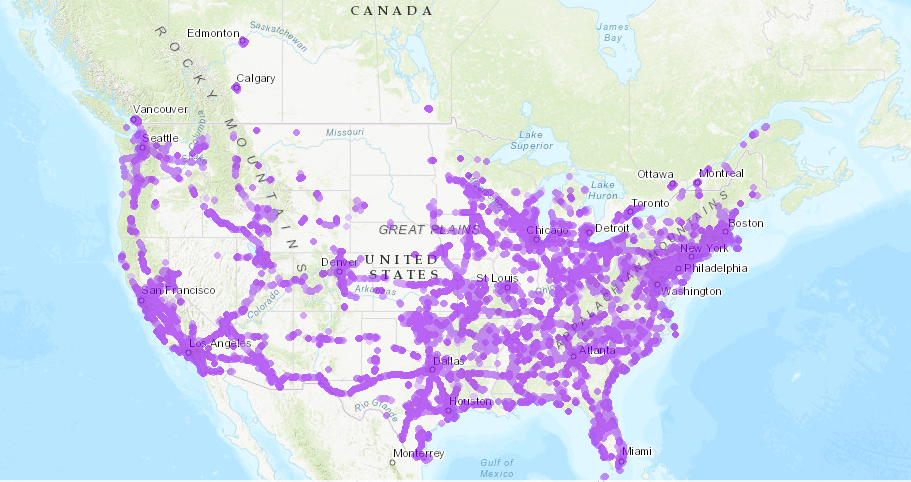
Source: nperf
The next table shows coverage per square kilometer and population. While most countries’ populations are concentrated within a few large metropolitans, full coverage outside these areas will enable users to enjoy the fastest speeds everywhere within the state’s borders. Here, the leader is Austria; its 5G network has fewer users per region, enabling better growth potential and reliability.Why is this important? 5G networks in rural regions could push forward agriculture technologies, healthcare far from main population areas, and encourage the tech sector’s development in small towns. Fewer users per 5G location will enable lighter network loads, which allow simple maintenance and continuous, more reliable connection.
| Country | Commercially available 5G Locations | Pre-Release 5G Locations | Total 5G Locations | 5G Location Deployment per square KM | 5G Deployment locations per Civilian |
| Austria | 1,180 | – | 1,180 | 70 | 7,633 |
| Netherlands | 1,300+ | – | 1,300+ | 30 | 13,181 |
| Switzerland | 608 | – | 608 | 65 | 14,250 |
| Ireland | 314 | – | 314 | 219 | 15,725 |
| Kuwait | 154 | – | 154 | 116 | 27,731 |
| Germany | 2,720+ | – | 2,720+ | 127 | 30,803 |
| Bahrain | 49 | – | 49 | 16 | 34,726 |
| United States (w/o Puerto Rico) | 8,050 | – | 8,050 | 1,136 | 41,118 |
| Finland | 119 | 1 | 120 | 2,532 | 46,172 |
| Slovenia | 44 | 1 | 45 | 448 | 46,199 |
| Oman | 53 | – | 53 | 5,840 | 96,351 |
| Qatar | 26 | – | 26 | 447 | 110,810 |
| Belgium | 90 | – | 90 | 336 | 128,774 |
| Thailand | 443 | – | 443 | 1,153 | 157,562 |
| Sweden | 45 | – | 1 | 8,045 | 219.549 |
| Taiwan | 107 | – | 107 | 336 | 222,749 |
| United Kingdom | 302 | – | 302 | 801 | 224,788 |
| Singapore | – | 25 | 25 | 28 | 234,014 |
| Canada | 151 | – | 151 | 60,222 | 249,948 |
| Bulgaria | 27 | – | 27 | 4,021 | 257,349 |
| South Korea | 181 | – | 181 | 537 | 283,255 |
| Hong Kong | 26 | – | 26 | 43 | 289,234 |
| Australia | 74 | – | 74 | 103,815 | 344,593 |
| New Zealand | 12 | – | 12 | 21,943 | 401,853 |
| Hungary | 24 | – | 24 | 3,722 | 402,514 |
| Poland | 78 | 1 | 79 | 3,876 | 479,071 |
| Saudi Arabia | 69 | – | 69 | 31,155 | 504,548 |
| United Arab Emirates | 19 | – | 19 | 4,400 | 520,547 |
| Romania | 29 | – | 29 | 7,937 | 663,368 |
| Spain | 42 | 20 | 62 | 8,045 | 754,109 |
| Italy | 42 | 4 | 46 | 6,394 | 1,314,387 |
| Japan | 75 | – | 75 | 4,861 | 1,686,352 |
| France | – | 33 | 33 | 16,593 | 1,977,985 |
| Philippines | 33 | – | 33 | 9,035 | 3,320,639 |
| South Africa | 16 | – | 16 | 75,818 | 3,706,793 |
| China (w/o Honk Kong) | 77 | 29 | 106 | 88,568 | 13,578,525 |
Some nations made more efforts to help local carriers push 5G forward to achieve faster adoption. Currently, China has the widest adoption, with 18.9% of all measured mobile results at Ookla. The second place goes to South Korea, and the third to Hong Kong.
Next, we’ll take a look at the spread of 5G networks by world regions.
This element has geopolitical importance, as rival superpowers are contesting their 5G technology. This advanced technology will boost economies and enable unprecedented growth. The fast growth of U.S carrier deployment gives North America the first place, with Europe close behind. While China has declared impressive 5G growth plans for the near future, the rest of Asia isn’t as diligent, which leaves this region in third place.
| World Region | Commercially Available 5G Networks | Limited Availability 5G Networks | Pre-Released 5G Networks | Total |
| North America | 8,408+ | – | 3 | 8,411+ |
| Europe | 7,010 | 2 | 116 | 7,128+ |
| Asia | 997 | 1 | 88 | 1,086 |
| Middle East | 326 | – | 1 | 327 |
| Oceania | 80 | – | – | 80 |
| Africa | 20 | 1 | 7 | 28 |
| South America | 5 | – | 10 | 15 |
| Central America and the Caribbean | – | 3 | 1 | 4 |
2. Worldwide 5G Network Breakdown
The data presented here is based on field tests, carrier available information, and tools by Ookla, Speedtest, nPerf, Opensignal, and others. While gathering and analyzing the data, we’ve noticed the numbers in several countries weren’t consistent enough, due to network performance fluctuations. Our research showed the reasons are deployment testing and teething issues.
The deployment has different status options:
- Commercial Availability (CA) – 5G network exists, and users can subscribe to a plan and enjoy the network’s fastest speeds within covered regions.
- Limited Availability (LA) – 5G network exists, but plans/devices are available only for a limited set of customers (say, for doctors or government officials).
- Pre-Release (PR) – 5G network hardware exists, but rollout is awaiting tests, trials, or consumer plans/devices.
North America
- Fastest Average speed: Canada (183Mbps)
- Cheapest Plans: United States ($50)
- Best coverage: United States (8,050 regions)
The United States is a dominant player in 5G deployment, including those from its four major carriers: T-Mobile, AT&T, Verizon, and U.S. Cellular. However, Mexico has been slated for 5G investment in 2020 by America Movil. While Canada is lagging behind for its size, its carriers provide some of the world’s fastest mobile download speeds. Canada is planning more 5G rollouts, but at a steady pace.
| Country | 5G Deployment CA | LA | PR | Regions | Carriers | Basic Price for 5G Plan/Device |
| United States | 8,050+ (CA) | – | T-Mobile (broadest), AT&T Mobility, Verizon Wireless and US Cellular | Basic plan without a Phone – $50 |
| Canada | 155 (CA), 1 (PR) | 21 in Toronto; 15 in Edmontons; and 23 in Vancouver | Rogers (Infinite), Telus, Bell and Videotron (PR in Montreal) | 20GB and unlimited minutes – $75 (57.63 USD) |
| Mexico | Planned roll outs | America Movil | – | |
| US Territories | ||||
| Guam | 1 (CA), 2 (PR) | – | Docomo Pacific | – |
| Northern Marianas Islands | 1 (CA) | – | Docomo Pacific | – |
| Puerto Rico | 201 (CA) | Distributed evenly island-wide | T-Mobile and AT&T | – |
Europe
- Fastest Average speed: Spain (201Mbps)
- Cheapest Plans: Hungary ($13.40)
- Best coverage: Germany (2,720+ Regions)
Europe has the most countries with 5G deployments in the world and some of the highest deployment ratios per population and square kilometer.
Germany, Austria, and the Netherlands are at the head of the pack, but several other countries also have impressive 5G coverage. Three countries to keep an eye on are France, Spain, and Italy, with multiple Pre-Release locations that are probably just the start of rapid deployment in those countries.
| Country | 5G Deployment CA | LA | PR | Regions | Carriers | Basic Price for Monthly 5G Plan/Device |
| Albania | 1 (PR), partnered with Kosovo | Tirana | Vodaphone | – |
| Austria | 1,180+ (CA) | Distributed evenly nationwide | Magenta Telekom, A1 and Three | $45 |
| Belarus | 2 (PR) | Minsk | MTS and A1 | – |
| Belgium | 90 (CA) | Distributed evenly nationwide | Proximus | $42.6 with 8GB of data |
| Bosnia and Herzegovina | 1 (PR) | Sarajevo | BH Telecom | – |
| Bulgaria | 27 (PR) | Nationwide saturation | Vivacom | $19.41 |
| Croatia | 6 (CA), 2 (PR) | – | Hrvatski Telekom, A1 and Hrvatska (PR) | $32 / 70 + iPhone 12 |
| Czech Republic | 8 (CA) | 3 in Prague | Vodafone, T-Mobile and O2 | $50.17 |
| Denmark | 5 (CA), 2 (PR) | 3 in Copenhagen | TDC, Telenor, Telia and Three | $65.67 |
| Estonia | 3 (CA), 1 (LA) | Telia, Elisa | – | |
| Finland | 119 (CA), 1 (PR) | 32 in Helsinki | Elisa, DNA and Telia | – |
| France | 33 (PR) | 15 in Paris | Orange, SFR and Bouygues Telecom | – |
| Germany | 2,720+ (CA) | Most regions in Baden-Wurtemburg (436), North Rhine Westphalia (389) and Saxony-Anhalt (316) | Deutsche Telekom, Vodafone and O2 | $42.80 |
| Greece | 4 (PR) | 1 in Athens | Wind, Wind Helles, Cosmote and Vodafone | – |
| Hungary | 22 (CA), 2 (PR) | 4 in Budapest, 13 around Lake Balaton | Magyar Telekom, Vodafone, Digi and Telenor | $13.40 |
| Ireland | 314 (CA) | Distributed evenly nationwide | Eir, Three and Vodafone | $30.53 |
| Italy | 42 (CA), 4 (PR) | 30 in the Milan area | Vodafone, TIM and Wind tre | $30.53 |
| Latvia | 7 (CA), 1 (LA), 2 (PR) | Riga | Tele2 and LMT | – |
| Luxemburg | 3 (CA) | – | Tango, Post and Orange | $30.54 |
| Malta | 3 (PR) | – | Melita | – |
| Monaco | 4 (CA) | – | Monaco Telecom | $36.63 |
| Netherlands | 1,300+ (CA) | Distributed evenly nationwide | Vodafone, Ziggo, T-Mobile and KPN | – |
| North Macedonia | 1 (PR) | Skopje | Makedonski Telekom | – |
| Norway | 11 (CA), 1 (PR) | 5 in Oslo | Telenor, Telia and Ice | – |
| Poland | 78 (CA), 1 (PR) | 21 in Warsaw | Play, Plus, T-Mobile and Orange | – |
| Portugal | 2 (PR) | Nos | – | |
| Romania | 29 (CA) | 8 in Bucharest | Digi, Orange and Vodafone | $24.50 |
| Russia | 15 (PR) | 4 in Moscow, 3 in St. Petersburg | Beeline, MTSm Tele2m Megafon, Tattlecom and Motiv | – |
| San Marino | 1 (PR) | – | TIM | – |
| Serbia | 1 (PR) | Belgrade | Telenor | – |
| Slovakia | 2 (PR) | Belgrade | 4KA and O2 | – |
| Slovenia | 44 (CA), 1 (PR) | Distributed evenly nationwide | Telkom Slovenije and A1 | $23.27 |
| Spain | 42 (CA), 20 (PR) | Distributed evenly nationwide | Movistar, Vodafone, Orange and Yoigo | $30.63 |
| Sweden | 45 (CA), 1 (PR) | 10 in Stockholm | Three, Tele2, Telia and Telenor | $34.03 |
| Switzerland | 608 (CA) | Most regions in Bern and Aargau | Swisscom and Sunrise | $36.80 |
| Ukraine | 6 (PR) | 1 in Kiev | Lifecell | – |
| United Kingdom | 302 (CA) | 262 in England, 24 in Scotland, 9 in Wales, 7 in Northern Ireland | Vodafone, O2, EE and Three | $20.40 |
| Alend Islands (Finland) | 5 (PR) | Sure and JT | – | – |
| Faeroe Islands (UK) | 1 (PR) | Føroya Tele | – | – |
| Isle on Man | 1 (PR) | Sure | – | – |
Asia
- Fastest Average speed: South Korea (680.58Mbps)
- Cheapest Plans: Philipines ($26.92)
- Best coverage: Thailand (433 regions)
South Korea, China, Hong Kong, and Taiwan dominate 5G location deployment and mobile-download speeds in the region. However, Thailand also offers extensive 5G location coverage. And another country in Southeast Asia, Vietnam, has several 5G locations in the Pre-Release stage, with others on the horizon. The Philippines offers a good amount of 5G locations for its land area. But one country to keep an eye on is Singapore, with 25 Pre-Release locations, delivering a solid concentration of coverage for its size.
| Country | 5G Deployment CA | LA | PR | Regions | Carriers | Basic Price for Monthly 5G Plan/Device |
| Azerbaijan | 1 (PR) | Baku | Azercell | |
| Bahrain | 49 (CA) | Distributed evenly nationwide | Batelco | Limited SIM – only minutes and GBs $44.88 |
| Cambodia | 1 (LA) | Phnom Penh | Cellcard | |
| China | 77 (CA), 29 (PR) | Distributed from the central to the eastern provinces | China Mobile, China Unicom and China Telecom | 30GB and 200 talk minutes – $19.45 |
| Hong Kong | 26 (CA) | Distributed evenly throughout Administrative Region | Hong Kong Telecom, Three and China Mobile | 5G SIM plans from $51.60. Phones start at $361.19 |
| India | 1 (PR) | Mumbai | Reliance Jio | – |
| Indonesia | 2 (PR) | Jakarta and Batam City | XL Axiata and Telecomsel | – |
| Iran | 1 (PR) | Tehran | MTN Irancell | – |
| Japan | 75 (CA) | Distributed evenly nationwide, 8 locations around Tokyo | NTT Docomo (broadest), KDDI, Softbank, and Rakuten Mobile | Basic plans (no phone) are $63.57. However, Rakuten has offered an intro subscription for $28 |
| Kazakhstan | 3 (PR) | Almaty, Shymkent and Nursultan | KCell, KaRtel Beeline | – |
| Laos | 1 (CA), 1 (PR) | Vientiane | Lao Telecom | – |
| Macau | 1 (PR) | CTM | – | |
| Malaysia | 7 (PR) | 4 in Kuala Lampur | U Mobile, Telekom Malaysia, Celcom, Digi and Maxis | – |
| Maldives | 5 (CA) | – | Dhiraagu | Handset plan is $72.05 |
| Myanmar | 1 (PR) | Yangon | Mytel | – |
| Pakistan | 2 (PR) | – | Jazz and Zong | – |
| Philippines | 33 (CA) | 23 in Manila Metro area | Smart Communications, Globe Telecom | $26.92 |
| Singapore | 25 (PR) | – | Star Hub and Singtel | – |
| South Korea | 181 (CA) | 80+ clustered around Seoul. Still, distributed fairly nationwide | KT, SK Telecom and LG U+ | $78 |
| Sri Lanka | 3 (PR) | – | Mobitel and Dialog Axiata | – |
| Taiwan | 107 (CA) | distributed fairly nationwide | Taiwan Mobile, Far Eastone, Chunghwa Telecom and APT | Basic card plans from $35.06 |
| Thailand | 443 (CA) | Dispersed nationwide (including southern provinces), with a heavier concentration in Bangkok and environs | TrueMove H (broader); Advanced Info Service (still a strong presence) | Basic Plans from $29.60, after purchase of phone (starting $230.50) |
| Turkey | 1 (PR) | Trabzon | Turkcell | – |
| Uzbekistan | 2 (PR) | Tashkent | Ucell and Uzmobile | – |
| Vietnam | 8 (PR) | 3 in Hanoi, 3 in Ho Chi Minh City | MobiFone, Vinaphone, and Viettel | – |
South America
- Fastest Average speed: Brazil (84.60Mbps)
- Cheapest Plans: Brazil ($65)
- Best coverage: Brazil (2 regions)
The region is a slow starter in 5G deployment. However, it’s picking up steam, with Brazil and Colombia being part of an America Movil investment package (along with Mexico) of $8.5 billion starting in 2020. South America may be good for investment, since most of the region’s countries do have some type of 5G deployment, with several carriers interested in more of a presence.
| Country | 5G Deployment CA | LA | PR | Regions | Carriers | Basic Price for Monthly 5G Plan/Device |
| Argentina | 1 (PR) | Buenos Aires | Personal | – |
| Bolivia | 1 (PR) | Santa Cruz de la Sierra | Entel | – |
| Brazil | 2 (CA), 4 (PR) | Rio de Janiero and Sau Paolo, with rapid expension | Claro (CA), TIM and OI (PR) | $65 + device, starting at $415 |
| Colombia | 1 (CA), 2 (PR) | Bogota | Directv (VA), Movistar and Claro (PR) | – |
| Ecuador | 1 (PR) | Guayaquil | Claro | – |
| Peru | 1 (PR) | Trujillo | Movistar | – |
| Surinam | 1 (LA) | Paramaribo | Telesur | – |
| Uruguay | 1 (CA) | Manantiales | Antel | – |
Middle East
- Fastest Average speed: Saudi Arabia (959.39Mbps)
- Cheapest Plans: Saudi Arabia ($15.3)
- Best coverage: Kuwait (154 regions)
5G deployment has been dominated by the Gulf States, with Kuwait taking the lead, but other countries, such as Oman, follow closely behind. With 5 current deployments, Israel has several other planned expansions of its 5G coverage in the immediate future.
| Country | 5G Deployment CA | LA | PR | Regions | Carriers | Basic Price for Monthly 5G Plan/Device |
| Israel | 5 (CA) | Tel Aviv, Haifa, Ra’anana, Dimona and Qiryat Shmona | Pelephone, HOT Mobile and Partner | $17 with 200GB of data |
| Kuwait | 154 (CA) | 119 around Kuwait City | Viva, ooredoo and Zain | $88 with 100GB of data / $32.59 with a Phone purchase |
| Lebanon | 1 (PR) | Beirut | Touch | – |
| Oman | 53 (CA) | Most along the Gulf of Oman | Omantel, Ooredoo | $39 with 20-40GB of data |
| Qatar | 26 (CA) | 8 In Doha | Ooredoo and Vodafone | $24.17 with 250 talk minutes |
| Saudi Arabia | 69 (CA) | – | 10 in Mecca, 8 in Riyadh | $15.33 with 300 talk minutes |
| United Arab Emirates | 19 (CA) | 8 in Dubai | – | $54.46 for 26GB |
Africa
- Fastest Average speed: South Africa (50Mbps)
- Cheapest Plans: Seychelles ($24)
- Best coverage: South Africa (16 regions)
Africa has a long way to go to reach the 5G summit, with some of the worst stats for this technology’s deployment throughout the world, as well as some of the worst download speed rankings. In Northern Africa, according to 5G World, the plan is basically to “focus on cementing 4G LTE services for the first half of this decade… rather than invest heavily in 5G.” In Sub-Saharan Africa, countries like Nigeria, Kenya, Gabon, and Uganda are showing signs of 5G deployment. But only South Africa has any significant 5G activity. Most of the other countries in Southern Africa aren’t even listed on mobile download speed lists.
| Country | 5G Deployment CA | LA | PR | Regions | Carriers | Basic Price for Monthly 5G Plan/Device |
| Egypt | 1 (PR) | Cairo | Etisalat | – |
| Gabon | 1 (PR) | Liberville | Gabon Telecom | – |
| Kenya | 1 (PR) | Nairobi | Safaricom | – |
| Lesotho | 1 (LA) | – | Vodacom | – |
| Madagascar | 2 (CA) | – | Telma Mobile | $124.95 |
| Nigeria | 3 (PR) | – | MTN Nigeria | – |
| Seychelles | 2 (CA) | – | Cable and Wireless | $24 |
| South Africa | 16 (CA) | 4 in Johannesburg, 3 in Pretoria, 4 in Cape Town | Vodacom, Rain, MTN | $44.67 |
| Uganda | 1 (PR) | Kampala | MTN | – |
Central America and the Caribbean
- Fastest Average speed: Trinidad and Tobago (131Mbps)
- Cheapest Plans: Trinidad and Tobago ($99)
- Best coverage: Trinidad and Tobago (3 regions)
The region lags behind all others in 5G deployment. However, Costa Rica may soon start changing the face of 5G deployment in Central America. But other than Puerto Rico (a U.S. Territory with 201 5G deployments), Caribbean countries don’t seem to be equipped for 5G deployment. (Trinidad and Tobago, the southernmost island Caribbean country, does offer 3 Limited Availability locations.)
| Country | 5G Deployment CA | LA | PR | Regions | Carriers | Basic Price for Monthly 5G Plan/Device |
| Dominican Republic | 1 (PR) | Santiago | Viva | – |
| Trinidad and Tobago | 3 (LA) | – | Bmobile | $99 |
Oceania
- Fastest Average speed: Australia (220Mbps)
- Cheapest Plans: New Zealand ($27.89)
- Best coverage: Australia (74 regions)
Australia and New Zealand are the only two countries in Oceania that have 5G deployments thus far. Still, there are active investments in 5G networks in Papua New Guinea that will lead to deployments in the near future.
| Country | 5G Deployment CA | LA | PR | Regions | Carriers | Basic Price for Monthly 5G Plan/Device |
| Australia | 74 (CA) | All concentrated around the eastern and southern coastlines | Telstra, Optus and Vodafone | $46.40 |
| New Zealand | 12 (CA) | Distributed evenly nationwide | Spark and Vodafone | $27.89 |
World Coverage: Who Invests in 5G?
While the data you’ve seen so far show a snapshot of existing 5G deployment, nations always look forward and plan on growing their current infrastructure. This infographic shows the current state of deployment and development by general regions.
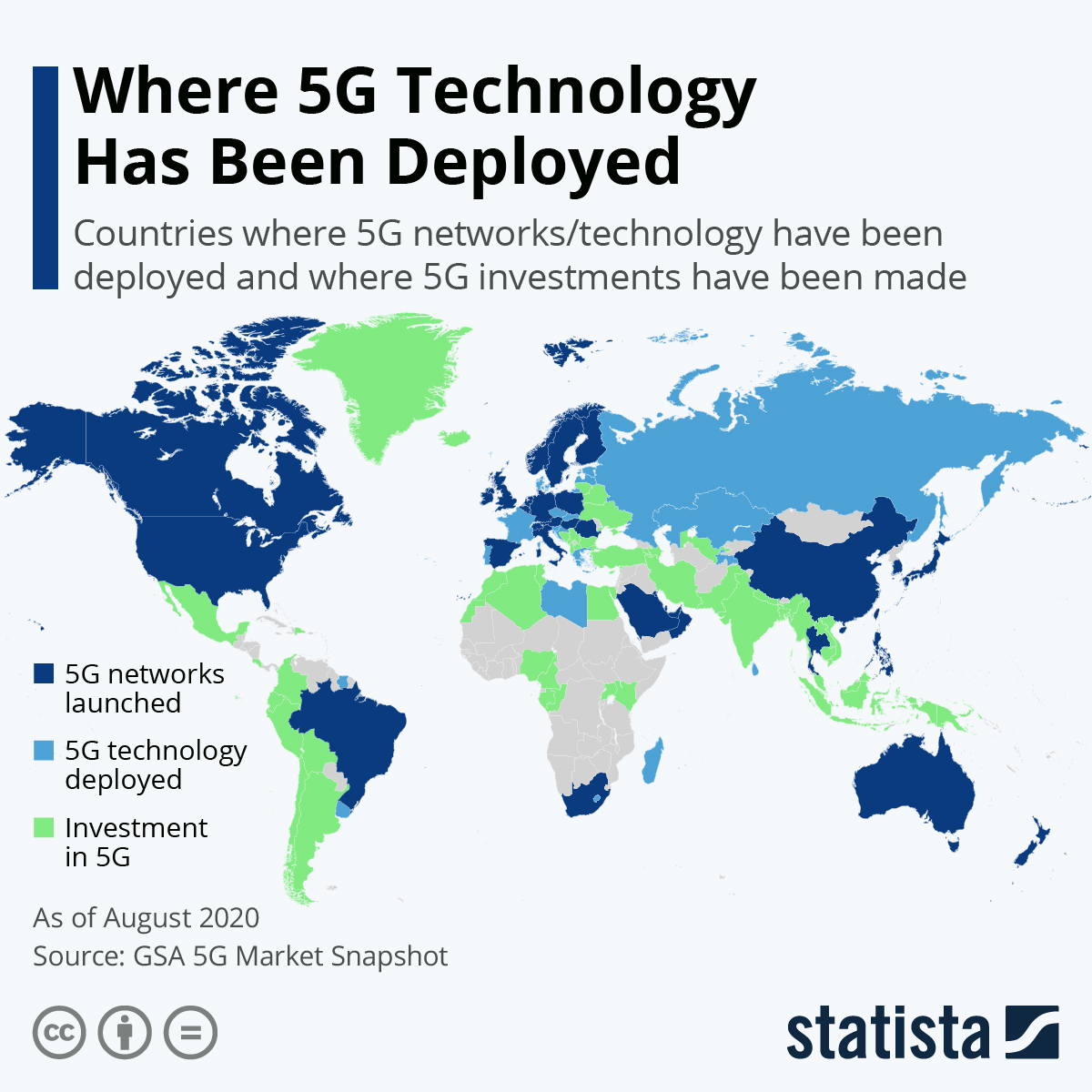
Many governments made some far-reaching promises in the field of 5G growth. Many declared rather ambitious goals without actual progress. The reasons may vary from political issues to economy and technological limitations, but our research found the nations with the most active investments and 5G projects. These are the countries to keep an eye on, as each will move faster in deploying their networks in the near future.
| Nation | Active Investments |
| France | 33 |
| China | 29 |
| Singapore | 25 |
| Spain | 20 |
| Russia | 15 |
Technology: Not all 5G Networks are Equal
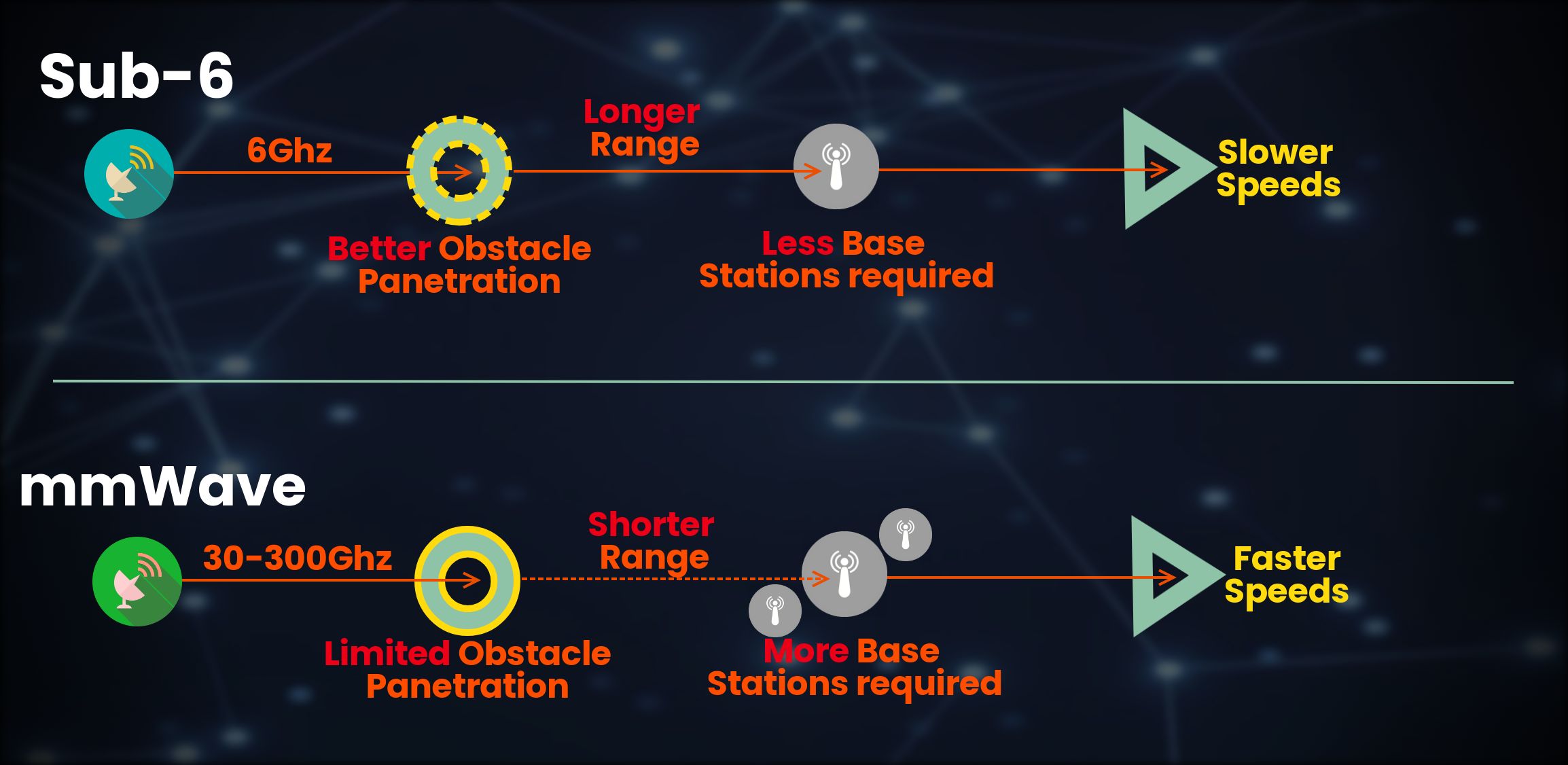
5G technology is built on radio waves technology, and it relies on two types of radio wave spectrum – Sub-6 and mmWave.
Sub-6 operates at a frequency below 6Ghz allowing radio waves to travel long distances and pass through building walls and similar obstacles. The mmWave consists of UHF radio waves from 30Ghz to 300Ghz. It doesn’t travel as far and has less penetration, but it is super-fast and simply requires more base stations or deployment locations.
mmWave can process a huge amount of data among a large volume of users simultaneously – ideal for densely populated cities, as well as venues like stadiums and arenas. Sub 6 can also handle the same mmWave speeds as its technology evolves, so the two technologies are competitive.
The United States has more 5G deployments than every other country on the planet combined. Its three dominant carriers – AT&T, Verizon, and T-Mobile – have adopted a mix of these two technologies to provide 5G coverage.
However, T-Mobile got a quick start by retrofitting its existing towers with Sub-6 technology, so it now offers an extensive network of rural, suburban, and urban 5G locations in the United States, way beyond those of AT&T and Verizon. However, AT&T and Verizon have made hundreds of mmWave deployments through major U.S. cities, so their networks can claim that they have the highest 5G speeds in the country.
This difference in approaches is important as you check out the major global deployment table to find out which carrier has chosen which approach: offering 5G coverage throughout the country, or just in metropolitan areas.
FAQ
What does 5G mean?
G is short for 5th Generation wireless networks. These networks have greater bandwidth than previous technologies, which enable download speeds of up to 10 gigabits per second. Such bandwidth will also allow fixed replacement for cable-based internet connection. Every device can be connected wirelessly, without digging into walls or deploying residential modems. Such technology will also enable delivering high-speed data streams for autonomous vehicles, drones, online medical services, and countless other industries. Nations compete for 5G deployment and 5G-tech superiority, creating a major revolution in years to come.
Will 5G work on 4G Phones?
No. 5G networks have their own communication protocols and bandwidth, which require a designated network adaptor. Most smartphone makers have already launched 5G-supported models, and while these phones tend to be more expensive than regular models, their price is dropping fast. 5G phones can run smoothly on 4G networks if the network frequency is supported.
Which country have the fastest Network?
As of March 2021 the fastest 5G networks are in the UAE, with a download speed of about 959.39Mbps. The coverage is not the best, and most of the country doesn’t have 5G nodes yet, but the situation is changing quickly, and many nations are testing faster networks all the time.
Bottom Line
As the data shows, 5G deployment is moving full steam ahead and shows no signs of slowing down. The leaders in fields like download speeds, pricing, coverage are bound to change, and the competition will surely benefit consumers and enterprises alike. One thing is shadowing 5G networks’ bright future: the economic impact of 2020’s global Coronavirus pandemic. While the end of the year showed no impact on worldwide 5G deployment, experts still can’t predict 2020’s full effect. vpnMentor’s team will keep monitoring the market and let you know where you can find the best networks with the latest technology.