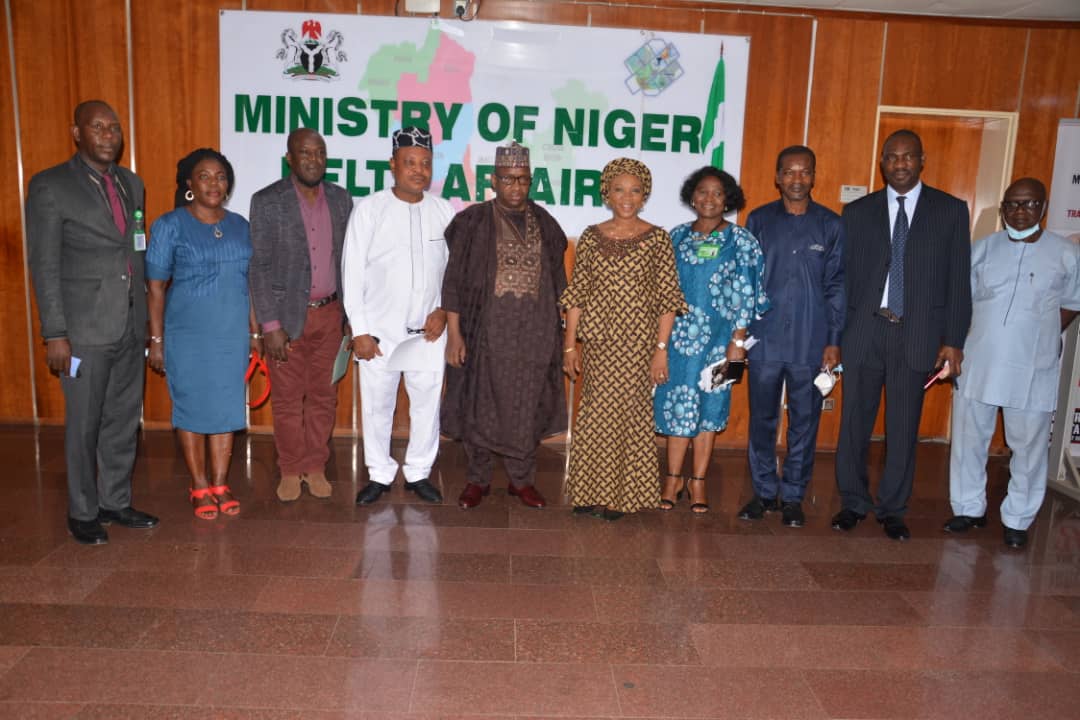
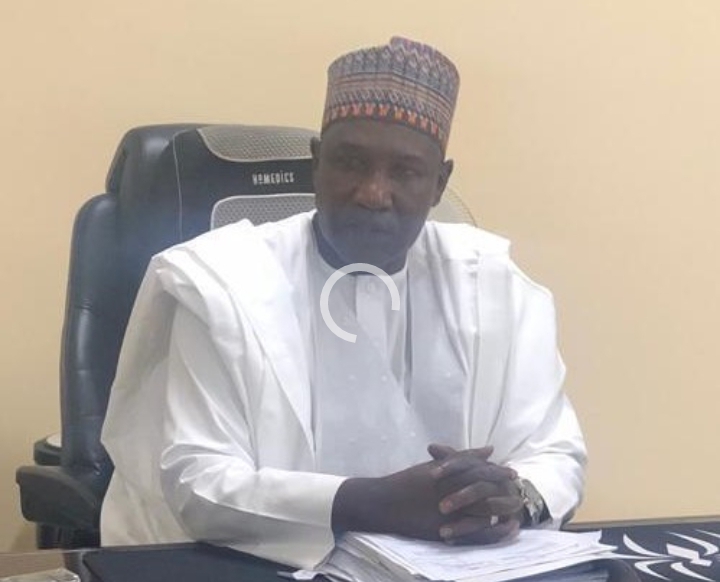
The Permanent Secretary, Ministry of Niger Delta Affairs, Dr. Babayo Ardo has stated the Ministry’s commitment to upscale in its service delivery process to ensure it remains focused in delivery of its mandate which is the accelerated development of the Niger Delta Region.
The Permanent Secretary made this known when he met with the National Coordinator/ Chief Executive Officer, SERVICOM, Mrs. Nnenna Akajemeli and her team who paid a courtesy visit to his office recently in Abuja.
He said, “The mandate of the Ministry is to formulate, execute and coordinate plans, programmes and other initiatives to fast track the development of the Niger Delta region, noting that the engagement between the Ministry and the SERVICOM office would help the Ministry to get stronger and better in its service delivery”.
Dr. Babayo Ardo who commended SERVICOM for helping to drive service delivery nationwide said that the Ministry of Niger Delta Affair has made giant strides in its short period of 12years of existence. Adding that, “the interface between the Ministry and the clients are done with a view to providing institutional framework for driving reform activities in the Ministry to attain its mandate.
He noted that one of the acute challenges negatively impacting on the activities of the Ministry to deliver its mandate is the area of funding, since the Ministry’s inception in 2009 its budget has been on decline, whereas the needs of the people of the Niger Delta Region are on the increase, longer period of raining season and environmental disasters also contributes to the poor project execution.
L-R: The Permanent Secretary, Ministry of Niger Delta Affairs, Dr. Babayo Ardo and the National Coordinator/Chief Executive Officer, SERVICOM, Mrs. Nnenna Akajemeli, during a discussion of service delivery of the Ministry at his office, in Abuja, yesterday.
Babayo stated that in the area of service delivery, the Reform Coordination and Service Innovation Department has been undergoing a repositioning process since 2019 in order to strengthen the Ministry’s service delivery system. Thus, a new Ministerial SERVICOM has been constituted and would be inaugurated soon.
Reacting on the issue of militancy, the Permanent Secretary recounted the genesis of the problem of the region and observed that the impasse requires gradual solution; according to him, “the Ministry is engaging the youths and stakeholders through Community Development Education and Empowerment programmes geared towards uplifting the lives of the people of the region”.
“The completion and inauguration of the multi billion naira newly completed office complex of the NDDC, shows that the Ministry is determined to work and see to the rejigging and repositioning of the NDDC”, he added.
Speaking further, Babayo stated that the Ministry has various projects already completed and awaiting commissioning in different states of the Niger Delta region. These projects according to him would make positive impact and ensure sustainable development of the region.
In her response, the National Coordinator/Chief Executive Officer, SERVICOM, while commending the efforts of the Ministry, stated that more can be done and achieved in the area of sensitization and sensitivity. “It will require a lot of thinking out of the box such that it can begin to facilitate and fashion out customer sensitive focus service improvement activities and programmes, giving out information about the Ministry’s engagements and its challenges”.
Akajemeli stated that, “the Ministry should always give out information to the citizens and stakeholders so that they would be able to understand some of these tough decisions, tough scenarios that Ministry have to cope with, adding that a lot of work can be done around consultation.
According to her, “We can do advocacy using the SERVICOM platform to get feedbacks, customer’s perception, and engagements to know what their priorities are”.
She stated that this platform would help the Ministry take right decisions that would cushion the effect of negativities in the environment as well as add value to the lives of the Niger Deltans.
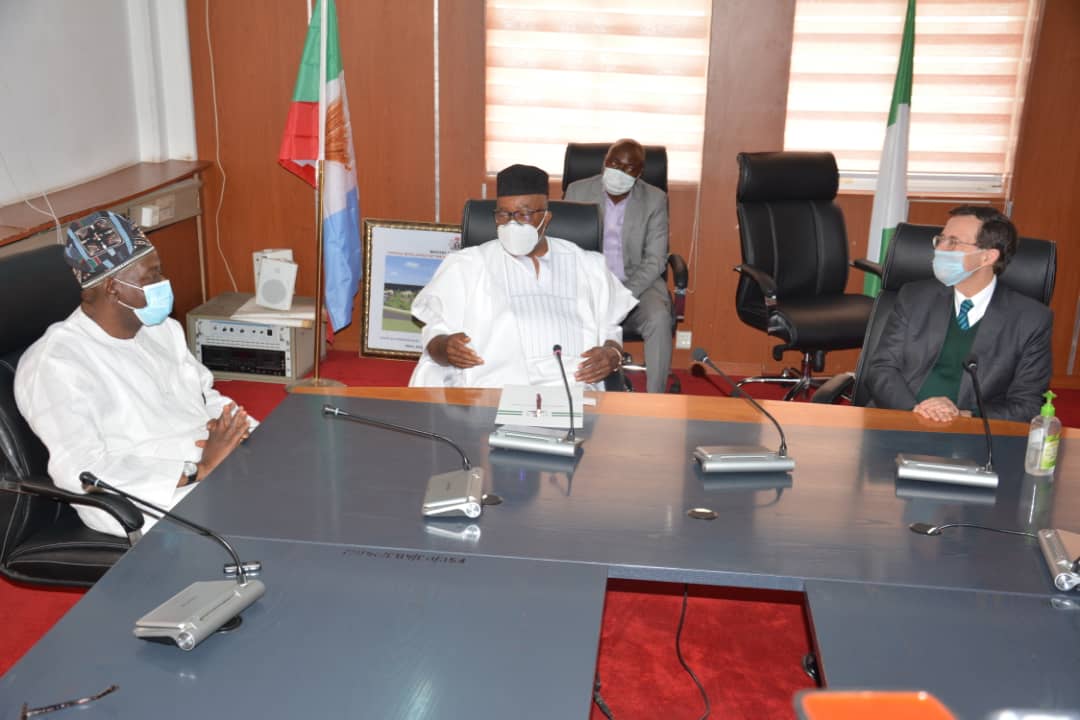
The Honourable Minister, Ministry of Niger Delta Affairs (MNDA), Sen. Godswill Akpabio has stated the readiness of the Federal Government to collaborate the French Government in the production of Virology Centres which will address and tackle the spread of infectious diseases in the Niger Delta Region.
Akpabio made this known when the French Ambassador to Nigeria, Jerome Pasquier paid him a courtesy call recently in his office, Abuja.
According to the Minister, “the importance and usefulness of the Virology Centre cannot be emphasized considering the prevalent situation presently experienced in the country and globally”.
He stated that the Ministry of Niger Delta Affairs as child of circumstance was established to quell the agitation of the people of the Niger Delta region and to bring development to the region.
The Minister, who commended the efforts and commitment of the Federal Government in rolling out measures to curb the spread of the COVID-19 pandemic, extended his sympathy to the French Ambassador and his country for their loss.
He further stated that presently, the Ministry seeks to engage the services of consultants who would merge the Regional and National Plan to produce a concised Master Plan that will address amongst others, the infrastructural deficit, youth restiveness and socio-economic challenges in the region.
Akpabio also stressed the need to engage Soil Remediation experts to help in restoring the soil to its natural pollution free state, which will enhance soil usefulness and prevent endemic poverty in the region, adding that the Central Bank of Nigeria (CBN) has demonstrated its readiness to expend N90 billion for the 9 States of the Niger Delta region in its integrated Agricultural Programme to train youths in Fishery, Rabbitry, Piggery, etc.
He assured the Ambassador that the Ministry would be prudent and transparent in any financial assistance offered by French Government.
The French Ambassador, who commended the efforts of the Government in putting in place effective measures to control the spread of COVID-19 pandemic, encouraged the Federal Government to develop vaccines that will take care of infectious diseases and other ailments such as Corona-virus and malaria respectively.
He indicated the readiness of his country to co-operate with Nigeria in the production of vaccine suggesting that Nigeria should also collaborate with other African countries to make the COVID 19 vaccine production a reality.
South Africa’s cloud market is showing good signs of growth and development as enterprise customers begin to take serious notice of multicloud and its benefits. As a result, it is imperative to develop and maintain a robust mutlicloud strategy that meets continuously evolving business demands.
Andrew Cruise, managing director, Routed, a neutral cloud infrastructure provider, notes there are clear business benefits of pursuing a multicloud approach, including having a choice of best-in-class platforms to match a variety of business requirements and the ability to efficiently allocate scarce capital by utilising the operating cost model of cloud consumption. “However, some other no less important advantages of mutlicloud involve its potential to drive innovation, flexibility, and scalability of new apps in hyperscale public clouds. Multicloud can also ameliorate risks of failure and vendor lock-in by load balancing across multiple cloud platforms. In addition, multicloud really enables IT to meet business needs by freeing up time to focus on where value is added.”
Considering the sheer number of options available, the task of building a successful strategy should inevitably begin with a clear decision on where an enterprise’s efforts and resources should be focused. “In other words, where does IT bring business value? Use cloud infrastructure to free up internal resources and scarce capital to facilitate investment in these areas,” he adds.
Cruise says it is also advisable to build out from familiar areas of expertise incrementally. “A ‘big bang’ replatforming approach, especially involving multiple unfamiliar hyperscale environments, is fraught with risk. Instead, base digital transformation strategy on current expertise, use industry standard virtualisation platforms like VMware both on-premise and in local clouds for core business critical foundational workloads, and then add cloud native apps in global hyperscalers in stages.”
Successfully managing a multicloud environment is another understandable area of concern for enterprises, especially where security and regularity compliance are non-negotiable. “A proper assessment of people, processes and control can provide a bird’s eye view of all IT and from there what is required to apply policies and procedures coherently together with a security strategy across all platforms,” says Cruise.
As digital transformation and cloud migration are now fully understood as business imperatives, choosing the right provider should be a carefully considered decision. Cruise explains that it’s vital to understand that no two cloud providers are the same, and that each market and sell on what they do differently. “Each provider has their own unique set of services and tools, which paradoxically, is where their value lies, but the drawback is that it also creates a barrier to multi-cloud due to incompatibilities. Enterprises should be circumspect in targeting these specific USPs in each provider as they will enforce a level of vendor lock-in and base their multicloud strategy on which providers will give them a consistent user experience across all platforms.”
As enterprise demands shift, how cloud is deployed will adapt in tandem. Cruise believes the future is likely to be a pragmatic cloud or dirty cloud. “This is the path of least resistance as it leads to what works most easily. This is mixture of onsite; private-style cloud like local VMware VPC; and public cloud from global hyperscalers.”
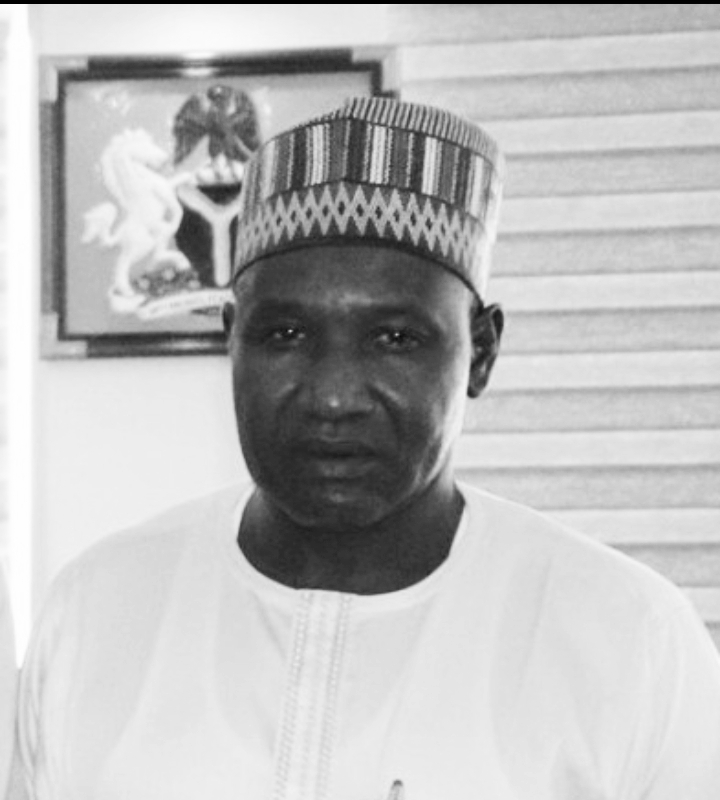
The Executive Vice Chairman of the Nigerian Communications Commission (NCC), Prof. Umar Garba Danbatta, has congratulated Mohammed Babajika, Director, Licensing and Authorisation Department of the Commission on his recognition by the League of African Development Students (LEADS) as ‘’Africa’s Patriotic Personality’’
According to LEADS Africa, Babajika was considered worthy of the award “for his outstanding contribution to Africa’s development and meritorious service to God, humanity and our dear country Nigeria, especially through various national and international assignments in the private/public service and community development.”
Also, the Licensing and Authorisation Department, led by Babajika, was presented with the “LEADS Development Mandate/Service Award” certificate for “pioneering telecom innovation regulations for development in Africa.” The award was “in recognition of the corporate commitment of the entire management and staff of the Commission towards the attainment of its mandate.”
In his congratulatory message, Danbatta said the two awards are a reflection of how well the Commission, through the department, has delivered one of its important functions of issuing operating licences to all telecommunications service providers in Nigeria for economic development, as contained in section 31 of the Nigerian Communications Act (NCA), 2003.
The Licensing and Authorisation Department of NCC is saddled with the responsibility of issuing licenses to applicants, through the provision of prompt, proactive and effective licensing and authorization toward independent and impartial regulation of the communications sector in Nigeria.
The LEADS Africa is a youth development group with the core aim of sensitizing young persons on democratic developments in Africa while also recognizing exceptional leadership and performance in this regard.
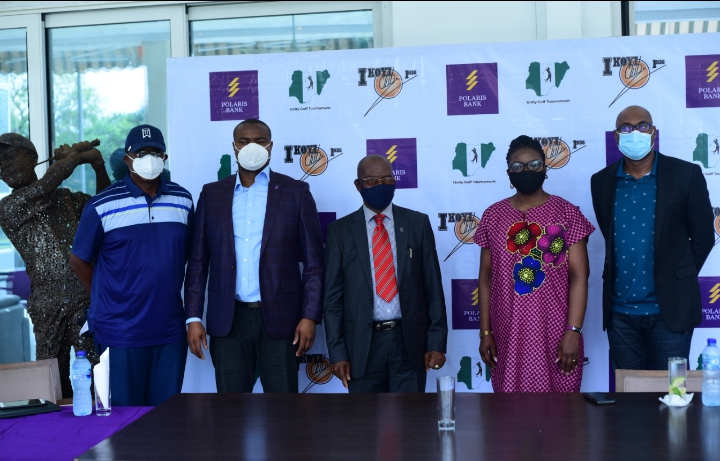
Polaris Bank has announced its sponsorship of the Unity Golf Tournament organised by the Golf Section of the prestigious Ikoyi Club 1938. The Unity Golf Tournament is an Open Amateur Golf tournament is expected to parade about 350 golfers who are members of registered Golf Clubs across the country. Specifically, five players each will come from about 70 Clubs across the country. Other highlights of the three-day tournament include a cocktail at the Club house on March 25. On the second day, March 26, ladies, veterans, and some guests will take to the field. The three-day tournament promises to gather the very best golfers around the country in an atmosphere of unity through recreation and sports. The event will receive guests from Thursday, March 25, tee-off on Friday, March 26, and end on Saturday, March 27, with a grand finale which will see hcp 0-14 male and guests play before the presentation of awards to winners at a Gala Night. Expressing delight on the partnership with Polaris Bank, the newly elected Captain of the Golf Section of Ikoyi Club, Chief (Dr) M.I. Okoro thanked the Bank and expressed optimism that the sponsorship would strengthen the already existing relationship between the Bank and the Ikoyi Club community.
Speaking on the competition, the Acting Managing Director/CEO of Polaris Bank, Mr. Innocent C. Ike, said the Bank is pleased to associate with the Ikoyi Club 1938, adding that sponsorship of the tournament underscores the Bank’s conviction on the role of sports, particularly golf, in enabling national unity, and socio-economic development.
Mr. Ike noted that Ikoyi Club 1938 is an iconic brand that has transcended from being just a club for socialisation to a nursery for raising stars who have gone ahead to get listed in World Amateur Golf Ranking. According to the Polaris Bank CEO, “We are excited to partner with the Golf section and, by extension, the Ikoyi Club 1938 in hosting this tournament. Our position stems from the fact that Ikoyi Club Golf Section is a foremost Golf Association in Nigeria, and hence provides us the platform for bonding, business and social good”.
“As a future-determining Bank and an enabler of enterprise, we are always willing to be part of any social and business partnership that holds opportunities for the larger society,” he added. Ikoyi Club 1938 Golf Section originally existed as two clubs: European Club and The Lagos Golf Club. A merger saw the birth of the Ikoyi Club 1938. It is an 18-hole golf course where various golf tournaments and championships are played throughout the year, attracting golfers worldwide.
The lush green Golf Course of Ikoyi Club 1938, Lagos. is within the 456 acres of land, providing first-class facilities for about 10,000 members. Several of the A-list open and close golf tournaments/championships hosted at the Club have attracted recognition and endorsement from global Golf bodies like United States Golf Association (USGA), Royal and Ancient (R & A) of Scotland, with some of the ones listed amongst golf tournaments in the World Amateur Golf Ranking (WAGR). The gala night would have in attendance the Governors of Imo State, Senator Hope Uzodinma, and his Lagos State counterpart and host Governor, Babajide Sanwo-Olu. The Innoson Auto manufacturer/Founder, Chief Innocent Chukwuma will also attend alongside other top dignitaries. Royal Father of the day is the Oniru of Iruland, Lagos, His Royal Majesty, Oba Abdulwasiu Omogbolahan Lawal, Abisogun II
The Ogun State Governor, Prince Dapo Abiodun has said the decision to embark on the construction of the cargo airport in Ilishan-Remo is an objective decision taken based on the economic development agenda of his Administration to have a cargo airport that fully complements agro value chain investments in the State.
Prince Dapo Abiodun, who made this known during an on-the-spot assessment of work done on the 2.3km access road to the cargo airport in the State, said that the proposal for the cargo airport which was conceived in 2007, had all necessary environmental impact assessment and other regulatory assessments.
“This was not a decision that was taken for any other reason except that which is objective. Our thinking was based on our economic development agenda which is to have a cargo airport that fully complements agro value chain investments in the State.
“This project has since been conceived in 2007. All necessary approvals were gotten in 2008, and all environmental impact assessment as well as other regulatory requirements have been met 100%. All we had to do was brush them up to ensure that they met with current realities,” he said.
Governor Abiodun, while noting that his Administration opted to go with the cargo airport proposal from 2007 because it would help his Administration co-locate the Special agro-processing zone in the area, added that because of the zone, his Administration has renamed the cargo airport city an heteropolis, because it would afford the State factories where raw materials can be turned into final products for export.
The state helmsman, who added that the cargo airport would be complemented with the first international testing centre where goods would be evaluated for export, said the commencement of a cargo airport in the area would help the siting of the testing centre in the area.
“More importantly, we bidded for the African Development Bank, AfDB’s special agro-processing zone and in that bid document, we chose this location to co-locate the special agro-processing zone here. Because of that, we have now renamed this place an heteropolis, meaning a complete airport city, because it has the airport and the special agro-processing zone. We will also have factories here that will turn them from raw materials into finished products ready for export.
“The AFROEXIM Bank has begun the construction of the first African International Testing Centre here in Sagamu; that is, a centre where items for export would be evaluated and approved for export, so a cargo airport here is just very convenient and economically wise,” he said.
Abiodun, while noting that the project which had already begun before the Senate Committee on Aviation came to the State, affirmed that the first phase of the cargo airport would be completed by May, 2022.
“This project had begun way before the Aviation Committee came here. It was not the other way round. In line with our economic development agenda, we had an airport as part of our key enablers, and we have begun the airport. As a matter of fact, in line with our plans, this first phase of the airport will be completed by May, 2022. The work was already in progress and the coming of the Senate Committee was incidental,” he said.
firstly let’s define Igbo apprenticeship :The Igbo apprentice system, also known as the Igbo trade apprentice system and commonly referred to as ′Igba-Odibo/Igba-Boi/Imu-Ahia/Imu-Oru′ is a framework of formal and informal indentured agreements between parties that ultimately facilitate burgeoning entrepreneurial communities within the Igbos.
As an Igbo person reading this you don’t need further explanations as you already know what it means.
It is a system which has helped expanded the Igbo “markets” over centuries, producing millionaires and boosting economies.
It doesn’t matter wherever the Igbo man finds himself, as long as the environment is conducive for trade he starts his trade, at a point employ his brother who is to be paid in cash and in kind after an agreed number of years.
Days run into weeks, into months and into years until this apprentice is finally paid as agreed, he start his own trade and adopt the same system and the process never ends. within decades the whole market is overrun by a particular tribe.
The system has remained one of the most admired means of getting wealth until the recent decades and here are few factors that are likely to cause the system to go extinct in the future.
1- devaluation of the naira : In the past an apprentice who received 500k as settlement is sure to succeed because that is a whole lot of money then. A business that requires a startup of 500k in the year 1999 now requires over 5 million and no master is ready to give out such amount as a settlement.
2-Many young Igbos now prefer the fast learn: Imagine that you are serving your master at your 3rd year, you still have about 5 more years before settlement, then you still have about 5 more years after your settlement before you record a major success, then suddenly you start seeing a little boy you left in the village buying cars, building houses and living your dream life. You manage to meet him and ask him how come, he said “na street I de oh”, then you begin to question everything about your life and the desire to abandon business creeps closer day by day.
3-lack of honest apprentices : the pressure to steal from your master is irresistible among today’s servants, many masters who did very well have gone broke in the hands of dishonest servants and others have learned from their experiences. Majority of today successful traders now prefer to have sales girls instead of apprentices thus causing decline in apprenticeship.
4-dishonest masters : many youths have watched their relatives who left the village over 10 years ago come back with nothing other than mare unproven allegations of theft and disloyalty. Who still want to be an apprentice after watching his brother suffer for that long and gained nothing?
Today that no youth wants to go through this system to make wealth due to the above 4 factors, many have diverted to illegal means of success, 2 of these means are drug peddling and internet fraud. Having studied how these illegal activities operate its very correct to state that the Igbo apprenticeship has only left trade and have been transferred to crime as drug peddlers, yahoo boys and even kidnappers now have apprentices.
It doesn’t matter if the activity is legal or criminal, as long as the Igbo man is involved he quickly adopts the apprenticeship and over a short period of time the whole business is overrun by the tribe.
In the Igbo cosmic worldview, the spirit realm was divided into three of four tiers, The first realm was where Chukwu and Ekeh dwelt, it was above the skies, hence known as Elu Igwe,
The second realm was the abode of the Sun and the Agbara of Igbo traditional religion, this was the realm that is relatable to mortals, the realm they pass throught to attain divinity.
The spirit known as Agwu edited between the first two realms and the human world,
Agbara which is an archaic contraption of Ngbara is from an ancient Igboid word meaning power or authority over a place.
Agbara are divinities that inhabit the natural environment and controls all that is within that geographical location, in Igbo cosmology divinites are not like the Greco-Roman deities that rule over human passion or human functions such as love, war, hunting, etc, they ruled the geographical location they hd dominion over,
To settle or pass through the territory, the ancient Igbo believed they had to appease such divinities in order not to trespass hence we hear of supplications and sacrifices to “Agbara nwe miri a” or “Agbara nwe ali”
The Igbo believed that the Agbara ruled over natural locations such as the earth (Ala), the Sky (Igwe), Brooks or fountains (Ngene) Valleys (Ogwugwu), hills and mountains tops (Ugwu), forests (Ikpa) and different Rivers.. Of the prominent Agbara in the igbo cosmos includes,
Ala or Mother Earth, since we all live on the Earth and receive our sustainance from Earth the Igbo sees it as imperative to respect and honour mother earth and offer her all the appeasement possible, Ala worship is central to igbo spirituality, because the Earth is the mother of all, the earth is sacred.. every town in southern igbo used to have a communal altar dedicated to Ala under the title of the town e.g in Egbu it was Ala Egbu deity, Ala Agwa, Ali Ikwerre in Isiokpo etc
The early Northern Igbo were sun worshippers As Anyanwu in igbo cosmology is not an Agbara per se, but an extension of Chukwu, Chukwu was belived to exist in or beyond the sun, Anyanwu is masculine Anyanwu as the name entails is Anya anwu, the eye (i.e window) of the rays(anwu) from Chukwu, it is the window that opens in heaven through which the cosmic energy from Chukwu shines on Earth, that is why the daylight is known as Chi, and each day is known as ubochi and night as Ujichi(amongst the Owerri)
Anyanwu was thus worshipped as a physical manifestation of Chukwu who is far away, the Eze Nri was very well known to be specialized in the sun cult, the sun cult is associated with igbu ichi, which is the ritual art of divinization through scarification mimicking the rays of the sun, (igbu ichi – putting on the marks of chi)
Igwe was the sky being, or the personification of the sky, it’s cult was prominent Amongst the Oru and the Isuama.
Ngene worship was viewed as the worship of the Forest or the source of life, Ngene is a small spring deity, or rather there are many Ngenes so it easily became alusi with time.
There was the Agbara nwe Miri, the divinities that rules over water bodies named after them, such as Otamiri, Imo, Oshimili, Orashi, Ogbuide, Njaba etc
Some of these Agbara as they become more personalized from town to town took on the roles of Alusi,
I
ALUSI/ARUSHI
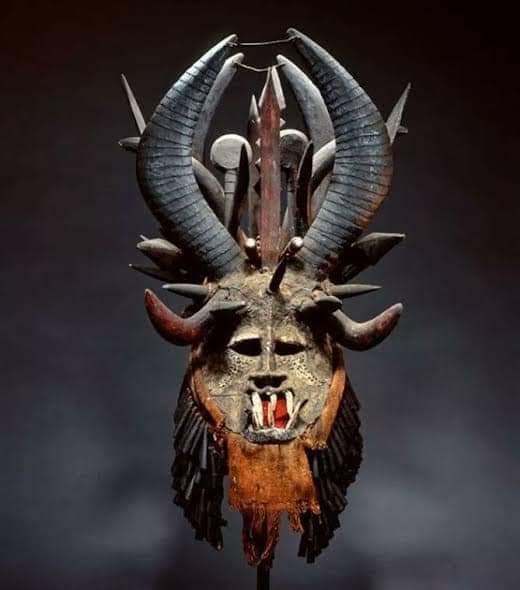
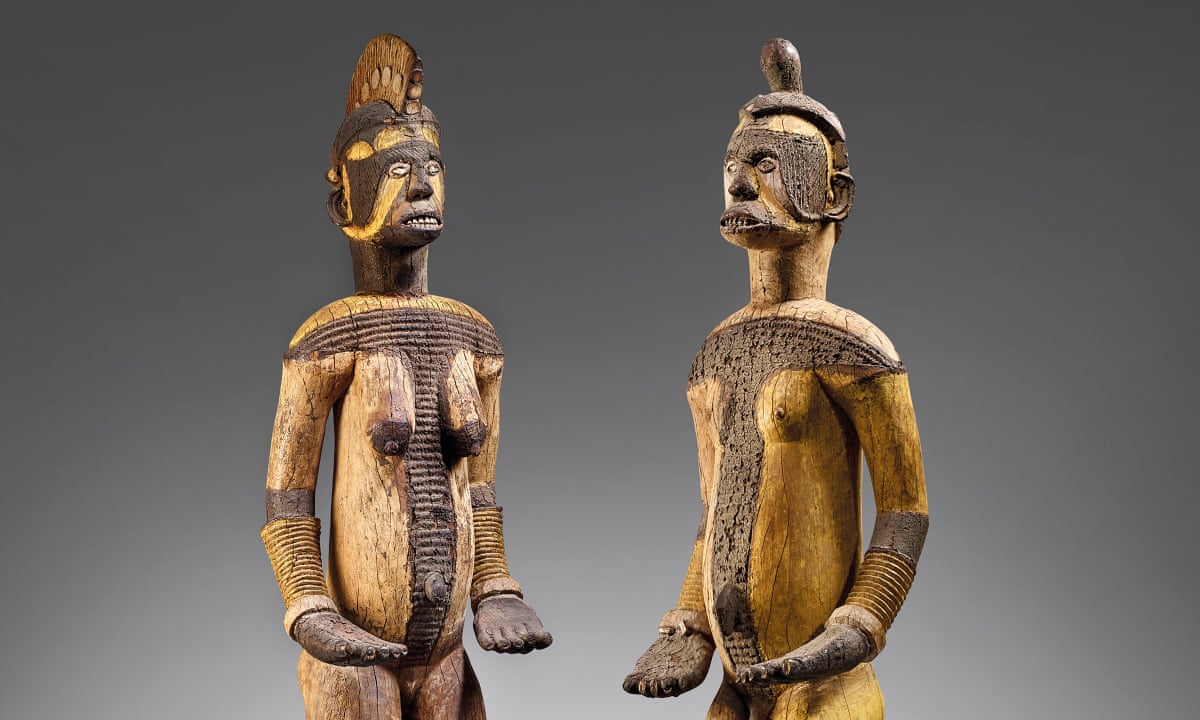
Arushi whose name means to do a work or to bring a work to completion to the person that contracted you are lesser deities or spirits contracted by the Igbo on the basis o functionality and not geography, Arushi is an effigy or amulet with a spirit or lesser deities invoked into it to perform the Bidding of the devotee, it serves for particular functions, such as war, fertility, farming prowess, hunting, oath, or prophecy, Most oracles in Igbo history are Arushi, they work on contract basis, and to enact an Arushi into a place, the effigy or contact figure has to be made and the spirit invoked in through sacrifice (which could vary from simple offering to animal sacrifice and even human sacrifice) Arushi effigies always have their hands stretched out to receive offerings or petitions
There are a myriad of Arushi in igbo land, even a single town having many at once, tht it is not possible to recount them all, Arushi can be replicated from town to town based on it’s effectiveness and popularity such that people couldale copies from the original shrine and carry it with them back to their home villages and install it their… This is how some Arushi got popular over a geographical area when compared with others.
Some of the most prominent Arushi in Igbo land were Amadioha, Ahianjoku, Kamalu, Ekwensu, Ikenga, The different Ogwugwu and Ngene, Ojukwu, etc
I’ll talk briefly about Amadioha, Amadioha who has been a source of so much romanticization and embellishment as in the fashion of Greco-Roman Zeus or Viking Thor is far from that. Amadioha is a personification and deification of legal codes and law enforcement enshrined in Ala worship and guarded by the spirit or oracle under whom the oath guarding the laws were made, In simpler terms it is a deity of justice, the thunder embellishments we’re later additions,
Although to be an Amadi one hs to be a free born but the name Amadioha does not mean free born, it comes from the verb Ama (from where u derive ima iwu, i.e legal codes or enactments) and Dioha – of the masters of the community, the masters here being the Diala who sever as law enforcers. Thus it means a legal codes enacted by the masters of the land, personified in the oracle at Ozuzu, The Nde Amaala and Nde Amadi in Echie came together to enshrine their laws under the protection of the a titular deity who became the titular deity of Echie people, anybody who breaks the sacred laws of the land or committed any sacrilege against his neighbor would be struck dead by the deity, that is the origin of Amadioha, the popularity of the oracle spread through Ikwerre and Owerri, and with time it was replicated by Echie priests over other parts of Southern igbo,
One place amadioha spread to was Umunoha, with the Help of Aro mercenaries, Echie priests under Nnoha took over the place and established Amadioha oracle on an already existing Igwe temple used by the Isuama people to honour the Sky Agbara,The new Igwekaala shrine became a popular oracle for people who went to swear, who went looking for justice or to arbitrate cases.
This associations with Igwe is what is what has led to the confusion of Amadioha taking Over Igwe attributes as an Agbara over the sky, like wise the merging of the Amadioha Ozuzu shrine with Kamalu whose effigy the Aro installed at Ozuzu led to the association with thunder and rain and lightning, Kamalu is an Arushi of Agriculture and weather from the Cross River area, it was a deity of Masculine prowess in farming, war and fecundity, it’s association with thunder and lightning gave that appellation to Amadioha. You see, when the Aro sojourned into Southern Igbo, they set up Kamalu shrines on already existing Amadioha oracles, but we Southern igbo have always been able to tell which is which. Other places the Echie established Amadioha Oracles were in Uzoagba and Eziama,Other popular Arushi includes Ekwensu na Ikenga,
Ikenga is an amulet or effigy meant to represent strength and skill as stored in ones right hand, its function was to channel energy from the Devotees patron and chi to the Devotee, his handiwork or endeavours, every titled man had Ikenga, even the various Arushi had Ikenga.
One particular Arushi associated with Ikenga was Ekwensu, Ekwensu was a spirit of violence, bravado, restlessness and Machismo,Children who were often of violent temperament or ADHD children were often thought to be possessed by Ekwensu,People used to go to Ekwensu alters to ask for vengeance.
Ekwensu is the Arushi of bargains, tricks and war. As such his restlessness is out to good use by warriors such that igbo communities.with long standing history of conflict and wars often have Ekwensu in their pantheon,
Ekwensu is a major deity amongst most Anioma communities such as Ibusa, Asaba, Ogwashi-Uku, parts of Ukwuani and Ossomari.
Ahajoku on the other hand is an Arushi specifically dedicated to the yam cult, Ahajoku is masculine and a patron of farmers, he is the Arushi that ensures success in yam cultivation,All invested Ezeji are qualified chief priests to Ahajoku, Ahajoku guides the taboos and social conducts of all the Ezeji in the community. Someone who is divined as an incarnation of Ahajioku or a priest of Ahajoku is often called Osuji or Duruji, while a male child born on new yam festival may also be called Ezeji
One unique differentiation is that in the worship of Agbara an effigy is not required, most Agbara being centered on nature worship is represented by a tree, a stump or a rock, marked with white cloth or red cloth or any cloth or symbol of choice.
Their shrines are denoted as “ihu” or “okpu” E.g in most Southern Igbo villages in every Kindred’s Uhu or Ohe (i.e homestead) there must be an Ihuali (ihi ala in Echie) or altar or shrine to Ala, it is marked by any of the trees sacred to Ala and a white cloth.
Arushi on the other hand mostly have effigies, Arushi being a product of functionality take personal human qualities, can be either man or woman, a young person or old, a jealous envious deity or a happy jolly one, they are dedicated to a particular function such a war, hunt, masculinity, fertility, love, farming success, wealth, death etc Arushi can equally be a deified human being e.g Imoka
Edo is the feminine Arushi of Wealth in the Nnewi area, it centers around a daughter of the Agbara called Idemili who was instrumental in the establishment of towns around the Nnewi area. Hence the name Umuanaedo
Ojukwu was an Arushi in the Echie area as well, where people went to consult for Oracles and prophesies (that was her specialty) as well s taking oaths, her shrines spread, but her major shrine was established at Diobu,
Around the same time of the proliferation of Amadioha Oracles from town to town there seemed to have been a proliferation of Ekeh cult as an Arushi in the Owerri and Ngor area (to escape Aro subjugation through religion which may explain why Ekeh surnames are common in that area) and also Arioku and Afor-ukwu Oracles in Enyiogugu and Ohuhu Mbaise
their are so many more Arushi that cannot be enumarated here, each town having it’s own varieties, there is Ogu in the Ngwa, Ndoki and Bonny areas, Mgbadike, Onicha etc but these are the major ones.
NB : Onwuka is the Arushi associated with death in the igbo area.. Ogbunabali is a corruption of the Ikwerre Ogbum nu Abali (Ogbum and Abali) which is a land in between and jointly owned by the communities founded by two brothers Ogbum and Abali.
St Martins Hotel a new entrant in the hospitality and tourism sector in Anambra state has been lauded for their innovative and world-class services that they have introduced to the state. With top-notch finishing and great services, the hotel has been described as a pearl in the Eastern Nigerian tourism ecosystem.
Bringing finest luxury in lodging and dinning in the state, the hotel has been described as a class of its own. Speaking of the importance of the hotel in the landscape, Martin Ndigwe the Chief Executive ad Founder of St Martins Hotel stated “We aim to be the pride of place in the hospitality sector by providing security, comfort and a home away from our clients using best in class accommodations. We have highly motivated and courteous staff and technology to ensure that your stay is memorable.”
Tucked between the twin cities of Enugu and Onitsha/Asaba, the St Martins hotel is just an hour away from Enugu international airport and about one hour thirty minutes from Asaba local airport in Delta state. This has endeared the hotel to businessmen and politicians/diplomats seeking to do business in the most robust Eastern Nigerian state of Anambra. The hotel has also introduced complimentary Airport pickup from any of the aforementioned airport making is one of the very few that is offering such service in Anambra state. Not only that, the hotel has employed local and international flight booking for their clients making them to be one of the most pampered clints in the Anambra tourism ecosystem.
Newly weds aren’t left out, in giving back to the society, the hotel has introduced a highly discounted rates for couples called “3 Nights Honeymoon Package.”
With various awards like 2018 Travellers’ Choice and Boutique Hotels Award, this has shown the world-class status of the hotel making it rank top in the state. The hotel has been known for extreme customer comfort experience. This has exceeded the expectation of many people; the hotel has aimed for consistency in giving attention to details at all times.
Located at Kandi Okeke Crescent by Ifite Rd in the capital city of Awka, the hotel has numerous rooms that has been described as mini museum and gallery where top art works adorn the walls with ambience lights that will relax the mood of the guests.
“Our vision is to be an organisation where trust, reliability, comfort, good cuisines and security will be our watchword. We are poised to be the best in exceptional guest experience with our high quality of service”, Martin added.
The Executive Vice Chairman of the Nigerian Communications Commission (NCC), Prof. Umar Garba Danbatta, has congratulated Mohammed Babajika, Director, Licensing and Authorisation Department of the Commission on his recognition by the League of African Development Students (LEADS) as ‘’Africa’s Patriotic Personality’’
According to LEADS Africa, Babajika was considered worthy of the award “for his outstanding contribution to Africa’s development and meritorious service to God, humanity and our dear country Nigeria, especially through various national and international assignments in the private/public service and community development.”
Also, the Licensing and Authorisation Department, led by Babajika, was presented with the “LEADS Development Mandate/Service Award” certificate for “pioneering telecom innovation regulations for development in Africa.” The award was “in recognition of the corporate commitment of the entire management and staff of the Commission towards the attainment of its mandate.”
In his congratulatory message, Danbatta said the two awards are a reflection of how well the Commission, through the department, has delivered one of its important functions of issuing operating licences to all telecommunications service providers in Nigeria for economic development, as contained in section 31 of the Nigerian Communications Act (NCA), 2003.
The Licensing and Authorisation Department of NCC is saddled with the responsibility of issuing licenses to applicants, through the provision of prompt, proactive and effective licensing and authorization toward independent and impartial regulation of the communications sector in Nigeria.
The LEADS Africa is a youth development group with the core aim of sensitizing young persons on democratic developments in Africa while also recognizing exceptional leadership and performance in this regard.