Nigeria’s upper legislative chamber, The Senate, has taken further steps towards strengthening the legal status for the country’s National Emergency Number 112, being implemented by the Nigerian Communications Commission (NCC) though it’s Emergency Communication Centres (ECC).

The Senate Committee on Communications recently organised a one-day public hearing where stakeholders gathered to make valuable contributions and observations on two bills by the Senate Committee on Communications. These are the Nigerian Postal Service Act (Repeal and Establishment) Bill, 2021 and the Nationwide Toll-Free Emergency Number (Establishment) Bill, 2021, being sponsored by Senator Ibikunle Amosun of Ogun State.

The emergency number bill passed the second reading on Wednesday, April 21, 2021 and the recent Senate public hearing on the bill was to have extensive discussion towards making the bill more robust to ensure a more effective, uniform and well-coordinated national emergency number 112, when it is finally passed into law, similar to the 999 emergency number in the United Kingdom and 911 in the United States.

Speaking at the public hearing, Senate President, Dr. Ahmed Lawan, stressed the desirability of the passing of such a bill into an Act of national Assembly, adding that the critical role of communication in modern day, especially in handling emergency situations cannot be over-emphasized.

Similarly, the Chairman of the Senate Committee, Oluremi Tinubu, said the bill, when passed, will establish the Nationwide Toll-Free Number as a primary emergency number and contact point for all emergency services in Nigeria, thereby harmonizing the various emergency numbers in the country into one uniform number while, at the same time, empowering the NCC to supervise and ensure compliance.

Represented by his colleague, Senator Odebiyi Akinremi, Senator Amosun said the bill seeks to make 112 the Emergency Number of Nigeria, stating that “this will enable citizens have access to quick and timely response in respect of all forms of emergency situations such as road accidents, fire outbreaks, burglary , medical emergencies and so on’’.

Also speaking, the Minister of Communications and Digital economy, Dr. Isa Ali Ibrahim Pantami, commended the Senate for organizing the public hearing. The Minister said while NCC had established functional ECCs across 23 states and the Federal Capital Territory (FCT), Abuja, efforts are in top gear to ensure ECC is established in the remaining 13 states of the Federation for the processing of the emergency calls through the 112 Number.

At the public hearing, the Executive Vice Chairman of NCC, Prof. Umar Garba Danbatta, made a number of valuable recommendations that will make the bill, which he said might be cited as the ‘National Emergency Communication Act, 2021’ when passed into law, more effectual in terms of board composition, scope as well as ability to accommodate emergency services by different statutory and regulatory agencies.
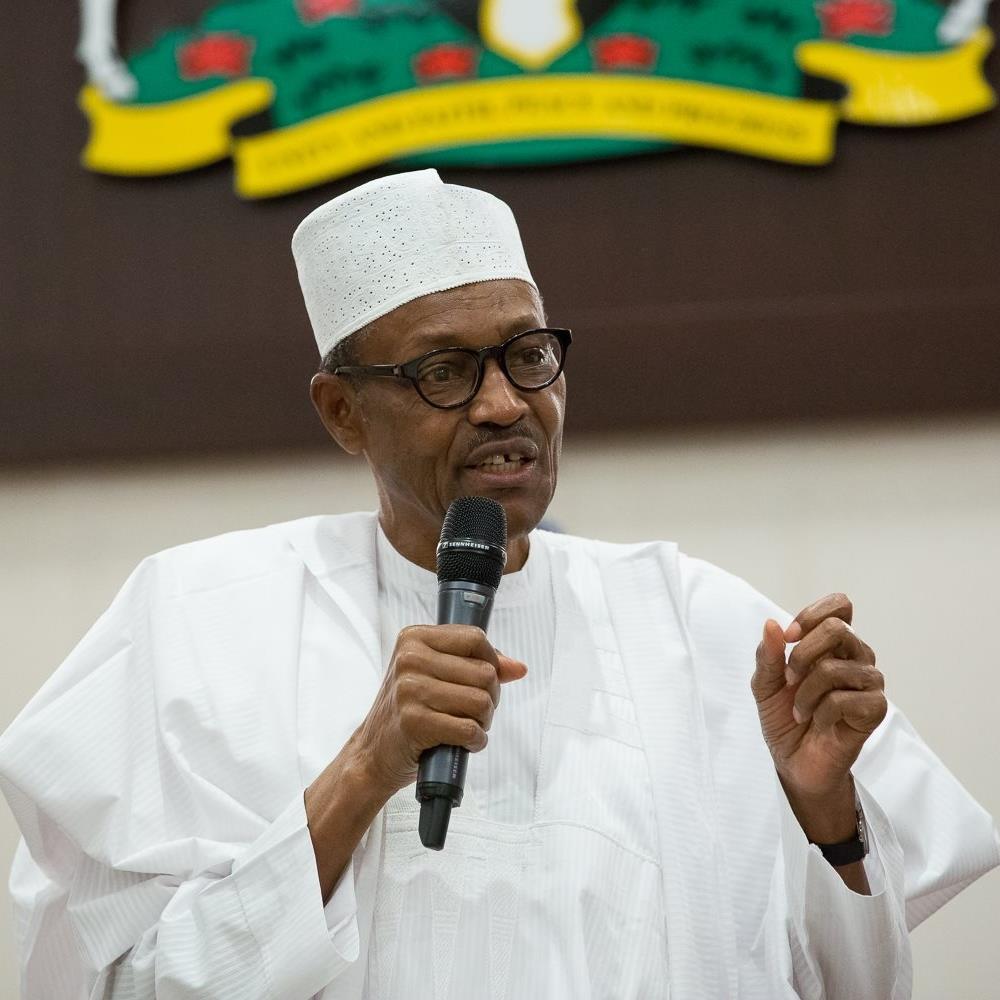
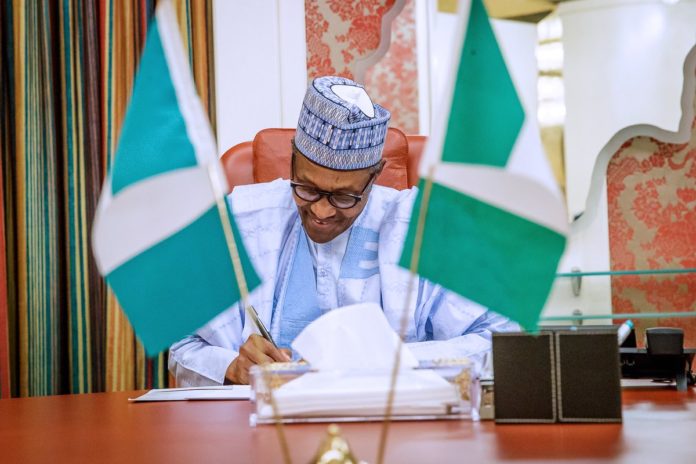
President Muhammadu Buhari has described Lt. General Ibrahim Attahiru, the late Chief of Army Staff as an outstanding soldier and an institution builder, who fought valiantly for Nigeria until he breathed his last.

In a telephone conversation Sunday evening with Mrs. Fati Ibrahim Attahiru, the wife of the late COAS and the spouses of the other deceased officers through her, President Buhari hailed the sacrifices of the military men who lost their lives and the Armed Forces in general, saying that Nigerians will continue to appreciate and support the fearlessness with which our courageous soldiers are confronting the threats facing the nation.

He gave the grieving spouses assurances that the nation will never forget the supreme sacrifice of their spouses, urging them to take solace in the surge of extraordinary feelings of emotions across regions, religions and tribes all over the country in appreciation of their sacrifices.

The President who had earlier given directives to the Defense headquarters and the Ministry of Defence to do everything a government can do to provide comfort and ease the hardships of the families of the deceased, prayed to Almighty God to repose their souls and grant their families the fortitude to bear the losses.

Mrs Attahiru, on behalf of the rest of the families thanked the President for the love and care he has shown to them.

As the second half of 2021 approaches and Covid-19 vaccinations roll out across the globe, albeit at varying rates, Ian Lessem, Managing Partner at HAVAÍC, investors in early-stage, high-growth technology businesses, considers the trends making an impact on the African Venture Capital (VC) landscape.

Homegrown solutions take on the world 

At HAVAÍC, our investment thesis is centred around investing in businesses that solve real-world challenges. With the world having adjusted to new ways of shopping, learning, and doing business as a result of the Covid-19 pandemic, the appetite for solutions that solve real, tangible problems are without a doubt the best opportunities for growth.

Solutions that offer people and organisations better ways of living and working with less friction will reign supreme. In the African context, logistics, financial services, agri-businesses and food security, health, as well as education are sectors benefitting most from rapid transformation.

Funding flows

With global interest rates at an all-time low and African tech hubs in Cape Town, Nairobi, Lagos and Cairo maturing to levels needed for a startup ecosystem to thrive, there is an ever-increasing demand from international investors to invest in African startups.

In the past this funding has often been skewed to non-Africans starting African businesses. From an international experience point of view, this is can be quite valuable, however as the biggest investment opportunities on the continent revolve around creating solutions for local challenges, it would be imprudent to ignore the importance in investing in the right local teams.

Pleasingly, more and more African founders with international experience are returning home and starting businesses. The achievements of Paystack and Flutterwave are excellent examples how this mix of local knowledge coupled with international experience can result in great local success stories that help build the ecosystem. Further to this, prestigious international accelerator programmes backed by global tech giants such as Google encourage locals to innovate and find solutions to local issues, while creating significant opportunities for these entrepreneurs to learn from the very best internationally. As result of this, local entrepreneurs with the right mix of local and international experience are increasingly driving the success of African startups and attracting local and international investment.

Fintech as the great enabler

In the African context, fintech remains a massive area of growth and opportunity. The relatively low uptake of traditional bricks and mortar banking, combined with a young and tech savvy population and high mobile penetration rates, make fintech in Africa one of the most exciting and promising sectors. The digital banking revolution as seen in Europe and Asia has hit Africa with a bang, and fintechs who focus on providing access to digital services through smart phones in an inexpensive and scalable manner are well-placed to take advantage of this trend.

However, in the African context, where cash still accounts for the bulk of trade related payments, fintech opportunities on the continent need to include solutions that address the need for both virtual and physical payments and “banking” distribution. By way of an example, in Kenya, with 80% of retail trade being cash based, and with bricks and mortar banks and ATM’s in short supply, creating physical distribution is still key. One of our investments, Tanda, does just that. Through their tech integrations with thousands of informal and local retailers, customers are able to pay and access financial services using virtual currencies or cash, and can withdraw and deposit cash at “checkout”. With less than 3,000 ATM’s in Kenya, and Tanda’s access to 10,000 dukkas or informal retailers, their technology platform literally trebled the number of ATM’s in Kenya over-night.

The intersection of non-physical financial services and cash, coupled with scalable distribution, is emerging as the space to watch.

The Future is African

Perhaps the most exciting and gratifying trend to see in action is the ability of African founders to pave the way when it comes to creating commercially innovative solutions that can scale seamlessly and compete across the globe on the back of proprietary technology. Looking at another one of our portfolio companies, hearX, using African grown AI powered audiology technology, their Lexie hearing aid is being rolled out in close to 10,000 stores across the US. On the back of this success and ability to compete internationally, hearX is attracting international interest, investment and partners, and most pleasing of all is that this example, which may have once been the exception, is fast becoming the rule.

According to President Buhari’s Facebook page, he said “I receive daily security reports on the attacks on critical national infrastructure, and it is very clear that those behind them want this administration to fail. Whoever wants the destruction of the system will soon have the shock of their lives. We’ve given them enough time.

I received a briefing today from the Chairman of the Independent National Electoral Commission (INEC), on the series of attacks on their facilities nationwide. These attacks are totally unacceptable, and we will not allow those behind them to achieve their evil objectives.

I have assured INEC that we will make available to them everything they need to operate efficiently, so that no one will say we don’t want to go, or that we want a third term. There will be no excuse for failure. We will meet all of INEC’s demands.

In the area of security, we have changed the Service Chiefs and the Inspector-General, and we are demanding that they rise fully to the challenges confronting us. There must be zero tolerance for all those those bent on destroying our country by promoting crime and insurrection!

Many of those misbehaving today are too young to be aware of the destruction and loss of lives that occurred during the Nigerian Civil War. Those of us in the fields for 30 months, who went through the war, will treat them in the language they understand.

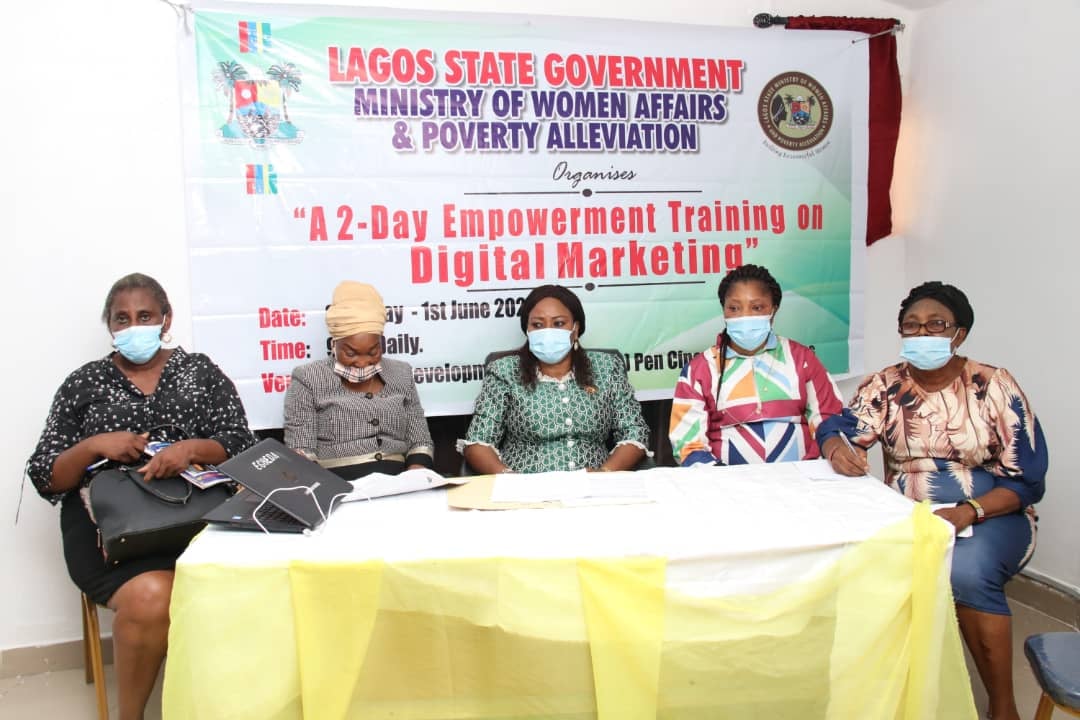
As part of efforts to enhance entrepreneurship amongst women in Lagos State, the Ministry of Women Affairs and Poverty Alleviation (WAPA), has commenced a two-day Digital Marketing training for 150 small scale business owners in the State.

Speaking during the flag-off ceremony held at the Women Development Centre, Agege, on Monday, the Honourable Commissioner for Women Affairs and Poverty Alleviation, Mrs. Cecilia Bolaji Dada, informed that the growth of digital entrepreneurship can lead to a new methodology that offers value for businesses at a reduced cost.

The Commissioner, who was represented at the event by Mrs. Oluyemi Kalesanwo, the Permanent Secretary in the Ministry, identified the need for digital entrepreneurial practices that could yield marketing automation, build brand awareness and induce cost savings.

She said, “The Ministry’s interest is to see a society of young entrepreneurs who are at par with international best practices of successful business owners. This is a resource venture that strives at women emancipation, using crucial pillars for poverty alleviation to achieve epoch developmental goals. Basically, it is a step to ensure a drop in the unemployment rate towards building an economically vibrant country”.

Delivering her opening remarks, the Director, Poverty Alleviation Department in the Ministry, Mrs. Toyin Salami, said “The initiative is an online business venture. It is a one-stop-shop initiative that is aimed at enhanced productivity using the internet. You need to harness all forms of enterprise at maintaining a larger sphere of online marketing, which is the core purpose of you being here today. I will implore you all to pay attention to every detail which could be the key to unlock the progressive treasure you all seek from this training”.

The Facilitator, an Information, Communication and Technology expert, Mr. Saka Olatunji, noted that the training was geared towards supporting and expanding participants’ business ventures from the position of redundancy to inventiveness.

“You need proper management using a solid marketing plan and strategies that will expedite your progress in the business world by embracing the new normal to thrive. You need to make your mark in the business world, through opportunities such as this training organised by the State government, to enlarge your coast. The knowledge you acquire here will help you to become an expert of the digital trade”, he said.

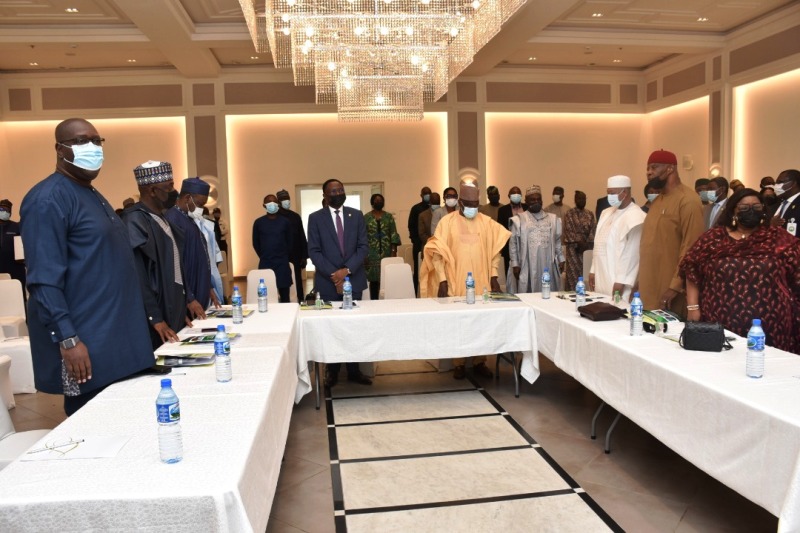
Today (1st June, 2021), the Ministry of Petroleum Resources at the Ball Room of the Frazier Suite, Abuja, engaged stakeholders from the public, Private and other organizations to deliberate on a draft strategy to safeguard the long term interest of Nigeria in energy sufficiency.

In his opening remark at the event, the Permanent Secretary, Ministry of Petroleum Resources, Mr Bitrus Bako Nabasu, mni, stated ‘that part of the government’s priorities is in the area of increasing local refineries of crude oil to meet domestic demand in addition to transforming Nigeria from a net importer of petroleum products to a net explorer’.

Speaking further, he added that, under his leadership a committee was set-up on 6th November, 2020 to deliberate and fashion out its continental energy leadership position. The committee which relied on the World Economic Forum (WEF) Global Competitiveness Reports of 2019 as it relates to Nigeria and other African countries, submitted an interim report to the Honorable Minister of State for Petroleum Resources, Timipre Sylva, whose approval the Permanent Secretary said, subjected the report to a wider stakeholders review in order to enrich the strategies.

Mr. Nabasu encouraged participants to subject the draft strategy to intense scrutiny with a view to make Nigeria not only the petroleum refinery hub in the West African Sub Region but the entire African continent.

The Director Upstream, Engineer Kamoru Busari, in his welcome address, said the event was for participants to brainstorm on the interim report submitted to the Honorable Minister, on how Nigeria can set up a petroleum refining hub in Nigeria. Engineer Busari, later made a presentation on ‘Strategic Initiatives.’

Participants broke into syndicates and deliberated on the following topics, Nigeria‘s Aspirations, Opportunities and Competitive Advantage, Policy and Regulation, Infrastructural Development, Capacity Building and Security.

…Commissions High Dependency Unit at LAUTECH Teaching Hospital, Ogbomosho
As part of

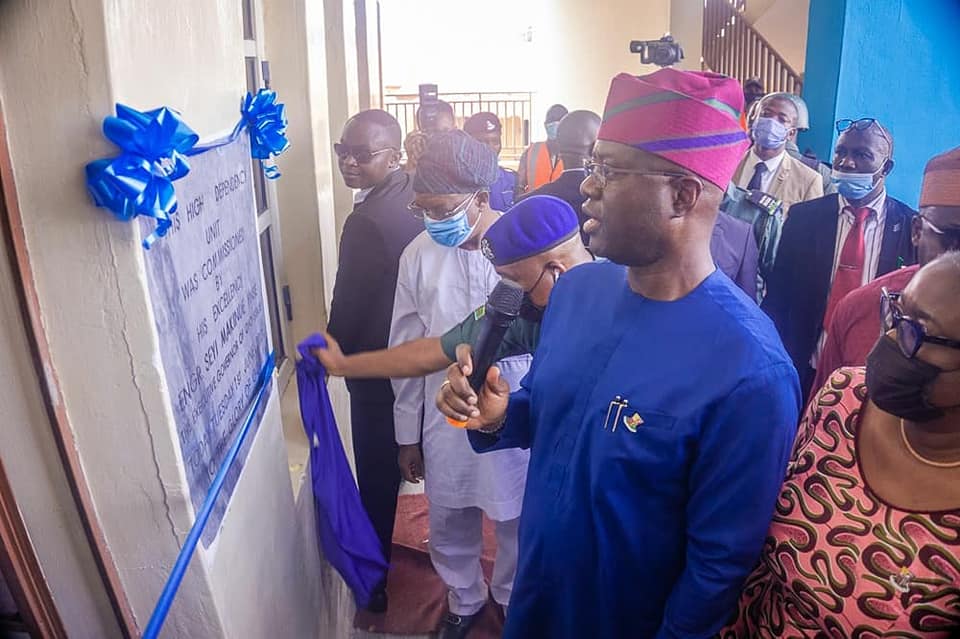
ongoing efforts to standardize healthcare facilities in the state, Oyo State Governor, ‘Seyi Makinde on Monday, commissioned the newly completed High Dependency Unit (HDU) at the Ladoke Akintola University of Technology, (LAUTECH)Teaching Hospital, Ogbomosho.

The governor in his address while commissioning the HDU noted that the facility will provide extensive health services for individual who may need intensive care.

The governor also urged residence to take advantage of the Oyo State Health Insurance Scheme for them to enjoy a quality healthcare service delivery at an affordable rate in various health facilities across the state.

The Muhammadu Buhari administration clocks six years May 29, 2021. This milestone affords the opportunity to reflect, and recount the impact that has been made (and is being made) on different sectors of national life.

From infrastructure, to finance, education, healthcare, sports, anti-corruption, human development , housing, oil and gas, foreign relations, and many others, the Administration is recording giant strides, enough to make Nigerians proud. That is, those who are dispassionate and fair-minded, not beclouded by political partisanship and undue cynicism.

Some people claim: we don’t see what they are doing. We don’t hear about it. Well, here it is. A Fact Sheet, a report card on the Buhari Administration, just a bit of the successes, as the milestone of six years is attained.

As it is said, the past is but a story told. The future may yet be written in gold. When the Administration breasts the tape in another two years, by the grace of God, the applause will be resounding, even from the worst of sceptics. Facts are undeniable, and always remain so. They are stubborn things.

Femi Adesina

Troops of Sector 2 Operation HADIN KAI today Saturday May 29 2021 raided suspected Boko Haram logistics base in Gujba, Yobe State.

Following a sting operations conducted, gallant troops nabbed two suspected Boko Haram logistics suppliers and several items recoverred. Items recovered includes; 11 jerricans loaded with Premium Motor Spirit popularly called petrol, 6 jerricans of Automotive Gas Oil and 9 empty jerricans hidden in different locations in Gujba.

The suspects arrested are in own custody for preliminary investigations and would be handed over for prosecution by relevant agencies.

While appreciating the gallant troops for the feat, the Chief of Army Staff, Major General Faruk Yahaya enjoined troops to sustain the tempo and clear all suspected fortress and hideouts of these criminal elements.