after record growth figures show strong demand for alternative higher education solutions

Breaking education barriers and reaching missing middle students in dire need of affordable and accessible higher education alternatives

University of the People (UoPeople) has announced its plans to increase its reach amongst South African students searching for affordable, accessible, quality higher education opportunities. The University’s enrolment in South Africa has skyrocketed from 13 students in 2015 to nearly 1,600 students today.

Founded on the belief that higher education is a human right, UoPeople is the first non-profit, tuition-free, American-accredited online university. The University is dedicated to providing access to higher education globally to help qualified high school graduates overcome the financial, geographic, political and personal constraints keeping them from university studies. UoPeople’s total enrolment grew 107% in the past year to 75,392 students and is on track to surpass 100,000 students from more than 200 countries by this fall – making UoPeople the fastest-growing online university in the world.   

In South Africa there are an estimated 1,4 million individuals who have completed secondary education but have been unable to enrol in a bachelor’s degree program due to limited seats or financial constraints.

Spurred on by the impacts of Covid-19, international markets have already seen massive change with many universities developing online programs that some call the post-pandemic future of education.

In South Africa, the pandemic has had much the same impact with the majority of universities moving to an online platform. This move, however, has still not provided enough educational opportunities or addressed the dire need within South Africa’s so-called missing middle student demographic.

UoPeople’s flexibility and affordability is ideal for the missing middle students, which includes those who cannot afford to attend university themselves but are above the income threshold to qualify for governmental funding. These students generally are considered middle-class with household incomes between R120,000-600,000 per annum. While traditional on-campus bachelor’s degrees can cost approximately R150,000, a bachelor’s degree from UoPeople will cost roughly R69,000 – reducing the total cost by more than 50%.

The University of Cape Town’s Vice-chancellor, Prof Mamokgethi Phakeng, serves on the President’s Council of the University of the People, together with Presidents and Vice Chancellors coming from the best universities in the world. “I am very proud of the quality of UoPeople and its achievements to date. The university is building a great model that can solve Africa’s higher education crisis, lack of seats and, in many cases, lack of quality,” said Phakeng. UCT recently launched South Africa’s first online secondary school for grade 8-12’s.

Founded in 2009, UoPeople offers four high-demand academic programmes: Business Administration, Computer Science, Health Science, and Education. These programmes were specifically chosen for their real-world relevancy and students can study from anywhere, on any device – even a mobile phone.

“UoPeople is the university that makes higher education accessible to local students, removing barriers to their success and empowering them to achieve,” says University President Shai Reshef. “We are happy for students who have succeeded in securing seats in local universities; however, UoPeople was created to accommodate all qualified students, not simply the few.”

I feel a sense of honour as I am delighted to be the lead speaker at this session of the 2021 Information Communication Technology and Telecommunication (ICTEL) Exhibition and Conference. This is the second virtual edition of the annual conference. The first took place last year, as a consequence of the outbreak of the COVID-19 pandemic and the need to continue to observe necessary protocol and safety measures put in place by the government towards curtailing the spread of the pandemic.

I understand that the overarching theme of this conference is ‘Disruptions, Resilience and Governance in Digital Economy’. However, in order to optimise time and ensure focus, I will restrict my discourse principally to the Conference sub-theme allotted to this panel, tagged: “Exploring Public Private Collaboration for a Robust Digital Infrastructure, Regulations, Investment and Policy”.

By my reckoning, the thematic focus for this session demands that we examine how Public Private Collaboration (PPC), which is generally, so often referred to as Public Private Partnership (PPP), can be leveraged to develop resilient infrastructure that will advance our digital ecosystem. Additionally, we are to reflect on how we can effectively implement regulations and policies as well as create an enduring collaboration between the private and public sector for the development of our digital ecosystem. The acronym ‘PPP’ is a more specialised and familiar concept than PPC in discussions of this kind. I therefore crave your indulgence to allow me to use ‘PPP’ as against ‘PPC’ in this discourse.

The concept of Public Private Partnership has become one of the commonly used model of collaboration among stakeholders to fast track socioeconomic development whether at the global, regional and national levels. In April, 2017, the United Nations Industrial Development Organization (UNIDO) and the International Telecommunication Union (ITU) signed a Joint Declaration in Geneva, “on the advancement of the 2030 Agenda for Sustainable Development Goals (SDG), in particular industrialization, infrastructure development and innovation”. The UNIDO and ITU, driving innovation in ICTs together with 193 Member States and over 700 private sector entities and academic institutional membership, planned to strengthen country-level collaborations.

The two agencies resolved to contribute to global, regional and national efforts toward achieving SDG9, and particularly through action plans that are designed to attract public-private partnerships and investment. The collaboration between ITU and UNIDO, thus, represents a very important commitment from global organisations to deliver measurable and sustainable solutions within countries, towards achieving the SDGs, with a focus on “infrastructure, industry and innovation,” through a PPP arrangement. It is on record that this kind of partnership is helping to fast track the realization of SDG9 with derivable quantifiable benefits to industry, including small and medium-sized enterprises in emerging economies.

Similarly, it is particularly of interest that the African Development Bank (AfDB), in a White Paper on PPP Framework released in September 2020, was emphatic that the infrastructure gap in African countries acts as an impediment to their economic growth and development. According to the White Paper, the gaps impact not only the economic situation of the citizens of Africa, but also the countries’ global competitiveness. The paper also estimates that poor infrastructure shaves off 2% of the per capita Gross Domestic Product (GDP) growth rates.
Suffice it to say that, the role of public-private partnership in infrastructure development in Nigeria cannot be over emphasised because an adequate, robust and functioning infrastructure is the bedrock of communal and societal development. Therefore, to meet future challenges, our industries and infrastructure must be upgraded by evolving an enduring PPP model that services all the sectors of the economy. Objectively, the high level of infrastructure deficit and its attendant effect on socio-economic development in Nigeria explains government’s concern and search for an alternative means of providing infrastructure for the Nigeria’s teeming population.

Thus, in 2005, the Federal Government established the Infrastructure Concession Regulatory Commission (ICRC) with a clear objective to accelerate investment in national infrastructure through private sector funding; and to assist the Federal Government of Nigeria and its Ministries, Departments, and Agencies (MDAs) to establish and implement effective Public Private Partnerships (PPP) processes. It is gratifying that state governments have also adopted variants of PPP models in order to tackle the challenge of infrastructure in their respective jurisdictions.

Distinguished ladies and gentlemen, if the telecom and ICT sector is the real ‘Infrastructure of infrastructure’ as it is often referred to because of its impact, efficiency and effectiveness on the growth of other sectors, it stands to reason, that the telecom sector is the most important sphere PPP should be adopted. Interestingly, a 2012 World Bank report already documented how public-private partnership (PPP) projects have been used to provide broadband access nationally, regionally, or in rural areas to improve broadband access to unserved and underserved locations.

Indeed, the World Bank equally revealed in its 2021 report PPP that the PPP scheme is also helping in key areas of supporting the development of innovative policies, actions, standards and technologies in order to connect the unconnected in any nation, create jobs, enable efficient natural resource utilisation, and electronic waste management. The report also states that Public-Private Partnerships have also serve as organising principles to facilitate product interoperability, reduce the digital and gender divides, and support growth of micro, small and medium-sized enterprises (MSMEs).

In Nigeria, the Nigerian Communications Commission (NCC) is particularly noted for its faith in strategic collaboration and partnership as a central principle of its stakeholders’ relationship management and regulatory activities. Our daily regulatory processes are marked by consultations with a wide spectra of stakeholders as well as strategic partnering and collaboration with both private sector players and other sister public sector organisations.

Following the liberalisation of the telecoms sector in 2001, the Commission has continue to facilitate investment inflow into the country’s digital space through licensing of many private sector players, who are deploying services in different segment of the nation’s telecom market. This has resulted in rollout of massive infrastructure ranging from the deployment of Base Transceiver Stations (BTS) and laying of thousands of kilometres of fibre optic cables to every nooks and crannies of the country. Hence, the sector has grown significantly in investment with significant access to an array of voice, data and other kind of enterprises.

The Commission has also continued to enhance existing infrastructure through the licensing of a category of private sector players known as Infrastructure Companies (InfraCo), who are to deploy fibre optic cable on a wholesale basis across the country with broadband Point of Access (PoA) in each of the 774 Local Government Areas of the country. This InfraCo scheme is running on a PPP arrangement, where the government provides a counterpart fund as a subsidy to stimulate faster, a more robust and resilient broadband infrastructure rollout across the country.

While broadband penetration in Nigeria has reached 45% at the moment, from less than 6% in 2015, and by that fact stimulating digital activities in the country, there still exist access gaps which the Commission is making efforts to bridge. It is noteworthy that the hitherto existing access gaps of 217 identified in the country have been reduced to 114 through increased collaboration between the Commission and stakeholders in the telecom ecosystem. Hence, the InfraCo project being implemented by NCC and other similar regulatory initiatives which has PPP component are in line with policy expectations of the Nigerian National Broadband Plan (NNBP) 2020-2025; the National Digital Economy Policy and Strategy (NDEPS) 2020-2030; the NCC Strategic Management Plan (SMP) 2020-2024, as well as a number of regulatory instruments and frameworks which envisioned the PPP model as a central organising principle for fast-tracking the development of Nigeria’s telecoms industry.

Besides, the NCC is renowned for its tradition of engaging in robust stakeholder consultation on the development of its various regulations and policy initiatives. The Commission consistently engages private sector organisations, in clear expression of its PPP philosophy, to carry out specific tasks, notably, in carrying out cost-based studies, whose outcomes have been used by the Commission to improve regulations and policy decision that have far-reaching positive implications on the economy.

The Commission has also engaged in a number of PPP engagement through such initiatives as Industry Consumer Advisory Forum (ICAF), a multi-sectoral committee of private and public sector institutions whose collaboration with the Commission has bolstered Commission’s determination to continually improve on all principles of protection of telecoms consumers from an array of service challenges as well as incidences of frauds and other associated risks of online transactions.

In a concrete expression of belief in the centrality of PPP principles, the NCC, in November 2020, created a ‘PPP Unit’ as a division under its Special Duties Department. The Unit is overseeing the implementation of the NCC’s revenue assurance solutions (RAS) as well as the Device Management System (DMS) project. The two projects are being implemented in collaboration with private sector players. While the RAS is intended to address the revenue leakages accruable to the government, through the NCC; the DMS is intended to address the issue of type approval of telecom equipment and devices to ensure originality and standardisation because of the implication of substandard devices for health and quality of service. The DMS is also instituted to tackle the problem of SIM boxing and call masking, which not only constitutes threat to national security but also a mark of anti-competitive practice in the telecoms sector and a basis for loss of revenue in tax remittances to the government.

However, despite the various PPP interventions being undertaken by the government and similar initiatives at the Commission, a number of challenges persist in the telecom ecosystem. These include multiple taxation and regulation, Right of Way (RoW) issue, vandalism, poor electricity supply, and lately worsening insecurity. All of these factors affect both the tempo and quality of infrastructure rollout by the private sector licensees, who are the main engine of growth in the telecom sector. These challenges also affect the quality of telecom services and by extension the Quality of Experience (QoE) of telecom consumers.

Distinguished ladies and gentlemen, I therefore, urge our panel of eminent speakers to suggest better and more innovative PPP approaches that may be explored by the government towards making our telecoms infrastructure safer, more resilient, more robust, and how we may attract more investment into the sector. There is no gainsaying the fact that the next frontier for enriching digital economy globally, is through sustained investment in broadband or high-speed Internet access.

I will like to reiterate that the Commission is committed to continuously engaging relevant stakeholders, both in the public and private sectors, in the country and beyond, in order to ensure that appropriate infrastructure befitting a modern digital economic system is available in the country to deepen government’s determination and commitment to total digital transformation of services in the country.

Finally, once again, I congratulate the Lagos Chamber of Commerce and Industry (LCCI) for its consistency in organising ICTEL despite the challenges imposed by the raging pandemic. I cannot overemphasise the appropriateness and relevance of the theme of this forum. I urge you not to rest on your oars and I assure you of our continued collaboration as much as the social and economic realities permit.

Thank you all very sincerely for listening.


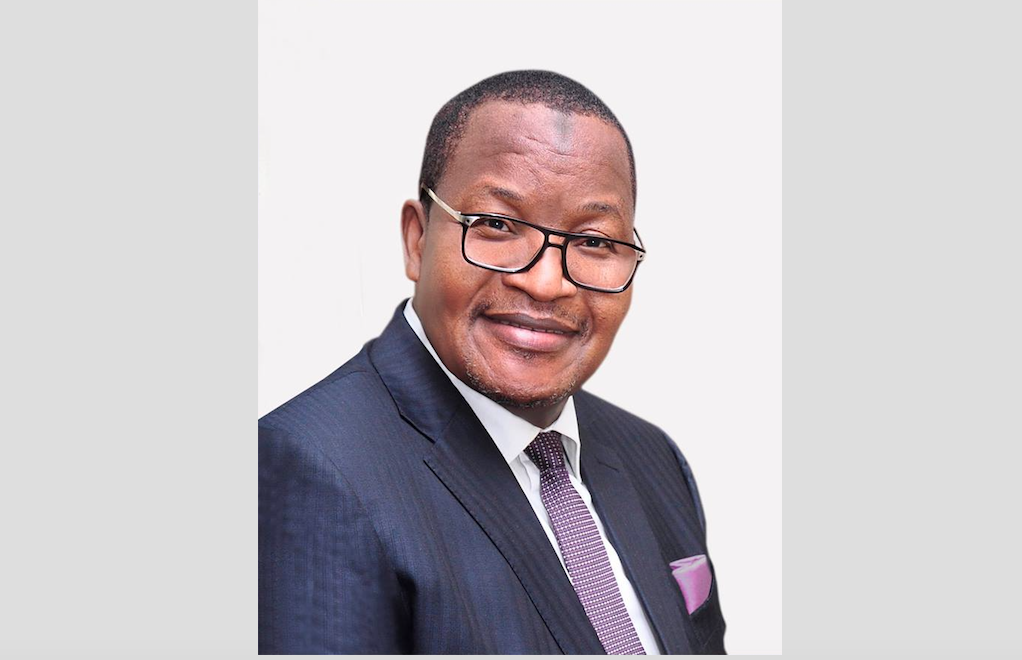
Prof. Umar Garba Danbatta, FNSE, FAEng, FRAES, FNIEE
Executive Vice Chairman/CEO

In the heat of the debate over Electoral Act Amendment Bill and the propriety and workability of electronic transmission of result, the House of Representatives invited the Nigerian Communications Commission, NCC, the nation’s telecoms regulator.

The House also invited the Independent National Electoral Commission, INEC, to answer to some questions. But as it has now turned out, the invitation to NCC was needless, baseless and at best a futile exercise in red-herring. The NCC, it must be stated, is one of the best performing public institutions in Nigeria with its exemplary culture of good corporate governance noised abroad even as far as Switzerland, the head office of the International Telecommunications Union, ITU.

The NCC has over the years become a worthy Ambassador of Africa in the ITU family. It has not only represented Africa on the international circuit, it has sponsored young Nigerian techies and tech nerds to ITU-promoted competitions on innovation and in most cases, these fecund Nigerians have come out tops, beating competitors from Asia, Europe and the rest of the world. NCC has functioned as a truly independent regulator, inspiring confidence in investors, telecom consumers and other stakeholders including the media. It was therefore needless and a clear act of mischief to drag such an untainted commission into the nation’s murky political waters.

Dragging the commission to testify before the House on the feasibility of electronic transmission of results is mischievous on the part of the lawmakers. It’s a joke taken too far by a body that was supposed to understand the basics of the nation’s Grundnorm, the constitution. They feigned ignorance of relevant sections of the constitution just to scapegoat the NCC and make themselves look squeaky clean.

The Senate itself was fraudulent and duplicitous when it pushed the responsibility of Electronic Transmission of result to the NCC in spite of what the constitution says about the powers of INEC to determine the electoral process including the pattern of voting and mode of transmission of result. Some senators, including the Deputy Senate President, Ovie Omo-Agege, a man who once desecrated the hallowed chamber when he sponsored and promoted in broad daylight the ignoble venture of stealing the Mace, the symbolic authority of the Senate, were quick to quote obviously false statistics which they dubiously ascribed to the NCC. What a show of shame that persons elected to make laws for the good governance of the nation and who should know the rudiments of extant laws including the constitution would feign ignorance of aspects of the law that makes utter nonsense of their tomfoolery and moral somersaults in the chambers of the Senate.

For the avoidance of doubt, Section 78 of the Constitution provides that ‘The Registration of voters and the conduct of elections shall be subject to the direction and supervision of the Independent National Electoral Commission’.”

The Third Schedule, Part 1,F, Section15 says: “INEC has power to organise, undertake and supervise all elections to the offices of the President, Vice President, Governor and Deputy Governor of a state, and to the membership of the Senate, the House of Representatives and the House of Assembly of each state of the Federation.”

E-transmission ban: INEC Director deflates NCC claims - Prompt News

The Constitution further provides that INEC operations shall not be subject to the direction of anybody or authority.”

This, therefore, renders the action of the NASS nugatory. By inviting NCC and INEC shunning its own invitation, it appears the House was acting a devious and utterly treacherous script intended to do harm to the purity of the electoral process, and only conscripted NCC into the plot to draw legitimacy from the globally acknowledged good governance rectitude of the telecom regulator. It was a wrong decision meant to hoodwink Nigerians and clearly intended to make the lawmakers smell like rose flower while the NCC and INEC appear like villains of a political plot.

Electronic transmission of result is not rocket science. It is a universal norm in the 21st century. Smaller and poorer nations across the globe have achieved electronic transmission of result even with their limited infrastructure, Nigeria should not be an exception. It’s as simple as sending a text message, WhatsApp message or using any other platform recommended by INEC, not NCC, not NASS. Even if network is weak or non-existent in a particular unit, moving further away from such unit until you access a place of better network still will not vitiate the authenticity of the result already tallied at the polling units. The electronic copy only complements the physical copy which must have been signed by all agents relevant to the election. Electronic copy as a back-up copy helps to strengthen the electoral process and reduce incidents of ballot-snatching and primitive manipulation of the physical copy. There ought not to be a debate on this especially when INEC, the only body mandated by the constitution to organize, undertake and supervise all elections has categorically stated that it can achieve electronic transmission of results. The joke truly is on NASS and an inconsistent INEC

Author: Aliyu Momodu

Ovie Omo-Agege, a man who once desecrated the hallowed chamber when he sponsored and promoted in broad daylight the ignoble venture of stealing the Mace, the symbolic authority of the Senate, were quick to quote obviously false statistics which they dubiously ascribed to the NCC. What a show of shame that persons elected to make laws for the good governance of the nation and who should know the rudiments of extant laws including the constitution would feign ignorance of aspects of the law that makes utter nonsense of their tomfoolery and moral somersaults in the chambers of the Senate

By Onyeka Onwenu

I told a friend just days before the most outrageous burial of Innyom Ezinne Uche Iyiegbu in Oba, Anambra State in July that I had given my family instructions as to how to bury me when my time comes. Do it quickly, quietly and privately. Celebrate me with prayers, lunch or dinner afterwards. Share some jokes about me and laugh. Mourn, yes but not excessively. Make merriment and then go about your business. If my friends want to celebrate me, they should do so while I am alive so that I can enjoy it with them, not when I am gone and have no idea. That is me Onyeka Onwenu.

My mother on the other hand wanted a different burial and I promised to give her want she wanted. On her hospital bed, just three days before she passed away, I reinforced that promise – it was important to her and she died knowing that I would keep my word. Hope Onwenu’s burial was nothing like what took place in Oba recently but it was elaborate and pretty expensive. Still I had the satisfaction that I kept my promise.

The point I make here is that there are different strokes for different folks, even within a family. I do not condemn anyone for how they mourn, with their own hard-earned money but I am very uncomfortable with the lavish display of wealth on any occasion, especially in a time of hardship and lack for most others. The burial of Obi Cubana’s mother was not only lavish, it was obscene and insensitive. It sent all the wrong signals at a time when Nigeria is wracked with widespread poverty and lack.

But so long as he and his supportive friends stole nobody’s money to do what they did my outrage has abated. I will not call for them to be hanged on the stake as some have done. These reactions have been extreme and just as mindless as the conspicuous display of wealth we witnessed at the burial ceremony. Obi Cubana and his friends did not invent the art of spraying, neither are they the first to show off stupendous wealth in a wild celebration of any kind. But in an age of invasive social media, our senses are instantly bombarded with images of sheer madness where caution is thrown to the wind and we are regaled with images of sheer debauchery. We ask: is this all necessary?

I condemn it all. It does not reflect the Igbo culture that I grew up in. Ndigbo would not condone the conspicuous display of wealth. If you were found doing that, your close and extended family, your community would send a delegation to you, to ask about your source of the wealth you are throwing about. You would be ostracized if you had no convincing evidence of legitimate work. All that changed at the end of the Nigeria/Biafra conflict. Ndigbo were deprived of their money, their oil wells and towns exercised from Imo and Abia State, their property termed abandoned and taken from them. They were forced to rebuild with no help and no compensation. It therefore became every person to themselves. Having money meant that you could get things done and like every other Nigeria society, our priorities were turned upside down. People no longer asked how and where you got your money. The point was that you had it. Our values may have been eroded but we have to fight back to regain them, to ensure our survival as the decent and hardworking people that we truly are.

However, what I find equally deplorable in this whole debate, is the strenuous effort to tag the people of the Southeast, Ndigbo, with all manner of negative attributes because Obi Cubana is Igbo. This is not surprising. It has always been the case. When there is unexplainable hatred, some people are bound to give a dog a bad name so that they can justify hanging it.

Take IPOB for another example. If you are Igbo you are automatically one of them. It is worse if you dare believe that Mazi Nnamdi Kanu and IPOB have a right to ask for a referendum as given in the constitution, that they have a right to protest or complain about the violation of their rights as equal stakeholders in Nigeria.

We say in Igbo: a naghi e ti nwata ihe ma napu ya i bee akwa’. You do not beat a child and then prevent him from crying. It is inhuman, an extremely cruel and unusual punishment.

Ndigbo are therefore accused of not being good citizen of Nigeria, of seeking to dismember it. But others are allowed to openly advocate for bandits, killers, kidnappers, terrorists and rampaging herdsmen from neighbouring countries. We even pay them huge sums of our money to be a little nicer while destroying our country.

It may be a defensive reflex but some people see nothing wrong with the opulent burial in the Oba Kingdom of Anambra State, the famed land of Igbo Billionaires. In fact, Obinna Iyiegbu did them proud by showing what a young man from the ‘Dot’ nation could do, himself and his crop of young Igbo billionaires. Obi CUBANA is a testimony of what hard work and a charitable heart can do, they say. Recall that the President of Nigeria, the father of the nation, President Mohammadu Buhari had recently and derisively referred to the people of the Southeast as a dot in a circle, who have no means of escaping what was coming to them, being treated in the manner they are accustomed to.

The arguments of Obi Cubana’s supporters make sense on some level but I disagree on one major point. The incredibly lavish and outrageously expensive burial of the century sent all the wrong signals to the world, including the young people of Nigeria. For me, it did nothing in it’s garish display but besmirch the essence of a dignified burial for a woman well deserving of it.

Throwing bundles of freshly minted money at people on the streets, and inside the Church is not my idea of showing respect for the dead. Neither is the report that young ladies from schools far and near left their academic pursuits to present themselves to the rich friends of Obi Cubana and their entourage a palatable one to hear.

As a performing artiste, I am familiar with ‘Spraying’, the practice of pasting money on or around a singer, to show appreciation for their performance. I also know that when singing in church we ask anyone who is moved by the performance to give money to the Lord for ministry. When things are done in moderation they are more acceptable and their meaning understood. The reverse is true when excessive displays are made and a good gesture is obscured by garishness and thoughtless exhibitionism.

There are however, a few takeaways from this obscene exercise that played itself out in Oba. Let us give some credit to Obinna Iyiegbu for some of the positive things about his success story that have now come to light. We hardly knew him before his mother’s burial. It turns out that he has raised and continued to raise up so many others, even as he himself made it up the rungs of success. Such reckless generosity is rare but I can draw comparisons with people like MKO Abiola of blessed memory. We need more philanthropy in every part of Nigeria. Let those who can afford it, go round and lift others up from poverty and lack. Nigeria is blessed, her people have no business with hunger and depravity.

To Nigerians for whom Igbo hating has become a sport, I say this. Stop wasting your time tagging and castigating Ndigbo for whatever reasons. The dislike and hatred of Ndigbo seems to be a uniting factor for the rest of the country, we know. But let us be fair to one another. As we see the bad, let us also see the good. They both reside side by side in any group of people in Nigeria.

Recently, Harvard University and others around the world have begun the study and teaching of the Apprenticeship programme of Ndigbo, describing it as the largest business incubation program in the world. A successful trader, dealer, importer, distributor or manufacturer takes on young people who serve, work for them, learning the trade as they go along. At the end of their training, the ‘master’ settles the ex-trainee by helping to finance their new business venture. This way they guided to independence and hopefully prosperity. Did Nigeria take note of this recognition? Mba nu! It took the outside world to spot and highlight this very positive quality in the Igbo culture which has benefitted the economy of Nigeria to no end.

Ndigbo are found mainly in the Southeast of Nigeria, comprising Imo, Anambra, Enugu, Ebonyi and Abia State. Also in the South South, and Middlebelt – in Kogi, Benue, Rivers, Cross River, Akwa Ibom and Delta State. They are also found in counties such as Haiti, Zambia and Equitorial Guinea. They are known for their industry and resilience, demonstrated by their ability to recover and thrive in the midst of evident marginalization and discrimination. Igbos survived a brutal genocidal war in 1967 which lasted for three bloody years. They withstood the onslaught with the recognition of a handful of other developing countries, against a combination of superpowers like the UK, US, Soviet Union and China on the other hand. Over three million people were piped out in the process. The Nigerian civil war or Biafran war as some choose to call it has been described as the worse since the Jewish Holocaust. Ndigbo remind me of the beetle which cannot be destroyed.

Onyeka Onwenu is a Singer/Songwriter, Actor, Politician and Public Administrator. She is a Social Critic and the Author of the highly acclaimed Memoir, My Father’s Daughter.

The Nigerian Communication Commission (NCC) has once again demonstrated it’s readiness and willingness to understand the plight of Nigerians especially now that there is rush in registering SIM cards in line with the mandate of the Federal Government in ensuring that every Nigerian identity is captured via the ongoing National Identity Management Commission (NIMC), This was coming after a widespread consultation amongst the stakeholders, The Federal Government has approved the extension of the deadline for National Identity Number (NIN)-Subscriber Identity Module (SIM) data verification to October 31, 2021.

This decision has been lauded by the industry watchers and stakeholders, describing it timely and apt. This was as a request by stakeholders to accommodate registration in remote areas, foreigners and diplomatic missions especially Nigerians in diaspora.  Also, the cases of low enrolments in schools and hospitals will be tacked as shown by enrolment statistics.

Information gathered from the telecom regulator’s website stated that “The NIN-SIM linkage also makes it easier for the security agencies to carry out their statutory duties and the relevant parastatals under the Ministry of Communications and Digital Economy are supporting them as required. There are now a total of 59.8 million unique NIN enrolments, with average of 3 to 4 SIMs per NIN. With the great number of enrolment centres within and outside the country, and many more coming up, every citizen, legal resident, and Nigerian citizens living in diaspora should be able to obtain their NINs”

The Executive Vice Chairman of the Nigerian Communications Commission (NCC), Prof. Umar Garba Danbatta, and the Director-General/CEO of the National Identity Management Commission (NIMC), Engr. Aliyu Azeez, has used this extended period to ask Nigerians and possibly other nationals’ resident in the country to make use of this window and complete the process of enrolment and verification before the October 31 deadline.

Presently, there are now a total of 59.8 million NIN enrolments, with average of 3 to 4 SIMs per NIN. This is in tune with the infrastructure that are on ground to cater for enrollments such as kiosk, independent registration offices, telecom offices and others within and outside the country.

Anthony Nwosu

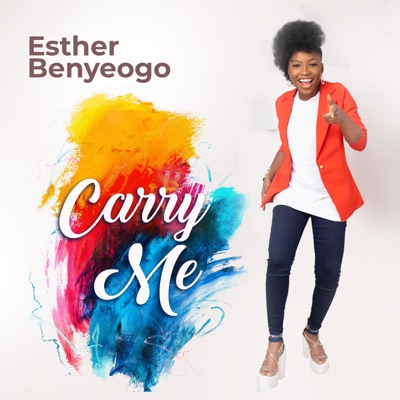
Esther Benyeogo emerged the winner of season 3 of the international talent show, The Voice Nigeria, on Saturday, 24 July 2021, after 18 weeks of breathtaking performances. She gained the highest number of votes, to beat out the other top 5 talents to walk home with the coveted prizes including a cash reward of 10 Million Naira, an SUV, and a recording contract from Universal Music Group.

Speaking on her win, Esther stated: “I am grateful to The Voice Nigeria and my fans out there for this amazing experience. It has been my utmost joy to come on your screens every week and share my gift on such a huge platform. This win is even more special for me because it is one thing to know you have a gift, but it means everything to be recognized for that gift. I must however give thanks to God without whom I would not be here today and also appreciate my family and friends for their love, support, and prayers. Of course, I am thankful to my Coach, Coach Darey, for making my time here truly rewarding, and for equipping me with the skills to give this my best shot.”

Esther Benyeogo Emerges as the Winner of the Voice Nige -Freshangle News

Coach Darey, who guided Esther tirelessly through the entire competition, praised her saying, “Esther has consistently shown throughout the season that she is indeed phenomenal. Her passion, dedication and commitment to improvement were clear signs that she had her eye on the prize and I cannot be more pleased by the outcome. Certainly, all the talents this season devoted themselves to every one of their performances, but evidently, Esther stood out and I am so proud to have been her coach. It is my great pleasure to congratulate Esther on this big win! Now, it is time for us to celebrate.”

Generation - Esther Benyeogo | Shazam

The Voice Nigeria Season 3 with all its excitement was produced for the first time in Nigeria by Livespot360 and UN1TY Limited. This season, Coach Waje and Coach Yemi Alade, alongside new Coaches— Darey and Falz, went on the hunt for the next champion of the show among 13,000 applicants. The viewers and fans of the show made their final decision at the grand finale, voting Esther Benyeogo Season’s 3 winner.

The Voice Nigeria Season 3 was proudly sponsored by First Bank, Baba Ijebu, Airtel Nigeria, and snack sponsor Minimie.

“Esther has consistently shown throughout the season that she is indeed phenomenal. Her passion, dedication and commitment to improvement were clear signs that she had her eye on the prize and I cannot be more pleased by the outcome. Certainly, all the talents this season devoted themselves to every one of their performances, but evidently, Esther stood out and I am so proud to have been her coach. It is my great pleasure to congratulate Esther on this big win! Now, it is time for us to celebrate.”

Platform technology has introduced something new and different to the market. In another wave of positive disruption, these platform-based businesses are not only making a difference to their industries, but they are also more importantly aiming to bring societal change. Warren Myers, CEO, AURA, South Africa’s leading security and medical response platform, has a vision to create a world where everyone is safe by creating and deploying smart, scalable, disruptive technology.

Through AURA, Myers says that what was created is not just a clever use of technology, but rather the birth of a digital marketplace platform that will assist in ensuring that effective security and medical response are more freely accessible and affordable to all citizens.

“From the outset we wanted to create an environment where our platform would play a positive role in how people live, make money, and how they interact with each other. We also wanted it to offer many new opportunities to those within it and thus, we created the AURA marketplace,” says Myers.

AURA is the first truly smart personal safety platform that provides businesses and their customers with fast, affordable and reliable private armed and medical response. Born out of the critical need for more efficiency within the South African security industry to combat crime faster and more effectively, the disruptive and scalable platform offers customers comprehensive and convenient emergency response while armed and medical response providers get the opportunity to increase their client base.

Innovation had started to thrive, but as a result of Covid-19, it has flourished with new platform-based market disruptions displacing the way it was done before.  Myers says that with the AURA digital marketplace platform, the primary objective was to ensure that every citizen has access to security.

“To achieve this, we needed to address not only the security providers, but the greater ecosystem and to tap into what would make this industry more effective. The platform addresses several demand and supply options and embraces digital technology to ensure that the vision of the company in terms of access remains front of mind always.”

The AURA platform is in a sense a hybrid marketplace platform as it converges digital technology with several industries including on-demand emergency services; physical security; medical response; transportation and financial services, including insurance. According to Myers, the brands within the AURA digital marketplace platform are all companies that are thriving digitally, are sustainable, and play to their core strengths to ensure growth.

Lending from a sharing economy methodology, AURA is confident that its digital marketplace platform will continue to gain momentum and positively impact the economy of traditional markets, as well as the newer hybrid approach. To date, the marketplace serves 170-armed response service providers; +-3600 armed response officers; and more than 220 000 active users.

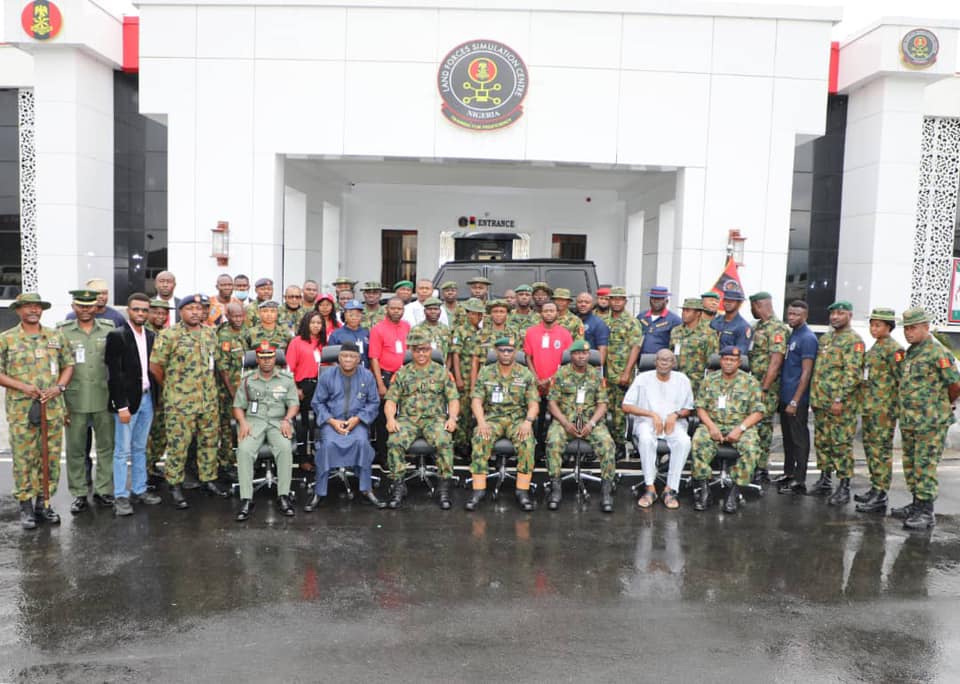
The Chief of Army Staff(COAS) Lieutenant General Faruk Yahaya has urged officers and soldiers of the Nigerian Army (NA) to extensively deploy simulation technologies for capacity building and force multiplication in aid to ongoing military operations across the country. He gave the charge today, Monday 26 July 2021, while declaring open a 5 day Simulation Excercise codenamed EX LION HEART at the Land Forces Simulation Centre Nigeria, Giri, Abuja.

The COAS represented by the Director of Courses , Department of Training(Army), Brigadier General Ibikunle Ajose said the exercise is in line with his vision for the Nigerian Army, which is to have ” A Professional Nigerian Army Ready to Accomplish Assigned Missions within a Joint Environment in Defence of Nigeria.”

He commended the Centre for collaborating with relevant organisations and agencies with wealth of experience in simulation technology to fast track its development.

The COAS appreciated the support of MASA Group and Bohemia Interactive Simulation, which he said availed the centre trial versions of MASA Simulated War gaming for Operational Readiness and Doctrine (SWORD) and the Virtual Battle Space Series 4 software, respectively. He assured the Centre of requisite administrative and logistics support to make it a centre of international repute.

In his address, the Director General Land Forces Simulation Centre Nigeria, Major General Felix Omoigui said the exercise, which is jointly organised with the Defence Simulation Centre Jaji is aimed at enhancing the capacity of the technical staff of the centres and sister security services for operational planning and decision making.

According to him, the exercise will equally sharpen the skills of personnel of the centres and the Nigerian Army in the newly acquired simulation software. He added that the joint exercise will further build capacity on the use of the MASA SWORD software. He expressed gratitude to the COAS for his support to the centre and for providing the needed logistics for the exercise.

The event had in attendance senior officers both serving and retired, participants drawn from various formations and units of the Nigerian Army and other security agencies. Highpoint of the event was the presentation of souvenir to the COAS.

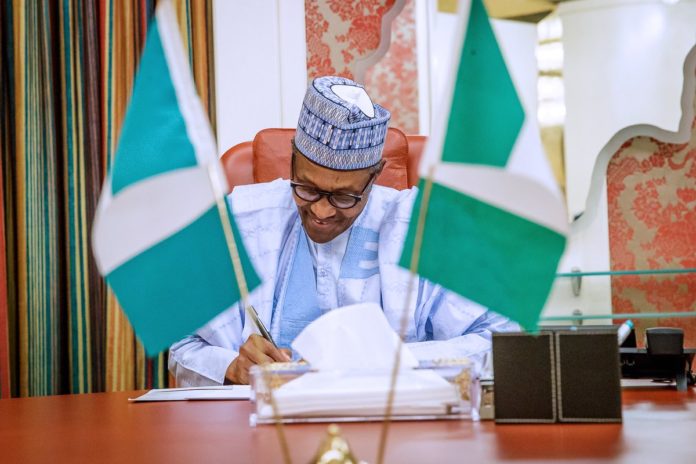
President Muhammadu Buhari Monday in Abuja signed a supplementary budget of N982.7bn for 2021 to address urgent security and COVID-19 needs of the nation.

The President signed the Supplementary Appropriation Act, 2021 in his office at the State House in the presence of Vice President Yemi Osinbajo, Secretary to the Government of the Federation, Boss Mustapha, Chief of Staff, Prof. Ibrahim Gambari, Director-General, Budget Office of the Federation, Ben Akabueze and Senior Special Assistant to the President on National Assembly Matters (House), Hon. Umar el-Yakub.

Of the amount, N123.3 million is for recurrent (non-debt) expenditure while the sum of the N859.3bn is for contribution to the Development Fund for the capital expenditure for the year ending on the 31st day of December, 2021.

President Buhari commended the National Assembly for the expeditious consideration and approval of the supplementary budget, assuring that the executive arm of government would ensure the timely delivery of capital projects to achieve the laudable objectives of the Budget.

Meanwhile, the President has also, at an earlier date, signed the Orthopedic Hospitals Management Board (Amendment) Act, 2021.

The Act amends the Orthopedic Hospitals Management Board Act Cap. O10 Laws of the Federation of Nigeria, 2004 to provide for the establishment of the Orthopedic Hospital Jos, Plateau State under the control of the Orthopedic Hospitals Management Board affiliated to the Jos Teaching Hospital to provide specialised orthopedic treatment and medical services.

…As Danbatta receives commendation on nation’s digital transformation

In a bid to further protect telecoms infrastructure in the country, the Nigerian Communications Commission (NCC) has restated its commitment to continue to strengthen collaboration with judicial institutions in Nigeria.

The Executive Vice Chairman (EVC) of the Commission, Prof. Umar Garba Danbatta, gave the assurance during a courtesy visit by a high-powered delegation of the Kano State Judiciary to the chief telecom regulator at the NCC Kano Zonal Office, in Kano, over the weekend.

Addressing the judicial delegation, Danbatta said, while the Commission is doing everything within its regulatory mandate to enforce compliance among licensees as well as collaborating with stakeholders to protect telecom infrastructure, some individuals indulge in willful damage of telecom infrastructure, vandalism, telecoms facility theft, and fibre cuts, among other crimes.

He said these criminal acts conspire to degrade the quality of service (QoS) in the country, and since the NCC has no prosecutorial power, the need to strengthen collaboration with the judicial arm of the government at all levels has become expedient.

“NCC does not have prosecutorial power in criminal acts committed by the citizens and licensees which are inimical to the progress of the sector; and we appreciate the ways and manners such criminal cases are being dispensed by the judiciary. This is a testimony to the kind cooperation NCC has been enjoying from the judiciary,” he observed.

According to Danbatta, the Commission will never fold its arms while unscrupulous citizens cause havoc on telecommunications infrastructure since that affects the quality of service innocent citizens enjoy.

“Therein lies the importance of the judiciary in the work that we have been assigned by the government to do. We very much appreciate this cooperation with the judiciary and we are committed to ensure that the cooperation grows stronger and stronger going forward,” he said.

According to him, the recently-concluded NCC Judges Workshop held in Abuja, was a very important initiative of the Commission to continuously collaborate with members of the judicial arm of government through updating them with the trends and regulatory dynamism of the sector with a view to improving their knowledge for effective dispensation of justice.

Earlier in his address, the Chief Registrar of Kano State High Court of Justice, Abdullahi Ado Bayero, who led the delegation, commended the efforts of Prof. Danbatta and NCC in fast-tracking digital transformation of governance and other sectors of the economy, adding that Judiciary, as a whole, has recognised the necessity and inevitability of digital justice system as well as full integration of ICT-based court system in the administration of justice.

He said this position is well entrenched in the National Judiciary Information Technology Policy (NJITP), 2021 and is consistent with the NCC’s objective and strategic intervention to advance ICT knowledge and training for various public institutions in Nigeria.


“It is in line with the above that the Kano State Judiciary is determined to explore all necessary avenues and opportunities to integrate ICT-based court systems as well as digitised justice delivery systems for efficient and effective administration of justice in the state and we request NCC’s intervention in this regard,” he said

“NCC does not have prosecutorial power in criminal acts committed by the citizens and licensees which are inimical to the progress of the sector; and we appreciate the ways and manners such criminal cases are being dispensed by the judiciary. This is a testimony to the kind cooperation NCC has been enjoying from the judiciary,”