The Executive Vice Chairman (EVC) of the Nigerian Communications Commission (NCC), Prof. Umar Garba Danbatta, has said that the ongoing amendments to two major regulatory instruments of the Commission will help in strengthening and ensuring a fair and competitive telecoms market in Nigeria.
The two regulatory instruments are the Annual Operating Levy Regulations (AOL) and the Frequency Spectrum (Fees and Pricing, etc.) Regulations for which the Commission organized a public inquiry in Abuja on Thursday, July 29, 2021.
The first instrument on AOL ensures that all licensees are properly and equitably assessed for the annual levy as well as meeting both statutory and regulatory expectations. Its review is expected to bring the Regulations in line with current realities and sustain the enviable contributions of the communications sector to the country’s Gross Domestic Product (GDP).
The second instrument on frequency spectrum fee and pricing enables the Commission to meet its sole and exclusive mandate in Section 21 of the Nigerian Communications Act (NCA), 2003 by assigning the scarce national resource in an equitable manner. The Regulations also ensures that frequency spectrum are assigned and managed in a way that ensures fair pricing and efficient deployment of attendant services.
Speaking during the event, Danbatta said the public inquiry not only reflects the Commission’s strategic mission and vision to ensure regulatory excellence through effective regulatory processes but also sign posts the Commission’s consultative approach to all its regulatory initiatives.
He said the public inquiry was a precursor to the Commission’s current drive to ensure efficiency in spectrum management and the unveiling of next generation services through varied enablers, adding that it was in this regard that the Commission issued a Spectrum Trading Guidelines (STG) in 2018, to ensure frequency Spectrum is readily available to licensees through an effective process.
“Furthermore, the Commission has commenced the process of deployment of Fifth Generation (5G) technology in Nigeria and is driving the provision of such ubiquitous services on making frequency Spectrum available to the licensees. The efficacy and reliability of the initiatives will be hinged on proper market valuation of the frequency spectrum and fair assessment of levies,” he said.
With the explosion in technologies, Danbatta said there has also been an attendant secondary reliance on different approaches to drive the best out of different frequency spectrum. He said this has led to the need for designation of several bands of frequency spectrum for communications services and a key illustration is the recent identification of some Spectrum frequencies for 5G deployment.
The EVC said the Commission is conscious of the expectations and the need to ensure that all regulatory instruments are made ready to meet these challenges, adding that this has made the reviews which the Commission is conducting an important milestone as the public inquiry in pushing the country to the front queue of this global efforts.
“Hence, we must be prepared on both ends of the industry to prepare the country for these remarkable changes; while the licensees continue to invest in deployment, the Commission will sustain its drive by ensuring regulatory efficiency and excellence,” he said.
Danbatta further acknowledged that the Nigerian National Broadband Plan (NNBP), 2020-2025, the National Digital Economy Policy & Strategy (NDEPS), 2020-2030 are all tailored to ensure that the Commission deploys new initiatives, build regulatory efficiency and ensure market stability.
He said the policy documents highlight the central nature of frequency spectrum in meeting most of their baseline objectives. “This has made the ongoing review not just necessary but inevitable to facilitate the attainments of these objectives,” he said.
Presentations were made on the comments, inputs and recommendations received from external stakeholders on the two regulatory instruments prior to the public enquiry as well as the amended sections and new provisions made to the two regulations.
Participants at the event made valuable contributions and raised issues that would assist the Commission in developing robust regulatory instruments that will continually contribute to the development of the industry and sustain its positive contribution to the nation’s economy.
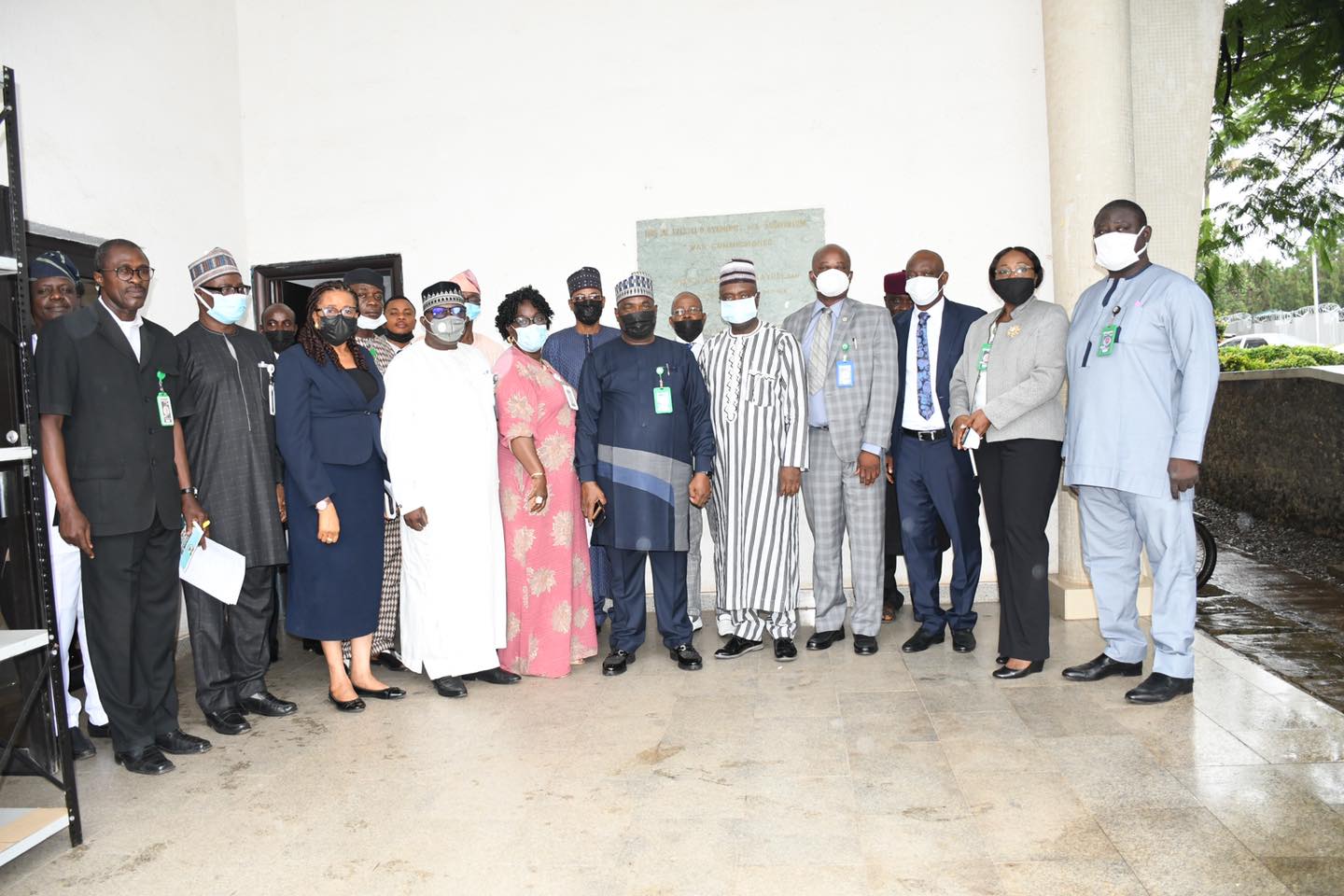
The public enquiry was attended by the NCC’s Chairman, Board of Commissioners, Prof. Adeolu Akande; an NCC Board member, Salman Abdul-Azeez; Executive Commissioner, Technical Services, Ubale Maska; Executive Commissioner, Stakeholder Management, Adeleke Adewolu; Senior Management staff and other industry stakeholders both physically and virtually.
The Permanent Secretary, Ministry of Defence, Musa Istifanus has said that the Freedom of Information Act is a window to Nigerians especially Tax Payers to know how their monies are expended in governance.
Musa Istifanus stated this while declaring open a specialized training for the staff of the Ministry of Defence on the tenets of the Freedom of Information Act, FOI. He stated further that the Act is to guarantee openness, transparency and probity in Government businesses across Ministries, Departments and Agencies of Government as well as n the activities of States and Local Government Areas.
Making reference to the Act, the Permanent Secretary noted that “the Act is to make public records and Information more freely available and in consistent to public interest, privacy, safety and without adverse consequences.
Musa Istifanus decried the poor application of the Act by both the people and the Government, stressing that, government agencies should utilize official domains to abreast Nigerians of their activities while the public should be encouraged to ask questions not only on finances but also on social services, in line with the provision of the Act. The Permanent Secretary lamented the poor performance of the operators of FOI Act in easing public access to information on government businesses including budgetary spending, projects implementation and social services rendered to Nigerians.
He emphasized the need for the government at all levels to carry along Nigerians especially Tax Payers whose monies are used by the government in service delivery.
The Director, Planning, Research and Statistics Mr. Benson Odaman disclosed that every staff that is relevant to the Information Act will be trained and empowered on how to disseminate information taking cognizance of the oath of secrecy, right to privacy as well as security and safety implications to the nation.
Mr. Odaman said the Freedom of Information Act, which was signed into Law in 2011, is being domesticated in the Ministry of Defence in line with the Present Administration’s quest for transparency and probity.
On the back of Cape Town being recognised as the tech capital of Africa, topping international rankings for foreign direct investment strategy, Ian Lessem, Managing Partner at HAVAÍC – investors in early-stage, high-growth technology businesses – says several other African cities are quickly emerging as leading startup and investment hubs to watch.
“Startups in Nigeria, Kenya, Egypt and South Africa raised a total of US$625 million last year. Of those, Kenyan startups raised US$191 million, the most of any other African country, according to Disrupt Africa’s African Tech Startup Funding Report for 2020. Distinct startup geographies are emerging in Africa, each with the potential to become its own powerhouse,” he says.
In addition, the World Bank predicts that two thirds of the world’s GDP growth will occur in cities over the next fifty years. Lessem says Africa’s rapid urbanisation is a welcome development as cities foster greater economic potential, business collaboration, and technological innovation needed to leapfrog traditional infrastructure, which can result in creating thriving tech ecosystems.
“HAVAÍC sees Southern Africa, dominated by South Africa; Anglophone West Africa, led by Nigeria; Francophone West Africa, dominated by Cote d’Ivore and Senegal; East Africa led by Kenya; and North Africa dominated by Egypt, as key African geographies to pay close attention to. Each are quite different, with some of them tackling more regional challenges and others offering globally scalable solutions,” notes Lessem.
A diversity of businesses are emerging in critical sectors such as e-health, fintech, security and education, as African startup investment continues its upward trajectory, having increased year-on-year for the past five years. “West African hubs like Lagos have benefitted hugely from locals being skilled abroad and returning home where a young, bourgeoning middle class are open to new fintech propositions as we have seen from the likes of Flutterwave. While in Nairobi, an influx of foreign direct investment and financing from national development finance institutions, coupled with international skills transfers, have contributed to creating a flourishing startup environment,” says Lessem.
He adds that Cairo’s access to favourable funding and product distribution from the Middle East is unique on the continent. “Egypt’s large local customer base and proximity to major international hubs in the UAE, Qatar, Oman and Saudi Arabia make it a strong B2B (business to business) and B2B2C (business to business to consumer) regional player. Of course, South Africa’s strong blue chip corporate base and financial and digital infrastructure have ensured the country’s startups have been able to enter developed markets with their seamless tech competing toe-to-toe in international markets.”
“In both English and French speaking West Africa, there are significant B2B2C opportunities, thanks in part to the development and growth of cities like Dakar, Abidjan and Lagos. Ultimately, massive improvements in infrastructure, maturing financial markets and broader access to higher education are laying the foundation for Africa’s tech hubs and signal an exciting future for the continent’s startups who prove time and time again they can compete with the best in Silicon Valley, London and Singapore,” Lessem points out.
HAVAÍC’s own investment thesis is centred around investing in local African tech businesses that have the ability to scale and service both regional and global markets. “Our ability to invest locally, strategically nurture, and help internationalise our portfolio is what sets us apart. More than ever before, investing and supporting local, growing innovation with the potential for global elevation, is a smart investment decision at the heart of Africa’s future,” Lessem says.
The completed border bridge at Mfum community between Nigeria and Cameroun and the Ikom bridge will facilitate international trade between the two countries when inaugurated.
The Honourable Minister of Works and Housing ,Mr. Babatunde Raji Fashola, SAN made the remark while inspecting the two -lane bridge over the Cross River at the Cameroun and the Nigeria new Border at Ekok /Mfum and the new Ikom Bridge in Cross River State.
“This is the A-4 Axis coming from Calabar to Maiduguri through Ogoja to Katsina-Ala. So you will expect more volume of trade. And it is no accident that Cross River State bears its name. It is actually the River that named the state. That River opens to the sea and the Gulf of Guinea. And so high impact on international trade is expected”, he said.
Fashola also said , “We have had very strong relationship with Cameroun in terms of trade and business and if you go to Aba, Enugu, Abakaliki, for example, this is the route that facilitates trade, agro produce, merchandise, manufactured goods from Aba in Abia State.” The Minister explained that the President Muhammadu Buhari led administration’s strategy of planning and execution of infrastructure projects was yielding results through successful completion.
“This is a very strategic infrastructure to take Nigeria to the future for many more decades to facilitate relationship between brothers and sisters in Cameroun and Nigeria and to strengthen the bond of relationship in a joint development with the Republic of Cameroun and Nigeria.” Fashola said, adding that ‘’We are now entering the season of completion of infrastructure projects.”
The Minister while speaking with journalists after inspecting both the Nigeria /Cameron Joint Border Bridge at Mfom /Ekot and the New Ikom Bridge at Ikom in Cross River Stated noted that these bridges would increase the prosperity of the people, facilitate hundreds of jobs, movement of agro produce and manufactured goods, joint border patrol that would lead to security efficiency and position both nations to take the benefit of the free trade zone agreement.
Cross River State Governor, Professor Ben Ayade who was represented by the State Commissioner for Works, Engr. Dane Osimasu at the sites of the inspection said the Minister is a conceptualizer , implementor and committed to road development in the state. He assured the Honourable Minister that counterpart funding from the state would always be provided where it is necessary in infrastructure development projects.
The Director Highway Bridges and Design Federal Ministry of Works and Housing, Engr. Emmanuel Adeoye said during the inspection of Ikom bridge, “The project was awarded in October 2018 and it is due to finish by 7th November, 2021.”
The Director said, “The rate at which the contractor is working, by the end of October it should be finished. Right now as we speak, the job is 92% completed, with the time lapse of 68%. We are moving faster than the scheduled time, so by end of October we should be done with the bridge.”
According to him “the Road Lane Marking has also been done. The Federal Controller of Works in Cross River State, Engr. Bassey Nsentip disclosed that several road projects were progressing without hitches in the State. The Executive Chairman of Etung Local Government Council Cross River State, Hon. Nkom Etuk praised the Ministry of Works and Housing for the remarkable job done on the bridges.
The Ajassor Community Representative, Hon. Victor Njor said the border bridge has enchanced joint border patrol linking Cameroun and Nigeria within their community and the people shall come out en mass when the bridge will be inaugurated soon.
The border bridge between Nigeria and Cameroun is funded by the African Development Bank while the Ikom bridge is through the Sukuk bond.
The wife of the Lagos State Governor, Dr. (Mrs.) Ibijoke Sanwo-Olu has charged Lagos State Christian pilgrims to be good ambassadors of the State and Country during their stay in the Kingdom of Jordan.
Giving the charge on Tuesday during the Service of Dedication organised by Lagos State Christian Pilgrims Welfare Board (LSCPWB), the First Lady told the pilgrims to commit and rededicate the journey into God’s hands.
Mrs. Sanwo-Olu enjoined the intending Pilgrims to show humility, empathy, dignity, dedication and sincere spirituality during and after the performance of the exercise.
“I, therefore, urge the Lagos State pilgrims to take advantage of this pilgrimage exercise to experience spiritual rejuvenation and upliftment of both the mind and spirit”, she said.
She also admonished the intending Pilgrims to see the Pilgrimage as a unique opportunity to renew and solidify their faith in God and also enhance their relationship with people around them and the society at large.
In his goodwill message, the Commissioner for Home Affairs, Prince Anofiu Olanrewaju Elegushi, enjoined the intending pilgrims to be health-conscious and follow all safety precautions set up by the Government, stressing that the COVID-19 pandemic is still ravaging.
Elegushi spoke further saying, “I also want to thank our intending pilgrims for the trust they have in the Governor. I want to thank you so much because some of these pilgrims have been waiting for the past two to three years. They left their money with us because of the trust they have in this Governor.”
He dedicated the journey to the unity and peace of country and solicited prayers for the Governor.
While reading from the holy scriptures, the Presiding, Chaplain of Christ the Light Chapel, Venerable Ezekiel Oluwadare, admonished the intending Pilgrims to exhibit Christian virtues and exemplary behaviour that will positively stand them out in Jordan. He reiterated that the essence of the Holy Pilgrimage is to gain deeper insight into the Ministry of Christ while on earth and confirm most of the historical places stated in the Bible.
He, therefore, urged intending pilgrims to be good ambassadors of the State and Nigeria saying, “As an ambassador, carry out the instructions, commandments and terms of reference that you have been given”.
Ven. Oluwadare also solicited prayers for the administration of Governor Babajide Olusola Sanwo-Olu and Nigeria at Large.
The Board Secretary, Mrs. Florence Yetunde Gbafe, whilst addressing the intending pilgrims encouraged them to be their brothers’ keeper and participate fully in the morning and evening devotion.
The event had in attendance the Special Adviser to Mr. Governor on Christian Religion, Rev. Bukola Adeleke; Chairman, Christian Association of Nigeria, (CAN), Lagos State Chapter, Bishop Stephen Adegbite; immediate past Permanent Secretary in the Ministry of Home Affairs, Mrs. Adebunmi Elizabeth Adekanye; Rev. Dr. Dele Ajayi and Board Members, Lagos State Christian Pilgrims Welfare Board amongst others.
According to the story shared by her friends and family online; Esther was only 13 years old at the time she wrote her Senior Secondary School Certificate Examination.
When the result was out, she came out successfully. She sat for Joint Admissions and Matriculations Board (JAMB) examination and was offered admission at Abia State University but was denied her quick pursuit of the golden fleece, on the grounds that she was still underaged.
Undeterred, her dad secured her admission in India to study her dream course, law.
She graduated in record time, came back to Nigeria, enrolled for the mandatory Nigerian Law School examination.
Yesterday, she was called to the bar with the appellation of a Solicitor and Advocate of the Supreme Court of Nigeria at the age of 20.
Cloud Computing has been referred as the as the essential way of delivering services especially in database, networking, artificial intelligence and analytics over the internet, to offer faster innovations, flexible resources, reduced IT costs and better security.
This was according to the statement by the Director General, National Information Technology Development Agency (NITDA), while making his keynote address at a Webinar organised by Galaxy Backbone, in collaboration with Zadara, a cloud computing company base in California, United States of America.
Mallam Abdullahi expressed his excitement at the theme of the event; ‘Cloud Services and the Journey Towards a Digital Economy’.
He averred that the COVID-19 pandemic has globally accelerated digital transformation.
He said, “According to McKinsey’s survey, the pandemic has accelerated the digitization of customer interactions by several years, with a global adoption acceleration of three years.”
Abdullahi stated that in March 2020, the virus took the world off the streets and forced everyone to make use of their phones and other devices for work, education, entertainment and socialization.
The NITDA boss added that demand for online services during this period skyrocketed and cloud computing played a crucial role in migrating processes online quickly, easily, efficiently and conveniently.
He opined that it was at this point that working remotely, adopting technological innovation ecosystem strategies to contain the virus, protect jobs and observing virtual engagements in government circles has become the new normal.
He further explained that, according to data from Gartner, in 2020, the combined end-user spending on cloud services was about $270 billion and is expected to increase by 23.1 percent this year to reach $332.3 billion and $397.5 billion by next year, 2022. “With respect to this, it is therefore necessary for the adoption and implementation of cloud computing in enhancing existing business models and deploying new innovative procedures”, he added.
The Director General further expressed his pleasure at the efforts of Galaxy Backbone in providing reliable, efficient, and robust cloud services to Ministries, Departments, and Agencies (MDAs), as well as the private sector in Nigeria. This effort, he said, will accelerate the Nation’s journey to the digital economy and create opportunities for growth in the digital economy. He asserted that, in Nigeria, private and public sectors have made tremendous progress in cloud computing adoption.
He also expressed his delight at the partnership between Galaxy Backbone and Zadara which was borne out of the implementation of the National Digital Economic Policy and Strategy by NITDA under the exemplary stewardship of the Honorable Minister of Communications and Digital Economy, Dr Isa Ali Ibrahim Pantami.
“At the National Information Technology Development Agency (NITDA), we will align the implementation of the Nigeria Cloud Computing Policy (NCCP) and the Guidelines for Nigerian Content Development in ICT to support this partnership”, the DG disclosed.
The Policy will encourage a cloud-first strategy in government with goals which are set to ensure a significant increase in the adoption of Cloud Computing among Ministries, Departments, and Agencies (MDAs), and Small and Medium Enterprises (SMEs) by 2024, Kashifu asserted.
He also urged both Galaxy Backbone and Zadara to explore more opportunities while laying emphasis that many promising trends to watch this year include hybrid cloud, distributed cloud, serverless computing, cloud-based disaster recovery, platform as a service, and edge computing.
“Also, don’t forget that the golden rule in business is customer-centricity; your service quality and customer loyalty are critical to your success. As a regulator, we must protect you and your customers. Therefore, I will advise you to constantly meet your Service Level Agreements (SLA) with your customers and by so doing, earn their loyalty”, the DG concluded.
The Managing Director and Chief Executive Officer of Galaxy Backbone, Professor Muhammad Bello Abubakar in his earlier remark stated that Galaxy Backbone over the years have invested a lot in building a digital technology service infrastructure adaptable to the changes around. He said they have evolved and re-engineered their operation to deliver a more efficient service in terms of connecting all the 36 states of the country.
The MD stated that the partnership is mainly on cloud computing with infrastructure and storage as services which are leveraging on data domestication and sovereignty. He gave assurance that through the partnership with Zadara, they will deliver on cloud service needs.
As a logistic firm when did you start and what prompted you into the world of logistics?
I started thinking about logistics in 2019 while working with a top NGO in Abuja, Nigeria. Working with the NGO in Nigeria provided me the exposure to public sector supply chains and how they are financed and managed. As a result of poorly coordinated logistics and supply chain systems, many public health facilities struggle with the availability of drugs and essential medicines and this impacts negatively on health outcomes. In 2019, I decided to bring my experience in the public health sector to the private sector logistics space starting with market research in Abuja and Lagos in 2019 across businesses, and delivery companies. We sought to understand the major constraints in the space and the buying behavior of the stakeholders. The data showed that the last mile delivery logistics space in Nigeria has great potentials but faces myriad issues that affect both delivery merchants and customers. Some of these issues are both on the customer and merchant sides. On the merchant sides they include: Poor rider visibility, low operational efficiency, theft etc. On the customer side you have long wait times, access to reliable delivery companies. We decided to innovate in this space by coordinating both demand and supply through a platform model.
So, when did you open shop officially?
We started in November 2019 as a logistics aggregator or “Uber for logistics” connecting delivery companies to customers. This entailed an asset light strategy (no bikes) and strong partnerships with stakeholders. Our hypothesis was that, by leveraging technology and by curating a common set of quality standards we would be able to solve the last mile delivery problem. Our theory of change was that if we were able to link merchant and customer seamlessly and created the right incentives to stay on the platform, we had struck gold- after all it was a winners take all market. At each stage of our journey we have constantly validated this hypothesis considering the changing nature of the market. Now, After 5 months of learning and executing over 1500 deliveries across 12 logistics partners, and with good marketing, the business model pivoted to a different approach which involves owning our in-house bikes and riders. The vision is the same, but the mission has changed to using technology, process innovation and strategic partnerships to fix the customer experience problem in the logistics space in Africa.
Northern region has a lot of security issue, how has this hampered your business?
The current security challenges in the north hampered our expansion plans to Kaduna and Kano. As a context sensitive business, we planned our expansion around cities that are economically mobile in Nigeria. We believe these cities have more purchasing power and more commercial activity that require our services. Kaduna, Kano, Lagos and Port Harcourt are such cities. Furthermore because of the access to the rail system, and the ports, they constitute an economic corridor that can be served by logistics companies. The security situation in the North has delayed our timeline for expansion into these 2 key cities. We are now observing the situation in these cities while consolidating market share in Abuja.
Last Mile Dispatch, E-commerce Logistics and Food Delivery are your areas. Ho do you cope with these?
Trackhub.ng uses technology, process innovation, and strategic partnerships to fix the customer experience problem in the logistics space in Africa. The 3 service areas you mentioned represent our sweet spots in the logistics ecosystem. We have been able to focus on specific niches that offer the path to predictable revenue. By doing so, we have been able to work smart to attract our specific target audience. Trackhub Courier customer profile is that business with high volume of outbound/inbound items (diagnostics lab, wine bar, supermarket or warehouse) frustrated by the quality of their in-house delivery services and excessive rider problems. Our customer retainership models ensure that they benefit from our well-trained riders and high capacity 200cc bikes for a monthly retainer of N110, 000- N150,000 per month (depending on the type of bikes100cc or 200cc). With this model they save 15%-18% off their monthly expenses on deliveries and outsource their rider wahala to us. Trackhub Eats customer profile are the many food vendors, offline food services and restaurants who have some IT willingness and are seeking other channels of increasing customer traffic. By signing up with us, we bring food loving customers their way at 0% commission (1st 2 months of signup). Our customers also include the many food ordering customers who benefit from our expanded option of signed up restaurants and affordable riders who deliver their food hot. Also, the Trackhub E-commerce customer profile is that online store struggling with finding reliable and affordable delivery riders within Abuja. Many of these online stores may have had some of their merchandize stolen or damaged by phony delivery riders. We understand that the value they provide isn’t solely based on the product and the quality of the buying process, but also the logistics and fulfillment. We handle that for them, so that they can handle their part better. By partnering with us through our e-commerce plug-in, online shoppers can easily get their purchased items delivered to their doorsteps. This increases customer satisfaction and repeatable transactions.
What are the innovative services that you have introduced that can make organization insist on your brand?
For the courier business (last mile), we introduced a Corporate retainership model (CRM) for high ticket (volume) businesses with a daily outbound/inbound activity of >20 trips per day. Instead of the company setting up a fleet of logistics bikes (mostly 100cc Bajaj bikes) with in-house riders, they can outsource that to us. Trackhub courier provides one of its 200cc bikes with a well-trained rider, we fund all operational expenses and you pay us a monthly retainer. This model has worked for some of our respected clients in the Diagnostics and Luxury goods space.
How do you handle capacity and skill set?
I come from a consulting role and after 7 years in this space I believe I have some experience in hiring, managing and retaining talent. In hiring, I focus on 5 key things: a) Coachability b) Curiosity c) Previous success d) Work ethic e) Intelligence. I really do not believe in what people write on their CVs to inform my interview style, rather I adopt a more interactive and informal approach to understanding the candidate. My interviews are usually on 3 levels- a) A Cultural Fit b) Assessment of some level of competence c) Assessment of personality. The last stage (C) is usually an informal conversation over drinks or coffee. At the end, I always offer the candidate a fraction of the proposed salary for him to walk away. That way I only hire the candidate with the higher likelihood of commitment. In terms of retaining staff, I focus on training, and capacity development through online courses (Coursera or Udemy), one-on-one coaching and youtube videos. I also try to elicit from the candidate what they really want from their career and how Trackhub aligns with their purpose. Once they can see the alignment, your staff will put in the work. Of course, these are not the only determinants.
Do you think that small startup firms can take advantage of your services?
Depends on what you mean by small firms. Our customer avatar is fairly well defined to depict the audience we can serve. But generally, across the 3 service delivery areas, anyone who fits our customer profile can benefit.
You have a mobile app, can consignments be tracked in real time?
Yes, we have a webapps which can be viewed in mobile mode. Our mobile apps are in the pipeline but we prefer that our users interact with our web apps first and lessons learnt from these will inform mobile development. Our apps can be assessed on: courier.trackhub.ng and eats.trackhub.ng. You can add these to your mobile home screen for easily access.
Payment on delivery is a bit dicey, how do you handle this especially when it has to do with perishables?
For perishables such as food ordered through our platform, its payment upon ordering. As a rule, we do not engage in tasks that mandate us to procure perishables on behalf of clients. For non-perishables payment on delivery is usually not a problem, once the paying party has agreed.
What is the support service that you have in place?
We have remote and filed support to our businesses. Dedicated customer success staff manage all our clients remotely, attending to issues, preferring solutions and looping product issues with the technology team. We also have scheduled operational support by our Ops team to businesses and restaurants.
Do Trackhub do interstate logistic?
In a few weeks we will be kicking off our strategic partnership with businesses for interstate and international deliveries. This is informed by numerous calls from customers for such services and our drive for foot print expansion.
What are we to anticipate from you this second part of the year?
a) More B2B models b) Replication of our model into at least one northern state c) Strategic partnerships for interstate and international deliveries. These two are our core vision and we are working towards this.
What are the challenges that you face?
I won’t call them challenges, rather I prefer to frame them as lessons learnt.
a) Riders- Riders can make or mar your business. Hire, train and provide incentives. They are motivated by incentives and will usually move to the highest bidder- A way to mitigate this is to always have a pool to hire from.
b) Price sensitivity of customers- Customers are usually sensitive to price increases even when these increases are driven by the economic situation.
c) Theft of bikes- The security situation has posed a challenge to our riders as many are frequently attacked in the evenings. It is for this reason that Trackhub.ng service closes at 7pm.
d) Cost of doing business relative to Revenue inflow. This includes cost of the bikes etc. Costs have almost doubled in the last 1 year while the delivery cost have only increased by about 20%. The current pickup and drop off model is not a very sustainable and scalable model. Retainerships are the better way to do business.
“Our theory of change was that if we were able to link merchant and customer seamlessly and created the right incentives to stay on the platform, we had struck gold- after all it was a winners take all market. At each stage of our journey we have constantly validated this hypothesis considering the changing nature of the market.”
NAPAfrica throughput extends beyond the 2Tbps milestone as the exchange delivers strong growth driven by a dynamic peering community and an ever-increasing demand for content and cloud services
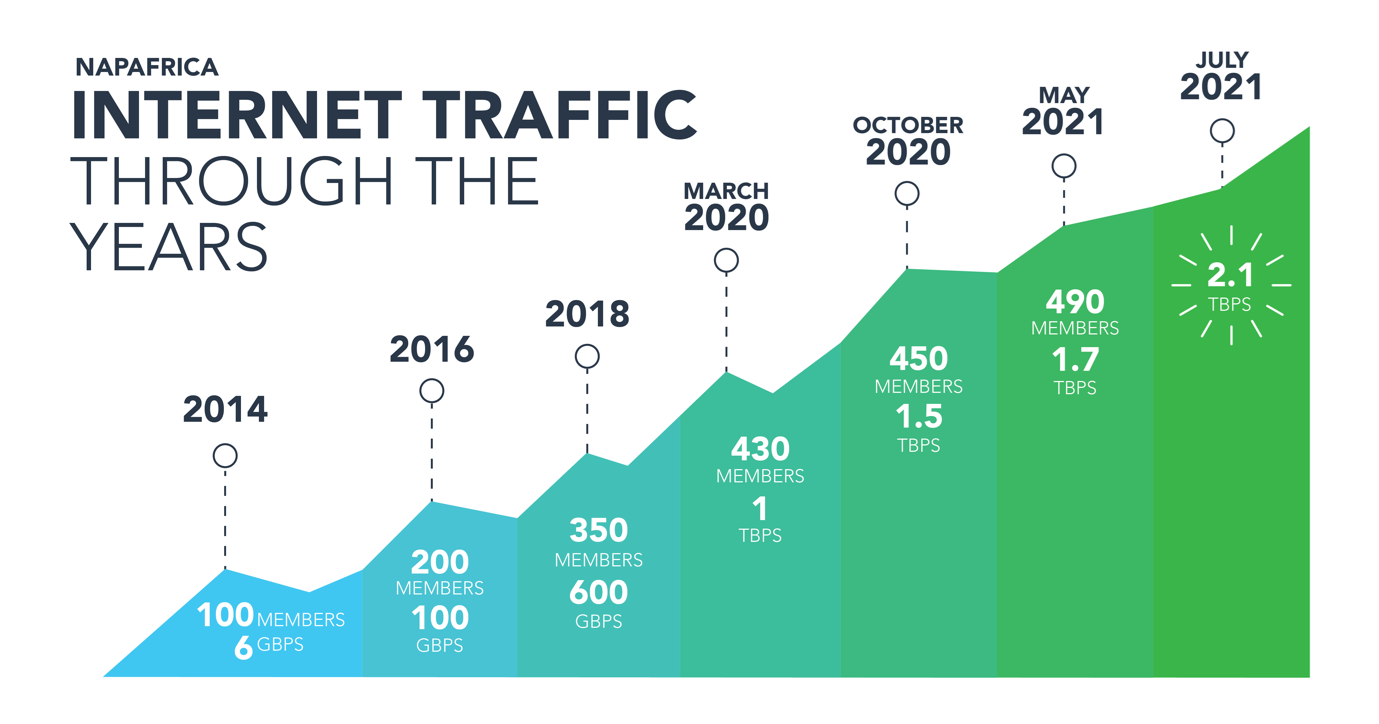
In 2022, NAPAfrica will celebrate a decade of playing a pivotal role in transforming Africa’s Internet access and interconnectedness. Established in 2012, with the aim to stimulate the development of an Internet exchange (IXP) within a truly vendor-neutral environment, NAPAfrica has grown into the continent’s biggest IXP and the 7th largest globally by number of member connections. Most recently, NAPAfrica announced that it had reached a peering throughput milestone of more than 2Tbps, with over 500 organisations now actively peering.
“The growth of NAPAfrica is a great African success story,” says Jan Hnizdo, CEO, Teraco, where the Internet exchange’s infrastructure resides within vendor-neutral colocation data centres located in Cape Town, Durban, and Johannesburg. “What started as an idea to attract global content to African shores whilst also improving latency, has emerged as a leading interconnection hub that is shaping the growth and access of the Internet across the African continent.” It took eight years for traffic throughput on the Internet exchange to reach 1Tbps, and only a little over fifteen months to double that.
NAPAfrica has made it possible for peering members to access global content within African borders and keep local traffic local – where previously, much of our traffic was routed via Europe. More recently, we have seen many new enterprises join the NAPAfrica peering community to improve resilience, lower costs and reduce the latency of accessing content and applications such as Microsoft O365, AWS Cloudfront, Akamai and Cloudflare. NAPAfrica has become a cornerstone for organisations in supporting their internet and communication needs with work-from-home strategies.
The continued investment into critical telecommunications infrastructure in Africa, especially in the local cloud regions like Microsoft Azure and AWS, subsea cables and broadband fibre, have also contributed enormously to the growth of NAPAfrica, as the continent’s demand for content and cloud services grows apace.
African enterprises are leveraging the benefits of peering by connecting with cloud deployments, networks, security providers and content providers within the NAPAfrica ecosystem as part of their move to a digital economy.
The number of IXPs in Africa has also grown exponentially since the launch of NAPAfrica, increasing from 19 in 2012 to 46 in 2020: “A 140% increase in the number of African exchanges is good news for the continent and its interconnectedness. We are proud of the innovative role NAPAfrica has played in shaping Africa’s Internet access and usage.”
Deloitte’s Value of Connectivity report says that Internet connectivity has already hugely benefitted developed economies, providing far-reaching economic and social advantages. Extending these opportunities to developing economies in Africa is critical in making the transition from a resource-based to a knowledge-based economy.
It is in the creation of a knowledge-based economy where Africa, and NAPAfrica, has seen the immense growth of cloud providers that are launching their services across the continent as the need for cloud-based technology increases. Coupled with this has been the extensive investment and uptake in fibre and subsea cable infrastructure, allowing users access to higher capacities than ever before.
Michele McCann, Head of Interconnection & Peering, Teraco, says that people have now discovered the real power of the Internet, be it working from home or for pure entertainment: “We are seeing NAPAfrica traffic grow daily as enterprises start investing in larger bandwidth options as they address work from home needs. From a content perspective, the UEFA EURO 2020 added over 400Gbps of additional traffic to the exchange.”
Increased demand on networks, to service remote users, has driven the adoption of key cloud and security applications such as Microsoft O365 services, AWS, Cloudflare and Zscaler.
As NAPAfrica continues to play a significant role by servicing not only South Africa but also the Southern African region, McCann says that similar traffic growth numbers are occurring elsewhere on the continent within countries such as Angola, Botswana, DRC, Lesotho, Madagascar, Mauritius, Malawi, Mozambique, Namibia, Réunion, Seychelles, Swaziland, Zambia and Zimbabwe.
South African businesses, already under severe economic strain, are now counting the costs of rapidly increasing internal payments fraud. According to Ryan Mer, Managing Director, eftsure Africa, a Know Your Payee™ (KYP) platform provider, the number of recent high-profile cases before the courts only partly reflects the true scale of the problem.
Estimates suggest that it costs the private sector more than R2 billion every year to combat theft and fraud. According to a PWC report, South Africa was ranked as having one of the worst white-collar crime rates in the world. A similar study conducted by the Association of Certified Fraud Examiners found that a typical organisation loses at least 5 percent of its annual revenue to fraud. The same study also found that once victimised, an organisation is unlikely to recover the losses. “Not only do South African businesses have to contend with the threat of external bad actors, but the relatively high likelihood of payments fraud being committed by an entity’s own staff,” says Mer.
He adds that while the amount of business transactions taking place online is constantly growing and working from home is now commonplace, business controls have not kept pace with digital transformation. This has led to increasing demand for security and anti-fraud solutions.
Positions that involve administering payments to creditors and suppliers, overseeing and processing invoices and electronic payments, and capturing bank statement transactions present a higher risk for businesses. “It’s crucial organisations implement best practice anti-fraud strategies to prevent, detect, investigate and remediate fraudulent activity before it becomes so serious it endangers the very survival of the business.”
Mer points out that a recent case of an East London personal assistant being jailed for 15 years for stealing R11.5 million from her employer highlights that many organisations are too complacent by not implementing enough measures to tackle internal payments fraud. “Often, businesses tighten certain payment approval policies without implementing a longer-term strategy and the necessary technology to truly make an impact. Despite an overwhelming majority of businesses having vendor onboarding, management and payment controls in place, cybercrime and payment fraud is a daily occurrence and a massive challenge for businesses. While the right controls might be in place theoretically, clearly definite gaps that need to be addressed” he says.
Another hurdle organisations face is that those responsible for reviewing and releasing payments, such as CFOs, financial managers, senior managers, and directors, are under huge time constraints and don’t have capacity to check packs of supporting documents in detail on a regular basis or verify all banking details. At its core, eftsure helps protect organisations against financial fraud by automating manual controls, placing less reliance on the manual and human factor, giving those responsible for releasing payments confidence that processes and controls are in place and working effectively prior to releasing payments.
In addition to understanding the risks of internal fraud and boosting existing security, Mer advises businesses to invest in tech solutions with sufficient audit logs built in so that every action performed is recorded and can be traced back to the staff member responsible. “This is where eftsure’s automated check, with the click of a button, gives those responsible comfort in seconds as to the integrity of the payment information, prior to payment release, he says.”
“People combined with technology and sound business processes are at the frontline of fighting fraud and mitigating risk. By building a culture of security within an organisation that ensures cooperation between employees and technology, it is significantly more difficult for bad actors, both external and internal, to commit white-collar crime,” says Mer.