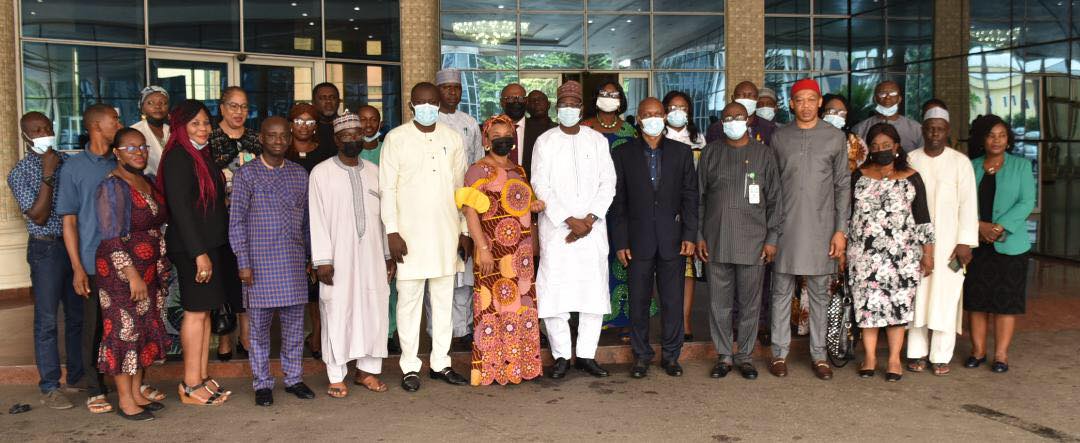
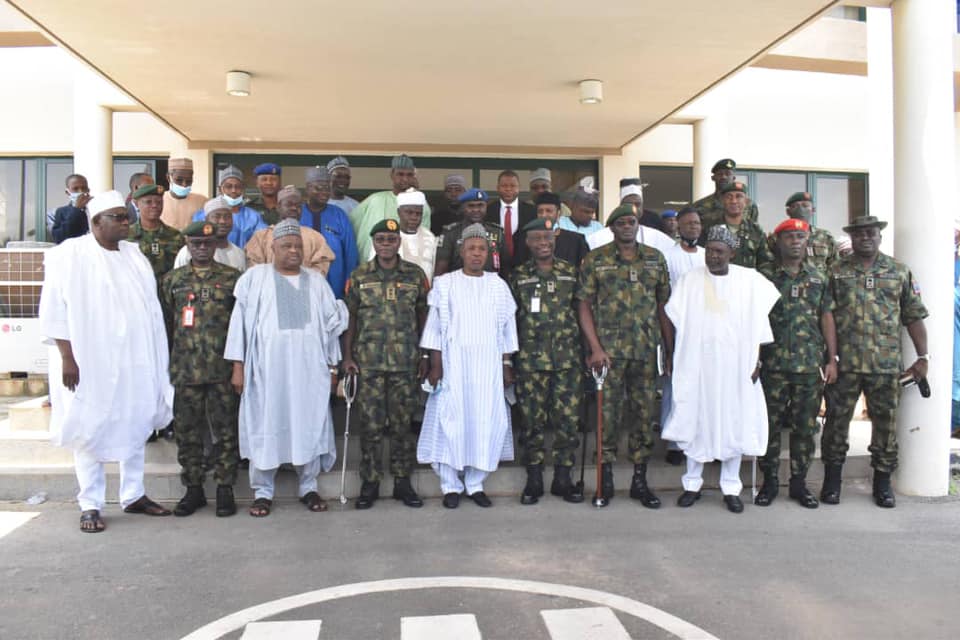
The Executive Governor of Katsina State, Right Honourable Aminu Bello Masari has called on all Nigerians, particularly those residing in the northwest to support ongoing anti banditry operations in North West Nigeria. The Governor made the appeal when the Chief of Army Staff (COAS), Lieutenant General Faruk Yahaya paid him a courtesy visit today Thursday 5 August 2021 at the Government House, Katsina. The COAS was on an operational tour of 8 Division, as well as formations and units under the Division’s area of responsibility.

Speaking further during the visit, Governor Masari observed that there had been significant improvement in the security situation of Katsina state. He however noted that the troops could do more, if given the necessary support by Nigerians.

While expressing appreciation to the military and security agencies, Governor Masari urged the troops to sustain the momentum of the ongoing operations, particularly in rural communities, adding that this is necessary to halt isolated cases of killings and abductions by bandits in those areas.

He reiterated the state government’s commitment and continued support to Nigerian Army (NA) and other security agencies in tackling security challenges in the state.
Delivering his remarks, the COAS expressed gratitude to the Governor and people of Katsina state for their support to the NA. He reassured of improved security in the state and the north west as a whole. Gen Yahaya reaffirmed his determination to enhance collaboration with the state government, as well as synergy with other security agencies in restoring peace and security in the region.

In a related development, the COAS was at the palace of His Royal Highness, the Emir of Katsina, Alhaji (Dr) Abdulmumini Kabir Usman, where he paid homage to the Royal father. He used the medium to call on other traditional rulers and critical stakeholders to assist security agencies with useful information that will support troops’ anti banditry operations.

The COAS has also assured troops of his readiness to support ongoing operations with requisite logistics and other necessities to enhance the conduct of their operations. General Yahaya gave the assurance at the Headquarters 17 Brigade, while addressing officers and soldiers of the formation during his operational tour. He encouraged the troops to remain steadfast in carrying out their duties in the service to the nation in conformity with the constitutional mandate of the NA. He declared that while he will make it a point of duty to reward diligence, galantry and good conduct; he will not hesitate to punish indolence and bad conduct

ONYEMA NWACHUKWU

JLL Survey results from Tétris glimpse into the future of the workplace

The Covid-19 pandemic and resulting lockdowns worldwide have challenged conventional ideas on how we work and what a workplace should look like. Will the traditional 9-5 workday and five-day work week at the office come to an end as new, more flexible work patterns emerge? International research conducted by JLL and released by Tétris Design & Build (owned by JLL, a Fortune 500 company) titled Worker Preferences Barometer reveals that this may be the case, although offices will still play a leading role in the way we do business.​

The study, which surveyed 3,300 office workers across ten countries, showed that 79 percent​ ​ of the workforce aspire to be back in the office at least once a week, up from 74 percent last October, highlighting the declining appetite to work solely from home as homeworking fatigue sets in. Thirty-seven percent feel more productive at home, down from 48 percent last April. However, 63 percent of workers do not want to be office-bound, showing preference for a hybrid style of working from both home and the office or third-party locations such as coworking lounges and coffee shops.

While the disruption in workflow due to Covid-19 has had a negative impact on business over past year, it has also paved the way for innovative working solutions and new ways of achieving a good work-life balance – a top priority for Millennials and Gen Z. Emma Luyt, co-CEO of JLL sub-Sahara Africa and MD of Tétris Design & Build, is excited by the opportunity for strategic workplace design and bespoke office fit-outs as a means to refresh and re-engage with returning staff and believes the innovation it demands will bring enormous future value to the office sector.

Key insights from the research:

  1. Work-life balance is the number one workforce priority, ahead of salary. Over 80 percent of the workforce want to be able to choose their working hours in the future.
  2. Homeworking fatigue is growing. Over sixty percent of the workforce want to keep the possibility of alternating between different places of work in the future with two days a week outside the office being the new optimum.
  3. A homeworking learning curve has developed. Expectations regarding homeworking frequency in the future are directly linked to the intensity of the habit today as 58 percent of employees working one to two days a week from home currently want to do so in the future.
  4. Productivity at home is declining, but it’s not translating into stronger satisfaction with the office. Just 47 percent say they are satisfied with their office today.
  5. Quality of life is not fulfilling without a rich social life; it is not only about time management. Sixty-one percent of the workforce are craving ‘real’ human interactions with colleagues.
  6. Long-lasting homeworking is hiding a heavy social and mental toll. More than ever before, companies are being held responsible for the physical, mental and social health of their employees. Forty-eight percent of the workforce feel overwhelmed by a huge mental load.
  7. Sociodemographic and household profiles are having a strong impact of the work from home experience. Fifty-seven percent of Gen Z workers feel under pressure; half of them are worried about their job.
  8. An outstanding office is the best way to have your people back. Sixty nine percent of people highly satisfied with their office environment strongly miss their office. The number is only five percent among those who are not fully satisfied with their usual work environment.

Luyt says that business leaders need to get back into the office to protect and grow their business culture and nurture younger teams who require office infrastructure and connection to perform, but a rethink of corporate workspaces is necessary if business owners want to get employees back and working productively. “Company owners are looking for workspace solutions that can foster inclusivity and co-working while providing quiet spaces for thinking and doing,” she says.

Undeniably, putting employees first is key to creating experiential workspaces that improve performance, retain current staff and are effective in attracting future talent. “Aesthetics will become more important in the future office. It is crucial that the post-pandemic office is attractive, comfortable and visually interesting.”

The office will become the primary place of work again, according to Luyt but only on condition that the experience meets the new demands of the workforce. “The months to come will see a ‘flight to quality’, with top employers acknowledging the new workforce expectations through an in-depth rethinking of their approach to work, the workforce and the workplace.”

The Honourable Minister of Communications and Digital Economy has tasked Information Technology professionals to prioritise the safety and security of the country’s cyberspace. Dr Isa Ali Ibrahim (Pantami) made the call today 3rd August 2021 during his address titled- The Imperatives of Cybersecurity for a Digital Economy. The Honourable Minister was the Chairman of the annual International Conference of the Nigeria Computer Society, which is taking place in Uyo, the Akwa Ibom state capital.

Dr Pantami who addressed participants virtually, remarked that the theme of this year’s conference- Innovative Systems for a Digital Economy, was apt and in accord with the needs of a growing digital economy. “However, priority and preference should be given to cybersecurity as the capacity and quality of solutions, particularly, indigenous solutions deployed to address existing or new problems must meet the minimum global requirements.”

The Honourable Minister further emphasised that Digital Innovation and Digital Entrepreneurship are the building blocks of a successful indigenous Digital Economy. Such an economy will only thrive in a safe and secure cyberspace and this is why the Federal Government has instituted strategies and policies to ensure that Cybersecurity is given priority. “The Nigeria Data Protection Regulation (NDPR), a regulatory instrument established to protect the privacy and confidentiality of citizens, the National Cybersecurity Policy & Strategy and the Computer Emergency Response and Readiness Team (CERRT) are some of the initiatives put in place by government to ensure the success of a Digital Economy and a safe cyberspace.”

While commending the Nigeria Computer Society for its consistency in organising the annual event, the Honourable Minister called for all hands to be on deck in the pursuit of safety and professionalism in the sector and gave the assurances that the Federal Government was willing to enforce compliance.

BY Uwa Suleiman

…Says Infrastructure Legitimate Way to Grow the Economy, Deliver Prosperity to the Citizenry

With 895 On-going Highway and Bridge contracts across the country, the rehabilitation of Internal Roads of 43 Federal Tertiary Institutions, construction of Six new Federal Secretariats in Anambra, Bayelsa, Ekiti, Nasarawa, Osun and Zamfara States and Construction of Housing Estates in 34 States of the Federation under the National Housing Programme (NHP) among others, the Minister of Works and Housing, Mr. Babatunde Fashola SAN on Thursday rendered an impressive account of the Federal *Government’s infrastructure programmes under his Ministry.

Speaking at Special Townhall Meeting organized by Business Hallmark Public Policy Forum with the theme,” Nigeria’s Infrastructure Revolution: Road to a New Future,”* the Minister explained that activities involved in infrastructure development are the sure and legitimate way of growing the economy and delivering prosperity to the citizenry.

This reality, Fashola explained, informed the decision of the administration of President Muhammadu Buhari to make massive investment in Infrastructure a matter of choice and necessitated the expansion of the budget of the Federal Ministry of Works and Housing from N18bn by the previous administration in 2015 to about N260bn despite the fact that the price of crude oil which sold at an average of $97.98 between 2009 and 2014 fell to an average of $65.23 per barrel from 2015 to 2021.

According to the Minister, the priority given to infrastructural development, informed the need to improve road transport infrastructure assets, formulate policies to address the problem of deteriorating public assets while taking advantage of the socio-economic opportunities created by the maintenance of such assets and to develop a National Strategy for sustainable Maintenance of all Public Infrastructure Assets in the country.

Fashola noted that due to paucity of fund, government had to look for alternative sources of funding which include the Presidential Infrastructure Development Fund, SUKUK fund, Road Infrastructure Tax Credit Scheme (RITCS), Multi-lateral loans/grants and collaboration with other Government Agencies like The North East-Development Commission in order to achieve the objectives of the Economy Recovery and Growth Plan ( ERGP) as it concerns the Ministry.

Fashola also listed the rehabilitation of 60 Bridges across the country, scheduled maintenance of 5,461.88KM of roads and 8,000KM of Highway maintenance which include vegetation control, desilting of drains, Sleeves and ducts by the Federal Road Maintenance Agency (FERMA) and the rehabilitation/Maintenance of 24 Federal Secretariats across the country as some of the results of the investments in infrastructure.

Fashola explained that on the result and economic impact of the infrastructure investment of the Federal Government, Micro, Small and Medium Enterprises (SMEs) benefit immensely from infrastructure projects as a lot of activities such as designing, award of contract for supply, direct employment, banking and so on that take place, generate income for the people any time an infrastructure project is ongoing, pointing out that the small firms and enterprises were engaged in supplies of cements, diesel, laterites and others in the course of construction activities.

The Minister noted that the narrative in the past about no federal government presence in some state has been replaced by a new narrative about when the ongoing projects will be completed in such states.

The Minister also reminded Nigerians that the recession alarm raised in 2012 by the then Coordinating Minister of the Economy Dr Ngozi Okonjo Iweala was the recession that the Buhari administration inherited and was able to overcome it despite the impact of Covid – 19 through the massive investment to renew and expand the nation’s infrastructure at a time when the country was earning much less from oil.

The Chairman, Busines Hallmark Forum, Sir Marc Wabara disclosed that the aim of the Townhall Meeting was to ensure that public policy met the basic standard of service delivery to the public.

He expressed satisfaction that the event was holding at a time when the nation was going through the path of growth and development.

The occasion was chaired by the former Chairman of the All Progressives Congress, Chief John Odigie Oyegun, the Guest of Honour was the Secretary to the Government of the Federation, Mr Boss Mustapha. Other speakers at the occasion were the Minsters of Federal Ministries of Water Resource and that of Power; Engr. Suleiman Adamu and Engr. Saleh Mamman respectively.

Boade Akinola (Mrs)

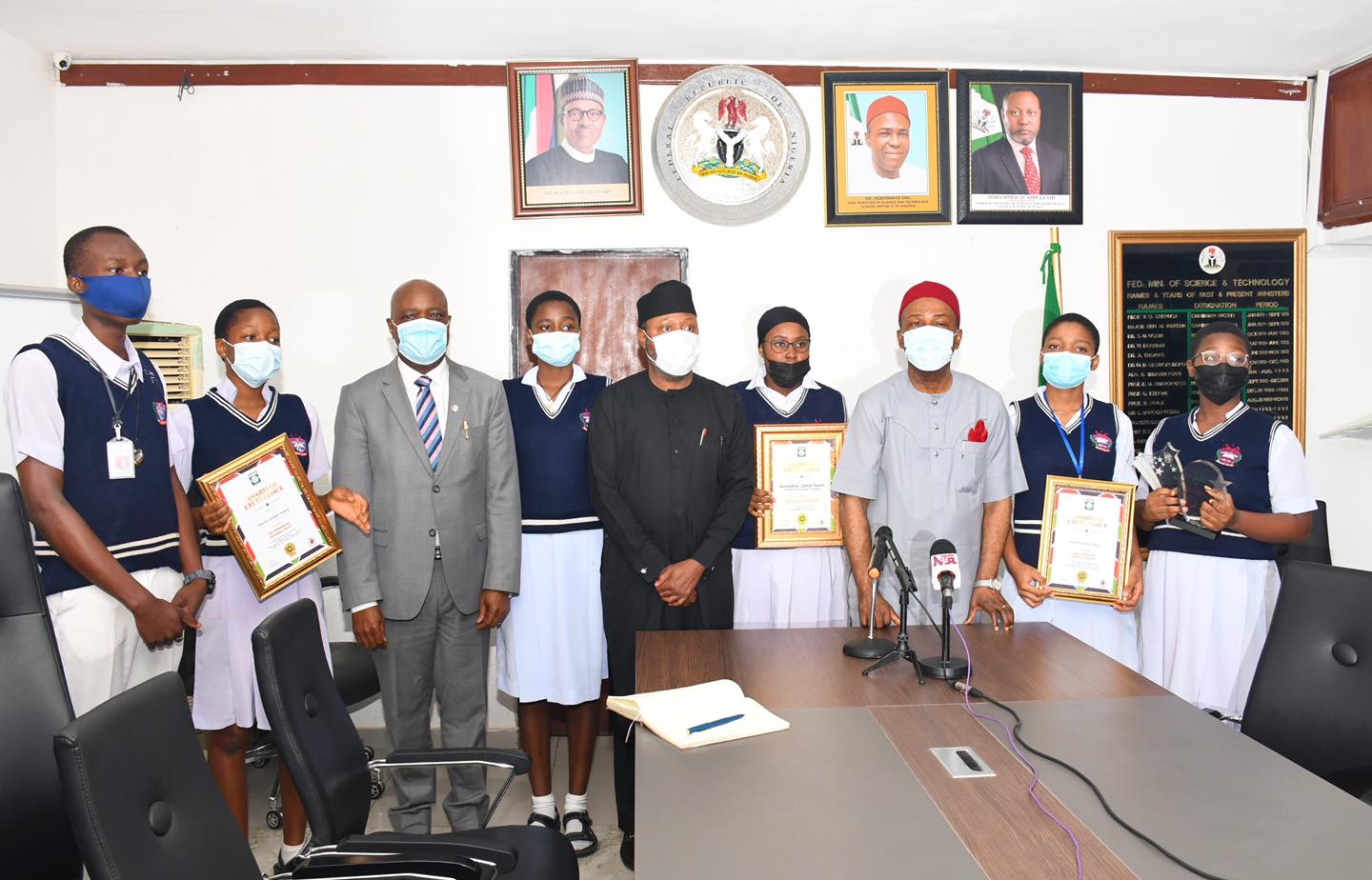
Ministry of Science, Technology and Innovation has granted the sum of Five Million naira, to students of Marist College Yangoji Abuja, for inventing the Sensebox and Aquabot device, which are monitoring devices for air and water pollution.

The presentation was made by the Minister of Science, Technology and Innovation, Dr. Ogbonnaya Onu in his office on Tuesday in Abuja.

The Minister said that with the feat achieved by the students, Nigeria is well positioned to become a hub for creativity. He added that Nigeria will meet all her needs, rely less on import and create wealth for the nation once becoming a creativity hub.

On intellectual property protection, he added that the Ministry will patent the key innovation through one of its agencies; The National Office for Technology Acquisition and Promotion (NOTAP). He further said that the patenting will come at no cost to the school.
Dr. Onu appealed to parents to motivate their children, and make sure they inculcate values of hardwork, respect and commitment which is the foundation of every child.

He urged the students, to fly the Nigerian flag high at the upcoming virtual Students for Advancement of Global Entrepreneurship (SAGE) competition on the 13th of August this year.

Earlier the President/CEO of the research team for Aquabot, Mabocha Sharon who is a SS3 student of Marist College said they are seeking the support of the Ministry to patent their innovation.

She also added that they need financial support to help develop their innovation, build science laboratory that could benefit other students.

IRONDI. C. IFEOMA

As the global economy is recovering from the effects of Corona Virus known as Covid 19, Nigeria inclusive, the demand for logistic services has surged lately hovering around 5% upwards. This has also impacted positively in Nigeria with the increase of online shopping and bringing to barest minimum human to human interaction. Having said this, an indigenous logistic firm based in the Federal Capital Territory (FCT) Abuja, Trackhub is literally taking the bull by the horns by deepening its services in Northern and Central Nigerian region with top notch services leveraging on information technology (IT).

Focused on niche areas such as servicing the medical industry, Agribusiness, fast moving consumer goods (FMCG) and hospitality industry, Trackhub has within a short period developed a robust business to business (B2B) ecosystem that thrives on predictable revenues. Its B2B business functions on a retainership model and targets high ticket businesses with an average of 15-20 deliveries per day but with effective logistics needs. Trackhub provides a 200cc bike, a well-trained rider at your facility, handles all logistics management activities for a discounted retainership price. Trackhub prides itself as the service that business think of when they want to outsource their logistics wahala……  Speaking to the media on the strides the company has made in a short period.

Dr. Chukwuemeka Azubuike, the Founder and Chief Executive Officer said that “I started thinking about logistics while working with a top NGO in Abuja, Nigeria. Working with the NGO in Nigeria provided me the exposure to public sector supply chains and how they are financed and managed. As a result of poorly coordinated logistics and supply chain systems, many public health facilities struggle with the availability of drugs and essential medicines and this impacts negatively on health outcomes.  I decided to bring my experience in the public health sector to the private sector logistics space starting with market research in Abuja and Lagos in 2019 across businesses, and delivery companies. We sought to understand the major constraints in the space and the buying behaviors of the stakeholders. The data showed that the last mile delivery logistics space in Nigeria has great potentials but faces myriad issues that affect both delivery merchants and customers.”

We launched Trackhub  in June 2020 and our theory of change for the logistics space was that if we were able to link merchant and customer seamlessly via a platform model, and created the right incentives to stay on the platform, we had struck gold- after all it was a winners take all market. At each stage of our journey, we have constantly validated this hypothesis considering the changing nature of the market. In March 2021, after 9 months of learning and executing over 1500 deliveries across 12 logistics partners, using a platform/aggregator model, the business model pivoted to a different approach which involves owning our in-house bikes and riders. The vision is the same, but the mission has changed to using technology, process innovation and strategic partnerships to fix the customer experience problem in the logistics space in Africa”, he added.

Delivering Satisfaction

On expansion and insecurity in some of the key states in the Northern region, Emeka said that “The current security challenges in the north hampered our expansion plans to Kaduna and Kano. As a context sensitive business, we planned our expansion around cities that are economically mobile in Nigeria. We believe these cities have more purchasing power and more commercial activity that require our services. Kaduna, Kano, Lagos and Port Harcourt are such cities. Furthermore, because of the access to the rail system, and the ports, they constitute an economic corridor that can be served by logistics companies. The security situation in the North has delayed our timeline for expansion into these 2 key cities. We are now observing the situation in these cities while consolidating market share in Abuja.”

On using information technology (IT) to deliver top-notch service, the company is developing a robust food delivery platform that aggregates restaurants in Abuja and facilitates ordering and delivery on the platform: eats.trackhub.ng. Restaurants pay a small commission of 5% of the total food amount ordered on the platform. Customers benefit from prompt delivery of their tasty meals while still hot. Trackhub is designed to use technology, process innovation, and strategic partnerships to fix the customer experience problem in the logistics space in Africa. With high touch engagement model executed by Trackhub team of dedicated staff that ensures that satisfaction is guaranteed, and customer expectations exceeded per delivery.

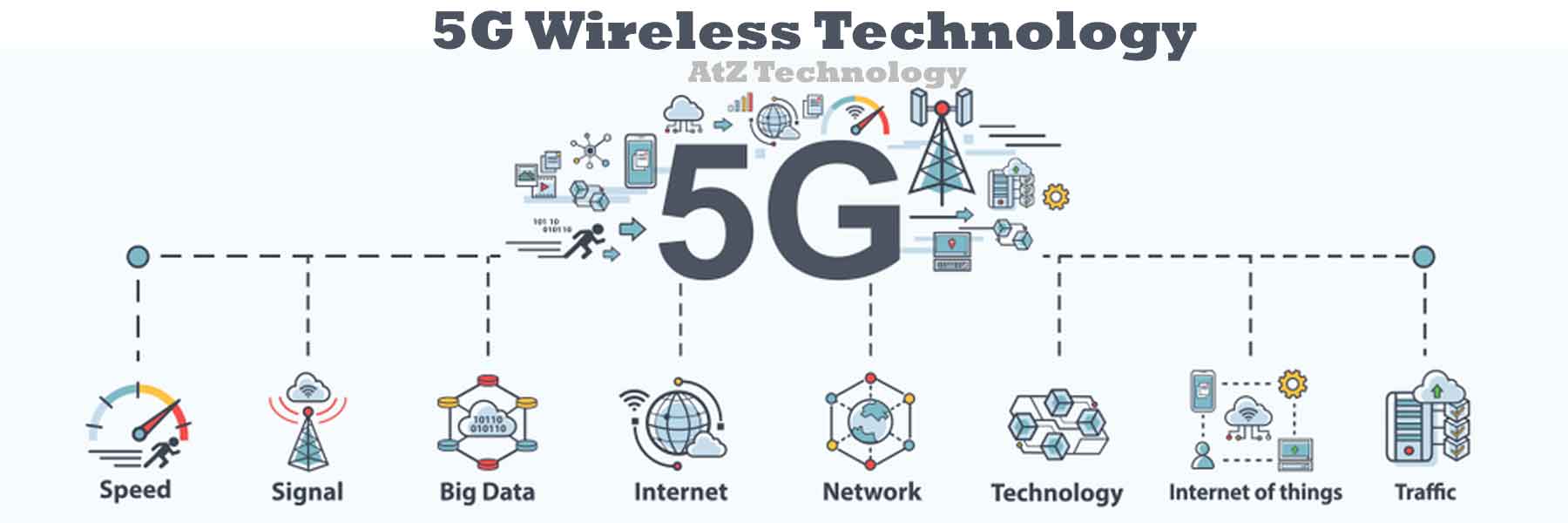
In the ever changing and evolving information communication technology (ICT) ecosystem, fifth generation (5G) technology which is the latest form of communication which would make communication faster and clearer has been launched in many countries of the world with Asian countries leading the race. Nigeria as a country isn’t left behind in the race to deploy 5G. The apex telecommunication regulator, The Nigerian Communication Commission (NCC) has reiterated its readiness to ensure that 5G is deployed in the country by sending the framework  to the Federal Government which is awaiting approval. Prof. Umar Garba Danbatta made this known at the NCC’s Public Enquiry on Annual Operating Levy Regulations (AOL) and the Frequency Pricing in Abuja.

5g Wireless Technology: Definition, Advantage & Reasons 2021

Speaking in an interactive forum, Prof. Danbatta, the Executive Vice Chairman of NCC said that “the commission is keen on ensuring that there is deployment of 5G services in the country through the creation of enabling environment. The Commission is poised to ensure that this technology is in the country soonest.”

He also added that though it is not the function of the Commission to ensure that 5G is deployed fully, it is the prerogative of the Federal Government of Nigeria to ensure that policies are in place for the full roll out. Though he said that the template has been sent to the Federal Government for the final approval but industry stakeholders must understand that NCC doesn’t have the final say in the roll out of 5G in Nigeria. He also assured stakeholders that the Government is very keen in ensuring that 5G services are rolled out in Nigeria.

Prof Danbatta, EVC, NCC

The benefits of 5G technology are so immense that it has prompted the NCC to lead the race in the deployment of this technology in sub-Saharan Africa. According to Intel, is opined that “Emerging 5G networks feature lower latency, higher capacity, and increased bandwidth compared to 4G. These network improvements will have far-reaching impacts on how people live, work, and play all over the world. Emerging 5G networks feature lower latency, higher capacity, and increased bandwidth compared to 4G.”

“5G will deliver up to 1,000x more capacity than 4G,3 creating fertile ground for IoT development. 5G and IoT are a perfect match, set to redefine how wireless networks—and the internet as a whole—are used. With capacity for hundreds or thousands of devices seamlessly communicating, new applications and use cases for cities, factories, farms, schools, and homes will flourish”, Intel technologies stated.

ANTHONY NWOSU

The attention of the Nigerian Communications Commission (NCC) has been drawn to a publication in an online media entitled “Govt renews MTN Nigeria licence amid 20 years of GSM Phones” to the effect that the mobile operating licence of MTN has been renewed by the Commission for another period of 10 years.

The online publication, which cited regulatory filings by the NCC as its source, stated that “MTN Nigeria, the nation’s largest mobile network operator (MNO), has secured regulatory approval of the renewal of its operating licence for another 10 years with effect from September 1, 2021.”

The Commission wishes to state that while MTN Nigeria has applied for the renewal of the Unified Access Service Licence (UASL) granted to it by the Commission, the application is yet to be approved as it is still undergoing required regulatory processes.

This statement is issued for the guidance of our general stakeholders.

With the zeal of strengthening the partnership between the various tiers of government in Nigeria to apply digital technology in governance, the Honourable Minister of Communications and Digital Economy, Isa Ali Ibrahim (Pantami), PhD has formally flagged off a capacity development programme on eGovernance and Digital transformation for Kano State Executive Council Members chaired by His Excellency, Gov Abdullahi Umar Ganduje.

The programme aims at tutoring the top state government officials on the application of modern technology to improve performances at all levels and also deliver services and programs more efficiently, transparently, and cost-effectively.

In his Keynote address, the Honourable Minister, Dr Pantami applauded the state for the plan to deploy fibre optics across its boundary within the next two years, stressing that the move is in alignment with the National Digital Economy Policy and Strategy for a Digital Nigeria (NDEPS), launched and unveiled by His Excellency, President Muhammadu Buhari on 29th November 2019. “This policy cannot be implemented by the Federal Government alone, state governments need to key in”, Pantami said.

The Honourable Minister then urged the council members to take full advantage of the training, stressing that e-governance is key to the success of any economy at all levels.
Minister Pantami also called on the Kano state government to adopt other initiatives and strategies of the Federal Government such as the Nigeria Interoperability Framework, and the Nigeria e-government Enterprise Framework and make them the mirror for the implementation of e-governance in the state.

Dr Pantami further advised the state government to study other National policies of the Federal Government and key into them so that the IT investment plans of the state will be in alignment with that of the federal government and also ensure interoperability.

“E-governance is a necessity for the success of every government”, Pantami said, adding that, “according to the World Bank diagnostic report of 2019, it was projected that by 2025, e-commerce activities in Nigeria will reach up to USD 75 Billion within a year”.

“COVID 19 has exposed the need for digitization, which is now a necessity”, Pantami stated.
Pantami furthermore disclosed the donation of over 100 digital devices to the state by the Federal Government and called on the beneficiaries to make good use of the devices to be provided.

The Minister revealed that the Ministry is open to partnership with all state and local governments that expresses interest to key into the NDEPS.

On his part, Gov Abdullahi Umar Ganduje appreciated Dr Pantami for matching words with action following his visit to the Communications and Digital Economy Complex in Abuja where he initiated talks on the possible collaborations and partnerships with the Ministry to foster ICT development in Kano state.

The Governor also thanked the Ministry for the provision of digital intervention projects in the state such as a digital training centre which is ongoing and also the consideration to use Kano as the pilot state for the GOVERNMENT DIGITAL TRANSFORMATION training.
Gov Ganduje similarly expressed gratitude for the training of over 1000 youths from the state on digital skills and also the support rendered to the state to come up with a State ICT policy which he described as the blueprint guiding the state over the years.

The Executive Governor further solicited support from the Ministry to update the policy to reflect current realities.

The Federal Government has called for creative value chain entrepreneurship to boost job creation in the country.

Minister for Labour and Employment, Dr Chris Ngige, made the call at the 5th Meeting of the National Employment Council, in Abuja.

Ngige, represented by Permanent Secretary of the Ministry, Dr Yerima Peter Tarfa, noted that a lot of jobs could be generated across the value chain, from the raw material stage through the finished product to the consumer.

“The raw minerals being exported from the country are used to produce consumer and industrial goods in advanced countries that we import at much higher prices.

“By not adding value to our mineral and agricultural products, Nigeria has been unwittingly exporting wealth and millions of jobs. We must halt and begin to reverse this dangerous trend.”

Ngige stated that based on the Council’s Work Plan, the meeting would deliberate on the topic, “Sectorial Value Chains and Employment Generation in Nigeria”.

He disclosed that the following Ministries, Departments and Agencies (MDA) of government would make presentations at the meeting for Council’s consideration – Federal Ministry of Agriculture and Rural Development, Federal Ministry of Mines and Steel Development, Nigerian Tourism Development Corporation (NTDC), and Nigeria Institute for Social and Economic Research (NISER).

“Today’s meeting shall deliberate on what these MDAs are doing in evolving strategies and innovative ideas for upgrading various segments of the value chain to increase production and create value addition across the most profitable areas of the value chain with trickle-down effect to other sectors of the Nigerian economy.”

Agriculture and mining being critical sectors in the diversification of economy policy of Government, the Minister called for a move from exportation of raw materials to that of consumer goods at much higher prices.

He added that “while we focus on agricultural production, greater attention must also be devoted to enhancing value addition across the value chain.”

Ngige further said that “this meeting is expected to come up with innovative ideas that will facilitate mining and processing of all commercially viable solid minerals, so as to create wealth and jobs for the teeming unemployed.”

Speaking earlier, Permanent Secretary, Federal Ministry of Labour and Employment, Dr Yerima Peter Tarfa, stated that value chain entrepreneurs drive the economy by creating continuous streams of wealth and jobs through investments in several sectors of the economy.

Represented by Director, Employment and Wages in the Ministry, John Audu Nyamali, he stated that the Meeting would focus on “how to deepen value addition through the various value chains cutting across agricultural, solid mineral and tourism sectors, so as to reposition them as the engine of growth and labour-absorbing sponge.”
Charles Akpan