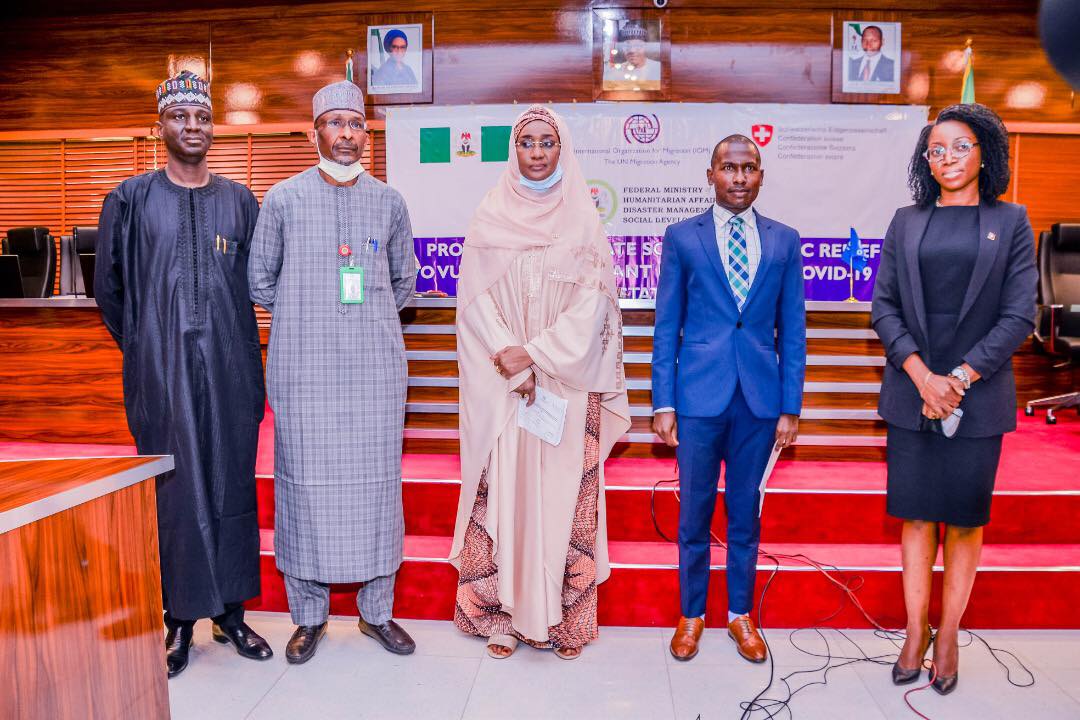
A project to provide immediate Socio-Economic Relief to Vulnerable Migrant Returnees Impacted by Covid-19 in the Northern States of Nigeria was launched on Thursday at the Treasury House Abuja.


The project, according to the Minister of Humanitarian Affairs, Disaster Management and Social Development Sadiya Umar Farouq is aimed at tackling emerging issues and challenges confronting the protection and livelihood of returnees and potential migrants in Nigeria.

Umar Farouq stated while launching the project, that the measure will further mitigate the immediate impact of the Covid-19 pandemic on retunee migrants in the northern states especially the elderly, the chronically ill, people living with disabilities, women and child-headed households, unemployed youths and refugees.

“In line with our mandate to develop humanitarian policies and provide effective coordination of National and International humanitarian interventions, the Ministry embarked on resource mobilisation to adequately address the growing humanitarian needs. It is gratifying to note that the government of Switzerland graciously responded to support in providing immediate Socio-Economic Relief to vulnerable migrants impacted by COVID-19 in Northern Nigeria. The project is designed to complement actions funded under the UN COVID-19 Basket Fund by focusing on returned and potential migrants residing in northern Nigeria with beneficiaries drawn from Yobe, Kano, Katsina, Zamfara and Jigawa.

“This context specific project exemplifies our focus on the ’Leave No One Behind’ principle of the SDG’s in carrying out humanitarian interventions. It is equally geared towards strengthening sustainable reintegration of returnees while discouraging irregular migration. I wish to assure you that working with the implementing organisation, IOM, the project will be effectively and efficiently implemented”.


Umar Farouq also thanked the Government of Switzerland for supporting the initiative and other activities that enhance the livelihood of the Persons of Concern in Nigeria, and the IOM, for entrenching better migration management in Nigeria.

“This indeed is an indication of your continued commitment towards our migration partnership. The Government of Nigeria further notes the significance of your on-going partnership with the National Commission for Refugees, Migrants and Internally Displaced Persons”.

Earlier, the Ambassador to Switzerland in Nigeria HE Mr Georg Steiner said that Switzerland has committed some of its funding to support Nigerian government agencies in the fight against the pandemic and its consequences.

Mr Steiner who was represented by the Program Officer Migration, Embassy of Switzerland said that the pandemic is the biggest crisis facing humanity, hence the international solidarity and cooperation to tackle the challenges.

“The health and economic consequences of the pandemic add to the difficult situation people face in areas affected by insecurity, political instability and economic hardship. These factors impact the management of migration movements and put further strain on government capabilities to provide for the vulnerable.

“Switzerland stands by Nigeria in these difficult times and swiftly mobilized financial resources to support the UN COVID 19 Basket Fund in Nigeria in June 2020.


“In the past 10 years, we have successfully implemented more than 50 projects in various areas . This particular project is another proof of the well functioning migration partnership and the importance Switzerland attaches to Nigeria”.

Vendor neutral cloud infrastructure provider, Routed, says that the archetypal hybrid or multicloud concept has become needlessly complicated. Managing Director, Andrew Cruise, explains: “Ultimately no-one ever takes a pure route and even pure public cloud does not exist. So, let’s just call it cloud and understand that it covers a variety of scenarios.”

Cruise adds that while hybrid cloud is defined as a combination of public cloud and private cloud, and multicloud an extension of hybrid cloud into multiple public clouds, no enterprise deploys their infrastructure in such a linear or elegant fashion: corners are cut, and easy options are taken.

One clear trend emerging in the current environment is the difficulty of clear collaboration among cloud providers. “Providers of cloud platforms prefer to offer unique services specific to their platform where the end user experience is typically very different across said platforms. Where collaboration is possible it’s through open APIs, but this lowest common denominator outcome means only the most basic and standard functions and services are easy to port between platforms,” says Cruise.

In contrast, the VMWare Cloud approach combines the benefits of hyperscalers, plus local VMware Cloud verified operators, plus private cloud foundation deployments to give the enterprise a consistent experience.  “As much as developers try to standardise on one set of tools e.g. Kubernetes, each of the global powerhouses will attempt to offer extensions or integrations of their own to make their offering more attractive and ultimately more sticky,” says Cruise.

He adds that there is a definite need and place for more niche cloud platforms outside of the major hyperscalers because there will never be a one-size-fits-all solution from any global mega cloud provider. “Local operators will always be able to offer specific solutions to local requirements. Local cloud operators can often offer a more tailored experience to smaller and medium sized enterprises than is possible when dealing with a faceless global public cloud corporation.”

Rather than erroneously imagining that multicloud is achieved simply by using Office365 and running your website on AWS, Cruise says it should be seen as connecting privately between owned infrastructure (which might be on VMware), hyperscalers like AWS / Azure / GCP and/or other local cloud operators. “Initially the strategy may be to share data, but the goal is to facilitate the seamless migration of applications, either VM or container based, to the platform which is most suitable for the application at the time.”

Credit Risk Managers in the financial sector are one of the key staff that ensure the profitability and survivability of any bank in Nigeria. Their roles in the corporate governance of any organisation cannot be downplayed and the need to align themselves with modern tools and robust solutions helps in reduction of human errors. Fintrak, one of the indigenous fintech (Financial Technology) firm in Nigeria will be bringing to the fore the benefits of FinTrak Credit Risk 360 solution, a financial tool specially designed for Credit Risk Officers, Head of Credit, Credit Monitoring Officers and Credit Analysts in the Financial Sector. This demo is slated to be online, Tuesday 24th of August. 

This demo is coming at a time the current global economic impact of COVID-19 is creating significant disruption to borrowers and potentially their capacity to support debt obligations. With lockdowns now being lifted and businesses restarting, Financial Institutions are faced with pressure from regulators and competitors, more so with the increasingly sophisticated customers, but Financial Institutions are often weighed down by manual processes (which put banks at risk of fraud, errors, and bad loan creations) or too rigid legacy systems. Financial institutions can increase their efficiency, develop their market position, and raise their profitability by further automating the lending process and risk measurement techniques.

In this special demo session, Fintrak will be discussing  how to  process corporate and retail credits on FinTrak Software which can  help any financial organization to  execute the following activities such as Portal driven Loan origination, Online Loan Appraisal and Documentation (CAM, CAF etc.) with document management system ,Credit Rating and suggestive approval/disapproval based on established criteria, Mobile Loan approval and others such as Loan Management, Loan Provisioning in line with Prudential Guideline, Loan Amortization & Loan Impairment calculations based on IFRS requirements, Loan Monitoring: Comprehensive loan monitoring and early warning alerts and messages and loan covenants Tracking.

FinTrak Credit Risk 360 was designed to help banks meet the need to identify, measure, monitor and control credit risk as well as to determine that they hold adequate capital against these risks and that they are adequately compensated for risks incurred. The Credit Risk 360 solution is Web based and can be easily accessed from all branches of the bank without separate installations on branch-by-branch basis. FinTrak Credit Management solution is a flexible and integrated solution that empowers banks to transform completely their loan proposal management – right from origination to repayment. The solution has the capacity to accommodate variants of credit approval levels. It integrates with the bank’s existing systems to provide a seamless, centralized platform for each stakeholder involved in loan approval. These systems include risks coring engines, loan management systems, and collateral management system among others.

Date & Time:              Tuesday August 24th, 2021

Time:                           10am – 11.30am

Registration Link:      https://us02web.zoom.us/webinar/register/WN_PVyqamA8TRuHlb-USCZDLQ

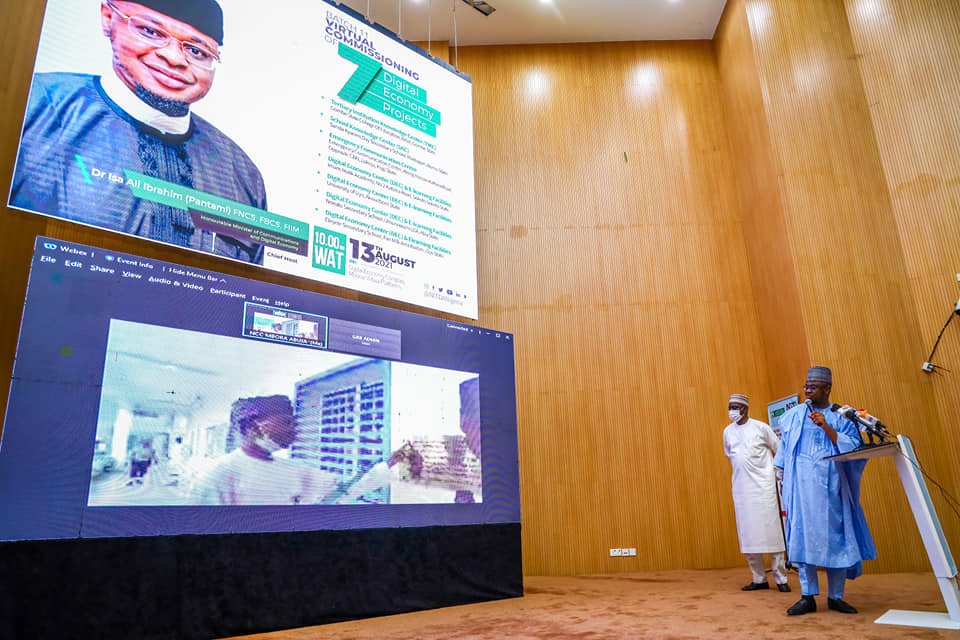
The Honourable Minister of Communications and Digital Economy, Dr Isa Ali Ibrahim (Pantami), today Friday 13th August 2021 in line with the National Digital Economy Policy and Strategy, commissioned seven more projects across the country in furtherance of the Federal Government’s resolve to leverage on technology in empowering the nation. This brings the number of projects established under the leadership of Dr Pantami to over one thousand, six hundred and sixty seven across all geo-political zones in the country.

Speaking at the hybrid event, the Honourable Minister noted that the sector had witnessed unprecedented growth both infrastructurally and policy – wise within two years of his assuming office. “When we came on board in August of 2019, the ministry had only one valid policy which was sponsored by the Korean Integration and Cooperation Agency, KOICA. But within the time we have been in office, we have developed sixteen national policies and established over one thousand six hundred and sixty seven digital economy centres. Of the sixteen policies we have developed, twelve are already being implemented while four are awaiting approval from the Federal Executive Council”

The projects numbering seven, under batch 11 of completed digital economy infrastructure include; four digital economy centres with e-learning facilities, domiciled in Abia, Sokoto, Akwa Ibom and Oyo states, a Tertiary Institution Knowledge Centre (TIKC) located in Gombe state, a School Knowledge Centre in Borno state and an Emergency Communication Centre (ECC) in Kogi State.

Recall that under the leadership of Dr Isa Ali Ibrahim (Pantami), every state of the federation is a beneficiary of the digital economy projects.

…Commends President Buhari, Pantami on Initiative

The Executive Vice Chairman of the Nigerian Communications Commission (NCC), Prof Umar Garba Danbatta has charged the Nigerian youths, who participated in the nationwide digital literacy training conducted by the Commission, to put the skills acquired as well as the Information and Communication Technology (ICT) tools received during the exercise to appropriate and legitimate use.

Addressing the participants at the closing ceremony of the NCC’s Digital Literacy Training for the North-West held at the Kano Campus of the Digital Bridge Institute (DBI) on Friday, August 13, 2021, Danbatta particularly enjoined the youths who have had the privilege of participating in the training to apply the skills acquired in gainful activities in order for them to be self-employed.

“The training has provided for you, useful skills, which you have acquired to earn a living for yourself without necessarily relying on government to give you a job. It is our hope at NCC that you will apply the skills appropriately and impact on your friends and associates. I also urge you to resist the temptations to sell the laptops and other IT tools you are going to be provided with,” Danbatta told the participants.

Speaking further, the EVC commended President Muhamamdu Buhari, the supervising Minister of Communications and Digital Economy, Dr. Isa Ali Ibrahim Pantami and the Governing Board of the Commission for the implementation of the digital capacity-building initiative, describing the scheme as an important intervention approved by the Federal Government to make more Nigerian youths self-reliant.

“We, therefore, express our profound appreciation to the President and to our Ministry for making this particular training, which is a practical demonstration of one of the important pillars of the National Digital Economy Policy and Strategy (NDEPS) 2020-2030, possible,” he pointed out.

According to the NCC boss, the Federal Government’s policy in this direction is aimed at lifting Nigerians, particularly the youths, out of poverty, stressing that to achieve this, there was a need to impact skills to the youths who will, in turn, use the skills for self-employment.

“It is consistent with this important policy of President Muhammadu Buhari that the Board of the NCC, two years ago, set up a committee of experts chaired by the former EVC of the Commission, Engr. Ernest Ndukwe, to develop modalities and syllabus for the digital training of youths across the six geo-political zones of the country,” he explained.

According to him, the implementation of the recommendations of the committee of experts, as approved by the government, gave rise to the training, which targets 1,000 Nigerian youths to be digitally trained for self-employment.

Earlier, the President of DBI, Prof. Muhammad Ajiya, who praised Prof. Danbatta for his untiring efforts to ensure the implementation of the Federal Government’s policy, said the various modules of the digital, moral and leadership skills given to the youths during the course of the training will go a long way in making the beneficiaries earn a living and be self-reliant.

Participants also expressed appreciation to the Commission for the digital skills acquisition and empowerment programme.

The training, a brainchild of the Commission, which was aimed at implementing the Federal Government’s policy to lift Nigerians out of poverty, held for two weeks across each of the six geo-political zones of the country.

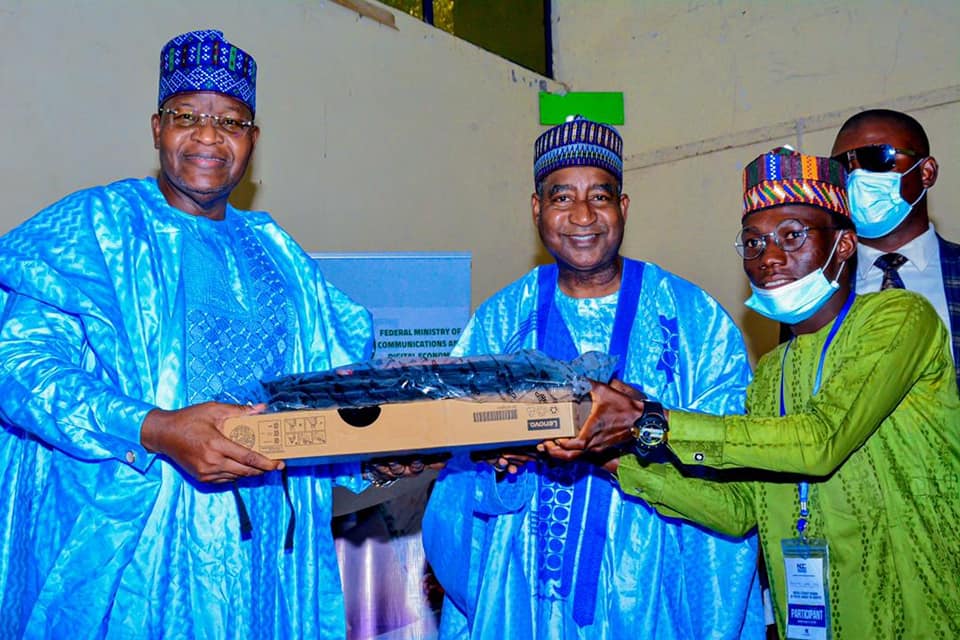
Across the zones, the youth were not only trained by subject-matter experts in ICT but were also given laptops, Internet Mi-Fi, financial support and certificates certifying the digital skills they have been equipped with.

Board members of the Commission participated at the closing and opening ceremonies of the training in their respective geo-political zones.


The 1980’s was a very busy year for automobile manufacturers globally. It was one of the once in a time periods in the industry that could be referred to as the turning point era, especially for the Japanese automobile manufacturers.

Having had their cars accepted in North America and Europe in the 70’s, buoyed by the middle east oil crisis, as consumers started discovering how less frequent they visit their mechanics due to their durability that came with quality-obsessed Japanese technology but above all, tipping point that changed global automobile was Spartan fuel efficiency, in an age the politics of oil ruled the world.

That initial success gave the Japanese wings to start dreaming dreams. Dreams that they too should aspire for a share of the luxury car sector pie, maybe to offer the world something like what the Germans offer, more reliable, durable, but at lower costs, that was the unique selling proposition: all the luxury at close to half the price.

Interestingly, at the same period, voluntary export restraints were negotiated by the Japanese government and U.S. trade representatives which restricted mainstream car sales, thus the alternative was upscale luxury cars.

So in 1986, Honda took the lead by launching its Acura marque in the U.S. The initial Acura model was an export version of the Honda Legend, which was launched in Japan in 1985 as a rival to existing Toyota Crown, Nissan Cedric and Mazda Luce.

In 1987, Nissan responded to Honda’s ambitious luxury project by unveiling its plans for a premium brand called The Infiniti. Nissan was able to respond to Honda’s challenge so fast because instead of going to the drawing board to come out with a totally new product, it quickly reverse-engineered its existing Nissan President sedan in standard wheelbase form (tweaked its interior for upscale luxury furnishing) for export as the Infiniti Q45,which it launched in 1990.

Mazda however began selling the Luce as the Mazda 929 in North America in 1988 and later began plans to develop an upscale marque to be called Amati, but its plans did not come to fruition.

But Japan’s biggest auto maker had a very ambitious plan, instead of seeing the competition at home, it focused on the world’s largest automobile market (North America) and how to share the pie with the biggest luxury car makers ( BMW, Mercedes Benz) ruling that niche.

Not contented with just sharing, it wanted something that will revolutionalise the entry levels luxury market, and if possible tilt the applecart by snatching customers from the jaws of brand loyalty by forcing customers addicted to Mercedes Benz, BMW and Audi sedans to have a rethink.

So the Chairman, Eiji Toyoda issued a challenge to Toyota engineers and designers to build the world’s ‘best car’. A challenge that was akin to when Henry Ford challenged his engineers to build a V8 engine, which the engineers retorted that it was impossible. But Ford insisted that as long as he could conceive it in his mind, then it is possible.

Toyota engineers took off and code-named it the “Flagship One” aimed at producing the Lexus LS 400. Before then, Toyota’s known premium cars were the Toyota Mark II models which were sold mostly in Japan.

And Toyota’s largest sedan at the time after the everlasting Toyota Crown, was the limited-production, 1960s-vintage Toyota Century, a domestic, V8 powered hand-built limousine, which ofcourse is used by the Japanese Prime Minister, while the Emperor of Japan uses The Nissan Prince Royal.

To actualize the dream of building “The World’s Best Car,” Toyota researchers were sent to the United States in May 1985 to conduct focus groups and market research on luxury consumers and their tastes.. During that time, several of their designers rented homes in Laguna Beach, California, to observe the lifestyles and tastes of American upper class consumers.

Meanwhile, their engineering teams conducted prototype testing on locations ranging from the German autobahn to U.S. roads. Toyota’s market research concluded that a separate brand different from the nameplate Toyota, and sales channel different from existing Toyota outlets, were needed to present its new sedan, and plans were made to develop a new network of dealerships in the U.S. market.

In 1986, global advertising agency Saatchi & Saatchi were contracted and they formed a specialized unit, Team One, to handle marketing for the new brand. Image consulting firm Lippincott & Margulies was hired to develop a list of 219 prospective names for the new car with names such as Vectre, Verone, Chaparel, Calibre and Alexis chosen as top candidates.

While Alexis quickly became the front runner, concerns were raised that the name applied to people more than cars (being associated with the Alexis Carrington character on the popular 1980s prime time drama Dynasty).

As a result, the first letter was removed and the “i” replaced with a”u” to morph the name to Lexus. But prior to the release of the first vehicles, database service LexisNexis obtained a temporary injunction forbidding the name Lexus rom being used because it might cause product confusion. The injunction was thrown out by the U.S. appeals court saying that there was little likelihood of confusion between the two products.

When the ‘Team One” representatives visited Lexus designers in Japan, they noted an uncanny obsessive attention to details never before seen in any automobile firms and how parts that were good to go were discarded and strenuous efforts put in to redevelop and redesign them, they came up with the tagline: “The Relentless Pursuit of Perfection.”

For the logo, three firms were involved in the final phase of the development: Saatchi & Saatchi, Molly Designs and Hunter/Korobkin, Inc. The finished logo was a combination of two firms’ final designs: the Lexus logo typeface came from Saatchi & Saatchi and the “L” was Hunter/Korobkin, Inc.’s design.

According to Toyota, the automaker made some refinements so the logo would be easier to manufacture, rendering it using a mathematical formula.

Toyota’s secret project was completed in 1989, involving 60designers, 24 engineering teams, 1,400 engineers, 2,300 technicians, 220 support workers, approximately 450 prototypes and more than $1 billion in costs. The resulting car, the Lexus LS 400, had a design that shared no major elements with previous Toyota vehicles, with a new 4.0 L V8 gasoline engine and rear-wheel drive..

It debuted in January 1989 at the North American International Auto Show in Detroit and official sales of the vehicle began the following September at a network of 81 new Lexus dealerships in the U.S.

First thing Toyota celebrated was the quietness of the engine. At that time, it was the quietest V8 engine ever built to the extent that a Butterfly perched on the hood while it was raised to 5000rpm, yet the insect never felt the vibration.

The graceful LS400 saloon brought levels of quality, luxury and technology that were unheard of within the industry, thanks to a relentless pursuit of engineering perfection that led to numerous breakthroughs and refinements.

It soon achieved its major aim two weeks after unveiling as Car and Driver magazine rated it as better than the higher-priced Mercedes-Benz420 SEL and BMW 735i in terms of ride, handling and performance. The LS 400 also won motoring awards from automotive publications including Automobile Magazine and Wheels Magazine.

The LS 400 debut was generally regarded as a shock to existing luxury marques as BMW’s and Mercedes-Benz’s U.S. sales figures dropped 29 percent and 19 percent, respectively, with BMW executives accusing Lexus of dumping in that market, while 35 percent of Lexus buyers traded in a Lincoln or Cadillac. No other car has had such an impact at debut, maybe, until Tesla.

And going the extra mile to tell customers that this car is giving something nobody ever gave, in December 1989, Lexus initiated a voluntary recall of all 8,000 LS 400s based upon just two customer complaints over defective wiring and an overheated brake light (BRAKELIGHT O).

This led to a 20-day operation to replace the parts on affected vehicles including technicians to pick up, repair and return cars to customers free of charge, and also flying personnel and renting garage space for owners in remote locations. This response which generated wide media coverage helped in no small way to establish the Lexus as a very reputable brand, a claim it has maintained in the last 32 years.

The Lexus changed the way luxury cars are built globally from Stuttgart to Munich to Wolfsburg .It forced the Germans back to the drawing board.

Though Lexus tweaked its tagline a decade ago to “Engineering the Impossible”, the company still maintains that it is a continuation of that “Relentless Pursuit of Perfection”.

No other car has exemplified the sophistication, innovation, grace and quality of Japanese technology as The Lexus

Kelechi Deca

….Extols his virtues, leading role in GSM revolution

 The Board, Management and Staff of the Nigerian Communications Commission (NCC) have commiserated with the family of the late Alhaji Ahmed Joda, former Chairman, Board of Commissioners of the Commission.

In a condolence letter on Friday, the Executive Vice Chairman of the NCC. Prof. Umar Garba Danbatta, on behalf of the Board, Management and Staff of the Nigerian Communications Commission (NCC) describes the demise of late Joda, OFR, CON, HLR, who died on Friday 13th of August, 2021 at the age of 91, as an irreparable loss to the entire nation.

Extolling the deceased’s virtues, Danbatta observed that Joda was “a nation builder, a consummate statesman, an administrator per excellence, a dedicated philanthropist, an egalitarian patriot, a fountain of inspiration, an honest and hardworking person during his lifetime.

According to Danbatta, late Joda “will, indeed, be remembered by all Nigerians, particularly the staff of the Commission and the people of Adamawa State.”

He said the Commission will remember the legacy and foundation Joda laid as the Chairman of the Nigerian Communications Commission for a decade, and “how he led in setting the tone for the exponential growth in telecommunications service provision in Nigeria and Africa as a whole.”

“Our thoughts and sympathy are with the entire family at this grieving period, while we pray for his soul to continue to rest in perfect peace. May the Almighty Allah grant him Jannatul firdaus and also give the entire family the fortitude to bear this irreparable loss. Please accept our most heartfelt condolences,” he said in the letter.

Born in Yola in 1930, Alhaji Joda, was a retired first-class Federal Permanent Secretary, who served as the Chairman, Board of Commissioners of NCC for 10 years, commencing from 2001 when the commercial launch of Global System for Mobile Communications (GSM) service started in Nigeria.

The Board, under Joda’s 10 years chairmanship, set the tone and foundation for the digital revolution in Nigeria, which has positioned the sector as a major contributor and enabler to overall socio-economic and political transformation in the country till date.

Late Joda was recipient of multiple national and international honours and other prestigious awards, recognizing his outstanding performance and contribution to the development of Nigeria.

Organiser of the Nigerian Women in Tech Entrepreneurship Conference, scheduled to hold September 16th, 2021 at the Four Points by Sheraton, Victoria Island-Lagos,Ugochi Emmanuel, has said the conference will highlight the strength of Nigerian women in Information and Communications Technology.
 
According to the organizer, technology has continued to evolve to the point where it is transforming lives in remarkable ways. But for a very long time, it seems as though women took the back seat in this technology evolution especially in Nigeria.
 
“Our plan is to showcase the effort of the Nigerian women in ICT, as recent studies have shown that more and more women are gradually coming into the ICT space not just as employees in technology organizations run by men, but as Entrepreneurs building tech businesses that are adding value to the nation,” said Ugochi Emmanuel, Event Coordinator in a press statement.
 
She said the goal behind the Nigerian Women in Tech Entrepreneurship Conference is to amongst other things, inspire women to take on entrepreneurship opportunities and play active roles in the evolving digital economy.
 
This Conference with the theme ‘Future Tech Trends, Challenges and Opportunities For Women Tech Entreprenuers’ will highlight opportunities available for women by bridging the digital divide while expanding new ideas on ICT and telecoms thereby positioning themselves to effectively play a formidable role in the Nigerian tech space. It will also celebrate the Women who are already trailing the path in the technology space in Nigeria.
 
The Nigerian Women in Tech Entrepreneurship Conference is being organized by TECHLife Media &Communications, the producers of TECHlife with Ugo, a platform that showcases innovations, policies and impact in every sector of Nigeria’s economy.
 
The platform gives voice to the masses especially for women who have distinguished themselves in their chosen areas of endeavors through technology-driven transformation. TEChlife with Ugo create opportunities for every woman to maximize their talents, develop their skills and improve the quality of their life through social, educational and economic engagements.
 

… Impounds 57 Commercial Motorcycles At Costain, CMS, Others

The Lagos State Environmental and Special Offences Unit (Taskforce) has said it would prosecute 30 persons arrested on Wednesday for rebuilding kiosks and shanties at Marwa Ghetto, few days after the area was cleared to serve as an alternate road to Lekki-Epe Expressway.

According to the Chairman, Lagos State Taskforce, CSP Shola Jejeloye, the 30 persons were arrested when he led a team to inspect the stretch of road, which the Agency had cleared a few days ago for motorists to use in order to decongest Lekki-Epe Expressway.

He explained that the trespassers had regrouped and rebuilt the shanties removed by the operatives of the agency on the road, expressing surprise at the brazen action of the squatters.

While expressing shock at the level of impunity displayed by the illegal occupiers, Jejeloye maintained that the Government would prosecute the arrested culprits to serve as a deterrent to others, pointing out that the shanties were built on a strategic road that serves as an alternative route to Lekki-Epe Expressway, which also leads to Lekki Free Trade Zone.

In his words: “Government has been very lenient with them. We were here some days before notices were served to them to explain that need to move away from the road. Days after that, we were here to serve them a three-day removal notice. We came back on the fifth day to remove all the shanties”.

“But, here we are again, they have regrouped and rebuilt the illegal shanties on the route again. It is like daring the Government. We would make scapegoats of these 30 people we have arrested and clear the shanties again”.

Meanwhile, the officers of the Agency have impounded 57 commercial motorcycles for plying prohibited routes in Costain, CMS and Lekki as the Task Force continues enforcement of the Lagos State Traffic Law 2018.

LASG

ForAGreaterLagos

The Director General, National Information Technology Development Agency (NITDA), Malam Kashifu Inuwa Abdullahi, CCIE, has applauded Nigeria Immigration Service (NIS) for launching its Electronic Document Management System (EDMS) Platform, today, at the NIS Headquarters, Abuja.

The EDMS launched by NIS is a key component of any digital transformation strategy and information governance effort, which uses automated techniques to transfer files electronically, manage records regardless of format, maintenance, use and disposition of records.

Abdullahi noted that, the NIS is lucky to have visionary leader like Comptroller General, Muhammad Babandede; a game changer, who has focus to move the Service forward through various digital transformation initiatives.

He said, “I have known the Comptroller General of Nigeria Immigration Service for long, he is a man of qualities; a game changing leader, not a trailblazer, because he changes things, and make an impact. Whatever he tries to do, he thinks different, and creates value. When I look at the NIS building, I can say Immigration is second to none in Nigeria.”

The NITDA boss expressed his satisfaction on the ways NIS is using new models to digitise its process for operational excellence, cost saving and efficiency, which is in line with Nigeria’s National Digital Economy Policy and Strategy (NDEPS).

He said, “I am aware that the Comptroller General of the NIS is working on how to use emerging technologies to come up with new business processes that will improve service delivery. He is already working on using Artificial Intelligence for operational basis.”
While explaining the reasons behind NIS adoption of paperless operation, the CGI stated that NIS wants to manage electronic files and documents from the CGI’s office down to CG’s office across the country.

He said there is need to adopt EDMS from the traditional records management of physical record. According to him, EDMS captures records as part of a digital business process.
The CGI explained that his Service embraced digital transmission of documents, not paper copies that pile up in boxes, storerooms or warehouses, adding that this will enable NIS to create efficiencies by improving automation of its activities, providing accurate auditing and applying records schedules reliably.

He also thanked NITDA for the unwavering support it has been rendering to all the technology projects carried out by the NIS.