The National Industrial Court of Nigeria (NICN) this afternoon ordered the striking members of the Nigerian Association of Resident Doctors (NARD) to resume work immediately.

The order was made following an Ex-parte motion filed last week Friday by the Federal Ministry of Health, seeking for an order of interlocutory injunction, restraining members of NARD from further continuing the industrial action they embarked upon on August 2, 2021, contrary to Section 41 of the Trade Dispute Act, pending the determination of the substantive suit.

The motion brought under Suit No: NICN/ABJ/197/2021 has the Federal Ministry of Health and the Federal Government as 1st and 2nd Claimants/Applicants and NARD as the only Defendant/Respondent.

Upon hearing the motion Ex-parte and affidavit in support sworn by Ahmed Nasiru, the Director of Legal Services, Federal Ministry of Health, the presiding judge, Justice J.I Targema granted an order of interlocutory injunction, compelling all members of the Defendants/Respondents in all the States of the Federation to suspend the said industrial action commenced on August 2, 2021, and resume work immediately pending the determination of the substantive suit.

The Court held that the continued downing of tools by the striking doctors have inflicted a lot of damage on the health system and the sick especially in this perilous times of COVID-19 pandemic.

Targema further ordered that the Claimant/Applicant and the Defendant/Respondent suspend all forms of hostilities forthwith pending the hearing and determination of the motion on notice.

The judge adjourned the matter to September 15, 2021 for the hearing of the motion on notice and any other pending application.

Reacting, the Minister of Labour and Employment, Senator Dr Chris Ngige who first conciliated the issue between the NARD and their employers, the Federal Ministry of Health, described the court ruling as a welcome development.

Ngige however reassured the affected doctors that the ruling will not prevent the Federal Ministry of Health, Federal Ministry of Finance, Budget Office of the Federation (BOF), Office of the Head of Service of the Federation (OHOCSF) and the National Salaries, Incomes and Wages and Commission (NSIWC) from the implementation of the agreements contained in the Memorandum of Understanding (MOU) reached at the last meeting with the Nigerian Medical Association (NMA) and affiliate associations with timelines affixed to them.

NMA had led three doctors associations to the negotiation that lasted from 2pm on Friday, August 20, 2021 to the early hours of Saturday, August 21, adjourning 2.am and later resumed by 2pm and finally ending by 10.pm.

Charles Akpan

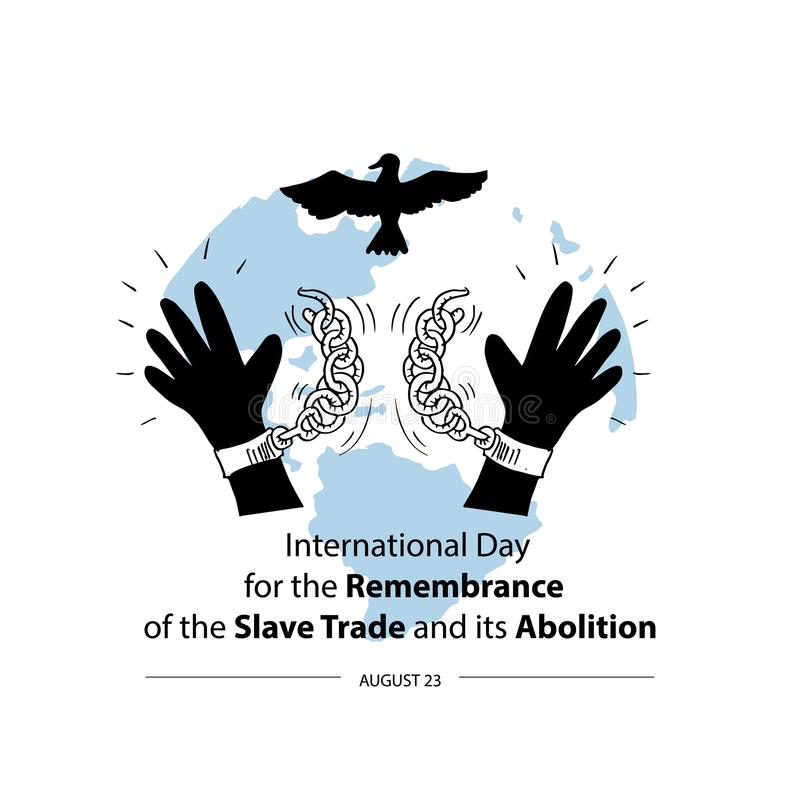
The Permanent Secretary, Federal Ministry of Information and Culture, Dr. Adaora Ifeoma Anyanwutaku has commemorated with men and women, who revolted and paved way for the end of transatlantic slave trade and dehumanization in the world.

Dr. Anyanwutaku who represented the Hon. Minister Federal Ministry of Information and Culture, Alh. Lai Mohammad stated this during her welcome address on Monday August 23rd 2021 while commemorating the International Day for the Remembrance of Slave Trade and It’s Abolition, organized by the Ministry in collaboration with her Parastatals, UNESCO and other Stakeholder, held at the National Press Centre, Radio House, Abuja.

She said that the theme “Modern Day Slavery, A National Question: Protecting the Future Generation” was of particular interest to her as a mother, as it reflects the realities of modern day slavery of children and youths in today’s society, which includes human trafficking, voluntary slavery, child labour, forced marriage, forced labour and irregular migration.

The Permanent Secretary further charged Media Organizations and relevant stakeholders to do more awareness, sensitization and campaign against modern day slavery in order to curb the menace in the country.

Dr. Anyanwutaku appreciated the Planning committee, Agencies, parastatals and stakeholders for organizing the programme and urged students and youths that were present at the event to spread the message they have gotten from the programme in their various, schools, homes and neighborhood.

Speaking at the event, Mr Gabriel Odu, who represented Hon. Abike Dabin-Erewa Director General of Nigerian in Diaspora Commission (NIDCOM), stated that the Commission is working tirelessly in sensitizing and creating more awareness on the dangers of modern day slavery. He appreciated the Ministry for organizing such remarkable programme.
The Resource Person, Mrs Julie Okah-Donli, the former Director General of National Agency for the Prohibition of Trafficking in Persons (NAPTIP), stated that modern day slavery has become a major threat to human, national and international security, hence all hands must be on deck to curb the illicit trade in human beings adding that with sustained awareness creation, seamless prosecution and effective partnership the global crime will be defeated.

Ikhidero Deborah

From Financial Access – to Financial Health

By Sakhile Mabena, CEO, OFIN, a fintech startup specialising in Behavioural Data Analytics, Financial Process Automation, Behaviour-based Financing and SME Behaviour Nudges

There is currently a revolution in the space of financial inclusion, with around 70% of people worldwide now having access to financial services, up from just 50% a decade ago, according to the World Bank. One of the key drivers behind this phenomenon is the huge increase in mobile phone usage among people of all income levels, allowing institutions to deliver services more easily and cost-effectively to the underbanked.

But, does access automatically translate into usage? While it is commonly thought that financial access should lead to financial prosperity, a recent assessment by Boston Consulting Group showed that South Africa, despite being the largest economy in Africa, ranked 149th out of 162 countries in its ability to convert wealth into well-being. Why the disconnect?

To successfully address financial inclusion, it is important to look at the financial behaviours of users. Having a bank account is only helpful if it is used. A recent paper released by research lab Ideas42 revealed that after studying 14 digital financial service providers across South Asia and Africa, the average proportion of accounts with activity was only about 25%. This shows a worrying and unsustainable disparity between innovation and impact.

Research in the fields of behavioural science has revealed numerous behavioural barriers that prevent people from building their financial health. One of the most significant barriers is the so-called intention-action gap. Even though people may have knowledge and awareness, neuroscience has confirmed that these factors, in isolation, are poor indicators of behaviour. So, providing people with the right information, such as ‘saving for your retirement is important’, will not necessarily translate into people behaving accordingly. Sometimes, the gap is due to the tendency of people to focus on the here and now and not the long-term benefits and rewards, favouring immediate gratification.

A second barrier is the complexity and information overload that exists in the financial services sector. Financial products can be overwhelming for those consumers who aren’t financially literate or astute. Research shows that when there are too many options to choose from, people are less likely to choose anything as they become overwhelmed. Having more options requires time and effort to process, leading to inertia, procrastination, or buyer’s remorse.

Analysing these barriers through a behavioural lens reveals opportunities to create

new financial offerings that are better suited to customers’ needs. Interventions using psychological triggers or nudges can be designed to assist people in bridging the gap between intentions and actions. A nudge is effectively an intervention that reframes the way choices are presented so that people are more likely to pick the option that benefits them. Importantly, while nudging may reframe choices, it doesn’t restrict them. It is not as forceful as an incentive or a penalty.

Another behaviour change technique is a commitment device, which helps a user to make a choice in the present that restricts choices in the future to help control impulsive spending. An example is opening a savings account that has hefty fees for early withdrawal or that disallows withdrawals for a pre-specified time.

Using these techniques, the team at OFIN has developed a first-of-its-kind mobile app that endeavours to change financial behaviour, which will ultimately address financial inclusion. It is aimed at South African fleet operators, owner and courier drivers and focuses on three aspects for the driver: to save on expenses, to make the participant lendable and to automate and improve on cutting the costs of expenses such as fuel and tyres.

The app uses an online marketing technique called gamification, which encourages engagement with a product or service. By gamifying financial spend, we hope to encourage usage, assist logistics business to run more profitably, and, more importantly, to uplift and educate drivers to better manage the vehicle. The app connects to the vehicle, empowering the driver to be financially healthy as expenses are monitored and incentives provided for effective cost-control. There are infinite possibilities on what the user can automate. All the user needs to do is choose a trigger, such as ‘after every 100km travelled’, then an action, such as ‘put aside R45’, a function, such as ‘for tyres’, and then the supplier can accept or reject an automation. This automation is repeated until the independent driver has to use funds to pay for tyres.

By better understanding how people process information, make choices, form preferences and act on their choices, the institutions and people working to promote financial inclusion can make progress on closing critical gaps and address not only access but also action.

A silver lining emerged last night over the three weeks old strike by the Nigerian Association of Residents Doctors(NARD) at an all-stakeholder meeting, summoned by the Minister of Labour and Employment, Senator Chris Ngige at the instance of President Muhammadu Buhari.

The meeting which had the most high-powered representation since negotiations with doctors stretched for 11 hours, ending 1 a.m. Saturday, with all the consolidated 12-point demand by NARD, the Medical and Dental Consultants Association of Nigeria (MDCAN) and other affiliates of NMA resolved.

In his opening speech , the Minister of Labour and Employment, Senator Chris Ngige said the President directed him to side step every technicalities and re-commence conciliation, especially in the background of the alternative dispute resolution window, provided by the National Industrial Court, where the matter was referred to under the instrument of article 17 of the Trade Disputes Act.

“The National Industrial Court in its wisdom advised that NARD should keep talking with its employers. So we are tapping into this widow of an alternative dispute resolution to ameliorate this situation that is already bad,” the Minister said.

Ngige commended the President of the Nigeria Medical Association (NMA) Prof. Innocent Ujah for assuming his role as the leader of all doctors in Nigeria, saying all affiliate doctors’ associations are under the NMA. He said, “When you talk to the children and they don’t listen well, you talk to their parents. The standing agreement that every negotiation by affiliate associations must be led by the NMA was not observed in the recent past. I therefore commend Ujah for assuming his role as the father of all doctors. I want you to play this role effectively and efficiently.”

He insisted the present administration has made more investment in the health sector, and for doctors and other health professionals than the previous administrations, and dismissed insinuations that the non-keeping of agreements by the Federal Government was at the root of incessant doctors’ strike.

The Minister of State for Health, Senator Olorunnimbe Mamora in his speech urged the doctors to end their strike in the interest of the nation as government tackles their demands.

However, the President of NMA, Professor Uja said the strike was avoidable and blamed some government functionaries for not playing their roles.

“As doctors, we are trained to prevent disease, cure illnesses and promote health but not trained to go on strike,” and regretted that circumstances force the doctors otherwise.
He thanked Senator Ngige for going the extra miles to ensure that officers across Ministries and agencies who are relevant to tackling the doctors’ demands are put on their toes.

“At the meeting we had on Wednesday, before us, he was calling relevant officers, asking what have you done about this, what have you done about this? He does his own and also chases others around to ensure that progress is made,” Uja said, adding there was no misunderstanding between him and the Minister as falsely reported in a section of the media.

“At close door, the meeting tackled and resolved all the 12 point issues such as payment of House Doctors where Medical and Dental Council of Nigeria tabled evidence to show that 2800 doctors have been paid and efforts ongoing to sort the outstanding 144; the N4.8B Residency Training Fund which the Budget Office assured would be paid in 7days.

“The arrears of the consequential adjustment of the National Minimum Wage which the meeting agreed, cuts across other sectors but that greater focus must be paid to clearing that of April to December 2019 which has no ambiguity. The Ministry of Health also revealed that as of August 3, 2021, a list from 38 hospitals has been forwarded to the Budget office for inclusion in the Service Wide Vote.

“The meeting also tackled the issue of locum doctors/ emergency and migration to IPPIS, the bench fees and the hazard allowance which it agreed should be out of the negotiation table since the stalemate created by the disagreement between the NMA and JOHESU was responsible for the delay, as the Federal Government already mapped out N37.5B for it.

“The decision of the National Council on Establishment, given effect by the Circular from the Office of the Head of Service of the Federation which excised house doctors and NYSC doctors from the scheme of service was also visited. Also deliberated upon was skipping which is a consequential grade alignment as well as non-payment of three months Covid-19 allowance to some doctors in 2020, and migration of MDCAN to CONUAS among others.
“The meeting adjourned to 10 a.m. this morning, Saturday, August 21, 2021 to streamline agreement reached on all issues, draft and sign the Memorandum of Understanding towards ending the three weeks old strike by NARD.

Apart from Senator Ngige and Senator Mamora, others in attendance included the Permanent Secretaries of the Ministry of Labour and Employment , Dr. Peter Tarfa, Health, Mamman Mamuda, Permanent Secretary, Service Welfare, Office of the Head of Service, Ngozi Onwudiwe, Director General of the Budget Office , Ben Akabueze, Chairman of National Salaries, Income and Wages Commission, Ekpo Nta, representative of the Minister of State, Finance , Budget and Planning, representatives of the Office of the Accountant General of the Federation, leaders of the NMA, NARD, MDCAN among others.

As the world keeps evolving, technology continues to improve lives, and simplify business processes. Our personal data is everywhere, and providing information like passwords and account numbers to access online accounts is something many of us do almost every day. Unfortunately, whenever we provide our PII (personal identifiable information), we are taking some level of risk that a criminal could steal and misuse it

Identity theft (also known as identity fraud) refers to crimes in which someone wrongfully uses someone else’s personally identifiable information (in a way that involves fraud or deception, usually for financial gain).

This practice can be achieved through forms of crimes, such as credit card fraud, account acquisition, phishing, hacking, social media fraud, impersonation, and ransomware attacks and tech support fraud.  PII includes information like your date of birth, credit and bank account numbers, passwords, identification numbers, telephone numbers, and biometric data like fingerprints and scans. PII is anything anything that can be used to identify you.

Identity theft is a crime that grows every day, with someone becoming a victim essentially everyday. It’s important to take steps to protect yourself or your business. Otherwise, these criminals can steal sensitive information about you and commit crime.

Reducing the rate of identity theft depends primarily on how cautious you are in guarding your privacy. Here are the top 6 to securing your digital identity.

Learn To Spot Suspicious Mails.

From time to time we all receive questionable emails. Start by examining the sender’s email address to confirm it’s from a legitimate domain name, or by spotting grammatical errors in the body copy.

Although some of these phishing scams are easy to identify. Other phishing attempts in an email, social media sites, or websites can look really legitimate. Avoid clicking any link sent to you. If the email says it’s from your bank and has all the right logos and knows your name, it may be from your bank – or it may not be. Instead of using the link provided, use search engine to visit the site. This way you will know you landed on the legitimate site and not some mocked up fake site.

Be Intentional With Your Login Information

According to the FTC a secure password is unique, complex, and long. Never use the same logins across multiple sites. Avoid using passwords related to your birthday or any related initials. Remember that hackers can test up to 10 billion password combinations in seconds. That’s why two-factor authentication, which requires you to enter your password. Then verify your identity by entering a unique code you receive via text message or email, this is equally important.

Look Out For Hypertext Transfer Protocol Secure  The “S” In “Https” In Any E-Commerce Address.

No matter where you like to shop online, always pay attention to the URL address. The address should include an “s” after “http.” That S character is very important. It stands for “secure”. Any data transmitted is sent through an extra layer of security.

Before you shop from any site, make sure the site is of a repeatable company. Review the site? Do they have a strong rating Do they use a secure, encrypted connection for personal and financial information?

Protect Your Device With Strong Security Software.

Most of the dynamic digital attacks took advantage of vulnerabilities in outdated operating systems. A reliable security software can protect your device.  Also be sure that any operating system updates are installed.

Be Careful With Your Private Information.

Legitimate websites or applications never request for your private data via email or phone (passwords, card details etc.). Hackers are always looking for an opportunity to extract such important information. Requests like that should be recognized with immediate suspicion.

Be careful with your bank statements or credit cards. Anyone can steal your information.

  The Internet is an anonymous space where people can hide their identities and come up with extraordinary names. With the increasing online services, identifying identities digitally is becoming crucial than ever before.  Security has become the topic of utmost interest for all businesses due to the increasing number of recent high-profile data breaches that have affected millions of consumers and organizations. Identifying individuals online is an essential component of KYC and Anti-Money Laundering regulations as well. Organizations can benefit from remaining compliant by having proper identity verification checks in place. It also increases customer confidence in the business that they are taking proper measures to protect their private data.

As identity thieves are becoming more equipped, organizations are arming themselves with technologies to protect themselves against viruses, malware, and other frauds.

As financial frauds are increasing the demand for identity verification technology is also increasing. 50% of stolen identities were reported to be used in various business crimes in recent years.  As many businesses have drowned and faced major losses due to falling in such frauds so having a proper ID check is a must-have. The digitizing of the world has bought so many scams to light and urged businesses to take rigorous measures for cybersecurity. Digital communications are preferred as no one has time for face-to-face interactions so is the case with identity checks. Manual identity verification requires a lot of time and is now a thing of the past.

The presence of users on the internet has significantly raised the number of digital frauds, causing millions of losses for individuals and businesses every year. Regulatory authorities have made it mandatory for every business to have sound identity authentication checks integrated into their system to put a halt to money laundering, identity theft, financing of terrorists, etc. KYC (know your customer) regulations are there to know who exactly you are dealing with, by verifying their original documents, address, and biometrics.  AML (anti-money laundering) regulations around the world have placed stringent compliance regulations on the investment companies as well as other financial institutions.

Some of the latest trends in this technology are taking it to new levels. Here are the top trends in this technology that are changing the ID verification sphere:

  • Biometric Technology

Biometric verification is not just a buzzword in identity verification but this technology is a milestone achieved in mitigating risks of forgery and scams. By identifying a person through his/her unique facial features or fingerprints, fraudsters can be authenticated before giving access to the system. It is becoming increasingly powerful with every new iteration. Biometric technology depending on applications, allows a user to authenticate himself using geolocation, fingerprints, iris scan, face recognition, and other biometrics that are unique to a person.

This technology is becoming more prevalent. Face verification technology provides seamless authentication just like taking a ‘selfie’. No contact or additional hardware is required in this. That is why it is being widely adopted. This technology is probed and became mainstream in identity verification solutions to ensure greater accuracy without using additional technology.

  • Two Factor Authentication

Securing your systems with passwords only is known for years but we know these can be cracked easily in this digitized world. It is even difficult to memorize and change passwords frequently. It has become a fantasy that only strong passwords can now protect us, as hackers regularly breaking into the systems and releasing passwords. As our accounts are interconnected by Emails, it becomes easy for hackers to crack the password of one and gain access to all. So the solution for it is two-factor authentication, which lets a user know when someone is trying to gain access to any of their accounts. Like Gmail account is asking you every time you are signing in from different browsers if it was you. The basic idea is just a secure second option that authenticates without making it inconvenient for the user. It’s easy adding your mobile number and add a secret code sent to you every time you are logging in. It is instant and adds an extra layer of security making it difficult for scammers to get access.

  • Automation 

Identity verification solutions perform the process in real-time without using any effort. Adding automation to the procedure enhances user experience as now they will not have to wait for days just to get verified. It becomes frustrating for clients at times and ultimately they end up leaving the platform. It is also beneficial for businesses as it saves their time and labor resulting in lower costs.

  • Consumer Concern Drives For Change

Identity theft, credit card frauds, account takeover, and many other scams are the biggest concerns of businesses such as banks as well as consumers falling victim to it. According to FICO, ID theft costs businesses around 16.8 billion dollars each year, so it is the top concern of financial institutes as well. More effective identity verification solutions are being used to meet the security-conscious market demands against fraudsters. If the security threats are on the rise, new advancements in ID verification technologies are on the heels. These trends will equate to a more secure online sphere, which will result in benefits for both businesses and consumers.

Learn more about Identity Verification, learn more with Verified.africa.

The Board of the Nigerian Communications Commission (NCC) has paid an official condolence visit to the family of Ahmed Joda, former Board Chairman of the Commission, in his country home in Yola, Adamawa State. Alh. Ahmed Joda passed on Friday, August 13, 2021, at the age of 91.

The delegation, which was led by the Chairman of NCC Board, Prof. Adeolu Akande included the Executive Vice Chairman (EVC) of the Commission Prof. Umar Garba Danbatta, the Executive Commissioner, Technical Services, Engr. Ubale Maska, and Executive Commissioner, Stakeholder Management, Barrister Adeleke Adewolu. Also on the visit were other Board Commissioners, including Mr. Clement Baiye, Chief Uche Onwude, Alhaji Abdulazeez Salman and Alhaji Aliyu Abubakar as well as senior Management staff of the Commission.

The NCC delegation was received by family members of the late Chairman led by his eldest son, Alhaji Ali Joda at the deceased’s Yola town in the Yola South Local Government Area of the state.

Speaking during the visit, Akande, who presented a condolence letter from the Hon. Minister of Communications and Digital Economy, Dr. Isa Ali Ibrahim Pantami to the family, paid glowing tribute to the late Joda, and eulogized him for leaving indelible footprints on the sands of the nation’s telecommunications industry.

He said the telecom industry and by extension the entire economy have benefited immensely from the solid foundation laid by the Joda-led NCC Board from 2001 to 2010, during which the sector recorded landmark achievements in terms of the Global System for Mobile Communications (GSM), which revolutionized the telecommunications landscape in Nigeria.

Amplifying the voice of Akande, during the Commiseration visit, Danbatta described Joda “as an exceptional individual”, adding that the remarkable role played by Joda had helped in transforming the NCC from what it was back in 2000 to what it is currently.

According to Danbatta, the NCC is known across the African continent and beyond as a foremost and world-class regulatory agency. He said the sterling status achieved by NCC was due to the commitment, hard work, diligence and exceptional leadership demonstrated by Joda when he held sway as NCC Board Chairman for 10 years.

“No amount of praise and tribute will be adequate to capture the immeasurable contributions of Baba Joda to the telecommunications industry in Nigeria in general, and to the Nigerian Communications Commission in particular. Baba Joda is leaving behind a robust legacy that will live after him, as he is today credited with the GSM revolution in Nigeria”, Danbatta said.

“Arising from Baba Joda’s exceptional vision and robust leadership, the NCC recorded landmark achievements such as the construction of NCC’s Head Office in Maitama, Abuja; the NCC’s Communications & Digital Economy Complex (CDEC), Mbora, Abuja, as well as the establishment of Digital Bridge Institute (DBI), among others. These are some of the remarkable achievements recorded during his time as the Chairman of the Board”, he said.


In an emotion-laden voice, Prof, Danbatta noted that Baba Joda was a father to him, describing his death as a great personal loss. He recalled how, recently, from his sick bed, Baba Joda painstakingly wrote the foreword to his (Danbatta’s) Compendium of Speeches entitled “Catalysing Nigeria’s Socio-Economic Transformation through Broadband Infrastructure”, due to be launched soon.

Danbatta, led the delegation in prayers for the repose of the soul of the deceased.

The Executive Vice-Chairman and Chief Executive Officer of the Nigerian Communications Commission (NCC), Prof. Umar Garba Danbatta, has identified major benefits in promoting digital literacy in the country.

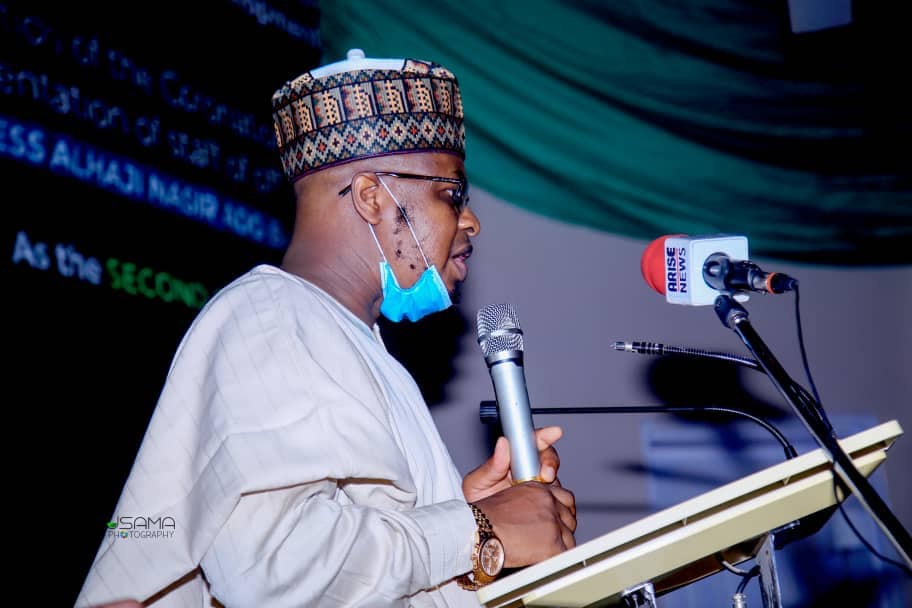
Delivering the first Annual Lecture of the Bichi Emirate titled, “Digital Literacy as a Veritable Tool for Social and Economic Transformation” in Bichi, Kano State, over the weekend, Danbatta challenged actors in both public and private sectors to key into the programme.

He noted that digital literacy provides the confidence required by individual citizens to utilise digital contents and tools, adding that it also helps citizens to effectively collaborate in creating digital content and becoming innovative problem-solvers within their socio-economic ecosystem.

The EVC pointed out that technological changes have now assumed an unprecedented dimension in pace, scope and depth of impact, emphasizing that harnessing the progress is the surest path for Nigeria in her quest for economic diversification, especially the elevation of 100 million Nigerians out of poverty.

“The policy thrust of President Muhammadu Buhari’s administration in this direction is encapsulated in three key policy documents, namely: Nigeria National Broadband Plan (NNBP) 2020-2025; the National Digital Economy Policy and Strategy (NDEPS) 2010-2030; and, the National Policy on Promotion of Indigenous Content in the Nigerian telecommunications sector, ” Danbatta pointed out.

He said one of the underlying goals of the three policies was the development of the Nigerian economy through digital technology enhancement and increased contribution of the telecom sector to the nation’s Gross Domestic Product (GDP).

In demonstration of its recognition of the importance of digital literacy, Danbatta said that the NCC has, over the years, implemented various programmes to support adoption and application of digital skills in Nigeria.

The programmes, according to him, not only provide the necessary digital tools but also support the provision of digital infrastructure, training, connectivity and other incentives to facilitate the development of digital literacy skills.

Through its Projects Department and the Universal Services Provision Fund (USPF), Danbatta observed that the NCC has been providing interventions such as the School Knowledge Centres (SKC), Wireless Cloud and Base Transceiver Stations (BTS), among others, across the six geo-political zones of the country.

Speaking specifically on NCC’s interventions in Bichi Emirate, Danbatta said that, of the eight local government areas that constitute the Emirate, the Commission has, through the USPF, identified about 1,900 square kilometers of land, populated by 462,222 individuals as unserved.

May be an image of one or more people, people standing and indoor

“In order to cover that gap, the Mobile Network Operators (MNOs) have installed 212 BTS of which 112 are Second Generation (2G)-compliant, 73 are Third Generation (3G) networks and 27 are Fourth Generation/Long Term Evolution (4G/LTE) technology, with all providing broadband connectivity which is the bedrock of digital literacy.

“The USPF has also provided interventions to secondary schools, tertiary institutions and hospitals in the emirate via its SKC, Tertiary Institutions Knowledge Centre as well as E-health initiatives; a total of seven of such projects have, so far, been executed since 2015 on my assumption as the EVC,” he explained.

Speaking further the NCC boss also harped on the Commission’s seven interventions under the Advanced Digital Awareness Programme among others, stressing that all the interventions are in line with NCC’s equitable distribution of projects across all geo-political zones in the country.

In recognition of the need to continue to foster the rapid development and growth of the Nigerian telecommunications marketplace and digital economy, the Commission established the Digital Bridge Institute (DBI) in May 2004.

He noted, however, that since its creation, the Institute has grown to have six campuses, one in each geo-political zone.

These campuses, which are in Abuja, Kano, Lagos, Asaba and Yola have some of the best training facilities and faculties in the country and have provided various training to individuals and corporate organisations, thereby making the Institute an invaluable institution to digital literacy in Nigeria.

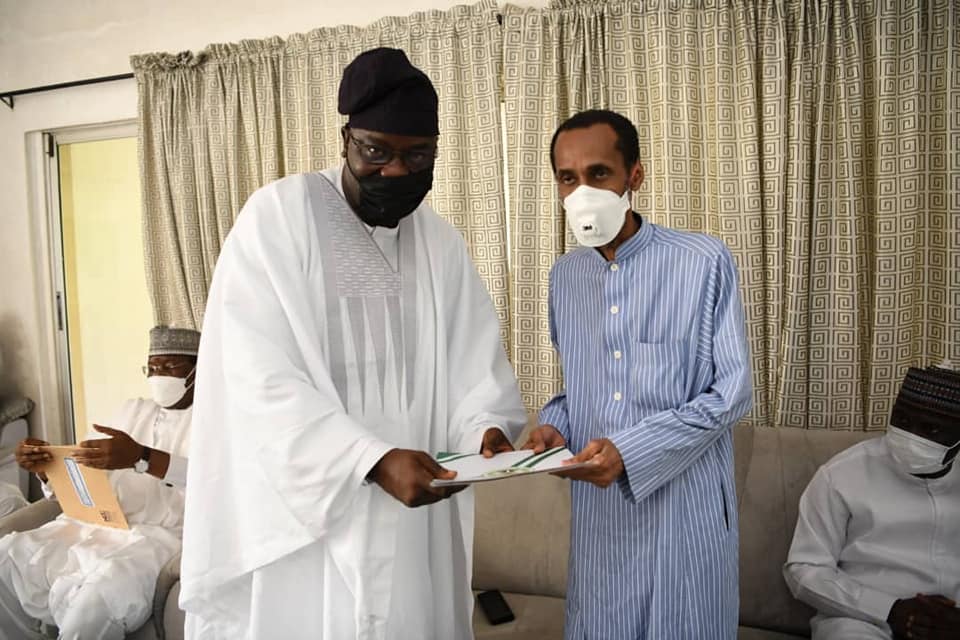
Prof. Adeolu Akande, Chairman, Board of Commissioners, Nigerian Communications Commission (NCC) and Prof. Umar Garba Danbatta, the Executive Vice Chairman/CEO, NCC alongside other Board members and Management staff of the Commission, paid a condolence visit to the family of late Alhj. Ahmed Joda, a former Chairman of NCC Board today, 17th August, 2021 in Yola, Adamawa State.

May be an image of 3 people, people standing and indoor
May be an image of 2 people and people sitting
May be an image of 8 people and people standing
May be an image of 9 people