•Governor: ‘I’ll Reciprocate the Honour with More Impacts’

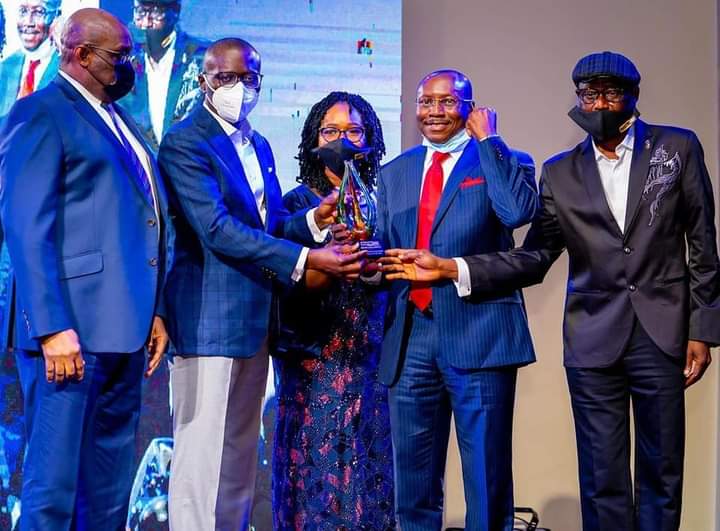
It’s another harvest of honours for the Lagos State helmsman – Mr. Babajide Sanwo-Olu. Veterans in the Brands and Advertising industry named the Governor as Outstanding Political Brand Icon of the Year in recognition of his exceptional leadership ability and managerial excellence he usually brings to bear in turning around challenging crisis to opportunities. It is also in recognition of his administration’s efforts to always have emotional connection with the electorates who, from the brand and marketing perspective are the target audience.

Sanwo-Olu received the prestigious prize at the 8th Marketing Stakeholders’ Summit held at the weekend at D’Podium International Event Centre in Ikeja, where industry practitioners across the country gathered to celebrate the Governor.

The event, with the theme: “Rethinking the Blue Ocean Strategy in Uncertain Times”, was organised by Marketing EDGE, a brand-focused magazine.

Members of the State’s Executive Council and those of All Progressives Congress (APC) led by the party’s chairman in Lagos, Hon. Tunde Balogun, joined the Governor to receive the award.

Sanwo-Olu, who is also named Marketing Ambassador, pledged his commitment to the growth of the profession by sustaining the State’s investment in requisite infrastructure that would create a resilient economy and city in which the Brand and Advertising industry would thrive.

The Governor acknowledged the transformation recorded in the industry, which, he said, has been occasioned by injection of funds into the creative sector to support the growth of local advertisers. The outcome, he noted, has ended the period when practitioners needed to fly to Cape Town, Durban and Johannesburg in South Africa before shooting good television commercials for their clients.

He said: “Today is for celebrating ourselves, our craft and achievements as marketing communications professionals. Over the last five decades, the marketing communications profession has evolved remarkably to become a window for the world to see the creativity that resides within us.

“The story has continued to change with improvement and global visibility. Let me assure you, it can only get better from here. The infrastructure we are creating are gradually giving you the scenic settings you require for great Television Commercials that can earn more prestigious laurels from across the world.”

Sanwo-Olu told the gathering that his administration was not unaware of the greater impact which a flourishing creative sector and advanced technology would have on the growth of brands, stressing that his Government was currently supporting thousands of youths in the creative sector in order to boost capacity and knowledge.

He added that 3,000 metro fibre optics being rolled out across the State would also boost quality of the output in the Brand and Marketing industry when the fast Internet infrastructure is launched.

“All of these are to let you know that my administration is a part of the marketing and marketing communications family. I know the importance of the industry and I am committed to its continued growth. That is the reason we are building a resilient and livable city that you and your clients will someday be proud of,” Sanwo-Olu said.

The Governor said Lagos had benefited immensely from the ingenuity and knowledge of brand and advertising practitioners, recalling some of the strategic counsel he received from industry professionals during the trying days of his administration.

Sanwo-Olu expressed his gratitude to the industry practitioners for founding him worthy of the honour and promised he would always rely on the expertise in the industry to achieve his goals as the Chief Marketing Officer of Lagos State.

Earlier, the publisher of Marketing EDGE, Mr. John Ajayi, said the summit had evolved over the years to become a brand on its own. Those honoured at the event, he said, were assessed and confirmed to be change agents promoting future-fit businesses in the age of new normal.

CAPTIONS:

PIX 1 L-R: CEO, Insight Communication Limited, Mr. Jimi Awosika; Lagos State Governor, Mr. Babajide Sanwo-Olu receiving the Marketing Egde Outstanding Political Brand Icon of the Year award, wife of the Publisher, Marketing Edge, Mrs. Modupe Ajayi; Founder & Group CEO, First Primus, Otunba Seni Adetu and Marketing Edge Publisher/CEO, Mr. John Ajayi during the 8th Marketing Edge Summit and Awards, at D’Podium International Event Centre, Aromire Avenue, Ikeja, Lagos, on Friday, August 27, 2021.
PIX 2 L-R: CEO, Insight Communication Limited, Mr. Jimi Awosika; Lagos State Governor, Mr. Babajide Sanwo-Olu with his award of Outstanding Political Brand Icon of the Year, wife of the Publisher, Marketing Edge Magazine, Mrs. Modupe Ajayi and her husband, Mr. John Ajayi, during the 8th Marketing Edge Summit and Awards, at D’Podium International Event Centre, Aromire Avenue, Ikeja, Lagos, on Friday, August 27, 2021.
PIX 3 L-R: Lagos State Governor, Mr. Babajide Sanwo-Olu presenting a State plaque to the Publisher, Marketing Edge, Mr. John Ajayi while his wife, Modupe and the Founder & Group CEO of First Primus, Otunba Seni Adetu, watch in admiration, during the 8th Marketing Edge Summit and Awards, at D’Podium International Event Centre, Aromire Avenue, Ikeja, Lagos, on Friday, August 27, 2021.

PIX 4: Lagos State Governor, Mr. Babajide Sanwo-Olu with his award of Outstanding Political Brand Icon of the Year flanked by Chairman of the All Progressives Congress (APC), Lagos State Chapter, Alhaji Tunde Balogun (left) and Special Adviser to the Governor on Works & Infrastructure, Mrs. Aramide Adeyoye (right) and some members of the Lagos State EXCO, during the 8th Marketing Edge Summit and Awards, at D’Podium International Event Centre, Aromire Avenue, Ikeja, Lagos, on Friday, August 27, 2021.
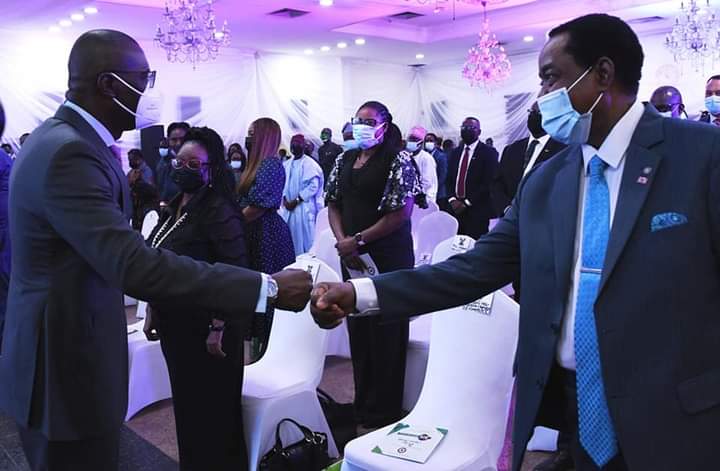
PIX 5 L-R: Lagos State Governor, Mr. Babajide Sanwo-Olu exchanging greetings with CEO, Insight Communication Limited, Mr. Jimi Awosika while the Publisher/CEO, Marketing Edge Magazine, Mr. John Ajayi and his wife, Modupe, watch during the 8th Marketing Edge Summit and Awards, at D’Podium International Event Centre, Aromire Avenue, Ikeja, Lagos, on Friday, August 27, 2021.
PIX 6 L-R: Lagos State Governor, Mr. Babajide Sanwo-Olu, being shown ‘the Best Traffic Radio of the Year award’ won by Lagos Traffic Radio by its General Manager, Mr. Tayo Akanle and Chief Press Secretary to the Governor, Mr. Gboyega Akosile, during the 8th Marketing Edge Summit and Awards, at D’Podium International Event Centre, Aromire Avenue, Ikeja, Lagos, on Friday, August 27, 2021.
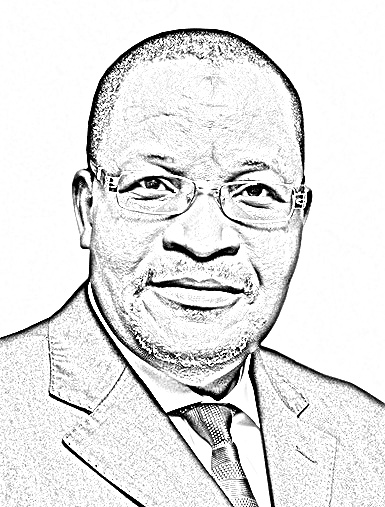
PIX 7 L-R: Chairman, All Progressives Congress (APC), Lagos State Chapter, Alhaji Tunde Balogun; Founder & Group CEO of First Primus, Otunba Seni Adetu; Governor Babajide Sanwo-Olu and Publisher/CEO, Marketing Edge Magazine, Mr. John Ajayi, during the 8th Marketing Edge Summit and Awards, at D’Podium International Event Centre, Aromire Avenue, Ikeja, Lagos, on Friday, August 27, 2021.
Ondo State Governor, Arakunrin Oluwarotimi Akeredolu, SAN, has been commended for his doggedness in the creation of the State Security Network codenamed ‘Amotekun’.

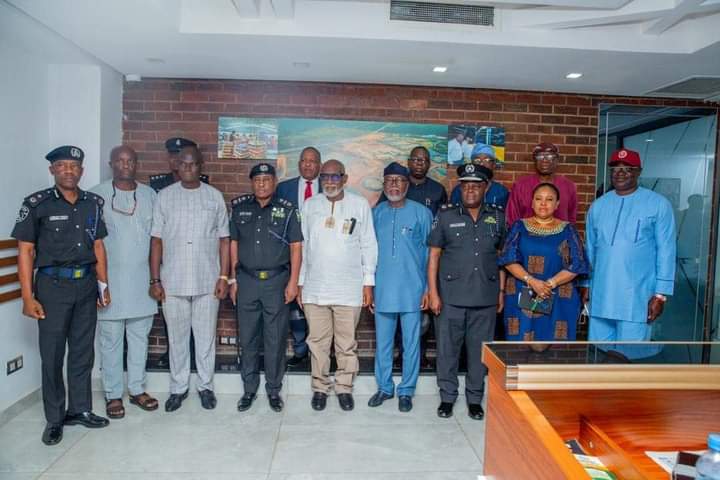
The newly posted Assistant Inspector General of Police (AIG), Ene Okon, gave the commendation during a courtesy visit to the Governor in his office, Alagbaka, Akure.

Okon said Governor Akeredolu has laid a solid foundation for community policing with the creation of Amotekun and the dogged role he played.

The Police Boss appreciated the Governor for the relative peace in the Sunshine state, adding that it is no mean feat to maintain peace and order.

“I know Ondo was one of the endangered states in term of farmers/herders clashes. But the story has changed. Ondo is now one of the most peaceful states in Nigeria. You have made the job of the police and other security agencies simple. I know I am coming here to rest because you have done most of the job

“I have been reading and hearing your doggedness on the creation and operation of Amotekun. Some people may have a different perception about Amotekun but you have enhanced Community Policing through Amotekun. Amotekun is one of the veritable organs for community policing. It is a great bridge between the police and the Community.

“You have created a very good atmosphere for me to work here because you have done your job as a Chief Security Officer. I am to work with you in conjunction with the Commissioner of Police. I assure you, with the commissioner of Police, we are going to move Ondo to the next level security wise,” he said.

AIG Okon also appreciated Governor Akeredolu’s effort on the creation of the Zone 17 and thanked him for the numerous works done in the zonal headquarters.

Responding, Governor Akeredolu, who thanked the Police boss, explained that Amotekun is not established to compete but to work and complement the existing security agencies.

“Amotekun is established by Law. Let us all work together. It is clear that the essence of creation of Amotekun is community policing.

“And since the number of police is being depleted daily and the level of crime is increasing, it will be difficult to spread out with your limited number. Since Police can not be everywhere, Amotekun is here for collaboration.” the Governor said.

Speaking on farmers/Herders clashes, Governor Akeredolu reiterated the ban on open grazing, saying the law will be enforced when finally put in place.

•As Governor Meets Business Leaders at 7th Corporate Assembly

• ‘We’ve Fulfilled All Suggestions on Regulatory Interventions’

Lagos State Government will be delivering a new hub of commerce at Cappa in Oshodi area to provide subsidised workspaces for Micro, Small and Medium Enterprises (MSMEs) operating in the State.

Governor Babajide Sanwo-Olu, on Thursday, disclosed that the construction of the Cappa hub would be completed in the first quarter of next year and will accommodate thousands of MSMEs operating without workstations. The intervention, the Governor said, becomes necessary to strengthen thriving small-scale businesses and draw down their expenses.

Sanwo-Olu announced the development at the 7th Lagos Corporate Assembly held at the State House in Alausa where the Governor met with members of the Organised Private Sector to chart a new course for the growth of the State’s economy.

Their conversation was centred around reviewing the impact of Coronavirus (COVID-19) pandemic on businesses and resolutions implemented to further improve Ease of Doing Business, thereby making the State’s economy resilient.

The yearly event is a platform on which the State Government and members of the private sector jointly address regulatory issues hampering smooth running of business activities in Lagos.

Sanwo-Olu, who described MSMEs as “the engine room” of growth, said the State’s economy had continued to climb up because of the resilience of small and medium businesses. The Governor said it was time the Government leveraged the growth opportunities offered by the MSMEs to generate more jobs and revenue by expanding the workspace for operators to co-create and sustain their investments.

He said: “The disruption occasioned by COVID-19 pandemic has further exposed the need to build a more stable and resilient economy through the implementation of sustainable economic policies and proactive initiatives that guarantee a safe business environment. Small and medium enterprises have played significant roles in our economic growth and we will continue to give them the necessary support so that they can thrive and contribute their quota to the development of Lagos.

“We acknowledge that the MSME hub we have in Ikeja has been working fine; but it is oversubscribed and we are looking beyond that. We are currently building another hub in Cappa around Oshodi and I assure all micro, small and medium business operators that the new hub will be commissioned in the first quarter of next year. We are also looking for space in Somolu, Yaba and Obalende where we will replicate the kind of hub we have in Ikeja.”

Aside expanding the workstation for micro, small and medium-sized businesses, the Governor said there would be intervention in the areas of off-grid power, business mentoring, FinTech assistance and fast Internet connectivity. The intervention, he said, will stimulate more growth and generate young employment for the youth.

Sanwo-Olu told members of the business community that his administration had resolved all issues raised during last year’s edition, sharing some of the progress with the investors.

He said the State Government had implemented the Harmonised Inspection Workplaces Policy suggested at the Assembly last year, which grouped together the complementary regulatory activities of Ministries, Agencies and Departments (MDAs) at business premises.

He said: “You raised the issue of incentives and palliatives to cushion the effects of the COVID-19 Pandemic on your businesses. We responded by granting businesses a 25 per cent discount on early payment of Land Use Charge, and offered waiver on three-year penalty covering Years 2017, 2018 and 2019 on Land Use Charge default.

“We have also addressed your concerns about the activities of the Vehicle Inspection Service (VIS) officers and their approach to traffic law enforcement by adopting Automatic Number Plate Recognition Cameras while we have stepped up our enlightenment campaigns on road safety and traffic laws.

“One of our most significant achievements of the sixth edition of the Lagos Corporate Assembly is our investment of N1bn seed money in the tourism sector to mitigate the impact of the pandemic on the tourism and hospitality businesses.”

The Governor pledged to address new resolutions raised by members of the organised private sector and promised that there would be improvement before their next meeting.

Commissioner for Commerce, Industry and Cooperatives, Dr. Lola Akande, said the Sanwo-Olu administration, since inception, had sustained investment in the provision of infrastructure across major sectors identified in the T.H.E.M.E.S agenda, with potential to grow the annual Gross Domestic Product (GDP) of the State.

Akande said Sanwo-Olu introduced various stimulus packages and incentives to further enhance economic growth, including the repeal of the 2018 Law on Land Use Charge which granted concessions and incentives on applicable charges, and the refund of the five per cent initial loan deposit by MSMEs to all customers who completed their loan repayment with Lagos State Employment Trust Fund (LSETF).

She noted that the ongoing installation of 6,000 kilometres fibre optic cables across the State would assist businesses whose operations are dependent on efficient Internet services, adding that the request of waivers by the private sector on water abstraction charges had cut the cost of permits by 75 per cent and granted five-year arrears waiver.

“At a time when the pandemic is ravaging the world, discussions on the establishment of a new type of strategic partnership, more dialogue and exchanges between Government and the Organized Private Sector (OPS) will revitalise businesses in the state,” Akande said.

Special Adviser to the Governor on Sustainable Development Goals and Investment (SDG&I), Mrs. Solape Hammond, said all growth predictions about Lagos were becoming the reality daily, which, she said, explained the reason the Sanwo-Olu administration had sustained investment in infrastructure in specific areas.

She said the State Government had implemented 91 per cent of the 109 resolutions passed at the Lagos Economic Summit (Ehingbeti), an indication the State remained on the right track to address its challenges.

President of Lagos Chamber of Commerce and Industry (LCCI), Mrs. Toki Mabogunje, praised the Governor for accelerating the implementation of previous resolutions, stressing that the forum recognised the role being played by the private sector in the development of Lagos.

She urged the State Government to continue to promote policies that would support job creation in specific growth areas.

Vice President of Manufacturers’ Association of Nigeria (MAN), Chief John Aluya, pointed out that 2020 ended with a downturn of capacity utilisation across industrial zones of the State due to COVID-19. He, however, praised Sanwo-Olu for the effort to reduce the effects of the pandemic on businesses and workers in the manufacturing sector.

CAPTION:

PIX 1: Lagos State Governor, Mr. Babajide Sanwo-Olu (left), exchanging greeting with Patron, Nigerian-British Chamber of Commerce, NBCC, Dr. Michael Olawale-Cole (right) while President of the Lagos Chamber of Commerce, LCCI, Mrs. Toki Mabogunje (second left), watches during the 7th Lagos Corporate Assembly ‘BOS Meets Business’, at the Lagos House, Alausa, Ikeja, on Thursday, August 26, 2021.

PIX 2-3 L-R: Managing Director, Goodware Stitches Limited, Mrs. Matilda Taiwo; Lagos Deputy Governor, Dr. Obafemi Hamzat; Governor Babajide Sanwo-Olu and CEO, Musbolat Fashion, Mrs. Taiwo Folusho during the 7th Lagos Corporate Assembly ‘BOS Meets Business’, at the Lagos House, Alausa, Ikeja, on Thursday, August 26, 2021.

PIX 4: Lagos State Governor, Mr. Babajide Sanwo-Olu (right), Commissioner for Commerce, Industry & Cooperatives, Dr. Lola Akande (middle) and the Attorney General/Commissioner for Justice, Mr. Moyosore Onigbanjo, SAN, during the 7th Lagos Corporate Assembly ‘BOS Meets Business’, at the Lagos House, Alausa, Ikeja, on Thursday, August 26, 2021.

PIX 5: Lagos State Governor, Mr. Babajide Sanwo-Olu (middle), Commissioner for Commerce, Industry & Cooperatives, Dr. Lola Akande (left) and representative of the Speaker, the State House of Assembly, Hon. Bisi Yusuf during the 7th Lagos Corporate Assembly ‘BOS Meets Business’, at the Lagos House, Alausa, Ikeja, on Thursday, August 26, 2021.

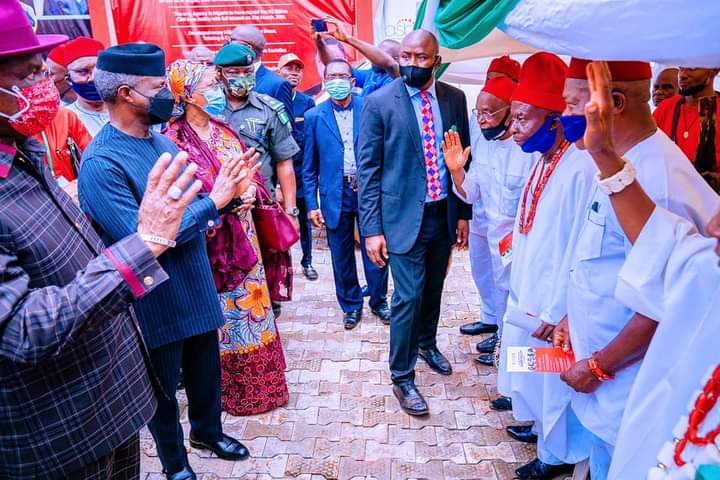
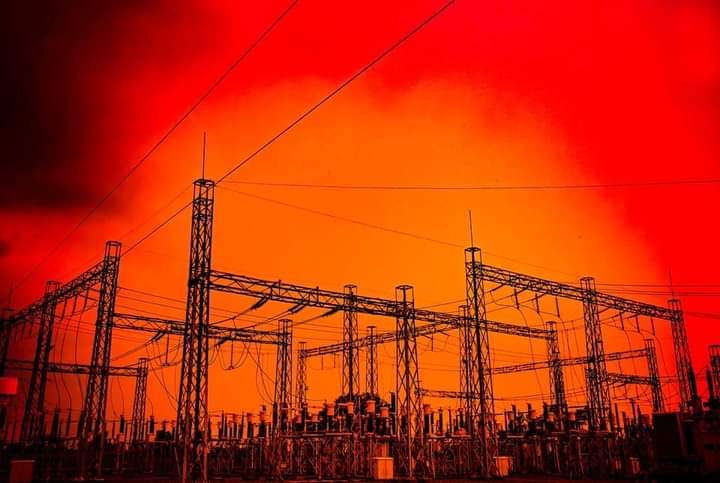
The importance of electricity can’t be underestimated in the development of an economy. Anambra State which is tge most critical state in South Eastern Nigeria will be witnessing an improved electricity supply. This was announced recently when the vice President of the country, Yemi Osibanjo came visiting.

Osibanjo said, ” In recognition of the deficit in wheeling capacity in the state, the Niger Delta Power Holding Company (NDPHC) through the National Integrated Power Project (NIPP) committed to undertake an upgrade of the transmission infrastructure in Awka by constructing a new 132/33kV Substation, equipped with two 60MVA transformers.”

“This project was energized and achieved technical commissioning for service at 4.30pm on Thursday 26th November 2020. Since then, this new substation has been in service providing 33kV evacuation capacity for at least 100MW, through its two units of 60MVA (total 120MVA) 132/33kV Transformers, into the Awka and environs of the EEDC distribution network.”

He concluded , “The commitment of the administration to ensuring the completion of this Awka NIPP 132kV Grid Substation, now provides a hitherto unavailable 70MW additional power capacity for driving industrial growth and boosting the economy of the state, with positive knock-on effects on employment and socio-economic upliftment for residents of the state.”

This is the efforts of Buhari’s administration in ensuring that there is a fast development in all areas of the nation.

Anthony Emeka Nwosu

From Financial Access – to Financial Health

There is currently a revolution in the space of financial inclusion, with around 70% of people worldwide now having access to financial services, up from just 50% a decade ago, according to the World Bank. One of the key drivers behind this phenomenon is the huge increase in mobile phone usage among people of all income levels, allowing institutions to deliver services more easily and cost-effectively to the underbanked.

But, does access automatically translate into usage? While it is commonly thought that financial access should lead to financial prosperity, a recent assessment by Boston Consulting Group showed that South Africa, despite being the largest economy in Africa, ranked 149th out of 162 countries in its ability to convert wealth into well-being. Why the disconnect?

To successfully address financial inclusion, it is important to look at the financial behaviours of users. Having a bank account is only helpful if it is used. A recent paper released by research lab Ideas42 revealed that after studying 14 digital financial service providers across South Asia and Africa, the average proportion of accounts with activity was only about 25%. This shows a worrying and unsustainable disparity between innovation and impact.

Research in the fields of behavioural science has revealed numerous behavioural barriers that prevent people from building their financial health. One of the most significant barriers is the so-called intention-action gap. Even though people may have knowledge and awareness, neuroscience has confirmed that these factors, in isolation, are poor indicators of behaviour. So, providing people with the right information, such as ‘saving for your retirement is important’, will not necessarily translate into people behaving accordingly. Sometimes, the gap is due to the tendency of people to focus on the here and now and not the long-term benefits and rewards, favouring immediate gratification.

A second barrier is the complexity and information overload that exists in the financial services sector. Financial products can be overwhelming for those consumers who aren’t financially literate or astute. Research shows that when there are too many options to choose from, people are less likely to choose anything as they become overwhelmed. Having more options requires time and effort to process, leading to inertia, procrastination, or buyer’s remorse.

Analysing these barriers through a behavioural lens reveals opportunities to create

new financial offerings that are better suited to customers’ needs. Interventions using psychological triggers or nudges can be designed to assist people in bridging the gap between intentions and actions. A nudge is effectively an intervention that reframes the way choices are presented so that people are more likely to pick the option that benefits them. Importantly, while nudging may reframe choices, it doesn’t restrict them. It is not as forceful as an incentive or a penalty.

Another behaviour change technique is a commitment device, which helps a user to make a choice in the present that restricts choices in the future to help control impulsive spending. An example is opening a savings account that has hefty fees for early withdrawal or that disallows withdrawals for a pre-specified time.

Using these techniques, the team at OFIN has developed a first-of-its-kind mobile app that endeavours to change financial behaviour, which will ultimately address financial inclusion. It is aimed at South African fleet operators, owner and courier drivers and focuses on three aspects for the driver: to save on expenses, to make the participant lendable and to automate and improve on cutting the costs of expenses such as fuel and tyres.

The app uses an online marketing technique called gamification, which encourages engagement with a product or service. By gamifying financial spend, we hope to encourage usage, assist logistics business to run more profitably, and, more importantly, to uplift and educate drivers to better manage the vehicle. The app connects to the vehicle, empowering the driver to be financially healthy as expenses are monitored and incentives provided for effective cost-control. There are infinite possibilities on what the user can automate. All the user needs to do is choose a trigger, such as ‘after every 100km travelled’, then an action, such as ‘put aside R45’, a function, such as ‘for tyres’, and then the supplier can accept or reject an automation. This automation is repeated until the independent driver has to use funds to pay for tyres.

By better understanding how people process information, make choices, form preferences and act on their choices, the institutions and people working to promote financial inclusion can make progress on closing critical gaps and address not only access but also action.

By Sakhile Mabena, CEO, OFIN, a fintech startup specialising in Behavioural Data Analytics, Financial Process Automation, Behaviour-based Financing and SME Behaviour Nudges

The Covid-19 pandemic has been the catalyst for momentous change throughout the IT landscape, and for Disaster Recovery (DR) in particular, as the global pandemic made widespread disruption and uncertainty a clear and present reality.

“The onset of Covid-19 was one kind of disaster as companies had to quickly invoke business continuity and disaster recovery plans to cope with employees being denied access to their offices. It has put into sharp focus many enterprises’ lack of DR plans and accelerated the penetration of Disaster Recovery as a Service (DRaaS) in the market,” says Andrew Cruise, managing director at Routed, a vendor neutral cloud infrastructure provider.

According to Cruise, having coherent DR plans in place are a non-negotiable, especially given the wide-ranging threats today’s businesses face on an ongoing basis. He says that while there are a number of obvious disasters that CIOs should be planning for, there are some no less high profile disasters that don’t receive adequate attention until it’s too late. “Ransomware is of course one of the most common and insidious disasters that can occur, but another which receives very little press, mostly due to embarrassment, is internal sabotage, closely followed by employee error. These are much more common than fire, theft and flood, and all require a slightly different approach to ensure a resolution.

Cruise highlights four key factors to keep in mind while planning for effective recovery from disasters:

Disaster Recovery (DR) plans are the technical part of Business Continuity (BC) panning and should never sit in isolation. The objective of DR plans is to satisfy Business Continuity objectives, which are typically deployed to maintain some level of business function in the face of an unexpected destructive event. The scope of a DR plan usually covers IT only. This would cover the accessibility of a recovery environment at a minimum, including the recovery and useability of data and applications, and the network’s access to said data.

Test your Disaster Recovery plans. If your Disaster Recovery doesn’t work, it’s like paying for insurance and then not getting a pay-out when you claim. Disaster Recovery is not trivial to implement, but it should be easy enough to test, and your provider should have this built into their solution both technically and commercially. No one wants to fix the roof while it is raining, or change a tyre at 100km/h and businesses cannot afford to address serious technical problems in the face of a major disaster. Testing Disaster Recovery plans shows up performance and capacity issues and allows organisations to plan accordingly, which may include switching providers.

Find the right skills. Anyone who is part of a Disaster Recovery team should be well organised, and calm in the face of pressure. Clearly, technical skills to operate, manage, and test the environment are also required. Enterprises need to ensure they have access to these skills from their provider.

Consider the costs. Although cloud-based disaster recovery solutions are designed for the enterprise, it is available, in scale, and therefore within the reach of smaller businesses too. Disaster Recovery should not be more than 20-30 percent of an organisation’s IT production budget. Keep in mind that it is not necessary to invest in capital, by purchasing the target hardware and software. Businesses can buy disaster recovery as a service, and rent what is needed, based on usage.

…Lauds industry’s healthy competition.

Shortly after the Minister of Communications and Digital Economy, Dr. Isa Ali Ibrahim Pantami revealed the Federal Government’s position on the deployment of 5G networks in Nigeria, the Executive Vice Chairman of the Nigerian Communications Commission (NCC), Prof. Umar Garba Danbatta, has said that the Commission is ready for the implementation of the government’s decision.

The EVC also lauded the thriving healthy competition in the telecommunications industry, which he said has driven down the prices of data in the country.

Fielding questions from the newly posted Permanent Secretary of the Ministry of Communications and Digital Economy, Mr. Bitrus Bako Nabasu, mni during a presentation today in Abuja the NCC boss observed that the Commission as a Federal agency has always aligned its position and plan with the Federal Government.

“On the 5G, the Minister of Communications and Digital Economy, Dr. Isa Ali Ibrahim Pantami has spoken about the Federal Government’s position to deploy as soon as possible. Our state of readiness is very high. There’s an auction committee for 5G with a deployment plan ready. As you know, without a plan you cannot have a successful deployment.”

“All we are asking is additional spectrum to be allocated by the National Frequency Management Council (NFMC). Of course some of these spectrums are ready but we have to get the Federal Government’s approval to go ahead with the auctions,” he explained.

The EVC’s presentation touched on the enabling laws and mandates of the Commission, its structure as well his scorecards among others.

Intimating the new Permanent Secretary on the forthcoming book launch of the Commission scheduled to take place next month, the EVC noted that the book, which is technical in nature, will provide more insight into the workings of NCC under his watch.

“I have spoken about the first Strategic Vision Plan (SVP), comprising 8 agenda items. The SVP has come to the end and we have written a book providing documented progress we have made while implementing it. I am pleased to inform you that the book will be unveiled on 7th September, 2021,” he disclosed.

While commending Dr. Pantami for his efforts toward resolving some of the perennial challenges in the industry especially the Right of Way (RoW) charges, Danbatta urged governments at every level in Nigeria to respect the resolution of the National Economic Council on the harmonized RoW charges, to enable the industry to continue to grow and prosper.

“The Commission will continue to put in its best in the discharge of its mandate, especially in facilitating the deployment of broadband infrastructure, which is central to diversifying the Nigerian economy and national development.”

“It’s our belief also that the communications industry, under the leadership of the Ministry of Communications and Digital Economy, will experience more quantum leap and retain its current flagship role in the telecommunication space,” he pointed out.

… Makes Renewned Call for Abolition of Modern-Day Slavery

Following UNESCO’s 1998 proclamation of August 23rd as the International Day for the Remembrance of Slave Trade and its Abolition, the Lagos State Government joined other countries of the world to observe the historic day with a commemorative lecture and “Fitila” procession in Badagry.

Speaking at the commemoration of the annual event which took place in the ancient town of Badagry on Monday, the Commissioner for Tourism, Arts and Culture, Mrs. Uzamat Akinbile-Yussuf said that the day calls for a reflection on the consequences of slavery on Nigeria and the entire black race.

She opined that the International Day for the Remembrance of Slave Trade and its Abolition presented an opportunity for the country to address modern-day exploitation and human trafficking, otherwise known as modern-day slavery.

According to her, the celebration was a memorial of awareness about slavery, resolution of injustices inherited from a biased record of the history of slave trade and recognition of the significant input made by people of African Descent.

“This Remembrance Day is designed to create a global platform for the gradual re-integration of the diaspora and to celebrate the history of the African diaspora, especially those that contributed to the emancipation of blacks from slavery and to promote the tangible and intangible heritage of Lagos State and Badagry as melting points”, the Commissioner stated.

Akinbile-Yussuf explained that the Fitila procession observed across the ancient town of Badagry from the Vlekete Market towards Marina where it ended, further underscored the importance of the day and also demonstrated great honour and respect for the departed slaves.

She added that a major benefit of this commemoration of Slave Trade and its Abolition as highlighted by UNESCO, is that Africans/Americans in the diaspora are encouraged to retrace their steps back to their land of origin and reunite with long-lost relatives through the August 23rd event.

Delivering a Lecture titled “Slave Trade and Its Abolition and How Public Opinion Could Change the Law”, the Guest Lecturer and Publisher of De Voice Newspaper in Badagry, Ovi Kuponu, maintained that Badagry remains a point of reference on slavery and its abolition, saying “You have to come to Badagry when you talk about Slave Trade and its Abolition. It’s commendable that the Lagos State Government, through the Ministry, recognises this fact by keeping in touch with the tradition”.

Recalling the harrowing experiences of most Nigerians during the years when slave trade thrived, Kuponu averred that slave trade should never be something to dance over and that no part of the narration should bring joy or profit to any sane human.

His words: “The evidence abounds in my community, Badagry, to show that from 1600 when the first Portuguese slave merchant, George Freemingo (Huntokonu) arrived in Badagry, through the year of the revolution of Saint-Dominique revolution to 1808, when the slave trade was abolished, slave trade was real. Several relics and monuments dot the landscape of West African coastal towns like Quidah, Porto Novo, Freetown, Gold Coast, Sierra Leone, Badagry, Lagos and so on”.

“The slave trade as practised 200 years ago may be history. But moral blindness is ever-present. Let us not close our eyes to crimes and evils being perpetrated in society. Allowing such crimes and evil to fester will only shame us all”, he noted.

The commemorative event also had in attendance top officials from the Ministry of Tourism, Arts and Culture led by the Director of Research and Development, Mrs. Yetunde Simpson; Director of Tourism Promotion, Mrs. Ada Oni, the retired Permanent Secretary of Lagos State Ministry of Tourism, Arts and Culture, Mr. Ashamu Fadipe, the Founder of Centre for Heritage Preservation, Chief Hunkanlin Afolabi (Ijinla) and the Head of Badagry Musuem, Mr. Peter Mesewaku among others.

#LASG

ForAGreaterLagos

Noted for their enterprenueral spirit, Anambra State, the economic hub of the South East has unveiled a world class shoe manufacturing and producing firm, powered by private individual. This is in line with the Anambrarians love for their state to always build capacity. This unvieling brought the vice President of the nation. Yemi Osibanjo to the state.

In his remarks the vice President was elated on the strides the state has made but in terms of public sector or private sector.

Speaking to the media he said , ” Shared Facilities provide MSME clusters with machinery or equipment that different businesses can use or rent for short periods. In addition to convenience, and access to the latest equipment, this arrangement also spares them the financial burden of having to purchase vital equipment on their own. The Shared Facilities project is a partnership between the Federal Government, interested States, the Bank of Industry, NEXIM Bank, and the Private Sector. “

“This leather cluster has about 2000 stores with almost 30,000 MSMEs operating here so I have no doubt that this facility will be of immediate value to all of them. When asked, some of MSMEs operating here said they are able to produce 200 to 400 shoes a month using manual processes. Ladies and Gentlemen, I am pleased to tell you that with this facility the MSMEs located here would now have a potential monthly production of:

• 96,000 shoes soles
• 44,000 slippers
• 44,000 shoes
• 22,000 boots.

It was with great pleasure that I commissioned the Leather Hub Shared Facility for MSMEs in Ogbunike, Anambra State earlier today.

Leather Hub Shared Facility for MSMEs will reposition the state as a fashion state and build capacity . This is a clear departure from what the state is known which is engineering and commerce

Anthony Nwosu
Write from Nnewi South LGA

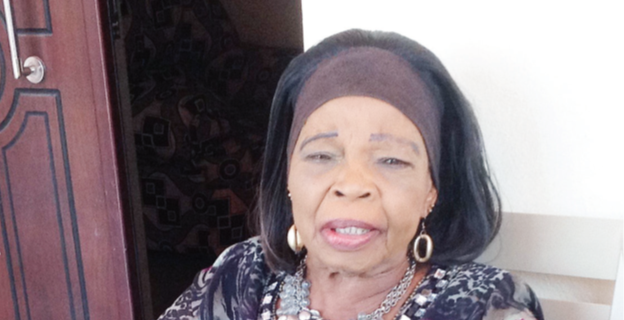
President Muhammadu Buhari extends deepest condolences to the Aguiyi-Ironsi family, and government and people of Abia State on the passing of Chief Mrs Victoria Aguiyi-Ironsi, wife of the first military Head of State, Major General Johnson Thomas Aguiyi-Ironsi.

The President affirms that Lady Victoria’s incredible strength and exceptional courage during one of the darkest moments in our nation’s history pedestals her as a mother of the nation, God-fearing and a foremost woman of valour.

The President notes that the former First Lady will be remembered for laying a solid foundation for women’s leadership role in the seat of power and as a founding member of the Nigerian Army Officers’ Wives Association; she passionately championed the welfare and wellbeing of families of military officers.

The President recognises that 55 years after the death of General J.T Aguiyi-Ironsi, Lady Victoria never stopped working for the greater good of Nigeria, and for peace, stability, healing and reconciliation in the land.

The President sincerely hopes that Lady Victoria’s labours for the country will not be in vain, and joins all Nigerians in praying for the repose of the soul of the departed and comfort for those who mourn.

Femi Adesina