
A new study has established that excessive use of social media, in particular the posting of images and selfies, is associated with a subsequent increase in narcissism. What we post in social media has a way of defining us! How we post it also has a way of making or mare us. The truth is that social media is here and a lot of people have been ruined due to what they post, how their post their picture and when they post these pictures. A picture tells a thousand stories! So, before you post that your fancy car or your new place or tour outing in that 5-star hotel or your office environment as yourself, am I doing this to get likes? Am I doing this to project an image? Am I doing this to sell a product or am I doing this to shame the haters? We must look at these things before we do that post! We have a term called PDA, it is public displays of affection (PDA) are acts of physical intimacy in the view of others. … Physical affection has been defined as “any touch intended to arouse feelings of love in the giver and/or the recipient.” Though it can be good but too much of everything can be bad.

“Narcissism is a personality characteristic that can involve grandiose exhibitionism, beliefs relating to entitlement, and exploiting others. Those who used social media excessively, through visual postings, displayed an average 25% increase in such narcissistic traits over the four months of the study.This increase took many of these participants above the clinical cut-off for Narcissistic Personality Disorder, according to the measurement scale used”, Published in The Open Psychology Journal, researchers from Swansea University and Milan University

The journal added that Those who used social media excessively, through visual postings, displayed an average 25% increase in such narcissistic traits over the four months of the study.

How to Create the Perfect Social Media Post

Have you entered a flight let’s say from Abuja to Lagos, one funny thing is that people keep snapping up and down before the take off! What are they doing, they post on social media? It is to show that they are now “flying”! Lol, have you also noticed that when people get engaged, give birth they post on social media! This might mean two things, my haters, I have finally found that man and I am married or those that think I can’t give birth, now I can give birth! A lot of messages can be conveyed in social media.

When I was in the university, there used to be a course that we had, a 3-unit course it is called “Non verbal communication” and in that course it is said that over 70% of our communication is non verbal and it is true. So, what do you post in social media? Do you actually need to post that new car that you bought in social media? Now that we are in perilous times, kidnappers can visit and demand at least 100k Ransome? You as a single girl, must you go to hotel every time and snap and post? Now that men are being careful not to marry a girl that knows all the hotels in the town?  You as a wife do you need to post what you have in your home or how you have been gushing and loving your husband? Now that side chicks aren’t skilling and scarcity of husbands are real. You as a man, must you post the pictures of your family every time? Now that your ex isn’t married and still angry that you dumped her for your wife? You as a young graduate must you post shallow things in social media now that employers look at your social media to know the type of person you are?

In Mass media, we have what us called gatekeeping, it is the ability to know, watch and scrutinize contents that the population consume, that is for traditional media, but that is lacking in social media! Now that is where people get haunted! You post your pictures with folks and it gets to haunt you in future!

Social media can be a funny place though it has made people to be able to express their views without hinderances also it has made people to be known and their ideological leanings exposed.

Though some people live on social media, I mean they can’t do without posting their daily lives , maybe they want to be influencers. It has made a whole lot of people to be in harm’s way and marriages crashed. Why do you post pictures of the food you eat every time on social media? What message are you trying to convey? Yes, it is fine wines and dines but please take it easy, folks might not love it.

Personally, I am not against posting a whole lot in social media but with the Concept of social engineering, hackers can use what you post to hack your account it’s simple as that …example , most people use their date of birth as their PIN , most PIN are 4 digit and date of birth is 4 digit if you are born in 1987, you post your age and let’s say your name is  Ammy, and your baby’s name is Jane …a good hacker would try Ammy, Jane, 1987, date of birth of the kids etc…it’s social engineering.

We mustn’t post everything ok social media. Let’s say that you are an IPOB member and you have been going around calling Nigeria zoo, trust me, when you want to seek for clearance or contract from FG, do you think that under due diligence the FG would give you that job? No, they can’t because you called them zoo!

Most recruiting firms look at the social media posts and walls of their employees to ascertain their level of engagement. I mean I would not employ someone that says that he can’t work in a one-man firm in his post? Neither will any employer someone that posts “fake it till you make it “. Employers want real people not fakers

I have seen marriages crash because of what wives post on social media in order to be seen as “woke” or in line with realities! You post those men are scum and that you will not take shit from your husband! Many decent men would leave you and take a walk! Nobody wants trouble as a wife! It has happened before and would be happening! 

According to a researcher Danielle Anne, she puts it this way “Couples who spend a significant amount of time on Facebook everyday are more likely to experience conflict in their relationships. Facebook shows people if messages have been read, or if a person is active or not. Imagine having to monitor all that information!”

Social Media Posting Tips For Every Business | 1Eighty Digital |Warsaw, IN

So social media, one has to be careful, you might have a political philosophy that is nice, you might have a religious ideology that is nice but never take it too extreme! A lot of folks go around insulting people when you have a different view…the next is to call you all sorts of names! This is very wrong! I belong to many forums especially international forum…that has cars enthusiasts! We disagree most times on the type of model and the preface lift version but they don’t call names! Maybe it is our culture to be gragra or angry or maybe it is our economy…but we must as a people take it slow especially on the issue of picture and what we post on social media.

You that have private conversation with someone in inbox only for you to munch or screengrab it and post it on social media, how do you think that people would trust you tomorrow!  You might get a lot of likes but trust me your credibility is gone!
So, posting is social media is good, just like everything in life, private pictures should be posted in moderation. You only post milestones, you don’t need to post your kids eating, jumping or the kid of food you eat or the kind of car you drive or the type of flight you enter…. ignorance is bliss, so once in a while let people bask in ignorance and live your private life. If it about the individual, if it’s not a milestone, a funny anecdote or a special moment, try not to post about it at all. Note: funny anecdotes do not mean every funny thing you and your partner say or do. Women, in particular, are guilty of this. Unless it is a real riot, keep it to yourself, or at least your real-life conversations!

ANTHONY EMEKA NWOSU

You that have private conversation with someone in inbox only for you to munch or screengrab it and post it on social media, how do you think that people would trust you tomorrow!  You might get a lot of likes but trust me your credibility is gone!
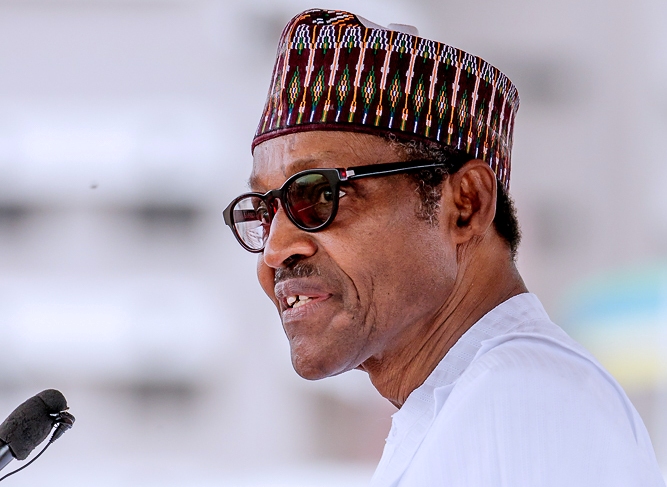
President Muhammadu Buhari Tuesday in Abuja said focus on job creation, consistency in policy and innovation stimulated a 5 per cent growth of the economy in the second quarter, 2021, which is the highest in six years, assuring that Jubilee Fellows Programme will further consolidate on the success recorded.

The President, speaking at launch of the Nigeria Jubilee Fellows Programme, State House, listed some of the key drivers of economic growth and diversification in the second quarter to include telecommunications, transportation, electricity, agriculture and manufacturing.
“Tuesday, 22nd June, 2021, I set-up the National Poverty Reduction with Growth Strategy (NPRGS) steering committee to coordinate our work to fulfil my promise to lift 100 million Nigerians out of poverty in ten years. This is building on the positive results from the Economic Recovery and Growth Plan and the targeted response to the effects of the COVID-19 pandemic with the Economic Sustainability Plan.

“These efforts have yielded results with Nigeria recording its biggest economic growth in six years with a GDP growth of 5 per cent in the second quarter of 2021. The sectors that drove this growth are trade, telecommunications, transportation, electricity, agriculture and manufacturing. Each of these sectors showed significant improvement and thus created more jobs for our populace.

“An important part of our policies and strategies is the focus on employment and creating opportunities for our people. When this government was elected in 2015, we committed to increasing job opportunities for Nigerians and as part of our social investments programme we recruited 500,000 graduates into our N-power programme,’’ he noted.

In 2019, the President said he directed that the number of graduates be increased to 1 million.

“These graduates are recruited to work in agricultural, health and education institutions across the country. The N-power programme also has a non-graduate component that provides skills to tens of thousands of Nigerians in areas such as technology, masonry, auto repairs, and carpentry.

“We estimate that about 2 million people join our labour force annually. We continue to work with our partners to provide more opportunities to create jobs and the Nigeria Jubilee Fellows Programme in partnership with the United Nation’s Development Programme being one of such opportunities,’’ he added.

The President said, “The jubilee programme will provide a pathway for young Nigerians to gain work experience in top tier organisations, gaining relevant skills and building the right networks for the future in various sectors including information and communications technology, financial services, trade, manufacturing, agriculture and agro-processing.
“Other sectors include mining, telecommunications, creative industries and technology, education, health, research and development, and public sector institutions. We believe that building the right skills and experiences across these sectors are important to sustain the economic growth we are experiencing.’’

He said the programme will build on other efforts of the government to support young Nigerians such as the N75 billion youth fund in the Ministry of Youth and Sports Development, which was created to support young Nigerians in business or with business ideas, with N25 billion released annually for three years.

“The Economic Sustainability Plan (ESP) was our response to the COVID-19 pandemic. We have set-up a survival fund which has helped many businesses stay afloat in the worst economic periods of the last 5 years, more than one million Nigerians have benefitted from the fund, with more than 500,000 benefitting from the MSMEs Payroll support track, approximately 270,000 beneficiaries of the artisan support track, and about 50,000 beneficiaries of the MSME grant scheme,’’ the President added.

According to him, the International Labour Organisation estimated equivalent of an unprecedented 255 million jobs being lost around the world as a result of the COVID-19 pandemic.

President Buhari noted that the Nigeria Jubilee Fellows Programme, being a fully paid post-NYSC work placement programme would provide an opportunity for mentors who were already engaged in various industries, gained relevant experience and built capacity over the years to provide mentorship and support for young Nigerians.

“Beyond the skills and work experience, we will be building a new culture of mentorship and guidance that can chart a new course for skills development and work experience in our country.

“We believe that as this programme creates new opportunities for 20,000 recent graduates annually, the beneficiaries will use the opportunities presented to them and maximize their 12 months of engagement,’’ he said.

The President encouraged all eligible Nigerians to apply for the jubilee programme, while urging private sector organizations to join by providing work placement opportunities, mentors and funding.

“I would like to say thank you to the United Nations Development Programme and the European Union for their support on this vital initiative. And I hereby declare the program open,’’ he said.

In his remarks, the Minister of Industry, Trade and Investment, Otunba Adeniyi Adebayo said the government remains appreciative of the role of private sector in transforming economies by creating employment and employment opportunities and investments.


He said start-ups, largely driven by young Nigerians, attracted 170 million dollars in the past year, which was the highest on the African continent, explaining that the Nigeria Jubilee Fellows Programme was to celebrate the nation’s 60th anniversary.

Adebayo noted the role of Vice President Yemi Osinbajo in driving the initiative to fruition and support of the United Nations Development Programme (UNDP).

The Resident Representative of UNDP, Mohammed Yahya assured that the UN will continually support Nigeria to move human potentials across the country to capacities and skills that will place the country on a better pedestal.

“Each day, young Nigerians continue to break barriers with their capacity and ingenuity,’’ he said, “Young Nigerians have produced outstanding innovations. There is no shortage of talents in Nigeria.’’

EU Deputy Head of Delegation, Alexandre Borges Gomes and UN Resident Coordinator, Edward Kallon, commended the initiative, saying the programme benefitted from wide consultations.

“We estimate that about 2 million people join our labour force annually. We continue to work with our partners to provide more opportunities to create jobs and the Nigeria Jubilee Fellows Programme in partnership with the United Nation’s Development Programme being one of such opportunities.

“To create more opportunities for our young population we have to provide avenues for them to gain relevant work experience.

“The jubilee programme will provide a pathway for young Nigerians to gain work experience in top tier organisations, gaining relevant skills and building the right networks for the future in various sectors including information and communications technology, financial services, trade, manufacturing, agriculture and agro-processing.

“Other sectors include mining, telecommunications, creative industries and technology, education, health, research and development, and public sector institutions. We believe that building the right skills and experiences across these sectors are important to sustain the economic growth we are experiencing.

“The programme will build on other efforts of the government to support young Nigerians such as the N75 billion youth fund in the Ministry of Youth and Sports Development which was created to support young Nigerians in business or with business ideas. The programme has kicked off and will run for three years with N25 billion released annually.

“The Nigeria Jubilee Fellows Programme, being a fully paid post-NYSC work placement programme for Nigerians will provide an opportunity for mentors who are already engaged in various industries and have gained relevant experience and built capacity over the years to provide mentorship and support for the young Nigerians that will be on the programme.
“​Beyond the skills and work experience, we will be building a new culture of mentorship and guidance that can chart a new course for skills development and work experience in our country.

“We believe that as this programme creates new opportunities for 20,000 recent graduates annually, the beneficiaries will maximise the opportunities presented to them and maximise their 12 months of engagement on the programme.

“I will encourage all eligible Nigerians to apply for this programme, I also urge private sector organisations in Nigeria to join us on this programme to provide work placement opportunities, mentors, and funding to support the programme.

“I would like to say thank you to the United Nations Development Programme and the European Union for their support on this vital initiative. And I hereby declare the program open.”

  • Excerpts of President Muhammadu Buhari’s remarks at the launch of the Nigeria Jubilee Fellows Program.

  1. The National Bureau of Statistics (NBS) recently published the 2nd Quarter (Q2) 2021 Gross Domestic Product (GDP) estimates which measure economic growth.
  2. During the quarter, Nigeria’s Gross Domestic Product (GDP) grew by 5.01%(year-on-year) in real terms, resulting in the third consecutive quarter of growth since last year’s slowdown. This is the strongest real GDP growth the exonomy has recorded since Q4 2014.
  3. The 2021 Q2 growth rate reflects much better economic performance compared to the same period last year, which recorded -6.10% growth rate. Furthermore, it was also better than the previous quarter (Q1) growth rate of 0.51%, on a year-on-year basis. Year to date, real GDP grew 2.70% in 2021 compared to -2.18% for the first half of 2020.
  4. Broadly speaking, the Services sector recorded a strong performance growing at 9.27% during the quarter representing the fastest growth in the services sector since 2010.
  5. Growth in Q2 2021 would have been much stronger had it not been for Agriculture recording slower growth at 1.30% due to several bottlenecks currently negatively affecting the sector and due to the Industrial sector contracting by -1.23% largely due to the over 12% contraction in Crude Oil and Natural Gas Production.
  6. Nevertheless, the non-oil sector was a major driver of growth during the quarter, recording a growth rate of nearly 7% which represents the fastest growth in the non oil sector since Q3 2014.
  7. Specific activities which recorded growth during the quarter include: Trade, Transportation, Coal mining, Metal ores, as well as Insurance, each of which recorded double digit growth. The report, however, also indicates that some activities such as Oil refining, Crude petroleum and natural gas production as well as financial services recorded negative quarterly growth. Overall, a total of 42 out of 46 economic activities expanded during the quarter compared to only 13 at the same time last year, while 37 activities performed better than they did last quarter (Q1).
  8. These figures indicate that business and commercial activities are fully returning to pre-pandemic levels as restrictions to movement, business activities, as well as domestic and international travel have been relaxed.
  9. When these estimates are considered along with declining inflation rate which slowed from 18.17% at the end of Q1 to 17.75% at the end of Q2 and as at July, stands at 17.38%, it is clear that the economic recovery is gradually picking up steam. With favourable international economic conditions expected as economic activities and normalcy returns across major economies, and local conditions continue to improve to allow business activities, the Nigerian economy is expected to maintain a steady path to more inclusive growth.

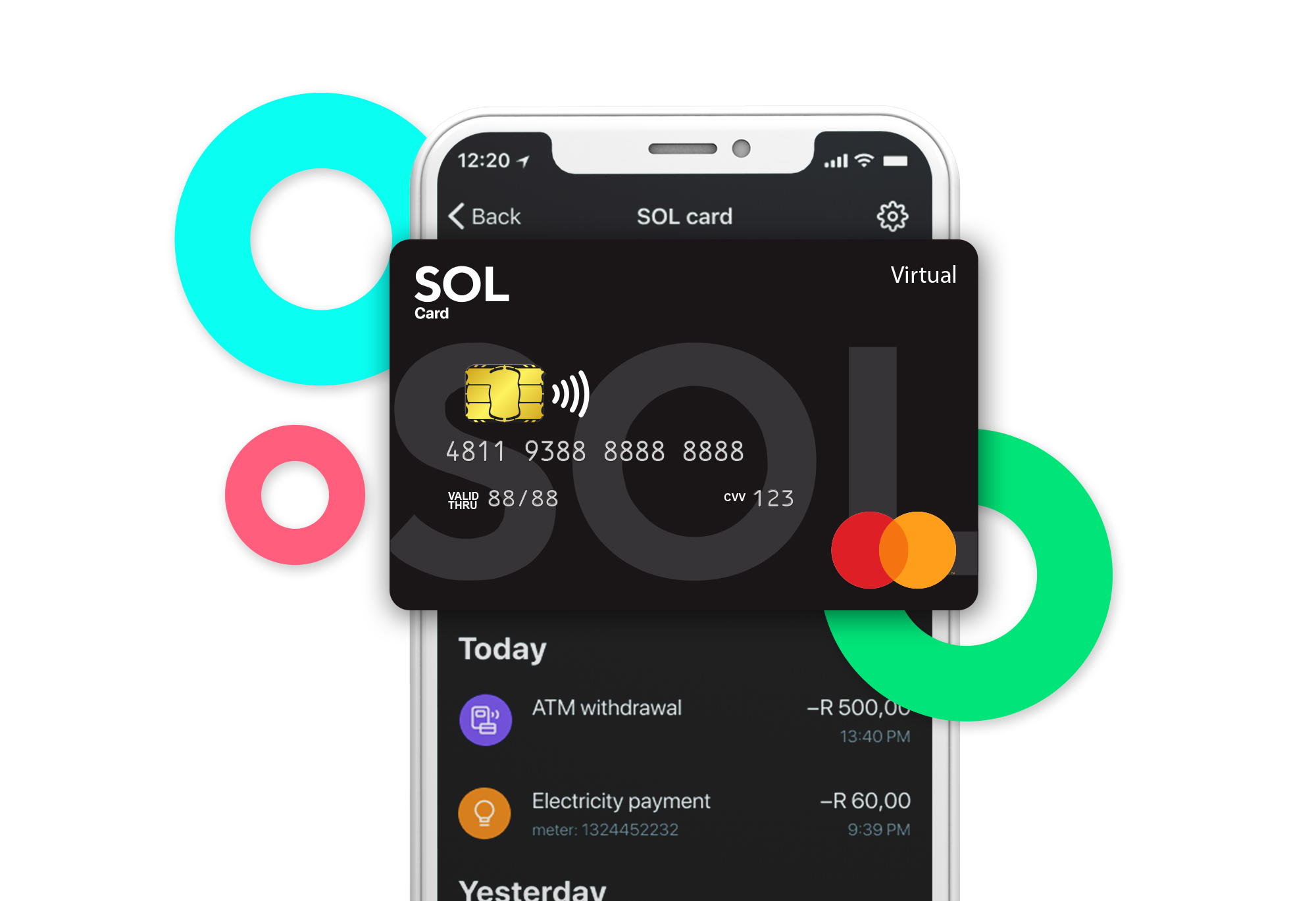
SOL unveils virtual card and new brand as it redefines the customer experience

SOLmate, an online payment platform that offers clients a digital wallet facility, has unveiled an exciting new product offering together with an extensive rebrand and renewed corporate vision. Following a name change to SOLmate, the fintech has launched a new, innovative virtual card – placing unbanked and underbanked clients at the centre of SOLmate’s business offering.

The new virtual card provides clients with the ability to shop online safely, and to draw cash from various retail stores – making SOLmate one of the first fintech players to offer a virtual card to FICA lite customers who would otherwise not have had access to digital financial services. 

With a new tagline of “Your money. Your life. Your way.” SOLmate aims to build a digital community platform for South African consumers that allows safe custody of money and a convenient payment platform, along with access to other financial and lifestyle products, services, and rewards.

SOLmate will offer an entry level product, created for lower income individuals with limited access to financial services, and in the coming months, will introduce a traditional bank account for unbanked consumers looking for a convenient, easy-to-use alternative.

With a SOLmate account, users can deposit their salary into their account to transact and purchase basic products and services through the app, seamlessly bridging the gap between businesses and clients.

In a tough economy, SOLmate has kept every cost to a minimum and waived many of them where possible – making it affordable and accessible for all – with accounts starting from as little as R15 per month.

Says Jonathan Holden, COO of SOLmate. “This rename and new virtual card offering represents a significant step in the company’s evolution. The positioning perfectly illustrates our growing ambition in the market and how we aim to always put our customers first above all else.”

“The SOLmate name is rooted in the company’s commitment to being the preferred choice and trusted partner to our customers. We pride ourselves in our relationships with clients and our ability to help, support and connect people to their money quickly and easily,” he adds.

All is now set for the historic launch of the compendium of landmark speeches and presentations of the Executive Vice Chairman and Chief Executive Officer (EVC/CEO) of the Nigerian Communications Commission (NCC), Prof. Umar Garba Danbatta.
Scheduled to hold at the Communications & Digital Economy Complex, Mbora, Abuja, on September 7, 2021 by 10:00 a.m. prompt, the epoch-making launch will also feature the unveiling of two other strategic initiatives of the Commission.

Titled: “Catalysing Nigeria’s Socio-Economic Transformation through Broadband Infrastructure,” the book is a compilation of carefully-selected, seminal speeches and presentations of Prof. Danbatta, touching on all strategic areas of the nation’s telecoms industry development and the entire digital economy ecosystem, since his assumption of office as the EVC/CEO of NCC in August, 2015.

Danbatta, a Professor of telecommunications engineering, accomplished academic, and seasoned administrator has made extensive speeches and presentations on a wide-range of subjects in telecoms and ICT at important national, regional and international events since leaving the ivory tower to become the EVC of NCC in 2015.

His landmark speeches and presentations from 2015 till date have, thus, been codified in a concise collection, as a compendium, providing useful information that will significantly add value to the existing body of knowledge in the telecoms sector, and by extension, the entire Information and Communication Technology (ICT) industry.

The foreword to the book has been painstakingly written by the late former Chairman, Board of Commissioners of NCC, Alh. Ahmed Joda of blessed memory.

The book will serve as a useful reference material not only for existing and prospective investors in the sector but also for researchers in the academia as well as policy analysts and others interested in any aspects of the telecom industry and regulation.

The book, which also chronicles important milestones attained by the Commission under Danbatta’s leadership, is a compelling read.

Other strategic projects to be unveiled by the Commission alongside the compendium are the NCC’s new five year Strategic Vision Plan (SVP) 2021-2025 and the Commission’s new social media channel, the NCC’s Global Connect Podcast.

The new SVP will enable cross-functional infrastructure, ubiquitous services and deepen consumer engagement to consolidate the growth of the telecoms sector and expand the possibilities of the digital economy.

The need to develop another SVP, as a five-year implementation roadmap for the Commission, followed the expiration, in 2020, of the first SVP unveiled by Danbatta in 2016.

It has been widely acknowledged that the diligent execution of the first SVP initiative, under Danbatta, has helped to consistently lift broadband penetration, increase telephone access, boost the sector’s contribution to the Gross Domestic Product (GDP), enhance healthy competition in the industry, improve quality of service (QoS), as well as put the sector’s overall investment profile on an impressive growth trajectory, among others.


The ‘NCC Global Connect,” podcast is the third initiative enlisted for unveiling during the launch. The latest addition to the NCC social media spectrum will help in enhancing the Commission’s corporate communication activities within the online space.

The podcast initiative was conceived in keeping with NCC’s core values of innovation and excellence;. It adds to the existing media channels, providing an inclusive medium to broaden our media platforms to educate external stakeholders on its regulatory activities irrespective of their circumstances, through audio contents.

The Honourable Minister of Communications and Digital Economy, Dr Isa Ali Ibrahim Pantami, will be the Special Guest of Honour at the occasion.


Senior government officials, industry leaders and stakeholders as well as dignitaries from across the country are billed to attend the landmark event.

Vice President, Professor Yemi Osinbajo, says the classification of Nigerians as ‘indigenes’ and ‘non-indigenes’ is a form of apartheid and contradicts the citizens’ aspirations towards equality and unity.

Speaking at an event in Abuja, on Thursday, August 26, the VP said said the country’s constitution gives all Nigerians the right to live and work in part of Nigeria without molestation.

“In many quarters, there are feelings of alienation and exclusion. To this point, we must recognize the ways in which we perpetuate institutional discrimination and cause people to see their identities as weapons for procuring opportunity, often at the expense of others.

We see this whenever Nigerians are denied opportunity on the basis of their state of origin or because they are ‘non- indigenes’. We see it when a Nigerian that has been resident in a state all his life is suddenly excluded from admission into an educational institution or an employment opportunity because he is not considered an ‘indigene’.

All Nigerians have a constitutional right to live, work and enjoy their lives in peace and safety under the law. The classification of Nigerians as ‘indigenes’ and ‘non-indigenes’ is a form of apartheid and contradicts our declared aspirations towards equality and unity.

Our Constitution enjoins Government to ‘secure full residence rights for every citizen in all parts of the Federation’ and this is imperative that we must commit to across all tiers of Government. All that should matter in evaluating ourselves is where we live and fulfil our civic obligations.”

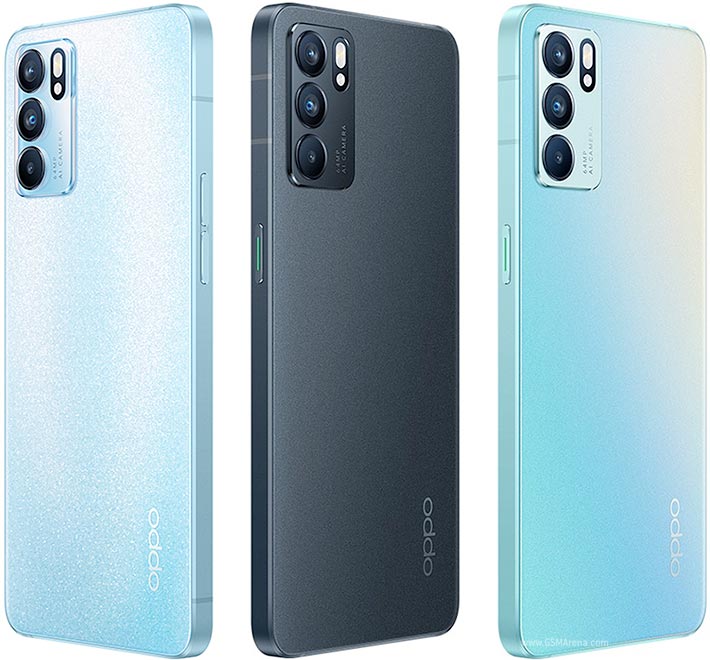
– The new Reno6 series consists of three 5G models, all equipped with leading disruptive technology that stands out from competition

– OPPO once again partners with brand ambassador, Mohammed Salah, to reveal the newest Reno series in a captivating commercial

– The series’ ambition is to ensure users capture every moment, memory, and emotion in the highest quality, effortlessly

– To celebrate the launch, OPPO is giving customers the chance to win a Reno6 Pro 5G by having them use #CaptureYourEmotion and tag @OPPOArabia in their happiest video or photo

– The Reno6 series will be available to pre-order from September 7th, 2021

The “Middle East & Africa Online Payment Methods Market, 2021” report has been added to ResearchAndMarkets.com’s offering.

“Middle East and Africa Online Payment Methods 2021” provides insights into the current state and future trends of the online payment market in the Middle East and Africa. Among other findings, the publication reveals that even after the removal of social isolation measures, consumers planned to continue using mobile phones/smartphones for shopping.

It takes into account a wide definition of online payment, including payment methods used in online shopping and mobile payment, such as remote and proximity payments. In addition, information related to the impact of the coronavirus (COVID19) on digital payments in the Middle East, Africa, and worldwide was included in this report.

E-payments worldwide gained momentum, especially after the onset of COVID-19, encouraging consumers to adopt and learn more about them

Online payments and alternative to cash are gaining momentum in the world, even more progressively after the onset of the pandemic in 2020. Among the top common payment methods in the world remain credit and debit cards. QR codes, which had been growing in acceptance globally, were projected to decline in usage frequency due to the acceleration of features such as card acceptance via NFC smartphones that are now easier to adopt.

Another payment form that is gaining momentum presently is cryptocurrency. A recent survey cited in this report revealed that a significant share of young consumers became more open to this new currency in 2021 compared to the previous year and over 70% of them are ready learn more about it.

Consumers in the Middle East and Africa steadily increased their usage of online payments and acceptance of emerging payment forms grew

The Middle East and Africa’s online payment industry has accelerated since the beginning of 2020. One of the major drivers was the COVID-19 pandemic. Consumers in the region were open to adopting digital payments and even trying new emerging ones such as cryptocurrency, biometrics, QR code and others, since these are fast, secure and contactless. Many surveyed consumers opted for using cryptocurrency more than they did last year. In addition, even after the removal of social distancing/social isolation measures, most shoppers still preferred to use mobile phones/smartphones to purchase.

Overall, a considerable portion of consumers from UAE chose online payments because they believed these help them save money. Whereas, in Israel, online shopping was preferred due to lower risks of COVID-19 infection in 2020. Generally, in the countries of the two regions, card and mobile payments dominated.

Namely, in South Africa and Egypt, the value of card payments was expected to grow steadily in the next several years. In Egypt, the number of electronic cards increased considerably from December 2017 and exceeded 40 million in December 2020.

In Morocco, local card payments prevailed foreign card payments. The value of digital transactions via Moroccan cards rose to over MAD 4 billion (about EUR 400 million) in the first 9 months of 2020, while online payments value with a foreign card declined from 2019 and reached slightly above MAD 225 million (over EUR 21 million) in the first 9 months of 2020.

Mobile payments also grew in acceptance in the two regions. Namely, in Jordan the transaction volume made via a mobile payment system increased in 2020 and was over 1 million in December 2020. Whereas in Kenya, the number of mobile payments continued to grow annually and equaled over 60 million at the beginning of 2021.

Key Topics Covered:

1. Management Summary

2. Global Developments

  • Value of Digital Wallet Spending, in USD trillion, 2020 & 2025f
  • Number of Digital Wallet Users, in billions, 2020 & 2025f
  • Value of Mobile Commerce Transactions, in USD trillion, 2020 & 2025f
  • Cash Usage in Emerging Markets, by Countries, in % of Total Transactions Volume, 2010 & 2020e
  • Cash Usage in Mature Markets, by Countries, in % of Total Transactions Volume, 2010 & 2020e
  • Share of Contactless and E-Commerce Payments, in % of Total Digital Wallet Spend, 2025f
  • Number of QR Code Payment Users, in billions, 2020e & 2025f
  • Share of QR Code Payment Users, in % of All Mobile Phone Users, 2025f
  • Value of Instant Payments, in USD trillion, 2020e & 2025f
  • Share Instant Payments, in % of Total B2B and Consumer Digital Money Transfer and Banking Payments Value, 2025f
  • Value of Mobile Payment Transactions Authenticated via Biometrics, in USD trillion, 2020 & 2025f
  • Share of Adults Who Expected Digital Payment Options being Offered When Shopping In-Person, in %, and Particular Digital Payment Options Expected, in % of Adults, November 2020
  • Breakdown of Blockchain Usage Cases, in %, 2021e
  • Top Online Payment Methods, in % of Respondents, August 2020
  • Top Payment Methods Consumers Consider Using In the Next Year, in % of Consumers, March 2021
  • Top Payment Methods Available, by B2C and B2B, in % of Payment Decision-Makers, 2020
  • Share of Mobile Commerce Transaction Value, in % of Overall E-Commerce Transaction Value, 2021e & 2025f
  • Share of QR Code Payments, in % of All Digital Wallet Transactions, 2020 & 2025f
  • Perception of Cryptocurrency, in % of Millennial Consumers, March 2021
  • Top Payments Methods For Fraud Actions, in % of Fraud & Payment Professionals, August 2020
  • Value of Losses Due to E-Commerce Fraud, in USD billion, 2020 & 2021e
  • Number of Users Making Online Payment With Facial Recognition, in billions, 2020 & 2025f
  • Number of Users Who Will Be Confirming Transactions With Voice Recognition, in millions, 2020 & 2025f

3. Middle East & Africa
3.1. Regional

  • COVID-19 Impact on Online & Mobile Payment, July 2021
  • Share of Adults Who Plan to Use Cryptocurrency as a Payment Method in the Next Year, in %, March 2021
  • Share of Adults Who Were More Open to Using Cryptocurrency Than a Year Ago, in %, March 2021
  • Share of Adults Who Would Avoid Businesses That Don’t Accept Electronic Payments, in %, March 2021
  • Share of Adults Who Prefer to Shop More at Omnichannel Businesses, in %, March 2021
  • Change in Usage of Shopping Channels When Social Distancing/Social Isolation Measures Are Removed, in % of Respondents, 2020
  • Overview of Mobile Money Statistics, incl. Number of Live Services, Registered Accounts, in millions, Active Accounts, in millions, Transaction Volume, in millions, & Y-o-Y Growth, in %, by Sub-Region, 2020
  • Total Investment Raised by African FinTech, in USD million, 2019 & 2020e
  • Breakdown of Funds Invested in Equity-Funded Verticals, in % of Total, 2020

4. Middle East
4.1. UAE
4.2. Saudi Arabia
4.3. Israel
4.4. Jordan

5. Africa
5.1. South Africa
5.2. Egypt
5.3. Nigeria
5.4. Morocco
5.5. Kenya

Companies Mentioned

  • American Express
  • Apple Pay
  • Google Pay
  • Klarna
  • PayPal

For more information about this report visit https://www.researchandmarkets.com/r/4ijrn2

Leading Black-owned independent content platform REVOLT, announced the second iteration of What’s Good Africa, a weekly unscripted lifestyle series exploring all aspects of Hip Hop culture in Africa. Created by What’s Good Networks and co-produced by its affiliate production studio Ark House Productions in association with REVOLT, this incredible new season will feature episodes exploring Ghana’s bustling music, fashion, food and art scenes. 

Hosted by broadcast personality and actor Alex Kwesi Crassie, who will also serve as Executive Producer, and singer and songwriter Enam, the highly-anticipated second season of What’s Good Africa will premiere on REVOLT on Wednesday, September 8th. Featuring exclusive appearances from rappers Kweku Smoke and Obibini, Afrobeats artists StonebwoyEfyaKiDi and Akiyana,  men’s luxury fashion designer Senyo Foli, renowned sculptural artist Nanoff, and more, this new season will showcase Ghana’s leading musicians, artists, influencers, and local changemakers to further carry out REVOLT’s dedication to showcasing the global influence of Hip Hop culture.

“With Black culture driving global culture, REVOLT is committed to expanding globally both in terms of footprint and storytelling,” said Detavio Samuels, CEO of REVOLT. “We are committed to telling stories from across the Black diaspora, and are excited to welcome back What’s Good Africa through our content partnership with What’s Good Networks.’

The second season of What’s Good Africa was co-produced by partner media powerhouses What’s Good Networks, a content studio collaborating with Africa’s leading content creators, and Ark House Productions, an Accra/Johannesburg-based media company with expertise in creating compelling content and event management. The series’ continuation will bring together the industry’s leading creatives who will highlight African culture through the lens of local trend setters.

“No matter where you go in the world, Hip Hop and music culture constantly bring people together,” said Alex Kwesi Crassie, Founder and CEO of Ark House Productions. “I’m super excited to partner with What’s Good Networks and join What’s Good Africa as a host and Executive Producer. This second season is going to be one you don’t want to miss.” 

Episodes will additionally include content surrounding the popular Afrochella festival, local Ghanaian street food markets, nightlife, club scenes and more to further highlight Hip Hop culture in Ghana. 

“We are dedicated to sharing compelling stories about the African culture, and partnering with REVOLT again will further carry out that mission,” said Tilomai Ponder, CEO and co-founder of What’s Good Networks. “The second season of What’s Good Africa will enable viewers to explore the Ghanaian lifestyle in a cultural and relatable way.” 

The second season of What’s Good Africa will premiere on REVOLT’s linear TV channel on Wednesday, September 8th at 9:30pm ET with new consecutive episodes airing every Wednesday for ten total episodes. A preview of the new season can be found at the link here.

The expanded content partnership between REVOLT and What’s Good Networks will also yield new digital content, set to launch in October on REVOLT’s forthcoming app.