The Honourable Minister of Youth and Sports Development, @hmsundaydare alongside his counterpart in the Women Affairs Ministry, @damepaulinektallen will lead a retinue of high profile guests that include the Presidents of the world soccer governing body, FIFA, Gianni Infantino and the Confederation of African Football, CAF, Dr Patrice Motsepe to Lagos for the opening ceremony of the first edition of the Aisha Buhari Invitational Tournament kicking off on Wednesday.

Nigeria and five other nations- Morocco, South Africa, Mali, Cameroon and Ghana will be part of the week long competition which is now a FIFA ranking tournament.

The Executive Governor of Lagos, His Excellency @jidesanwoolu is the Chief Host of the historic competition now set to kick off after the arrival of all the participating teams.


The opening ceremony will be between the Super Falcons of Nigeria and the Black Eagles of Mali.

One of the star players to watch out for is the Super Falcons captain @asisat_oshoala who is a four time African Woman footballer of the Year award winner.

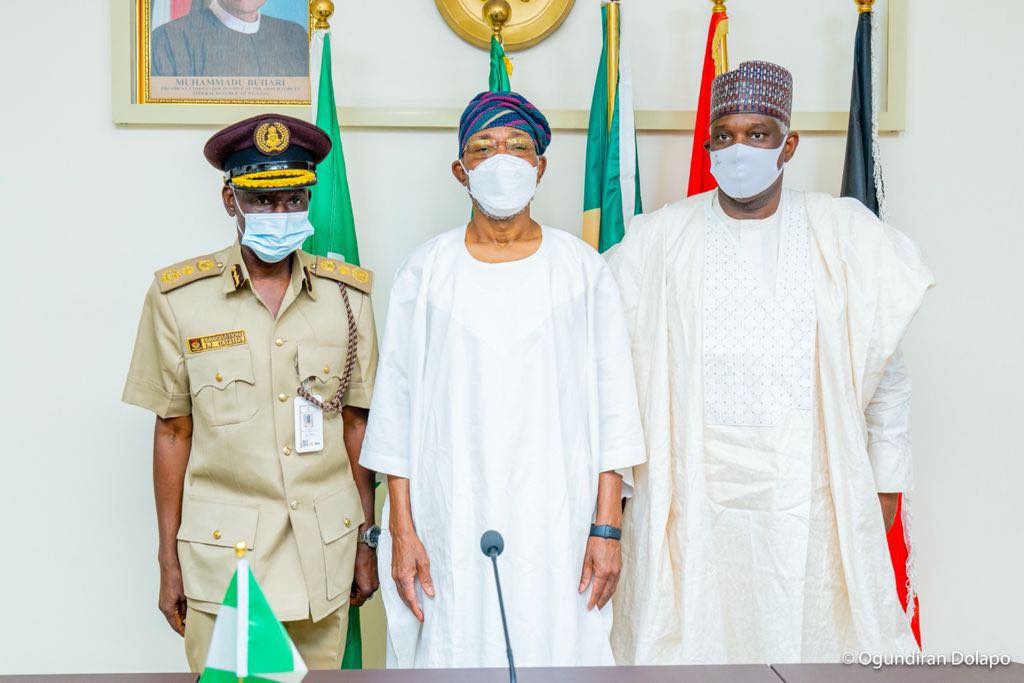
Minister of Interior, Ogbeni Rauf Aregbesola, has charged the acting Comptroller General of Immigration, Idris Isah Jere, to effectively secure the Nigerian borders and ensure no person slipped in from outside with the intention to harm our country in any way.
The Minister gave the charge when Federal Commissioners and Board Secretary of the Civil Defence, Corrections, Fire, Immigration Service Board (CDCFIB), visited his office to present the Acting CGI to the Minister.

In his speech titled, Power is Responsibility, Aregbesola noted that the primary responsibility of the CG is to “lead the NIS to provide security at the Nigerian borders”. He then enjoined the CG that under his superintendence “no person should come in from outside with the intention to harm our country in any way.

“It is important also that you ease the passage of persons that will add value to our country. You will maintain the delicate balance of stopping the bad guys and attracting the good guys.”

On Passport issuance administration, the Minister noted that Nigerians who are desirous of getting the Nigeria Passport must get it expeditiously and without losing their dignity in the process of doing so.

“You are pretty much aware of the reforms being carried out, foremost of which is in passport administration. Being a passport officer, you will appreciate this challenge more than most. I have no doubt that you will be able to drive this reform and accelerate its success.

“The passport is the highest affirmation of Nigerian citizenship. The extent to which we succeed in putting it in the hands of any Nigerian desirous of it expeditiously and without losing their dignity is the extent to which we succeed as an agency of government. There must be zero tolerance of touting and any form of corruption”.

Aregbesola further stated that the Acting CGI must build on the achievement of his predecessor in office, noting that his appointment as the Acting CG is natural and easy, being the most senior officer on the roll.

“He has put in 34 years of service and has been at the Nigeria Immigration Service (NIS) all his working life. He is therefore an embodiment of the institution.

“It is important therefore that you prepare your mind for service. Your predecessor made his mark and left giant footprints. You will be assessed against this,” the Minister noted.


The Minister also rallied the NIS to support the Acting CGI and assured him of the cooperation and assistance of the ministry and the Federal Government. “I enjoin the officers and men of the NIS to cooperate with and assist you in all ramifications and I can assure you of the unalloyed support of the ministry and government on your assignment.” The Minister stated.

In his response, Acting CGI Idris Isah Jere, affirmed his commitment, with the collaboration of Officers and Men of the Nigeria Immigration Service, to delivering on the mandate handed to him.

“Sir, the Service is committed to our primary mandate, which is securing the Nigeria’s border and also concluding on the passport reforms initiated by my predecessor in office. I will also ensure Staff Welfare is well taken care of as no reform can be successful outside a well dedicated and motivate workforce.”

Acting CGI Idris Isah Jere joined the service in 1987 patiently and steadily rose through the ranks to be appointed Deputy Controller General in 2018. In between, he has held positions as Passport Control Officer and Deputy Controller General in charge of Finance and Accounts.

Are entrepreneurs risk takers at heart or calculated visionaries?  According to serial entrepreneur and Ukheshe Technologies CEO, Clayton Hayward, many entrepreneurs don’t truly understand the nature of risk, which has a direct impact on the success of their business idea. He says that to be a successful entrepreneur you need to be willing to take risks with a greater vision in mind – and become comfortable with the possibility of failure.

Hayward, who has started more than 26 businesses since graduating in the early 90s, says that globally, managing risk is probably one of the biggest entrepreneurship obstacles: “It is important not to overthink, over strategise or over plan the launch of a business. Understand the nature of the risks involved and go for it. Too many entrepreneurs let perfect get in the way of good. Timing is vital, just make a decision and commit to it.”

While avoiding debt is critical, Hayward believes budding entrepreneurs must understand that the risk is there regardless of how good the business plan is: “My advice to first-timers: approach friends, family and fools who believe in your vision for an investment, and then take the leap.”

He says that if you are going to fail, then do it fast and try not get lost in the process: “Get into the market as soon as possible with a minimum viable proposition and evolve the business from there. If you wait for it to be perfect, you will not get anywhere fast.”

Along with understanding risk, it’s critical to learn from failure and Hayward urges entrepreneurs not to fear it: “We learn more from failing than we do from success. Take notes and try again knowing that you have learnt a valuable lesson and won’t make the same mistake twice.”

He admits that it is harder to fail in the South Africa market because it is so frowned upon. Conversely, in the United States failure is regarded as part of being a successful entrepreneur: “There is a lot that we can learn from the United States where I believe entrepreneurship was born. They absolutely lead the way in how to make a success of a business and how to fail successfully too.”

Closer to home, the African continent is filled with the green shoots of exciting opportunities according to Hayward who currently heads up Ukheshe Technologies, a market-leading fintech enabler with an eye on becoming Africa’s next unicorn: “With the launch of 5G we are expecting innovation to flourish. I am excited to assist the market to address financial inclusion and make a meaningful impact across the market. It is here that I learnt another valuable lesson: focus.”

He says that as a serial entrepreneur, the joy is often in the chase, having several projects running concurrently. “But many have suggested that I learn to focus on one instead of many and this is what I am doing with Ukheshe. We took risks, pivoted and took some more risks, and now we have built one of the most exciting businesses that will undoubtedly exceed all my entrepreneurial dreams.”

The Independent Corrupt Practices and Other Related Offences Commission (ICPC) has today arrested some job applicants for presenting forged certificates and academic records during the on-going recruitment interview exercise by the Commission.

Some of the false documents presented included Declarations of Age, School certificates, and other documentation that showed evidence of tampering. This is contrary to and punishable under Section 25 (1) of the Corrupt Practices and Other Related Offences Act 2000.

The suspects have been detained and are being investigated by the Commission.

Following approval of the National Policy on Fifth Generation (5G) technology deployment in Nigeria by the Federal Executive Council (FEC) on Wednesday, the Hon. Minister of Communications and Digital Economy, Prof. Isa Ali Ibrahim Pantami, has urged the Nigerian Communications Commission (NCC) to prepare for immediate and effective implementation of the policy.

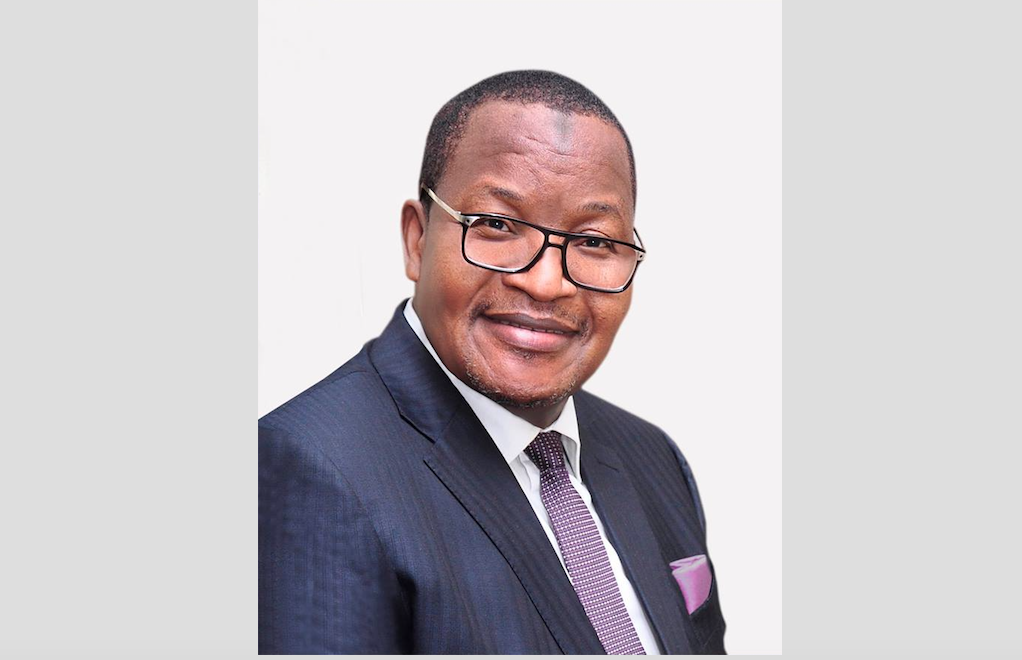
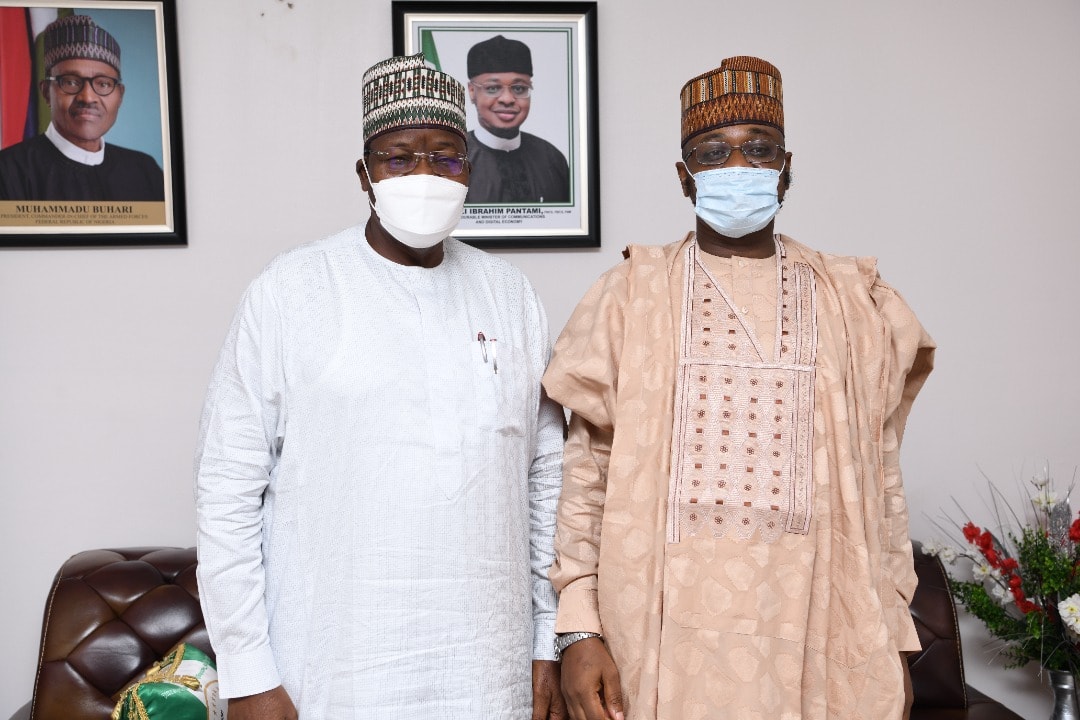
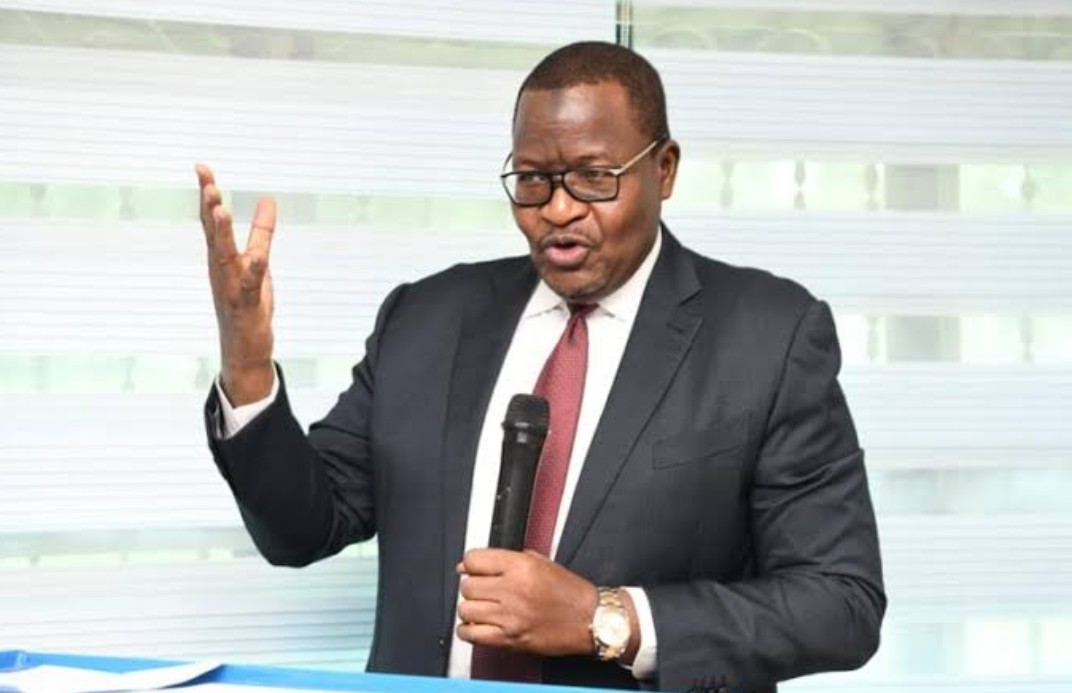
The Minister gave the tall order when the Management of the Commission, led by its Executive Vice Chairman and Chief Executive Officer (EVC/CEO), Prof. Umar Garba Danbatta, paid him a courtesy visit in his office at the Communications and Digital Economy Complex, Mbora, Abuja on Thursday, September 9, 2021.

VIDEO: Minister Tasks NCC to Begin 5G Deployment in Nigeria.

According to Pantami, with the approval of the 5G national policy, which was a product of extensive and wide consultation, “the next big task ahead of the Commission is to begin immediate implementation to push forward the country’s march to increased digital transformation of the economy.

The Minister, who also commended the Commission on the launch of its Strategic Vision (Implementation) Plan (SVP) 2021-2025, the ‘NCC Global Connect’ podcast and compendium of EVC speeches and presentations, added that the SVP would be a veritable vehicle to give the needed impetus to the implementation of the 5G plan.

“The NCC needs to ensure total implementation of the SVP. We should try to have timelines and ensure to deliver on them.

Developing the Vision Plan is commendable but ensuring diligent implementation is even more important. So, the EVC should commit to total implementation of the SVP,” the Minister said.

On the podcast, the Minister said, as a digital communication channel, “I see it as important because we need more sensitisation. We need to reach out to citizens and create awareness about our regulatory activities, change certain perceptions and counter some conspiracy theories against technologies and many more. The podcast is one of the best ways we would be able to achieve this,” he said.

Speaking earlier, Danbatta said the purpose of the visit was to “appreciate the Hon. Minister for his immense support and active role during the recent launch of three projects by the Commission; and to commend him for the important role he played in securing the final approval of the 5G national plan by the Federal Government.”

While describing the Federal Government’s approval of 5G national plan as “a development of unprecedented and profound historical significance to the Commission, telecom industry and other economic sectors,” Danbatta assured of NCC’s determination to diligently implement the 5G plan for the overall socio-economic benefits of Nigeria.

The EVC was accompanied on the courtesy visit by senior Management staff of the Commission. They include the Executive Commissioner, Stakeholder Management, Adeleke Adewolu; Director, Legal and Regulatory Services, Josephine Amuwa; Director, Corporate Planning, Strategy and Risk Management, Felix Adeoye; Director, Public Affairs, Dr. Ikechukwu Adinde; and the Director, Human Capital and Administration, Usman Malah.

The need to have a short term and long-term plan are one of the key attributes of any forward-looking organization, having said this, the Nigerian Communication Commission recently unveiled its 4-year plan on the best way to pilot the telecommunication industry in the country. This was demonstrated this in a Speech by the executive vice chairman/chief executive of the Nigerian communications commission (NCC), prof. Umar Garba Danbatta, at the launch of the commission’s strategic vision plan 2021-2025-on Tuesday, September 7, 2021 at the communications and digital economy complex, Mbora, Abuja.

Danbatta said that “Since my assumption of office, we have focused on strategic objectives which are in tandem with the policy objectives of the Federal Government, under the leadership of the President and Commander-in-Chief of the Armed Forces of Nigeria, President Muhammadu Buhari. Our strategic objectives, the result of a careful assessment of some existing policy frameworks, offered us the opportunity to chart a course of action for the sector in a Strategic Vision (Implementation) Plan (SVP) 2015-2020, which items are as follows: Facilitate Broadband Penetration; Improve Quality of Service; Optimize Usage and Benefits of Spectrum; Promote ICT Investment and Innovation; Protect and Empower Consumers; Promote Fair Competition and Inclusive Growth; Facilitate Strategic Collaboration and Partnerships; and Ensure Regulatory Excellence and Operational Efficiency.”

He also added “We also took cognizance of the Commission’s Strategic Management Plan (SMP) 2014–2018 which defined clear strategic results in terms of themes such as facilitating market development, regulatory excellence, ICT penetration, and Strategic Partnering.Indeed, as an important stakeholder, even to the international community, we had, in the development of the SVP (2015-2020), also aligned with the global focus of the International Telecommunications Union (ITU). Expectedly, we leveraged on the Vision Plan (2013-2018) of the ITU which had sustainability, inclusiveness and growth as the primary thrusts in defining our implementation items of the Plan.”

Telecoms vendors reach their moment of truth - Telecoms.com

Danbatta opined that “We have taken cognizance of the several notable advancements in the Nigerian telecommunications industry within the last five (5) years, as well as the current global realities such as International Telecommunication Union (ITU) Strategic Plan (2020 – 2023), the Commission’s Strategic Management Plan (SMP) 2020-2024, the National Digital Economy Policy and Strategy (NDEPS) 2020-2030 for a digital Nigeria, the Nigerian National Broadband Plan (NNBP) 2020-2025 and the Economic Recovery and Growth Plan (ERGP) of the Federal Government. Thus, the new plan has been guided by and aligned to the NNBP (2020-2025), the NDEPS (2020-2030), the SMP (2020-2024), the ITU Strategic Plan and the ERGP of the Federal Government. The new SVP 2021-2025 has five items namely: Organizational Renewal for Operational Efficiency and Regulatory Excellence; Facilitating the Provision of Infrastructure for a Digital Economy which fosters National Development; Promoting Fair Competition, Inclusive Growth, Increased investment and Innovative Services; Improve Quality of Service (QoS) for Enhanced Consumer Quality of Experience (QoE); and Facilitating Strategic Collaboration and Partnership. “

During the Compendium of EVC’s Speeches and Presentations, Danbatta said that “As the chief regulator of this very dynamic telecom sector, I have had the opportunity to deliver several speeches and make presentations both locally and internationally. In order to preserve these speeches for historical reference, we have carefully selected some of the speeches which capture the successes and challenges of the Nigerian communications sector from my perspective. The book titled: “Catalysing Nigeria’s Socio-Economic Transformation through Broadband Infrastructure” is sure to give readers the historical background and authoritative context to the growth that is now being enjoyed by the industry.

“The Commission has positioned itself to participate fully and actively in the digital transformation of Nigeria consistent with the Nigerian National Broadband Plan (NNBP) 2020-2025, the National Digital Economy Policy and Strategy (NDEPS) 2020-2030 for a digital Nigeria and the Strategic Management Plan (SMP) 2020-2024 of the Commission as well as other Government and ITU extant policy and regulatory documents respectively”, he concluded.

Anthony Emeka Nwosu

“We also took cognizance of the Commission’s Strategic Management Plan (SMP) 2014–2018 which defined clear strategic results in terms of themes such as facilitating market development, regulatory excellence, ICT penetration, and Strategic Partnering.Indeed, as an important stakeholder, even to the international community, we had, in the development of the SVP (2015-2020), also aligned with the global focus of the International Telecommunications Union (ITU). Expectedly, we leveraged on the Vision Plan (2013-2018) of the ITU which had sustainability, inclusiveness and growth as the primary thrusts in defining our implementation items of the Plan.”

By: Shai Reshef, President of the University of the People (UoPeople)

University of the People (UoPeople) launched an Education Revolution in 2009 that has exploded in recent years to become the fastest-growing online university in the world. UoPeople’s innovative tuition-free model of higher education is quickly gaining momentum among South African students looking at cost-effective ways to earn a degree from an accredited and respected university. UoPeople President Shai Reshef says embracing a disruptive educational model is necessary to make quality higher education accessible, affordable, and empowering for more people. 

The Covid-19 pandemic and other events over the past 18 months have accelerated existing trends at speeds few could’ve anticipated. Traditional institutions across the globe, understandably caught off guard, have scrambled to adapt. Higher education institutions that have been too slow to transform are now being forced to rethink their approach and develop business models and ethos for a new world in which students are ready for a more flexible and transformative learning environment.

With the rapid shift to online learning, there is a unique opportunity to prove that with the right support and training, digital teaching and learning can become successful and ubiquitous even in resource-strapped households, particularly within South Africa’s so-called missing middle student demographic.

Founded on the belief that higher education is a human right, UoPeople is the first non-profit, tuition-free, American-accredited online university. The University is dedicated to providing access to higher education globally to help qualified high school graduates overcome the financial, geographic, political and personal constraints keeping them from university studies.

One way of achieving this is by thinking globally and acting locally. The University of Cape Town’s Vice-Chancellor, Prof Mamokgethi Phakeng, is an advisor on the President’s Council of University of the People, together with Presidents and Vice Chancellors of some of the best universities in the world. Wits University’s Emeritus Professor, Barry Dwolatzky, serves on the University’s Computer Science Advisory Board.

Embracing disruptive education requires a paradigm shift which recognises some individuals need new and different strategies, resources, and ways of teaching and learning in order to secure employment and career success. Higher education institutions of the future will have to be far more dynamic and adapt quickly to meet the demands of the job market. For this reason, UoPeople offers Bachelor’s degrees in the high job demand academic programmes of Business Administration, Computer Science, and Health Science as well as a Master’s in Education and an MBA. These programmes were specifically chosen for their real-world relevancy and students can study from anywhere, on any device – even a mobile phone.

In addition to transforming lives and championing social good, producing employable graduates who go on to find fulfilling careers remains central to meaningful disruption in education. According to UNESCO, by 2025 almost 100 million students will be deprived of higher education simply because there isn’t enough space in existing institutions. In South Africa there are an estimated 1,4 million individuals who have completed secondary education but have been unable to enrol in a bachelor’s degree program due to limited seats or financial constraints.

With advances in technology, steadily growing smart device penetration, and ongoing pressure for reduced broadband and data prices, much more can be done to address the country’s critical skills shortage and persistently high levels of unemployment. UoPeople has built a model to solve the artificial problem of space constraints because the institution knows there is a way to accommodate as many qualified students as possible, not just a few.

While higher education on its own is not a cure-all for every socio-economic challenge facing South Africa, it can make a significant difference. Disruptive education, or education that is delivered in an affordable, accessible and effective way is an empowering alternative for students ready to learn, work and thrive in an uncertain world defined by change.

For more information, please visit: www.uopeople.edu

The Honourable Minister of Communications and Digital Economy, Prof. Isa Ali Ibrahim Pantami has said that the Digital Transformation Technical Working Group (DT-TWG) is a critical instrument for the implementation of all pillars of the National Digital Economy Policy and Strategy (NDEPS).

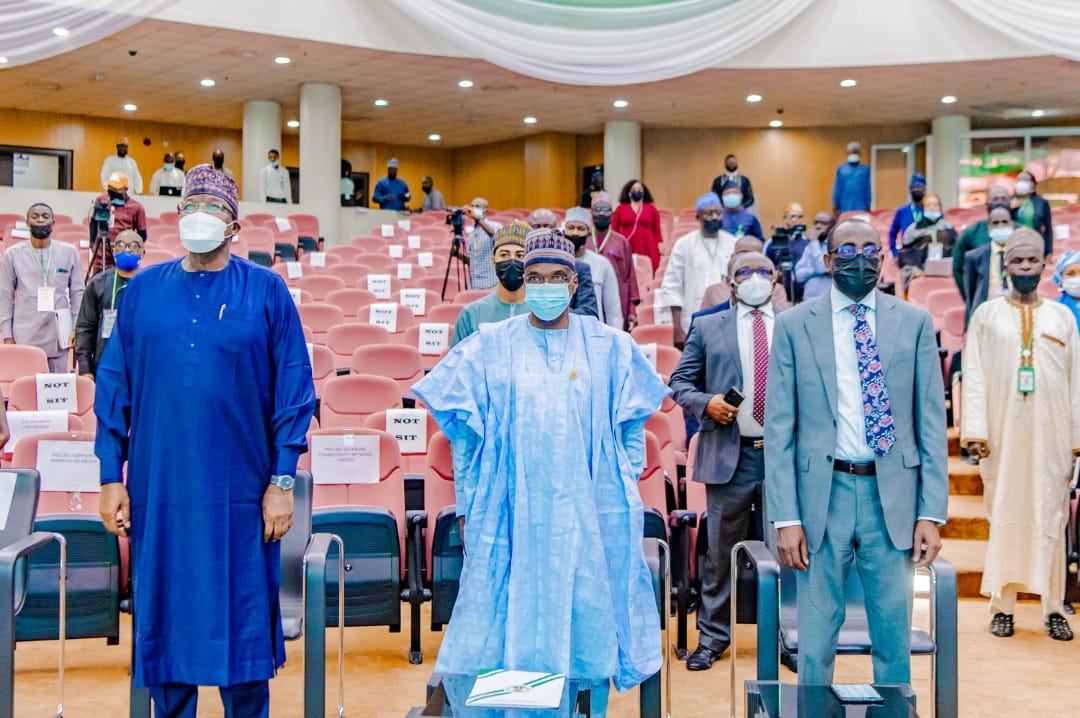
The Honourable Minister, who was represented by the Permanent Secretary of the Ministry, Mr. Bitrus Bako Nabasu said this today in Abuja while delivering his remarks as the chief host and special guest of honour, at the opening ceremony of the maiden edition of “Digitalisation Hangout with DT-TWG Chairmen.”

The hangout is aimed at bringing together Members of the DT-TWG and key industry players.

Prof. Pantami quoted a 2020 Report by Deloitte which indicates that digital transformation can help accelerate progress towards enterprise goals such as financial returns, workforce diversity, and environmental targets by 22%.

He said that, “according to Gartner, global IT spending would reach $3.9 trillion in 2021 as the COVID-19 pandemic continues to act as a catalyst for digital transformation in almost every major industry,” adding that the World Economic Forum has noted that “digital transformation across the globe can benefit the region of $100 trillion between now and 2025.

He gave instances of how DTTWG is instrumental to the implementation of NDEPS, stating that on developmental Regulation, DT-TWG will be required to ensure all ICT and digital technologies-related policies and regulations are adhered to by their organizations in a manner that enables national development.

“Service and Soft Infrastructure are critical to achieving appropriate Government Digital Services (GDS) deployment and strengthening public confidence in the use of digital technologies and services. DT-TWGs are expected to support the Federal Government in developing citizen-friendly digital mechanisms to support service innovations and digital transformation for a Digital Nigeria. DT-TWGs are required to give preference to indigenous digital solutions while making IT decisions in their respective organisations in line with Executive Orders 003 and 005 of President Muhammadu Buhari, GCFR. This is also in line with the NDEPS pillar on indigenous content development and adoption, to mention a few,” the minister stated.

Prof Pantami pointed out that at the centre of this transformation is human capital development, which without it, according to him, nothing can be achieved.


While giving his opening remarks, Director General, National Information Technology Development Agency (NITDA), Mallam Kashifu Inuwa Abdullahi CCIE said, “We expect a drastic surge in digital transformation initiatives within the public sector in the coming years to keep up with the pace of digital shift.”

He estimated as reported by Statista, in 2020, that the global digital transformation spending was $1.31 trillion from $1.18 trillion USD in 2019 which he said is projected that, the spending will reach 1.78 trillion by 2022.

He cited another research by the International Data Corporation (IDC) that predicts the direct digital transformation investments will total $6.8 trillion between 2020 and 2023.


He stated further that, the report confirmed that 65% of the world’s GDP is set to be digitalised by 2022, and 70% of all organisations globally will have accelerated use of digital technologies. This he said, implies transforming existing business processes and models to drive customer engagement, employee productivity, and business resiliency.

“Today, we have achieved another milestone by creating a platform for bringing together the DT-TWG members and the key players in the technology industry. We hope this engagement will foster cooperation between the DTTWGs and technology industry players and provide a platform where experiences, achievements, and challenges will be shared”, the DG said.

“We are optimistic that this will also be a platform for constructive stakeholders’ inputs and buy-in and ultimately a medium for rights decisions and devising feasible strategies towards improving digital transformation maturity in the public sector” he added.


Mallam Abdullahi stated that “we have ensured that the composition of DT-TWG of each Federal Public Institutions (FPIs), consists of 10 members cutting across strategic departments with at least two (2) persons from the IT/ICT/e-Government departments and three other persons from core business departments of the FPIs”.

He explained that this composition is to ensure that the core business and the IT people cooperate and develop the capability to manage digital transformation projects successfully.
According to Mallam Abbdullahi, criteria of membership of the DT-TWG’s mandates that the Group shall be chaired by the Director/Head of ICT/IT/e-Government except where there is no such designation. The Chief Executives are at liberty to choose the leader of the group.

NITDA Boss revealed that the Agency has organised training that lasted for a month in which 442 members were certified. The DT-TWG members were taken through the basic required knowledge to carry out their responsibilities efficiently while leading digital transformation in their organisation.

The Managing Director, Nigeria Communication Satellite, Mrs Abimbola Alale while giving her goodwill message said the hangout is apt as it is coming at the time the Head of Service of the Federation has directed that all government processes should be digitalised.
During a goodwill message delivered by the founder and Chief Executive Officer of MainOne Ms Funke Opeke, mentioned that there is no denying the role that digital technology is playing in transforming the way businesses are carried out. She affirmed her organisations willingness to continue to partner with the Agency to develop a sustainable digital economy.

Other industry heavy weights in attendance includes Executive Vice Chairman NCC, NIPOST, Korea International Cooperation Agency (KOICA) Nigeria, Nigeria Computer Society, Delloite Nigeria, Sidmach, Backbone Connectivity limited, Ntel, Cyberspace limited and many more.

…As Danbatta leads delegation on courtesy visit

Following approval of the National Policy on Fifth Generation (5G) technology deployment in Nigeria by the Federal Executive Council (FEC) on Wednesday, the Hon. Minister of Communications and Digital Economy, Prof. Isa Ali Ibrahim Pantami, has urged the Nigerian Communications Commission (NCC) to prepare for immediate and effective implementation of the policy.

The Minister gave the tall order when the Management of the Commission, led by its Executive Vice Chairman and Chief Executive Officer (EVC/CEO), Prof. Umar Garba Danbatta, paid him a courtesy visit in his office at the Communications and Digital Economy Complex, Mbora, Abuja on Thursday, September 9, 2021.

According to Pantami, with the approval of the 5G national policy, which was a product of extensive and wide consultation, “the next big task ahead of the Commission is to begin immediate implementation to push forward the country’s march to increased digital transformation of the economy.

The Minister, who also commended the Commission on the launch of its Strategic Vision (Implementation) Plan (SVP) 2021-2025, the ‘NCC Global Connect’ podcast and compendium of EVC speeches and presentations, added that the SVP would be a veritable vehicle to give the needed impetus to the implementation of the 5G plan.
“The NCC needs to ensure total implementation of the SVP. We should try to have timelines and ensure to deliver on them.

Developing the Vision Plan is commendable but ensuring diligent implementation is even more important. So, the EVC should commit to total implementation of the SVP,” the Minister said.

On the podcast, the Minister said, as a digital communication channel, “I see it as important because we need more sensitisation. We need to reach out to citizens and create awareness about our regulatory activities, change certain perceptions and counter some conspiracy theories against technologies and many more. The podcast is one of the best ways we would be able to achieve this,” he said.

Speaking earlier, Danbatta said the purpose of the visit was to “appreciate the Hon. Minister for his immense support and active role during the recent launch of three projects by the Commission; and to commend him for the important role he played in securing the final approval of the 5G national plan by the Federal Government.”

While describing the Federal Government’s approval of 5G national plan as “a development of unprecedented and profound historical significance to the Commission, telecom industry and other economic sectors,” Danbatta assured of NCC’s determination to diligently implement the 5G plan for the overall socio-economic benefits of Nigeria.
The EVC was accompanied on the courtesy visit by senior Management staff of the Commission. They include the Executive Commissioner, Stakeholder Management, Adeleke Adewolu; Director, Legal and Regulatory Services, Josephine Amuwa; Director, Corporate Planning, Strategy and Risk Management, Felix Adeoye; Director, Public Affairs, Dr. Ikechukwu Adinde; and the Director, Human Capital and Administration, Usman Malah.

by
Prof. Chidi Emmanuel Akujor, FAS
FRAS (UK), FNIP, FSESN, FRAES, FASN.

Introduction

This is a book that has a total of 531 pages including 27 preliminary pages. It is well organized in 8 sections with each section corresponding fairly with 8-point Agenda of the Strategic Vision Plan (SVP) of the EVC’s first tenure. The organization of the book in time sequence makes for excellent reading and clear understanding of the activities of Nigerian Communications Commission, NCC in the last 5 years.


The forward is beautifully presented by the late quintessential elder statesman, Ahmed Joda, CFR. It is unfortunate that he didn’t live to witness this great occasion. I shall proceed by looking at content of the book in 8 sections corresponding to the 8 SVPs.

The content
Section 1 exposes the meaning of broadband and broadband ecosystem and their benefits in enhancing socio-economic development (including GDP improvement), particularly in a developing economy like ours. It explains in diverse ways that the broadband referred to here is; available, affordable and sustainable broadband. The section compares Nigeria’s performance in broadband access and penetration with the rest of the world and sets the tone for what NCC had intended to achieve in subsequent years as not just a regulator but as a vehicle for “transporting” Nigeria’s digital economic growth.

The major challenges bedeviling the telecommunications industry, which have impact on the quality of service are identified and the efforts at addressing them are discussed. The reward for the successes recorded in this sector includes multiple international awards and recognition so far accorded Nigeria, which are listed in this section.

It also describes the structure and mandate of the Universal Service Provision Fund (USPF), including its enabling laws and sources of funds. The major milestones and current/future critical projects and connectivity programmes of USPF have been listed.


Section 2 deals with the technical and non-technical issues to be tackled in order to improve the Quality of Service (QoS) in Nigeria. It also identifies those factors that degrade the quality of service and explains the efforts of NCC to tackle the problems, including the existence of QoS task force in the commission. More so, it explains the collaboration of the commission with the relevant stakeholders and government agencies to improve the quality of service, particularly in telecommunication sector.

Section 3 deals with optimal use and benefits of (radio) frequency spectrum. This section also explains the decisions and measures taken by NCC under the watch of Prof. U.G Danbatta to ensure better and more efficient use of radio spectrum.

It identifies and deals with roles of “disruptive technologies” like mobile internet, cloud computing, “autonomous” and “non autonomous” vehicles in changing the world and the need to effectively prepare Nigeria for the emerging global competitiveness. In doing this effectively, NCC takes some measures like “creating a framework for spectrum trading and a roadmap for infrastructure sharing and by discouraging anti-competitive conducts in the telecommunication sector.

This section also identifies some of the landmark achievements of NCC so far. For example, NCC was able to achieve a remarkable broadband penetration of 33.70% (April 2019) compared with 8.50% (2015), surpassing a projection of 30%. Nigeria also achieved a teledensity of 91% corresponding to 173.6million lines (April 2019). The sector’s contribution to the GDP was about 14.30% (2020) compared with 8.50% (2015), which corresponds to a whopping contribution of N2.27trillion.

Section 4 exposes the imperative of using ICT to improve innovation and promote economic growth. It explains a lot of the NCC’s interventions in the education sector. These include capacity building efforts using USPF support programmes and the activities of Digital Bridge Institute (DBI). It also showcases the role of NCC in ensuring the deployment of ICT tools in the health, financial services, transport sectors etc. The aim is to ensure that ICT sector benefits from the deployment of broadband infrastructure for economic diversification and free us all from the stranglehold of crude oil. A major work of NCC explained in this section is the promotion of research and innovation through collaboration with academia and the promotion of “hood, town and industry” collaboration. This includes the award of generous grants to academia to pursue research relevant to the telecommunication industry.


In section 5, the book explains in detail the collaborative efforts of NCC and the various stakeholders. This section succinctly lists the partners to include the three tiers of government and government functionaries, the licensees, different sectoral regulators, law enforcement and security agencies, investors in the industry, academia, the media and other professional groups.
It describes the efforts of the Danbatta administration to initiate and manage inter-relationships with these relevant interests in order to sustain growth in the sector. These “strategic co-operation and partnership are also needed to prepare the nation for other emerging technologies in the ICT sector. The EVC explains the efforts of NCC to enhance “research and development” in our educational institutions and consequent linkage with industry. This is needed not only for capacity building, but to enhance research in the universities, polytechnics and other colleges. It will help to make the educational sector competitive in the global milieu. In addition, the EVC enjoins the other agencies to support our higher institutions with complementary framework to ease infrastructure deficit.

This section also describes the essence of synergy between NCC and the financial sector represented by the central Bank in order to achieve the nation’s quest for efficient and safe financial services. It also explains the role of NCC, in collaboration with others in enhancing the establishment of Nigeria Computer Emergency Response Team (ngCERT) coordination Centre. Indeed, it is an intellectual treatise on the shades of cybercrime and how to stay safe (protect your identity and data) particularly, in the post Covid era.


In section 6, Prof. Danbatta explains the centrality of the consumer to the work of NCC by the declaration: “Consumer is king”. The consumer is entitled to and desirous of a safe environment to live his or her life free from telecom and cyber harassment or e-fraud. NCC has been diligent in taking measures to stem ‘e-pollution’ which includes unsolicited messages, consumption of sub-standard devices, regulation of e-waste, prompt and efficient handling of consumer complains etc. This is even more relevant now that consumers are increasingly relying on telecommunication networks for financial transactions. NCC, therefore sees the need to ensure and assure the consumer of the safety of personal data through constant and continuous consumer engagement.

This section also explains the efforts of Professor Danbatta to tighten SIM registrations and curb such practices as call masking/refilling and SIM boxing, which are avenues for perpetuating e-fraud.

Section 7 deals with the role of fair competition in stimulating growth in the telecommunication industry and ICT. The benefits of instilling the spirit of fair, firm and forthright practices amongst the staff have also been cardinal to the work of EVC, these are practices that instill confidence in the cyber space, which in turn attract both local and national investors.

Here, we are given a new definition of poverty (information/ digital poverty) according to Subbiah Arunachalam as “lack of access to the internet in the developing world”. It explains that ICT on its own doesn’t imply development but is an enabler of development provided the environment is conductive and non-restrictive to youth, women and all vulnerable groups. When we improve ICT penetration and accessibility (including affordability, there will be stimulated growth in Agriculture, Trade, Finance, Transportation, Insurance, Educational delivery etc. Indeed, this is a necessary condition for growing the knowledge economy.

In the last section, Prof. Danbatta exposes the imperatives of ensuring regulatory and operational efficiency in achieving the “public good”. It is clear that “public good” means achieving socio-economic upliftment of the average citizen. This is actually the essence of the Nigerian Communication Act 2003 which followed the previous associated laws or decree. But it in noteworthy that this is encapsulated in the NCC mission: “to support a market driven communication industry and promote universal access” and its vision: “To be a responsive world class communication regulatory organization”.

The essence of the book
In my opinion, Professor U.G. Danbatta exposes himself as an unrepentant intellectual. On assumption of office he sets up a committee and articulates his vision and publishes it for all to see. At the end of his first tenure he has published a book that clearly says what his ambition was and does a self-assessment of his milage in that extra-ordinary leadership journey.
In this book he has given a lot of credit to his predecessors, his directors and other workers, members of the board and all others who in one way or the other have impacted on his leadership. In a country where leaders not only jettison the projects of predecessors but cancel previous projects, this is unprecedented.

The EVC has not forgotten his original constituency, the academia. Indeed, the word “academia” was mentioned 25 times and only trailing “National Broadband plan” mentioned 31 times. This connection with the word “academia” is obvious, because the availability of ubiquitous broadband to the academia is a game changer for vibrant and competitive teaching and research activities in our educational institutions, particularly if we are able to fund the last mile connections between our campuses and the national fiber optic cables which mainly run on the highways.

Also, the government of the day deserves some commendation for appointing Prof. Danbatta, a core professional as the EVC and renewing it for a second term. When a round peg enters a round hole the result is a fitting production orifice.

Finally, who is this book for? I am convinced that it is more than a collection of speeches and presentation. It contains so much data, graphs, sketches, plots etc. The list of useful abbreviations of phrases relevant to the industry is provided. Furthermore, the language is very simple while the organization and the printing are superb.

It will be a very handy document for all industry players, International partners and all telecom enthusiasts who need a lucid explanation of the interplay of forces between the telecommunications and ICT arena. For my colleagues in academia and fellow students (postgraduate and undergraduate), it is a practical handbook and guide to telecommunications and ICT in Nigeria and their relationship with global practices.

I sincerely recommend this book to all.

Thanks.