The Lagos State Government has reaffirmed its commitment to support youth and student engagements in different agricultural value chains in order to encourage them to become more productive as adults in the agriculture labour force.


Commissioner for Agriculture, Ms. Abisola Olusanya, stated this today at the Schools’ Agric Quiz Competition for students of public senior secondary schools in Lagos as part of activities lined up to celebrate Y2021 World Food Day in the State.

Ms. Olusanya, who was represented by the Permanent Secretary, Ministry of Agriculture, Mr. Hakeem Adeniji, explained that the youth support initiative will solve the problem of unemployment and vacuums being created by the ageing farmers, just as it would mitigate the possible effects of global food crisis.
She stressed that the vision of the Ministry is to sustain food security, through youth and women empowerment, with significant private sector involvement.

According to her, this vision is in tandem with the focus of the Lagos State Development Plan in Agriculture, which is to move the present local food production from 18% to 40% of food demand by Y2025 in order to match the continuous increase in the State’s population.

The Commissioner noted that the Ministry of Agriculture has been providing different platforms for youth engagement, through training and capacity building under various projects and programmes in different agricultural value chains, for job creation, youth empowerment and poverty alleviation.

She said: “Some of such programmes include the Summer School Programme, the Schools’ Agricultural Programme (SAP), Eko Schools’ Agricultural Comic and the Women and Youths Programme under the Agro-Processing, Productivity, Enhancement and Livelihood Improvement Support (APPEALS) Project.

“Others are the Lagos Agripreneurship Programme (L.A.P.), the Cage and Pen Culture Programme and the Young Africa Works (YAW) Nigeria Programme in collaboration with the International Institute of Tropical Agriculture (IITA)/ Africa Projects Development Centre (APDC)/Mastercard Foundation among others,” the Commissioner stated.


…Restates 97% readiness level.

The Nigerian Communications Commission’s (NCC’s) plan for Fifth Generation (5G) technology deployment in the country continues to gather momentum with the Commission confirming that its readiness to begin full implementation is at 97 per cent.

The Executive Vice Chairman of NCC, Prof. Umar Garba Danbatta, re-affirmed the status of the Commission’s 5G technology deployment at the annual African Tech Alliance Forum (AfriTech 2021) held in Lagos on Wednesday, October 13, 2021 with the overarching theme: “Embracing Changes and Digital Transformation in the New Normal.”

Focusing his presentation on “NCC as a Digital Transformation Crusader and Nigeria’s in-Road to 5G Deployment,” Danbatta stated that, following the advent of COVID-19 pandemic, there has been a change in the dynamics of people’s interaction, especially on the Internet. According to him, almost every means of communication has become virtual in one way or the other.

Danbatta, however, stated that this paradigm shift in communication has led to significant increase in network connectivity requirements as a result of unprecedented upsurge in Internet traffic, occasioned by the use of a plethora of web applications such as Zoom, Microsoft teams, WebEx, Goto, Webner and so on. He said this has made remote work, virtual meetings, virtual studies and virtual healthcare delivery, among others, the new normal.

According to Danbatta, even though, the network infrastructure in Nigeria has demonstrated some capacity to contain the surge in internet traffic, a lot of work is being done by the Commission to boost network capacity, sensitise the public and ensure accessibility to affordable connectivity during the period of the pandemic and beyond.

Due to the network traffic demand, the EVC said the NCC is working with operators to implement a number of initiatives to ensure network expansion. These, he said, include ongoing plan to auction spectrum in 3.5 gigahertz (Ghz) band to operators for the deployment of 5G network in Nigeria.

“Consistent with our mandate as enshrined in the Nigerian Communications Act 2003 (NCA-2003) and other guiding legislations, we have been working to ensure the penetration of broadband services in line with Federal Government’s targets, as contained in Nigerian National Broadband Plan (NNBP), 2020 to 2025.

“Already, we are set for the auction some spectrum slots in 3.5GHz band. The other day I was at the National assembly, I informed the senate that we were 95 per cent ready for 5G. Today as we speak, I am delighted to tell you that we are already at 97 per cent completion,” Danbatta said.

“The Committee set up to auction the Spectrum has already developed and Information Memorandum (IM) which is already published for inputs and comments from all industry stakeholders. Prior to this, a 5G deployment plan was developed and we have since secured Federal Government’s approval,” he said.

He said this is in addition to a lot of other initiatives being put in place by the Commission to improve broadband connectivity in Nigeria, adding that the surge in Internet traffic induced by Covid-19 has continued to challenge National Regulatory Authorities (NRAs) and other arms of governments to ensure deployment of adequate resources such as spectrum and other forms of support to increase network resilience and accessibility to telecommunication services.

“Emerging technologies such as 5G, which NCC is driving aggressively in Nigeria, Internet of Things (IoT); Cloud Computing; Quantum Computing Augmented/Virtual Reality, and similar emerging technologies are playing a critical role in improving remote communication over the internet with great user experience. The NCC is committed to promoting this inevitable change and enhance user experience through effective regulation of the telecoms sector,” the EVC said.

The EVC was represented at the event by Engr. Oluwatoyin Asaju, Director, Spectrum Administration. Also in attendance was The Director, Public Affairs, Dr. Ikechukwu Adinde.

Other key industry stakeholders participated at the one-day Forum, which also featured exhibition by some sector players.

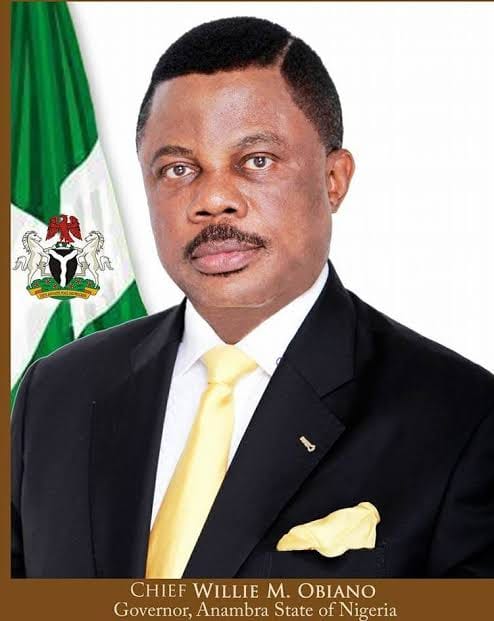
Our attention has been drawn to the false report in the media alleging that the convoy of the governor of Anambra State, Chief Willie Obiano was attacked by gunmen today in Ihiala Local Government Area of Anambra State.

We wish to inform the general public that the report is a blatant lie without a shred of truth in it. The fact is that when some gunmen engaged security operatives in a shootout in Ihiala today, Governor Obiano was attending a pre-scheduled political rally in Ogbaru Local Government Area along with Prof Chukwuma Soludo, the standard bearer of the All progressives Grand Alliance in the November 6, 2021 gubernatorial election in the state.

The Ogbaru campaign was highly successful with a large turn of party members and supporters who came to reassure Prof Soludo and APGA of their support in the coming election. There was not a single incident of violence in the campaign venue and its surroundings and Governor Obiano and his fellow party men and women all went home peacefully after the rally.

The report that Governor Obiano’s convoy was attacked is obviously false and should be disregarded by well-meaning members of the society.

Governor Obiano deeply regrets the shootout at Ihiala today and the attendant loss of lives. He calls on all the politicians involved in the ongoing electioneering campaign in the state to join hands with him in calming the political temperature of the state in order to ensure a peaceful and fair election on November 6, 2021.

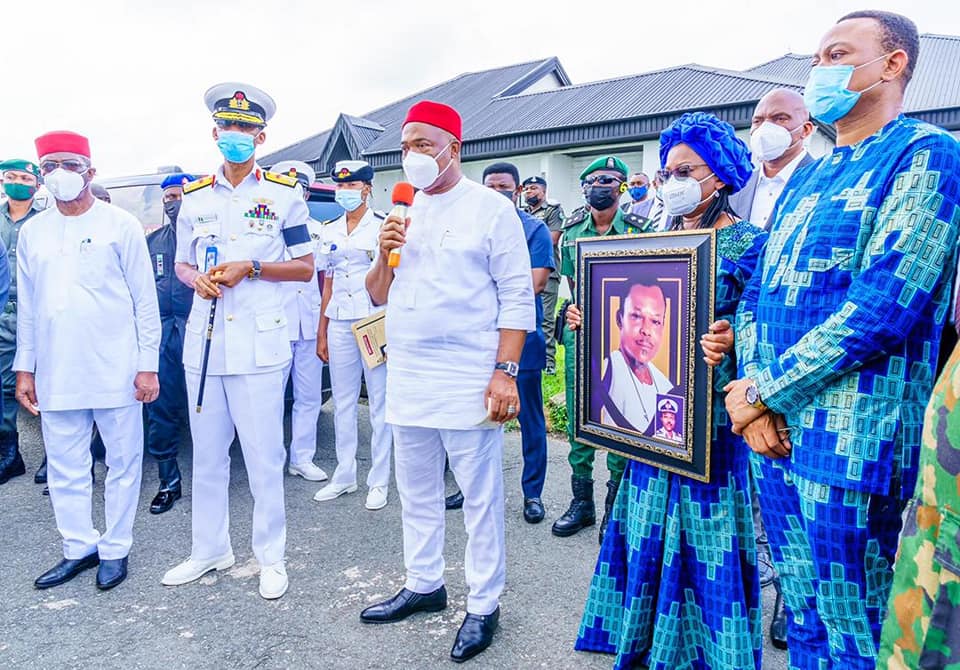
With an Excellent Military career that grew exponentially, Rear Admiral Ndubuisi Godwin Kanu rose to the membership of the defunct Supreme Military Council and later to the position of Chief of Naval Operations and Director of Logistics, Joint Operations. The General distinguished himself with dedication to his career and patriotism to the nation, this earned him numerous State and National honors.


During his tenure as the Military Governor of Imo State from 1976 to 1977, Rear Admiral Ndubuisi Godwin Kanu brought in a lot of developmental projects to the State, including the engagement of Town Planners for the development of the State. His love for the people and for development yielded productive output in the state including but not limited to the creation of additional Local Government Areas in the State, bringing the number to 21.

The Late General would greatly be remembered for his immense contributions to national cohesion and growth as he unapologetically championed an end to Military rule and the return to true Federalism. On behalf of the Government and good people of Imo State, we join the Government, good people of Abia State and the Family to mourn the Late Rear Admiral Ndubuisi Godwin Kanu as he reunites with his maker.

As we eulogize him for his outstanding performance as the Military Governor of Imo State, by an Executive Order, the Heroes Square is now renamed Rear Admiral Ndubuisi Kanu’s Square.

  • Hope Uzodimma
May be an image of one or more people, people standing and outdoors

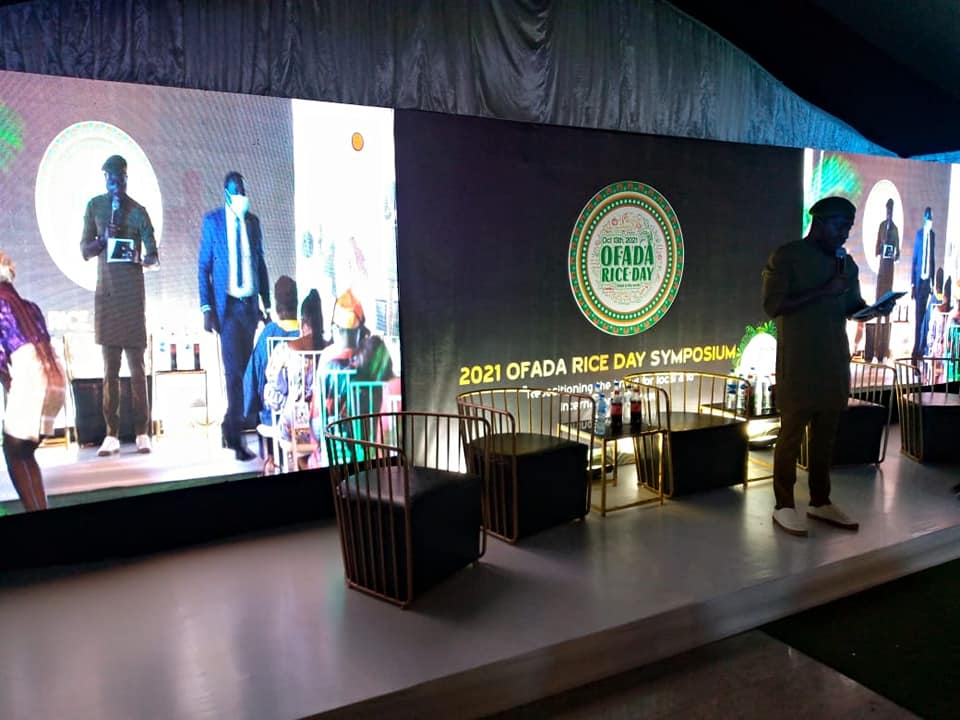
The Lagos State Commissioner for Agriculture, Ms. Abisola Olusanya, has called on Ofada Rice farmers in the State to focus on rebranding the produce for market visibility and global acceptance.

Ms. Olusanya gave the charge at an Ofada Day Rice Symposium put together by the Ministry and Ofadaboy as part of activities marking the celebration of Y2021 World Food Day in the State.

Represented by the Permanent Secretary, Mr. Hakeem Adeniji, the Commissioner noted that the rebranding could be achieved by promoting the dietary and health benefits of Ofada rice as well as engaging in standard processing, pointing out that the grains must be organic, odourless, homogeneous, free from impurities and appropriately packaged.

According to the Commissioner, the State government is continually encouraging and empowering Ofada rice farmers, especially those found in locations such as Ise and Obada in Ibeju Lekki Local Government, to sustain and improve the local Ofada rice brand.

She opined that the State Government would continue to support farmers, encourage small and medium scale Agro-processors, while also creating an enabling environment for private sector involvement in agriculture in order to grow the State’s economy through agriculture and food sufficiency.

Her words: “The acceptability of this brand has been hindered by the method of processing and packaging. The locally processed Ofada rice has a pungent smell as a result of fermentation during parboiling. There is also the issue of impurities such as the presence of stones in the rice. Most people have erroneously attributed the smell as a genuine property of Ofada rice and this does not meet international standards”.


The Commissioner explained that in order to correct these errors and put Ofada rice on the global map, the Rice for Job Programme of the Lagos State Government, in 2008, commenced the promotion of hot water soaking of Ofada rice during parboiling as well as putting dried paddy in a destoner machine to eliminate stones and other impurities during milling.

Reiterating the envisaged positive effects of the Imota Rice Mill on production and supply of the commodity, Ms. Olusanya said, “The Lagos State Government’s 32 Metric Tonne per hour capacity integrated Rice Mill at Imota, Ikorodu LGA, the biggest in Nigeria and in West Africa, is nearing completion and at full capacity, it would produce 2,400,000 bags of 50kg polished parboiled rice from about 200,000 Metric Tonnes of paddy rice annually. It is expected that no fewer than 250,000 direct and indirect jobs would be created along the entire rice value chain.”

She noted that the theme of the symposium which is “Repositioning the Brand for Local and International Markets”, aligns with the theme of this year’s World Food Day, “Our Actions are our Future: Better Production, Better Nutrition, a Better Environment and a Better Life”.

The Deputy Medical Director, General Hospital, Ijede, Dr. Olumuyiwa Balogun-Oluwa, has charged members of staff to always exhibit the right attitude in the workplace in order to maintain a positive and good organisational image.

Dr. Balogun-Oluwa spoke while outlining the activities planned to mark the year 2021 World Customer Service Week, noting that the right attitude in the workplace facilitates an accomplishment of the organisation’s goals and objectives, just as it promotes cordial interpersonal relationships.

He explained that attitude is a way of feeling, thinking, treatment or behaviour exhibited towards others, maintaining that abnormal attitude arises from either economic or social situations affecting people.

“When you are able to change the attitude of people, you will be able to successfully gain the confidence of the clients thereby leading to an increase in revenue and productivity”, Balogun-Oluwa said.

According to him, studies have revealed that attitude is formed when a child grows up to take after certain behavioural patterns in his immediate environment, maintaining that family background, peer group influence, educational background, religious affiliation, cultural background, life expectations and societal expectations are some of the contributing factors that shape the attitude of man.

Balogun-Oluwa maintained that Conflict is one of the major causes of poor attitudinal issues in humans, stressing that conflict exists whenever two or more goals are incompatible while choosing one can cause stress from failure to deal with the other.

The Deputy Medical Director, therefore, emphasised that workers must be constantly educated on the need for attitudinal change in the workplace, informing that it would help every member of staff develop personal integrity and confidence in relating well with the internal and external public, as well as improve on communication skills, self-belief and organisational management.

While submitting that negative attitude can be reduced in society, Dr. Balogun-Oluwa said it is imperative for persons to treat others with respect, courtesy and love, stressing that individuals should brace up and face the stressful challenges of life in order to have a positive attitude to enjoy the workplace experience.

“A happy staff is a happy customer, when the staff are happy, their attitude will be positive and a happy client leads to good patronage”, the DMD affirmed.

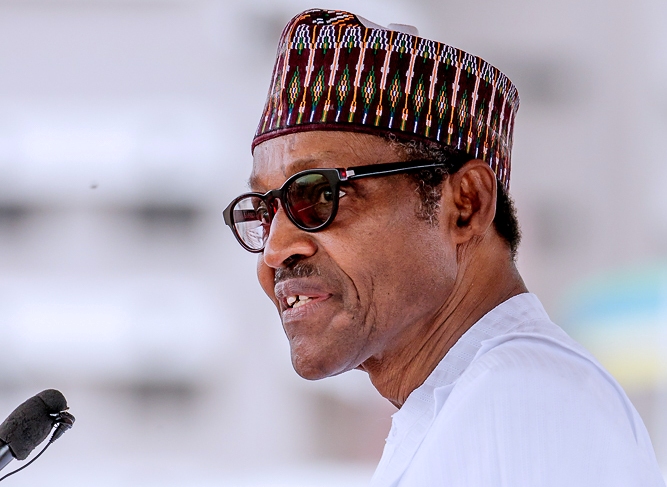
President Muhammadu Buhari Tuesday in Abuja directed cabinet ministers and permanent secretaries to redouble their efforts and work in synergy toward total delivery of this Administration’s set target to improve livelihood of all Nigerians.
The President, who gave the directive at the end of the two-day Mid-term Ministerial performance review retreat, also instructed the ministers to ‘‘ramp up implementation’’ of their mandates along the Nine Priority Areas of this Administration.

The President also stressed the need for synergy between the fiscal and monetary authorities in the country to keep the economy on the trajectory of growth.He noted that intensive discussions at the retreat provided an opportunity to reflect on what this administration has done and areas it needs to improve and refocus attention.

‘‘The retreat provided an opportunity for us to undertake an objective assessment of our stewardship in line with the contract we signed with the Nigerian people to deliver on our electoral promises.

‘‘From the assessment report and discussions at this retreat, I am glad to note that progress has been made towards the achievement of our objectives.
‘‘The independent performance assessment report presented on day one of the retreat, indicates that significant progress has been achieved in the delivery of the Ministerial Mandates.

‘‘Distinguished participants, the discussions at the retreat have prompted the need for us to ramp up implementation on the deliverables.

‘‘We must close the gaps in our implementation efforts to ensure that we attain set targets by 2023,’’ the President said.

To achieve this, President Buhari, therefore, directed the Office of the Secretary to the Government of the Federation (SGF) to immediately begin the process of convening quarterly coordination meetings for each priority area based on the collaborative results framework.

He explained that the aim of these meetings is to ascertain status of implementation across the nine priority areas, identify bottlenecks, and proffer immediate solutions.
‘‘All Ministers and Permanent Secretaries must be in attendance. These are not meetings to delegate,’’ he said.

Further, the President instructed the Office of the SGF to immediately commence engagement with stakeholders to agree and push forward a framework for the institutionalization of the Central Delivery Coordinating Unit.

‘‘All Ministers and Permanent Secretaries are to promote a robust performance culture across the Ministries, Department and Agencies (MDAs) by setting up intra-ministerial delivery task teams,” he said.

Similarly, the President directed the Head of Service to, as a matter of urgency, invest in capacity strengthening of the Planning, Research and Statistics departments in all MDAs. ‘‘This should be done in collaboration with the Central Delivery Coordinating Unit,’’ he said.

Underscoring the need for synergy between the fiscal and monetary authorities, the President assured Nigerians that this Administration will continue to implement fiscal measures to improve domestic revenues and mobilize external funding support to build a more resilient economy.

President Buhari pledged that issues around expanding access to quality education, affordable healthcare and productivity of Nigerians will be given priority attention within the period of this administration.

‘‘We will sustain all on-going efforts in rebuilding our health system through targeted investment in the health sector, especially our vaccination drive to halt the spread of the Coronavirus pandemic.

‘‘This Administration remains committed to providing the education and training required for employment and entrepreneurship, particularly using technology to impact the relevant skills on our youths.

‘‘Our Social Investment Programmes will be sustained in the coming years.‘‘We will continue to reach out to the poorest and most vulnerable households through the National Cash Transfer Programme and other initiatives of Government,’’ he said.

According to the President, the Ministry of Humanitarian Affairs, Disaster Management and Social Development has been directed to come up with a legislative framework for social protection that also guarantees its funding stream.

He added that in view of the critical role of Micro, Small and Medium Enterprises in economic growth and development, efforts will be geared towards removing all bottlenecks that militate against access to government support schemes by SMEs.


‘‘Government will adopt a holistic approach to industrialization that is aligned with Nigeria’s aspirations and requirements, working closely with key stakeholders in the private sector. We will continue to support SMEs in view of their multiplier effect on the economy,” he said.

On the National Single Window Project, the President also directed the Minister of Finance, Budget and National Planning to ensure all relevant MDAs involved in the implementation of the project complete all processes needed for effective take-off of the National Single Window platform by first quarter of 2022.
The President also spoke on the administration’s determination to build systems to fight corruption and improve governance, saying:

‘‘We will continue to address the issues that foster corruption and impair transparency in the management of public resources. Efforts will be geared towards improving coordination and synergy between anti-corruption agencies.’’
On infrastructure, the President promised that the Federal Government will prioritize funding and ensure that all high-priority ongoing infrastructure projects are completed before the end of this Administration.

He announced that the Presidential Infrastructure Development Fund would continue to support the delivery of legacy infrastructure projects across the country.


On his assessment of the retreat, the President said:

‘‘I am confident that the lessons we have learned in the last two years of implementing our policies, programmes and projects will serve as the needed tool to propel every Ministry to remain committed, towards the achievement of our developmental objectives.”

The President commended the SGF, Boss Mustapha, and his team for successfully organizing the retreat, as well as the resource persons that added immense value to the process.

The Nine Priority areas set out by the administration include: building a thriving and sustainable economy, enhancing social inclusion and poverty reduction; enlarging agricultural output for food security and export as well as attaining energy sufficiency in power and petroleum products.

Others are expanding transport and other infrastructural development, business growth, entrepreneurship and industrialization; access to quality education, affordable healthcare and productivity of Nigerians.

The administration has also prioritised building a system to fight corruption, improve governance and create social cohesion as well as security for all.

Femi Adesina

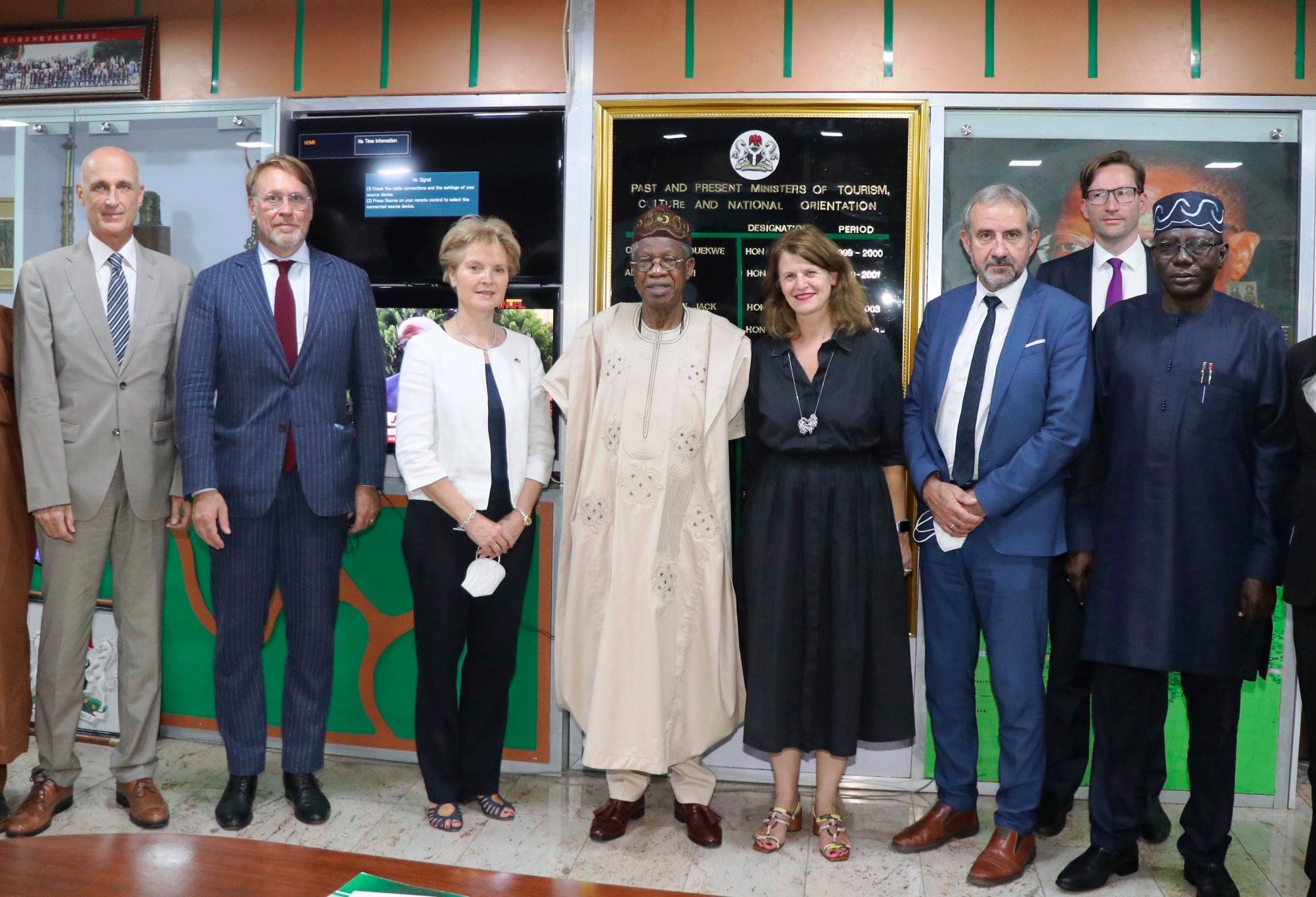
The Minister of Information and Culture, Alhaji Lai Mohammed, has described the Memorandum of Understanding (MoU), signed between Nigeria and Germany in Abuja on Wednesday, as a major step toward the repatriation of hundreds of Benin Bronzes from Germany next year.

The Minister, who spoke when he received the German government delegation that came to Nigeria for the signing of the MoU, said it marked the beginning of efforts that will culminate in the signing, in December 2021, of the agreement on the repatriation of the Benin Bronzes.

He said a team of experts will leave Nigeria very soon to engage with stakeholders in Germany on the repatriation of the artifacts.

“A team of experts will be visiting the some museum in Germany very soon and the whole idea is again confidence building to especially assuage their feeling of loss and make it lighter and easier for them and to also make their position more tenable with the people,” he said.

Alhaji Mohammed said even though Germany acquired the artifacts through global trading in artifacts, it had voluntarily agreed to relinquished them in order to further strengthen the bilateral ties between Nigeria and Germany.

“The German Government and the German people have taken a bold step by agreeing to voluntarily, without too much coercion on the part of Nigeria, to return these artifacts. Because what the return of the artifacts will do is that it’s going to really cement further relationship between Nigeria and Germany. Culture today has become one of the effective tools for soft diplomacy,” he said.

The Minister said with this gesture, German has become the first country to willingly decide to return about 1,130 pieces of artifact to Nigeria, stressing that the gesture will further endear Nigerians, especially the people of Edo State, to the people and Government of Germany.

“The return of the artifacts should not be an end of an era but rather the beginning of further cooperation between the two parties,” he said.

In his remarks, the Director General for Culture and Communication of the German Federal Foreign Office, Dr. Andreas Gorgen, said the release of the artifacts is part of a cultural policy that will contribute to healing the wound inflicted by the looting of the artifacts from Nigeria and to establishing new relationship between Germany and Nigeria.

He commended the efforts of the National Commission for Museums and Monuments and said the signed MoU was based on what the Minister initiated during his visit to Germany earlier in the year.

Members of the German delegation included the Director of the Museum at Rothebbaum, Prof. Barbara Plankensteiner; President of the Prussian Cultural Heritage Foundation, Prof. Hermann Parzinger and the German Ambassador to Nigeria, Birgitt Ory.

Segun Adeyemi

With the growing number of online transactions taking place each day comes a marked rise in cyber-attacks and security events. According to Ryan Mer, Managing Director, eftsure Africa, a Know Your Payee™ (KYP) platform provider, fraudsters are constantly finding new ways to exploit vulnerabilities and attack corporate payment systems. “Many scams, hacks and security breaches begin with social engineering, a term used to describe the act of convincing someone to divulge information that they shouldn’t share or take an action that’s not in their or the organisations best interests, such as clicking a suspicious link, or changing a supplier’s banking details” says Mer. 

What makes social engineering so effective is that scammers rely on human impulses to be helpful, avoid conflict, and problem-solve quickly and effectively, in order to extract information or manipulate targets into taking action. Cybercriminals routinely rely on creating a sense of urgency in their victims. Mer says phishing messages and business email compromise (BEC) scams are designed to make employees more likely comply with a potential threat that they know they should report.

A recent INTERPOL report on the impact of Covid-19 on cybercrime has shown a significant target shift from individuals and small businesses to major corporations, governments, and even critical infrastructure. According to the report, cybercriminals are developing and boosting their attacks at an alarming pace, exploiting the fear and uncertainty caused by the unstable social and economic situation created by the pandemic. “The general consensus among information security experts is that eliciting a strong emotional response, like fear or uncertainty, make people more susceptible to a social engineering attack. Without robust internal controls, there is a greater likelihood that your organisation will face potentially costly human error”, notes Mer.

He adds that in many organisations there is a concerning disconnect between the theoretical controls in place and what actually happens in everyday business contexts. “Technology can help to close the gap and improve controls over key processes, like the collection of payment information and verification thereof. Internal accounting systems rely heavily on the integrity of the information inputted into the system which makes them vulnerable to error. Even with stringent sign-off procedures and appropriate segregation of duties, all amendments to information should be checked. Although business ERP systems have user rights and controls it doesn’t prevent a business from being exposed to potential internal fraud or an external hack.”

eftsure’s SaaS platform is making a big difference in businesses of all sizes by automating key checks and processes that would otherwise be vulnerable to manual, human error or manipulation. The fintech company provides verification of payee and payment data software to businesses to protect against payment fraud in the B2B sector: “We provide a platform to digitise and automate the verification of payees and eft payment data, on a continuous basis through our KYP technology. eftsure protects companies against fraud and error made through incorrect, fraudulently changed or maliciously altered payee information,” says Mer.

Tell us more about Technology Global?

Technology Global Services Limited was created out of a need to resolve technical problems in the printing sector, the company over the years has been at a cutting edge because of the heavy investment in factory trained Nigeria engineers ensuring that every customer’s investment is protected by making sure the equipment runs always. The promise of a near zero downtime has helped increase patronage as we believe that a customer’s job is to ensure they put printing jobs on the machine while we ensure that those machines keep running.  We love to sell tested and proven print technology so we represent topline equipment manufacturer, we also love to see businesses grow, thanks to our ever-evolving non- traditional approach; from helping customer to conceptualize, to procurement, deployment, installation, operator training, commissioning and then super after sales support. We can say we are a dependable partner to our ever-growing list of happy customers as we ensure being always flexible and easy to collaborate with and constantly improving and transferring knowledge. Recently we brought home all we have learnt globally and started to manufacture made in Nigeria printing machines, our long-standing dream is now empowering some young people, we hope to keep getting better so that we can start exporting made in Nigeria printing equipment

As an IT firm do you think that your eCommerce site is sustainable?

We are not really an IT firm but sure we use technology to solve printing problems, and we have encouraged especially our textile printing customers to embrace eCommerce, some of them are selling their quality prints to their own customers abroad, the ecommerce site is helping them earn forex so in my opinion there is no other way to define sustainability.

Do you think that Nigerian market is ripe for full eCommerce because of logistic challenges?

One of the positives that COVID 19 pandemic brought was an embracing of eCommerce, supply chain disruption, restriction of movement made people see that we had to use other methods to get our goods to us, recall that there was a ban on bike transportation popularly called “okada” and a host of this operators embraced dispatch riding, this also prompted easier logistics, like any other sector that people see a need for, we will continue to  experience growth and evolution of ecommerce and the logistics that will come with it

What are the sales support system that you have in place?

Sales support refers to variety of functions that helps sales executives focus on selling and closing deals. Recall that our industry is capital intensive so a proper knowledge of what we sell and its application is our first focus, we ensure sales people are well grounded and can display a flavor of their knowledge about the subject matter. In house training, cases studies during brain storming sessions are for us a way of life, there is a level of knowledge that is required before you even step out to engage a client. Then we arm them with series of sales tools like Videos, return on investment calculators, cost per print analysis, presentations that compare apples with apples etc

Fake parts are things that are rampant in the market, how are you dealing with this?

We are the dealer for known suppliers in Nigeria, we represent Agfa for computer to plate systems, Xeikon for industrial digital label and document presses, and when we talk entry level label printers, we represent Afinia, screen printers are covered as we represent M&R, for textile printers we have products from Polyprint (for DTG and DTF), and Dgen (for roll to roll direct to textile), the flexible packaging world we are handy with Esko products and AVT for their inspection systems. As a company we stock major spare parts for this equipment, so it will be safe to say we are actually solving the problem of substandard spare parts.

What are the challenges that you face in the business?

Challenges are part of business; we constantly evolve the business with extreme focus and creativity. Like every business we also face challenges of founder dependence, burnout and fatigue, money management, selling the vision to staff and stakeholders, staff retention, managing diversification and so on.

What are Nigerians to expect from you this last quarter?

We did position for this quarter, when the pandemic came, it did come with so much uncertainty and confusion but luckily we were part of the first to snap out, we had an online general meeting first with the management team then all staff and we decided that we will bring all we have learnt globally home and apply them locally, we agreed that we will use engineering to solve difficult problems, we took on electricity problem and locally produced solar power for our office, so today we can provide alternative power supply for small printing equipment, then we produced VESA coined out of Vitalis Ebiziem and Sulemon Aniyera, our top super engineers whose conceptualized and designed the exposure unit for screen printers that expose using sunlight today, with the small equipment they can buy an affordable equipment powered using their “I better pass my neighbor” generator any time of the day even when it’s raining or when the sunshine has disappeared at night.

While we were still at it, a client, another screen printer asked if we could manufacture a mesh stretching unit and a month after, we had it fully fabricated and delivered, this then motivated us to produce a one platen multicolor screen-printing equipment. We are also working on a solution that will help resolve one major problem that printers are currently battling with, we won’t like to let the cat off this leather bag yet. But all we can say is as we start this last quarter there are many solutions awaiting the printing community, our plea is for them to start buying made in Nigeria printing equipment as this is the only way we can get better at what we do.

How did you cope with Covid 19 pandemic and what do you have in place that is making you to adapt to the current realities?

As I said earlier, we snapped out of the shock and faced our reality, in our thought we saw the good, the bad and the ugly that the pandemic came with and decided to refocus based on the good, like, the change in trend and lifestyle and then started massive education for all our customers to refocus, for instance supply chain problem caused a scarcity and then hike in prices of our chemistry plates, we advised customer to switch to thermal plates. Our believe is that difficult times won’t be forever but we all need to show empathy and stay reasonable with each other till the difficult

What advise do you have for startups?

I have a video posted by Print TV on YouTube titled 10 mistakes people make when starting a printing business, I will just like to reiterate the points I made there as it applies really to any business startup;1.      Having a clearly defined mission2.      Having the adequate budget3.      Choosing the right equipment/ tools4.      Do you have support?5.      Specialize, don’t try to do everything6.      Invest on trained man power7.      Build a strong network8.      Put the right process in place9.      Build your staying power as you go through the learning curve 10.    Have a proper exit plan

Challenges are part of business; we constantly evolve the business with extreme focus and creativity. Like every business we also face challenges of founder dependence, burnout and fatigue, money management, selling the vision to staff and stakeholders, staff retention, managing diversification and so on.