MoU to see Nedaa building efficient communication network for GDRFA-Dubai 

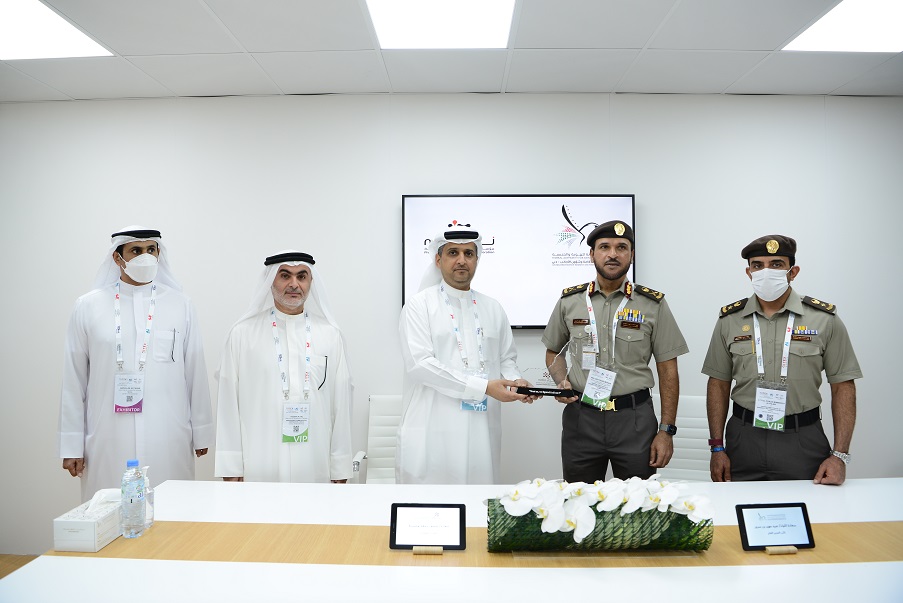
Professional Communication Corporation – Nedaa signed a partnership agreement with the General Directorate of Residency and Foreigners Affairs-Dubai (GDRFA-Dubai) at the ongoing Gitex Global.

Both parties agreed to collaborate to build an efficient communication network for GDRFA-Dubai and engage in data sharing concerning broadband technologies for emergency and public safety purposes.

Their Memorandum of Understanding (MoU) will pave the way for GDRFA-Dubai to utilize Nedaa’s Integrated Operations Center (IOC) solutions, wireless communication systems, and Tetra network to achieve end-to-end operational visibility and enhance team connection and communication.

Signing the Memorandum of Understanding (MoU) were Nedaa CEO H.E. Mansoor Bu Osaiba​ and H.E. Major General Obaid Muhair bin Suroor, Deputy Director of the General Directorate of Residency and Foreigners Affairs, Dubai.

Major General Obaid bin Suroor said: “Signing an agreement with Nedaa reflects the GDRFA’s keenness to fulfil its strategic plans and support its partnership relations with other entities. In addition to strengthening our joint cooperation in the field of smart services, the agreement will help us exchanging expertise, experiences and studies, invest and develop technical and smart projects that contribute significantly to sustainable development and achieve leadership and excellence.”

He expressed his happiness with the cooperation, adding that the partnership with Nedaa will further boost the integration of both entities efforts and help them better serve the society in a way that makes Dubai the smartest city in the world.

H.E. Bu Osaiba said: “Through our TETRA and private 4G networks, we offer public safety and security authorities with high-speed mobile broadband solutions that are critical to their work. We are delighted to extend this commitment to GDRFA-Dubai today. Following the signing of our MoU, GDRFA-Dubai will now use our Tetra network as its primary communication channel for its operations. Our team will provide the organization 24-hour support to ensure maximized use of the Tetra network. The institution will have access to our specialized communication services as well, allowing it to further contribute to the overall safety and security strategies of Dubai and the UAE.”

“Moreover, our mutually beneficial partnership will have us jointly joining events and exhibitions and exploring other opportunities that will take our cooperation to the next level,” H.E. Bu Osaiba added.  

The agreement will also see the Nedaa team holding training courses for GDRFA-Dubai to improve the latter’s skills in using specialized communication devices. It will also extend consultations and updates on the latest in the Tetra system and 4G network, in addition to including GDRFA-Dubai in its future projects concerning broadband solutions for security, safety, and emergency response purposes.

Both parties agreed to form a working group to oversee the implementation of the MoU and accomplish its goals.

Nedaa was established to enable the deployment of new and emerging applications in a resilient, available, and secure environment. It also offers an evolutionary path for governments entities and private sector to meet their future specialized network needs.

In an effort to provide Nigerian youths with prerequisite ICT skills, the Director General, National information Technology Development Agency (NITDA), Mallam Kashifu Inuwa, CCIE has called on the National Association of Computer Science Students (NACOSS) to use their talents to harness the great opportunities using innovation, which will be an eye opener in motivating younger generation.


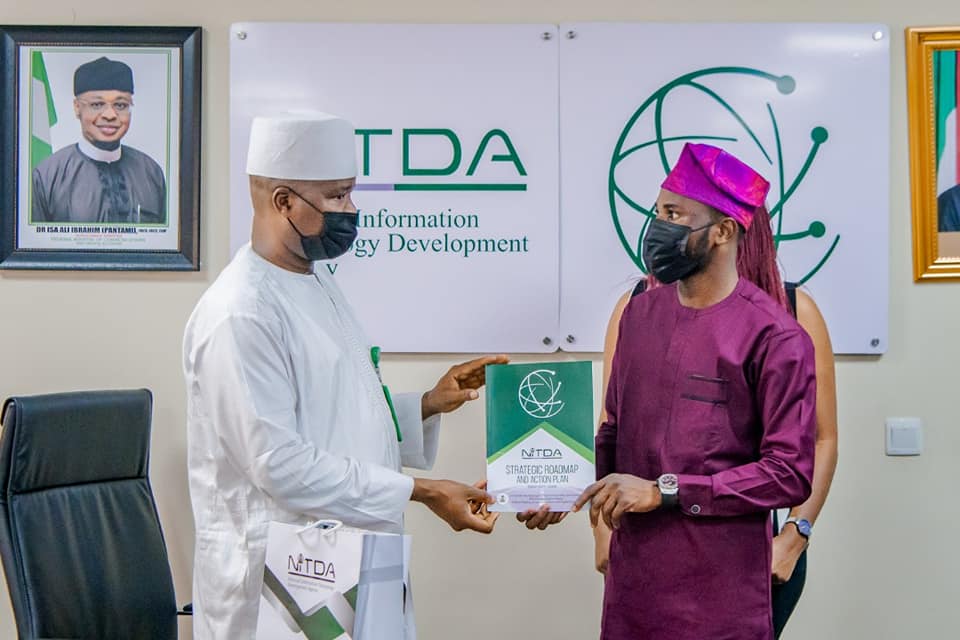
Inuwa who was represented by the Director IT Infrastructure Solution, Dr Usman Gambo Abdullahi, made the call while receiving members of the Association at the Agency’s Headquarters in Abuja.

The DG said NITDA as a government apex IT regulatory body, saddled with the mandate of developing and regulating the use of IT in Nigeria is always ready to deploy expertise to support any organisation that has the zeal of bringing ideas that will boost the ICT and digital innovation in the country.

Inuwa disclosed that NITDA recently unveiled its Strategic Roadmap and Action Plan 2021 – 2024 (SRAP), which was designed as a template to assist the Agency in achieving its target through the execution of the strategic pillars. He therefore urged the Association to key into the programmes and initiatives enshrined in the SRAP in order to actualise their dreams.


He said, “It is optimistic that the Computer Students are willing to tap into the Agency’s collaborative mechanism through innovation and new ways of technology advancement, more especially as Nigerian youth can utilise the NITDA Virtual Academy which is currently training Nigerian youth on various IT courses.

Inuwa also assured NACOSS total NITDA’s commitment towards incorporating the Association into the Agency’s Digital Transformation and innovation activities to scale their target, and achieve their projects tagged “Campus Ambassadors Programme,” adding that NITDA’s Management team will respond promptly and support the Association.

In his earlier remark, the National president of NACOSS, Comrade Olaminiki Abolade said that the visit was to solicit the support of NITDA in actualizing the Association’s Innovation Challenge that takes place in all Universities across Nigeria.

The NACOSS President also used the opportunity and DG NITDA on behalf of the Association, describing Inuwa’s encouraging words as a stepping stones towards the actualization of their dreams.
The Association presented to NITDA, the “Campus Ambassadors Programme Award.”

…State Govt, Lagos youths broker reconciliation; pledge commitment to conflict resolution

Drawing lessons from the aftermath of the string of violence that trailed the youth-led nationwide protests against police brutality last year, Lagos State Government has brokered a reconciliation with youths in the State.

Youngsters across the State, on Tuesday, defied the national holiday and came together to participate in a peace conference aimed at creating a common platform to pursue resolution to conflicts.


Governor Babajide Sanwo-Olu, who was physically in attendance, listened with rapt attention as the youths led conversation on how they could effectively channel their grievances to the authorities.


It was all at an event with the theme: “Rebuilding for Greatness: Peaceful Conflict Resolution”, held at the LTV Blue Roof and organised by the Ministry of Youth and Social Development. The event was facilitated by the Governor’s Senior Special Assistant on Youth Matters, Saheed Akanbi.

The seven-man discussion panel moderated by Mazi Sam Uche Anyamele, a filmmaker, set the tone for the Governor’s response to various suggestions and ideas shared by youths at the event.
Sanwo-Olu, dressed in Boy Scouts’ venturing green shirt and light-brown pants with yellow tie to match, declared: “the moment for true reconciliation has begun.”
With the commitment to peace pledged by the youth, the Governor said Lagos could now undergo a total healing process after last year’s coordinated attacks on its assets, which also resulted in loss of lives and livelihoods.

He said: “Today is a day of reconciliation and it is about our teeming youths. This is the moment to create a common ground and take ownership of our future. We have indeed assessed what we have passed through as a people; it’s now the moment to come together and build our lives together.

“This event is about aggregating all the conversations of the millions of youths that have been represented here. All of us have agreed that, when we work together, we can build a resilient society we will truly be proud of. We will continue to build, engage and work with our young people. I certainly will not give up on you as partners in progress and your ability to bring about positive changes.”
Sanwo-Olu agreed with the youths that there was need for inter-generational dialogue to proactively address issues that may lead to conflict, assuring the participants of his administration’s readiness to champion causes that would be beneficial to young people.

The Governor said he believed the youth must not only be granted a stakeholder status in the State’s project, but also be given prime seats at places where decisions are taken. He said his administration had shown example by appointing scores of young people under 40 years into the State Executive Council, political aides and administrators of Government’s agencies.

Sanwo-Olu also promised to increase the State’s investment in human capital development and equip the youths with requisite 21st skills that would empower them economically.
He said: “I thank all the youths who participate in this forum for the valuable suggestions offered and the ideas shared. I’m taking full responsibility and ownership of all the feedback recommended for me here. All the points have been taken and I will continue to rely on them in the course of governance.”

Commissioner for Youth and Social Development, Hon. Segun Dawodu, said the State Government recognised the youth as stakeholders in peace building and violence prevention, stressing that the Governor’s physical presence at the event was an indication of Sanwo-Olu’s commitment to turn listening ears to issues faced by the youth.

Represented by Permanent Secretary in the Ministry, Dr. Oluwagbemiga Aina, the Commissioner said the aftermath of negative conflicts would never be beneficial to any society and its people.
He said: “Rebuilding Lagos for greatness is a multifaceted task that involves constructing a formidable identity using the power of the State to unify people of common interests for a common goal. Together we will rebuild, recover and Lagos will emerge stronger. The aftermath of the past crisis will not determine the destiny of the State.

“We can find solution to our conflict in our unique education and value system, in our creativity and innovation, in our hard work and resilience. As we foster relationships with our youths, it is a charge on all of us to take responsibility for our today and uphold human dignity, equity, social justice, human rights and inclusiveness.”

The keynote speaker and Deputy Vice Chancellor of the Lagos State University (LASU), Prof. Wahab Ellias, said the theme of the event connoted a resilient city, stressing that conflict remained endemic and part of the society’s makeup.
The Professor of Sociology posited that conflict remained inherent in any society where there constant struggles among social classes usually took place.
He however said constructive engagement and peaceful dialogue are key to settling all conflicts, irrespective of their nature.

“Clashes of ideas among the social classes and cultural differences are part of the reasons why conflicts arise. There is nothing bad in conflict, but a conflict that is not progressive in nature is bad and inimical to the peace in the society,” he said.

The don appealed to the Government to keep its promise of raising investment in human capital, which, he said, remained a key factor in preventing conflict. Youths, Ellias said, are the most important resources for the Government to harness.

Some of the participants had the opportunity to share their thoughts.

Miss Halimat Akanni-Shelle, thanked the Governor for giving the youth a listening ear and privilege to rub minds with decision makers.
“We are ready to join hands and take action in building a Lagos that is safe and functional for all of us,” she said.

A transformational leadership trainee, Miss Mary Makinde, described the Governor as a progressive leader, defining progressive leadership to be selfless act driven towards purpose, vision and motivation.
She said Sanwo-Olu was not just leading by action, but showing examples that could be emulated.

She said: “Despite the ugly circumstances that befell Lagos in the past year, the Governor has remained focused on the situation and focused on things that matter. This is progressive leadership.”
Leader of National Association of Nigerian Students (NANS) in Lagos, Comrade Rasheed Ogunsanya, described the youth as the engine room of Lagos’ resilience, thanking the Governor for identifying with young people.

Lagos State chairman of the National Youth Council of Nigeria (NYCN), Billiaminu Oba, presented a 14-page suggestion and resolution on the way forward vis-a-vis youth engagement to the Governor.

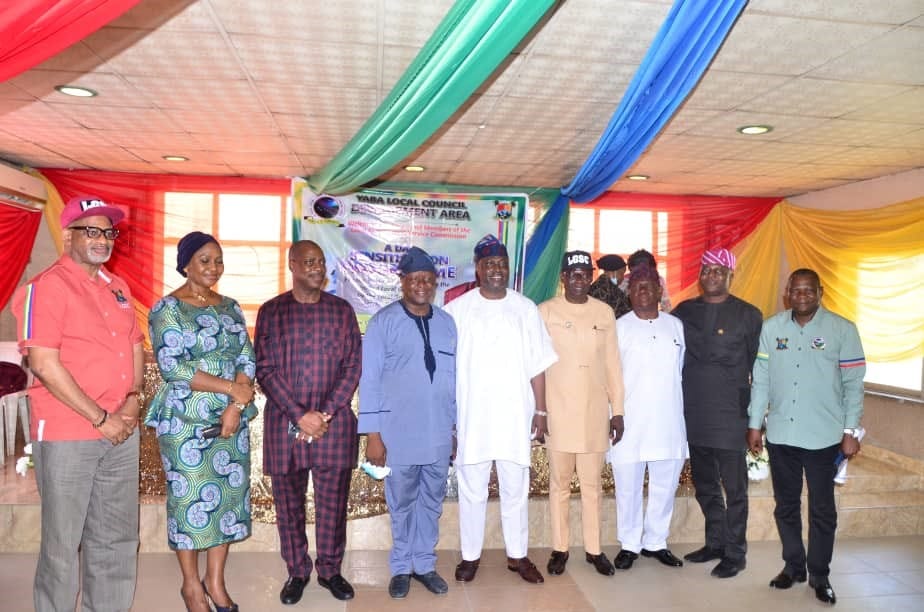
As part of efforts to increase productivity and proffer solutions to issues affecting Public Affairs Officers in the 57 Unified Local Government Councils, the Local Government Service Commission has organised a sensitisation programme for all Heads of Public Affairs Units in Local Councils across the State.

In his address at the programme, themed: “Perception Management in the Local Government” and held at Yaba LCDA, the Chairman, Local Government Service Commission (LGSC), Mr. Kamal Bayewu, reaffirmed his commitment to rendering necessary cooperation to all cadres to contribute more to the growth and development of the Local Government Councils.
Bayewu emphasised the urgent need to train all the Public Affairs Officers employed in the 57 Unified Local Government Councils, reminding participants that as the mouthpiece of the various local councils, they are expected to be resourceful and ensure the authorities get adequate feedback from the people in the community.

Mr. Ahmed Seriki, the Commissioner representing Epe Division in LGSC, urged the Public Affairs Officers to improve on their skills and knowledge acquisition to perform optimally on their jobs.
The newly deployed Permanent Secretary, Local Government Service Commission (LGSC), Mr. Biodun Bamgboye, said the Public Affairs Officers should avoid personal aggrandisement and selfish interest.
He noted that their productivity will create a smooth, cordial relationship in their work environment, advising them to develop a good dress sense, cultivate a microphone culture and ensure they invest in themselves, especially in view of the present knowledge-driven world.

Mrs. Kikelomo Bolarinwa, the Permanent Secretary, Local Government Establishment, Training & Pensions, appreciated the Chairman and the entire Commission members, reiterating the importance of the role of the Public Affairs Officers in the Local Councils.

The facilitator of the programme and former Commissioner for Information and Strategy, Mr. Kehinde Bamigbetan, stated that the Public Affairs Officers should ensure that they are in harmony with all their principal officers.

He reiterated the need for Public Affairs Officers to have a cordial and good working relationship with all the political leaders, the management and staff as perception managers in their respective councils, saying that PAOs are also expected to get intelligent reports about their environment and initiate ideas that would be highly appreciated.
While emphasising the need to develop communication strategies for disseminating the programmes and policies of local governments to the public in the most acceptable way, Bamigbetan urged the officers to obtain the right communication tools like cameras and computers to ease their jobs.

The facilitator pointed out the need for Public Affairs Officers to have a cordial relationship with the various media organisations and be compliant with the new media, noting that “As PAOs you need to learn, unlearn and relearn to function effectively and efficiently in your assigned responsibilities”.

The Chairman Yaba LCDA. Mr. Kayode Adejare Omiyale, appreciated the efforts and commitment of the Commission members and the Directors of the Local Government Establishment, Training and Pensions, just as he advised the Public Affairs Officers to be more productive and resourceful in the discharge of their duties.

In her remarks, Mr. Temitope Kuku, President of the 57 Unified PAOs Association, appreciated the efforts of the Commission members for the capacity building opportunity, promising that the knowledge acquired will be fully implemented at their various duty posts.

Also present at the event were the Director, Admin and Human Resource Department (LGET&P), Mrs. Oluwatosin Adegun; Director, Recruitment Disciplinary and Exit, Mr. Sedoten Ogabi; Director, Accounts & Finance, Mr. Akeem Shonibare (LGSC); Director, Establishment, Mrs. Olawunmi Dada (LGET&P) and Asst. Director, Electronic – Human Resource, Mrs. Abosede Ilori (LGSC), among others.

Accompanied by the First Lady, Mrs. Emine Erdogan, President Erdogan is expected to come in from Angola, and depart to Togo at the end of his visit.
In the course of the visit, the leaders of the two countries are expected to consider about two dozen Bilateral Agreements and Memoranda of Understanding, MOUs and they will authorize the signing of those on which there is a concurrence.

In addition to the bilateral discussions, President Erdogan will hold one-on-one meeting with President Buhari and he is expected to commission the Turkish Cultural Centre in Abuja while his wife, Emine, accompanied by the First Lady, Mrs. Aisha Buhari is expected to commission the newly-renovated Government Secondary School in Wuse 11.
The school was renovated by a Turkish aid organization, the Turkish Cooperation and Coordinating Agency, TIKA.
Nigeria considers Turkey a close partner and sees this visit as a milestone in our bilateral relations.

The Nigerian Communications Commission (NCC) has strongly warned telecoms
consumers to ensure they do not allow their National Identification Number (NIN) to be
linked to another person’s Subscriber Identity Module (SIM) cards, no matter how close
the person is to them.

The Commission gave the warning during its third run Telecom Consumer Town Hall on
Radio (TCTHR) programme, broadcast live on Human Rights Radio, 101.1 FM in Abuja
recently. The event was hosted on the platform of ‘NCC Digital Signature on Radio’.
The NCC Digital Signature on Radio is the flagship radio programme of the Commission
created to educate the general public on the mandates of the Commission and for
sharing salient, consumer-centric and up-to-date information on how NCC is delivering
on its mandates.

Speaking during the radio programme focused on ‘the Benefits of NIN-SIM Integration’,
NCC’s Director, Consumer Affairs Bureau, Efosa Idehen, said “On no account should a
telecom consumer, however circumstanced, allow another person to register a SIM with
another person’s NIN.”

Idehen said compliance with this advice will protect the true owner of the NIN from any
liabilities or negative consequences arising from the use of other person’s SIM.
“If the person, whose SIM is linked to your line use his own SIM to commit crimes or any
form of atrocities, it is easy to be traced to you and then, you will be dealt with because
the SIM is linked to your NIN”, he said.

During the phone-in segment of the radio programme, which lasted two hours,
consumers within Nigeria and in the diaspora, especially from the United Kingdom (UK),
Russia and neighbouring countries like Ghana, among others, were able to call and get
clarifications on concerns they had regarding the ongoing NIN-SIM integration in
Nigeria.

Discussions largely focused on educating consumers on NIN and its purpose, process
of obtaining NIN, why consumers are being asked to submit their NIN to their Mobile
Network Service Providers, the benefits of NIN-SIM linkage, relationship between NIN
and Bank Verification Number (BVN) registration, the step-by-step approach to linking
NIN to SIM, and the role and uses of Unstructured Supplementary Service Data (USSD)
*346# in the NIN-SIM integration activities.

Efosa was joined in the studio by NCC’s Director, Public Affairs, Dr. Ikechukwu Adinde,
who was represented by an Assistant Director in the department, Dr. Omoniyi Ibietan;
and a Deputy Director, Projects Department of NCC, Mrs. Nnenna Ukoha, who jointly
educated consumers on the various aspects of NIN-SIM integration exercise.
Other panelists include NCC’s Head, Consumer Information and Education, Mistura
Aruna; Head, Corporate Communication, National Identity Management Commission
(NIMC), Kayode Adegoke, as well as representatives of mobile operators, including
MTN, Airtel, Globacom, and 9Mobile.

During the radio programme, telecoms consumers were reminded repeatedly of the
October 31, 2021 deadline for NIN-SIM integration. The Federal Government had
extended the deadline earlier giving for the completion of the NIN-SIM linkage to 31st
October 2021.

The two-hour discussion programme, which was also livestreamed on the social media,
recorded broader participation than its forerunners due to a combination of the regular
radio listenership with viewership on Human Rights Radio’s social media assets.
Thus, it achieved NCC’s objective of using a mass medium to expand its reach to telecom
consumers to enhance their protection through information sharing, and education in
order to improve the quality of consumer experience with telecom services in Nigeria.

New technology often seems fantastic on paper yet has little impact in the life of the average person. A new tipping solution for fuel pump attendants, however, does both.

When asked to fill up a fuel tank as motorists do in the movies, few South Africans would know what to do beyond pulling their tank lever from inside the car. Fuel station attendants are as much a part of our culture as braais and ‘howzit’.

And yet, a BusinessTech poll of over 7000 respondents in 2018 showed that 37% of motorists don’t tip pump attendants.

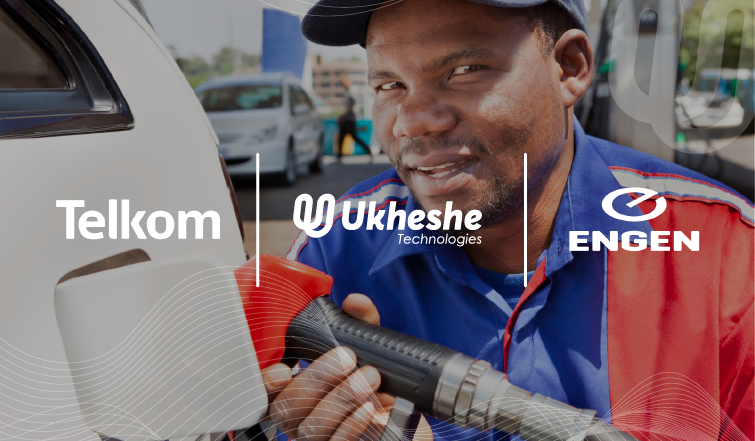
Engen aims to change this with its new ‘Tip an Attendant’ function. Ukheshe technologies, Telkom and Engen have collaborated to create the QR solution which allows motorists to tip attendants and cashiers for efficient service by simply scanning a QR code using their Engen 1app or any payment app that supports Masterpass QR payments.

Real solutions for real people

When a petrol attendant’s QR code is scanned, and a tip is made it automatically is deposited into a Telkom Pay digital wallet. This digital wallet allows the attendant to either withdraw the money from Pick ‘n Pay, a CashExpress ATM or purchase airtime, data and other VAS services. They can also purchase goods at any merchant that supports QR code payments or any e-commerce store using a virtual card. The app utilises Eclipse, Ukheshe’s ready-to-use enablement platform.

Fuel pump attendants and Quickshop cashiers will be assigned a lanyard with a personal QR code. After registering for a Telkom Pay Wallet through WhatsApp, they can start receiving tips from customers paying on the Engen 1app.

“One reason for the poor tipping rates for pump attendants is that people often simply don’t have cash on hand to do so,” says Clayton Hayward, CEO of Ukheshe Technologies. “This solves that problem – for both the attendant who relies on a tip to supplement their income, and the mortified motorist who is digging around for cash in their car.”

According to wage data from Indeed and PayScale, petrol stations employ around 70,000 people across the country, with many pump attendants earning under R30 per hour. With many South Africans now favouring contactless payment methods due to the pandemic, attendants’ only means of increasing their income – through cash tips – is diminishing.

‘’We’re delighted to continue to build our relationship with Telkom and broaden the reach of the Eclipse API in a meaningful way.” Engen’s 1app offers a safer customer service experience, as there is no touching of devices, cards or cash required. You will also no longer need to carry cash or cards to make your fuel purchases, and loyalty points will automatically be registered with Engen’s respective loyalty partners, Clicks Clubcard and FNB eBucks,” says Seelan Naidoo, Engen’s General Manager: Retail.

Into the future

In June this year, Telkom also launched Africa’s first Mastercard virtual card for use on WhatsApp, again utilising Ukheshe’s Eclipse API. It enables Telkom Pay customers to make e-commerce payments without a physical card. Engen employees will also have access to this functionality, as well as the full range of Telkom Pay innovations.

The Engen and Telkom partnership, powered by Ukheshe, is just one step in our march towards the digital financial economy of the future – one that will empower millions of people, including those without bank accounts, to access the digital economy and transact online.

Engen’s vision is to extend the ‘Tip an Attendant’ solution outside the Engen environment, enabling its customers to use the Engen 1app to tip anyone that provides great service – whether a car guard or a waiter, says Naidoo.

Telkom Financial Services Managing Executive Sibusiso Ngwenya says the company is thrilled to be on board. “I believe it’s a sentiment we all share as South Africans – that great service deserves to be rewarded. We’ve seen many a story on social media about someone in the service industry going above and beyond. They deserve to have the favour returned, and now, there is an easier means to do so.”

Adds Hayward: “We are thrilled to assist Telkom and Engen in making such new, innovative products possible. As a leading fintech enablement partner, Ukheshe has always aims to create a more inclusive digital financial ecosystem and improve financial access – and this is just one of the ways we’re doing so.”

Heading into the festive season, it is more important than ever to ensure that computer and smartphone users are protected from increases in brute force attacks, instances of banking malware, and cryptocurrency threats.

ESET, the global cybersecurity leader, has launched a new version of its consumer security line-up, which does just that along with its brand new ESET HOME feature. This web or Android-based platform is placed at the centre of the suite of ESET consumer solutions – allowing users to manage the security of all their Windows and Android devices from one seamless and convenient interface.

Smartphones are central to people’s lives, with multiple internet-connected devices in their homes. Simple and efficient protection and management of these devices is critical amidst a steadily increasing tide of cyberattacks.

This updated consumer offering from ESET includes ESET NOD32 Antivirus, ESET Internet Security, and ESET Smart Security Premium, which can all now be centrally managed from a single point by ESET HOME.

The ESET HOME’s on-the-go security management and oversight functions allow users to add, manage, and share licenses with family and friends, as well as manage Anti-Theft, Parental Control and Password Manager via the web portal.

Booming cryptocurrencies have brought out the cybercriminals

Banking and cryptocurrency threats have continued to grow.

This malware category has experienced an increase of 18.6%, according to the ESET Threat Report T1 2021. Beyond stealing cryptocurrency or gaining access to crypto-wallets, cybercriminals use malware to gain access to users’ computer resources without them knowing, opening the door to many potentially unwanted applications.

Additional features in the ESET suite of products have improved its Banking & Payment Protection with extra security for customers accessing web-based cryptocurrency wallets and banking websites. Android banking malware is a growing threat for users to be aware of and protect themselves against.

Steve Flynn, Director of Sales and Marketing at ESET South Africa, says: “The rise of Android banking malware apps is worrisome because these are not just some annoying ad display apps; their victims can actually lose their savings, with little to no chance of ever recovering them. For users, mobile phone protection is as important as protecting their computers, and this is a critical driver.”    

Other key updates in the new product suite include:

Carey van Vlaanderen, Chief Executive Officer at ESET Southern Africa, affirms that online security is a non-negotiable nowadays, not only for protecting users’ devices but all of those at home,  too. “The updated product suite, including our new LiveGuard feature and the unique ESET HOME platform, puts users firmly in control of their home cybersecurity needs and instils them with the confidence needed to manage multiple devices on the go,” she explains.

She concludes, “After more than a year and a half of being heavily reliant on technology and more connected than ever, and with the threat landscape constantly evolving, it is vital that our consumer users are protected with cutting-edge solutions that are easily accessible and provide the best in class user experience.”

Stakeholders in the information and communication technology industry have stressed that accelerating innovation remains the best path to drive inclusive growth.

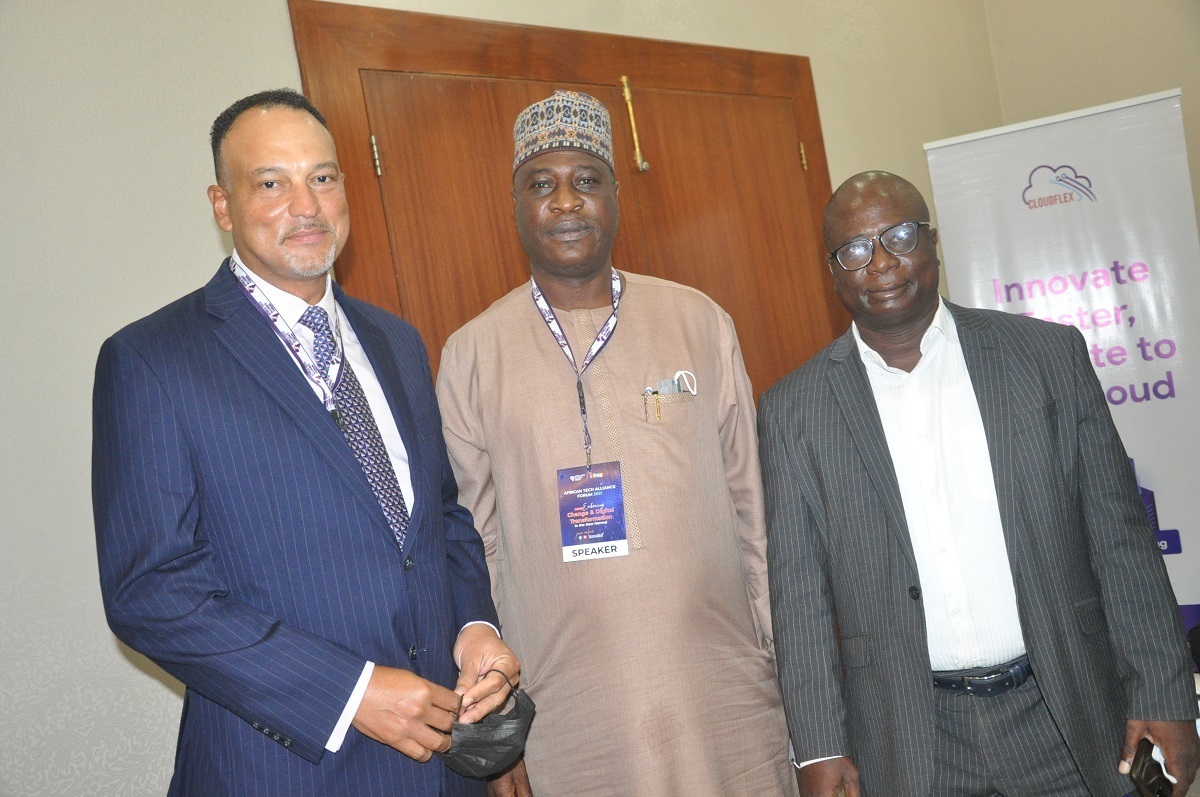
The tech experts among who are C-Suite executives, founders, presidents of companies/organisations, presidents of industry associations, startups/entrepreneurs and government officials, etc., unanimously agreed on this at the 2021 Africa Tech Alliance Forum (AfriTECH2021) held in Lagos on Wednesday October 13, 2021, highlighting that building infrastructure to extend internet access in underserved areas will drive digital transformation across board.

Prof. Umar Garba Danbatta, the Executive Vice Chairman of the Nigerian Communications Commission (NCC), focusing his presentation on “NCC as a Digital Transformation Crusader and Nigeria’s in-Road to 5G Deployment,” stated that, following the advent of COVID-19 pandemic, there has been a change in the dynamics of people’s interaction, especially on the Internet.

The EVC represented by Engr. Oluwatoyin Asaju, director, Spectrum Administration at NCC, said that almost every means of communication has become virtual in one way or the other.

“Already, we are set for the auction of some spectrum slots in the 3.5GHz band. The other day I was at the National assembly, I informed the senate that we were 95 per cent ready for 5G. Today as we speak, I am delighted to tell you that we are already at 97 percent completion,” Danbatta said at #AfriTECH2021.

“The Committee set up to auction the Spectrum has already developed an Information Memorandum (IM) which is already published for inputs and comments from all industry stakeholders. Prior to this, a 5G deployment plan was developed and we have since secured Federal Government’s approval,” he said.

Mallam Kashifu Inuwa Abdullahi, the Director General, National Information Technology Development Agency, (NITDA), said that with advent of new technologies occasioned by the fourth industrial revolution, it has become imperative to increase Africa’s level of preparedness and develop capacity of the youth.

Abdullahi who was represented by Dr. Usman Gambo Abdullahi, Director IT Infrastructure Solutions at NITDA, spoke on ‘Reskilling Africa’s Youth for Future Jobs from NITDA’s perspective’ adding that the fourth industrial revolution will continue to fundamentally alter the way human begins live, work, and relate to one another.

He said, “We need to look at the educational sector and focus more on skills and research that can be used to develop the economy. People should not see education as the end but means to the end. We need to look for ways to disabuse people’s mind on paper qualification and inculcate in them those skills required for the imminent industrial revolution and also focus more on science and technology.”

In her keynote address anchored on the Forum’s theme: Embracing Change and Digital Transformation in the New Normal, Olatomiwa Williams, the Country Manager, Microsoft Nigeria, said that COVID-19 has happened with different experiences, but there are a lot of opportunities for the Continent.

She said leveraging technology to ensure that the continent is actually accelerating the digital economy potentials cannot be over-emphasised

“Looking at the impact of COVID-19 and how it has accelerated digital transformation and based on research and engagements globally, two years of digital transformation was achieved within two months. What does that tell us? It tells us that because we were able to embrace the change that COVID brought, we were able to make those changes happen. These changes continue to accelerate. So, it means that an organization can no longer do business as usual. Everyone needs to embrace digital transformation at a fast reach”, the Microsoft Country Manager said.

Zoho Corporation also hosted a workshop during AfriTECH2021. Andrew Bourne, Regional Manager at Zoho Africa, said that for organizations large and small, the year 2020 was the longest year ever however the quick lesson is the urgent need to reorient the workforce to a new way of working.

“It came swiftly with playbooks being written and rewritten depending on what leaders were learning from government authorities, medical professionals, and from their own employees. 

With a reference to Forbes’ report, he said: “Millennial currently hold the largest purchasing power, but Gen-Z is close behind. The group, which was born between 1996 and 2010, already holds $44 billion buying power ($600 billion when considering their influence on their parents’ spending) and will hit the workforce and become powerful consumers in the next few years. In the next year, they will account for 40% of all U.S consumers. To succeed, companies need to know how to tailor a great consumer experience for Gen-Z”.

Andrew also demonstrated how to drive customer loyalty through a CRM system. Through this means new customers get introduced to the company through a ‘promoting’ customer which could be triggered by word of mouth, social media recommendations or customer testimonial.

In his part, Prof. Muhammed Abukakar, the Managing Director and CEO, Galaxy Backbone Limited, has expressed the company’s preparedness to provide ICT infrastructure and services to public institutions and the underserved communities in Nigeria.

Abukakar was speaking on ‘Boosting Cloud Infrastructure for Digital Economy through Partnerships’ through a representative, Mr. Timi Fadeyi, head DataCentre at Galaxy Backbone, said  “We need to work smarter, faster and simpler – a combination of a hybrid mode of working and harnessing relationships; virtual, physical, both.

“Artificial Intelligence is reshaping value chains, industries, communities, countries and the works entirely. You also need to secure your data; secure your entire digital experience, a combination of technology and you.

Other key industry stakeholders participated at the one-day Forum, which also featured exhibition by some sector players such as Zoho Corporation, Medallion Communications, Layer3 and Notion Technology Limited (representatives of American #1 Technology company – Comway – and Hsv Products)

The AfriTECH2021 had Zoho as the lead sponsors received supports from the Nigerian Communications Commission (NCC); the National Information Technology Development Agency (NITDA); Galaxy Backbone Limited, as partners, also sponsored by Rack Centre, Digital Encode, Cloudflex Computing Services Limited, Zinochrome International, Layer3, Notion Technology Limited and Medallion Communications.

Mr. Peter Oluka, Editor of TechEconomy.ng and the convener of AfriTECH said that Africa must play leading role in the fourth industrial revolution by embracing emerging technologies such as 5G, Internet of Things; Cloud Computing; Quantum Computing Augmented/Virtual Reality which are also playing a critical role in improving remote communication over the internet with great user experience.

He said that the recent events around COVID-19 Pandemic demonstrated why the government and the private sector must embrace digital transformation.

With new technology such as AI support and smart cameras, the workplace of the future can be anywhere

In what felt like the blink of an eye, the work landscape was transformed as the pandemic spread across the world in 2020. Entire workforces went mobile, seemingly overnight, while organisations bolstered existing remote working processes.

And when the world emerges on the other side of this life-altering event, it won’t revert to the way things were before. By some estimates, 70 percent of the workforce will work remotely at least five days a month by 2025.

Even in South Africa, where face-to-face meetings, office models and in-person communication has long been the standard, a hybrid model – a combination of remote and on-site working – will likely be the answer in the future, says Marilyn Moodley, Country Leader for South Africa and West, East, Central Africa at SoftwareONE. “In-person interaction will not, and should not, go away completely. But hybrid models offer employees more choice – and with newer technology to support it, hybrid working may become the norm.”

Organisations have also realised that it can give them a competitive advantage – trimming costs and helping them attract the right talent, says Moodley. “Of course, there were some growing pains. Remote work can improve work/life balance, but it can also blur the lines between work and home, leading to burnout. Already, new AI-based technologies from Microsoft, such as Microsoft Viva, MyAnalytics and Workplace Analytics, can highlight where burnout may be occurring so that steps can be taken to prevent it. And in future, such AI support will become essential.”

Setting up for success

Meeting room devices and cloud-based virtual machines are also key to this new way of work, says Moodley. “Many organisations have already adopted various newer forms of laptops, including lightweight or tablet-based versions, as well as smartphone access to corporate data such as email. In the future, hybrid meeting devices that allow both in-person and remote participation will become just as necessary. Devices exist in the market which can help remote participants feel more involved in the meeting while working remotely. Innovations such as smart cameras that can zoom in on a speaker and follow them if they are moving, will help give remote participants a better meeting experience.”

Other innovations such as a cloud-based virtual desktop infrastructure (VDI) should also be considered, she adds. “The recently released Windows 365, for example, allows a worker to connect to their corporate desktop from any supported device remotely, with the same look and feel from either device. Cloud is a great leveller, giving massive global organisations and owner-run small businesses the same tools.”

The human quotient

Though technology seems to pull focus in the future workplace, the key to a successful shift towards a hybrid model is to remain people-centric, says Moodley. “These processes should be more people than technology focused. Simply buying and migrating to Microsoft 365 without robust change management processes, will not be enough. It’s essential to recognise that there is a person at the other end of these devices.”

This is the only way to overcome the ‘last mile problem’ – a term coined with the invention of the telegraph, she adds. “The telegraph was a game-changer, but not everyone lived close to a telegraph station. The last few miles had to be undertaken by someone on bike, horse or foot – or the technology would not have solved any problems. The same remains true for newer technology. Change management processes like Prosci ADKAR®, for example, are crucial – providing not only training and how-to guides, but also a framework on the stages of successful change.”

SoftwareONE will typically start with an advisory process when implementing any change for its clients, she says. “This helps us understand pain points and priorities to produce technical roadmaps to implement new systems. We also provide Microsoft Cloud Accelerator workshops, an essential tool for keeping employees and data safe while implementing a remote working strategy.”

The shift to a remote working future might seem intimidating, but it need not be, says Moodley. “With the right planning, and by listening to the needs of the people in your organisation, you can set out a clear path to move to a more mobile and dynamic workforce.”