In line with th Igbo culture, there is a need to have New Yam festival celebration known as “Iri Ji” annually. The festival signifies gratitude to God for the harvest and fruitful yield of the year. It is usually celebrated between the months of August and October.

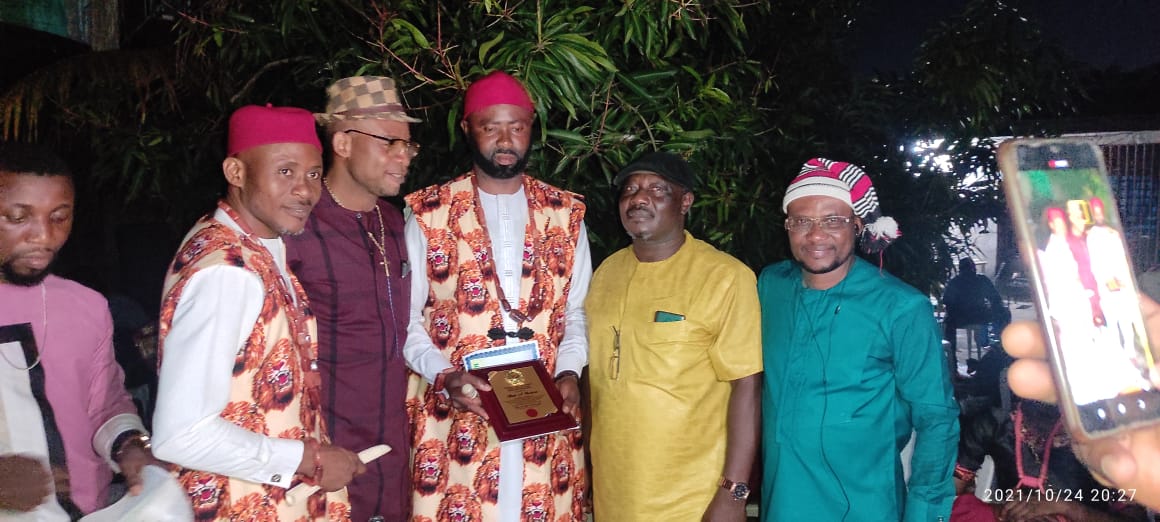
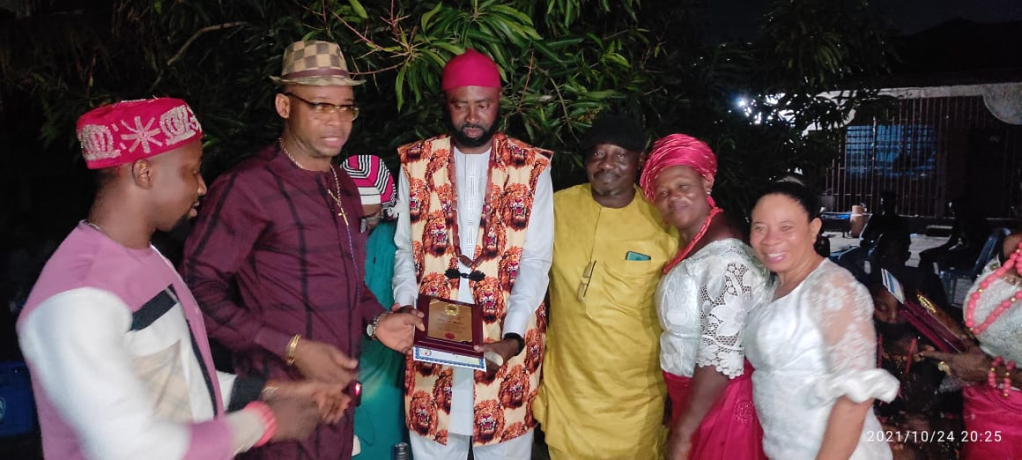
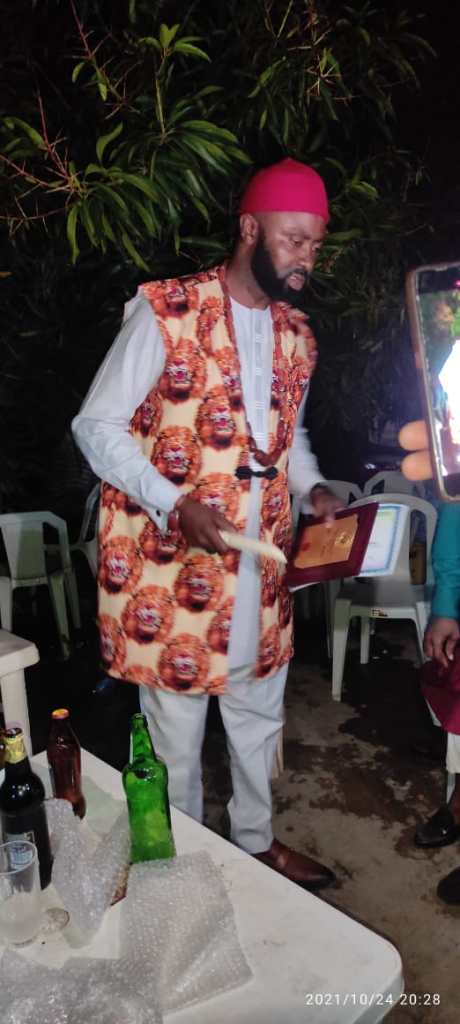
The Igbo Community in Abesan, Ipaja and around Alimosho came out in numbers to celebrate the Iri Ji Festival at Abesan Estate and was hosted by Chief Bona Odinaka, a reputable High Chief in Lagos.

Not only celebrating the New Yam Festival, The Igbo Community used the occasion to reward well-meaning Igbo people that have contributed positively to the plight of Igbo people in the community and other parts of Lagos State. Titles such as Ezinne and others were given to carefully selected awardees.

Led by Chief Moses Nwokoro, the Igbo Community in Abesan, Ipaja has shown commitment to the welfare of their members.

In his welcome speech, Chief Moses Nwokoro, an ebullient leader, said: “we are here to thank God for His protection and for enabling us to see a good harvest. In a country that we keep hearing bad news, we are celebrating, and using this opportunity to thank those that have made The Igbo Community here in Abesan, Ipaja, Lagos tick; also thanking our able Lagos State Governor, Jide Sanwo Olu, for allowing us to thrive.”

In line with the welcome speech, Mr. Kachi Egwim, the Financial Secretary said: “ though we are new as an association, we are flourishing. Our aim is to ensure that the welfare of our members is looked into. We also liaise with other Igbo-speaking communities here in Alimosho; but our primary objective is to ensure that Igbo members in our catchment areas are well represented politically, and taken care of if there is a financial need.”

Ezinne Ben Okafor, the Women Leader, added that the women are in total support of the leader, despite a few teething challenges; which is normal in leadership. She added that they aligned with his leadership style, which was why the women came out en masse to ensure that the event was a success. Truly it was a huge success, irrespective of the little challenge that came up earlier.

Igbo Community in Abesan, Ipaja is a non-profit, non-political, and non-religious group that has evolved to be a strong association, recognised by the Mosan LCDA and Alimoso LG. Led by Chief Moses Nwokoro, the community has many respected members that have offered various solutions and interventions to the challenges many Igbo members have had over the years. Their Iri Ji Festival is an annual event.

“we are here to thank God for His protection and for enabling us to see a good harvest. In a country that we keep hearing bad news, we are celebrating, and using this opportunity to thank those that have made The Igbo Community here in Abesan, Ipaja, Lagos tick; also thanking our able Lagos Governor, Jide Sanwo Olu for allowing us to thrive.”
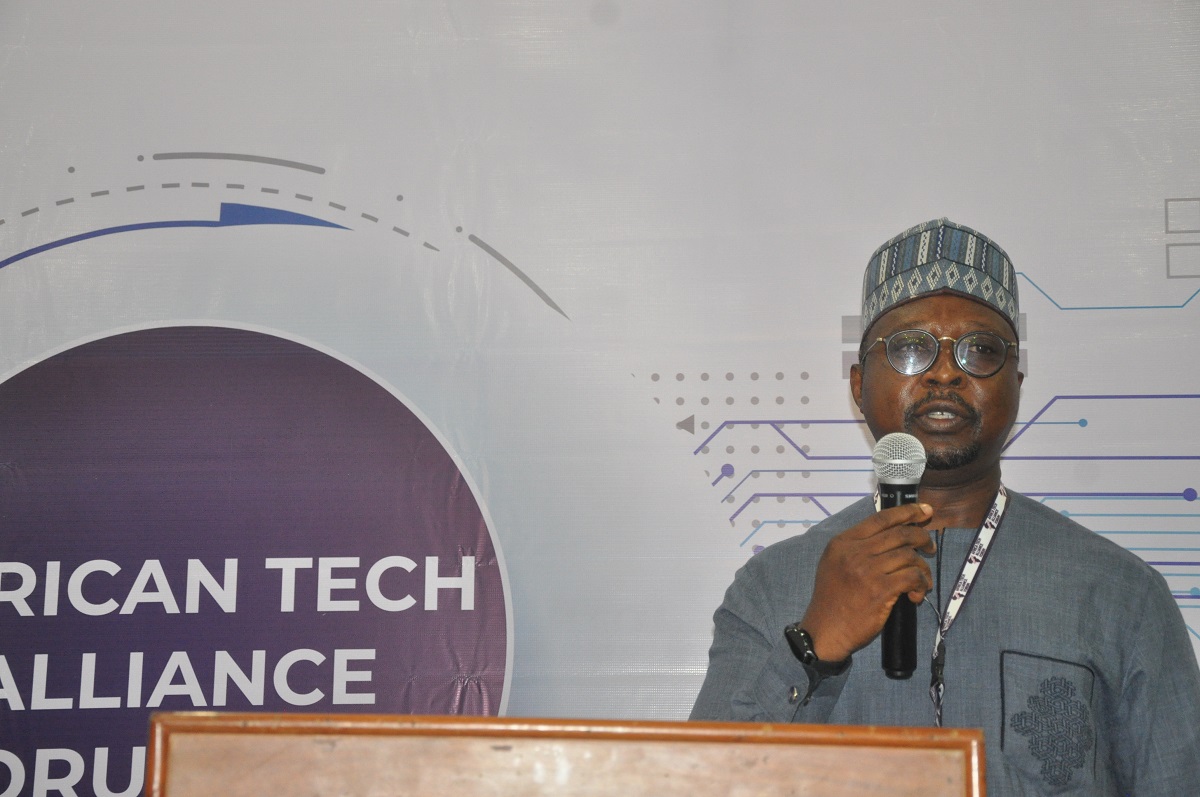
Prof. Muhammed Abukakar, the managing Director and CEO, Galaxy Backbone Limited, has expressed the company’s preparedness to provide ICT infrastructure and services to public institutions and the underserved communities in Nigeria.

Galaxy Backbone is a public enterprise of the Federal Government of Nigeria incorporated in 2006 with the primary mandate of setting up and operating a unified Information and Communication Technology (ICT) infrastructure platform that addresses the connectivity, transversal and other technology imperatives for Ministries, Departments and Agencies (MDAs) of the Federal Government.

Abukakar was speaking on ‘Boosting Cloud Infrastructure for Digital Economy via Partnerships’ through a representative, Mr. Timi Fadeyi, head DataCentre at Galaxy Backbone Limited, at the (hybrid) Africa Tech Alliance Forum (AfriTECH2021) organised by TechEconomy.ng in Lagos (Nigeria) recently.

The Managing Director while streamline digitisation aligned with Bill Mcdermott SAP CEO who said: “Complexity is an obstacle to digitisation. To get the most out of the new world of digital business, you have to run SIMPLE.”

The trend of the new world

He said that the trends of the new world include hyper-connectivity, cloud computing, a smarter world and cybersecurity. These can be considered as four pillars necessary to drive digitalisation using infrastructure which will be used to service the community.

The realities of the digital economy as outlined by Abukakar the undeniable facts that digital economy is real and here to stay; “you have to embrace, innovate and thrive through it”.

He told the participants that reimagining your organisation cannot be overemphasised in this era.

“We need to work smarter, faster and simpler – a combination of a hybrid mode of working and harnessing relationships; virtual, physical, both.

“Artificial Intelligence is reshaping value chains, industries, communities, countries and the works entirely. You also need to secure your data; secure your entire digital experience, a combination of technology and you

Accelerators of the digital economy

Continuing, the Galaxy Backbone boss said, “To every action, there’s indeed a reaction. The digital economy keeps growing and transforming”.

Several components influence this growth and Abukakar summarised these thus: “The customer experiment which is driving the changes visible on different platforms; the core business processes on platforms that are smarter, faster and simple; smarter and engaged workforce to prevent different levels of possible disconnections; supplier-partner collaboration has never been this critical for an enhanced digital economy; and cloud harnessed Internet of Things and assets to drive real-time insights and new business initiatives.

He also said that cloud investments must be channeled right to enable an increase in revenue

The cloud and the digital economy

“The cloud is the preferred ‘currency’ for digital transformation and for reducing the initial cost of ICT infrastructure acquisition.

“Cloud computing is gradually reducing the downtime in public service delivery, increasing government and citizen engagement. It enables agility, flexibility, connectedness and the opportunity to scale your business”, he added.

Abubakar noted that with the help of the Ministry of Communities and the Digital Economy led by Prof. Isa Pantami and support from the National Information Technology Development Agency (NITDA) and the National Communications Commission (NCC), Galaxy Backbone is well-positioned to provide ICT infrastructure in a way that both parties — governments, institutions, NDAs among others can benefit.

Meanwhile, he said that the pillars that drive the mission of Galaxy Backbone include; to becoming the leading enabler of digital inclusion in Africa: Provides state of the art digital infrastructure and services for a digital Nigeria; to align its operations with government priorities; promote data sovereignty and security of government data, amongst others.

“Galaxy Backbone improves long-term financial sustainability, customer satisfaction, improve satisfaction, adoption and confidence in digital services

“Enhancing the digital economy through partnership, GBB provides its data services from two major locations including Abuja and Enugu. Data lost at one centre can be recovered at the other. This can be described as a data continuity solution”, he said.

According to Abukakar, data sensitivity determines which data centre to be used. This can be a virtual data centre, computing pool, resource pool; storage resource pool, elastic cloud server, among others.

“Economies of scale is an important factor to be considered that allows you to save a lot while running your own infrastructure,” he concluded.

To the glory of God, yesterday being Saturday, October 23, 2021, I officially bagged a degree in Law (LL.B, Second Class Hons) from the Faculty of Law at the Convocation ceremony of the Prestigious Baze University, Abuja.

First and foremost, I want to thank God Almighty for His guidance without which none of this would have been possible. Undoubtedly, it has been a long journey but our loving God in his infinite mercy and grace took me by the hand and led me thus far in my academic pursuit.

My transition from the hallowed Senate Chamber to sitting in the same classroom with effervescent youths that happen to fall within the same age bracket with my daughter was a very challenging and startling journey.

When I decided to study Law, I was prepared to learn, explore and challenge myself to leave my comfort zone and live a new reality. Today, I am proud to say that I made the right decision as these past years as a student have seen me learn more within and beyond the confines of the classroom. Every little encounter and experience gained so far in this great citadel of learning has been enriching and will remain within my memories for life. My sojourn in Baze University ultimately reinforces the belief that we are never too old to learn; never too powerful to learn and never too full of learning.

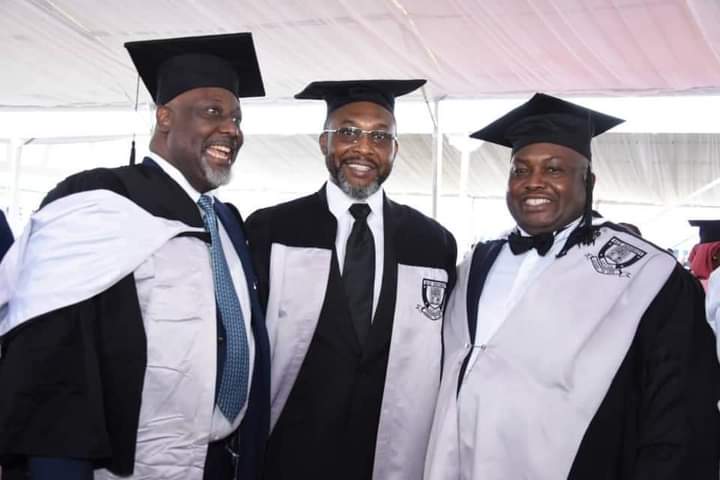
My learning experience has truly been a fascinating and unforgettable one and I have so many people to thank for that. At this juncture, I would like to congratulate my fellow graduands including Chief Osita Chidoka, Dr. Adaora Umeoji, Senator Dino Melaye and others for successfully obtaining their degrees. Thank you all for sharing in this amazing journey with me, I sincerely wish you all the very best in your future endeavours.

I want to wholeheartedly thank my lovely wife and kids for their unwavering love, belief and support; thank you for believing in me even when I had doubts. To my friends, well wishers and supporters, I thank you all for your encouragement.

Yesterday might have been my last day as a Law undergraduate; however, I believe that a greater phase of learning has only started from this point. May God continually bless and crown our endeavours with wisdom, success and divine insight.

Senator (Dr.) Ifeanyi Ubah
Anambra South Senatorial District

Anyone who lives in the southeast must have heard the word mkpụlụ mmịlị on the streets, thats the the name that has been given to the hard drug methamphetamine popularly called crystal meth.

This is what the young people in the East are into now, there seems to be zero concerns from parents religious leaders and the government on the negative effects of this drug.

This drugs have destroyed millions of teenagers in North America and other parts of the world and if our people do not pay attention to this now we will have a big problem on our hands in few years to come

“Crystal meth is the common name for crystal methamphetamine, a strong and highly addictive drug that affects the central nervous system. There is no legal use for it.

It comes in clear crystal chunks or shiny blue-white rocks. Also called “ice” or “glass,” it’s a popular party drug. Usually, users smoke crystal meth with a small glass pipe, but they may also swallow it, snort it, or inject it into a vein. People say they have a quick rush of euphoria shortly after using it. But it’s dangerous. It can damages the body and cause severe psychological problems.”

Crystal meth can me cooked or made locally as long as the chemicals needed are available and the fact the law enforcement agencies are not going after the suppliers of this drug, the chemicals are easily accessible and the drugs are quite affordable for young teenagers.

Teenage boys are into different criminal activities just get funds that will enable them get a dose of mkpụlụ mmịlị while the teenage girls are going into prostitution for quick money to sniff this drug.

Mkpụlụ mmịlị has become very popular in the secondary schools and universities in the South-East and some people have overdosed and died while taking this drug.

Nigeria is a major corridor for the transportation of hard drugs to North/South Americ and Asia and we all know the our people are into this trade.

Someone must have introduced this drug to the street of the cities Ala’Igbo and if it’s not curtailed it will spread to other parts of the country and become a Nationwide problem.

Crystal meth is not something to mess with we are looking at a huge population of our young people ending up in rehab and suffering mental/psychological problems if something is not done.

Chidubem Ukamaka Onyejemuo

You have heard of Oru and you have heard of Igbo, you have also heard that “Oru na Igbo bu Ofu” meaning Oru and Igbo are one, meaning that we stem from the same ethnicity…but what prompted the different names??

  1. Because Igbo are those who went to live in the forest hinterlands while Oru were those who settled by the River banks…
  2. To say that one has gone to Oru and has gone to Igbo means that one has gone round the entire nation, in common Ogba parlance, Orul’igbo means everybody.

The Oru more specifically are Igbos who adapted to Riverine life, not just in habitat but culturally as well, their cultural norms, customs, deities and cuisine took on a riverine outlook and their civilization became aquatic centred.

Going back to our origins the proto igboid migration down from the grasslands as they adapted to forest life split in two settling on both parts of the Niger river.
A branch of these Western group settled in the low lying marshlands now known as Ukwuani. Our comprehensive study of the common Oru dialects and migratory parts shows that the Oru were an offshoot of these marshland settlements who became more aquatic and adapted to fishing, they moved to the banks of the Niger and eventually dominated it along the span and width of the Igbo nation.
They also moved to the Eastern banks of the Niger and subsequently other big rivers adjacent to the Niger such as the Orashi and the Omambala.
Amongst the Northern Igbo they were know as Olu. It is worth noting that Oru communities dominated trade along the Niger and as a result had a series of contact with Benin, Igala and Izon traders and fishermen… these contacts would eventually leave their mark.

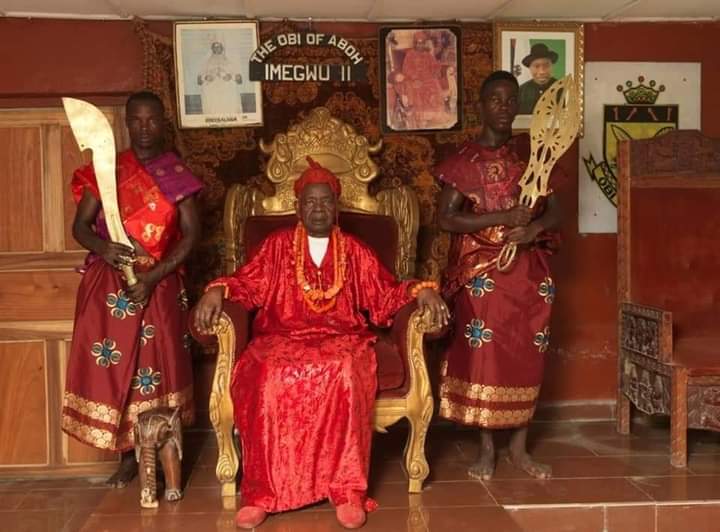
Oru communities include, the towns of Ndokwa East(also known as Ndoshimili) such as Aboh, Ase, Ashaka e.t.c
Onya, Osekwenike, Ndoni, Ogba, Egbema, Ogbaru(Atani, Akili Ozor, Odekpe etc) Osomari, and most famously Oguta.
It also includes Anam, Olumbanasaa, Illah, Nzam in the North.

Onitsha is not generally considered Olu because the aboriginal Oru people and Igala that they met at the River banks there they later assimilated into a quarter, the Onitsha were Enuani and did not adapt to fishing but continued to depend on Ogbaru communities for that.

The Oru are astute fisher men and canoe builders(ugbo na amala), there are some unique cultural traits…


They settled in nucleated settlements/towns by the River Banks not dispersed.. The Igbo in the hinterland had an aversion for water and will normally settle 2km away from water bodies.


They have a unique dance known as egwu amala.


The eldest man is known as Oduah
Elders are greeted Ogene and men are greeted Ajie.


They have a rich cuisine filled with all kinds of fishes and aquatic foods..
they have a variety of fishing festivals.
The Oru were the earliest Igbo clan to develop an elaborate centralized monarchy centred around Royal families (Umudei) and the monarch or King known as Obi or Igwe(Ezeigwe)


They had an elaborate Ozo society that makes up the ndichee and Ndi Okpalaeze that functioned as a town congress. They hinterland people copied the offices of Iyase-Onowu, Onise and Odogwu from them.
They had a guild of Leopard warriors/titled men known as Igbu(Ogbuagu)

The Oru had two major masquerades that functioned as police, they were mmanwu and Owu,
Owu came from Oru and diffused into the hinterlands from there.

Although the Oru adapted to the waters they never quite forgot their Agrarian ancestry and one unique thing about them is that they remain accomplished farmers…unlike the Ijaw that takes entirely to the water, the end result that although the Oru lived by the River banks, they amassed vast lands inward which they maintained for farming and for hunting thus, till this day the Oru still feeds much of Igbo land not just in fish but in crops especially yams.
Because of space I’ll talk briefly of just a few Oru clans..
Ogbashu, Oguta, Akarai and Aboh. (Continued)

By kaycee Alozie

Yul Edochie a popular Nigerian actor has commended the songstress Tiwa Savage on her sex tape saying that he is impressed with the way she handled the issue and not falling to the blackamailers act.

Speaking via his verified Facebook page ,Yul said “I commend you @tiwasavage for the way you handled the issue.You may not know this but you’ve inspired so many other people who may be going through blackmail silently.

He added that “You said capital NO to blackmail and it takes a lot of strength to do so.It is well.You’re a human being, like the rest of us.Nobody holy pass.In life there will always be ups and downs.”

Finally the actor said that “You enjoy the ups and learn from the downs.
Anything that doesn’t kill you makes you stronger.Keep your head up.
Keep being strong.This too shall pass.”

Lately Tiwa has been immersed in a funny video where her private and sex life was made public, allegedly it is said that she has lost some endorsement contracts from top organisation and the pretty actress has come out to own up, she has demonstrated maturity in this issue by apologizing to her teaming fans

Anthony Emeka Nwosu

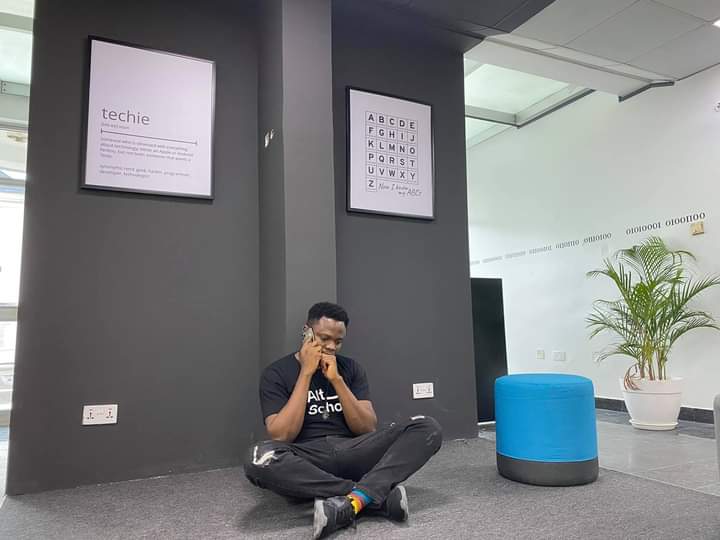
I left home at the age of 16 after I knew that my parents couldn’t afford to sponsor me to University. I worked different odd jobs from being a labourer to a Security guard, to selling recharge cards. Until I met Adeyemi Fowe. He introduced me to the world of tech and Software engineering, and that changed my life forever.

I went from penniless to building 2 successful global companies without a University Degree. Since then, I have been a passionate evangelist trying to get as many Africans as possible into tech. That’s why AltSchool Africa’s mission is personal to me.

Unemployment in Nigeria stands at 33.3% while tertiary institutions across Nigeria graduates 600,000 students every year who do not possess marketable skills.

This has to change as we are currently entering a skilled economy and we have a low chance of surviving if something doesn’t change.

With AltSchoolAfrica.com we are committed to helping as many Africans as possible skill up and launch a career in tech as easily as possible. This is why we do not accept tuition fees until you complete the program and get hired.

I am a living, breathing example of how a career in tech, with its many opportunities, can change one’s life. Encourage someone to signup today: www.altschoolafrica.com.

Even with a high banked population and a multitude of electronic payment options available, the average South African still use cash for daily purchases and payments with an estimated 78-80% of transactions being in cash.

Anton van der Merwe, the recently-appointed COO of Ukheshe Technologies, a fintech enablement partner that works with financial institutions to grow in the rapidly-expanding digital space, says that for these reasons alone, the opportunities for digital payments are set to boom.

Van der Merwe, who has a strong background in traditional financial environments says that his appointment at Ukheshe represents the significant shift in the traditional and fintech spaces: “New technologies are expected to change the local landscape as emerging trends accelerate and traditional financial services providers recognise the value in partnering with fintechs to deliver solutions quickly and efficiently.”

Electronic payments were first introduced in SA around 40 years ago, yet today, there are still many ecosystems such as the taxi environment, rural areas and townships that are cash heavy. That means the potential in the digital space is immense – reducing the use of cash by just 8 percent, for example, and growing digital transactions by that same number, means a shift of 10-15 billion transactions annually.

“Looking at the underpenetrated target markets we can already see how technology can make further significant differences. For example, if South Africa’s 16 million daily transport commuters were able to pay by scanning a QR code instead of counting out cash – with the transaction reflected in their accounts in real time. Not only would this simplify the process, but it would also represent billions in value for the institutions enabling transactions,” says van der Merwe.

As part of its National Payment System Framework and Strategy – Vision 2025, the South African Reserve Bank has outlined their vision for growth in financial inclusion and greater electronic payments and within the broader financial industry these efforts are gaining momentum through new industry initiatives. Surveys show that over 70% of South Africans would want to transact on their phone, while there are an estimated 1 million of township merchants that could be included into the digital payments ecosystem.

Van der Merwe says that the country already has a very high level of banked individuals, all that’s lacking is the infrastructure to accept digital payments on a large scale: “That’s where fintech enablement partners like Ukheshe come in. New solutions such as real-time QR code payments and recently-launched Whatsapp payments, in partnership with banks and retailers, demonstrates how large, traditional financial institutions or any company looking for a payment solution, can keep up with the rapidly changing needs of consumers.”

He says that such partnerships combine the agility of smaller fintech firms with the reach and trust of traditional financial institutions, bringing customer-centric solutions to market with greater speed and ease. Conversely, our digital payments solution, Eclipse, can also work entirely independently too. Through Eclipse, Ukheshe’s locally developed universal fintech API, the company has enabled card issuing, made up of three telcos, six banks and fintechs, 334 029 merchants and 2 271 880 apps.

Payments that eliminate the inefficiencies and hidden safety costs associated with cash payments are already here, with their implementation just around the corner – and a more inclusive society along with it.


As we mark World Mental Health Awareness Month in October, the sobering statistics around anxiety, loneliness, depression and other mental health issues are at the forefront of many people’s minds. Now, an ultra-personalised AI Coach called Journey Wellness is available to assist those struggling with these issues. 


The Covid-19 pandemic and lockdowns have caused global disruptions and uncertainty, and these have exacerbated modern stress levels across South Africa. Job losses, growing financial pressures, and an uncertain future have taken their toll on mental health across the country. Adults and teens alike have been affected by this, as many face growing isolation and uncertainty. A dedicated mental health support app, aimed at teenagers – called Vive Teens – is also available to provide support for teens during these difficult times. Initially developed by Dr. Jacques Ludik of Cortex Logic, Vive Teens has recently spun off to become a stand-alone company dedicated to focusing on mental health issues for teens.

Figures released by SADAG (South African Depression and Anxiety Group) show an alarming upward trend in the distress calls it receives on its hotline. Before the global Covid 19 pandemic, SADAG received around 600 calls a day. At the beginning of lockdown, this figure soared to 1200 calls per day, and now, 18 months later, SADAG receives over 2200 daily distress calls. The group’s dedicated Suicide Crisis Helpline has received over 75 000 calls since January 2021.


Cortex Logic is the company behind Journey Wellness, has also released an app aimed at emotional and mental health support for teens, called Vive Teens. Vive Teens is a cutting-edge AI-driven personal wellness companion that equips teenagers with world-class content, advice, self-discovery, and human-led support systems to not only cope with the challenges that they face every day, but also contribute to the development of balanced, emotionally mature, and well-prepared young adults.

The app’s content includes:

·         AI curated content relative to the user’s interests and context

·         User-centered exploration context that includes inspirational posts, podcasts, videos and news articles

·         Targeted content around common psychological and social challenges

·         Access to a network of registered human counsellors

·         Personal companion chat, check-in and assessment and more…

For explainer video, please click on this link:  https://youtu.be/LAU630_XJ7c 

The app is available on google play and Istore.

Lists measures to guard against attack

The Nigerian Communications Commission (NCC) wishes to alert millions of Nigerian telecom consumers of the existence of new, high-risk and extremely-damaging, Malware called Flubot.

A malware is a generic word used to describe a virus or software, designed specially to “disrupt, damage, or gain unauthorized access to a computer system.”

According to the information received today, October 21, 2021, from the Nigeria Computer Emergency Response Team (ngCERT), Flubot “targets Androids with fake security updates and App installations”.

The ngCERT affirmed that Flubot “impersonates Android mobile banking applications to draw fake web view on targeted applications” and its goal transcends stealing personal data and essentially targets stealing of credit card details or online banking credentials.

FluBot is circulated through Short Message Service (SMS) and can snoop “on incoming notifications, initiate calls, read or write SMSes, and transmit the victim’s contact list to its control centre.”

This malware attacks Android devices by pretending to be “FedEx, DHL, Correos, and Chrome applications” and compels unsuspecting users to alter the accessibility configurations on their devices in order to maintain continuous presence on devices.

The new malware undermines the security of devices by copying fake login screens of prominent banks, and the moment the users enter their login details on the fake pages, their data is harvested and transmitted to the malware operators’ control point from where the data is exploited by intercepting banking-related One Time Passwords (OTPs) and replacing the default SMS app on the targeted Android device.

Consequently, it secures admittance into the device through SMS and proceeds to transmit similar messages to other contacts that may be on the device it has attacked enticing them into downloading the fake app.

It suffices to say that, when Flubot infects a device, it can result in incalculable financial losses. Additionally, the malware creates a backdoor which grants access to the user’s device, thus enabling the invader or attacker to perform other criminal actions, including launching other variants of malware.

In view of this discovery and understanding of the process by which this malware operates, and in order to protect millions of telecom consumers and prevent criminal forces, irrespective of location, from using telecom platforms to perpetrate fraud and irredeemable damages, the NCC hereby wishes to reiterate the advisory of ngCERT as follows:

  1. Do not click on the link if you receive a suspicious text message, and do not install any app or security update the page asks you to install.
  2. Use updated antivirus software that detects and prevents malware infections.
  3. Apply critical patches to the system and application.
  4. Use strong passwords and enable Two-Factor Authentication (2FA) over logins.
  5. Back-up your data regularly.
  6. If you have been affected by this campaign, you should reset your device to factory mode as soon as possible. This will delete any data on your phone, including personal data.
  7. Do not restore from backups created after installing the app. You may contact ngCERT on incident@cert.gov.ng for technical assistance.
  8. You will also need to change the passwords to all of your online accounts, with urgency, around your online bank accounts.
  9. If you have concerns that your accounts may have been accessed by unauthorised people, contact your bank immediately.

As the Commission intensifies efforts in ensuring increased broadband access, enabling telecoms consumers to carry out their legitimate activities more efficiently and effectively online, it also restates its commitment to empowering consumers through useful information and education to protect them from falling victims of all kinds of cyber-attack while online. This explains the rationale for the launch of telecom sector’s Centre for Computer Security Incident Response by NCC on 30th September, 2021.