Chairman, ReStraL and ex-Executive Chairman of the Federal Inland Revenue Service of Nigeria, Ifueko M Omoigui Okauru will present the Keynote speech at the 2021 Eastern Nigeria Economic Outlook event on 1pm, Friday March 12, 2021.

Ifueko who was the First female Executive Chairman of the National Tax Agency as well as the First female Chairman of the Joint Tax Board of Nigeria, will lead other accomplished professionals that include Chima Ibeneche (Ex-MD, SNEPCO, NLNG & EVP, Bonny Gas Transport Ltd), Ndidi Nwuneli (Co-Founder, Sahel Consulting & Founder, LEAP Africa), Eyo Ekpo (Ex-Commissioner, National Electricity Regulatory Council), Cheta Nwanze (Lead Partner, SBM Intel) while Patrick Okigbo ( Principal Partner at Nextier) will moderate.

The event which is under the auspices of DevEast – a Non-profit Economic advocacy project championing the sustainable development of South Eastern Nigeria – in partnership with South-East & South-South Professionals, #StartupSouth and others, will converge experts across the two regions to explore ways to achieve the economic potential of the zone.

Speaking about the Event, Collins Onuegbu, Founder of DevEast said, “there are 11 states in the South East and South South regions of Nigeria. As an economic unit, this block has a GDP of $111B – creating an Economic Corridor that is one of the biggest in Africa. This corridor also hosts the Oil/Gas industry that has been the mainstay of the Nigerian Economy for the past 50years. A population of about 75million in a small urbanized and connected landmass makes it the 5th Largest populated country in Africa after Nigeria, Ethiopia, Egypt, and DRC.”

This webinar will help us discuss, project the region’s opportunities and attract investors.”

Attending the webinar is free but registration is required via bit.ly/deveast21

About DevEast
DevEast is a non-profit, non-governmental organization championing sustainable economic development of the former Eastern Nigeria region.

Contact: Charleen Chioma
Phone: +234 803 666 2384
Email: deveastng@gmail.com
Facebook/Twitter/Instagram: @DevEastNG
Website: www.deveast.org

The African Business Angel Network (ABAN) and VC4A are pleased to announce the 8th edition of the Africa Early Stage Investor Summit (#AESIS2021) which will take place online and offline from November 3 -5 2021. The annual event ‘for investors, by investors’ this year will shed light on new insights and trends taking over Africa’s startup space, share best practices, open the floor for powerful new deal-flows, celebrate successes and promote a culture of early stage investing on the African continent.

Africa is moving onward and upwards as startups on the continent are breaking records astronomically this year. By mid-July, the ecosystem had already raised as much as it had in the whole of 2019 through $1M+ deals such that even before the big OPay raise of $400M, the total amount raised by startups in Africa so far this year had just surpassed the total amount raised in 2020 overall ($1.6B) reaching a new milestone of $2B in 2021. Early stage investing in Africa is more set than ever to take off in 2021!

Coming up at #AESIS2021

The summit brings together the most notable speakers and guests from leading angel networks, venture capital (VC) funds, impact investors, accelerators, corporate venture divisions, industry associations, and the public sector over the power-packed two-day event withDay 1 focused on angel investors andDay 2 on VCs. Summit delegates will explore developments in Africa’s early stage investment space and will set the agenda for the coming years.

The 2021 Venture Showcase

This year, 16 top companies representing the best investment opportunities on the continent made it into the portfolio of the 2021 VC4A Venture Showcase. The founders will showcase their businesses from theSeed andSeries A tracks on Day 1 and 2 of the summit respectively, with fundraising rounds ranging from $400K to $20M. Following this, interested investors can get their seat at the table through the dedicated #AESIS2021 DealRooms organized in the week after the Summit.

Speakers

Speakers for #AESIS2021 feature industry giants such as Rebecca Enonchong, Eghosa Omoigui, David S Rose, Wale Ayeni, Lauren Cochran, Justin Norman, Zachariah George, Kola Aina, Idris Ayodeji Bello, Hannah Subayi Kamuanga, Yemi Keri, Dina el-Shenoufy and Aly El-Shakany with more still to come.

Alberto Anton of Plug and Play Ventures added in anticipation of the event this year “The summit provides great insights on trends in different industries like fintech, health, and enterprise in Africa, and showcases top investment opportunities”.

You don’t want to miss another great chance to be a part of this story.

Investor Meetups

#AESIS2021 will be complemented by informal invite-only local physical networking meetups organized by the investor community members in 10 cities across the world on the evening of November 3rd. Confirmed cities include Abuja, Accra, Alexandria, Cairo, Cape Town, Dakar, Johannesburg, Lagos Nairobi and Washington DC. Spaces are limited so make sure toregister on time or contact the team (mail: team@africainvestorsummit.com) and become a local host or find out about a local meetupnear you. To be able to register you need to be part of the investor community first:www.AfricaInvestorSummit.com.

Special thanks to our partners
ABAN and VC4A are excited to announce our longstanding partner Naspers who will be hosting the networking lounge at #AESIS2021 this year and with whom we will successfully deliver the Summit to the early-stage investor community once again.

Registrations now live

Register now on www.AfricaInvestorSummit.com and make sure to block your agenda to attend the physical meetup on November 3 and the virtual summit for November 4-5.

Successful registration will give you exclusive access to our community of investors representing over 90% of capital being invested into startups on the African continent. As well as access to highly curated deal flow with the most investible ventures from emerging markers and the ability to relive #AESIS2020 and watch all recordings here.

To ensure the investor community is able to connect and continue important discussions during these times, VC4A and ABAN are offering investors the opportunity to join free of charge. Feel free to invite your networks, but keep in mind the Summit is investor-only. For media requests, and partnership and sponsorship opportunities, please contact the organizers by email: team@AfricaInvestorSummit.com.

Media Contact:

Boye Abiodun-Adepoju

boyewa@vc4a.com

Website: AfricanInvestorSummit.com

About ABAN:

ABAN is the Pan-African network organization for angel investors. Established in 2015 by a group of 6 pioneer angel networks in Africa, ABAN represents an emerging sector playing a vital role in the African early stage ecosystems’ future, providing valuable human and financial capital to African startups through a growing number of Angel investor groups, syndicates and networks across the continent. Visit https://abanangels.org for more information.

About VC4A:

VC4A is an ecosystem builder that leverages its infrastructure, network and expertise for the programs that contribute to Africa’s startup movement. Since 2008, the organization designs, structures and implements successful entrepreneurship programs on the continent. VC4A runs an online platform featuring the world’s largest database of African startups and connecting local entrepreneurs to learning resources, mentors, investors and partner programs. Visit VC4A.com for more information.

… Presents Danbatta with Certificate of Performance

The Civil Society Groups for Good Governance (CSGGG), a coalition of over 180 civil society organizations, has commended the Management of the Nigerian Communications Commission (NCC) led by its Executive Vice Chairman (EVC), Prof. Umar Garba Danbatta, for driving various regulatory initiatives for the development of country’s digital economy.

The president of the group, Comrade Ogakwu Dominic, gave the commendation during a visit to the Commission’s Head Office in Abuja on Thursday, October 21, 2021 to present an award and appreciation letter to the EVC.

According to Dominic, the certificate of performance presented to the EVC was in recognition of his efforts in driving regulatory initiatives under his supervision and more importantly, to appreciate NCC’s support for the successful hosting of a recently-concluded ‘RoundTable on Digital economy’.

“The EVC has demonstrated high level of patriotism, commitment and statesmanship and as such, the Certificate of Performance (CoP) we are presenting today is to commend you for your renowned track record as a leader with great passion focused on effective growth and advancement of the Nigerian economy as the basis for enhanced national development,” Dominic said.

Receiving the delegation on behalf of the EVC, the Assistant Director, Digital Economy, NCC, Uket Bassey, appreciated the award and certificate presented to the NCC boss, saying it is symbolic of the fact that, an important organisation like the Civil Society Groups for Good Governance appreciate the good work the Commission has been doing to create digital access for all and sundry.

Bassey said, as the telecom regulator, the Commission aims to support and partner with all relevant stakeholders and Nigerians at large. This, according to him, will ensure that the growth of the country’s socio-economic system is sustained through promotion of universal access and service to all Nigerians, regardless of their circumstances.

Austin Ugi, the founder and the CEO of Nugi Technologies, an indigenous IT firm that has made tremendous strides in various sectors of economy from health solutions to Aviation and Education. The organisation has grown in leaps from a humble begining in Calabar to the present place in Lekki, Lagos.

Austin as he is fondly called used this month of October to look back and appreciate where he has been and was coming from. In his word he said “An October to always Remember!October was an amazing month for me, probably October is now my best month ever. I Celebrated 7 years of marriage with my wife on the 25th of October and welcomed 2 boys into our family on the same day.”

He added”Another excitement I had from this month was being able to send more kids back to school, may be small achievements but the Artty care foundation is helping future teachers, presidents, doctors and engineers to stay in school when it mattered, not going to school at a young age can hinder every progress you can make in a life time.”

“I also received an award from Alvan Ikoku College of Education for my outstanding support for Teacher’s Education in Nigeria, we work everyday to ensure that practicable technology is made available to aid teachers development and Alvan honoured me for this.”

On growth and partnership, he sais that “Our company closed some of the biggest partnerships we could ever have dreamed of, some very big businesses that could ensure another 15 to 25 years of existence for us in Nugi Technologies. Building and bootstrapping Nugi from nothing has taught me some very big life long lessons, people, culture, growth, business management and more, one thing that stood out for me is staying true to growth, working together and genuinely with the community you build.”

On expansion he said that “We also added a new company to our group, Nugi Farms. Nugi farms is primed to become one of the biggest Agricultural venture, our population is increasing everyday in Nigeria, commodities and food are becoming even more expensive, our mission is to use the resources and technology we have at our disposal to create farms that can provide for thousands across the country, and to help reduce the cost of certain food items, apart from providing food, it is also our aim to provide more jobs and give more families the opportunities here in Nigeria, most especially at the rural level.”

Whatever you want to do or achieve in life is possible, build patiently, fail sometimes and learn, then grow, my career and business has been a mix of failures and success, right now, only the success can speak out.

Anthony Nwosu

Anambra State International Cargo and Passenger Airport, Umueri is set to commence commercial operations soon. All facilities needed at the airport have been installed including the airport road which has been asphalted and fitted with streetlights.

Gov Obiano’s devotion to the advancement of Anambra State gave impetus to the rapid and efficient construction of the airport in a record time of 15 months. The airport which has the second-longest runway and the most modern control tower in Nigeria has become the pride of ndị Anambra.

Even more impressive is the fact that the airport project was funded wholly by the Obiano-led administration without borrowing or seeking any financial aid. Apart from the satisfaction derived from the fulfilment of a hitherto elusive promise, the benefits accruable to ndi Anambra from the airport are innumerable.

Gov Obiano is finishing strong indeed. Contrary to the perceived non-performance of Nigerian governors in their second terms in office – an unfortunate trend that has sadly become the norm – Obiano has invested more in people-oriented projects, seeking above personal gains to leave Anambra better than he met it and chart the course TOWARDS A GREATER ANAMBRA.

Ikenna Aniagboso
afachukwugbalu@gmail.com

The Nigerian Communications Commission (NCC) and other telecoms regulators under the auspices of West African Telecoms Regulators Assembly (WATRA) are set to develop technical and regulatory modalities aimed at combating rising wave of electronic frauds, and standardising regional roaming tariffs in the sub-region.

This was the crux of a two-day meeting organised by WATRA in collaboration with the Economic Community of West Africa States (ECOWAS), which started on Tuesday, October 26, 2021 at Rockview Hotel in Abuja.

The meeting, which was attended by representatives of telecoms regulators from countries across West Africa, provided a platform for key participants and stakeholders to deliberate on building a unified market in telecommunications services in West Africa, to combat roaming and cyber-related frauds, and achieve the standardisation of roaming tariffs among ECOWAS member-states.

Addressing stakeholders at the meeting, Executive Vice Chairman of NCC, Prof. Umar Garba Danbatta, who is also the Chairman of WATRA, underscored the centrality of the meeting by emphasising that, as businesses move online, the fraudsters are also going digital.

Danbatta, who was represented by NCC’s Director, Technical Standards and Network Integrity, Bako Wakil, said, based on this fact and in order to give West African citizens and businesses the confidence to fully take advantage of the enormous benefits of Information and Communications Technology (ICT), there was a need for regulators to tame and outpace the fraudsters.

“About 75 per cent of trade within ECOWAS is informal, and thus poorly recorded. Therefore, digitising this trade through employing many forms of electronic payments is a significant step towards formalising, governing and boosting intra-ECOWAS trade activities. Our ambitions are to formalise informal trade, including agricultural commodities as well as boosting intra-regional trade and this requires us to improve collaboration on combating electronic fraud,” Danbatta said.

Danbatta informed the delegates to the forum that electronic fraud is not just an African or a West African issue but a global phenomenon. He cited studies that revealed 54 per cent of consumers in the European Union said they are most likely to come across misleading/deceptive or fraudulent advertisements or offers on the Internet.

On the regional roaming service, the WATRA Chairman said the Assembly has the vision of a ‘Digital ECOWAS’ where improved sub-regional roaming regulation can help to facilitate an economic integration in the region.

“Our citizens, traders and companies will trade better when they can use their telephones to call contacts in other ECOWAS countries and when they can use their data subscriptions at no extra cost while travelling or doing business within the region. So, reducing and eventually eliminating the cost of roaming will also be a very significant contribution towards boosting trade within the region,” Danbatta said.

The EVC expressed satisfaction at the level of collaboration among national regulatory authorities in the sub-region on the one hand; and between WATRA and ECOWAS, to achieve a common goal, on the other hand, describing such synergy as a great indicator of progress and internalisation of best global practices.

“I am very pleased to see the excellent collaboration and the sharing of workload between the telecommunications body and personnel within ECOWAS and WATRA. Their roles have become complementary and mutually reinforcing-policies legislative frameworks that have been designed at the ECOWAS level, while WATRA does the follow-up work of information-sharing, dialogue and learning dispersal amongst regulatory authorities. It is indeed becoming a well-articulated symphony,” he added.

Earlier in his welcome address, the Executive Secretary of WATRA, Aliyu Aboki, emphasised the value of a trusted digital economy to any nation. He cited a study by Accenture, which concludes that “a trusted digital economy would stimulate 2.8 per cent additional growth for major firms, with the new transactions generated totaling $5.2 trillion of value creation in the economy,” hence, the establishment and operationalisation of national and regional anti-fraud committee.

Aboki commended ECOWAS for “allowing this regional sharing of the enormous task of building Digital ECOWAS to work very well through WATRA, which is a regional manifestation of this collaborative structure”. The WATRA Chief restated that WATRA, as a mechanism for regional regulatory collaboration, will work in unison and ensure its vision is speedily executed by making sure that no nation in the region is left behind.

Speaking at the forum, the Acting Director, Digital Economy and Post, ECOWAS, Dr. Raphael Koffi, noted that while e-fraud in the provision of communication services has always been an issue being collectively tackled, variance in termination rates agreed in commercial roaming agreements has also constituted an obstacle to harmonization of roaming tariffs which, he said, collaboration between WATRA and ECOWAS is set to achieve.

Participants at the event were updated on the status of the implementation of the Removal of Surcharges on International Traffic (SIIT) on ECOWAS countries; establishment of a uniform tariff cap for roaming call termination in the ECOWAS region, among others.

By Andrea Tucker, Head of Research & Development and Strategic Projects at fintech specialist e4

In today’s digital world, where faxes have all but been replaced by email and landlines by smart phones, doesn’t it seem strange that we’re still signing contracts in person? That we’re driving hours to do so, creating mountains of paper trails, and storing them in lever arch files to gather dust, when the technology exists to eliminate this physical burden?

Blockchain has been proven to solve this problem, yet its business adoption has been slow. The technology at the heart of bitcoin and other virtual currencies, blockchain is an open, distributed ledger that can record transactions between two parties efficiently and in a verifiable and permanent way.​

It’s time for the way we do administration to change.

Why so slow?​

It’s no longer a question of whether the technology works – it does. But several other factors are hampering its widespread adoption.

Locally, blockchain is mostly being used in the cryptocurrency space, where there is significant energy and enthusiasm for it. But outside these circles, growth is slow.

One of the main challenges is the lack of regulation. This may seem counter-intuitive, since there is severe mistrust of government institutions and those in power due to abject corruption – not only in SA, but worldwide. Even in crypto circles, enthusiasts are torn between the benefits of regulation and the potential drawbacks.

But the technology itself addresses these concerns: transactions on the block are transparent and traceable, significantly reducing the opportunities for fraud and corruption – if scoped and implemented correctly. Regulation could furthermore address risks such as scams.

Lack of knowledge is the second challenge – not only in government, where regulation needs to happen, but also among the wider public. There is still a lack of awareness and understanding, as well as user experience and education – especially when it comes to security and privacy challenges.

Gathering speed

Most of the blockchain projects we see in SA are in the pilot phase to prove the business case that blockchain is secure, tamperproof, and transparent.​ The biggest adopters are in the crypto space, such as trading platforms, Bitcoin wallets, and Bitcoin exchange platforms.​

One exciting non-crypto example is De Beers’ use of blockchain paired with other technologies to trace and authenticate the movement of natural diamonds. They created digital assets to represent the physical assets (diamonds) and multiple parties can now update and share data.

Such processes and transactions are a perfect example of how blockchain can change how we do business. The property market, for example, could benefit greatly. Buyers and sellers, multiple banks and attorneys, as well as the agent and the deeds office, could all access the transaction in one place. Verifications and legal requirements can be added to a master transaction viewable by all, drastically simplifying the process and reducing transaction times and paperwork, while creating an immutable, transparent transaction record.

While the benefits could be similar in the financial services industry in general, there would need to be more coordination and collaboration between banks to harness the power of this technology. The South African Reserve Bank is, however, assisting with the drive to rapidly mature the technology, allowing banks to position themselves in new and novel ways within their traditional ecosystems.

Building the business case for blockchain

As mind-bending as blockchain is, it’s not the most sensible solution for every business problem. It most benefits industries and businesses where there’s a true need for information sharing and collaboration between stakeholders, and where there is an industry body that requires standardisation and collective consensus.

Any organisation looking to invest in blockchain must ensure that they have a knowledgeable team of experts to call on. The technology itself is still immature, with no clear implementation success recipe, and as such certainly requires expertise.

Understanding the misconceptions and true benefits of blockchain is essential before embarking on a costly path to implement this technology when another could suffice. This team should also put thought into how the implementation can be quickly and easily scaled, and how it can integrate into legacy systems.

Blockchain is a complex technology, but when applied correctly, it can disrupt many aspects of business and government processes – for the immense benefit of our economy and society.

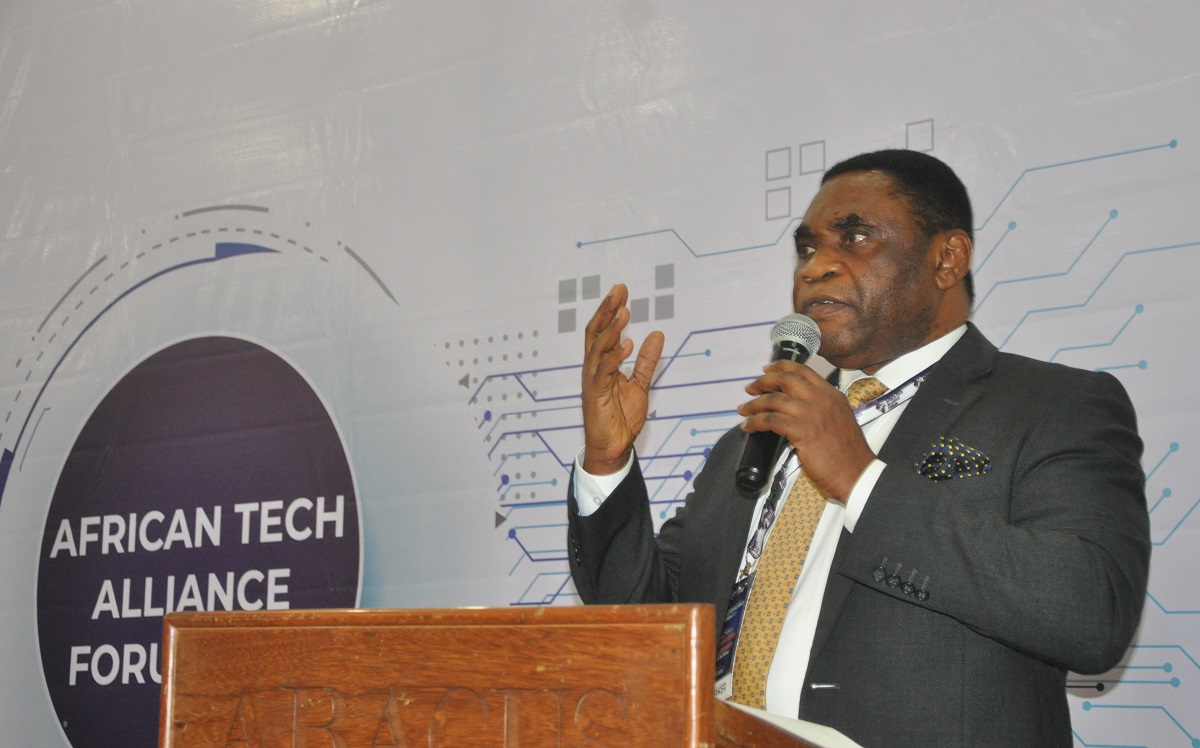
Ojobo made the call on Wednesday, October 13, at the African Tech Alliance Forum (AfriTECH2021) organised by TechEconomy.ng.

The hydride event with strict compliance to COVID-19 protocols under the theme: ‘Embracing Change and Digital Transformation in the New Normal’ held in Lagos, Nigeria.

The AFICTF President explained that lack of access to technology in rural communities fuels division between urban and the rural population, adding that: “Inability to afford devices, e.g. Computers, Smart Phones, internet Covid-19 put 826 Million children out of school in Sub-Saharan Africa in 2020.

“Lack of access to distant learning facilities in rural communities and some demographics in the cities 1.5 Billion students globally were unable to have access to online education during the pandemic in 2020 63 Million primary and secondary school teachers were unable to teach during the same period.

“The world is embracing more of “Man- to – Machine” and “machine – to –machine” communications. This has implications for HR professionals, jobs, mental health and interpersonal relations.

“The world has changed. COVID 19 caught the world unprepared. Things will never be the same again. The world as we know it has changed to new normal behaviours, social distancing, vaccination, PCR, C face mask use, booster shots, handwashing, hand sanitization etc.

“The following have been affected; education, news gathering and reporting, work culture, organizational behaviour, management functions, marketing, PR, commerce, agriculture, tourism & travels, aviation, sports and business models and strategies.

“Two things that changed the world significantly; Covid-19 & 9/11 digital transformation entails the following: organizational/culture change ( remember Nigerian Ease of business? still business as Usual ) operational changes through the use of technology reduced person – to – person interface (curbs corruption)

“Encourages machine – to – machine and person – to – machine communications establishes reporting formats and timelines Bottom –to – top and Top- to- bottom adoption of technology in organizational processes.

Ojobo therefore called for bridging the digital gap between the urban and rural population/schools through the provision of low cost devices in schools for digital learning.

He also believes that incentivising mobile network operators to provide services in underserved and unserved areas cannot be neglected as adequate budgetary provision for pervasive Broadband infrastructure has become a sine qua non in the continent’s digital transformation journey.

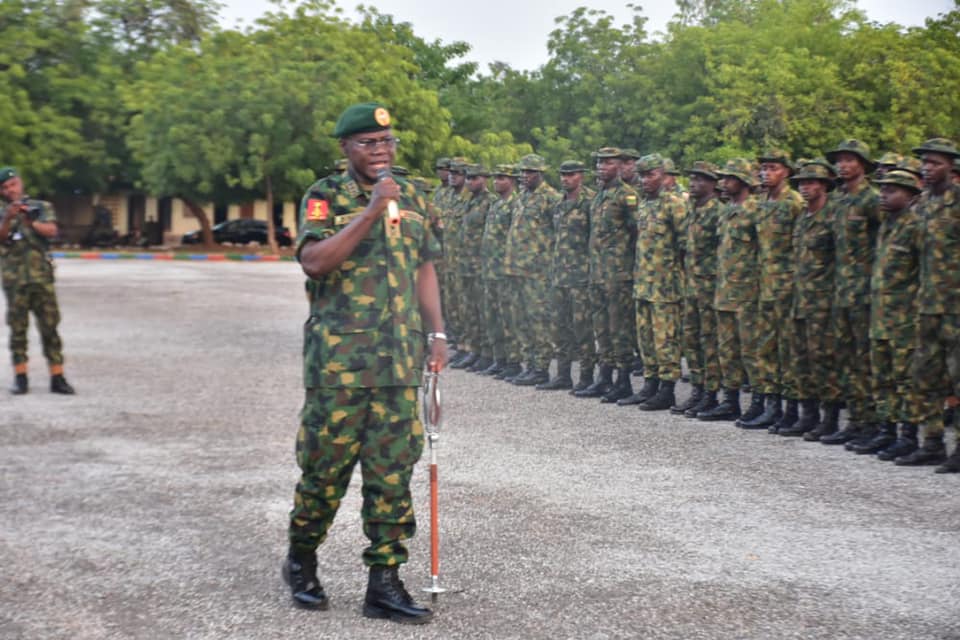
The Nigerian Army has been notified of a recent article published in the online version of the “Economist”, a London based magazine, titled “Insurgency, Secessionism and Banditry Threaten Nigeria” which was ostensibly crafted to denigrate, demonize and destabilize the Nigerian Government. The report also contained some unimaginable slurs targeted at the Nigerian military and the Nigerian Army in particular, to which we would like to respond.

Even as the real intention of the otherwise respected Economist magazine in publishing such toxic concoctions weaved up as report on Nigerian Government’s response to the multi-faceted security challenges assailing the country is yet to be unraveled, the source of the article is very clear. It is one of those deliberate falsehood and noxious narratives orchestrated by a network of detractors and coven of dark forces working very hard to adorn the Nigerian Army in an unfitting garb of infamy. The vile report which the Economist chose to offer its platform for publication, spared no effort in trying to vilify and rubbish the image, character and reputational standing of the Nigerian Army, but failed woefully.

As a professional, hard-fighting and globally respected institution that has continued to occupy deserved glorious position in the comity of global defence forces, the Nigerian Army is certainly not what the so-called report by the Economist tried to characterize it. Even more ludicrous was the embellishments of the said report by the notorious unprofessional media outlets that were quick to republish the obvious falsehood.

How is it conceivable that an international magazine worth its name and professional reputation would agree to lend its medium for a hatchet job of an article without as much as committing little effort to finding out the real truth about the Nigerian Army? How is it imaginable that the Nigerian Army that has distinguished itself as a worthy contributor to global peace and security through regional, continental and international peace keeping and peace support operations would be characterized as “Mighty on paper”? How can the Nigerian Army that has restored democracies, brought peace to troubled lands and stabilized the sub-region through the dint of hard work, commitment to duty, discipline and professionalism be so denigrated?
Is it the ‘ghost soldiers’ of the Nigerian Army that have weathered the storm of terrorism and insurgency of Boko Haram and Islamic State of West African Province Terrorists (ISWAP) in the north eastern part of the country and parts of the Lake Chad region?

In case the Economist magazine and those who fed it all the lies it published do not know, the Nigerian Army working in a joint environment, has been able to stop ISWAP, a very formidable international terrorist organization in its tracks, in spite of all the obstacles, including arm sale blackouts on its way. The Economist and its ilk ought to have known that the Nigerian Army has long distinguished itself as a professional force that does not toy with accountability nor shirk from its statutory responsibility of defending Nigeria from external aggression or internal insurrection.


Is it not curious that an otherwise respected international magazine could so easily be sucked in by the antics of conflict merchants and agents provocateurs who are uncomfortable with the steadfastness, patriotism, unwavering commitment, sacrifice, ruggedness and resoluteness of the Nigerian Army in stamping out terrorism, banditry and other violent crimes assailing the country and the West African sub-region? How the Economist magazine failed to do simple due diligence on the said fabricated report is worth interrogating by those who are interested in distinguishing between rogue journalism and professional one.

Let it be known to the Economist magazine and those who concocted the lies they published that the gallant officers and soldiers of the Nigerian Army are undeterred, undistracted and totally unfazed by the harebrained assertions contained in that silly report.

The Executive Vice Chairman (EVC) of the Nigerian Communications Commission (NCC), Prof. Umar Garba Danbatta, has said that the Commission’s Emergency Communications Centres (ECC) have become a rallying point for the promotion of the security of lives and property of citizens.

He also revealed that the ECCs, 24 of which are currently operational in 23 states and the Federal Capital Territory (FCT) Abuja, processed about 34 million calls bordering on security and emergency issues in the first eight months of the year.
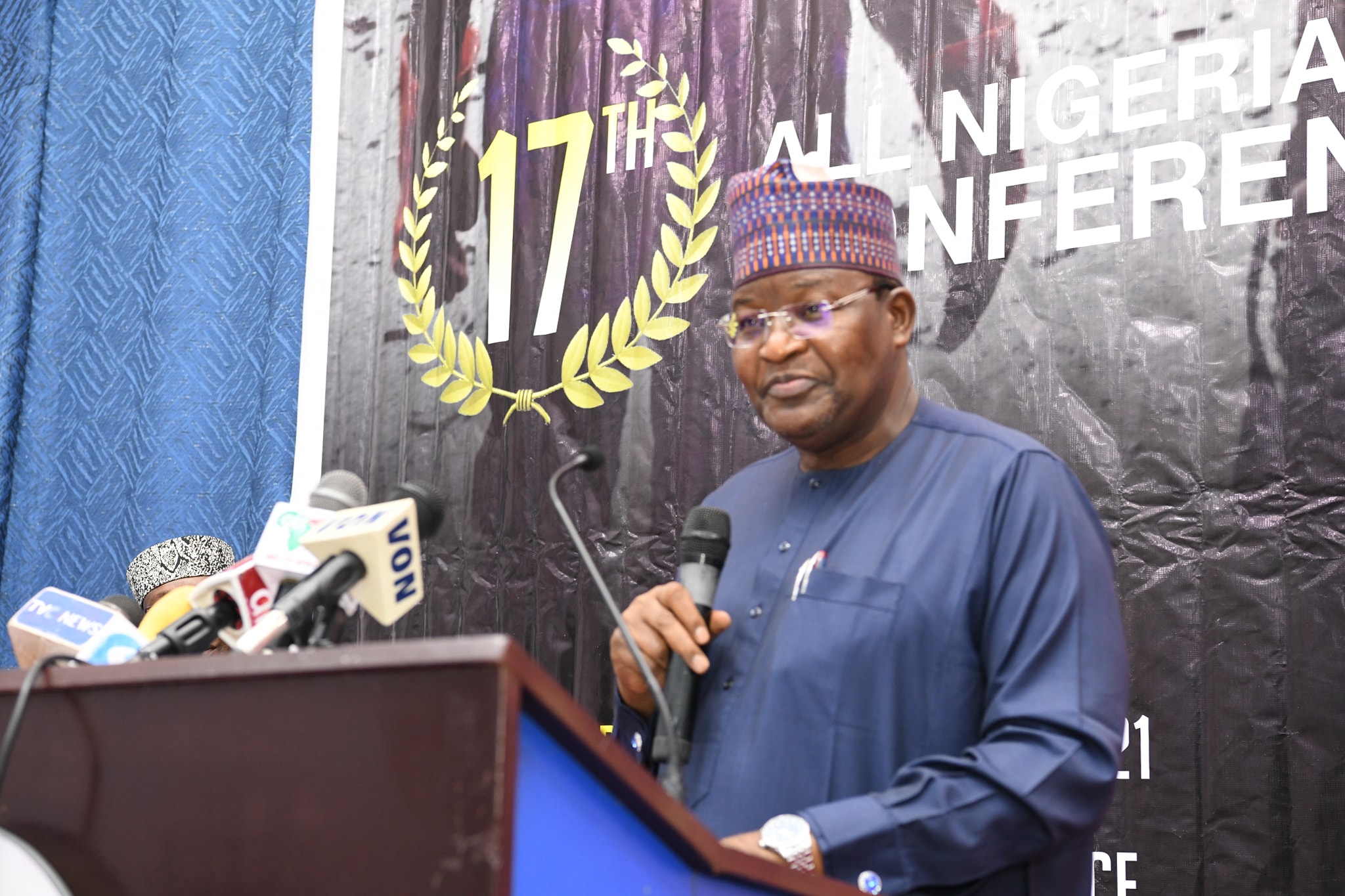
Danbatta made this disclosure while delivering a goodwill message at the 17th edition of All Nigerian Editors’ Conference which is ongoing at the Nigerian Air Force Conference Centre, Abuja. The theme of the conference is, “Media in Times of Crises: Resolving Conflict, Achieving Consensus”

Speaking at the conference, organised by the Nigerian Guild of Editors, the EVC noted that historically, the media have always been in the vanguard of advocacy for values that are ennobling, edifying and unifying. Hence, he urged the media professionals to continue to play their watchdog role professionally and ethically, as a rallying point for unity and security in the country. He stated that accurate, unbiased reporting of national issues, especially those bordering on conflict and security matters, would promote economic development, fight corruption and ultimately improve security of lives and property in the country.

Danbatta, however, stated that the NCC is contributing to improving national security in the country through the establishment of ECCs, which offer a lifeline to citizens in times of distress. The EVC revealed that there are 23 states in the Federation and the Federal Capital Territory (FCT) with functional ECCs, and the centres have continued to have profound positive impact on the lives of Nigerians.


“In addition to the 23 already established and functioning ECCs, the Commission will soon activate ECCs in nine (9) more states, and also plan to inaugurate similar project in the remaining four (4) states by end of 2022, in keeping with Federal Government’s directive,” he said.

The EVC noted that in the wake of COVID-19 pandemic crisis in Nigeria, over 1,500 calls connected to COVID-19-related incidents were received and processed by the Centres.

“The Centres provided a platform for members of the public to seek life-saving information and support with regards to COVID-19 related cases by dialing ‘112’ from any of the networks. More remarkably, Nigerians have become more aware of and are using the 122 Emergency Number. Between January and August, 2021, about 34 million calls were made by Nigerians, who were seeking succor during emergencies or under other security threats and unrest within their communities,” he added.


Just recently, the Senate, Nigeria’s national upper legislative chamber, passed a bill to establish the Nationwide Emergency Communications Service, with 112 as primary toll-free emergency number for the country, in recognition of the importance of NCC’s emergency center projects to national security and economic growth.

He reiterated the Commission’s commitment to implementing various national digital economy policies and regulatory frameworks aimed at deepening digitization, in order to further democratise access to communication facilities by the citizenry.