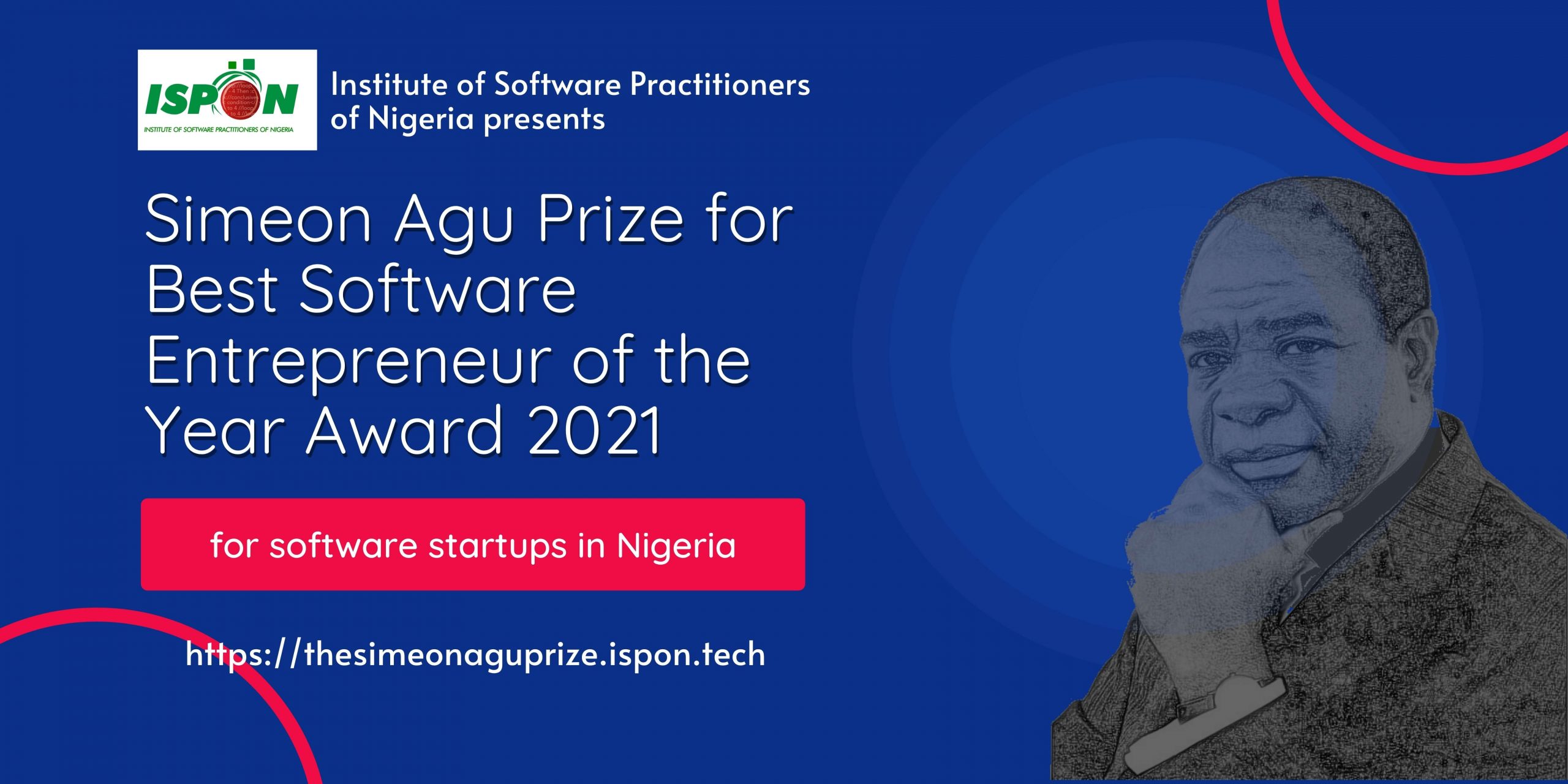
The Institute of Software Practitioners of Nigeria ISPON announces the 2021 edition of the Simeon Agu Prize for the Best Software Entrepreneur of the Year. Established in 2012 in collaboration with the family of Late Engr. Simeon Agu to keep alive his excellent contributions to the software profession and industry, the award is presented annually at the National Information Technology Merit Awards NITMA of the Nigeria Computer Society.

The award is targeted at software startups to recognize their entrepreneurship as they build a fledgling software business.

This year’s award seeks to reward startups for work done from September 2020 – September 2021.

Consideration of the award would be made based on the following criteria:

1.       Idea: what is the general idea behind the startup, how good is it and how does it make the startup rank better than other existing solutions

2.       Innovation: how innovative is the idea, how much of a disruption has it caused and what new trend has it led to

3.       Impact: how much impact does it have on the users, businesses and the industry (where applicable)

4.       Business model: how good is the business model, how scalable is it

5.       Funding: how has the company thrived financially, how much has the company been able to raise and what was the financial turnover. Do note that for consideration, all investor funding must be local.

Per selection of the winner of the award this year, there will be an open process where you can nominate a startup you feel deserves the award and has fulfilled the set criteria.

The panel of judges would shortlist 3 finalists who would be voted for by the general public.

A combination of the number of votes garnered as well as points scored from the technical review of the startup by the judges would determine the winner.

For more information on the process and to make your nomination, do visit https://thesimeonaguprize.ispon.tech

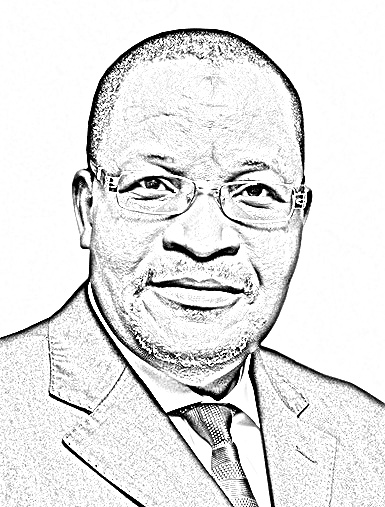
Engr. Simeon Agu, who the prize is instituted in honour of, was the founding President of ISPON. He started his career in information technology at Shell Petroleum Development Company in 1971.

He later moved to the National Electric Power Authority in 1977 as Manager, Systems Development and eventually rose to the position of Director, Computer Services.

He was founder and Chairman of Computer Systems Associates (Nigeria) Limited which metamorphosed into Neptune Software Limited, a foremost international software outfit, growing  it from 3 to over 100 staff with the headquarters in Great Britain and offices in Nigeria, India, Kenya, Uganda, Zimbabwe and South Africa.

Simeon Agu was a distinguished IT practitioner, software industry pioneer, founding President of ISPON, Fellow of Nigeria Computer Society NCS and a member of the Computer Professionals Registration Council of Nigeria CPN. 

As NCC, Danbatta, others receive awards 

As stakeholders in Nigeria commemorate 20 years of telecoms revolution in Nigeria, the Nigerian Communications Commission (NCC) has clearly identified key initiatives being implemented to consolidate the growth and gains of the telecom sector. 

Executive Vice Chairman of the Commission, Prof. Umar Garba Danbatta, listed the digital frontiers while delivering a paper titled: ‘Telecommunications in Nigeria: The Next Frontier’ at the 20th anniversary of the telecommunications revolution in Nigeria organised recently by Compact Communications Limited, at the Muson Centre, Lagos. 

At the event, the Commission received a recognition award “in appreciation of its institutional support to the growth and development of telecoms in Nigeria”. The EVC of NCC also received a separate award “in appreciation of his immense contribution to the growth and sustenance of telecoms development in Nigeria.” 

Represented at the forum by NCC’s Director, Public Affairs, Dr. Ikechukwu Adinde, Danbatta said in the last 20 years, the sector has witnessed significant growth in subscribers, internet usage, investment, innovation, contribution to Gross Domestic Product (GDP) and multiplier effects of the growth in other sectors of the economy. 

Danbatta stated that in collaboration with relevant stakeholders, NCC is driving new frontiers aimed at ensuring consistent growth of the nation’s digital economy sphere.  

According to him, as a foremost telecommunications regulatory agency and consistent with NCC mandate as stipulated in the Nigerian Communications Act (NCA) 2003, and other guiding legislations, the NCC has been at the forefront of leveraging latest technologies and accelerating broadband infrastructure deployment to put Nigeria on the global map of the digital economy experience.  

In this regard, he said NCC was working to ensure increased broadband penetration in line with Federal Government’s targets as contained in the Nigerian National Broadband Pan (NNBP), 2020-2025. The NNBP was launched by President Muhammadu Buhari in March 2020.  

Danbatta explained that the NNBP has a target to achieve 70 per cent broadband penetration among 90 per cent of the country’s population. The Plan also seeks to achieve broadband speeds of 15Mbp and 25Mbps in rural and urban areas respectively over the next five years. 

“The Commission is also driving various initiatives aimed at facilitating the deployment of Fifth Generation (5G) Mobile Technology in Nigeria. 

Prof. Danbatta emphasized that a robust broadband infrastructure will play a key role in fast-tracking the effective deployment of 5G technology and facilitate availability of services associated with 5G technology.  

“Already, the Commission is set to auction some spectrum slots in 3.5GHz band and we have confirmed 97 per cent readiness for 5G deployment in this regard. This is in line with the marching order given to us by Honourable Minister of Communications and Digital Economy, Prof. Isa Ali Ibrahim (Pantami), following approval by the Federal Executive Council to proceed on our 5G Deployment Plan. The Information Memorandum (IM) for the auction had earlier been shared with stakeholders and we are set to auction the 5G spectrum before the end of the year,” he said. 

The NCC Chief Executive also said one of the initiatives being emplaced by the Commission to enhance the attainment of the next frontier for telecom development in Nigeria and the nation’s economic growth, is the ongoing review of licensing structure in the sector. This is to align telecoms licensing process with the wide range of technological advances, convergence of technologies and services shaping global telecoms space. 

Danbatta said the Commission has also finalized review of its Spectrum Trading Guidelines (STG). The STG, according to the EVC, allows spectrum resource in-country to be traded on the Secondary Market through Transfer, Sharing or Leasing (TSL) once the stipulated regulatory conditions have been complied with.  

Danbatta declared that NNBP 2020-2025 requires that these Guidelines be reviewed to ensure that un-utilised spectrum is fairly traded to facilitate rollout by other operators among others. The Guidelines will, therefore, facilitate the country’s yearning for ubiquitous broadband access in line with the economic agenda of the Federal Government. 

As vehicles for implementation of the NNBP, the National Digital Economy Policy and Strategy (2020-2030) and other similar digital economy policies, Danbatta said the NCC has unveiled its Strategic Management Plan (SMP) 2020-2024 and the Strategic Vision Plan (SVP), 2021-2025, which will ultimately drive the next frontier of growth in the telecoms sector. He said the two strategic plans embody critical areas on which the Commission intend to focus toward driving the implementation of the digital economy agenda of the government. 

He stated that the two regulatory documents (the SMP and SVP) encapsulate the totality of regulatory and policy initiatives, designed to re-invent and transform the telecom ecosystem, within the context of regulation, to a greater height. He added that this, to the Commission, is the next frontier for the sector. “While emerging technologies are disruptive by nature, Nigeria cannot afford to lag behind digitally and this explains Commission’s engagement with developmental regulations for the industry and we are irrevocably committed to this,” he said. 

Other individuals bestowed with recognition awards at the event include Former President Olusegun Obasanjo; and the former EVC/CEO of NCC, Dr. Ernest Ndukwe, both for pioneering the Global System for Mobile Communications (GSM) revolution of 2001. The Zenith Bank also received an award for being at the forefront of leveraging technology for powering financial services delivery. Among the journalists who received awards is a veteran ICT journalist/Publisher, E-World News, Aaron Ukodie. 

26-year-old Onyinye trapped under collapsed Ikoyi high-rise building— one week after joining Fourscore Homes

On Monday morning, Onyinye Enekwe, a graduate of the Nnamdi Azikwe University, left for Ikoyi where she worked as second personal assistant to Femi Osibona, owner of Fourscore Homes.

Chinedu Enekwe, her cousin, said she joined Fourscore Homes the week before.

Around 2pm on Monday, the building collapsed, with Onyinye and several others still trapped in the rubble as of Wednesday afternoon.

According to Chinedu, the family has heard nothing from Onyinye since the building collapsed.

“She left her elder sister’s house around 6am for work on that day,” he told TheCable.

Chinedu added that Onyinye had taken a picture of her at the site, which she sent to her older sister just as she arrived at work on Monday morning.

He said the family has received “no information” from the Lagos State Emergency Management Agency (LASEMA) and National Emergency Management Agency (NEMA) or other rescue workers concerning her whereabouts.

Chinedu, however, said the family members are praying for her safe return.

“We’re hopeful. We believe she will be found. We are in prayers for her to be found,” he told TheCable.

There is no official figure of the number of persons who were in the building before the incident happened, but over 50 people are said to have been trapped.

TheCable had reported that Osibona is also believed to be trapped in the rubble as he hasn’t been seen since the day of the incident.

As of Wednesday, the death toll had risen to 22, while nine persons have been rescued.

Credit: The Cable

Rainoil Limited, a leading player in the downstream oil and gas industry, has completed the acquisition of majority shares in Eterna Plc, a publicly listed oil and gas company.

This was achieved following the successful purchase of majority shares of Eterna Plc, through its investment arm – Preline Limited.

On the 21st of December 2020, Eterna Plc issued a public statement notifying Shareholders, The Nigerian Exchange Limited and the general public of negotiations by substantial shareholders to sell equity holdings in the Company. On the 25th of August 2021, Eterna Plc announced the execution of a Sale and Purchase Agreement (SPA) enabling Preline Limited acquire 794,969,774 shares.

Commenting on the transaction, the Group Managing Director, Dr. Gabriel Ogbechie said: “The acquisition is in alignment with our targeted expansion strategy across the oil and gas value chain, and will position the Company for sustainable growth and superior value creation for all our stakeholders. It also underlines our commitment to Nigeria at this critical evolution point of the Energy Sector. We also expect that this will reinvigorate the fortunes of Eterna Plc and optimize the Company for improved performance.”

Over the past 24 years, Rainoil Limited has increased its asset base to include:

Three ultra-modern petroleum product storage depots in Delta, Cross River and Lagos States
An 8,000 metric tonne LPG storage facility in Lagos State

Over 100 retail outlets spread across the country
A fleet of over 140 petroleum product tank trucks for delivery of products to its network of stations and customers across the country

Chukwudi Iwuchukwu

Chukwudi! Welcome to my house, how are you today?

I’m very fine sir, I replied to a man who is a successful billionaire businessman (name withheld) and whose humility for all his wealth is very infectious.

Did I tell you that I bought a new car to celebrate my Mircalious recovery from Covid 19? my guest asked me after we are done with pleasantries.

No sir, I did not hear. Was it the 2021 Landcruiser that you bought some time this year.

No, that one is now an old car. it now has an elder brother. It was on the internet he continued, I drove it out not quite long for an event, your people(bloggers) decided to take a picture of it and upload it on the Internet.

It went viral! I’m surprised that you did not hear, you that is the minister of information and very current.

Viral? which car is that? I asked

It is Toyota Landcruiser 2022, I made the order sometime this year straight from Japan and I think I’m the first human being driving the model of the car in the whole of Nigeria. He said, with this air of accomplishment written all over his face and he has every reason to be proud of himself.

Come, let me show you.

As we walked to his garage, I remember the Viral 2022 Toyota Landcruiser seen on Lagos road that went viral a few days ago and was on so many auto blogs that include Autojosh and Supercars. I did not imagine that the car belonged to my senior friend and chief.

As he was showing me the interior of the new Whip that he bought, I saw a man proud of himself, of his journey and how far he has come.

My senior friend arrived in Lagos in the ’90s as Nwa Boy(apprentice) from his community in Anambra state to serve his master, penniless, broke but he had huge dreams.

Dreams to change his life, dreams to start and run a successful business and then live a baby boys life on his terms and conditions.

He did not seek anybody’s permission to be successful. He believed in the power of his dreams and took the steps to make them happen.

As we were going back to his magnificent mansion after he has shown me the car, I was way more than proud of Igbo traders which my friend is the poster boy for me at that moment, successful Igbo traders who are living the Nigerian dream, building flourishing businesses despite Nigeria and not because of it.

Igbo people have a reputation in Nigeria and probably throughout Africa, as resilient, dogged traders who build viable small-to-medium size enterprises which are completely independent of government.

As we were gisting, now seated inside his expansive sitting room, my friend shared with him his close shave with death and how he survived Covid 19.

I went to the land of death and came back. That experience changed me forever, that is why I want to be intentional in the way I live my life going forward, I want to enjoy my life and just live without anybody’s permission.

COVID 19 is real and it is deadly, he said as he waved me off.

On my way home, these thoughts have been playing on my head:

The typical Igbo trader is has been caricatured for decades in Nigeria, but there are many things that we can all learn from him. More than anything the Igbo trader is a symbol of aspiration of that Nigerian dream that anything is possible, you can change your life on your own terms living in Nigeria and I feel this quote exemplifies him in many ways.

“Nothing in this world can take the place of persistence. Talent will not: nothing is more common than unsuccessful men with talent. Genius will not; unrewarded genius is almost a proverb. Education will not: the world is full of educated derelicts. Persistence and determination alone are omnipotent”

-Calvin Coolidge

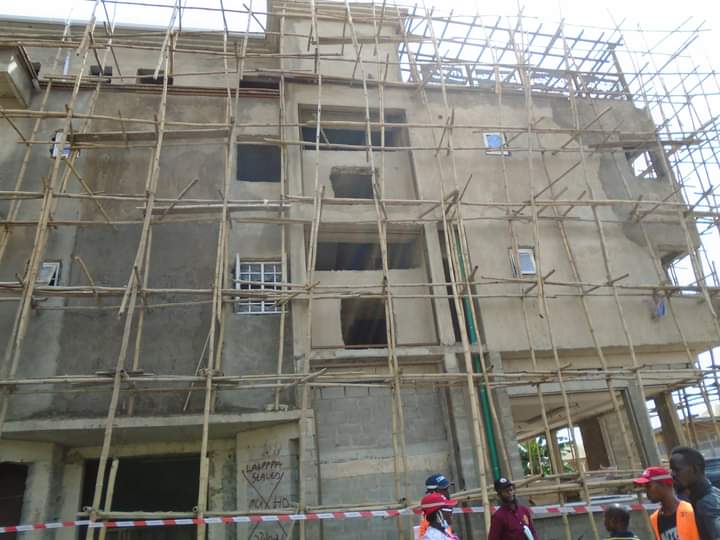
No fewer than 67 commercial and residential buildings, as well as structures in Alimosho Local Government Area of Lagos State, have been sealed by officials of the Lagos State Physical Planning Permit Authority (LASPPPA) for contravening the State Physical Planning regulations during a recent enforcement exercise carried out by the Authority.

According to the General Manager, LASPPPA, Mr. Kehinde Osinaike, the affected buildings were sealed for offences bordering on non-compliance to building regulations and conversion of residential buildings into commercial use without the necessary authorisation.

He explained that the enforcement was carried out simultaneously in the Authority’s delineated District Areas of Alimosho, Mosan-Okunola and Agbado Oke-Odo in Alimosho Local Government.

Osinaike disclosed that LASPPPA had earlier in September 2021 served contravention notices on the affected structures, adding that the notices were not heeded as required, hence the necessity for the operations.

He said: “125 property owners were served contravention notices, through our District Offices, in September. Out of this number, 40 responded with appropriate approved building permits. However, 67 failed to respond. This was what led to two-day targeted enforcement at the Local Government Areas by our Monitoring and Compliance Unit”.

“The sealed property are mostly residential buildings that were converted into commercial use without recourse to necessary permits and regulations. This is at variance with the Alimosho Model city plan”, the General Manager added.

Osinaike, however, stated that some of the affected structures were partially sealed in order to reduce the effect which a complete closure will have on businesses and the daily activities of the occupants.

While noting that the enforcement would be a continuous exercise in the Local Government Areas and other areas of the State, the General Manager averred that the State Government, through LASPPPA and other sister Agencies, is poised to sanitise the built environment and restore the Lagos Physical Planning Master Plan in line with the mandate of the present administration.

He acknowledged that since the enforcement exercise, owners of the affected structures have been approaching the Agency to address the irregularities and perfect their planning permits.

Speaking in the same vein, the Coordinator, Monitoring and Compliance Unit, LASPPPA, Tpl. Olarinde Iyiola, stated that the two-day enforcement exercise was to ensure that the property owners, who have contravened Physical Planning Laws and Regulations, are made to comply with the Operative Development Plan of the Area.

He said that structures in compliance with planning permit approvals and regulations were spared during the exercise.

LASG

ForAGreaterLagos

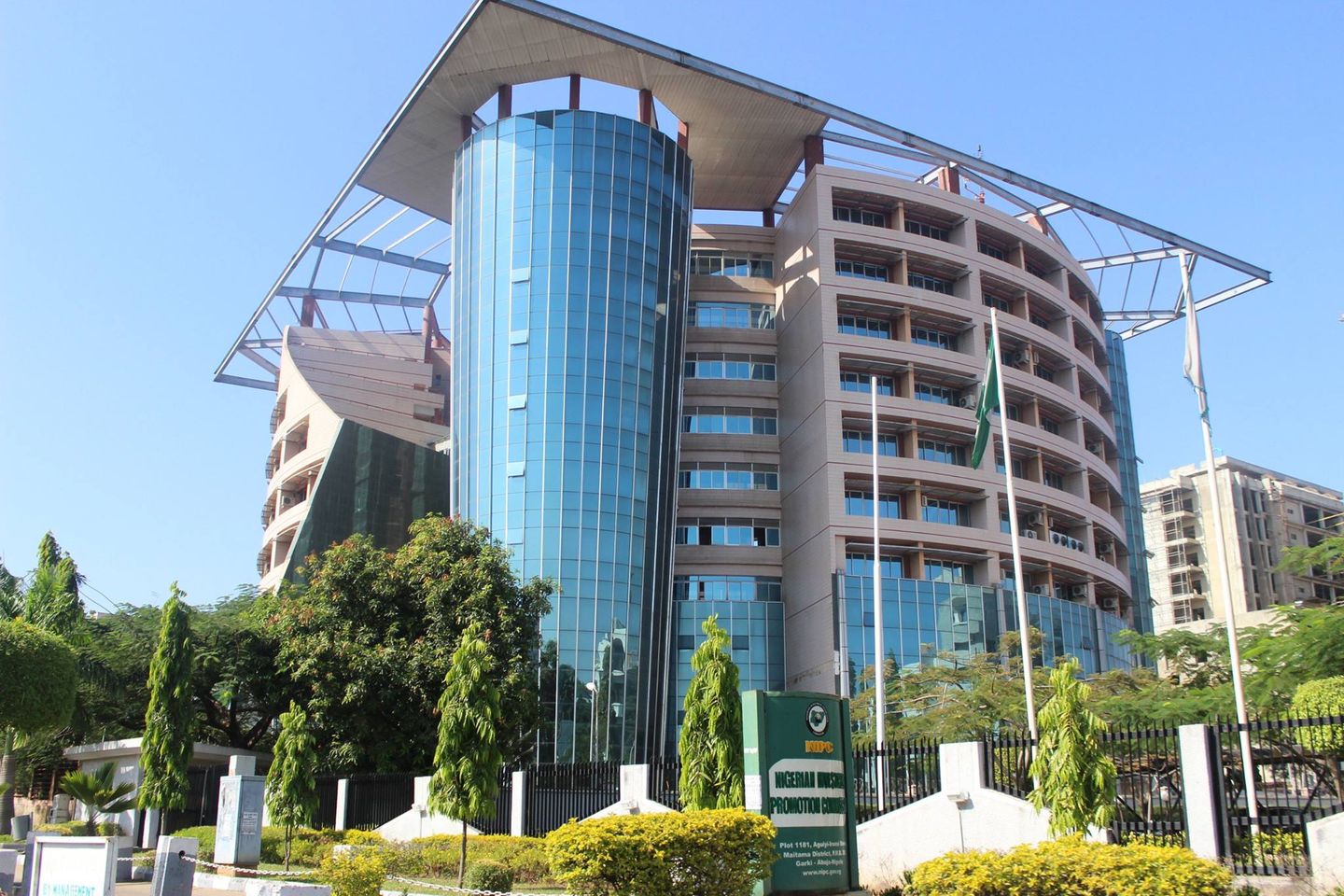
The Nigerian Communications Commission (NCC) said it is adjusting regulatory instruments and management tools to ensure regulations are fit for future imperatives of a robust telecoms sector.

The Executive Commissioner, Stakeholder Management (ECSM), NCC, Adeleke Adewolu, stated this when he spoke at a panel session at the 2021 Annual General Conference of the Nigerian Bar Association held in Port Harcourt. The general theme of the Conference is, ‘Taking the Lead’.

Adewolu, who made the declaration in a panel discussion focused on Government Regulation of Innovation and Technology, said, “In specific terms, we are taking action in the following areas: We are adjusting regulatory instruments and management tools to ensure regulations are fit for the future. An example is our ongoing review of the Telephone Subscriber Registration Regulations to strengthen the framework for digital identity; and the review of the Spectrum Trading Guidelines to ensure more efficient use of spectrum.”

Also, the ECSM said NCC is laying institutional foundations to enable co-operation with other regulatory institutions and international organisations such as the International Telecommunications Union (ITU).

The Commission, according to Adewolu, is also developing and adapting governance frameworks to enable the development of agile and future-proof regulation; and equally adapting regulatory enforcement activities to the “new normal”. He said this is to ensure alignment with the rapid technological changes and innovations that are emerging at a high speed and with sophistication.

On censorship, particularly tackling illegal and harmful content on over-the-top (OTT) platforms, Adeleke said NCC had to opt for “a middle ground that promotes safe use of digital service platforms without necessarily stifling the exercise of the citizen’s right to free expression as guaranteed in the Nigerian Constitution.”

He explained that on technology platforms, censorship manifests in three scenarios, namely, restriction of person-to-person communications; restriction of Internet access generally; or restriction of access to specific content, which governments find objectionable.

This, he said, was pursuant to constitutional provisions such as those in Section 39(3) of the Nigerian 1999 Constitution, as amended, which approves “any law that is reasonably justifiable in a democratic society to prevent the disclosure of information received in confidence, maintaining the authority and independence of courts or regulating telephony, wireless broadcasting, television or the exhibition of cinematograph films.”

In particular, Adewolu declared that the third scenario is globally recognised as the ideal situation because one of the core responsibilities of government (as enshrined in Chapter 2 of the Nigerian Constitution) is to safeguard the lives and property of citizens.

Explicating further, Adewolu said that social media platforms allow instant communications without regard for impact or consequences. He insisted that self-regulation is possible, but “as we have experienced over and over again, an ill-considered post on social media can easily incite unrest and crises.”

He bemoaned the fact that leading social media platforms have demonstrated a rather unfortunate reluctance to moderate the use of their platforms for subversion and harm. “So, we cannot trust them to self-regulate,” he emphasised.

According to him, self-regulation has not been very effective, and interestingly, “the largest platforms are global platforms and many of them are protected by their home governments.”

For instance, “Sc.230 of US Communications Act provides immunity to firms like Facebook and Google from responsibility for content disseminated on their media, although they still apply fair usage and community rules which enables them to self-regulate. However, as we saw with the case of the former US President Donald Trump – people are often able to disseminate negative content for a while before they are cut off. Mr Trump had over 87 million followers he engaged directly with,” the ECSM stated.

Another example he cited happened just few days ago when CNN reported that Facebook deliberately failed to curb posts inciting violence in Ethiopia despite the fact that its own staff flagged such posts, and that Ethiopia is listed as a high-priority zone, which has been fighting a civil war for the past one year. As Adewolu recalled, the UN Secretary General recently called for the regulation of social media platforms, and even the CEO of Facebook has made similar calls in the past.

“So, we cannot wholly depend on self-regulation. And whilst we cannot prevent citizens from freely expressing themselves on these platforms, it would be irresponsible for any government to allow unbridled use of these mediated communication to cause chaos and imperil lives and property. Government must act to protect social cohesion and national security,” he counselled.


Cryptocurrencies refuse to play by the rules. People rely on experts for all sorts of advice, but when it comes to cryptocurrencies, they seek advice from peers and the internet. So, what causes this behaviour, and what are the implications? Hint: it’s rooted in behavioural psychology.


Recent studies suggest that crypto-currency investors rely less on expert advice and increasingly follow peer investor communities for guidance.

The daily value of South African crypto trading recently exceeded $141 million for the first time, indicating that many South Africans consider the risks of this complex, unregulated market to be acceptable for the returns which it may deliver.

Digital advocates have hailed cryptocurrencies as the “new gang on the block, who refuse to play along with the traditional rules of engagement”.

For the first time, investors feel “freed” from the constraints of financial regulations and can find their own “facts”.

Given that many people find blockchain technology difficult to understand and struggle to explain the excessive volatility in the crypto markets, it is interesting that they rely mainly on online sources, such as social media and social news aggregation websites, to shape their cryptocurrency investment strategies.

The abundance of information from like-minded investors has heralded an era of information-enabled investors. For the first time, the early adopters of blockchain technology and cryptocurrency understood the underlying opportunities and trends better than their knowledgeable financial advisors.

Its value, in essence, is determined by its unique characteristics and similar opinions.

One of the foundations of behavioural economics is the principle that under conditions of uncertainty, complexity and time pressure, people tend to revert to cognitive shortcuts or mental biases.

This, and the growth in popularity of cryptocurrencies, plus an abundance of available information, is driven by something called the network effect. The network effect implies that the more people who participate, the higher the crypto value becomes.

The second factor that plays a role in shaping the price of cryptocurrency is called social judgement.

Social judgement theory states that you accept or reject a statement on your cognitive map. Having already been primed to the opportunity of cryptocurrency by the network effect, “whales” – early adopters in the crypto world – who have amassed vast crypto investments have the power to artificially create exaggerated price swings or speculative bubbles. ‘Crypto Celebrities’ make a proclamation, and vast numbers of followers follow suit.

This sort of volatility concerns institutional financial minds and scares some investors off but equally attracts large volumes of new trade after some off-the-cuff announcements on social media platforms.​

Fertile soil and the herd that follows it

The market for cryptocurrencies seems to provide fertile soil for investor biases to steer decision-making. An obvious example would be the bandwagon effect whereby investors buy cryptos primarily because others are doing it, regardless of their convictions, which they often override or ignore.

A study by Calderon (2018) confirms that crypto investors display herding behaviour when navigating crypto market ambiguity. Investors tend to hold on to their cryptos, even in highly negative conditions, partly explaining the weak link between information and market outcomes. This is typical herd behaviour.

The downside of herds

The flipside of the potential gains to be made from crypto coins is the tendency for herd behaviour to create opportunities for exploitation.​ South African crypto investors had to stomach two of the largest crypto scams in the world this year. In January, Mirror Trading International disappeared with about 23,000 digital coins, valued at $1.2 billion and in April, Africrypt allegedly absconded with about $4 billion worth of coins.

Although one could argue that the digital revolution has brought a new level of empowerment to consumers, it seems that it has also intensified people’s judgement biases.

There are no real reference points to determine the value of crypto-currencies, and therefore the pricing mechanisms are driven mainly by collective evaluation of the buyers and sellers.

People tend to jump on the bandwagon and mimic the behaviour of others, often on the basis of anecdotal evidence of success stories on social media, without fully appreciating that the human tendency to herd under conditions of optimism or positive news creating market bubbles and crashes.

There is, admittedly, a range of examples in the traditional financial markets where herding behaviour also drives the decisions of many investors. The difference, though, as many South Africans now can attest, is the inherent risks of an unregulated, complex market where “coin-diggers” – those wishing to make a quick buck – can, and do, capitalise on the flaws in human decision-making nature.

Bio of Udette Kirsch


The Director General, National Information Technology Development Agency (NITDA), Mallam Kashifu Inuwa, CCIE has reiterated that protecting personal information of Nigerians online is a top priority of NITDA, as data remains a critical component of Digital Economy.

Inuwa said this while participating at panel discussion during Nigeria Bar Association Annual General Conference held in Port Harcourt, Rivers State.

Represented by Barrister Olufemi Daniel, Inuwa noted that every moment spent on the internet leaves personal data footprints on social media (Facebook, Twitter, Instagram, etc) and search engines (Google, Bing, Yahoo, etc) making the companies get richer through yet free services, but with the personal data of individuals stored online.

He said research has shown that the value of individual personal data on digital platforms is about $12 per person, thus paving way for technology companies to generate revenue.
“Data is the lifeblood of Digital Economy that includes Metadata. The amount of data globally in 2020 was 44 zettabytes which the world is expected to reach 75 billion in Internet-of-Things (IoT) devices by 2025”, he said.

He added that Nigeria Data Protection Regulation (NDPR) was issued in January 2019 pursuant to Section 6 (a, c) of the NITDA Act 2007. The Regulation is the current National law on data protection in Nigeria. It applies to public and private sector processing personal data within and outside Nigeria.

He further stated that, “the Regulation is aimed at protecting the right to privacy, creating the right environment for digital transactions, job creation and improving information management practices in Nigeria”.

The DG further divulged that the recent decision of the Court of Appeal in the case of Incorporated Digital Lawyers vs National Identity Management Commission (NIMC) (CA/IB/291/2020) shows that the judicial system has begun to appreciate the importance of the digital technology in modern life, especially with the the Court ruling that NDPR is the National Law on Data Protection and Extension of Section 37 of the Constitution of the Federal Republic of Nigeria.

Inuwa acknowledged the efforts of legal practitioners and encouraged them to stand at the cusp of history, which in every new historical revolution, a successful lawyer must be ready to learn, unlearn and relearn to remain learned, and the legal professional cannot afford to take a back seat in the digital economy space.


The Honourable Minister of Communications and Digital Economy, Prof. Isa Ali Ibrahim (Pantami) has conveyed the approval of the Federal Government to extend of the deadline for the National Identity Number (NIN)-Subscriber Identity Module (SIM) data verification.  Citizens and legal residents are urged to complete the process before the end of the year 2021.

The decision to extend the deadline was made further to appeals by the Mobile Network Operators and other industry stakeholders, soliciting for a further extension to ensure better compliance with government’s directive and to avoid widening the digital divide. The extension would also provide the enabling environment for the registration of Nigerians in remote areas,  diaspora, schools, hospitals, worship centres, as well as foreigners, diplomatic missions, those in other areas that were hitherto unreachable, and increase enrolments in countries with a significant number of Nigerians.

The review of the progress of the exercise indicated that over 66 million unique National Identity Numbers (NIN) have been issued- an indication of progress achieved in the ongoing NIN-SIM linkage. However, a significant part of the populace is yet to be registered into the National Identity Database (NIDB), which may be due to some challenges which the Federal Government has looked into and has made efforts to alleviate, hence the need to extend the deadline. 

As of October 30, 2021, there were over 9,500 enrolment systems and over 8,000 NIN enrolment centres within and outside the country- this has significantly eased the NIN enrolment process and subsequent linkage of NIN to SIM. The NIN-SIM verification process is supporting the Government’s drive to develop Nigeria’s digital economy, strengthen our ability to protect our cyberspace and support the security agencies.

The administration of His Excellency, President Muhammadu Buhari, GCFR, has graciously approved the extension to accommodate the yearnings of the populace and make it easier for its citizens within and outside the country, and legal residents to obtain the NIN and link it with their SIM. The Federal Government will ensure that all innocent, law abiding citizens and residents will not lose access to the their phone lines as long as they obtain and link their NIN.

Government will also continue to provide an enabling environment for investors in the telecommunications sector,
The unique 66 million NIN enrolments, with an average of 3 to 4 SIMs linked to the NIN, is a testament to the commitment and dedication of the Federal Government, through the Nigerian Communications Commission (NCC) and the National Identity Management Commission (NIMC), to ensure the success of the project. With the creation of additional NIN enrolment centres within and outside the country, and many more coming up, the remaining citizens and legal residents living in the country and the diaspora should be able to obtain their NINs and link them with their SIMs before the end of the year.

Consequently, the Honourable Minister enjoins Nigerians and legal residents to make use of the opportunity of the extension to enrol for their NINs and link with their SIMs. On behalf of the Honourable Minister, the Executive Vice Chairman of NCC, Prof. Umar Garba Danbatta, and the Director-General/CEO of NIMC, Engr. Aliyu Aziz, urge citizens and legal residents to take advantage of the window to complete the process of enrolment and verification before the the end of the year 2021.