The innovate with C# event is aimed at helping C# developers, programmers and advocates broaden their scope with the new update created and interact more with the programming language whilst exposing them to a wider range of opportunities within the ecosystem.

Microsoft Africa Development Center (Microsoft ADC), the engineering center for Microsoft is set to kick off its first skill-based user group event on the 18th of November, 2021 tagged ‘Innovate with C#’- an expert hands-on event for developers, engineers and programmers in Africa who build programs and applications with C# (The most popular among Microsoft’s stack of languages that provides a broad spectrum of components covering business-oriented to system-oriented projects that is commonly used in the building of Website Applications, Windows Applications and Gaming).

Microsoft 4Afrika program announces 5 African startups to receive grants -  Techzim

Speaking on the Innovate with C# event, Mads Torgersen, Lead Designer of C# Programming Language and Program Manager at Microsoft, noted “It’s very exciting to see initiatives and events like this being organized to engage the C# Community across West Africa and Kenya. I am thrilled to be speaking about C# 10 at the “Innovate with C#” event by the Microsoft Africa Development Centre and to learn from the African developer community throughout the event.”

Innovate with C# is a free virtual event for developers and programmers to discuss the new update created and creating room for the expansion of C# knowledge base whilst gaining access to learn from field experts. Registration for the event is open to all C# Developers, Programmers, and Advocates in West Africa and Kenya, and can be done by clicking on this link https://aka.ms/InnovateWithCsharp


About Microsoft ADC


Microsoft Africa Development Center (ADC)represents Microsoft’s first-ever engineering offices in Africa, with locations in Nairobi, Kenya and Lagos, Nigeria. These centers were created by Microsoft to serve as a base for African industry leaders to create local solutions with global scalability as well as provide employment opportunities and further enhance technological innovations in the continent of Africa.

“It’s very exciting to see initiatives and events like this being organized to engage the C# Community across West Africa and Kenya. I am thrilled to be speaking about C# 10 at the “Innovate with C#” event by the Microsoft Africa Development Centre and to learn from the African developer community throughout the event.”

International Fraud Awareness Week is taking place from 14-20 November, highlighting an increasing problem that organisations around the world are facing. According to the Association of Certified Fraud Examiners (ACFE), businesses lose around 5% of their annual revenue globally due to fraudulent behaviour, which experts estimate amounts to a total annual loss around the world of $3.7 trillion.

Fraud can hit organisations from various angles, and even though cybercrime and external fraud attacks are a huge risk, more often than many companies realise it is perpetrated from within. In fact, the Global Economic Crime and Fraud Survey showed that 41% of economic crimes in South Africa were committed by employees, compared to only 36% by external fraudsters and 21% a collusion between the two.

Ryan Mer, Managing Director, eftsure Africa, a Know Your Payee (KYP) platform provider says it is crucial to be alert to fraudulent activity within your organisation and to catch it as early as possible. To do this, you need to understand what drives employees to engage in fraud. “From our experience and conversations with clients when assisting those who have dealt with fraud internally, employees do not set out to defraud a company and it is usually someone who has been with the company for some time and someone who is seen as unlikely to participate in criminal activity.”

Criminologist Donald Cressey published a model called the ‘fraud triangle’, which outlines the three factors that can cause employees to commit occupational fraud: motivation, opportunity and rationalisation. When an employee has a reason for committing fraud, gets a chance to do so without getting caught, and can come up with a justification for their behaviour, they’re more likely to commit an occupational crime. “The past two years of COVID-19 lockdowns have negatively impacted household finances, providing ample motivation and justification for committing fraud. In the minds of many, desperate times call for desperate measures. Organisations need to be cognisant of this and act accordingly,” advises Mer.

Some of the warning signs exhibited by employees that may indicate fraudulent behaviour include:

Living beyond their means. Look out for employees who exhibit a drastic change in lifestyle, suddenly arriving at work in an expensive car, flashing designer gear and boasting about new real estate acquisitions with no real reason for the change.

Guarding their turf. A fraudster won’t want to share their duties and may resist taking holidays so nobody can step in for them.

Have unusually close relationships with a vendor or customer. This allows the fraudster the opportunity create fictitious orders or receive kickbacks. Be on guard if a supplier insists on dealing with one specific employee.

Working long hours. An employee who comes in early, stays late, works on weekends and does not take sick or annual leave are all red flags. This could indicate that the employee does not want to share their responsibilities with other employees who may detect fraudulent acts.

Working in a position to commit fraud. Positions that involve administering payments to creditors and suppliers, overseeing and processing invoices and electronic payments, and capturing bank statement transactions present a higher risk for businesses. Fraud can be committed by changing the banking details of suppliers, especially ad hoc suppliers, and adding fictitious suppliers or employees onto the payroll.

How to prevent fraud

By looking at the three factors in the ‘fraud triangle’ mentioned above, business owners can help to prevent employees from resorting to fraud.

Relieve the pressure. Remove the motivation to participate in fraudulent behaviour by showing empathy for your employees and offering the support they need in good times and in bad.

Remove the opportunity. Tighten up your accounting policies and ensure strong internal controls to prevent payments fraud. A common thread in cases of fraud is the human element. A Software as a Service (SaaS) provider like eftsure can help limit these risks by providing an integrated payments platform that provides organisations with the ability to digitise and automate the verification of payees and eft payment data, on a continuous basis through its KYP technology.

Deal with rationalisation. Don’t give employees the chance to justify fraudulent behaviour. Develop a transparent and collaborative approach to business that treats employees fairly. This way you’re less likely to have disgruntled employees more likely to get involved in fraudulent behaviour.

In the current economic climate, employees may be more tempted to perpetrate fraud, making it vital for organisations to implement best practice anti-fraud strategies. “People combined with technology and sound business processes are at the frontline of fighting fraud and mitigating risk. By building a culture of security within an organisation that ensures cooperation between employees and technology, it is significantly more difficult for employees to commit white-collar crime,” says Mer.

African unicorns have made big news in recent months, with four startups having recently reached a $1 billion valuation or more this year alone, taking the total up to seven. Two of the new entrants are in fintech, one in edtech, and one in general technology. These and other technology-enabled sectors are where emerging market investors are betting a flurry of new African unicorns will follow suit in the near future.

Unicorns are privately held, fast-growing startups with a valuation equal to or above $1 billion. Unicorns are “rare creatures,” hence the term, which, according to Ian Lessem, managing director of HAVAÍC, says is expected to rise in Africa in the coming years.

The number of billion-dollar companies is growing faster than ever before; unicorns in Africa have been a rare breed up until now.

“It is thanks to a combination of factors, not least of which has been the interest in these growing sectors from venture capital investors,” explains Lessem. “Across the globe, the number of billion-dollar companies is doubling in half the time, all while delivering leading  returns.” 

On the continent, with the pace of digital transformation and adoption continuing at unprecedented rates, the rise of African tech unicorns is starting to gain significant momentum.

High mobile penetration rates, a tech-savvy and growing youthful population, and advancements in technologies that help overcome historically poor infrastructure in Africa, are key factors driving the growth of promising technology businesses. In addition, an inflow of skilled human capital returning to Africa has created the perfect melting pot of opportunity and skills, bolstering the development of technology-enabled businesses.

“Africa is rich with opportunity – 2020 was a record year for investment in the startup ecosystem, with 2021 expected to be even better, explains Lessem. “It is a continent of born entrepreneurs solving a number of challenges that Africans are committed to addressing. When coupled with technology, ever-increasing addressable local and international markets, all buoyed by unprecedented amounts of investment, the future for the African tech sector has never been brighter.

In parallel to these developments, the venture capital market has matured in recent years, establishing a solid foundation for promising startups. Lessem elaborates, “The maturing venture capital market is supported by well-established accelerator programmes, corporate innovation challenges, and a wealth of international and local investors vying for an opportunity to support Africa’s growth opportunities.”

As Africa is not a homogenous market, finding the right partners with local experience and expertise is vital. “Whether termed a unicorn, camel or a gazelle, one thing holds true, African innovation backed by smart capital holds promise for investors who have the right partner by their side,” he adds.

Unicorns are an indication that a venture capital ecosystem is able to deliver scalable solutions, and with that deliver leading returns on investments; the rise of four unicorns this year to date, together with a maturing startup sector, is a strong indicator that Africa is ready for and heading towards producing many more billion-dollar companies in the years to come.

Coming from the legal background,the Vice President of the Country, Yemi Osibanjo in his speech at the 2021 Biennial All Nigeria Judges Conference commended the judges on the strides that they have made to deepen and ease the judiciary processes in the country.

Representing the President of Nigeria, Muhammadu Buhari, Yemi Osibanjo said “it is quite pleasing to see how lessons learned during this difficult period of the pandemic have provided measures for achieving the goals of speedy dispensation of justice in the country through the dual-track of removing administrative bottlenecks in the judicial process and adopting modern time-saving technology.”

On the electronic processes the courts adopted during the pandemic and post lock down period, Yemi Osibanjo added that” From the Practice Directions that were issued by several courts for remote hearing of cases, to the electronic filing of court processes, service of hearing notices via email addresses and mobile phone numbers of counsel, and e-payment of filing fees; these innovative approaches have, in addition to ensuring compliance with the Covid-19 Protocols, ensured that the wheel of justice continued to move unhindered. I look forward to the universal application of these approaches across the country.”

On the commitment of the administration of the president Buhari, he opined that,” this administration remains committed towards supportive measures including but not limited to the development of strategic infrastructure that will provide ease in case management, and enhanced welfare of judicial officers. These measures are aimed at standardising our courts, safeguarding the integrity of the judiciary, and attracting the best of legal minds to the bench, especially as the Judiciary remains the last hope of the common man.”

Anthony Emeka Nwosu

•Committee to submit Report in Two weeks

•Okuwobi: Panel treated 235 petitions, awarded a total of N410 million to 70 victims

Lagos State Governor, Mr. Babajide Sanwo-Olu, on Monday set up a four-member committee led by Lagos State Attorney-General and Commissioner for Justice, Mr. Moyosore Onigbanjo (SAN) to raise a White Paper on the reports submitted by the Judicial Panel of Inquiry on Restitution for victims of SARS related abuses and other matters.

Other members of the committee are; Commissioner for Youths and Social Development, Mr. Segun Dawodu; Special Adviser, Works and Infrastructure, Engr. (Mrs) Aramide Adeyoye and Permanent Secretary, Cabinet Office, Mrs. Tolani Oshodi.

Governor Sanwo-Olu said the Committee would bring forward a White Paper within the next two weeks to be considered by the Lagos State Executive Council, pledging that the reports and recommendations will be made public and submitted to the National Economic Council (NEC) for discussion.

The Governor constituted the committee after receiving the two reports of the Lagos State Judicial Panel of Inquiry on Restitution for victims of SARS related abuses and other matters presented to him at the Lagos House, Ikeja by chairman of the panel, Justice Doris Okuwobi (retired).

The two reports submitted by the Panel to Lagos State Government are on investigation on petitions on several abuses and killings by the Nigerian Police, especially the disbanded Special Anti-Robbery Squad (SARS) and the October 20, 2020 Lekki Toll Gate shootings during the EndSARS protests hijacked by hoodlums.

Governor Sanwo-Olu also reassured Nigerians, especially residents of Lagos that the Government’s action would be guided by the law and in the public interest.

The Governor, expressed hope that Lagos State government’s decision on the reports would bring complete healing, reconciliation and restitution.

“I am going to constitute a four-member committee immediately, which will be headed by the Attorney-General, the Commissioner for Youths and Social Development, the Special Adviser on Works and Infrastructure and the Permanent Secretary, the Cabinet office.

“The four of them will immediately look through and bring forward a White Paper within the next two weeks that will be considered at the Lagos State Executive Council and would be gazetted as a white paper coming from the Panel of Inquiry.

“We will ensure that the recommendations that are coming out that will be turned into a white paper and would be made available to the public. We will do it appropriately so that history will judge us well and we will have a document that will stand the test of time. That is what the tribunal law says, so that it will be properly documented and gazetted in government’s records,” he said.

Governor Sanwo-Olu who pointed out that the panel had operated independently, commended members of the Justice Okuwobi-led panel for a job well done and also expressed appreciation to Lagosians for their cooperation during the exercise, which lasted for almost a year.

Speaking earlier, Justice Okuwobi expressed deep appreciation to the Lagos State Government and all the stakeholders who appeared before the Panel. She also thanked members of the Panel for their uncommon resolve to bring closure to the assignment and good team work.

She said part of the recommendations of the panel is establishment of a body to take over human rights abuses in Lagos.

Justice Okuwobi, who disclosed that the panel awarded a total of N410 million to 70 victims of Police brutality, said 235 petitions were received with only 14 of it being on the alleged Lekki Shooting incident.

“As much as the panel desired to have taken all petitions, the ones that were not taken by the panel were those that did not comply to our rules, so in this report, we made recommendations for a body to take over human rights abuse cases in Lagos State,” she said.

It would be recalled Governor Babajide Sanwo-Olu on October 19, 2020 inaugurated the Judicial Panel of Inquiry to investigate alleged cases of brutality and human rights violations perpetrated by the Police and operatives of the dissolved Special Anti-Robbery Squad (SARS).

The panel was also saddled with the investigation of the alleged shootings that took place on October 20, 2020, at the Lekki Tollgate.

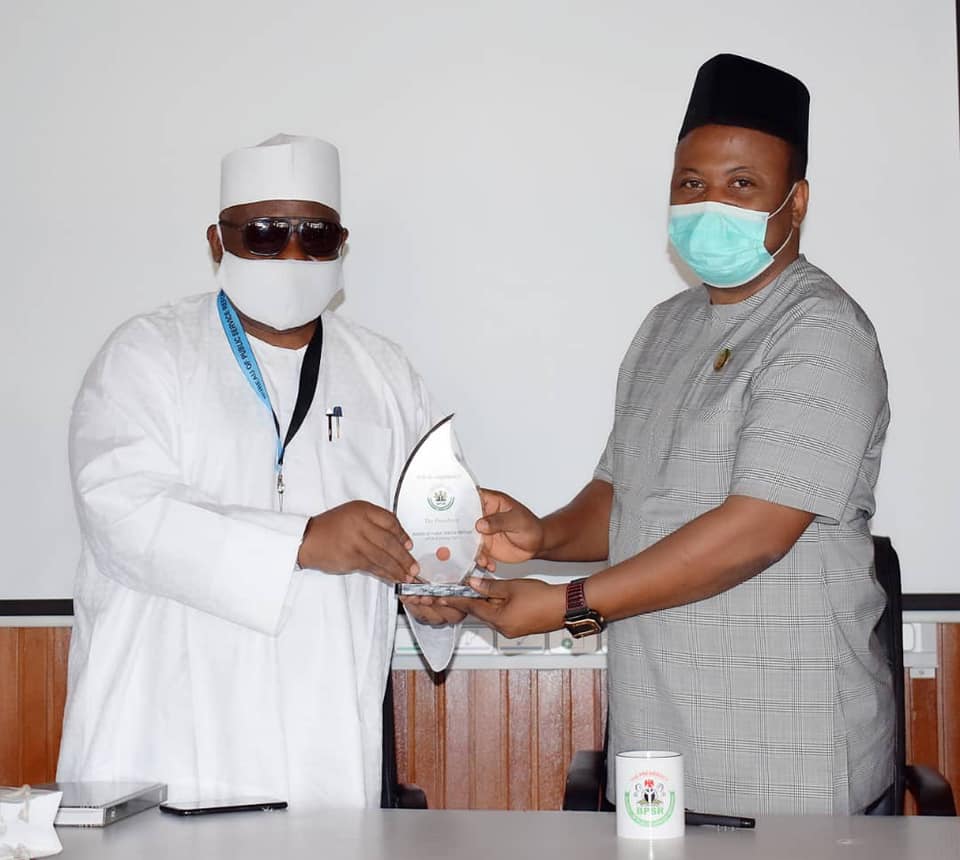
The Director General, Bureau of Public Service Reforms (BPSR), Dasuki Ibrahim Arabi has said that Nigeria has shown high level of readiness to achieve digital transformation of the country.

He said with establishment of agencies such as Nigeria Communication Commission (NCC) and National Information Technology Development Agency (NITDA) to concretize the idea, the country is on the right path.

The DG was speaking on Saturday at the 2021 National Summit of Institute of Information Management (IIM) held in Abuja.

Dr Arabi who spoke on the topic: “Promoting the keys to data values through organisational data leadership in the era of digital transformation and economy”, said the discussion is timely and relevant, in view of the importance of the discussions on data and information management on Nigeria’s journey towards attaining digital economy.

He said, “Advanced and evolving technologies such as the Internet of Things (IoT), Big Data, Automation, Self-driving cars and Artificial Intelligence (AI), are projected to affect about 50 per cent of the world economy, and these are some of the outcomes of the application of digital technologies.

Digital transformation should be central and strategic among public sectors across the world, with ever-increasing citizen’s expectation around delivering greater efficiency, offering better services to the public and exploiting a greater range of modern technologies.

The present administration of President Muhammadu Buhari is trying to explore these potentials in all sectors, including in the area of ease of doing business, which made the country moved from the 170th position in 2017, up to 145th in 2018, based on the recent World Bank report.

“In today’s digital economy, organisations have access to more data than ever before. This data creates a foundation of intelligence for important business decisions. To ensure employees have the right data for decision-making, government agencies and private companies must invest in data management solutions that improve visibility, reliability, security, and scalability.

“Now, looking at it from the Nigerian experience, the move to ensure government Ministries, Departments, Agencies and Parastatals have joined other global colleagues, BPSR has been fully instrumental in the entire process.

“Little wonder, the country’s Minister of Communication and Digital Economy, Isah Ali Pantami recently revealed that courtesy of digital transformation, Information Technology projects’ clearance saves Nigeria N22.8b in 4 years,” Dr. Arabi added.
On what BPSR is doing to support the country’s journey to digital transformation, the DG said they have recently unveiled Nigeria National Strategy for Public Service Reform (NSPSR) to that respect.

“Just recently, BPSR unveiled new Nigeria National Strategy for Public Service Reform (NSPSR) to provide a common vision for rebuilding and transforming of the federal public service in the country. The strategy is primarily a coordinating mechanism that will help the ongoing reforms across the public service in government MDAs,” he added.

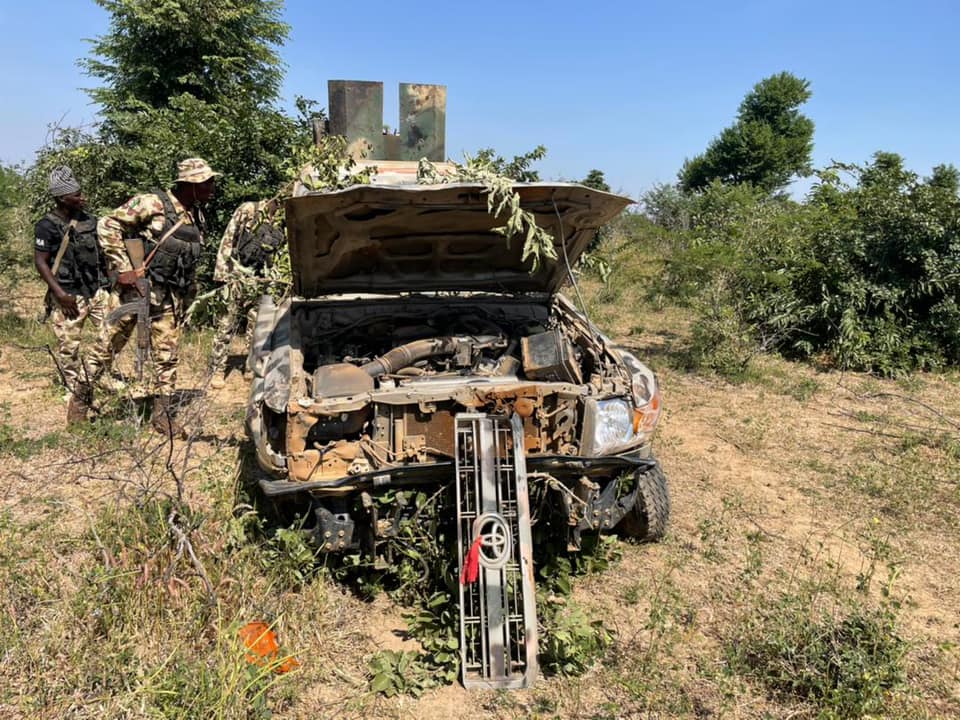
Troops of Joint Task Force, North East(NE) Operation HADIN KAI(OPHK) have neutralized over 50 Islamic State West Africa Province (ISWAP) terrorists and destroyed several of their combat equipment in a fierce counter offensive in Askira Uba Local Government Area of Borno State. In the counter offensive, troops eliminated top commanders of ISWAP as well as foot soldiers. The gallant troops also unleashed massive destruction on the terrorists’ Mine-Resistant Ambush Protected (MRAP) vehicle and several Gun Trucks.

It would be recalled, that 115 Task Force Battalion had an encounter with ISWAP terrorists in Askira Uba on 13 November 2021, during which the troops aggressively defended their location and followed up with a ferocious counter attack. Unfortunately, the Commander 28 Task Force Brigade along side three of his soldiers paid the supreme price, as they reinforced troops to defend the location.

While the battle raged, the gallant troops of 25 Task Force Brigade, supported by Air Component of OPHK engaged the terrorists in a hot pursuit. Troops made contact with the fleeing terrorists at Leho village within Askira Uba LGA and in the encounter that ensued, troops eliminated scores of terrorists and destroyed their combat equipment.

The equipment destroyed by troops include, an MRAP vehicle and 11 Gun Trucks. The troops also recovered large cache of arms and ammunition viz., Five Gun Trucks, two Anti Aircraft Guns, five AK 47 rifles, one HK Machine Gun and one HK Machine Gun links.

Relatedly, troops of 115 Task Force Battalion conducted a dawn exploitation towards Leho village and environs, where they discovered 3 corpses of the fleeing terrorists and also recovered 2,560 rounds of 7.62mm Special and 29 rounds of 7.62mm NATO ammunition abandoned by the terrorists.

In a separate operation, troops have also recovered one AK 47 rifle and uncovered an Improvised Explosive Device (IED) during a patrol in Karawa village and Baga Fish Dam area respectively. The IED has been safely detonated by a team of the Explosive Ordnance Disposal unit.

Meanwhile, the Chief of Army Staff (COAS), Lieutenant General Faruk Yahaya has led a team of top brass of the Nigerian Army to pay a condolence visit to the family of the late Commander 28 Task Force Brigade, Brig Gen Dzarma Zirkusu on Sunday 14 November 2021, where he commiserated with families of the fallen heroes. He has also urged the good people of the NE to continue to support the ongoing counter insurgency operations, while reaffirming troops’ renewed operational readiness to aggressively confront the criminal elements.

Airbus Secure Land Communications will showcase its portfolio of modern hybrid communication and collaboration solutions for smart airports at Dubai Airshow 2021, taking place from the 14th to the 18th of November.

During the exhibition, Airbus will hold at its booth a demo for its Tactilon Agnet solution, a cloud-based collaboration service, to highlight how its features can support smarter teamwork among airport staff and security personnel.

Delivering the best of both Tetra and broadband solutions, the push-to-talk and end-to-end encrypted Tactilon Agnet is packed with state-of-the-art features for better connectivity and higher operational efficiency and safety. Users can securely talk, send multimedia messages and exchange live video with their teams with just a click. Apart from its multimedia-enriched messaging and video transmissions capabilities, it is also equipped with emergency calls and real-time location tracking functionalities to promote better staff coordination and faster response time.

Tactilon Agnet is a modern, easy-to-use, flexible and scalable collaboration solution that is efficient for group communication. By rolling out this solution airports can reduce operating costs, manage flights more effectively and improve security – all of which are vital to running and managing smart airports.

“At airport facilities, efficient supervision of different aspects of the operations is critical to optimizing processes, minimizing aircraft turnaround time and maximizing customer satisfaction. All employees need to ensure that the systems are in place to look after the passengers, airlines, airport security, check-in facilities, baggage handling, passport control, gates, ground handlers, and many more, are working seamlessly. Therefore, Airbus collaboration tools, including our Tactilon Agnet, play a pivotal role in ensuring that all staff can communicate and collaborate without interruption and in a fast and secure manner. This is what we offer to smart airports, which we will highlight at Dubai Airshow” said Selim Bouri, Head of Middle East, Africa and Asia Pacific for Secure Land Communications at Airbus.

Airbus has been providing the UAE’s aviation industry with its mission-critical collaboration and communication technologies for over a decade. Its roster of clients in the country includes Dubai Airports, Abu Dhabi Airports and Sharjah Airports.

In the past few years, one of the challenges the country have had to grapple with is the level of bigotry, which has dominated  our socio-political discourse . Such is the sensitivity of this issue that it has permeated all sectors and affected the perceptions of citizens to decisions and or appointment into offices irrespective of whether such are done with good intentions by the appropriate and or approving authorities.

Today, one of the youngest and scholarly personalities on the federal government of Nigeria, Professor  Isa Pantanmi, the Minister of Communications and Digital Economy is in the eyes of the storm for various reasons.

As a core professional and one of the few square pegs in square holes appointed by the Muhammadu Buhari government, has had to be in controversy, which stems out of his personal beliefs and the coincidental rise of insurgency while trying to ensure the performance of his duty to actualise the policy of National Identity, which has somewhat become an ‘abiku’ child often plaque by convulsion.
Pantanm’s personal religious background and persuasion had collided with the former, which came at a time when Islamic insurgency worsed by Boko Haram, has affected national identity project.

This has unwittingly put Pantanmi in the court of public opinion as he is perceived as a citizen whose previous role in his personal religion couldn’t be separated from his new calling on, which he has earned laurels as a professional.

But by far the most challenging image problem for the 49 years old Cyber security expert in spite of his unquestionable professional and academic credential, is the appointment two months ago as a Professor of Cyber Security by the Federal University of Technology, Owerri (FUTO).

Pantanmi, it will be recalled had a chain of degrees,BSC,MSC,
MBA from Abubakar Tafawa Balewa University(ATBU) and a doctorate in Computer Information Systems from Robert Gordon University,Aberdeen, UK.
Critics have put down the appointment such to the point of doubting the previous academic attainment of the young and performing minister among the pack of 53 colleagues in the Federal Executive Council.

It is on record that the very impactful changes in the nation’s communication sector of which the communications minister is the chief pivot, has apparently prepare it to become another goose that lays the Golden egg for the nation besides the oil sector.

The ASUU panel also explain in detail, how Patanmi applied for a professorial chair in response to the university advertisement and the steps taken by the university to grant his request following its established due process.

Hence,criticism of his new academic position failed to take cognisance of his previous laurels but weigh more on the personal religious pedigree , an issue which has unwittingly weigh the country down.

But then,the adherence to due process by the Governing Board of the FUTO, which advertised for the vacant professorial chairs among which is Cyber Security department to help deepen its research in this field among five others in the sciences is not only commendable but coming at a time the nation is faced with serious security challenges, which deployment of modern technology could only contain.

For appointing Pantanmi, as a Cyber Professor,the university’s branch of the Academic Staff of University,ASUU set up a committee which in it’s report declared the observance of due process by the governing council.

For once,academics should be insulated from undue partisanship more so when FUTO’ s ASUU constituted panel of six professors led by Professor M.S Nwakaudu and came out to adjudge the appointment as having followed due process.

That the eminent academic panel did confirm that the minister indeed applied for and was screened by the Governing Board of FUTO considering his various academic works,publications and contributions to knowledge in the two known institutions..Abubakar Tafawa Balewa University of Technology and Medina University in Saudi Arabia… speaks volume of the academic communities confidence in the system it is part of.

Besides,that it could ask the FUTO’s management to protect its integrity by taking steps to correct some misconceptions against it, is an evidence of a scholarly body ready to defend it’s integrity and that of the institution it represents and by extension the capacity of the appointee to contribute to knowledge of the institution from which the ASUU leadership also drew its strength.

That the ASUU among other measures also recommended a legal action against those who attempted to stain the reputation of the university is a confirmation of its belief and confidence in the sanctity of the institution and the system in operation.

Aside from the governing council,that the ASUU was also able to establish that Pantanmi’s assessment was based on the submission of the details of his publication alongside others and same which was sent to the Dean of School of Information and Communication Technology of the reputable institution which equally assessed the applications on merit, is also an indication that standards of the institution have not been compromised as claimed by critics.

Also that the Dean of SICT assessed the publications and productive works- some of which have even been adopted by the Nigerian Communication system, in it’s various revolutionary programmes as a regulator of the nation’s communication system; and using FUTO’s guidelines for appointment and promotion and establish a prima facie case for Pantanmi’s appointment is an indication of commitment to an established process.

This approach itself by the dean and school is a function of a working academic community and institution which has not been affected by the nation’s deteriorating system.

Perhaps, if Pantanmi have not been a public figure,the furore generated by his professorial appointment would not have arisen.

Yes,as some claim, he might not have spent considerable years in scholarship ladder but then prevailing atmosphere in academics is about impacted knowledge ,contributing to knowledge and sharing for national development.

The fact that since his appointment as a Professor of Cyber Security by the FUTO governing council,he is currently involved in the teaching of CYB 201 via online and also a lead supervisor of one PHD student/staff security department, is a function of desire to contribute to knowledge and inspiring young undergraduates in the contemporary learning environment especially as a serving minister in a crucial and strategic sector of the nation’s economy.

There is a need to divorce our development strides from partisan politics and primordial sentiments especially when we have exposed and energetic public officers in the saddle of leadership in a dynamic world.

We should not forget in a hurry that the duo of former Director General of Nigerian Stock Exchange, Prof Ndi Okereke-Onyiuke and Late Prof Dora Akunyili of the Nigerian Drug Law Enforcement Agency were appointed professors by Nigerian universities.

The appointments of the duo was well received in the corporate, academic world while other stakeholders in the country also did accept the conferments.

By Olukunle Martins

In keeping with its commitment to continuously keep stakeholders in the country’s telecoms sector informed, educated and protected, the Nigerian Communications Commission (NCC) wishes to, once again, notify the public of the existence of another hacking group orchestrating cyberespionage in the African telecoms space.

An Iranian hacking group known as Lyceum (also known as Hexane, Siamesekitten, or Spirlin) has been reported to be targeting telecoms, Internet Service Providers (ISPs) and Ministries of Foreign Affairs (MFA) in Africa with upgraded malware in a recent politically motivated attacks oriented in cyberespionage.

Information about this cyber attack is contained in the latest advisory issued by the Nigerian Computer Emergency Response Team (ngCERT). The ngCERT rated the probability and damage level of the new malware as high.

According to the advisory, the hacking group is known to be focused on infiltrating the networks of telecoms companies and ISPs. Between July and October, 2021, Lyceum was implicated in attacks against ISPs and telecoms organisations in Israel, Morocco, Tunisia, and Saudi Arabia.

The advanced persistent threat (APT) group has been linked to campaigns that hit Middle Eastern oil and gas companies in the past. Now, the group appears to have expanded its focus to the technology sector. In addition, the APT is responsible for a campaign against an unnamed African government’s Ministry of Foreign Affairs.

By the attackers’ mode of operation, Lyceum’s initial onslaught vectors include credential stuffing and brute-force attacks. So, once a victim’s system is compromised, the attackers conduct surveillance on specific targets. In that mode, Lyceum will attempt to deploy two different kinds of malware: Shark and Milan (known together as James).

Both malware are backdoors. Shark, a 32-bit executable written in C# and .NET, generates a configuration file for domain name system (DNS) tunneling or Hypertext Transfer Protocol (HTTP) C2 communications; whereas Milan – a 32-bit Remote Access Trojan (RAT) retrieves data.

Both are able to communicate with the group’s command-and-control (C2) servers. The APT maintains a C2 server network that connects to the group’s backdoors, consisting of over 20 domains, including six that were previously not associated with the threat actors.

According to reports, individual accounts at companies of interest are usually targeted, and then once these accounts are breached, they are used as a springboard to launch spear-phishing attacks against high-profile executives in an organization. The report suggests that not only do these attackers seek out data on subscribers and connected third-party companies, but once compromised, threat actors or their sponsors can also use these industries to surveil individuals of interest.

However, to guard against this kind of threats, the NCC wishes to re-echo ngCERT reports that multiple layers of security in addition to constant network monitoring is required by telecom companies and ISPs alike to stave off potential attacks.

Specifically, telecom consumers and the general public are advised to:

  1. Ensure the consistent use of firewalls (software, hardware and cloud firewalls).
  2. Enable a Web Application Firewall to help detect and prevent attacks coming from web applications by inspecting HTTP traffic.
  3. Install Up-to-date antivirus programmes to help detect and prevent a wide range of malware, trojans, and viruses, which APT hackers will use to exploit your system.
  4. Implement the use of Intrusion Prevention Systems that monitors your network.
  5. Create a secure sandboxing environment that allows you to open and run untrusted programs or codes without risking harm to your operating system.
  6. Ensure the use of virtual private network (VPN) to prevent an easy opportunity for APT hackers to gain initial access to your company’s network.
  7. Enable spam and malware protection for your email applications, and educate your employees on how to identify potentially malicious emails.

For further technical assistance, contact ngCERT on incident@cert.gov.ng.

The NCC, as the operator of the telecom sector’s cyber threat response centre (CSIRT), hereby reiterates its commitment active surveillance and monitoring of cyber activities in the sector and will always keep stakeholders in Nigeria’s telecommunications sector updated on potential threats within the cyber space. This is to ensure that the networks that deliver essential services are safe and that telecom consumers are protected from being victims of cyber attacks.

Signed:
Dr. Ikechukwu Adinde
Director, Public Affairs

November 15, 2021Press Statement

Again, NCC alerts of hacking group targeting Telcos, ISPs

In keeping with its commitment to continuously keep stakeholders in the country’s telecoms sector informed, educated and protected, the Nigerian Communications Commission (NCC) wishes to, once again, notify the public of the existence of another hacking group orchestrating cyberespionage in the African telecoms space.

An Iranian hacking group known as Lyceum (also known as Hexane, Siamesekitten, or Spirlin) has been reported to be targeting telecoms, Internet Service Providers (ISPs) and Ministries of Foreign Affairs (MFA) in Africa with upgraded malware in a recent politically motivated attacks oriented in cyberespionage.

Information about this cyber attack is contained in the latest advisory issued by the Nigerian Computer Emergency Response Team (ngCERT). The ngCERT rated the probability and damage level of the new malware as high.

According to the advisory, the hacking group is known to be focused on infiltrating the networks of telecoms companies and ISPs. Between July and October, 2021, Lyceum was implicated in attacks against ISPs and telecoms organisations in Israel, Morocco, Tunisia, and Saudi Arabia.

The advanced persistent threat (APT) group has been linked to campaigns that hit Middle Eastern oil and gas companies in the past. Now, the group appears to have expanded its focus to the technology sector. In addition, the APT is responsible for a campaign against an unnamed African government’s Ministry of Foreign Affairs.

By the attackers’ mode of operation, Lyceum’s initial onslaught vectors include credential stuffing and brute-force attacks. So, once a victim’s system is compromised, the attackers conduct surveillance on specific targets. In that mode, Lyceum will attempt to deploy two different kinds of malware: Shark and Milan (known together as James).

Both malware are backdoors. Shark, a 32-bit executable written in C# and .NET, generates a configuration file for domain name system (DNS) tunneling or Hypertext Transfer Protocol (HTTP) C2 communications; whereas Milan – a 32-bit Remote Access Trojan (RAT) retrieves data.

Both are able to communicate with the group’s command-and-control (C2) servers. The APT maintains a C2 server network that connects to the group’s backdoors, consisting of over 20 domains, including six that were previously not associated with the threat actors.

According to reports, individual accounts at companies of interest are usually targeted, and then once these accounts are breached, they are used as a springboard to launch spear-phishing attacks against high-profile executives in an organization. The report suggests that not only do these attackers seek out data on subscribers and connected third-party companies, but once compromised, threat actors or their sponsors can also use these industries to surveil individuals of interest.

However, to guard against this kind of threats, the NCC wishes to re-echo ngCERT reports that multiple layers of security in addition to constant network monitoring is required by telecom companies and ISPs alike to stave off potential attacks.

Specifically, telecom consumers and the general public are advised to:

  1. Ensure the consistent use of firewalls (software, hardware and cloud firewalls).
  2. Enable a Web Application Firewall to help detect and prevent attacks coming from web applications by inspecting HTTP traffic.
  3. Install Up-to-date antivirus programmes to help detect and prevent a wide range of malware, trojans, and viruses, which APT hackers will use to exploit your system.
  4. Implement the use of Intrusion Prevention Systems that monitors your network.
  5. Create a secure sandboxing environment that allows you to open and run untrusted programs or codes without risking harm to your operating system.
  6. Ensure the use of virtual private network (VPN) to prevent an easy opportunity for APT hackers to gain initial access to your company’s network.
  7. Enable spam and malware protection for your email applications, and educate your employees on how to identify potentially malicious emails.

For further technical assistance, contact ngCERT on incident@cert.gov.ng.

The NCC, as the operator of the telecom sector’s cyber threat response centre (CSIRT), hereby reiterates its commitment active surveillance and monitoring of cyber activities in the sector and will always keep stakeholders in Nigeria’s telecommunications sector updated on potential threats within the cyber space. This is to ensure that the networks that deliver essential services are safe and that telecom consumers are protected from being victims of cyber attacks.