The Permanent secretary, Ministry of Police Affairs, Mr. Temitope Fashedemi has pointed out that the Ministry is keen to implement Mr. President’s directives on the Nigeria Police reforms.

He stated this during the visit of the delegation from the German Federal Ministry Mission to Nigeria with the Global Security Sector Reform Foundation team led by Deputy Director for West and Central Africa, German Federal Foreign Office, Mr. Alexandre Callegaro to the Ministry Headquarters, Abuja.

The Permanent Secretary who stood in for the Minister of Police Affairs, Dr. Muhammad Maigari stated that as part of the efforts to reform the police, the Ministry resuscitated the Police Public Complaints Committee (PPCC) to provide platform for the citizens to report any perceive infringement from the police.
In his words, “you cannot be a judge in your own case that is the feelings of the citizens which necessitated independent body (PPCC) that comprises civil society, non-government organization and others that would treat any complaints against any erring police officers”.

He said recent ongoing recruitment of 10000 policemen, review of salaries and procurement of equipment is part of the reforms federal government is embarking on to improve efficiency of the Nigeria Police Force.

Fashedemi recalled that the Ministry which was reestablished by Mr. President to give policy direction and guidance to the police force has a big challenge in its checkered history noting that in course of merging of Ministry resulting in lack of institutional continuity of various policies and programs.

The Permanent Secretary expressed that welfare and equipment are critical to police to enable them discharge their duty adding that the Ministry major concern is the public relations with the citizens which needs urgent attention.

He said “most of the challenges the police had with the citizens emanate from the lower cadre of the force which constantly have direct contact with the public during their official duty and there is urgent need for necessary training and support for them to enhance their efficiency.

Earlier, the Deputy Director, for West and Central Africa, German Federal Foreign Office, Mr. Alexandre Callegaro stated that their visit is part of political conversation and consultation that took placed between President Muhammad Buhari and Nigeria and German Chancellor, Angela Merkel after the EndSARS protest and the need for police reform.

He reiterated the German government cooperation and support to the Nigeria government reforms to modernize the force to make it better adding there is more expectation from the public, political leaders and the world at large.


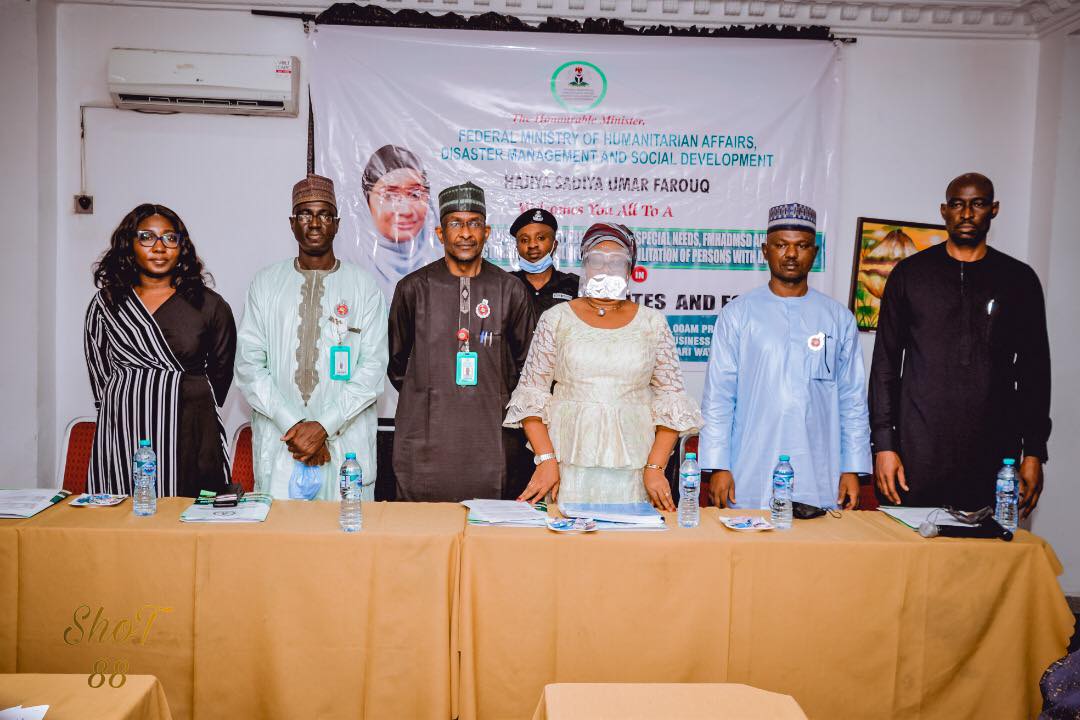
The Honorable Minister of Humanitarian Affairs, Disaster Management and Social Development Sadiya Umar Farouq has urged the Directors in charge of rehabilitation of Persons With Disabilities (PWDs), in the Federal and State Government to utilize the services of partners and non-governmental organizations in meeting the need of PWDs in the country.

She disclosed this during a one-day consultative meeting between the Director of Special Needs and other States Directors across the federation and the Federal Capital Territory in Abuja.

According to the Minister, “this forum will accord us all the opportunity to rub minds, deliberate and come up with concrete steps towards ensuring that the target group-the disability community, for which we serve, gets our best”.

She said that “ in the course of implementing the Ministry’s mandate, we realized that Government cannot do it alone hence the need for collaboration with other relevant Ministries, Departments and Agencies as well as Donor Agencies, Corporate Organizations and Non-Governmental Organizations (NGOs)”.

“In this regard and over the years, the Ministry has;
• Continually trained visually impaired adults at the Nigeria Fan craft Centre for the Blind and currently has enrolled 56 of them in this 2021/2022 session.
• Provided Assistive Devices and empowerment tools over 5,000 individual Persons With Disabilities through Federal, State and Disability focused NGOs.

• Revised the National Policy on Disability in Nigeria and developed a National Roadmap on Local Production of Assistive Technologies for PWDs in Nigeria.
• Marked the various international disability related days such as; World Autism Awareness Day – 2 April, International Day of Sign Language – 23 September, White Cane Safety/Awareness Day – 15 October, International Day of Persons with Disabilities – 3rd December, etc.
• Participated at world forum for disability eg Conferences of States Parties to the UN Convention on the Rights of Persons with Disabilities, Sessions of the UN Commission for Social Development, Global Disability Summit.
• Carried out Assessment Visits to 36 States and FCT on Local Producers of Assistive Technologies for PWDs.
• Provide prosthetic limbs to over 467 beneficiaries in Federal Capital Territory (FCT), Abuja and Niger State.
• Enhanced the capacities of 71 Teachers, Parents/Caregivers of Children with Special Needs in six States of Adamawa, Kaduna, Lagos, Imo, Oyo, and Delta States.
• Trained and provided cash support to 30 Local Producers of Assistive Devices across the States of the Federation.
• Trained 33 PWDs form the South-Eastern States on Income Generating Activities and provided them with cash support to facilitate establishment of their businesses.
• Distributed COVID-19 Palliative items to Karin-Majiji PWDs colony of FCT.
• Distributed Palliatives across the 36 Sates and FCT which included the PWDs”.

Continuing, “ You will recall that in early 2019, the present Administration signed into law, the Discrimination Against Persons with Disabilities (Prohibition) Act after suffering many years of setbacks. The Act is to provide for the full integration of PWDs into society which led to the establishment of the National Commission for Persons with Disabilities vested with the responsibilities for education, health care, social, economic and civil rights of PWDs and other related matters”.

The representative of all the State Director of Rehabilitation, Mrs. Oluwatoyin Jayeola expressed her gratitude to the Federal Government for the role they are playing to ensure that PWDs are restored to a normal fulfilled life and mental health.
The Head of Programmes and Operations of the Leprosy Mission, Mr. Pius Ogbu Sunday said his organization has pushed for the domesticaction of 2019 Discimination Against Persons with Disabilities (Prohibition) Act in the States they are working with and that the Leprosy Mission has the capacity to support 21 Disability organizations and offers technical support to the Ministry.

He also said the Leprosy Mission is committing over €500,000 to support the PWDs in Nigeria. This is beside other technical assistance that they intend to provide.


He congratulated the Ministry for facilitating the meeting and for their determination to face the new challenges and finding innovative ways of resolving them. He said that in 2022, the Leprosy Mission will focus on inclusive education, inclusive health, livelihood and economic empowerment.

The Permanent Secretary, Federal Ministry of Industry, Trade and Investment, Dr. Evelyn Ngige has said the Ministry would continue to expand its collaboration with private sector to create well-paid jobs for Nigerian Youths in fulfilment of the President Muhammadu Buhari ‘s promise to lift 100 million Nigerian out of poverty in the next ten years .

Dr. Evelyn Ngige disclosed this while declaring open the Technical Session of the Meeting of the 13th meeting of the National Council on Industry, Trade and Investment, with the theme: “Micro, Small and Medium Enterprises Development in Nigeria: The role of Stakeholders“ going on at Ekiti State Civic and Covention Centre, Fajuyi Ado-Ekiti, Ekiti State.

Dr. Evelyn disclosed that the Ministry through the Industrial Training Fund ( ITF) , has trained one thousand two hundred and eleven beneficiaries under its info-Tech Skills Empowerment Programme (ISEP), Passion to Profession, and other Special Skills intervention programmes.

According to Permanent Secretary, various strategic wealth creation programmes have been embarked by the Ministry through Small, and Medium Enterprises Agency of Nigeria (SMEDAN), as these efforts are all geared towards providing jobs for unemployed Nigerians, stressing that these efforts have also led to the review of the National Policy on Micro, Small and Medium Enterprises to encourage the establishment of more Small and Medium Enterprises within the length and breadth of the country.

According to her, under the “ One Local Government, One Product (OLOP) Programme “, which is being implemented as a regional economic development model to galvanise and mobilize local resources in all the seven hundred and seventy- four (774) Local Government Areas, 109 MSMEs are selected every year, concentrating on one specific product from each Senatorial Zone, each selected enterprise is given a grant of 30% to 70% of the approved sum as a loan with no interest, to be repaid within eighteen (18) Months.

She further disclosed that, one of key programmes initiated by the Ministry to create wealth and grow the economy include the Advancement for Women in Agriculture, Agro- Allied and Cottage Enterprises (AWACE) which has successfully developed the agro- processing capacities and capabilities of women.

“ At the moment, over three hundred (300) women have been trained and provided with the processing equipment as grants to enhance their agro-processing engagements, adding that another initiative being rigorously implemented is the National Business Skills Development Programme (NBSD) which has three components of Entrepreneurship Training, Vocational Skills Training and Provision of Empowerment Materials. The implementation of the has commenced in all seven States of the Northwest Geopolitical Zone of Nigeria namely ;Jigawa, Kano, Kaduna, Katsina, Kebbi, Sokoto and Zamfara States.

Subsequently, the programme will cascade to the remaining geo-political zones of the country as 5,365 MSMEs have benefitted from NBSD” She added.


She further explained that the focus of Government has remained to create the enabling environment for Small and Medium Enterprises (SMEs) to thrive as the engine of growth of the National economy as the SMEs subsector contributes a large percentage to the country’s Gross Domestic Product (GDP) “ It is in recognition of this that Government has evolved various measures to strengthen the Small and Medium Enterprises sub-sector as the fulcrum for industrialization, job creation and poverty alleviation in Nigeria, in addition, the Ministry is at fore front of the implementation of the African Continental Free Trade Area (AfCFTA) Agreement for the realization of the country’s vision to attain the diversify, competitive and sustainable economy by making Nigeria’s products and services the most preferred in Africa.” Dr. Evelyn Ngige added.

She commended the Minister of Industry, Trade and Investment Otunba Richard Adeniyi Adebayo,CON and the Minister of State, Amb. Mariam Yalwaji Katagum, the Ministry and its Agencies for their continued demonstrate of high sense of commitment and dedication towards the attainment of President Muhammadu Buhari’s desire to diversify and strengthen the Nigerian economy through non- oil commodities.

Dr. Evelyn urged all Technical Officials to carefully deliberate on the memos presented at this Council and make actionable recommendations that will further strengthen Current efforts of the Present Administration towards the diversification of the Nigerian economy.

In his vote of thanks, the Director, Planning, Policy, Research and Statistics (PPR&S), in the Ministry, Babagana Alkali appreciated the Chairman of the Technical Session who is the Permanent Secretary of Ministry, Dr. Evelyn Ngige and other stakeholders as well as the timely implementation of the key decisions of the Council.

The Federal Government on Tuesday restated it commitment to improve passport application process for Nigerians at home and in diaspora, as it launches the new enhanced passport.

Minister of Interior, Ogbeni Rauf Aregbesola, gave the assurance on Tuesday at the official Rollout of the Enhanced e-Passport at the Nigerian High Commission in London, United Kingdom.

The Minister who revealed that the Nigerian passport is the highest affirmation of Nigerian citizenship, noted that it is the responsibility of Government of the Federal Republic of Nigeria to provide the passport without any stress, within a reasonable period.

“What we have come to do here is symbolic of the core mandate of the Ministry of Interior and indeed, the Federal Government of Nigeria – affirmation of citizenship integrity. The Nigerian passport is the highest affirmation of Nigerian citizenship. It is therefore our responsibility to provide the passport without any stress, within a reasonable period.

“As we are all aware, there have been huge challenges to passport administration, from shortage of booklet to touting and an economy of corruption built around it. These challenges have persisted for too long and a lot of people have become cynical while other have taken them as normal and then roll with it. But I come from a tradition of problem solving in public administration. I do not believe that any problem is insurmountable, so we are going to solve all the problems associated with passport administration and we are already succeeding,” the minister declared.
Revealing the features of the new enhanced Passport, Ogbeni Aregbesola stated that, it is a huge improvement from the standard Passport that was introduced back in 2007, with more sophisticated security features, making it one of the most secured passports in the world.

​“The Enhanced e-Passport is a great improvement on the Biometric Passport technology which Nigeria adopted in 2007 as a strategic step towards curbing forgery, impersonation and other forms of frauds associated with obtaining travel document under the old Machine Readable Passport regime. We are aware that technology rules the world and we are keeping abreast of the latest development in the field.

“Over the years, the Nigeria Immigration Service had worked assiduously and in close synergy with Messrs Iris Smart Technologies Limited to develop and implement Passport reforms that are in tandem with international best practices, including extant International Civil Aviation Organization’s (ICAO) Standards and Regulations,” Ogbeni Aregbesola revealed.

The minister who seized the opportunity to reel out some of the achievements of the NIS under his tenure noted that the service has issues a total of 2.7 million Nigerian passports in the past two years.

“In the past two years alone, we have issued 2.7 million passports to Nigerians. We have taken substantial measures to address the issue of shortage of passport booklets. This year, the ministry approved the deployment of over 600,000 booklets, the largest of its kind ever done. That is not all. The Nigeria Immigration Service through MIDAS is now connected to INTERPOL and can upload information to the agency on lost, stolen and invalidated passports in real time.

“The Ministry of Interior had consistently provided the enabling environment for the Nigeria Immigration Service to undertake and implement several reforms, especially with regard to Border Management and Passport Administration as well as Internal Monitoring/Control mechanisms to enhance efficient and effective service delivery to Nigerians and foreigners alike,” the minister announced.

In his own remarks, Acting Comptroller General of the Nigeria Immigration Service, DCG Isa Jere, revealed the Service’s readiness to meet the demands for passports in the United Kingdom, stating that his officers are ready to roll out the new passports, going forward, at the official rate published on the NIS website.

“We are ready to serve the public and start rolling out the new enhanced e-passport in the United Kingdom with immediate effect. Our staff are professionals and will deliver excellent service to our citizens. Those who have any complaints whatsoever are advised to use the publicly listed complaints channels to adequately resolve any issues raised,” DCG Jere stated.

At the event were the Nigerian High Commisioner to the United Kingdom, Ambassador Sarafa Tunji Isola; Acting Comptroller General of the Nigeria Immigration Service, Isa Jere; senior Nigerian diplomats; members of the diplomatic corps, Nigerians in diaspora amongst others.

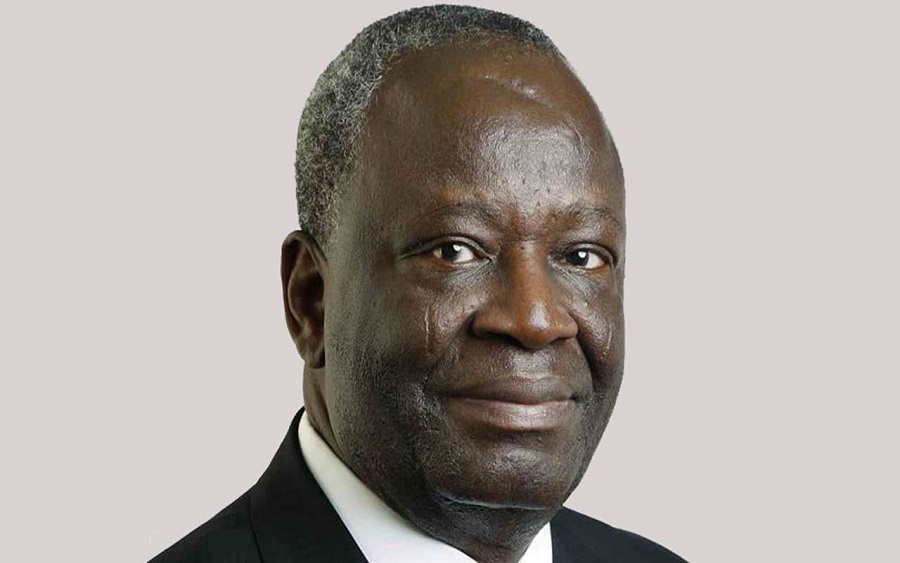
President Muhammadu Buhari, on Wednesday led cabinet members in wishing his Chief of Staff, Professor Ibrahim Agboola Gambari a happy 77th birthday Celebration.
Shortly before the meeting of the Federal Executive Council began, the Secretary to the Government of the Federation, Boss Mustapha announced to the cabinet that today (Wednesday) is the Chief of Staff, Professor Gambari’s birthday.

President Buhari congratulated him on the attainment of age 77, and jocularly injected that “you are still going strong, congratulations!”

The ministers present chorused with laughter and birthday good wishes.
Professor Gambari joined the government as Chief of Staff twenty months ago following the demise of the former holder of the office, Abba Kyari.

Before this time, Professor Gambari had served as Minister of Foreign Affairs under the Military Government led by the then Major General Muhammadu Buhari in the 1980s and went on to serve as Nigeria’s Permanent Representative to the United Nations. He thereafter joined the United Nations system, rising to the position of Under-Secretary General and Special Adviser on Africa, serving as the joint African Union and UN Special Representative in some of the world’s troubled countries including Angola, Darfur, Iraq and Myanmar.

Described as an accomplished academic, Professor Gambari has taught at the City University of New York, the State University of New York at Albany and Ahmadu Bello University, Zaria, as well as served as a Visiting Professor at the John Hopkins School of Advanced International Studies in Baltimore, Maryland.

He is widely published in Nigerian and international scholarly journals and has written several books on Nigerian foreign policy.

Professor Gambari is the founder of the Savannah Centre for Diplomacy, Democracy and Development, a non-governmental “think-tank” established in Abuja.

First Lady of Nigeria, Dr. Aisha Muhammadu Buhari has commended United Nations Fund for Population Activities (UNFPA) over its commitment to RMNCAH+N. She expressed happiness that the agency has lived up to its billing concerning the health of women and children across the world. She was speaking during a courtesy call by officials of UNFPA led by Assistant Secretary-General of the United Nations and Executive Director UNFPA, Dr. Natalia Kanem, on Thursday 25th November 2021, at the State House, Abuja.

Mrs. Buhari addressed UNFPA as worthy partners for sharing in the strategic vision of Future Assured in advancing the agenda of Reproductive, Maternal, Neonatal, Child, Adolescent Health and Nutrition (RMNCAH+N).

“With this support”, she said, “we have in the past 6 years achieved numerous successes, especially in bridging some of the gaps limiting the delivery of comprehensive and quality RMNCAH+N services.”

She made reference to the recent celebration of the 6th anniversary of Future Assured where successes, challenges, and lessons learnt were enumerated as part of an accountability obligation. Although much has been achieved, she said, more needs to be done.

Mrs. Buhari also informed the United Nations delegation of her recent election as President of African First Ladies Peace Mission (AFLPM) which, she said, comes with the greater responsibility of leading African First Ladies to contribute to peace and development in the continent. She called for the support of the international community in this regard.

Earlier, the Executive Director, Dr. Natalia Kanem said she was in Nigeria as part of the celebration of the annual 16 days of activism against gender-based violence, saying the figures indicate we are not out of the woods yet, but it is encouraging to see that the death rates are reduced and moving downwards. She commended the First Lady for cascading her programmes through the states’ First Ladies to reach the grassroots.

The Executive Director was accompanied by the Regional Director of UNFPA, Dr. Argentina Matavel, and Nigeria Country Representative, Dr. Ulla Mueller. The Meeting was also attended by the Hon. Minister of Women Affairs, Dame Pauline Tallen.

Aliyu Abdullahi

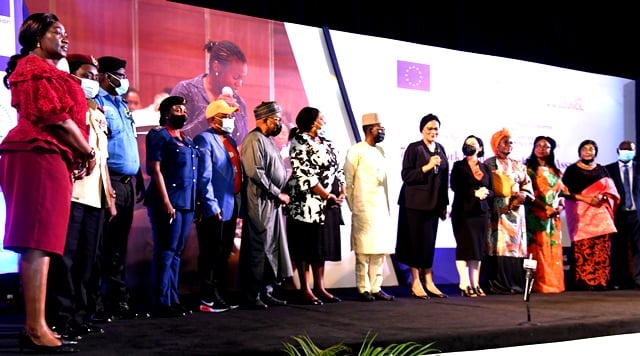
The Honourable Attorney General of the Federation and Minister of Justice, Abubakar Malami SAN, represented by Ag. Director, Planning, Research and Statistics Barr. (Mrs) Victoria Fila Ojogbane, has categorically affirmed the support of the Ministry toward the establishment of special courts to prosecute Sexual and Gender Based Violence (SGBV) cases in the country.

The HAGF made this affirmation during the 7th Network Conference on Sexual Assault Referral Centres (SARCs) jointly organized by Federal Ministry of Justice, FCT High Court, National Agency for the Prohibition of Trafficking in persons (NAPTIP) and the Rule of Law and Anti-Corruption (ROLAC) Programme. The theme for 2021 is the Imperative for Special Sexual and Gender Based Violence (SGBV) Courts as part of events lined up for the sixteen (16) days of activism against gender based violence in commemoration of International Day for the Elimination of Violence against Women.

‘It is my firm believe that the creation of Special courts to handle cases of sexual and gender based violence will improve the effectiveness of courts services, ensure support for the victims, improve victim participation in the prosecution of their cases and promote efficiency and better information sharing’. The HAGF stated.

‘In the pursuit of this essential need, I approve the constitution of a Federal Special Prosecution Team comprising of investigators and prosecutors from the Ministry, NAPTIP, Nigerian Police Force and other Agencies for training and other incidentals tailored towards achieving the ultimate goal of improving access to justice by survivors of SGBV’. The HAGF further stated.

The HAGF used the opportunity to appreciate and thank development partners particularly the European Union, United Nations Agencies, ROLAC, UNICEF, UNODC as well as Ministry of Women Affairs, Ministry of Humanitarian Affairs, Disaster Management and Social Development among others especially in relation to building capacity of critical justice actors and in supporting the Ministry’s efforts at galvanizing synergy among justice and law enforcement actors.

In her opening remarks, the Honourable Minister of Women Affairs, Dame Pauline Tallen OFR lamented the huge number of pending sexual related cases in courts. She assured that her office was taking all necessary steps in collaboration with the Federal Ministry of Justice, Office of Chief Justice of Nigeria, National Assembly and development partners to expedite action on the pending cases and get justice for the victims.

‘Women and children that are being violated are too huge. The number is too huge to be ignored and these are future mothers. And it is not only the girl-child, even the boys. The number of boys that are violated and being abused is also huge. We can’t sit and do nothing. They are our future mothers and future leaders’. She declared.
While delivering his keynote address, the Chief Justice of Nigeria, Hon. Justice Ibrahim Tanko Muhammad, represented by a Justice of the Supreme Court, Justice Amina Augie, advocated for synergy between security agents, the public and the media in tackling the prevalent problem of gender based violence.

‘Courts do not go looking for cases but courts entertain cases brought to it by the public’. The CJN stated.

He therefore urged the Media to step up reportage on violence against women and girl child adding that cases of violence against women were being under reported.


The CJN further pledged the commitment of the courts to working with the Federal Ministry of Justice and the Ministry of Women Affairs in speedy prosecution of the offenders.

Aderemi Adelabu

As the pandemic dispersed the workforce, necessitating more sophisticated means to connect, collaborate and communicate, digital transformation became a business imperative. Fikile Sibiya, CIO at fintech specialist e4, explains why a roadmap for the future is essential in this transformation, and elaborates on what it should entail.

Organisations in diverse industries are transforming their business models by embracing modern technologies to enhance their product offerings, client experiences and ways of doing business. Though this shift was already happening pre-pandemic, it has sped up considerably since 2019.

As all this analogue-to-digital transformation is occurring, and occurring at a fast pace, the existing workforce often does not have the requisite skills to keep up with the evolution. Bringing the workforce along on the organisation’s digital transformation agenda involves re-skilling and upskilling the workforce, at all levels, to understand and effectively work with and apply digital technologies.

Why a roadmap is important

When approached correctly, an organisation’s investment in technologies that empower their workforce see a major improvement in employee engagement and business performance. But with no roadmap, an investment that seems ground-breaking on paper never fully translates to the real world.

Technology is the foundation of digital transformation, but the workforce is the driving force. A roadmap gives clarity on the organisation’s transformation vision and helps the workforce create a link between their work and the organisation’s strategic objectives. It also empowers the workforce to make informed decisions that support the strategic imperatives of the organisation. Moreover, it provides a clear guide on skills and knowledge gaps and how to address these.

With a clear roadmap and proper implementation, digital transformation can empower the workforce of today with self-service capabilities, more robust data driven decision-making to deliver superior customer experience, automation of key processes which leads to efficiencies and enhanced productivity, and enhanced mobility and flexibility. 

What a roadmap should entail

Firstly, organisations need to galvanise the workforce. The vision of digital transformation and what it means for the workforce needs to be palpable and exciting. It is about establishing a culture of innovation and digital curiosity. Organisations, therefore, need to clearly define and articulate the vision and the goals for the transformation and draw the link between the overarching strategy to the day-to-day activities of employees. Organisational leaders must also design a compelling experience for employees. This can be achieved by organisations implementing digital tools to make information readily accessible.

Secondly, it is crucial to not only invest in technologies, but also in people. Organisations need to upskill people strategically, often starting with high-impact roles. Invest in change management initiatives and efforts that are a catalyst to behavioural change. Empower the workforce with access to relevant and timeous information.

Furthermore, using a blend of technologies is important. These technologies, when used efficiently, assist in employee productivity, engagement and efficiencies. But, while building a culture of digital curiosity, cybersecurity needs to be built into solutions as data breaches have recently become a big concern for almost all organisations. Examples of these technologies and solutions are:

  • Communication and collaboration tools
  • Work/task management systems
  • Document management platforms
  • Virtual assistants (VAs)
  • Data analytics
  • Cyber security
  • Technology-integrated workflows

The transformation journey should also be collaborative, and the workforce needs to be active participants. Employees have the best understanding of the on-the-ground customer experience, they know the flaws or weaknesses in business processes. It is important for organisations to encourage employees to be invested in the transformation by leading the innovations. Unlock potential by giving employees a level of autonomy to determine how, where and when to digitally transform their operations.

In the end, the human aspect should be at the heart of any transformative journey – not only with regards to re-skilling and upskilling people to effectively use modern technology solutions, but also managing attitudes towards these solutions. It is about going beyond understanding the need to change and adapt, to creating a culture where the workforce defends and promotes the use of technology. A culture where tomorrow is created today.

The IDC forecasts that South Africa’s IT spend will be $12.78 billion (R197 billion) in 2021, an increase of 5.2% over the previous year. One of the biggest contributors to this figure is software and cloud spend, which has grown exponentially since the start of the pandemic.

As organisations rushed to enable remote working, many companies hastily procured software without being fully informed of their longer-term needs. This has potentially resulted in rigid multi-year contracts, overspend on licensing, limited processes in place to manage and control usage and therefore spend, leading to severe implications for future budgets.

As the local business world settles into a hybrid of remote and office-based employees, software requirements will change again. Staff numbers may have changed, requiring a greater or reduced number of software licenses. Some on-premises applications that are licensed by location will be back in use and may need additional licenses. In addition, to ensure remote workers are kept safe, different license SKUs – like E5 Microsoft 365 with added security features – will be required. But not all employees will require that level of security, and an E1 or E3 license may be a more cost-effective fit for them. 

Now is the time to rethink software spend to ensure your tech budget is optimised, while avoiding sizeable non-compliance fines, and guaranteeing new ways of working are adequately supported.

Overspending culprits

International research firm Gartner estimated in 2020 that unused software may represent more than 20% of software expenditure in the average company. Wastage is often attributed to specialist programmes such as design software being deployed across the company, though only a few employees have the knowledge to use them to their full advantage.

Equally, this can leave a business at the mercy of the vendor if non-compliance is claimed following an audit. One in three pieces of software in South Africa is unlicensed, according to the BSA. This could open the company up to thousands, if not millions, in non-compliance bills. Having visibility into suspected non-compliance, applying the fixes needed, and, importantly, having a trusted partner to negotiate with the software vendor, can make all the difference.

On the other hand, organisations can cut software costs by 30 percent by implementing IT asset management. This helps to reduce the risk of non-compliance and its associated costs, as well as find areas to improve ROI on tech spend.

Software audit

To fully understand your software position, an internal audit is crucial. This shouldn’t be a once-off event but should be revisited annually as needs change over time – especially during and after the pandemic.

Such an audit should include an initial inventory of software assets, both on-premises and in the cloud, and the number and type of licenses (entitlement) that you have purchased. This data will allow you to assess any new, or old, software / applications that have been deployed and validate your compliance against the vendor contract.

With a clear picture of the company’s software estate, start looking at ways to reduce cost, such as removing unused software or moving to consumption-based contracts. By making sure you understand your unique business requirements and software estate year-round, you can revisit renewal negotiations annually, and consider renewing earlier in the quarter to take advantage of better pricing and discounts.

Internal audits and software tracking can be difficult to manage in-house. Interpreting complex software contract terms & conditions, reviewing purchase records and license entitlements, and taking effective remedial action where needed, often requires specialist knowledge. Consider investing in an external partner to help you navigate this process and who can continue to monitor your software situation on an ongoing basis.  SoftwareONE’s professional services have provided invaluable insights and savings to our customers.  Since the start of Covid-19 lockdown, we have on average seen a 97-1 return on investment, which means that for every rand spent, ninety seven is saved from either an audit, an agreement renewal, an optimisation of on-going cloud spend, or a proactive reduction of identified risk and non-compliance.

As digital transformation accelerates, it will become even more important to make the most of your IT investment. Making smart software decisions isn’t simply about getting the best price but ensuring you’re getting the best solution for your unique business.

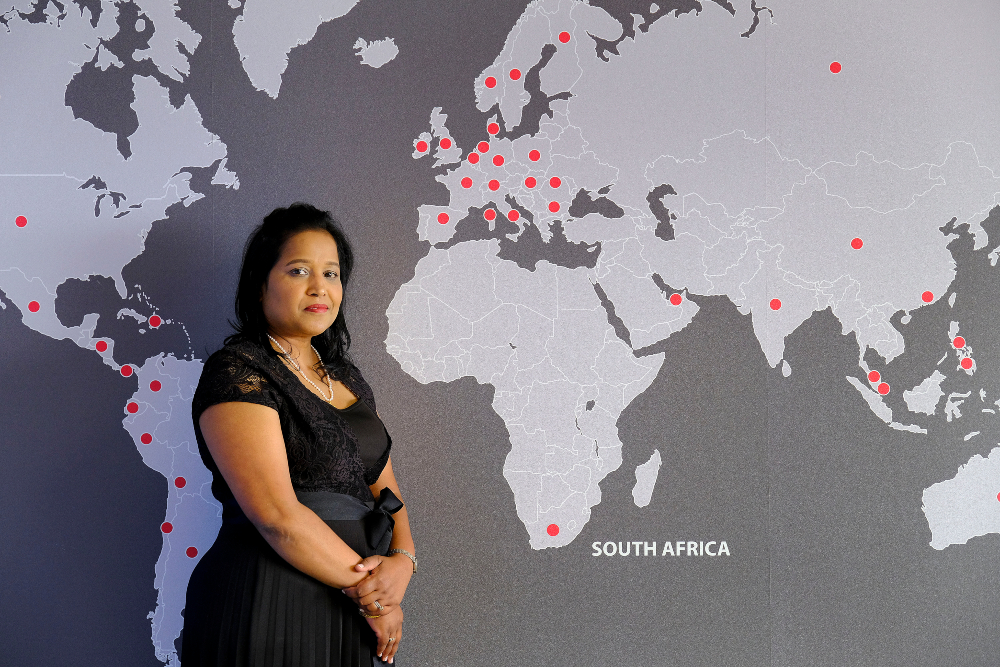
By: Marilyn Moodley- Country Leader for South Africa and WECA (West, East, Central Africa) at SoftwareONE

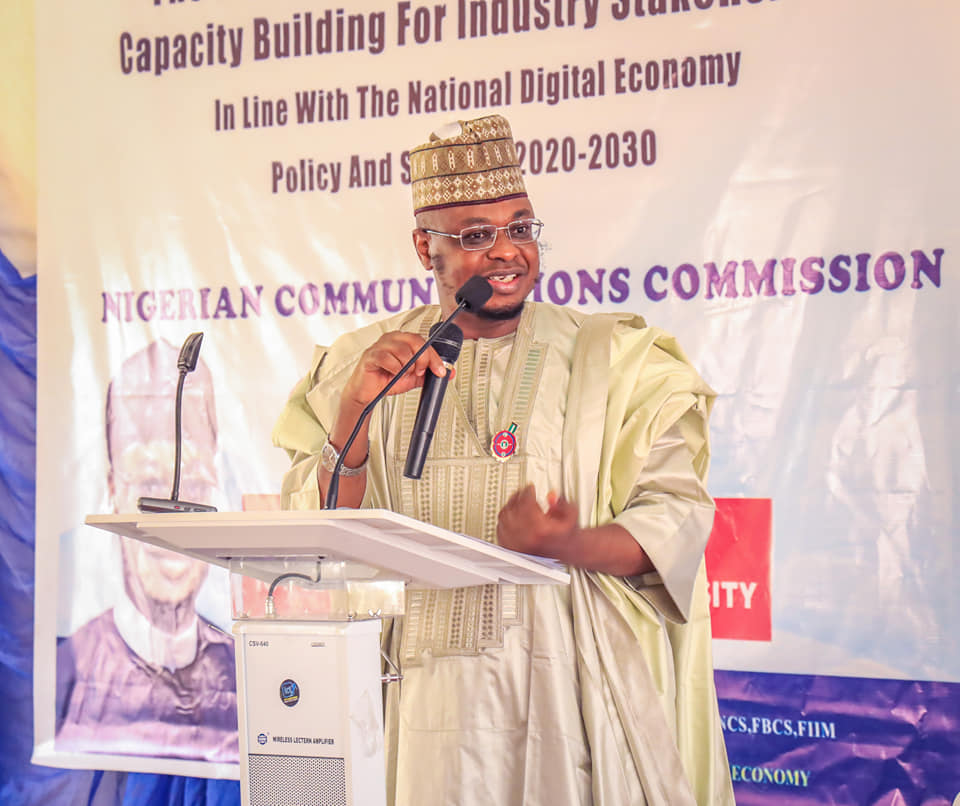
The Minister of Communications and Digital Economy, Prof. Isa Ali Ibrahim (Pantami) today flagged off FG’s Digital Entrepreneurship Programme for Industry Stakeholders taking place in Gombe State University (GSU), Gombe, Gombe State.
The capacity building programme is aimed at enhancing Digital Literacy and Skills, in line with the implementation of the National Digital Economy Policy and Strategy for a Digital Nigeria.

Prof. Pantami while making his remarks urged the participants to embrace the spirit of Digital Innovation and Entrepreneurship, stressing that, they are the two prerequisites for a Digital Economy.

The Minister cited an example with MIT which is one of the most successful institutions globally because it adopted a Regional Entrepreneurship Acceleration Program (REAP) which helps accelerate economic growth and promote social progress through innovation-driven entrepreneurship (IDE).

Minister Pantami informed the gathering that the focus today across the globe has shifted from paper qualification to skills.

“Tech Companies like Amazon, Uber, Google are successful because they were able to identify a problem in the society and proffer a solution”. The Minister said.


Pantami urged the participants to strive to possess soft skills such as Critical thinking, analytical thinking, collaborative thinking, creativity, and problem solving.